Transcript Synced · select any line to jump ▾ 0:00 Brendan Hill: And we're back. Season 2 of the Oversubscribed podcast. 5 founders building in very difficult spaces. Great to see right here in Australia. But guys, would love to know what is going on in robotics in 2026. 0:18 Will Crowe: SpaceX has done a lot for humanity. It's been great. We don't want them being the only game in town. 0:23 Lachlan Bramble: We're trying to do the FedEx overnight delivery of payloads into orbit. You can call us up on a Monday and have your payload in orbit by Friday. Why not free? 0:29 Joe Harris: The same way the internet has been ostensibly free to consumers forever through advertising. I think robot data collection can become the mechanism through physical labor becoming ostensibly free while still having everyone benefit from them. 0:38 John Carroll: Once a product like ours is in the clinic, it's there for life. 0:41 Speaker: It's— 0:42 John Carroll: no one's taking it out. 0:43 Cibby Pulikkaseril: When we raised our pre-seed last year and I told the team, and I'm very open about this, we need to close this many deals by this date or I have to fire all of you. 0:51 Will Crowe: Brutal. 0:58 Brendan Hill: Are you ready? No, sorry, I didn't hear the action. Come on, guys, go on, action! And we're back, season 2 of the Oversubscribed Podcast, Australia's number one podcast hang on the Day One Network, brought to you by Vanta. I'm your host, Brendan Hill, angel investor and venture partner at 1013, and today we are here at BrewDog Everleigh in the heart of Sydney, the deep tech capital and undisputed home of founders and investors in Australia. Big shout out to the BrewDog team having us in this awesome industrial space. A lot of Australian dynamism vibes going off here today. And we have 5 awesome founders with us today who are building with atoms and bits. 1:47 Brendan Hill: We have Will from Heospace, Joe from Alloy, John from VEXEV, Sibi from Zabadoo, and Lachlan from Antares. They're all solving the hardest problems right here from Australia, shipping the solutions worldwide. And today we're going to answer the question, what is going on with robotics, physical world AI, and space? So guys, thanks for joining us today. We might just go around quickly, introduce your startup and what you're excited about in 2026. Start with you, Will. 2:22 Will Crowe: All right, I'm Will Crowe, CEO of HEO, and what we do is take photos of satellites from other satellites, and we're now the largest provider globally of space-to-space intelligence for US and allies. What are we excited about? Well, I think in space, things are going nuts. There's all sorts of frothiness in the market, all sorts of IPOs happening. I think space is really having its time at the moment. For us, we're going to new orbits this year. So later this year, we'll be going to an orbit called geostationary orbit where there's satellites worth billions of dollars apiece and helping people look after those satellites there, as well as helping allied governments to, I guess, stave off some of the threats up there as well. 3:05 Will Crowe: So really exciting times. 3:07 Joe Harris: I'm Joe, founder of Alloy. We're an agentic data platform for robotics companies. So that means that we make it easier for them to detect issues before they reach their customers and get to the root cause of them and solve it faster. One of the things that I'm most excited about this year, I mean, I think it's probably going to be a pretty common theme across the whole discussion, but the wave of new investment leading to a whole wave of new robotics companies, new hardware companies, and the ramping up of existing ones, just getting to commercial impact sooner. And actually having a real-world impact is seeming like this year more than ever, that's going to be true. 3:43 Joe Harris: And that's great for the data business. 3:45 Brendan Hill: Cool. 3:45 John Carroll: Hey, I'm John Carroll, co-founder and co-CEO at Vexev. We build both hardware and software. So our hardware is effectively medical imaging robots, robots that perform scans. And that means we can do more scans in settings they already do them. And we can also bring them upstream into the point of care, allowing for scans to take place where it might not otherwise be practical today when you rely on humans with a lot of training to do those. And then we also develop software. The software is taking the scans and performing automatic diagnostics, AI-powered prognostics, and eventually feeding all the way into a triaging system built to take in hundreds of thousands of scans and help clinicians understand what patients need attention today. 4:34 John Carroll: We last year wrapped up a multi-site clinical trial with our robot in San Antonio, Texas. That was fun and that went really well. And now we're basically all guns blazing towards FDA clearance following that market launch in early next year. 4:48 Cibby Pulikkaseril: I'm Sibi. I'm the founder of Zabadoo. Zabadoo deploys laser-augmented machine vision systems into manufacturing. And I've had the hypothesis that everybody that makes something wants to know what it is, how much of it is, and if it was made correctly. And we're solving that problem. And I think what I'm excited by this year is what we see across the developed world is everyone's building infrastructure, everyone's pumping trillions of dollars into it, and every country has the question, how can we be more productive? And usually the governments don't have an idea. Well, Zabidoo has the idea, which is you need to make sure you're making things correctly. 5:24 Lachlan Bramble: Yeah, I'm Lachlan. I'm the co-founder of Antares, and we're trying to do basically the FedEx overnight delivery of payloads into orbit. We're pretty new, and we want to completely flip the way that, you know, like launch is done rather than waiting like 18 to 24 months to get a payload into orbit. We unironically just want to put, you can call us up on a Monday and have your payload in orbit by Friday, ideally. And we're working towards responsive launch. And one thing that we're really like passionate about and super keen about is like kind of Industry 2.0 in orbit and like off-Earth manufacturing, particularly on like pharmaceuticals, semiconductors, stuff like that, mainly in the LEO and MEO space. 5:54 Brendan Hill: Awesome, awesome. So 5 founders building in very difficult spaces. Great to see right here in Australia. But guys, would love to know what is going on in robotics in 2026. 6:09 Cibby Pulikkaseril: I think everyone has seen this wave of innovation in humanoid robotics, and I think a lot of people feel really excited by it. I definitely talk to investors that can't wait for a humanoid robot to solve a bunch of problems. I'm not that excited by it. I just don't spend time thinking about it. I enjoy watching videos of robots smacking kids by accident or failing to dance properly. I just think that when people say robotics, that's what they have in mind. But actually, the world's already full of automation and robotics, and we have a very different view. Like, many of these factories are already automated, and Zabidoo is— what we're trying to do is bring robotic vision and intelligence into these already automated factories. 6:49 Cibby Pulikkaseril: And I think we're lucky now that there's so much investment going into physical things, but I think there's going to be a lot of disappointment when humanoid robotics takes a lot longer than we think it's going to take. 7:00 Brendan Hill: What's your estimate on the timeline? 7:03 Cibby Pulikkaseril: It feels like it's at least 5 years away. 7:05 Brendan Hill: Yeah. 7:05 Cibby Pulikkaseril: Yeah. 7:06 Brendan Hill: That's an optimistic sort of Elon-esque timeline, 5 years. 7:09 Cibby Pulikkaseril: Yeah, but I think these are all venture investments, right? So somebody's got to be paying for these companies while they get there. 7:17 Brendan Hill: Before we get into it today, today's episode is brought to you by Mighty Partners. If you're running a high-growth software company in Australia or New Zealand, They are the venture debt provider worth knowing. It's a way to fund your next stage of growth without giving away more equity than you need to. The same lever that companies like BuildPass, Deckard, and my good friends at Perla have used to scale on their own terms. Take a look at mighty partners dot com dot au forward slash oversubscribed. 7:51 Will Crowe: We're seeing an interesting trend. I mean, we operate space robots, so I feel like there's similarities, and this is probably happening in other areas of the space, of the robotics market as well. So we own a satellite. It's Australia's first Earth observation satellite. We use it primarily for our main mission, tasking it to look at other objects in space, but it also has capacity to look down at Earth. And what we've done is we've created a natural language tasking module. So literally you can just type in, hey, I want to look at Jimmy's farm, the next time you pass over it, and it will figure that out and then task it and send you an image back. 8:32 Will Crowe: So it's really transformative, absolutely for space, but I think we're seeing this trend across other robotic sectors, and it's absolutely breaking people's brains in the space market as well. People are a little bit backwards there, so it's really hugely different. 8:49 Cibby Pulikkaseril: What do you think the use cases are for that? 8:52 Will Crowe: Yeah, primarily I think it's, It's been historically difficult to work your way through different interfaces with space systems. So a lot of people have been working on some kind of automation, some kind of UI layers to make that easier. But really, why not just a prompt window and prompt that satellite to do the thing you want and not have to go through all the mess of understanding everything about the satellite to get that done? 9:20 Cibby Pulikkaseril: And is that accessible that like any one of us could just go on a platform and do it? 9:23 Will Crowe: Yeah, totally. Now that I've said it, I'm like, I'll hook you guys up with it afterwards so you can do some tasking and give us some feedback. 9:31 Joe Harris: And just to reiterate, so that's, I can type in, I want a satellite picture of anyone's house from space and it's now super open and accessible to anybody? 9:42 Will Crowe: So it, I mean, the AI needs to know. 9:47 John Carroll: What my security clearance is? 9:48 Will Crowe: No, it does need to know, I guess, some context about you to know that. So it's probably more like you could say, I want to have a look at this address, and it could do that quite easily. Hopefully it doesn't know where Joe lives. 10:01 Joe Harris: Yeah, that would be concerning. I think one of the major side effects of being— a lot of money is flowing into funding robotics companies. There's a limited amount of robotics talent that everyone would then need to fight over. But I think talent-wise, a lot of people wanting to rotate into working in robotics, there's a bit of a skill barrier for them to get over, given how cross-functional, how multifunctional a full-stack robot is. People, especially in the early days of a startup, will need to work across a lot of those. And so you've got to try and find people that have 5 deeply technical verticals that they're really strong at. But the more that tools come up that vertical specialization and make it accessible through natural language, through agents, makes it way more accessible for more people to come in and do that kind of work. 10:46 Joe Harris: The same way that software engineering over the last couple of years has gotten much, much more accessible. I think there's no reason why that has to be where the fun stops. And then more people can then do this kind of real-world work assisted by agents. 10:57 Lachlan Bramble: That's what we're believing. 10:58 Cibby Pulikkaseril: It's almost a prerequisite, right? For the industry to be commercially successful, it has to go that way. At the moment, it's all PhDs and has to go away from that. 11:04 Will Crowe: That's a really interesting thought. So maybe it's kind of like vibe coding for applications. Now we're seeing, I don't know what you call it, vibe tasking for robots or vibe I don't know. I don't know what you call it. Like, is there a name for this? 11:17 Joe Harris: Yeah, it's using Alloy. 11:19 Will Crowe: Okay, great plug. 11:21 Joe Harris: Look, I mean, it's broken down. I mean, there's obviously the field operations and the deployment side and like making sure that when things are actually happening out in the field, you can interface and control the robot. I mean, that's probably more like Breaker's game. Breaker's doing awesome work in like organizing and just commanding robots using natural language. We would be more, you know, the fleet management, the field operations, more of the R&D side. And then even before it goes live, right, the actual core engineering work, so much of that is still, hey, you have to know the tribal knowledge of how to use 10 different vertical softwares, like, you know, be a master of SolidWorks and all of these different tech stacks. 11:56 Joe Harris: And I think more and more that's going to be less of a technical requirement to get started. 12:00 Cibby Pulikkaseril: We can't talk about— I get so excited if we talk about this part, Brendan, which is this point, the commercial engineering software. is such a barrier to entry for everyone. And probably the most exciting thing that I see now is all my colleagues in all these industries are now doing everything through agents running off open-source software in mechanical, electronic, FPGAs, photonic design, from a prompt to a design. And of course, it's not there now. 12:27 Will Crowe: We're only halfway through the year, Sidhi. 12:29 Joe Harris: So there's still 45 model launches to go. 12:32 Will Crowe: Yeah, it's going to be incredible. 12:35 Brendan Hill: And Siby, I know your previous startup, Bahaya, you hired over 100 engineers. So we're talking about like how do young people get access, start working for robotic companies? I know you guys will probably be pitching why, you know, people watching this podcast should come and work for your companies. Like what are some of the steps that, you know, the young talent can be taking that aren't PhDs? 12:55 Cibby Pulikkaseril: Look, I have such strong opinions about this. You know, really like you get people that finish degrees. What does the degree mean? I don't know. I almost think like, you don't need that as a requirement to work for me. What we're really trying to sniff out for is like, is somebody going to be really accountable for the work they do? Are they really passionate? Are they really going to hunt to get to a final solution? And those people are incredibly rare in any industry, right? So like, it's what, 1% of a class? 13:22 Brendan Hill: Yeah. 13:22 Cibby Pulikkaseril: So everything about interviewing is trying to sniff out that detail. Like, is this person actually going to come in and be really excited about what they want to do? And then I don't have to monitor them. That's the best part. My engineers, like, I'm not there today. I'm sure they're working their ass off, right? 13:35 Will Crowe: So the main thing, I guess, for you is high agency, which is, I guess, the prime startup talent that we all need. 13:42 Cibby Pulikkaseril: That's right. And in robotics, it's been easy because people that go into robotics don't do it because they think there's a great job at the end. They do it because they're usually excited. 13:51 Will Crowe: Like, they're locked into it. Yeah, right. 13:54 Cibby Pulikkaseril: Like, you couldn't stop this guy from doing the stuff he does. So you got to sniff those people out. And in robotics, you get the signal because they all do projects at school. They've all built things on the side. 14:04 Joe Harris: Well, I think, but if that's been true, I'm not sure if it will remain true, right? Like the more headlines there are about how SaaS is dead, software is dead, the next frontier is physical AI, there's going to be a lot of more commercially minded people, which is both awesome and also means, okay, maybe you need, there's more bullshit and you need to sniff through it way more. 14:23 Cibby Pulikkaseril: There's so much bullshit. They'll be elite code of Equivalent, right? 14:26 Brendan Hill: Yeah. I mean, how do you find these people as well? Like, I know we ran, like all of us here ran something called Australia's Largest Robot Party. We had a lot of young talent there, current talent. Like, what other ways do you find this young, hungry talent that's, you know, going to put in, you know, 996 for your robotic startup? 14:46 Cibby Pulikkaseril: I used to have an answer, but it's really tough at the moment. So I used to be able to get everybody through LinkedIn, but LinkedIn's kind of really clamped down on how much You can get through this. I also just struggle. I used to go to a university like UNSW and do a guest lecture and have 100 kids there. And now if I go, sometimes there's like 5 or 10. So I don't know. I don't know where they are. 15:07 Will Crowe: So I want to ask Lachlan, I think you're the most recent grad here. So what's your story? How did you get in? I guess you chose the founder path. What are you seeing your cohort, how are they finding companies like ours? 15:22 Lachlan Bramble: Yeah, I mean, like, I suppose it's like when you're like in, you know, you're a recent student like myself, I'm pretty like fresh out of university doing a startup going straight into it. I think like there's a real big mix, like particularly in like I think more recent cohorts, there's a big split between people who kind of went into engineering because they were good at like numbers and math or whatever. And that's fine, like totally cool. But at the same time, like there is like an ever-growing like small sector of people who like absolutely deeply passionate about what they're building. And they will find like any out through like student projects, you know, whether it's personal projects, just building hardware or tinkering or like, you know, getting involved like pretty early on in their career, doing anything they want to do to just build stuff. 15:59 Lachlan Bramble: Like it's like, it's genuinely just like for the love of the game. 16:02 Joe Harris: Where are they hanging out? 16:04 Lachlan Bramble: Usually they're unironically hanging out in their student labs, in their student projects. But at the end of the day, like I think a lot of these like, like people who actually really enjoy building are almost kind of afraid, or not afraid, but like they're so deep in the technical weeds that like they're like, oh, am I? It's almost like, like an imposter syndrome or like a tall poppy syndrome. Like, am I really good enough to like go out and— 16:22 Will Crowe: Which is great for hiring, by the way. 16:25 Brendan Hill: Yeah. 16:25 Will Crowe: 'Cause you're like, yeah, come here and work for us. One thing I wanna double down on, Lachlan. So you and I both did aerospace engineering. And actually in Australia, I think the stats are about the same. Something like 90% of graduates go directly into the banking mining sectors and barely, and that's historically because there's been very few jobs. There's still, I think the sector's growing dramatically in Australia, but it's off a very low base. So it's a weird, there's a weird thing going on in our industry where that's changing. I guess to your point, Sibi, it's still such a small number of people going into aerospace that we can still get the absolute best and brightest from those people who are already smart. 17:08 Cibby Pulikkaseril: I think that's been true forever because when I did my PhD 20 years ago, it was the the same thing. All the smartest kids were going, electing to go into banking if they could because better paychecks and things. 17:19 Will Crowe: We're changing that, obviously, the 5 of us, but I don't know, are we even going fast enough? And that's, there's so many people that we could potentially hire, but how do we upskill all of them? Like if we've got a small kind of base in work, who trains these people after they graduate? Because that's something that I'm concerned about scaling up. Like there's this huge latent talent pool. How do we get all these guys to figure out how to work in companies? And we're startups, like, this normally shouldn't be our job, but I think it's going to have to be our job. 17:52 John Carroll: There's certainly like the opportunity to pick them up at the intern phase because like for engineering, almost every— I'm pretty sure every stream you can't graduate unless you've done like, is it 90 days or something in an internship? It's not hard to be attractive at that stage just just pay minimum wage and you're like with the top tier of other intern providers. But that's where you can certainly give those students a taste of working in your company. They're going to go back and talk to their friends in that final year of uni about their experience as opposed to their friends. And then it also helps you have a good, I guess, first dibs at talent that's maybe already selected you, or if you are able to make it competitive Yeah, you can filter at that early stage. 18:36 John Carroll: Also, like, we're lucky because we have students that are biomedical engineering that need to find an internship that's both biomedical and whatever their base degree is, which is often mechanical engineering. So having an internship that fits that is going to be attractive, especially if you're paying. And it's, you know, they're like one year out from uni, so they're not that far. 18:58 Cibby Pulikkaseril: And so how many interns would you take a year? 19:01 John Carroll: I would love to take more. I think it sort of grows with the company. We've always had an intern or 2 in the office throughout our journey and they've just sort of changed and some have stayed on, others have moved on. 19:15 Will Crowe: Actually, Sibi, you asked the question, so I'm going to throw this back at you, but I want everyone else's response as well. How many interns do you think it's possible to take? Like as many interns as you have full-time employees, or is it fewer than that? I just want to know what the limits are because I think the scaling issue is going to be— 19:31 Cibby Pulikkaseril: Generally, I don't take interns. 19:32 Joe Harris: Okay. Yeah, exactly. This is a problem. 19:35 Cibby Pulikkaseril: I am very reluctant to put in training. I mean, like, maybe we— when you get bigger, you can take one, like, if it doesn't dilute the team. What I like to do is I like to hire full-time graduates. If you know anything about me, I've hired so many graduates over the time I've been in tech, and I take them— they don't need to have experience. They just need to have the right attitude. And then what I do, what I think the leadership does, is teach them how to work effectively in a company. 20:00 Joe Harris: So you think obviously the, I guess, uh, more character traits, the things that are unteachable, that's what you're filtering for? Like drive, integrity, learning agility, like things that are a bit more innate? 20:12 Cibby Pulikkaseril: Yeah. 20:13 Joe Harris: And then you can teach them professional skills. 20:14 Cibby Pulikkaseril: And like, I had a guy that I've just hired who didn't know anything about Python, and now he's doing machine learning. 20:20 Joe Harris: Well, it begs the, I guess, the bigger question of now with the changing state of knowledge work, do you hire only incredibly senior people or do you actually hire a lot more junior people because they, like the gap between junior and what used to be senior is perhaps collapsing? 20:36 Cibby Pulikkaseril: I'd barbell the shit out of this. So extremely technical people on one end, like you only need a few of them and then the rest, all young people that are ready and hungry to learn. And like the idea is like with modern tools, you should be able to teach yourself on a weekend to be ready on Monday to do everything. 20:52 Brendan Hill: What about the talent density, like Australia versus US? I know we have a passionate robotics base here. What are some of the differences that you see in the US? I know most of you are selling into the US or will be selling into the US soon. Would love to know the differences and how we can bring back some of those learnings and instill them here. 21:11 Will Crowe: Well, in space, it's really interesting. We're seeing near complete employment of aerospace professionals in the US. just mega projects happening. If no one's heard of Golden Dome, look it up. But really, that's taking beyond the current industrial base of aerospace in the US. So actually, everyone's poaching from everyone else. Wages are going up, great for the workers, not great for outcomes in the industry. So I think that's actually an exciting time for us in Australia. It's time to build and export to the US and other markets that are experiencing extreme growth. Germany is another example. But yeah, it's really interesting in the US. really difficult to get talent. 21:52 Will Crowe: I think it's easy to get your first maybe 50 to 100 people, but beyond that, it's really difficult and there's a lot of poaching going on. One quip I have is that there's a reason why the second-best rocket company in the world, Rocket Lab, exists in New Zealand, which has nominally very few aerospace engineers. The reason is they are inherently unpoachable by US companies. And SpaceX would've taken all their engineers. 22:18 Cibby Pulikkaseril: What do you mean unpoachable? 22:20 Will Crowe: What's that? 22:21 Cibby Pulikkaseril: Why are they unpoachable? 22:22 Will Crowe: They're not unpoachable. There's just a degree of difficulty transplanting them from New Zealand to the US. So for example, there's some projects where you have to be a US citizen in order to work on them. I think in Australia, we've got the same potential benefit. There's a huge latent talent pool. I keep going back to that intern question though, 'cause I'm like, how the hell do you train all these people up? Because the talent's there, the need is there, the universities are great, but how do you get these people workforce ready? So I think that's the inherent challenge that we have in the aerospace at least. 22:55 Brendan Hill: What other differences are you guys seeing from the US, John? I know you've been on the ground a lot in San Antonio and different states. Like, what are you seeing over in the US? 23:04 John Carroll: Yeah, it's certainly a different culture. You see that especially like comparing say companies that are based and operate in Silicon Valley, SF. We find ourselves operating from here in Sydney, but we're competing against companies over there. So we're not really looking around like, what are other companies around us doing to benchmark ourselves? It's very much companies over there. We've in some respect got a disadvantage in terms of the time zone, in terms of the distance. We overcome that with a willingness to travel. That's a bit of a cultural thing across the whole team. We'll have anyone on the team willing to travel if it's to a site visit, if it's to support a trial, even on the commercial side. 23:46 John Carroll: So you have to be willing to do that. But then you get the benefit, as I was speaking about before, of almost there being a firewall, there being a better opportunity to, once you have good talent, keep and retain them, which I do believe compounds over time. 24:01 Cibby Pulikkaseril: And do you have a team in the US? 24:03 John Carroll: No, no, so at the moment the team in the US is mostly myself, maybe one, maybe one or two others just operating out of a suitcase. But it's, you know, very much coming up on the horizon. Just while in R&D, it's just cost efficient to stay a fully Australian team and just send stuff over there to test it. 24:21 Brendan Hill: Joe, you're just back from a US trip as well. What did you see while you were there? 24:25 Joe Harris: Yeah, look, I think this is not uniformly true because we have some awesome Australian partners that we work with and we have some awesome US partners that we work with. But one of the things that I guess I got told early on that I think has held reasonably true is that Australians are worried about what happens if we do and the US teams are what happens if we don't, right? 24:46 Cibby Pulikkaseril: Oh, great phrasing. 24:48 Joe Harris: Right. And it's just when pitching and talking with prospective partners, they're sort of like, oh, Australians are like downside risk mitigations. Whereas I think in the US, because it is so competitive and there is such an urgency to achieve and get the outcomes, they realize that, you know, I can't spend 6 or 12 months building this in-house. I just need to get going because, you know, 15 companies down the road are going to otherwise do it. 25:09 Will Crowe: Yeah. 25:10 Joe Harris: And so that's been a bit of a difference, I think, on the partnering and sales and customer side. You know, on the engineering side, I do back our team here. We have such a high talent density in our team. I do question, you know, at 100, 200 people, like, how are we going to keep scaling? But there's also just, I'm constantly wrestling with the question of this year, especially, and if the kind of trajectory continues to just increase the slope, you know, we often get more productivity out of the team through the tools improving and through the models improving and through agents improving faster than we've so far needed to hire. But, you know, I don't know how long that's gonna hold true. 25:43 Will Crowe: Can I just pick up on a trend with this panel, which is, I think, different from the discourse typically in Australia? I think in Australia, typically everyone's talking about, STEM education. I think what we're seeing is that there's heaps of STEM people. It's about how do you get them ready to work with us? How do you scale? So I think, yeah. 26:06 Joe Harris: Have you had some bad experiences with this? 26:09 Will Crowe: Yeah, definitely. I think it's already difficult to find people that are ready in space. I think originally I thought it was space-specific, but now I think it's it's just Australia in general. And us going from a place where we bought all the really interesting intricate stuff from overseas into we're building it here, which is really exciting. But yeah, that's one of the challenges. And yeah, I'm hopping on about it, so fair, but I think it's a real challenge. 26:37 Joe Harris: I mean, obviously a large percentage of our workforce and economy is in professional services right now. So would you be thinking of needing to like not just from junior talent, but retraining people mid-career that may perhaps have the professional skills? 26:49 Will Crowe: We have tried that. It doesn't work that well. So I think getting people straight out of university, that might be the best way to really fix things. I think there are some cracks people later on, but not as many as I would like. I think one really cool thing is we do export 2-3% of our talent to the US and they're typically top tier and oftentimes they want to return with to build a family or with their family after their kids in preschool have gone through an active shooter drill. So I think there's a huge benefit. Also, a lot of Americans wanna move here for love. So I think there's those benefits. But yeah, it's definitely something always on my mind. 27:28 Joe Harris: So it's like sleeper agents overseas. 27:31 Lachlan Bramble: Yeah, totally. 27:31 Joe Harris: Get relationships going and bring people back. 27:33 Will Crowe: Learning really cool stuff, doing cool engineering and coming back, yeah. 27:37 Cibby Pulikkaseril: And maybe honeypots, right? Send the most attractive Australians go overseas. 27:41 Will Crowe: There's a lot of attractive Australians overseas and it's great. We want more of that. 27:44 Joe Harris: Strongest export. 27:45 Will Crowe: Yeah, totally. And then re-import. So yeah, it's good. 27:50 Brendan Hill: So in terms of competing against US incumbents and startups like John, I know you've beaten out many to win many big clinical trials like Will. I mean, you're both building in, I guess, 5 years ago, pretty unfashionable spaces as well. Like all the US investors would never think, you know, 2 companies from Australia could, A, build from here, grow a team, build a product, ship it to the US, get customers, win the market. But you guys are showing it's possible. Would love to hear, I guess, the moment when you realized it was possible, the story along the way, and I guess any inspiration for people watching at home. 28:31 John Carroll: Well, I've done now 5 fundraising rounds, so kind of roughly every 18 months. And the sentiment has certainly changed. Like what at the start didn't sound good is now sounding really good. So in our space, we're in hardware manufacturing, and then there's obviously regulatory being medical device. Those things are great now because that's moat building. Whereas before that was, you know, an investor who's got a great hot software company that's growing at this rate, they're going to favor that kind of deal and opportunity versus a company that's got multi-year R&D ahead of it. Then it has to do clinical trials and obtain regulatory clearance. 29:10 John Carroll: Then it's going to go to market. But again, now you kind of, it's completely inverted. It's once a product like ours is in the clinic, it's there for life. No one's taking it out. And so a competitor can come along. They could even have a comparable product and it's just very unlikely that it's going to come in and take us out. from an investor's perspective, it's just multiple layers of a moat that is just making it a far more attractive opportunity because they've seen other companies in their portfolio, their fortunes change overnight now. And that's something that feels a little less likely to happen in hardware especially. 29:45 Joe Harris: Do you feel like they transpose over their previous expectations and models over revenue growth rates and net dollar retention and just like the way they would assess a business in the past now they want to get into hardware, but they still want you to be doing the— 29:59 John Carroll: Yes, 100%. But also that hasn't changed over the whole 5 years. It's always been that. It's tough to get compared to those companies. But yeah, there's the sweetener now where the part of the conversation again about defensibility and moat is something that I used to talk about very differently. It was always about underplaying. Now it's about overplaying. It's about, here's the length of steps a competitor would have to go to to even try and catch up. And here's why that's not possible in my view. 30:27 Will Crowe: Yeah, for us, it was really interesting. So I think in Australia, we have inherent, I guess, regulatory strengths, people strengths, et cetera. I think we should lean into those because really what I think the best competitive strategy is enter a space with no competitors. We're a YC company, so we really buy into the Paul Graham and kind of Peter Thiel kind of, yeah, don't be a monopoly. 30:54 Brendan Hill: Competition is for losers. 30:55 Will Crowe: Competition's for losers. Build something people want, build something that people haven't thought of yet. So I think building something unique is quite possible here. You don't have that kind of groupthink brain that you often get in the US, and there's also different kind of abilities to build things here first. And I really think part of the job of Australian founders is to find out what those things are and then dominate a space. And then, you know, you can can quite easily destroy all competition in the US once that happens. 31:27 Brendan Hill: What's the one thing in business that's spreading as fast as AI? AI risk. Every new tool your team signs up for, every vendor that turns on an AI feature, every integration— each one is a new surface area for something to go wrong. Most security programs weren't built for this kind of pace. Vanta is the platform that over 16,000 fast-moving companies, just like the ones you've seen on the Oversubscribed podcast, like Heidi Health, Everlab, Instant Alloy, and Relevance AI, trust to become compliance-ready quickly. And Vanta is now helping you watch for the risks that show up between audits across your vendors, your AI tools, and your whole environment. 32:12 Brendan Hill: The Vanta Agent works like a 24/7 GRC engineer in the background, finding issues, drafting fixes for you, reducing the compliance work on your plate. Startup customers get $1,000 off Vanta at vanta.com/oversubscribed. And pulling on that fundraising thread, all of you have recently closed fundraising rounds. Congratulations, Lachlan, you've just kicked off. 32:39 Will Crowe: Yeah, just— 32:39 Brendan Hill: A fundraising round, closed your first check from NextGen Ventures. Fantastic. Would love to hear, I guess, how the, like John, you sort of touched on it briefly, how has that landscape for fundraising changed for hard tech, robotics, and physical AI over the last 5 years? And Joe, I guess you kicked off just when the sentiment was changing. Would love to hear about that as well. Start with you, Will. 2019, your first round? 33:05 Will Crowe: Yeah, yeah, roughly 2019. We actually, no, not really. We had the tiniest of checks in 2019. So we took $20,000 was from a UNSW accelerator then. So it was tiny. We pretty much subsisted on customer money until 2021. We did a seed round with Y Combinator and a big UK angel. And then we did an A round in 2023 that was with AirTree. I think we were AirTree's first ever space investment and one of their first deep tech investments. 33:40 Brendan Hill: And that was Beaten Zone's first investment as well? 33:42 Will Crowe: Beaten Zone invested in us in 2023. Sailus did as well. And yeah, honestly, they've been really terrific partners. I think Airtree had a little bit of a shock initially at investing in a non-SaaS company, but I think now they're very grateful. 33:59 Brendan Hill: You started the trend for Airtree. 34:00 Will Crowe: Yeah, Airtree are looking at a lot more deals and have invested in a lot more, which is really honestly awesome. So hopefully we continue to see that trend continue on. 34:12 Brendan Hill: And Joe, you had the privilege of Airtree, Blackbird, and Skip in your pre-seed round, I believe? 34:17 Joe Harris: That's right, yeah, just over a year ago now, getting, you know, continuing the great, I guess, partnership from the Eucalyptus days with Blackbird, having them be, you know, very first check. You know, the term sheet says company to be incorporated by Joe Harris. Just, yeah, fantastic, you know, early believers really live by, I guess, that tagline that You know, they try and I'm sure a lot of VCs like to push, but yeah, that's been my experience with them. AirTree also, you know, coming to the table early on to back, probably benefiting a lot from the hard work of, you know, some of these other guys who have put in those first innings and proving that it can work. 34:54 Joe Harris: You know, perhaps despite the fact that I wanted to do what seemed like perhaps crazy robotics things at the time, and nowadays obviously that's a bit of a different sentiment. going back out to market, talking to investors this year, it's, I'd say, like an optimistic curiosity, I would say. Not quite hysterical, not quite outrageous, but definitely getting there. 35:16 Brendan Hill: And fundraising in the US, do those investors still want to see some US customers or doesn't matter so much now? 35:23 Joe Harris: I mean, it definitely helps, I think, given it's still in that curiosity phase where I think a lot of investors are still building their, not even thesis, like kind of the high-level fluffy stuff, but more like getting that level of understanding of say, if our customers are robotics companies, what are their problems? What are their processes? What are the day-to-day lives of the people that work at those companies? I think if you've got 10 or 15 years of multiple funds of software investments, this is now a different customer segment for you to understand. And so I think for them, they'll often defer to a robotics company in their portfolio, say, hey, would you use this? 35:53 Joe Harris: I think that is a bit of an adverse selection. I see that as a bit of an amber flag if that's like the cognitive heuristic they're using to decide if it's investible. Because just think about, you go to your portco and ask them as a CEO, hey, do you need help in this area? That is like part of perhaps your core narrative over your business is like, I'm really, really strong at using our data to get value. Do you need help with that? There's literally no win for them to say yes. 36:15 Cibby Pulikkaseril: But that is what all the investors will do, right? They'll get technical. So how do you get around this? 36:20 Joe Harris: Yeah, well, I mean, it's, it's, I think the only way around it is to actually get them as customers. Because then it's a commercial reality of, hey, you go bottoms up through the team and through, you know, you're actually demonstrating the value. 36:30 Cibby Pulikkaseril: Acquire the customer and and then get to their underlying investment. 36:32 Joe Harris: Because I just think it's a bit of a trap for everyone involved because the VCs are missing out on great deals. You know, the port co is not getting a good tool and we're not getting the investment. Where, yeah, I just have seen that to be really, really consistent. And I just can't see a world where a CEO turns around and goes, yeah, like we definitely would need help in our data management and data, you know, of course they'd just be like, no, we're masters of this. 36:55 Brendan Hill: What about you, John? Like obviously you've got some very successful trials, company's 6 years old, you've done multiple rounds. now that you have this amazing traction, I know US investors probably didn't believe, as I said before, that you could build such a fundamentally game-changing product from Surry Hills, get US customers, successful clinical trials, etc. What does the future hold for Vexerv and the, I guess, the next round? 37:23 John Carroll: Yeah, absolutely. And yeah, you're absolutely right. We were fortunate that we in our very first rounds had Blackbird Ventures join. And so with them, it was very much a global story, global problem that we were solving. And so while those first few years were all very much R&D, we were R&Ding a product and a solution for US customers only. So all our discovery calls, all our commercial work really, and discovery there was always with companies in the US only because that's where the market is. However, with US investors, yeah, you're right, it's, it's a tough one for them, especially when we're this early, we're that early, uh, had a lack of data proving anything, and it was just, you know, us on Zoom trying to, uh, spin a pitch together. 38:09 John Carroll: So once we then, in far more recent times, we've been able to overcome all of the R&D risks, we've been able to ship a device to the US, demonstrate it works in its exact ideal workflow, eliminate all those risks. Now when we're speaking with US investors, it's a very different conversation. And one thing they are almost unanimously pointing out is very much the capital efficiency trademark, which I think is common for a lot of Australian companies that get to a certain point where they can hold their own against US companies in the US when pitching to VCs, because they're comparing that, you know, normally a company to get to a post-clinical stage has spent this much, but you're out here, you've only spent this much and you're only raising this much. 38:53 John Carroll: Sometimes there's almost the advice of like, why not raise more? Why are you only raising this much? Not, I guess, appreciating that there is constraint back at home, back here in Australia, but it forces a culture of capital efficiency, definitely. And I think it's more interesting to think about at what point does that switch? At what what point when you can access capital from leading US investors, you no longer want to be that necessarily capital-efficient company. You want to start becoming more of a time-efficient, optimised more for growth, that type of thing. But yeah, all around, definitely, it's like you have to, with the minimal amount of money, overcome all of those perceived risks that US investors see before you can really start to have that conversation. 39:38 Will Crowe: And maybe, John, just to add on to that, capital as a moat as well feels like a theme for US investors. So Yeah, really, really difficult though to know when to switch from being very efficient, which is quite a comfortable space, I would say, to being relatively inefficient. 39:54 John Carroll: And those investors know, like, that's like a sort of peacetime, wartime sort of footing. It's like, just because you've done really well and come this far with capital efficiency, now we're betting on you growing a team, doing all of these other things that you haven't yet proven out. 40:09 Will Crowe: How do you acquire competitors even? Just stuff like that. 40:11 John Carroll: Yeah, exactly. Like, are you thinking like that? Because you haven't otherwise. 40:15 Brendan Hill: Yeah. I think a good time to make the switch is when Blackbird announced their next funds. Right. 40:22 Joe Harris: But I mean, realistically, it is a real skill, right? To like, can you spend money and like spend it like with good return and like actually find good opportunities to deploy it into? Because yeah, I think if you only ever have a culture of like literally don't spend the money, like try and hold off spending the money, then you will probably leave a lot of opportunities on the table. And then it's just the game theory of like, well, you've got some competitors over here who are not doing that. And so they'll move much faster. 40:51 Brendan Hill: And Sibi, I know you raised from Blackbird as well for the previous startup, Bahaya. What were some of the sort of fundraising lessons that you've taken from that company as you transition into Zabadoo's first round, which you recently closed as well, I believe? Congratulations. 41:07 Cibby Pulikkaseril: Well, I also am really into capital efficiency and not from the view of like being sensible with money, but, and how powerful it is for a team. You know, like when we raised our pre-seed last year, like it's not a lot of money and we have a lot of goals. And I told the team, and I'm very open about this, we need to close this many deals by this date or I have to fire all of you. And for some of the younger employees, I mean, it's pretty uncomfortable. 41:32 Will Crowe: Brutal. 41:33 Cibby Pulikkaseril: But it's the reality. And I actually really like a team that's hardened to that edge. And, you know, once you get over the initial shock, then you realize, Like, because one of the problems at Baraja, when we raised so much money, we had a lot of people coming to us like, oh, you guys are already a success because you see the size of the company and the building and all this stuff. And you have to always remember, like, until you are cash flow positive, you're always at an existential risk of dying, right? So I've been very focused on, like, spending and controls on money. But I do agree that at some point that there is this capital as the moat change in a startup. 42:08 Cibby Pulikkaseril: And I think the biggest example of that is like, if you get an offer from a16z, if you don't take it, then they're going to take that money and put it in someone that's going to take that business away from you. So you do have to, I think, be prepared to strategize. Like, at some point you need to take all the capital that's on the table. 42:26 Brendan Hill: And Lachlan, I know you've just kicked off your first pre-seed round. Congratulations. First check from NextGen Ventures. big friends of the pod. Shout out to Jerry and Mitch. They've backed some great companies like Gracemate, PuraLink, and Fluency as well. So great pedigree there. Can you unpack, I guess, your go-to-market for your fundraising round? And we'd love to hear feedback from the 4 founders who have just closed their round. 42:52 Lachlan Bramble: Yeah, obviously we're pretty early in the journey and it's first-time founder and stuff like that. So at the beginning it was very unique. I was a very technical like founder in the get-go. And I found it very difficult at the beginning. I was always working with engineers and I was like, I know how to communicate technically, but you know, kind of shaping that narrative to people who don't necessarily have a technical background and showing them a clear path forward and like why, like, yeah, basically like, yeah, we're gonna have to sink 5 years of R&D, 5, it could 10, you know, however long. But at the end, like the reward is like quite large and kind of going through that narrative and showing basically, yeah. 43:23 Lachlan Bramble: From my perspective, like non-engineers and non-builders and people who are more just interested in like you know, the latter outcome, like how you get there and like why it's actually sane to go down this route is like extremely difficult. But I think it's something that's been like getting inherently easier. And again, like thanks to basically HEO, you kind of set the stage for a lot of like earlier stage, like deep tech companies, particularly in the space sector and stuff like that. And I think the appetite is definitely growing. So overall, I've seen like from my experience, like an overall like upward tick in kind of the appetite for it. 43:54 Lachlan Bramble: And I think more of the, I suppose, like defense side, like there's a lot more push into particularly like the space sector and it's kind of a good place to be like right now, like within Australia. But yeah, it's been obviously still an uphill battle because, you know, deep tech and building stuff and like long timelines are hard to, you know, defend when you've got AI B2B SaaS. But yeah, no, it's been rather interesting. 44:17 Brendan Hill: And what's the strategy? Do you go to like a Steve Baxter beaten zone? Do you get a Will Crowe as an angel? for a bit of a signal? Do you go to the big 3, Blackbird, SquarePig, A3? 44:27 Lachlan Bramble: It's like a combination of obviously one, finding the right investors or like finding the right people who will back you and will like actually understand like the journey you have to go down and like what kind of the future looks like. They don't necessarily have to understand the depths of it, but you know, have an understanding of it. At the same time, having support from like deep tech founders in like the space around you who are basically willing to say like, hey, like, you know, this is reasonable, you know, like almost sanity checking like what you're building at the very early stages. Like, very impactful and very helpful, I suppose. 44:52 Lachlan Bramble: It's almost like, yeah, the more green flags you can have and the more people who kind of understand where it's going to end up and where it's going is quite useful for that. 45:00 Brendan Hill: So we've raised the money. Now, as Will said before, it's time to build in Australia. So would love to hear your version of what Australia looks like in 5 to 10 years from now. I guess want to touch on that Australian dynamism angle as well. Sibi, I know we've had some great conversations of what manufacturing looks like in Australia in the next 5 to 10 years. That might be a great way, a great place to start with your vision of what Australia is going to look like. 45:28 Cibby Pulikkaseril: Yeah, look, I'm crazy about this. I think, um, look, at the moment everyone's talking about like, what is the future of work? There's all these jobs out there that seem like they're disappearing. There's layoffs, there's recession ahead. I think I have the answer for that, which is like, the more you can build locally, the more those jobs are profitable and satisfying to people to have them. And I actually think— I mean, I think a crazier way to think about it is like, look to the past of Australia. Like, all of your ancestors came here on one coast and looked west and expanded westward for opportunity. I think the same thing can happen. Like, if we are able to produce dark factories, micro dark factories, there's no reason why Australia can't be a manufacturing center in the All the minerals are here. 46:14 Cibby Pulikkaseril: You've got energy, you've got rule of law, you've got a great country run well. If you let people run their own factories in a shipping container with minerals from the earth here, there's no reason why we can't be competitive. 46:26 Brendan Hill: And how does that work? How's Zabadoo going to power, power this future? 46:30 Cibby Pulikkaseril: Like, where we start right now is we're making robotic intelligence for factories. And what you'll see is we'll increasingly provide increasing amounts of intelligence to understand, not like the actuation, that part is dumb, but deciding what to do, that's the intelligence. And that's, I think, what we're powering. And look, I think that there's a future down the road where like somebody living in some small town can call Zabadoo or order off their phone like a kit that gets shipped out to them, and then they can start deciding what to make. 47:00 Brendan Hill: I think it's pretty interesting as well. Like you're going all around Australia, you know, regional, Toowoomba, Mackay. Like what are you seeing out in these regional towns? What's the sentiment? 47:09 Cibby Pulikkaseril: Look, these are places— I've lived in Australia for over 20 years, and these are places I've never heard of before. And I have the, the joy of going to these places, right? And I think— 47:17 Brendan Hill: Shout out to Toowoomba, we have a lot of listeners in Toowoomba. 47:20 Cibby Pulikkaseril: I never thought about any of these industries before because I've always been in lasers and photonics and things, and I've just lived in a city. But you go to these places, there is a lot of industry, there's a lot of manufacturing, and the people are exceptionally passionate and hardworking about what they do, and they are innovative in their own way, right? Like, they're making things for buildings and they're coming up with ideas. It's actually really joyful to see the stuff that they make. And the problem is, like, there's just not enough people to do those jobs. Like, I don't— it's not a question about, like, people losing their jobs. There's not people to fill those jobs. 47:53 Cibby Pulikkaseril: So when we provide a solution, like, we are— it's a non-competitive space. There's nobody doing a job And we're coming in and providing a solution. 48:01 Brendan Hill: And can you bridge the gap? Like, we're seeing a lot of these modular, you know, factory startups, automated factory startups popping up in the US. Like, what's the gap that we have to bridge here in Australia to make that a reality? 48:14 Cibby Pulikkaseril: Look, I don't think it's a technology problem. What I think it is, is like, it's a product problem. What's the thing to make? What's the underlying pricing model? Is Is the government going to tax investments to make it unsustainable? I don't know. That's not something I can worry about. But it's just fundamentally like, can someone come up with an idea for something to sell in Australia that's going to be profitable? And can they get financing to do that? All the rest of it is actually totally possible. 48:40 Lachlan Bramble: I suppose on that, like, how do you see manufacturing in Australia like going forwards compared to, you know, historical manufacturing in Australia? Think about the automotive industry, for example, huge factories, and that kind of just went away. Like, how do you— how does that not happen again? I guess almost. 48:52 Cibby Pulikkaseril: Well, I think there's just going to be a need to make things. Increasingly, every country is going to want to build their own things. If you ask me, we should just build motors in Australia. Like, there's going to be robotics, they're going to need actuators. Figure out what is the atomic scale of everything you need to make— magnets, copper windings— and let thousands of factories bloom across the desert. 49:13 Brendan Hill: Yeah, so a16z just backed a New Zealand founder in the US who's building actuators, which is quite interesting. 49:19 Joe Harris: Westmag. 49:20 Brendan Hill: Yeah, yeah. Keep picking on you, Sibi. Like, why are you so passionate about building in Australia? You had a LinkedIn post that went viral a couple of months ago. Like, where does this passion come from, from building in Australia? 49:32 Cibby Pulikkaseril: I don't know that it's that I'm particularly passionate about Australia. I just think a lot of things line up. Like, I think I'm incredibly blessed to have moved here and been given citizenship. And for me, like, I like working on hard problems. And if I can work on hard problems that are making this country better, I think that's what we're all interested in. And I just see the benefits. Like, I can't believe how much of the world's minerals are here in Australia and how effective this country is at making them accessible. And then I think it's kind of unfortunate that we then have to ship it to China to get processed, to then buy it back to build our stuff. 50:08 Cibby Pulikkaseril: Like, just seems like if you can make it cost-effective effective to just take it out of the ground and make the stuff. It'd be a better outcome. 50:15 Brendan Hill: 100%. I've been angel investing since 2017 and made over 80 investments, many of them through 10x13. 10x13 is Australia's largest network of angel investors, and each month we send out a highly curated list of 2 or 3 deals that you can choose to join in on, on the journey. I've been lucky enough to invest in many of the startups that you've seen on the Oversubscribed podcasts like Everlab, Heidi Health, Instant, Relevance AI, Heo, Vexev, and Alloy. And these are the type of top-tier investment opportunities that we share with the 1013 Network. If you're interested in learning more about the world of angel investing, happy to jump on a call, share some of the war stories, and tell you about some of the exciting companies that we're looking at right now. 51:07 Brendan Hill: Simply go to ten thirteen dot vc forward slash oversubscribed. You can book a call with me for next week, and we can talk about all things startups and angel investing. And Joe, you probably see the most robotic startups out of all of us combined. What do you see the future in five to ten years? And also the previous podcast we did in season one, Sibi said that our ambition for the future wasn't ambitious or crazy enough. So please, let's get crazy. 51:39 Joe Harris: Um, well, I guess the first principles problem that I guess we, we need to solve or will come is we want to deleverage the property market, which is awesome and will free up a lot of capital ideally to try and find better places to invest it. Uh, the question will be, what will those places be? Um, and it's I think, you know, the manufacturing vertical integration of all of our raw resources makes a lot of sense to be able to reindustrialize that. We look at every other developed nation, they're all having a very, very serious conversation about reindustrialization and how do we have national supply chains that are, you know, resilient. I don't hear too much of that here, not as much as I would like. 52:20 Brendan Hill: Not until today, Joe. 52:21 Joe Harris: Not until today, which is very heartening, right? Like maybe it's the beginning. I mean, obviously Build Australia, there's all of this cultural groundswell, but I think policy-wise it's not really something that you hear people talking about too much. But I think if we want people to not invest in property, we can add the stick, which is all of these other changes that are coming in, but we also should add some carrot, which is where are you going to put the money to get that return and have that actually be productive for the way of life of Australians. In terms of companies that I see and work with, like more than ever, young talented people and just talented people in general want to work on hardware, on robotics, on physical world problems, which is fantastic for kind of aligning with, if you want somewhere to put money, you need people to make companies to invest in to do those things. 53:03 Joe Harris: They need tools. But I think, you know, harking back to what Siby was saying before on humanoids being a big attention grabber, but a lot of the impact that we're seeing today are things that don't look like robots, but are robots. Like, I kind of loosely, when people say, you know, what is the TAM of what I'm working on? It's not humanoid robots or things that people think of when they think of sci-fi robots. It's anything that converts electricity into manipulation of the physical world. 53:31 Brendan Hill: Right. 53:32 Joe Harris: And that's a very, very wide set of things. And then there's a whole spectrum of intelligence that comes into that and like the way that you control the system. But we need a lot of that. There's no way that we're currently able to reindustrialize without these kinds of solutions. Companies like PuraLink are doing awesome work there. I think there's a lot of, I guess, these less known, less sexy industries where it's impossible to otherwise do it or incredibly ineffective. 53:57 Cibby Pulikkaseril: Have you seen anything unusual or something where you're just like, oh, I never thought that was going to be a robotics thing? 54:03 Joe Harris: I mean, sometimes I think it's these side effect benefits that I come across when I'm talking with a robotics company where they've uncovered something. Like, I remember chatting with Sam at GrazeMate, And you sort of uncover the fact that, of course, across a very large farm, there's all these dark spots with no network, which is kind of obvious. But then the solution a lot of these PE-owned farms are putting in is like 100 Starlinks. 54:24 Will Crowe: Yeah. 54:25 Joe Harris: Right? It's incredibly expensive for every single IoT sensor around the farm, for all the water tanks and everything like that, there's an individual Starlink. But then if you're flying a drone around to muster the cows, it can act as like a mesh network, pick up all the data. And so there's all of these kind of side effects from They're not the core benefit, but you can just see these like multi, you know, all these new opportunities that open up once we break through that first frontier that makes, it gives me, I guess, an optimism that, you know, net-net, there'll be more jobs, more opportunity, but it's not yet apparent because it's beyond the event horizon of this first push that we need to encourage people to make. 54:57 Brendan Hill: Interesting. And John, health in Australia, pretty interested to hear your view of what that's gonna look like in the next 10 to 20 years. 55:04 John Carroll: Yeah, well, a lot of the challenge with health in Australia is just the level of remoteness. Basically, the further remote a patient is, the worse their outcomes currently are. And that's obviously due to the fact that the best doctors, the best healthcare professionals are all usually in cities. It's usually hard to find, you know, you always hear about there being an urgent need for GPs out in the more regional areas and trying to create incentives for that. But I think there's a world where automation starts to bring, I guess, top-tier healthcare to those regions, for example, scanners, but even going as far as intervention, surgery, all of that stuff, as it becomes more autonomous, standardized, you're basically lowering the bar of the availability of top-tier healthcare. 55:57 John Carroll: And I think that's going to be, for a country like Australia, there's a lot of low-hanging fruit that that can solve that currently human labor I think the second order effect of that with more supply is lower costs, right? 56:09 Joe Harris: Like, and then that's going to be true, you know, hopefully across every vertical, medical obviously being a really, really important one. 56:15 John Carroll: Yep, yep, exactly. I think it's going to, you know, through the need for regulatory approvals and things like that, start as an initial drip, but then suddenly it'll just be a wave and then that will be it. And that will then be what everyone is used to after that. And they can't, they won't believe how it used to be. people driving 4 hours to a hospital appointment or having to get airlifted and things like that. 56:35 Cibby Pulikkaseril: And John, what do you think about the regulatory environment? Is there a usefulness for how hard that barrier to entry is? Or is there a way that we drop that and just get more innovation in healthcare? 56:47 John Carroll: Yeah, and I've had more experience on the FDA side of things, given that the US is our market. And so the experience there has been very much that it's not about creating just like a big broad set of rules and creating a lot of work. It's usually in a way quite a, you know, company by company, product by product, fairly bespoke process, all about just tackling the risk. There's either risk that your product might harm the patient, and that's always in light of what is their current baseline level of harm. You know, someone who's almost about to die is going to be more willing to take a higher risk drug, for example. So there's that side of things, but there's also the risk, and this is especially true now with automation and AI that like you might have no risk that you're going to hurt the patient, but you might misdiagnose them or the AI might misdiagnose them. 57:34 John Carroll: And so both of those things are, I guess, weighted fairly equally. So a regulatory clearance is usually about tackling both of those things together. And some products just vary in how much attention is spent on each of those things. I don't think the ball should be dropped on either of those. And I think If anything, there should be a very stringent process around the misdiagnostic side of things. 57:58 Cibby Pulikkaseril: The journey that you've been on, you think was a pretty fair assessment of the risks involved? 58:03 John Carroll: Absolutely. We're fortunate that also with respect to the FDA, there's a 510 pathway, which is where they will look at your technology and think if there's already similar technologies on the market, for example, where inherently an ultrasound device. There's already plenty of ultrasound on the market. No one's worried about ultrasound risk provided we stay within the normal parameters. So the risk we introduce is obviously introducing a hardware robotic arm that's performing the scan, but that's compared more to, well, that's already been done by a human arm that's had to go through a certain level of training. So that's our benchmark there. 58:40 John Carroll: And then second is the accuracy of our measurements. So we're combining both ultrasound measurements as well as robotic precision. So validating that that precision matches up so that the ultrasound measurements never take a hit that downstream would affect the diagnosis. 58:56 Lachlan Bramble: I'm kind of curious, you mentioned the automation of diagnoses and AI. How do you convince the general public that the AI diagnosis is real almost? Everyone's familiar with AI hallucinating and stuff like that. How do you address the human factor? 59:09 John Carroll: Yeah, it's very similar to any other AI training, but just with a lot more set protocol. So you would run a trial where you would effectively just be observing and monitoring it, and in effect creating your training dataset. And then you can, through simulation, have an AI go through and, you know, be blinded to what actually happened, simulate what its outcomes would be, and then that can be directly compared to— The real world. what the human provider recommended. 59:40 Cibby Pulikkaseril: You can compare it to existing tests already, right? 59:42 John Carroll: Exactly right. Sometimes it's even, yeah, it's purely quantitative with respect to say medical imaging that binary yes or no confirms a diagnosis and you just compare that to the human one. But sometimes there's more nuance as far as what is the recommended intervention? Is this a stent? Is this a balloon? Do we keep it minimally invasive? Do we open them up up. Those decisions are where it starts to diverge a little bit, but it's all the same structure really of just a training set, validation. And with validation and enough strength to that validation, people will just trust it the same way that they trust the Waymo driving around San Francisco at the moment. 60:19 Joe Harris: Well, and I think with any technology, you drive adoption gradually, right? Progressively. And so there'll be some people who are more willing to trust that, you know, they'll be reading about new trials, they'll be in a situation where they're more willing to try that and they'll have a good experience. And then that would just, you know, build this progressive recursive brand and trust that this thing is reliable. I think, you know, a lot more people today are willing to hop in a Waymo than 2 years, 5 years ago, to the point where now people will choose it preferentially over other opportunities, other options. 60:48 Will Crowe: I'll take a 50-minute Waymo over a 20-minute Uber. That's pretty bad. 60:53 Brendan Hill: Yeah. 60:54 Joe Harris: So I think, you know, that's, that's pretty much the canary in the coal mine from my perspective. If you can just deliver a better experience at a lower price, and in this case, Waymo is more expensive than Uber in most of these circumstances, and people will still pay it. Um, but I, you know, I keep banging that drum, but I'm very bullish on— I mean, it's one of the reasons why I'm so passionate about this domain. Uh, cost of living, the ratio of income to living expenses is not getting better for people. Uh, it is getting far, far worse. And it's not looking like it's going to get better for people. And so the main way that we've ever brought— I think I talked about this last time— is that the only way we've ever brought this down has been through technological innovation, more supply into the market that then brings more competition, and then that brings down prices for people. 61:31 Joe Harris: I think that's going to be the most short-term, most immediate benefit, even beyond, you know, the second and third order impacts. This is such an interesting trend right now, and it's a bit of an aside, but no statement on whether this is the right business model yet, but the collection of robot data and egocentric human data subsidizing the cost of labor in supply chains and in services, bringing down the cost of goods and services, is already here. So there are companies in the US now that will clean your house for free if you'll find the person wearing cameras and, you know, actuator sensors on their hands. And there's all of these factories and where there's a lot of labor that's Use, you know, no comment on the ethics and morality of all of this, but it's the reality that the economic incentive is driving. 62:16 Joe Harris: They're strapping cameras onto all these people. Labs will buy the data whether it's useful or not, we don't know. And that can be, that I believe through competition will be passed down to end consumers. 62:25 Brendan Hill: That's awesome. 62:25 Cibby Pulikkaseril: But that's VC money, right? 62:27 Joe Harris: That's all, of course, VC money. And so, but in the short term, there is very real belief that a lot of these goods and services will become like, why not free, right? Like if the same way the internet has been ostensibly free to consumers forever through advertising, I think robot data collection can become the mechanism through physical labor becoming ostensibly free while still having everyone benefit from it. 62:47 Brendan Hill: And I guess the last sector, space. Lachlan and Will, tell us what space, I mean, having a bit of a moment, we're recording this in June. The SpaceX IPO is in roughly 2 weeks from now. I mean, a lot happening in space. 63:01 Will Crowe: It's crazy. 63:01 Brendan Hill: What's it gonna look like in 10 years from now? 63:03 Will Crowe: What's space gonna look like? Yeah, it's incredible. I think what we don't want space to look like is, you know, SpaceX has done a lot for humanity. It's been great. We don't want them being the only game in town. So I think it's incumbent on us to build in the space sector to provide alternatives. And, you know, that'll do 2 things. One, it'll push SpaceX to go faster and further and bring more of those benefits to people on Earth. But 2, it'll provide alternatives. I think we're seeing You know, what can happen when there's, you know, key man risk and they have a bad day and suddenly devices can turn off globally. So we want to avoid those scenarios as well. 63:46 Cibby Pulikkaseril: And we think that, like they say, they have like 85% of the total launches in the world, right? Something like that? 63:52 Will Crowe: It's more than that. Yeah, that's right. Yeah, it's really challenging. So yeah, we want to avoid that. I think there's a few ways forward. So Firstly, we spoke about Australian dynamism earlier. I think it's global dynamism. So Australia is necessarily an export market. Let's lean into that. That'll produce dynamism for us, but also help stabilize things globally. I think that's really important. I think it's also important that we get away from our geographic benefit. I think that's, honestly, that's how people view us externally, particularly in the space sector, and we've got to get away from that. We don't want to be, you know, the 51st state of the US. 64:30 Will Crowe: We want to be, I guess, another sovereign nation that can provide real benefit. I think what we're doing, everyone on this table, we're providing new solutions, whole solutions, not a little part of that solution. And I think that's really important strategically, but also for the good of, you know, everyone in Australia, everyone globally. In space, I think there's a few things we can do. Sibi, we were talking about, or you were talking about earlier, We produce all the minerals here. Let's start thinking about how we end-to-end produce in microfactories. That exact same technology we should be implanting in space. And this is how we get away from SpaceX monopoly. 65:11 Will Crowe: We shouldn't be reliant on, you know, launch from Earth, full stop. You know, it's inherently unscalable beyond a certain point. And SpaceX actually acknowledges this. So in their filings, They say, actually, asteroid mining is going to have to be a huge thing. In-space services, inspection, maintenance are going to have to be huge as well to, I guess, all the space comments we've had in this table so far today. So I think we should be leaning into that as Australians. I think we should also be saying, okay, what's good for, I guess, these microfactories, what's good for closing up supply chains is also good in this space economy. And I think we should be building for that. 65:53 Will Crowe: And honestly, there are so many Australian space nerds, including myself from way back, who got into the area because we saw that using resources in space was actually the only way to scale space. And also, I think we all have that natural kind of tendency in Australia to think about resources, which I think is a huge plus. And yeah, again, I think we should be leaning into that and building for that. So I think it's really exciting, but I think we've got to acknowledge that we can be best in the world, maybe not in everything, but in some things. And we've really got to start building. 66:26 Brendan Hill: And Lachlan, what does your version of the future look like? 66:29 Lachlan Bramble: Yeah, it kind of leans into that, particularly with manufacturing. I definitely envision a future where there's like on-orbit manufacturing, particularly the LEO. You can think about Vardar Space Industries, for example. They did their like W6 reentry capsule, I think most recently in South Australia. And they're doing like pharmaceuticals and like other advanced manufacturing. I think, yeah, going back to asteroid mining, unironically, there is a lot of like obviously rare minerals and stuff like that for semiconductors. And the ability to actually manufacture things in low gravity environments has like benefits in terms of like silicon crystal growth and other things, which is just not possible here on Earth as well. 66:58 Lachlan Bramble: So there definitely, I think there is a future where like there is like a logistics arm between basically near-Earth space and Earth and providing basically in-space manufactured goods for people back here on Earth and adding into that kind of overall supply chain. 67:12 Will Crowe: And Lachlan, you mentioned Varda. One thing I want to point out going back to the SpaceX monopoly issue. They've been building this for over a year, but they just made it public yesterday or maybe the day before in early June for our listeners. Starfall is the Varda killer. So there is now a SpaceX program to kill that. So I think again, just incumbent on us to really work against that, acknowledge that You know, we've had all these great benefits from SpaceX, but actually there's got to be diversity going forward. And I think, again, Australia is a sovereign nation. I think we're one of the great places globally to build part of this new space economy. 67:59 Brendan Hill: And you're going to buy some more satellites in the next 10 years? 68:02 Joe Harris: Oh yeah. 68:02 Brendan Hill: How did you do that? Like, I know Elon went to Russia to buy his first rockets. 68:07 Will Crowe: Oh yeah, totally. 68:08 Brendan Hill: Then built them himself because he wasn't happy. Did you build your own satellite? Did you go over to the US? Did you go to Russia? 68:13 Will Crowe: What, how did you get your stuff? So here has an interesting problem where we want as many cameras in space as possible. There's actually a global shortage in space-grade cameras that are being produced globally. So everyone's running into supply chain issues. That's largely driven by a human labor issue. So there's actually not many people that know how to build space-grade optics. So that seems to be the main shortage that we're seeing right now. 68:38 Cibby Pulikkaseril: In the optics, not the sensors? 68:39 Brendan Hill: Yeah, no, totally. 68:40 Will Crowe: Well, we saw this 5 years ago. Actually, just down the road from here, we're in Sydney, just 3 kilometers down the road in Botany, we are building cameras. We've got 8 of them in space already and they're working great. And we plan to launch a whole lot more. But the other thing we're seeing is that there's also underutilized spacecraft in orbit. So the majority of spacecraft are underutilized, which shocked us because, you know, as many great space engineers, you think that you're building something that's optimized for the work that it's going to do. But yeah, the majority of satellites are underutilized. So we found a subset of those which are really fantastic satellites that no one else was really using. 69:21 Will Crowe: And we were able to purchase one of those. And we redomiciled it to Australia. So now it's Australia's first ever Earth observation satellite. And yeah, now we've bought one. We're like, how do we buy more? By the way, this satellite was already in space, already doing its thing, and we're able to buy it in orbit. So from day one, it was productive. We didn't have to go through the whole annoying, buy the thing, wait 5 years for it to be built with all the supply chain challenges, wait for it to launch and potentially blow up on the pad, wait for it to start working in orbit. We didn't have to do any of that. We're able to buy something already verified in orbit, which is fantastic. 69:58 Will Crowe: So I think there are a lot of business model innovations like that that we can utilize. And I think we, again, startups in Australia should be leaning into that. So I'm really excited. 70:12 Brendan Hill: All right, so bringing the future together, we're going to mine an asteroid, bring it down to one of the CB's microfactories. We're going to manufacture one of John's Vexev ultrasound machines, deliver it to a remote area, and it's all powered by Alloy. 70:30 Joe Harris: That's right. 70:31 Brendan Hill: Okay, there's the future 10 years from now. Let's go. 70:34 Cibby Pulikkaseril: What about— what's the vision? Is there an Alien Covenant-style pod at the end of Vexiv's journey? Um, that's what we need, right? That's where you ship out to. 70:45 John Carroll: Eventually, yeah. I mean, in all seriousness, like, we've always had this vision for an end-to-end to overcome a lot of what we see as, uh, I guess current constraints and burdens across all of healthcare, every part along the chain from suspected problem to then a diagnosis to then acting on that. There's just so many bits in between that. Even suspecting problem to diagnosis, you'd think that was just a straight line path. It's not often. Sometimes that diagnosis can be an invasive procedure. So then you're weighing up the risk reward. Do I want to put this patient for an invasive procedure that might just say there's nothing there? There's all of that sort of decision-making and then plenty more examples. 71:25 John Carroll: And so we could have probably come to market with just software to do what we're really trying to do, which is just predict vascular disease off images. And there's a lot of companies that do that. It's just an AI read on existing medical imaging output to augment or maybe in some cases replace radiologists and doctors doing that and replace human error, that kind of thing. we still thought that there's no medical imaging system that exists right now that actually, um, you know, solves all the problems. It's either a high level of standardization and operator independence, and that's your MRI, CT. They're expensive, sometimes invasive. Uh, you'd never do that proactively. 72:05 John Carroll: It's always, we suspect a problem, so then we'll order someone to go there. You know, what if it didn't have to be that way? And on the other side, you have accessibility, you have ultrasound, but then you someone. It's like performing an ultrasound scan is the same level of skill as playing the organ. So, you know, if there aren't enough people going through that training, then that's another bottleneck that exists. So taking it all the way back was hardware to remove all of those bottlenecks, to then see what software can do with that downstream on the other side, which, yeah, as a bigger vision does play out of like, all right, we can now start to automate diagnosis, we can then start to predict diagnosis before it happens, we can then start to predict and, and, you know, dictate what interventions make sense when you're capturing it like 5%, uh, progression instead of the normal 60-70% progression, uh, all the way through to, yeah, doing all of this in space where humans might be in 100 years. 72:55 Cibby Pulikkaseril: So I agree, it needs to be way more sophisticated. When my son was— when my wife was pregnant with my son, like, a human-operated ultrasound, man, that's a terrible thing. Like, they are making judgments based off a very imprecise measurement, you know? Like, they're, they're making— like, they'll use this, like, mouse to click these 2 spots. Oh, if this exceeds this distance, then we think your son would have, like, a disease. 73:19 John Carroll: I know, it's like the slightest tilt of a probe will change the, uh, dimension. It'll change the diameter. And then you'll see that there's often just hard number thresholds as to, all right, above 6 mil, go for it, under 6 mil, don't. 73:32 Cibby Pulikkaseril: And you know who doesn't understand 3D imaging is doctors. 73:34 John Carroll: Exactly, they just get sent a package, they just compare it to the numbers. Exactly right. 73:39 Will Crowe: So, and, and yeah, that data is being used to predict so many things about child health, which is incredible, including, uh, time of conception, which is hilarious. So it's like you could get that so wrong with a click. 73:51 John Carroll: Do you even need that? 73:57 Will Crowe: No, time of conception predicts, uh, like time of delivery, right? So yeah, it's, uh, it could be off by weeks potentially. 74:04 Joe Harris: Can't you just tell them? 74:06 Cibby Pulikkaseril: Sometimes you don't know. I'm also in the don't know camp. 74:15 Brendan Hill: Oh man. 74:17 Will Crowe: Are we cutting that bit? 74:18 Brendan Hill: Probably. 74:18 Joe Harris: Like, that's the, that's the cold open, I think. 74:23 Brendan Hill: Oh man. But getting back to robotics, Joe, you once mentioned to me that there's gonna be 10 times more robotics companies each year. Like, where are these robotics? What kind of areas do you see these starting in and what kind of difference is that gonna make? 74:42 Joe Harris: Yeah, I mean, I've only seen more and more evidence of that being true. You know, new companies formed, new companies invested in, hidden. The technology off the shelf that you can pull to get started is getting better. You know, obviously there's always going to be the nth degree that people are going to do core R&D to kind of get all the way there. There's a lot of supply chain constraints that are slowing people down, and those things need to all be alleviated. But we work with people from, you know, in maritime, so like surface and subsea drones, aerial drones, defense applications, medical applications, industrial. You've got Puralink going through pipes, there's no shortage of need to continue to scale these technologies. 75:23 Joe Harris: And we're still pre the GPT-3 moment for foundation models for real-world applications. It's still so, so, so early in that space, and we don't even know what the core architecture of those models will be. It feels likely that they will exist at some point. And then maybe what that means is the 0 to 80% efficacy of an application is much easier to do. And all that's going to do is drive up the end customer's expectations. They will not tolerate an 80% perfect robot. It will be 90%, then it'll be 99%, then it'll be 99.9%. And that's just great. That's just the consumer expectation increasing that comes with the ease of getting started. 76:00 Cibby Pulikkaseril: But in that same way, because I was in self-driving before, so we've been through that same sort of journey, right? And you're right, people don't tolerate it at all from robots. Uber hit a pedestrian in the middle of the night, like extremely difficult use case, and she was jaywalking, but she was struck and killed. The reaction to that from the public was immediate clampdown of everything. So is there that moment coming for robotics? That's what I'm waiting for, is that someone's going to launch a robot that is going to strike and kill someone. 76:29 Will Crowe: Already though, robots have killed people on production lines. So it's— 76:33 Cibby Pulikkaseril: I feel like there's been some reaction to that, but not Well, I think if you have humanoid robotics, because it looks like a person, you get people have a more visceral feel to this. 76:42 Will Crowe: Surprising it's not happened already. 76:44 Cibby Pulikkaseril: You've seen all the videos. 76:45 Joe Harris: Yeah, it's just the fact they're not rolled out, probably. 76:47 Will Crowe: Yeah, it's just a numerical issue. Yeah, interesting. 76:51 Joe Harris: Yeah, I mean, yeah, there's always been, you know, the higher burden that's on disruptive technology because you can't measure the number of lives saved. 76:57 Cibby Pulikkaseril: That's right. And see, like when Cruise, like they weren't even at fault. a human hit a person and it fell in front of the Cruise vehicle. And then the public kicked them out of San Francisco. 77:07 Joe Harris: Well, the response wasn't that good, was it? Like, the way they handled the situation also probably really put the nail in the coffin in terms of like trying to, yeah, not be forthright with it. 77:16 John Carroll: That is one advantage I guess we have with medicine and healthcare is that you are like benchmark is sensibly compared to today's status quo, not an unreasonable expectation. So I think maybe it's more that the rest of the world probably has to catch up to that, have a more clearer sense of like, well, here's how much fatalities there are on the road. 77:34 Joe Harris: Yeah, I mean, it's the rational interpretation for sure in terms of the comparative savings and the safety data. And we have a lot of that obviously with self-driving now, thankfully, it's really rigorously measured. It's been a long journey, I imagine, getting there. And the thing is, it's essentially the trolley problem, right? It's more of an emotional problem than a rational one. It's like, do we invest in something that will actively result in death or passively allow way more death to happen? It's, I mean, it's a, it's more of an emotional philosophical question for, for people, I guess. Um, but the rational one is obviously save the extra lives. 78:07 Lachlan Bramble: I suppose in the context of like humanoid robots, because they keep being mentioned, right, there's obviously the safety aspect. 78:11 Joe Harris: How do you get around the uncanny valley that ultimately sits with humanoid robots? 78:15 Lachlan Bramble: Like, I'd be terrified if I woke up in the middle of the night, there was like a humanoid robot standing at my bedfoot. It might have been cleaning my house, but Yeah, being teleoperated from another country. Yeah, yeah, like, I'm curious, like, yeah. 78:26 John Carroll: Why do they have to be humanoid? Why can't they just be a different thing? Like, why has it got to so closely match the human? I think that's what part of the problem is. It's like— 78:34 Cibby Pulikkaseril: But that's why some of these companies, that's their value creation. Like, the world's designed for humans, so it should be humanoid. 78:39 Joe Harris: Backwards compatible. 78:40 Brendan Hill: But one of your customers at LA, Andromeda, they have gone for a different approach with their form factor. 78:46 Joe Harris: Yeah, well, I think it's a much more intentional working backwards from the constraints and what your end customer really needs and wants versus, yeah, just going straight, we're just going to one-for-one try and replicate a human person. And I think that's allowed them to get to market. It's allowed them to actually have rollouts, whereas we look at a lot of these other humanoid companies, they're maybe many years away from real commercial rollouts versus Andromeda already having dozens out there in the world doing the real job that they market on their website. 79:12 Brendan Hill: Well, guys, thank you for sharing your vision of the future of robotics, space, health, Very excited to be here in Australia meeting great founders such as yourselves. We did talk about hiring at the beginning of the podcast. Want to give you guys all a chance to pitch why the young hungry talent watching and listening should come and work for your startup and what they'll be working on when they join the ranks. 79:38 Will Crowe: Totally. Well, at HEYO, you'll be working on a Star Wars-like future. So if that's something that you care about, if you want to work here from Australia or in our global offices in London or Tokyo or DC, and you care about that kind of future, then we're the company for you. 79:55 Joe Harris: Yeah, with Alloy, we're one of 3 companies ever in Australian history to be backed by Blackbird, Airtree, and Square Peg, which puts us in the likes of Laureate and Canva's rarefied air. I think, you know, beyond that, one of the things that gets me most excited about the work that we do is actually who we get to work with. The horizontal nature of our company allows us to work with robotics companies across every vertical in different stages of development, everything from inception and R&D all the way to full-scale deployments. And so that allows you to learn just such a huge amount about how robotics teams work and what it means to actually bring a robot to market that I think is a pretty unparalleled learning environment. 80:30 Joe Harris: So we're hiring across every function right now. 80:33 John Carroll: At VEXEV, you'll find a very multidisciplinary team. I believe we have at least one of every different form of engineering discipline. If you have any just interest, most of all in healthcare, then despite your background, there's probably something you can do. We have people from— we have Formula 1 engineers, we have vascular surgeon on board, we have ex-medtech, software, all of it. But everyone's sort of under that same common denominator of wanting to focus on something with impact, but still something that has the challenge. So I think above all, it's really the multidisciplinary team. solving a very global problem. For us, it's vascular disease and modernizing medical imaging. 81:13 John Carroll: And I think everyone has a story that they can resonate with, which is just how things could have been different if certain things were another way. And that's what often brings a lot of people to our team. And that's what we really like to see, especially as a green flag. 81:30 Cibby Pulikkaseril: Unfortunately, at Zabadoo, I think it's just, it's too hard to work for us. So you shouldn't come work for us. I'm a tough founder to work for. I have lots of demands on the staff. And unfortunately, if you work for me, you've got to learn everything across mechanical, software development, machine learning, be at customers installing systems. Yeah, it's a tough job. 81:48 Lachlan Bramble: And I suppose if, yeah, for Antares, if you're a multidisciplinary engineer, we like to have engineers that can wear many different hats and you're really keen about building the next generation of manufacturing off Earth, yeah, hit me up. 81:58 Brendan Hill: That's awesome. 5 amazing founders, 5 amazing places to work. Love the robotics space and health chat today. Appreciate you guys coming out. A big thank you to our major sponsor, Vanta. To get $1,000 off Vanta, go to vanta.com/oversubscribed. And if you want to invest in amazing founders like you've met today, I think I've invested, been lucky enough and a privilege to invest in everyone here except Lachlan. 82:29 Will Crowe: Let's change that. 82:29 Brendan Hill: The round's just opened. I am a NextGen LP as well, so I've got some exposure there. A deal could happen on this podcast right now. That's it, I live here. But if you want to get access to great founders like you've seen today, just go to 1013.vc/oversubscribed. I'm happy to jump on a call, talk about all things angel investing and startups. And until next time, thanks for tuning in. Thank you so much, Will, Joe, John, Sibi, and Lachlan. This has been Oversubscribed. Leave us subscribed, and we'll catch you on the next one. Cut this bit out. Yeah, totally. 83:12 Will Crowe: That was none of this.



 Guest Will Crowe Co-founder and CEO, HEO, HEO
  Guest Joe Harris Founder & CEO, Alloy Robotics, Alloy Robotics
  Guest John Carroll Co-founder, Vexev, Vexev
  Guest Cibby Pulikkaseril Founder, Zabidou, Zabidou
  Guest Lachlan Bramble Co-founder & CEO, Antares Aerospace, Antares Aerospace
  Show Host Brendan Hill Venture Partner, TEN13

 ▶
▶ 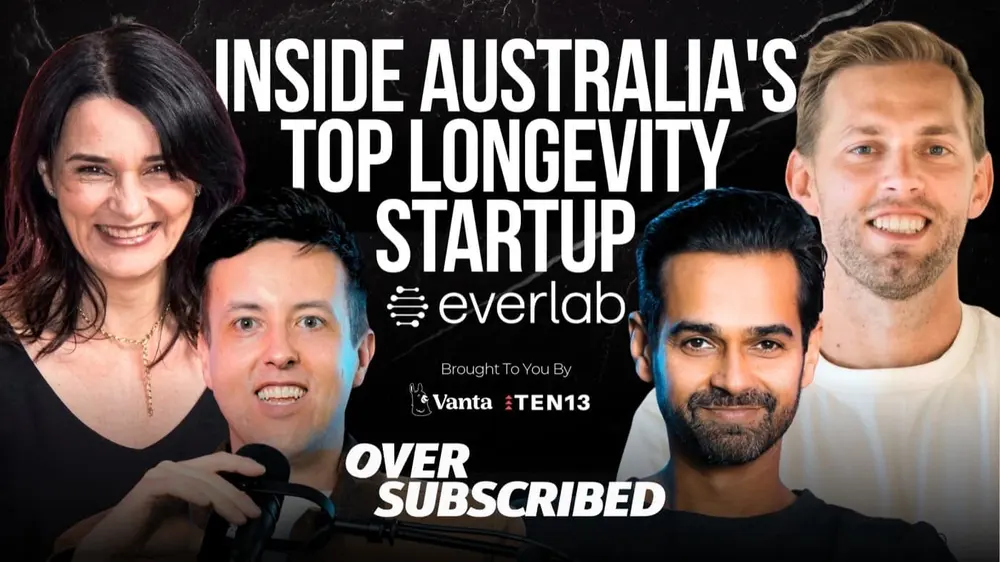 ▶
▶  ▶
▶  ▶
▶  ▶
▶  ▶
▶  ▶
▶ ▶
▶ ▶
▶