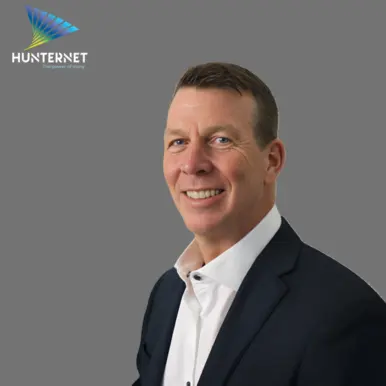
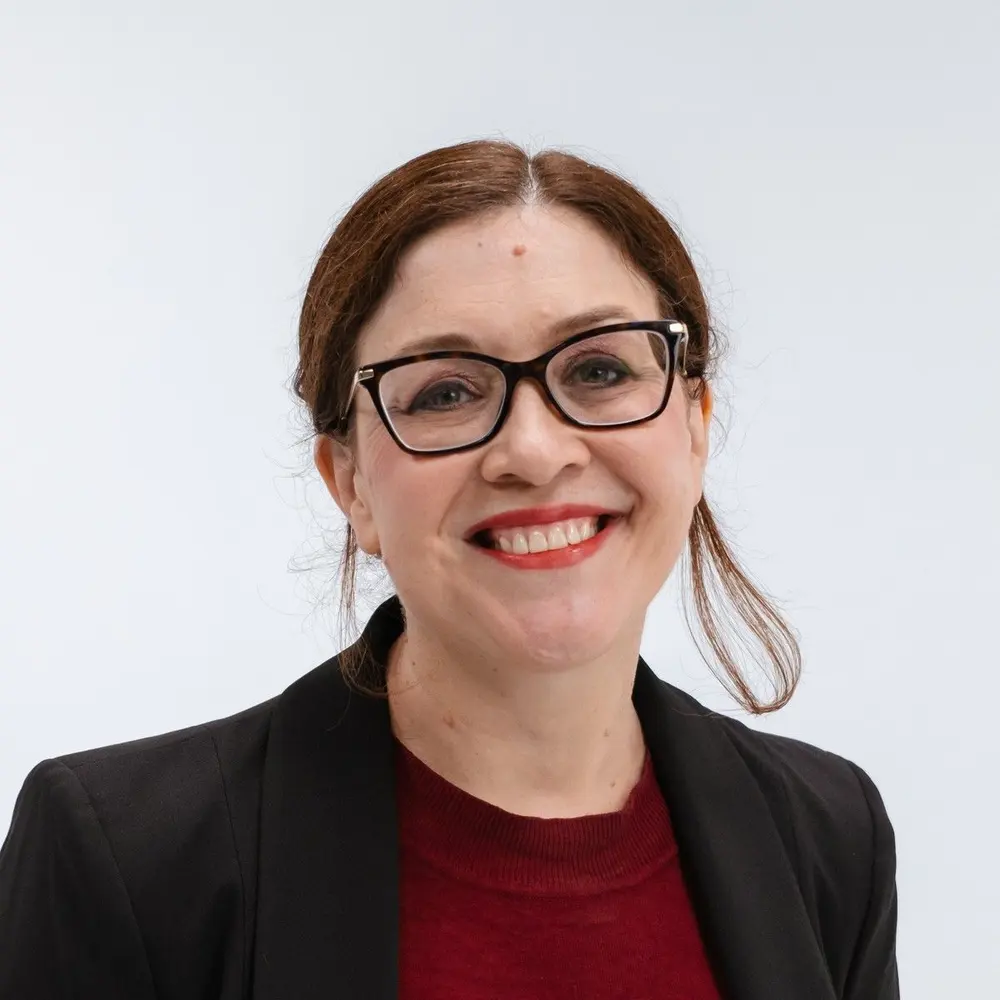
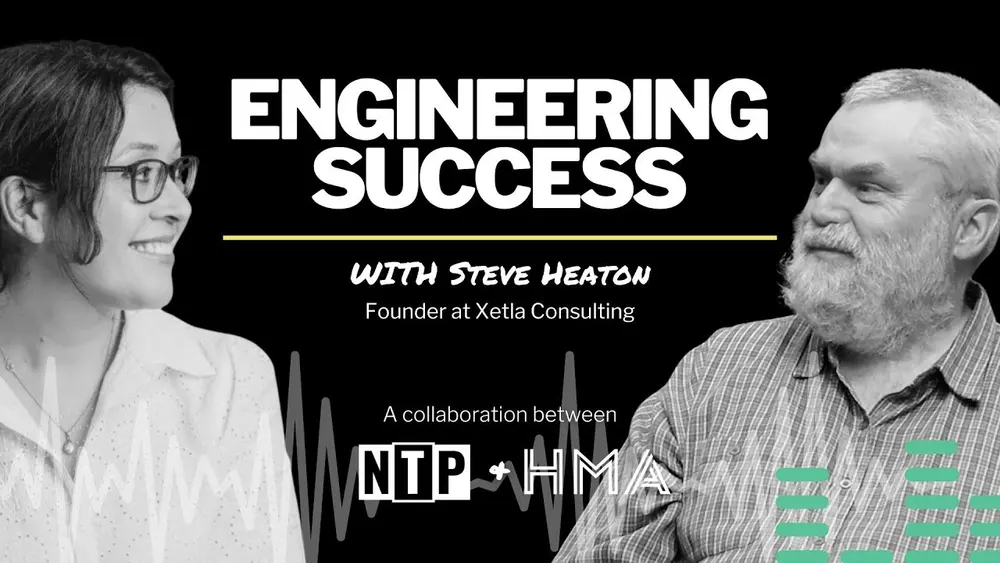
In this episode of Engineering in the Hunter, NTP Talent’s Melinda Sietsma sits down with Bret Barton, HunterNet Senior Business Advisor and University of Newcastle Defence & Aerospace BD Lead, to pull back the curtain on the booming industrial landscape of Newcastle. A seasoned aeronautical engineer, Bret shares his journey from the Canadian military to the frontline of flight testing in Florida, before settling in Australia and working with firms like Nova Systems.
If you’ve ever wondered what it takes to break into defence contracting, Bret provides a reality check on the patience required and the payoff that awaits those who survive the long game. He and Mel discuss the ecosystem driving the region’s future — from the AUKUS submarine program and hypersonics to the transition into new energy — and how local collaboration and a “dual-use” technology strategy can turn regional challenges into a competitive advantage.
About the show Engineering in the Hunter (formerly Engineering Success) is hosted by Melinda Sietsma with NTP Talent founder James MacDonald. It is produced by Day One®, trusted partners in the technology space and the team that helped build Blackbird Ventures' Wild Hearts.
Transcript Search or select a timestamp to jump ▾ 0:00 Speaker A: That's what we're here for in this region. So we get businesses calling us every single day. Hey, I'm thinking about joining. I want to go to defence. And I go, okay, first off, can you wait out 10 years? Do you think you're going to be around in 10 years? Because it might take 10 years to do it. Now, the advantage is if you get a defence contract, you could be set for life. So it's kind of like the big payoff. You know, you've got to eat. That's very long vision. You've got to eat. That's right. 0:33 Speaker B: Welcome to the Engineering Success Podcast. My name is Mel Seitzma and I'm the Senior Engineering Consultant here at NTP. Today I have the pleasure of being joined by Brett Barton. Thanks for joining me, Brett. 0:46 Speaker A: Thanks, Mel. 0:46 Speaker B: I guess I'd like to get started by just learning a little bit more about your background, your career to date, and I guess moving to Newcastle. 0:54 Speaker A: Sure. So I'm Canadian. You'll pick that up from my accent or my lack of accent. I'm an aeronautical engineer since this is an engineering podcast, so I guess I fit the bill on that front. But I didn't always start as an aeronautical engineer. I actually started off as an industrial engineer in Canada, and I can proudly say I've never worked a day of industrial engineering. I joined the military, and the military paid my way through university. There's similar schemes in Australia. Through that process, I did some postgraduate work and got my master's in aeronautical engineering degree in California. And the Canadian and the US military often do exchanges of certain types. So it could be around academics or work. And from there, I entered the field of flight testing. Mm-hmm. So playing with jets and airplanes and all sorts of things that go on them, the systems. And that was really exciting. So as an engineer, getting a chance to work hands-on with really cool hardware and software was a great experience. I then moved to Florida. for 4 years with the United States Air Force and got to play with different types of airplanes and things on F-16s and what have you. And we lived in the US, experienced the warm weather. And once I had a taste for that, I decided I was not going back to Canada, where it was a little bit— although I love my country, it was— and I'd married an Australian woman who was also Canadian. So we moved to Newcastle. I joined a company called Nova System, which was a Flight test originated company, but they were quite small at the time. They were just starting up, and they were starting up out of South Australia in Adelaide, and they were looking for someone to get things going up in this part of the country. So took a gamble because there were only 12 people at the time. 2:36 Speaker B: Yeah, wow. 2:36 Speaker A: Moved everything and all my family, two young kids over over to Australia in Newcastle, and 17 years later I was still with them. I then went on to run a couple of other companies, and through the whole process, some things we'll talk about is. You know, my time with HunterNet and Hunter Defence and now the University of Newcastle. 2:54 Speaker B: Yeah, cool. And are there other people in the family as far as that defence influence and getting into defence in that early career? 3:03 Speaker A: Yeah, it's— I think that's pretty common. So my father was a pilot in the Canadian Air Force and, you know, I think I went to 12 different high schools. 3:13 Speaker B: Yeah. 3:14 Speaker A: And, you know, it was that process. That was what I knew and I was very familiar. We didn't have a lot of money for me to, you know, have the fees paid for for university. So having it all covered under one big scholarship, which is also available in Australia, was a great thing. And so we took advantage of that. And it was a great career. I really enjoyed my time. I worked in Europe, I worked all over Canada, all over the US. I guess just that underlying training gave me an opportunity to come to Australia and work and run some pretty big companies. And yeah. Yeah, great. 3:47 Speaker B: And you mentioned before, so obviously involved in HunterNet and HunterNet Defence. Could you share a little bit more about what they do and their involvement in the community? 3:55 Speaker A: So HunterNet is probably one of the strongest cooperatives in the country. It's a cooperative with about 170 industry member companies, and those member companies span the range of manufacturing across the resource sector, the energy sector, and the defence sector. And then all the support services companies that go along with keeping that ecosystem flowing. They started off in the late '90s by a group of individuals when BHP shut down who said, to survive this kind of market turmoil, we really need to pull together and collaborate and find ways of doing things together. And so a whole group of individuals, I think there were like 6 to 8 at the time, of a couple of leading companies and some from the Hunter Valley, Dulius Wines for one. Interesting. So they pulled together. And then from there, they grew a membership base of like-minded companies that also wanted to collaborate and support each other, really. That's existed through to today. And it's gone through a whole series of iterations. Ivan Waterfield's the current CEO. There's 3 streams within HunterNet similar to the ones that it started with that are very strong. So there's something called NEWE or New Energy. Claire Sykes and Boris Novak run that portion of the business. And that's everything to do with energy, right, from hydrogen to the battery farms. They work with stakeholders all over the world and really well known. It's really impressive. And they run events throughout the year as well. Tim Owen and myself run Hunter Defense. Tim's the chair and I'm the deputy chair. Mm-hmm. And we connect the entire sector into the different elements and different businesses and government as it relates to strengthening defence in the region. And that's a big economic driver and employment driver as well. And then there's another area of HunterNet that's quite active, which is around mining and resources and manufacturing and some of the more traditional types of things that we do. 6:01 Speaker B: Yeah, okay. And I guess, you know, a question that often pops up around some of the local businesses is, particularly in that SME space, is this around access to funding and different government maybe initiatives out there? How are some ways that people can access that funding? 6:17 Speaker A: So everyone, everyone wants money, whether it's, you know, the universities, which is an area that I'm involved with now for a couple of days a week, or business startups. There are support networks that are available, and we'll probably talk a little bit about the innovation side, but in If you're a startup with a great idea, you've got to get access to early-stage funding often. The traditional sources are mom, dad, friends. And that is just the truth of it. The challenge is that oftentimes banks— you don't have enough collateral for a bank to back you in terms of debt funding. But there are organizations that have investors that are looking for those new great ideas. by really inspired individuals. The Hunter Angels is the local early-stage funding. So if you need like $100,000 to let's say $200,000, $250,000, that's kind of the range of funding that's available through those groups. You have to trade something off. Nothing is for free. So you'll be looking at trading off most likely a portion of equity in the company. But my advice would be around that, is a company that never starts. You can have 100% of nothing or 80% of something. Yeah. And oftentimes, the early-stage investors are very talented business people in their own right. And that's generally who makes up that body. They recognize that not everything's going to be a success, but they're very good at spotting alignment with leading trends. And so, what they'll do is they'll provide not just the funding support, but also the business support. And they'll connect you to a mentor group that will be quite helpful in securing a positive outcome. Because remember, now they've got their money invested. So, there's 2 ways of looking at that kind of support. One is, oh, wow, I had to give up 20% of my company. That probably isn't that developed yet anyways. But the other side is for that you're getting something that's going to greatly increase your chance of winning and surviving. So that's that stage. The next— then there's another stage up. So let's say you get that rolling and you've got a little bit of revenue trend. There are other sources of investment for when you want to take the next step. And there are grant programs out there. There are different investment groups. I went to an event last night from the National Reconstruction Fund. And that's basically taxpayer money that is put into a fund to help support mostly manufacturing businesses that are moving out of that initial phase into the next phase. But they still carry with it a little bit too much risk for debt funding, like going to the bank. Yeah. And if you go to a bank, the bank is going to have a lot of very strict requirements, kind of like getting a loan for your house. They go, all right, well, what do you have for collateral? How secure is your job? Let me see all these things. And then if for any reason something hiccups, you know, you're at risk of having that loan called in. Businesses need an option where there's a little bit more of some risk room. That's why the NR— one of the reasons the NRF was stood up. They're willing to, I think, be a little more accommodating to higher-risk situations as businesses try to head down that second stage of development. So that's really important. If that doesn't really float you, like, you know, taking loans out and having to pay interest and you're going to have to pay interest on it, there are grants that are available nationally. And the best way to do it, it's dependent on sector. So there's grants available inside the whole energy space. Whatever government wants the economy to refocus on, they throw out little, little breadsticks or, you know, little carrots and they'll put together grant programs. You know, you're not going to build a business off a grant program, but what you might be able to do is hire in some part-time help, get some assistance, you know, and they vary in sort of sizes. Certainly in the university world, grants are a fundamental part of revenue support, and it's quite necessary for universities. You know, the government wants them doing advanced research because that advanced research fuels and drives much of what goes on inside an economy and all the follow-on. So you can end up with companies that get spun out of universities that then do some incredible things, and that helps energize an economy. So that's why the government says, hey, you know what, we really need to put grants out there. On the defense side specifically, there are opportunities if you're innovating in very specific areas that defense wants you to innovate. There's groups like ASCA, the Strategic Capability Group. So ASCA, you can Google that. And they put out calls to industry saying, hey, if you're working in this area, let us talk to you because we're interested in helping you do that. 11:21 Speaker B: Okay, very cool. So many different options. 11:24 Speaker A: There are lots of options. My advice is no one is going to just give you something for free. The economy needs to be self-sustaining in many ways. And I think a lot of government groups are quite conscious of giving undue assistance to one business over another. Now, having said that, there's lots of support out there. There's other groups too that you can access. Let's say you're living in Newcastle and you were looking for business mentorship, or how do I get a startup running? There's groups like Cicada Innovations in Sydney. that have streams in many different areas, including defense and space, but also in medtech and health and all sorts of areas. And if you're a startup with a great idea in that, you know, just sort of go online and look up Cicada, C-I-C-A-D-A Innovations, and you'll find access to all sorts of resources, including business mentor resources, which are probably the most important. Having someone who's built a business from the ground up providing you guidance on, look, these are the mistakes to avoid, these are the ways of putting together pitch decks, this is how you talk to investors, this is what you have to sort out in terms of your cap tables and this and that. Like, it's complex. If you've never done it before, don't feel bad because most people haven't. 12:50 Speaker B: Yeah. 12:50 Speaker A: But with that guidance, it really gives you a leg up. 12:53 Speaker B: And within that, I think you touched on like the equity piece. Is there a bit of guidance like how far should you go so you're not losing equity when you're kind of trying to get some support? 13:04 Speaker A: And it comes down to a mindset. Are you losing equity? It's like I said, 100% of nothing is nothing. 13:09 Speaker B: Yeah. 13:09 Speaker A: And that is the way you need to think about equity, right? So when you're going out and asking for something from someone, it's the barter system, right? And it Barter system has always been around. The question is, what do you have to barter with? If what you have is know-how and it may not even be IP that's developed yet, it may just be know-how, a good idea in your head, and you're asking someone to give you something for that and you kind of got to give them something in return. 13:39 Speaker B: Yeah. 13:40 Speaker A: Unless they're a family member, which is why so many businesses start with family members. Yeah. Because they usually just say, all right, okay, pay me back when you can and maybe give me a couple of percent. So, you know, you're— but it's very much a closed, you know, friendship-type group. And that is why most of them start that way. When the ask gets bigger, you have to be willing to offset the risk that those individuals are taking, you know, to invest in your company. And it is risky. So from the perspective of an early-stage investor, oftentimes they're looking for that, let's say, 1 in 10 early-stage investments that are really successful. And when they say success, you know, they're looking at, if I gave you $1, I earn $100. Mm-hmm. And they earn that $100 by exiting that investment. And when— the meaning of exiting means as it grows, you'll be looking for that next series or next stage of investment. So that next investor will put money in and that money will be used to pay off the early-stage investors and that's how they basically get a decent return. So it's high risk. If you're looking for somewhere between a 10, a 50, 100-to-1 return, you know there's going to be a whole lot that aren't going to be like that. Yeah. Or everyone would be doing it, right? And I go, wow, that's great. It's better than working on the investing in the NASDAQ or something else. 15:13 Speaker B: Yeah, and I think you mentioned in there, I guess one of the areas for investment is the uni, and you recently started working for the uni. Can you share with us a little bit more about your role there? 15:23 Speaker A: Yeah, the University of Newcastle, it's a critical part of the ecosystem of the area. It's important when new businesses come to the area, they're looking for a workforce, they need that workforce to be developed. Good example, all the engineers, they've got to be trained somewhere. And a university that's local can work with businesses to make sure that the curriculums are aligned, all these types of things. Universities generally have 2 feeder streams of, let's say, revenue generation, like how they survive. And one is through basically the new students that come in and, you know, you pay your money like most people probably listening to this podcast, if they're engineers, have done. Probably thought they paid too much. That's one portion of the revenue. The other portion of the revenue is tied to the attraction piece around research. So you'll have individuals that go through and get their PhD. So they write papers. Those papers that are written under someone who already has their doctorate is really I'd say maybe a world-class specialist in an area. They become observed by the community at large, the global community, including industry. And they go, wow, we're really interested in a lot of that stuff. We would like to do more research. That circle of research and paper writing and attraction to industry and government is what attracts bigger and better academics. And they then also go back and teach and that attracts better students. So it's a little world of its own that you need all parts to be quite healthy. Let's put it that way. So if I want to do research in areas that either industry wants or government wants, I really need someone to help cover my bills if I'm an academic. So that can come from grant programs, of which there are a significant number of grant programs that are aligned around topics of interest to the government. Generally, it's the national level, sort of federal government, but it could be state-based as well. 17:41 Speaker B: Okay. 17:41 Speaker A: And then at the University of Newcastle, which would be similar to others, they also have a consulting arm. So you've got some very brilliant people working in the university that businesses might want to engage on a shorter-term effort. And for us, it's called Tundra, which is effectively a consulting arm of the university so they can do short-term engagement solving problems that are pretty well scoped in a timeframe and a budget. And you would just pay for those services. 18:08 Speaker B: And I guess as far as Newcastle as a region, where do you see the current market overall across manufacturing and defence at this stage? 18:18 Speaker A: Everyone's probably heard of the nuclear submarine program and AUKUS. In a big picture perspective, that's some pretty advanced submarines from the US and the UK. And AUKUS, that's what it stands for, Australia, US, UK. It's an agreement. And it has 2 pillars. Mm-hmm. They call it 2 pillars. Pillar 1 is the submarines, or are the submarines, which there's supposed to be 8. But, you know, like, these are 30, 40, 50-year programs and who knows what's going to happen and who knows where technology sits in the— you see how rapidly it's changing. 18:53 Speaker B: Yeah. 18:54 Speaker A: But right now, that's what that means. Getting submarines located here and built to whatever degrees in the country that where that's going to evolve to hundreds of billions of dollars, like $350 billion. Let's put it that way. 19:09 Speaker B: Yeah. 19:10 Speaker A: So that's significant. What drives a lot of that bill is the infrastructure required to support the nuclear submarines. You know, that's on top of just the submarine itself. 19:23 Speaker B: Yeah. 19:23 Speaker A: And then all of the infrastructure and technical capability and manpower to keep them running. That will also give us the ability to support submarines that are similar but not our own. 19:38 Speaker B: Yeah. 19:39 Speaker A: Which is really relevant in, you know, this area of the world and the challenge that we project we might face in the future. So that's AUKUS Pillar 1. And then on the other side of the sort of the big demand side of what's going on is AUKUS Pillar 2. And AUKUS Pillar 2 are the advanced technologies that the 3 companies or 3 countries see as being areas worthy of development, including research, and where businesses will likely or should be focusing. Those areas include things like quantum. And that goes beyond just— it's not just quantum computing. Quantum just means really small things doing cool stuff. 20:21 Speaker B: Yeah. 20:21 Speaker A: Right? And they can use it for navigation and many other things as well. So I guess that's the way to get your head around that one. Hypersonics is a big one. So things moving really fast. multiple times the speed of sound. And then everything that goes around that as well. When you're moving that quickly, you're generating lots of heat. So really great engineering challenges. And there's a lot of research that goes on in those areas. Your traditional AI and information and energy autonomy is a very big one. So you're seeing things that go under the water. You know, in Australia we have Andril that's making, you know, an underwater submarine. Ghost Shark. I like the ghost part of it. Boeing has developed something, autonomous aircraft, basically Ghost Bat. So I'd say we're super creative with the naming. I'm not sure, Ghost Fly probably will be the next one, nano autonomous. 21:20 Speaker B: Yeah. 21:21 Speaker A: But you can see where the trends are going. And if you're observant at all and seeing what's on the news, you can see that's a big part of defense. The reason it's such a big part is because of something— well, they call it asymmetry, but it's also scalability. So asymmetry is where you don't necessarily have a lot of money, but you're able to create a big effect with a little bit of money. Mm-hmm. So when the Houthis were putting up, let's say, small motorboats and drones against, you know, a US destroyer and they were able to stop a destroyer. That's a great example of very poorly funded, small-scale impacting something that's significantly bigger. So that's the asymmetry and they're looking for that. And you see that, that's all over the world. So this is a common thing. 22:16 Speaker B: Yeah. 22:16 Speaker A: And then the scalability that you're seeing on in the news and what have you. But there's a lot of other practical uses for a lot of this technology as well. And I think that's the key. So if you're a business and you're going like, right, I would like to take advantage of some of that big money that's coming down, you'd want to be aligned in those areas. But you don't want to be solely focused on just defense as a customer. Defense has been around forever and it will be around forever. Your business is fleeting. I guess. So you want to take advantage of the entire market. 22:56 Speaker B: Yeah. 22:56 Speaker A: And the best business strategy to have is, hey, what technologies can I apply to defence but also apply other— otherwhere? A good example might be I've got a really great cyber product, and that would be quite relevant to the world of defence, but also flying drones. I can deliver parcels for Australia Post. Or I can have, you know, a military as a customer as well because I do really cool things. Advanced navigation systems, that's great for someone's yacht or, you know, a military ship. So dual-use or multi-use technology is the way that any business that wants to really get involved with the defense— because you won't be able to build a sustainable business plan that's resilient, in my opinion, you know, with the ups and downs of defence. 23:47 Speaker B: Yeah, could be said for any industry though, like that diversification piece. 23:51 Speaker A: Yeah, 100%. You know, most businesses start— a traditional way of starting would be you're working within a business and you're doing something and it becomes really relevant. The business itself doesn't necessarily want to do it, but it wants more of it. 24:08 Speaker B: Yeah. 24:08 Speaker A: And then oftentimes you feel those people that were doing it going like, oh, I could start my own little business, and then they break out of the business and they start it. And then, you know, Joe's business down the road that does something similar goes, hey, I'll take some of that. And it starts to scale. And you see a lot of groups like that, especially the ones that do, let's say, support in mining. Yeah. You know, like, I built a bolt that does this and, you know, a support structure that does that. I've got, you know, a structure system. So you see that a lot. And I think that's a normal evolution and a great way to start. At some point, you go like, right, I've run out of mining businesses, but I want to keep growing. So you can either develop new product, so you can diversify your product line, or you can diversify your base. Sometimes you just have to diversify your geography as well. 24:58 Speaker B: Yeah. 24:58 Speaker A: Not that many mining companies around Newcastle, but there are in South Australia or north. So there's lots of ways of diversifying that through a risk-managed process. Not just I need another sector. Yes, sector is a viable one. It's just a matter of knowing what you're getting into. My only advice would be talk to talk to individuals who know this sector. So if you want into defense, talk to someone like myself or Timo, and and we're there for that. To be frank, that's what we're here for in this region. So we get businesses calling us every single day. Hey, I'm thinking about joining. I want to go to defense. And I go, okay, first off, can you, can you wait out 10 years? Do you think you're going to be around in 10 years? Because it might take 10 years to do it. Now, the advantage is if you get a defense contract, you could be set for life. So it's kind of like the big payoff. 25:50 Speaker B: Yeah. 25:51 Speaker A: But you, you know, you've got to eat. It's very long vision. You've got to eat. That's right. So, you know, everything's in balance 25:59 Speaker B: locally outside of Hunting It and those groups. You're also involved with Hunter If and the Local Engineers Australia. Could you chat with us about, I guess, the impact that some of those groups have locally? 26:13 Speaker A: So let's start with Engineers Australia since this is an engineering podcast. Engineers Australia started in Newcastle, which is interesting. We have divisional committees in the major centres, major cities, so Sydney, Melbourne, Adelaide, Perth, ACT, and also Newcastle. So New South Wales has 2. Mm-hmm. Which is unique. And so we have a very strong chapter locally. And within that chapter, that division, there are a series of groups. So there's a divisional committee that helps run the Newcastle Division, and that's all made up of volunteers, but they're all professional. My wife happens to be the president of the Newcastle Division, Hillary. And— but it's representative or reflective of the professionals that are on there. So Hillary does, you know, as executive Port Waratah, and I'm on it and a bunch of others. AusGrid's covered, private industry, all sorts of things. And then there's groups that also support a divisional committee. So I'm also on a group called the Leadership and Management Committee. There's one around education and all sorts of different— and then all of the engineering interest areas have groups as well. And it's all voluntary. So it's— while Engineers Australia is a membership-based organization, and its focus is around accreditation and governance and ensuring the professional body remains healthy and strong within Australia. At the divisional level, it's very much focused on the members locally. Mm-hmm. So that's terrific. So just by its nature, we do a lot of work with the engineering groups in the universities, but we're also associated on the technical side with the the TAFEs and provide assistance to that. So that's a great organization. It's one that's changing and growing. Probably the area that's most relevant would be how it fits into the governance framework nationally, and it's a little bit different in different countries. Mm-hmm. In other countries, the requirement to be an accredited professional engineer working on something fairly significant is written into law. In Australia, it's not. 28:34 Speaker B: Yeah. 28:35 Speaker A: And that's a big issue. And it's interesting, it, you know, it would kind of be like having someone working on your body, but you don't really have to be a doctor, right? You know, or, or I'll just give myself that title. And Australia is very much like that in engineering. You can, you can just start calling yourself an engineer, go out there and start working on things. Funny enough, the technician trades Are much more regulated than the professional engineering trade, which is if you think it makes no sense, it's because it makes no sense. 29:05 Speaker B: Yeah, 29:06 Speaker A: and everyone knows it, right? I think there's a natural fear of oh businesses don't want to be forced to have to hire, and because you'd end up having to pay proper salaries to individuals with certain credentials, and I think there's just a. Pushback for some reason. Engineers Australia is putting a lot of effort in trying to get that swung around. So you see issues like buildings being condemned in Sydney. And now construction is one area, very small area of construction is one area that's being brought under control. Queensland's a little bit different at the state level with RPEQ. And, you know, anyways, that's the world of engineering. And I'm involved with that. The other group that I'm involved with is HunterIF, which is the innovation hub for the region. And it started, I think, probably 5 or 6 years ago with the creation of the Hunter Innovation Festival. It's kind of how the acronym got started, which is a little bit of a challenge for us because we're not a festival. We run a festival. But we have a very strong board of about 12 people. Linda from New Tech People just joined us, which is terrific. Zara Crichton is our new CEO, and we just put a CEO on, and that's through the funding that we've been able to raise both by sponsors but also the festival. Zara has an incredible history in running innovation organizations globally. Yeah. startup-y groups which really foster and support some of those things that we talked about earlier, like the young groups or young entrepreneurs trying to get in. Yeah. So that's really exciting. There's a lot of potential, I think, for HunterIF to be not just transformative, but impactful and relevant. And it's a great opportunity. So we've just appointed a new chair. Claire Quigley. 31:08 Speaker B: Yeah. 31:08 Speaker A: And Claire has got a great background in managerial consulting and mentoring and all sorts of things. So that combined with, you know, all the other experiences of the board and the board is purely voluntary. So, and it's a working board. Yeah, it's like, okay, we got to run the festival. Let's pull it together. This year, my daughter-in-law, Beatty Barton, who works at the Melt, she worked with Zara and they really ran a great festival. 31:36 Speaker B: Yeah. 31:36 Speaker A: And really the rest of us were just kind of hangers-on and supporting and clapping. They did a great job. So that model will go forward. But yeah, no, it's a terrific group and it's reflective, I think, of the region where we've got a lot of these, a lot of very good groups. So HunterNet, Hunter Defence, Committee for the Hunter, the Business Chamber under Bob Hawes and HIF and Ninjas Australia. So there's a lot of these groups running around. One of the things that we need to do as a region is to coordinate and collaborate and not overlap. Yes. It's important to have the broad spectrum of need of a community covered without, you know, sort of walking on each other's grass where there's too much overlap and not enough unique value offering because, well, you've got nowhere to take it, right? Whereas if we're all pulling in the same direction outside the competitive space but inside the collaborative space, it can be quite powerful. And that might be a little bit of what HunterIF can bring to the table as well. There's a little bit of a unique sort of approach to running some of that on a non-threatening basis to all the other organizations. So yeah, it's very exciting. 32:51 Speaker B: Yeah, I love the events that they have throughout the year. I think it's a good highlight, especially to some of those smaller businesses that you wouldn't even hear about. 32:59 Speaker A: And there are a lot of them going on. So, you know, I've run a couple of panels just myself on where we've had, you know, innovators from the university, companies that are doing some really cool things. We've run them on energy. We coordinate with other groups like NUI. Yeah, it's a great one where we might run something on sustainability and do a co-hosted type event. We've done— we've contributed into things like the Hunter Manufacturing Awards, where you've got all the best manufacturers of the region. And, you know, we've had lots of winners inside that. Yeah. From different startup businesses to people running businesses on the board. So it's a— the potential for the region is quite strong and there's lots of really great things going on. It's the question is where we can take it. 33:51 Speaker B: Yeah. Yeah. And I think even that highlighting the very different industries we had through Hunter IF was really important because I think I even attended an event a couple of years ago. It was out at TOCALES. It was looking at the agtech space. So, so many different emerging industries. So 34:06 Speaker A: yeah, there really is. And some of the things that I've, you know, we're doing at the university gives me a chance to see a lot of that, whether it's new manufacturing techniques, whether it's how to change I don't know, how to get new carbon material for coatings on different types of things out of biomass. I had a meeting this morning with a cool company called CO2 Australia who's doing really cool work extracting the oils from eucalyptus-type plants and using it for sustainable aviation fuels. 34:42 Speaker B: Yeah. Wow. 34:42 Speaker A: I know all these Cool things are actually happening. So if you're an engineer and you go like, oh, wow, I'd love to get involved with something, the key is just get in there, get connected, maybe volunteer on an EA side or HunterIF or whatever. And you really start to get a flavor for what's happening. 35:01 Speaker B: Yeah, it's a very supportive community, I think, across them all. 35:04 Speaker A: Yeah. And I wasn't really aware of it until I started digging into the different aspects of it. I mean, I'm privileged now because I have a little bit of time that I can spread around. Like, I understand if you're building a new career, you can be pretty busy. So yeah, but that's good. 35:20 Speaker B: Yeah. And you spoke a little bit earlier just around young entrepreneurs. What does that kind of innovative ecosystem look like in Newcastle? 35:29 Speaker A: Well, I had a discussion last night at the National Reconstruction Fund with I lost her name, but she was with Melt Ventures. Mm-hmm. And we talked specifically about that. Her perspective, which I think she put some thought into, so it's worth probably raising here, was that there wasn't a lot available in terms of, I think, organized, structured support for young entrepreneurs at the very beginning of their journey. There's probably more once they get going, like, to be frank. And there's— and I think that starts to happen when you sort of start heading down the I need money route. 36:17 Speaker B: Yeah, yeah. 36:18 Speaker A: But prior to that, you know, I'm not even outside of individual mentorship, which you can get access to. Mostly it's altruistic, you know, People are just willing to to give you, and there's a lot of individuals like that. So I think maybe a fair question for someone going maybe they're just in their last year of uni and they're going like wow I've got some great ideas. The organizations that we've mentioned so Hunter If reaching out and just saying I've got nothing I need help you know and just asking for help and I think you'll get more than you want probably yeah Engineers Australia is. Similar. Yeah. So whether they help you individually or connect you into businesses that are maybe aligned in your idea area, and there's lots. 37:07 Speaker B: Yeah. 37:08 Speaker A: The one thing I do know, engineers love to help solve problems and help contribute. So if you're looking for engineering-type assistance, that's there. If you're looking for business assistance, then engineers that have run their own businesses That now are in kind of that quasi-retirement zone, they're always willing to help out. 37:30 Speaker B: Yeah. 37:31 Speaker A: And the whole network through Hunter Angels. So a good friend of mine, Prem Chand, is chair of Hunter Angels. 37:36 Speaker B: Yeah. 37:37 Speaker A: And he does more free volunteer business mentoring than anyone I know. 37:42 Speaker B: Yeah. 37:42 Speaker A: So it's there, it's available. Sometimes you just got to know what doors to knock on, but I've just given you sort of 3 or 4. 37:49 Speaker B: Yeah. And I think the iTwin at the uni does some great work as well. 37:52 Speaker A: 100%. And yeah, the uni has different levels of support available to them, but there's lots available. Yeah. So if you're just kind of getting up and going, you're going, hey, where could I set up? The iTwin is great. So that's the Cube building. It's nice views and there's great people up there and there's other startups too. So if you kind of already got your business running, And you can get up there, then yeah, that's a great option. 38:18 Speaker B: Yeah. And I guess as far as the Hunter and the direction we're heading, what do you think that looks like in the next 5 to 10 years? 38:25 Speaker A: Wow, that's a really good question. You know, there's lots of— here's what I know. The world is changing at an incredibly rapid rate. You know, the political dynamics that we see, that we've seen in the last 2 years are different than anything we've seen probably in our lifetime. Yeah. Groups that you thought you could rely on, both from a trade perspective or a defense perspective, are not the same. That's shifted around a lot. Allegiances, the stability of those relationships, that's changing as well. You've got this huge change of state going on. And I think it's going to survive longer than Trump. So I like to be frank. So I think it's not necessarily something that's going to get rolled back. So we're finding this new sort of order of things. The challenges around information and the impact of AI and I think the future impact of quantum computing and when that becomes available. So your ability to protect information and use information and mimic information is going to have quite a significant impact as well. So all that being said, there's a lot of discussion, like if you think more about the more traditional capabilities around manufacturing, the New South Wales government, by way of example, has 3 channels focus within their 2035 strategy. So they've got a state-based strategy and then they have a blueprint for innovation over the same time period. Basically, it's a 10-year time period and they're looking at net zero as a focus area, housing and affordable homes as another one, and then advanced manufacturing. So those are the 3 pillars. What does that mean? Means if you want state-based funding help, get in those 3 pillars. And this is the way you do it as a business. You just go, okay, or an organization. How do I align? And if I'm aligned, then I've got a better chance of getting some support. So what does that mean for our region? Well, if you want advanced manufacturing, you've got to have something to manufacture. That's probably my, my point every time I hear something about advanced manufacturing. There's a lot of advanced manufacturing facilities set up. We've got one at the university, there's one in South Australia— or not South Australia, in Sydney. Where they've got all the equipment you could imagine. You can get out there and test and trial things and get advice and do all sorts of things in preparation to set up your own business. You still have to have something to manufacture. 41:12 Speaker B: Yeah. 41:13 Speaker A: So quite critically is the requirement of businesses here to do— we're going to need to move to that next level of we can't just dig stuff out of the earth and send it away and then buy it back. 41:26 Speaker B: Yeah. 41:27 Speaker A: You know, same, same. Canada has the same issue and they're shifting. I would offer it's the same thing regionally here as well. We have some incredible advantages in terms of a port that's accessible. We've got transportation routes, we've got security, we've got a legal framework. We have stability of an economy, market rules. a workforce, beautiful place to live, academic institution to train people. So like, we've got a huge amount of advantages here. The key is taking advantage of them and, no kidding, doing some cool things. And there are cool things happening. So a company that I met recently called InQuik builds modular bridges. And so they're about a 120-foot span, but they've come up with great ways. And this is Basically up in, just outside Maitland Way. They can build a span inside their factory and transport it to a location. So let's say you have a bridge washout and you want to put in a new bridge, they can do that very quickly. And then they pour the concrete on site inside the form structure of the bridge. So instead of building the form structure out over the water or what have you, or sections, they can actually do 120-foot spans. And these are meant to last forever. 42:51 Speaker B: Wow. 42:51 Speaker A: Yeah, it is quite incredible. They've expanded just recently into the US and potentially into Canada. So that's a— and I hadn't even heard of them. 43:01 Speaker B: No, 43:01 Speaker A: local business. And I went out there, visited their site, chatted to their team, and I'm kind of like, you got to be kidding me. This is, this is pretty cool. And so they're doing some great things. And there's other businesses like Omnia Wheels, a great— I mean, So the region has a lot of capability, has some very good businesses, it has some good risk takers, it has people who are aligned, it's got support structure. It could be incredibly powerful. There's a lot going on in the new energy precinct. 43:30 Speaker B: Yeah. 43:30 Speaker A: Probably one of the disappointing things I think that I've seen since sort of moving to the region is resources are critically important to the country. And our ability to use those resources in ways that generate revenue for the country that keep everything else going. And it's very easy to lose sight of that until you lose it. Mm-hmm. All right? So the funding that goes into university research, that comes from somewhere. And generally it comes from tax dollars, and tax dollars are raised off the backs of those companies. Everything needs to be kept in balance. And I think we need to— and when it comes to issues like climate is a good one. Climate is important to everybody because we all breathe this— breathe the air, right? Mm-hmm. Where the discussions generally come down to are, how do we move from state 1 to another— to a future state in a way that we don't destroy the economics behind I think the source funding for so many other things in a balanced way, but still progressive. 44:41 Speaker B: Yeah. 44:42 Speaker A: And so there's a little bit of a— there's a theme of moving to extreme conversations, you know, that I often hear that I find pretty disappointing. And it doesn't balance well. It probably doesn't balance well with a lot of engineers, actually, because we tend to— okay, this doesn't really make sense. The equation's not balancing out for us. So I'd like to see us probably pull together a little bit more. It's the same issue that you have around defense. You know, it's easier to not like things in defense, but defense is not offense. Defense is defense. And when you need defense and you haven't planned for defense, you're in a lot of trouble. 45:18 Speaker B: Yeah. 45:19 Speaker A: Right? And we are in a vulnerable part of the world. We just are. And you can do what you want. You can try and negotiate as much as you want, but take a close look around you, what's going on. So it's a necessary part of just living in today's society. So I think just balance. And then I think as well, we need individuals to speak up because oftentimes the group with the megaphones are the ones with the contrarian position on sometimes extreme topics and extreme positions. But we believe because no one else is voicing something contrary to that, that that becomes the overwhelming sense of majority, and it's actually not. And then you start to see things start to roll out where a large majority of the people aren't in agreement with it. So I think we just have to be conscious of that. We have to, you know, probably speak our minds when we can about some of the things that we appreciate and like. And yeah. 46:17 Speaker B: Yeah. And lots of community consultation with a variety of groups, isn't it? 46:22 Speaker A: Well, there are, there are, you know, and Great example would be the work Link Horton and the airport crew are doing at putting up a new area to attract business, and some of those are defense businesses that are there to help keep our country safe, like to be frank. And plus the international expansion. But the amount of, you know, I think coordinated negative press that was geared up to really tear down something that a group of people are working so hard to build up in our region, you know, I find quite disappointing. And oftentimes, you know, the individuals that are doing that are doing it for personal gain. 47:00 Speaker B: Yeah. 47:00 Speaker A: And the problem is the general public doesn't understand that or doesn't see the politics behind that. And there's not a loud enough voice because it's not interesting enough to, you know, get up there and say that. So, you know, I guess we never want to get in a position where The actual entrepreneurs of our society and the people who are willing to put all the effort in and make the hard decisions and look forward and look into the future, we're not that quick to slay them if things go slightly awry because it's not that easy. It's not that easy at all. 47:34 Speaker B: Yeah. And a lot of, I guess, even startups in that entrepreneur space, like there's mistakes that happen. That's how you learn. That's how you 100%. 47:43 Speaker A: And there's lots to— you learn more from— I mean, everybody says that. Everybody says it's okay to fail, but there's an awful lot of people who don't put up with failure. And certainly the press loves failure because that's all they'll talk about, whether it happens at the government level or at the business level. 48:00 Speaker B: We often hear, I guess, about that kind of rich talent within the local workforce. What are you as some of the potential skills gaps that are emerging with some of the changes in the local industry? 48:11 Speaker A: Yeah, skills gaps are going to be related to probably the fastest and the most advancing technologies. I think the challenge with our region would be one around demand for competencies, like let's say it could be someone to do the more traditional work of building homes. It could be your traditional trades, and we just don't have enough of them. And there are some pretty good predictions. I think The Australian or The Newcastle Herald had predictions of significant shortages over the next period of time. So that is one area. How do we make sure that we have this underpinning sustaining skill sets that oftentimes are more skills based on not academic learning, but you're good at it. I know I'm not articulating that very well, but I'd be a terrible carpenter. 49:11 Speaker B: Yeah. 49:12 Speaker A: I'm pretty good at some other stuff, but I'm not that. There's some natural skills, like the technician-level skills are truly skills. And in many ways, it feels like those individuals are born with them. some of those attributes. 49:25 Speaker B: Yeah. 49:26 Speaker A: They can work with their hands. They see things. They sense things. And they're exceptionally good at it. We need a lot— you clearly need lots of those, right? Then there's that next level of maybe the feeder systems into the new technologies. And you need people who are interested and focused on those as well. And then you need opportunities for them to take advantage of it. So it's It's not much good if we've got teaching courses in universities and the students come in. A good example would be we have a great aeronautics curriculum at the university. So we train up a bunch of aeronautical engineers, of which I'm one of them, and then they can't find a job. Mm. Or the job that they're trained up for is slightly misaligned with where the market needs them to be in terms of the gap. So an example would be you might think an aeronautical engineer, if they're training up to do things like aircraft design, but there's not a lot of new aircraft design going on in Australia, that's all happening at Boeing in Oregon somewhere or Lockheed Martin in Fort Worth or other locations, then that's not really helpful to them. Mm-hmm. So making sure, I think, that we also match our curriculum with the foreseeable job market. 50:48 Speaker B: Yeah. 50:49 Speaker A: That'll be an interesting one. So I think that's quite relevant. The other one on the academic side, the training side, that I think is a topic worth discussing is microcredentialing. 50:59 Speaker B: Yeah. 51:00 Speaker A: I'm part of a working group around— so Australian Submarine Corporation is the group Effectively, that's overseeing a lot of the requirements to support the workforce that's going to be under future demand for the submarine program, of which there's a lot of academic institutions, universities involved in those discussions. And it's centered around, if we need A through Z, do we have the capacity to generate those kinds of skill sets? Locally, and what would that look like? And how would we do it to support those major programs while we're doing other things? You know, like rare earth minerals, which we just heard announced, and the manufacturing that apparently is going to go along with the rare earth mineral are going to draw on resources and workforces that are going to be very similar to all the other ones, right? So the challenge for Australia is if you only draw off localized areas where the physical work is occurring and you haven't done enough to disperse the work, then you end up with a heavy supply-demand inadequacy, which usually results in massive wage spikes and one industry competing, one sector against the other. So that becomes a real issue. 52:23 Speaker B: Yeah. 52:24 Speaker A: So how do you broaden out your skill sets? One way that they're looking at, which makes a lot of sense, and I believe everything is going to be shifting this way eventually, is microcredentialing. So what does that mean? So if the submarine corporation says, hey, we need, let's say, an electrical engineer not to work on every potential aspect of electrical engineering, but to work on nuclear reactor type electrical engineering stuff. And I'm not an electrical engineer, but that would be a very fine-tuned curriculum. So instead Instead of a 4 or 5-year curriculum, depending on wherever you're getting it, maybe it's a 2.5-year curriculum now. So you have some baseline engineering credentials. And then you have very focused electrical engineering. And maybe you're even coupling it with electrician training so you can actually do something, not just play around with papers and talk about doing something. This is the way to think. Yeah. This is where things will be going. And it has to go that way so that we have a workforce that gets turned over quicker, that is more capable to do very specific things. Now, the downside of that is that it's great to be a general engineer where you kind of like have a little bit of everything of which you— I think if you ask most engineers, how much of it are you specifically using? You probably get, I don't feel like I'm using a whole— I know it shapes my thinking, but the specifics of using that class in this job, okay, jobs just all different, right? 53:52 Speaker B: Yeah. 53:52 Speaker A: So that's the nature of it. So I see things going very heavily towards that. World Engines Australia is looking into it. 53:58 Speaker B: Yeah. 53:59 Speaker A: The universities just had discussions today with the university. They're looking into it. So it's common. So it'll be a really interesting sort of landscape change that will certainly impact the local region and advantages and ways of taking advantage, I think, of where technology is going to be heading. 54:17 Speaker B: Yeah. I think something I see sometimes is that people can upskill and do the microcredentials, say even a good technician, for example, you know, they've got— might be an electrician and they're wanting to learn control systems. But unfortunately, without the practical skills, that's where I see another gap. So we almost need some people to take some interns in to help just get that bit more practical help as well. 54:41 Speaker A: Yeah, and that's really observant. It'll be new, right? 54:47 Speaker B: Yeah. 54:48 Speaker A: What will be evident is that the end product or the requirement of the role to be filled will be a much bigger driver of what the skill set development needs to look like. 55:01 Speaker B: Yeah. 55:01 Speaker A: So, it'll be, okay, to do this class of job, which needs to be mapped out and understood fairly well. then we need to really develop in this area. That's probably not something we've traditionally done. What'll be more interesting is can the institutions change? 55:19 Speaker B: Yeah. 55:20 Speaker A: Right? So it's very different to how a university has been constructed for the last several hundred years. Like, to be frank, they've always done it based on we'll tell you what you're going to need and this is what it takes to be a doctor, this is what it takes to be a nurse. This is what it takes to be an engineer. It's going to be a hard pill for a lot of groups to swallow. And they're not necessarily organizations that change very well or change very quickly. One of the things that will force them to change will be competitive dynamic. And I think their requirement or their incentivized requirement to change. Yeah. So in other words, if one group starts to outcompete you by jumping on board early, which I hope it's going to be the University of Newcastle, and lead it from the front, that will be the group that starts to attract very quickly. And that alone, that first mover, will scare everyone else to changing quite rapidly. Yeah. Does it mean you're going to lose the traditional degree? No. But it means you're going to have options. And I really like the one that you came up with, which is if we shut down a mine And we have a whole bunch of individuals that are really skilled in terms of they've done things, maybe it's on the accounting side or manufacturing side or working in certain types of environments. So they've got a whole lot of skills. How do we then position them to them, let's say, doing welding in a closed environment? Hmm. Wow. Okay. Well, they've worked in a closed environment. They've done welding. And now you're asking them to do it inside something that looks like, you know, a sardine can. Yeah, perfect for the submarine program. So like, this is, I think, kind of the way, but it's very bespoke. 57:03 Speaker B: Yeah. 57:04 Speaker A: You know, so you've got to have a really willing institution to take that kind of thing on. You've got to have instructors that are willing to show flexibility. You've got to have a workforce. You've got to have accredited— how's Engineers Australia going to get their head around it? Because Engineers Australia accredits all the university engineering programs. So what you're now asking them to do is say, right, okay, if you do this, let's say a smaller portion of an approved academic or an accredited degree, but then chop it in half and add on a bunch of things and couple in some TAFE and do some welding, what do you call it? 57:39 Speaker B: Yeah. 57:40 Speaker A: It's quite a thing. 57:42 Speaker B: Yeah. Yeah, I wouldn't like to be the person processing all the paperwork. 57:46 Speaker A: No, I know. It'll be interesting to watch it. So I think though we're under a lot of change, like in this next decade on the academic side and the industry side, you're going to see a lot of pretty interesting things happen, I think. 58:00 Speaker B: Yeah. 58:00 Speaker A: Hopefully for the good. 58:01 Speaker B: Yeah, I'm sure it will be. We've got to get into all these new industries. So looking at you as a leader, not necessarily for any of the organizations that we've been chatting about, but more of the individual? What's your philosophy on that kind of ecosystem and how we move forward in the region? 58:17 Speaker A: There's a lot of strengths already. 58:20 Speaker B: Yeah. 58:20 Speaker A: So we've discussed all the different organizations. So we're at a good starting point. Collaboration is not a static thing. Collaboration is, it takes a lot of effort and it takes a lot of awareness. It has to be established in a non-threatening way, because you've got a lot of organizations that can very easily feel threatened if they collaborate or if one other group gets a little bit too big. Or especially with membership-based organizations, if you're drawing from similar membership bases, if you're drawing from similar sponsorship bases, if you're drawing around similar themes, what you're doing is diluting the available pool on all 3 resource sectors or categories for each of the organizations, which can be very challenging. And that's where you start to get a little more competitive and less collaborative. I think there is a way of mapping out a collaboration framework based on— I like to think of it almost like a hub and spokey. It's not really a hub and spoke, but a hub a hub concept where the boundaries of the influence of the organizations are articulated and well understood and accepted by, let's say, the other hubs. So by way of example, the Hunter IF could be the innovation hub that is— that has objectives and a mandate to attract investors into the region, attract young Entrepreneurs, develop entrepreneurs, support the ecosystem. And you might do that through an element of government, academia, industry, support innovation concepts within established businesses, keep it in that lifecycle phase. And that would keep it quite unique. 60:20 Speaker B: Yeah. 60:21 Speaker A: HunterNet, which is a very well-established organization as well, which is membership-based, deals with more established businesses inside the manufacturing realm or people that do things and produce things as well as the direct ecosystem that support those types of clients. 60:42 Speaker B: Yeah. 60:43 Speaker A: That would be a nice carve-out and that's currently the one pretty much that they work in. The business chamber has all the other businesses and focuses on all the other businesses. And maybe then we also look at other groups that, you know, have their carbon. So I think the first step is understand your swim lane, understand what we're trying to do as a community and the benefits that we can see sort of stream from that. And then I think work at actively engaging on that front. Government clearly has a role to play in this and reinforcing it. Yeah. But I actually think there's a lot of government's sort of activity in this region, which is, you know, we've got a lot of different— we've got a business attraction committee or, you know, the RDA groups are doing things. Investment New South Wales funds our Defence Task Force. We're getting funding from, you know, the innovation side of New South Wales government also on related to the blueprint and Hunter IF. So there's a lot of things that are going on that are really quite positive. But yeah, I think it's a matter of just staying coordinated. 61:51 Speaker B: Yeah. And I guess on a personal note, what drives you personally with all these groups that you get involved with? I 61:57 Speaker A: don't know. That's a very good question. I'm not sure anymore. I thought I knew. I do see the collaboration as kind of being my sort of little pet project. So I figured if I joined enough of the groups, you know, I could combine them and bind them into supporting each other. Some of it's worked and some hasn't. Very fortunate with Ivan and Tim and the group at HunterIF and the university because they're well aligned with the concept. So you need mature leaders who also agree and are working hard at it. So I think there's a lot of willingness, but it takes effort and it's tiring. And so I think finding the right opportunities where all that can happen. So being involved with that kind of drives me personally just to assist. I feel like some things are working better than others, and that's okay. My time at the university, that— I have to admit, that was purely altruism. So it was— I've just always believed that, well, it's been a critical element of HunterNet and Hunter Defense and NewE. The university is critical. Yeah. Yeah. And they participated. And there's some great people there. The region needs a strong university. What happens is when you take something like that for granted and it comes under threat, which I would say it is reasonably under threat now, so it's struggling financially. So you've seen some stuff in the papers about where they've had to lay off some people and what have you. So that's under threat. That's a business trying to restructure to do better. And a lot of people are trying really hard to make it better. It's a community involvement and support thing. You've got to pull together because if you're not careful, you'll lose the university. And that would be an incredible loss. 63:49 Speaker B: Yeah. 63:50 Speaker A: You know, for the region. I see it very similar to the Hunter Valley. We held a— let's call it an innovators lunch with about 30 professionals from the wine sector, the tourism sector, heads of marketing and businesses and the councils. That's another region that's under threat. Hmm. It's a challenging market. It's a challenging competitive market globally. They're susceptible to so many risks that traditional farmers face as well. But just keeping it on the Hunter Valley, If we lose the Hunter Valley or lose the impression of what we know it as right now and it turns into something else that's not as nice as what it is right now, then it's a huge loss. And the reason it becomes a loss is not because people weren't willing to support it, but generally because they didn't know they were under threat and we need to support it. Hmm. To be frank, a good example would be if you go to a restaurant downtown and you ask to see the Hunter Valley wines that are being offered, or if you go to an event, and an event could be sponsored by the government or the city or whoever, there's a good chance you won't see any Hunter Valley wines on there. Yeah, wow. I know. That's a great example of someone on our doorstep that's part of our family, our regional family, that attracts tourism not just to go there, but they come to the region. Critically important. We take them for granted. If you live here, you go up there whenever you feel like. But if you have visitors over, you always go up there, right? 65:31 Speaker B: Yeah. 65:31 Speaker A: So you just take it for granted. Yet when we go out and buy dinner and buy a wine, it doesn't cross our minds to go, no, I think I'll pass on the Victorian wine and helping Victoria out or South Australia out. I'll actually have a Hunter Valley wine. And the question should not be, Gee, which is my favorite wine? It's important to have good wine. You can't have garbage. And they don't have— and they have some of the best Semillons in the world, but they also have some other— there's some really nice wines. You may have a personal preference for one or other, but you do it for different reasons. Kind of like if your family member was starting a new business and, I don't know, they were making something that you kind of liked, but maybe wasn't your favorite restaurant, but you still go there. 66:14 Speaker B: Yeah. 66:15 Speaker A: Because you know that over time helping them is better for you know the bigger picture. 66:22 Speaker B: Yeah. 66:23 Speaker A: And this is the one thing I do feel that's lacking in the region. And if if enough people don't sort of coordinate and collaborate and pull together and understand why they're doing it, that you know sometimes in some cases it might just be too late and be incredible shame. So we've actually got the Hunter If. is working on this specific challenge. 66:43 Speaker B: Okay. 66:43 Speaker A: And so innovation goes a lot more than just creation or invention, or it's around how can we relook at the culture and the society and the different community groups and maybe reinvent how they're connected so that the region thrives and looks a little bit differently. 67:07 Speaker B: Yeah. 67:07 Speaker A: And if you asked me, would I have been aware of this a year ago? I would say no. I was one of those people who just had no idea that they were under threat. 67:15 Speaker B: Yeah. 67:16 Speaker A: And now I go, I would just ask for a Hunter Valley wine. Fill 67:20 Speaker B: up a whole case? No, I'm joking. 67:22 Speaker A: Well, there's a difference between not doing something because you don't care and not knowing. 67:29 Speaker B: Yeah. 67:30 Speaker A: And so I think there's a lot more not knowing, a lack of awareness. There's a big marketing piece. There's a little bit of a psychological piece around how do we think about the region whole. There's a whole bunch of get the message out, understanding the value sharing. So why it's worthwhile doing certain things. Like, that's just one example. 67:51 Speaker B: Yeah. 67:51 Speaker A: And you could think about the issues we discussed about the airport is the other one. Like, you know, who do you back? Who do you throw support behind when you hear these topics? 67:59 Speaker B: But I think in general, with any kind of tenders or supply chains, we need to look at local businesses first. It almost needs to be built into contracts. 68:09 Speaker A: Yeah. And there's a— where 68:11 Speaker B: we've got capability, obviously you don't want to be selling poor products. 68:14 Speaker A: I'm not arguing with you on— there's a whole world of this kind of stuff. I mean, it's challenging because in many ways this is the whole tariff debate. When you think about it, tariff is just another way of changing the competitive dynamics to make your stuff more affordable than the next guy's. Yeah. So you really— it's a way of— so however you look at it, but like, it's that concept. And I guess when I look at defense, like, my personal opinion is you're spending taxpayer money, you're funded by taxpayer money. It's actually a defense strategy to have a strong economy. Like, that's the best protection you can have and use that money wisely. And I think part of that is making sure you have something to manufacture. So while I know we've messed up a lot of projects in this country, that's probably more of a reason, not less, to force us to take on bigger, more complex projects so we get better at it. 69:13 Speaker B: Yeah. 69:13 Speaker A: And, you know, there's the— there's a lot of challenges with that because when you don't have enough money, you're trying to maximize the amount of money you have so you can protect the country, how much of that are you— what premium are you willing to pay to have it done locally? 69:26 Speaker B: Yeah. 69:27 Speaker A: Vice done in Japan where they know how to do a ship in 6 months. 69:30 Speaker B: Yeah. 69:31 Speaker A: And it might take us 4 years. 69:34 Speaker B: It's a balance pacing there. 69:35 Speaker A: There is a balance piece. There is a balance piece and it's not easy. I mean, it's easy to say on a podcast and when governments are reelected for how they spend money in a 3 to 4 year window and these decisions extend beyond that, it becomes very challenging. Yeah. 69:48 Speaker B: Yeah, I think it's more in my brain like obviously the overseas markets, the pricing is very different. But yeah, looking at say a Newcastle supplier over say Sydney or interstate supplier. Yeah, 69:59 Speaker A: yeah, comes down to the whole thing around, you know, where do you get your— let's say you're making something out of steel, where do you get your steel from? Where do you get your electronic components from? 70:07 Speaker B: Yeah, 70:07 Speaker A: it is hard when you're going like, well, I can get them from here, but no one will buy my finished product because I need to set a price point of this just to pay my employees, to pay my— and you go, OK, now I have a business that is guaranteed to fail. 70:23 Speaker B: Yeah. 70:24 Speaker A: And this becomes like the dynamic that if you changed the buying perspective, if you're able to influence it where you're saying like, there's actually a reason to do this, which extends beyond the product, it extends more to the, you know, you're helping the local economy. Which is part of everything that you enjoy every day that you go outside and living here. But that's a very aware, mature game that just isn't reality in many cases, right? 70:52 Speaker B: Yeah, we do convenience sometimes. 70:54 Speaker A: I know, I know. It's sad in many ways, but I guess it's just reflective. 70:58 Speaker B: Yeah. And I guess on a less serious note, when you're not involved with all these groups, what do you do in your spare time when you're trying to I know 71:08 Speaker A: anyone who knows me listening to this is going to laugh at this one. Look, I really enjoy golfing. And, you know, for the most part, that's probably the focus. But I'm a member at the Newcastle Golf Club. It's a terrific golf club. They're taking on a whole bunch of innovation journeys of their own. There's a 2-year redesign of the golf course. The board's doing a great job. The course is under complete overhaul. It's a gem, to be frank. When I first moved here, I think it was number 12 in the country. It gradually worked its way probably up to almost the high 20s just because there's so many other new golf courses being— it's not necessarily that our golf course got any worse, just everyone else got better. 71:49 Speaker B: Yeah. 71:50 Speaker A: Took us a long time to work out leasing some land off and generating the revenues to support a really great new architecture scheme. Where we've got some great course architecture and that's ongoing. So probably a year and a half from now, hopefully that'll be done and then it'll be back up in the top, probably top 10 to 12 is what I'm hoping. But an incredible attraction for tourism. It's a great feature for the region. 72:18 Speaker B: Yeah. 72:18 Speaker A: So really keen on that. And I certainly like the beaches and my dogs like the beaches. Yeah. Yeah, that works. 72:25 Speaker B: Awesome. Well, yeah, thank you for joining and chatting with me today. I do really appreciate your time. 72:30 Speaker A: Yeah, you're welcome. Yeah, I love it. It's fun. No transcript lines match that phrase. Try fewer words.



 ▶
 ▶
 ▶