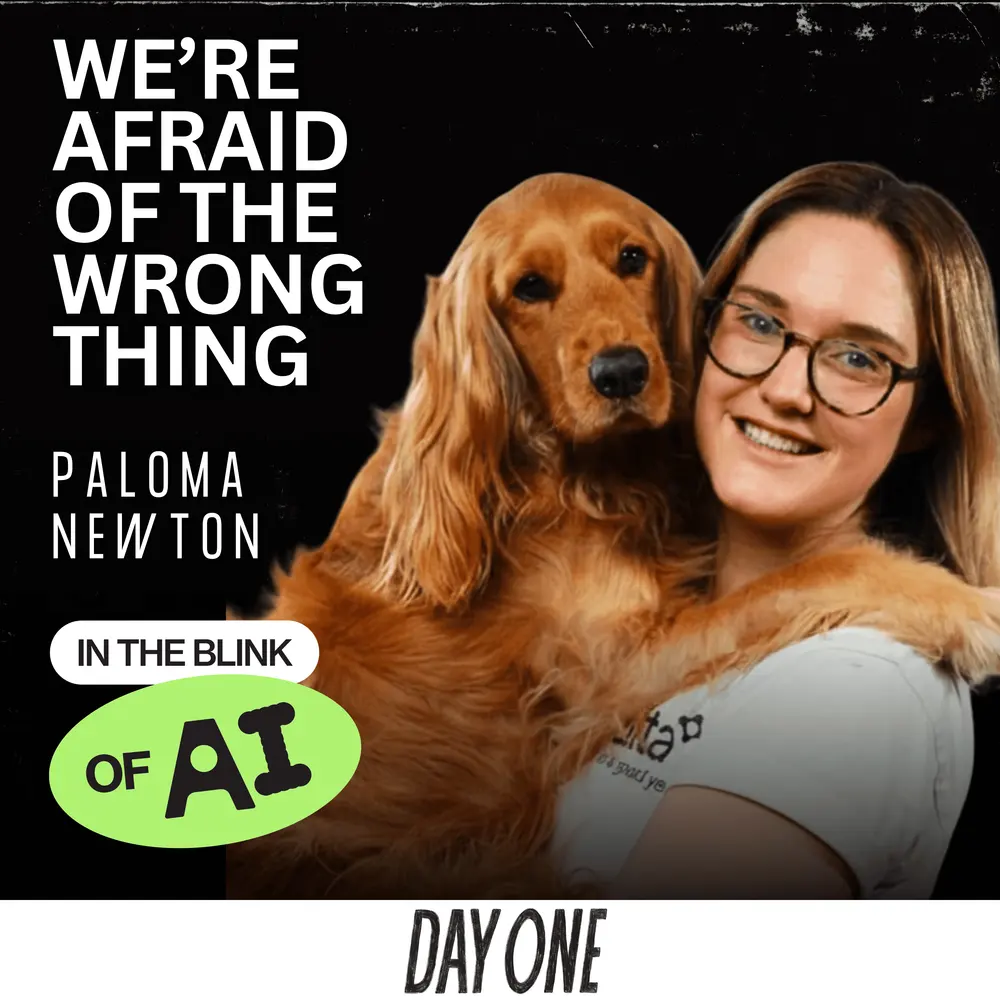
Paloma Newton is the founder of Elita, a longevity platform for dogs that combines biological testing, clinical history, and the changes owners notice day to day into one picture of how a dog is ageing. She built it backwards by most startup standards: a stem cell bank before a product, years of science before a single marketing push, all under one rule — don't promise more than the platform can back up.
On this episode, Paloma brings that same rigour to two of the week's biggest AI headlines. She explains why South Australia's $3 million Royal Commission into AI is aimed at the wrong problem, and makes the sharper case that most of our anxiety about AI isn't really about the technology at all — it's about trust in who controls it. She also gets into the Jevons Paradox and why AI was never going to hand us more free time, her own weekly system for separating real output from busywork, and why she thinks women stepping back from AI over ethical concerns is a bigger loss than it looks.
Plus, the origin story behind Elita, starting with her dog Edgar's breed health scan, and a closing surprise guest who may or may not understand what a podcast is.
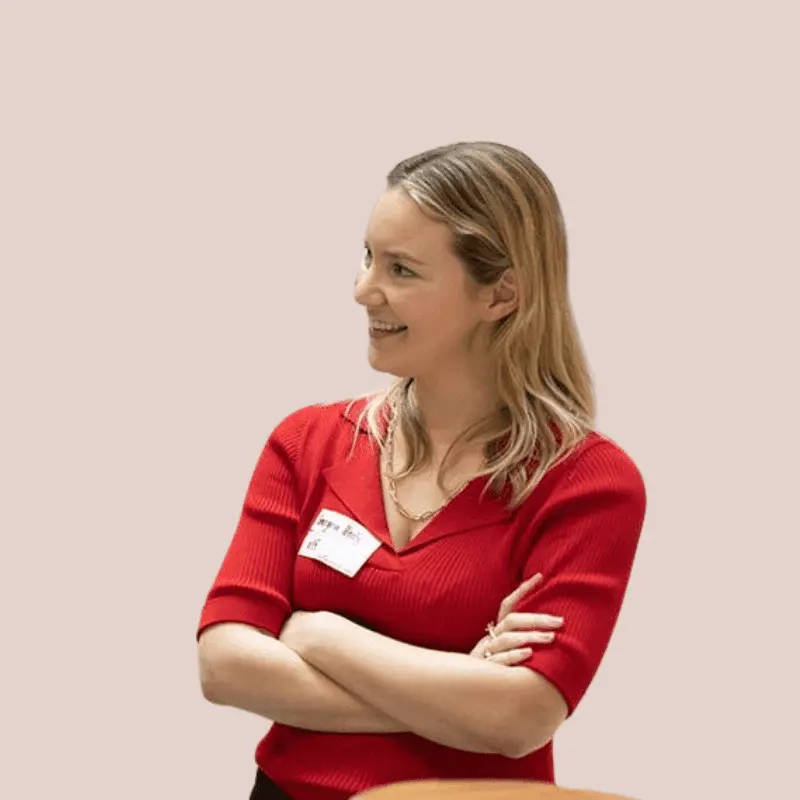
About the guest Paloma Newton is the founder of Elita, a longevity platform for dogs. Elita combines biological testing, clinical history and day-to-day owner observations into one picture of how a dog is ageing, built on a stem cell bank and years of science before its first marketing push.
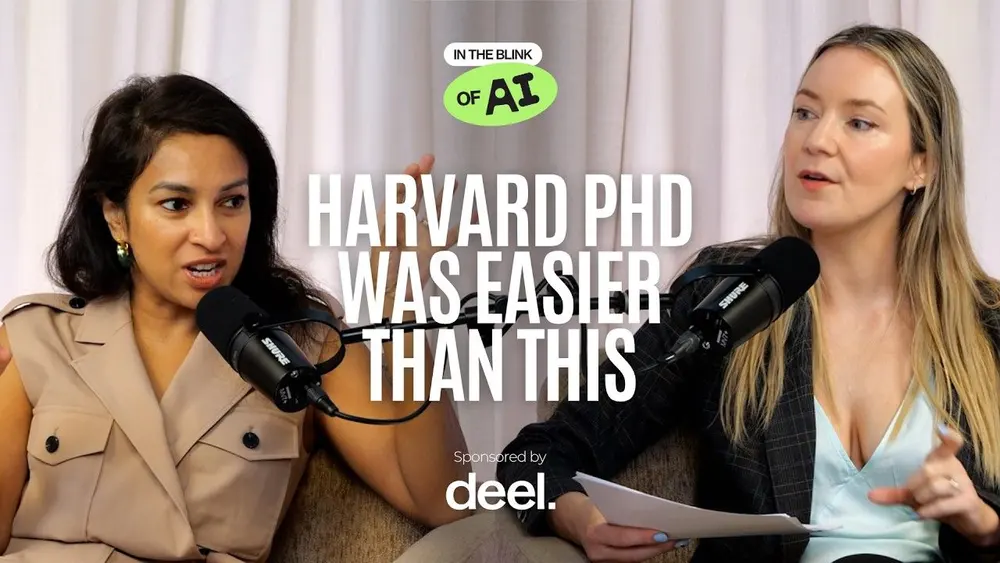
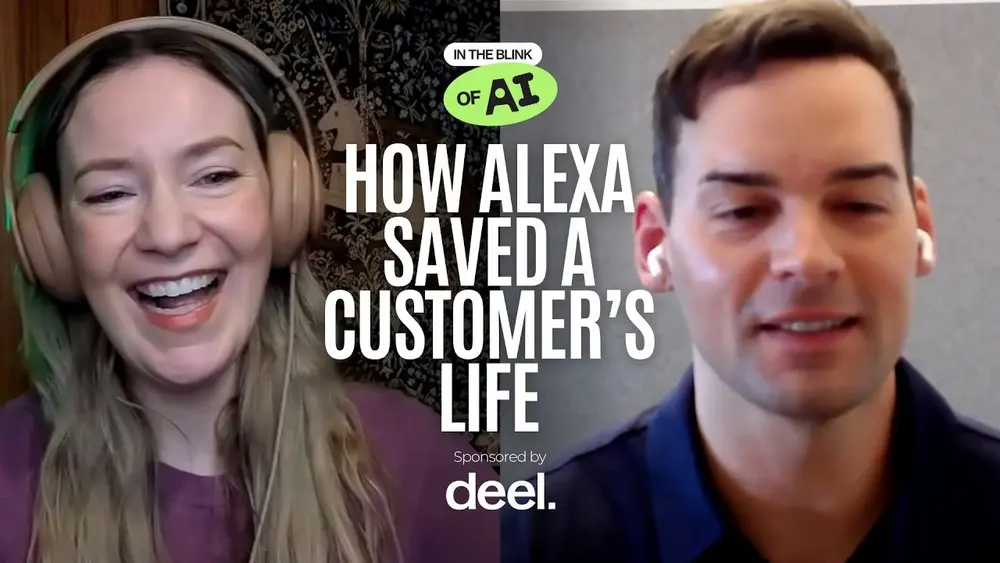
About the show In The Blink of AI is a Day One show hosted by Georgie Healy, covering the week in AI for founders, operators and investors.
Chapters
0:00 Cold open ▶ 1:10 Welcome and episode preview ▶ 2:14 Sponsor: Deel ▶ 2:40 AI hack of the week: the self-updating Slack to-do list ▶ 4:01 What is Elita ▶ 4:51 Headline: South Australia's $3M AI Royal Commission ▶ 11:31 Headline: Does AI actually give us more free time ▶ 14:58 Sponsor: Deel ▶ 18:29 The Elita origin story: Edgar, stem cells, and building backwards ▶ 25:35 Pet longevity vs human longevity ▶ 32:18 Holding AI's promise and its doom and gloom at once ▶ 40:52 The AI-designed cancer vaccine that started with one dog ▶ 45:06 Why women opting out of AI should worry everyone ▶ 50:01 Rapid fire ▶ 53:23 What Australia does best in AI and deep tech ▶ 55:46 A very special guest ▶ Transcript Search or select a timestamp to jump ▾ 0:03 Georgie Healy: Can you please blink if you'd like to have a long and healthy life? 0:09 Paloma Newton: Oh, he did it! He blinked! We did every rule in the startup book completely opposite. You know, people say build your market first and then build your product or like get a waitlist. Not for me. Not who I am. Originally, we built a stem cell bank, which we still operate today. You know, we use the word longevity because it kind of surmises like all of those concepts. But really, it's like really good personalized preventative healthcare. Like how do you do that on a scalable basis? There's no way we're going to do this unless we can do something that adds value and that becomes a true patient-centered health platform that can actively help owners to make decisions to help their dog live longer. 0:52 Paloma Newton: I would feel some kind of way if we overpromised and then underdelivered in that capacity. I think the grief of of The death of a pet is something that we haven't quite understood in society yet, so anything I can do to slow that down or make that less, I will. 1:14 Georgie Healy: Hello and welcome back to In the Blink of AI. I'm Georgie Healey, and frankly, I have been pestering this person to come on the show for years, not months. This one is for anyone sick of being told you have to pick a side. You have to be a complete AI doomer and hate it, or you have to be the Complete AI hype person. I experience this a lot, and frankly, I'm glad we have Paloma Newton, the VC-backed founder of Alita, the pet preventative health and longevity platform. Because guess what? She's honest. She holds contradictory perspectives about the pros and cons of AI at once. It is possible, guys. She reckons the South Australian Royal Commission is frankly theatre. 1:56 Georgie Healy: She's deeply worried about three people owning the biggest tech shift of our lifetime, and she also has so much optimism for what women can. Do with technology now. She has an incredible AI hack, and the industry Australia needs to double down on for the future is all in the show today. And I hope you stay till the end because we have a very special guest. Let's dive in. 2:24 Speaker: Founders scale faster on Deel. Set up payroll for any country in minutes, hire anyone anywhere, get visas handled fast, and get back to building. 2:33 Georgie Healy: Visit deel.com.au. Paloma, welcome to In the Blink of AI. I have been so pumped for this. I've been begging you to come on for months slash years now. Start us off. What's your AI hack of the week? 2:55 Paloma Newton: I actually was thinking about this too deeply, and my hack of the week is probably quite boring. But I am a big believer in creating passive workflows. And so My new favorite tool that has become so much more useful with AI is actually Slack. My to-do list is just a Slack channel with myself, which is then passed through a Claude channel that then pulls all of my context from like emails, granola notes, basically anything I've ever agreed to do with anyone. And then it passes that back into another Slack channel. So it's this like beautiful little system. I spent years trying to figure out if I wanted to use like a Kanban or a dot-point list, and I hate managing anything that I don't have to. 3:36 Paloma Newton: So like having a passive-active to-do list that updates without me having to do anything is fantastic. 3:44 Georgie Healy: Did you need it for accountability or just the overwhelm of being a founder and CEO of a company? 3:50 Paloma Newton: Oh, the overwhelm. Yeah, I don't need to be accountable. I just need to— I— the amount of things I'm like, yep, I'll do that, yep, I'll do that, and then There's just, there would be no way in human form that I could do it without the tool. 4:06 Georgie Healy: Yeah, I love being the bottleneck of my own life. That's an awesome hack, and it's always the boring ones that are actually the ones that everyone will benefit from the most, because that's what you're gonna use every single day of your life, not like a cool new tool that you use twice. Strong start. Paloma, honor to have you on the show. First of all, what is Alita? And, you know, Then we'll dive into some AI headlines. 4:33 Paloma Newton: Yeah, for sure. So we're a longevity platform for dogs. So we combine biological testing, which we do in-house, clinical history, owner-reported changes. And basically, we've kind of built this incredibly powerful algorithm that helps you aggregate all that information about your pet's health, and then know what to do next and also uncover things that you might have missed or steer you in the right direction. 4:55 Georgie Healy: I come from a family with many dog family members. And yeah, this is just something that I feel like most listeners would be touched by in some shape or form. We're going to dive into Alita a little bit more. But there are 2 headlines I kind of want to get your perspective on. Number one, South Australia has announced a $3 million Royal Commission into AI. First of all, do we need this? What do you reckon? 5:22 Paloma Newton: I have been grappling with this headline since we kind of quickly touched on it, because there's, there's like a few points to this, and I'm not going to do it justice in the time that we have. But I'm pro our institutions thinking about this and thinking hard about it. That's not really the problem that I have. The problem that I have is the vehicle that they've decided to do it with. Like, a Royal Commission is going to take— I think they've announced that it's going to take 9 months. 9 months in AI time is probably like 3 lifetime iterations. 5:50 Georgie Healy: Yeah. 5:52 Paloma Newton: I think, like, I was thinking about— there's no point in me just denying what they're planning to do without giving like a feasible example of what you could do differently, right? And I think this is like the massive disconnection that we have at the moment with all of our current structures, be them government, be them legal, whatever, and the speed of which our technology is moving. Like, how do you, how do you bridge that gap? Um, and so I was kind of thinking, like, if I was in charge— and I'm not— but if I was in charge, like, what would I do? And I think it would be really great to have a kind of revolving advisory board where you're getting the voices of the people that are using the technology every day. 6:32 Paloma Newton: So, you know, um, Tom Kelly from Heidi Health, you know, Mel Perkins from, uh, from Canva, but also like teachers, um, people in the legal profession, ethicists, and really starting to understand it from multiple different lenses. 6:48 Georgie Healy: From the people using the technology and building with the technology. 6:52 Paloma Newton: And being affected by it, right? Like, I think the reason we also like to jump to a Royal Commission is because often it gives the people a bit of a voice. And I think a revolving advisory board could do that function, but on like a consistent and ongoing way, which is kind of what you need to do when the technology is constantly evolving. I also will get into this, I think, when we get into deeper into the episode. But I think the other thing that struck me is that I think a lot of the fear around AI is coming from people's distrust of the institutions. And I thought it was like a little bit disingenuous that the Premier would go to the US, sign an MOU with OpenAI, and then come back and announce a Royal Commission. 7:34 Paloma Newton: Like, that just— yeah, kind of peed me off. I don't want to swear, but you are allowed to. 7:41 Georgie Healy: I'll put a disclaimer at the beginning. Uh, okay, what's an MOU for the listeners and the host that doesn't know? 7:49 Paloma Newton: So an MOU is a memorandum of understanding. It's basically like a non-binding document with like shared goals and intentions. Like, most people would probably know about an MOU if you're talking to a commercial partner and you are kind of outlining like, hey, we agree to do this in the future, but before we do that, I need to figure out how I'm going to build it into my company or my product. So let's sign that MOU before I outlay those resources. And so I'm not saying that you shouldn't work with the leaders in the space, but I think from a financial and government perspective, like, they need to be a little bit impartial. So I think signing an MOU with OpenAI and then announcing it, it's, it's kind of backwards. 8:31 Georgie Healy: It is. 8:32 Speaker: It's— 8:32 Georgie Healy: and, and as we know, there's an AI race going on against all of those companies. So signing up with one of them, it's obviously going to give you a biased view. 8:41 Paloma Newton: Yeah, I was just going to add to that, like, again, I don't want to kind of pull the horse before the cart here, because I think I'm going to go quite deeply into this during this episode. But I actually think one of the biggest things we're struggling with at the moment is distrust and anxiety of change and fear of the institutions not being set up for success in a phenomenally huge change that's about to happen. And so it just feels like the wrong— it feels like the wrong tool for the job. 9:10 Speaker: Yeah. 9:10 Paloma Newton: You know, it's like you're trying to use a hammer to make a pancake. Doesn't make sense. 9:15 Georgie Healy: Okay, speaking of the trust, is it due to the AI risk that this commission could add value, or could it do more harm than good and put a handbrake on us and prevent us from innovating? 9:29 Paloma Newton: Personally, I don't think it will do anything. And like, that's kind of the problem. Like, I, like, again, I'm not against the concept of a government thinking hard about something that is absolutely going to impact the whole world as we know it, right? If anyone sits there and they tell you that they know what's about to happen, they're lying to you or they're selling you something. No one knows. And that's, and that's kind of scary and also okay. And I think it's like important to recognize that we don't know and to have really complicated conversations and understand the shades of gray and hold, you know, 2, 3, 7 things in our brains at once. 10:07 Paloma Newton: And I don't think that a royal commission like they will— I genuinely— and I just said don't trust anyone that says they know what's going to happen. But my Theory on what will happen is that they will spend millions of dollars on this, take probably more than nine months because I've never seen the government complete anything on time, and then basically come out with a report that will probably have some flashy headlines. Then everyone will realize it's probably about six months out of date, and then we'll continue, and they'll end up announcing some deal with I don't know. But I think it will probably slow down some parts of our economic growth potentially. 10:48 Paloma Newton: it could, it could make some things that other people are worried about worse. I don't know what the outcome would be, but I don't really see it being particularly— 10:57 Georgie Healy: 9 months is crazy. 9 months ago, we were talking about, you know, there being a ceiling to how much AI can take in data, and, and, and therefore, you know, the models will reach a ceiling. And now we've got Fable, and like, like, 9 months is insane. 11:14 Paloma Newton: I just like, I think back to 9 months ago, comparatively to like my day to day today. And it's it's just unfathomable that you, that you would try and— it just, it again, like, I'm not against the concept of us doing something to better equip ourselves, you know, from all angles of society. But I think this is quite an interesting approach. 11:36 Georgie Healy: Beautifully said. 11:37 Speaker: Agree. 11:38 Georgie Healy: Meta CEO, this is the other headline I'd love your take on. They argued that AI productivity gains should produce more output. So the more you use AI to be more efficient, the more outputs, but not necessarily more time off or work-life balance. Do you ever think AI was going to help us work less? 11:58 Paloma Newton: No. And I think that anyone that thought that is like, I mean, it's funny because I remember the exact moment that I, it probably became super conscious to me was like another founder that I'm quite good friends with messaged me and was like, Using all these tools, you know, I thought we'd be like working from the beach, but I just can't stop working because there's just so much more I can do. And I think that that was always going to be the case. I mean, there's this fantastic Hank Green YouTube video about this, but it's called the Jevons Paradox, right? And this is a known thing in society forever. It's when we first made the steam train really efficient, everyone was like, we've made the steam train efficient, we're going to use less coal because of the efficiency. 12:38 Paloma Newton: And yet we found all of these other reasons to use coal. It's just not how we are as humans. We are incredibly output-oriented, and we want to solve problems, and we want to create more. And for better or for worse, I just never ever thought that this was going to make us work less. Yeah, no. 13:02 Georgie Healy: Your Slack workflow that's helping you be on top of your to-do list. How's the to-do list going? Is it shorter? 13:13 Paloma Newton: Look, I also think it's funny because as a human being, and this isn't a new AI thing, this is just who, who I've always been. I remember my first boss telling me that I had an unhealthy bias towards action, and I think he was trying to say it as like, uh, you should reflect on this. And I was like, oh my God, thank you. Um, which like in hindsight LOL. But no, I think it's hard because my general disposition is this sort of anxious speed rabbit. And so definitely for someone like me, this has been insane. For me, it's not about doing more or doing less. I try really hard to— I look at my diary every week at the beginning and the end of the week. 13:57 Paloma Newton: And I can get into a— because output makes me feel in control and comfortable, and that's just My anxious leaning. I have a bad habit if I allow myself to get out of control, where I'm outputting for the sake of feeling in control, right? So I'm quite disciplined about this in making sure that everything that I'm doing has to link back to the strategic goals, what we're trying to achieve. Like, I have, I have to kind of cap myself to make sure I'm just not outputting for the sake of outputting, for the sake of feeling control. And I think what is interesting is I don't think the list— recently I've actually been challenging myself to make the list shorter but more impactful. 14:40 Paloma Newton: And so I think that hopefully we're all using these tools to make the work we're doing more impactful and get more value to, you know, for me it's dogs, but whoever you're servicing in the world, I just, I want to make sure that when I'm using these tools, I'm using them to leave, you know, a good impact through what I'm building. 15:08 Speaker: Founders scale faster on Deel. Set up payroll for any country in minutes, hire anyone anywhere, and get visas handled fast so you stay focused on scaling. Deal takes care of onboarding, HR, IT, EOR, benefits, and compliance so your team can grow without borders. It's why more than 40,000 fast-growing companies trust Deel to move fast. Visit deel.com/dayone. That's deel.com/dayone. 15:42 Georgie Healy: Selfishly, I want to know, for people like myself that are very outcome-driven, product-driven, did I create a thing this week or not? that, that success, what do you suggest is something we could try next week to, to make more of an impact? 15:59 Paloma Newton: Oh, that's a great one. I think, I mean, this is again such a boring answer, I'm sorry, but you need to start with theoretically what you're trying to do. And this is actually really hard, especially in 2026 when you're a founder and, and, um, you have to move faster and faster and faster than Anyone else because that's the it's it's been a weird time to to start a company. You're the only things that I think are truly moat in 2026 are speed and taste, right? Like those are genuinely the only things that I think are going to protect you. The interesting thing about the tools is that anyone can build anything, right? Which is a positive and a negative, and we're. 16:43 Paloma Newton: We can get into that. But why it is important that speed and taste become this like balancing factor for you if you're building something is that in order to hit both of those, you kind of need to start with a thesis on what you are doing and why you are doing. And that should obviously be informed, very old school, by insights and learnings and customer and rah-rah. But then set yourself a challenge at the beginning of the week when you're kind of fresh off your hopefully weekend and feeling rested where you go, what would be the highest leverage thing that I could do this week? What would be the things that would need to be true for me to do that thing? 17:19 Paloma Newton: And then mark yourself at the end of the week. Like, literally, I look at my diary, I look at my granola note. I mean, my whole life is tracked, right? And I'm like, did I spend an enormous amount of time on something that wasn't moving the needle in that direction? Um, and if I did, why did I do it? Like, what's my emotional connection to why I did that? Like, was I writing blog posts at 10 PM at night because I was spiraling and feeling out of control. Because once you start to understand, like, what are the most high-leverage things that I can do, you can start to kind of discipline yourself if you're doing things outside of those goals that you set. 17:51 Georgie Healy: Yesterday I pulled out of an event that I'd been planning for a few months, uh, because of a number of reasons, but it was almost that emotional feeling of this just doesn't feel right. And if I'm gonna invest this much time in it, it should at least feel right. And I know that's, that's not quantitative, but the gut feel was off for some time. And every time I thought about doing that job and taking away from the things that did feel right, it just felt off. 18:16 Paloma Newton: Didn't work. Yeah. And that's the other thing, right? Like, you only exist in this world for a certain amount of time, and we are so lucky to be doing the things that we are doing. But if you're not building towards what you wanted to build towards, then what's the point? 18:32 Georgie Healy: Speaking of which, tell me about Edgar and why you are so passionate about Edgar Allan Paws is a— 18:44 Paloma Newton: sleep. He's now a 5-year-old. Good boy. 18:49 Georgie Healy: I love how we both named our sons after poets, but continue. 18:53 Paloma Newton: Edgar's my dog. He's my adult dog, which I actually think is like an interesting distinction to my childhood dogs. I grew up around a lot of pets, and I've always been the person who gets distracted easily by animals. Like that's just a known thing. When I got Edgar, it shifted. Like the whole concept of having a pet shifted for a bunch of reasons. It was COVID. I'd been wanting a dog my whole adult life, but you got to do it when it's like actually the right time because it's not just a cute little guy. You've got to take care of them and all those things. And when I got him, like the long story short—not that I've ever done that—is. I was planning to get a rescue dog during COVID Just like we had a very finite amount of time. 19:42 Paloma Newton: I was working in a pretty intense startup at the time, and so I knew it was sort of my one chance when I was like, oh my God, I'm settled. I have my own apartment. I've got a partner that can help me with my dog. It's time, and I'm working from home randomly, which had never really been a thing for me before. Shelters at this time—this is end of COVID—were pretty empty. I knew I didn't have the capacity. Capacity to take on a dog with serious behavioral health issues because I knew that I would be going back to work. So I was really looking for a puppy that could kind of mold into my life. Could not find something that was suitable. I'm a big believer in like you have to get a dog that matches your lifestyle. 20:18 Paloma Newton: Like you, if you're an office worker and you get a Border Collie, that's just bad for everyone. Could not find one. And so my, we were running out of time because like the deadline to COVID being kind of over. It was actually sooner than we thought, but that's another story for another day. So suddenly it was like, oh, we can choose a dog, which had never— just like conceptually never— not something I'd not done before. And so we landed on, after discussions, basically landed on like we want something that's like relatively lazy and, uh, not smarter than us. Um, and we got Edgar. He's a golden retriever cocker spaniel. Um, he's the best. And It was just the best thing ever. 20:58 Paloma Newton: Like we just fell in love with him. Just went on like the deepest health journey. He because of this, like finally getting a dog with a breed, I started to understand you know predispositions based on breed health. And it was around that same time. And look, I was I'm a much more educated pet owner now than I was five years ago for a bunch of reasons. But the the first thing that I kind of like to. Discovered, having never had a dog where I knew their breed before— all my dogs growing up were always rescues— was that breed predisposition was such a huge health outcome-based situation. So the first thing I really started to think about was the fact that he was predisposed to arthritis and elbow and hip dysplasia on both sides, as in Golden Retriever, Cocker Spaniel. 21:47 Paloma Newton: And really, I'm probably like leaning towards preventative health for myself. Person. So it wasn't a huge leap to go, how do we avoid the situation? That spiraled, obviously. 21:59 Georgie Healy: Yeah. 22:00 Paloma Newton: Um, and originally we, we built a stem cell bank, which we still operate today. But through building the bank and really understanding, uh, the science behind biology and the science of health and the science of You know, we use the word longevity because it kind of surmises like all of those concepts, but really it's like really good personalized preventative healthcare. Like how do you do that on a scalable basis? And and so from the bank, we we've kind of theoretically understood that we could shift behavior far earlier, which is what led us to you know. The kind of world's first longevity platform powered by biology. And we did every rule in the startup book completely opposite. 22:53 Paloma Newton: Um, you know, people say build your market first and then build your product, or like get a waitlist. Not for me, not who I am. Uh, I knew that to do this properly, we had to build something. And, and it's so like in the context of everything we're talking about, right? This is why that like 9-month thing is so interesting. Had we done what the advice is, if we had just gone like full pelt marketing and not worried about building the system when we started, I, I genuinely don't think we would have a business today. But we did it the opposite. We were like, there's no way we're going to do this unless we can do something that adds value and that becomes a true patient-centered health platform that can actively help owners to make decisions to help their dog live longer. 23:42 Paloma Newton: Like, that was always the thesis. 23:46 Georgie Healy: And I am no health founder. I have no health background or biology background. But tell me if I'm wrong, wouldn't it be the worst thing in the world to get all this marketing and then actually have nothing to stand for it in the backend? I'm not gonna name names of companies that have done that before, but isn't that like not the way you wanna fail, right? 24:08 Paloma Newton: I think like everyone has to do what works for them. And there's— 24:13 Georgie Healy: Sure. 24:14 Paloma Newton: And look, I agree with you. That's how I feel, right? Like I think we've even released things that like probably, Have been perfectly robust, and I've been like, I feel uncomfortable because it feels a little bit early. And I think that's something that we're always balancing, right? I would feel some kind of way if we overpromised and then underdelivered in that capacity. And so it's just not how I am or who I am or how I build. But I think you kind of got to choose your own journey and. It's really interesting because I used to obsess over kind of like what are competitors doing, and I just don't care anymore. Like, we're building something that is adding so much value, and it's just like focus. 25:04 Paloma Newton: You've got to know, so you kind of look into it every quarter or whatever, but I'm laser focused on like that person told me that this happened with their dog and this was the outcome. How do I make that better next time? Like, I just Eyes on the prize, right? Like we're building a longevity platform. It's got to have longevity, which means it's got to be clinically robust. Our whole team up until yesterday was only scientists and vets, and then me and an engineer. So like we haven't even had a commercial team up until this week. 25:39 Georgie Healy: Speaking earlier about being the kind of person that is that gravitates towards longevity. even in human health. I'm seeing a lot of this in the Australian ecosystem and the US ecosystem. Do you think there is any, uh, overlap between pet longevity and humans? And is— or, or is that like apples and oranges? 26:03 Paloma Newton: I think of course there is overlap. There's this concept of One Health, right? Like, your dog or cat drinks the same water as you, lives in the same environment as you, drinks the breathes the same air as you, they're a mammal. There's gonna be macro-level learnings for sure, but I think sometimes where historically people trip up is just by like, uh, dog longevity, therefore dog wearable. And it's like, a dog doesn't give a shit if it has a sleep score. Do you know what I mean? Like, it's not— it doesn't have a meeting tomorrow. And so those analogous, they just don't work. And I think like what I'm deeply proud of is because of our team being, you know, vets and scientists and specifically biologists, that was really important. 26:55 Paloma Newton: We have always brought this back to biologically what would help a dog. And we'll do that once we do cats in the future. But like biologically, like what actually is going to make their life better, like biologically. And sometimes it's really hard to not build the sexy thing because actually the boring thing will make the most impact. And so those are the considerations that we make every day is what is actually going to move the needle for X dog. 27:22 Georgie Healy: My cat's sleep score would be fucking off the chain. There's, there's the content warning right there. Uh, I want to know genuinely as a pet owner that has a cat that would love to use this product, hurry up and release it for cats. Thank you. Um, can it help my cat live longer? I know that's a crazy question, but, but how do you— 27:44 Paloma Newton: I don't think that's a crazy question. I think, um, knowledge is power, and, you know, uh, scientific development— this is like a bigger conversation, but scientific development has consistently helped our pets to live longer, right? Like if you think about human medicine versus animal medicine, we are just a little bit behind. And that's not super surprising. Obviously, a lot more funding goes to human development. And I'm not saying what is right or wrong. I mean, I chose to work on dogs because I like them more than humans, but each to their own. So, you know, I think what we're building is giving you the power, knowledge, and the data to make better decisions so that you're not kind of— there's like 2 ways of doing it. 28:32 Paloma Newton: There's like complete denial where you just don't know, and then one day you get something really scary and/or expensive and you are very sad and you start desperately trying to figure out what you can do reactively and it costs you a lot of money. Or the other side of it is you notice things and you don't really have the data to go on, and so you end up doing a whole bunch of tests and you know, you're kind of like, no one has a magic ball, your pet can't talk. It's just, it's kind of like an ineffective way of doing things. So really, all we're, all we're working on is like, what's this preventative health model look like? How do we aggregate the right data for each individual pet so that we can make assumptions not just based on— or sorry, not even assumptions, so that we can make decisions not based on assumptions, but based on that actual pet's own biology, right? 29:22 Paloma Newton: Like, that's the crux of everything that we do is like, how do we understand this individual so that you are making decisions for the dog in front of you, not for the average dog? Because so much of how we've had to do, you know, preventative or even sometimes medicine is based on averages. Even— can I give you like a really tangible and small example? Please. Vaccines, right? So we we suggest to vaccinate your dog every year. And the reason that we do that is not necessarily because your dog needs to be vaccinated every year, but it's because we need a reason to try and get you to go to the vet once a year. And we're trying to catch all for, you know, a Great Dane and a Chihuahua are the same animal, but they obviously have vastly different needs. 30:05 Speaker: Mm-hmm. 30:06 Paloma Newton: Um, so there's things called like titer testing, for example, where you can understand the, um, the actual antibodies in your dog's body and decide if they need to be vaccinated that year or not. Like, there's just so many things that most people don't know about, and so we're helping to guide owners to make better decisions based on their pet's biology. 30:25 Georgie Healy: Can I tell you, you know, the first security question for everything is, you know, your— the name of your first pet. And every time I write the name of my first pet, I feel sad. And the reason is my first pet, we We just didn't know any better. I was 4, still an only child. My parents were like, wow, she's really a weird kid. Maybe a dog will help. You be the judge. Um, and she's a Cavalier King Charles Spaniel. And we didn't know, we didn't know any of this, but a myriad of health issues. 30:57 Speaker: Heart conditions. 30:58 Georgie Healy: Heart conditions. But even the food we gave her— this is back in the day, in the '90s. Whatever's at Coles or Woolworths, we'll just feed her that. And she had horrible like eczema and it's awful. And we wouldn't have done that had we known. We just wouldn't have. 31:15 Paloma Newton: Totally. And that's the other thing. Like it's one thing to be like, even today, present day, I have a Cavalier, I understand heart health, right? But what our platform does is it goes, well, here's all the existing data, here's new data that you might wanna be aware of. to get over time. And then here are some questions that we can specifically ask you about that dog so that we can start to understand changes of behavior early. And like, it seems so simple. I mean, the actual underlying technology is very complicated. So my CTO is probably going to listen to this and be like, no, it seems so simple. 31:47 Georgie Healy: You try. 31:48 Paloma Newton: But like, building that algorithm was like definitely the hardest part. And now we're just finessing and making it better and better each time. But like, you— there are so many things that you can do to intervene and, and to protect that particular dog over time across, you know, it's not just diet. Diet is obviously a huge one, but there's just— there's so many different things that we can look at and help support on that journey. So yeah, it makes me sad. Don't say your dog's name though, because that's your security password across everything. 32:16 Georgie Healy: Yeah, now everyone knows. They'll carry the one and hack into my Gmail. This is such an obviously mission-led, you know, origin story that, you know, you've got VC backing from. So clearly very exciting but mission-led business. How do you feel about AI in general? You're obviously leveraging AI, you're obviously using AI. How do you navigate the, the doom and gloom headlines of AI while also having such a A clear, uh, positive mission? 32:51 Paloma Newton: Yeah, look, this is something that I think about, uh, all the time, right? And I mean, even, even this morning I was sort of, uh, thinking about it deeply. I think like I'm gonna like lay out my thought process. And again, I think going back to my quote from earlier where I said, you know, if anyone proposes to know what's going to happen next, they're, they're lying or they're that's trying to sell you something or they're wrong. I don't know what's gonna happen next. And I think it's absolutely important to interrogate this because I genuinely believe that we're working through like the biggest shift that we'll probably ever see in our lifetime. 33:29 Paloma Newton: And that is both terrifying, exciting, and important all at the same time. And that's why it's quite hard to balance all of these things in your mind. I think where I've really struggled lately is this, what I'm calling our kind of comfort in rage, or our comfort in outrage. It's sort of, you know, in my personal life, everyone is, do not use this, you're ruining the planet, you're the worst person on earth. And then in my professional life, everyone is AI hack of the week. And like, you know— 34:07 Georgie Healy: Who asked you that? 34:09 Paloma Newton: Building really like interesting and important technology. And I guess like the part that I struggle with is that I alluded to it earlier, which is like we need to be able to hold more than one concept in our head at the same time. And so on the one hand, I, I am deeply worried about the oligarchs and, you know, the entire world's change being held by essentially like 3 people. And I think that's something that we should be really conscious of as a society and interrogate and question for sure. But then on the other side, you know, I am inherently an optimist when it comes to innovation and technology. And like, I can't— I cannot lean into this outrage leading every decision mentality. 35:04 Paloma Newton: because it's something that I think we've gotten comfortable with because it's easier to be like, this is bad, I don't want to talk about it, you're a bad person, which I think is like super reductive and shuts down any conversation. Because if you consistently just say that all technology is bad and innovation is bad, then you're also saying that the technological developments that have led to, you know, us like, I think, doubling the global life expectancy in a century, or decreasing the amount of children that die by the time if they're 15 years old. Or like, there's just— there's so much innovation that has led to us actually living better and better over time. 35:45 Paloma Newton: And I think people struggle with that because we have access to so much information, and so it's much easier to be upset about the things that are going wrong than to be cognizant of the things that have gone right. 35:58 Georgie Healy: Yes, there's so much outrage. Like, I have to— I don't have to— I post on social media, you know, a lot of my AI-related content and AI hacks of the week. And I see so much outrage. But frankly, I think I could own a sweatshop right now and get less outrage. Why do you think that is? Like, why are we so mad at AI? 36:20 Paloma Newton: I actually developed a new thought right like this morning. So this is slightly half-baked, and I think like we need— 36:26 Georgie Healy: I love that I'm getting the first scoop. 36:28 Paloma Newton: Yes, we need— I think we need a lot more time than what we have to go really deep into this, so I'm gonna try and display it to you in a shorter and more hopefully eloquent version. I, I think that change is hard. I think change is scary, and I think when we don't know what is coming, I think we are as a society incredibly exhausted by change at the moment. Like starting and boring COVID, but starting in 2020, like that whole period was so dismantling for a lot of people. What's going to happen? What's going to like this? It was a big— it was kind of this weird big aggregation. At the same time, we're seeing this massive technological development. 37:06 Paloma Newton: And I think the bigger problem that we have right now is that we have this really deep-seated distrust in the institutions around us right now. And that is totally fair and rational. Like, I don't need to harp on about what you know politics and America and yada yada. But I was listening to a really great podcast called Search Engine this morning just around like data centers, and you know it became really obvious to me that data centers are the enemy because they are tangible and there's something that we can like hang our hat on and say like this is bad, right? This is bad because of the environment. 37:42 Georgie Healy: People hate data centers. Yes. And I mean like. 37:45 Paloma Newton: let's also remember that data centers were not invented by AI. We've been using data centers for the internet for a very long time. 37:53 Georgie Healy: No one was mad. 37:55 Paloma Newton: Well, no one had anywhere to complain about it. They didn't have the internet before the internet was invented. 38:00 Georgie Healy: They'd have to write a letter, and that's too hard. 38:04 Paloma Newton: And so there's that thing. And like, look, I also want to preface this by saying, I think that interrogating how we're building data centers, the same way we interrogate how we build anything, is absolutely important. But to just say don't use technology, don't use innovation, and put it back in the box is so reductive and not going to do anything. Whereas, you know, there is companies already in our midst like Firmus who are raising money to do closed-loop water cooling, you know, renewable energy data centers. Change is here, change is coming, innovation is going to lead to hopefully incredible medical advances, which we're already starting to see. 38:42 Paloma Newton: But like, it is absolutely our job to fight for what we want to be the future that we exist in. I just don't think that that is a simple and complete rejection of the growth of what we are doing in society, right? So there's that side of it. But I think what really came from that, listening to that podcast this morning, which is why this is like slightly half-baked. I don't think we're scared of data centers. I don't even think we're scared of AI. I think we're scared of kind of the problem I was saying before, which is 3 people are going to own so much of this development. And we have no trust in the systems that are built to trust us. Like, so much of this is coming out of the US. 39:28 Paloma Newton: And it's because It's sort of the birthplace, if you will. So many of these towns that are worried about data centers are not necessarily just worried about data centers. They're worried about all the massive companies that have come before that have bought land to build mining sites and then decided not to build those mining sites. And, you know, that county is X million dollars in the hole and doesn't have the jobs that were promised to them. It's not necessarily that we're worried about that thing. We're worried about the consistent letdown of the systems that are meant to be around us. So unfortunately, this has been made worse by the fact that, like, we can't ignore that the distrust in the institutions and then the distrust in the people that are running these organizations, like, has been building and building and building over the past few years. 40:19 Paloma Newton: I mean, OpenAI were an open source not-for-profit until, yeah, 2 years ago. Um, and so I, I don't— 40:29 Georgie Healy: 2 times 9 months ago, just saying. 40:32 Paloma Newton: Exactly. Like, I don't really blame the distrust, but I think that the outrage is slightly misplaced. And if we just jump to outrage and if we don't think about how we can do it better, I just, I just see us sort of failing. Like, it's not— it doesn't— and again, like, I don't know what's going to happen in the future, and I don't profess to, but to me, just outrage is, is not very helpful. Because the, the positive side, the obvious upside to this is, you know, in my space, for example, like, Paul Cunningham has developed the first ever personalized cancer vaccine, which he's currently got funding from YC and is for dogs and is working on, you know, it was all started by his dog Rosie, who had mast cell cancer and was told that she was incurable. 41:24 Paloma Newton: So like the development side for things that people, I mean, like, it's just, it's just so obvious that we could, we could solve some huge problems. And I also hope that there are people coming up that are solving those problems across the environmental issues that we're seeing as well, right? The sad irony is that probably the tools that we've got will help us to solve a lot of those problems. 41:49 Georgie Healy: Can I ask you, what is a more— instead of being so anti-AI, what is a more— what's the word for it— optimistic but eyes-wide-open way to approach AI, even if you See yourself as an ethical and environmentally conscious person. How do you approach AI? 42:12 Paloma Newton: I don't think it's about being optimistic. Like, I'm not going to ask anyone to be optimistic. I think it's about being like balanced and well-rounded. I take it— to me, it is my responsibility as someone who is working in the space. And but it's funny when I say like a friend of mine who is like, works in a bar and is like, don't use AI. And I'm like, that is awesome that you can just opt out of that. I don't really have that same opportunity. 42:39 Georgie Healy: Luxury. 42:40 Paloma Newton: Yeah, I don't. And like, it's not— it's not me being— I, I constantly have conversations with myself around like, what is the right tool for this job? You know, what is the right— you like, what will make this more efficient and, and a better outcome and, and faster? And like, and what won't? And like, yeah, great. And I have my own internal ethical matrixes and, and hubrics for like what I deem as like a good use of AI and what is not a good use of AI. And everyone should have that for themselves, right? 43:11 Speaker: Okay. 43:11 Paloma Newton: But I think, like with anything, like I, I just, I get very frustrated by this, you are a bad person, you need to stop doing this, you, you, you. Firstly, like putting everything on the individual is just a race to the bottom, right? It's our responsibility as the people that work in these systems to be saying, we do want better systems for this. We do want the Firmicists of the world to be able to raise money. We do want closed-loop cooling. We do want renewable energies. Like, we do want things that are going to make us be able to be both efficient and also like not completely destroy the planet. I just, I find the outrage quite hard to stomach. 43:46 Paloma Newton: Sometimes if I'm feeling particularly sassy and someone's talking about AI, I'm like, oh, so you're a vegetarian because you do understand that the agricultural industry is uses a lot more water and power than— but when I'm not feeling that sassy, because I also feel like it's a little bit reductive to just say, well, this uses that and this uses that, because again, it's the race to the bottom, right? It's not about— 44:05 Georgie Healy: Burn the whole world. 44:07 Paloma Newton: Yeah, exactly. Like, it's not about the individual, it's about what can we all collectively do to make what we're doing better. And if you're only just become out— if you've only just become outraged about AI recently and you've never been outraged by mining or like the other things that are absolutely desecrating the environment so that you can have your iPhone and that you can have your computer. I think it's reductive. And so I'm not saying that you need to be an optimist. I'm not saying that you need to be wholly positive. I think it's totally fair to be sitting in the gray at the moment and saying, I don't know what's going to happen because none of us do. 44:40 Paloma Newton: But I am an optimist in life that we are all genuinely pushing for things to get better. And that is like hopefully better for everyone. I don't mean just better for a few. And even though it doesn't— the world will never be fair, right? Like, the, the world will never ever be fair. There will always be systems that we need to finesse and improve. But the more that you shut things down, you're actually not having those conversations. You're not making things better. 45:11 Georgie Healy: Speaking of unfair, in every other technological you know, implementation, the internet, smartphones, I feel like women weren't invited. A lot of us were not invited or like, oh, we didn't study software engineering, therefore we can't partake in building it. 45:29 Paloma Newton: Mm-hmm. 45:29 Georgie Healy: And I get really excited about AI and lowering that barrier of technical know-how to still bring products to life. But I am noticing women, because they seem to outsize care about the ethical considerations of AI, they're opting out of AI. What happens if they do that? 45:50 Paloma Newton: This is a topic I could talk about for hours. But, um, look, yes, you are right. It is consistent. And there's data to show this, like I can send you studies on it, that it is women who overwhelmingly care about things, you know, like the amount of like female influencers that will talk out about fast fashion, for example, that male influencers just do not have to. And that's just, that's just like a very visual example of kind of that women constantly have this ethical brunt to bear. And that's a whole other thesis. But with regards specifically to this, I will— I mean, yes, I'm obviously worried about the 3 dudes that are holding all the power. 46:38 Paloma Newton: But that's also why I think it's really important for us to be part of this conversation. I worry that if only 50% of the population are bowing out, then we're just going to create another however many decades where we're kind of reinforcing the patriarchal structure that we've— 46:58 Georgie Healy: Yep. 46:59 Paloma Newton: Worked so hard to get, not even out of, especially if you've seen the news headlines recently about the AFL, but we've worked so hard. Like, so many people in our generation are the first women to have their own house, right? Like, to not be in the structures of that. You're right, like the dot-com boom, it was so male-heavy. And I just, I see that as a concern, but I understand it. It's like this weird place that I'm existing in where Completely understand the ethical concerns, like completely see that. But I also want you to be a part of the innovation and the growth. And like in a funny way, it's the most exciting time if you're not a software engineer to be building because going back to like speed and taste is everything. 47:52 Paloma Newton: The tools are open so wide now. Like I meet incredible founders like Lauren from Verity AI who loves fashion and has created an entire AI platform to help— and she's gonna kill me because I'm probably gonna get this totally wrong— but to help distinguish between genuine and fake fashion. And like, what a cool product that helps with the black market and millions of people that are losing jobs and money in the creative space of fashion. And like, these kinds of products will not be developed by men because it's potentially not interesting to them. And so it's not even just that the individuals miss out on being part of it, it's also that the things that will support us will be missing out on being part of it. 48:35 Paloma Newton: You've got Dr. Arielle, who's the founder of Ovum, who's creating this incredible preventative health product for women, right, which really understands their cycles and endometriosis and all of these things that have been overlooked and underfunded for years and years and years. And if these women aren't partaking, then we don't have those, those developments. 48:55 Georgie Healy: Grace from Andromeda, no one cared about aged care. 48:58 Speaker: Literally. 48:58 Georgie Healy: She's got this delightful, gorgeous robot that doesn't freak me out. That's hard to do. 49:05 Paloma Newton: Incredible, right? 49:05 Georgie Healy: Applying goggles in aged care. Like, it's beautiful. 49:08 Paloma Newton: It's like, because women for some reason are the, the holders of the empathy, right? So like, yeah, I just— don't get me started. But like, but true. Like, this is what I mean. Like, Grace is a fantastic example of like the kinds of people that we want in the room that are going to think deeply about these problems. And, and I struggle even with saying that because I don't think it's women's jobs to hold— no— 49:32 Georgie Healy: everyone else accountable, to do all the ethical, um, and, you know, improve the world startups. 49:40 Paloma Newton: But like, no, like, also, if a woman out there wants to build a business that just makes like a shit ton of money, like, pop off, queen! Like, get it, girl! Like, I, I am naturally a person who's going to want to start a business about something that I care about. It's, it's not because I'm a woman. It is because who I— it is because of who I am. My head of science is the same. Like, he deeply cares about the problem that we're solving, right? I think— 50:05 Georgie Healy: I really wish I loved insurance or money more because I think it would change the, the money that comes in the door. But yes, no judgment to the women that love insurance. and fintechs, uh, please get that going. Please, girl. Okay, this has been absolutely incredible. We're at the rapid-fire, uh, spicy questions. I think there's no risk of you shying away from these. Are you ready, Paloma? 50:35 Paloma Newton: Uh, yep. 50:36 Georgie Healy: All right, let's talk about your recent business trip to the US. Uh, what did it What did it make you realize when you came back here, good or bad or both? 50:50 Paloma Newton: Oh, this one's gonna hurt. I think we're just thinking like, yeah, Australia, think bigger. Like go earlier, back yourself. Like the amount of people that, I don't know, told us like, you're too early. And then when we went over there, they were like, you're not early enough. I just think, I think like, Yeah, I've had confidentially, like, female founders tell me, like, yeah, they really like what I'm building. But they've said that I, you know, I need $100 mil— sorry, $1 million in ARR in order to raise, like, $500K on a SAFE note. And I'm just like, that's crazy, man. 51:28 Georgie Healy: If I'm making $1 million ARR, I do not want your SAFE note. 51:33 Paloma Newton: But it's like, it's just like, I I just think like, and I think like a lot of things are at play, like market dynamics are at play, like the whole complete change of our infrastructure is at play. Australia's, you know, being the SaaS, yeah, lots of things are happening at the moment. But I think we are in a bit of a fear bubble at the moment. Yeah, which is sad because I think like maybe 2 years ago, people were raising here and building here. And because of the reaction to the market, Now I'm like, go to the US, like, save up some money, 'cause you gotta save quite a bit to actually go there. It is very expensive. But dream big, go early, do it. 52:17 Georgie Healy: San Francisco or New York City for a startup from Australia? 52:21 Speaker: New York City. 52:21 Georgie Healy: Really, why? 52:24 Paloma Newton: Ah, look, my business is a direct-to-consumer business. I couldn't live in San Francisco, but it's just like, I think, I don't know, it depends on what you're building. I, for me, I think New York direct-to-consumer, the vibe, the energy, just the hustle of like, and I don't use hustle in the like derogatory term of like work all the time. I mean hustle of like building your dreams and like doing the thing. I felt like San Francisco was a little bit more— and I had a great time there, so I don't wanna shit on it too much— but a little bit more like slick and like— 53:08 Georgie Healy: Polished. 53:08 Paloma Newton: Pretty and like, yeah, sassy. And, um, probably just like not for what I was building. Um, but also I might change my mind in like 20 minutes, so I wouldn't— 53:20 Georgie Healy: We won't hold you to it. It's just gonna be recorded and in the internet for all eternity. Amazing. And look, what do you think Australia— you know, we're looking at geopolitical, we're not going to build frontier models here in this nation. What do you think Australia could do well? 53:41 Paloma Newton: I mean, I'm biased here, but Australia is one of the best places in the world for science, for deep tech. I mean, like, for health, like Andromeda, um, Everlab, like there's Heidi Health. Like we, we are so good at solving like complex problems that I think are so important. Harrison AI. Harrison AI. Like there's so many. Like I, I, if I haven't mentioned you, know that I think about you. Huge list. Huge list. And I like personally, those are the problems I love to solve. You can probably hear from everything I've been saying, but like the problems I'm deeply interested in are like, how do we continue all the things that have actually made the world a lot better in the past century? 54:29 Paloma Newton: Because you cannot deny that like life expectancy, mortality rates, like declining people, like how many people die from malaria. Like there are just, there are so many things that we have started to solve for. And, you know, I'm obviously very interested in, in the animal space and pet health because I think that too often, you know, we're catching things too late, we're putting dogs down too early. And like, it just— I think the grief of the death of a pet is something that we haven't quite understood in society yet. So anything I can do to slow that down or make that less, I will. But there are so many other problems that I think we need to solve, like brain cancer, like You know, the reason I'm so enamored with Arielle at Ovum is like women's health is still is still very behind, still very behind. 55:24 Paloma Newton: Even like like even medical like software that we're still building incredibly in Australia. Like one of the incredible female founders, Ali Hardcare, who's building Halaxy. Like we we are so good at things that are so important in the world. And I think that's what we can keep doing really, really well. And like this aggregation of like what is hard, what is science, what is R&D, and then what is commercial. Like that's— I think that's where we excel. 55:51 Georgie Healy: Beautifully said. This last question goes to Edgar. I'm wondering if you could call him, bring him on the show. 55:58 Paloma Newton: Yeah, give me one sec, I'll grab him. 56:02 Georgie Healy: Guys, this has never happened in the history of the show. Oh, sorry, Edgar. Oh my God, the feet! Oh, okay, okay, focus. Edgar, what are you talking about? This is a professional show. Um, I'm gonna ask Edgar a question. I'd appreciate if you let us have this space. Edgar, can you please blink if you'd like to have a long and healthy life? 56:32 Paloma Newton: Oh, he did it! He blinked! 56:36 Georgie Healy: He blinked! Paloma, you have been such an amazing and generous guest. How can people follow what you're doing at Alita, um, follow you as well, and, uh, what's their best way to help their dogs now, cats soon, live a long and healthy life? 56:56 Paloma Newton: Best way to get your dog or cat to live a long and happy life is download Alita Blueprint, which you can do in your app store of choice. Also, please send me feedback because I love feedback. Follow me on the link dinky or on Instagram, LinkedIn or Instagram. For Alita, yeah, like LinkedIn sort of, but probably Instagram, TikTok, YouTube. But I think like get that app on your phone, help your dog live longer, aggregate their health data, become more knowledgeable, learn what you can do, learn more about them, and just give them a little kiss on the snoot for me. Please do. 57:36 Georgie Healy: Thank you so much. 57:38 Paloma Newton: I absolutely love this episode. Thanks, Georgie. 57:44 Georgie Healy: Thank you so much for listening to In the Blink of AI. If you want to go deeper on anything we've spoken about today, I write a weekly Substack called Attention Is All I Need. Yes, it's hilarious, it's a pun. And essentially I go into AI rants, tech news, events I'm going to, and more. It's bite-sized and I hear it's awesome. Uh, the link is in the show notes below. No transcript lines match that phrase. Try fewer words.



 ▶
▶  ▶
▶  ▶
▶  ▶
▶  ▶
▶  ▶
▶  ▶
▶ ▶
▶ ▶
▶