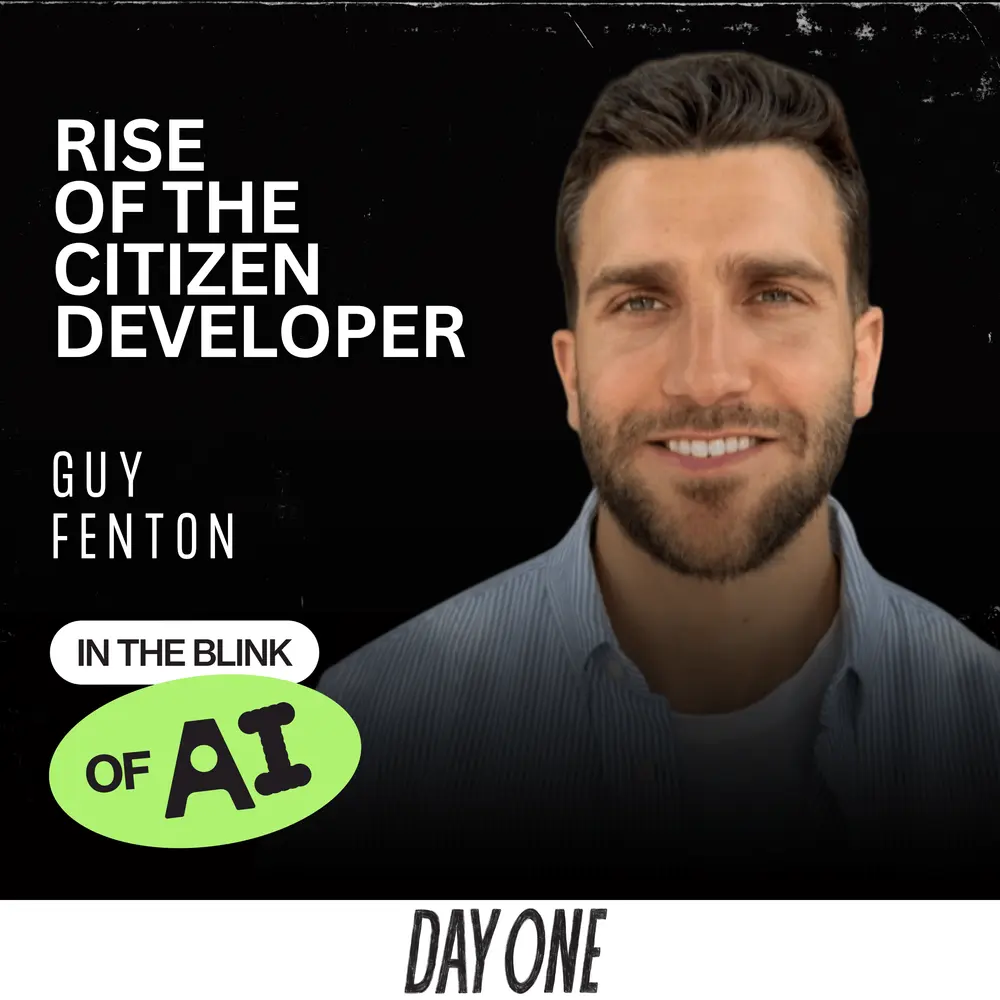
Georgie Healy talks to Guy Fenton, who heads up go-to-market for Akai, the AI workflow automation platform from Deel. Akai started as an internal tool at Deel and is now offered to other companies as a way to automate repetitive back-office work across finance, HR and operations.
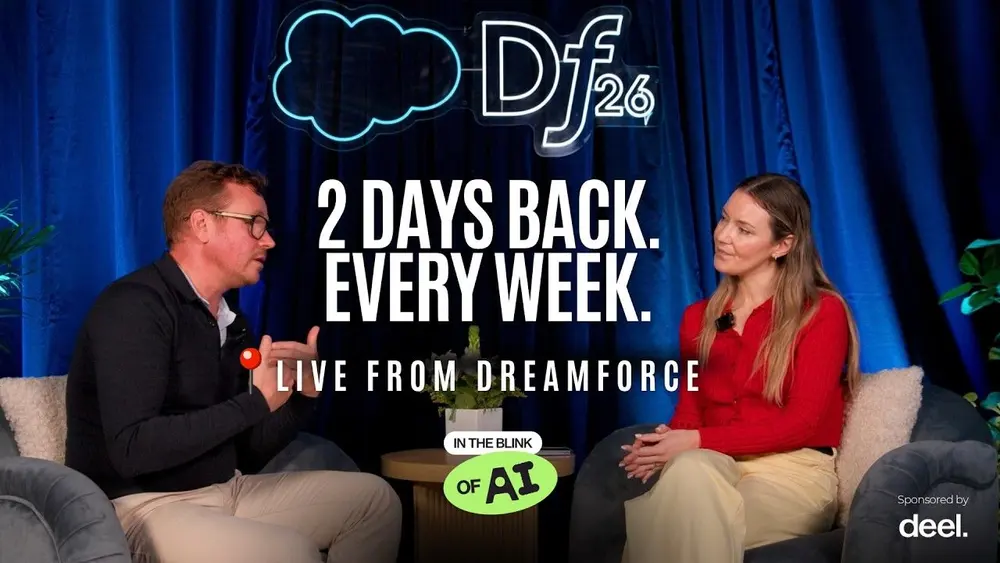
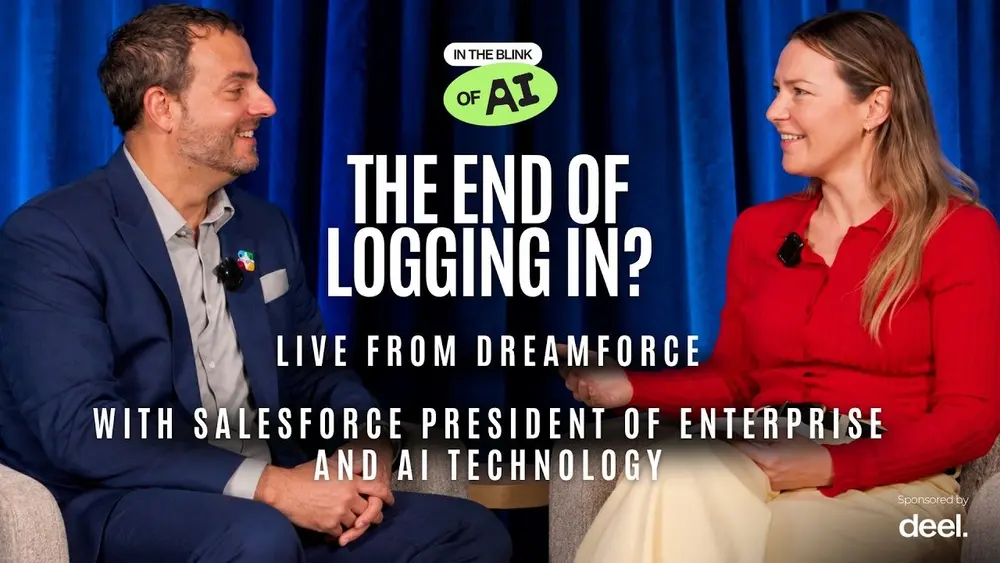
Georgie opens with the headless debate: if software no longer needs a login screen, does design still matter? Guy's answer is that UX matters more than UI right now, because his customers would rather use agents inside Slack, Teams or a webhook than log in anywhere. He explains how Akai builds an agent from a screen recording, and describes the virtual country finance manager Deel built for month-end bank reconciliation, which he says does the work of 10 people while the team reviews and approves it in Slack.
They get into what makes agent projects stick, why the non-technical user is the real bottleneck, and why forward deployed engineers sit with customers to get them to value fast. Guy says the people getting ahead are citizen developers, curious people in HR, ops and finance who adopt AI every day, and he predicts they become the leaders of the future. He also shares a hack for anyone building a team: ask AI to play your toughest buyer, then let it score your answers.
The conversation closes on jobs, trust and privacy: why Guy frames AI as optimizing jobs rather than replacing them, how regions from APAC to Germany react to security questions, why he would only trust an agent with his tax return after a few human-approved runs, and his bet that open source models will give the frontier labs a run for their money.
Chapters
0:00 Cold open ▶ 1:20 AI headlines: OpenAI engineer accused of spying on OpenAI ▶ 2:27 Tesla's flying Roadster ▶ 3:40 Anthropic drafts its own AI safety bill ▶ 4:46 This week's guest: Guy Fenton, Akai by Deel ▶ 6:27 What to delegate to new hires vs AI ▶ 7:40 Headless or design-led? Why UX beats UI ▶ 8:54 What is Akai? Explained for Georgie's mum ▶ 9:52 Building Akai inside Deel ▶ 11:30 The virtual finance manager doing the work of 10 people ▶ 12:33 Will 40% of AI agent projects get cancelled? ▶ 13:49 How Akai got agents working fast ▶ 16:15 Human in the loop: what's actually possible now ▶ 16:44 Forward deployed engineers and time to value ▶ 19:07 The skill to double down on: be a citizen developer ▶ 21:08 Where to start: personal AI tools and staying curious ▶ 24:15 Is AI replacing jobs or optimising them? ▶ 27:52 Guy's hack: turn AI into your toughest buyer ▶ 29:27 Muse, Instinct and everyday AI wins ▶ 31:07 Remote first: how Deel scales through over-communication ▶ 32:45 How different regions react: trust, security and privacy ▶ 34:49 Who's moving fastest: Higgsfield and APAC adoption ▶ 36:23 Is UK regulation slowing startups down? ▶ 38:09 Hot takes: favourite model and the rise of open source ▶ 39:35 Would you let an agent do your tax return? ▶ 40:03 Would you hand hiring interviews to AI? ▶ 42:11 How to get started with Akai ▶ 43:05 Outro ▶ Transcript Search or select a timestamp to jump ▾ 0:00 Ad: You're listening to a dayone.fm show. 0:02 Guy Fenton: I might be a little bit more controversial here. I think that UX matters more than UI at the moment. 0:09 Georgie Healy: My mum listens to the show every week. I would love to hear about Akai. For my mum, what is it? What does it do? 0:15 Guy Fenton: And all you basically have to do is show Akai, record your screen, show Akai a manual repetitive workflow. It watches your every single move and then it builds the agent from that recording. So even your mum can, can use it. Any non-technical user can go and do that. And Akaya is basically like an extremely intelligent employee that watches your every move. And this agent basically does the work of 10 people. It automates the whole month-end bank reconciliation that we have to do. And just to kind of give you a sense of how complex it is, Deal has 350+ different legal entities, thousands of bank accounts, millions of monthly transactions. And this just alone has saved us hundreds of hours per month. And I don't think you need to be technical these days. You just need to be curious. You just need to have an appetite to learn. 1:02 Georgie Healy: That is genius. We don't get dots yet here. So I'm like, thank God, because I don't need another reason to be behind. 1:10 Guy Fenton: Yeah, exactly right. Would I let an agent go and do my tax return after the first time I built it? Probably not. After 3 to 5 or 10 iterations and having a human in the loop and me approving it, yes. 1:29 Georgie Healy: Hello and welcome back to In the Blink of AI. I'm Georgie Healey, and these are the 3 rapid-fire AI headlines you need to know this week. Number 1 is that an OpenAI engineer has been accused of spying on OpenAI. The details are very Netflix doco-esque. US prosecutors allege that an OpenAI engineer planted a secret recording device behind a TV in an executive meeting room. It was disguised in toilet paper, and I wish I was joking. The accused allegedly used AI tools to help research the equipment and the meeting rooms and develop the recording equipment itself. Here's a random plot twist. OpenAI used their own models to help unpack who did it. So we're using AI to commit crimes apparently, and also using AI to solve them. I think we've gotten too AI-pilled in general. This man now faces up to 5 years in prison if he's convicted. And my take, I guess, is that we seem to be so worried about models going rogue, but the biggest security threat is still just a guy in your office with a roll of toilet paper. Guys, driving on roads is so 2025. In the year of our Lord 2026, I've decided flying cars are the only way to travel. Tesla just demonstrated a Roadster that can launch itself into the air, Do a barrel roll over 5 cars and then land back on the ground. Tell me you've seen this. It goes from 0 to 100 kilometers an hour in less than a second, and Elon Musk clearly borrowed some of his SpaceX technology side hustle. 10 thrusters, 600 liters of compressed air. But before you start recalculating your school route drop-off, a few tiny details. One, these safety cars are invite only. 2, production isn't expected till 2028, and in shocking news, it's not approved for public roads. Musk himself even said the car is not necessarily a safety-optimized car. But call me crazy, I actually love this Roadster. This is extraordinary engineering. Many of us have been dreaming about flying cars since watching The Jetsons on the Cartoon Network. And I don't know, let me know if you want to be my bestie in a Tessie. Imagine being so concerned that nobody's regulating you that you write your own regulations About yourself. That's essentially what Anthropic, the company behind Claude, has just done. They drafted their own AI safety bill and then handed it to US lawmakers. Regulate us! We're too dangerous! It is a fascinating move when you think about it. Most companies pay millions to get governments to leave them alone. Anthropic's like knocking on their door saying, hello, we did your homework for you. And I love it. I think the leading AI companies are the best placed to know the power of their technology, understand their own software better than anyone else can, and know how to help them hold themselves accountable. We have an industry moving at breakneck speed, and frankly, I think the government's proven that they are struggling to keep up. So Anthropic has essentially said, fine, let us start. But do you agree? AI companies the best place to draft their own regulations, or is that dangerous in and of itself? Tell me in the comments below who you think should be involved in this decision. Okay, the part you've been waiting for. This guest joined Deal when it was only 20 people, and 6 years later, it's 7,500 people across 150 countries, closing in at $2 billion in revenue and fully remote. Guy Fenton leads go-to-market for Akai, Dealz's agent platform, and this chat is vibes. We get into the rise of the citizen developer. We talk about scaling remotely while everyone else is being dragged back into the office and why Dealz's secret weapon is overcommunication. Then we get on to trade secrets, personal AI tools we use every day, and why every adult needs a buddy. Myself included. Listen in for Guy's hack for turning AI into your toughest buyer, and frankly, share this with like 8 people that need to know that communication is actually key, even in our year of the Lord AI agent. Let's dive in. 5:47 Ad: You're listening to a DayOne.fm show. 5:54 Georgie Healy: In the Blink of AI is proudly sponsored by Deal, the global HR and payroll platform that's behind the expansion of companies like Revolut, Shopify, Or fans of the show ElevenLabs, who quadrupled their workforce in 54 countries. Build your global team with Deel. Okay, Guy, welcome to In the Blink of AI. I'm so thrilled to have you. I've been excited for this chat. You're dialing in from London. I appreciate that. Before we dive into any of the questions, I do want to know— I want free advice, basically. I've just hired 2 team members. I had zero team members, now I have 2, and Deal just announced that AI now does the work of 600 people. What do I delegate to them? What do I leave for AI? 6:44 Guy Fenton: Yeah, for sure. And Georgie, thanks for having me. It's great to be here. Yeah, it's an interesting one, right? I think there are probably 2 parts or 2 sides to the coin here. I think that the first part is, okay, what do you kind of allow AI to do? And that's probably a couple of things. The first is reasoning, being able to think logically based on, you know, the data that you've probably given it and it comes up with a conclusion. Now, you know, There are new models coming out all the time. Astra opened Opus 5.5 even. It was Muse Wonder that came out a couple of days ago. Yes. So you're allowing these models to pretty much do the reasoning for you. I think the second part of it is the automation of all this manual repetitive work. And that's the stuff that you've been used to doing manually for the last few years. And I think we now need to get used to agents doing that for us. And that's kind of the new status quo. 7:31 Georgie Healy: It is a fascinating time to be a consumer of AI. You're obviously part of a very fast-growing business that leverages AI. I want to know a hot take that is very recent that I didn't— this was not a discussion even 3 months ago, which is headless, or can you remove the UI altogether? No more logging in. Just was at Salesforce. That is their play, right? Have a Claude front end if that's what you want. We'll have the data in the background. Mike Cannon-Brookes from Atlassian just said headless is brainless. You know, you Want to own that that design and that design matters more than ever. What's your take? Does design matter more than ever? Is it somewhere in between? 8:13 Guy Fenton: I think it's I think it's a good hot take. I think I might be a little bit more controversial here. I think that UX matters more than UI at the moment. How easy is it to start building these agents? And we're seeing it a ton with with Akai with customers that we have. They don't really want to to log into Akai all the time. They want to be using it through Slack or Teams or you know you know via webhook or an embed it into an API. So I think it's actually more about UX rather than UI and being able to kind of use it autonomously wherever. 8:45 Georgie Healy: Okay, amazing. Now my mum listens to the show every week. I would love to hear about Akai. Love the name, love, love everything about it. For my mum, what is it? What does it do? And what kind of workflow does it replace and uplift? 9:02 Guy Fenton: Yeah, for sure. So, high level, Akai basically just automates all the manual repetitive work that back office operations teams have every day. So, and that's end to end. So if you're in HR, that can be new hire onboarding or terminations. If you're in finance, that could be reconciliation or month-end closing. And all you basically have to do is show Akai and record your screen, show Akai a manual repetitive workflow. It watches your every single move and then it builds the agent from that recording. So even your mum can, can use it. Any non-technical user can go and, and do that. And, and Akaia is basically like an extremely intelligent employee that watches your every move, and then it's very quick and easy to adopt. 9:42 Georgie Healy: Um, and what does the name mean? And you, you head this up, right? Like, tell me about your role in this, and, and like, yeah, tell me a little bit about the behind the scenes that I couldn't get from anyone else. 9:55 Guy Fenton: Yeah, for sure. So, the name, I'd love to give you like this long answer about how we came up with the name, but I think we just liked the name Akai and that's kind of how we did it. Oh, 10:06 Georgie Healy: you could have made it up, mate. I 10:09 Guy Fenton: know, I know, I know, right? I'm not a very good liar, to be honest. You're too honest. Exactly, exactly. But no, I get asked this, the question all the time. How do we pronounce it? How do we say it? It's Akai. It's a Japanese saying, but we like it and we're definitely sticking with it for sure. My role specifically, so I head up all of go-to-market for Akai. I've been at Deal for coming up to 6 years now. So kind of one of the early kind of team members at Deal when we were about 20 people. So I've seen the company grow to 7,500 people. And now Akai is kind of the new product that we've just launched. And, you know, we built it really out of the frustration of Deal not being able to use external automation tools. So Deal, very, very complex. complex business. We have a ton of internal manual repetitive workflows that we used to have, and we just started building the tool to automate all these, these, uh, the repetitive workflows. And lo and behold, 18 months later, we've now automated, you know, a ton across the backend, saved a million-plus hours, um, you know, 250,000 cases every single month. You know, the list goes on and on and on. And then we started offering it out to our customers that are equally as complex, and it's, uh, it's gone from strength to strength. 11:21 Georgie Healy: That's amazing. Okay, so give me like a, a a real example, even if you don't name the customer, the industry perhaps, maybe the story that you couldn't tell for the name, you could tell me about the customer. Yeah, 11:34 Guy Fenton: for sure. So there's actually one thing that we're very, very proud of, and that's building a virtual CFM, country finance manager, for Deal's finance team. And this agent basically does the work of 10 people. It automates the whole month-end bank reconciliation that we have to do. And just to kind of give you a sense of how complex it is, Deal has 350+ different legal entities, thousands of bank accounts, millions of monthly transactions. But we've now built this agent that does all of the reconciliation. And the people who used to do this now just review it and approve, and it's all done through Slack. So literally what I was just mentioning earlier, it's all done through, you know, the backend of kind of whatever UI that you want. And this just alone has saved us hundreds of hours per month. just from, from this one agent. So this is something that we're very, very proud of. 12:24 Georgie Healy: Yeah, I love that. Now, I read this stat, I'm gonna run it by you. Tell me if it's bullshit. Gartner predicts that more than 40% of AI agent projects will be canceled in 2027. So if you think of all these agent projects, 40% don't survive, right? If that is the case, like, let's pretend it is. Why would you think that that would be? And what would the ones that succeed potentially have in common? 12:52 Guy Fenton: Yeah, I think it's an interesting one, right? I think firstly, it has to really solve a specific pain point. And if the pain needs to— or if the pain is enough for the user to then really adopt it, I think you're on the right tracks here. Once you identify the pain and you think, okay, right, this everyday occurrence is enough for me to build this product or use an AI agent to do it, how easy is it to use? How can it connect to every single system that I'm using on a daily basis? How can it reason with me and come up with things to suggest, you know, based on the recent activity? So I think there are multiple layers to it. I don't know about the stat. It could be a bit, a bit of bullshit, to be totally honest with you. But I think that's the bottom line is, does it solve a real pain point that we're doing every single day? And then can we build so there are multiple layers over it? 13:40 Georgie Healy: I remember a year ago, a year and a half ago, I first started having guests talk about agents. And we've got agents in our company and the agents are amazing and they're going to do email triage. They're going to— it was always, they're going to purchase flights and book restaurants. I don't know why those 2 examples were always the most common ones. And for a good year I was like, I just haven't seen it. If it exists, it seems very complex and no one actually is able to do it properly without cobbling together workflows. Now I'm seeing it like it's working. Agents are the promised thing that they were meant to be a year and a half ago. How do you do it properly? I, I, I do want to know, like, how behind the scenes, how did you approach this? And, and like, very quickly, I would say too, Akai, I feel like you brought it to life really quickly and it works already. How does that happen? 14:35 Guy Fenton: Yeah, so I think firstly, like, we're now fully in the age of personalized agents, right? Or personal kind of employees that go and do all these things for you. Instinct, Muse, You know, the list goes on and on and on. 14:48 Georgie Healy: I am a huge instinct person, yes. 14:51 Guy Fenton: Okay, good, good, good. So am I. But for us specifically, how we built Akai, and it was all centered around the non-technical user. As long as the non-technical user can use Akai and build agents themselves, then we're solving, you know, 80, 90% of the problem. Because that's really the bottleneck, right? We speak to kind of heads of AI or heads of technologies every single day. And, you know, we love them, but usually they're the bottlenecks. They're the ones that have to go and build their employees the agents. So if we can solve that pain point of an HR manager going and building an agent by recording their screen just very, very quickly, or a finance manager or an ops manager, then, you know, we've solved, you know, the majority of the problem there. So that's kind of the essence of why, you know, we built it and why it's become so successful so quickly. 15:45 Georgie Healy: I love this idea of video recording and seeing exactly what's being clicked and probably helps for troubleshooting and things like that. If anything goes wrong, you're like, oh, I see what they did. And that, that's something that we couldn't have foreseen. Anything you've tried to build that, like, throughout the 6 years at Deal that you thought would work that didn't? 16:06 Guy Fenton: We don't come across those types of issues a lot. I think everything is almost possible these days. I think now it's just more of a question of whether we want things to be done with or without human human in the loop, right? What we're trying— what we're finding these days more and more is, yes, a human in the loop is always favored. And I think that is kind of what everyone's leaning more towards. But yes, back to your, to your kind of original question, I think everything is almost possible these days. It just depends on, on the layers that you want. 16:35 Georgie Healy: Well, clearly you need to start building something AGI-grade so you can fail at it. You know, I can't wait to hear the next thing that you build. You're giving Akai to customers to use. Anytime that you do that and you think, oh man, they could be using so much more of the capability or even the deal platform that they're just not. And does that frustrate you? Like, what, like, what, what do you think is going on there? 17:02 Guy Fenton: Yeah, so I think firstly, it doesn't frustrate us. I think what's really important is it's actually a good thing, right? So we see so much potential in a customer because they're using it, but maybe they're just not using it in the right way, or maybe they're not getting the most out of of exactly what they want. So I think a number of things. The first is we're very, very data-centric with Akai, and we base it all around customer insights. So the automation rate, the time saved, cases automated per week, we're all in on time to value. So the quicker the customer sees the value, in our eyes, that's the ultimate goal. I think that the flip side is we provide all of our customers with a forward-deployed engineer, and that person is slightly more technical, understands your business processes and workflows, and can sit down with you and actually understand what your ultimate goal is and help you get there. Data centricity, 100%, is the goal there and what we're aligned to. But we also provide our customers with support in order to get there. 18:00 Georgie Healy: Like a real technical buddy that would be there for them. 18:06 Guy Fenton: Exactly. Exactly. Technical buddy. 18:08 Georgie Healy: I love that. My daughter starts— yeah, I love it. My daughter starts kindy next year, and they get a grade 6 buddy. And it's like, the loveliest thing and interaction ever. I would like a technical buddy. I really would. I think I'm using— there was everyone, including Dario and Jensen, said we're using like 10% of AI's capability. And even if we spent the last— the next 3 years with the models just pausing where they are, it would take that long to catch up. And I do feel like that. So if you could give one of those 4 deployed engineers to me. Just to like be like, yo, don't do it that way. 18:44 Guy Fenton: Just on the weekends, just to chill with. 18:46 Georgie Healy: Yeah, maybe just they— I like— this isn't legal, but maybe they could just hang out in this office. Yeah, just pipe in every now and then. 18:56 Guy Fenton: We can meet somewhere. 18:57 Georgie Healy: We'll talk, we'll talk. Okay, so if, if a listener is— it's like, okay, that sounds amazing, I work in ops, finance, HR, For example, what do you say working with companies and industries day in, day out that are faster, more efficient, needs less team members, what skills do they optimize? Like what should they double down on as employees right now? 19:25 Guy Fenton: From what we're seeing and the people that are getting ahead very, very quickly is be a citizen developer. And maybe not everyone's used to the phrase citizen developer, but it's basically the champion internally in your department that wants to be curious and strive to use AI every single day and be that leader within the team. And now we speak to leaders every single day, COOs, CEOs, CFOs, and heads of AI and so on. And the amount of times that they reference these people, it's nonstop. So if you want to kind of get ahead, if you want to, you know, set yourself apart from the rest and be that non-technical person in HR or ops or finance who really wants to take AI by the horns, and adopt it every, every day, then I definitely recommend you do that. My prediction is they're going to be the leaders of the future. They're going to be a step ahead of everyone else. And I don't think you need to be technical these days. You just need to be curious. Um, you just need to have an appetite to learn. So I think be a citizen developer, uh, and it's gonna 10x your career. 20:28 Georgie Healy: I can't tell you how much I love that. Citizen developer. It was actually my guest last week that talked about these roles, didn't give them that name, but he like exactly your point. His eyes lit up talking about the certain people in the company that are just grabbing AI both hands and like diving in don't have to be technical too. Where should they start though? Is there anywhere? Is it playing with the tools on the weekend on a personal level with their personal account? Like any, anything you've noticed as, as a common thread? 20:59 Guy Fenton: They need to have a curiosity to use it outside of just work. So definitely like we just spoke about Instinct and Muse and so on. Like These, these tools are free. So start using them, get WhatsApp, start using them every single day, you know, try to kind of connect to your systems that you use every single day as well. If that's maybe not your bank account, but, you know, maybe something that, that you're using, Granola or your note-taker or whatever it is, try and get ahead. But I think that's probably the start. And then like you mentioned, you know, you're listening to a number, a number of other podcasts before this, this talk. Listen to as many podcasts as possible. You know, the, the times are changing literally every single week. So staying up to date with the new models and the new use cases and, and how things are developing, I think is going to be very important. 21:45 Georgie Healy: I, I spend my full-time job is now just keeping up on the headlines and I still am like, whoa, it's a lot. So I agree with you. 21:52 Guy Fenton: We're still behind, right? 21:53 Georgie Healy: We're still behind. Like I worked at Google full-time and was like, as soon as I'm not doing that, I can fully be on top of things. And it's like, we don't get dots yet here. So I'm like, thank God, because I don't need another reason to be behind. 22:10 Guy Fenton: Yeah, exactly right. Exactly. 22:11 Georgie Healy: But to your point, I had a friend— 22:13 Guy Fenton: You need an agent to give you updates on, on all the, uh, on all the activity, right? So, uh— 22:18 Georgie Healy: Genuinely. And then to be able to like throw it in the bin and throw it out the window because it's overwhelming. Um, to your point though, I loved your Curiosity, and you don't need to be technical. I have a quick anecdote around Instinct. So anyone that's heard us talk about this, it's a WhatsApp interface, but it's like a personal assistant. And so it's been going into my emails reminding me of things I haven't agreed to, signed off on, whatever. I had a friend— I'd run out of codes, that's how much I'd been sharing it. 22:49 Guy Fenton: Love it. 22:49 Georgie Healy: And she, she a week later was like, Hey, have you got a code yet? She's so determined to have access to use it that she followed up with me. Have you got a code now? You've got to kind of have that attitude, I think, of like hustle. 23:04 Guy Fenton: I completely agree. I think like you can kind of clearly see the value of things like Instinct. I think it can 10x like all the productivity that you do on a daily basis. Go and check things on Amazon or go and book my flight or go and do anything that's just manual and repetitive that you do on a daily basis. I think it's the best place to kind of start. 23:24 Georgie Healy: Agree. And then you start to realize, wow, AI, it can be quite delightful. That's— isn't that nice? Okay. 23:31 Guy Fenton: Yeah. 23:38 Georgie Healy: Look, we get it. Global hiring and payroll can be a headache. Companies like Shopify, Revolut, and ElevenLabs already scale internationally with Deel. And Airwallex, the leading AI finance platform, they manage and pay over 1,185 employees across 16 countries, and they build their global team with Deel. So visit deel.com/dayone and start expanding your business today. I want to get into a section that I know my listeners would be having at the back of their mind, talking about all of this efficiency, and they're reading the headlines. There's a lot of scary stuff in the headlines around the future of work, and a lot of question marks around the future of work. Roles we don't even know will exist that haven't even got a name for them yet. Some university students that I work with that are literally like, I don't know what I'm studying for because I don't know what will be great in a few years' time. Your co-founder announced that Akai grew revenue without growing headcount. Exciting for you guys, listeners might be freaking out. What do you say to this? What keeps you up at night or doesn't keep you up at night around all of this? 24:55 Guy Fenton: Yeah, I can kind of understand that stance. On the flip side, right, and if you position it in a different way, it's not about replacing jobs, it's about optimizing jobs. So I actually don't think, you know, when I speak to customers every single day and say, hey, you know, you're replacing jobs, I disagree with them. I think it's about giving the time back on all these manual repetitive tasks that, that kind of, you know, employees do on a daily basis. We speak to some employees that are spending hours on end just on laborious things that can be automated through AI right now. These people can then focus on the things that really matter— improving the product or speaking to customers or improving processes. Really just depends on what department you're in. But I think this will 10x their role and allow them to start using their brain a little bit more rather than actually having to do all the manual repetitive tasks. So, I think it's just the flip side and trying to kind of position it slightly differently. But I can understand the fear around it, but I just don't think it's really the case here. 25:57 Georgie Healy: I am a nice host and I don't, you know, I try and, for the audience, I try and have the hard takes. But I genuinely do also agree that when you use AI to do the shit you don't want to do, it feels delightful. Like, don't, don't make me answer like booking emails anymore. I would be so mad if AI was taken away from me and I had to go back to that world. I think most people would feel that way, right? 26:26 Guy Fenton: Yeah, I agree. I agree. I think there are some people that just forget that AI can actually do all of this stuff. Get used to this new status quo because it'll empower you to kind of be more efficient on a day-to-day basis, 100%. I'm 26:38 Georgie Healy: going to out myself too. I am terrible with attention to detail. Really bad. Really bad. Like if there's a decimal in the wrong place, if there's a date wrong, I have showed up to airports the wrong day. Back myself that I'm an intelligent person, but things like that, like details, my brain just goes, not important. Don't memorize that. Don't think of that. Too hard basket. Like there's too much going on. And that stuff really can screw you up in life. And then I find myself being like, what a stupid mistake to make. With AI doing that stuff, I genuinely think we're just using our brains better. 27:16 Guy Fenton: 100% agree. I completely agree with you. 27:20 Georgie Healy: I'm just ranting now. 27:21 Guy Fenton: No, no, I completely agree with you. Please continue. 27:27 Georgie Healy: I got more. No. Okay. So tell me what— okay. Is there anything in your personal life that you've tried AI with and you're like, oh my God, you lucky Gen Zs that don't have to deal with the shit I dealt with in my early stages of my career or in my personal life or something like that? 27:43 Guy Fenton: The list goes on and on and on, right? Like I've got, you know, nieces right now that are going into school and they— I'm like, how are you doing your homework? Right? Because like, surely everything can be done through AI and so on. You know, I wish I had that back in the day. Maybe specifically about work though. So, you know, maybe like an AI hack that we're doing at the moment, we're currently growing the go-to-market team for Akai, doing a lot of training for new hires and so on. So one hack that I'd recommend for anyone building a team, and it doesn't have to be a go-to-market team, it can be any team, but turn AI into your toughest buyer or toughest persona that gives you feedback, right? Give it your pitch, give it the prospects, the company information, the roles, the personas. I've asked it to be or act as the most skeptical CFO or the most skeptical head of AI to challenge your business. You know, ask one question at a time. It then scores your answers, provides feedback, and so on. And it's worked really, really well for us. 28:39 Georgie Healy: That is genius. I'm just spitballing here, but for people that find public speaking hard, like, practice in your own home and then, yeah, take it to the next level of, like, selling or, or job interviews. Genius. 28:56 Guy Fenton: 100%. 28:57 Georgie Healy: Do you reckon people could use like even like a ChatGPT for that kind of stuff as well? Like, I, I'm sure we could. 29:04 Guy Fenton: Absolutely. I use— I mean, listen, I'm AI-pilled, so I use Claude, ChatGPT, I use Muse, I use Instinct, everything, every— sorry, everything every single day. But yes, I think ChatGPT is the easiest thing to start with for sure. 29:17 Georgie Healy: Tell me about Muse just briefly, because I, I also have all the subscriptions ever. Muse, I have not played with nearly enough. Just for me and the listeners, if we were to play with it tomorrow, what are you liking about it? 29:31 Guy Fenton: So a couple of things. I think how it tracks your every move and it starts recommending things, right? So, um, I watched, uh, another podcast a couple of days ago, um, and it was Alex Wang basically saying how he uses Or actually, no, it was Mark Zuckerberg and how he uses Muse. And he's a big fan of jiu-jitsu. And what he basically does is have Muse watch him fight. And then in between rounds, it's a 1-minute break, he gets Muse to then give him feedback based on what they've seen and so on. So I think, listen, all the use cases are pretty much endless. You can use it for anything that you wish, but think of it as a 10x, 100x friend or employee that can just track your every single move. And it's just getting better and better, right? you were talking about Muse now, but you've also got Dots. I haven't played with Dots yet. You then have Instinct. You know, the other day I said to Instinct, or I asked it to go through every single subscription that I've got, and send it to me, maybe just tick off all the things that don't actually matter to me. And I saved, I don't know, $20, $30 a month now because of it. So all these things that you can think outside the box for. 30:37 Georgie Healy: I cannot wait for, you know how you've got, we've all got those friends or those partners that have that obsession, whether it's golf, or for me, like dance or heavy metal, and it's just not my favorite thing. It's like, tell Muse about it. Muse will give you feedback on your swing. Like, great, he could do that, and I'm not a mean person. Yeah, 30:58 Guy Fenton: exactly. 30:58 Georgie Healy: I love it. Oh my gosh, I could, I could keep talking about Instinct and Muse, but that was a great refresher. Thank you so much. Before we go to the next section, I am really impressed On your LinkedIn, it still says against your name, remote, and your business is still— a lot of you are remote. I spoke to your CEO who was in Dubai, I think, at the time. Like, you guys are all over the place. But here in Sydney, we're getting encouraged to come back into the office. Do you think AI and the evolution of AI is helping people be more remote, or is it making companies demand that you're in person more because they're like, oh, I don't know what you're actually doing? Are you doing AI? Are you using AI to do all your work? 31:41 Guy Fenton: Yeah, I think I can see, I can see both sides of the coin. I think it really just depends on your position and what type of team you're in. Also, if you're in early stage, more late stage, and so on. But I think we're in an age now where you don't need to be in person. I'm always going to be a little bit biased and lean towards being remote first. You see a company like Deal, you know, largest remote-only company ever grown, you know, from 0 to 7,000 people, people in 150+ different countries, but we make it happen, right? And that's all through overcommunication. We're heavy Slack users, we speak to our teammates every single day, and so on. And we overcommunicate. Now today, because, you know, I've got a growing team, I love the hybrid model of, you know, trying to do in-persons at least once or twice, you know, a quarter, ideate with them, work in the same room, and so on. So I can kind of see both sides of the coin. But, you know, you can take Deal as an example for being a successful remote-first company. 32:35 Georgie Healy: Proof is kind of in the pudding there. That's really, that's really nice. And I guess it gives you the ability to hire the best people, not just the to people that are— speaking about geographies, most of our listeners are APAC region, maybe 70%. But then there's American next, and then kind of a long tail of other geographies. I feel like there's no better person to ask than you about how different geographies, because you work with everyone, react to the technology that you're offering. Are there any trends across industries? Like, tell us, tell us the juicy details. How do different geographies react to you? 33:11 Guy Fenton: Yeah, so I think like the underlying common or the trend is people obviously see the value, right? They understand that everyone needs to be AI-pilled or everyone needs to contribute and use AI every single day. I think the questions around trust and security and privacy obviously come up significantly. There are maybe some regions that are more kind of poignant when it comes to those types of questions. I think we see it a lot in APAC as well, In Australia, we're getting a lot of questions around security and data privacy, which is obviously very important. 33:45 Georgie Healy: Well, we keep getting hacked, mate. We just got hacked by OpenAI for our Medicare, like our healthcare. So we're very fragile right now. 33:53 Guy Fenton: That's fair enough. That's fair enough. We can't play around with that or joke about it. But yes, agreed. But then again, like you look at, you know, EMEA and you look at, you know, Germany as an example, they're notorious for being extremely stringent on like GDPR compliance. and data privacy. It's the very first question that we get. Because Akai can connect to every single system, or any kind of AI tool connects to your systems, the very first question from a CISO or even a head of AI is, okay, well, tell me about security. How secure is it? What are you doing? Are you training the models? Do you have zero data retention with the big models? And so on and so forth. So I think as long as you tick the boxes there and you hold a very, very high level of security and data privacy, I think you should be good. But that's typically the conversation we're having a lot. 34:40 Georgie Healy: Fascinating. Are there any geographies in general that you're like, wow, people are sleeping on whatever country because they are very native or they're picking up the technology really quickly? Side note, Higgsfield AI from Kazakhstan. Yeah, Kazakhstan. I was like, does that— that's surely not right. No, I am right. It is Kazakhstan. Did not see that coming. Anything else like that that you're seeing or noticing? 35:07 Guy Fenton: I mean, yeah, Higgsfield. I watched it the other day on a podcast. I think it was 20 VC where he said that it was zero to a billion in revenue in 18 months, which is like unheard of, right? I 35:19 Georgie Healy: haven't heard that since deal. Like, come on! 35:22 Guy Fenton: Yeah, those numbers. Exactly. But but it also just going back to our point is that it shows you that you can be anywhere you you want to be in. You know, in the world, and as long as you hire the right people, as long as you've got the right culture and and you're adopting the right tools, I think you can pretty much do anything that you want. And obviously product market fit helps with that as well. But I think listen, when it comes to APAC, APAC is very very fast moving. I'm not going to to not mention Australia and New Zealand. I think you know we're seeing a lot of quick adoption in Australia and New Zealand. I think Asia in general we're very very bullish on. You know Japan. We're seeing a ton of adoption in Singapore as well. These are obviously typical markets for technology, but I think the adoption of kind of agents and automating a lot of the backend is very, very fast moving in APAC for sure. 36:14 Georgie Healy: Fascinating. Okay. And final question on this. Is my online sleuthing correct? Slash the ability to hear your voice at all. You're from the UK, right? 36:24 Guy Fenton: Yeah. 36:25 Georgie Healy: We hear over here across the pond, down under, that the UK just makes it impossible for you guys to move move quickly and be nimble, and, and the regulation is quite intense. Is that true? Is that slowing you guys down? Doesn't look like it, but maybe you can, for me and my mum, explain the truth of that. 36:46 Guy Fenton: Yeah, I mean, listen, we can spend a whole hour on like the UK and what the UK should be doing. Um, I have very strong opinions. Um, but like, listen, in, in general, if you look at some of the fastest growing companies in the world right now, a lot of them are based in the UK. Take ElevenLabs as an example. But I think, you know, with the kind of the stringent policies that the UK government has set right now, and we still have very, very fast-growing startups, imagine if the country was more centric around growth and startups and kind of really allowing companies to grow and scale without having too much, you know, compliance around it or too many, you know, kind of too much red tape around it. So I think there's, there's always stuff that can be improved. The current startups that are growing right now in the, in the startup ecosystem in the UK specifically, I think is very, very strong. 37:37 Georgie Healy: I can't imagine how quickly you'd grow if we just removed that ceiling. That is a great and honest take. And we keep talking about 20/20 VC. I think that podcast from the UK is a brilliant one. But he's very clear about having a similar vibe as well. We are at the hot takes section. I feel like you're very warmed up. You definitely don't seem to be Shy from a hot take. Are you ready? 38:00 Guy Fenton: Let's do it. 38:02 Georgie Healy: So Akai runs on all the big models. You seem to be quite model agnostic. Maybe you can confirm or deny, but do you have a does Guy have a personal favorite out of Claude, ChatGPT, Gemini, Chinese models? 38:18 Guy Fenton: Straight answer is ChatGPT. I use it every single day. That's like my personal one on my phone that I use nonstop. stop. I think it's sick of me by now. But, um, but we, we use a ton of others. I think open source right now, you know, if I could probably predict over the next 12, 18, 24 months what's going to happen, I think open source is— I'm pretty confident it's going to take over, or at least, you know, give the, the frontier models a, a run for their money. We're using Qua— 38:45 Georgie Healy: Why do you think it will take over? 38:47 Guy Fenton: Well, it's just significantly cheaper in the output. but very, very, very strong. And that's what we're seeing. And I think, like, if you can build your own models on top of, you know, open source, it allows you to be a lot more flexible and nimble as you grow and scale your business. 39:03 Georgie Healy: Yeah. So for the listeners, all these benchmarks do show these open source models, some of the Chinese models. There's what, KIMI? There's DeepSeek. There's a few, right? And their performance is really strong. So I So just, you know, to reiterate, don't sleep on the Chinese models. They might be quite exciting. Or any open source, right? Like Meta and Muse and things like that. Would you let an agent do your tax return for you? 39:30 Guy Fenton: If it was a KI, yes. No, in all honesty, I think it's, again, it's back to my point of trust, right? So would I let an agent go and do my tax return after the first time I built it? Probably not. After 3 to 5 or 10 iterations and having a human in the loop and me approving improving it, yes, I'd probably let it do that. But Akaai can do and submit your tax return for you. 39:54 Georgie Healy: That is fascinating. And also one of my most annoying things in the world, especially like a lot of people are becoming— they've got side hustles now more than ever. It's getting— it's like the math is mathing. Oh, okay. Final hot take question. There's a company called Shakra. I believe I'm saying that correctly, which is an AI interviewer. It does voice, it does video, it does screening interviews. You've hired so many people in your time at Deal. Would you hand that task off to AI? 40:22 Guy Fenton: So, I would hand off the majority of it to AI. Yes. I think that there are many steps of it. So, you know, the interviewing, improving the kind of the experience for the candidate and the hiring manager, I think all the kind of the manual steps in between, I think, yes, we can definitely automate that. Do I still want to see visibility into all the applications that have come in, the responses from the candidates, all these types of things? Yes, absolutely. So do I want to hand off every single task to AI in recruitment? Probably not. But we're using, you know, AI in recruitment at the moment at Deal, making us so much more productive on a daily basis. I haven't yet done any research on Chakra, but I'll look into it. But I know we're using a ton of others that are kind of tracking interviews, suggesting next steps, changing the stages on our ATS, and all these types of things. 41:15 Georgie Healy: You've never been like, what the hell, AI let this person in? Like, that's never happened? 41:21 Guy Fenton: Not yet, not yet, but I'm sure it will. 41:23 Georgie Healy: Text me, it'll be like, it's this person. 41:29 Guy Fenton: Exactly. I'll let you know. You'll be the first one to know, that's for sure. 41:32 Georgie Healy: Yeah, thank you. I appreciate it. Look, this has been such a generous chat. Thank you for giving genuine things people can try at home and skills that people should be trying to do. What was, what was the role title for people that are non-technical to take on to be— 41:49 Guy Fenton: Citizen developers. 41:51 Georgie Healy: Citizen developers. I'm stealing that. That's mine now. 41:56 Guy Fenton: Take it away. I learned it from my customers. So, so yeah, I definitely didn't coin the phrase. 42:01 Georgie Healy: I love it. How do people get started on Akai, especially here in Australia? Is it available to Aussie businesses yet? 42:10 Guy Fenton: Available to everyone. Go to akai.run. That's our website. You can book a demo. We have a ton of people on the sales team that can kind of walk you through it. And then we have more kind of technical people on the, on the calls as well that can kind of walk you through the demo and the platform. But yeah, everything's online. You know, if you're a company of 15 people or 15,000 people, Akai can, you know, support you guys on a daily basis. 42:33 Georgie Healy: This podcast is run by Deel, so we love your work. Thank you so much for the episode. And Can people follow you on LinkedIn as well if they want to hear more? 42:42 Guy Fenton: Absolutely. Follow me on LinkedIn. I've got X as well. You'll find me on @GuyFenton. 42:47 Georgie Healy: Amazing. Thank you so much. 42:50 Guy Fenton: All right, Georgie, thank you so much. Appreciate it. 42:54 Georgie Healy: Thank you so much for listening to In the Blink of AI. If you want to go deeper on anything we've spoken about today, I write a weekly Substack called Attention Is All I Need. Yes, it's hilarious, it's a pun. And essentially I go into AI rants, tech news, events I'm going to, and more. It's bite-sized and I hear it's awesome. Uh, the link is in the show notes below. No transcript lines match that phrase. Try fewer words.






 ▶
 ▶
 ▶
 ▶
 ▶
 ▶
 ▶
 ▶
 ▶