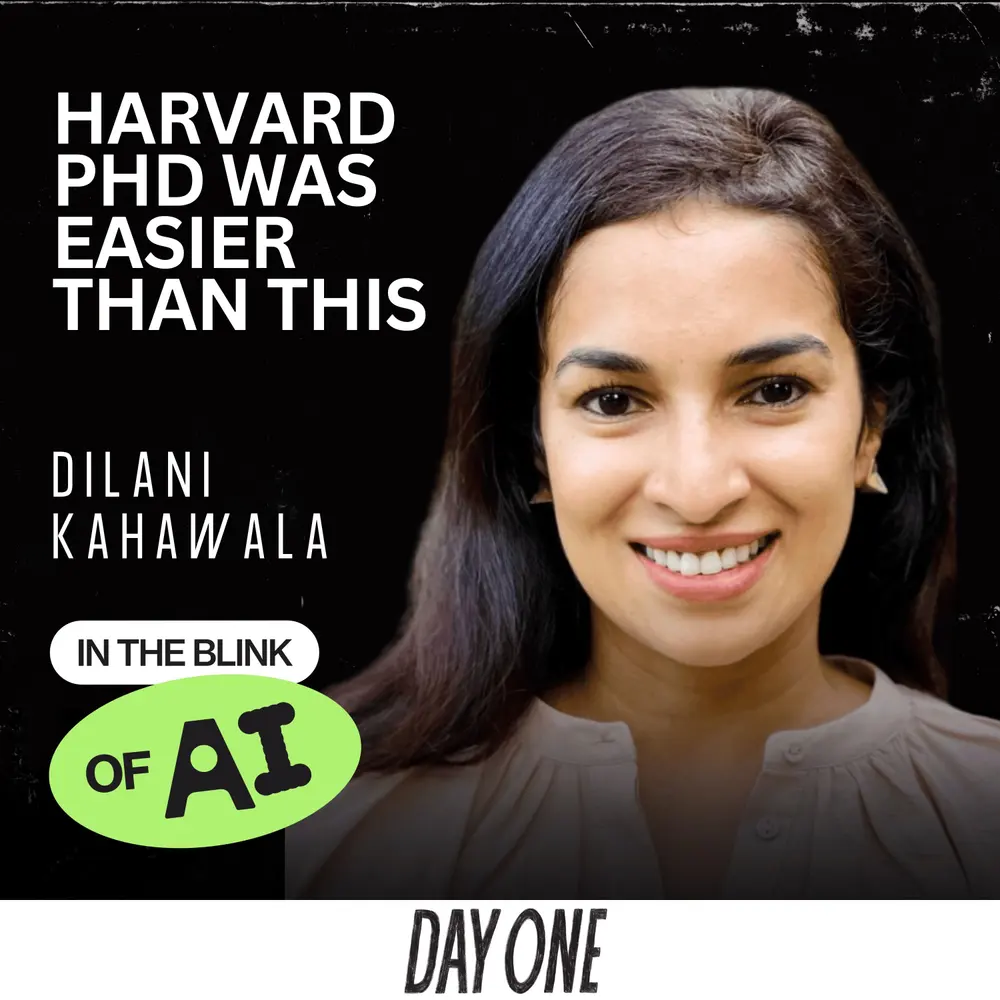
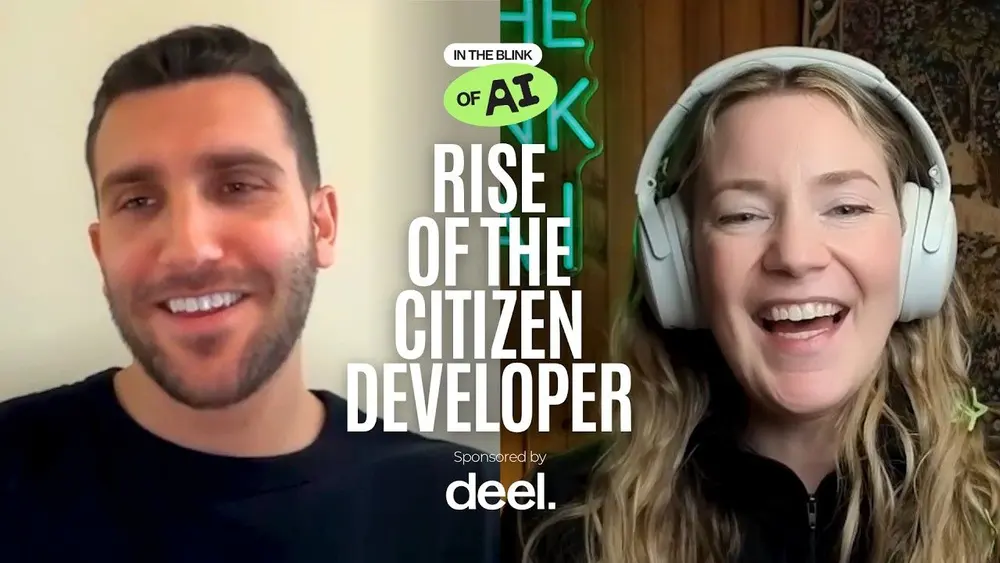
Georgie Healy talks to Dilani Kahawala, who built Anna, an AI assistant for parents. Anna connects to your emails and calendars and surfaces what needs your attention through iMessage or WhatsApp, like a change to the swimming carnival instructions.
They open on the admin that never stops, starting with a school pickup. Dilani explains the mental load and the guilt of letting other volunteer parents run the school WhatsApp group.
Dilani describes building Anna, from hundreds of hours of data labeling so an AI trained mostly for coding learns that soccer matters and a Pilates discount doesn't, to the nine experiments and the pivot from enterprise to consumer. She also covers privacy, saying Anna never sells data and doesn't train on it.
The second half turns to kids and AI. Dilani has already introduced AI to her eight-year-old, but doesn't want him using it to get the answer, and argues that learning to think critically is the skill that matters most. She says waiting until kids are 15 isn't the answer, supervision is, and she's honest that she doesn't know how humans stay in control once they stop understanding what AI does. The episode closes with a round of What's Harder, from theoretical physics versus the school pickup to naming a startup versus naming a child.
Chapters
0:00 Cold open: the school pickup ▶ 1:17 AI headlines: Navier-Stokes and Joseph Gordon-Levitt ▶ 4:38 Meet Dilani and Anna ▶ 6:09 Welcome and the launch video shoot ▶ 7:36 WhatsApp group chat or inbox ▶ 9:12 PhD or three WhatsApp groups ▶ 10:26 How Anna handles the boring admin ▶ 11:16 The school pickup ▶ 13:17 Are kids doing too much? ▶ 15:14 The magic wand week and the lunchbox bin ▶ 16:35 How Anna was built ▶ 17:49 Privacy and data ▶ 18:35 The mental load and mom guilt ▶ 21:50 Why Dilani built Anna ▶ 24:17 Pivoting from enterprise to consumer ▶ 25:13 The personal assistant boom ▶ 26:35 Introducing AI to kids ▶ 28:19 Learning with AI, the LinkedIn roast and Alpha Schools ▶ 30:43 AI, physics and who stays in control ▶ 32:21 What age is right, voice AI and supervision ▶ 35:26 Kids’ big science questions ▶ 36:33 What’s Harder game ▶ 41:22 Where to find Anna ▶ Transcript Search or select a timestamp to jump ▾ 0:00 Georgie Healy: About 3 weeks ago, I completely forgot to pick up my son from school. I kid you not, Delaney, there were 4 mums calling me nonstop for that entire hour. They were waiting with my son. I didn't even know the mums that were doing it. And it feels low stakes, but it— but then it's high stakes, and then it's reputation stakes. And then I've got some stories to tell you on the episode. I'm okay with dropping the ball and affecting my reputation. I'm not okay with my kids getting affected by it. 0:28 Dilani Kahawala: Anna basically surfaces it up to you in messaging and you're like, hey, this thing moved, or the instructions for the swimming carnival changed and now you need to add some extra clothes in the morning. It's like boring stuff that between me and my husband, we drop. 0:44 Georgie Healy: Theoretical physics at Harvard or multiple location school pickup? 0:48 Dilani Kahawala: That answer is so obvious. It's the latter. And I've gotten like speeding tickets. Police have stopped me. 0:56 Georgie Healy: Managing 150 emotional parents in a group chat or 11 AI agents? 1:01 Dilani Kahawala: Oh, the group chat is intense. I've gotten almost cancelled, like— 1:06 Georgie Healy: Really? LinkedIn, WhatsApp, we're just getting cancelled everywhere. Hi, I'm Georgie Healey. Welcome back to In the Blink of AI. This week, before we get started on the episode, I've got 2 of the most important AI headlines you need to know. Firstly, one of the hardest maths problems of all time may have just been solved. And if it had been solved by a human, they might have been in line for a $1 million prize. But as you might be guessing, it was actually solved by AI. Now the problem involves something called the Navier-Stokes equations. Now stay with me. Now these equations are incredibly important. They help model planes, they help model how blood flows through the heart, and they help model things like cyclones and floods and bushfires. Now there's one part of the Navier-Stokes equations that mathematicians have been trying to crack for decades. Could there be a scenario where there's a weird swirling vortex and at which point these equations go haywire? The answer's yes, and OpenAI managed to solve this within 88 hours. And all you need to know really is that the mathematicians are stressed. They say the proof is incredibly difficult for humans to understand. I actually saw one mathematician crying on a podcast recently. This is how much it means to them. I feel for the mathematicians, but I think the coverage isn't covering this enough, which is if OpenAI can solve this equation in 88 hours, imagine what difference it could make to bushfires, cyclones, floods like the Lismore floods. If we could better predict things like that, help communities move quicker in these environments, I personally am really excited for this kind of development. So if you're a millennial, you cannot have missed Joseph Gordon-Levitt growing He was in 500 Days of Summer. He was in 10 Things I Hate About You. He was in Third Rock from the Sun. And now he's Hollywood's biggest AI critic. He's written a Washington Post op-ed arguing that AI companies should be paying their creators. He co-founded the Creators Coalition on AI. He's testified to lawmakers. And at Sundance, he said that these models are built on stolen data. I'm like 20% annoyed, but 80% impressed. Because essentially I love a nuanced take on AI. He's reminding the tech industry that, surprise, other industries do exist, and a lot of creators have a genuine reason to be furious about how their work has been used. But my 20%, people like Joseph saying, just make AI ethical. Like, mate, I would love that too. The problem is the toothpaste is out of the tube. These models are already built with all of this data mined together in one big data soup. There isn't a neat little receipt when you look at the data that says this is 0.003% Taylor Swift, this is 0.001% Lana Del Rey. Going forward, I completely agree with Joseph's and other creators' wish, which is a policy where creators get a real choice with what to do with their work. Opt out, license in, and get paid when AI companies profit from their work. My guest this week is Delanie Kawahala. She has a PhD in theoretical physics from Harvard, She's chased billion-dollar deals at Meta and smashed them. She wrote a novel just to decompress. Not relatable, but iconic. And she'll tell you without hesitation that none of this was as hard as getting 3 kids out the house by 8:15. That is relatable. So she did something about it. Delaney built Anna, an AI assistant that catches school emails, the chaos of a WhatsApp group chat, jiu-jitsu, soccer notices, and everything that comes with the admin of being a parent. She trained it herself using hundreds of hours of labeling from her own inbox. Frankly, it's really rare to hear someone with this kind of enormous brain and talent and brilliance being put towards a topic that the tech industry, for reasons we won't cover today, does tend to ignore. In this episode, you'll laugh, you'll feel seen, you'll leave with better ways to run your week, and you'll probably have some ammunition to make fun of me in the future. I'm okay with all of this. Let's dive in. 5:26 Ad: You're listening to a dayone.fm show. 5:29 Georgie Healy: In the Blink of AI is proudly sponsored by Deel, the global HR and payroll platform that's behind the expansion of companies like Revolut, Shopify, Or fans of the show ElevenLabs, who quadrupled their workforce in 54 countries. Build your global team with Deel. Delanie, thank you so much for joining in the Blink of AI. 5:59 Dilani Kahawala: Thanks for having me. 6:00 Georgie Healy: Last time I saw you, we were actresses. 6:02 Dilani Kahawala: That was the most fun and crazy day. 6:05 Georgie Healy: Most fun and crazy day, but you are such an natural. Have you ever done acting or? 6:09 Dilani Kahawala: No, it's definitely not what I'm good at. 6:12 Georgie Healy: Really? 6:13 Dilani Kahawala: You were great there. So our entire launch video ran, like, hinged on your presence there. I got so— when we launched this, I got so many comments about you being in that video. 6:24 Georgie Healy: That's so kind. I would pretend to be humble, but I've never felt like— like, has everyone seen it? 6:32 Dilani Kahawala: I was like, I didn't even know who you were, and then like, I know, I was like, I was like, I'm gonna make the choice 6:37 Georgie Healy: to 6:37 Dilani Kahawala: name that. So good. 6:39 Georgie Healy: Yeah. The launch video for Anna, your amazing app, we did it. Gosh, like we smashed it out. That day. 6:47 Dilani Kahawala: Yeah, it was so intense. And I remember like right at the end, we're like running out of light, daylight. 6:53 Georgie Healy: Oh my goodness. 6:55 Dilani Kahawala: Still, 6:55 Georgie Healy: it's because I was such a diva at the beginning for my first 3 minutes that I was like, let's do another take, guys. 7:01 Dilani Kahawala: Well, it, you know, it set the scene. 7:03 Georgie Healy: It's an amazing— look, I can't wait to talk about it. I can't wait for this episode. I keep being asked about parenting in this time of AI. I keep being asked about solutions to how hard parenting is, and I can't wait to talk to you about it. But first of all, what makes you more stressed, your inbox or the WhatsApp group chat? 7:23 Dilani Kahawala: I feel like the answer to this is so clear. It's the WhatsApp group chat. 7:27 Georgie Healy: Discuss. 7:27 Dilani Kahawala: It's— there's— I have 3 kids and they have like different WhatsApp threads for their school, And then for like the soccer group and then for tennis. And I'm just like, you guys, do you not even go to school anymore? Just like stop all this activity. Sometimes, you know, like it's like there's an app that will have the information and then some poor parent is like screenshotting this app. 7:54 Georgie Healy: Yes. 7:55 Dilani Kahawala: Shoving it into WhatsApp. But occasionally they'll miss because it's like another mom, right? Who's probably like doing this in between getting her 2 kids ready. 8:05 Georgie Healy: Agree, agree. And, and it feels low stakes, but it— but then it's high stakes, and then it's reputation stakes. And then I've got some stories to tell you on the episode, but it's like, I'm okay with dropping the ball and affecting my reputation. I'm not okay with my kids getting affected by it. 8:26 Dilani Kahawala: Right? Emotional trauma. And this is— I feel like across 3 kids, this happens Too often. 8:33 Georgie Healy: Dude, I'm struggling with 2. I don't even— 8:36 Dilani Kahawala: That one hasn't quite got to the stage where he, he feels peer pressure, but it's coming. 8:40 Georgie Healy: How old are your kids? 8:42 Dilani Kahawala: 8, 6, and 2. 8:44 Georgie Healy: Yep. So we've got 6 and 4. 8:47 Dilani Kahawala: Yeah. 8:47 Georgie Healy: And like, one's in school, one's starting school next year, and I thought our lives would get easier. The opposite is true. 8:53 Dilani Kahawala: I'm like an Uber driver and a PA for 3 humans all at once. 9:00 Georgie Healy: Let's talk about the fact you have a PhD from Harvard. Your mission right now is to solve this. What's harder? What's harder, getting the PhD from Harvard or the 3 WhatsApp groups? 9:10 Dilani Kahawala: It's not even a competition. Like, I just sat there and wrote equations for 5 years. That was way easier than just every morning. It doesn't stop. I feel like as a grown-up, I did not anticipate you just wake up every morning And it never ends like this. There's like 18 admin things. And then I get to the weekend, I'm like, okay, now it's time to go through my inbox that is like 400 emails. And then I'll be like, such an achievement. And I know the next weekend I'll have to do it again. And I'm just— I don't know how to solve this problem. It's like so many hours of life. 9:46 Georgie Healy: You have a PhD from Harvard. I don't think I'm stupid, but for whatever reason, I keep dropping the ball as well. And it feels like they're dumb mistakes, but it's just the overwhelm. 9:58 Dilani Kahawala: So overwhelming. 9:58 Georgie Healy: This morning I realized driving to this recording, oh no, it was my daughter's ballet day. She's meant to wear like certain clothes to school, and I'm like, there's always something, there's always something that I've forgotten. How are you trying to help ease that burden for parents? 10:13 Dilani Kahawala: Biggest stress, I think, is all the different pieces of information that come at you. What we do is we just pay attention to all of that and like give you reassurance that Anna has caught it all. If it's relevant for you, because sometimes like all of these things have like soccer notices and ballet classes, but my kids don't always— not relevant to them. 10:36 Georgie Healy: Yeah. 10:36 Dilani Kahawala: And I still get them. 10:37 Georgie Healy: Yeah. 10:37 Dilani Kahawala: Anna basically surfaces it up to you in messaging and you're like, hey, this thing moved, or the instructions for the swimming carnival changed and now you need to add some extra clothes in the morning. It's like boring stuff that between me and my husband we drop. 10:53 Georgie Healy: Totally. 10:54 Dilani Kahawala: It— and, and that's what Anna's optimized to do, just like handle the really gunky, boring admin that gets you into trouble. 11:03 Georgie Healy: I— this speaks to me on such a deep level. One anecdote, I'm gonna really out myself in this episode. About 3 weeks ago, I completely forgot to pick up my son from school. Completely forgot. And I'll justify it But really, it's pretty bad. He finishes early. He has chess on a Monday, and I had a meeting pushed, so it was an early pickup, and then my meeting got pushed. Normally I would reserve that time and never forget. I kid you not, Delaney, there were 4 mums calling me nonstop for that entire hour. Oh my God. They were waiting with my son. I didn't even know the mums that were doing it. I realized after the meeting was finished, they were standing there with him for an hour, these moms I don't know. And then in the group chat, it's like, I heard about what happened. Like, all these strangers heard about what Byron's mum did. And I'm like, I don't think I'll ever recover from this. 11:58 Dilani Kahawala: Oh, that's, that's hard. 12:01 Georgie Healy: Brutal. I'm like, I, I thought I was an intelligent person that was on top of things. 12:06 Dilani Kahawala: But all it takes is like one meeting to go astray, or like one slight change in schedule, right? Like on Wednesdays, We have to pick up Theo by 5. Every other day he's in— they're in like after-school care. So if you're a little bit late, it's okay. But sometimes on Wednesdays you're like at like 4:55, like, 12:25 Georgie Healy: oh, 12:26 Dilani Kahawala: it's Wednesday. 12:27 Georgie Healy: I think we've told this story really well for people that have kids or don't have kids, how hard it genuinely is. And it's not just a matter of like being more prepared or smarter. Things do fall through the cracks. 12:40 Dilani Kahawala: It's just so— I just don't think— I was asking myself, like, how did this work when I was school age? Like, my parents definitely didn't do any of this stuff, not do as much stuff, or just— 12:52 Georgie Healy: I do want to ask this to you, actually, because you work full-time, I'm guessing. I would— I work full-time, I guess, podcast, but still full-time. And, and both parents work full-time more. Do you think kids are doing more extracurricular and do you think AI can help us in this time, or is it just adding more complexity to how we're navigating all the information overload? 13:17 Dilani Kahawala: I, I think we are doing more. Like, I think it is the extra— like, it's the expectation of how curated the kids' life should be. And I'm like, this is insane. I want to stop it because I'm like, I don't really think you need to learn tennis. Yeah, it's okay. Maybe you can do it later. But then I feel this pressure. All the other parents are doing it. They want to do it because their friends are doing it. And then it's just this never-ending pileup. 13:45 Georgie Healy: Agree. 13:46 Dilani Kahawala: Across multiple kids. And actually, they just don't have enough free time. 13:51 Georgie Healy: Or being bored, right? 13:53 Dilani Kahawala: They just don't have— it's so structured now. 13:55 Georgie Healy: Agree. 13:56 Dilani Kahawala: And now they— their life is so structured that they don't even know what to do if they have a couple of hours free. 14:03 Georgie Healy: 100%. And 14:04 Dilani Kahawala: I'm like, this is not And 14:07 Georgie Healy: to any of you listeners that are judging us and thinking, well, just pull them out, you're their parents. I promised myself before having kids, I am not going to do that. I am not going to be that parent. And guess what? All the other kids are doing it. You feel like a bad parent. And 2, you're stuck entertaining them. Yeah, sometimes it's easier to just drop them at jiu-jitsu for an hour and get 1 hour where you're like, at least they'll be doing something in that time that I don't need to think about. 14:32 Dilani Kahawala: At least like sometimes I'm like, at least they're outside. But is AI helping with it? I don't think AI is yet helping with this particular problem of like, should we be— how should we be structuring childhoods? Honestly. 14:45 Georgie Healy: Agree. 14:46 Dilani Kahawala: I think you have to kind of buck the trend a little bit and be like, hey, you're just going to be free range for a while. 14:50 Georgie Healy: Free range kids. I love it. If you had a magic wand though, with AI or otherwise, what would your week look like From next week that would be a little bit different? 15:01 Dilani Kahawala: I just wish that the— by the time, like, my kids would come home and they would just chill out. 15:06 Georgie Healy: Good luck. 15:08 Dilani Kahawala: By the time, like, they've had enough time to just, like, decompress, which they— I feel like they don't get enough time to decompress. And then by the time, like, I finish work, we can just have sort of just, like, chill time as family. And that if that happened, like, 4 days a week, that would just Like that seems like such a huge thing, but right now it's like that intense. It's just I'm like, oh my God! I have to. What am I going to put in the lunchbox tomorrow and the day after? Oh my God! I don't have any of those things, 15:38 Georgie Healy: and their taste changes, and they bring all the food home and all this stuff. 15:43 Dilani Kahawala: Emptying the lunchbox into the bin is like the saddest two minutes of my life 15:49 Georgie Healy: because you've cut all the pieces up, tried to make it well rounded, and did it, and then you bring it home and it's like. That time that I was making this lunch, push in the bin. Like, what? 15:59 Dilani Kahawala: And again, like, I sound just like old woman. It was like, well, I definitely didn't get that for lunch when I was that age. 16:05 Georgie Healy: I know. I'm like, I gave you fresh apple cut into slices the way you like it and you didn't even eat it. I know I've become that person. 16:14 Dilani Kahawala: Yeah, I am every day that person. Because you don't know what you've got. 16:18 Georgie Healy: Because you're so time poor that that time spent, you're like, it should be optimized. Yes. Like, there's so much I want to talk to you about. One of, one of the many things I want to talk to you about is how you built Anna. I read 200 pieces of data can go in and then give you text back. Is that correct? 16:33 Dilani Kahawala: Roughly. So Anna connects to multiple emails because as parents you have multiple emails, multiple calendars across you and your spouse or you and another caregiver, and that all gets pulled in. And the magic of, I guess, agentic AI today is you can filter through all of that and figure out based on what I know about Liv, how many kids you have and what they like to do, which of those things you actually need to do something about. And then we surface that up for you through iMessage or WhatsApp so that you're kind of working with this assistant like you would work with a real human or a friend. That alone of just like school app information all kind of combined together is really valuable for parents. 17:19 Georgie Healy: Amazing. Now I'm AI pilled. I love it. Sign me the hell up. All the connectors. Let's do this. But for parents that are like maybe not from the industry or hear that and already are feeling a little bit worried about privacy, security, that kind of stuff, what would you say? 17:35 Dilani Kahawala: That's the number one question we get from parents. It's like, what are you doing with my data? 17:41 Georgie Healy: Yeah. 17:42 Dilani Kahawala: How should I hear all these things about what AI can do in like bad ways? Like, how do I need to be careful? I mean, the main thing is you need, if you're working with any AI product and you're gonna put your personal data in, you have to be a bit vigilant about what they say about what they're gonna do with your data. And so for us, like, we are very protective of privacy because like my kids' data's in there too. So it's like, where are they storing the data? Stored in a legitimate, like we, you know, we put our database in Google Cloud Services. So how are you storing your data? How are you treating it? We never sell anyone's data. We don't train on your data. And that's not true for a lot of AI companies. So you just have to be careful. 18:22 Georgie Healy: Even ones that I'm using. And that's not advice, by the way. We were talking about one I was using before. Definitely not advice. Okay. I heard this study that mums carry— this is from the University of Bath and University of Melbourne. They work together. Mums carry 71% of the mental load. Are you finding that in your experiences when you're speaking to customers? Is it the mums that are the ones that are getting overburdened by this problem? 18:47 Dilani Kahawala: Yeah, it's definitely I mean, the data shows that like both moms and dads have increased the number of hours they spend with kids, like double since like the '70s. So they just, they are generally more involved parents. But I like our customer base is probably like 75% moms and 25% dads. So there's a lot of dads. But I think the way that mental load affects moms is that they end up, even if the the other parent is taking on responsibility, they feel like they're responsible for making sure all of it kind of sticks. Like they carry the other parent's admin in their head too, which I do. 19:26 Georgie Healy: I do. 19:27 Dilani Kahawala: And I'm, you know, like my husband is the core school admin person and I'm the extracurriculars parent. 19:33 Georgie Healy: Ah, clever breakdown. That's 19:36 Dilani Kahawala: awesome. 19:37 Georgie Healy: Which is why you're like, maybe no more extracurriculars. 19:39 Dilani Kahawala: Yeah, exactly. It's like, can you also do without lunch? But I still am like, I'm like, did you, did you sign this thing still? Or like, did you pay for the mango fundraiser? 19:52 Georgie Healy: Oh my gosh, the mango fundraisers. And the— 19:56 Dilani Kahawala: I mean, that one I quite like. 19:57 Georgie Healy: It's kind of fun, right? 19:58 Dilani Kahawala: It's like you just, you get some great mangoes. But still, I, I keep all of that in my head even if my husband is doing quite a lot of it already, whereas I don't necessarily I think it's like— I'm generalizing here, but like, I don't think it's necessarily like that if you're a dad. 20:15 Georgie Healy: Yeah, I don't hear about dad guilt. I hear a lot about mom guilt. I experience a lot of mom guilt. I don't hear about dad guilt. 20:22 Dilani Kahawala: No. And I, in addition to just like carrying everything, like my personal experience of this is my school WhatsApp group is full of these moms who volunteer and run the entire admin of this school. 20:35 Georgie Healy: 100%. 20:36 Dilani Kahawala: And I feel a lot of guilt because I don't have time. Like, I work 7 days a week and like, it's insane. And I just don't— I can't contribute to that in the same way. And I feel enormous guilt because it's some other mum who's doing the work for me. 20:53 Georgie Healy: I have been the benefit of mums that have gone above and beyond to represent the whole grade. 21:00 Dilani Kahawala: Yes. 21:00 Georgie Healy: It's not easy work and it's not— yeah. 21:04 Dilani Kahawala: It's like so underappreciated. People get mad at them, but I'm like, oh my gosh, 21:08 Georgie Healy: it's free labor. Like, seriously. Yeah, agree, agree. We've had all sorts of things where mums have gone above and beyond. They don't expect anything from it, but then some reason it's all the other mums that are still upset that they— 21:21 Dilani Kahawala: I know, I know, I know. It's, 21:24 Georgie Healy: it's a tricky dynamic. 21:25 Dilani Kahawala: It's a tricky dynamic. At the same time, I always feel this like, why is the expectation always on like Us. 21:31 Georgie Healy: Yes. 21:32 Dilani Kahawala: And so then I feel both like guilt and like aghast that this is the expectation. 21:37 Georgie Healy: You're not paying me to say this, but you're trying to contribute to helping solve that, which I think is really meaningful. What made you just like— I bet you could work at any tech company in the world, maybe not even work 7 days a week. What made you so passionate to put your insane brain to this? Look, we get it. Global hiring and payroll can be a headache. Companies like Shopify, Revolut, and ElevenLabs already scale internationally with Deal. And Airwallex, the leading AI finance platform, they manage and pay over 1,185 employees across 16 countries, and they build their global team with Deal. Deal. So visit deal.com/dayone and start expanding your business today. 22:38 Dilani Kahawala: I— so the first thing is I just get the problem, like, in a way that I never empathize with any other tech problem I've ever worked on. The early data for Anna was my life entirely, and I was like data labeling for Hundreds of hours, probably, unpaid. 22:58 Georgie Healy: Describe that for the listener, what that looks like. 23:01 Dilani Kahawala: It's so early on, how does Anna know if an email matters to you or not as a parent? So AI agent needs some guidance or training around, this is important for a parent, this is not. Like, most AI models are coding models. They're great at writing code. They don't know that soccer is maybe important, but your Pilates studio discount, 25% off this month, is not. So there's a lot of like, Delaney goes through her emails and WhatsApps and like, this is important, this is what you should do with it. This is not important. This is important, this is what you should do with it. And actually, I would say a lot of what— there's a lot of assistance out there. And the reason why this works for parents is that level of like fine-tuning and shaping. 23:51 Georgie Healy: Yes. 23:52 Dilani Kahawala: And that's— that was my entire job. 23:53 Georgie Healy: I love how you say this about personal assistants. When we first met, I actually think it was pre this boom of personal assistants that's happened lately. You were ahead of the curve. 24:04 Dilani Kahawala: Yes. 24:04 Georgie Healy: And I'm curious, did people see the potential when you were first talking to them about this? 24:09 Dilani Kahawala: Funnily enough, our investors did. 24:11 Georgie Healy: Great. 24:12 Dilani Kahawala: I had a— I was very stressed when we started building something in enterprise land when I first was like, I'm going to do a startup because I'm insane. Found we didn't have product market fit and we pivoted. We like did 9 experiments and this is the one where, oh, something here. I was like, oh my God, we're going moving into consumer. What, what are all the investors going to say? 24:35 Georgie Healy: Yeah. 24:35 Dilani Kahawala: And they saw it. 24:36 Georgie Healy: For the listeners, consumer's quite tricky because you need a huge market of people to sign up to get profitable, I guess. 24:44 Dilani Kahawala: Profitable. And no one really knows exactly how you would monetize it or what does consumer AI mean right now. 24:53 Georgie Healy: I have a PhD from Harvard. Like, let me cook. 24:56 Dilani Kahawala: Oh, I wish that helped. 25:00 Georgie Healy: I'm thrilled that you're using your enormous brain towards this. Can we briefly talk about personal assistants? Because I feel like this was the promised land a year and a half ago. Like every company said, they're going to book your flights, they're going to book your restaurants, they're going to do this and this. this, and that didn't happen. Whereas now personal assistants are here. Yeah, they're here. They're happening. Do you have any pointers for people that are kind of like, I'm not sure how to navigate this? There's so many. There's so many now. 25:30 Dilani Kahawala: There's like an entire— there's a personal assistant benchmark now. AI models have these different benchmarks and they're usually for like coding, but someone has put together a— because there's so many of them, there's a personal assistant benchmark on Various dimensions like how easy is it to browse or how easy is it, how proactive is it? There's, there's a lot and most of them are, eh, but a few good ones. 25:51 Georgie Healy: Fascinating. Yeah, I've downloaded Grokbot. Muse I haven't tried yet. Dots I think is only available for pro subscribers or something like that because the computer is so expensive. There's Instinct, which is only on WhatsApp and invite only. Guys, personal assistant era. But we're all going to use Anna. So that's good to know. I am going to ask you before— I've got a lovely game, but before I get to that, this is what I get asked most, and that is when are you going to introduce AI to your kids? How do you introduce AI to your kids? 26:24 Dilani Kahawala: Yeah, I already have. So my youngest, not yet, but only because he's 2. 26:29 Georgie Healy: Fair. I 26:31 Dilani Kahawala: don't know what to do. 26:32 Georgie Healy: Talk to the AI. 26:32 Dilani Kahawala: He's definitely been exposed to it. Yeah, because we might be driving. We drive a Tesla and there's like a rock 26:39 Georgie Healy: Yeah, 26:39 Dilani Kahawala: thing, which is really good. 26:41 Georgie Healy: Great. 26:42 Dilani Kahawala: Yeah, I've already introduced— so my oldest was 8, just had an AI camp for holiday, and I've been— I'm like, I'll give you a Claude Code account if you want to go like build something. 26:53 Georgie Healy: That's genius. 26:55 Dilani Kahawala: And 26:55 Georgie Healy: is it just your name, like, like in your account? 26:58 Dilani Kahawala: And yeah, and, and because I strictly don't think you're allowed if you're— 27:03 Georgie Healy: Don't worry, this is not going across every social media channel ever. 27:06 Dilani Kahawala: So 27:07 Georgie Healy: just to learn, right? 27:09 Dilani Kahawala: Just to learn. I, my perspective is this. I think you can't put the genie back in the bottle. The AI is here. I don't think there is, they're too young. However, I'm very careful about what they use it for. What I don't want them to use it for is to get the answer. 27:26 Georgie Healy: Type in a school question and then get the answer. 27:29 Dilani Kahawala: Yeah, like I still believe that we need to work hard to learn how to think and solve problems. And yes, if there's any future for our kids where, you know, any traditional kind of career options are still there, who knows? I think the thinking and the ability to be critical and evaluate things is still going to be the most important skill. 27:50 Georgie Healy: I love that. And did you find with that exercise, did he take you up on it, first of all? 27:55 Dilani Kahawala: Yeah. So he's been trying to make like little games. 27:59 Georgie Healy: I feel like that is really hard to use your brain to learn how to use a new tool in and of itself though, right? Like that requires critical thinking, surely. 28:07 Dilani Kahawala: It does. And I, I still want him, want them to learn how to do maths on a piece of paper, or I don't know, just like learn how to write it out because that is how you learn how to do it. That's how your brain learns. How does this thing work? So I don't want them to ever get the answers, but it is a very fast way to learn. For example, I'll give you like an example of my own. I'm not a child, but I needed to learn about VMs very quickly, like virtual machines. 28:36 Georgie Healy: Oh yeah. Okay. 28:37 Dilani Kahawala: I'm not a software engineer. 28:38 Georgie Healy: Sure. 28:39 Dilani Kahawala: And I learn about virtual machines in like half an hour, way faster than if I— 28:46 Georgie Healy: Imagine the Wikipedia entry and trying to understand it and they just show you— I know you're great at equations, but sometimes it's just so deep and you're like, that's not actually what I needed. 28:56 Dilani Kahawala: And I just asked the questions and the question after question after question. I didn't get it. Can you explain to me in like very simple terms? I'm not a software engineer, so you need to explain to me like this. And I just do exactly where I need to go deep and leave the things that I don't need. And there's this debate. I think I got roasted on LinkedIn because I asked this question about what do people think about AI in schools? 29:17 Georgie Healy: Oh yeah, you'll get roasted on LinkedIn regardless. But yeah. 29:19 Dilani Kahawala: And it was very— it was one of my most engaged upon posts. 29:24 Georgie Healy: We like to call that rage bait. And it works. 29:27 Dilani Kahawala: It's interesting because Alpha Schools, which is this all the rage in the tech community in the US, is AI-based learning. And their whole thing is you can learn everything in 2 hours you need to and then go play, which sounds amazing. And then other people are like, that's— 29:44 Georgie Healy: I was literally speaking to a mum about this on the weekend. She was like, I want my kids to go to Alpha Schools and I had never heard of it. So. 29:51 Dilani Kahawala: As long as you're careful about it, I do think the way to learn for my son versus my daughter is very different. 29:59 Georgie Healy: Agree. Same. 30:00 Dilani Kahawala: And I, I do think I can deliver that provided they don't— they're not being just fed the answer so they don't learn to think. 30:08 Georgie Healy: It's about offering a bespoke for the individual child that suits their learning styles, right? That a teacher with a class of 30 kids can't individually offer that, right? Yeah. 30:22 Dilani Kahawala: And that was my example. Like, me learning about virtual machines is I need some things I know, some things I don't, and I just need to go deep where I don't know stuff. 30:31 Georgie Healy: This is something that I wasn't planning to ask you, but you've brought it up in such a beautiful way, which is you used to write equations. You want the children to be able to handwrite math and things like that. You heard about this Navier-Stokes? Oh, being solved. People just heard me do headline news on this. Mathematicians are crying because AI solved this. Well, OpenAI apparently solved this equation in 88 hours. As someone who did a lot of theoretical physics, what is your take? Are you crying about this or are you happy about this? 31:04 Dilani Kahawala: So the same thing is happening in physics. In fact, my sort of pseudo-advisor, wasn't my direct advisor, but I collaborated with him a lot, actually put out this piece where he's like, I wrote all my papers last year with Claude Code, with Claude Opus, and I will never go back. Now that's a bit different from AI went and solved everything. Therefore, we have nothing else to do. 31:27 Georgie Healy: Answer. 31:27 Dilani Kahawala: Easy answer. 31:29 Georgie Healy: Yeah. 31:29 Dilani Kahawala: I mean, I can imagine that if you're in that field, it feels crushing. And how am I going to— what am I going to do? What is human endeavor anymore? 31:39 Georgie Healy: Yeah. 31:40 Dilani Kahawala: And if you don't understand it anymore, what— how do humans stay in control? Almost. 31:46 Georgie Healy: If AI gives you just the answer and you don't even know how to get to that 31:51 Dilani Kahawala: point. I don't have a good answer, but I do think it is the way it's going to go. In places like medicine, I think it's great because we will get all of these advances that will help save lives. I don't know what that means for academia. It's scary. 32:06 Georgie Healy: Love having you on the show. It's very helpful to have a perspective. I was like, it'll just solve things faster. I'm happy about it. But I haven't spent 20 years of my life working towards these you know, missions and goals. And frankly, that's a mathematician that isn't going to get that million-dollar prize now. It's, it's— yeah, it is, it is nuanced, isn't it? I asked my Instagram followers about this, children using AI. Do you want to hear what their response was? Yeah. I'd love your feedback. So I said, when it comes to what age to introduce AI to your kids, 50%, the largest group, said the age of 10 to 15, followed by 38% that said 16+. But can I just say, I had a few comments that said, well, it depends if it's voice AI versus an actual machine. What do you think? Is that— do you notice parents seem to have that? I came in with a blank sheet of paper in my mind because my kids use Alexa in our kitchen. So. 33:08 Dilani Kahawala: Yeah. So we use voice AI a lot. It's the easiest way to introduce them to— I don't know what in their brains they think think ChatGPT voice mode is. 33:17 Georgie Healy: My kids just say, can we ask the robot? 33:19 Dilani Kahawala: Yes, can we ask the robot questions? 33:22 Georgie Healy: Yeah. 33:22 Dilani Kahawala: Uh, and it's fascinating to watch them talk to it, and I'm like, this is not a bad thing. 33:27 Georgie Healy: I supervised with you in the— 33:29 Dilani Kahawala: This is, I think, the key with anything, not just AI, like Roblox or social media. Having worked at those platforms, you know, no individual person in a company like that is out there to like do something bad, right? It's— A 33:45 Georgie Healy: lot of them have kids. 33:46 Dilani Kahawala: A lot of them have kids. Platforms like that are, just by the nature of what they do and how they're built, can't always do the protection piece because that's not what they're designed and built to do. So I, my thing for AI and for any platform is you have to very carefully supervise what they do. You can I mean, AI is very sycophantic. You can very quickly get into a conversation about some very dark topics and how, how do you— like, that is the situation you don't want happening. I don't think the answer to that is wait till they're 15. For me. 34:24 Georgie Healy: Yeah. 34:25 Dilani Kahawala: I would say any platform, whether it's AI or voice AI or otherwise, or Roblox or whatever, you just have to really carefully supervise what they do sometimes. That— what, like, what does that mean? I'm like, you can only use the iPad in front of me while I'm cooking. It sometimes goes as far as that because I don't have a— I don't know exactly how to set up parental controls so ChatGPT doesn't say bad things. 34:50 Georgie Healy: Like, how do you do that? Yeah, yeah, I know. I, I'm the same. I'm kind of like trying to engineer out the potential problem by having the Alexa device literally in the kitchen so it's part of a family space. It's tricky, right? I get asked this question a lot and I keep fobbing it off to, well, my kids are 4 and 6, they're too young to actually be like speaking to ChatGPT or Claude yet. But they're not far off. 35:15 Dilani Kahawala: They're not far off. And my 6-year-old learns quite fast if you get her onto like a Q&A session on a topic. Sometimes they ask these like scientific questions. I'm like, oh my God, I'm so tired. I don't even know. I can't even think through it. 35:30 Georgie Healy: Do volcanoes dilate? Like, I'm like, Yeah, comes from the middle of the earth and there's lava. What's under that? I'm like, 35:40 Dilani Kahawala: yeah, 35:41 Georgie Healy: more lava. 35:42 Dilani Kahawala: There was this hilarious— we were driving to school and my daughter was, explain to me how seasons work. And I'm like, okay, I do know this because I studied physics, but I cannot. I'm so hard and I'm trying. It's like the morning commute, like trying not to— like a pedestrian. 36:01 Georgie Healy: Quite front of mind right now, sweetheart. 36:04 Dilani Kahawala: It's like, I was explaining and I was like, there is this concept of this and that. And she's like, what's a concept? 36:10 Georgie Healy: Oh, 36:13 Dilani Kahawala: okay, time to pull out— 36:17 Georgie Healy: oh man, that's amazing. Okay, we're about to finish up, but I want to finish on a game. It's— the game is called What's Harder? First thing that comes to your mind. Are you ready to go? 36:30 Dilani Kahawala: Yes, let's do it. 36:31 Georgie Healy: Theoretical physics at Harvard or multiple location school pickup? 36:34 Dilani Kahawala: That answer is so obvious. It's the latter. And I've got like speeding tickets. Police have stopped me. Oh my God. 36:43 Georgie Healy: You're like, I'm a mum of 3, okay? Hard deal. Writing a novel or a night before school assignment you didn't know existed? 36:52 Dilani Kahawala: Writing that novel was like the most fun and enjoyable thing I did for 10 years to like decompress from the stresses of my life. So I feel like there's not even the same bucket. 37:04 Georgie Healy: Are you into romantasy? 37:05 Dilani Kahawala: I have not yet gotten into it. I'm still in the Harry Potter. Yeah, but slightly older. 37:13 Georgie Healy: Love 37:14 Dilani Kahawala: all these like Sarah J. Maas kind of— I am like, I need to get it. 37:18 Georgie Healy: It's a cult. It's a cult. My book club is divided into 2. Oh really? Half of us that are obsessed with it and the other half that are like, Embarrassed on our behalf. Oh 37:27 Dilani Kahawala: no, there's no need to be embarrassed. It's uh, 37:29 Georgie Healy: if you listen or read Romantasy, hit me up. Hitting a one billion revenue target at Meta or getting three kids out the door by eight fifteen? 37:37 Dilani Kahawala: Oh, those are close. 37:38 Georgie Healy: Are they? 37:39 Dilani Kahawala: I feel like one billion dollars. You were always making progress towards the billion. Every morning it's the same. I'm like, brush your teeth for eight years in a row. I have said brush your teeth. They're like, at some point. Will you brush your teeth without me telling you? One day. 37:53 Georgie Healy: When you're like, have you brushed your teeth? Oh no, it's like the 3rd time I've asked you in 5 minutes. 37:59 Dilani Kahawala: And it's just like, what I keep telling myself, one day you're just gonna go to school without brushing your teeth. But then I can't bring myself to do that. 38:08 Georgie Healy: I just— I can't. All their teeth fall out and I'm like, whose fault is it? The mother's fault, of course. 38:14 Dilani Kahawala: I get into these like extremely intense Threats. Yeah, don't put your shoes on, I'll burn them. 38:19 Georgie Healy: Yeah. Um, I yesterday morning was like, if you don't do— like, there was a nightmare about the hairstyle wasn't what she wanted. I'm like, if you do not just get out the door, I will take a toy. Yeah, carrot stick, carrot stick, carrot stick to get out the door by 8:15. Managing 150 emotional parents in a group chat or 11 AI agents? 38:41 Dilani Kahawala: Oh, the group chat is intense. Yeah, I've gotten almost canceled. Like, 38:47 Georgie Healy: really? LinkedIn, WhatsApp, we're just getting canceled everywhere. Were you trying to do rage bait on WhatsApp? 38:55 Dilani Kahawala: No, I wasn't. I just had like an innocent question about whether we could use like kids' pocket money cards for canteen. And then— 39:02 Georgie Healy: Oh, how dare you? 39:03 Dilani Kahawala: Yeah, I think I got— it was a gentle cancellation. 39:06 Georgie Healy: Oh, do you know what mine was? There was a school assembly where they dress up and It was Magic School Bus themed and the theme was adventure. My only idea was my son has binoculars. And then at the last moment, one of the moms said, the teacher said they're not allowed to bring binoculars because of whatever reason. And then in the group chat I wrote, he's wearing binoculars, I don't care. And then all of us were like, oh, she's not. And I was like, that's— otherwise he's just wearing shorts and a t-shirt. 39:35 Dilani Kahawala: Well, how dare you? 39:36 Georgie Healy: I am the worst. 2 more. Explaining AI to an investor or to your mum? Brutal. 39:43 Dilani Kahawala: That's hard. My mom lives— my mom has the best life. She like lives in this world where she has— she only watches free-to-air TV. She's completely— I think she lives the dream. I couldn't try to explain AI to her if I tried. 39:56 Georgie Healy: My mom is so supportive. Classic beautiful moms. She listens to every single episode, so she's quite AI literate now just from listening every week. The best. Under duress, I tell you. Like, she doesn't have a choice. She's just being supportive. Naming a startup or naming a child? 40:11 Dilani Kahawala: Oh, naming a child for sure. Harder. Was harder. There was just a lot of immersion because like my culturally, I'm Sri Lankan. I was born in Sri Lanka. My husband is born in India. We're like Australian-American and our kids have Western-sounding first names, middle names, and then like an Indian last name. Oh my God, this was stressful. 40:33 Georgie Healy: This out. Do you think you nailed it though? Now? 40:36 Dilani Kahawala: No. 40:36 Georgie Healy: I won't tell you which, but there's some, there's some like 40:41 Dilani Kahawala: There was— there were shortlists, and, and in the end there was— there's one name for our oldest that we decided not to use because there was a serial killer. Oh, 40:53 Georgie Healy: that's always great. 40:54 Dilani Kahawala: With the same name. But then by the time our third one came around, we were like, oh, we're so tired, just pick that name. 41:00 Georgie Healy: You know what, like, they always have regular human names. That's the problem. 41:05 Dilani Kahawala: That's the— how— why aren't serial killers named More interestingly, it had a 41:10 Georgie Healy: beautiful name. My husband said it sounded like a stripper. So, and on that note, thank you so much, honey, for the most incredible episode. You unpacked so many topics that I know my listeners have been dying for. Where can people find Anna and where can they follow you? 41:28 Dilani Kahawala: You can find Anna at hianna.ai and you can find me on LinkedIn. That's probably the best place. Just message me. I'm, I'm around. I'm pretty responsive. Thank you so much. Thanks for having me. 41:40 Georgie Healy: Thank you so much for listening to In the Blink of AI. If you want to go deeper on anything we've spoken about today, I write a weekly Substack called Attention Is All I Need. Yes, it's hilarious. It's a pun. And essentially, I go into AI rants, tech news, events I'm going to, and more. It's bite-sized, and I hear it's awesome. The link is in the show notes below. No transcript lines match that phrase. Try fewer words.



 ▶
 ▶
 ▶
 ▶
 ▶
 ▶
 ▶
 ▶
 ▶