
The Buzzword That's Killing Your Pitch: Billy Chan on Alfred Travel

You are in a sector where you can't afford to be cautious about growth.
Pitch Alan. Book your spot.
Bring your founder pitch to Pick My Brain. Alan will pull it apart — kindly — and help rebuild it into something investors can’t ignore.
Chapters
Resources
Transcript
Billy Chan: Travelers planning their holiday, they spend 15 hours over 2 months micro-planning each and every holiday. And so what they end up with is a messy spreadsheet, a graveyard of email confirmations, a plethora of Google Map pins.
Alan Jones: Crypto and blockchain, and I was worried that you might use either of those or perhaps both those buzzwords in describing what Alpha Travel does, and I was hoping that you wouldn't do that. In an investor's head, fatigue builds up over time when people use buzzwords. You lose points there because we should always be building with the current best practice using the current best tools, right?
Billy Chan: We see that loyalty points within the travel industry has, you know, a couple of problems, which is non-transferable and expire. And so we are trying to launch a loyalty token blockchain framework so that, you know, it is transferable. It doesn't expire.
Alan Jones: Blockchain and crypto can be very polarizing, not just with investors, but also potentially with customers. Welcome to Pick My Brain, the podcast where we help startup founders improve their pitches to better connect with customers, co-founders, and investors. My name's Alan Jones, and I'm an ex-startup founder myself, but that was a very long time ago. Now I'm an angel investor, and I've been doing that for about 15 years. And I like to hear real stories straight from founders. And so the show is called Pick My Brain because 2 or 3 times a week I get a message from a founder saying, hey, could I buy you a coffee and pick your brain about my startup? So the show was called Pick My Brain. But first, I'd like to acknowledge that this podcast is being recorded on Gadigal land, land that was never ceded. I pay my respects to their innovators and leaders past, present, and emerging.
Billy Chan: You're listening to a dayone.fm show.
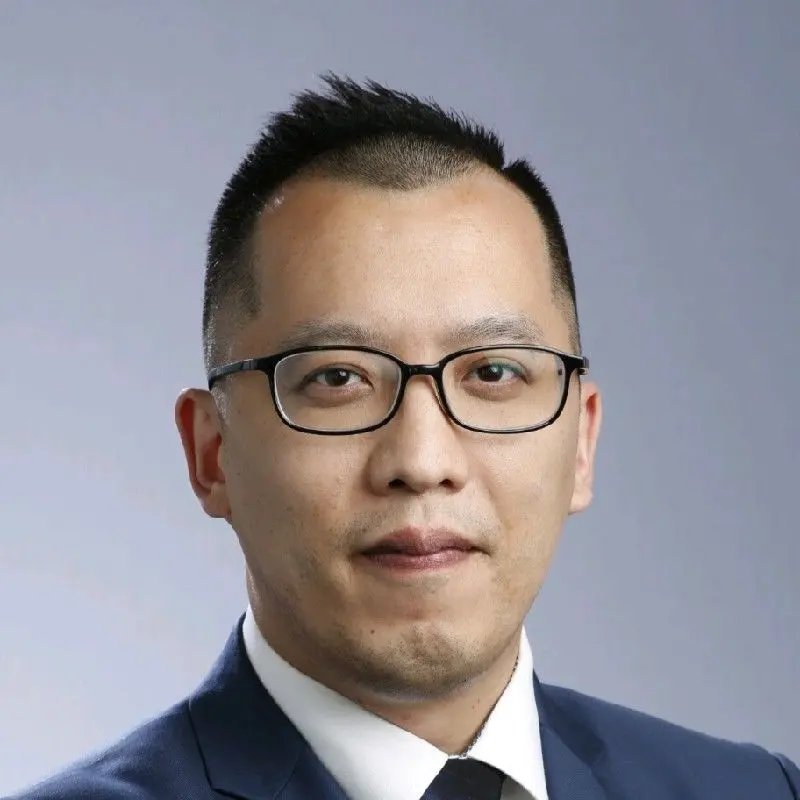
Alan Jones: Today on the show, we're joined by Billy Chan, who's founder and CEO of alfredtravel.io. Thanks for joining the show, Billy. How are you doing?
Billy Chan: Good, good. Thank you for having me.
Alan Jones: Great to have you on the show, mate. So, as regular listeners and watchers will know, we start the show with a couple of standard questions just to give us a little bit of insight into the founder. And Billy, when you were a kid, question 1, when you were a kid, what did you think you wanted to be when you grew up?
Billy Chan: When I was a kid, and what I remember is to grow up to be a scientist or an engineer. My mother will tell you, and maybe you will remember, Alan, back in the days we used to have VCRs and sort of CRT TVs. She would come home with me screwdriver in hand and the VCR taken to bits. So I was always a curious little kid trying to figure out how things worked. So I always wanted to grow up to be a scientist.
Alan Jones: So the VCR wasn't even broken?
Billy Chan: No, the VCR was taken apart and then I had to put it back together. You know, as an 8-year-old with a screwdriver, that was pretty hard to do.
Alan Jones: Yeah, they were pretty complicated mechanical machines with lots of moving parts. Well done. Well done. And the second standard question is, what were you doing before becoming a startup founder?
Billy Chan: Yeah, I was in the corporate world. I was working in payments. I was working in travel. And my last gig was actually working in crypto. So I've been sort of at the forefront of technology for the past 8 years. And getting exposed to AI in 2022, 2023 really opened my eyes up on what can actually be achieved with this new sort of technology frontier.
Alan Jones: All right, great. We're going to talk a bit about AlphaTravel now. So AlphaTravel.io is what?
Billy Chan: Yeah, so AlphaTravel.io is a travel operating system. We're trying to solve for the inspiration and execution layer that travelers face today. So if you think about, you know, travelers planning their holiday, they spend 15 hours over 2 months micro-planning each and every holiday. And so what they end up with is a messy spreadsheet, a graveyard of email confirmations, a plethora of Google Map pins. And, you know, even now when you use ChatGPT, they end up with a long chat thread they can't even use on the ground. So what we've actually done is we've taken all the inputs from a traveler, and understand from a personalization whether they like hiking, whether they like museums, whether they like art museums or other things, and really utilizing AI to get all the content and data together and present it out in a mobile interface that's dynamic and tap to edit. So you're able to use that on the ground. Alan, if you imagine that you're in the middle of Shinjuku in Japan, in Tokyo, the last thing you want is to try and look at your phone and find that spot on a spreadsheet. and copy and paste into Google Maps. We've got all the integration done with Google as well. So you can sort of tap and it will tell you the directions on how to get from A to B whilst you're on the trip.
Alan Jones: Great. Who pays to use Alpha Travel and what do they pay?
Billy Chan: Yeah, so the customers do not pay. We believe that, you know, the business model within the travel industry has allowed for commissions. to be obtained by the provider. So to all our customers, it's free to use, you know, and when they actually commit to the booking, then we receive a commission. And that's how our revenue model works.
Alan Jones: All right, cool. Tell me a little bit about the team. It's you and who?
Billy Chan: Yeah, so me and Andy, Andy Sang. He's a co-founder. He's the CTO. He's the technical brains behind Alfred Travel. We worked together in the crypto industry for about 6, 7 years together in Hong Kong. And we both, you know, sort of came together and said, you know, we've been through 2 liquidation of liquidity events for the companies that we've worked for. And we're like, hmm, maybe we should give this a go ourselves. And that's when we sort of founded Alfred Travel. The actual idea of Alfred Travel was an idea I had over a decade ago when I was actually working for Travelport in GDS. I felt that TripAdvisor and Expedia and Booking.com and all the content that was fragmented, there needs to be a way to bring it all together. But as you could imagine, 10 years ago, software was very expensive and there was no real APIs to bring everything together. And so we attempted it. We felt that it was too expensive to even get started and we sort of parked it on the shelf. And so when 2023 came around and we sort of started exploring with ChatGPT, We're like, hmm, okay, maybe we can actually achieve the outcome that we want with the technology that's arrived today.
Alan Jones: Great. Okay. So is this a mobile native app? Is it a browser experience? How do users access it?
Billy Chan: Yeah, so it's a mobile native app. And we were determined to go through the Apple Developer Network as well as the Android Google Play Store. And one of the reasons why we wanted to do that is because of security. But also, we wanted to make sure that we had all the features that come along with the Apple Store as well as the Google Play Store, such as notifications. If we detect that the weather is bad, then we can actually send notifications and tell the user to, do you want to update your itinerary for the next day because it's going to be raining and you probably don't want to go on that walk in the park? Instead, you might want to find the shopping outlet that we've recommended on day 4. and replace the two. So really, you know, trying to make sure that we're able to reach the user, not just at the time of inspiration or transaction, but also within the trip, because that's probably the most difficult time that a traveler has.
Alan Jones: Great. How long have you been out in market?
Billy Chan: Yeah, we launched our app on both stores in July 2025. We passed the 1,000-user mark in February 2026. We did a small campaign, a small marketing campaign in November just to really test our ICP. And we've gotten really good feedback. So currently today, as we speak, I'm running at about 1,340 users with 1,386 itineraries generated.
Alan Jones: Great. And who is that ideal customer, that ICP?
Billy Chan: Yeah, we really thought about this and we started with what we call time poor, high spend. Right? So if you think about working parents and the school holidays are coming up and they want to go somewhere new with the kids, but they don't know whether, you know, the destination has kid-friendly activities or kid-friendly restaurants, this is something that we started with. What we've actually found is also retirees are also adopting Alfred Travel. They are sick and tired of walking into a brick-and-mortar travel agent and receiving all the pamphlets, you know, whether it's a trip to Rome, or whether it's a cruise, what they've found is Alfred Travels enabled them to explore based on their own needs and flexibilities rather than wearing a red hat and following a yellow flag around on a bus.
Alan Jones: How much are you using AI to personalize the experience for customers?
Billy Chan: We're using AI pretty much in every aspect. So once you basically log in, you're able to build a, what we call a traveler or a family profile. Because one of the key things that, you know, in comparison to our competitors, we see that travelers don't travel as individuals. Your traveling preference, when you're traveling alone, or whether you're traveling with the boys, or whether you're traveling with family, will differ. And so you can actually create traveling profiles within Alfred Travel. Once you build the itinerary in terms of telling us what the destination is, what dates you want to travel, which profile is traveling and your budget, then we would utilize AI to construct an itinerary personalized to that traveling profile. We don't use a standard one sort of AI agent to construct the itinerary. We've actually got validation agents, you know, so we utilize ChatGPT to construct the framework, but then we actually utilize Gemini to do validation against ChatGPT's output. The reason why we do this is because really hallucinations, right? So what we found early in launch is ChatGPT was actually providing flight numbers which didn't actually exist or restaurants which have been closed for 3 years. And so when Google launched Gemini utilizing sort of the Google Web2 data, we thought this was a perfect opportunity to validate the information against Google. Probably the follow-up question would be, well, why not use Google as the sort of the only or the sole LLM? What we've found is ChatGPT is great in terms of creativity, in terms of really true personalization. Google, I don't think from an LLM, has got there yet. And so utilizing Google as just a validation layer is what's been working well for us.
Alan Jones: Great. Yeah, so you've anticipated my question. You know, it's gonna be important to control for hallucination. Another thing that's gonna be important in building the value of your businesses is understanding your customers' preferences over time, right? Like, it's difficult to get to lead somebody through a questionnaire about their travel preferences at the beginning. It's kind of better to capture it by studying their behavior.
Billy Chan: Indeed.
Alan Jones: How much do you need to capture though at the beginning to make them feel like they're getting a personalized travel experience?
Billy Chan: Not much at all, right? Like, so we've got questions like preferred airlines, preferred hotels, and, you know, whilst you're building your itinerary, we do have a field called bucket list where you can free text type anything you want in terms of, you know, in terms of your interests, preferences. We do have suggestions, for example, shopping, kids-friendly, beach, nightlife, et cetera, et cetera. But as you've mentioned, Alan, what we do have is an AI agent which crawls through the itinerary every day and basically understands your behavior whilst you're customizing the itinerary. So imagine you've built an itinerary again to Tokyo and you've deleted some of the activities or some of the restaurants. What the AI will know that, you know, oh, you've deleted Greek restaurants in a couple of days. You're not a fan of Greek cuisine, right? Or you've added some activities such as Universal Studios or Disneyland or whatever it may be. Okay, well, we understand you like theme parks, right? Or you've deleted museums. So we actually start learning more about you. And so the more you use Alfred Travel, the more it learns about you and the more personalized that itinerary becomes.
Alan Jones: Okay. And so can I book things off platform with other travel providers and add that to my Alfred itinerary? How do I do that?
Billy Chan: Yes. Indeed. So after you've customized and completed your itinerary, we have linking into our affiliate partners at the moment. One thing that we've actually done is sign a partnership with Holiday Heroes based out of Europe. What they've actually been able— enabled us to do is really close the loop. So, you know, all AI travel planners out there are using the affiliate model at the moment, probably except for Mindtrip. But what it doesn't do is allow you to close the loop in terms of, say for example, we've recommended a Qantas flight. Okay. And then when you end up booking, you end up booking a Japan Airlines flight. You know, it requires a user to import the confirmation in order to update the itinerary. And we felt like that was a really bad user experience. So that's why we've actually partnered with Holiday Heroes, where the checkout side will actually integrate back into the itinerary and really close that loop and dynamically update everything as you've booked it.
Alan Jones: Nice. Okay. So Billy, you said about 1,300 users right now. Yeah. And how many itineraries?
Billy Chan: 1,384.
Alan Jones: 1,384 users or itineraries?
Billy Chan: Sorry. Itineraries. So we've actually got more itineraries than users.
Alan Jones: Give me a sense for how much referral revenue that equates to.
Billy Chan: Yeah, so we actually haven't generated any real revenue at the moment. When we build our business model, we're forecasting at 5% conversion. What we've found as well with the affiliate model is when you direct to one of the affiliate partners, a lot of the times they will try and push the user to utilize the app in itself, their own native app. And what happens is that you lose the affiliate link, right? So in terms of, you know, booking potential, we've probably achieved about a 10% to 15% booking potential where we've seen users click the book button and actually go to our affiliate partners. We actually haven't seen any revenue, but we've also noticed that, you know, from a UX perspective, they a lot of the times get redirected to the native app, which we lose the affiliate link, which is one of the— another reason why we've decided to partner with a travel agent in order to close that loop and fix that bug.
Alan Jones: Okay, great. Cool. So, Billy, you were mentioning before we started the episode, you're looking at raising a seed round and beginning to talk to investors about that. Tell me about that, a little bit about that seed round.
Billy Chan: Yeah, so we've closed our pre-seed round. So when we achieved 1,000 users, we went out to friends and family and angels trying to raise some money in order to scale our infrastructure and also bring in some marketing dollars. So we were able to close that in March, $250,000 Australian dollars. And our outcome is to achieve 15,000 users within 6 months. So we've actually got the infrastructure scaling pretty much done next Monday. And our marketing campaign is ready also next Wednesday. So we're ready to rock and roll. We are looking at raising a seed round in Q3 this year when we achieve the 15,000 users. And we're speaking to a number of VCs In regards to that at the moment. We're doing all the preparation work and sort of starting the initial conversations right now.
Alan Jones: How much are you hoping to raise?
Billy Chan: We're hoping to raise $500,000 at a $5 million valuation.
Alan Jones: On a SAFE or a priced?
Billy Chan: On a SAFE.
Alan Jones: Yeah. Okay. All right. So, $5 mil cap with a discount. Yeah. Okay, great. Thank you, mate. So, I'm gonna put my investor hat on.
Billy Chan: Doop.
Alan Jones: Doop.
Billy Chan: Yep.
Alan Jones: Because that's what you're seeking, right? So a live perspective from somebody who's not actually being pitched for their capital but has some perspective on this because at Made Ventures and myself as an individual angel as well, I see deals at pre-seed and seed stage. I have a sense for what's going on. right now in the market. So let's go into that. Before the interviews started, we were talking about your background in crypto and blockchain, and I was worried that you might use either of those or perhaps both those buzzwords in describing what Alpha Travel does. And I was hoping that you wouldn't do that, right? Because in an investor's head, Fatigue builds up over time when people use buzzwords. And that's because the early adopters, the people who really roll up their sleeves and start playing with new tech, are usually primarily motivated about their joy of discovery of the tech itself. And they get really excited about it and kind of like, let me master the technology first and then I'll go and try and find a commercial application for it. And so everybody describes their their product or their startup in the early days as, you know, it's Bluetooth or it's smartphone or it's cloud native or, you know, et cetera.
Billy Chan: Completely agree.
Alan Jones: And I think that's a terrible thing to do to investors because we hear it more than everybody else and we probably care about it less than anybody else, right? So the same is true now, obviously, of AI. So when we describe an app or a browser-native SaaS product or whatever, and somebody leads with, it's this but with AI, or if it's AI-powered blah, blah, blah, it's just like, you lose points there because we should always be building with the current best practice using the current best tools, right?
Billy Chan: Alan, I've got a question for you on that one actually.
Alan Jones: Sure.
Billy Chan: I've been debating for a few months or a few weeks now on just removing the term AI from all my decks, right? Because I think it's just a given now, right?
Alan Jones: Yeah, that's right. It's just part of the stack. It's what makes sense to use to solve particular problems in the user experience in an app and solve particular problems with how we actually build the product and also how we solve particular problems with the the actual way we scale a business. So we don't need to hear that anymore, right? So it might come up in question time. I might ask you, so tell me about the stack that you're using. And then you would say, we're using ChatGPT for this, we're using Gemini for that, and this is why we haven't also adopted Claude, et cetera. That's an appropriate time to bring it up and explain why you've made those architecture decisions. But early in the pitch, I would say just leave it out. And I think we've probably only got about another 6 to 12 months of, and maybe actually even less, of consumer interest in things that are AI, right? So we're already kind of in a world where on the one hand, AI's gonna make the world a place of wonder and miracles will happen every time we open an app, but also at the same time, AI may destroy the world and make everybody unemployed and also destroy the climate as well, right? I think the time is now past. And let's just describe, you know, we've got an app that's the easiest travel app you're ever going to use and you're just gonna absolutely love it, you know? And our users tell us this and this and this and our business is growing this fast. And I think that's like a much better way into this. You know what I'd ancient history now, but I was actually involved in online travel in the super early days. So, I was the head of product for Yahoo in Australia and New Zealand.
Billy Chan: Okay, that's super early days, I think.
Alan Jones: Yeah, back in the day. And what Yahoo did was it took what it thought was the best of the web from everybody, all the other little startups struggling to build a business for the first time, and Yahoo said, we will partner or acquire, or if we absolutely have to, build our own version of something to compete against whatever is the hot new thing. So that happened with webmail, that happened with online stock quotes and brokerage, and it also happened in travel. And so there was a little Australian startup called travel.com.au at that time, and they had a very, very primitive interface into a GDS that they could let you search for a fare and then you would have to fill in a form and then somebody from travel.com.au .au, we'd call you back. So I partnered with them to do the first version of Yahoo Travel in Australia. And a couple of times since then I've done other online travel. So I got started, one of the startups I co-founded was called Trippy Thing and it was kind of what Kayak is today. What we thought we'd do is we'd, at the time, TripIt and Kayak and services like that didn't cover APAC very well at all. They're focused on the US domestic market. It makes heaps of sense if you start in the US, but leaves the rest of the world as a bit of an opportunity to chase. So we thought we would build a better product for APAC, and then hopefully one of those big US players would acquire us in the local market. So that was pre-cloud, and so it was very expensive for us to run our business, as you can imagine. And so we ultimately failed to thrive. But now we face a world where software costs are 1/100th to 1/1,000th of what they were before in terms of what it costs to operate something in the cloud and on people's phones. And of course we also probably have somewhere between 1/10 and 1/100 of the cost of developing software in terms of the user interface and product management and software engineering skills that we need people to apply to build a thing. But other things are also happening in the world. So on the one hand, it's the best possible time to be building a better solution for online travel. But there are a number of other forces acting against us. And I would say probably the primary one of those is the Gulf War and the war in Ukraine and the war in the Middle East in general. These things are obviously having big impacts on travel. So at the moment, we're on another upswing in terms of aviation fuel costs and and oil prices, and nobody really knows where that's going to go. And it's really more the uncertainty around the future of travel costs and itineraries, whether they can go through the Gulf or not on the way to Europe and so on. It's that uncertainty that can be a challenge for our business. If we could predictably say to our customers, the price is definitely going to be $150 US a barrel for Brent crude by October 1st, and You wouldn't be in travel. You wouldn't be in travel, no. Yeah, that's true. We'd be running a hedge fund and we can't, right? And so in travel, we have a number of layers. There's a very— lots of layers between us and the customer. You know, there are different kinds of travel providers. There's the accommodation, there's the airline, there's the government and passport control and immigration and so on and so forth.
Billy Chan: Yes.
Alan Jones: It's hard to think of another time, except perhaps during lockdown, where people were less certain about whether or not they'd actually even be able to make it to their destination, much less how much it might cost by the time they finally get to travel. So I think with an investor's hat on, that's probably the biggest concern that they might have. And then they may not state that. So they may listen to your whole pitch, And then they may ask some very constructive questions and listen to your answers about that. And then they may, but they most likely probably won't go, well, what are you going to do about the global travel situation with all the wars kicking off all over the place?
Billy Chan: Well, there's nothing I really can do about that.
Alan Jones: Well, so when there's an elephant in the room in a situation like this, it can be a good idea to call it out. Okay. You know, so we can maybe begin the story with that, or in the midpoint in the story, or perhaps at the end of the story. I think it's a good idea to say something along the lines of, but I know what you're thinking, right? This is a very difficult time, and we don't know whether it's going to be months or years before everything settles down into a new normal, and it's difficult to figure out what the new normal is going to look like.
Billy Chan: Yep.
Alan Jones: And then say, but, and then hit them with some numbers, some trends, some industry data that I don't have, but you may be able to source to suggest that although this has been a very unpredictable time in international travel, this is where we think there's grounds for lots of enthusiasm and hope.
Billy Chan: Well, I mean, if you look at post-COVID, right? Like when post-COVID happened, everyone was just like, I need to get out, right? And so there was a huge surge in the travel industry during that time.
Alan Jones: There was. We may not make it all the way to that surge. And what we may find in the meantime, because the world isn't effectively locked down, what we can probably find is that particular destinations, particular routes, particular outbound markets might already be either unshaken by the changes or actually increasing? There might be, I don't know, more travel to Central or Latin America than—
Billy Chan: Or even Asia. Because one of the things that we see from a market perspective, and I think the change in behavior, particularly for Australians, is that they're actually exploring more within the APAC region and much more open to exploring within the APAC region. If I look at, you know, a decade ago, I think the most common sort of places that Australians would travel to would be back in Europe. They've got family there, you know, it's something they're familiar with. But I think with the availability of information and content, you know, people have been exploring outside of Bali, right? So the likes of, yeah.
Alan Jones: Another thing I want to encourage you to do is to avoid talking about this in Australia terms.
Billy Chan: Okay.
Alan Jones: Like you're definitely going to have to build a business here, which is global from day one.
Billy Chan: Of course.
Alan Jones: Yeah. It shouldn't matter to you whether your biggest customer base is in Canada or in Belgium or in Norway or in Argentina. What's most important for you is that you are thinking global all the time from day one. And when we need to build a global business, and sorry, and then the reason why we need to build a global business is that our margins are actually pretty slim until somebody books something and travel for most customers isn't booked much more than one time a year, right? So we're—
Billy Chan: It's a volume game.
Alan Jones: Yeah, it's a big volume game, right? And so there's no way we can make this an attractive business for an investor if we're always portraying it in terms of outbound travel from Australia and New Zealand. It's got to be global from day one. So I would say avoid using Australian examples.
Billy Chan: Okay. Yep.
Alan Jones: Look for research that says the Danish are massively increasing their travel to Greenland right now because Donald Trump wanted to take it away. And so all of these patriotic Danes have gone, okay, let's go and take a holiday in Greenland and support the economy there. For instance, examples like that would be A, more interesting, and B, because your audience are less likely to know about those trends. All right, so here, the things that make a pitch really land with an audience member, particularly a VC who hears a lot of pitches in the course of a week. Try and teach your audience something about the world that they didn't already know, right? VCs get paid a bunch to be very aware about a lot of things going on in the world, but you're a subject matter expert and they will remember you if you taught them something about the world that they didn't already know. So if travel numbers from Denmark to Greenland have massively spiked up in the last couple months, That'll make sense to them, but they won't be aware of it. And it just gives them a little bit of a hook in their memory that helps them retain some more of the rest of the pitch. We can also teach somebody something about themselves that they didn't know. So I'm in my early 60s. Some of the people you'll be pitching to in your 30s and 40s, but we're all grownups and grownups think that they know about themselves. So when we're pitching a medtech or a biotech startup to to an investor, that can be a really good strategy to go on with. I bet you didn't know this about yourself. I bet you didn't know this about the way your body works. Many of us are obsessed about how much fat we eat and we're worried about how much fat we eat. But you know what? The fat that we eat actually gets broken down by our digestive system into the components that you use to make another fat molecule, but they don't necessarily get used— it's not like your body just stores that fat they consume along your waistline.
Billy Chan: Right.
Alan Jones: more complicated than that. So that's perhaps a terrible example, but it's one example. So see if you can teach your audience something about themselves that they didn't know, about the world that they didn't know. And then you've got a chance to go, hmm, you know that guy? He's smart. He taught me something that I didn't know. And I'm in the business of knowing things.
Billy Chan: Understood.
Alan Jones: Yep. I think make it very clear to your audience that we need to be global to win at this. We need to be very, very big. This is a volume game. And so one way we can do that is we can say, We can lead into how much we're raising and at what valuation by saying this round is gonna be this much of this valuation. And if everything goes according to plan, Series A will follow on 2.5 years later and the valuation at that round will need to be up around here. And that's because average revenue per customer so far has been this much per annum. It's probably gonna stay around that. We might be able to increase it a bit by tweaking who we're appealing to with the marketing messaging. But let's say, you know, our average revenue revenue per customer settles around about here, that means, right, to justify a $5 mil valuation, we need this many customers. To justify that $20 mil valuation in the Series A, we're gonna need this many customers. So that's why we're raising this much capital now, and that's why we'll have to raise this much capital in the next round for this to really succeed. So Australian founders have a reputation for building very resilient businesses that are very capital efficient. Capital efficiency is a wonderful thing, but sometimes resilience leads us into being very cautious about growth.
Billy Chan: Yes.
Alan Jones: I think you are in a sector where you can't afford to be cautious about growth. And I think your investors will want to see that from you, that you are just gonna have the pedal to the metal, hit the accelerator really, really hard. And this is gonna be largely about proving out what marketing channels, what ICPs, and how much difference we can make to average revenue per customer and cost of acquisition. term, as it's going to be mostly about how great we become at a marketing business.
Billy Chan: Indeed, indeed. And, and, you know, just to sort of, um, put it out there, like, you know, we're using Australia as a launchpad. Our next sort of, uh, country that we're targeting is actually the States. We've seen success with ReciMe, who pretty much did a D2C app about recipes and, and utilizing AI in the background. They did a very similar thing where they use Australia as a launchpad, And now they're based in New York and trying to target the American market as well.
Alan Jones: Why do you think Resumee did that, used Australia as a launchpad?
Billy Chan: I think they used Australia as a launchpad, one, because they were University of Melbourne students and sort of it's probably just easier from a geographic perspective. But I think what they saw from A/B testing was that Americans were much more willing to pay for the service. And so that's sort of— they made the decision to expand and move to the US because that's probably where their revenue came from. You know, one thing that we do also have to test is this whole affiliate and commission model, whether it's sustainable. It's something that we are testing. We aren't objective to doing a paywall or having users pay. I think that's something that we might want to test as we sort of, you know, get a little bit more mature as well.
Alan Jones: Why do you need to use Australia as a landing pad?
Billy Chan: So we've found Australia, you know, we're geographically here, we understand—
Alan Jones: Terrible reason, keep it going.
Billy Chan: We understand the people here. And, you know, for us, it was probably just obvious for us, you know, and maybe not for any reason at all. It's just like, okay, so we are here, we understand the market, we understand the people, we have easy access to our customers directly within the same time zone.
Alan Jones: I'm gonna cut you off, Billy, and I'm gonna suggest another way of looking at this. Let's pretend that you and me and your co-founder are aliens and we're sitting in a flying saucer orbiting above the Earth. And we're saying, we're going to build AlphaTravel for the most lucrative customer base on this planet. How would we go about figuring out which was? Would we just start at the place that was directly below us on the planet?
Billy Chan: No, no, no, no. You do market research.
Alan Jones: Yeah, totally.
Billy Chan: In terms of population, in terms of what is the market size, how many people travel within that market, et cetera, et cetera.
Alan Jones: Yep. That parochial thinking that we very typically have as Aussie founders is generally a big mistake. It can sometimes work in platforms where you're actually building a community as well as figuring out the ideal customer profile. And so RecipeMe may have been doing that because a recipe community may need to be a community, right? You're shopping for ingredients that are commonly available in your store and the ingredients have the same name, et cetera. So in travel, you're not really, unless you're TripAdvisor, you're not really building a community or you're not building a community yet. It's the traveler and the people that they're traveling with, 2, 3, 4 family or friends. It would be much better to cultivate the mindset even if you're not actually executing on that yet, but certainly cultivate the mindset and make yourself believe that so that when you meet with investors, you are aiming to focus on whichever market you think is gonna grow the fastest and be the most profitable most quickly.
Billy Chan: Understood.
Alan Jones: And if that requires that you need to learn how to speak Norwegian or speak French so that you can operate in Canada, then I would say like prove to investors that you're prepared to make that investment.
Billy Chan: Understood. Cool.
Alan Jones: Mate, it was really great to hear about what you're doing with Alfred Travel. I just want to ask, is there one more question that I could offer you some insight on today?
Billy Chan: Yeah, we're looking at, and you sort of mentioned it, we are looking at launching a loyalty token within Alfred Travel. And the problem that we're trying to solve, and it's, again, it's not based on pushing in a technology and you know, just for the sake of the technology. We see that loyalty points within the travel industry has, you know, a couple of problems, which is non-transferable and expire, right? And so we are trying to launch a loyalty token, you know, within the blockchain framework so that, you know, it is transferable, it doesn't expire, you can actually liquidate it in a secondary market, and it becomes an asset class. per se. And in order to earn those loyalty tokens, we're sort of gamifying Alfred Travel as well. So have you built an itinerary in every continent of the world? Daily puzzles like what Duolingo and LinkedIn does, and really push up the MAU and DAU of Alfred Travel. That's sort of where our mind's at. And just from an investor's hat, Again, like, there are differing views. Like, people hear crypto and it's like, hmm. I think there is a definite use case for it. So I just wanted to sort of, you know, pick your brain.
Alan Jones: Yeah. Yeah. So sometimes I think we want to have— it's a really great idea to have horizon 2 and horizon 3 goals for the business and for the product. You know, if we get to a scale in our horizon 1 objectives, if we achieve those, you know, we should have a plan for what we aim to do next so that we're always moving forward, we're always responsible for more of our customers' experience when they travel. But you're right, I think using blockchain and crypto can be very polarizing, not just with investors, but also potentially with customers. And it really remains a horizon 2 set of features for the product because it achieves nothing without user scale. And so if we are redirecting engineering resources away from improving our conversion and our inbound funnel towards beginning to build our own coin infrastructure, I think that that might be a concern. For now, there should be a growth engine that leads directly to getting people to book travel so that we earn revenue. I think it's okay in a longer conversation with an investor if they ask about, you know, So once this is done, what do you think you might want to do next? And then I think it's probably a great idea to say, well, I've got this background in blockchain. A problem with loyalty programs all around the world is that they're non-fungible. You can't spend them on other platforms, or it can be possible, but it's often very difficult. So it won't matter to our business until we have hundreds of thousands of customers because we can't make a market. But one day we're gonna have millions of customers and we think there's gonna be a very lucrative business for us in managing a market for them so that they can trade the— let's continue to call them points if you prefer— so that they can trade points easily and use them across all kinds of travel providers. Now investors might say, how are you gonna do that? And you say, well, I think we can achieve that with the blockchain. And that's where airlines and hotel programs, that's the biggest single hurdle probably.
Billy Chan: Yep. Okay.
Alan Jones: Thank you, Billy Chan. Thank you so much for coming on the Pick My Brain podcast today. Thanks for telling us about AlphaTravel.io, and thanks listeners and viewers for this and every episode of Pick My Brains, the advice podcast for every startup founder. Thanks for listening and watching, and if you enjoyed this episode, never mind that don't forget to like and subscribe nonsense that every podcast. Host goes on about. Instead, please take a moment to think about someone you know who maybe could use some of the advice that we've talked about today and tell them that they should listen or watch. Maybe they'll choose to like and subscribe. I don't honestly care. That said, I'm not a lawyer or an accountant, and so some of what I've said today, some of the advice I've shared, may not be correct. But it's also not intended as financial or legal advice, and you should always seek that from a qualified professional before before making the big decisions. And because I'm not a superhero, if you think that I might not be entirely correct or you think that I might be wrong, I would love to hear about it because I want to be better at this too. So please let me know when you think I'm wrong and just reach out to me on any of our social channels or email the show at [email protected]. That's [email protected]. The Pick My Brain podcast is produced, edited, and beamed directly to your ears and by the hardworking and greatly appreciated team at Day One, the podcast network for founders, operators, and investors. Find out more at dayone.fm. Thanks. Thanks, Matt.

More brains to pick
 ▶
▶ Why You Should Think Global From Day One: Ilana Elbaz on Deel
 ▶
▶ How Do You Grow a Marketplace When Both Sides Are Slow? Ishan Dan on RegenX
 ▶
▶ How Do You Sell Software to an Industry That Won't Change? Mitchell Baker on Claimstack
 ▶
▶ What's Your Moat When AI Can Copy Your Product in 48 Hours?
 ▶
▶ The Four-Quadrant Framework Every Solo Founder Needs
 ▶
▶ The App Built to Stop Image-Based Abuse
Pick My Brain is a Day One® show — the podcast network for founders, operators and investors. Want a show like this for your company?
Other shows worth a listen
Episodes from across the network exploring similar themes — part of the same Day One conversation.
 ▶
▶Operator AI with Zachary King
The Mad Men Era of Knowledge Work: Inside Román Olivera's Agent Brain
25 September 2026
 ▶
▶Founders in Motion with Thea Ngo
Basketball Stats From One Phone Video: Their $3.5M AI Pivot | Cordelia King, Superstat
20 August 2026
 ▶
▶In The Blink Of AI with Georgie Healy
The Future of AI Payments: Agents, Stablecoins and Going Global
6 March 2026
Turn podcasting into pipeline
We're the team behind the Day One Network, and we helped build Blackbird Ventures' Wild Hearts. We help founders, funds and operators build trust, authority and deal flow with a show tailored to their market.