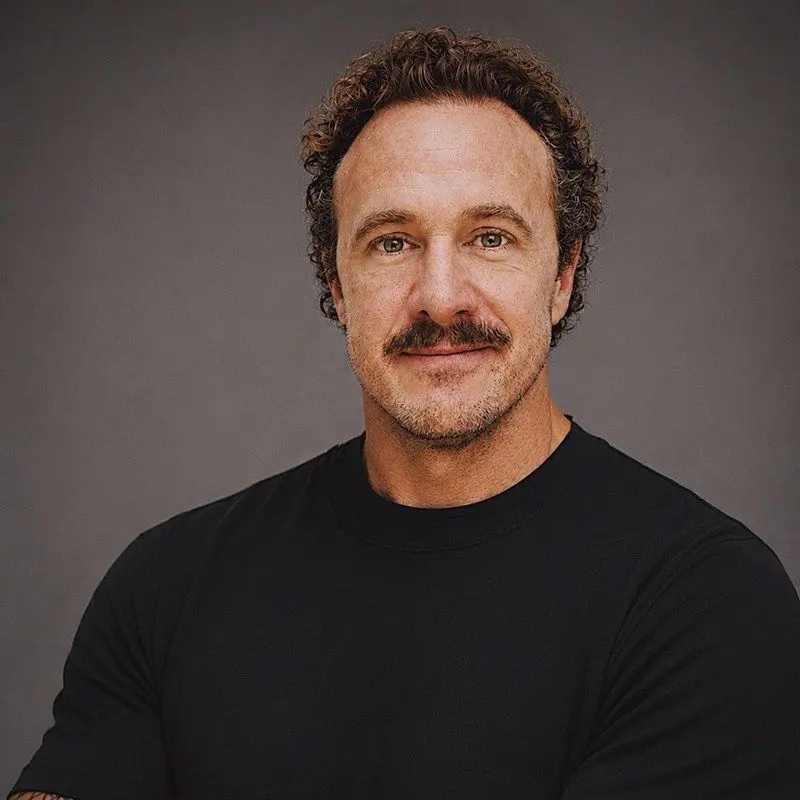
Transcript Synced · select any line to jump ▾ 0:00 Darius Monsef: You should set unreachable goals and then fail getting there, doing more than you would've if you just set an achievable goal. 'Cause often you sort of like fill to the capacity of whatever you set for yourself. 0:16 Megan Luttrell: Welcome to Life After Launch, the podcast that takes you inside the hearts and minds of founders navigating the startup world. I'm Megan Luttrell. I run Aussie Founders Club, a community for founders, operators, and investors, and Kairis Recruitment, a company supporting startups and scale-ups. 0:30 Geo George: Hi, I'm Gio George, partner at Mayfly Ventures. We're a venture studio building industry-focused AI and software ventures. 0:38 Megan Luttrell: This is Life After Launch from Aussie Founders Club. We cut through the startup noise with unscripted stories and tactical advice from the founders who have built before us. This show is about what happens after you launch, the business lessons, the life lessons, and everything in between. That's Life After Launch. 0:55 Geo George: Today we meet Darius Monsev. Founder, builder, and the guy behind one of the most quietly influential design platforms of the early internet. 2 Y Combinator stints, more than $40 million raised, and 2 exits. When we recorded this, he had just landed in Melbourne and was building a new startup called Pre. 1:14 Megan Luttrell: Not long after we recorded, he made the decision to walk away from Pre. And as you'll hear, that's exactly the kind of decision he thinks more founders should be willing to make. And maybe he was thinking about that while we were actually going through the record. 1:27 Geo George: Quick note before we get to Darius. Last episode, we mentioned that we're always iterating. This week, that means a new closing segment, 3 Life Lessons. 3 insights our guests wish they'd known earlier in their journey. Darius's were learned the hard way, so stick around for them. 1:49 Megan Luttrell: I met you through Aussie Founders Club deep in the Slack. We've had you involved with one of our earlier events of 2026. at the first move. And we know a little bit about you, but the audience in Australia probably doesn't unless they find you on Wiki, which I have. He's got his own Wikipedia. 2:09 Geo George: That's cool. 2:11 Megan Luttrell: But if we start right at the beginning, can you tell us about where you grew up? Because it wasn't Australia. 2:16 Darius Monsef: I was born and raised in Hawaii, which actually feels somewhat similar to Australia. Like there's a little bit of the, the bird sounds or the island culture. So it feels a little bit like home. I mean, I'm 2 months into Australia, so we're still fully settling, but it's a warm reception also with the people who've been incredibly generous and welcoming. But my parents were entrepreneurs, so I think I didn't choose this path. I was born into it a bit. Probably strongest motivation is my dad was a pretty successful entrepreneur, and I'm the 7th kid. And so he was quite wealthy and successful. By the time it got to the 7th kid, there was sort of none left. 2:53 Darius Monsef: And so it was this nice, like, man, I really want— I saw what it was. it seemed pretty achievable. He's a good person, but not particularly an unreachable level to— so I want that back. So I've had a chip on my shoulder sort of my whole life of like, I'm gonna get that back. Uh, trauma-informed, you're gonna— probably most entrepreneurs have some level of trauma. It's not the healthiest pursuit to do something that is irrational, stressful, harmful. So you kind of have something that pushes you into it. So that was part of it, but it's the mixture of my dad is like a business, a bit chauvinistic, a bit of a charismatic liar, big story guy. And my mom is just a giant dreamer. 3:34 Darius Monsef: And most of her stuff has always been for the better of the world and systems. And we talked a bit about systems thinking. And so I have this balance between the two of this egotistical capitalistic drive balanced with a like, yeah, but don't make the world better in the process. So that's sort of my genesis into how I got started. 3:51 Megan Luttrell: Are you the 7th of 7? 3:53 Speaker: Yes. 3:54 Megan Luttrell: Okay, cool. Do, did the other, any of the other kids have that chip on their shoulder or was it being the 7th that sort of drove that? 4:00 Darius Monsef: Yeah, I think probably I'm the baby of it. So there's 4 from my mom and dad and then there was 3 before. So my dad's 98 years old. So some of my half siblings are like much older than me. Um, but none of my siblings sort of ended up with the same entrepreneurial drive as me. They all like live good quality lives and creative pursuits, but Yeah, maybe I got less of it and was more motivated to go and get it. There's a bit of the naughtiness in entrepreneurship. I'll— we talk about— I have a summer camp for kids and it was sort of the same skill set that makes an entrepreneur is sort of good for criminal activities as well. You know, it's like you have to believe the rules don't apply to you. 4:38 Darius Monsef: You know better than everyone else. You see the way things should be done. Like it's a— you can see how that gets corrupted into some bad behavior. And so as a kid that got bad grades in school, not because I couldn't do the work so that I, in the States, I got a 2.0 GPA, which made me ineligible for sports, which was sort of my life. And then I was mad at the school. So then I got a 4.3 GPA the next semester, which, because I played the system, it's the highest GPA you can get in the school. So like, I wasn't an idiot, but it was also like, why was I mad at the school for just giving me bad grades when I wasn't doing the work? So it was sort of clearly my fault. 5:14 Darius Monsef: But that level of like, I'm going to bend the rules is a bit of the entrepreneurial foundation. 5:20 Geo George: Actually, that's an interesting thing to dig into as well, like what it means to be an entrepreneur. Like one way that you could look at entrepreneurship is just problem solving at different scales, right? I'm curious, what does entrepreneurship mean to you? 5:32 Darius Monsef: Well, I think there's a distinct difference between capitalist and entrepreneur, and I have, I think, not been solely motivated by money. There's a bit of like, maybe I wish I was a bit more motivated purely from a money perspective in my earlier years. But I think an entrepreneur wants to solve problems or they have a vision of an idea in their head and they're compelled to get it out. It's, I often, if a thought starts for an idea, I have to finish it. It's like a compulsion of like, this is gonna bother me unless I get it out. And it doesn't have to be a full build. Now with AI, I can get further than I should into that. But it's about seeing something and then wanting to exist in the world. 6:09 Darius Monsef: That to me is the entrepreneurship. And then yes, you can make money from it. 6:13 Megan Luttrell: I think also one thing, so when I grew up, I didn't want to break rules that made sense, but if they didn't, I would challenge it. And that actually was a curse to me working for people. It was— I wish I had started my own thing earlier. Um, so yeah, it's around like challenging the status quo essentially. And that's why entrepreneurs that do well do well, because they do it some completely different to the people before. Um, so, okay, cool. So you've grown up in Hawaii. We know, because we've done a bit of research, then you ended up in Portland, but how did you actually step into that sort of entrepreneurial career? And what did that— what was the first venture? 6:49 Darius Monsef: Hawaii is special. It's a wonderful place. But as a, you know, young, dumb teenage male brain, I was like, I'm too big for this place. I got to get out of here. It was too slow. I had big ambitious dreams. So I really didn't appreciate it growing up and just had to go, had to leave. Again, bad grades in school meant my college options or university for you options were not great. So I went to a bad school. 'Cause that was where I put myself and then dropped out to work for an internet company. And that taught me the skills to build in the early internet era, fairly old at this point. So like the beginning of this consumer web products was a very fun time. 7:27 Darius Monsef: Flash was a new technology. People felt like they were sort of creative building, you know, it was not just an MBA building a business, no offense if you have one. And so my first weird thing was I built a website for people to rate color squares. Like, do you think this color— it was a joke. It's a Hot or Not for colors. this tan color somebody hates and somebody loves. And so it was just a goof. I shared it with design friends. The thing that made it a useful tool was I then took a single color and let you arrange a 5-color palette. And the 5-color palette then was a resource for designers to use because at the time there was no agentic tools or big resources. 8:02 Darius Monsef: You have a client, I need to get a color palette. What goes well with this beige color? And the community was playing, being creative, but designers use it as a resource. So It grew to millions of visitors. 8:15 Megan Luttrell: Did that exist? Because I've used those types of platforms now. Was that the first of its kind or is that sort of like an original idea? Because now I feel like it's influenced, if it was, I've now used platforms that are influenced by that. 8:28 Darius Monsef: Yeah, there's a bit of a weird, I thought the other day of like, I'm old enough in this game to go, did I invent that? Like it was, and then selective memories, you sort of make your own history. And the question was, did I make the love button? Because that is now synonymous on the internet. Because everything was like buttons. I did a love button, but Tumblr had done it like 2 months, 3 months before me. So I was not the one, but it's like, so I was the first to make, I think, a 5-color palette combination, which is funny because like Adobe uses that as a resource. Like it's a main way to arrange a color palette. I didn't think that through. 9:01 Darius Monsef: This is also the point of the internet. We don't think of the second-order effects of the things that we build. And so now we're feeling it on like, well, what if you just get insane news all the time in your face? What if AI takes everybody's jobs? Nobody thinks about those things. We're just random people who build a thing that then millions of people use. And so in my case, I built this design resource. That site is still up. It's 22 years old. 9:24 Megan Luttrell: I think you can claim it though. If you don't know of any beforehand, it was still original thinking. Yeah. 9:30 Geo George: Yeah. This is a Life After Launch exclusive. 9:33 Megan Luttrell: There you go. 9:33 Geo George: Hot take. 9:34 Darius Monsef: Put it on my Wikipedia. 9:35 Geo George: Yeah. So wait, what? Can we just go to the Wikipedia page for a second? How does one get a Wikipedia page? Is that something that you start or just comes up for you? 9:43 Darius Monsef: No, because like the rules are you're not supposed to make it yourself, and I'm not supposed to edit it. 9:48 Megan Luttrell: Supposed to edit it? 9:50 Darius Monsef: Well, I think a lot of people will pay other people to edit. I haven't edited. I mean, a lot of this stuff is wrong or missing things. Like, I could— 9:56 Megan Luttrell: I know my life. Well, this sounds like some of our research. 9:58 Darius Monsef: Well, I could go fill in gaps. I could change it, but I'm not supposed to. I just basically leave it. But yes, it's— it has to be sourced by news articles, so you have to get coverage so that there's like third-party places for that to quote from. So, okay. 10:12 Geo George: Maybe we start a Wikipedia page. 10:13 Darius Monsef: You can write each other's. You can't write your own, but you can write each other's. 10:17 Megan Luttrell: Yeah. Um, okay, cool. So you have built this platform. It grew into a multimillion dollar community. So how did you build the community around that? It's because obviously you've got a platform where people are, um, wanting to tell us the story of where that went. 10:30 Darius Monsef: Yeah, that was an overnight success that took 11 years. So I built this. I didn't mean to build this color website, but people kept using it. The Boxing Day tsunami had happened in Banda Aceh, Indonesia in like 2004. So I just went to volunteer and then I had started this site. I then went and spent the next 5 months living in Thailand and setting this nonprofit up that does volunteer work. And when I had come back, the design community that I had shared it with wanted to get on but couldn't. This was like a technical error. I set the ID for the user table to a small int and then it like, it broke. The site broke. It was like a maybe the first private beta unintentionally. 11:11 Darius Monsef: Nobody could get in. And so it was this thing that was working, but I spent 2 years just doing the nonprofit and then working on this tech thing on the side. My co-founder in the nonprofit was a retired tech executive. And I'm doing this volunteer work again. This is my mom's maybe influence, really impactful, helping people after natural disasters. Felt great. I'm getting paid like $20,000 a year. And my co-founder is like, got a comfortable life, retired tech executive. I was like, he's getting the same value out of this as I am of like the feel-good. in a very different way. So what if I went back to the entrepreneurship route? He was my angel investor. 11:45 Darius Monsef: I'll come back to the rest of the story, but Color Lovers eventually was acquired and he got a great return for it. I took terrible terms at the time, but went to a good person. Owning some part of something's better than all or nothing. So it all worked out well. But the story with Color Lovers, how it got successful, was I had moved to San Francisco. I was wearing the Color Lovers shirt. I'm sort of always wearing something branded. 12:08 Megan Luttrell: I need your shirts. Oh, you've got shirts. 12:09 Geo George: I've got shirts. 12:10 Megan Luttrell: Yeah, I need shirts. 12:11 Darius Monsef: There's a bit of like, I have ones that say Bub's Nose. Like, there's something that's like, I'm wearing somebody's brand, I might as well wear my own. But, uh, I went to a startup school event for Y Combinator. Paul Graham saw the shirt and said, oh, I love Color Lovers. Like, you should join YC. I was like, oh, that felt like I was too far at the time. And so that got me into Y Combinator by wearing the shirt, my logo. 12:30 Megan Luttrell: So it was unintentional to go. I mean, people like live their whole life being like, I just want to build a YC Combinator business. 12:36 Geo George: And you were just like, Just happened to run into Paul Grab. 12:39 Darius Monsef: Well, I went to their like startup school. My, my wife and I grew up together. She lived in San Francisco. We re-met at our 10-year high school reunion. I was at Microsoft in Seattle at the time. She was in San Francisco. And I was like, we're just gonna go. We're gonna move to San Francisco. We're gonna give the relationship a go. And so I had just moved there right at the time where they're doing a startup school event. And yeah, I happened to wear my shirt and it's a weird thing. The internet was maybe smaller at the time, so I was surprised he had even seen it. We were pretty at the, at the time, Digg was the major source of internet traffic. 13:08 Darius Monsef: Reddit now is, but Digg was sort of the king of internet traffic. It's now dead. But it meant if you got to the Digg homepage, it'd bring your servers down. It was such an influx of traffic. And so I was pretty good at playing that game. I was a top Digger. We had a bunch of exposure, so Paul Graham must have seen it. 13:24 Megan Luttrell: Have you heard of Digg before? 13:25 Geo George: In the annals of internet history? 13:28 Darius Monsef: Yes. When you go to the History Channel of internet, Digg's in there. But it was just the homepage of the internet. You upvoted stories. But because so many people saw it, it would be a massive amount of traffic. Um, so. 13:40 Geo George: Did Color Lovers get acquired by Microsoft? So how did you end up at Microsoft? 13:45 Darius Monsef: I was struggling. Color Lovers was like a terrible company for a long time. Like we had millions of visitors. It was ad-based revenue. I hate ads. I don't wanna put ads on my site. So I just suffered. And it was like, at one point, business account overdraft broke, personal account overdraft broke. The ad check I was waiting for didn't come in. I'm like, what am I gonna do? I just got in my car and I was just gonna like drive to nowhere in a depressed state. And then my car, like, check engine light came on. Like, I, like, I literally couldn't run from my problems. I just had to like sit in it and suffer. So it was that way for a long time. And then the Microsoft opportunity happened. 14:21 Darius Monsef: Uh, Color Lovers had been a 5-time Webby nominee for best community. I don't know if the Webbys are still a thing. 14:25 Megan Luttrell: No, they are. 14:25 Geo George: They are very much a thing. 14:27 Megan Luttrell: Yeah. 14:27 Darius Monsef: So Microsoft was trying to build a community in CNET. So Microsoft had approached me to join their Live Labs team and I thought, oh, this is a paycheck. You know, I'm, broke, so this would be great. The idea is I just go to work 8 hours a day for them and then I'll have my nights and weekends. I was so worn out by being unfulfilled by the work that I did all day. There was nothing left. That seems crazy to do, but I'm just like this. I'm so frustrated all day. I could do 10 times this job. And then it, so it didn't really work, but I was there for a bit of time, high school reunion, and then I shipped it, went back to San Francisco. My wife was the breadwinner for the beginning of our relationship. 15:01 Darius Monsef: Like I'm the broke entrepreneur living in her, you know, set the laptop up on the couch trying to build. 15:07 Megan Luttrell: So there's nothing more, um, that's probably the best thing to do to test someone to see if they really love you is because like start an entrepreneurial journey and wait, uh, have no money. Yeah. 15:19 Geo George: I have no money or time, you know? 15:22 Darius Monsef: Yeah. 15:23 Megan Luttrell: Not be able to really give your all to everything, but, um, yeah, cool. 15:26 Geo George: I love it. 15:26 Megan Luttrell: Yeah. 15:27 Darius Monsef: So the, what happened with Color Lovers though, is that we had gone through YC. It was weird to figure it out. Are we a color data company? But we had also built tools that made other kinds of design easy. So pattern designs and very easy ways to make seamless patterns. Uh, 2 of those were acquired by big brands. They reached out to us and said, hey, we want to buy this pattern for an ad campaign. Like, it's not our pattern. We'll ask the creator. And then we just like brokered the transaction. Like, oh, we should just do that. Like, that's the business. What if we built the best marketplace for creative assets? So an Australian success story is Envato. 16:00 Darius Monsef: Collis did a great job building a federated marketplace. So ThemeForest for themes and audio jungle for audio. We grew up sort of at the same era. So ours was just, what if everything was in one marketplace? And so Creative Market is the overnight success. We launched that site, 11 months later acquired by Autodesk. It was a life-changing outcome. 16:18 Megan Luttrell: Where was it acquired by? 16:19 Darius Monsef: Autodesk. 16:20 Megan Luttrell: Uh, yep, yep, yep. 16:21 Darius Monsef: Autodesk at the time was trying to do a consumer group and compete with Adobe. To their credit, they shut it down and then actually gave the site back to my co-founder. I had peaced out to Hawaii. We can talk about cows here in a second. Um, But that was like this overnight success. But I, again, for 10 years before that, I'm like broke, struggling. But the lesson in that is like product-market fit. It was getting closer to the transaction and realizing what is somebody willing to pay for? What solves a real need versus like, this is a fun thing. It's fun, but people wouldn't pay for the color data. They weren't going to buy like a membership for this color community. 16:55 Darius Monsef: So it was just a bad business the whole way through. Creative Market was the marketplace that like made sense. I just bought fonts there. I have nothing to do with it now, but I still spend a decent amount of money on the marketplace. It's a successful place still. 17:08 Megan Luttrell: So I feel like this ties into something you've already told me when you did your first exit. Like the exit's the thing everyone is trying to go build towards, but you found yourself in a position where you'd exited, but it wasn't enough to go sail off into the sunset. Can you tell us a bit about that? 17:25 Darius Monsef: Yeah, especially in San Francisco, the outcomes, like, you know, the grass is greener, the comparison to other people. They're insane comparisons. So my peers, guys I grew up in the tech world with in the early 2010s, multiples of them are billionaires. So my peers are incredibly wealthy. And I like made a few million dollars. Like it's kind of a failure in comparison to them, to anyone else who's been like working their ass off for their whole life and has barely a bit of savings. Like it's an incredible thing. And so this was just this This dark, weird world of having exits that feel like failures in comparison to people who are exceptionally successful. 18:06 Darius Monsef: So the first one, we made a few million dollars, which was life-changing for me. But then you've got earnouts, you've got taxes. It wasn't as much as I thought it would be. And then you sit down with a financial planner and they're like, cool, if you work till you're 50, you can retire. I was like, what? That was the plan anyway of really, it just It made this foundation layer of like the, oh shit, like if things got really bad, we're okay. Like, you know, the mortgage is sort of paid off where, but you still have to work. Like that's not enough. And so the, you, anyone can work their own numbers out, but it's something like $10 million after taxes is where if you park it super safe and you own your home, that throws off enough to comfortably sort of live forever. 18:46 Darius Monsef: Granted, you can always live cheaper, but I got 3 kids. We like to travel a little bit. 18:51 Megan Luttrell: And you don't work that hard to just live off that. Yeah. 18:54 Darius Monsef: Yeah. But it's sort of a few hundred thousand a year is what what you'd get if you parked that, which is like, yeah, that's a very comfortable life, but it wasn't as much. So I was surprised. It was like, oh, that didn't do as much as I thought it would. Fortunately, had a second exit, same sort of size, same outcome. The lesson there was I had sold my company. The guy I dropped out of college to work for had a web design company who I had worked for. I had showed him our success and I think he was like, oh, I think I want that. It's like, well, you had built template websites for eye doctors. Inside of that was a weird contact lens ordering system where faxes got sent. 19:25 Darius Monsef: This is the beginning of direct-to-consumer. Pull that all out and just make a contact lens ordering thing where anybody can like do this direct-to-consumer, the contact lenses will get shipped. So I helped Travis like brand start the genesis of that company. And then I didn't do much. He like ran it. But when he sold, I made as much money from that as the one that I bled on for 11 years. So it's sort of the argument for venture capital of like pretty nice return for doing none of the work. 19:52 Megan Luttrell: So I get why that's an appealing You wouldn't have had that opportunity though if you hadn't bled for 11 years to be the advisor, right? 19:59 Darius Monsef: I really don't ever, I've made for sure mistakes. I don't think I've harmed people along the way, but like I could have done things better. Um, but then I would, you know, the butterfly effect of some change would, my life would be different. So I'm very happy with where things are. 20:15 Geo George: You know, when I talk to entrepreneurs, especially like doing this podcast, there's this common thread of like, oh, I happen to be at this place and then this happened. And, you know, like there's, there's a bit of serendipity that seems to play out. But I wonder if it's like opportunities that you're looking out for, or is there a way of looking at the world that makes those serendipitous moments a bit more obvious? 20:38 Darius Monsef: It's the book The Secret, but it's manifest destiny. Like if you're looking for it, you'll see many more opportunities. If you believe everything sucks and you're not going to get anything, you're just not looking for it. The most obvious example is like you buy a car you will see that same model of car everywhere. They were always there the whole time. You just were not paying attention to it, so you won't notice it. 20:58 Geo George: You'll be surprised how many 2005 Toyota Corollas there are. 21:01 Darius Monsef: You would know. So I think there is a bit of a look. Yeah, it's luck and it's serendipity, but you make your own luck, if that makes sense. Like success in startups, you're going to have to be lucky. The same thing, I have those peers that are incredibly successful. I also have peers that have smarter than me, worked harder than me, and just haven't been successful. Like, the luck didn't align with the time of what they were building to the right person. And so it's a pretty large component. 21:29 Megan Luttrell: Where do we think we are now in the timeline, right? So you've gone and Color Lovers has gone to Creative Market. You were part of Sightbox. We're about 2017 now? 21:41 Darius Monsef: Yep, 2017. 21:42 Geo George: I— 21:42 Darius Monsef: we would have just moved back to Hawaii, so we exited. We thought we were going to like build our dream home on 40 acres. I don't know the Hectare or square meters conversion for that, but it was like a lot of land, neighborhood-sized. And then Instagram looks great. It's like the life everyone wants. And then I'm just depressed after a couple years of that because one, there's the— I spent years at this high anxiety, high stress, full capacity, and then I didn't have that thing anymore. But then I just filled it with stuff, like not even stuff I needed to, just busy. And then I'm busy on the same level of like, well, I'm so busy today, I can't. 22:17 Darius Monsef: And like, why am I busy? Like, what am I busy with? And it wasn't fulfilling. Like the thing about startups, the joke I always say is it's, I've realized it's bad for my mental health. Not doing them is worse. There's just a trade-off I make of that. Yeah, it's incredibly stressful and hard, but it's the most fulfilling thing I can do. And so that I just keep doing them. And so Hawaii, I basically was at this full throttle with none of the fulfillment. It's sort of like chainsawing water or something. There's like no benefit to this high stress. And I think I missed the idea of building. Like, I built it something that millions of people use. 22:54 Darius Monsef: There was like the scale and impact of that. And then I enjoy hard work of any kind. And I'd like, I did this whole fence, 1,000 meters of fence. It's like, yeah, but what is that? Did the world, what did that do for the world? Like, it just didn't matter. And so after that and the levels of privilege and comfort that we had was not really seeing depression. It's like, why do I feel like shit every day? It's like, oh, I'm depressed. I just wouldn't recognize it because I'm high functioning. I've got all these wonderful things in my life, uh, you know, childhood sweetheart, my wife, we've got more kids, like life is pretty good. But I was like, I'm bad. 23:30 Darius Monsef: Like I'm the rotten core in this barrel of fresh apples. And that led to, oh, I think I need to like build. That's my thing. We're going to, I'm going to leave this dream life we built in Hawaii. I think we have to move back to the West Coast. Hawaii is very slow. I needed more stimulation. We moved back to Portland, Oregon instead of back to the Bay Area just so that there's a little bit more normal. San Francisco is so tech. Every conversation's tech, every dinner, every friendship is tech, and not just high-level tech. It'll be like, well, you know, Sonnet 4.6 is better than— it's like, my wife doesn't care about any of that, and I don't want my kids growing up in that. 24:04 Darius Monsef: So Portland is what we ended up moving back to so that I could sort of find purpose in building again. 24:11 Megan Luttrell: There's something I've been grappling with as well, because there's so much of your build time where you're actually working these crazy hours because you have to, to survive, to make your business work, to get through the hump of like being one person with $0. And then when you start, what I'm finding is now I've actually got people around me that can help do that. When I'm sitting there on a Saturday afternoon, I can't just sit there because I'm like, I've known survival to be busy. And you would have been like having to be deprogrammed if you essentially wanted to go back to a normal life. And it seems that you were like, no, I'll just throw myself back into more of this. 24:49 Darius Monsef: I've seen some friends pull that off and that seems really enjoyable. I'm just not wired that way. So like, I don't enjoy leisure time. We could sit in the backyard and I go, I got to fix that. I got to trim that thing. That's like, then I'm back to work. I spend 3 minutes sitting there like, I'm going to go get the saw out. I got to cut that thing. We're in a rental house. I'm still fixing things. It's not my house right now, but I just, I don't enjoy the leisure. I like problem solving, which is why I'm stuck doing what I'm doing. 25:14 Geo George: There's problem solving and then there's also like, kind of operating within the survival mode mechanism, right? I wonder if like that period of building a ranch and that downtime helped you reprogram a little bit so you shifted more into creating from a place of abundance and, you know, creativity. 25:35 Darius Monsef: I think it— where it benefits from— we just, we talked earlier about The Secret and the idea that abundance is around you and opportunities. You get a little bit of it and then The idea is like, well, I deserve it, or I am worthy of it, or I can manifest these things. I have a summer camp back home in Hawaii, and part of the reason I started it was, is like really 3 core things. I gave every kid a MacBook Pro. It's like the same computer I have. So you're limitless. If I can build anything, you can build anything. We gave them 10 days of kind of entrepreneurial coaching and mentoring. I had really great teachers when I was younger. And then the third one is somebody who just tells them like, You're exceptional. 26:10 Darius Monsef: You're going to be successful. Again, I had this egotistical dad that was like, oh, you're a Moncef? Of course you're going to be successful. So I like, I have a built-in expectation, rational or not, that I would be successful. And then that will manifest opportunities that become successful. So part of it was just to tell kids like, you're incredibly bright. Like the future's coming. This is going to be awesome for you. So I think, yeah, having some exit changes your brain a bit of like, oh, I can do this. And so then, yeah, you look for more opportunities and they present themselves because of that. 26:42 Geo George: That is also a common thread that I've seen in founders, like even with Megan, you know, like there's no doubt that like, oh, this crazy thing that I'm building is like not going to work out. 26:51 Megan Luttrell: Yeah. And I'm not even starting a startup. It's just a community and a service-based business. But the startup will come, by the way. But, um, I have this, yeah, I need to be humbled maybe a bit more. No, I think I've been humbled, but I'm just like, I'm going to show you. I've just, that chip on the shoulder is so big. 27:07 Geo George: I think life humbles entrepreneurs enough, you know, like entrepreneurs don't need to do it themselves. 27:11 Megan Luttrell: Sure. 27:11 Darius Monsef: Yeah. The default mode is failure. So like it's built in, but no, if you were humble and you had humility, you wouldn't do this. Like the default mode is failure, which is going to be pain. It takes a bit of irrational thinking to go, I'm the one. I think there was something that I can't remember exactly, but there was something around, oh, spent a lot of my time now. with pre-coaching founders. And some of the pushback is like, you have to go do this. I'm pretty aggressive about it. And my mom, who's still an entrepreneur, is like, you're pretty mean about the way that you say that. I'm like, because with entrepreneurs, if I say, hey, there's 1,000 of them, you all have to go talk to customers first. 27:51 Darius Monsef: You can't just like believe it. And then like, look, maybe that happens 1 out of 1,000 times, but 999 of you, you have to go do that. All 1,000 go, I'm the one though. And so it's like, I have to push even harder on that one because yeah, there are already people that believe in this irrational way to exist. And I think you wouldn't start a startup if you were a reasonable person. 28:12 Megan Luttrell: There is also a difference between building like community and a service-based business where you only fail when you stop trying, or a startup, if you've got this goal of $150 million, it's a, Or a billion. It's a goal that doesn't happen just because you don't stop. 28:30 Darius Monsef: I think every flavor of a business has some of the same core ingredients. I think like tech startups get this unfair glamour and thing about it, but any business is incredibly hard to start. It's all the same ingredients. It's input-output. It's getting people to believe in you, communicating the story. Like they're all hard. They're all hard just in different ways. The one has just been glamorized because you get like Crazy exits, but they're all hard. 28:54 Megan Luttrell: Also, it's not about me, so we'll go back to you. Um, awesome. Okay, cool. So we're getting to— you had— we won't deep dive into it, but it's not a small feat, um, or not a small thing. You worked at, um, Zapier as head of growth for a bit, but I think we want to jump right into Brave Care from 2019, which is your second YC Combinator business. Tell us about that. 29:18 Darius Monsef: It's just for you, for the editing. It's YC or Y Combinator. 29:22 Megan Luttrell: What am I saying? 29:23 Darius Monsef: It's the YC Combinator. It's the double Combinator. 29:25 Megan Luttrell: I'm an idiot. I'm being humbled. 29:27 Darius Monsef: Yeah, nuts. 29:29 Geo George: Uh, we leave that in. 29:30 Megan Luttrell: No, I'll leave it in. 29:32 Darius Monsef: I— we knew we needed to move back to the West Coast, which we did. We're in Portland, Oregon. I had one ticket to give with Zapier doing head of growth work, sort of supporting them, realizing I'm a terrible employee. Wade, who runs Zapier is like an incredible leader. Like he's still an incredible model of like, I love what he does and how he does it. And it was like, just, I'm just not the right person for this. So had gone back looking for opportunities. My kid split their chin at a bike park. I met a pediatric urgent care doc because he was stitching her face up. I was like, this is pretty amazing. Like this is the scariest moment I've had as a person. 30:07 Darius Monsef: This is like the talk about parenting. It's like your heart exists outside your body and this kid just smashed her face and it's like, and so. There's nothing I can do to help that. So it's this incredibly like powerful experience of having somebody take care of her. Like, why are there no more— not more clinics like this? Like, what's going on? And so I met the doctor for coffee a couple times. The next weekend, my 1-year-old had croup, which is basically like your esophagus swells and you can't breathe. And I know what that sounds like now. I didn't at the time because there's no training manual to be a parent, which is insane. And my wife was out of town both these weekends. 30:38 Darius Monsef: So that's like an overnight, I'm really worried about now my youngest, go back to the same clinic. And it was like, yeah, I want to do more of this. And so had a clinic in place and it was a good partnership. Like, look, I think I can build the tech here. The clinic business exists. We'll go back through YC. I think the mistakes we made was it was a time where One Medical, giant company, hadn't yet gone public. It was a beginning. Tia Healthcare, like it's— I hit the hype cycle right this time. First company, I'm building like a weird color website. It's very hard to fundraise for. It's not very, you know, sexy. Nobody cares. The second one was like, oh, that's when you hit the timing right. 31:16 Darius Monsef: Because we raised $6 million before Demo Day. I didn't even do Demo Day. I just like played the hype. We raised the round, go off to the races. 31:23 Megan Luttrell: Do you not just do Demo Day anyway to tick the box? Or you just like— 31:27 Darius Monsef: I didn't want to. It's not my favorite thing. I'm not a, I am an introvert in an extroverted role. all the time. So I perform, I play this role, it exhausts me, and then I go recover. But like, it's the trade-off of what I do. Like, I don't want to stand in front of this group and do this if I don't have to. So I didn't do it. But you raise all this money, it's like the rocket is going now, and then COVID happens. So you're just rocket shipping to like insanity of whiplashing the business. 31:56 Geo George: What I'm curious about is like, this doesn't fit the profile of a traditional venture-backed business. So what is it about the particular way that you were doing it or this specific business model that made it appealing to investors? 32:10 Darius Monsef: A hype cycle is pretty motivating. I mean, investors are— they're all smart and wonderful and great value-add. Often they're following trends. It's pattern recognition. And so the pattern at the time is like something's coming for these legacy giant bureaucratic businesses. Technology can make them more efficient. you know, more connected, more efficient care, better margins, all this stuff. So that was just the, like, that's this, like, now it's obviously agents replacing people. That's the cycle that we're in. That one was like a health tech cycle. But we basically took a model. We, the current clinic that we had was not profitable yet. Like we hadn't nailed the model, but it's like, well, we got to grow. 32:52 Darius Monsef: Let's open more clinics. So they'll, you know, and then because we'd raised money and COVID was whiplashing and then money was frothy and easier to fundraise at the time, we ended up raising $40+ million Brave Care over those 5 years, opened 5 clinics. We scaled a model that wasn't working yet. Like, and this is now even with Pre is like, just focus on making sure the small thing works before you scale it. 'Cause other, we just scaled problems. I then now have a business that's losing $1 million a month. We've got 100+ employees and it's like starting to look pretty dark. The, you know, the second return of depression as I'm fundraising for like a Series B+ that's just not going to happen. 33:30 Darius Monsef: And again, going back to, I'm performing every time I'm fundraising, I'm performing now as a person. But then like getting back to my own space and just like, oh, I'm just, you know, I'm settling back. This is not that more heightened than I feel right now. That fundraise is like I'm performing. And then I was just realizing how far I felt fell after that of like, oh shit, I'm not good. Like the when I'm not performing was in a dark spot and it was like that fundraise wasn't going to happen. It's a highly anxious, pretty depressing, pretty difficult thing to be a founder. And the more success you get, the more you're caring. And again, startups, just because we'd raised $40 million doesn't beget success. 34:08 Darius Monsef: You know, now there's just more to lose. So I'm going to lose all that money for people and have to fire 100+ people who are all like awesome people. So that was a pretty like dark place to navigate through. And then I got through it and started another startup right afterwards. 34:22 Geo George: There's a bit to unpack here, right? You started this business in a totally different space. It's a different industry. It's a different modality. Like you were previously involved in tech businesses. Now this is Like health, bricks and mortar clinic, hit some employees. Bricks and motor? Is that how you say bricks and mortar? 34:38 Megan Luttrell: No, water. Oh, this is knowledge day. 34:41 Darius Monsef: Yeah. 34:42 Megan Luttrell: Bricks and mortar is what you build. 34:44 Darius Monsef: You don't put cars inside. 34:45 Geo George: I have like 10 of these a day, by the way. 34:47 Darius Monsef: Um, what I did was I started the business in a completely different space. And this goes back to the theme we've said a couple of times, which is irrational. Like, where would I think that I can operate a healthcare business? Well, it's like, well, I know how to solve problems. I see something and again, I believe the world could and should be different and I think I exist outside the rules of it. Most businesses have very similar bits. The hardest thing about healthcare in the US is that the insurance payer system makes everything convoluted. So, I have multiple different insurance carriers. Every time I hire an employee, I have to go recontract all of them. 35:20 Darius Monsef: It takes 6 to 9 months to get all the contracts in place. And then, depending on which codes you use when they do the service, I make a different amount of money. So even at the end of that business, I would say like, what's the average revenue we get per visit? This is like the simplest back of the napkin I need to do. It's like, well, it's a— I'm like, it can't be, well, it's a— like, I have built models that are millions of dollars difference if the number is 140 or 160. And so there was one moment where somebody's like, I think it's 138. I'd modeled like 199. That means we just lost millions of dollars instantly. That's like, again, a high spike of anxiety and stress and it's like, well, we gotta go figure this out and settle it. 35:57 Geo George: Yeah. 35:59 Darius Monsef: So yeah, it's the naive belief that I could build a healthcare business. And I— what I loved about BraveCare is we helped 50,000 kids that were sick and injured. Uh, as a parent, I went 32 times to BraveCare, not as the CEO. So like, I appreciated it. It was one of the ones that shut down and felt the worst because we knew parents would miss it. I just talked to my buddy, a previous co-founder who's a YC partner, talking about a product. And one of the questions he asked to know whether or not it was working Was it, well, if you shut it down, like, would people be really upset about it? And like, sometimes it's like, no, not really. They're like, they like it. 36:33 Darius Monsef: Brave Care was like upset. These parents really were going to miss this thing. And so it was good. It was right. It's, we made mistakes. Maybe I made mistakes. It was just sort of unrecoverable after the end of it. 36:44 Megan Luttrell: So you've raised an incredible amount of money. You've got 100 staff. That's huge. You're like at the height of where people want to go. Are there things in hindsight before you decided, Look, we're going to have to shut this down, that you think, and I think this is going to lead into why you've ended up building your current business, that were clear signals that maybe you were choosing to ignore? 37:05 Darius Monsef: Yeah. One of the hardest things as a founder is like, if you're a pretty compelling founder, you can, as maybe you say, spin a good yarn. Like you tell a good story, you're charismatic, you do it to yourself. Like you're the number one consumer of your own bullshit. And again, you wouldn't do it If you were really pragmatic about it. And so you have to believe a bit of the story to even bother doing it. But then it's very confusing of like, what's the story and what's the reality and which part do you want to believe? If at any point you're highly rational, like, yeah, you don't do it. Like it was, it never made sense that it was going to work. 37:38 Darius Monsef: Like every startup doesn't make sense that will work. You just have to sort of like push your way through it. So in hindsight, there's like any number of things I go, oh, I think I could have done that differently. I feel like I made the best decisions with the information I had at the time. Like, I'm proud of the work that I did, but clearly I, I'm the leader of that company. I failed. But, um, you know, I don't know if I would've done it differently. Obviously now I know the mistakes. It's very obvious in hindsight what I should have done. 38:06 Geo George: But— One thing that I've noticed about really good founders is yes, they do, they're great storytellers and they do know how to spin a good yarn. And really good founders also kind of buy into a little bit of their own Kool-Aid, right? So they believe their own story. The problem tends to arise when they forget that it's a story and they're fully in this world where they can't decipher between like reality and signals and like what is the narrative that they've crafted. 38:32 Darius Monsef: Yeah, but there's some of it of really successful founders, especially in fundraising, are a bit of psychopaths. Like they just believe, it's crazy. Like they're, You know, I'm gonna make— this is inevitable. It's gonna be a billion-dollar thing. You're missing your opportunity. Like, that is how you get investment done. It's the, like, you know, Elizabeth Holmes gets all the flack for the Theranos failing, but like, man, if she pulled it off, she would've been one of the success stories. Like, every founder who was successful has a similar part of their story where it's all a scam. It's all a house of cards. It's crazy. And they made it through and maybe different levels of it. 39:09 Darius Monsef: Like maybe not everybody's committing fraud and things, but like in some level my— before I left Hawaii and we talked about like I didn't appreciate Hawaii and then I moved back, my kids are all born there. My wife and I are both born there. When I was sort of making this conscious post-exit leaving, I had a friend who's Hawaiian tattoo my arm and I was coming back on a fundraising trip where the last meeting— this is the $6 million fundraise sprint. Like it's so easy, everything is great. The last meeting of the day before my flight back to Hawaii. He's like, but what— I mean, what if it was 10 instead of 11? It was like some question that didn't matter, but I was modeling it on the plane and it all just collapsed. 39:46 Darius Monsef: Like the, the belief that I had that it would work, like when I changed the number, you just saw it. It was like, oh my God, am I lying to myself? Am I lying to everyone? And it was such an acute level of stress all at once that I almost felt like I was gonna pass out from the intensity. And then I didn't handle it well. I just called my buddy. I was like, let's do more tattoo. Like, let me just pain my way through this in a distraction and instead of being reasonable and having therapy. But it's that like, you gotta just believe it, otherwise it won't work. Don't commit crimes along the way. But yeah, like you just have to go and believe it. 40:21 Megan Luttrell: In just a moment, Darius will walk us through the rawest stretch of his career, raising $40 million, scaling a model that wasn't working, and having to shut it all down. We talk about this because this is Life After Launch. We're in your podcast feed and online, and you can listen to more by searching Life After Launch and hitting follow. This is the Aussie Founders Club podcast, and you can join our Slack channel with over 1,800 other founders and operators by Googling Aussie Founders Club and hitting join Slack. It is free. 40:54 Darius Monsef: Yeah, so I had shut down Brave Care. Pretty painful, terrible failure all around. I have to do startups. It's the thing that fulfills me the most. And you solve your own problems. My kids are now increasingly more online. The internet's not really built for kids. Again, people like me just build shit and people use it. No one's really being thoughtful about what will this do to kids if we do it or not. So we started Genie with the idea that it would be a better internet for kids. And at the time, AI is making its big push. So great, let's build an agent for kids that is age appropriate, responds to them as a good friend, There's a lot of nuance though when you actually sit down and go like, well, what is good for kids? 41:33 Darius Monsef: Because I started with the assumption of like, yeah, always kind, always friendly. It's like, yeah, but that's not a good model. 41:40 Megan Luttrell: Like, the participation awards, right? Where you're so kind that you're not getting building up these barriers. 41:46 Darius Monsef: It's not a life skill. Jimmy down the street, like, you'd rather hang out with Jeannie because Jimmy's in a bad mood sometimes. It's like, yeah, but that's life. So if it's— well, then I'm like, well, now do I have to build my age to be a bit of a jerk sometimes? And it's like, well, what's too much? 41:58 Megan Luttrell: The— 41:59 Darius Monsef: we exist on the same device that Roblox or some other game would be on. I have to be as addictive as them or else I don't win as a company. Like, I don't want to be that addictive. Like, I think I could build that product, but then Genie probably should have told the kid like, well, you didn't come back yesterday and now I'm really sad. Like, I don't want to do that to a kid. It was like, oh, I don't actually want to win at this. And so there was this internal— again, you were believing in the future and then you get enough signal and go, hold on a second. 42:24 Geo George: Yeah. 42:24 Darius Monsef: Like, is this really aligning like all the things? And that was a moment where like, this isn't working. We actually went— there's another thing that's, you know, missing from the story is we then looked at the car space. I'm a car enthusiast. And then you build for yourself and solve problems. It ran into the same issue of like, well, that's a different issue. That is the most common startup trap, which is like, look, if people just change their behavior, this would really work. It's like, people don't though. So you talk to car enthusiasts, they say, man, I would love to come every weekend to look at other people's builds and I don't know who they use for this part. 42:55 Darius Monsef: I would love it if I could see That. It's like, cool, we built this thing. It's like super easy. AI helps identify. It's all there. And they're like, yeah, Instagram is fine. 43:02 Megan Luttrell: I do believe that with the right technology, people do change their behavior though, because you get like an Instagram, right? Where you're like, I hate this update. And then you like just become accustomed to it, but you need to, I don't know, there's like a whole bunch of perfect storm stuff that happened with that. 43:18 Darius Monsef: Yeah. People have to want to change. So they, you can't like, look, I just built you a better thing. You will want it. It's like, they have to be actively I'm looking for the better thing. I'm doing these 5 other things and yours does this in one, so it's better. So through that was killing both Genie and then Rides was the exercise where I talk about, it's like in the movie where the soul has been sucked out of a body. We had to do this where we created this almost pre-persona for my founder and I because I love car. I wanted it to, I really wanted it to work. And it took this neutral third magic party to go, is it working? 43:50 Geo George: Yeah. 43:51 Darius Monsef: like, well, who's using it? Your brother and your best friend are car enthusiasts. They're not using it. You're like, oh my God, they're not. And that was this like, well, what if people had that? What if they had— really what YC is, is a 90 days high pressure, focus on the most important things, set a clear and measurable goal, and then every week just focus on that. And then do it with somebody who's really honest and holds you accountable. So knowing the stage of your business, you're in the We haven't talked to customers, but we're gonna build this thing. It's like I'm working on my pitch deck and Pree with the agents and there's like, is that, is that what you're doing this week? 44:23 Darius Monsef: Like you haven't talked to customers yet. Investors invest in companies that have traction. Go talk to customers and build traction. And so we built Pree as this idea of that somebody who knows what you're doing, integrated to your data, and then has an agent that, you know, can be the mentor or advisor everyone would want. 44:41 Megan Luttrell: Amazing. So, You started Prey in— we started it last year, right? 44:47 Darius Monsef: Yes. It was probably like 7 months. 44:48 Megan Luttrell: So it's an idea that you've probably been thinking about for— 44:51 Darius Monsef: I've been doing, I mean, it's like I talk to tons of founders. I'm an angel investor. And so there's like a lot of this, it's the same things. Like I often repeat the same stories. And for founders, it's the same thing of like, go talk to customers. You know, you have to interview them, you have to solve their real problems. You have to, you know, test the ugliest thing if they won't pay for it. it when it's ugly, they're not going to pay for it when it's better. Ship earlier than you feel comfortable. There's like very common things. When I think about advice for founders, I don't like very specifically designed pieces of advice. You know, this is a terrible analogy, but it's the only one I have, is like if there's some war field and bombs are exploding and the resources you need are on the other side of the field and somebody comes back and it's like, well, how did you survive? 45:34 Darius Monsef: And they're like, well, what I did was, you know, I run 3 steps, then I dive, I run 3 steps, and then Like, that worked for them. Like, they're a different height, they're different speed, the bombs were, like, it's so different. So I try not to tell founders, like, if you just do exactly these steps, you'll be successful. There are very common sort of the biblical rules of startups, talk to customers, do things that don't scale. These are all Paul Graham's pieces of advice. So those ones hold true. And so Pree is basically rooted in those standard pieces of wisdom. It has access to your data. I've written a bunch of my own philosophy into it. 46:08 Darius Monsef: So it's trying to just extend that resource to every early-stage founder to help where they're doing the 0 to 1. Like, is this a real thing? Should you continue to work on it or kill it? I often think— I think the people Pre will help the most are actually the people whose ideas it will kill, not help succeed, because so much is spent wasted on things that aren't going to work. And it's like sometimes being the critical voice doesn't feel good because you feel like a bit of a jerk. But I'm— I care more about future you than current you. And so I'm being a little mean to current you because you are hurting future you. Like you're so in this thing, you're unwilling to hear that it's gonna fail. 46:46 Darius Monsef: And again, we founders have to believe this irrationally, so you can't tell 'em that it's gonna fail. You kind of have to walk them through it and then they go, this isn't gonna work. So Priya is made to do that. 46:58 Geo George: Opportunity cost in startups is often like very undervalued. So what advice do you have to founders who are working on a business that is kind of working? They're trying to throw in Kool-Aid a little bit, um, and there's like some signals there, but it's not super clear. But then it's not really where it should be, and there could be other things that they could be doing. 47:19 Darius Monsef: You have to measure everything. Um, this was going to be one of my life lessons, and I'm gonna swap it, so I'll use it now anyway. But if everything is an experiment and you do it like a scientific experiment, one, It just makes it more approachable. Like, the point is you're not going to do this because you have to succeed. It's you're going to learn from it. That's the whole point of an experiment. A successful experiment might mean that it failed, but you learned. And the only way that you can know whether or not it passed or fails is because you had a clearly defined number before you started it. So, hey, success to us, it's kind of working, but like, we'll know it. 47:53 Darius Monsef: We had 10 more weeks. Choose your arbitrary time amount. We need to get to 100 more users. And if we can't do that, then it's not working. But if you don't pre-agree to that point of measurement, it's very easy in this narrative, well, it's because, and something. And so you have to define what does real success look like better than kind of working is the hardest place to be in because that's very gray. And then there are some stories where like ColorLovers, it didn't work. It kind of worked for 9 years. And so what people hear is go, oh, he had to do that. Like, no, you know how many more opportunities I missed in those 9 years than what I was doing. 48:30 Darius Monsef: So it's seen as a success. I held on, and therefore when I think it was— now what did I miss on the other side of it? So measure it, set a goal, and then really hold yourself honest to whether or not you hit it. 48:42 Megan Luttrell: So, um, a lot of our audience will be the type of people who could benefit from jumping on Pre. You've told us sort of what it is as a concept, but what are they— what can they expect if they go and jump on the platform? And we'll also obviously put stuff in the show notes around it. 48:56 Darius Monsef: Yeah, you onboard by choosing— it's a 10-week sprint. So in 10 weeks, what number, if you changed, would mean like, wow, this is much more successful than where we are? So you clearly define it. Then you chunk that into milestones because it's hard to think about things in too long of a timeframe. You know, I need to ship this, then do this. Both of those unlock the potential to get to the goal. And then every week is just what's the highest impact work that really moves the needle to moving those numbers up. The thing about founders, we talk about busy schedules. We're busy all the time. Busy feels like progress. It's really not. And so you at the end of a week pre-audits and gives you feedback. 49:33 Darius Monsef: So I'm going to do this. I'm going to talk to 15 founders this week. It's like, well, you talk to 15 founders for 3 weeks. It has not moved the sales numbers. So is that the most important thing that you should be doing? Maybe it's this. And so it's this honest person where if you trust it and let it in, then it has access to your data. So it's not just like, well, you're so busy, you're doing so much. It's like, well, what's the result of that busyness and is that working? So they integrate their tools, they onboard, and then it's this, you know, consistent feedback of are we doing the highest impact work we can do? 50:05 Geo George: Every episode we ask our guests for 3 life lessons, 3 things they'd wish they'd known earlier in their journey. Darius learned his the hard way. 2 startups, 2 exits, and a few dark stretches in between. Let's get into the first life lesson. 50:19 Darius Monsef: Founder life is very hard, and the trap is like, well, I'm super busy right now. I have to put the extra hour in. I don't have time to work out. I don't have time to eat right. It's the marathon. It's a sprint. It's just back-to-back sprints in a marathon distance, and there's always gonna be a next thing. And so you compromise on the personal health, eating poorly. You are— I hate saying this stuff— like, like an elite athlete where you— in that you have to perform at your best. Clearly not at the same athletic level, but the point is, is like your brain needs to function. You need to be physically comfortable. You have to have the energy to do this day in and day out. 50:53 Darius Monsef: So I think focusing on your health is actually quite important, but it's a similar theme here and all this stuff, it's input output. So what is the most efficient thing that you can do to get those results? So it could be, or 2 things at once. You, if you went for a walk, one, it's physical activity, but you can do work thinking while you're walking, especially now with Claude. My warmup time, my cardio time is all me talking to it, doing planning work for when I can get back. Cardio's a bit mindless and I think it's okay. But then when, if you're weight training, it's like you're focused on doing it. Like the mind-body connection matters. So do it, do the highest impact work for the result that you want. 51:32 Darius Monsef: And in fitness, it's, I'm trying to often grow muscle. So specifically do the thing that grows the muscle the most. Or if it's fat burning, do the thing that does that. When you try and do 2 things at once, you're just compromising and it doesn't work. Or somebody, it's only today, they, they wanted to go swimming for exercise cuz they wanted to fun. I'm like, is that fun though? Or are you just doing 2 things poorly? Go exercise specifically in the way that does whatever you need, muscle mass, whatever, and then go do the thing that's most fun. Trying to combine those 2 just didn't make as much sense. But in all of that, health is incredibly important. 52:06 Darius Monsef: Mental health is also a huge part of that. And I do think exercising dopamine, like it impacts your mental health as well. 52:13 Megan Luttrell: I have 2, um, a 2-pronged question. Um, I feel like, and I want to get your thoughts on it, there are seasons where sometimes you just need to forego it because the outcome that you need to do in your business is actually just so, uh, but maybe argue, fight me on this. Do you believe that there are sort of seasons where sometimes you might need to just give on that? And did you have something happen that was like, that led you to be like, I need to just prioritize this now? 52:41 Darius Monsef: I don't know if I would connect it. I've had skin cancer twice. They were basal cells. They weren't terminal, but there's like a, you get a doctor's thing is like, well, you've got skin cancer. It's like, what does that mean? Like, it forces a— 52:52 Megan Luttrell: You're nothing without your house. 52:53 Darius Monsef: Shit thing. And then like, what does it mean? Both of them were on my face and removed. So there's a point in time where like your face is cut up. It's a bit of reflections, my early 20s. And so there's, yeah, there's something in there that probably, like, if I, again, I don't do therapy, I just plow forward. Um, but yes, if I unpacked it, somewhere in there is probably something that impacts it. But the season thing is, it's not just health. There's all of them. Like, I'm a, I try and be a very supportive, loving, engaged husband. and dad to 3 kids, there's always other uses of my time. Part of, I think, my highest role in my family is the securing our financial future. 53:30 Darius Monsef: So I need to prioritize that in order for me to do my best at that. I have to be in good shape. I have to have the energy. I have to perform. And so it's, it's a, there's no answer to this. It's like you kind of need to know, but you need to know. 53:43 Megan Luttrell: You're nothing without this vessel though, to take you on that journey. Yeah. And if you're not looking after it, yeah. 53:48 Geo George: But I mean, there is a reason why, you know, athleticism is very like a common analogy in business because you do have to maintain a level of performance. And when you think about it at a systems level, it is all about maintaining a machine that turns the input into the right outputs. And fitness is a very big part of that machine. 54:08 Darius Monsef: Yeah, there's been kind of like an invo— it's the longevity thing. It's the people now caring about like all your data, all your labs, the, you know, the nerd of who wants to start startups often then gets obsessive about the data, and I could take this supplement to change this. 54:23 Megan Luttrell: Have you considered doing Everlab? 54:25 Darius Monsef: I haven't done Everlab, but I've been on TRT for like 8 years, so I've been on, you know, performance-enhancing drugs for a while. The biggest thing was like a mental health— it was like life-changing for me of, uh, some level of that, like anxiety and depression. Testosterone was like huge for me. In the last 3 years, I've been like a a like bodybuilding consistent effort, and that's a benefit in that. But I would say night and day, having my hormones in check was like just the mental performance was huge. 54:53 Geo George: Amazing. We're gonna talk nootropic protocols at some stage. It's like a very startup bro conversation. 55:00 Megan Luttrell: Darius's second lesson is the one founders find hardest to swallow. He shut down companies, walked away from a dream property in Hawaii, let go of projects that most people would have kept hammering at. And as you'll hear, it's lesson he's still living out himself. So let's get into the second lesson. 55:19 Darius Monsef: Be a quitter. Like, be willing to quit. And it's also related to the experiment thing. You do it, you fully believe it, you know, whole-ass everything, don't half-ass. But then if it's not working, again, likely because you set some clearly measurable goal, if it's not working, stop doing it. So the early part of my life in 20s, I think I looked very flaky. Like you're doing that thing now, and then you started this thing, and you're over here, and I moved, and it just—I think to my siblings—one of them who's like a bank manager and was like did everything correctly in the right order—it's like this looks—you're never going to be successful. 55:52 Darius Monsef: You won't commit to anything. It's like yeah, but I—I did it well enough and full enough to go this isn't working, so I stopped doing that thing to do something else. And so I think there's some of like your identity gets caught up in things. You're—you know—I was the brave. My kids have like brave care shirts. I'm the brave care guy. I'm the parent. whatever, like you, you, you adopt a persona and it's like, well, now I have to do it because, and so like, is that, does that serve, is that the input for the best output for you in the scheme of your life? And if it doesn't, then like quit it. 56:24 Megan Luttrell: I think I have just come to an epiphany about something that I have said and put out into the world that I want to do. And because I've said it, I want to go do it. And I actually started feeling that I'm not connected to that thing anymore. I won't say it in case I do go do it. it because I have put it out in store, but you might have just like landed with me there. 56:44 Geo George: Oh, that's great. 56:46 Megan Luttrell: I have learned a life lesson. 56:48 Darius Monsef: The hardest thing for somebody like that, because I have one of my good friends back in Portland, is the, the you role, this like community champion, always there for people, the hyper connector, all this. And then he's done things. And then when he stopped doing them, people like, well, like we, like we need you to do it. It's like, are you helping them do it? Because it's just like like free energy for someone. And so unless you're willing to like put the money in or help out, it— they get to let it go, you know? Like they need to also take care of themselves when they're doing something. So it's very fair to prioritize yourself. There is an element of like in the— when you're quitting, you also have to recognize if other people have committed to you and that there are responsibilities inside of it. 57:29 Darius Monsef: So I have, you know, when Brave Care failed, like my co-founder is still mad at me about that. Like, I, I mean, I sold him a dream. I wanted him to, you know, this is a medical provider, a very different, you know, not wired for entrepreneurship and tech. And when it failed, it was also like a doctor and somebody who'd really done this stuff. And then there's a failure is a failure. Like, that's hard to process. But I think for him, that's a hard thing to get through when it like doesn't work out. And it's maybe fair. I don't, I don't resent him for it. It's like, yeah, I said it would work and it didn't. So it was a very hard journey and Sometimes for some people, like, you can live in the failure and you can process it. 58:07 Darius Monsef: And sometimes the healthy thing is like just to move on from it. Like, if you can't process through it, like, leave it for a later date to deal with and move forward. Um, so I think there's a lot to just being willing to quit. You also— there's lots of opportunities. So we've, as a family, have moved around a lot. That's so crazy that you moved and you moved there. It's like, yeah, well, if you don't like it, you just move back. Like, it's not— it's not like because I've moved here, I'm not allowed to then move again or something. We're very happy here and I think we'll stay. But there's just a like, do it. And if it doesn't work— the hardest ones inside of that too are like quitting relationships, like friendships or even family relationships. 58:41 Darius Monsef: There's an obligation because they're family or something, a history. There's like honoring what it was and who the person was and then going again, future you is what I care about. Does that relationship benefit future you? And if it doesn't, like, let it go. And it doesn't It doesn't take anything away from the appreciation of what it was before. It's like they might be different and you're different moving forward and just to let it go. 59:04 Megan Luttrell: I also think, and I don't even have children that I need to accommodate in my life, but the businesses, the, your partner, your whatever. And as your time, as you get busier and your time gets more precious, sometimes some of these relationships that might've been like a bit frivolous, but they were, they were fine. You kind of just need to cut them because You, you want to allocate it to the business or the things that are going to grow you more. And I definitely feel like I've experienced that recently. 59:29 Darius Monsef: I think it's like hardest because you also then don't owe the explanation to anyone. There's something, I don't know if it's just from where I grew up in Hawaii, some of the people I grew up with and friendships, like we don't see each other for 7 years and then you're just right back in and there's, and then it just goes away again and there's no guilt or something. Why, why didn't you stay in touch? It's like, because we're both busy, like we've got lives, but you Just fit back in when it works, and then it's okay to not. 59:55 Geo George: Darius's 3rd lesson asks you to hold 2 things in your head at once: push harder than is reasonable, aim higher than is possible, then forgive yourself when you fall short. One of those is easy, the other's the work of a lifetime. 60:09 Darius Monsef: And so I think there's some— like, your identity gets caught up in things. I find that there really is thematic things, like it comes up all the time. So some of these, like, I didn't have to think about it. There's just like, I've said them a bunch of times, or I have versions of them. Or this happens a lot when you're like pitching as a founder. Again, it's a performance. And I feel like I'm like workshopping material early on in a fundraise. I make a joke or I bring something up and I'm watching the reactions and I'm like trying to like build my set basically. But then I've, you know, I've done this like 100 times. The joke I'm making, I didn't, you know, it's like, oh my God, this, because this just happened. 60:42 Darius Monsef: I'm like, no, it didn't. It happened like months ago and I've said it 100 times, but it's It's like a performance. So sometimes like when the script starts playing, I'm elsewhere. Like my brain is thinking about other stuff. I'm, it's just the pattern I've already like run so many times in the road. It's just the thing that's playing while I'm doing something else. 60:59 Megan Luttrell: It's like the performative story you tell when you're pitching where you're like, this is why I did it. It was so, and it wasn't, it might've been that you saw an opportunity, but then you beat it in like this. 61:08 Darius Monsef: Yeah. It's the story. Like it's compelling. 61:11 Megan Luttrell: Um, so third life lesson. 61:13 Darius Monsef: I know. I just looked at it. You, you asked the question. 61:16 Geo George: Sorry, man. 61:19 Darius Monsef: It's interesting. They all like unify somewhere. It's the— to have very high expectations, but then give yourself grace for not meeting it yet. So I have exceptionally high expectations for my level of fitness. I'm 45, I got kids. Like, there's no way I can achieve my— what my fitness goal is. But I don't want to also lower my standard. I just want to give myself the grace of like, yeah, it's okay, we're not there yet. But when I go and I'm disappointed in not being where I am, instead of making myself feel like shit for it, to go, it's cool. Like, we've made a lot of progress, but we've got a lot more to go. And I think for founders, it's the, like, they probably naturally have the high expectation, but haven't yet learned the grace skill yet. 62:00 Darius Monsef: That's very depressing and hard. People are exceptionally hard on themselves. And that, I think, factors into depression. And yeah, don't unwire. Have this, you want to be the most successful entrepreneur. You want to do a thing that reaches billions of people, but like, give yourself some grace that you're not quite there yet. 62:15 Geo George: Yeah. 62:15 Darius Monsef: But you're on your way. Recognize the progress you've made. Again, still keep the full pedal to the metal, like just push as hard as you can, but like just give yourself some grace. 62:26 Megan Luttrell: Well, so I think if you haven't, like with your fitness goals, right? If you're aiming here and you're going to fall short, you know, 25%, you're better off than if you went for 50%, right? Yeah. 62:35 Darius Monsef: Yeah. That's another thing I always tell founders is like, you should set unreachable goals and then fail getting there, doing more than you would have if you just set set an achievable goal? Because often you sort of like fill to the capacity of whatever you set for yourself. If you've got 4 weeks to do something, you can do it in 4 weeks. If you say you can talk to 10 people, you're gonna probably 8 to 10 of them. If you sometimes say, well, instead of— your brain goes, how many people could you call right now and do this thing? You're like, what's the— oh, I— and you know, the easiest route in your brain goes, I could do 10. It's like, well, what if you did 30? 63:08 Darius Monsef: Well, I couldn't possibly do what I just defaulted to. I'd have to completely rethink. It's like, well, then do that. Like, rethink it. And So, but then if you failed and got to 15 instead of the 30, well, you still did, you know, 5 more than you would've if you had just said 10. So again, set very high, almost unachievable goals. Recognize that that is still a huge amount of progress and that you just give yourself grace of that you're not there yet. 63:34 Geo George: I think as I'm getting older, I'm learning more and more to take the little wins. So even if I don't achieve my, you know, full goal, the fact that I've made progress at some point along that goal is something to be celebrated. And it just makes it easier to start the next thing, you know. 63:52 Darius Monsef: Founders never celebrate enough. 63:54 Megan Luttrell: Um, because there's a sense of relief instead of like being like, I've won this. You're like, oh, I needed to get there. 64:02 Darius Monsef: I follow Formula 1, and so I've, I've like half celebrated and then I wanted to buy champagne. And like, if you hit your you know, it's podium, we're spraying champagne. I've not done it. Well, I went to the race. Um, that was awesome. 64:14 Megan Luttrell: Worth moving to Melbourne for. 64:16 Darius Monsef: One of the many reasons. But I, I, we bought champagne and then didn't celebrate the goal because there's always the next thing. You're not there yet. And so that'll always be true. If you can set a goal, measurable, and hit it, you should feel good, momentary celebration, and then move forward. 64:36 Megan Luttrell: A huge thank you to Darius for sharing his story. Loved hearing about the wins, the dark spots, the companies he's walked away from, including the one he walked away from shortly after making this episode. Was it recording this episode that helped him make the decision? We'll never know. Or I could ask him. We'll have to find out. 64:53 Geo George: 3 lessons: look after yourself, be willing to quit, give yourself grace for being human. 64:58 Megan Luttrell: If you like this episode, send it to another founder who needs to hear it. If you're not already in the Aussie Founders Club, Slack, come and join thousands of founders and operators working through the same chaos that you are. The link is in the show notes. Thank you for joining us for Life After Launch. We'll see you next week.

 ▶
▶ ▶
▶ ▶
▶