▶ Eight guests into Building Tech Teams, one theme has shown up in every single episode: money. A principal software engineer who now manages a team of agents asks what he should be paid, and nobody in the room has a clean answer. AI has changed what one person can produce, and salaries have come off the rails behind it.
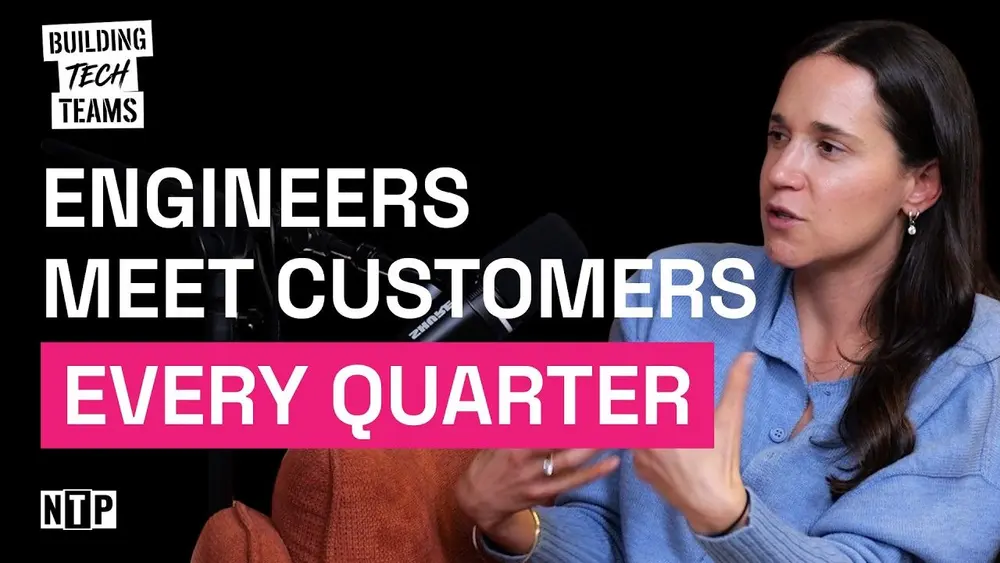
In this best-of episode, James MacDonald pulls together the sharpest thinking on compensation from five of his first eight guests. Nathan Hill, Head of Telco at AWS, on the question nobody can answer yet. Adam Witanowski with the real numbers from a live job hunt: nine companies, seven offers, US startups paying US$450–500k base against comparable local roles at $220k. Claudia Barriga-Larriviere on whether AI is making teams more productive or just faster. Matt McFarlane, founder of FNDN, on token costs eating into the people budget. And Cloë Stanbridge, Talent Lead at Airtree, on the moment a big cheque is actually worth it.
It adds up to a state of play for the Australian market on AI-era pay: why the gap with the US is structural (no hyperscalers, startup funding a tenth the size, enterprises that still think engineers are too expensive), why almost nobody is measuring the productivity gains they are paying for, what happens when ten people run five thousand agents, and why the cheapest move in the whole budget discussion is the raise nobody asked for.
About the guests Nathan Hill is Head of Telco at AWS. Adam Witanowski is an AI Architect, previously at nib. Claudia Barriga-Larriviere is a People & Culture leader at Startup Flamingo. Cloë Stanbridge is Talent Lead at Airtree. Matt McFarlane is the Founder and Director of FNDN, a compensation consultancy helping startups and scaling tech companies build pay practices that are clear, fair and competitive. The full conversations with all five are in the feed.
About the show Building Tech Teams is hosted by James MacDonald, Managing Director of NTP Talent, and produced by Day One®. Sister shows include First Cheque, Oversubscribed and In The Blink of AI.
Chapters
0:00 Cold open: what should a 10x engineer be paid? ▶ 0:19 Nathan Hill: quantifying what AI is actually worth ▶ 1:05 Million-dollar salaries as a bet on future ROI ▶ 1:28 Adam Witanowski: nine companies, seven offers, real numbers ▶ 2:35 US$500k in the US vs $220k here: which one would you choose? ▶ 3:50 Why the gap is structural: funding, hyperscalers, enterprise mindset ▶ 5:37 Claudia Barriga-Larriviere: more productive, or just faster? ▶ 6:15 "What you don't measure, you can't change" ▶ 7:26 Matt McFarlane: the jump is too big, because you've been underpaying ▶ 8:32 Tokens are eating the people budget ▶ 9:55 Ten people plus 5,000 agents: whose budget line? ▶ 11:00 Where token costs land, and the on-cost of humans ▶ 13:01 Leaderboards reward consumption, not value ▶ 13:31 Cloë Stanbridge: when the big cheque is worth it, and when it isn't ▶ 15:06 Salary bands have to enable the business ▶ 16:26 Replacement value: getting ahead of the market ▶ 16:58 The raise nobody asked for ▶ Transcript Search or select a timestamp to jump ▾ 0:00 James MacDonald: I used to be called a principal software engineer. I was paid $200,000 a year. I'm now managing a team of agents. My productivity's 10x. What should I be paid? 0:09 Speaker: Good question. Aren't you in the recruitment business? 0:11 James MacDonald: Yeah, that's it. 0:12 Speaker: I think for me it's that the number's only half the story. 0:17 Speaker: Be prepared to pay more than you're comfortable with. 0:24 James MacDonald: 8 guests into this show and one theme has showed up in every single episode. Money. 0:28 James MacDonald: AI has changed what one person can produce. And salaries, they've come off the rails behind it. I interview technology professionals for a living and I don't have a clean answer. Neither do the people setting the pay. So this episode pulls together the sharpest thinking on compensation from 5 of my first 8 guests. Nathan Hill from AWS on the question nobody can answer. Adam Winternowski with the real numbers from a live job hunt. Claudia Budigard Larivière on whether AI is making us more productive or just faster. Matt McFarlane on tokens eating into the people budget, and Chloe Stanbridge from Airtree on the moment a big check is actually worth it. 1:06 James MacDonald: If you set salaries or you're earning one, this is a state of play from Australian job market when it comes to AI roles. I'm James McDonald. This is Building Tech Teams. Let's get into it. 1:17 Speaker: It's difficult. I think, um, again, well, everyone's working this out, and I think a big challenge at the moment is although Intuitively, we know that, you know, whether you're using Claude or whether using ChatGPT to write recipes or plan your holiday and in a business context, clean up your emails, write strategy documents, is quantifying the exact value of that right now. Is it minutes in a day? Is it hours in a day? Is there more accuracy? Is this driving certain benefits organization-wide? So I think As, you know, we can quantify the benefit, then that'll have a natural flow onto, you know, things like remuneration and scale. 1:58 James MacDonald: And I think we're starting to see with some people offering, you know, million-dollar-plus salaries, and they're doing that on the basis of not necessarily they're gonna provide million dollars today, but as they evolve, as the agents get better, as they orchestrate, architect this solution, that they're gonna easily provide that as a positive ROI, right? Yeah. 2:15 James MacDonald: That was Nathan Hill. head of telco at AWS, back in episode 3. In June, the answer was, we're all working it out. By episode 7, the market had answered for us. Adam Winternowski was in the process with 9 different companies, 7 offers on the table at the time we recorded, and another one on the way. These are the real numbers. 2:34 Speaker: Yeah, so, you know, I've applied, or I've interviewed for and applied for half the roles I didn't apply for, right? So there were people reaching out. The other half that I did, and the, the comp, and the ones that were low self-filtered, right? So these aren't included in that 9 because it's one of the first questions I asked because the roles make no sense. I'm like, what's the comp? And, uh, because that's an indicator of seniority and effort now, apparently. So, um, so, uh, yeah, the roles, roles here versus— So Here, very senior, more senior roles are the ones that I was looking for. Things like, um, uh, distinguished engineer, you know, big grand title, feels like I should wear a top hat. 3:23 Speaker: Uh, that was paying less than a, uh, just an engineer role, not even a senior role, uh, in a startup in the US. And the startup in the US was offering, you know, $400 $450,000 to $500,000 base. 3:38 Speaker: USD? 3:39 Speaker: That's converted to Australian. And there was other ones that offered more, obviously. And but there was a lot of that was stock and that sort of thing. So, you know, I think offers around the $450,000 to $500,000 USD mark were, you know, in the mix, which for me just didn't move the needle for triggering a move to the US and moving my family and all that sort of thing. Because you can get, you can get those, that kind of money here, but it's a much more senior role, very different role, probably less close to the tools. And so that's really an appetite, how close do you want to be to the tools? Those same roles here are probably paying around $200,000, $220,000-ish. 4:24 Speaker: So $220,000 versus $500,000, which one are you going to choose? Particularly if you're, you know, I'm married, got kids, got a life here. If you're an engineer in their in their 30s, not married or married with no kids, I mean why would you? Why would why would you stay for 220? I mean that makes no sense at all. That's working against yourself. With the same title that I had previously at NIB that were paying well over a million and into the two million space, and I don't know those companies were based in the U.S. They're based in the U.S. And I don't think those are, you know, all that common, but they are around. And I didn't see any AI roles for less than double of what was being offered here. 5:13 Speaker: Startup funding here is typically very low as compared to the US by probably a factor of 10x or larger. And so they can't, they just don't have the money to offer the same sort of ridiculous salaries that are being offered. And again, that's an arms race. Like you've got 10 different, uh, voice companies competing there for, for talent that have worked in, um, you know, voice models, uh, whereas here you might have one and that one is funded at a couple of million dollars versus their $20 or $200. So they're often able to offer way more money. That drives salary up because now you've got 2 competes for salary. One is well-funded startups, the other is is the hyperscalers that are competing in an arms race. 6:03 Speaker: Now that means that if any, like, Bank of America wants to get talent, they're competing against the drain out of 2 spaces. We're competing really against— we've got enterprises which are— we've never had that sort of inflation of salaries that the US got anyway over the last 10 years. And a lot of enterprises will still complain that engineers are too expensive because they don't see themselves as a software company in competition with, you know, whoever the hell is going to come and eat their lunch. So we don't have the startup pressure, we don't have the hyperscaler pressure, and we've got enterprises that think engineers are too expensive. 6:43 James MacDonald: So the gap between Australian and US pay is actually structural. No hyperscalers here in Australia. Startup funding about a tenth of the size, and enterprises still think that engineers are too expensive, which raises the obvious question: why won't Australian companies close the gap? 2 guests have given me the same answer. 7:01 Speaker: Right now, I think there isn't a cohesive narrative yet because I don't think there's a cohesive narrative internally with a lot of these companies, because the CFO might think one thing and the CEO thinks something else, and then the board might be really enthusiastic about it. So I think it's early, particularly in Australia, 'cause we tend to adopt things a little bit later. But there's a lot of companies that haven't necessarily made up their minds and they're kind of testing, is it true that we're productive? And often my question is, are they more productive or are they just faster? And I just don't know if it's the same thing. 7:34 Speaker: I think most companies aren't measuring. They don't know how to measure it. And, you know, we've had DORA stats, for example, DORA metrics in engineering for years. I would say there's probably only 5 to 10% of companies that actually look at that. Um, and, you know, I think this is why Atlassian bought DX, uh, Developer Experience Platform, which helps measure both engineer sentiment but also, uh, their engineering, engineering capability within an organization. And it, you know, plugs pretty well into Jira, and Jira does a pretty good job of pulling out a lot of stats. You probably need to look wider than just Jira, but Um, you know, I think most companies aren't even measuring it, and then they're claiming, well, we see no benefit. 8:18 Speaker: Um, and I think that's probably because they're looking at the wrong things. 8:22 Speaker: They— 8:23 Speaker: I think they've done a real— we've done a relatively good job at measuring how much a token costs, um, and we've done a relatively poor job of understanding what value that token has added. And so I think, you know, the first thing that any organization that wants to go down this route of increasing their AI capability is the need to figure out how to measure. Because what you don't measure, you can't change, right? 8:43 James MacDonald: I think that's the best line you've said today. 8:45 Speaker: It goes back to my point a little bit earlier. I think you've got to understand what the impact is that this person is going to have in your business. Like, are you taking a bet on something that's going to have this, you know, $10 million in upside? I mean, if that's the case, then half a million dollars in salary is, is probably not that big of a hit. Um, I think a lot of people get in their head about salaries. I sort of heard this term the other day about, and this for me is like one of the most common reasons I see someone being paid what a company thinks is the right salary not do it, is because they go, oh, the jump between what they're on now and what we think they're worth is too big. 9:17 Speaker: Wow. 9:18 Speaker: And it's like, yeah, because you've been underpaying them against what you're saying, you know, you should be paying within the market. So I think a lot of people see a, like I was working with a client the other day and they go, oh, the, you know, we wanna pay 90th percentile for our talent. Oh, but it's going to be, uh, 80— it was a UK-based role— £80,000 to bring this person up to the band. That's too big of a jump. And it's like, but that's, that's the, the size by which you've been underpaying this person. If you want to be a 90th percentile company, that's, that's the, the, the gap between, you know, what you've been banking as an upside as a company. 9:50 Speaker: And that's the size of the, like, the reason for you to make this change. Um, it's not, you know, yes, it's easy to look at a number and go, oh, that's too big. But that's just the number. Like, we all want to be data-informed companies, and yet we look at something like that and go, oh, hang on. Yeah, I think we need to take the emotion out of it. 10:07 James MacDonald: Cloudy asked the question, Adam named the problem, and Matt's priced it. Companies say they see no ROI from AI, but almost none of them have measured it before. You cannot see a productivity gain if you've never actually measured it. Fix the measurement problem and the salary conversation resolves itself because you can finally point at Until then, every compensation discussion is just 2 people trading vibes. And there's a second force pushing salaries around, one that doesn't show up on the people line of your P&L at all. 10:37 Speaker: These people are spending probably hundreds of thousands of dollars on tokens and on the infrastructure. And, you know, it's the reason I think for the massive jump in and the spike in salaries for this kind of segment of roles is because Payroll's always been in SaaS, has always been the biggest cost. You know, maybe AWS has been up there as well, but tokens are now kind of superseding that. And I think it's giving companies the freedom and the permission to go, well, you know, we're dealing with now an infrastructure that's worth significantly more and we want to make sure that that investment is sound and secure and we've got the right people that are dealing with it. 11:14 Speaker: I know, was it last week, was it Dario from Anthropic was saying, oh, I'm worried that people are joining now for the money and not for the mission. 11:22 Speaker: Yeah. 11:23 Speaker: That's crazy to me. But so, you know, look, that's always, I guess, partially the risk. But as long as you think you're hiring for the right reasons and you've got a dialled-in process. But yeah, I think like if you're looking for one of these roles, like that's the clearance rate, that's what it costs for your business to be able to, it's the cost of doing business. 11:39 James MacDonald: You mentioned there's a part where somebody builds a bunch of agents to do what they're traditionally doing. Now your team structure used to be, 10 people across the team. 11:50 Speaker: Yeah. 11:51 James MacDonald: It's now 10 people plus 5,000 agents. 11:57 Speaker: Yeah. 11:58 James MacDonald: When you're putting a hierarchy together, an org structure, you're looking at those agents and their token costs. Is this fitting in a technology budget? Is it fitting in a people budget? What does this look like? Because as you said, tokens come with real costs now. 12:14 Speaker: Yeah. 12:15 James MacDonald: And if you're getting real output, These are things that people are starting to look at. And I think like a token max role, token optimisation role will continue to be either part of core function of software engineering roles or potentially a standalone role like people have done in around cloud. But if you have a look at your total costs going out the door on the P&L sheet, your people line was one, technology would be another. But there's this blurring with the agents part. Yeah. Just be interested to see what you're seeing at the moment. 12:44 Speaker: Yeah, it's an interesting space. 12:46 Speaker: Yeah. 12:46 Speaker: Where's it going to go? I don't know where it's going to go. A few things come to mind. I saw, I was at Sunrise, the Blackbirds conference, you know, a few months back and saw a talk by Greg Huntley, I think it is, the guy who came up with the Ralph Wiggum loop. And he was talking, his talk was all about how AI costs less than minimum wage. And I think we're seeing a snap back from that to now token costs are going to increase and all that sort of stuff. And so It's, yeah, it's a hard question to know where, you know, where it's going to go, where the budget sits. I mean, it's also like there's an overhead that comes with hiring more people as well. 13:27 Speaker: So, you know, if those AI costs increase, I think like any, any, you know, vendor evaluation or any toolset that you use, you want to be relooking at every now and then to make sure that it's actually delivering the kind of value that you're expecting. I don't, yeah, I don't have a good sense of like how companies are going to control for, you know, their token cost into the future. I think we're seeing some companies that are putting caps for people, you know, per month spend, things like that. But as to whether or not we would see a transition back from like agents back to hiring people, I don't know. I think in some respects potentially, but there's also like, you know, there's the on-cost of hiring people as well, right? 14:10 Speaker: Again, you know, an agent, They don't— these are all the things that are on the billboards, right? They don't sleep, they don't ask for promotions, they don't ask for pay increases, they don't ask, you know. So there is that cost that comes with having employees that I think is not caught up. So yeah, it's a roundabout way of saying it's a very like, it's a dynamic place or space at the moment. I don't know where it's going to go, but yeah, I think it's something that I'm certainly keeping an eye on in terms of like what that shift is between like headcount costs going into token cost and whether or not that's just blowing out a different budget. 14:40 Speaker: I'm a fan of in the short term from a like a building and adoption perspective. I like leaderboards. I like being able to say, James, congrats, you were number 1 for this, you know, this quarter that we've decided to like bring AI in and we just want to see who's using it the most. But we all know how easy it is to game those sorts of things. And then suddenly you're just rewarding consumption rather than actual, you know, producing value. And so I think they're an interesting tool. They obviously should not have a long-term place in companies from a like reward and recognition From an acquisition perspective, because, you know, I could spin up a loop right now that just spends tokens and, and would make me look brilliant despite achieving nothing. 15:14 James MacDonald: Token spend sits in nobody's org chart yet. Patrick McQuaid told me in episode 5 that that cost control belongs inside the team actually doing the spending, and I agree. Here's the principle: whoever owns the agent owns the bill. Put it in the same line item as the people, because that's what it is. One more question before we close it out: when is it right to blow up your salary bands? for one person. 15:36 Speaker: I can't name names, but there's 2 companies that spring to mind. One who hired an exceptional engineer and pulled out the big bucks, and that was their founding engineer because they had the awareness. They knew that they needed— like, there's CTO and CEO co-founders, but they knew they needed to get someone who— and he was a returner from America, so knew that they had to get someone with that experience. And they were like, we are happy to pay, we don't ever foresee us having a massive team. Small team, really high quality, and happy to pay. Another time I saw that was more on the go-to-market side where they hired someone who was too experienced. 16:17 Speaker: And I think this happens a lot. You hire someone from big tech and they think— sorry, you hire someone from big tech and it just doesn't translate well into an early-stage startup because it's a completely different landscape. They, from the candidate's perspective, they want to have a bigger impact and, you know, all the great things, but then they come on board and they realize how exposed they are, or the amount of work that is involved, or the fact that they have very little support around them, and it doesn't work out. So I think if you are hiring someone at that high salary, make sure it's for the right reasons, because they're absolutely worth it and they're bringing a skill set that you don't have, but don't hire someone who's very expensive just because that's what they were getting paid in big tech. 17:06 Speaker: Salary bands, they're good for the sort of, you know, the broad range of roles that you're hiring for, but again, the data is like what is and has been rather than what you want to happen. And so I think if you're looking for this like game changer role in the market, then you'd be taking a very different approach. And I think if you're, if you're certain that this, you know, if it pays off, it pays off at this kind of a multiple, then yeah, if it's gonna, if it's gonna cost that much to get that person in, I think it's, you know, and again, I think this comes back to like where I see, where I see partners from a comp perspective, and I've made this mistake myself earlier on in my career, is that I think they, they sometimes hold too tightly to these salary structures and they defend them at all, you know, at all costs. 17:50 Speaker: then suddenly you're not able to hire the people you need in the business. Like, again, it's got to— they've got to enable you to hire and retain people. And if they're not and your clearance rates aren't working or people are leaving because of pay or they're grumbling because of pay, managers are telling you that the market's moving on. If there's all these signals in play, then you've got to take a look at your data and adjust it, even if the salary survey that you're using isn't showing these sorts of things. Like at the end of the day, this is, you know, this is what's going to help you be successful as a business. So yeah, you know, is it rare? 18:21 Speaker: Would you want to absolutely make sure you're sort of dotting the i's and crossing the t's before you make that kind of a call? Yeah, for sure. But it's got to enable the business. 18:29 James MacDonald: The rule that falls out of both stories, payovers when you can name the bet and you can name the payoff. If you can't write down how this person is going to 10x your business, you're not buying a game changer. You're just paying to be part of the we're doing AI story. 18:43 Speaker: Invariably, you would say that they're worth more to you than that person who's just coming off the street and has joined the business, and yet they have got a higher salary. So it always comes to a head. It always does. And so, yeah, I always encourage companies to get ahead of that. I mean, if you're, if you're in the market for a role and you're finding that salary that you're paying for someone who's doing the same job internally has shifted, the value of that person internally has shifted as well. And there's this concept called a replacement cost. replacement value, which is that all of that context, those relationships, the familiarity that that person who's been there for 2 years has is worth more. 19:16 Speaker: And so theoretically, if you value that, you should, you know, bump that person even higher than the one you've just brought in. But this is the— it's the name of the game, right? Like, I think a lot of companies think, oh, let's just, you know, let's just see if we can bank that upside until it becomes an issue. But by that time, you know, the trust's gone, right? And you have so much of an opportunity to you know, have someone think, hey, you care about me, you've thought about this, you've got my back. Like, I've had this happen to myself personally, and I've been fortunate to be in a business where I've had the chance to do this as well for people. 19:45 Speaker: But if you come to someone and say, hey, we've just hired someone in a similar role, we've realized the market for, for your role has increased, and we've given you a pay bump as a result of it, that is so impactful. And, and the trust that it builds, and the fact that someone's like, oh my God, I don't even have to think about it, I didn't even have to kind of go to bat for myself, I could just— I can get on with my job and I know that you're actually, you've got an eye out for me and the market and the value of my role. And, you know, that's, it's so much more empowering and yeah, better for that person. 20:12 James MacDonald: Here's my take from the episode. Tokens potentially have to be considered in the headcount budget now. I work in recruitment. I deal with people day in, day out, and I don't want to see agents taking the roles of people, but agents produce the work, they cost real money, and they scale with the people who run them. So stop treating AI like a software line. And potentially you have to consider it in the people budget. Overall, it's one capacity budget, but I think what we all need to do is measure both sides of it. Pay the humans who multiply these agents like the rare assets they are, because Adam's 7 offers said the market is already doing it. 20:41 James MacDonald: And the cheapest line in this whole budget discussion was the one that Matt just described: the raise that nobody asked for. Whether you're considering tokens in your headcount budget or a software line, we just need to all budget accordingly. These are real costs with real multipliers. Full conversations with Nathan, Claudia, Chloe, Adam, and Matt are in the feed. Hope you enjoy these episodes. There's new episodes every Tuesday. Newsletter Headcount and Code lands every Wednesday on Substack. Find me on LinkedIn, James McDonald AU. You won't miss me. This episode was produced by Day One. No transcript lines match that phrase. Try fewer words.








 ▶
▶  ▶
▶  ▶
▶  ▶
▶  ▶
▶  ▶
▶  ▶
▶ ▶
▶ ▶
▶