Lee Lagdameo crossed over from the other side of the table to build one of the AI companies he used to back — and four months into Shikii Labs, he says most companies aren't AI-ready: their data is a mess, and raising less beats raising more.
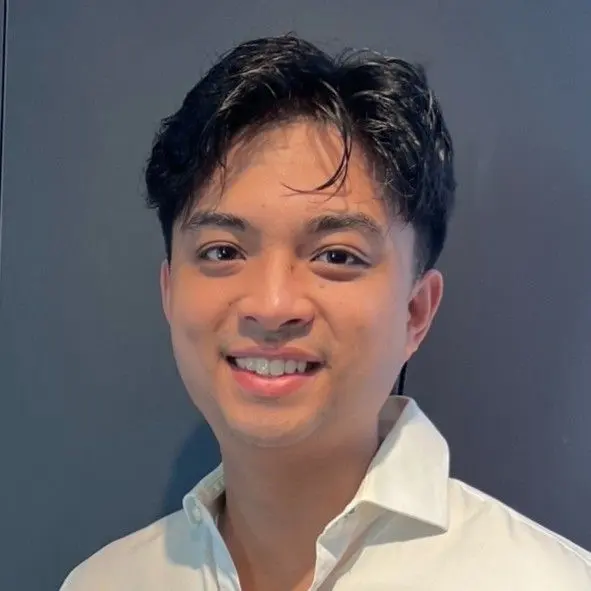
Lee Lagdameo is the co-founder of Shikii Labs, an AI and product partner for founder-owned and PE-backed companies. Thea and Lee talk about starting an AI consultancy from zero network, why his last startup Skybox Technologies raised too much, and what he sacrificed to keep building.
For: AI consultants, PE operators, early-stage founders, and anyone weighing the VC-to-founder jump.
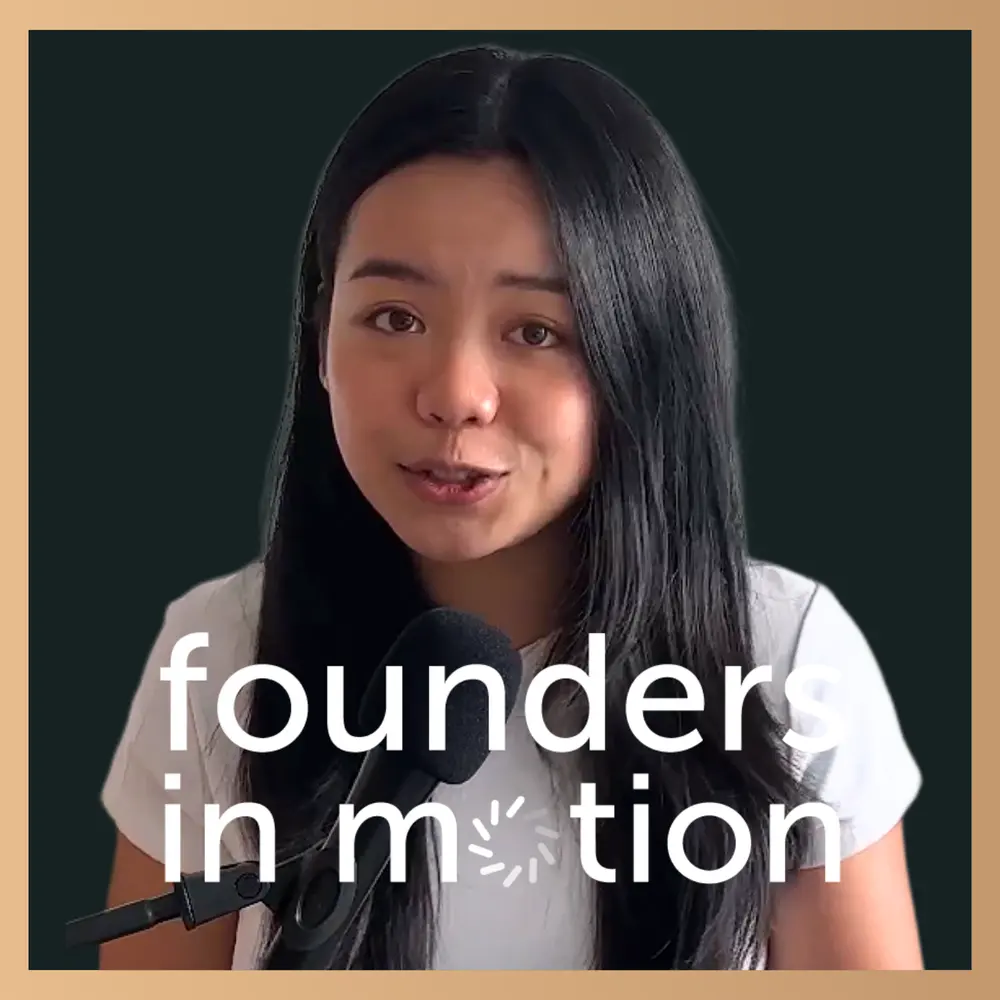
About the show Founders in Motion is the founder podcast that catches them before they're famous, when the pivot might not work and the real story is still being written. Hosted by Thea Ngo, a Wharton grad, venture capital investor, and (your new favourite?) interrogator. New episodes every Thursday.
Transcript Search or select a timestamp to jump ▾ 0:00 Lee Lagdameo: You sign the check, you sign the warrants over, and then you get the money in your account and you celebrate that day ideally. And then a week later it's like, whatever, you just do it again. I raised in the heyday of 2021. You were able to raise on a pitch deck and a promise. The worst thing you want is obviously you've raised $10 million, you're like, shit, what do we do with it? There are better ways to make money risk-adjusted than being a founder, but you do it because you love it. You do it because you have a mission. 0:22 Thea Ngo: He's ran the full gambit, raised $10 million, scaled the business, and sold it. Now he's betting on one of the most overlooked areas in AI: implementation. Less than a year in, Shiki Lab is already helping dozens of $10 to $100 million companies modernize and optimize their software stack in the era of AI. 0:43 Lee Lagdameo: My name is Lee Lagdameaux. I'm co-founder of Shiki Labs, and this is Founders in Motion. 0:54 Thea Ngo: Lee, from the investor's chair, you see everything. Who's getting it right, who's about to crash, and why. When you were in venture capital backing early AI founders, was there a moment where you looked at someone that just got funded and thought, hey, I could do this better? And what did you do with that thought? 1:13 Lee Lagdameo: Yeah, it's interesting. I think you've got 2, obviously 2 sides of it. And obviously I was an ex-operator as well. So obviously the investor side is you're obviously thinking about like the medium, long-term risks. But then the short-term side is I guess I was giving too much feedback into how they want to do things. So what did I do with that? Obviously, I went off and did my own thing. I think that there was ways that, you know, I saw that they, I mean, potentially could have done distribution a lot better, or there's different ways that I could have thought about how the tech and product could be built, particularly for the new age. 1:41 Thea Ngo: Because sometimes I struggle with this too. I try to put myself in the founder's shoes so much, like, this is what I would do for this company, XYZ. But do you ever think like that's a little bit of an outside bias? Like you, and then like you never know what really works in practice, you know, you have to try a bunch of different things. And like maybe things that like have worked in the past doesn't really work particularly from the company. 2:05 Lee Lagdameo: Yeah, there is a lot of outside bias. I would say I would agree with you. But of course, like I'm taking into account, obviously, my own experiences and what I've done in the past. But yeah, look, we're in the new age, like you need to be experimenting and figuring out how things work on the fly, for sure. 2:22 Thea Ngo: Yeah. And so you only stayed in venture capital for a few months? 2:27 Lee Lagdameo: Yes. 2:29 Thea Ngo: I'm curious why you made the move out so quickly. 2:33 Lee Lagdameo: Yeah, I mean, look, I'd just come out from a decent exit. I was looking for the next thing to do. This was literally right in the crack of mid-2025. And obviously this was lots of liquidity flowing into AI, and I thought this would be the next I thought this was going to be a great step for me in terms of building out. I really only lasted a very long time because I just realized this was such a big opportunity to even go out and build this myself. Of course, when you are investing, it's very fun, it's a great job and really intellectually stimulating. But I would say that the upside is asymmetric compared to operating as opposed to investing. 3:09 Lee Lagdameo: So if you think about investing is you're investing into multiple things, think about eggs in like multiple baskets, like operating, obviously you're in one basket. And like, that's how, I guess that's how I've always operated. And I think I've just come to, come to Jesus moment for me at least. Like, that's how I like to operate. 3:25 Thea Ngo: And then, so you've done the operator to investor and then investor to operator path. 3:29 Lee Lagdameo: Yeah. 3:30 Thea Ngo: When you move back to being an operator, what's the part that was very unexpected or potentially disorienting? 3:38 Lee Lagdameo: Yeah, I mean, like I mentioned before previously, the thing with being an investor is, of course, like you're looking at everything from short to long term. But I think you index more towards the medium and long term. And of course, that's like even right now as an operator, I get that question all the time. How is Claude or OpenAI going to disrupt your business? So I think that was a big disruptor for me is you obviously have to shift from like the mental model of thinking short to medium to long term as opposed to as an operator, I'm literally thinking about how am I growing the business today, tomorrow, and over the next 3 months? Yes, I know OpenAI or whatever Claude can disrupt me, but it is my job right now to grow the business today, tomorrow, and obviously build to that future where I could, yeah. 4:15 Lee Lagdameo: obviously create a moat against them. So it was really that difference between shifting medium to long term to like really honing in the short and medium term and just like continually executing on a day-to-day basis. 4:24 Thea Ngo: Yeah, exciting. And so you guys are doing some really, really crazy stuff and incredible things. So for someone who has never heard of Shiki Labs and have met you, in 2 sentences, what do you guys do? 4:38 Lee Lagdameo: So we are AI and product partners for private equity-backed companies, founder-owned companies, and we also work across venture studios with pre-seed to seed companies with the most interesting and exciting companies in Australia. 4:51 Thea Ngo: Okay, but what do you do for them? 4:52 Lee Lagdameo: What do we do for them? So the first part for us is we do AI transformation for these businesses. So we typically work across mid-market businesses between $10 to $100 million revenue. And then on the venture side is 2 parts. We work with really exciting founders that have either exited the business or brilliant commercially, and they might need AI, you know, an AI and product roadmap to build out. And then 2, we work with legacy businesses, and I call anything legacy pre-AI. 5:16 Thea Ngo: As a lot of businesses. 5:17 Lee Lagdameo: Yeah. So we might have a company that, so for instance, they might be, they might have been doing $20 million ARR pre-2025, let's say for instance, and they want to build out an AI part to their roadmap. That's where we come in and we augment that. Cool. 5:33 Thea Ngo: You speak so much like a private equity guy, by the way. 5:37 Lee Lagdameo: I can tell you. I know you, I remember that was the first thing you said about me. And I'm like, I have no idea what that means, but thank you. 5:43 Thea Ngo: So could you talk to me, like, in practice? Could you give me an example of, like, what are some of the things that you've done for some of your clients? 5:51 Lee Lagdameo: So we typically do 2 things for our clients. It's either make more money or save more money. And I know that sounds reductive, but let's say, for instance, a big push right now is helping companies make more money with the data and AI. So if I could point to an example, a company might have a couple hundred thousand patient records or customer records. how can they make sense of all that data across all the different data silos, augment that into a unified data piece, and actually make money with that with the use of AI data and machine learning? In practice, that could possibly look like identifying what the best customers could possibly be like with the help of AI. 6:26 Lee Lagdameo: It could be even creating workflows or agentic systems where they can actually activate on that data with the use of data and AI. But yeah, it's really all across it. So that's, that's the first use case. And obviously the second use case is we might go into a company and they're saying, Look, they've got, we help them and obviously augment that list of things that they need to do, like things that are extremely manual within business. And obviously we, what we do is we sit down with them and say, look, these are doable, these are not doable. This is what potentially could be the ROI within your business and this is how we can do it. So that is more like the automation and workflow piece that everyone's probably more familiar with, like N8N, Relevance, all these other agent players. 7:03 Lee Lagdameo: So 2 sides of the business, make more money, save more money. 7:05 Thea Ngo: Love that. Everyone loves making more money, right? 7:08 Lee Lagdameo: Yes, absolutely. 7:09 Thea Ngo: No, I think one of those points you mentioned was super interesting because everyone always things about the second piece, like how do you automate AI on top of your current work? But a lot of these organizations don't actually have all the data in one place cleaned properly for like an AI system or like an ML system to actually query upon it and actually get any value from it. 7:30 Lee Lagdameo: Yes. 7:30 Thea Ngo: So it's quite like a decent piece of work. And then, so I'm curious, like when you think about the split of work for like a legacy business, is it more on that data cleaning piece or is it more on that kind of AI on top of it? 7:45 Lee Lagdameo: Yeah. So look, the first thing obviously with our inbound leads, or every time I have a customer conversation with all these CEOs, the first thing they say is, look, we're very interested in AI. We'd love it to do X. 7:55 Thea Ngo: Oh yeah, I love to hear that. 7:57 Lee Lagdameo: We'd love it to do XYZ. And then obviously the first thing I ask is, is your data ready to do that? Because I think everyone always skips that part where you need to have your data cleared for it to be ready for any LLM or any like ML-ready system to be able to access that. So I would say the majority, and this is why, I mean, my first point here is this is why Claude and OpenAI will not be able just to plug into any business because the data just does not work. That is the biggest part of any AI transformation piece is obviously cleaning the data, getting at all the different silos. It might be in a CRM, might be in an accounting system, finance system. 8:33 Lee Lagdameo: If you want to completely understand the business from obviously a customer 360 view or even a financial view, you need to combine all that data into one pot. And then yes, Then you can implement AI systems. So it's a big part for us. And then everything after that is, yeah, it's always the hardest part in any AI data transformation piece. So we heavily index towards that. I would say it's probably about at least 50% of our work. 8:56 Thea Ngo: Okay. So for someone who wants to start out doing AI implementation with no preexisting network, how would you advise them to get started? 9:05 Lee Lagdameo: I would look at your existing spikes. For instance, my spike in particular was I know how to work with private equity-backed companies. I know Reb knows exactly. 9:14 Thea Ngo: You speak the language. 9:16 Lee Lagdameo: Yes, you speak the language and it's very important. But like, I guess to my point, to that point is your spike might be, look, I've met people who have built fantastic AI consulting businesses in NDIS or they've built it in aged care because that's where their experience is. Like everyone's got something. Like, if you don't have something, like my hot take is you probably need to build that something. 9:36 Thea Ngo: Yeah. 9:37 Lee Lagdameo: So I would find what that is. Like, if your particular use case is I've done sales and marketing and I know how to implement AI systems for those specific workflows for e-commerce companies, or I know how to do— I know how painful the automation and workflow process is for manufacturing companies because I've worked in manufacturing. That's what I would absolutely just hone down on. And then obviously you could build from there. The thing is, everything tastes like chicken in AI. Like once you're able to build a niche in one thing, obviously you've got case studies and referrals and references, et cetera. But then once you've built something in sales and marketing and e-commerce, you can do sales and marketing in, gosh, anything, healthcare. 10:17 Lee Lagdameo: It's very, very similar. So that's how I would do it if I had to start again. 10:21 Thea Ngo: But maybe taking a step back, say if someone's like really early or very young in their career, they haven't really built out that like product expertise or spike expertise. Like, what should they think about? 10:34 Lee Lagdameo: Look, I think there's a big underserved market, obviously, with small businesses who don't make sense. So I think you could, you could possibly target that. That's what I would do as a small business. And obviously it's the same process. So look, I would work with smaller businesses, probably doing under $1 million revenue. You probably, again, you probably have someone in your network. If you don't, my advice is you need to build your network out before you do anything. But like, let's assume that you don't have a network or you don't have anything, man, even start off with pitching out cafes. Like, they probably have some sort of use case that they need to build out with I don't know, receptionist or ordering system, or there's probably something in there that you could do and you could probably start charging a couple hundred dollars a month and you build up from there. 11:11 Lee Lagdameo: And then again, to my point, once you've done that for a cafe, you can do it for 50 cafes. 11:15 Thea Ngo: Yeah. 11:15 Lee Lagdameo: So yeah, I would start, start extremely small, start places where my— maybe our consultancy or Bain or one of these MBBs or one of these Big 4s are not playing in. You can absolutely dominate that market. Everybody has a need for AI. So yeah, just figure out who has the need for it within your network or go hunting for it. Like, the demand is there. 11:35 Thea Ngo: That's true. That's true. Like, even my parents are actively thinking of AI. Yeah. Like, they're taking like $1,000 courses and they are like trying to like plug in like Claude Cowork and all that stuff into their system. 11:50 Lee Lagdameo: Absolutely. 11:51 Thea Ngo: So it's pretty cool. 11:52 Lee Lagdameo: Absolutely. Like, I have a story. I was just, you know, I was at a restaurant and then, you know, the owner just started having a chat with me and she's like, oh, What do you do? I'm like, so, you know, we run an AI consultancy. And then she's like, but yeah, could you do this for us? And I'm like, that's just like an opportunity for you. Like for someone who's just starting out, if you're fresh, 18, 21 out of uni, pitch her, pitch that equivalent. 12:13 Thea Ngo: Yeah. 12:13 Lee Lagdameo: Yeah. 12:14 Thea Ngo: You know, the funny thing is I think like there used to be this like quick, there used to be like a divide between like, if you're like a product person, you're not a salesperson. 12:22 Lee Lagdameo: Yes. 12:23 Thea Ngo: Where if you're a salesperson, you're not really like a tech person. 12:25 Lee Lagdameo: Yes. 12:25 Thea Ngo: But I think that has like kind of collapsed and like we're in this era of like you have to have both capabilities. 12:31 Lee Lagdameo: Absolutely. 12:32 Thea Ngo: And that's quite beautiful, actually, because I think people should be very multifaceted and like, and build their skill set multifaceted rather than just trying to be super like, oh, I only do this because this is like my thing, you know what I mean? 12:44 Lee Lagdameo: Oh yeah, we hate that. As founders, I literally like, I mean, even when I first started off the relationship with Reb, he's like, I don't want to sell. I was like, no, you have to sell. Yeah. And even when, even early in my career where I wanted to stay away from technicals and I just thought, what's whatever, it's for this, for the technical people, the CTO to deal with that. No, It's not a thing. You literally have to do both nowadays. Like, that's, that's like the core to an exceptional team is you can build and you can sell and you need to be dangerous enough that you can explain what the tech is when you're selling as well. 13:09 Thea Ngo: Yeah, that's true. Like, there's nothing that like bugs me off more than like when like a CEO of a tech company can't understand how the tech actually works. 13:20 Lee Lagdameo: Absolutely. 13:21 Thea Ngo: It's like actually absurd to me. But anyways. Yeah. So, okay. So prior to Sheiky, prior to being a venture capital bro, a private equity bro, Yep. You raised $10 million, built a team, and sold a company. So what did your first venture, Skybox, do? And what were the lessons that you deliberately took into Sheekey from day one? 13:48 Lee Lagdameo: The company Skybox was a gaming and analytics technology company. So think of it like, what we do is extract data from games. repackage that into a nice UI/UX, and then resell that into esports teams. 14:02 Thea Ngo: Cool. 14:02 Lee Lagdameo: What's really interesting though with esports teams is they have a propensity to pay 20 to 30 times higher than a regular gamer. That's the problem we were solving for. And the solution was obviously building something for the esports teams to play around with. I think the biggest learning there was I raised in the heyday of 2021 when Geez, like I tell people now, much different market in a good way, as in you were able to raise on a pitch deck and a promise, like as opposed to now, obviously the bar's significantly heightened. I think it's taught us a lot in terms of capital allocation. It's taught me a lot in terms of resourcing and then understanding what to bootstrap and then what actually needs capital to raise against. 14:46 Lee Lagdameo: It was a very funny circumstance where, look, in hindsight, Should we have raised that much? Probably not. I think we actually would have done a lot better if we had raised less, if I'm being honest. But yeah, it's obviously brought a lot of learnings to Shiki now where, yes, but whatever, maybe I could raise a couple mil here, 5, 10 mil here, but do I have something that is scalable and can put product market— can put dollars to? No, not yet. So it's taught me that I need to be more conservative and then more planned around how we allocate capital within the company and resourcing. Because the worst thing you want is obviously you've raised 10 mil and you're like, shit, what do I What would you do with it? 15:23 Thea Ngo: Yeah. 15:24 Lee Lagdameo: That's, that's the worst spot you wanna be in. It's actually counterintuitive because having too much capital actually can be time intensive. So yeah, it's at least has taught me a lot of good habits now with allocating capital. And if I put a dollar into this, it needs to make this out of it 'cause everything's kind of coming outta my pocket. You just have a much different mindset. So I know that once we do have capital, geez, yeah, we're— I'd like to think we can stretch it a lot faster than we can now while we're bootstrapped. 15:47 Thea Ngo: I still actually think it's like the heyday if you're in SF. 15:51 Lee Lagdameo: Right. 15:52 Thea Ngo: Like I still have some friends that sometimes they're like, we got like a few mil, we need to spend it in the next 6 months. Like, I don't really know what to do. And I was like, wow, that's a crazy problem to have. But if you really think about it though, like, it's a lot of pressure to figure out like, how are you gonna like 2x the valuation of your company in the next like 6 months? Or most likely it's like— 16:12 Lee Lagdameo: Oh, absolutely. 16:12 Thea Ngo: More than that. And that's like such a stressful position to be in like as a founder. So people don't really think about like, If you take in like X amount of capital at X amount of valuation, there's an expectation for you to like grow it really quickly over time. And like, it's like, are you ready for that whole journey? 16:30 Lee Lagdameo: Yeah, exactly. 16:31 Thea Ngo: And a lot of people are just not built for that. And that's like totally fine. 16:34 Lee Lagdameo: Exactly. So it was really important for us to, yeah, even now understand the foundations of what requires capital and what doesn't. Yeah, I think we're at an interesting point now where the business, I, you know, we're roughly 4 months in. I have a very good understanding now that if I put a dollar into X engineer or why I care. Token cost is obviously our biggest, our biggest OpEx. I have a very good idea. I know I'm going to get $3 to $5 back in just run rate revenue. So did I, did everybody back in 2021 have that level of clarity? Probably not. And it was like everyone's just sipping the whiskey, like everyone's sipping champagne, right? Much different market now and a lot of learnings to take into it. 17:10 Thea Ngo: For sure. Okay, so having been in early stage investing yourself, you probably think a lot about co-founder chemistry and what makes a good time building a company together. So you and your co-founder, Rev, by the way, lovely guy. You've known each other for roughly a year before founding together. What do you think makes you guys the perfect fit? 17:33 Lee Lagdameo: I think first and foremost, and I think this is really underrated, is we are genuinely good friends outside of work. Like, I genuinely do see him as a good friend. Even if we didn't have Cheeky Labs and building it together, we would be friends. I think we get along on that, on that personal level, which is very important. I don't think a lot of But potentially a lot of co-founders don't have that. And I've seen that dynamic before. So that's the first part, the social part. And I think there's obviously the technical and hard skills. I, at this point now that I've been building companies for like over a decade, I understand very clearly where my spikes are and where I'm very weak at. 18:07 Lee Lagdameo: I very clearly understand what Reb is good at and what he's weak at. And we perfectly overlap in that context. And I think I shared this when you were first met, and I even told Reb this, and I very rarely give compliments out. I said, Reb, I've worked with hundreds of engineers. You are like literally the the best engineer that I've worked with, at least, or at least I've met. So yeah, I think there's 2 of those factors as well. And of course, we're aligned on how we want to build the company, communication styles. And yeah, that's obviously a really important part too, is the long term. We know exactly where we want to take Cheeky Labs in the next 3 to 5 years. 18:36 Lee Lagdameo: Yeah, we're very aligned on that in terms of going extremely hard while we're still young-ish. Yeah. 18:42 Thea Ngo: You guys are so young. 18:44 Lee Lagdameo: Ish, apparently. Rarely, if you're over, if you're over like 26 now, you're very old in tech world. 18:50 Thea Ngo: No, no, no, don't be that way. Actually, average founding age is way higher. 18:55 Lee Lagdameo: Really? 18:56 Thea Ngo: So it's all about media bias, you know? 18:58 Lee Lagdameo: Yeah, yeah, interesting. 19:00 Thea Ngo: But I'm really curious. So like, were there anything that you learned about each other only when you started working together that you were like, hey, like maybe this is something we need to work out? And the reason why I asked that is because like, I think a lot of people make really good friends. But when they start working together, they realize like a lot of different things about their working style that might be completely at odds? 19:23 Lee Lagdameo: Yeah, I think it's good that I'm probably hesitating on this answer because I am pulling at strings. I think I've been very fortunate. 19:29 Thea Ngo: Yeah. 19:29 Lee Lagdameo: But look, you know, with any kind of co-founder relationship, there's always going to be something that potentially could be done better. I think a big one was I've really come from private equity background, operated like a CEO background. So I'm very regimented in how I do things. For instance, Reb, he is an artist. is a musician, like, first and foremost. 19:49 Thea Ngo: Oh, really? 19:49 Lee Lagdameo: Even before becoming a CTO. And obviously he's— 19:53 Thea Ngo: I see that artistic flair now, I guess, but I guess it's hindsight bias. 19:57 Lee Lagdameo: Exactly right. And I am literally the opposite of being an artist and a musician. I literally cannot draw for the life of me or sing for the— all those, all the arts, right? So, I mean, the reason why I say this is there's a very different way to how an artist or musician works versus someone who is a bit more regimented to me and how, like, my upbringing is in terms of, like, how I work. So, like, I mean, to be more specific is, like, Yeah, look, Reb needs more space in terms of like how he thinks creatively and how he thinks about product and tech. I want to get things done as soon as possible. There is like a happy medium that we always have to reach. 20:28 Lee Lagdameo: And yeah, that's probably the big one. But like I said, you probably need to just— I understand what I'm good at, he understands what he's good at, and we obviously need to always find a way that's in the middle where we can bring out our natural strengths. 20:41 Thea Ngo: I do think it's like a nice balance though. And you do need an artist in the team. 20:46 Lee Lagdameo: You do. 20:47 Thea Ngo: You need like a visionary artist, a creative. 20:50 Lee Lagdameo: Exactly. Like, you need someone that can sit down and think deeply about whatever the customer or client's problem is. Sit on a river and just be like, hmm, this is how I'm going to think about it. 21:00 Thea Ngo: Yeah. And then you need someone to actually like do all the other stuff, you know? 21:04 Lee Lagdameo: That's absolutely it. Once we've come up with it, this is okay, this is how we're going to execute on it. So, but it's, yeah, there's always a balance between it, but you're right. If you have 2 visionaries, you're just going to go nowhere because you're just thinking about changing the world and building out rockets to go to the moon. And then maybe you've got 2 executors or 2 on the operational side, and then no one ever innovates because that's what we're here for, to create a 10x solution to what's currently being built. 21:28 Thea Ngo: I wonder where I lie in that spectrum. Do you think I'm more creative or not creative? 21:32 Lee Lagdameo: Because you've been doing a lot of this stuff, I think you're probably more on the creative side too. 21:36 Thea Ngo: I think I'm more of a creative side. 21:38 Lee Lagdameo: That's good. 21:38 Thea Ngo: I have no sense of responsibilities in the sense that I only do things I enjoy. 21:43 Lee Lagdameo: It's like a rep too. I mean, with Jesus, geez, we're very clear. Like, you know, he, he's— he could probably go to SF or New York and make $600,000, $700,000 if he wants to, but he wants to do this because he enjoys working on it and it gives him his career. Yeah, it gives him his creative outlet. 22:03 Thea Ngo: So you talked about a lot about like how you guys are aligned on like this 3 to 5 year goal. 22:08 Lee Lagdameo: Sure. 22:08 Thea Ngo: Like, I'm really curious, like, what does success mean to you? 22:11 Lee Lagdameo: Well, I think there's a couple points to that. I think the first one, obviously, that's glaring is the financial outcome. Like, we're all building this towards something. So yes, we want to hit X exit or Y revenue or see this in obviously 3 to 5 years. Yeah, just a big thing for us too is like legacy. I think that's, you know, how we're like aligned on that point. We both love working on huge problems. Like, nothing gets me up in the morning better than like working. Like, I'm like, yes, I get to work on this huge problem and I get to solve it. So that's that legacy of solving huge problems and putting our rubber stamp on it that we did that. 22:45 Lee Lagdameo: Oh gosh, money cannot put a value on that for us personally. So I think that's that. And obviously been through the road, been through this before in terms of my previous company. So you sign the check, you sign the warrants over, and then all of a sudden you get the money in your account. And then literally a week later you'd celebrate that day ideally. And then a week later it's like, whatever, you just do it again. So yeah, it's such an interesting one. Obviously financial outcome, but the biggest one for us is just, yeah, it's solving huge problems and continually doing it over and over again. Nothing matches that for us. 23:18 Thea Ngo: You know, it's like super funny. Like I think a lot about like missionary versus like mercenary founders. Like I think everyone obviously like wants a positive financial outcome because you spend so much time and energy into it. But like, I find that the ones that are really successful or like really inspiring are the ones that like really have a core kind of like mission statement behind it. find it. Um, and the kind of like reason to build a company is way more than just like that financial outcome that can sustain someone's life. 23:50 Lee Lagdameo: Yeah, look, there are better ways to make money risk-adjusted than being a founder. Geez, just go to SF or something, or just go overseas if you're in Australia. You'll make double the amount of money somewhere else, pay way less taxes as well. This is the worst way to do it risk-adjusted, but you do it because you love it. You do it because you have a mission. That's the reason why you do it. I don't think you do it for money. Money will come later. Like, I had a great boss in private equity, and, you know, I mean, even when I left the firm and I was like, oh, Mark, you know, I got this offer for, you know, X amount. It was very good money, 7 figures in equity, super good offer. 24:24 Lee Lagdameo: And this was, this was Skybox essentially. Uh, what do you think? And he's just like, well, will you enjoy it? Because if you, if you don't enjoy it, you're not going to last, and it's not going to be a good outcome for me anyway. Because if it's literally be good at it, enjoy it first, and then money comes later. Literally money will, yeah, don't worry about that. It's always going to be a byproduct of that. 24:43 Thea Ngo: No, I 100% agree. And I think that comes a lot from like the finance background, you know, like, because obviously, like, obviously if you look at like the risk-adjusted returns of working in finance, it's probably higher than like startup, way more. And then obviously like leaving that path, like you would have that Yeah, geez, it's so interesting, right? 25:04 Lee Lagdameo: Like, because I know you've worked obviously in finance too. It's just like, you just, you just need to stay in finance and you'll make a lot of money. 25:09 Thea Ngo: Yeah. 25:11 Lee Lagdameo: It is extremely boring. I wouldn't have lasted anyway. But like, you know, you stay there for, you know, you stay there for 10 years, you're gonna make an upper quartile income, top 1% in, in any country that you're in. 25:23 Thea Ngo: Yeah, but that's so long. 25:25 Lee Lagdameo: Yeah, exactly. But there's definitely better ways to make money, so don't do this if you're just in it for the money. 25:32 Thea Ngo: I so agree. 25:33 Lee Lagdameo: Yeah. 25:34 Thea Ngo: And so you've been like in and out of like startup building for the last few years. 25:39 Lee Lagdameo: Yeah. 25:40 Thea Ngo: Is there or was there anything that you sacrificed in the pursuit of continuous building? 25:45 Lee Lagdameo: You know, a big one for me was particularly with, with Skybox. I, you know, so Australian born, I've always been in Australia my whole life. With Skybox was a big one because I had to move overseas for a couple And yeah, even on a personal basis, I had a long-distance girlfriend. That was extremely tough. But I knew that at least for that opportunity, capital was flowing outside that specific industry that I was in, which is esports and gaming, booming completely outside of Australia. So yeah, you obviously have to make sacrifices there. Even what we were talking about, even with the finance career, you just need to stay in there for like 5+ years and you're going to make 1% income. 26:23 Lee Lagdameo: You even start off at like $200K anyway. Like, so obviously you, you take a big cut in terms of like short-term comp. So yeah, personal reason, short-term comp, that's— it's, it's all, it's all there. Stability. Even when, when I had left the VC career out and making good money too, I'm like, okay, well, I'm not making any money for the first 2 months. Obviously I, I'm fortunate because I had a, um, you know, have a bit of liquidity and a bit of backing behind me, but Yeah, anyone that has to start something, Jesus Christ, it's, uh, your first, first couple months you're going to be, where's the money coming through? Um, so all the above, but it's kind of addictive. 26:59 Lee Lagdameo: Like, I love it. I love— we— I think as a founder, we love taking the risk and we love sort of having something on the line. 27:06 Thea Ngo: Yeah, and it's all worth it, you know, then. 27:09 Lee Lagdameo: Hopefully, yes. 27:10 Thea Ngo: But I mean, if you're enjoying it, then it's worth it, you know what I mean? Yeah, absolutely. 27:16 Lee Lagdameo: My happiness is more valued to me than anything else. Yeah, clearly. 27:21 Thea Ngo: Clearly. 27:22 Lee Lagdameo: Yeah. 27:22 Thea Ngo: Well, thank you so much for your time. 27:24 Lee Lagdameo: Thank you. 27:26 Thea Ngo: That's a wrap. If you like this episode, please hit the like and subscribe button. It helps us bring on more awesome guests, level up production, and bring on new series you'll want to watch. And if you want to hear more early-stage builder stories, check out our other episodes. Okay, see you next time. No transcript lines match that phrase. Try fewer words.

 ▶
▶ ▶
▶ ▶
▶