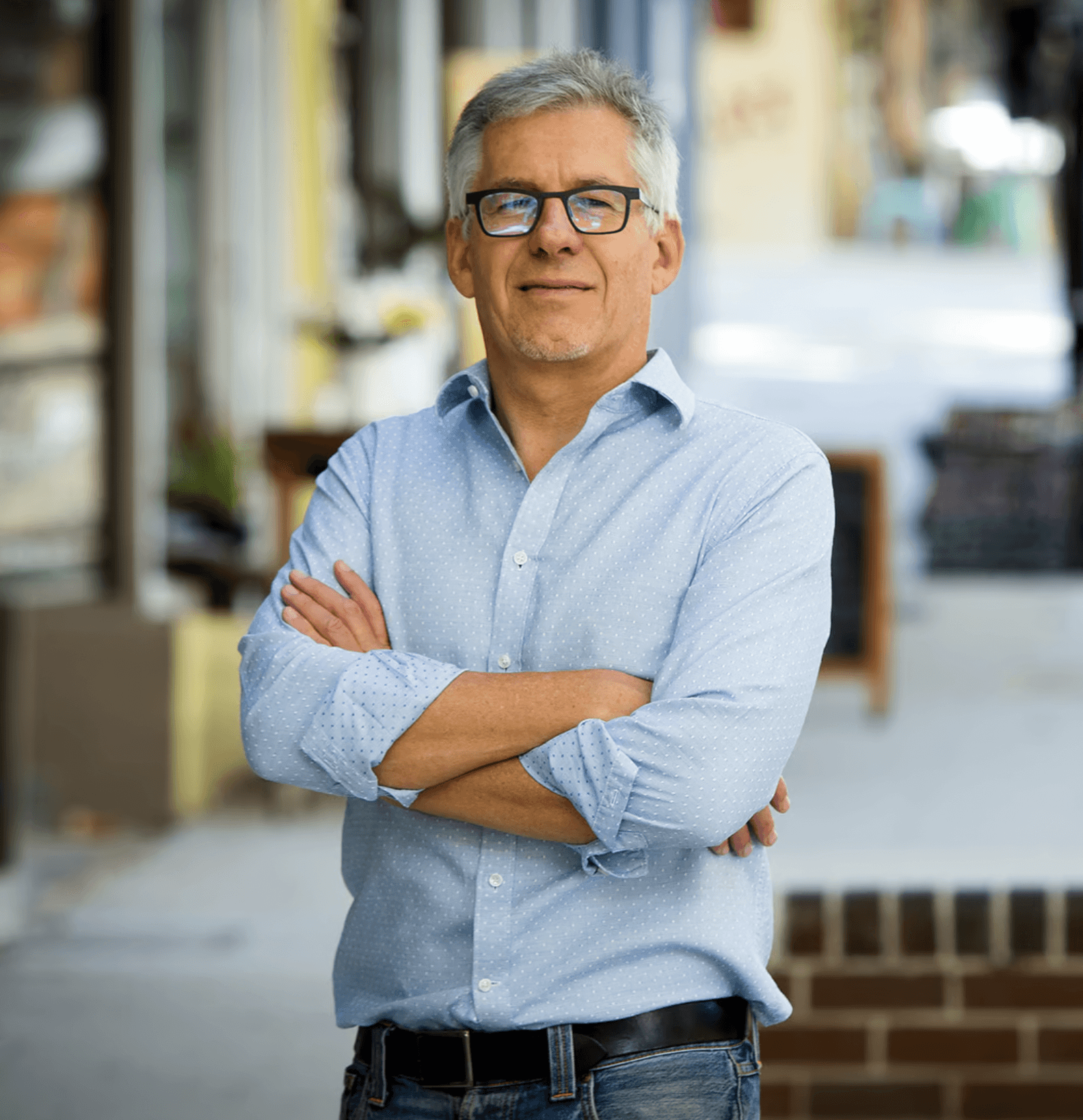
The Future of Ethical Shopping: Insights from Good On You’s Gordon Renouf

The Future of Ethical Shopping: Insights from Good On You’s Gordon Renouf

The Future of Ethical Shopping: Insights from Good On You’s Gordon Renouf

0:00/1:34

Also on

Also on

In this episode of the Climate Salad podcast, host Mick Liubinskas speaks with Gordon Renouf, founder of Good On You, a platform revolutionising consumer behaviour by providing sustainability ratings for brands. Gordon shares the inspiring journey of Good On You, from its origins as a consumer-focused initiative to becoming a global force in promoting ethical and sustainable practices. The conversation dives into the challenges and opportunities in sustainable fashion, the evolving role of shopping malls, and the importance of empowering consumers and brands to make better choices for the planet. This episode is packed with insights on how small actions can create a massive impact.

Chapters

⏱️ Timeline

00:00 – Introduction and welcome.

00:30 – The elevator pitch: What is Good On You?

02:13 – How the platform works: From mobile apps to web directories.

04:17 – Good On You’s early years and evolution as a social impact business.

05:36 – Working with retailers and brands: Partnerships that scale impact.

06:49 – The significance of consumer-driven choices in sustainability.

08:17 – Addressing overconsumption and fostering durable fashion.

12:05 – The role of regulation vs. consumer power.

14:14 – Brands leading the way in sustainability: From Patagonia to Nudie Jeans.

18:32 – Exploring innovative business models and circular fashion solutions.

29:11 – Electrifying the supply chain: A lever for impactful change.

31:55 – Good On You’s vision for 2025: Expanding into new sectors and global markets.

38:09 – Reflections and advice for entrepreneurs entering the climate tech space.

Resources

  • Good On You App: A tool to explore sustainability ratings for brands.

  • Textile Exchange: Industry collaboration to reduce emissions in textiles.

  • Renta: An Australian company offering rental systems for fashion.

  • Citizen Wolf: An Australian brand specialising in made-to-order sustainable fashion.

  • Apparel Impact Institute: Driving electrification and renewable solutions in supply chains.

  • SDG 12 (Sustainable Development Goal): Focused on responsible consumption and production.

Transcript

Mick: Hey everybody, this is Nick Levinskas from Climate Salad. We're doing another podcast and today I'm getting to chat to Gordon from Good On You. Gordon, how you going? I'm Nick, hi everybody, great to be here. Yeah, well good to, really good to have you, no pun intended. Um, now we've known each other for a long time, you've been doing this for a while.

Mick: Um, so I know all about you and a very happy customer, but can you, can you give us the quick elevator pitch and then let's delve into the deep, deep and meaningful story. 

Gordon Renouf: Yeah. So Good On You started as a way to help consumers make a difference by choosing products from brands that were doing better on their impacts on people, climate and animals.

Gordon Renouf: So we knew that consumers were motivated to use their purchasing choices. to help change the world for the better, but it has to be very easy for them. You know, they want to make that change with the minimal effort. Um, they want trust and information. They want easy to use information. Um, and ideally they want to be able to find products that are, um, similar quality, similar price, but a bit up for the planet.

Gordon Renouf: Um, for some consumers, they're prepared a little bit, a bit more, but the real barrier that we solve is getting access to trusted information about a really wide range of brands on where they sit. Um, whether they're the best in the middle or towards the bottom, because we know that as a consumer, you don't want to make a sustainable choice.

Gordon Renouf: You want to make a choice that meets your needs. That is also sustainable. And so you really need information about a very wide range of products. Not just somebody writing article saying, this is the best. You know, Colin shirt. If it doesn't come in the color size price point that suits you, that's not useful information.

Gordon Renouf: And that's why we try to give data on as many brands as possible. Yeah, I got it. 

Mick: And so, so how does it manifest as a product, like how does it actually work in practice? 

Gordon Renouf: Yeah, at the moment, the consumer can access us directly or can access through one of our partners, and I'll talk about the partners in a moment.

Gordon Renouf: But directly, you can use products like the GoodOnU cell phone app or mobile phone app, or the GoodOnU web directory of brands. And you can search the brand that you're interested in and find out how it impacts people, plants and animals. Uh, a score for each of those, an overall score, and then some further information about why that score's been awarded.

Gordon Renouf: Yep. So, at the moment, we've got data on 6, 500 brands across the fashion and beauty sectors, and we're working with partners to move into other areas, so you can expect, during 2025, at least some of, um, electronics and homewares, maybe kids products, maybe food service companies. 

Mick: Yeah, exactly. And my quick story, which I shared about a month ago was, um, I was in San Francisco.

Mick: It's a, can be a good place to go buy a pair of jeans. I was walking towards Banana Republic, which I'd purchased previously. I brought up, got a new one, looked at Banana Republic and it was, I think it was basically saying they need to do better. Uh, and Levi's store about 50 meters away. And Levi's was doing, uh, you know, I think significantly better than, um, Bernard Republic.

Mick: So I walked to walk to, uh, to Levi's and bought two pairs of jeans. So that's, that's a recent case study, but you've been doing this for, for a long time. And, and obviously we know now there's a lot more people are really, really aware of climate problems. Uh, but tell us about like when you started even actually pitching this as a business.

Mick: I know you did pitch to me. Um, I, I think there was, you know, there was obviously a lot more work to be done, right? Like it was, um, we're, we're in a bit of a different place in regard to, to climate solutions and working on them. Um, but tell us some of the origin story and what were the first couple of years like?

Gordon Renouf: Yeah. So, I mean, my, my background is as a consumer advocate. So I was working at Choice, um, the Australia's largest organization for providing You know, value for money recommendations, quality recommendations to consumers about products, a wide range of categories, and we were working on things like the Green Best Buy and some policy advocacy around climate and other, uh, sustainable and ethical issues.

Gordon Renouf: And when I left Choice, I wanted to focus on that particular consumer need. We knew from Choice that, you know, a large percentage of consumers were interested in, you know, Uh, taking into account sustainable and ethical issues when they're making purchases. And so the idea of Good On You was to, to focus on that specific problem in the way I described before in terms of making it easy for consumers to have access to a comprehensive rating for a large number of brands that they could be interested in.

Gordon Renouf: And so, you know, the first few years were all about developing a scientifically valid methodology, working out ways to get that to consumers initially through the app and then in other ways. Uh, and to then explore what would be a business model for, you know, good on you is not a charity. It's a social impact business.

Gordon Renouf: We're a business with a social purpose and, uh, obviously everything we do is aligned with that purpose. And then it's about scaling the purpose. So we did, we did play around with the idea of being. Uh, and not for profit to start with and looked for philanthropic funding, but we just realized we were not going to get to the scale to make an impact if we went down that route and then we would need investment and therefore we'd need a business model.

Gordon Renouf: And that's actually opened things up for us because not only do we have a product which consumers can use directly and you know, up to a million consumers per month do in fact access good on you data one way or another, including from our journal website. Thanks a lot. And Instagram newsletters and so forth.

Gordon Renouf: But, um, it's actually allowed us to create a product which can be used by, um, retailers and product discovery platforms where tens, hundreds, thousands times as many consumers are using than are using good on you. Um, and so we worked with multi brand e commerce retailers like, uh, Farfetch and some others, and they use our data to identify four or five percent of the products on their site that are doing better.

Gordon Renouf: And they've seen quite a lot of success in consumers taking account of that information when they're making their purchases. on those sites. Similarly, we've worked with people like, um, Microsoft Bing Shopping or Klarna, who also communicate with their users and people discover products on those platforms.

Gordon Renouf: I don't buy them there, but they use them as a research tool. So having to develop a business model has in fact opened up ways to find further impact. And if I haven't said too much, most recently, I think one of the really exciting things is that we're now working with a number of shopping mall businesses to help them assess their tenants.

Gordon Renouf: So their tenants are fashion brands, beauty brands, multi brand fashion retailers. So the shopping malls are using our data to work with their tenants to improve their sustainability score and to present to consumers information about the overall profile of their tenants and to push them to do better.

Mick: Yeah, really interesting. So. So sometimes I think when people think of climate problems, they think of solar panels and EVs. Um, you know, why, why this problem? What's, what's the impact? How good, how good on you would it be if we solved, uh, if you were able to significantly change the consumer behavior here?

Gordon Renouf: Well, you know, the world has accepted for some time that sustainable production and consumption is really important. And, and, and SDG 12, Sustainable Development Goal 12 always brought together consumption and production. And so the focus is on the choices we make as consumers. I mean, ultimately. People only produce stuff.

Gordon Renouf: Businesses only produce stuff if they have a market to sell it to. And the market is basically either the government or households, so consumers. And so it's the choices that we make that ultimately derive the impacts. It's, it's how far we want to drive. It's where we want to fly to. It's what clothes we want to wear.

Gordon Renouf: It's how we want to hit our homes. It's all those consumer choices, which banks we work with. They will impact, uh, indirectly or directly the, the energy used or the other features. So ultimately it's consumer decisions which drive the impacts on climate and on nature and on workers that we are concerned about.

Gordon Renouf: And so if we can help, you know, even 10, 20 consumers make better decisions half the time, we have a measurable and massive impact on those problems. And then if we take the sectors we're looking at, Fashion is our first one. I mean, some people say that fashion is responsible for 10 percent of global emissions, which is a gross exaggeration, but even if it's only responsible for 1 to 2%, which is a very credible estimate, that is a significant part of the problem.

Gordon Renouf: And if we can, you know, work with other people to bring that down by 50%, then, you know, we're making a big difference. Um, so if we can get 50 percent of consumers to change their purchasing habits, 50 percent of the time, and that has a 50 percent reduction on the impact, that is whatever, you know, 10, 15, 20%.

Gordon Renouf: Improvement on whatever that is for fashion and then we're rolling that out to other sectors So, you know if it affects your banking choices if it affects your Real estate agent choices, travel agent choices, beauty brand choices, household brand choices, pet brand choices, et cetera, et cetera. Then, um, this is our theory of change and how we hope to have impact.

Mick: Yeah, really interesting. And can you tell me a bit about the, I guess, the circular influences of this? Obviously, you know, Banana Republic would have preferred me to go into their store. Like, what's the brand response been to this? Are they, do they care yet that people are making decisions this way? Are there enough people?

Gordon Renouf: So Good On You was launched, um, nine years ago in 2015 now, and we launched the app and we had 10, 000 users in eight days, uh, in Australia only, and, you know, that first week, or if not the first week, the second week, brands were calling us and saying, why are you saying we're not doing good, we are doing good, and we would explain to them, well, we believe that you need to be transparent and tell consumers.

Gordon Renouf: And we need that, you know, you know, so brands were paying attention from day one. I mean, fast forward five to eight years and you know, brands like the biggest brands in the world are regularly talking to us about their good on you score. So it's, it's making an impact on how they think. 

Mick: Wow. That's great.

Gordon Renouf: We're not the only driver of brands attention on sustainability, but we're certainly something that many of them will care about and get upset about if they're not doing well. Yeah. And factored into their plans to do better and to keep, and I think equally importantly to communicate better to consumers.

Gordon Renouf: What they are in fact doing so that we can empower consumers to discriminate between better and worse brands when they're making decisions again, when all their other requirements are kind of met. 

Mick: And where do you think we are in that journey? Like, you, me, me buying an EV or putting, you know, re composting at home is, is a fairly simple loop of a feedback in terms of a change, but a, a brand Yeah.

Mick: Be becoming genuinely good in their, in their production and, and manufacturing and shipping and all those components. Like some of those things for these massive brands, it's kind of like the bigger the brand, the worse the impact, but the better the possible outcome of change. 

Gordon Renouf: Where are we overall in that journey?

Gordon Renouf: You know, it's, it's, it's not simple. There are complex factors at play here. I mean, for all the improvement we've seen amongst a cohort of brands, including big brands, and there's been quite a lot of improvement in the way they approach many things. I'll talk about that in more detail. But the point I want to make is that.

Gordon Renouf: We do have a kind of a negative, which is the, the moves to fast and then even faster fashion, uh, and the increasing reliance on polyester as the primary material in the fashion industry.

Gordon Renouf: So far, but, um, so you, you know, uh, it's kind of, there's an element of two steps forward, two steps back going on here, and hopefully we can move that to two steps forward, one step back or three steps forward. So, so many of those big brands, I mean, like, I remember being at a conference five, six years ago and, and, uh, Big, uh, brand said, uh, around transparency.

Gordon Renouf: They said like five years ago, we, we, we thought everything about our production line was our proprietary information. Now we can't believe that we would ever not be transparent. We are seeing a massive change compared to 10, 15 years ago, where brands now accept. that they have an obligation to their stakeholders to be transparent about how they're doing stuff.

Gordon Renouf: And that's reinforced by regulations such as the Corporate Sustainability Reporting Directive in Europe, which is only applying to the biggest brands at the moment, but will roll out to smaller companies rather, uh, over time. And, you know, so there's, there's this global movement for transparency about impacts and there's a global movement for accuracy and the ability to substantiate that.

Gordon Renouf: And there's a global movement for consistent standards like ISSB, which is an international standard about how you report on sustainability, which has been picked up in some company legislation around non financial disclosures. So you, for me, you need both a way to empower consumers to make better choices.

Gordon Renouf: But you also need responses, which will sometimes include regulatory responses to brands that don't care or whose business model is just inherently, um, no good. So for me, there's a role for government to set a floor. You can't do this practice or that practice also to regulate communication. You can't say carbon neutral.

Gordon Renouf: If you, if you, if it's, you know, some magic formula that doesn't really mean anything, uh, or has trade offs, which are hidden, but at the end of the day, regulation can't tell companies exactly what to make and how to make it. And so we also need consumer power. So sometimes people put this opposition, Oh, consumer power is too weak.

Gordon Renouf: It will never influence brands. Uh, so we have to have regulation and they forget that it's hard to achieve regulation. Regulation can only go so far. Regulation often has unintended consequences. So we definitely need certain kinds of regulation, particularly around transparency, particularly around stamping out the worst practices.

Gordon Renouf: But we also need the power of consumers and indeed investors to influence companies to do better. And so the regulatory environment has to support consumers making those choices. Uh, the regulatory environment has to be pro information disclosure. It has to support innovation, like GoodOnU, but like many other potential innovations that will help consumers more easily, more readily create those incentives for brands to do better.

Gordon Renouf: Is, 

Mick: is there any companies that are like the standard doing amazing, like leading this around the world? Like, um, that you can tell the pitfalls case? 

Gordon Renouf: Of large companies, of course, Patagonia has obviously been committed to The environment all along. Uh, it's a large company that has complex supply chain.

Gordon Renouf: There are obviously some problems occasionally that pop up, but I don't think that should put people off from knowing that Patagonia is a company that's wholly committed to positive outcomes, particularly on environment, but also for, um, animals and workers. You know, VF Corporation is a big company that's doing pretty well.

Gordon Renouf: That's the North Face. Uh, it's one of the higher rated companies, you know, inherent, inherent problems in luxury, particularly the climate impacts of leather. But, um, the caring group, which includes Gucci is certainly better than some of their competitors. In the luxury space. Um, so there's, there are definitely brand large brands that are doing better, but there are a heap of SME small large brands and even tiny brands that are fantastic, like, you know, pick a few small Australian brands that are doing great.

Gordon Renouf: You've got the t-shirts, you've got some, like Edco Spell is a brand that's gone on on a, you know, a much, a much bigger brand that's gone on a journey from being sort of soso to being really quite focused on environment outcomes and, and getting a high good new store score. So, uh, I'm sure there are many other Australian brands I should be able to rattle off it.

Gordon Renouf: I did my tongue, but, um, Outland denim is a, is a, is a great Australian brand doing well. Um, Nudie Jeans is of course got an Australian brand, but imports to Australia. So there are, there are plenty of good options in that sort of medium to smaller size. And I'd just encourage you to go on the good on your directory and, Search for the product category you're interested in, whether that's jeans or tops or dresses or shirts, shoes, um, and see the brands that come up, filter by Australia, see the brands that you can, you might want to 

Mick: look at.

Mick: Yeah, definitely, um, worth exploring. I think it's one of those things, which I think they're obviously the people who are like me, heavily motivated to do this. It's much easier. Like I'm prepared to do a bit of extra work and I'm prepared to pay a little bit more. Um, and in a lot of instances, it's actually just a choice between two options, one, which is better than the other.

Mick: And. And I think, as you said, one of the key things is, um, it doesn't actually need to be every single consumer. It is like every additional person adds to the weight of that message to these brands. Yeah. Um, and that by itself is probably not enough, but coupled with, Uh, regulation, um, is, is also key. Do you, do you actually, um, you know, I know Australia has got some really great companies.

Mick: We've got obviously got within the climate salad, global growth program. We've got Alt Leather and we've got New Era Bio and, uh, yeah, we've, we've got some, some of these products that are building alternatives and, and Samsara. He's also doing some recycled work. Do you actually, when people say we'd like to do more, like what do we actually do?

Mick: Are you, do you, do you help them? Like, obviously it's really, really challenging at scale, but other, other solutions and alternatives getting better so that they can actually make choices, which are both make a great product, which is not obviously is that they can't say, Oh, you know what? Here's a pair of jeans.

Mick: They're 600. I'm sure some jeans are 600, I'm not buying them, but, um, the average person can't afford to buy those, and they're not prepared to pay another 500 bucks more, like, is the technology actually getting better to the point where instead of a green premium, there's a green benefit? 

Gordon Renouf: Yeah, complicated question Mick, but one part of my answer would be that, um, we have a tool called Good Measures, which is available to brands to learn how to do better.

Gordon Renouf: So, of course, some of the biggest brands, um, have, you know, very smart, sustainable people who are helping them, but we, our tool helps them focus on the specific things which we have weighted highly in our score. We also connect them to service providers who can help them in that, in that journey, like, um, potentially the, Australian companies that you mentioned, although some of them, I mean, Samsara is kind of close to production.

Gordon Renouf: The other two are very much still in pilot phase. And that tool is obviously, you know, particularly valuable for small and medium brands who can't afford to have much in house sustainability expertise. But then in terms of our solutions becoming available, I mean, there is a, there is a lot of work being done by industry or by, Partnerships between not for profits on solving a whole range of problems.

Gordon Renouf: I mean, you've got an organization like textile exchange, which is, you know, a thousand member organization of whom three or 400 members are large brands. And they connect suppliers and brands together to work on all sorts of problems with the goal of reducing the greenhouse gas emissions of textiles by in line with Paris targets, right?

Gordon Renouf: And so it's about promoting recycling. It's about, um, identifying. Uh, alternative production processes like not just organic, but regenerative farming, which have much, um, lower climate and nature impacts. I mean, there's a lot of work regenerative wool growing, which inputs into that global system.

Gordon Renouf: Australia is one of the two or three largest suppliers of wool for the global textile industry. And, you know, there's work around the world around, uh, around cotton farming and so forth. So they're really doing the hands on, on the ground work to. Make it possible for fashion brands to move in that direction.

Gordon Renouf: And, and the expectation of the kind of the other part of that is that we do need brands to be getting on board to support the solutions, like, you know, pre ordering the better materials in sufficient, uh, qualities that the prices can come down. And so that's, so an organization like textile exchange is trying to promote those conversations to achieve that outcome and good on his role is almost saying, well, to the brands that are.

Gordon Renouf: Working hard in that area, you're going to get a high score that's going to deliver some consumers who are going to favor 

Mick: you. It's so common in climate tech and looking at climate solutions that there are no silver mushrooms, as I like to joke, um, that there's. There's no single thing you can do, right?

Mick: It's not like, Oh, well, if you just make cotton better, that solves all of our problems. Like it's, as you said, it's the feedstock that come into it and the imports, but also, and especially around plastics and those things, but then there's also transport and this, um, and the really big, big one you mentioned was obviously actually our purchase behavior.

Mick: So the con the consumption and the attitudes towards your secondhand clothing. Uh, well, not necessarily secondhand, but actually like maintaining your clothing for longer. Um, and one of the, the challenge obviously is, um, you have companies like stripe, which make money by the more you buy online and e commerce platforms.

Mick: Um, and even, you know, venture capital companies that are backing those platforms and, and it definitely the brands like they need to sell more products. So if they. If they have a durable product, which actually lasts two years, so you don't have to replace it every, every year, basically every three years, it's better for the environment, but it's not better for their business.

Gordon Renouf: I mean, if you look at textile exchanges, theory of change, this goes exactly to this point. So the goal is to reduce the textile industry's emissions in line with Paris targets. The strategy requires three limbs. Limb number one is substituting. materials which are harmful for materials which are less, so using preferred materials that already exist.

Gordon Renouf: Strategy two is identifying and rolling out materials which don't yet operate at, um, at scale. And strategy three is exactly what you said, addressing overconsumption. And so they've just put out a report quite recently About how the textile, the fashion industry can kind of rethink some of its business models to still make money whilst creating more durable long lasting products.

Gordon Renouf: But it's not just creating durable long lasting products. It's actually, you know, not having a marketing and sales system which relies on. frequent purchase of shoddy goods as which is the fast fashion model. And that's, you know, that's partly, it's not just people like you and I who kind of change shirts when they wear out.

Gordon Renouf: It's the model where you have to change your style to be okay. And so finding ways to allow people to have fun with fashion and to, you know, fashion's been around since Cleopatra and before, right? It's not going to, it's, it's, it's, quite important to humans. We don't want to all wear mouse suits. Um, so you've got to kind of find a way that you can have that, but also not have, um, you know, 50 cent polyester shirts that you throw away the next day and you only wear once.

Gordon Renouf: Like, you know, this idea that some people in, well, a big country, um, uh, treat underwear as disposable. I mean, like that kind of doesn't work. Right. Got to find a way to disincentivize that. I mean, it's worth knowing. I mean, one thing people don't understand is that. It's not just population growth and it's not just marketing.

Gordon Renouf: We spend about the same amount of money as a household on average in 2024 as we did in 1984 or 1974, right? But for that money, whether we're poor or rich, we're getting three to four times as much clothing. Right. So the unit price of clothing has come down immensely. So, you know, Uh, when we think, oh, that's really expensive, that's what it cost our grandparents to buy that thing.

Mick: Yeah. But it is, is it actually, we're significantly more productive, like, is, is it at the expense of the environment? Is that, is that additional basic raw 

Gordon Renouf: quantity of materials that we're using at scale has gone up by three to four times per household, per person, um, because we're buying, we're And that stuff ends up, you know, warm months thrown away, hanging out of closets, not being used, blah, blah, blah.

Gordon Renouf: And so this is why the solution is really complex because we've got to reuse preferably. And then if we can't recycle those materials in low energy ways, we can't have recycling systems, which uses as much energy as we can. creation. Um, and we've got to find ways to address that kind of, um, over consumption mindset.

Gordon Renouf: And we, while still allowing for fashion and choices and change in style and, and, you know, and we've got to discover these new materials and we've got to get them into productive volumes. You know, so as you said before, there are a lot of different challenges. But also a lot of different opportunities to dent that overall emissions and overall nature impact.

Mick: Yeah, exactly. Well, that is, it is, again, I get thinking that I was going to be focusing on a subset when I looked at climate tech versus tech, but it's actually so, so massive. And it is really complicated, right? The, um, the identity people have with fashion and it doesn't necessarily have to be, you know, runway style Gucci millions of dollars.

Mick: Like it's actually, um, you know, the, whatever, whatever you wear has a reflection. And obviously there are. There are big differences of people in the world who are in developing nations and are just looking to get some clothing. Um, I'll never forget when, um, I was living in Tanzania and for four months, exactly 20 years ago, actually, I was in Tanzania.

Mick: And, um, um, I found us a spam T shirt in the markets. I was like, Oh, how cool is this? You know, these shirts are, you know, you get retro shirts that are actually, you know, for free or a dollar each. And, um, and the guys with him was like, well, yeah, except that. We, we used to have a really good textiles industry until we got all this free, free clothing.

Mick: Like the, the complexity of all of that and, and actually the potential benefit of online being like, actually I, I wanna buy this blue collared shirt and it exactly fits me. It's not gonna go to waste. And only make it if you need it. Like the, the just in time 

Gordon Renouf: fashion on that. I, one of the, one of the Australian fashion companies, which is fan doing a fantastic job, is on made to order with Citizen Wolf.

Gordon Renouf: So, you know, um, expensive, sure. But made to order fits you perfectly. Well, so I mean, just on the waste and in Africa in particular, um, there's, there's an organization called the all foundation, the foundation who work in Ghana and the volume of. Textile waste from more developed countries ending up in Ghana, not just, not just undermining their local textile industry, but also polluting their beaches because only a proportion of that is sold to local people.

Gordon Renouf: The rest of it gets chucked. And the beaches are apparently out of control with, with, um, fiber based waste, mostly from those secondhand clients. 

Mick: Yeah. I think we just really don't realize, right. I think it's, um, I remember I went to a concert recently and it was like, cool, I just, I should grab a, grab a shirt or something like that'd be really cool.

Mick: And it's kind of like, Just really stopping yourself and going, yeah, generally do I need another, another shirt, right? It's um, and we, we even looked at a client and said like, Oh, let's make some shirts. People want to buy our shirts. You're like, are they, are they, do they generally need a shirt? Like it's, it's actually, we, we've got to the point where it's certainly most in my life.

Mick: It was kind of like, it just wasn't a thought. It just felt like another shirt and don't even think about it. And, Buying them from threadless and all these things like just for fun. And it's like the cost of that is actually pretty high. 

Gordon Renouf: Yeah. I mean, uh, there's some interesting possibilities in encouraging people who make merch to do two things.

Gordon Renouf: One is to actually investigate, um, lower impact fibers in what they're doing. But the second one would be to find a way to, how do we make the merch shirt business Circular in some way, like, is it like bring back a shirt and we'll give you a new shirt? Is it, you know, is it rent this shirt? Probably not for t shirts, but you know, um, exploring how we can do this differently.

Gordon Renouf: Still have the fun of having, you know, like on the other hand, you've got people walking around and they got their chemical brothers t shirt from 20 years ago. They're still wearing anything. Wow. They, that just lasted a long time. Um, and, and, um, you know, a guy that I'm on a board with wears his Led Zeppelin t shirt from, you know, 20 years ago.

Gordon Renouf: You know, when he was younger, he's older than me, and he's had his headset and t shirt for a very long time. 

Mick: I noticed you can get them from some of the new stores now, and some people, I'm like, have they probably ever even listened to Led Zeppelin? Well, that's true too. Yes, certain, certain big companies re issuing, that sort of thing.

Mick: But yeah. Yeah, exactly. I remember getting, um, like, a note from, from Sustainable. I ended up getting like five reusable coffee cups as gifts. So I was like, this is from Sustainability Group. So it is, um, I think there's two things there is one is. Cloud solutions are not going to work if they are massive green premiums, or if they basically make the world feel like we're going back 50 years.

Mick: So I, I think the difference of making actually really good quality stuff that lasts longer, you want to be able to have, you know, I remember buying the, uh, the angels shirt from the Horton pavilion when the first concert ever went to, that shirt's still around, but like, it was, it was, it was so amazing to have that.

Mick: so proud of it for years and more like, and that's okay. But what you don't want is like buying one every single week. Uh, yeah, there's obviously some really bad, uh, operators in that space. So it is, it's, it's actually finding better ways to do it rather than actually modifying behavior over time. Like it's.

Mick: Like it doesn't have to be like everybody tomorrow stop doing this. It's just basically like just use a bit better products, uh, a bit better, uh, more, you know, keep them longer. Um, like kid can actually solve a lot of our problems. It's actually, there's a lot of value in the margins. 

Gordon Renouf: A lot that retailers, shopping malls and brands can do to help consumers around.

Gordon Renouf: You know, um, maintenance around, um, you know, like nudie jeans have some great videos about how to look after your jeans. Like if you're going to spend that much money on a pair of jeans, then you want the last, right? And not sure you can fit it in the neck, um, or about take back schemes, about offering rental options.

Gordon Renouf: There's a great Australian business called Renta, which helps brands. Um, I'm sorry, I should disclose I'm a small investor in Renta. I can't just advertise them for free. Um, that, that, um, Disclose, you know, health brands have rental systems, which is a great solution for the kinds of outfits that you're only going to wear once or twice.

Mick: Yeah. 

Gordon Renouf: Um, which is, you know, certainly for, you know, wedding dresses or not wedding dresses, the outfit you wear to a wedding or, yeah, or something like that, where. You just want to, yeah, so, so, I mean, it is really like I said before, it's very specific problems, better materials, focus on circularity, um, changes to marketing, regulations to stop the worst practices.

Gordon Renouf: I mean, there's a real patchwork of things that need to happen and, you know, innovative business models so that you are rewarded for durability durability, for example. 

Mick: This is possibly a Pandora's box, but like we talk about the complexity of all these, do you see a, uh, in the next 12 months, is there a.

Mick: Particular lever or moment, which would actually have a significant impact on in terms of your world and what you're working on, like, what's, what's the biggest change that you think if that happened, then actually we would significantly accelerate the adoption of sustainable practices in this area.

Gordon Renouf: Well, one thing that we're actually working on that really does have some potential to roll out would be the work we're doing with shopping malls. So we're working with two of the biggest shopping malls in Europe to create a pre competitive association of shopping malls, who would all use our data and some other data to work with their tenants.

Gordon Renouf: Sometimes they have 20, 000 tenants, right? And that would be a, and the outcome would be that each of those tenants would be incentivized to improve. Um, whether that's, you know, access to services inside the malls, whether it's promotion inside the malls, whether it's rent adjusted based on your score. Um, so that, that's a really exciting project that, um, we're hoping, with the two shopping mall partners to announce towards the end of January next year and hoping to get more shopping malls on board.

Gordon Renouf: So if you're a shopping mall, please get in touch and we can give you some early information about how that will work. We're already talking to, um, you know, there's a long list of about 40 malls already. There's a shopping mall calling you right now. That was, yeah, that was really quick. That was quick. Um, 

Mick: I 

Gordon Renouf: just didn't have 

Mick: to hang up on them.

Mick: Sorry about that. So many customers that that was on cue. 

Gordon Renouf: And then something that is way not in our control, but something, I mean, there is a very interesting project. One of the really important things we could do is to electrify the early parts of the supply chain. So a lot of the, um, uh, primary and post primary production in, in fashion is, uses rubbish locally or fossil fuel power.

Gordon Renouf: Uh, and if we could one electrify and to increase the renewable content of those, of those electric, electric sources. So whether that's local solar or working with the grid of the supplier country and the apparel impacting institutes doing some focused work on that. So, I mean, that's a, that's a really exciting project.

Mick: Yeah. Yeah. Customers just ringing off the hook, man. That's, uh, that's exciting. Do you want to do that again or do you want to? No, no, let's keep going. Include that. 

Gordon Renouf: Um, I can throw out the other room. 

Mick: No, we just want plenty of customers coming to us. So Gordon, tell me a bit about, um, some of the other major reflection points that are possible.

Mick: I think you mentioned electrification of, of parts of the supply chain. 

Gordon Renouf: Yeah. One of the big impacts in the apparel supply chain is the energy used in various steps in the supply chain, particularly out and close to the, um, Primary production and so often in supplier countries don't necessarily have very good grids.

Gordon Renouf: And so a lot of it's off grid. And so replacing those heating processes with either, um, electrification or electrification from renewables. I mean, ideally both, um, is a big opportunity and the Apparel Impact Institute is a industry wide organization that's working on that. And so that's definitely a, you 

Mick: know, That's, that's pretty big.

Mick: Um, so just, um, let's look, look to the future. What does 2025 look like for good on you? 

Gordon Renouf: The big thing is what we talked about before, which is rolling out with our two shopping mall partners, this, you know, industry wide ability for shopping malls to assess their retail attendance against, um, sustainability criteria using good on you data and some other place based data that we're going to supplement the.

Gordon Renouf: Good on your score with so that the malls can incentivize their retailer tenants to do better and as before you know more some of us have 20, 000 tenants across their network. Um, and then the malls can also use that data to communicate to consumers, which ones are preferred, uh, ultimately, so that's, that's the big project for next year.

Gordon Renouf: I suppose the other, the other, you know, in parallel to that, but also having implications beyond malls is moving into more. at the moment, good on you has rated brands in three verticals, fashion and beauty. We've got 6, 500 public brands, but we've also rated a few hundred just starting on what we call general services, which is like going to a mall, any shop that sells you something which isn't a product is a service provider, whether that's a real estate agent or a, um, a repair shop or a travel agent or a bank, you know, so all those sorts of businesses can now be, rated for the malls.

Gordon Renouf: We haven't rolled that out to consumers yet, but we'll do at some point, but moving into other sectors, like as I said, for households, pets, um, food service, businesses, uh, kids stuff would be the key priorities for 2025. 

Mick: Fantastic. And you mentioned as well that obviously you're an Australian company with big global ambitions.

Mick: Um, but you, you, you've mentioned European markets. So you, how do you see all the different markets and how do they, how are they developed as, as opportunities for you? 

Gordon Renouf: At the moment we focus on. Europe, including UK and the U S as well as Australia. We have a very important and strong partner in Japan as well.

Gordon Renouf: And sort of they're doing the rolling out in Japan rather than good on you doing it. So it's in Japanese language, different branding, but we're supporting them over there. So they're the countries we're in at the moment. One of our big, um, real estate partners that we're just beginning to work with also big in India and some of the China too.

Gordon Renouf: So whether that will lead to a consumer facing rollout in those countries, um, yet to be seen. 

Mick: And you've been doing this for a while, um, and lots of people contact us with, um, ideas and a big desire to, to work on climate solutions. Any, any kind of, um, your reflections or advice you'd give to new entrepreneurs entering this space, uh, on, on approach?

Gordon Renouf: I've been in the same industries for periods of time, but previous to this business, I don't think I had the same company for more than five years, right? So. Uh, it's now 12 years of good on you, um, at least a few more to go. Um, and so I think you've got to know that you care enough about the space and the solution or perhaps the adjacent solution you're going to pivot to, to want to do it because, you know, you don't do it for quick wins.

Gordon Renouf: Um, I, there's no, no quick impact wins and if you're doing financial win, you're probably not necessarily doing it for the right reason. So. Yeah. So I think, I think you've got to want to build something that takes some crafting long term and yeah, some people will build very successful short term businesses that, well, not short term businesses, businesses that are successful in the short term, they'll have really big impacts and that's fantastic.

Gordon Renouf: Um, and, um, some people will work on their business for decades and have a really big impact. That's also fantastic. And some people will give it a go and figure it's not working and try and do something else. So. They're all good reasons, but I think if you're just doing it for fun for two years, I think that's not the right.

Mick: You touch on a good point there in terms of, um, firstly, the longevity and time it takes, but also, um, the fact that the initial idea you have is probably not going to be the one that actually you end up with. Like how, Is that the journey that you took? Is it basically like your first thought is actually modified and morphed over the years?

Gordon Renouf: Oh, well, look, I mean, the journey went something like this. We, we said a few people sat around a room and said like, we want to help consumers make decisions aligned with their values, um, so that they have a positive impact of works in the environment. And then, you know, we narrowed that down to testing a few things and then we ended up in fashion, right?

Gordon Renouf: We didn't start out with a vision about fashion. Now, many people will just say, I'm passionate about sustainable fashion. I want to do that. But we didn't. We learned that that was a, that was a good candidate sector because it had the right kind of impacts and the right kind of consumer behavior where our solution would actually make a difference.

Gordon Renouf: And then, you know, it started out being a wholly consumer facing solution, like we produced the data for the consumers who would then act on that data that they got from us directly. And at a certain point in time, we realized that we would reach more consumers by working with partners. And then again, we were working with partners with a particular model, which was to communicate with their customers.

Gordon Renouf: And now we've got other equally or possibly more important partners who are actually communicating first and foremost with their tenants, with brands, uh, and then customers later. So there is some very interesting evolution rather than revolution, but I mean, I could imagine that you could have got to a point where it just wasn't working.

Gordon Renouf: I guess there was such a point. We were trying to run an online store. where you could buy anything, but you would know how ethical it was. Of course, we hadn't got anywhere near anything. Essentially what we learned trying to do that was that people hate really bad e commerce stores, which is what our store was.

Gordon Renouf: I mean, it was a, you know, affiliate marketing store. We weren't actually supplying the products. And, and so we thought, Oh, you know, well, actually, I mean, at that point it was like, uh, we are going to roll the dice. And if it doesn't work, we're going to stop. And so we said, we're We're going to crowdfund for an app.

Gordon Renouf: If we hit our target, we'll build the app and see what happens. So we hit this target just, and we built the app and we got 10, 000 users in eight days. And that was a signal to us. That was, that was the point we said, Oh, okay, this is worth doing for a bit. Yeah. And so, uh, and then I think a couple of years later that when the retailers going board said, we want to buy your data.

Gordon Renouf: Um, that was the next signal. So the validations came in small bits and small tests. I mean, there've been some tests Before that app, go, no go kind of decision, crowdfunding campaign. So that crowdfunding campaign, if we'd raised 5, 000 less, we probably would have stopped. 

Mick: Got it. Interesting. Interesting. And last point, keen to know, just for your feedback, and feel free to be as honest as you want to be, but you've been a part, obviously I knew you before Client Salad, but you've been a part of our community and program, especially the Global Growth Program.

Mick: Can you just, uh, share, I think, especially for the, uh, acknowledgement of thanks to the, um, New South Wales Department of Climate Change, Energy, Environment and Water for the support. Yeah, what, what, what's the, I guess, the main impact you've, you've had of being in that program? 

Gordon Renouf: I think there are a lot of impacts.

Gordon Renouf: I mean, there's very practical things like just connecting with people who can provide advice, be sounding boards, like some of the mentors we've talked with have been quite useful. Yeah. Um, whether employed like Stefan or some of the other, um, volunteer mentors, that's been really good. Uh, I think that we've made connections with other businesses with potential partnerships, or where one of the other has had some advice for the other, which has been quite good.

Gordon Renouf: You know, just before I got on the phone, I got an email from one of the companies I met at the last event, and we're talking about, you know, You know, working together on some of those data solutions for malls we were talking about before and for other companies. So making those connections is really important.

Gordon Renouf: I think that just, even just the sense of belonging to a community of people moving in the same direction. Uh, and then, yeah, finally sort of related to the second point, which is just, just being a source of advice. Like, does anybody know X or how do you go about Y? So I think there were many benefits to the community.

Gordon Renouf: I mean, we took part in the global growth program and we probably weren't as active a participant as some, partly for diary conflicts with the overseas. But yeah, no, I mean, it was all, all, uh, a lot of different, you know, medium sized benefits that add up to a very worthwhile experience. 

Mick: I think recognizing again that the value of the, of to the different members is also about the contribution from the members.

Mick: So I think you, you've been one of the first to put your hand up to, to answer, answer the questions in the community discussions and help others as well. And I think that's. It's one of the things I've only ever seen in climate, like it's, there's always been some positivity in terms of startups, but the climate tech startups, we've all, everyone's got the common goal.

Mick: And I think, as we discussed in this podcast, that everyone recognizes that nobody has a, as the single solution to everyone's problems. Like we, we need a little bit of everything. So I think that, that the fact that we have a cohort of people doing different things is, is actually really critical. So.

Mick: Gordon, thanks so much for sharing today. Thanks for again, for being so committed to good on you and the work and I hope 2025 produces those enormous inflection points. That sounds like you've got the momentum for. 

Gordon Renouf: Indeed. Indeed. We'll see. Thank you so much. 

Mick: Talk soon. 

Gordon Renouf: Bye everyone.

More Episodes You Might Like

Let's talk

Turn podcasting into pipeline

We help founders, funds and operators build trust, authority and deal flow with a show tailored to their market.

Win better deals and stay top‑of‑mind with founders.

Close more deals and build a category you own.

Reach founders and operators with a show they trust.

Day One® exists to help founders and startup operators make better business decisions more often

Subscribe for helpful content from other successful founders, operators and investors

Join 755 other founders & investors receiving our emails. They're cool, are you? :)

* Regrettably, mel@canva.com is not on our list… yet.

Day One® is a registered trademark of W2D1 Media Pty Ltd. All rights reserved. © 2026 W2D1 Media Pty Ltd.

Day One® exists to help founders and startup operators make better business decisions more often

Subscribe for helpful content from other successful founders, operators and investors

Join 755 other founders & investors receiving our emails. They're cool, are you? :)

* Regrettably, mel@canva.com is not on our list… yet.

Day One® is a registered trademark of W2D1 Media Pty Ltd. All rights reserved. © 2026 W2D1 Media Pty Ltd.