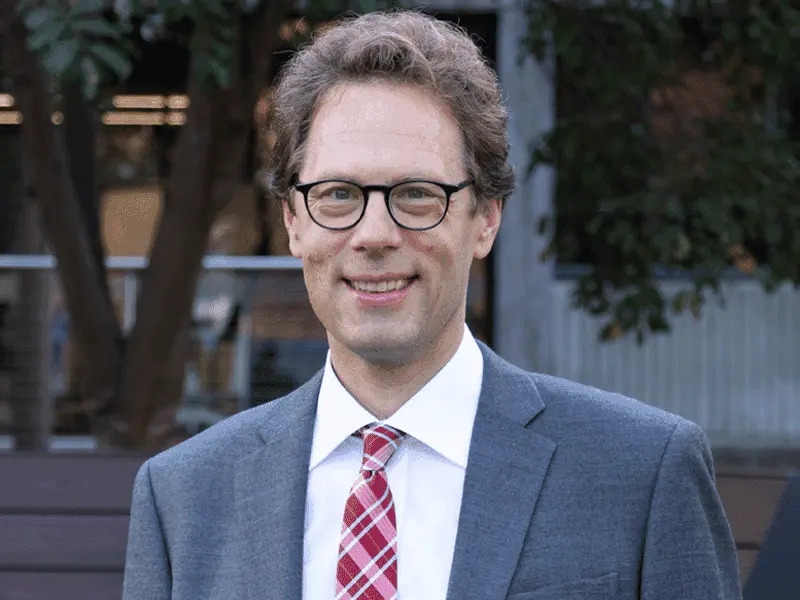
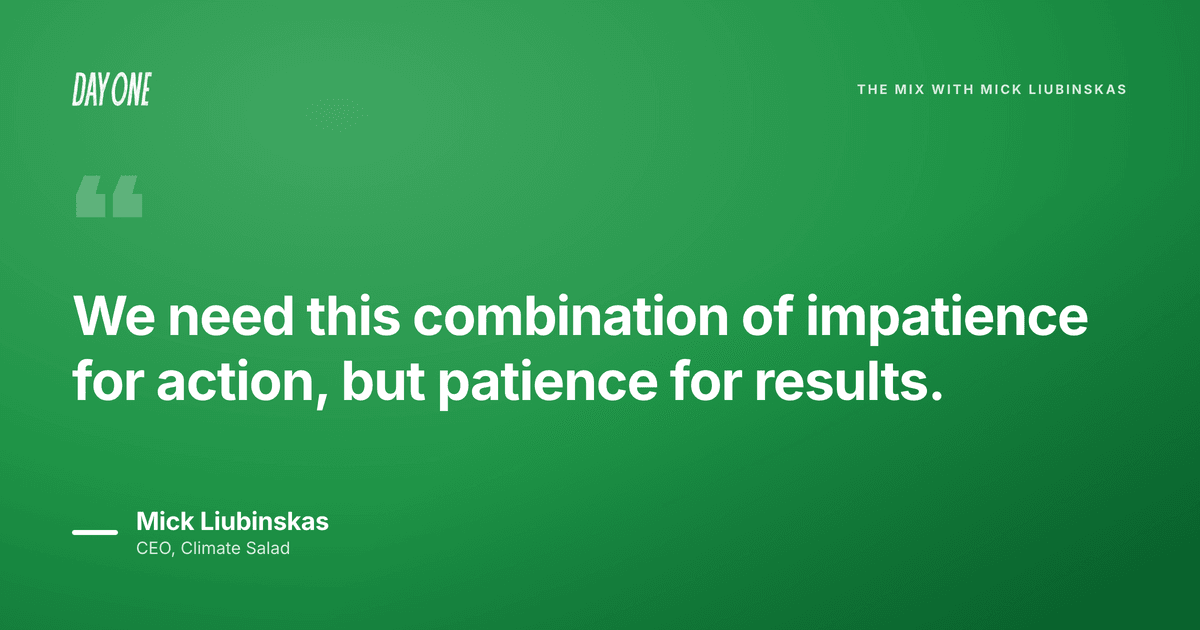
Transcript Synced · select any line to jump ▾ 0:00 Speaker: You're listening to a DayOne.fm show. 0:05 Speaker: What drives you to make bold moves, to build something that didn't exist before, to live, lead, and choose life with intention? Welcome to Perspective X. I'm Pauline Fatowi, and this is not your typical business podcast. Each episode, I get to speak to extraordinary entrepreneurs and leading innovators to unpack what truly fuels their journey. Not just the wins, but the inner work, the overlooked decisions, the mindset shifts, and the personal moments that sparked something bigger. This show is about the ripple effect of choice, the kind of deep accountability that lets us respond to life rather than react to it. Because when you realize everything is temporary, and you are the creator of your own experience, you start to play the game differently. So if you're curious about how people build meaning alongside success, how they evolve through challenges and shape the world with intention, this is your invitation to listen in. Perspective X, where we go beyond the highlight reel and into the moments that changed everything. Available now wherever you get your podcasts. 1:18 Mick Liubinskas: Hello everybody, it's Mick Lubinskis here from Client Salad, uh, and, and I love speaking to founders who are building incredible solutions to climate problems. One of the companies we've been working with for a few years now is the team at Allegro. Thomas, welcome. 1:36 Thomas Nann: Hi, Mick. Thank you very much for inviting me. 1:38 Mick Liubinskas: Yeah, no problem. Looking forward to this chat. Let's start with the basics. Tell us about Allegro. What do you, what do you do? 1:44 Thomas Nann: So at Allegro, we build really big batteries for long-duration energy storage. So we are a university spin-out. We spun out of the Victoria University of Wellington in New Zealand, actually, and moved later to Australia, to Newcastle, Australia. That's where we started moving from research and lab pretty much into the commercial world. 2:07 Mick Liubinskas: So I've got a AA battery here. You're talking about like much bigger. You're talking like A batteries, 'cause I know AAA are smaller, so A must be the biggest. But tell us, Big batteries, I think people hear about it. I want to sort of dig into the problem to start with. Why do we need big batteries? Like, what, why is that so important to helping us get to a climate-positive world? 2:27 Thomas Nann: Well, that was exactly the question with which I started more than 10 years ago, where Alekro pretty much started. So you can probably tell by my accent that I'm not Australian. So I immigrated from Germany, and as many Germans, I always felt really passionate about climate change and climate tech. And in 2010, I moved to the University of South Australia, and there I had this little epiphany where I realized that generating renewable energy in a country like Australia is not really the big problem that we are facing. So the big problem is really matching supply and demand in a renewable energy grid. And also the energy flow patterns are very different. It's much more decentralized if you've got lots of solar and wind in the grid. 3:14 Speaker: Mm-hmm. 3:14 Thomas Nann: And pretty much the only way to mitigate that is by putting really a lot of storage into the grid. At the time, pretty much the only option, and to a large degree still the only option, is lithium-ion batteries. And these lithium-ion batteries, they look a bit like the AA battery that you just showed. They don't scale that well. 3:37 Mick Liubinskas: Mm. 3:38 Thomas Nann: If you need lots of them, and that has number of reasons. So there are technical reasons, but also ethical reasons with the sourcing of some of the raw materials and end-of-life problems. So I was pretty much aware then at the time that, okay, we need something sustainable that scales really, really well. What I did with my team at the time was that we saying, okay, let's start from scratch with this problem. Let's, let's, let's really look at this with fresh eyes. Then a couple of years later, we discovered something new. It is a new battery electrolyte. So the electrolyte is one of the three major components of every battery. And this new type or new glass of electrolyte had really great advantages compared with others for this particular application. So it's really cheap. It doesn't burn, which is also a plus. And and it scales really well and works in different batteries. Sorry, that was a long, long intro. The bottom line is we have adopted a battery type called flow battery at Electrolux where we use our new electrolyte. So we haven't invented the flow battery, it has been invented in the '50s of the last century. 4:55 Mick Liubinskas: Hmm. 4:55 Thomas Nann: But it's very well suitable for this long duration storage and it doesn't look like a double a battery at all. It looks more like a small chemical factory where you can then store, store the energy. Yeah, that's where we are. We are building our first commercial pilot at the moment. 5:14 Speaker: Yep. 5:14 Thomas Nann: Almost finished and will be deployed early next year. 5:18 Mick Liubinskas: Yeah. Amazing. So obviously we have a range of different people who listen to these recordings and these conversations. But, you know, between the AA battery that I had and then a battery that people might install on their wall for their home. Who's the customer for Allegro? Who's going to buy some of these? 5:37 Thomas Nann: The batteries that you install at the wall of your home, not to mention Powerwall, it's basically a lot of these AA batteries. So they are not that different. There's just more of these small batteries. That is not yet a large-scale battery. And actually our batteries are— the smallest of our batteries is way too big for your average home. So it would be suitable for a community battery where you power something like 20 to 100 homes or so, but that is the lower end. So ultimately where we want to go with our batteries is really gigawatts and gigawatt-hours. So utility scale and really mitigating or firming the whole grid. And that is much, much more than you need for an average home. 6:27 Mick Liubinskas: So you mentioned firming there, and again, we don't want to talk about the entirety of the energy challenges, but can you tell us a bit about that and why that's so important? 6:38 Thomas Nann: Well, it comes back to what I mentioned earlier. So one is the supply and demand piece. So we all know that the sun doesn't shine at night and the wind doesn't always blow when we need it. And pretty much almost all renewable energy vectors are somehow intermittent. And this matching of supply and demand is one part of this firming. But then other parts is the overall grid stability. So if you've got, let's say, a wind farm here and a solar farm there, and at more or less random times they inject a lot of power into the grid, that destabilizes the grid. 7:16 Speaker: Mm-hmm. 7:17 Thomas Nann: But also the grids are not built for that really. So typically at the moment we've got some coal-fired power station, for example Eraring, which is not far away from where we are. And it's more like a hub and spoke model. So there's this power station and all the transmission lines go from there to everywhere. But renewable grids work a bit different and that causes these grid instabilities. And the firming part comes in then when we put then batteries into this grid at certain points, that evens out, so to say, these inhomogeneities, these instabilities in the grid. Does that make sense? 8:00 Mick Liubinskas: Yeah, yeah, absolutely. The challenge of managing the grid is a current problem. It's still a problem with coal, right? It's just, it's really challenging to actually manage what 5 million people in Sydney and/or 6 million people around New South Wales might want to do with, when they might want to turn on their devices or not. And everyone just expects it to work, but it's really complicated behind the scenes. 8:23 Thomas Nann: Yep. 8:23 Mick Liubinskas: Matter of managing it smartly. So am I right to think that the customer for Allegro could be really big industrial corporates or government actually having one of these in major towns or a couple of these in major towns? Like, is that likely 10 years from now we're gonna see lots of little Allegro machines around our neighborhoods or? In big industrial states? 8:46 Thomas Nann: Well, it goes pretty much across the board. So utilities are of course interested in that, but they want a lot. They want gigawatts and gigawatt-hours. 8:56 Speaker: Yeah. 8:56 Thomas Nann: We are in the energy transition, not quite there yet. So the penetration of renewables doesn't require that at that scale yet, but we are surely going to come there. There's lots of modeling out there that shows that. That at the about 70-75% renewables penetration mark, we can't do without this really large calendar duration anymore. The other customers and applications, what you just mentioned, so commercial and industrial customers that already have renewable assets and that don't want to feed excess renewable energy into the grid and then buy it back later, for example, it's usually not a great deal. For customers like that, a big battery, a long duration battery right now is typically already a very good use case. Then I mentioned community batteries earlier. Depends if there's space available. A battery takes some space, but I very much hope that in 10 years' time we see electro batteries everywhere. 9:59 Mick Liubinskas: Everywhere. Get one, get one for your home. Yes, I think in terms of talking about getting to a climate positive world, I know that Saul Griffith and his team at Rewiring Australia are talking about electrifying everything. Argument sometimes people said is like, well, if everyone got EVs and everyone got induction stove and everyone turned off everything tomorrow, then we'd— the grid would also be in charge in, you know, have a big challenge. But I think we— it's partly talking about the fact that we can't stay on coal fire forever, but we can't jump straight away. Is there a logical sequence or does everything have to be built up sort of together? Everything ratchets up. You have a bit more batteries and a bit more renewables and a bit stronger transmission and grids, a bit more distributed energy management. 10:45 Thomas Nann: I totally agree. It's a process. You cannot flip a switch and go renewable by tomorrow. The process looks like, well, who knows really? My gut feel is it will be like a natural process, a natural evolution into that. I think we can see that already, that people try out the one thing or another thing, the one thing that What pops to my mind is, for example, hydrogen-powered vehicles. So it seems like the battery-powered electric vehicles have won the race and hydrogen will only be used for long-haul lorries and this sort of thing, special applications. But I think the— probably in my opinion, we will continue doing that. So try this thing and try that thing. And then in the end, figure out how to do it. 11:36 Mick Liubinskas: Yeah, it's gonna be a process. It's gonna be a little messy, right? It's not going to be, um, you can't plan it all out because you've got— there's things we need to learn along the way. But I think the key message I try to tell people is that that challenge and the fact that we can't do it tomorrow is not an excuse not to take action tomorrow. Like, I think some people are like, it can't supply everything now, so don't get an EV. Like, I think that's That's a bad answer. Like, we need to get to a decarbonized energy grid. So I think it's kind of just being— the average person shouldn't have to deal with it. Like, we've got to make better products and we've got to build and develop infrastructure along the way. 12:12 Thomas Nann: Yeah. So 100% agree. And there— and one thing that many people are probably not that aware of is that an electrical infrastructure is much more efficient than burning fossil fuels for an electric car. 80 to 90% efficient, whereas a petrol car about 30 or so. And that actually means you don't need that much energy. 12:35 Mick Liubinskas: Yeah. 12:36 Thomas Nann: So I was surprised. I'm driving an electric vehicle a bit more than a year now. And I was surprised how little my electricity bill increased. 12:45 Mick Liubinskas: I think it's just new. I think we're talking about a lot of new things here. 12:49 Speaker: Right. 12:49 Mick Liubinskas: I want to go back. You mentioned the power station up there in Newcastle. I think you've got some interactions going on there. Is there anything you can tell us about that and how that's working and why that's important to you? 12:59 Thomas Nann: For us as Alekro, it's really important. So Origin, who is owning and running this power station at Eraring, they actually invested into Alekro. They also agreed to trial our first commercial battery, which for us is of course great. The battery that we are deploying right now to this power station, to Eraring, this is where it will go. It's relatively small. It's 800 kWh. But the point there is that Origin will test and trial this battery and learn how it fits into their portfolio. And then hopefully there will be more and bigger batteries coming after that. So for us, that's of course a very important milestone because it's the first battery out in the wild. Okay. 13:49 Mick Liubinskas: Yeah, really interesting. So tell us about the Origin partnership. So they've invested in you. I think some people might be thinking that the big oil and gas and energy companies might be the enemy of climate solutions, but it's a really strong partnership that's actually— again, as we mentioned about the process, it's not going to be tomorrow, it's not going to be easy. But can you tell us a bit about how that came about maybe and why they consider this to be so important? 14:16 Thomas Nann: So just generally, if the current utilities would ignore the transition, that would be very short-sighted. And I don't think that any of the big companies that we all know, including the oil companies, are not doing anything in the renewable space and trying to transition. What I like about Origen is they are very forward-thinking. They're also taking a risk, you know, investing in a startup like us and trying our products. That is a risk. For us, that's great, and I'm very happy with this partnership with Origin, and they are also very fair. So for startups, you know, if you deal as a little startup with a giant like Origin, you very easily can get crushed. Our relationship with Origin is very positive, I have to say, even from a startup perspective that gave us boost, and it's way more positive than there are negatives. 15:18 Mick Liubinskas: That's fantastic. I think it's really important. I think, again, some people who might have very strong feelings about getting to a climate-positive world tomorrow might think that this is all about disrupting and kind of removing some of these big companies. But my sense is that no matter how amazing and wonderful Allegra or the team are, we need the partnerships with those bigger organizations because they have, they have infrastructure, they have team, they have capabilities. So I think it's, I think it's actually collaboration which is going to get us there in a faster, better way. 15:53 Speaker: Do you agree? 15:53 Speaker: I totally agree. So I don't think that these companies will vanish as we transition to renewables. They will, they will change. And we can see that already. AGL switched off Liddell. Eraring is also on the list pretty much. It has been extended now for a little while. And if we look more north, Queensland, I think Swanbank is either so far in the process. They are all changing. They are not going away. Allegro is not an energy company. We are not competing with AGL or Origin. We are providing batteries, so working with them is much more beneficial. 16:33 Mick Liubinskas: And talking about partnerships, you mentioned you came over from Germany to South Australia and then went over to New Zealand and then now with Newcastle. The partnerships with universities and bringing that incredible research and capability out of universities and into these products and commercializing them, can you tell us a bit about how that process was for you? 16:54 Thomas Nann: This is, of course, a very personal story for me. And so just for the listeners that don't know me, so I've been a professor at various universities. I had an almost 30-year academic career, went through all the ranks and was tenured and everything. Then I resigned from my university job and became CEO and started Allegro. And that is not happening very frequently, let's put it that way. It's more the exception than the rule. It is. Of course, a big decision. I'm not that young anymore. I'm closer to retirement than I am to starting my career. And one might argue that might be a result of midlife crisis, but it actually wasn't. So I have to tell that in a personal way because I think everyone has got different motivations and drivers. And for me, when I I was still an academic, it has always been important. I never wanted to do research for research's sake. I didn't never want to do research just to write a paper or to publish as many as possible. And I always wanted to make some sort of impact. After decades of research at university, I realized at some point that if I want really to make this impact, I have to do it myself and leave university. Mm-hmm. So it was not easy, that easy than that, and it was a very long, very muddled up way and many, many reasons. But in the end, I made that decision for me, and that was mainly driven by the wish to have an impact and to actually see what we have discovered at university in the real world. 18:45 Mick Liubinskas: Lots to cover there. I think it's really interesting, the point about Your very early point that it doesn't happen too often. And I think actually Australia, whilst we do produce some incredible products and companies out of research, I think actually if you look at the quality and scale of research that we do, my view is that we, we could still be doing significantly more. I think there's a lot of reasons for that. A lot of people talk about more brilliant researchers than that, and it's hard to be an entrepreneur. But I think it's also loaded in that same question around financial security. It's obviously not very financially secure to be an entrepreneur at a startup, and that's really, really challenging. So you need to— the more we believe in that industry to help entrepreneurs actually grow, the more chance we have of convincing someone to leave a safer job and go do that, whether that's corporate or research as well. I had a hypothesis a few years ago that the, no pun intended, burning platform of the environment would be probably the best trigger or chance we have of increasing that rate significantly. If you look at some of the other companies that have come out of universities like Hygiene Renewables as well, out of Macquarie Uni, and then GA Thermal out of Newcastle, I think the evidence suggests that that is a bit better. I think we won't know until 10 years looking back whether it's actually massive and significant. But it's interesting to hear that story from you that actually that was a key driver that got you to take that leap. Do you have that same sense that we produce some great research, but we're not fully taking advantage of that by turning it into good businesses? 20:31 Thomas Nann: Yeah, I fully agree with that. But that's a very complex issue. And I think there's not one single reason for that. It's— there are many reasons. So, so one, the one that you mentioned, um, giving up a relatively secure and safe university job for a highly risky endeavor is a step. And especially if you have family and children and partner, then they're all impacted by that. That is a big step. But beyond that, I think there are also Other things. So, for example, one of the first insights I really had when, when I switched to Allegro was that the drivers, or the, let's say, the KPIs are completely different. So at university, pretty much the journey is rewarded. You do research for 5 years. The reward system is so that the more papers you publish on that research in these 5 years, the higher your H-index, it's called, which is some sort of KPI, rises. So you— and the outcome doesn't really matter. So if you find after 5 years that this all didn't work, or this, then that doesn't matter. And if you publish many, many papers in the process. Now, in industry, it's the total opposite. It's all about the outcome. It doesn't matter how many, how many papers or grant applications you write. If it's not working, then it's worth nothing. And this is just a complete opposite way of thinking. And I didn't realize that when I was still an academic, but now in hindsight, that also makes it very difficult for industry and academia to collaborate because there are just very different incentives for, for both groups. And I think that is the basis of a lot of these difficulties, also why it's so difficult in Australia for academia and industry to work together. It's just a completely different world. 22:35 Mick Liubinskas: Yeah, that's fascinating. I think it is super complex. And really, I think there's no easy answer, but I think we're doing better. I think CSIRO, what Larry Marshall has done there has been fantastic, and the ON program and Main Sequence has helped. I think programs up in Newcastle like the MELT have helped as well. Are you involved with the MELT up in Newcastle at all? 22:56 Thomas Nann: Well, the MELT is actually our main seed investor. They led the seed round. They were our first landlords. 23:05 Mick Liubinskas: Can you tell us a bit about the MELT? 23:07 Thomas Nann: I love the MELT, I have to say, but of course I'm a bit biased as well. So the MELT, for those who don't know that, they're a hardware accelerator pretty much. So their mandate is to help manufacturing startups in Australia. They have a ventures fund, so they invest into startups. But they also have a lot of expertise and people at The Melt that very hands-on support these startups in the various areas where they need support. The second part is actually what I found the most valuable one. So we've got right now here next to me is someone from The Melt who is spending most of the time actually here in our offices and helps us with industrial design. And so the MELD helps us with different things. So as I mentioned, industrial design, then LCA, life cycle assessment, this sort of stuff. So across the board, when we were looking for investors, we always say, okay, we look for value beyond money. And I heard many people say that, but the MELD actually offers value beyond money. And that's what I really appreciate. 24:23 Mick Liubinskas: Yeah, fantastic. Certainly in the life of 3.5 years of Climate Solid and my work in this space, the industry has grown significantly. I think that the MELT again, certainly with groups like Main Sequence and others have been doing a lot to invest into this space. I think one of the big challenges we face is that we can't solve climate problems with software alone, as much as we love the SaaS model, and we don't have enough capital that has been raised to invest in hardware and people with legitimate hardware focus and experience. So hopefully that's something we can continue to develop. 25:01 Thomas Nann: Another aspect is really that hardware is expensive. Yeah. Yeah, the upfront cost is just so much higher to build something. 25:10 Mick Liubinskas: Yeah, significantly higher. So I think it just means different, and it means different capital too, right? So to do a large manufacturing plant, you kind of need infrastructure capital and maybe project financing and debt. I think it's an opportunity to develop the tech industry and investment industry in Australia further, but we kind of need to do that pretty quickly if we want to support that tech industry. So I think the states have actually been really active with Victoria, New South Wales, and Queensland. I know WA have got some funds up now. South Australia has been really positive. 25:44 Speaker: Brilliant. 25:44 Mick Liubinskas: And certainly federally, we've had ARENA and CFC for a while. And they've received some more funding as well. And we've had Viracent spin out of CEFC as a venture-focused fund, which I think will have a really good focus on hardware as well. And then the National Reconstruction Fund, which has just started to make some investments made in Australia. So it feels like there are some good things coming, but you've been building Allegro in some of the tougher times as it's developing, which is hard. You feeling optimistic about that space? Is that getting a bit better in Australia? 26:19 Thomas Nann: I'm really optimistic. And I have to say, I cannot complain about funding in the battery space. I think generally the governments of the states and federal have been pretty good to people that build batteries, and there's now a lot coming. I'm very optimistic about this. 26:39 Mick Liubinskas: Yeah, I think batteries are really interesting because they are They're not as kind of absolutely mainstream like solar panels or EVs or even wind, but they're also not as, you know, say, third horizon or futuristic as maybe modular nuclear fusion or even hydrogen. Yeah, obviously some hydrogen has been around for a long time, but large-scale carbon-free electrolyzing of hydrogen is. I think batteries are nicely kind of really clearly next in the big market. We can identify with batteries. As I said, we know what, we know the concept of a battery. So it's a— with Allegro, it's a bigger battery. So I think there is something really positive about the space. I think obviously we've had Novolith and Socona and some other good battery technology companies in Australia as well. I think that helps because it's kind of— it's not too risky, right? It's not so futuristic and maybe long-term that it makes it a bit harder. So do you think that has helped in terms of pitching that? 27:38 Thomas Nann: Yeah, so I think that the battery space is still in this high innovation space. Like with, you mentioned solar cells, that has been done 20 years ago. And now it's about getting the price down and production in low-cost labor countries. So competing in that space is really, really difficult. But in my opinion, countries like Australia with really high labor costs and generally high costs, the only way to compete is with innovation and doing new things. Yeah. And the battery space is— there is still so much innovation, so much going on that I think in Australia we can make a contribution and we can really build something and we are not chasing the herd. 28:25 Mick Liubinskas: Yeah, exactly. And you've been a part of the Global Growth Program at Climate Salad and a big hat tip and appreciation to Audrey and Olivia who've been running that and also Lord Shaker, New South Wales government, for the support of those programs. Yet the big focus of that is helping you go global. I know you— we've also had some of your team on one of our trade missions to Europe. Can you tell us about that? That's sticking to that point around— there's been, you know, I think the easy rhetoric around Australia being a renewable energy superpower. You know, what's your sense? Do we, do we have innovations that stand, stand tall on the world stage? And what, where are our opportunities? Which of the big markets overseas are our big opportunities? 29:13 Thomas Nann: Well, first of all, I think the, the climate change is a global problem. We need to do something everywhere. Um, which means there's a global market and that means we will need renewable energy everywhere and we will need batteries everywhere. From the pretty much the beginning of Electrolux, this was always in my mind. We are not trying to build some little batteries in our little hunter corner here. This is global. So the market is there. The maturity of the market is very different. And it's actually quite interesting, you know, when I left Germany, Germany was seen as one of the leaders in renewable energy because there were subsidies for solar power mainly, and the government did a lot. Then I came to Australia and did my thing here. And when now, when I go back to Germany, Germany is way behind Australia in that space. So Australia really took leaps forward in the whole cleantech and renewable space, whereas Germany, as an example, did not really do much since I left. What I'm trying to say with this is I can see if I look internationally that Australia is a leader. In the renewable energy space. And I think we have the potential to become an export nation in that space and to become a global leader. And if we look at global developments now, for example, the election in the US, and I'm not going to become political, but I think it's pretty much public knowledge that Donald Trump is not a fan of renewables and wants to go back. So Australia can only benefit from that. because we are getting further and further ahead. Now, the other part of your question, where are the big opportunities? I think there are some hotspots at the moment. California is one of them. So despite being in the US, so it might be even a bigger opportunity for us. Then parts of Europe, probably Spain and the UK, I would say, are ready to take the next step. And as Allegro, we are also looking at our neighbors. Um, that might be not as advanced to some degree, but it's just because they're close and they're gateways into Asia and so on. So expansion is very much at the front of our mind. 31:42 Mick Liubinskas: Yeah, that's really interesting. I certainly, prior to working in climate tech, I would say that most Australians have a strong chance of just focusing on the US market. It's quite fairly accessible. Well-trodden path. But I think for, for climate, I agree, state by state in the US, in fact, we've got some clients, our members doing really well in Texas and North Carolina, Minnesota. But then you obviously Europe is really well advanced in terms of regulation. But I've been very interested this year in significant development out of Asia with Japan and Korea. And obviously Japan was very big on hydrogen, but I think seemed to be recognizing that they need much more of a mix. And then China, you know, used to be people saying, what's the point of doing anything if China doesn't do anything? And I think the answer is China has absolutely done a lot and are probably going to lead the way in a lot of fronts. And this goes back to your previous point. We're not going to be able to beat China and Xinjiang in terms of producing, you know, millions of solar panels, but actually in terms of processing more on and maybe doing assembly and also doing high innovation, I think we've got that big opportunity. So yeah, I think, and Southeast Asia is a whole other story of opportunity as well. So I agree, I think Australia has an incredible opportunity and what's been exciting is actually seeing companies like Allegro get so much interest. I've never seen this much inbound interest from the world in Australian innovations. 33:15 Speaker: Wow. 33:15 Mick Liubinskas: And I think most people would be just blown away by how, how good the technologies and innovations are and how much the world needs these products. So I agree with you that we're there. That being said, it's not easy. You're going from that first major implementation you're doing up at Newcastle to Spain or to California is a big step. Can you tell us about what does 2025 look like for Allegro? 33:43 Thomas Nann: Well, so 2025 starts with us deploying this battery that I mentioned now a couple of times, to a raw ring. And that will be for us a big change because it will be the first demonstration and the first thing that we can actually show customers, look here, it works and it works out in the real world and on the grid. What I really expect is that we get more commitment in the beginning of the year that we can build a couple of more demonstrations and pilots, probably bigger than that. So we're currently looking for pilots up to 10 megawatts, pretty much any duration. In 2025, we are building that. The, the other big thing that we're doing, we actually just won a grant from a cleantech R&D grant from the New South Wales government. And with that grant, that will allow us to onshore a lot of the things, the materials and components that we are currently importing. Interestingly, that will be cheaper than importing them. So because these are more the advanced materials, the high-tech parts of the battery. 34:56 Mick Liubinskas: Yeah. 34:57 Thomas Nann: That will be another big part for 2025 that we are doing more manufacturing here and try to build as much as we can in Australia. 35:06 Mick Liubinskas: Fantastic. That's really exciting. Yeah, look, I think it's going to be great to see a bit more deployment. I think it's, for those again, people who really, really want us to get there as soon as we can, I don't think that 2025 is going to be the year where basically everything gets solved. But I think from a reasonably challenging 2024, I agree, more deployments going from first of a kind to third and fifth and tenth of a kind. And then I think some good growth and expansion through 2026 and hopefully a movie 2027. And that might feel a bit defeatist to sort of know the climate problems and know how quickly we need to get there. But we're talking about changing the entire world's energy systems and agriculture systems and manufacturing systems that we've developed over the last 150 years and doing them all in a 10-year period. So we need this combination of impatience for action, but patience for results. 36:03 Speaker: Absolutely. 36:04 Mick Liubinskas: So very excited, looking forward to it. 36:06 Speaker: Last point, last comments from you. 36:10 Mick Liubinskas: Someone who's out there thinking, you know what, I'd love to work in the climate space, but I'm not a professor like Thomas. I'm not almost a Master's of Sustainable Development like Mick. Just 2 more units to go and I'll be— I'm looking to be doctor in a few years, Thomas, but that's— well, I'll leave that one there. People who want to work in climate, do you need to have a science degree or is there a range of ways to participate? 36:33 Thomas Nann: Absolutely not. So you don't need a science degree at all. There are many ways to participate. And actually, we realize that now that we built our first commercial battery— so in a flow battery, there's the word flow. So we've got liquids that we're pumping around. So in these batteries are pipes and pumps, and we're not in the commercial one, but in another one, we've got a heat exchanger and this sort of things. And if you look at the skills that are required to build something like that, they are not that different from the skills that you need in a mine or that you need at a power station, for example. That was not planned. I cannot take any credit for that, but we realized that being in the Hunter is actually really great for us in terms of workforce because we've got all these skills around us. So we haven't hired a single person with a battery background. 37:24 Speaker: Wow. 37:25 Thomas Nann: So all the people that we hire the engineers and they come with skills that are transferable and that— 37:32 Mick Liubinskas: Yeah. 37:33 Thomas Nann: That are exactly the skills we need. So I think as we build the cleantech industry in Australia, I know that some people are a bit nervous and think, oh, do we really have what it takes? And what about all these people that lose their jobs in the mines now? I think they can perfectly well integrate into the cleantech industry and we can see that here at Allegro. 37:58 Mick Liubinskas: Absolutely. I think that's totally true. I think it's— we've got so many good positives here. We've got innovation from universities, we've got partnerships with corporates, we've got bringing in international capital, exporting products and bringing the dollars in. We've got strong diversity of jobs, we've got regional area coverage with areas like Newcastle, Geelong, Gladstone, etc. So I think it's an excellent story. And what about someone who's just at the start of the journey of building out a climate tech company? Company? Any, looking back at your time building out this, this Betty Ann Allegro, any advice to the entrepreneurs who are just getting started? 38:35 Thomas Nann: Well, my advice would be just go for it and stay optimistic. As you know yourself, Mick, starting a company is up and down and it's very stressful. It's absolutely worth it. So I don't regret a minute doing this. And I would encourage everyone who has the guts to do it, do it. It's a wild journey, but it's worth it. 38:58 Mick Liubinskas: Fantastic. Well, Thomas, thanks so much for being a part of the Global Growth Program at Climate Salad. You've been a great member and added a lot of value as a cohort member. Best of luck for getting this first operation out and for more deployments in 2025. Looking forward to the good news, and thanks so much for sharing your story. 39:14 Thomas Nann: Yeah, thank you so much. It was a pleasure talking with you.




 ▶
▶  ▶
▶  ▶
▶  ▶
▶  ▶
▶  ▶
▶  ▶
▶ ▶
▶ ▶
▶