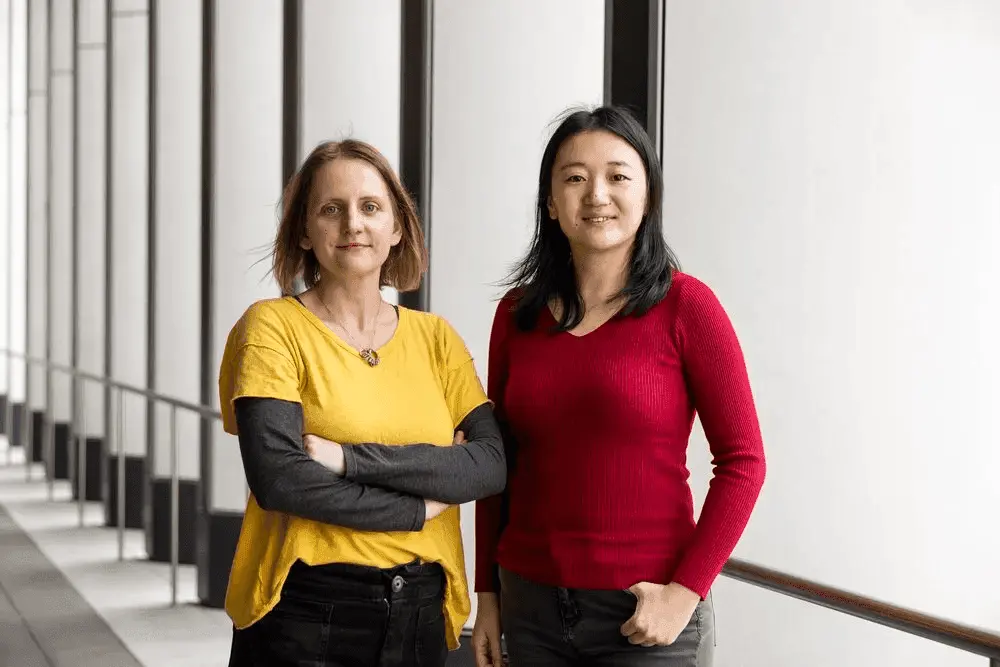
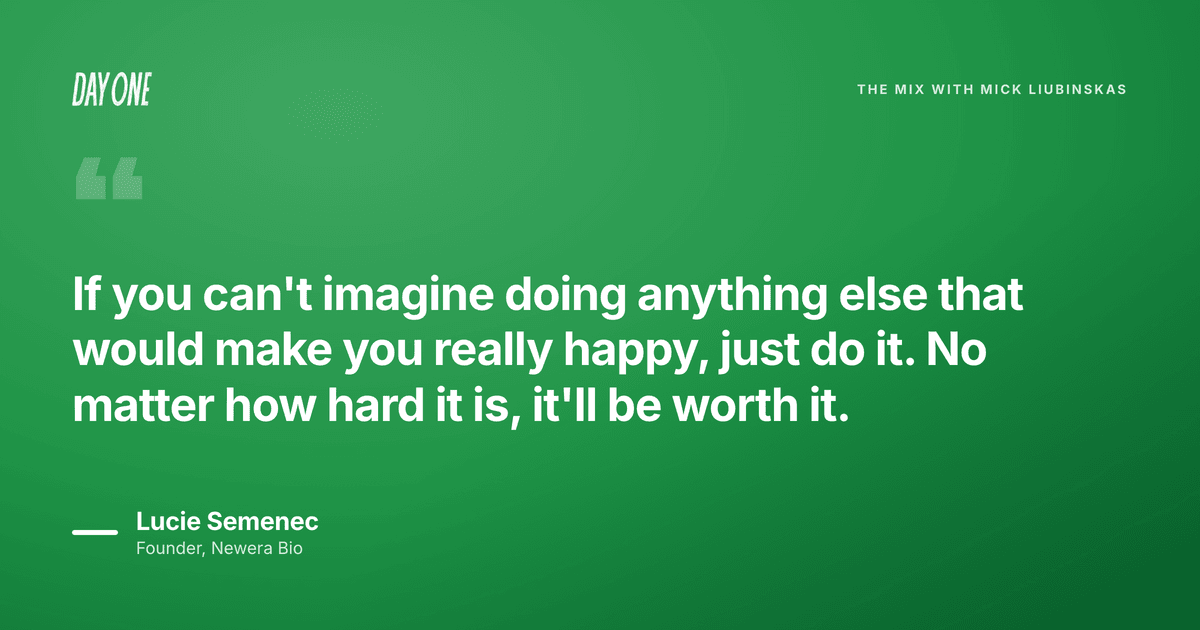
Transcript Synced · select any line to jump ▾ 0:00 Mick Liubinskas: You're listening to a DayOne.fm show. 0:06 Speaker: What drives you to make bold moves, to build something that didn't exist before, to live, lead, and choose life with intention? Welcome to Perspective X. I'm Pauline Fatowi, and this is not your typical business podcast. Each episode, I get to speak to extraordinary entrepreneurs and leading innovators to unpack what truly fuels their journey. Not just the wins, but the inner work, the overlooked decisions, the mindset shifts, and the personal moments that sparked something bigger. This show is about the ripple effect of choice, the kind of deep accountability that lets us respond to life rather than react to it. Because when you realize everything is temporary, and you are the creator of your own experience, you start to play the game differently. So if you're curious about how people build meaning alongside success, how they evolve through challenges and shape the world with intention, this is your invitation to listen in. Perspective X, where we go beyond the highlight reel and into the moments that changed everything. Available now wherever you get your podcasts. 1:20 Mick Liubinskas: Hello everybody, it's Mick Lubinskis here from Planet Salad. I'm very excited to be chatting to Lucy from NeoBio. Hey Lucy, how you going? 1:29 Lucie Semenec: Good, thanks. How are you, Mick? 1:31 Mick Liubinskas: I'm really, really good. It's been a huge year and a big week. We've actually got tons of things still going on by the end of the year, but it's been really great to work with you and see the company flourish and keep growing. Can you give us a bit of an intro to yourself and the company? 1:46 Lucie Semenec: Absolutely, yeah, thanks. So I'm Lucy Semenec. I'm the co-founder and CEO of New Era Bio. And my co-founder, Xin Xu, and I started the company a year ago as part of the UNSW Founders 10x accelerator. And essentially, we had worked together for several years in the lab at Macquarie University studying how microbes can degrade waste. And we were quite excited when we saw beautiful colors growing on our plates. That really distracted us and took us into a whole investigation of where dyes and pigments are used a lot. And we found that textiles are using dyes and pigments by far the most. And we also realized the dirty secret that our clothes are dyed with fossil fuel dyes, which is not on our clothing labels, surprisingly. So this really upset us and we wanted to change this because we see that microbes can produce colors very naturally, very sustainably. And we basically started into the accelerator with this idea of using microbes for producing colors that can go into textiles. But what we quickly realized with a lot of customer discovery and market research in the initial phases was when we talked to textile mills around the world, like in India and Bangladesh and China, we found that they actually don't like using natural dyes. And that's, you know, microbial-based or even plant-based. And the reason was that they don't work very well. So the mills end up spending a lot of energy, high dyeing temperatures, long dyeing times, and they have to use metal mordants to get the natural dyes to stick to the fabrics. So we realized that we can't just produce something that people don't want, right? So that's where we came up with our tech to actually improve the ability of natural dyes to bind to textiles. And so that's where Nuera Bio really incepted its idea, and it's been a really long journey since then, and we've got a lot of exciting things going on. 3:49 Mick Liubinskas: Interestingly, I've actually got a Macquarie University jumper here. 3:52 Lucie Semenec: Oh, cool. 3:53 Mick Liubinskas: I'm doing my Master of Sustainable Development at Macquarie. It's apparel and it's from Macquarie, so it's a good connection. I was going to go read the label, but I'm assuming it's not currently addressing the problem, but— 4:05 Lucie Semenec: Definitely not black, yeah. 4:06 Mick Liubinskas: Yeah. 4:07 Lucie Semenec: That's a hard color to get. 4:09 Mick Liubinskas: It is. I think it's actually navy, but really dark. So I think still, I know blue jeans are not great. People, you know, I think wanna do the right thing by the environment. A lot of people do at least, but textiles is one of those things which is actually, it's very difficult to control and understand, right? It's kind of like you go to the shop and buy these things. And I know one of the Climate Salad members, good on you, does a good job of helping understand what your clothing choices can do for sustainability. Can you tell us a bit about, for those who don't know, like in terms of what's the impact of textiles on the world? Like it's not the immediate thing that comes to mind in terms of solar panels or EVs or maybe hydrogen, but I think textiles actually plays a really, really key role in sustainability. Can you maybe help educate those who are still learning about this space? 4:58 Lucie Semenec: Absolutely, yeah. So I'll talk about textile dye specifically 'cause that's our target. So textile dyes, we've got billions of kilograms produced every year. Textile mill that does medium to large-scale production can use like tons of dye on a daily basis. And these dyes, in order to produce them, they use toxic materials such as aniline and benzene and formaldehyde and, you know, you name it, like really nasty chemicals that expose the workers to harmful substances. And there are explosive accidents that happen from time to time as well, which is really terrible. And not only that is a dirty process, the production of the dyes, but then the disposal of them is an issue as well. So they don't biodegrade very easily, if not at all. Most of them don't. And when they do break down, they release toxic substances into the environment. And a lot of textile mills around, like, the world in developing countries they don't have a mandate to dispose of their wastewater in ethical ways. So they can really just dump it into rivers and streams. So this can very negatively impact the health of nearby communities. And yeah, not to mention all the landfill waste that we see with our fast fashion culture, and all those dyes are going to leach into our water streams as well. And that generates like 20% of the world's water pollution, which is quite a huge amount. Mm-hmm. 6:30 Mick Liubinskas: It is a really big one, right? It speaks to a lot of the climate challenges which are kind of hidden away from us. I want to go back to the Macquarie University side. Like, tell us about, like, in terms of developing that, and I really want to know about the spin-out. I know Hygiene Renewables is also out of Macquarie Uni. I think Australia's got a tremendous opportunity to bring some of these amazing, amazing research and IP out of universities and spin them into great companies. MJ Thermals, another example, V2 Foods. At CSIRO. Can you tell us about that experience of being in there, spinning out, and now on the other side as an entrepreneur? 7:02 Lucie Semenec: Yeah, so it's a little bit different than a spin-out traditionally. So we actually developed our core tech when we were in the accelerator, and I was already fully into the company. And so our tech was not developed in the lab, it was just an idea on a paper. So we did a lot of— we have a lot of lab work going on in UNSW now. 7:23 Mick Liubinskas: Okay, yeah, great. And that's a really fantastic program. David and the team there, it's been really impressive what they've done in terms of the broad programs, but really specifically in climate and bio. Tell us about that. Like, what was that like going through that program and how did that help in terms of progress? 7:41 Lucie Semenec: That program really helped us a lot. So we got our main sequence Ventures funding from that program.— and developed all the skills that we needed to get out of the lab and into the real world of, you know, trying to sell actual product. And we really are both from an academic background, so we had a lot of bad habits to break in terms of, you know, being over-perfectionist and, you know, on academic timelines. Like, when you're in a company, you realize you have to be really fast every single week. And talk to customers a lot more than you would ever imagine. So being in a lab, you're quite used to, you know, just sitting in your own little space and going through the whole day. You can comfortably just do your own work all day, but when you need to get research done and understand what people want, what are you trying to make for them, that's where the UNSW Founders team really helped us. So they helped us with everything from What do you ask customers? You know, how do you know what they want? How do you analyze what they're telling you? How do you ask the right questions? And understanding this whole go-to-market strategy, value proposition, product-market fit, all these terms we never understood before starting, and now it's really ingrained in us every single day, we think about it. So, we had great mentors in that. We had Jason Whitfield and Madison McCoy. Mm-hmm. Who were a huge confidence boost and actually are helping us every, you know, month, quarterly, with connections into investors and companies that are relevant for us. So it's about connecting with everybody and also just learning from all their experience as well. 9:31 Mick Liubinskas: It's a really interesting combination, I think, obviously with the UNSW and Main Sequence as a big VC. And for those that don't know Main Sequence, can you give us a quick intro to like what they, what they are and what they do and why they exist? 9:44 Lucie Semenec: Yeah, sure. So they're one of the largest investors in Australia, in the APAC region, and they have a wide range of companies in their portfolio that they invest in. And we were really interested in them, particularly because of some of the companies they have in their portfolio have a really strong fashion focus. So there's companies like Samsara Eco and Ulu, and even Zefco more recently, that are focused on different aspects of the fashion supply chain. And we knew that if we partnered with them, we would have a huge network of support just by being connected with those companies. So, yeah, Main Sequence was a very great investor to have for the start. And they don't just help by giving you money, and they always, you know, drill that down into you, and you really realize it's true because They provide so much more than just funding. They're a huge support and are continuously like helping connect us with brands and even other investors and helping us understand the market better and really polish up our decks and everything. So they're a huge support. 10:56 Mick Liubinskas: And are you enjoying this new world of being both a, yeah, the research and science side, building a product, but also this entrepreneurial business capital raising customer side? Like that mix is, it's such an important combo for climate technology. And like, how are you feeling now that you've spent enough time on both sides? Is it like, do you, do you like the mix? So are you thinking that this entrepreneurial side is, is where you want to be in the next 10 years, or, um, you would like a bit more of a balance back on terms of the science and product side? 11:25 Lucie Semenec: Yeah, it's a great question, Mick. Uh, really, like, when you're in this space, you realize you have like these sort of 3 major, uh, focus areas. You've got the product, which is all the R&D you've got the investor and the relationships there, and then, as you said, the customers. I feel like, yeah, my, you know, scientific roots really enjoy the product development side. It's really exciting when we have, you know, our chemists and our scientists in the lab coming up with new ways to do things, and they share the results on WhatsApp and are like super excited. We get excited with them, and we love our R&D meetings. We can easily go over time and we don't even mind. So, yeah, it's definitely still a very, very important aspect for me and I enjoy it a lot. 12:13 Speaker: Yeah. 12:13 Lucie Semenec: But I equally really enjoy the customer side as well because we really see the ability now to take that research that we're so excited about and make it into something that we can use on a daily basis, which is so exciting. Like, it takes it to a whole new level. And it's equally exciting to talk to brands and understand how passionate they are about implementing, especially the smaller brands, they're really wanting to innovate and break the norms and have these new products in the market. So we love to talk to brands. We love talking to textile mills, actually. They're so warm and friendly and just really amazing to work with. It's amazing to see how much work is done to get our clothes on our backs every day. It's just incredible. And then on the investor side, you know, that's always the stressful part for us. It's like just trying to keep the boat afloat, right? So yeah, that's the most challenging side as well, I would say. But yeah, it's also very good when you, when you talk to some really great passionate investors out there. 13:20 Mick Liubinskas: Yeah, fantastic. It's great. I think it is, as I mentioned, I think it's important to get really talented people to be able to straddle between the two worlds of science and entrepreneurship. Like, that's a big part of the climate tech opportunity. And so since the UNSW program and Main Sequence, you've been in the Climate Sales Global Growth Program supported by the New South Wales Government's Department of DQ, as they say. Can you tell us a bit about how that program's gone and how you developed and some of the big milestones? 13:52 Lucie Semenec: Yeah, absolutely. So we had an incredible mentor assigned to us, Vidit. He has been really helpful in understanding how we market ourselves to the customers. So yeah, he's really been pushing us to do newsletters, which again, is from our academic side, it's not something we're used to doing all the time. So he's been really great in pushing those habits in us and also just helping us understand how to communicate with investors and customers and translate our academic and more like research findings into the real world. And the Global Growth Program has been amazing. You know, all the workshops that we have to understand the markets in the US, it's really eye-opening for us to learn about how they view the Australian market and what are the challenges for us to get into the US. 14:46 Mick Liubinskas: Mm-hmm. 14:47 Lucie Semenec: Learning about basic things, you know, like if you want US investors, you may need to flip up and have your holding company there. All these insights that we learned have been really valuable to us. And, you know, you have the European-specific and Asian-specific seminars that have been really instrumental for making our decisions as well. The textile dyeing market is largely in Asia, so Mm-hmm. We're really aware that we need to eventually go into that area, at least probably for like the manufacturing side. And our ultimate buyers are, are in that area. But in the same way, we have like the influencers of our customers, the brands are in Europe and, and in the US. So really this program for us was important to hear all the different areas of the world on how we can interact with them and do business with them. So, and of course we met at the Hello Tomorrow Global Summit, so that was great to see friendly, familiar faces there as well. 15:50 Mick Liubinskas: Yeah, tell us a bit about that. 15:51 Lucie Semenec: Yeah, so that was a really great experience. Basically, we were also at the same time as being part of the Global Growth Program, we're part of the Hello Tomorrow New Materials and Circularity Program, and we had some pitching that we did there. And really being in that summit, you realize that these other innovators have the same challenges as you. And actually we met within that program another fellow innovator that is working on microbial dyes. And we see, oh, you know, in future, you never know, we may be able to collaborate somehow 'cause we're approaching it differently. Mm-hmm. But what was really great about that event as well was we were able to meet with these really large brands, these retail brands, luxury brands, and even cosmetics brands that gave us insight into what are their real requirements for the products. And we were, you know, a bit of a reality check realizing how much you really need to prove out in order for them to be able to use your product. So it was great to connect with them and have them as people that now I know in person and can reach out to regularly with updates. So it's really awesome. 17:02 Mick Liubinskas: Yeah, amazing. So the, the Hello Tomorrow conference is based in Paris. It was in, I think, March 26th this year or something around then. And there was a number of events around it, but I really focused on deep tech. I'm not exclusively climate, but a fair bit of bios and health. It speaks to the, I think, both the scale of other markets such as Europe, that it was so big, like thousands of people who were there purely for deep tech, whereas Australia, I think, has lost a little bit of our deep tech advanced manufacturing muscle in some areas. And I think we're trying to get some of that back. You know, again, one of the purposes of Hello Tomorrow, but also of Climate Sales Global Growth Program, it was the fact that we have these incredible companies like what Lucy is building, but to be able to get enough customers for them. And as you said, you've got maybe the brands in Europe, maybe also big brands and companies in US, but manufacturing actually in Asia. 17:57 Lucie Semenec: Yeah. 17:57 Mick Liubinskas: Who makes that decision? Like, you know, Patagonia is come out very strongly and said we're going to be, you know, 100% sustainable, but they don't make all the stuff in the US or in Australia. Like, so it's a complex space. Can you tell us a bit about that dynamic? I think you've touched on a little bit in terms of, um, you know, how are you thinking about, uh, global expansion? Um, like, what's the, what's the path over the next few years in terms of, like, hearing all about the different markets and seeing, um, that the response from Europe and, and working in the Global Growth Program with the team and the other companies. Yeah, what's, what's your sense on the global growth path for you? 18:35 Lucie Semenec: Yeah, there's been a lot of brainstorming around it. We really understood from like an early time point that we had the two kind of customers we can reach out to, the brands and the mills. And it really depends who we reach out to, where we go in the world. But there are certain brands that are a little bit more vertically integrated and they have more of their manufacturing in their own hands. So brands like Lululemon will be more vertically integrated and they can, you know, perhaps mandate the use of certain raw materials in their products and have more control on that. But from our approach, like, we're reaching out to anyone and everyone who's interested. And that means we will talk to brands in Europe and US and we'll talk to— all the mills that we can find that will let us visit in Asia. And what we found is that we can actually generate interest in customers from both sides. So when we talk to the mills, they let us know that, you know, if you have a positive, like, result in a pilot test, we can then promote you to the brands that we work with. And similarly with the brands, they told us if, if you get some good results in a mill, then it'll make it easier for me to then tell my mill to also adopt the technology. So based off of that, we haven't, you know, we're quite agnostic. We're going everywhere in the world to see where we'll get the most pull. And we're finding that there's some mills, like most recently our trip to China, you know, a mill that is very innovative and actually does their own R&D is interested to try out our dyes and they are able to do a bit of research with us on that. So yeah, it's not just brands that can innovate, but on the most part, like, it's the brands that will be caring more about the sustainable aspect and the textile mills more about the costs. 20:41 Mick Liubinskas: Yeah, I guess cost is obviously also driven by regulation. Are you aware of any— I know there's a lot more reporting regulation, a lot more pressure around some areas, certainly energy, but also some transport components. Is there legislation like the Carbon Border Adjustment Mechanism in Europe and Inflation Reduction Act in the US? Are there any key regulation points which are actually starting to impact textiles? 21:09 Lucie Semenec: Yeah, I would say like the most recent one, the Digital Product Passport. It's improving the transparency in the supply chain. So brands will need to, you know, really be transparent about where their materials are produced and what they're comprised of and the sustainability of all the materials. So this is something that, you know, we first saw in food. No one really cared about organic, nobody knew. But then when it, you know, came out that, you know, a lot of our foods have pesticides in it and harmful to the environment and— 21:41 Speaker: Yeah. 21:41 Lucie Semenec: Yeah, certain practices are harmful. People cared a lot and it's starting to happen with cosmetics. But I think, yeah, textiles is around the corner with this new product passport legislation out. 21:53 Mick Liubinskas: Yeah. 21:53 Lucie Semenec: And then also like this anti-greenwashing directive in Europe that has come through as well is not allowing for companies to just say, you know, sustainable and eco-friendly unless they prove it out. And really ensure that it's more eco-friendly than anything else out there, right? 22:11 Mick Liubinskas: Yeah. 22:11 Lucie Semenec: So, these are two that I think are going to drive a lot of change. Yeah. 22:16 Mick Liubinskas: Yeah, really interesting. 22:17 Lucie Semenec: And we need that change because otherwise, you know, if it ain't broke, don't fix it in a way. Like textile mills will just be like, well, you know, our products are working so fantastically, they're so cheap. Like, why do we want to really change it up? 22:30 Mick Liubinskas: Yeah. I'm sure you're like me when you see the ads for things like $10 jeans, like how good a deal is that? 22:36 Lucie Semenec: I'm like, Yeah, yeah, it's scary. 22:40 Mick Liubinskas: It might feel like a good deal, but it's actually not a good deal. Like, there's just— there's no way you can make a pair of blue jeans without environmental costs for that cheap and like send them around. I know they're making millions of them, but it's, um, it's really a reality, right? Like, I think— and the other thing is obviously reuse, right? It's like the fast fashion is just like— it's really costing us. So I feel like that's gonna could grind to a halt and really change. And I know I was the same, right? I had a pair of blue jeans and I would get a hole in them and I'd throw them out and get a new one. And now it's like— 23:15 Lucie Semenec: What do you mean? The hole is trendy now. 23:18 Mick Liubinskas: Exactly, exactly. People are cutting holes in them. Exactly, exactly. I'm not— I'm clearly not trendy, Lucy. 23:25 Lucie Semenec: We— 23:26 Mick Liubinskas: that is clearly being established. We know that absolutely. So yeah, there's, there's something like— food has this, um, amazing thing about it, right? Which is There is sustenance with food. I know, and again, all over the world is still doesn't have my privilege around food, but there is also taste and flavors and local seasonality, and there's health around food. Fashion, sorry, apparel is the same thing, right? Which is it has a utility, but it also has a, there's a fashion component, there's a self-esteem component. So it's interesting of that it has actually a more complicated dynamic Absolutely. 24:04 Lucie Semenec: Yeah. And like if you have all these, you know, uh, microfibers generated from like pilling your clothes, pilling, like all those like are with dyes attached to them, right? You can breathe that in too. Who knows what happens? Nobody knows. But yeah, I think the key thing is like we know that these dyes are very similar in structure to like endocrine disruptors and, you know, toxic chemicals. So it's something that yeah, we don't really know too much about, but we do know that there's alternatives out there and there's, you know, safer solutions. So. Why don't we use those or make them work better? Yeah. 24:36 Mick Liubinskas: I think that's a really powerful point. And I feel a lot of people who are either flat-out climate denialists or climate apatheists are kind of like, oh, Mick, you don't want us to wear any new clothes and wear just one pair of jeans our whole life. You're like, no, I just want you to dye the jeans with a better product, right? 24:55 Lucie Semenec: Like I'm— Yeah. Something that when it degrades in the environment, it won't hurt it. It'll just, you know, blend right in. 25:02 Speaker: Yeah. 25:02 Mick Liubinskas: And is that the goal, that basically the end consumer should know no different, right? It's like if the full environmental costs are factored in, it's a replacement like for like, right? It's like, yeah, the consumer's not going, well, it's blue jeans, but they're really itchy, or they don't fit anymore, or like, it's a like for like, right? 25:20 Lucie Semenec: No, yeah, we want it to even be better if possible, right? 25:24 Mick Liubinskas: Better, that's awesome. 25:25 Lucie Semenec: Yeah, yeah, like, can you have a bit of like antimicrobial effect in there? So like, You know, you don't have to use as much deodorant. I don't know. Yeah. Oh, wow. 25:34 Mick Liubinskas: That's really interesting. 25:35 Lucie Semenec: Yeah. But of course our base case is just make it as good. Let's just make it as good. 25:41 Mick Liubinskas: Let's start there. 25:42 Speaker: Yeah. 25:42 Lucie Semenec: We see there's so much opportunity for improvements and new functionalities. 25:49 Mick Liubinskas: So I'm seeing a Back to the Future 2 where you press a button and it actually dries off your clothes if they get wet. And like— 25:57 Speaker: Yeah. 25:58 Mick Liubinskas: As a dad of teenagers, having clothes that actually have built-in deodorant Sounds like a really good idea to me. So, um, I'll pre-buy some of those. So it sounds like you've had an incredible 2024. Like, tell me about 2025. Like, what's coming up? What's the next big step? 26:15 Lucie Semenec: Yeah, so we basically are now wanting to get to a larger proof of concept. So we've got our dyes working in the lab. We have, you know, this great lab dyeing machine, and we're able to do a lot of iterations and understand how they work on that scale. But after visiting all the textile mills and seeing things done in ton scale, you know, you realize those results might not be as translatable when you put it into those large dyeing machines that, you know, can hold like 100 kilos. So we want to scale to the next level, which requires us to get, you know, into the pilot testing phase. Ideally, we want to have our own facility here in Australia that can do like a very, you know, medium scale, like just for pilot testing, and allow us to do like rapid iteration of our, of our prototyping and get into some capsule collections and really prove it out, prove out the commercial utility of the dyes. So that's, that's what's coming. And it's super exciting. And we have a lot of, you know, collaborators building and a lot of customers that we're talking to, like potential customers. Of course, we don't have any revenue at the moment, but we see the interest there to at least test it on a more industrial relevant scale. So yeah, that's what we're really looking forward to. 27:40 Mick Liubinskas: Ah, fantastic. Okay, that's really, really interesting. And capital-wise, I know you've got some really good support from UNSW and Main Sequence and others. Like, I know it's been a little bit of a challenging time in terms of capital. Like, do you Do you feel like there's going to be enough customers there? Is it some non-dilutive government support? Like, how are you going to support all of that growth? 28:02 Lucie Semenec: Yeah, it's really just whatever we can get. So we've applied to, you know, a few grants for different aspects of the work, and we hope to get some of that, you know, fingers crossed, double crossed. 28:16 Speaker: Yeah. 28:16 Lucie Semenec: And then we, yeah, are in the middle of our seed raise, so We are raising more venture capital. And yeah, things are looking okay. So I don't want to say too much more than that. But no, yeah, it's, it's definitely, we need to get to this next level. So yeah, I'm gonna do a blend of, of non-dilutive and, and VC. 28:41 Mick Liubinskas: I was chatting to some entrepreneurs, climate tech entrepreneurs last night, and we were talking about this really interesting thought around everyone who's working in this space wants deployment as fast as possible, not just because to grow their own business, but because of the environmental benefits of actually rolling this out. The reality is no matter how much money you got, for you, like moving the entire textiles and apparel market is challenging, right? Like you could, you could have— the best salespeople in the world and, uh, and 100 people selling it, like, there's, there's a lot to change. It takes time. And between now and 2030, can you give us a sense of how you think the— that this— your particular industry is going to develop? Like, is it, is it like 2025 is going to be a massive year with lots of change and everyone's going to be deploying it, or is it like more likely to be— is it going to take years because we're talking about huge change in machines and even developing things? Like, what's, what's the timescale towards rolling, scaling this out and deploying it that, that's useful to think about? 29:46 Lucie Semenec: Yeah, that's a great question. So we don't have our product needing new equipment. So we have an advantage there of being a drop-in solution. We are just producing the dye in the same format as fossil fuel dye, just, you know, powder or liquid, liquid format. 30:03 Mick Liubinskas: Okay. 30:03 Lucie Semenec: Yeah. So we have ease of adoption there. But of course, you, you know, talk to the textile mills and they're like, oh, I've been using the same dye supplier for 10 years, like I'm comfortable with them, right? We have a relationship. 30:15 Mick Liubinskas: Yeah. 30:15 Lucie Semenec: So try and break into that. And I guess that's where partnerships are the key, you know, uh, game changer there is to form partnerships with the right people. Um, so looking into not necessarily dye producers, but yeah, maybe some dye producers and seeing if they're interested in the technology and partnering together. And then also auxiliary chemical producers, ones that don't produce dyes, but produce all the other additives that go into textile dyeing. And they have, you know, the networks and connections built. So working with them, I think it's really important that we just collaborate with as many people as we can that are strategic for, for getting this out into the market as soon as possible. Right? That's the, that's the end goal is let's do this fast, let's get fossil fuel dies out of here. So, you know, we're really collaborative and open to working with people to do that. 31:11 Mick Liubinskas: Yeah, that's a really good point around that. I guess, who are you disrupting something, or are you— is it actually kind of a fairly reasonable just replacement? We see that certainly in energy, obviously, that you're displacing trillions of dollars worth of fossil fuel industries, and then they're not gonna be, the people who own those businesses and work there aren't gonna be happy about that. You've gotta bring them along the journey. So that sort of partnerships collaboration must be really, really, really key. 'Cause it's, as you said, they've got an existing solution. That's a real business. They're working for them until the regulation changes massively or consumers absolutely demand it. It ain't broke, so don't fix it. 31:52 Lucie Semenec: That's right, yeah. 31:53 Mick Liubinskas: But we know it is not good enough and we've gotta make that change. It's a bit more delicate than just basically, here's a better product, right? So— 32:00 Lucie Semenec: Absolutely. And we already, like, just from initial, like, conversations, we do see there is interest from those fossil fuel dye companies to have something as an alternative. They just know that it's going to take time. But, you know, once it's partnered with them, things can accelerate pretty quickly. So, yeah, I think, yeah, the key, you know, thing to keep in mind is how do we just get this out into the world as fast as possible? 32:30 Mick Liubinskas: Yeah, yeah, exactly. Interesting. I, I guess on that a little bit as well, um, the Global Growth Program was supported by the New South Wales Department of Climate Change, Energy, Environment and Water with a view that it's not just about helping New Era Bio, it's also actually about creating an ecosystem and, and that cohort support Um, can you talk about how, like, how has that been for you? How have you utilized that cohort and that ecosystem of support? 32:59 Lucie Semenec: Absolutely, yeah. So there's a lot of, um, portfolio companies in that cohort that we're very happy to connect with. So we have, um, Tina Funder from Alt Leather, uh, there's Lovers, uh, Tom Collier, we've got Louise Brown from Hygiene, and We're just really happy to connect with them because they're doing sort of more of this biotech space stuff that we're into, and we can exchange our learnings with one another and our connections as well. And Tina even has, you know, tested our dyes in her leather products, so that was super exciting. And I think, yeah, we're looking to see if we can get more colors on their alternative leather. Yeah. So yeah, I think just being able to have that close connection to companies that are doing similar things is really great. But then, you know, there's other team members in the cohort that we meet during our gatherings that we learn from as well. So yeah, it's been quite, quite cool. 34:02 Mick Liubinskas: And I wanna make sure I give a shout out to Olivia, who runs the program with Audrey, looking after the Victorian companies. 34:11 Lucie Semenec: Oh, absolutely, yeah. Olivia's been amazing. She's helped us with a lot of our media outreach and getting articles out there. So yeah, definitely Olivia has been incredible and Audrey as well. 34:25 Mick Liubinskas: Yeah, yeah, big shout out to the team there. So before we go, just really quickly touching on team, can you tell us a bit about how many people in your team, what do they do, what are the type of roles? Not everybody has to be an entrepreneur and CEO. That there's a lot of different roles in Climate. Can you talk about the kind of jobs that exist and that you've provided so far? 34:43 Lucie Semenec: Yeah, sure. We've got an awesome team, really diverse. So we've got Xin, the co-founder and CSO, Chief Scientific Officer, and she is an incredible scientist, you know, working on the Yeast 2.0 project before this, building the world's first eukaryotic genome, synthetic eukaryotic genome. And she just has so much passion for it. She was in the company while still doing her postdoc and really has been working two full-time jobs, I have to say. Yeah, she has like this great connection with the Asian market. She's got a lot of network with academics and people in the manufacturing industry in China. So it's really amazing to have her on the team. And we've got Rebecca Cheng. She is our commercial officer. And she has an MBA. She's worked at the Boston Consulting Group. She's got a wealth of business and commercialization experience and really rounds us out. And then we've got, you know, Jimmy and Osman, our metabolic engineer. Osman and Jimmy are organic chemists, and they really make it all happen. You know, they get the dyes extracted, they, you know, purify and they put it onto textiles, allow it to be optimized for textile dyeing, which microbial pigments are not very good at it. And that takes a lot of innovative power. So yeah, really kudos to them. They're doing amazing. 36:20 Mick Liubinskas: Amazing. It's— and for someone who might be thinking that, you know, they've got a business or an idea that solves a big climate problem,, and they're thinking that, um, they may be wondering whether that's something they should commit a big part of their life to. Uh, any, any advice you have for, uh, for entrepreneurs who are growing in climate tech businesses, like, of lessons learned for you or things you found important, valuable? 36:43 Lucie Semenec: I would say if you can't imagine doing anything else that would make you really happy, just do it. Yeah, no matter how hard it is, it'll be worth it. 36:56 Mick Liubinskas: Yeah, awesome. Yeah, that's a really, really great steal. I guess we started 3 and a half years ago with only 12 companies in Climate Sale, and we've just gone past 700. Um, and Lucy, you're bio— bio— you are one of those amazing companies, and it's been really great working with you. How can people find out a bit more about your business? 37:13 Lucie Semenec: Uh, you can visit our website. 37:16 Mick Liubinskas: What's the URL? 37:18 Lucie Semenec: www.newera.bio. 37:20 Mick Liubinskas: Bio. 37:21 Lucie Semenec: Awesome. Yeah, and we're on LinkedIn and yeah. 37:24 Mick Liubinskas: Yeah, reach out. 37:25 Lucie Semenec: Reach out, yeah. 37:27 Mick Liubinskas: Lucy, thank you so much for sharing. Really amazing to see how far it's come in the year we've been working with you. Great to be part of the program and thanks for being a big contributor to the community and ecosystem as well. Looking forward to a massive next year and please just keep going. 37:44 Lucie Semenec: Thanks so much, Meg. You're awesome. Thanks so much for all your insights. We've learned so much from you. 37:49 Mick Liubinskas: Thank you.



 ▶
▶  ▶
▶  ▶
▶  ▶
▶  ▶
▶  ▶
▶  ▶
▶ ▶
▶ ▶
▶