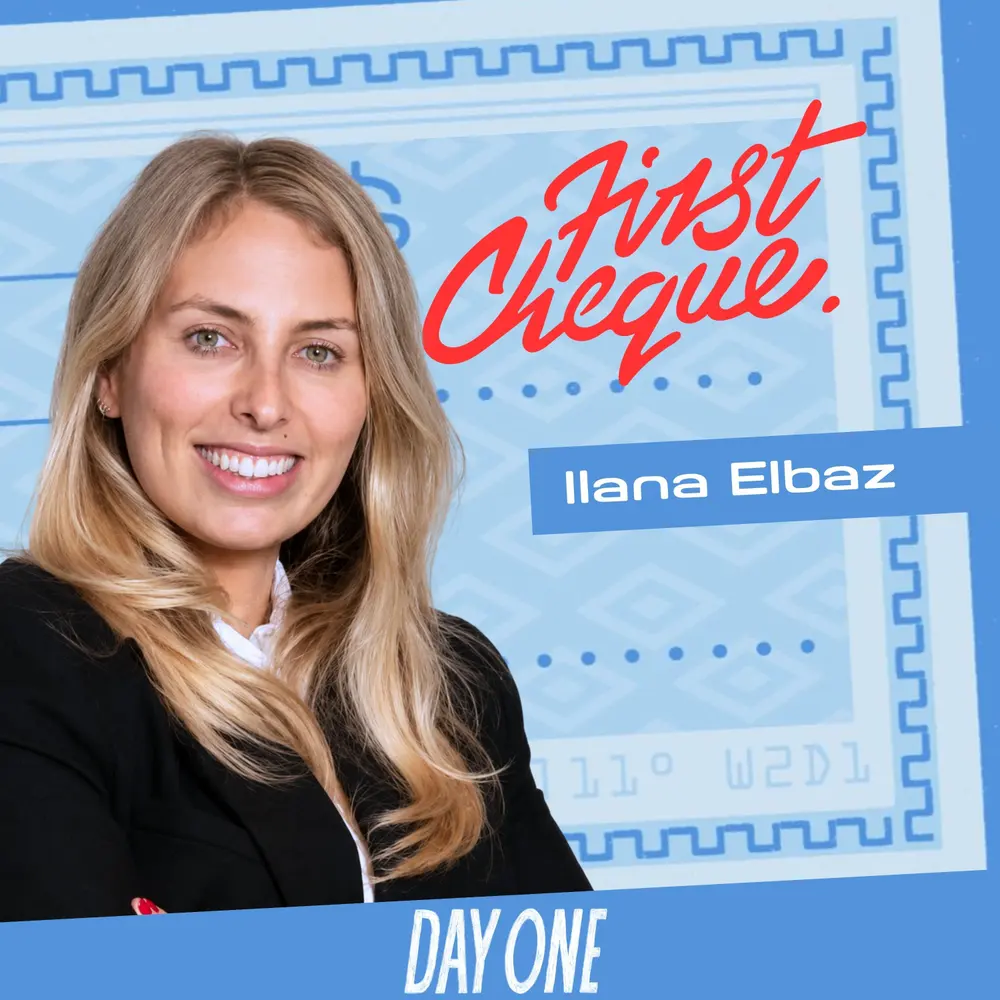
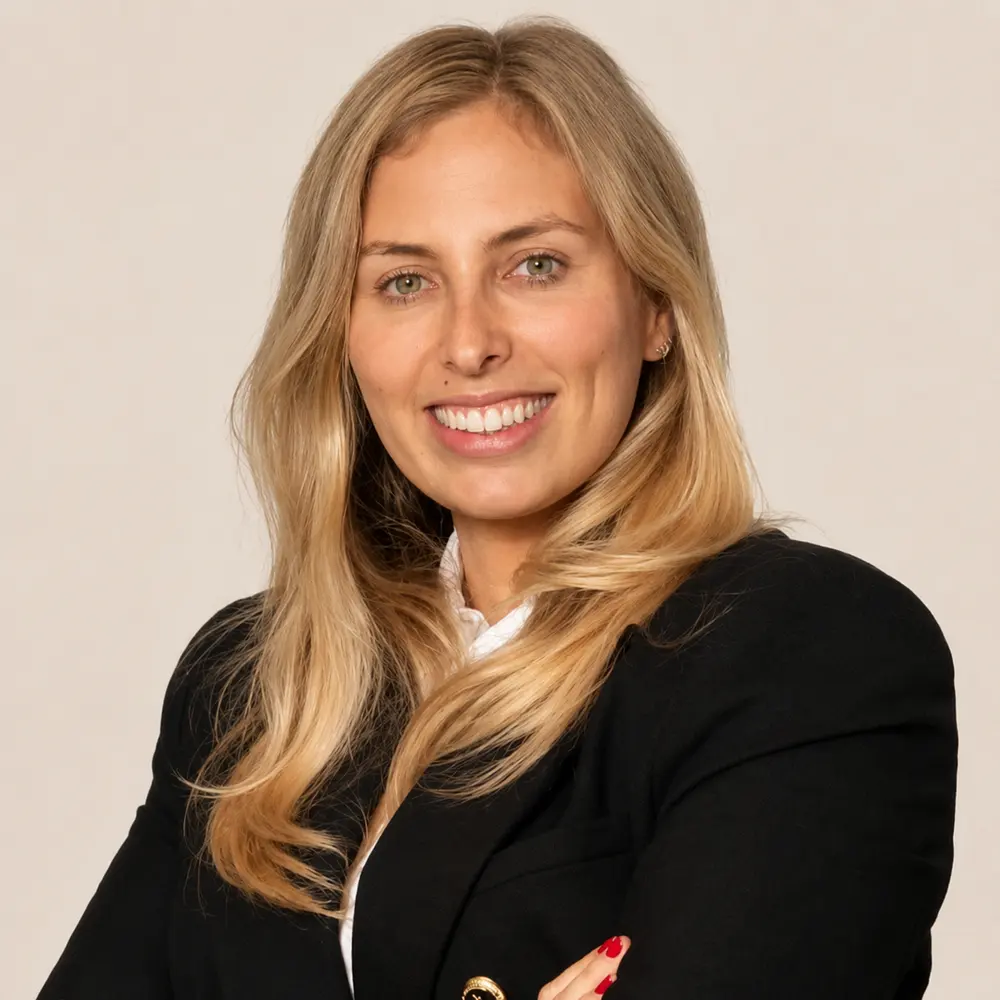
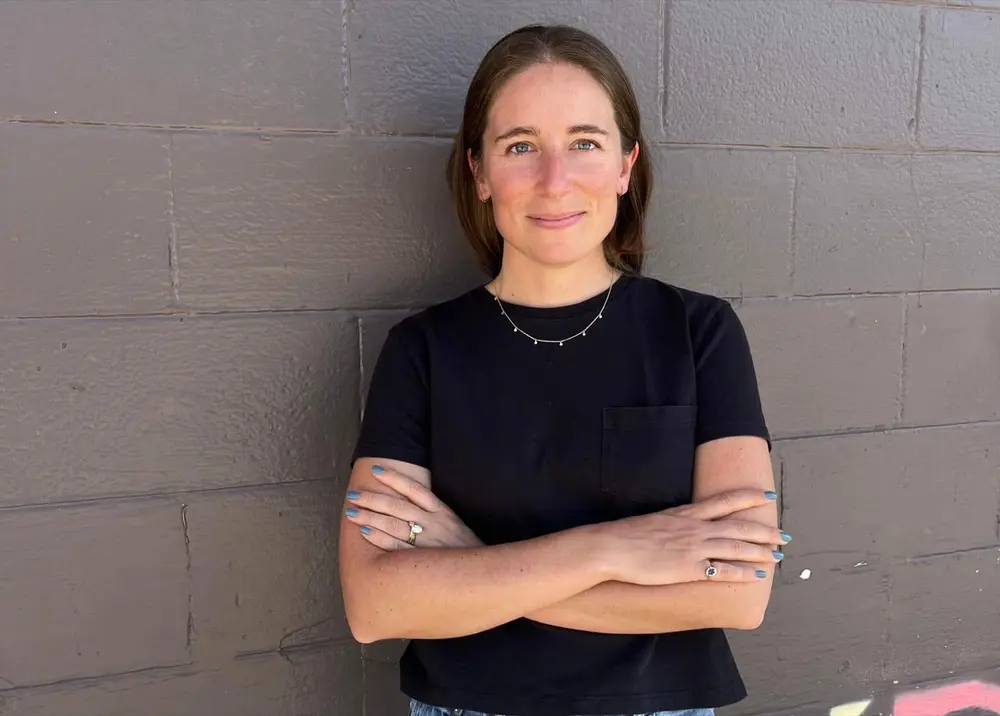
“In a startup, there is no wrong decision. There's only the decision you didn't make.” — Ilana Elbaz Ilana Elbaz was employee number five and the first go-to-market hire at Deel, helping scale the company from its early pivots through blockchain and payments to a business she helped grow from zero to hundreds of millions in ARR in just a few years. She's now an active angel investor and runs Deel's global pitch competition, which received tens of thousands of applications this year.
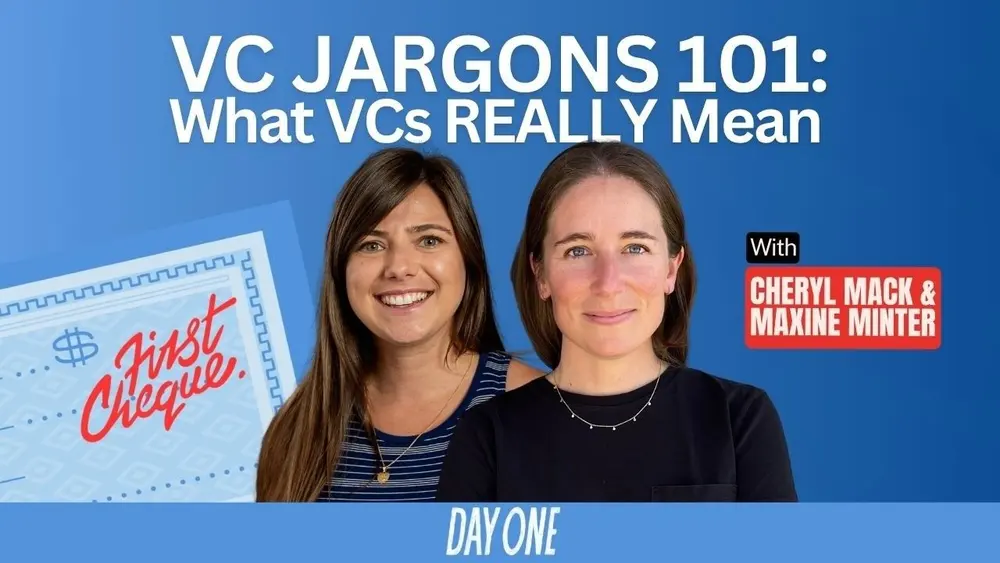
In this episode, Cheryl and Maxine unpack how operating inside one of the fastest-scaling companies in the world shapes the way Ilana evaluates founders as an investor. She breaks down her "3-star model" for backing companies (right infrastructure, right team, right timing, read from right to left), why she looks for founders with velocity and speed over founders who claim to have it all figured out, and why the biggest red flag at pre-seed is a founder who narrows their market too early.
You'll also hear why she pushes back on founders who insist on enterprise-only or single-market strategies before they even know their ICP, why treating international hiring as a growth problem rather than an HR problem is critical for founders building outside the US, and why Australian founders' instinct to think global from day one is a genuine advantage. Ilana shares what she learned scaling Deel's own go-to-market using the company's own product across dozens of countries, and why staying close to your first hundred customers matters more than shipping a polished product.
She closes with her Biggest Brave Moment: repeatedly landing alone in unfamiliar countries, from opening entities in Thailand to sourcing product in China at 19, with no support system and straight into meetings with lawyers she'd never met.
Chapters
0:00 Intro 4:15 Ilana's first investment: buying Amazon stock at age 10 and the lesson she learned selling too early 9:30 Why Ilana joined Deel as employee five, drawn in by the labour law and compliance nightmare of scaling internationally 14:05 The 3-star model: right infrastructure, right team, right timing, and why it should be read backwards 17:50 Why founders who claim to have it all figured out should be a pass 21:40 The danger of narrowing your market too early at pre-seed 28:10 Why treating global hiring as a growth problem, not an HR problem, changes everything 33:00 What makes Australian founders well suited to thinking global from day one 36:45 How to answer "what's your expansion plan" as a green flag for investors 40:20 Inside Deel's global pitch competition: 35,000 applications and five investments 46:10 Biggest Brave Moment: landing alone in unfamiliar countries to open new markets Transcript Search or select a timestamp to jump ▾ 0:02 Speaker A: If you're a founder or operator trying to scale, here's the reality. Australian hiring is getting harder. Salaries are at record highs, and the talent you need is increasingly out of reach. The best operators are quietly building offshore teams of engineers, marketers, accountants, and analysts at a fraction of the cost. 0:18 Speaker B: PearTree does it differently. They headhunt highly skilled talent from the Philippines and South Africa with full transparency on where every dollar goes. So your team is paid fairly, and they are fully focused on your business. 0:30 Speaker A: As a Day One listener, you'll receive a free team audit to identify where offshore talent could move the needle in your business, plus 20% off on your first hire. 0:38 Speaker B: You can learn more at dayone.fm/peartree. That's dayone.fm/peartree. 0:50 Speaker C: So first of all, like I love Australian founders. I need to meet more. Like, they think global from day one because you are so isolated, guys, that they have this strong mindset that they need to build for the outside of the world, right? You can't settle for mediocrity, and mediocrity is what you were like a day ago. Like, you need to every day improve and every day be better. And when you hire and when you work with people, my only responsibility is to make sure that you work left and right and the person is better than you. And if people can't handle that, they shouldn't be in startup. 1:22 Speaker A: Yeah, 100%. 1:23 Speaker D: Okay, three, two, one. Hey, I'm Cheryl. I'm Maxine. This is First Check, part of Day One, the network dedicated to founders, operators, and investors. If you want to be a better early-stage investor, this is the show for you. So TLDR, if you don't want to suck at investing, listen up. 1:45 Speaker B: I'm so excited for this one. We are interviewing someone on the podcast today who I am a slight fangirl about because I have been a customer for a product for a long time. 1:55 Speaker A: Oh my gosh, you must be the biggest fan then. Well, her role or title is VP of Sales, but she is so much more than that. She has been there basically since day one and really helped build the company from like, what, 1 or 5 employees to what they are now, which is crazy. 2:11 Speaker B: Crazy. And who we are talking about is Ilana Elbaz. So it's not a small company she has built either. I think she joined them as employee number 5, as you said, and then has grown them to one of the biggest companies in tech today. today. Honestly, without that product, I don't reckon we could have built CoVentures in the way that we have. We have so many international folks around the table. And so, yeah, and she is an angel investor, she is a builder. I think she is actually the canonical angel, operator angel that I think of, someone who was deep in the trenches and investing behind what she believes. And so I'm so excited to chat to her today and see how she thinks about investing and sometimes operating. 2:51 Speaker A: Yeah, it's like if you look up operator angel in the dictionary, it's just a photo of Ilana right there. 2:59 Speaker B: Yes. Yeah, or it should be. We should petition for that. Whoever is listening who does dictionaries, put a photo of her right next to operator angel. 3:07 Speaker A: In the startup world dictionary that exists somewhere on the internet for sure. 3:11 Speaker B: Somewhere on the internet. 3:12 Speaker A: All right, well, let's jump into it. 3:13 Speaker B: Let's get into it. 3:17 Speaker E: You're listening to a dayone.fm show. Founders scale faster on Deel. Set up 3:25 Speaker F: payroll for any country in minutes, hire anyone anywhere, get visas handled fast, and get back to building. Visit deel.com/dayone. That's deel.com/dayone. 3:38 Speaker A: If you're a founder or operator trying to scale, here's the reality. Australian hiring is getting harder. Salaries are at record highs, and the talent you need is increasingly out of reach. The best operators are quietly building offshore teams of engineers, marketers, accountants, and analysts at a fraction of the cost. 4:01 Speaker B: Pear Tree does it differently. They headhunt highly skilled talent from the Philippines and South Africa with full transparency on where every dollar goes, so your team is paid fairly and they are fully focused on your business. 4:14 Speaker A: As a day one listener, you'll receive a free team audit to identify where offshore talent could move the needle in your business. Plus 20% off on your first hire. 4:21 Speaker B: You can learn more at dayone.fm/peartree. That's dayone.fm/peartree. 4:33 Speaker A: We're excited to have you on the podcast, Diana. Please say hi. 4:39 Speaker C: Hello, thanks for having me, girls. 4:41 Speaker A: Great. Well, as most of our listeners will know, we always ask the same first question of all of our guests. And that is, we'd love to know what the first thing that you ever invested in was. 4:52 Speaker C: So actually, the first thing I invested was Amazon. I was 10 years old. 4:57 Speaker A: Like the stock? 4:58 Speaker C: The stock. I remember I was 10 years old. It was not that long, Cheryl. Don't look at me like that. It was not so long ago, but it was 13 years ago. No, 24 years ago. It was Amazon. I was 10. I begged my dad for To borrow $500. 5:17 Speaker A: Wow. 5:18 Speaker C: And I didn't stop until he said yes. I was just fascinated. I was obsessed by Jeff Bezos when I was a kid. Um, it was when the internet was booming, uh, the market was amazing. And, uh, he started with books. When, when it was after IPO, it already had some equipment, some other services. Uh, but, um, I believe that he could, uh, he could sell everything and he could sell everywhere and outside of the US. So, uh, my first investment was Amazon and it was my first lesson actually, um, maybe relevant for investors because I sold when I left home when I was 18. 5:54 Speaker A: That was my next question. I was like, the question is, when did you sell? 5:57 Speaker C: And I was very proud of myself back then. I make a quite nice return, right? Um, but I think the first lesson I learned the hard way is like to really hold as an investor on your, on your strong conviction. Uh, that was, uh, that was the first lesson I, I got from, uh, from this person. 6:16 Speaker B: I have so many questions about you at 10 years old. Like, how did you know about Amazon? 6:22 Speaker C: Yeah, I was into the business. I started my first business, I was 8 years old. 6:26 Speaker B: So cool. What was your first business? 6:28 Speaker C: I was buying, uh, uh, t-shirts in China and, um, I had a machine to personalize the t-shirt and, uh, and selling it in school. Uh, then I sold like dog accessories, uh, then I sold pretty much everything. That's why I'm in Singapore. I had, when I was a kid, I had the Asian dream more than the American dream. Uh, so when I left home, I wanted to really go into the deep China, understand how it works, the factories and so on. So when, when I left, after that, my first business was in e-commerce, uh, and retail. My first big business was in e-commerce and retail across Southeast Asia. And through the first lesson I learned from my first investment and, uh, from my first, uh, uh, teenage school experience as well. 7:12 Speaker B: That's awesome. Oh, very cool. Did you ever sell on Amazon? Like if you were, if you were building an e-commerce, did you ever sell on Amazon or were you like at 18, like, uh, nah, I'm sold. I'm done. I'm building my own thing. 7:23 Speaker C: I sold on Amazon as well at the beginning, but then I wanted to do more like business. So I wanted to. to do the brand, to build an ERP system, a POS. Um, my goal was to do more like a franchise and more like a brand business than just buying and selling, uh, what I used to do when I was a kid. 7:42 Speaker A: Yeah, fair. 7:43 Speaker B: Incredible. And so you have done some pretty amazing things. Um, re— like you have built a bunch of businesses, you've been a CEO a bunch of times. Um, you used to host a podcast on, uh, remote employees, which I think, or remote people, which is cool. But the kind of big ticket item is you were employee number 5 at Deal, super early in their journey and the first go-to-market hire for them and have built an incredible business alongside them. I think I read somewhere you were responsible for the first, you know, kind of $500 million of sales and the zero to, it was like almost $300 million, only took you guys 3 years, which is, or 2 years, which is astronomically fast. You're now an angel investor and do a bunch of other really interesting things, but I'm interested, like, that is an incredible operating journey and a couple of really interesting operating journeys. How do you kind of bring what you learned operating in that journey into the way that you think about angel investing? 8:39 Speaker C: So I think in a sense, I'm kind of the first investor of Deal, right? Like, just to step back and give you a bit of context, like, Deal went through a few pivots, right? Initially, when Alex started, it was like a social media company. Then for YC, it was a blockchain company, crypto company. Then after YC, it was still like a payment on the blockchain. And then this is where I meet Alex through a friend. I was not into blockchain, but then he told me like, I'm trying to help my friend that I met at MIT to work for the best company in the world, depending on where they are. And that really resonates to me because when I was in Southeast Asia, like scaling this brand, I had to open an entity like in Thailand, in Vietnam, work in a different country. And it's an absolutely nightmare, like to go, and that's like the operator journey that makes you a better investor. It's a nightmare. And the last thing that you want to do when you scale a business is to deal with labor law and compliance. You want to be with your customer, you want to think about the branding, you want to, to, to manage your, your developers and so on. And, uh, unless it's your core business, labor law is extremely, one is extremely boring, at least for me. 9:59 Speaker A: I think for most people. 9:59 Speaker B: Yeah, I can't imagine anyone's like, I love it. 10:02 Speaker A: Let me just put my hand up. 10:04 Speaker C: I don't know, you know, I, I deal with people that are payroll managers for the past 20 years, so I, I guess they're excited about it. And the second one is like, I knew that you need to do it right because, um, we discussed, I grew up in France and I know that, uh, in France where I'm coming from, if you don't, uh, hire the person that you need correctly in an extremely compliant way, it can cost your business. 10:27 Speaker A: It's the same in Australia. Like there's been multiple cases where, yeah. 10:33 Speaker C: Yes. Yes. I opened Australia. I also learned it as an operator. So, so that's why I, that's why I joined. Uh, and then the journey, uh, was pretty incredible, uh, and, uh, uh, pretty humbling. We went from 0 to, to a million pretty fast, went from a million to 4 million, 4 to 54, 54 to 300. Uh, we are, we were one of the first companies to achieve the $100 million ARR. That was pre-AI, if you remember that, like 8 years ago. 11:04 Speaker A: What was that like when you made that switch to looking at that difficult journey of like setting stuff up and somebody kind of said, hey, I wanna hire somebody? Was that before or after COVID when remote work exploded? Like, did you kind of have that foresight or was that in the middle of COVID 11:18 Speaker C: So we were before COVID Uh, I opened all this, uh, e-commerce and retail before COVID and, uh, deals started pre-COVID. And, uh, and I think like to the, to the investor, that's, uh, that's where I believe in a company, I, I have the 3-star model. Right time, right team, right infrastructure. But actually you need to read it the other way around, from right to left. Uh, it's like you build the right infrastructure with the right team that was resilient enough to wait for the right time. 11:52 Speaker A: Yeah, I like that. 11:53 Speaker C: And that, that's the company I'm looking for, uh, as an investor. Uh, that you need to have, uh, have the 3 stars because it's an extremely difficult, uh, journey. Um, you get punched in the face like many, many times. Uh, and you cannot be too early. You cannot be too late. Uh, you cannot be with the wrong people, that the people that think that they can do it, but, um, without understanding about it. Sometimes I believe that I did it because I didn't know what I was signing for. Um, because rationally, if you understand what you're signing for, I'm not sure that you are willing to do it. The sacrifice that goes, uh, for this journey is immense. I don't regret it for a second. Um, but I don't believe there is any other way around. And when I'm investing, I'm looking for these people, uh, that are crazy enough, uh, to sign up for it, basically. 12:44 Speaker B: Totally. I mean, I, this is why I think the people like the repeat founders and also the repeat joiners, like the repeat early joiners, Are, with all the love in my heart, truly unhinged. Truly unhinged. The first time you do it, you're like, I, I know this is gonna be hard, or like, 13:01 Speaker A: but I totally got this. 13:02 Speaker B: But I don't understand how hard it's gonna be. And then the second time you do it, you are like, I know fully how hard this is gonna be. I know all the sacrifice and I'm signing up again. 13:11 Speaker C: So, so I had the question myself, you know, because I said, okay, I did it so many times, like not at the scale of Jill and Jill is a is like one of, uh, one of the kind, right? Why I'm still doing that to myself? And the question is like, I cannot do it any— I can't, I can't do it. Um, I can't do something else basically because like if you do something, you need to do it the right way. And, um, and you can't do it at this speed and at this scale, uh, being in between. I don't know if that makes sense, but. Or you do it or you don't do it. There is no middle ground in fast-growing startup. So what, like you've been through this journey to scale to a billion, over a billion dollars of ARR and understand like, um, how it works and now you're gonna work something that is average? It's not possible, right? You can't set up and that's the kind of people you hire and that's the kind of people like investors, uh, need to set up. And that's what I repeat to my director all the time. You can't settle for mediocrity. And mediocrity is what you were like a day ago. Like you need to every day improve and every day be better. And when you hire and when you work with people, my only responsibility is to make sure that you work left and right and the person is better than you. And if people can't handle that, they shouldn't be in startup and they should join, they shouldn't even think about joining a fast growing 14:29 Speaker A: company. Yeah, 100%. 14:30 Speaker B: Yeah. It's the best feeling to look left and right and be like, oh my God, literally everyone around me is better than me. at the things that we do, right? Like it's the most incredible feeling. I'm interested as you think about this with an investor hat on, I mean, we are talking about the midpoint of a journey, right? But our job then as investors is to pick people that are the right team in your 3-star kind of scenario. So what are some of the things that tell you that those people will be able to handle that journey? They will rise to the occasion, not crumble. Is there anything that you look for in those teams? 15:06 Speaker C: Velocity, uh, speed. One of our values is deal speed, and I think that should be from day one. That should be the, the motto for every founder that wants to make it. I'm looking at the guys that, uh, will go for a problem, um, for a big time and has this timing that actually that, uh, the market is growing. They need the market. If not, you can be the smartest, the fastest. If you don't have the, the right market, you can't do anything. That's what we can argue, that there is a bit of luck, um, or a lot of luck on, on, on the, on the field that we are into. Um, but you need to have the one that will learn very fast and they will iterate, uh, very fast and will take decision fast. Because in startup, at every stage, there is no wrong decision. Mm-hmm. Uh, there is, the worst thing that you can do is to not take a decision. And, uh, and the right founder at this time, they, okay, they did, they did a mistake. But how they are iterating, how they are fixing this mistake, and the speed and velocity on how they're doing it, it's what we're looking for. They understand they're not in the right market, they're changing the market, they understand what they're doing is not the right thing, and how they execute around that would be the most important because time will evolve. We started with some people like us in the digital economy, people that are remote, 10, 20 people. And then, uh, we understand that, um, people, they don't want to be a contractor, like in Australia, in France, uh, they want to be an employee. And then we say, okay, like then we need to, we need to, we need to step up. It's difficult. We need to open entities all over the world, right? Uh, we need to be compliant all over the world. And we are gonna start in the UK, we're gonna start in English-speaking country. We're gonna start where we feel comfortable. We are French. Um, but how we are going through this model, testing it in one of the markets. Mm-hmm. and then scaling it very fast by building the infrastructure is very important because you do seed and pre-seed, right? Like the founder that will tell you they know everything and they have this master vision about the universe, like just pass, it doesn't work. And I think like today is YC Demo Day and I was speaking with a few folks yesterday that will go for the pitch today. And a few of them told me like, oh, I'm targeting enterprise and I'm gonna be in the US only. And I told him, okay, why your product is, uh, is only for enterprise? What you are coding today is only for enterprise. And he told me, no, but, uh, but this is my ICP. And I say like, listen, today you have 4 design partners, 5 design partners. You don't know what your ICP is. You don't know what is your product and you don't know what is your market. So why you gonna restrain yourself so hard to go for an enterprise market when Your product can be for 50 people company, for 50,000 company. Just don't just don't restrain yourself. It doesn't make any sense, and it doesn't make any sense at early. And that's a lesson for the founder and also for the early for the early check investors. Like it's very important that you don't constrain yourself because at this stage you don't really know where is your customer. And I told him like you are talking to me. I'm not an advisor. I don't have a couture. I just give you like a few things because I've been through the journey. And you don't need to play the FOMO of YC and stuff. You're gonna do that tomorrow. I spoke to them today. But just to constrain yourself to go to a thing that you know will evolve so much that I will go a bit larger. And after, as you scale, there is a lot of involvement around that. You target early enterprise asking, are you SOC 2 compliant? Do you know how to fill an RFP? Do you have time to talk to 20 stakeholders? Figure it out who is your champion because to deal to SMB sales and enterprises and like maybe today I'm taking my my go-to-market is very different and the cost associated to that is extremely different. You girls like write a two million and precede check like an enterprise guy in the U.S. will cost you five hundred thousand dollars. So do you want to spend twenty five percent of your budget on your first hire to hire like the guy that know how to do enterprise sales? I'm not sure. Let's think about that. It's very different if we talk about like B2B SaaS or AI vertical, like classic business. Uh, if you took like, uh, I was with a photonic company yesterday, uh, it's big, big R&D, like professor from the CNRS, like big researcher. That's slightly different. But for the 90% of the people like are into the SaaS or AI SaaS, uh, like call it what you want and rename it what you want. Um, I think that investors should really look, uh, at these founders that don't have this, uh, narrow mindset at the beginning and that they will, uh, they will scale, uh, their TAM, uh, accordingly. And there is 2 ways to do it. One is the product. How you gonna add product? We started with one product, today we have 20 products. Um, and then it's like upsell, cross-sell opportunity. And the second is like how you scale, uh, the market. So the founder told you like, okay, I'm gonna be only in the US and I'm like gonna scale only in the US. Why? I believe that generational company, there is a big thing to be in the US, don't get me wrong, and to have like go-to-market operation, uh, in, in, in there. But I think that generational company, like to go back to, to Bezos, he started with books, then he sell everything and, uh, he started in the US and then like I'm on Amazon Prime everywhere I, I'm going. So I think like I'm always maybe from this lesson from when I was 10, looking at this, uh, This kind of founder that can scale vertically or horizontally and ideally both. Founders scale faster on Deel. 20:44 Speaker F: Set up payroll for any country in minutes, hire anyone anywhere, and get visas handled fast so you stay focused on scaling. Deel takes care of onboarding, HR, IT, EOR, benefits, and compliance so your team can grow without borders. It's why more than 40,000 fast-growing companies trust Deal to move fast. Visit deal.com/dayone. That's d-e-e-l.com/dayone. 21:12 Speaker B: Totally. Also, I mean, I think the reality is that pre-seed, we say this a lot to folks in our orbit, including some of the founders that we are either chatting to about investing or that we've already invested in, which is like, Hey, can we just all put down the premise that the thing that we're talking about today is the thing that you will be building by the time you get to product market fit? Like very unlikely to be same product, very unlikely to be same customer, very unlikely to be same go-to-market. And so like, let's not spend a bunch of time, right? Quantificating on exactly how you're going to do that. I'm trying to understand how you think and how you move as opposed to understanding exactly what you're building today. 21:52 Speaker C: At least not to understand exactly what they're building and the detail and the roadmap in the next 5 years because, uh, today, and, and that's their dilemma, right? As an investor, we also need to understand how they're gonna survive literally tomorrow. And, uh, how is it a sustainable business to go back to the timing that we are on something that is the right timing and the, like, internet was booming when he started with the books that we are in this, uh, like, now agent is like, uh, the biggest traffic of the internet. Like it's more than 50%. I was astonished to see this. data yesterday, and now we are building around that. And that is important. And what I like to see in the founder, you know, there is 2 kind of people, like the house is burning. Like this is what I feel like 8 years ago, this is what I feel yesterday, and this is what I feel today. Even if we are a $17.3 billion or $17.2 billion company, I feel that every day that I wake up, I will have to survive this day and put water on the fire that I'm gonna be pulled into. Right? And you have 2 kinds of people that I identify across the journey. You have the people that say, okay, the house is on fire, where is the kids? We need to take out the kids right now. And you have like the people, the house is on fire and, you know, this, we need to paint the wall, right? Oh, the, the, we need to, we need to change the color of the wall. So you need to have this kind of people that you need to make sure that you find the, the founder that will save the kids, uh, than the one that will actually repaint the wall. I 23:18 Speaker A: have some concerns about your analogy here, but I get you. 23:21 Speaker B: Yeah, I think it's totally true, right? And I think it's like being able to act with that kind of urgency. You know it when you see it, but I think it's hard to— this is why I think it's so valuable having been an operator, because I think it's hard to verbally explain. If you spend all of your time not around people like that, that level of urgency You've just never seen anything like it. 23:45 Speaker C: And I tell you, like when we started, and that's kind of level of urgency. First of all, I have like my first 100 customers on WhatsApp. Uh, they still ping me, uh, for random questions, but it's fine. I love them. 23:57 Speaker A: That's so cute. Are they all like, you all, you have the same 100 first customers? Do you all still have them as customers? 24:03 Speaker C: Most of them. Most of them. I think that, uh, yeah, most of them. I think that churn is in, is churn happen and it's fine. And you need to be okay with churn and people leave and people come back and They have different concerns around the business, but most of them are still there. They stick with me. I had to apologize so many times on things that didn't work out when they should have worked, let's be honest. But yeah, like the urgency and how you stay close to the client from day one and how as a first check, like you understand, like as an investor, the question I ask is like, which customer you talk, when did you talk to them, what they ask you? And how did you save, how fast you iterate on their problem is very valuable because this is how you're gonna do when you're gonna get to your first 1,000 customers. You're gonna stay very close to the client and you're gonna build for them and not for you. I think that this is the YC motto. That sounds cliché, but you need to build something that people want, but no one has proved wrong to that so far. And that's, uh, that's I think the, the most important when you are at this seed stage, really like to go to the client and to build something and to be very fast on iteration. The entire deal was built from the client. Like they tell me, I want to be an employee. Okay, I'm gonna do the employment record. Non, Ilana, I have 2 entities. I have one in France, one in Japan, and I have this remote worker. Okay, I'm gonna do global payroll. But now Ilana, it's super nice. You help me with all my workforce, but, um, I need an HR system. Okay, I need to have an HR system. And it's okay that it's not perfect. I remember like from the early stage, I was talking to Yaron, our CTO, and I was like, dude, I apologize for a living. You are screwing me off. Like, it doesn't work. I promise, you told me it's gonna happen, you ship the features, and it doesn't work. Like, a lot of time at the beginning. And he told me something that stayed with me. He told me, what do you want? You want me to ship you like 2 new features every week, or you want something perfect every 2 months? And I told him, okay, keep, keep, keep doing what you are doing. Keep doing what you are doing. And it's like with the speed, the speed and the passion, because you also learn from the client, right? You, you also learn from, uh, from what was not working. And I still apologize for everyone that, uh, Uh, it was buggy and, uh, when it shouldn't have been a bug. Um, but, uh, but that's, uh, that's how we learn and that's how we scale. 26:31 Speaker B: Yeah, totally. I think that like the desire for perfection or polish is so dangerous as a builder. 26:38 Speaker C: It's, it's dangerous. Yeah. And, and that was my dilemma when I started because I'm a perfectionist and, uh, it's a very difficult game, like to start when you're a perfectionist because when it's ready, it's too late. That's, that's what I 26:52 Speaker A: can't have both. 26:53 Speaker B: Can't have both. 26:54 Speaker A: You can't have it perfect and now. 26:55 Speaker C: No. So, um, it was very hard, like, uh, but you had to let it go at some point. 27:00 Speaker A: Um, maybe just still on the, um, on the angel investing side, like you invested in Primo. I'm curious, like what was it about them that grabbed, grabbed your attention? What did you see going right for them? 27:09 Speaker C: Uh, like, you mean the, the person? Like, I, I think like, um, what is important for me is like the, the, the people that wants to scale global from day one. Uh, I think that, um, when you figure it out, the infrastructure, like, uh, you can do it, uh, you can do it outside of your own country. So I love to have the, the founder that even they're from Australia, from the US, they, they build the infrastructure for scale and how to go global from day one. 27:39 Speaker B: How did you, I'm interested how you started angel investing. Were you already investing before you started at Deal? Did you start investing later? Like, what was your ramp into becoming an, like, transitioning your operator life into an operator angel? 27:53 Speaker C: Mostly I did because I invested in my client at the beginning. 27:57 Speaker B: Cool. 27:58 Speaker A: Insider knowledge. 27:59 Speaker C: Yeah, because I do HR payroll. Just to be fair, it's not really insider knowledge. I do payroll and HR. It's the entire strategy. How do I scale? Which market should I open? What kind of profile I'm hiring? This is the question they had, right? At one years old, we were already at like few million of ARR. So we went a bit early for their journey, and I had kind of like the way to understand like how potential they could they could have been. So I think that we have an extensive network with the tier one VC all over the world. We are fortunate to have amazing people on our cap table from A16, like Koutous, Yasmin for Spark Capital that was also early at. At Entropic, like, so I was fortunate to meet these incredible people that at the beginning wanted to invest in us and introduce us to a lot of clients and a lot of potential founders and people. And that's how I got all of this kind of deal flow. And I could see like what was working, what was not working, how they were thinking from the one with our global extension. And I had a good benchmark with Alex, to be honest. I hope he will not listen to that. 29:11 Speaker B: We promise not to tell him. 29:13 Speaker C: And I think like, uh, I learned a lot from him and, uh, and the best founders, they're cocky enough not to fail. Uh, cocky, a bit of this arrogance. I don't know if you can see that, but, uh, okay, they would work out. 29:27 Speaker A: Absolutely. Yes. 29:28 Speaker B: Mm-hmm. 29:30 Speaker C: But they are, they are humble enough. Uh, to be surrounded by the best and to listen to the, to, to, to listen that and to not have a strong opinion. They can be very opinionated and think that, but if, uh, we prove them wrong and operators and think that people that are good in their field prove they're wrong, usually they listen and they implement. Uh, that's what I, I learned. And Alex is kind of my benchmark around that. 29:54 Speaker A: There's so much value to seeing what good looks like. 29:56 Speaker C: Yes. Yes, exactly. Like there is a lot of value to see what good looks like and come back to my point when I hire and I tell people, I mean, to look left and right and the people is better value. 30:05 Speaker B: Absolutely. Yeah. And so, I mean, you have seen global expansion like literally hundreds of thousands of times over. Um, we obviously in Australia, the founders or most of the founders building in the Australian ecosystem are building for the globe, right? Because they can't build just for Australia. So I'm wondering if you have any insights or kind of tips and tricks on global expansion for companies expanding globally, like when should they start thinking about it? Any like insights on what you've seen done well and maybe what you've seen done disastrously? 30:37 Speaker C: So first of all, like, I love Australian founders. I need to meet more, please send me deals below. Why? Because they think, because of the geography, like, uh, they think global from day one because you are so isolated, guys. You are so on the other side of the world. Sorry, like, depending on where you, you are in the world, that they have this strong mindset that they need to build For the outside of the world, right? So most of the founders will treat hiring as an HR problem. It's actually a growth problem. And I think that they need to have the mindset to, as very, like the Australian founders are doing very well, to go from day one global. And they can start like closely, like I see a lot of Australian founders like hiring in Singapore. To have the first step in Asia, then hiring their first CRO or VP sales in North America, and then to scale in Europe. So depending on the stage they are and the funding they have, how they're going to structure their go-to-market, which segment they're going to be, SMB, MM, enterprise, and how they're going to segment the world. So yeah, long story short, my answer is really to treat hiring as a growth issue. And how they're gonna penetrate the market, uh, fast because there is like, um, a big advantage to on the first commerce. If you look at Deal, we were 1 year old and we already had, uh, client in Australia, client in Singapore, client in France, mostly from our background, to be honest. And for the, I've been living in more than 10 countries, so the countries I have been and I understand, uh, how it works because when we were more mature and we, when you are more mature and you are successful, you also attack, uh, attract, uh, competition, which is good. Competition keeps you sharp and challenge you all the time. You're already there. You already had your testimonial, you already had your referral, you already understand how it works, you already make these bugs and make these mistakes that you fix. So it gives you a clear advantage to be the first mover very fast in this country. So what I advise is like to stick with the English-speaking country. Like, uh, at the beginning, like Singapore, US, uh, Canada, uh, or at least US-friendly, like US, uh, English-speaking friendly country. And then when you are solid there, you hire like in the tier 1 in Europe, like Germany, France, uh, and you expand, uh, as, uh, as, as the infrastructure are, are capable of, uh, welcoming more growth. 33:13 Speaker B: Great suggestions. I also, I mean, I think that like, Actually, we had, um, a growth stage investor on a little while ago, one of the folks from Frontline, and he was saying, actually, you know, trying to expand in multiple countries at the same time can be really challenging. What do you think about kind of in, or country by country, or versus like just multiple countries all at the same time? 33:34 Speaker C: Okay. So I think you need to scale horizontally. What I mean by that, you need to scale the infrastructure for the different markets. for the different size of the market, for SMB client, MM client, and enterprise client. Why? Because you need product readiness. You need your product, uh, if your product is SMB product, you need, uh, to have the foundation for SMB. If it's upmarket, the product needs to evolve to answer this upmarket question. And he's right, it's very expensive and very dangerous to scale globally. But today I might be biased, but like, look, how did I scale, right? I was in Singapore and I could hire like a French contractor to go to market. I could hire someone next to me and to make phone call in different country and to try to add client from different country. But I could hire in a click of a button someone in France that understand the culture, speak the language, has already his own network, and I can replicate that pretty fast. That was like, We eat our own dog food from day one, and that's why I scaled the go-to-market, like using our own services and our own platform. And that's how you can scale very fast. So you don't need to hire a C— like maybe your growth investor, what he means is like, you need to hire like a French CEO and then a French CRO and someone to do the operation. You don't, you just need someone that, that will roll up the sleeve, will be extremely hands-on, uh, that want to be here, believe in the mission, that will give up on salary and get the equity and have a lot of skin in the game. And that will be the face in the country and have this kind of agile profile and do everything that is needed in order to make it work. That helps you to scale globally very fast. If it's the classic model, it doesn't, and it's not worth it, that's for sure. 35:19 Speaker B: Yeah, I definitely feel like there is a like set of companies that we are watching scale internationally that are like, you know, just growing like a weed. And I, I suspect this is part of their growth playbook, right? It's like the right team to be able to do it, but also, as you said, the right infrastructure and the right market opportunity. 35:35 Speaker C: Correct. 35:36 Speaker A: And what about for investors? Like if we're talking to our portfolio companies and asking them like, what's your expansion plan? What are you like, what are some of the things that you would expect a good, let's say a Series A company that's looking to expand internationally? Like what are some green flags you would, that you would look for them? 35:52 Speaker C: I think the green, the red flag is like not to go international. Why, why to focus on the market? Like, why to be only in the US? Why to be only in Australia? It's like to the same, like the YC founder, I told him yesterday that he told me he wants to be only enterprise in the US. Like, simply why to segment yourself at this stage of the company to be on such, to narrowing your TAM when you, you don't really know where is your TAM. If you look at us, for example, like Nordics is a very good market. It's not a classic market, but, uh, Nordics or Israel are very good market. It's very small, but in the Nordics, there are extremely talented people and we can talk about Loveable and Legora and all the Swedish, like Nordic startup is booming. They're very smart and talented people, but they just don't have enough of them. They need to, if they want to be competitive, they need to hire the best developer, not because they're Swedish, but because they're available when they need them. And a lot of time they're outside of Sweden. And if you look at the report, like PwC say that in order for startup to scale in the Nordics, they have no choice to survive by just hiring outside. So I think that they need to be strategic and they need to understand their constraint in their country and they can't narrow their term when they only have like few design partners. 37:17 Speaker A: So when I ask a company, like, what's your expansion plan internationally? Like, what's a green flag answer? Like, what's a good answer that I should be looking for? 37:23 Speaker C: The, the good answer is like, uh, the product is ready and, uh, we are hiring our first, uh, we need someone in the US because we haven't seen generational company without a US go-to-market yet. Uh, let's see. And you have all this amazing, uh, Europe founder, like Australian founder, so they can start somewhere, but The US is still like a big 400 million, uh, I think, uh, uh, consumer market that, uh, is pretty fast. Um, so their plan is like they, they are, they're scaling their operation and go to market outside of where they are. That would be the good answer. 37:59 Speaker B: I think it's a great answer. 38:01 Speaker A: I'm just doing it. So the answer is I'm just scaling. I'm just going for it. 38:05 Speaker B: I'm going for it. I'm swinging hard for the fences. 38:08 Speaker A: Excellent. 38:10 Speaker C: Because again, you cannot be a perfectionist and fall in love with your own product. Don't get to the guy telling you, oh, I need to make the product a bit more ready for this market. Just don't. Just go to the market, sell it, and then the client will let you know what needs to be better in terms of product. 38:25 Speaker B: And you've seen a bunch of reps of this, both obviously on the go-to-market side alongside your customers, but from what I understand, Deal has also kicked off a Investing motion with D Ventures, and you ran a pitch competition recently and got like an outrageous number of pitch decks. I can't remember exactly what it was, but it was like huge, right? 38:46 Speaker C: Yeah, it was. It was crazy. So we, and it was kind of executed as a deal speed and the founder, Philippe, called me the CFO, and he told me, let's do a global startup competition and have like seven locations. Let's do it in Paris, Tel Aviv, New York, Singapore. Abu Dhabi, Berlin, Sydney. Uh, maybe next year if you, you find like we can do it in Sydney next year. Let's do it. 39:11 Speaker A: Let's do it in Sydney. 39:12 Speaker B: Let's do it. Yeah. Come to Sydney. 39:14 Speaker C: Yes. And then he told me, okay. I said, okay. So I, I'm looking, okay, are you looking to 2027? Uh, Q1 2027? He told me, no, in 2 months. Yeah. And, um, okay. 39:26 Speaker A: Yeah, no big deal. 39:27 Speaker C: And how many people are you expecting? I said, well, it would be great to have 500 people in every location and about 40 people. 40 founders, uh, pitching. And I look at him like, okay, uh, great. You know what? Let's do it, right? It's the first time we are doing it anyway, so let's do it. So, um, it was amazing, honestly. Like, we received 50,000 people that went through the application. 35,000— 39:51 Speaker A: 50,000 applications to pitch. 39:56 Speaker C: 35,000 completely completed the application, uh, and then we, we had like a whole filtering process. And then in every location, like we had between 40 to 80, uh, people that were, uh, pitching. And then there was about like 10 to 20 winners in every location. I went to the one in New York. I, I, I organized the one in Singapore and, uh, it was pretty outstanding. Like really, like, uh, um, first of all, it's a hard exercise to pitch in, uh, 1 hour, like, uh, 90 seconds, but we, we got an amazing, amazing company around that. So yeah, why we did it when everyone, uh, they are closing their corporate, uh, venture, uh, we are not very corporate. And now you talk to me for, uh, I don't know, 20, 30 minutes. Uh, we are not very corporate mindset and, uh, we, we think we can add a lot of value to give back to the community and help this company to scale. We are super pro-startup and pro-founders. We are our own sandbox. If they want, if everything that could work around us or can be of value, we are here to help and to support these founders to scale. And to come back to my point that it's not about the HR, it's about growth problem, like how you scale and how you do it. And we've done it for more than 40,000 clients all over the world, for small company to Fortune 500. And, uh, we learned a thing or two and, uh, and we are super excited to help these founders. Um, it's a partnership. Sometimes it's things that will, uh, benefit for, for, for our partner ecosystem, the deal infrastructure, um, and, uh, and, uh, and the sandbox, uh, something that, uh, that we can help with basically. 41:42 Speaker B: Amazing. 41:43 Speaker C: And the pitch, uh, was about like thousands of companies. I don't have the exact number. They, they all flew to the final in Paris. 41:51 Speaker A: Who won? 41:52 Speaker C: Uh, we had five winners. 41:54 Speaker A: You must have amazing deal flow. Fifty thousand applications. You just like have your deal flow come to you. 42:00 Speaker B: That's obscene. 42:01 Speaker C: I, I, he went to speedrun. I met him before speedrun. Like, Shinmei, amazing founder. He came from nothing. Like, his family were making fifty dollars in India to make to to meet ends. Ends. He went to IIT like the. the MIT of India. Like, study was his only thing. He learned math, physics, and then he had to build things. I love this kind of founder, so that's why I backed him. He had to drive, and I know that he won't give up, independent of how many times he will be punched in his face. 42:34 Speaker A: So, DILA invested in all 5 winners? 42:36 Speaker C: Yeah, we invested in all 5 winners, yes. 42:40 Speaker B: Yeah, very cool. Well, did you notice any, like, how many applications do YC get? I think that's like up there with YC. I think they get like 60 to 70,000. 42:48 Speaker C: I don't know, like, but we had a lot of random companies, to be clear. 42:52 Speaker B: Like, of course. Yeah, yeah, yeah, yeah. 42:53 Speaker C: It was really random. Like, uh, we, we got everything and nothing as well. But the, the quality, like, at the filtering, like, the, the 2,000, like, filter was pretty, pretty nice. 43:04 Speaker B: Yeah, impressive. Did you get humans to filter, or did you use AI to filter them? 43:08 Speaker C: We did. We use— that's the way we did. We use human, and then we create our own AI in order to do it. Cool. That's most of the time. We have like a, a new product called Akai. We had a lot of manual tasks in the operations side. KYC operation had to do with, uh, with the banks. It was manual, like you had to log into the bank account, download the, the, the document one by one, then think it was, uh, a lot of repetitive tasks. So we were fed up with that. We create our own internal tool, right? It's called Akai by Deal. It was working so well, like 92% of some fintech senior person could be automatized so they could free some time to build more things. And now we spin it off and we are offering to our clients and it's pretty amazing on how things you can scale. And that's the deal flow, like that's the deal thing, right? We know how to invest, so then we help the company. We know how to scale, so we help the company in order to scale it. Um, so we always been using our own dog food in everything that we're doing. And, uh, and that's how we operate. 44:13 Speaker B: Incredible. I think you probably might, might be one of the highest volume operator angels I've come across if you're able to look at 50,000 deals a year. 44:20 Speaker C: I cannot put all my money into all the companies. I wish I could, but, um, but I'm happy to be an advisor as well. 44:28 Speaker B: Yeah, totally. So impressive. And I feel like there's so many other threads we could pull, but we are close to time. So would love to ask the last question, uh, that we ask folks when they come on our podcast, which is what is the biggest big kindness moment thing you've done? Uh, a thing that you feel have felt really brave. 44:45 Speaker C: I cannot point out one moment, but I countlessly, uh, put myself in places that, uh, are very uncomfortable. Uh, when I had to open market, when I had to go to China by myself, uh, when I was 19 years old in the middle of nowhere. When I opened my first entity in Thailand and I had to see like, um, I had to go places that you need to literally go by boat and come back by bus, uh, with like, uh, the Thai worker with no windows, no aircon, and like look left and right in the middle of nowhere and like, what I'm doing here? Uh, that's been the big, the biggest thing, uh, I've been through, I think. 45:30 Speaker B: Yeah, that's so impressive. I mean, just like, I feel like a lot of Australians have been to similar places, but on like holidays, whereas you are out there like procuring goods to sell in e-com. 45:42 Speaker A: I go to like get a tan and you're like, I'm gonna set up a company here. 45:45 Speaker C: Yeah. Set up company and had to deal business or open market or run business in a place that I've never been before in my life. And I have like landing and straight to the lawyer or straight to the thing. That has been the biggest challenge of, of my life. 46:03 Speaker A: That actually sounds terrifying though. Like, 46:06 Speaker C: it's exhausting. Not terrifying, it's just exhausting. 46:09 Speaker A: Exhausting. Yeah. A little terrifying. Like what if you just— 46:14 Speaker B: Slightly on the terrifying side and very brave, I've gotta say. 46:18 Speaker A: Very brave. Very brave. 46:21 Speaker B: Well, this has been awesome. Thank you so much for joining us. 46:23 Speaker C: Amazing. Thank you so much for your time. I hope you enjoyed the conversation as well. 46:27 Speaker A: Very much so. No transcript lines match that phrase. Try fewer words.


 ▶
 ▶
 ▶