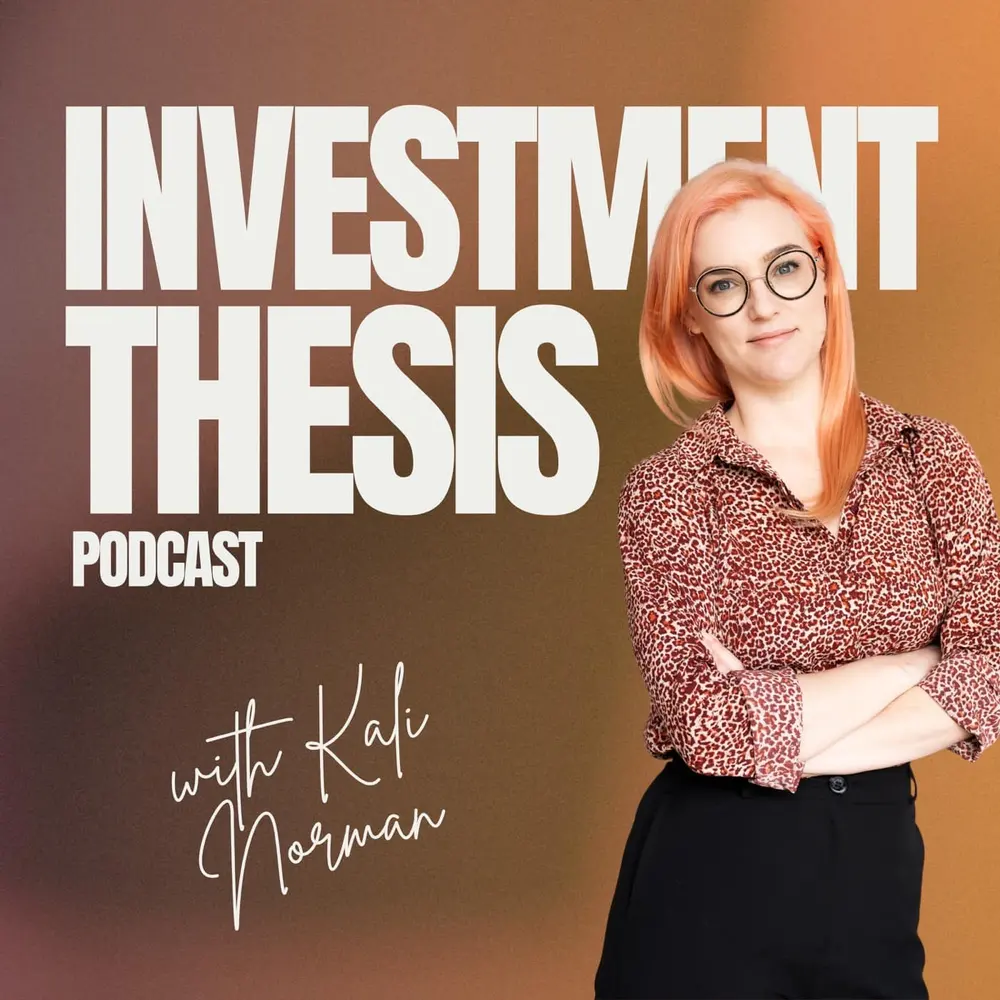
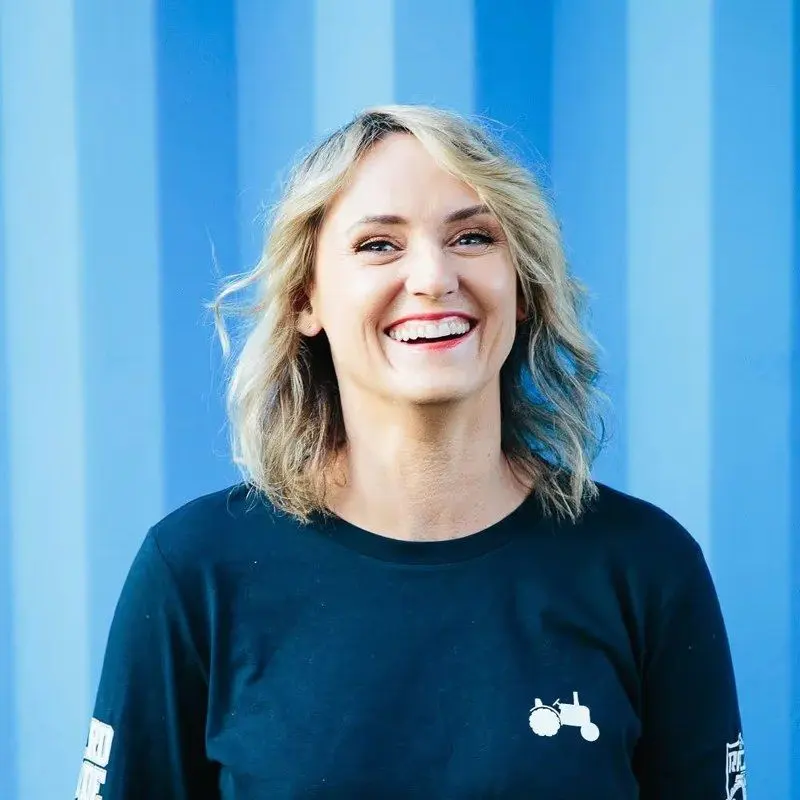
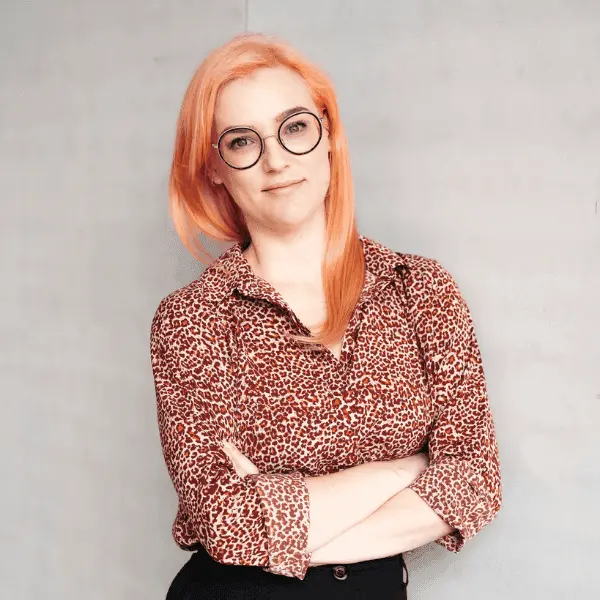
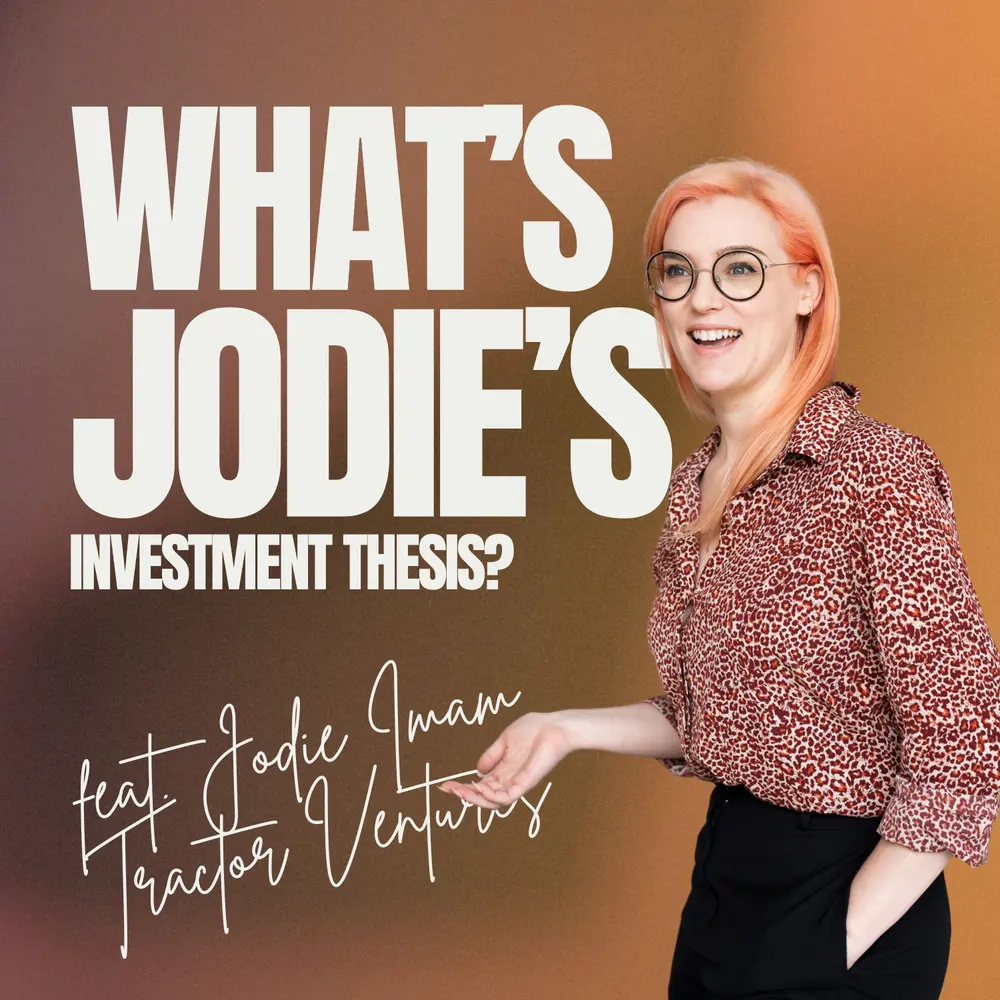
Transcript Synced · select any line to jump ▾ 0:08 Kali Norman: Welcome to Investment Thesis. I'm your host, Carly Norman, and today on the podcast, I'm delighted to have Jodie Imam joining us as a guest. Currently, Jodie is the co-founder and CEO at Tractor Ventures, but prior to this role, Jodie was a co-founder at Occasional Butler, which sold to Airtasker and also started one of Melbourne's first coworking spaces. She's been the Director of Startups at the Wade Institute and CEO at SBE Australia, and throughout it all has quietly been deploying large amounts of capital into early-stage startups as an angel investor. One of the friendliest faces that you'll find on the startup scene, it's an absolute pleasure to have Jodie with us on the podcast today. Hi, Jodie. Thanks so much for joining us on the podcast today. 1:00 Jodie Imam: Thanks, Kelly, for having me. I'm excited. 1:02 Kali Norman: Me too. I can't wait to hear more about your investing history and as well your investment thesis. So to get us started, can you give me a quick overview of your path into the world of investing? 1:15 Jodie Imam: Yeah, of course. I think it's really come from a founder angle. So I still, even though my whole job and a lot of my outside job activities are investing, I still identify as a founder. And so this Project Ventures is my third business. My first business was a marketplace getting small jobs done around the home and office back in 2012 when marketplaces weren't really a thing yet, and eventually sold that business to Airtasker in 2014. And then my second business was one of Melbourne's first co-working spaces here in Prahran in Melbourne. And obviously, so we closed Dev08 when COVID hit, unfortunately. Um, but yeah, that sort of opened up the, the space for me to join Matt and April, um, and start Tractor Ventures, which we've been running for nearly 5 years now. We just hit $100 million funds deployed milestone, which is so exciting. The gap that we saw in the ecosystem at the time, which was, you know, there's a lot of VC funds, there's also the other founders that just don't want to go on that ride, um, and they just want to grow their business in their own time frame, and but they still need growth capital. And so that's, that was the genesis of Tractor starting. So we have a full product suite of non-dilutive of debt products that help founders that aren't going on the rocket journey to grow their business and, yeah, just put more fuel into what they're doing. So, and then outside of that, I'm an angel investor and my mandate is around investing in women. So I think I've got one out-of-mandate investment, but all of the rest are women-led founders, and I'm hoping to make an impact by— for women and the world by investing in women entrepreneurs. 3:00 Kali Norman: Such a diverse background because I think your first startup that you exited, was that Occasional Butler? 3:08 Jodie Imam: Yes. 3:08 Kali Norman: I very much enjoy your insights on LinkedIn around what you learned from that process, particularly your marketing story. So if anybody hasn't jumped on Jodie's LinkedIn and had a look at her marketing journey, I would heavily recommend it. Really appreciate your openness and transparency around what that looked like. Also, coworking, often quite Sometimes I feel— this is just my personal perspective— a little bit underappreciated in the sense that it lets you be in contact with a high volume of founders day to day, week to week, and really start to understand their journeys and how they are both similar and yet different. I know that that's how I felt in my own journey. Was that something that you found set you up for your, I guess, investment journey, building that understanding so rapidly? 3:58 Jodie Imam: For sure. And I think coworking's changed a lot. Like, we were coworking for 8 years prior to COVID, so it was prior to us ever being on a video call with each other. Like, people would come in and use the space just to get out of their own silent home office a lot of the time. And so that doesn't really exist as much. So it's interesting how that has changed. But yeah, we, you know, we had companies at Depot 8 like Lovely, the flower company, and we saw them go from day one with like one small bench of flowers to moving out into huge warehouses. Their house. You know, we saw that Quad Lock— we shared the space with for a long time, um, and saw their growth and how they were navigating. Um, and so, and, and many, many others as well as sole traders and a whole bunch of different people. So yeah, I think you definitely— it definitely helps. And when you talk to a lot of founders, as I have through the other ecosystem roles, you can start to really tell what makes a really good business and an investable business and what makes a really good founder. You can— you sort of start to be able to pattern match after Hundreds and hundreds of, of companies coming past. 5:07 Kali Norman: Yeah, you do get a bit of a sense. I will agree with you on that. So through those journeys, wearing multiple hats, having had access as well to a large pool of founders that you were able to be in contact with over their journey, you've mentioned you angel invest on the side. You've had Tractor now for 5 years. When you started What was your first investment thesis? Did you start with female-led founder investing, or were you sort of a little bit broader when you first started writing checks for yourself? 5:38 Jodie Imam: Yeah, um, that's a great question. I actually did the VC Catalyst course with the Wade Institute here in Melbourne. So I did that— they invited me to do that first, having been very involved in the Wade. I was the director of startups there at one point, and so like really know the team. And, um, I was in the second cohort for the VC Catalyst, and they encouraged me to do it. And at time. It was COVID. I had 3 kids homeschooling. I was running an accelerator. Like, I was like, how am I going to do this? But they really encouraged me, which I'm so grateful for. It was just a really— it felt like for the first time in a long time I'd invested in my own education. But it also gave me a network of other people starting out their angel investing journey as well, as well as all the mentors that were there that are obviously very established. So because I did that program, what you have to do— the outcome of that is to create your mandate and present your mandate back to the group. and your thesis of like how you're— what's your strategy and all that sort of stuff. So that like— so, and I— and during that process, I did some deep digging into who I am and who I want to be and all of that stuff. Like, I really was trying to align it to what's my reason for being in this world. And so I would like— I just pared it back to my own sort of childhood journey and what drove me really early in life. And that's where I came up with the mandate. And so then once you've done that work, I suppose that then it's easy to filter and find who you want to invest in. 7:04 Kali Norman: So what did that mandate look like in terms of business stage, sector, anything like that? Can you give us just a quick run-through of— and appreciating that these are not always hard and fast rules, but yeah, a snapshot? 7:19 Jodie Imam: Yeah, well, it wasn't, it wasn't actually too hard and fast. I think it was more aligning to the purpose, which was to ideally help to redistribute wealth as a broad statement, try and do my bit to redistribute wealth more equitably around the world. And knowing that women founders are more likely to invest in their communities than men, and there's a lot of proven research that they're better at running businesses as well. And so, and, and they don't have as much opportunity for investment. So that's— And then as far as stage and all that sort of thing, I guess I was very much exposed to early stage, and that's, I think, where angel investing plays the most important role because at Tractor we can't actually fund companies until they're at least making $50,000 a month in revenue. So how do they get to that? That's the chicken and egg, you know. So it's these angels early on, I think, is where that is really critical. So yeah, that sort of early revenue stage, usually some traction for me. Like, I do value having done something, whether it's a whole lot of research or you've got your first customers. And then check size for me, the strategy that I really embraced was doing lots of small checks. So it was $10,000, you know, for each investment and trying to do as many as possible. Yeah. 8:34 Kali Norman: Yeah. I think that that whole early stage is such a— it can be quite a broad term as well. And I heard somebody recently say investing in a team and a dream, and I was like, that's about what it is sometimes, right? 8:49 Jodie Imam: Yes. 8:50 Kali Norman: So it's interesting to see as well kind of where you're comfortable starting to deploy. So that was back when you first started out of the Wade Institute, heard fantastic things about the course. course and the networks that come out of that as well. 9:04 Jodie Imam: Yeah. 9:04 Kali Norman: What's that evolved into now? What's your current investment thesis looking like? 9:08 Jodie Imam: Yeah, so what I did was a classic example, which I'm happy to share. Um, and Rachel Newman said it very well on another panel or something that I was involved in after I did the VC Catalyst course, and that was if you're going to do this, you need to be doing it regularly and over every year, like for a long time. So basically for me, I've had to pause. I've run out of cash. I'm not actively writing checks at the moment. And as soon as one of those investments comes off, then I'll be back, back in the game. But for now, I've had to pause, which is a shame. But I went really hard, really fast, and deployed all my capital, which is classic. And I think a lot of early, like, young angel investors, you know, new to the game, tend to do. But Rachel said it very well, and I think it was around like, you sort of have to have in your mind $150K a year set aside for angel investing so that you can be writing at least 10 checks a year, and that helps you balance the portfolio. Because if you've done all your investments, for example, in 2021 when all the valuations were frothy, then you're, you know, that's going to expose your portfolio. As opposed to if you did a few each year over the years, then you can spread out all the cycles as well. So yeah, I'm, I'm in a pause and, and wait phase of my angel investing at the moment. 10:28 Kali Norman: And fair enough, because at the end of the day, everyone's got a cap on what they can contribute to something. And it really resonates what you say about writing a lot of checks really early. That does resonate with me. I went into a couple of VC funds. I had the absolute, like, very lucky to have the opportunity to do so. And I just went, bleh. 10:52 Jodie Imam: It gets like a little bit addictive and you get on a roll and then you sort of, then all of a sudden, okay, well, I better pause. 11:00 Kali Norman: Now I actually need to wait until My husband was like, whoa, glad you're having a good time. Yeah. So sticking with your angel investing journey, are there any particular attributes or recurrent themes that you see within your current thesis around what you look for in either solo or teams that you're looking to invest in? 11:23 Jodie Imam: Yeah, um, I think there is a big part you mentioned earlier, um, the dream and the team. And I think there's— that's definitely, even when there is some early traction, that's definitely what you're looking at. And I do believe that it's kind of that founder grit and resilience that I really look for, knowing it myself. Um, like, I've now been running my own businesses for a long time, like 15, 20 years, and it takes a lot to get through. And it's never just up and to the right, like, it's always bumpy and there's always moments of, yeah, just times where you're like, oh my God, what have I done? Or how do I do this? Or I can't do this. And, you know, and I've seen over the years as well, like, a lot of great energy. That characteristic of resilience that even in the bumpy times that this founder's going to either care enough because they're passionate about what they're doing, so passionate about what they're doing they're going to push through it, or self-aware enough maybe is the thing so that they can understand their own limitations when dealing with co-founders, investors, staff, like all the stakeholders. Because that's another thing that I think if you have passion and/or self-awareness. So that would be high characteristics or attributes for me. 12:42 Kali Norman: Do you prefer to invest in individuals off the back of that, or do you see value in teams? 12:49 Jodie Imam: No, I definitely see value in teams. I don't even think I've got any investments that are solo on— oh, there is one. Because relationships are hard and they're never like— they're never just cheery all the time, no matter who it is, but it's harder to go alone. Like, the dark times for me on my journey, it's been my co-founder that has been the one to pull me out of bed and keep me going. So I think that— and there's no one else that will be in that trenches with you as much as a co-founder will be. 13:21 Kali Norman: That's so true. And so you've mentioned already that you like to look at this with a redistribution of wealth eye, with a particular, I guess, understanding of female-led ventures, which I think again the numbers really reflect that that's a huge opportunity as well within the Australian market particularly. 13:42 Jodie Imam: Yeah. 13:42 Kali Norman: Is there a particular sector or industry vertical that you find you prefer to invest within or have a specific depth of knowledge through that you like to be able to share through that journey? 13:51 Jodie Imam: Not really. Um, I've got investments across many industries and it's the same at Tractor. Like, we have— we're across so many different industries. I think Um, for me it's more— it's not like I only do health tech or I only do retail or e-commerce or whatever. Like, it's more that I love what they're doing, like the thing they're doing, for example. Like, then it doesn't really matter, um, to me if I'm not otherwise— like, if I don't know that industry like an expert, because I'll be more helpful if I really love it, of course. So that's where— 14:27 Kali Norman: yeah. Does that help in avoiding confirmation bias then, if you're coming to the table with quite an open mind around a sector or industry? 14:36 Jodie Imam: Yeah, I guess so. And like, we have Attractor, like, we've come into— we've found ourselves in the banking and finance world, which we were not in before. And so we come with very fresh eyes and do things differently. We're able to disrupt the existing players. And I think that There's a really exciting opportunity when that's the case. 14:57 Kali Norman: When you do get back in the game, you mentioned that you were cutting about $10K checks to start. 15:01 Jodie Imam: Yep. 15:02 Kali Norman: What would your typical size or deal structure look like these days? 15:06 Jodie Imam: I would still want to maintain that same thing because I've only got about— what have I got— about 10 angel investments so far. And so I would want to boost that up. So I really do subscribe to that strategy of having lots of little checks in lots of different companies. And then, you know, as hopefully investments yield, I'll be able to increase that and even follow on and, and those sorts of things. But at this point in time, early in my angel journey, I would just want to continue doing as many smaller checks as I can. 15:39 Kali Norman: Absolutely. And is there anything around structure, say a preference around SAFE notes or anything like that as well, that you have built into your investment approach? 15:49 Jodie Imam: No, I'm sort of open to what the founder is wanting to do. Although I would say most of my investments are probably SAFE notes, so that does make a lot of sense to me because especially when it's so early, it's very hard to value. So yeah, I think I'm very comfortable with that as an approach. But yeah, and I, I think it'll be just what's going to be best for the founder. 16:12 Kali Norman: That's a beautiful approach to take as well with prioritizing, I guess, as well. Obviously always a balance. 16:19 Jodie Imam: Yes. 16:20 Kali Norman: In these kind of things. So what is, I guess, your ideal relationship with those startups that you're investing in? 16:28 Jodie Imam: Yeah, so ideally I want to be able to help when they need it. So I'll probably lean towards founders that I know I can help, as opposed to, my God, I have no idea what you're doing. And so other than mental support, emotional support, you know, like, I can't really help. But so I would lean towards that. But having said that, I don't have lots and lots of time to really get involved. But so it's very much a— ideally it's a fit where I can naturally help, and then I'm more of a call me when you need me as opposed to a how's everything going. Yeah. 17:04 Kali Norman: Can you give me some examples of what that support can look like? For example, would that be introductions to people in the network, introductions to potential clients? Is it exclusively help in that tractor capacity? 17:18 Jodie Imam: Yeah, it's probably all of those things actually. I've helped get press releases into the AFR and Smart Company and that sort of stuff. Definitely introductions to other investors too. I think that's quite powerful because I think investors are typically a little bit sheepish, and when one, you know, if all the flock are investing, then they will jump in as well. And so yeah, I think that's very helpful as well well as a lot of the founders I've invested in will call me when they know specifically, like, I would like— can you introduce me to this person or that person? Or we're going to go out and raise again, who do you suggest we talk to? Or even in some cases, yeah, we are— we've funded some of my angel investments through Tractor as well. And then Tractor's also used and purchased as a customer some of the services. So it just, it depends. 18:11 Kali Norman: Actually, that's a really great point as well, because investment capital is one thing, but paying customers— 18:17 Jodie Imam: yes— 18:18 Kali Norman: is something different as well. That is a really great way that you can start to support your investment portfolio. I've had a couple of others mention that as well, and I know that that's something that weirdly I hadn't considered, and I don't know why. 18:31 Jodie Imam: Oh, it's critical. Yeah, customer revenues is definitely the most important thing. 18:36 Kali Norman: So when you're doing your angel investing And then I'd be interested to know your tractor perspective as well, even though I appreciate it's not quite investing in the same way. It's a different financing model. 18:49 Jodie Imam: Yeah. 18:49 Kali Norman: Do you like to lead rounds, co-invest, or I guess follow-on? Maybe not so relevant at the angel stage, but— 18:55 Jodie Imam: Um, I'm trying to think what's— I think I was— I've been one of the very early investors in a couple of my angel investments, but not so much a lead. Like, I'm not a term setter. I really— I can help guide the founder and, and and share my experience and what I think's fair and reasonable and what's worked. But I really do think it's up to the founder to come up with the structure that's best for them. And then, you know, and plus my checks have been small. And then with Tractor, um, it's— yeah, as you said, it's like it's quite different. And so sometimes founders will be looking for equity and debt at the same time. Like, they're like, okay, we're raising money, we know we need this sort of much equity for these longer-term investments, But we know these shorter-term investments we shouldn't be selling shares for, we'll raise some debt. And so sometimes it's at the same time, but usually it's in between. 19:45 Kali Norman: And you've mentioned a lot earlier investor grit and resilience. What are some green flags that you've developed during those early conversations to ascertain if that's something that a founder or a founding team has? 20:00 Jodie Imam: Yeah, so one example I talk to a lot of founders about with one of my investment So Christine from Resumee is like— I just saw her grit before I even knew her. Like, she was just in my inbox constantly. Like, it was like she decided she wanted me to invest and that was it until I finally invested. And by the end, I was like, I have to invest in this woman. Like, she's incredible. If she's like this to get her business done, like, and growing, then this is This is a good sign. This is a good green flag. And I've told, I've told lots of founders that, and I sometimes I get a lot of emails. 20:39 Kali Norman: You've opened up the floodgates. 20:44 Jodie Imam: Yeah. 20:46 Kali Norman: Endless pitching. 20:46 Jodie Imam: But I think that's it. Like, don't take no for an answer. Just keep that hustle. Like, really stood out for me. And I'll, that, yeah, I'll always remember that. And other times it's more just looking at what that founder's— so Cherie from Elephant, for example, like, she, it's a gifting platform. A system for companies to not only choose gifts but actually manage all giving. And she'd come from a corporate background where she had been effectively the customer for this new business in big, large, and multiple organizations. So for me, it just stood out that she understands the customer problem so uniquely and has all the connections and knows how to talk to them and knows how to get the— those sales and enterprise sales. And so that, that became like quite convincing for me. And it'd been her kind of all she'd done, you know, that sort of HR people function, not just gifting, but in that space for her entire career. And so it makes sense that she loves it and she'll continue to, to do it. 21:48 Kali Norman: If you were to split down at an early stage when you're looking at writing those angel checks between how important all of these founder attributes are and how important product is, To you when you're making those early decisions? Could you percentage weight ballpark for how much each one matters at that stage for you? 22:05 Jodie Imam: 90/10. 22:08 Kali Norman: Wow, really? 22:10 Jodie Imam: Well, yeah. And even with Tractor, like, when we were starting out, like I said this at the start and I've been saying it ever since, like, I know no matter what happened— well, I felt very strong. I didn't know at the time, but I felt very strong. And no matter what happens, I feel like this team will figure it out. Like, so we're starting with revenue-based finance, which we don't do anymore. Like, so I just knew that the team would figure it out. Like, so the product's completely changed and the team did figure it out. So that's— yeah, I do believe that. And like, I hear a lot of founders, you know, and help them with their pitch decks and things, and it's like, I think it's a common thing for founders to just spend a lot of time on how it works and the product. And, and to me, it's the least interesting part. Like, yeah, because the product can change based on what happens in the market once it's out there. True. 23:05 Kali Norman: And again, I will reference your amazing stories about Occasional Butler. After you have been lifted. 23:15 Jodie Imam: Yeah, that's right. I'm not saying this from an observer's seat. 23:18 Kali Norman: No, you've definitely walked the walk. That space as well. 23:24 Jodie Imam: Yeah. 23:25 Kali Norman: So being across so many sectors, industries, and new ideas, both in your angel investing and at Tractor, as you mentioned, debt financing across 4 different stages of a business's needs, but not particularly locked to any one sector as a preference, how do you stay sharp? And I guess across all of the different things happening in industry Both to assist with your work at Tractor but also to evolve your own investing? 23:54 Jodie Imam: Yeah, that's a great, great question. Um, I probably don't, um, but I do have a team, so that's lucky. Um, at Tractor we have a credit team that do a lot of our analysis. It's not like a VC will, will go really deep on the whole industry and go and talk to You know, Founder A who's come with— they'll go and find Founder B and C and D who are doing the same thing and go deep, like, and that's been months really understanding. That's not the same approach at Tractor. We're very— it's a shorter-term investment. It's usually a smaller amount of money, like, you know, up to $1 million or $2 million. So it's very much on the numbers, and our lens is, can this company support this lending and pay it back? So we do think about the industry like a lot where we're doing that. So if it's in e-commerce, what's the chances that Amazon's going to come and scoop this up, for example? Like those factors have to come into play. And sometimes we are a little bit, you know, like private investigators trying to understand like what's happening with policy here and what's happening here. Like what are the things that might actually break this company? But It's different to a way— I think the way that a VC would approach it. 25:14 Kali Norman: And then I guess in your own appreciating again that it's on hold, is there anything that you consume content-wise— newsletters, regular podcasts, anything like that— that you regularly would turn to to just keep across what's happening in a broad range of markets? 25:32 Jodie Imam: Um, I guess I do keep across a lot of publications, um, and a lot of information, I think, as we all do. 25:43 Kali Norman: Okay. 25:44 Jodie Imam: I couldn't say there's one particular source of truth that I go to. Um, yeah, I do my best to keep up. 25:51 Kali Norman: So if you had to give a main piece of advice to someone building their first investment thesis, what do you think is the key thing that someone should keep in mind as they go through that? 26:01 Jodie Imam: Well, I think it's got to be, you know, this Rachel Newman advice that I have now felt, uh, and that's just like, yeah, this is a long-term— to be successful and to make profit, I think, out of angel investing, you do need to see it as a long-term, you know, and a large investment over time. So it's got, you know, ideally you get to 50 to 100 investments. And so have you got that sort of funding available, or how are you going to keep funding that? Yeah. And so I might be able to do 1 or 2 a year now at the moment, um, which like slows down the cadence a lot. So I And I think that really, I mean, it was too late. I'd already gone and, you know, done all these investments and then I heard her say this and I was like, oh yeah, that makes a lot of sense. So, but not to put off people that they have to have that much money, but I think that you do, you can't just put all your money on black. Like, you know, this is definitely a high-risk area and so how do you reduce that risk? And it's by having as diversified as possible. 27:08 Kali Norman: That's so true. And as well, actually, for everybody, uh, listening at home, uh, Rachel Newman is a general partner of Flying Fox Ventures, who as well I think is very heavily involved in the Wade Institute course. 27:20 Jodie Imam: Well, she was— she was at the time. 27:23 Kali Norman: Yeah, was at the time. That's it. And lightning round, which I didn't send you in advance. It's one question really. 27:31 Jodie Imam: It's not that lightning. 27:33 Kali Norman: If Uber had pitched to you pre-seed, for investment back in the day, would you have invested? 27:38 Jodie Imam: Oh gosh, that's a great question. 27:41 Kali Norman: Um, you said that you do, you do have one non-female founder. 27:46 Jodie Imam: That one is Toolbox, which is a timber, which is a sustainable disruption to engineering, but it's totally different. Um, which I guess is just as obscure potentially. I would like to say I would. I would hope that I would. I don't know is the honest answer. 28:08 Kali Norman: It's totally okay. Nobody has said yes yet. 28:12 Jodie Imam: Oh really? Yeah. Interesting. 28:16 Kali Norman: Yeah, yeah, yeah. I think we'd all love to imagine that we'd identify the next Uber or Airbnb or Canva, but it's hard at that early stage. Thank you so much though for joining me, Jodie. I have learned a I've learned a lot from our conversation, and I'm going to take this away and work on my investment thesis. 28:33 Jodie Imam: Excellent. Thanks, Carly. 28:35 Kali Norman: Thank you for joining us here today. I've been your host, Carly Norman, and this was Investment Thesis.


 ▶
▶  ▶
▶  ▶
▶  ▶
▶  ▶
▶  ▶
▶  ▶
▶ ▶
▶ ▶
▶