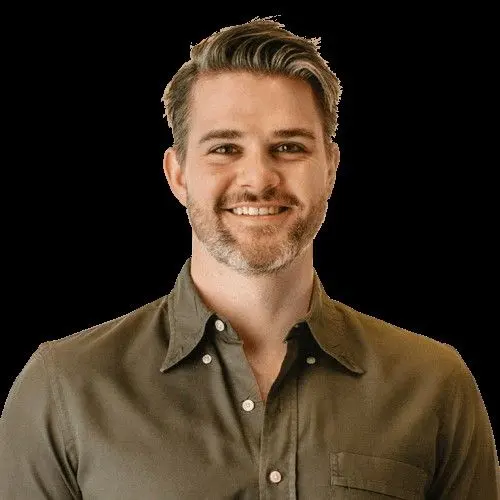
Transcript Synced · select any line to jump ▾ 1:38 Kali Norman: Hi, welcome to Investment Thesis. I'm your host, Kali Norman, and with me today is Rohan Workman, co-founder and CEO at Skalata Ventures. Rohan started his career as an accountant before going on to co-found Rostercloud. When that was acquired a number of years later, he then joined the University of Melbourne, setting up and running their Accelerator program and their entrepreneurial programs overall. From there, he went on to co-found Skalata Ventures eight years ago. Thank you so much for joining me today, Rohan! 1:39 Rohan Workman: It's a pleasure to be here, Kali. Thanks for having me. 1:43 Kali Norman: Always. Now, you've had a really interesting background coming from the numbers side and then the founder side as well. So in your own words, can you walk me through your pathway into the investing side? 1:56 Rohan Workman: Sure. Probably not not linear, that's for sure. I started off working at a place called McGraw-Nickel in two thousand and eight as a grad during the global financial crisis. And they did a lot of big corporate rec recovery and advisory jobs during the GFC. So I worked on some of the biggest corporate collapses in Australia, including actually Great Southern, where I spent five months living in in Perth working on that. So, that was a very interesting time for me and I learned a lot about how a professional firm operates and then also learned a lot about what not to do, but it was the wrong end of the business cycle as to where I wanted to be. And so then with a couple of mates started a company. We made every mistake you could possibly make. and it was a good lesson in entrepreneurship. And that was also the time when we there wasn't really any investment support or advice for early stage founders. That was hard to come by. And then around the same time got that job at Melbourne University, which was a lot of fun as well. And then eventually we sold the company, finished up at Melbourne University, and then with a number of the colleagues that I worked with at Melbourne University, we figured that there was some unfinished business. And that's when we set up Skullata Ventures. 3:12 Kali Norman: Interesting that you've got both the accounting background and the founding background. I appreciate that the two at some point merge into an overall skill set. But just as a quick like top of mind, would you say that an accounting and finance background or that on-the-ground experience as a founder has been more helpful to you as an investor? 3:32 Rohan Workman: Oof. I think it's a good question. I've never actually really thought about that before. I think that when you're in when you're working in venture capital, there's there's two parts to it. There is working with the founders and then there's working with the investors and the financial modeling that goes hand in hand with that. When you're working with the founders, all the background as an operator is is much more helpful. and the accounting and finance part of that plays a small role. You know, you need to be able to measure your metrics and and monitor your accounting and your balance sheet and those sorts of things. But a lot of it's focused around product market fit, your growth engine, sustainable unit economics, those sorts of things. Whereas on the the venture capital side, that's when that accounting and finance background I think has been really helpful because we run a financial services company and sell regulated financial products to investors. So that point is that part of it's been really helpful. 4:24 Kali Norman: True. And that's actually a really nice way to look at the different split between the two different sides of what you have to do in a VC business, because it's not just the investing in your role as well. So tell me then, with this in mind and the fact that you've been running Skelata now for eight years, when you started, what did that first version of your investment thesis look like? 4:46 Rohan Workman: Ooh. when we started, the it's actually very different to where we are today. When we started, we started off by having a relatively formulaic approach, which was probably a history out of or the context for that is relevant given the history we had at at Melbourne University. At the time, There was very little capital for really early stage founders. And I think, you know, Melbourne University was handing out twenty thousand dollar checks. I think Sc Startmate was handing out seventy-five thousand dollar checks. And so what we said was, look, let's give out a hundred thousand dollars initially for a set kind of percentage of the company. And then six months later or six to twelve months later, we'll add in another hundred and fifty thousand dollars to the company if they hit certain milestones and that would determine what the evaluation would be. And so in the at the very beginning it was pretty formulaic. And what we realized was that was actually probably the wrong way for us to be doing it. And so we completely unwound that after eighteen months, two years to become a fairly like typical kind of precede and seed stage venture capital firm that operates in a a much much more flexible way. 5:54 Kali Norman: I love that as well you sort of realize within a within a relatively tight time frame that you needed to change your approach. So what does your investment thesis look like now? 6:04 Rohan Workman: It's it's interesting you say that because we're completely redoing it. yeah, it doesn't really change. There's some parts of our investment thesis which is just part of our DNA, and I don't think that that will ever change. And those those components are also linked to how big your fund is and the background of people running the fund. So the things that the parts of it that are relatively stable are that we'll always look to invest in innovative companies. And we define that as someone who has or a company that has developed something novel or unique and has a defensible barrier to entry. we will always invest in companies that are capital lean and capital efficient. And for that for us, that means that companies need to be able to reach the next milestone with our initial check. There's no point in funding a company to get to you know, two thirds of the way to the next milestone. And then if they're not cash flow positive, they're in a fair bit of strife. And in fact, even these days, we're we're pretty keen on ensuring that all the investments we make, the founders can get to cash flow positivity with the first check that we write because the fundraising environment is very different to what it was a few years ago. And then the final part of our investment thesis is around ensuring that companies are market ready. So we won't invest on a on a deck. You know, with the we need to see some sort of evidence that the founders have got the ability to execute and build some sort of product, even if it's a really initial basic one, an MVP. or a prototype or a some sort of commercial kind of pilot that they might have that demonstrates that they are capable of building what they say they want to build. Ooh. 7:42 Kali Norman: I like that. Do you have any particular sectors that you tend towards? For example, you yourself co founded an HR software stack. are there sort of areas that you or the team tend towards or are you quite agnostic? 7:58 Rohan Workman: We're we're agnostic. because of the investors that we have in our funds, there's areas that that we can't invest in, like gambling, weapons and tobacco. and but for the most part we are sector agnostic, but probably more focused around pre seed and seed. and on the technology component of of what I mentioned a little bit earlier. You know, it's now very much moving into that AI area, which is is not really a new thing anymore. But we're looking at how the companies that we're assessing are innovating both in terms of the product, but also in terms of the operations. And that's something that we haven't necessarily looked at previously as much because the operating leverage that AI native companies can get now is extraordinary. And so when you've got when you're investing in our stage, normally you model out what the dilution is going to be for the company as they raise more capital. And For a lot of these companies, a lot of them don't need to raise anywhere near as much capital as they once previously needed to do. And so you can see companies making a fair bit of attraction and progress off a pretty small cost base, which means it increases the returns for us. So that's become a bigger part of how we look at companies as well. 9:10 Kali Norman: that's a really great point as well, particularly off the back of your earlier comment that you want people to react to cash flow positive before you put another check in. 9:17 Rohan Workman: We don't have to. I think the it's it's more that I think back in twenty twenty one and twenty twenty, it used to be that people like, look, if we get to five hundred K in revenue, even if we're not cash flow positive, we reckon we can raise another round. And I think through that period, you know, what became really clear was if you adopt that and you're default dead, as we would say, which means without race power capital, you just will not be able to keep going, then you're really not getting to choose your own destiny. And so even if there's a goal of getting to Cashflow Positive Video Founder doesn't quite get there because circumstances weren't quite what that expects they expected, we've supported a number of companies who've then gone on to get there because you can see the the path that they're drawing out in front of them. 10:00 Kali Norman: That makes perfect sense. Now, Rohan, speaking of writing checks, do you mind if I quote a little something that you put on LinkedIn and ask if that's still and I appreciate that we are redoing the thesis. So but you say that you invest a hundred to three hundred K initially at valuations of one to five million. 10:16 Rohan Workman: Mm-hmm. That's probably changed a bit, but yeah. We we will now invest up to half a million dollars initially. so most of the checks are a few hundred thousand dollars and the valuations are up to kind of ten million dollars initially. 10:30 Kali Norman: Okay. And is that to reflect the sort of changing landscape that we've just touched on? 10:36 Rohan Workman: Yeah, changing landscape. I think we we've always been valuation sensitive. Okay. When we look at valuations, historically for the first few years that we operated, most of the valuations we were doing were around the two, three, four kind of million dollar mark. And I think now for the initial investments we're doing, we're seeing them kind of five, six, seven, potentially up to ten million dollars. And I think that's reflective of the fact that the amount of capital that we are investing is larger than it was when we started. I think it's also reflective of the fact that types of founders that are investing are probably slightly different to what we were a few years ago. And also just that there's more venture capital in Australia. There's still nowhere near enough, but there's more, which means that the market has shifted in terms of, you know, increasing valuations. And I think part of one of our learnings as well was we were probably a bit too valuation sensitive. initially. and so now we're less valuation sensitive than we used to be. But it's not like some of the other firms that are happy to write a a two million dollar check on a fifteen million dollar pre money valuation for a company that doesn't have any traction. It'd be very unusual for us to do that. 11:43 Kali Norman: Okay, but that I think it's a great example as well of how different people are filling different sort of touch points and different cap like gaps across the whole VC community at this stage as well. you mentioned there as well that investing in different kinds of founders. The business and the business modeling, and you touched on that now, is is one side of it. What do you look for in a founder when you're assessing if it's an investment that you want to take for? 12:08 Rohan Workman: Yeah. I mean, that's there's a few kind of headline things that we look at. And there's all the stuff in between the cracks that really kind of fills it out. the first thing would be that we look for domain expertise in the industry in which they're operating. and that's important to us for a couple of reasons. The first is if someone's worked in an industry for a period of time, they're far more likely to have a really deep understanding of the problems that that industry faces and therefore will be better equipped to to build better products to serve those customers and solve their problems. And secondly, they've probably also got a network of friends or colleagues who would be initial customers, which helps them get those initial kind of case studies on the website that they can use to get other customers as well. So that domain expertise is is really important for us. The second one is some commercial nows. It doesn't necessarily need to be the founder and it doesn't have to be deep commercial now, but it does need to be at the stage where the founders can understand a balance sheet and what the key metrics are going to be. one of the biggest challenges that we come across is, you know, we don't expect founders to be lawyers and understand the extent that our lawyers do, for example, a term sheet or a a subscription agreement. But there is sometimes a lot of friction which either prevents deals from going ahead or slows them down because founders haven't gone through the experience of really understanding what a subscription agreement entails or a safe and the key terms and why people might but be negotiating on them. Yeah. And that you know, so when you've engaged with founders who've had a bit of experience in that area area, it does mean that you tend to move through that process a lot more quickly and with a lot less friction, which we're all keen to do. So that does help and it also makes it more likely that they've got a more realistic understanding of what subsequent investors are going to want to see in the company and the stage that you need to kind of get it to in order to raise more capital if that's on your agenda. 14:00 Kali Norman: And you made a really good point there, I guess, as well, because obviously a lot of elements of founding you learn on the job. There's no other way to sort of really always get that experience. It's a pain look. 14:11 Rohan Workman: Yeah, mistakes. Lots of mistakes. 14:13 Kali Norman: Yeah, right. Because it's it's a it's a different situation. You can't really train for it in the same way. Do you have a preference as well before first time founders or second or third time founders? 14:25 Rohan Workman: we will do it either. We have got a track record of of investing in overlooked founders, founders that just haven't been able to raise capital elsewhere. And that's one of the things we do hang our hat on. I think that's dates back to when we were working at Melbourne University as well. and I think that there's a lot of really amazing people out there. who are going to start companies, but they might not have been a product manager at Olassian for four years and therefore they're not necessarily the typical profile of someone who's going to go and raise venture capital funding. so they don't need to be second or third time founders. We do have those groups in the portfolio, but the majority would probably be first time founders, I'd say. 15:05 Kali Norman: I love that. And that idea of overlooked founders is is I think a really valuable one as well. but now, can you can you think of an example or a time that you might have invested in something that breaks all the rules that we've just run through? Where was there someone that you just just couldn't say no to? 15:22 Rohan Workman: I mean we haven't been out the the one thing about investing out of a venture capital fund is that you can't break all of your rules because you've got you know a promise that you've made to investors via expi your IM that says you'll invest in these types of companies. That's fair. But there's been yeah, two times that I have I've probably invested in companies that that Skelata would not have invested in and one worked out and one hasn't worked out. The first one was a company called Brosser, which was founded by some founders who came through MAP and ultimately unfortunately didn't quite work out. But Ivan and and David and Richard, one of the other co-founders, are all excellent operators and have would have no qualms about investing in whatever they do next. And was just, I think, one of those things where you invest on the basis that sometimes these companies don't work out. And that one didn't work out. and the other one, which probably has worked out, is a company that my my wife and I invested in personally before they listed the business. and that is a a medical technology business which is now listed on the ASX and that's been a pretty good return for us and we're looking forward to holding onto that one for a for a while yeah. 16:31 Kali Norman: When you decided to work against the or that's not fair to say work against actually, but to take it outside of Scalada because it didn't meet the brief and the commitments that you'd made to investors. What was it about those? Was it about the company that you liked, the area they were in? Or were you like, as you mentioned previously, these are three excellent operators that I've seen in action before. If they think that this is an opportunity and this is the traction, I'm backing them. What what element made you go, I'm putting money into this? 17:00 Rohan Workman: I think with the the Brossa one, that was before Scalada, so that was part of it too. I think it was when I'd finished up at Melbourne University, but before it started at Scalada. Or started at Scalada. that was just I Ivan and and David, who were there at the time, were just excellent operators and continue to be. and so I think they're you tend to back people predominantly. and on the other one, it was the fact that the We've had a few the the com technology was commercialized out of Monash University and it's basically technology that allows you to assess the the p performance of a lung by using CT scans rather than needing to put any have you know fluids into the lung which we can then scan. And by using the technology they've developed and using looking at X rays and CT scans over time, you're able to get a lot more insight into how a lung is performing, which has huge applications in people with respiratory illnesses, you know, globally. and the technology had a huge barrier to entry because it's it's novel. but there's with that there's a really long commercial, well a really long timeline to get commercial success. And so that's taken far longer than we anticipated. But one of the other investments that I made, which I'm, you know, you you have ones that you win on and ones that you lose on, but another personal investment that I made really early on was zero. And I sold out of that way too early. Bic and didn't quite realise the time frames that these companies require to grow up. And I think that's part of the reason why we've held on to this other business for as long as we have and will continue to do so because it's not for some of those companies, it's not five years, it's probably ten to fifteen years and and so you realise that it just takes time to build great things. 18:40 Kali Norman: I love that you invested in zero early. That's 18:43 Rohan Workman: and that was it was still listed, but it was early and I I had sold way too early. I sold you know, I can't even remember what it was, I think it was fifteen dollars. 18:51 Kali Norman: Hindsight's 2020, Ron, if we had a crystal ball, believe me, we would have got right to Bitcoin. You've and even just in this conversation, you've ticked off a lot of different business verticals and spaces and things like that as well. You've redone your thesis since joining Skeletor a couple of times. You've referenced as well that you invest personally outside of it. With so much opportunity in the world, so much new tech and a changing landscape. How do you stay sharp and stay across? 18:55 Rohan Workman: Yeah, exactly right. 19:21 Kali Norman: Do you have podcasts that you would recommend, news sources that you go to, or is it network driven? 19:27 Rohan Workman: Yes. that's a good question. And the reason why I'm chuckling is that I feel like I am falling so far behind right now in everything that's going on. so a couple of things. I I've never seen the industry change as quickly as it's changing right now with all of that's going on in in AI. And we actually made the decision a couple of months ago to pause our initial investments for fun our fund because we wanted to spend more time learning about AI and and d changing the frameworks that we use to make investment decisions because some of the frameworks that we're using previously which are relevant are no longer sufficient. Interesting. and so as an example, if you're looking, you know, historically, you could use that traction, so potentially revenue, as a proxy for level of innovation because people are getting something they can't get elsewhere and also defensibility. But these days you can see companies explode up in revenue and then Claude releases a new feature and it just decimates that company overnight. And so some of those frameworks are really evolving. And so we've got the team, our team and myself, I don't think we've ever done anywhere near as much professional development as we're doing now. And I can't consume anywhere near enough information to feel like I'm keeping my head above water. What that, you know, looks like is podcasts. I was recommended the AI daily brief by one of our investors last week. I think that's really good. there's all in like you know, the guys there, I I have some trouble with their personalities, but the content is is interesting. we get a lot of recommendations from our team on the on the Slack channels, and then just going down rabbit holes on the internet as well and YouTube videos, depending on the particular things that we're looking at. so but it's funny though, I still think that at the moment the rate of change is unlike anything I have seen before. And so I do feel like there's still so much more to learn, even just to feel like I'm keeping up, let alone not. falling behind as much as I think I am. 21:23 Kali Norman: I don't actually s can I say it's actually just really lovely to hear somebody say that because I definitely know that I feel a little overwhelmed as well. So thank you as all for like being really open about that. I don't think you're 21:38 Rohan Workman: There's a lot of posing that goes on in in my industry and and I think a lot of people seem come across like they've got the answers, but the reality is no one has got the answers right now because it's all changing so much. And I think when we look at making investments, especially because we do go across a whole bunch of different sectors, we'll always look to find people who are deep in those sectors and know more about it than we do and talk to them about what we're investing in to get a better sense of it. So I think that you know Anyone who can tell you with confidence right now that they can see what's gonna happen with AI over the next few years is is probably I mean yeah, we we simply can't do that. 22:16 Kali Norman: No, and hindsight's always always twenty twenty. But you know, if we had a crystal ball, I think as well, there's some insane valuations at the moment, it makes it really hard to assess. I saw I can't remember the name of it now in the news this morning, a company in San Francisco that launched in September last year is now raising their second round. And this round is with a seven point five billion dollar valuation and the company is lost. 12 months old. It's just, it's a very different operating environment. I can't recall ever having seen anything like that five years ago. So 22:51 Rohan Workman: Those those especially the the large language models, I think Anthropic's gone from a billion to thirty billion in revenue in the space in a handful of months. you know, they're now valued at almost a trillion dollars after being around for less than five years. And if you look at the economy and you really zoom out, like that has never happened and there's now more and more of that happening. And there are companies that are being started and in a matter of months they're going from zero to billion dollar valuations, not even large language models with a handful of staff members. And some of them even bootstrapped. So it's just extraordinary what's going on at the moment. but I think what's also extraordinarily difficult is to understand well what's going to be enduring, you know, what's going to last beyond five years rather than just a few months or a few years. 23:36 Kali Norman: Yeah. And I think that's really it as you pointed out before. Sometimes it's a really long game. You referenced holding, you know, investments for ten or fifteen years. 23:45 Rohan Workman: Correct. And if there's not much liquidity, you gotta be careful. So 23:49 Kali Norman: True. Asset rich, cash poor, that is. That's the situation. Well, look, you've run us through a lot here today, Rohan. And I I thank you so much for sharing your knowledge and your insights. And I have one final question for you that was not on the brief sheet. Given your investment thesis and where you're at at the moment, if Uber had cold pitched to you pre seed back in the day, at a yes or no, do you think you would have invested? 24:17 Rohan Workman: Not a snowflake's hope in hell. And that's the thing, right? You look at founders and look at companies. on paper, Uber and Airbnb are the worst ideas. They are inviting strangers into your spare bedroom or getting into some random car, all of the things that as a kid you're told by your parents to never do, and yet have turned out to be extraordinarily successful companies. 24:35 Kali Norman: That's it. 24:46 Rohan Workman: Right. So you look at those companies now and you go, Yeah, okay, I can kind of see time chain change and whatever it might be. But I think when you even with our first fund is seven years old. And the companies that had been in that fund, there are some that started really slowly and we thought weren't gonna work out, and they're now the highest performing companies. And some of the companies that are performing really well from the start aren't as performing as as well as some of the other companies that have kind of since overtaken them. So It anyone who says you can predict w you know, which company's gonna be successful or not is just untrue because at the stage that we're investing, you really are backing founders and you need to adopt a portfolio approach to ensure that whichever the winners tend to be are in your portfolio so that you don't miss out on that upside. 25:30 Kali Norman: Ooh, and that is a beautiful note to leave it on. I'm gonna take that forward and work on my investment thesis. Thank you so much for joining me today, Rohan.

 ▶
▶  ▶
▶  ▶
▶  ▶
▶  ▶
▶  ▶
▶  ▶
▶ ▶
▶ ▶
▶