Sidecars have gone mainstream. Once something mostly associated with larger venture funds, they're now increasingly common in Australia, with emerging managers using them alongside their first funds and sophisticated LPs increasingly expecting access to them.
But what exactly is a sidecar, and why would you use one instead of simply investing directly?
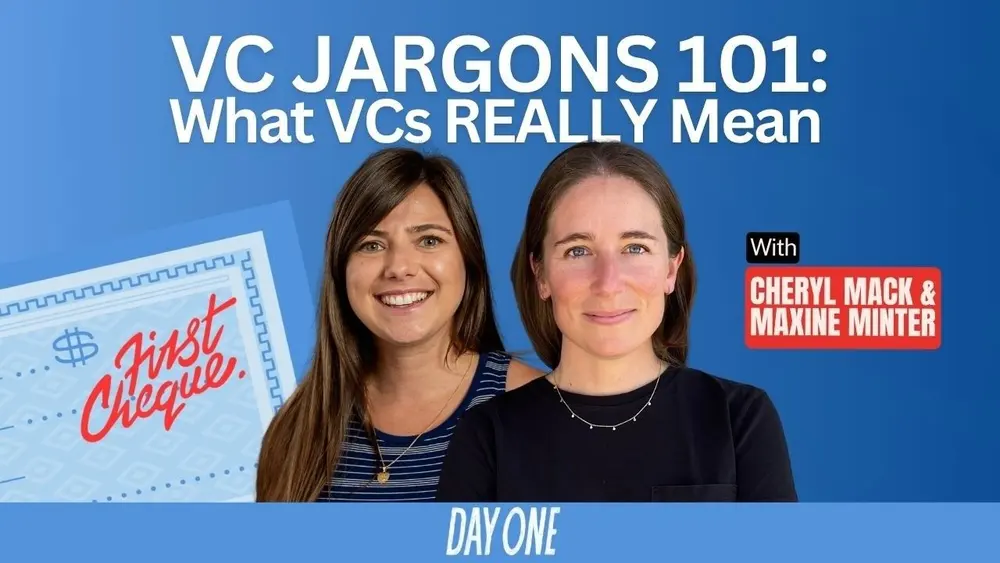
In this episode of First Cheque, Cheryl and Maxine break down sidecars from the ground up: how they differ from co-investments, why LPs use them to double down on companies they're excited about, and how lower fees and carry can make them attractive to larger investors.
They also unpack the less obvious reasons fund managers use sidecars — from getting more capital into high-conviction companies and giving venture-curious investors a way to get reps, to preserving pro rata in follow-on rounds without changing the core strategy of the fund.
The conversation gets into opportunity funds, the history of sidecars, and why a vehicle that was once niche is now a standard part of the venture fund playbook. They also dive into the surprisingly complicated world of Australian SPVs, the four main structures available, and the regulatory challenges facing super funds investing in venture.
Finally, Cheryl and Maxine look at how the venture ecosystem is evolving, why sidecars are becoming part of the progression from syndicate to fund manager, and what the growing expectations of institutional LPs could mean for the next generation of Australian funds.
About the show First Cheque is a Day One show hosted by Cheryl Mack and Maxine Minter, helping investors think sharper about early-stage investing.
Chapters
0:00 From venture outsider to "everyone is building companies" 1:12 Why sidecars have suddenly gone mainstream 2:23 What exactly is a sidecar? 3:14 Sidecars vs co-investments 4:12 The Uber for Cats problem 5:12 Why LPs and fund managers use sidecars 5:40 Doubling down on the companies you love 7:27 How sidecars can lower fees and carry 8:40 The paradox of picking winners to average down fees 9:29 Why sidecars make more sense at growth stage 10:30 Drafting off someone else's diligence 11:30 Follow-on sidecars and pro rata 13:31 Why competitive rounds make sidecars valuable 14:50 The admin headache of investing directly 15:05 Why sidecars can make investing easier 16:02 The surprising history of opportunity funds 17:25 When should emerging managers start using sidecars? 19:10 Why fund managers run sidecars 21:00 Sidecars, carry and staying disciplined 22:00 Why sophisticated LPs increasingly expect sidecars 23:10 SPVs aren't actually a legal structure 24:10 The four main Australian SPV structures 25:23 Why Australia is different from the US 26:00 The evolution from angel to syndicate to fund 27:08 The super fund fee problem 28:17 Should venture be treated differently? 29:11 The regulatory challenge for Australian venture 30:24 What happens as Australian funds mature? 31:23 Why building a fund is still building a company 32:01 Sidecars 101: did we cover it all? 32:49 Send us your sidecar questions Transcript Search or select a timestamp to jump ▾ 0:00 Maxine Minter: When I was watching venture from the outside as an operator and just being like, that's not company building. Like what you're doing, what those people are doing is not company building. I don't know what it is, but it's definitely not company building. 0:11 Cheryl Mack: And then you stepped in the door and you're like, oh, look, everyone here is building companies. 0:15 Maxine Minter: Oh, would you look at that? Probably, as I said, you're one of the best people to define these. What is a sidecar? 0:21 Cheryl Mack: That is essentially the core concept is like, hey, we're investing in this through the fund. Do you want to put a check in directly? And I put directly in quotes. If you're watching on video, you'll see me doing it because it's technically Probably not directly. 0:33 Maxine Minter: Apparently, technically, they are sidecars, which I didn't know. Also fun fact for you. 0:37 Cheryl Mack: Really? I would, I would just call that an opportunity fund. 0:39 Maxine Minter: Well, yes, it is now just called an opportunity fund because it has become mainstream. But when it started, it was considered a sidecar. Right now it has its own name. Yeah. Okay. Okay. 3, 2, 1. 0:52 Cheryl Mack: Hey, I'm Cheryl. 0:53 Maxine Minter: I'm Maxine. 0:54 Cheryl Mack: This is First Track, part of Day One, the network dedicated to founders, operators, and investors. 0:58 Maxine Minter: If you want to be a better early-stage investor, this is the show for you. 1:01 Cheryl Mack: So TL;DR, if you don't want to suck at investing, Listen up. 1:10 Maxine Minter: Alrighty, so it's been a while since we've done one of these. 1:14 Cheryl Mack: It has been a little while, but hopefully people are excited for our next 101 episode because this is something that's become a lot more prevalent recently. It's kind of gone mainstream. 1:24 Maxine Minter: Yeah, it's kind of mainstream, although it was pretty niche. Actually, when we first started doing this podcast even a couple of years ago, it was relatively niche, at least in Australia, but now it's mainstream. 1:32 Cheryl Mack: In Australia, yeah. I feel like SPVs were a big thing in the US and now they're like— 1:38 Maxine Minter: Oh yeah, yeah. 1:39 Cheryl Mack: They've arrived in Australia. SPVs have entered the Australian chat. 1:42 Maxine Minter: They've entered the chat. We're of course talking about sidecars, which is a special version of SPVs, but excited to get into the definition. You obviously are one of the best people in Australia to talk about these because you literally probably see most of them as they happen. Because we are seeing so many of these around, especially we're starting to see more small funds in Australia, but also in the US, I thought it'd be interesting to dive in, nerd out about sidecars. Why do we have them? What do they do? What do we call them in their different formats, et cetera? 2:16 Cheryl Mack: Who goes into them and why? 2:17 Maxine Minter: Yeah, let's do it. 2:19 Cheryl Mack: Yes, this is something that we do all day long, so I'm happy to jump into it. 2:23 Maxine Minter: Let's do it. 2:31 Ad: Founders scale faster on Deel. Set up payroll for any country in minutes, hire anyone anywhere, get visas handled fast, and get back to building. Visit deel.com/dayone. That's D-E-E-L.com/dayone. 2:53 Cheryl Mack: If you're a founder or operator trying to scale, here's the reality. Australian hiring is getting harder. Salaries are at record highs, and the talent you need is increasingly out of reach. The best operators are quietly building offshore teams of engineers, marketers, accountants, and analysts at a fraction of the cost. 3:10 Maxine Minter: PearTree does it differently. They headhunt highly skilled talent from the Philippines and South Africa with full transparency on where every dollar goes, so your team is paid fairly and they are fully focused on your business. 3:22 Cheryl Mack: As a Day One listener, you'll receive a free team audit to identify where offshore talent could move the needle in your business, plus 20% off on your first hire. 3:30 Maxine Minter: You can learn more at dayone.fm/peartree. That's dayone.fm/peartree. So probably, as I said, you're one of the best people to define these. What is a sidecar? 3:48 Cheryl Mack: So a sidecar is basically when a fund is making lots of investments through their fund, but they often will also give their LPs, sometimes people outside their LP base, but most of their LPs, a chance to essentially go in almost directly into a company that they're investing in. This takes on different versions, but that is essentially the core concept is like, hey, we're investing in this through the fund. Do you want to put a check in directly? And I put directly in quotes. If you're watching on video, you'll see me doing it. Uh, because it's technically not directly, um, but it is the ability to choose that company in particular. And there's so many reasons for doing that. 4:27 Maxine Minter: Yeah, totally. Why is it different than co-invest? What does co-invest mean and what does sidecar investing mean? 4:32 Cheryl Mack: Yeah, so the co-invest version is where you actually get to invest directly. So let's say you're an LP in a fund. Let's say I, I am an LP in the CoVentures fund and you are investing in, uh, the next Uber for cats. And if I wanna co-invest, or if you're giving me the opportunity to co-invest, then I might write a $100K check alongside your fund check. If, on the other hand, you're running a sidecar for Uber for Cats, then you would set up a special vehicle, some sort of legal trust or whatever. We can talk about the various structures that these SPVs take form, and you would set that up, and I would go into that, but that would correspond only to— my Uber Cat investment or your Uber Cat investment and not all of the companies in the funds. 5:24 Maxine Minter: Do you use the Uber Cat, Uber for cats example all the time? 5:29 Cheryl Mack: All the time. 5:29 Maxine Minter: I'm like trying to visualize what Uber for cats would look like. It's like, is it a transportation ecosystem just for cats? I mean, I'm focusing on the wrong thing here, but I like, I am like, love. 5:41 Cheryl Mack: And also possibly a cat driving the Uber. 5:44 Maxine Minter: This is the question that I have. Are we like, you know, maybe in this driverless world you can have Uber for cats and like the ride comes with the cat. 5:52 Cheryl Mack: Yes. 5:52 Maxine Minter: Maybe you're pitching me a new idea. Um, so, okay. So you have sidecar investing and then you have co-invest. Sidecar investing is when there is an entity that sits next to your core entity. So the core entity being the fund and there's anything ancillary to that. And then you have co-invest, which is actually the opportunity to come directly in via alongside a fund, usually at the like introduction or invitation of the fund or the investor that you are investing alongside. 6:24 Cheryl Mack: Yeah. And the difference there is that if you're co-investing, your name as the LP gets to go on the cap table. Uh, when you are doing an SPV or a sidecar, then your name is not on the cap table, but it is a one-to-one. So you're, you know, your $1 gets one share or whatever. it is, then like that corresponds to that company exactly, whereas your investment in the fund corresponds to a much smaller percentage of that company. 6:51 Maxine Minter: And why do people do it? 6:53 Cheryl Mack: Yeah, that's a really good question. I mean, there's a bunch of reasons. You can probably add some, but I'll start with a couple. So there are scenarios where a fund is going into a company that they, their check size may be You know, let's say you're, for your fund, your check size is $200K, um, and you're leading the round and you, there's a little bit of extra, uh, allocation, or you may want to bring on somebody, uh, come on that you think is really valuable, or you're like, hey, you know what, we're leading the round and we wanna make sure that there are people on this cap table that, uh, are, you know, uh, friendlies, I guess, uh, in case of anything down the road. 7:33 Cheryl Mack: On the fund side, I think it's partly about control, right? If you or your affiliates are, uh, taking up most of the cap table, then you get more control in the round. Um, on the LP side, I can name a couple. I mean, if you're really excited about a particular company in a fund, then you probably wanna do what we call double down, right? So you're, let's say you put $100K into a fund. If they're doing, let's, for, um, simple math purposes, 10 investments, only 1/10 of your capital is going into that company. But if you're really in love with that company, you may want to put more than just 1/10 of that $100K into that. company. So you'd probably wanna double down on that one. 8:09 Cheryl Mack: Um, some LPs do it just pure, like invest in funds just purely to get the co-invest or sidecar opportunities. And they do something, you can probably explain this better, but they do something called like averaging down. So it's like they're, uh, give me a second to figure it out and then you can add to it. But, uh, they're, they're like, they know their fees on the fund side are high, but then when they do the SPV on the side, the fees are usually lower. Uh, and so somehow it works out to averaging an average lower fees? 8:38 Maxine Minter: Exactly. Yeah. Okay. Um, the somehow is that you can imagine if you have $1 million, you're investing into venture, say, you can either put $1 million into a fund and the usual fees for working alongside a fund manager at 2% management fees per year and 20% carry. Alternatively, you could put, say, $500K of your million dollars into the fund, and then you could keep $500K to the side to double down alongside. But the key thing is, is for most sidecars, they have lower fees and lower carry. So the usual is a 1 and 10, so 1% management fee and 10% carry. 9:18 Cheryl Mack: Half. 9:19 Maxine Minter: Yeah, exactly. If you put $500K in at 1 and 10 and you put $500K in at 2 and 20, you end up at 1.5 and 15 across your entire capital pool. Assuming the entire capital pool performs in the same way. So it is a way in Australia in particular where, especially with super funds, has become quite normalized to have these sidecar investments where it allows the super funds and bigger LPs to average down the total fees and carry burden that they have investing in venture. 9:52 Cheryl Mack: You know what I think is funny about that strategy is that you, let's say you're as an LP, you're like, cool, I'm going to invest in a fund to get diversification. Because I don't think I'm going to be good at picking winners, right? Like, that's why you go into a fund is like, all right, well, I'm going to, I want diversity. I'm not really great at picking winners, but then also I am going to try and pick winners on the side in order to average down my fees because like theoretically, or even like in practical terms, there's no way you're getting co-investments on every single deal in the portfolio. So unless you can get every single deal in the portfolio, you're actually not really averaging down your fees unless you, uh, the ones that you happen to get co-investments on or, uh, uh, sidecar investments on actually end up being the winners. 10:34 Cheryl Mack: So I feel like it's, it's almost this like conflict of you think you're doing it one way, but then you're also doing it that conflicts with your strategy on the first way. 10:42 Maxine Minter: Totally. Yeah. I think, I mean, like it makes more sense to me at growth stage because at growth stage— 10:49 Cheryl Mack: Much less risky. 10:50 Maxine Minter: Yeah. Where this started was that you have like big institutional managers The way that it was like traditionally thought about, venture is traditionally thought about in this idea of a funds management or fund manager specifically within venture is those sophisticated LPs are thinking about what's called look-through ownership. So effectively they just want to be invested in the best companies, but they know that they can't do the work to go and find the best companies and win positions in those companies. And so because of that, they work with managers who do that work. who take a clip of the ticket, but they're ultimately trying to buy, inverted commas, look-through ownership in the best companies. 11:26 Maxine Minter: And I think like once a company gets to Series C or Series D, like it's pretty clear that the winners in a category are going to be inside of a certain set. Okay. It might not be the best company, but it will deliver like pretty solid returns to you. So that's the kind of history of the mentality of this sidecar investing or kind of co-invest. Whereas in early stage, I think it's actually something quite different. It's the same vehicle, it's the same mechanism, but I like, at least in our world, it's driven by a very different thing, which is investing at the earlier stages. You and I know, like, it's a lot of work. You've got to, you've got to be in all of the information feeds. 12:02 Maxine Minter: You have to look at a whole bunch of deals, et cetera. And so I think in that version, actually, it's just drafting off someone else's diligence platform. And so you invest via the fund and then you can get sidecar investments. There is a version of sidecar investing though that we haven't talked about, right? What we're talking about here, or implied of what we're talking about here, is the stuff that is co-investing or like investing at the same time as the fund into a company. But there are also other versions of sidecar investing that allows emerging managers or maybe people that want to be particularly disciplined to invest in that format. 12:36 Maxine Minter: I wonder if you can tell us a little bit about like other ways you invest around a fund using a sidecar. 12:42 Cheryl Mack: Yeah, I mean, there's the follow-on option, right? So a fund invests, let's say, you know, your fund is pre-seed only, you invest at pre-seed, but then of course the company does well and they raise their next round, but that no longer fits your fund mandate. Some funds have a follow-on fund for that reason, but a lot of funds don't, especially because, you know, if you're raising your second fund and then, you know, doesn't, like, you may not be able to then also raise a follow-on fund, like raising one fund. On its own is hard, raising 2 funds at a time. 13:12 Maxine Minter: No mean feat, let me say. I'll tell you. 13:16 Cheryl Mack: Exactly. So then as a fund manager, you have all this like, um, pro rata allocation in these companies that are doing well, and what are you gonna do with it? Your fund doesn't fit that mandate anymore, and you don't have the capital, um, from your fund to put into it. So you might wanna offer that to your LPs. That's a nice little benefit for them. Um, so why don't we call that a follow-on sidecar, I guess? And so you'd, you would create a sidecar opportunity for your LPs to take up that pro rata. Um, and that's where I think the structure makes the most sense because, um, if, uh, if you were to just go back to that company and say, hey, yeah, I know we've got $1 million in pro rata, that's great. 13:53 Cheryl Mack: I actually wanna give it to my LP. Can you just bring them on the cap table? There's a whole bunch of like mechanics around, uh, rights of first refusal, refusal, and, uh, and bringing different entities on in the next round. Like there might be a, um, there might be another, uh, sorry, Series A or Series B investor that's like, no, no, no, I want that. They, they're not, if they're not taking their allocation, they can't just give it to someone else, you know, 'cause they're buddies. Doesn't work like that. But, uh, there is something called the affiliate. So, uh, as a fund you can say, well, actually this SPV here is affiliated with us, so it is entitled to our pro rata. 14:28 Cheryl Mack: And so that is a main reason why you would set up this sidecar entity in order to take those investors' funds and take up that pro rata without triggering a whole bunch of like rights of first refusal and other investors saying, no, no, no, we want that. 14:43 Maxine Minter: Totally. And like, I think it is, it can't be overemphasized how competitive those rounds are looking, especially right now, right? Like you can't just waltz up and be like, hey, your company has 6x'd in the last year and you have all the best funds around the table. I'm just going to give you a million dollars and you're going to take it. Like that is not what growth rounds look like. today, they are like incredibly competitive to get in. And so the competition to try and get capital into some of these companies, like being able to share with your LPs or share with your investors, if you're running a syndicate, like, hey, you can now come into this either way that you wouldn't be able to otherwise, is super valuable. 15:20 Maxine Minter: I also think it's worthwhile saying here, like often, especially bigger LPs or maybe even smaller LPs, one of the reasons that they're using sidecars as a as opposed to going direct is admin. Because, you know, as you and I both know, the amount of admin maintaining a large angel portfolio, it's a lot of admin, right? There's like lots of like resolutions and stuff you need to sign and things that come back to you and filings every year and like all that stuff. 15:46 Cheryl Mack: Do you know how many companies we are, we are on the cap table for? 15:49 Maxine Minter: I don't even want to think about it. I don't, I, I would, I cannot even imagine the volume of admin you guys have deal with. I bet you are very glad AI invented itself in this journey because that opens a lot of doors. 16:02 Cheryl Mack: Yes and no, but also, it's still a lot of admin. You still have to read stuff. Yes, AI can read it for you as a first draft, but you still got to read stuff. We have a fiduciary duty to our investors to not just AI it away and be like, yeah, we trusted the AI. It was fine. 16:17 Maxine Minter: Totally. Totally. Yeah. The AI told me. So, I mean, Often for a lot of folks, they're actually using sidecars to abstract themselves away from a lot of that admin because they still have professional managers at a cheaper cost managing in that format. So we pull out here for a moment, we think about it, you end up using sidecars either to co-invest alongside at a cheaper rate, sometimes free, right? Depending on whether you are a cornerstone of that fund or not. 16:45 Cheryl Mack: Or not. 16:46 Maxine Minter: And then afterwards, You also use sidecars as a way to participate in those follow-on rounds. Fun fact for you, I didn't realize this actually, but technically opportunity vehicles are sidecars. Those like standalone funds, which, you know, blind funds, so to speak. So people like pull capital into these entities that then take up those pro rata and take up those next opportunities in the subset of what comes out of the fund. Apparently, technically they are sidecars, which I didn't know. Also fun fact for you. 17:14 Cheryl Mack: Really? I would still, I would just call that an opportunity fund. 17:17 Maxine Minter: Well, yes, it is now just called an opportunity fund because it has become mainstream. But when it started, it was considered a sidecar, right? Now it has its own name. Um, yeah. Okay. But if you think about how old venture is in the US, so venture in the US has been happening since roughly 1945. The invention of the opportunity fund sidecar was 2011. by USV because they had such a banger of a fund one, but they didn't want to change their investment strategy. Yeah. So Fred Wilson invented the Sidecar Opportunity Fund, which was this vehicle that they put on top of it and that they would invest in, you know, Twitter and all of the other incredible companies they had in. 18:00 Cheryl Mack: 2011 doesn't feel like it was that long ago. 18:02 Maxine Minter: I know, but it is. And I think anyone younger than us would be like, 2011 is ages ago. And we are like, that feels like yesterday. It's like, I mean, but I mean, it's only 15 years ago. 18:15 Cheryl Mack: Like 15 years ago. 18:16 Maxine Minter: Yeah. Yeah. Was the first opportunity sidecar and now it is extremely normalized. 18:22 Cheryl Mack: And now it has its own name. It's like, yeah, we're doing an opportunity. We're raising fund 3 plus an opportunity fund. 18:29 Maxine Minter: Yeah. Which is a super common stapling. 18:31 Cheryl Mack: Very common. 18:39 Ad: Founders scale faster on Deel. Set up payroll for any country in minutes, hire anyone anywhere, and get visas handled fast so you stay focused on scaling. Deal takes care of onboarding, HR, IT, EOR, benefits, and compliance so your team can grow without borders. 18:57 Maxine Minter: It's why more than 40,000 fast-growing companies trust Deal to move So I wonder if actually it's useful to talk about how sidecars usually enter the chat for an emerging fund manager's growth. Like when, if you are an angel investor today, or you're thinking about starting a syndicate and what that progression looks like from Angel to syndicate, syndicate to fund manager, like when should you start thinking about sidecars? 19:32 Cheryl Mack: What I think is interesting is that, uh, even 5 years ago, the only funds that were doing sidecars were the larger funds. And now, I, it, it's basically something that has entered the chat as soon as you start your, basically as soon as you do your first fund, you're like, yeah, we're gonna be doing sidecars alongside it. But that, I like, I mean, that was something that you started to do with your first fund. But before you, Black Nova, Archangel, and, you know, you guys have all started within the last 5 years, that wasn't a thing. It was like, oh no, you know, sidecars and opportunity funds, that's something that bigger funds do. So now what we typically see is like on first fund, a fund manager's like, yeah, we'll run a sidecar alongside for whatever things that we can get extra allocation for. 20:19 Cheryl Mack: or whatever things that doesn't fit our fund mandate, uh, at, at the second round. So that progression really looks like, um, you know, you may start a syndicate first as a fund manager to get some runs on the board, build up a bit of an LP base and, and reputation, do, do deals individually, um, most likely using our platform, obviously. And then when you go to launch your first fund, uh, already having that syndicate launch means that like you have that sidecar, uh, available to you to run those deals alongside. It is a little bit of extra work, but I actually think that it is, and you you can maybe comment on this. Like, don't you think that it's becoming more and more important from an LP perspective to get those opportunities on the side? 20:59 Maxine Minter: Oh yeah. Like, I think actually it's probably helpful to go a little deeper on like why as a fund manager you do it and then maybe why as an LP, like I talked a little bit about there, like why as an LP you want it, but why as a fund manager that you do it. Um, one is it allows you to kind of add more capital around great companies, right? At the earliest stage and then throughout the journey. In our case, it's also a great way to get more angels, like great angels alongside us onto cap tables, as you said, but also an opportunity to get more people who are maybe like venture curious to feel more comfortable to start allocating because they can allocate into our sidecar on a deal-by-deal basis. 21:37 Maxine Minter: And like, and like get runs on the board and like get reps before they either come into the fund or branch off and do their own thing as angel investors. So there's like a, kind of almost angel investor training thing for us, which I think is fairly uncommon for why people do sidecars. The other benefit as an, as a fund manager is for your core fund, you have carry and then you have hurdles on that carry. So when you are investing, you have to meet 1x the initial investment plus some kind of hurdle. In our case, it's 8%. So over the course of the fund, you generally speaking will see if you're kind of in the top 25%, of your vintage, you should be able to distribute back about 1x your capital inside of the first 8 years, right? 22:19 Maxine Minter: As LPs, you would expect 1x your capital inside of 8 years. But to clear your hurdle as an investor, as a fund, you have to, it's roughly kind of 1.5x the initial capital invested by the time you get to year 8, year 9. And so if you think about that for a moment on the SPV side or in the sidecar side, actually it creates, you should start participating in carry much earlier because you don't have to clear that hurdle. So that's, you know, for the fund manager, but also for the other employees who are working in that fund, that's a material benefit. Then the other reason that you're running sidecars is it gives you an ability to, you know, stay disciplined on your core strategy, but flex up and down with kind of additional capital into some of these companies and participate on that upside. 23:04 Maxine Minter: Then as you were saying, You know, you might not want to dilute your strategy. For example, like we are strictly pre-seed. USV Fund 1 was strictly seed and then Series A. They didn't want to do anything else, but then they're invested in and they have these great relationships with founders who build generational companies, truly incredible companies, and they have the opportunity to invest, but they don't want to dilute their core focus. And so they set up these vehicles, a sidecar for you to come in afterwards. I would say increasingly it's also becoming par for the course, right? The most sophisticated LPs are, especially if they're coming in and cornerstoneing funds, they expect this. 23:41 Maxine Minter: So they're coming in and they are wanting to invest via sidecars or get opportunities to invest via sidecars. If they're your cornerstone, they're often wanting to negotiate on those fees and carry and on that fee and carry via those sidecars. So they're wanting to get, you know, much lower than that 1.10. sometimes fee-free. So that's a, it's a norm in the Australian ecosystem, especially for super funds, right? They're coming in and they're investing, uh, kind of into these funds. I think the last Blackbird fund, not the one they're raising right now or just have raised, but the one previously was, I think they announced it as a billion-dollar fund, but actually the core fund was only like $250 million. 24:19 Cheryl Mack: Oh, it was actually 3 funds. Yeah. Yeah. 3 or 4 funds. I can't remember. Yeah. It was like a core fund, growth fund. I think it was 3. 24:26 Maxine Minter: Yeah. I think it was a core fund of like $250 million, uh, growth slash opportunity fund of like $600 million and the rest was fee-free co-invest. And so actually it was like quite a material amount. You know, it was a great headline number. A billion was incredible for them to raise, but like, yeah, actually a lot of it was co-invest, not sidecar investing. So that's another way where, you know, it actually earns you the right, if you're running bigger strategies, maybe bigger funds, it earns you the right to be able to work alongside some of these bigger investors with a really attractive proposition and bring them in early on deals. 24:59 Cheryl Mack: Should we also talk about the different structures? Because one of the things that I keep seeing, like, as, you know, as the platform, uh, and the backend office for a lot of these, as well as, as well as fund managers, uh, most people email us being like, hey, can you set up an SPV? And then we jump on the phone and I'm like, cool, so do you wanna run through the options? And they'll be like, yeah, I want an SPV. And I'm like, yeah, I know, but like SPV stands for special purpose vehicle, which like maybe in the States that's an actual legal thing. 25:30 Maxine Minter: It's not a thing. But okay. Nope. 25:31 Cheryl Mack: It's not a real, it's not like an actual legal thing. It's not a thing. So I can't just be like, yeah, I'm going to the SPV office and setting up an SPV for you. It doesn't work like that. You gotta choose from the different structures. So, um, the main ones are either a unit trust, a discretionary trust, a bare trust, or a nominee agreement. Um, and there are pros and cons to each. I can go through, uh, I could talk endlessly about those, but I can probably go through a couple. 25:55 Maxine Minter: Like, I bet you could. 25:57 Cheryl Mack: Yeah. Because nothing, once I, once I get on the phone with them, I tell them this, now they're like, oh, surprise Pikachu face. Like, well, now I've got a whole other like decision to make. And sometimes then they'll go and try and do their own research and come back. And then I'm like, I shouldn't have, I should have just said, yeah, we'll do an SPV for you and like just chosen for them. But you know me, I like to give options. But yeah, so those are the 4 main ones in Australia and they are all types of special purpose vehicles. But SPV is not the legal entity of the thing. You gotta choose one of these 4. And so we typically do the unit trust. 26:32 Cheryl Mack: It, in my opinion, offers the most protections for both investors and the companies under— and the underlying companies. But yeah, there's the other 3 structures as well. 26:43 Maxine Minter: And I think that's important to understand, especially if you are either investing in one of these vehicles, like to understand there are different structures, but also to understand, like, if you're thinking of running some of these vehicles, there are like material trade-offs through some of these. So if you are thinking about running a sidecar alongside your fund or you're like fund curious, I think it's important to understand that, especially in Australia, there's different, there's different entities. 27:05 Cheryl Mack: So if you do want to understand it, feel free to book a call with me and I'm happy to walk you through them. Yeah, call me. I'll walk you through them. 27:12 Maxine Minter: You can test whether she can in fact speak for hours on the differences between those entities. Not something I would chance. I think she probably could. So Australia's a bit of a weird one when it comes to SPVs and how the sidecar investing ecosystem has grown up around the Australian ecosystem. Because I would say in the US it's really normal now, right? There's lots of infrastructure around it. There's lots of different platforms that'll allow you to build this alongside your fund. It, as we said, like USV was the first, but now pretty much anyone around Fund 3 starts to look at setting up an opportunity vehicle to invest across those. It's probably worthwhile saying sometimes these opportunity vehicles are fund-specific, so it will double down on opportunities out of Fund 2, but sometimes these vehicles are cross-fund, right? 28:03 Maxine Minter: They like kind of layer in over the top of each other. So an opportunity vehicle might invest in any opportunities in the year. you know, 2026 to 2029, regardless of what entity it's come out of over that period of time. So that's become extremely normalized in the US. I think it's kind of like a well-trodden path that you go, you know, angel syndicate, fund 1, fund 2, fund 3, plus opportunity fund, and then, you know, build the franchise that way. But then alongside that, the normalization is also this co-invest. So increasingly meeting LPs who are Like it is par for the course. It's what they expect. And so it's almost like drained back. But Australia is a little different because our regulatory ecosystem is a little different in relation to SPVs. 28:45 Maxine Minter: And so there's been some changes or some discussion of how that's changing, especially in, uh, Australian context with the super funds being, you know, pretty heavily regulated on fees. Yeah. They have to report on fees. 28:58 Cheryl Mack: They have to, they can't go above certain things on fees. Yeah. 29:02 Maxine Minter: Yeah. Which I didn't actually realize, but this Your Choice, Your Super program, which is, you know, an initiative that I actually think is pretty well-meaning, which is trying to get super funds to disclose and like hit certain fee thresholds so that they don't, you know, unnecessarily load up companies or load up super funds or investments with too many fees. But if you fail that test twice, you can admit no new members. You're effectively out of business. It's, I didn't realize it was like that heavy-handed. 29:33 Cheryl Mack: That's pretty strict. Yeah. 29:34 Maxine Minter: That's pretty strict. Like if you, as a super fund, twice invest in something like venture and the fees end up being above the thresholds you're allowed to have, then you're out of business. Game over. 29:51 Cheryl Mack: I think they campaigned, 'cause I was talking to Rick Baker, uh, maybe last year sometime, and he was like, yeah, I'm going to go talk to them about this. Like they had called, they'd called him to come and like, I don't know, testify is the wrong word, but like— 30:04 Maxine Minter: Yay, Rick. 30:06 Cheryl Mack: Yeah. As like a, um, an expert on the subject as to like why VC funds, um, should probably be excluded from this because of the fee structure and the way that like venture investing works. Uh, it's, it's difficult to, especially if you're doing SPVs and sidecars, like you should look at it as an aggregate in this sector rather than a particular, like, one thing. So I don't know if he ended up campaigning for that and they got it or not, but I do think it makes sense, right? Like, if you are a super fund manager and you're worried about this, then like your natural inclination would be like, hey, well, I'll just exclude venture. And then where does that leave you, right? 30:46 Cheryl Mack: Probably with the worst portfolio. And also then we have a bunch of super funds who are excluding themselves from like one of the largest high-risk, ultra-high-reward asset class, right? That's, I don't think that's a good outcome for anybody. 31:00 Maxine Minter: Absolutely. Actually, I mean, it doesn't just affect venture, right? Like venture is a subcategory of private equity, meaning the investing in private companies. And a lot of private equity has very similar fee models to this. The 2 and 20, right? Hedge funds is what, where this started. And then venture is a subset of that same fee model. And so, Yeah, I think it's been a problem for them for a long time. And I think, I don't think that they've handed down the decision yet or haven't normally kind of decided yet. I know they did a bunch, the government did a bunch of consultation at the beginning of the year to try and work out, well, actually APRA, I think specifically did a bunch of consultation at the beginning of the year to try and work out what the right fee structures were around these. 31:37 Maxine Minter: But I think it's a really big opportunity for Australian super funds in particular, because at the moment they're kind of fighting with one hand behind their back, so to speak, to try and deliver great returns and also invest. domestically into the Australian ecosystem of various kinds, but specifically into tech and venture because they can't. They either have to work alongside managers at like such egregiously low fees that it makes it really hard to run a business as a fund manager, or alternatively, they just don't invest in this asset class and they're stuck with like ASX stocks, which, you know, isn't great. Not a great outcome for them. 32:12 Cheryl Mack: Not a great outcome. 32:13 Maxine Minter: We're hoping that we'll start to see some more evolution. around that. And you've got a crop of really exciting funds in Australia that are now doing fund 4 and fund 5 and are starting to get that range to work alongside super with their sidecars and with their more mature structures. And so hopefully that infrastructure will be ready for them by the time they get to that stage. 32:35 Cheryl Mack: Yeah, I absolutely agree with the concept in principle, but I think with anything, government comes in and is like, hey, we want to regulate this. And then we're like, actually, I know you don't really understand venture, but It, you know, this, these are gonna have a whole bunch of unintended consequences. So hopefully, yeah, that's, that is something that, uh, can be adjusted or has been adjusted already, um, to account for this. 'Cause yeah, you're right. Like the ecosystem has matured. We've gotten to a stage where we've gotten, we've got many funds that have graduated to that. Well, we call them like mature at fund 4 or 5. 33:06 Maxine Minter: I, I, that's an interesting question. 33:08 Cheryl Mack: I've heard that going from what, 2 to 3 is the hardest. 33:10 Maxine Minter: So, yeah. I think about 30% of funds graduate from fund 1 to fund 2 and fund 2 to fund 3. And then it's more like 60 or 70% after that. It's very similar to pre-seed, seed, seed, Series A. Because at the end of the day, we're all just running companies, right? Right. Yeah. Yeah. I still laugh at myself when I was watching venture from the outside as an operator and just being like, that's not company building. That's like what you're doing. What those people are doing is not company building. I don't know what it is. It's definitely not company building. And then it's definitely not venture building. 33:45 Cheryl Mack: And then you stepped in the door and you're like, oh, look, everyone here is building companies. 33:49 Maxine Minter: Oh, would you look at that? So yeah, it's definitely business building. It's just a different shape of business than a venture-scale business. But I think if we pull out here and we think about, okay, did we do our job on giving a 101 on sidecars, what they are, Why we have them, why do GPs do them, why do LPs do them, and then how they're evolving over time and some cool stuff that's happening in Australia. Anything else we should talk about? 34:21 Cheryl Mack: No, I think we covered it all. I mean, this felt like it went by really fast. I would love if anyone in the audience has any further questions about sidecars, uh, please ping us and we would love to answer those for you. We could add it as like an appendix on the, on the episode. 34:36 Maxine Minter: Yeah, we can cameo on our own episode at the end. Yeah, send us your sidecar questions. We can't wait to hear from you. 34:44 Cheryl Mack: Awesome. Thanks, Maxine. 34:48 Maxine Minter: Thanks, Cheryl. No transcript lines match that phrase. Try fewer words.



 ▶
▶ ▶
▶ ▶
▶