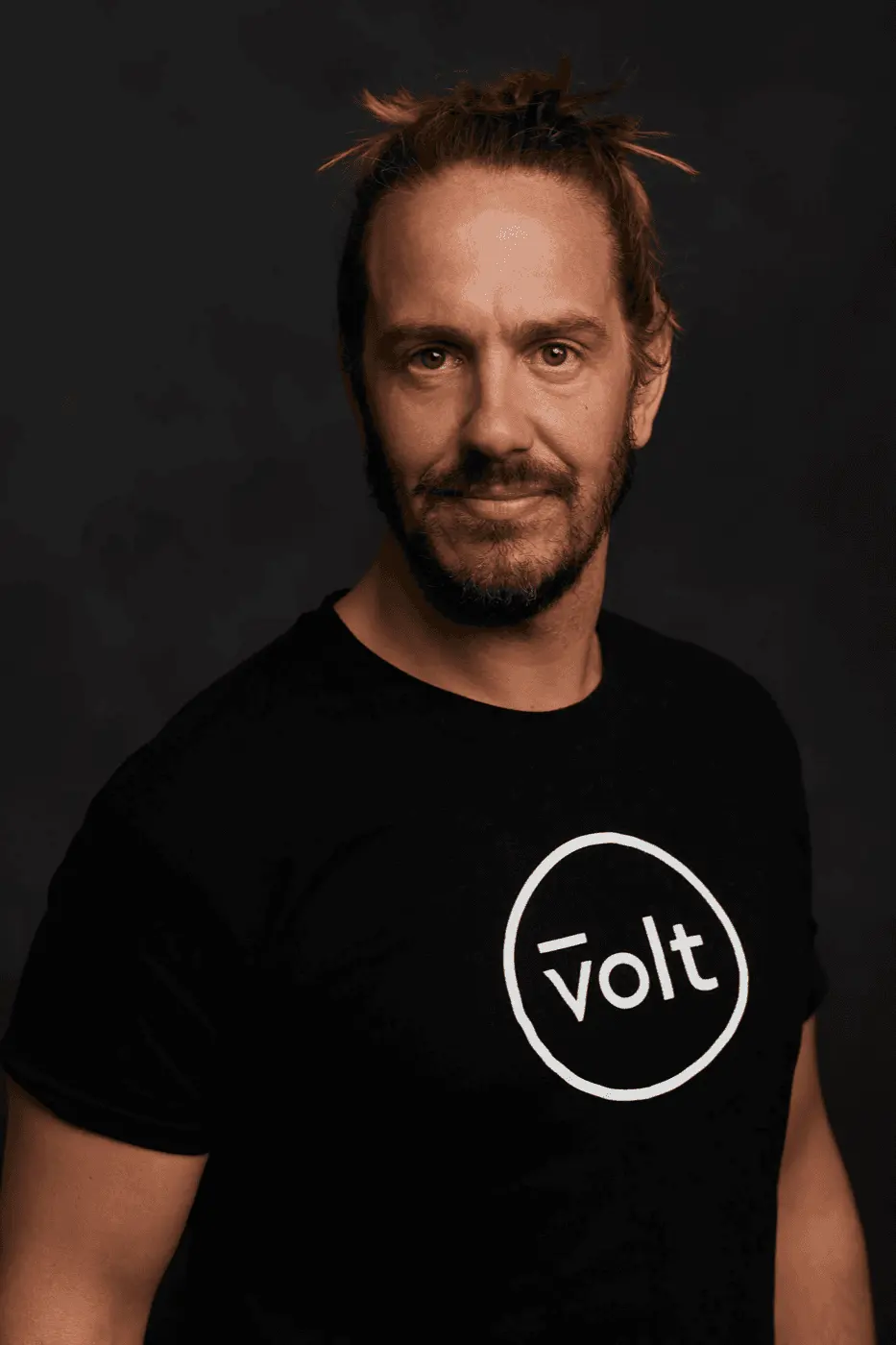
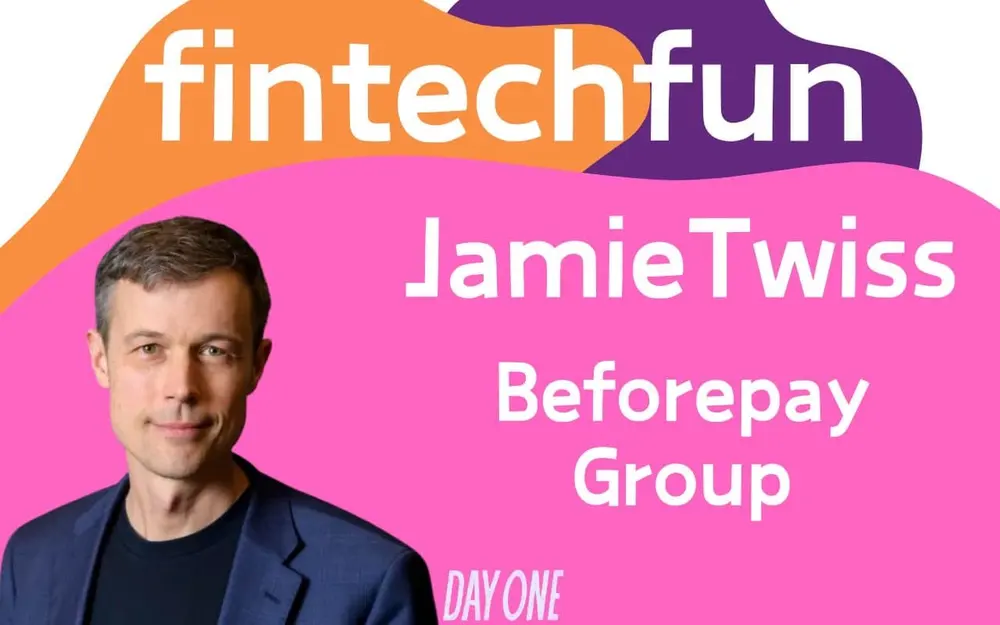
In this episode of the Fintechfun podcast series, Chris Titley hosts Jordan Lawrence, co-founder of Volt, to discuss the revolutionary platform that is poised to streamline real-time account-to-account payments across the globe. Jordan shares the origins of Volt, its mission, and the impact it has in various international markets.
Volt’s inception coincided with the advent of open banking in Europe, tackling the challenge of integrating diverse payment methods under one umbrella. Jordan Lawrence exemplifies this by detailing Volt's progress in Brazil with the payment method PiCs, which has significantly sped up transaction times for merchants. Moreover, Lawrence provides insight into the nuances of payment adoption in Australia, highlighting the hurdles and potential for merchant-driven push towards real-time payments.
Key themes in this conversation revolve around the influence of worldwide monetary systems, the emergence of innovative payment solutions, and Volt's ambitious plans for expansion. Lawrence expertly weaves through the intricacies of financial transactions, merchant benefits, consumer transparency, and Volt's visions for the future—including the potential issuance of local bank accounts across 50 countries.
Transcript Synced · select any line to jump ▾ 0:00 Chris Titley: You're listening to a Day One FM show. 0:07 Speaker: Pick My Brain is the podcast where founders pitch me their startup and I try to give them some useful advice so they can connect better with potential co-founders, investors, media, and of course, customers. My name's Alan Jones and I was a founder myself for about 15 years, and after that, an angel investor for another 15 years. So yeah, old. Some of my ventures have been successful and some failed disastrously, But I like to think I've learned a thing or two along the way, and maybe some of that can help you. So if you'd like to learn how to tweak your pitch, subscribe to the Pick My Brain show now, wherever you like to listen to podcasts. 0:40 Chris Titley: Hi, I'm Chris Tittley, and this is Fintech Fun, the podcast where I speak with Australian fintech founders and executive management and have some fun along the way, gaining insights about the person behind the brand. Fintech Fun is part of Day One, the network dedicated to founders, operators and investors. This episode, I'm joined by Jordan Lawrence, co-founder of Vault. Jordan, thanks so much for taking your time and being part of this podcast. 1:05 Jordan Lawrence: Thanks for having me, Chris. Excited to be here. 1:07 Chris Titley: Now, for the listeners out there that may be familiar with the word Vault, it's certainly not the Vault Bank, which I have interviewed in the past. So coming to Australia, do you wanna talk about the Vault story, Jordan, and its origins and how the business began? 1:22 Jordan Lawrence: Yes, certainly. So Vault is basically real-time payments everywhere, as I was saying. The goal is for Vault is to go around the world and connect the account-to-account payment methods in each country into a single point of integration. So merchants, PSPs, acquirers, integrators can just plug into Vault and have access to the world of account-to-account payments, which we're calling real-time. And obviously compared to cards, it is. So we started in Europe when the PSD2 regulation came around, which basically made open banking. So we have open banking in Europe, Faster Payments in the UK. That's where Volt started. So the challenge was at the beginning when open banking first came around was that, yeah, again, PSPs and merchants had to go kind of country by country, region by region, plugging in a third-party provider to those APIs to the banks in order to get decent coverage across Europe and the UK. So what we thought was, let's plug in all those third-party providers ourselves, right? So all people have to do is integrate into Volt and they have access to open banking across Europe and faster payments in the UK initially. When we started doing that, we realized there was kind of 70 countries around the world making their own version of, of real-time payments account-to-account. So we thought, okay, this is a bigger issue. We started plugging in other countries as well. Our first foray outside of Europe was Brazil. We have an office in São Paulo. We process Pix down there. Pix is the equivalent of your guys' PayID. It's gone really, really well. Brazil, the challenge was that merchants would have to wait 30 days to get their money from the card schemes, which was very difficult if you're a new player on the market. With Pix, it's kind of T-minus 2 seconds, right? Because it's account to account. So it revolutionized everything. And 86% of all payments in Brazil now go through Pix. UPI in India is a similar success story. And obviously, NPP products here in Australia with Payto and PayID, I think, are quite slow to adopt compared to those, as everybody's quite interested in using their cards here, the whole tap and pay, all the rest of it. But I think adoption is coming fast, to be honest. 3:36 Chris Titley: Jordan, I'm interested about the question from a social good point of view and also from a business point of view, how important it is to be, you know, as you mentioned, from 30 days to 2 seconds and, you know, why some businesses potentially here in Australia haven't adopted it because I would've thought that it would actually speed things up from a monetary point of view, which ultimately will continue to grow businesses per se. 3:59 Jordan Lawrence: Yeah, I mean, the adoption is slow, but as I say, it's coming. And I think in various verticals, it does make a big impact. The whole thing is going to be driven by merchants. Because it's account-to-account, it's an API call at the end of the day. So it's a much more cost-effective way to pay for something from a transaction fee perspective than a card. So the merchants are benefiting massively. It's a lot more transparent for the consumer. So yeah, as I say, I think it will grow. And it will be merchant pushed as they'll be saving so much money. It's just a behavioral situation. Here in Australia, people are getting cashback on their credit cards. People are getting points all over the place. And there's nothing really yet which ties in points with the payments. So there's an equivalent of the account-to-account to make it beneficial for the consumer as well. All that's coming. And I think the kind of new generation is really in favor of these account-to-account payments rather than cards anyway because of the transparency. But certainly, as I say, I think the merchants will push it here. What becomes interesting also, I think, with Volt specifically is that because we're plugged into all these countries, Later on in the year, we're launching in the US. We're launching 6 more countries in Southeast Asia, 5 more in LATAM. So merchants in Australia, you know, who've got international ambitions can plug into us, use the MPP products, but also we can act as merchant of record in the other countries and actually process these account-to-account payments for them there as well, bringing effectively consumers to the merchants here, right? 5:26 Chris Titley: Yeah, it certainly opens up, I would've thought from businesses that that operate in multi-jurisdictional areas, that the ease and simplicity of a product such as Volt will allow for sort of a greater market of businesses, I suppose, for using the product. And as you grow into different geographies, then that will open up another set of markets. Am I on the right assumptions there? 5:49 Jordan Lawrence: Yeah, exactly. That's exactly how it's gonna go. And I think people, when they get their head around the account-to-account payments in whichever country they are, and they see how easy it is to switch on new markets, they'll definitely start expanding their horizons, even if it wasn't on the, on the roadmap previously. I think what else is interesting as well is each of these, let's say, domestic payment methods has its own brand. So obviously, you've got Payto and PayID here, Pix in Brazil, UPI in India, it goes on and on. What Vault does by being this kind of network of networks is effectively build a marketplace of domestic payment methods. So I'll give you an example of what I mean. Vault actually enables people in Brazil using their local Brazilian bank account and effectively a PIX payment to pay in Europe at the point of sale at the moment. 6:35 Speaker: Mm-hmm. 6:36 Jordan Lawrence: Right? Later on in the year, we'll launch a collaboration with Worldpay and UPI in India, which actually enables people from India using their local Indian bank account and UPI in the UK, which there are a lot of Indians in the UK, and they can actually then use UPI in the UK. And that's what we're going to do with NPP as well, right? So we'll be able to allow Australians around the world to actually use their local bank to pay locally in Europe or Brazil, wherever, wherever else we are, the US by then. And then it becomes an even more attractive play because you've internationalized the domestic payment rails. 7:14 Chris Titley: No, for sure. The idea of sort of like the ability to pay in multi-currencies and not just multi-currencies, but certainly the ease and quick efficiency, I suppose, of getting paid, as I've said before, is very important. What's some of the feedback that you've got from some of your customers thus far in regards to product? Have you built out the marketplace in a good user experience, or do people say, oh, actually, I'd rather be able to deal in this particular currency or this particular way, can you change that, for instance? 7:44 Jordan Lawrence: Yeah, I'll be honest, unfortunately, at the moment, it's so nascent, all of these products, right? So it's not perfect. It's definitely not as easy as tapping a card and walking out, or or a familiar way to pay for something online like a PayPal kind of one-click. So each country has its own nuances. But repeat customers at the checkout using Vault is around 36%. So that means 36% of people who use Vault once will use it again, which is, I think, a really good sign. 8:10 Chris Titley: Hmm. 8:10 Jordan Lawrence: So that will only get better and better. So yeah, feedback has been good so far. Merchants, of course, love it. The fees, the fees have crashed. Dramatically from their card schemes and what have you. So feedback from merchants, of course, has been amazing. And of course, operating cash flow is increased ginormously because the cash just enters your account immediately. So merchants love it. Consumers are a little— over here in Australia are a little bit beholden to their own banking UX, which I think in some cases is a lot to be desired, to be honest. You know, but again, it will just get better and better. So— Pay2, when you make a payment, first of all, you've gotta sign a mandate. If you wanna sign a kind of ongoing mandate where they can, rather than a one-off payment mandate where they can, the merchant can keep taking money out of your account, can be a bit of a clunky experience on some of the, let's say, bigger banks. But again, getting better and better. So I think from the merchant's side, they love it. From the consumer side, there's a way to go on the UX from the banking side of things. 9:08 Chris Titley: And then if I repeat this interview, let's say in 12 months' time with you, wherever you may be in the world, what would you like to see or the progress Volt, or is there some sort of short-term aspiration within the group of what you want to achieve? 9:21 Jordan Lawrence: Yeah, so Volt raised another $60 million around 8 months ago to help us with our product and expansion, right? So that's why we're expanding into all these new countries. By then we'll be in around 50 countries. 9:34 Chris Titley: Wow. 9:34 Jordan Lawrence: You know, which is great. Keep in mind, we've got EMI licenses in Europe. We're applying for licenses elsewhere. Which obviously enables us to start issuing bank accounts. What I'd love to see in 12 months' time is in these 50 countries, the ability for Volt to be able to issue accounts locally to merchants and PSPs, collect the funds locally, and start remitting the money around the world as well, wherever the merchants want to pay out, wherever the merchants want to send money, which would be a traditional FX transaction, Volt being obviously the— the on-ramp effectively to that transaction. I think that will be a good achievement for the next 12 months. 10:14 Chris Titley: Now, Jordan, let's talk a little bit about yourself and what you get up to in your spare time. You've been in Sydney now about, oh, I caught up with you about 6 weeks ago. How long have you been in the country and what do you do in your spare time? Have you enjoyed the Sydney and Australian lifestyle? 10:32 Jordan Lawrence: I'm sorry, spare time? 10:33 Chris Titley: Is that something? That's right, sorry. I'll rephrase that. Any moments that you may have to breathe outside of work. 10:40 Jordan Lawrence: Yeah, that has been a very intense, uh, a few months. I got here January 15th, and I'm actually going back to Europe tomorrow, uh, so April 5th, via Perth actually. My brother lives on, on the West Coast. He's been there for about 15 years. Um, so every time I come over here, I pop in, pop in and see him. Um, but spare time, I love to surf, so I'm actually staying in Manly here. I've been here for the last few months. Every morning I managed to, to get a surf in before work, which has been great. Uh, your guys' lifestyle is, uh, Fantastic, to be honest. So yeah, super happy to manage to be here on the Northern Beaches, get a surf in, and yeah, I think, and try and spend as much time with the family as possible, which has been challenging. 11:21 Chris Titley: I did, when I chatted to you, what was it, would've been about 6 weeks ago, you did sort of mention that you have popped around a little bit in the world. Do you want to give the listeners a bit of a journey on your last few years and where you've lived? 11:32 Jordan Lawrence: Yeah. When we started Vault about 5 years ago, I was living in Amsterdam in the Netherlands where I had a previous company, which is called PCN. It's a fintech consulting business. I started that in 2008. There's a big staffing and recruitment arm of that, so kind of media business there, it's still going. Managed to exit that at the beginning of last year, but that was in Amsterdam. During the pandemic, moved down to Portugal. Never, I've never come back really from there. I was, yeah, given my job, I was also heading up the expansion into Brazil. So I was in Brazil for a while. Yeah, then, yeah, as I say, we're headquartered in London, so I'm probably there a week a month. And then, yeah, moved over here in January. So it's been a bit of a roller coaster the last few years. 12:16 Chris Titley: Two questions on the back of that. How's the surf here in Australia compared to the rest of the world? 12:20 Jordan Lawrence: I mean, you've got sharks here, which are quite prevalent compared to where I live in Portugal, where there's nothing. You can sort of just bask around and not worry about those kind of things. 12:29 Chris Titley: True, true, yeah. 12:29 Jordan Lawrence: Not that I've seen any here, but you know they're there, so it's a little bit different. But no, surf's amazing. You're in a pair of shorts, water's warm, surf's great. I think one of the best vestiments to that is North Narrabeen. Kelly Slater himself had a house there for a while, right? So that says it all. No, it's great. 12:48 Chris Titley: And the second question on the back of that, for someone that travels so much, what's some travel tips that the amateur punter that doesn't travel very often would love to get from someone that does travel a lot? 12:57 Jordan Lawrence: Oh, that's a good question. I wouldn't consider myself an expert traveler. I still find myself in all sorts of troubles. We're going through the airport. Well, I guess a good tip, you know, oddly I still see people even in our company when they book flights, they don't select the seats. So they get to the airport and they kind of check in without checking in online and then they get a seat issued to them. It's 32B and they're in the middle crammed in for 4 hours, 5 hours. Never forget to book the seat. 13:29 Chris Titley: Always book the seat, great tip. And what about the jet lag, you cope okay? 13:33 Jordan Lawrence: You know what, it's something that's never really affected me that badly, jet lag. You kind of just pull through. I drink a lot of coffee, maybe that's what happens. 13:39 Chris Titley: Maybe that's what happens. 13:40 Jordan Lawrence: Melatonin is always good as well, take a load of melatonin halfway through the flight. 13:44 Chris Titley: Yeah, and sleep when you can and make sure you sort of line up with the time zone. Perhaps easier said than done, but Jordan, congratulations on what you've done with Vault so far and to the geographic expansion that you've that you've achieved and also in the next 12 months, obviously a big 12 months ahead for the business. Well, I hope you've had a great time in Australia. Obviously great to catch up when you were here, but I'm looking forward to catching up again in real life wherever you may be and all the best for Vault. 14:12 Jordan Lawrence: Thanks, Chris. Thanks, that's awesome. And thanks for the invite again. Do you wanna tell me what's going on with the boats in the background? Maybe that's been asked a few times, but— 14:18 Chris Titley: Oh, it's just, I work out of an office there where the person enjoys some model boats. So there's about 6 or— They are great. Half a dozen of them and I'm not a boating person, person per se myself, but the office that I work out of, the person that runs the office is. So yep, some model boats to get the conversation started for people that actually do love the boats. The conversation doesn't go that far after they speak to me. But Jordan, thanks so much again. And yeah, look, really look forward to catching up. 14:46 Jordan Lawrence: Thanks, Chris. 14:48 Ad: Listen to the Unfunded Podcast brought to you by the Day One Network and hosted by me, tech writer Joan Westenberg. We're sharing the no-holds-barred untold stories from entrepreneurs who have decided to build a business on their terms. I'll be interviewing successful founders and operators on the grit and ingenuity it takes to build and scale independent startups without the support of traditional venture capital funding. Subscribe to The Unfunded Podcast now, wherever you get your podcasts.