



Daniel Kniaz, Founder of Weel, Discusses the Journey and Future of the Fintech Startup

Daniel Kniaz, Founder of Weel, Discusses the Journey and Future of the Fintech Startup

Daniel Kniaz, Founder of Weel, Discusses the Journey and Future of the Fintech Startup

0:00/1:34

Also on

Also on

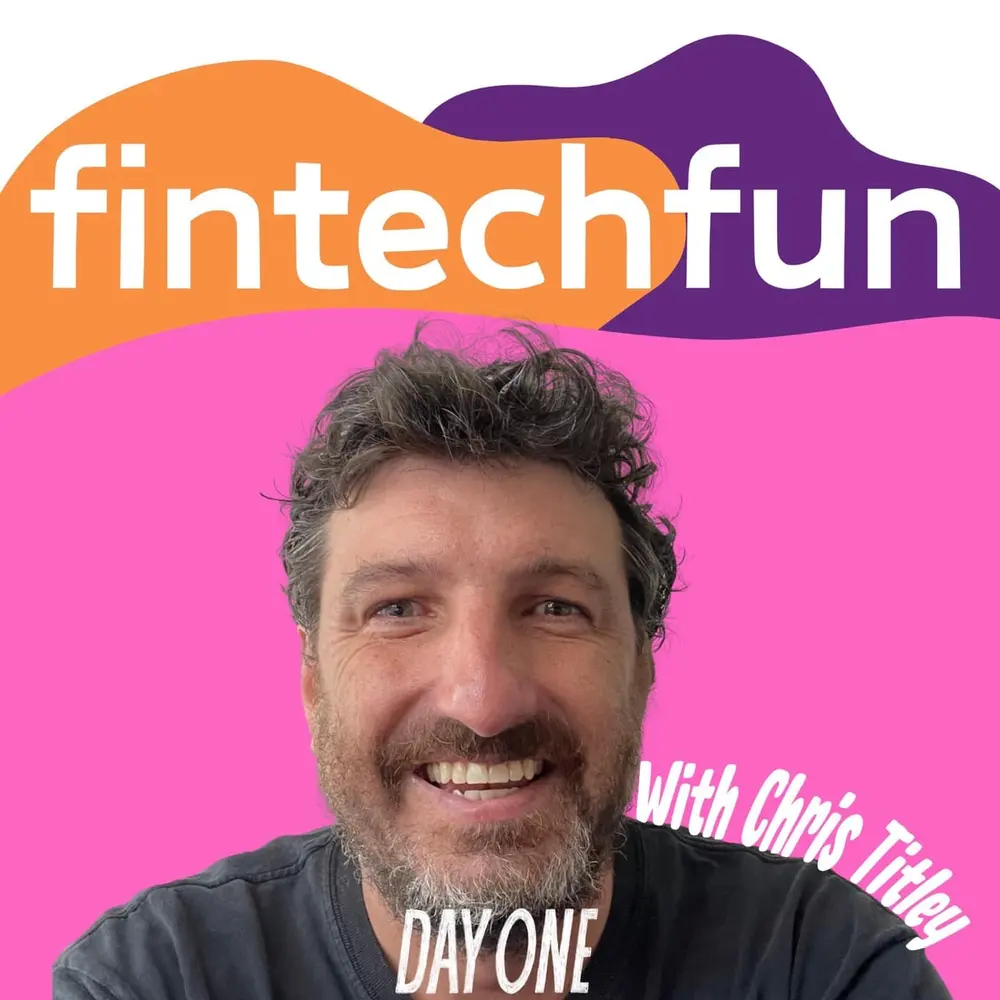
In this engaging episode of Fintech Fun, host Chris Titley invites Daniel Kniaz to take us through the genesis and evolution of his company Weel, formerly DiviPay. The discussion begins with an exploration of the early days, underscoring the iterative process that led to their current business model. The show offers listeners a glimpse into the world of Australian fintech innovation, capturing both the struggles and triumphs of a startup journey.

Daniel shares valuable insights into the initial concept of DiviPay and the subsequent pivot due to scalability and monetization challenges. The narrative shifts focus to Weel's current mission: resolving SMB spending-related inefficiencies and facilitating seamless expense management. Chris and Daniel's conversation provides a look into the ethos of a fintech founder, the strategic thinking behind pivots in business models, and the shaping of a tech product amidst a changing financial landscape.

Chapters

• Daniel Kniaz's journey with Weel highlights the importance of listening to customer needs and adapting business models to meet market demands.

• Weel, born from DiviPay, serves to alleviate SMB spending and employee reimbursement pains by streamlining payment workflows and expense reporting.

• Successful scaling and market fit are achieved by offering a product that assists businesses in tighter financial control during challenging economic climates.

• The rebranding journey from DiviPay to Weel underscores the relevance of strategic name and positioning in the evolving fintech industry.

• Kniaz outlines the future direction for Weel, emphasizing both the expansion into new payment types and the enhancement of pre and post-payment workflows.

Resources

• Weel website • H2 Accelerator program • Stone and Chalk coworking and innovation space

Transcript

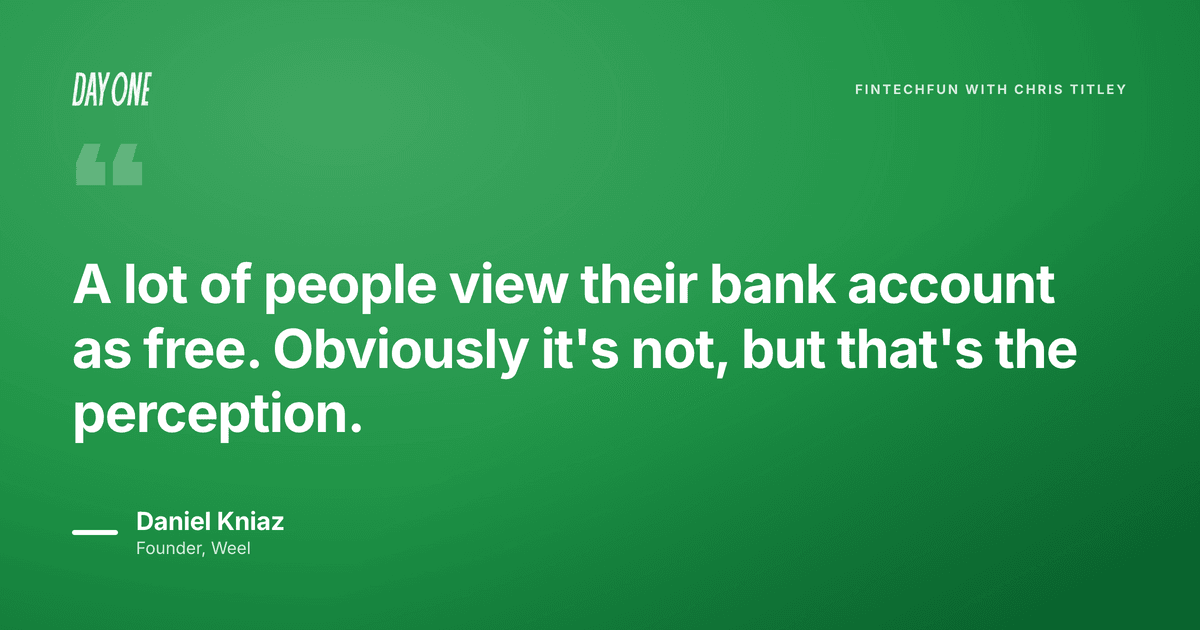
Chris Titley: Hi, I'm Chris FinTech Fun, the podcast where I speak with Australian FinTech founders and executive management and have some fun along the way gaining insights about the person behind the brand. FinTech Fun is part of Day One, the network dedicated to founders, operators, and investors. I'm joined by Daniel Nayaz, founder and CEO of Wheel. Chris Titley: Daniel, thanks so much for joining us and being part of this series. Daniel Kniaz: Thanks for having me. Appreciate it. Chris Titley: Daniel, let's talk about, uh, Wheel, obviously started at a different name, but let's go back to the early days, the beginning, a little bit about yourself and how, how the business came about. Daniel Kniaz: Yeah, sure. Daniel Kniaz: Sure. We've definitely had an interesting journey to this point. So I'll, I'll start at the beginning, maybe just for context. So my co founder and myself, we met working at Westpac. There we were in the innovation team and really where we got to learn a lot of great startup skills. Our remit was how do you take potentially disruptive financial technology and apply that to the bank. Daniel Kniaz: So through that, we got to learn about jobs to be done, frameworks, how to best talk to customers, understand customer problems, how do you rapidly build MVPs and test that with the market. So that's, that's where we got a lot of our early training to then go and do what we did. Ultimately for us, You know, I think in an organization like Westpac, there's 35, 000 people, there's a, there's a lot of bureaucracy, there's a lot of red tape and ultimately for us, a lot of the things that we, we built just never were able to make it into market and, and I essentially get into the hands of the customer and deliver the impact that we thought they could. Daniel Kniaz: So that was the starting point for my co founder and I to go, Hey, maybe we should go out and do something. on our own. Chris Titley: So Daniel Kniaz: we, we left and we actually went into an accelerator program. It's called H2 at the time. Yeah, exactly. So Chris Titley: this Daniel Kniaz: was really great for us because there was, it was probably like, that was the stone and chalk Chris Titley: as well, wasn't it? Daniel Kniaz: That stone chalk in the early days. So probably six to eight companies, similar stage where now we've just got this great network of founders. There's some companies, uh, Ahead of us some are at similar stage some no longer exist, but see some trivia. I reckon Chris Titley: I can name them I couldn't know it start simply Wall Street Valiant finance. Chris Titley: Yeah. No, there's a few there. That's pretty Or I thought fool do Daniel Kniaz: Yeah, so, um, yeah those guys will go on to Build fantastic companies and as founders, we still get together and talk about the problems we all face. But we, we went into that program and originally we were actually trying to solve the shared bank account split bill problem. Daniel Kniaz: And that's, that's the genesis of the DiviPay name actually, where Chris Titley: the thing Daniel Kniaz: that we started with. So we, we started there always interested in, in tech and virtual technology. Ultimately, what we found with that product was we couldn't, we couldn't build scalable technology to solve that problem. It was definitely a problem that existed and we built some MVPs that people enjoyed using and we got good feedback on. Daniel Kniaz: But we, we couldn't scale it from a technology perspective and ultimately virtual cards were pretty nascent at that point in time, very difficult to actually stand something like that up. So there was a period of time where we didn't really see a pathway forward. And we would try to understand where do we go next? Daniel Kniaz: And this is, I guess, our first pivot in probably a series of 2 or 3 pivots. And we started listening to customers and customers weren't using our technology for splitting bills or. You know, shared accounts, they started using virtual cards as essentially a proxy to their regular bank account, a way to protect their privacy and security while shopping online. Daniel Kniaz: What we found is really interesting that 50 percent of Aussies or one in two people are frauded every single year. And, you know, if you're frauded, you have to raise chargebacks. You have to cancel the card, get a new card. From the bank. So people were using our product to essentially spin up one time single use virtual cards to make payments, to give them this security comfort. Daniel Kniaz: Uh, and it's this barrier between themselves and, and the merchant. So we pivot our, our whole business. We kept the name Div VPay at that point as well, but we moved from d VPay, shared accounts, splitting bills to divvy pay protective privacy and security while shopping online. And we actually scaled that relatively well. Daniel Kniaz: I would say we had product market fit in the sense of people really wanted the product and derive value from the product. But ultimately where we landed was we couldn't monetize it. And this was a real interesting lesson for us. B2C, no one wanted to pay. No one wanted to pay in the B2C world in terms of financial services. Daniel Kniaz: And it makes sense, you know, a lot of people view their bank account as free. Obviously it's not, but that's the perception. So, you know, the feedback we're getting is, well, why would we pay for this other? So this was, I guess, our next pivot or persevere moment in Chris Titley: iteration. Daniel Kniaz: Yeah, iteration. Um, and again, we went back to the customer and understood, well, what, what is the value in what we've got? Daniel Kniaz: And is there a path to monetization here? And this is where we landed on what we do today is wheel. And what we found was customers were coming to us saying, hey, we love the product. We could see how this could be applicable to our small business. And when we dug in further there, what we found was very difficult for SMBs in this country to get access to traditional financial products. Daniel Kniaz: And instead they would, they would have one of two different workarounds, particularly when it came to employee spending or corporate cuts. And what we found was businesses would either require their staff to use their personal funds. And then submit an expense report and be reimbursed, or what happens way more than I anticipated. Daniel Kniaz: There might be a single card, a founder's card, a director's card, which would be shared around an office. And everyone has their own version of the story. One of our earliest customers has this great story where they were a 30 person organization, and they actually photocopied the director's card. And 30 different people had access to this photocopy just sitting in the top drawer of their desks whenever they needed to make payments. Daniel Kniaz: So with that, you know, you get a lot of fraud and wasteful spending. That's, that's the inefficiency on card sharing. And then the inefficiency on the other side, which again was really interesting to us, when you require staff to use their own personal funds, what we discovered was you never truly know any, Individuals personal financial situation and we were hearing stories of having to put often thousands of dollars of company expenditure on their own personal cards and in some instances actually incur interest on behalf of the business before they got paid back and then you talk to most people no one loves doing their expense reports definitely left to them. Daniel Kniaz: Friday as Chris Titley: well. And, you know, maybe, oh, look, maybe, maybe that was not really for the business, but at the time it was, you know, all that sort of things. Daniel Kniaz: Exactly. So it's, it's left to last minute. It's then often done incorrectly. Finance team will send it back and it could be another fortnight, another month on a siphon to actually get reimbursed. Daniel Kniaz: So that was really the genesis of The, the problem space that we started to go really deep in. And ultimately what we built was piece of software that allows small business owners, finance teams to issue everyone in their business with their own unique virtual corporate card, build your expense policy into that card itself. Daniel Kniaz: So you're essentially building the smarts of, of your policy into the card. And then once you make the payment, we automate your expense reporting and, and push all of that into a, Connected cloud accounting software. Chris Titley: Wow, excellent. And then the, the iteration of changing the name and the company. Um, how did that, uh, come about? Chris Titley: And, and then the outcomes from that. Daniel Kniaz: Yeah, sure. So with the name change, so it was probably never our biggest problem to solve, you know, reflecting on that journey, we pivoted two or three times before we actually got to where we are today. And when we pivoted, we were kind of eyes wide open in the sense that this might not be the last pivot. Daniel Kniaz: If we can't find product market fit, if we can't monetize this in the right way to build a sustainable business. Yeah. We may have to pivot again. So we kept the name for a while until we truly believe that we are building something of value, something that solves problems and something that people want. Daniel Kniaz: So we, we maintain the name for maybe a year or two until we got to that point. And then our, our brand, our product definitely started to mature and we thought, okay, now this is a good inflection point. The other kind of forcing factor for us was we made the change around the time we really started to see the rise of buy now pay later in Australia. Daniel Kniaz: And if you think about a lot of those companies that were headline or in the news, they were always something pay. They always had pay in their name. So we just simply started getting miscategorized by the market. People looked at us and said, Oh, DiviPay, you guys buy now, pay later. Well, I mean, for a Chris Titley: period of time, you could have raised hundreds of millions of dollars, but Daniel Kniaz: That's true. Daniel Kniaz: We, we probably could have taken more advantage of that. Um, but no, so, so we use, we use those few inflection points to, to do, to say, let's do a wholesale rebrand. We now have a more mature product. We know who we are and where we want to go as a company. So let's, let's make, That brand change. And with that, let's make a name change as well. Daniel Kniaz: That just makes sense for us going forward. Chris Titley: Daniel, how has the last sort of six months been, uh, I suppose, or six to 12 months, it's been a pretty rough time for some of the smaller technology companies that are listed on the stock exchange, but, but how about your business? Daniel Kniaz: Yeah, obviously the macro environment changed pretty, pretty drastically. Daniel Kniaz: I think for us, we've in a sense, gone from strength to strength. And when we reflect on, on the why behind that, and we look at our customers, what's interesting is because of the broader macro environment, customers. No, they need to keep a really tight eye and control on how they're spending company funds. Daniel Kniaz: And what's been really nice for, for our product is that is the problem that we solve. We help finance teams control spending, have the visibility and make sure they understand where money is going out the door. So for a lot of customers, uh, prospective customers and our current customers, they've doubled down on our service because it actually helps In a tougher environment, really understand how they're spending. Daniel Kniaz: So for us, we've kind of been a product that solves a problem within what's going on in the broader macro view. Chris Titley: Awesome. And then putting the hat on and saying, well, let's, um, let's replay this podcast in 2025. The, in April, where would you like the business to be? Daniel Kniaz: Yeah, so we, we're a high growth business, so we look to double year on year, um, very much on that trajectory. Daniel Kniaz: I think from a, where we're focused from a product perspective, we really want to be the epicenter for how business spends and, and manages money. So our focus is, is really two parts. First part is, giving SMBs access to all different payment types. So we call this money in, money out, all the different ways that you can send or receive money. Daniel Kniaz: So we want to, we want to go broader on what options we give businesses to, to spend throughout platform. And the second piece that we really focus on from a product perspective is adding value in the workflow around that payment. And what I mean by that is the pre and post payment workflows that actually help a business complete their expenses. Daniel Kniaz: As quickly as possible. And if you think about, you know, what every finance team wants to do is they do want to complete their expenses as quickly as possible so they can move from really admin heavy tasks to more value adding future looking finance. And that's what we solve for. So in the next 12 months, we're really focused. Daniel Kniaz: on unlocking both more payment types and specifically things like international bill payments is, is a really big requested feature from our customers. And then we want to go really deep on those pre and post payment approval workflows. Chris Titley: Very good. And Daniel, when you're not thinking about improving SMBs payment solutions and all the various aspects that go with running your own startup, what do you do outside of startup land? Chris Titley: Or is it, or is it always 24 seven for you? Daniel Kniaz: Yeah, I'm pretty 24 7, but, um, no, I do do a few things. I, I actually recently became a dad, uh, that, that definitely takes up the other part of my time. Um, which I absolutely love. Um, but then outside of that, you know, my, my kind of priority after family and work is I love to surf. Daniel Kniaz: I Chris Titley: do a lot Daniel Kniaz: of surfing. Keeps me sane. It's my meditation. It's my exercise. It's my social life. It's lots of domains Chris Titley: in one that you can, you can get. And how long do you surf or are you, are you a bit of a surfing sort of nut or are you just sort of a casual surfer? Daniel Kniaz: I would like to think I'm more than a weekend warrior. Daniel Kniaz: That's what they call it. A weekend warrior? I, I, I do live pretty close to the beach now, so I try and get down as, as often as possible. I definitely don't surf for as long as I, I'm used to my sessions a little bit shorter, but, um, yeah, try and get out, you know, a couple of times a week. Chris Titley: And if you went traveling around the world, would you take your surfboard with you? Daniel Kniaz: 100%. Yeah? 100%. Where would Chris Titley: you like to surf internationally? Daniel Kniaz: I've been pretty fortunate to, to go to quite a few places. with surfing. I think the top two that stick out for me, uh, went to Nicaragua not that long ago. That was, that was great in Central America and North Sumatra was probably the most beautiful surfing location I've, I've ever been and would love to go back. Chris Titley: Excellent. Any, uh, any hiccups or injuries along the way, or everything's been pretty, pretty good for you? Daniel Kniaz: I did dislocate my shoulder on the second day of a 10 day trip. Oh no. Chris Titley: Okay. Daniel Kniaz: But I, um, taped it up a couple of Advil and just kept going, dealt with the consequences later. Chris Titley: It's like start up, like running a start up, isn't it? Chris Titley: That's Daniel Kniaz: it. Chris Titley: Get knocked down, but get back up again. Um, Daniel, thank you so much for having a chat today, uh, about, uh, the, the progress of Wheel and DiviPay and its, its first iteration and where you've come from. Certainly where the future is heading, uh, and also sharing some of the insights into, um, your, your, um, personal life, which is congratulations on being a, being a dad. Chris Titley: It's certainly, I'm a father of three kids. It's a changes your life much, much for the better. I'm looking forward to catching up and also following the success of wheel. Daniel Kniaz: Thank you, mate. Appreciate it.

More Episodes You Might Like

Let's talk

Turn podcasting into pipeline

We help founders, funds and operators build trust, authority and deal flow with a show tailored to their market.

Win better deals and stay top‑of‑mind with founders.

Close more deals and build a category you own.

Reach founders and operators with a show they trust.

Day One® exists to help founders and startup operators make better business decisions more often

Subscribe for helpful content from other successful founders, operators and investors

Join 755 other founders & investors receiving our emails. They're cool, are you? :)

* Regrettably, mel@canva.com is not on our list… yet.

Day One® is a registered trademark of W2D1 Media Pty Ltd. All rights reserved. © 2026 W2D1 Media Pty Ltd.

Day One® exists to help founders and startup operators make better business decisions more often

Subscribe for helpful content from other successful founders, operators and investors

Join 755 other founders & investors receiving our emails. They're cool, are you? :)

* Regrettably, mel@canva.com is not on our list… yet.

Day One® is a registered trademark of W2D1 Media Pty Ltd. All rights reserved. © 2026 W2D1 Media Pty Ltd.