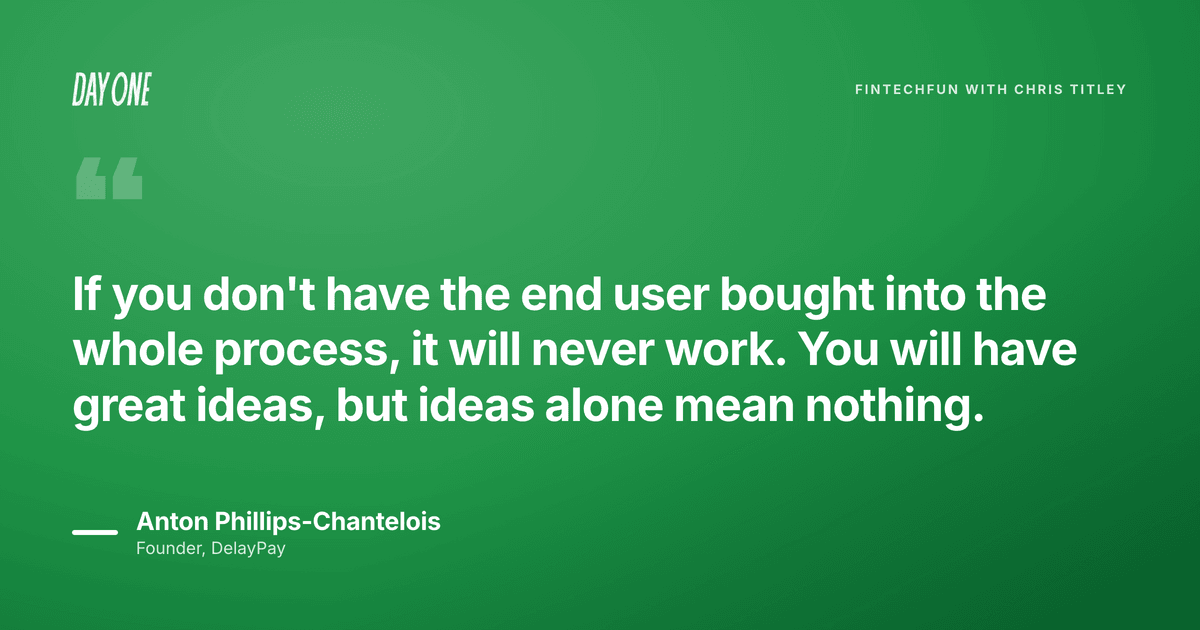
Transcript Synced · select any line to jump ▾ 0:00 Speaker: You're listening to a Day One FM show. 0:07 Speaker: Pick My Brain is the podcast where founders pitch me their startup and I try to give them some useful advice so they can connect better with potential co-founders, investors, media, and of course, customers. My name's Alan Jones and I was a founder myself for about 15 years, and after that, an angel investor for another 15 years. So yeah, old. Some of my ventures have been successful and some failed disastrously, But I like to think I've learned a thing or two along the way, and maybe some of that can help you. So if you'd like to learn how to tweak your pitch, subscribe to the Pick My Brain show now, wherever you like to listen to podcasts. 0:42 Ad: If you're building a SaaS business, achieving compliance with SOC 2, ISO 27001, or other in-demand frameworks can unlock major growth for your company and establish customer trust. However, this process is often time-intensive and very costly. Vanta automates up to 90% compliance, getting you audit-ready quickly and saving up to 85% of associated costs. And Vanta scales with your business with a market-leading trust management platform to help you continually monitor compliance, unify risk management, and streamline security reviews. Join 7,000 global companies like Atlassian and Dovetail that use Vanta to build trust and prove security in real time. My listeners get 10% off Vanta when they go to vanta.com/fun. That's vanta.com/fun. 1:31 Chris Titley: Hi, it's Chris Tittley here as part of the FinTech Fun podcast series. I'm joined by Anton Phillips, CFO of DelayPay, live from New Zealand today. Anton, thanks so much for being part of this series. 1:45 Speaker: Thanks, Chris. Thanks for having me. 1:47 Chris Titley: Anton, can you tell the listeners out there a little bit about your involvement in DelayPay, what DelayPay is, and I suppose a little bit about your background? 1:55 Speaker: Sure. So DelayPay is a buy now, pay later for farmers. I met the guys that sort of founded that business about 4 years ago in a different life when I was in corporate finance. And about 2 years ago, joined that business as CFO. How did it come about? They sort of picked out of the market that there was plenty of consumer-focused buy now, pay laters and plenty of asset funders and things like that, but nothing that was quick and useful for sort of larger transactions. And particularly, you know, farmers having to deal with the seasonality of farming. So, you know, for 6 months of the year, they're pushing all of their chips into a crop and then sort of run out of runway for 2 or 3 months. And that happens year in, year out. And, you know, they realized that there was a 3-month gap there where they could sort of fill the void and help to get a crop off or get weight gain or whatever it is on an asset. Yeah. 2:51 Chris Titley: And Anton, in regards to the size of the transactions, can you talk about, I suppose, the minimum and the maximum and what the sweet spot is for you? 3:00 Anton Phillips-Chantelois: Sure. So we fund anything from $10,000 to $500,000. On average, I think it's about $35,000 as a per-ticket size. And it's a really simple process, how it works. We effectively fund an invoice. And so we take a position on that invoice. You would often see, you know, the ScotPacs of the world where they sit on the sales side and they'll sort of buy invoices on the back end. In essence, we're working with the buyers and sort of funding their purchases instead. Very similar model, but obviously different side of the transaction. From a product perspective, we take really no position. All that we're concerned about is, are you a primary producer? If the answer is yes, We'll back you to make the decisions on your business as a farmer, whatever those decisions are, and we'll sort of support you all the way. We have 180-day limits, so buy now, 180 days later, 6 months, pay then, or any time up between now and then. And the sort of very simple pricing structure as well, fixed pricing, everyone gets the same. We don't sort of differentiate whether you're good credit, bad credit, we have a limit of where we'll participate and pay to play on that basis. 4:19 Chris Titley: I'm curious as to know the sort of the market opportunity, the market size, and I suppose the competitive landscape and where you fit in and some early feedback from customers. 4:27 Anton Phillips-Chantelois: Yeah, sure. So we've done just under $90 million in transactions to date. We've got about 5,000 farmers across our database that have really used us over the last few years. Looking at the rates, about 75% of our customers today used us last year, so it's very repetitive in nature, which is great. And I think just by virtue of us being super simple, people tend to use us again. And it's very as required basis as well. Obviously, we're not here to be a credit card or here to be some, you know, a daily transaction. It's, you know, there's an opportunity, someone's at an auction or they want to pick up their neighbor's piece of kit or, you know, some cattle, use DelayPay, get it funded and paid for in 24 hours, and then, you know, go and work with the banks to get refinanced out over the next 2 months. And we know that, you know, the typical lenders are taking a long time, and today more so, longer than ever, to make decisions. And so that's sort of how that works. When we think of the market opportunity, like, I'm not gonna sit here and say, oh, it's Australian farming debt, because we're so far away from all of that. I'd say there's a small segment of farmers. There's about 30,000 sort of farming businesses in Australia that turn over less than a million bucks a year. So we don't want the corporates, we don't want the ones that are just starting out and have got 2 sheep on their hobby farm 10 minutes out of Melbourne. But it's the smaller farmers that are either buying and growing and succession out of family or along those lines. Mm-hmm. They're probably only turning over $100,000, $200,000, $300,000 a year, but they've got ambitions for a bit more. We sort of sit in that segment, and we reckon there's about 30,000 of them in the country, you know, so it's pretty large. And if we look at sort of the limits that we set, it's about $100,000 a limit that would sort of typically lock in. So in essence, it's about a $30 billion market. 6:35 Speaker: Yeah. 6:36 Anton Phillips-Chantelois: And, you know, people that compete in that are gonna, like StockCo, very dedicated to livestock. Agpay, similar to what we do, but again, sort of dedicated to smaller transactions and livestock. And, you know, a couple other guys doing similar things, but not open to everything that we do. We'll fund everything. They're all sort of asset class based, I suppose. 7:00 Chris Titley: And you mentioned before about the credit checks and the due diligence. Can you talk us through the due diligence process that you manage? 'cause these are not, you know, large enterprise-grade farms, but they're on a, I suppose, you know, they're smaller operators, but not too small, obviously. But how do you do your due diligence? 7:18 Anton Phillips-Chantelois: Yeah, sure. I mean, from a usability point of view, so if you're applying for funding, it's super simple. All we need is a driver's licence and an ABN. On the back end, all that we do is go and check sort of your history as a trader as a business owner. If you haven't got defaults and things like that, it's more or less pass or fail. We do do a sort of criminal history check and things like that. And then we've obviously got a big network of people that use us, so we'll often see whether there's been some red flags or something along those lines that pulls it out. And then we plug into your very general CreditWatch and things like that as well, which— 8:01 Speaker: Yeah. 8:01 Speaker: As many would know, the sort of smaller enterprises, it really doesn't do a lot of value there, but when you pair that with 4 or 5 other little plugins, you can start to get a good picture of the individual that we're looking towards. And equally, one of the reasons that we're in agriculture and farming is it's a very asset-rich business and extremely cash-poor. So these guys are getting, tied up a lot of their sort of wealth into assets. And we acknowledge that and know that, you know, as was said before, 6 months, it gets very tight. And then you get paid your one cheque a year or your two cheques a year. So we sort of help with that. And we take the position on the farming side, noting that, hey, if everything does go wrong, there's assets there, more so than your typical SME. Yeah. Businesses, I suppose. 8:54 Chris Titley: And Anton, when it comes to some recent news, obviously the business, your business DelayPay needs to get some funding from somewhere. Can you talk about some recent news? 9:03 Anton Phillips-Chantelois: Yeah, sure. So probably, I guess we started these conversations maybe 6 months ago. About 2 weeks ago, we locked away a $16 million capital raise into the business. 15 of that is debt and a million is sort of preferred equity or sort of subordinated debt, which is really exciting. It sort of gives us two things. One, capacity to keep going and growing and commitment from our investors that they sort of like what we're doing. But sort of on the other side, it sort of changes the structure a little bit where rather than just being solely funded by an individual, you know, now we've got the capacity to sort of raise some funds and provide sort of fixed return to our investors as well, which we didn't otherwise have. So, you know, we took what was a great sort of opportunity for our existing investors and opened it up. And, you know, we've managed to lock that away and get very quick and sort of fill that book pretty quickly, which was nice. 10:05 Chris Titley: Anton, I'm interested to know about the speed of delivery. I mean, you mentioned there's a bit of a gap sometimes, but in the world of agriculture, I'd imagine that speed is of the essence. Can you talk about how fast you guys can deliver the funds to people that need it? 10:19 Anton Phillips-Chantelois: So for us, if we're not quick and convenient as a provider, you know, people will just go elsewhere. And so we're not here to compete with the banks or compete with anyone else. We're here when people have an immediate opportunity and need funding in 24 hours. And we're sort of renowned for doing that. That's not a maybe, that's a definitive, that's what we do. And by that I mean, we speak to someone at 9 o'clock in the morning, by 6 o'clock at night they would have had a deal funded. If they're obviously slow on providing the information we need, it can be hard, but if you come with the two things we need, we'll come to you with the part that you need as quick as we can. So, it works really well and, you know, On average, I think, from, on average, from when someone first comes to us as a brand new client, they're locked away and done within 2 days, which is awesome. 11:17 Chris Titley: Anton, I'm curious around the technology in farming. There's a lot of talk about AI in every aspect of the world. Can you talk about farming tech, I suppose? And is there any sort of habits or trends that you're seeing which may or may not impact your business? 11:32 Anton Phillips-Chantelois: Yeah, sure. We actually just partnered with a little group called XAG. We funded a few of their transactions. So they offer drones and the drones sort of go out and put fertilizer in specific areas. And it's a pretty interesting proposition that they've got. It's probably about as close to farm tech as we'll get. I mean, I do see that there is a lot of investment into that sphere. Maybe I'm seeing more of a disconnect than ever between sort of the investment that's getting put into agtech and then sort of the farmers wanting to use it. And, you know, you go to some of these sort of agricultural field days and things that are farmer-focused and it's very traditional. And then you go to the one that's, you know, in Brisbane where you are or in Sydney and there's no farmers there. You've got a bunch of investors and things that are involved. But there's no one sort of connecting the two. And it's a really interesting point though, right? Like if, because if you don't have the end user being bought into the whole process, it'll just never work. You'll have great ideas, but ideas alone mean nothing. And so I think we'll see, and we're probably seeing a little bit more in the last 18 months, I'd say, particularly as sort of investments that have got harder and people need to go and focus on, all right, who's my end user? How do I get close to them and get them buying our products? Yeah. Where you'll see a lot more sort of farmer integration into some of these pretty exciting opportunities. I mean, the concept of drones putting fertilizer was probably very conceptual 5 years ago, but now we've sort of started in the middle of about 10 transactions, which by all accounts was a flurry over 6 months. So they were doing something right very quickly. And, and, you know, it's interesting for us, that's for sure. 13:25 Chris Titley: Do you keep an eye on the, the farming trends or things like food security or, or the, the consumption of dairy, et cetera? And is there any industry or specific verticals that you focus on within farming? 13:37 Anton Phillips-Chantelois: Yep. Look, we don't focus on any vertical as a whole. Are we interested in certain things? Absolutely. Ironically, I'm very interested in the wine sector, but we tend to sort of veer away from that industry quite a bit. Maybe that changes now that China's sort of opened up a little bit. We'll see. A lot of our growth 2 years ago was driven to livestock. So obviously livestock prices had an absolute run for a while and you could see, you know, the Elders Return was given their public was astronomical. You saw StockCo, their growth was astronomical and we certainly received a lot of benefit from that. That obviously dropped off maybe 12 months ago now or thereabouts. And we were very fortunate to sort of maintain our size of business. People sort of, instead of buying livestock, ended up switching into feed and fodder and machinery and things. I think, like, from our business, you'll see pockets where people are being more opportunistic. So at the moment, obviously, there's a lot of sort of dry country in South Australia and Southwest Victoria. And so people were looking to book in feed And sort of, we were funding lots of hay deals. 14:55 Speaker: Mm-hmm. 14:56 Anton Phillips-Chantelois: And that's just going in the shed so they've got some security to be able to fatten up animals. And then that'll switch, you know, and it's starting to switch now where we're seeing people are starting to get some urea out and want to lock in pricing. And we can help them lock in a good price because they can pay for it and negotiate sort of cash terms in essence. And so it's nice we can sort of see where people are spending every week of the year by what's getting funded and sort of locked away. 15:25 Chris Titley: And Anton, when you're not talking farming or farming tech or distributing money to farmers that need it, what's a bit of a hobby that some listeners may not know about you, or what's your outside-of-work interest? 15:39 Anton Phillips-Chantelois: Yeah, right, well, my interests have changed over the last 7 months. We've just had a baby, so I've been thrown into the deep end on that one. But, it's very exciting, that's a good thing. I'd say cooking. I love to just spend time in the kitchen and— 15:57 Chris Titley: Okay. 15:58 Anton Phillips-Chantelois: Kelsey, who's also one of the founders, he's a baker so, you know, we'll be on our 9 o'clock meeting, have a bit of a chinwag, he's pulling some bread out of the oven and, you know, I'm doing the dishes from the night before. But, it's, yeah, definitely cooking. Homemade pastas and— Bottle of wine, use that as a rolling pin, that's the go, I think. 16:18 Chris Titley: That is the go. Is that, you obviously said pastas, is there something which sort of is your signature dish or not quite there yet? 16:26 Anton Phillips-Chantelois: It'll have to be a pasta, I think. They're just quick and easy. Italian food as a whole is fairly delicious, so you can't really go wrong. And a bit of white wine and butter, and that's, what more can you ask for? 16:41 Chris Titley: That's right, that's right. Anton, thanks so much for being part of the FinTech Fund podcast today and talking about the origins of DelayPay, also your involvement, the progress of the business thus far, and obviously the market opportunity ahead within the different verticals, and looking forward to catching up again. 16:58 Anton Phillips-Chantelois: Thanks, mate. You're doing a wonderful thing. Keep it up. Cheers. 17:02 Speaker: Listen to the Unfunded podcast, brought to you by the Day One Network. And hosted by me, tech writer Joan Westenberg. We're sharing the no-holds-barred untold stories from entrepreneurs who have decided to build a business on their terms. I'll be interviewing successful founders and operators on the grit and ingenuity it takes to build and scale independent startups without the support of traditional venture capital funding. Subscribe to the Unfunded Podcast now, wherever you get your podcasts.