

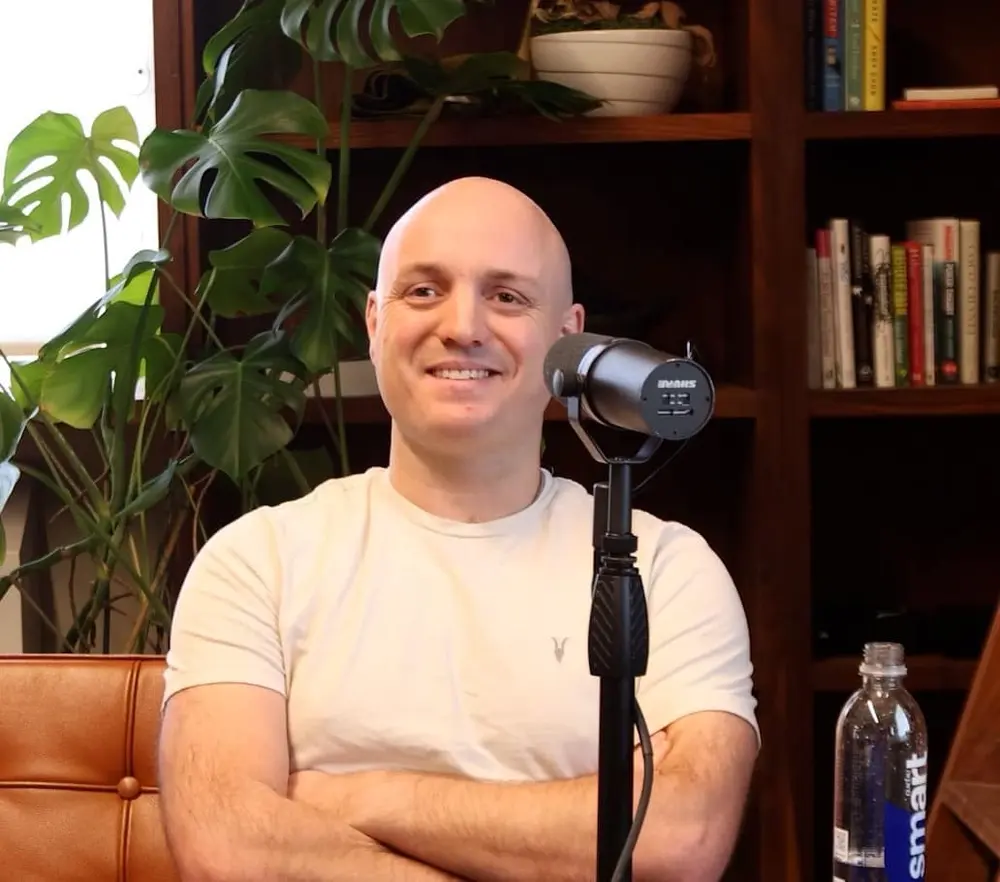
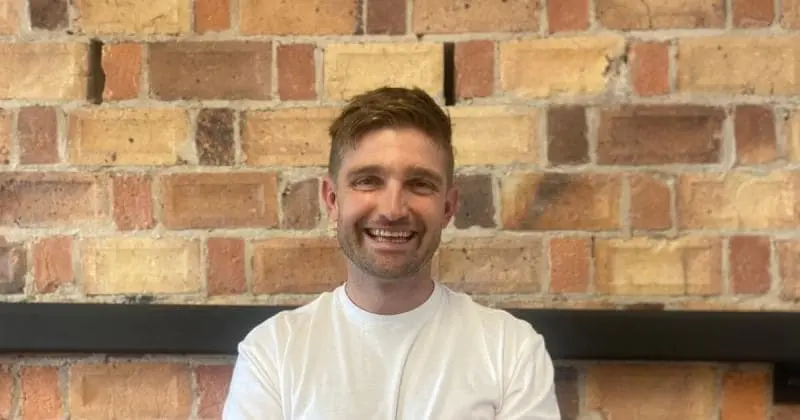
S3 | E6 Anton Jackson Smith (Founder of b.next) on building synthetic cells, programmable biology, and the future of biotech

S3 | E6 Anton Jackson Smith (Founder of b.next) on building synthetic cells, programmable biology, and the future of biotech

S3 | E6 Anton Jackson Smith (Founder of b.next) on building synthetic cells, programmable biology, and the future of biotech

0:00/1:34

Also on

Also on

Anton Jackson Smith is a synthetic biologist, Stanford PhD, and founder of b.next, a startup building synthetic cells from scratch to make biology truly programmable. Think of it as rewriting life’s codebase, with applications ranging from cancer treatments and diagnostics to lab-grown foods and smart crops. In today’s episode, Anton breaks down what synthetic cells actually are (and why they matter), how his open-source platform Nucleus is changing the way biology is engineered, and why the future of medicine, agriculture, and climate tech might be written in DNA. We also dig into his journey, from coding in Queenstown and law school in Otago, to cutting-edge research in Silicon Valley, and how a random article on programmable E. coli changed everything. In this conversation, we cover: • How synthetic cells could power the next generation of therapeutics and diagnostics • Why biology needs its own “AWS moment” and how open source can unlock it • The real business model behind synthetic biology (and why it's not just science) • How Kiwi strengths in agriculture and biotech could shape a global future • What New Zealand needs to do to retain and return its brightest minds Anton also shares his vision for a safer, more ethical bio-economy, and how we can build powerful new tools without repeating the mistakes of the past.

Chapters

01:21 What is a synthetic cell—and why should you care?

06:44 How Anton fell into biology (thanks to an E. coli article in Vietnam)

11:12 Why modifying real cells isn’t enough—and what BNext is doing differently

16:30 The near-term use cases: cancer, diagnostics, and food

22:47 How Nucleus is creating the open-source toolkit for biology

30:14 Three phases of BNext’s business model: Boot → Build → Bazaar

37:10 The big vision: programmable biology that saves lives

44:18 What New Zealand’s biotech future could look like

47:30 Returning talent, building bridges, and bringing brains back home

Resources

🙋🏻‍♂️ Anton Jackson Smith on LinkedIn: https://www.linkedin.com/in/antonjacksonsmith

🧬 B Next Bio: https://www.bnext.bio

Transcript

Anton Jackson Smith 

Maybe the synthetic cell now can fight cancer directly. It detects it and, and fights back. And the reason a synthetic cell is more powerful for that, we, we have these amazing, this amazing technology right now called CAR T where we program some of your own cells to fight cancer in your body, you've

David Booth 

developed the processes that all of the DNA, the cell, the membrane, you've got the synthetic cell.

David Booth 

What do

Anton Jackson Smith 

we do with it to make biology engineerable? Imagine if you built a car and every time you took it out of the garage, something had changed just overnight, right? That, that's sort of biology right now. So you can design it to not mutate, you can design it to not be able to share its DNA with other cells and articulate.

Anton Jackson Smith 

The way synthetic cells aren't are right now, which is a huge intrinsic safety feature, is they can't replicate themselves.

David Booth 

Welcome back to Diaspora.nz, where we are on a mission to seek out and profile the hidden gems. The best founders, operators, researchers, and emerging leaders of the great Kiwi expat community.

David Booth 

Today's guest is Anton Jackson Smith, a synthetic biologist Stanford PhD, and the founder of B Next Bio, a company that's building synthetic cells from scratch to make biology truly programmable. Now, if you wanna know what that means, like I did listen on. We start with some of the easiest stuff, define the terms and the territory, then go in the deep end, building cells from the ground up, using DNA synthesis, custom proteins and lipid membranes.

David Booth 

We dive into Nucleus. His open source toolkit inspired by the open source software movement and white was a right approach to advancing his tech as rapidly as possible. And then we talk about. How and why doing so could unlock the next generation of cancer therapies, diagnostics, even things like lab grown foods, smart crops, that self monitor for disease and more.

David Booth 

Anton's journey started back in Queenstown. He was writing code and engineering networks as a teenager, but a chance in cancer with an article about programming e coli, flip a switch, and he realized that biology could be engineered like software and could be the next big industry. We also talk about some of his kiwi roots and how they've impacted him over his life, the future of biotech back in nz, and what it means to return brain power, even if folks like him plan on staying where he is in San Francisco.

David Booth 

For now, this is the Diaspora NZ podcast, and here's my conversation with Anton Jackson Smith.

David Booth 

Anton Jackson Smith. It is an absolute pleasure to be sitting with you here in San Francisco, live out at Santa Z out of Fort Mason, glitzy offices that we've, we've been loaned for the purpose of, of having this jam. Um, but you've been living here for 10 years now? Eight,

Anton Jackson Smith 

yeah. Eight or nine years. Yeah.

Anton Jackson Smith 

Yeah.

David Booth 

Um, but thank you for coming on the, the diaspora, Tony NZ pod. Man. Thanks for having me. This is gonna be fun. I. I'm gonna have to ask lots of dumb questions as we go. You are building synthetic cells to make biology engineerable, and that means you can do lots of things with biology, with those, you know, all sorts of use cases from medicines to agriculture, everything else.

David Booth 

A lot of potential, a lot of excitement. But tell me about the, what is a moment that you've decided to work on this? So what is the moment that you realize this might be possible?

Anton Jackson Smith 

Yeah, it's actually not quite working on synthetic cells, but I know it's the moment I felt that we could make biology work this way.

Anton Jackson Smith 

And, um, so when I was growing up, I was hugely into computers, like taught myself to program, taught myself Linux, um, got myself a job at a small company in Queenstown, writing code and doing network engineering. And that turned into the, the job. I worked all through high school. Um, and when I finished high school, I didn't wanna go straight to university, so I went traveling.

Anton Jackson Smith 

I ended up living in Vietnam for a year. Um, and I remember I was sitting there doing some work and I read an article about something called iGen, the International Genetically Engineered Machines Competition. It's actually happening right now in Paris. They have an annual competition. It's like on the order of 4,000, 5,000 undergraduates who form teams to solve problems with biology.

Anton Jackson Smith 

There was a team that was programming e coli, and the goal was to make e coli detect when it, you could take a pill of it. It would detect when it had moved into your intestine. Um, it would start a little timer. It would become sticky. It would stick to the side of your intestine and it would. Produce transporters that pull toxins across the intestinal wall.

Anton Jackson Smith 

The other way that it usually works to like pull stuff out of your blood into the e coli timer goes off, e coli flushes out of your system and their goal was to perform dialysis but in a pill. And I read that and as someone who had been doing all this work in computers, I was like, you can program cell.

Anton Jackson Smith 

Yeah, that was gonna be

David Booth 

my next question. Like in that case, what, what does it mean to program itself? Let's start that.

Anton Jackson Smith 

Yeah. The next part of that story, I guess is, you know, so I was enamored with this idea. I got to Stanford, um, to do my PhD because I, I really wanted to do research in what's called synthetic biology, which is this task of how do we make biology engineerable.

Anton Jackson Smith 

I'm like, I'm here to program the cells. And their answer is kind of like, well, you still can't really, and in that case it was using pieces of DNA things called promoters that turn gene on and off. The genes that make it sticky or, or produce the transporter, pull stuff out of your blood and joining them together.

Anton Jackson Smith 

Like you would, like write lines of code, um, to do the task. But the problem is it turns out that's incredibly difficult. You know, the undergraduate project was probably better as an idea than, you know, they didn't make that thing fully work, um, as part of the competition. And so. It's really, really difficult.

Anton Jackson Smith 

It's not at all like downloading a library off the internet and setting up a web server and making an app in a weekend. And I wanted it to be that way. And so early in my PhD, I was talking to people at Stanford, talking to people in my lab, and we were like, well, could we, instead of trying to, you know, change a cell that already exists, like what would we have to program so that everything in the cell was programmed by us.

Anton Jackson Smith 

Because if everything in the cell was programmed by us, we'd understand what all the pieces were. We could predict what they would do. There wouldn't be, you know, random other effects that we weren't expecting.

David Booth 

In which case in the e coli, the problem being is it's a biological cell to start with. So a, a unit to start with, and it's got all sorts of genes that all sorts of things.

David Booth 

And if you're only pre-programming one of those pieces, then you can't control the rest. So that's,

Anton Jackson Smith 

yes, exactly. And you know, so e coli has, on the order of three and a half thousand genes, it's probably one of the, if not the best, studied. Living small organism.

David Booth 

We have it started. Like I, I'm gonna try to just stop you and just try to grab for it.

David Booth 

Concepts like e coli people probably know as a disease, as, as something that caused all sorts of problems, readout history. Um, why are we even talking about e-coli?

Anton Jackson Smith 

It's a good point. I mean, e coli is kind of the, the go-to bioengineering cell or species. Um, and there's some e coli that are pathogenic that make you sick, but there's others that are totally fine.

Anton Jackson Smith 

There's e coli in your stomach right now. It's doing a good job as part of your microbiome. It turns out that back in the day, I'm actually at the Palo Alto Hospital, they took a sample of e coli from someone's stomach, and that happens to be useful, and that happens to be one of the major cell lines that you've run in biology uses today for doing everything from amplifying DNA to this kind of synthetic biology work.

David Booth 

So your, your vision, this is sort of, we're gonna have to jump around here, but, um, coming into the PhD was that if you could, instead of just using e coli, you could construct the cell and you could write all of the code. Tell us what that means.

Anton Jackson Smith 

Yeah. So that, that actually, well, the first idea was just, could I.

Anton Jackson Smith 

Program all the DNA make DNA and then make that work maybe in a a cell that already exists. As we started to do that, we realized even that was hard because we didn't know what all the proteins were and it was, you know, you run into challenges with the tools and so that then became what we do now, which is what we'd call bottom up synthetic cells.

Anton Jackson Smith 

So that's a synthetic cell where. We make the DNA and put it inside, we mix together the exact proteins, we want the small molecules, things like energy molecules, um, things like salts, and then we make what's called a cytosol. That's what's inside of a cell. And then we wrap that whole thing in a lipid bilayer.

Anton Jackson Smith 

So that's the simplest kind of cell wall, cell membrane that you can imagine each of those

David Booth 

things needs. Another question

Anton Jackson Smith 

you make the DNA, how do you make the DNA, what is DNA? So, yeah, DNA is kind of the. I guess let's call it the sub, the, the information. I'm gonna do the, the 1 0 1 version of everything

David Booth 

you say.

David Booth 

Yeah.

Anton Jackson Smith 

Information sub rate of life. It's the DNA is the, you know, a double stranded molecule that holds all the information that tells the cell what to do.

David Booth 

And you say one of the major advancements in, in the medical history in your, in the, in the journey was, was understanding how to decode the DNA. Yeah.

David Booth 

Which we then it understood how to, how and where to edit. Like CRISPR editing is editing certain sort of components of that, but you're talking about actually writing the DNA.

Anton Jackson Smith 

Exactly. So one of the things that's been really well developed, and you're right, the sort of, there's this heroic effort in the late, uh, nineties to, to sequence the whole human genome.

Anton Jackson Smith 

So first we learned how to read DNA, um, that's called DNA sequencing. But what followed, um, kind of alongside and has become huge over the last. 20 years is DNA synthesis. And that's instead of just editing DNA that already exists. You pretty much write down a DNA sequence in a computer. And there's companies out there, uh, like twist, like an answer who will print that DNA out for you.

Anton Jackson Smith 

So you order it, they ship it to you and it's the DNA molecule you wanted. Hmm. Um, so this

David Booth 

is where you start getting the program. It will biology piece. You have exactly. You've, you whatever process come to understand exactly what data you need. Them comes back in some form. What has come back to you? What this is, we're talking about mic microscopic or smaller particles.

David Booth 

Yeah, pieces, molecules. What is this, uh, sort of process in the middle. The next set was to, to get to the, to the synthetic cell. And is this the work that you're doing in your lab or is there different pieces of the ecosystem that come together?

Anton Jackson Smith 

Yeah, a bit of, a bit of both. I'd say so. So there's, when we started this, I would say synthetic cells, particularly in the United States, you know, very small field.

Anton Jackson Smith 

It was just like a nascent idea. Since then, I. The community's grown a lot. Um, we were part of the sort of founding set of labs of something called Build Cell, which is the US kind of coordination network, um, research collaboration for, for synthetic cell work. So there's people in a lot of academic labs working on this.

Anton Jackson Smith 

There's a huge contingent in Europe. Um, there's some amazing people in Japan. There's like other growing synthetic cell work happening across Asia. Relative to all of biology and, and biology, research is still pretty small. And then what we're doing in our company is, you know, we're trying to make products with synthetic cells, but we're also.

Anton Jackson Smith 

Building an open source toolkit called Nucleus to as part of a sort of open core model to enable all those researchers and some of the work on Nucleus is actually some of that more baseline, how to make synthetic cell research because it's still a pretty hard task and we wanna make it easier for those researchers to do their job.

David Booth 

So Nucleus is your open source toolkit by develop your startup. Be next. And what is it exactly? It says software and also set of protocols and playbooks that they can use in order to develop the same sales. And to run their own experimentation. And then part of being under the sort of the open source philosophy means that if, if they take your code, your playbooks, your protocols, use them, run experiments, they have to sort of share it back into the community.

David Booth 

Is that a reasonable summary?

Anton Jackson Smith 

Um, I. Reasonable. It's, it's not quite right, so I'll still, I'll Yeah, I'll do the thing. So Nucleus is a, a set of different things. It's like you said, protocols to how to make things. Um, it's technical tool like digital tools, so software that helps you work with synthetic cells and the kind of data you produce.

Anton Jackson Smith 

Critically, it's also open source materials, which is different from in computers, right? Um, it's actually open source, DNA, because it turns out most DNA that you get from somewhere you're not necessarily allowed to share and you're not necessarily allowed to share things. You know, if you, I give you DNA, you modify it, you're not necessarily allowed to share that modified version, right?

Anton Jackson Smith 

So the open source, DNA is hugely enabling.

David Booth 

There, I mean there are libraries of DNA available through sort of the human genome project or through through, but is it the editing and the sharing onwards? And what is the, what is the limitation that's been placed and or why is that limitation?

Anton Jackson Smith 

Yeah, this gets kind of technical, um, but terrify fine.

Anton Jackson Smith 

The biggest thing. Yeah, exactly. Not so much, not so much the, um, human genome project, but, so the go-to place for, for getting DNA for research is a place called Agen. It's a nonprofit. They basically bank useful DNA. So you make something useful in your lab, you send it to them. Any other lab can order it from Agen.

Anton Jackson Smith 

Yep. Now the challenge is that comes under usually, almost certainly something called the UB MTA, the Universal Biological Material Transfer Agreement. Um, and that's a contract that you have to sign to get the material. And yeah, it says that you can have it in your lab, but you can't pass it on to the next person, even if it's someone on the other side of your university who also needs it.

Anton Jackson Smith 

Um, and it also says if you modify that thing. Under certain circumstances, you can share the modifications, um, but under others you can't. You might need the permission of the original maker of the DNA and beyond that, it's only available for academic research use. Right? So if you wanted to start a startup.

Anton Jackson Smith 

Nah, you have

David Booth 

to start from scratch. Right? What is the motivator for that? Is it like a prevention of the malicious use of DNA or is the genetic engineering, you know, but the, the going wrong version, it feels like this is a limitation on progress in a way.

Anton Jackson Smith 

It, it's definitely a limitation on progress, I think particularly for that interface between the academy and industry.

Anton Jackson Smith 

Um, and I'd, and I'd like to think it's, it's driven by yeah. A, a higher sort of moral purpose, like safety, but it, it's mainly about business. It's. You know, the companies who produce DNA and people who produce it want to retain control over their things, unlike something like copyright, um, which eventually expires, or a patent which expires in 20 years.

Anton Jackson Smith 

'cause the MTA is a contract. It works in perpetuity. So there's companies making money selling DDNA under MTAs, um, that have been doing so with the same DNA for 60, 70 years because it never expires.

David Booth 

Hell of a business to be in. As you can, you can get it. But yeah.

Anton Jackson Smith 

Ab

David Booth 

Zachary, let's sort of circle back in on the, on the core of the technology and then Sure.

David Booth 

I want to, I wanna cast it in the future and, and perhaps we can learn more about it by applying it so you've. Develop the processes, all of the DNA, the cell, the membrane. You've got the synthetic cell. What do we do with it? Why, what comes sense?

Anton Jackson Smith 

Why build a synthetic cell? Yeah, exactly. Um, so there's different reasons.

Anton Jackson Smith 

People, um, particularly in research work on synthetic cells. Some people wanna investigate the origins of life. They think by building very simple cells, we might learn something about how, you know, life on earth came to be in the first place. There are people who want to do it to just understand biology better.

Anton Jackson Smith 

Like, uh, the physicist Richard Fe has this quote, um, what I cannot create, I do not understand. It's like, if you think you know all the pieces that a cell needs to work and you go to build the cell and it doesn't work. Well, you just learned that you don't know everything, or maybe you now have some new pointers to what you need.

Anton Jackson Smith 

The reason we truly want to do it is, as you said, to make biology engineerable. If you think about writing code for a computer or building a microprocessor, or building even a car, right? We know what all the pieces are and we have the plans, and therefore we can put it together and we can also modify it much more easily.

David Booth 

So an engineerable cell allows somebody with an idea to do X. What, what is X?

Anton Jackson Smith 

What is X? So in there's, it's sort of, depending on different timescales, uh, you can do different things. So in the near term with a synthetic cell, um, what we're seeing it is being really useful for is a few things. One is what we call like the platform for discovery.

Anton Jackson Smith 

Like, let's imagine you wanna make. And antibody as a therapeutic, being able to test that in an environment, the synthetic cell, where you totally know the components, gives you new options for both. You know, what's the environment you're testing it in. 'cause you can change things, you can make it more viscous, more jelly-like.

Anton Jackson Smith 

Or you could make it more fluid or you could, uh, add an extra component that you

David Booth 

know is relevant. To translate this into more like, so relatable term to somebody is a, is a, a cancer treatment and yeah. Uh, you have a therapeutic which would be delivered a chemical therapy or whatever it might be, and the body will often react to that.

David Booth 

So the antibody is the reaction to the, the chemo that the cancer patient might have to go through. Um, and you can say, well, we can design a cell, which might have less. Of, uh, an antibody reaction, thus the treatment is more effective and more delivered more clearly, and then clearly that becomes a business.

David Booth 

On the other side of it, is that, or, or, or run me through another example.

Anton Jackson Smith 

Yeah, actually what I was grabbing this the other way, Ram, let me just run you through, let, let me run you through another example, um, for this sort of early platform for discovery, um, idea. So there's a lot of people deploying like artificial intelligence right now, um, to do really cool things in biology, particularly designing proteins, so making better proteins for various things, whether that's an enzyme that goes into laundry detergent or something that produces, like a flavor that goes into food as well as therapeutic drugs.

Anton Jackson Smith 

And so what you want to do when you're just making, designing that protein, your, your system spits out potential upgrades for the protein and you need to test those upgrades. Synthetic cell and this kind of composed cytosol com where you understand all the pieces. Might allow you to test those AI design proteins both like more cheaply, more effectively, because you can, you can again, change the environment and you can also get more information out of the system about how your protein's performing more easily.

Anton Jackson Smith 

So all of those things make it cheaper and faster to go through that initial r and d process. And that's a pretty near term, like almost right now, application of the synthetic cells.

David Booth 

So who are the people who are going through that process if you're the technology platform that enables them to do it faster?

Anton Jackson Smith 

Yeah.

David Booth 

For a therapeutic, it's gonna be a big pharmaceutical company. Who else? Have you seen sort of the early adopters that you've been engaging with you to name them? Or even just sort of describe like what are the, the most obvious early use cases?

Anton Jackson Smith 

Yeah, early use cases. So, so on the AI side, there's um, a lot of companies now playing in this space, but one of the bigger and more advanced ones is, um, Zeda.

Anton Jackson Smith 

Uh, they came out of the Baker lab. Who have a long history in this kind of protein design. And so yeah, basically using artificial intelligence to design proteins. Um, there's another near term application that we're really excited about, um, which is using synthetic cells, kind of like debugger or a sensor for other biological systems.

Anton Jackson Smith 

And so. Biology has this like really exquisite ability to measure itself, right? Because obviously your cells have to know what they're doing in order to pick how to do the next thing. What if we could use those pieces to measure biology that we care about? Um, and so I. One application of that is in what's called precision fermentation.

Anton Jackson Smith 

And that gets used in the field of molecular agriculture, like the people who are making, for instance, uh, lab grown meats or lab grown milk or lab grown, uh, whatever food products, but without farms. Yeah. Um, it also is really important when you're say, let's imagine I have a Petri dish full of human cells and I'm trying to develop, again, a new medicine.

Anton Jackson Smith 

I wanna understand what those cells are doing. So what if we could use the biology to measure itself by programming a synthetic cell to measure the things we care about and spit out the signals?

David Booth 

So in in those examples, on the lab grown meat or in the human Petri dish, human cell, petri dish, which is used for sort of therapeutic development, usually the human cells are inside of human body.

David Booth 

Usually the animal cells are inside of the animal body. The animal body is biology. As you say, biology is uniquely good at measuring itself, right. If you're trying to grow meat in a lab, you don't have that measurement layer. So you're saying you can reuse the measurement, the measurement layers through this insert.

Anton Jackson Smith 

Exactly. And you have some measurements, they're just not very good and you can only measure certain things. So then to extrapolate that forward a bit, well then

David Booth 

you can talk about the impact of um, you know, if we can truly scalably, efficiently figure out how to grow meat and lab, then it means we can reduce the impact of farming globally, or we can, you know, we can produce protein for the world's population.

David Booth 

Do you think about the impact. On that sort of a next order scale or like, if this is true, then that, but this is really why it matters.

Anton Jackson Smith 

Yeah, exactly. And so what I described to you as sort of what I think of the near term applications was Excel that we could do, you know, approximately right now. But what what really motivates me and my, my co-founders to do this is, is the long-term view, which is, you know, biology is so powerful for solving all kinds of problems.

Anton Jackson Smith 

Across. You know, obviously human health is, is the one people tend to focus on, but things like climate, agriculture, just from, I mean from the scientific angle, there's also just like, as the more deeply we understand biology, the better we can work with it rather than against it. Um, so there's this promise out there of.

Anton Jackson Smith 

A world where we use far less or no oil to make all the products we need and where we can make food and medicine much more effectively available. And that's enabled, you know, partly by just the synthetic cells, maybe the work we specifically are doing. But the reason we're building synthetic cells is it provides this platform in the long term for other people.

Anton Jackson Smith 

For people like though that team that made the dialysis. To much more effectively actually solve whatever problem they're confronting with biology. And so what I'm most excited about there is across all the things that biology touches, which is basically everything, the thousand ideas, I can't think of that we can enable other, enable other people to work on.

Anton Jackson Smith 

Yeah. By making biology more effectively. Engine, the

David Booth 

draw Cruise. Therefore, uh, you'd be like the, the AWS of software and that everybody else can come and they can build Uber and they can build Airbnb and it sits on top of the. Scaffolding that you've created. That's the, it's the technology platform. I'm curious that, um, and maybe it's, maybe it's too early to say may, maybe the, the nature of this is that the use cases, the applications aren't knowable yet, but what is the, is the, is there, like, is there an application that you say, this is the thing that, that was, you know, the big, the big hair goal, the thing that most motivates me or the, or the biggest sort of from an impact lens out your use case that's built on top of this technology platform.

Anton Jackson Smith 

Yeah. There's. Sort of two or three immediate ones I can give you. And so the something I would really like to build, imagine the synthetic cell that right now I just described. It can detect something in the research setting. 'cause that's really useful to us for developing things that proves you can detect things.

Anton Jackson Smith 

Yeah. The next step is, well what if we could take that same synthetic cell? And actually use it as a, a medical diagnostic. Maybe it could float around in your bloodstream and detect if you were, what your, what's wrong with you. Mm-hmm. Um, so you're

David Booth 

looking for, uh, like a, a very early, uh, diagnosis of a cancer or, or you know, a gene genetic disease.

David Booth 

Exactly. And notifications through some kind of biomarker.

Anton Jackson Smith 

Exactly. And again, and for things we can't detect right now. If you can detect it. The thing about a synthetic cell is it can do the things a cell can do, so it can also respond. So the next step is that is the actual therapeutic, and that gets us to the, you know.

Anton Jackson Smith 

Nanotechnology therapeutic. Maybe the synthetic cell now can fight cancer directly. It detects it and, and fights back. And the reason a synthetic cell is more powerful for that, where we, we have these amazing, this amazing technology right now called CAR T, where we program some of your own cells to fight cancer in your body.

Anton Jackson Smith 

Mm. Challenge with that is the same challenge I've described. It's very expensive to make a lot because you have to modify someone's cells and there might be what's called an off-target effect. You do something you didn't expect, um, or it doesn't respond in the right way. The beauty of a synthetic cell is it's an engineering system, so you control all the pieces.

Anton Jackson Smith 

You can make sure that doesn't mutate, that it does exactly what you expect it to do. Um, and again, if you can develop that faster, you can respond to new diseases or new cancers more quickly and more safely.

David Booth 

And as you say, if, if you are engineering a cell, not only is it more expensive and complicated, but it's that less.

David Booth 

Consistent or unknowable or you don't know what the rest of the genes in that cell you're modifying might be doing.

Anton Jackson Smith 

One way we describe this is, you know, right now every kind of bioengineering task is still research. Like you, you make a new thing. It's like a five year research program. I make a new thing.

Anton Jackson Smith 

It's a five year research program. If I wanna put those two things together the way I would put two libraries together in Python, it's a five-year research project, and what we want is not research, but engineering.

David Booth 

Yep. So one thing I'm very interested of, funnily enough, is like this, this is. The output of a long research career at Stanford, this is now a company that is at the cutting edge of research and, um, sort of the frontier of synthetic biology.

David Booth 

Um, how does that translate into a business model and in, in particular, in the, sort of the short term, midterm, long term, how do you build this as a business as opposed to as a sort of a research institution?

Anton Jackson Smith 

Yeah, absolutely. We've, um, and it's interesting when we're starting the company, we sort of were looking at different ways of, of bringing synthetic cell technologies to the next level.

Anton Jackson Smith 

The question was, well, would this be more appropriate as a research institution, for instance? And we decided it wasn't because there's applications, um, right now that one can use to make money with. That could support, you know, the development of the technology because like we just talked about, the real win is in the mid to long term where there's just so much potential for, for really high value products, as well as like really awesome positive outcomes for, for, you know, biology and humans in the world.

Anton Jackson Smith 

I. And so the business model has kind of three stages, shall we say, in the very near term. Uh, turns out these researchers who are, who are working with synthetic cells, they need certain things. And part of that is what we're trying to solve with Nucleus, the information you need to be effective. Because right now if someone starts a new PhD, they wanna work with synthetic cells and they have this really cool problem, like maybe we're using a synthetic cell to.

Anton Jackson Smith 

Uh, help mitigate a heart disease. Someone's done some that work and it, it looks awesome, but they have to spend the first year of that PhD. And if you're in, you know, New Zealand or the uk, it's a three year PhD. Spend the first year just figuring out how to make the synthetic cell, how, what if we could bring that down to two weeks?

David Booth 

So now they take your open source materials. They, they basically have the whole body of research to start with. Right. Which, but, but that, that's not the product. So, but that's different just to, just to quickly call out when, um. I mean, research is, is generally published. I mean, you do a PhD, you often publish it.

David Booth 

All of that is available in this big corpus of what's different about having open source research and product and different to what's generally put out there into the public eye through the, the scientific publication.

Anton Jackson Smith 

What's different is, and again this kind of comes I think from, for me, from the, this engineering mindset that I got through computers, right?

Anton Jackson Smith 

Like when I was a kid, I could teach myself how to program 'cause there was awesome documentation on the internet and I could download the stuff I needed. The process right now from just the scientific literature is you wanna make a synthetic cell, go read two dozen papers, try and, you know, they have the method section, but it's pretty tourist That assumes a lot of understanding and knowledge.

Anton Jackson Smith 

Um, and sometimes details are left out. It, it's not like the getting started guide and it's not the. Print it out and just follow the instructions recipe. It's, it's something kind of higher level. So what we're trying to do is bridge that gap like an engineer would and produce the, you know, the read the docs of making synthetic cells.

Anton Jackson Smith 

So it's, you can effectively learn what you need. Get the context that isn't written in the paper, but you get by talking to the person who did it.

David Booth 

Yeah.

Anton Jackson Smith 

And provide you the open source materials you need. But there's another layer on top of that, which is, even if I can give you the DNA to make the proteins that you put into your synthetic cell, making those proteins is a hard job.

Anton Jackson Smith 

Right? And making, you know, some of the other reagents you need, like there's something called TRNA, which is used by the cell as part of the process to make, make new proteins. There was like a supplier, everyone used for TNA. That supplier just stopped selling it. And there's one other one. They're often out of stock and the TNA doesn't work as well.

Anton Jackson Smith 

Uh, so the most near term business is this enabling layer of the pieces you need, right? By selling those actual reagents.

David Booth 

So if you said three phases to the business model, phase one is everybody needs the same core building blocks to do variety of things. You have out. Uh, you're not actually producing those core building blocks, or you could be in some cases, but it's actually the open source sort of methodology that they can take your research, take your protocols, they can do that themselves.

David Booth 

And when they do and when they under the open source license, I assume if they sort of develop it or make new discoveries, then they're, they're compelled to share it again, or, or is that really more part of the culture?

Anton Jackson Smith 

Yeah, they're actually, actually not. We've we're, you know, this is a little bit of an experiment.

Anton Jackson Smith 

I think we're maybe not the first, but the first I know about company to have this kind of open core business model in the same way that. Tech companies here do

David Booth 

this. The parallel I'm trying to draw is one of an open source software company where the whole code base is forcable and perhaps there's a one or two little elements that aren't Yeah, exactly.

David Booth 

And this is, as you say, one of the first times this has been attended in, in the biotech we, we space.

Anton Jackson Smith 

And so the one thing is, so, so our open source license right now is more, um, think BSD license rather than GPL. So you're not actually compelled

David Booth 

Toms for us, the b, SD is what,

Anton Jackson Smith 

what, what they mean.

Anton Jackson Smith 

Everything you said was right, but, um, our, our open source license allows you to use, you know, the pieces commercially. Um, but it also allow, you are not compelled to shoot your chain dance back. Although our experience of this ecosystem is that, particularly obviously on the academic side that people do.

Anton Jackson Smith 

And we would hope they would, but for now, we, we went with the lightest weight way of, of getting things out there. You're

David Booth 

maximizing the number of people who want to work with it, and you're creating a culture that, you know. If not requires, then hopefully encourages them to share their research back.

David Booth 

That makes sense.

Anton Jackson Smith 

Um, but to, to come back to the product, so that first layer that builds on top of the open, open source side is using those open source pieces. We, we are actually manufacturing those building blocks too. So you can download the instructions and you can make it yourself. Correct. Or you can buy it from us.

David Booth 

Which is again, a little bit of an open source software parallel. You can fork the code and do it yourself, or you can pay for our hosted instance and, you know, build a great business. So that makes a lot of sense.

Anton Jackson Smith 

Yeah, absolutely. Um, and we, what we hope to do with that is enable all these amazing people who are, who are doing research in the space to just work much more effectively.

Anton Jackson Smith 

And, and you put your finger on it, like also be. More building on a shared platform, right? The closer the pieces I use out are the pieces you use as your underlying system, the more likely our two things will work together so we can make something even cooler, right?

David Booth 

So let's keep on track. First phase, phase two, what happens?

David Booth 

Yeah. Once you've phase as you've done

Anton Jackson Smith 

this. Yeah. Phase two is, uh, what I gave you the examples of, um, which is actually deploy synthetic cells for the, like, near term applications, detecting things and bioreactors, detecting things out in the field. So maybe like a synthetic cell that detects a crop disease that you want to respond to and gives you information on that.

David Booth 

Find, uh, willing customers for that within Kiwi fruit or, uh, stone fruit industries where a, a single disease can wipe out a crop. And if you had an early notice on that, then it'd be a very valuable, you know, opportunity. For sure.

Anton Jackson Smith 

Yeah, exactly.

David Booth 

Um, and then as would you, actually, again, sorry to keep cutting in, but would you actually be developing that early biomarker for the kiwi FOODit industry, or would you be.

David Booth 

You're building the tooling and the platform that somebody else says, you know, comes through and they develop their own. Right.

Anton Jackson Smith 

I would say that that latter example is the, like long-term view. Yeah. For, for, for the, this whole middle stage of the company, what we expect to do is work really closely with Yeah.

Anton Jackson Smith 

A vertical by someone who has a problem that needs solving that's enabled by our technology. We bring the synthetic cells and all the knowledge to do that. They bring the problem and we work together to make this specific solution, um, for them. And what that gives us is a few different things. I mean, A, we developed this new product with an expert, but B as we're doing that, we're building out our technology to work for that really concretely against this useful problem as well as for other problems that are like that one.

David Booth 

And you do that. And then phase three, big hairy, audacious future.

Anton Jackson Smith 

Yeah. Big hairy, audacious future, I guess. Yeah, it's, it's the two things I, that's where we go from, I mean, even that, oh, let's detect the crop disease on the kiwi fruit. What if we can just respond to it right there? Produce the antimicrobial, and then that goes to, okay, now human therapeutics.

Anton Jackson Smith 

Bigger, more complicated cells. As the underlying cell technology evolves, the cells are able to do more and more things. They maybe have more energy. They're able to respond to more inputs that can last for even longer in the environment. Um, so we start using those to go after more complicated problems to get to the, you know, human diagnostic or, you know, actual cancer treatment or, um, other therapeutic that you could implement with synthetic cells.

Anton Jackson Smith 

And then the final stage is that sharing that ability with others. So now SPR can hire some bioengineers and instead of a five-year research search program in a few months or a year, they can program up the exact sensor that they need to detect their problem without us being involved.

David Booth 

Yep. Phase one building blocks and.

David Booth 

Testing the open source business model, interlocking pieces, working with partners, building relationships with our labs. Phase two, validating that you could use some of those building blocks to yourself. Develop sensors for perhaps more obvious use cases or, you know, ability to detect, um, or observe sales.

David Booth 

And action. Phase three is actually act upon those sensors in order to have a molecule or cell that can not only detect the presence of something. That you wanted to detect, but also take some kind of action to, to treat or to deliver a therapeutic score me out of a hundred.

Anton Jackson Smith 

Yeah, that's a solid 85, I think.

Anton Jackson Smith 

Right? I would say that, yeah. It's aima building, um, building blocks synthetic cells to solve specific problems and discover, um, and then allow people to build with synthetic cells. Um, the way we've been describing this to people is as boot boost bizarre, right? Where, you know, boot is the building blocks.

Anton Jackson Smith 

Yeah. Solve problems, accelerate ecosystem. And then bizarre is like, you know, the marketplace. Yeah.

David Booth 

What could go wrong? Uh, there's a lot of excitement and potential about AI to draw another software parallel. Yeah. There's a lot of things that are gonna be phenomenally better and unknowable ways. There's also a lot of fear that comes from the unknowables of a GI.

David Booth 

Or you know, what if the app models fall into the wrong hands and teach someone how to make a bio weapon. There's been doom and gloom around genetic engineering. It's kind of a, a dirty term in some circles, and a lot of those circles probably don't realize the benefits that Humana has had from genetic engineering.

David Booth 

Or it's like, perhaps it's, you know, designing a crop that can grow in harsher conditions or this water or more disease resistant. So there's, there's two sides to this coin. Um, if everything you say is true. Can it be abused as well by malicious actors? How do you help help to sort of educate the public as to like the, the risks as well as the rewards of doing what you're doing?

Anton Jackson Smith 

Yeah, it's a really good question. Um, and it's, it's worth pretty serious thought. Um, we've been very involved and, and still are in the kind of, you know, safety and bioethics around synthetic biology in general, um, as well as synthetic cells. 'cause that's in your field. You know, there's obviously risks with, with anything you could do, um, you know, when you're, when you're testing anything new.

Anton Jackson Smith 

One of the things that I think is really powerful about synthetic cells is relative to some other bio technologies, there's a very strong argument that they're actually safer, right? Because if it's, it's the exact problem I described. If I'm genetically engineering a cell that already exists, I don't necessarily know.

Anton Jackson Smith 

Exactly how it's gonna behave. So you've gotta do all this testing out in the environment. Whereas if I have a cell where I both put it together and can predict what it's going to do, I can design something that's only going to do what I want. You can also, because we have this compositional way of, of choosing what's in the cell, you can actually design the cells to be intrinsically safer so you can make they can't pollinate with the other or, yeah.

Anton Jackson Smith 

No, that was great. Yeah. You can design a cell that doesn't mutate. Imagine if you built a car and every time you took it out of the garage, something had changed just overnight, right? That, that sort of biology right now, so you can design it to not mutate, you can design it to not be able to share its DNA with other cells.

Anton Jackson Smith 

And particularly the way synthetic cells aren't, are right now, which is a huge intrinsic safety feature, is they can't replicate themselves. It's not gonna make more of itself out on your field.

David Booth 

If I, if I recall or could try to sort of distill the, the fear about genetic engineering, it's not so much even the cell that you've engineered, it's the fact that that cell might afterwards cross.

David Booth 

Like it's a, it's a unique strand of corn and sure that's gonna be fun. But what happens if that unique strand of corn cross pollinates with another one, another one. And it's the mutations that you don't understand. Three or four, you know, orders. Yeah, exactly. Away. Um, so what you're saying is by. A purely or 100% synthetic cell as opposed to an edited organic cell, you can design it to not be able to.

David Booth 

Mutate or evolve beyond that point. Exactly. A really interesting counter.

Anton Jackson Smith 

Yeah. And again, if you can predict more effect effectively what it's gonna do, maybe you can, maybe you can learn, oh wait, this isn't the right design, but in a computer, rather than when you actually test it. Yeah. I mean, there's different reasons people get worried about these things, you know?

Anton Jackson Smith 

Yeah. I think the, the genetic engineering, there's sort of an egg factor to it too, right? Like we're modifying something nature produced, which

David Booth 

needs a rebrand. It's like nuclear energy needs a rebrand who. Somebody put this out there. It's actually, it's elemental and energy. Yeah. Genetic engineering needs to rebrand.

David Booth 

I don't know if you've got the, the catchy phrase for it. Um, yeah. Another thread to type, something you mentioned earlier of, of possibilities. You know, there's a, there's a synthetic cell that could be sort of circulating in your, um, body and it detects and a disease and it can quickly and, and easily and non intrusively alert, a biomarker that can, um, you know, summon the doctor or, or, you know, cause you to, to, uh, seek treatment or could even treat it itself.

David Booth 

Um, is, is a terrifying side of that other coin as it's sort of circulating. And then it can actually upon some trigger, it could, um. Introduce the disease or it could sort of, cause ham is, is like, again, thinking about the, the. How do we build this designer, this technology in a way that is understood and de-risks?

Anton Jackson Smith 

Yeah, absolutely. Yeah. Um, and there's, you know, these problems come up with, with lots of different kinds of technology and it's, there are definitely efforts to say, well, you know, how do we think about this? Right? Um, as a, as a society, you know, the, the US government, um, is, is putting some work into, you know, biosafety for, for these new bio technologies.

Anton Jackson Smith 

Because what you're really asking, I think is could someone somewhere. Make something dangerous. Uh, 'cause 'cause they're able to program a sale. There are ways, there's always gonna be Yes. But there's bad people out there. Yeah. Um, and there's, and we should put work into figuring out how to, how to limit that potential.

Anton Jackson Smith 

Right. Like, whether it's, you know, in the toolbox, the things you can do are. Intrinsically safe. And the pieces that might be useful for, for, for curing the cancer are slightly more controlled as to who, who has access to them at first, because, uh, you know, they could also be deployed for some, you know, more nefarious purpose.

Anton Jackson Smith 

But I think the other thing that's really important to keep in mind is we had this experience with the pandemic, right? It's like the risk analysis of. There are bad people in the world, but our evidence is that there's actually very few of them. Otherwise, even more horrible stuff would be happening all the time.

Anton Jackson Smith 

Whereas we did have the experience of not a, a programmed bio weapon, but a bio weapon that escaped from nature and killed billions of, or sorry, millions of people. What would the world have been like during the pandemic if we had the ability to detect and respond to that? Hmm. Virus much more rapidly.

Anton Jackson Smith 

What if more people were enabled to kind of solve the problem? And I, I think that's the real potential of it.

David Booth 

Yep. Take us back somewhere along the, I mean, we're sort of living in the future here, so somewhere along the, the, the journey and the studies, I. There was probably a moment where you said, um, in order to bring this to reality, it's gotta be a business, it's gotta be a startup, it's gotta be actually independently funded and sort of, yeah.

David Booth 

Capitalistic, motivated as opposed to living within research institutions or being philanthropically funded. How do you think about the fork in the road and others who might be coming along, following your footsteps, thinking about how to have the most impact with their research? Who, why did you choose to start a startup?

David Booth 

Why did, why should others choose to do so or not?

Anton Jackson Smith 

Yeah, great question. Um. I think for us there were sort of three pieces. One was through our, you know, the years we've been working on this in the academy. There was awesome work being done, but we realized that. If we sort of left it to just academic labs, the synthetic cells that I've been describing that solve real problems out in the world that are usable by more people, like wouldn't happen or they would happen very slowly just because of the incentives of the way academia is set up, right?

Anton Jackson Smith 

You work on your problem and there was this missing layer, that engineering layer of how do you take this technology and make it really useful and build the tools to make it much more effective to work with that, like, you know, you don't write a grant as a professor to get the money to do.

David Booth 

And we really come from like a, where's the money coming from?

Anton Jackson Smith 

Well, yeah, well, the, the incentive structure, you know? Um, so, so that was one. The second was we realized that, yeah, I mean, there's this unbelievable long-term potential for, for synthetic cells as part of the bio economy. You know, to just be hugely valuable. But there's also very real applications for them right now.

Anton Jackson Smith 

Like, we could be helping people with synthetic cells right now, we should make that happen. And then the, the third reason was kind of more tactical, which is just like, uh, particularly here in the Bay area, like a startup is kind of like the API for describing that you're. Doing a thing, it's, it's very easy to start a company and then, you know, talk to people about it.

Anton Jackson Smith 

Whereas there's, there's other sort of more innovative modalities for maybe doing research, but not any university. Uh, something called froze, like a focused research organization, which, if you're in science might be worth looking into, but. It's just very complicated. And what you, you know, if you're already innovating on the technology and you're innovating on the business model, you don't also wanna have to innovate on like the organizational structure of what you're doing.

Anton Jackson Smith 

It's much easier to take the playbook and run by it.

David Booth 

Right. I've, I've be familiar with that in the past. If, if you're gonna be innovative, pick the, choose the vectors in which to be innovative. And in fact, the corporation with, uh, grant and, you know, non-dilutive and venture capital funding is, is a will beaten path at this point in time.

Anton Jackson Smith 

Yeah, exactly.

David Booth 

Um, you have not always. Like you said, so you, you have not always existed within as a very deep frontier field of biology today. You started out with computer science, also law. We actually first met each other in law school. In Otago, though it was a, you know, a little bit of a passing interaction.

David Booth 

Take us back to those days. I mean, if you were to meet yourself and I, I think actually you had a good line about how law was actually sort of a systems of the world type of, you know, uh, foundational education. A coupled with computer science, which is sort of a digital systems of the world, foundational education.

David Booth 

Um, dunno if you have observations on what you do now, starting all over again, or, or talking to a, a young 18, 19, 20-year-old based in New Zealand. What's the advice for them? Here's the trigger. It's. You described a moment, which sounds like an inflection point when you read about the students that had, you know, been pursuing the e coli experiment, dialysis, this is the one, and that was influential to you that that changed your life by setting on your powerful, somebody's listening to this podcast.

David Booth 

What, what do you wanna, you know, tell them.

Anton Jackson Smith 

Oh, big question. Um, I mean, I think the key thing is to yeah. Be pursuing something that you. Really deeply care about and find interesting. Um, and I think also probably have a bit of trust that you'll figure out how to make it work. Because when you, when you say all those things, I'm like, you know, what would I tell myself to do differently?

Anton Jackson Smith 

I don't think anything. 'cause it put me here and it, it makes sense to me now. And it, it. Made sense back then in this, in this very specific way, but it, it took a long time and there were a lot of PA parts along that road where I was like, wow. Yeah, I'm doing a lot of different things. Does what's this about?

Anton Jackson Smith 

Um, yeah, it's funny. I, I, you know, I, I ended up studying Laura Otago, um, alongside, I. Molecular biotechnology because I, when I was in Vietnam, lived with some people who were lawyers and we talked about, it sounded interesting. So I just took first year law and I just found it fascinating and I was like, I kind of knew then, um, 'cause I've been in the computer world, I thought I, I really wanna do a startup, so this might be a good way of having, you know, learning about more about business and the, the sort of organizational side of things.

Anton Jackson Smith 

But when I started doing it, I just really enjoyed it because, as you said, it's just a different kind of engineering system. And I think that's, that's what I really like.

David Booth 

What can we do to support you? What are the things that you wanna put under the world? Are you recruiting? Are you looking for partners?

David Booth 

Are you looking for, you know, people to. Half a board or otherwise support, um, how can we help?

Anton Jackson Smith 

Thank you. Uh, yeah. I'd say, um, yes, yes and yes. We're, we're looking for partners. We're looking for interesting people to talk to who might have a problem that they believe is, uh, solvable with biotechnology generally, or, you know, so specifically if

David Booth 

you're in a, um, age agriculture research, if you're in a me medical research, if you're thinking about the ways in which, um, you could be developing, and I mean, really the, the whole podcast, the scope is, is, is endless.

David Booth 

Yeah, exactly. What do they do? Do they get in touch with you to talk about it? Do you have a team for sort of early explorative partnerships?

Anton Jackson Smith 

Um, yeah. You can email us, build at be next bio, um, or contact David. You know, we're, we're fortunate to be, uh, grant funded, um, on the open source side, uh, right now, and that's, that's been really enabling for the, for some of that deeper research we're doing.

Anton Jackson Smith 

But we're also, you know, sort of raising private seed capital. So if. You want to talk about that, please get in touch. Uh, and we're also, you know, we're, we're consistently not always hiring tomorrow morning, but, but looking for amazing people who care about synthetic cells or, or have relevant talents that, that we'd love to work with us.

Anton Jackson Smith 

Um, I'd also say if you, I. I either working with synthetic cells right now as a researcher or you want to be, then get in touch with us on the nuclear side and we can help you get set up to, to, to use them in your research.

David Booth 

Yeah. There'd be academic partnerships or all sorts of labs. I'm sure you know many of 'em already, but that'd be a great opportunity.

David Booth 

It's for that to the old Otago crowd, getting them involved. It's,

Anton Jackson Smith 

it's a really great astronom IMU community. Yeah, and it's a good point because one thing I've, I've thought about, you know, pretty much all the time I've been here is I think. You know, biotechnology is a really powerful, has a lot of potential for New Zealand as a country.

Anton Jackson Smith 

Um, and that's something in the long term for me personally, I, I care deeply about, you know, it's like I read the news from here and, you know, we have some challenges and like, you know, there's always the, like, how does our country work kind of energy going on, but. We have some really unique advantages. We have, you know, really awesome universities.

Anton Jackson Smith 

We have great people. We have really deep knowledge of actually super relevant things. Things like agriculture, right? Like built on our history that could translate into being able to develop really powerful biotechnology. And we also have, you know, I think a pretty unique and, and positive relationship with, with actually.

Anton Jackson Smith 

Nature and the land in New Zealand that doesn't necessarily exist everywhere else. So I think if anywhere could make like, you know, ethically grounded, built in concert with society and useful biotechnology, it would be in New Zealand. And then the power of that is you can apply, sell it everywhere in the world, you can apply it everywhere in the world, and you don't have to ship a shipping container load of it because a lot of it is just about information or small tubes.

Anton Jackson Smith 

So, so I'd love to see, see more of that for, for us as a country.

David Booth 

It's a really inspiring angle. And do you get back often, I mean, you're obviously based in San Francisco having for some time, but they'd be back for summer. Shall we get you out on tour speaking to people? I'd love to

Anton Jackson Smith 

help. Yeah, I would. I would love that.

Anton Jackson Smith 

I'm don't get back as often as I'd like now. The pandemic kind of messed up my schedule and I haven't gone back into it, but I'm, I'm trying to get there later this year. Um, and then hopefully a bit more frequently depending on, you know, the demands of. Doing our startup, which are quite high.

David Booth 

One of the, I mean, one of the reasons we are here, and one of the reasons I love doing what I do is that a lot of the people like you leave to pursue the knowledge, the opportunity.

David Booth 

I'd say there is no counterfactual in which you stayed in New Zealand and wound up doing what you're doing. You had to be at Stanford for eight years, or had to be surrounding yourself with the world class leading, you know, world leading experts in this field. I mean, how do you personally grapple with that thing in, in a sense of, you know, the.

David Booth 

The brain drain, we certainly call it the talented young Antons that leave and, you know, how, how, how do we solve this one better? Is there a problem? Yeah. A solution for that.

Anton Jackson Smith 

Yeah. I'm not sure whether there's a solution. 'cause I think it's, it's, it's great for Kiwis to go into the world and you know, I.

Anton Jackson Smith 

See what it's like, learn how other people do it and, and yeah, the, the opportunity is, is really high. Um, I think one thing I would like to see is a, yeah. Long-term outcome of what we are doing right is, yeah. So right now, one of the reasons I went to Stanford is there realistically only a handful of universities that were, where you could even do like this deep synthetic biology research at a high level, but.

Anton Jackson Smith 

As we make it more accessible by building tools like the synthetic cells, what I'd like to see is that, you know, the, then I could have, and I could have done it in undergraduate at Otago. That would be great. And maybe you could start a company with it. Um, yeah. In, in New Zealand, um, you know, New Zealand will always be home and I'd, yeah, increasingly like to spend more time there, but for now, yeah, the.

Anton Jackson Smith 

Opportunity. The connections, just honestly the supply chain of like things you need to build it, um, as well as the capital.

David Booth 

Throw some startup cliches around you, democratizing access to the information or to the capacity to build this kind of startup that was previously only available by starting at Stanford's at eight years.

David Booth 

Is now available through Nucleus and theoretically in many labs around not every lab, but in many labs around the world. Um, and I think that, I mean, my answer to that question, which is it is a little bit of a setup, but uh, we just need to get your brain back. Even when we don't get your body back into the country, we need to get your brain back open.

David Booth 

You are new. How to send talented people to you, keep this sort of ecosystem really thriving. 'cause I think I hear the same story every, every time as people who feel like they've had this incredible journey through their early days. They benefited so much. They learned so much. They are who they are because of the upbringing they head.

David Booth 

Yeah. Now they're saying, how do I give back? How do I throw down a letter for those after me and there's not really an obvious way to do it. So excited to see more of that. It's a great place to, to wrap it up. Um,

Anton Jackson Smith 

perfect. Yeah, and I'm grateful you guys are trying to, you know, get the ecosystem going, um, over there as well.

Anton Jackson Smith 

Like, I might not be there physically, but my brain does live there.

David Booth 

Absolutely. Well, it's a, it's a lot of fun. So we're gonna keep doing it and, um, we'll have you back down soon. Uh, we'll do visit as well. Anton, thank you so much. Yeah, thank you so much. Yeah. Shout out to Fki Gang for the podcast space up there in Fort Mason, San Francisco.

David Booth 

Anton down near the dog Patch San Francisco. Now you're down. Uh, mission. Yeah. URA dog. Patch up. You dog rat at the interface there. Right. And with some really cool, you went for a walk around the, the bio labs that you have on, on tap as well. So, um, thank you sir. And that's a wrap. Thanks for listening. As a quick reminder, make sure you hit subscribe over your favorite podcast player so you can keep getting stories like this, landing your feed every Friday to help power you through those weekend chores.

David Booth 

For my day job, I'm an entrepreneur in residence and an investor at Blackbird Ventures. We are back in best Kiwi and Aussie founders no matter where they are in the world. Back home with global ambitions or out there building generational companies. My personal sweet spot is pre-seed and seed. I like to say there's no check too early, so drop me a line anytime as Debo at Blackbird vc.

David Booth 

This episode was produced by Day one, the podcast network for founders, operators, and investors, and as part of the Day One network. Thanks again. Look forward to seeing you back next week.

More Episodes You Might Like

Let's talk

Turn podcasting into pipeline

We help founders, funds and operators build trust, authority and deal flow with a show tailored to their market.

Win better deals and stay top‑of‑mind with founders.

Close more deals and build a category you own.

Reach founders and operators with a show they trust.

Day One® exists to help founders and startup operators make better business decisions more often

Subscribe for helpful content from other successful founders, operators and investors

Join 755 other founders & investors receiving our emails. They're cool, are you? :)

* Regrettably, mel@canva.com is not on our list… yet.

Day One® is a registered trademark of W2D1 Media Pty Ltd. All rights reserved. © 2026 W2D1 Media Pty Ltd.

Day One® exists to help founders and startup operators make better business decisions more often

Subscribe for helpful content from other successful founders, operators and investors

Join 755 other founders & investors receiving our emails. They're cool, are you? :)

* Regrettably, mel@canva.com is not on our list… yet.

Day One® is a registered trademark of W2D1 Media Pty Ltd. All rights reserved. © 2026 W2D1 Media Pty Ltd.