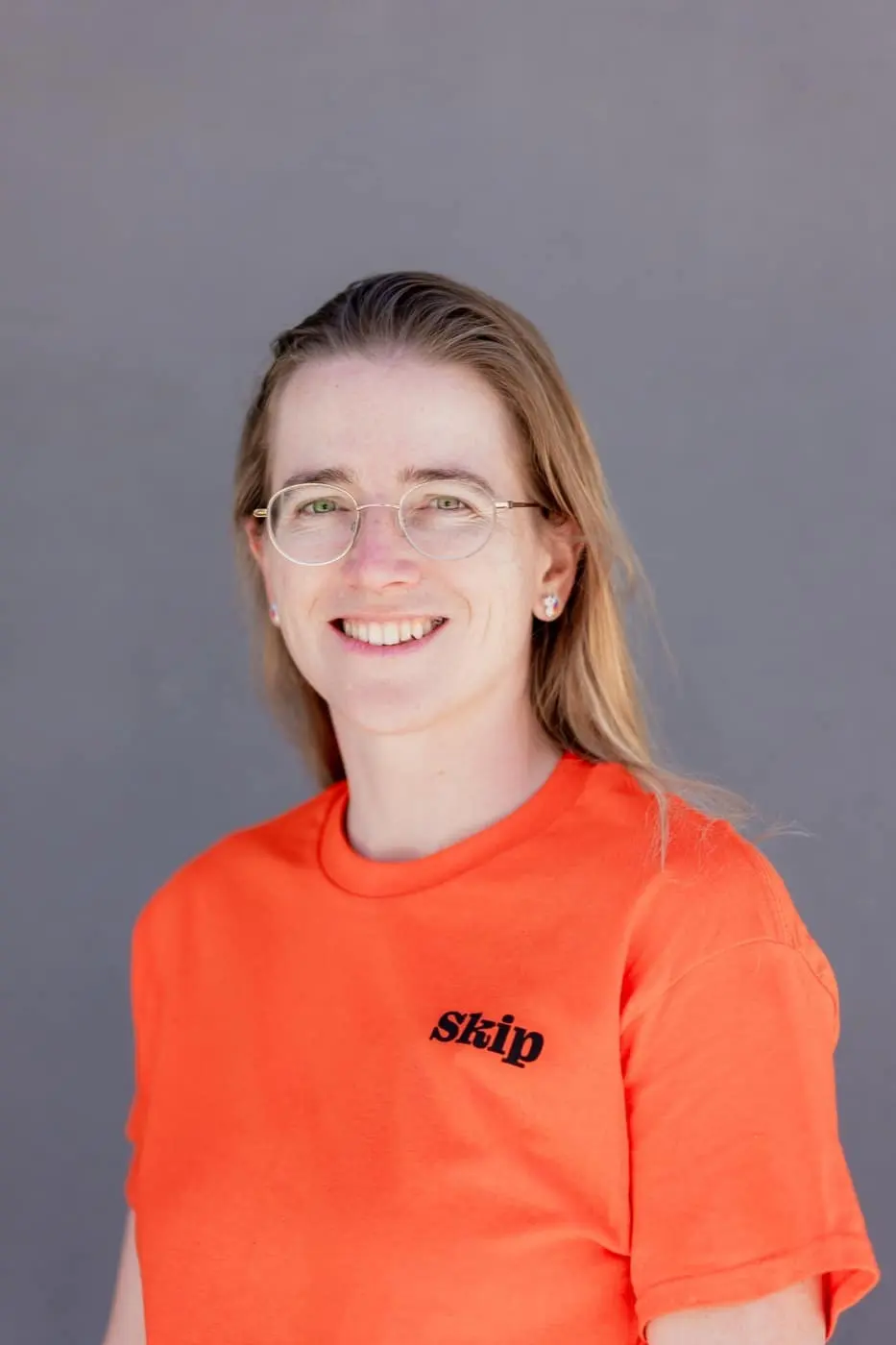
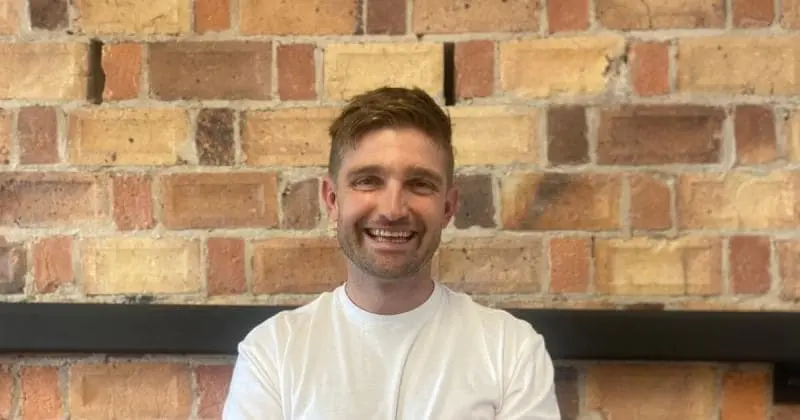
Kathryn Zealand founded Skip to help people stay active and independent through aging and injury, inspired by her grandmother’s painful fall and the inadequate technology available at the time. Skip's flagship product, the MoGo, is an innovative, lightweight robotic exoskeleton that acts like an e-bike for walking, offering just the right amount of assistance, whether hiking up mountains or standing from a chair.
Kathryn brings her unique perspective as a physicist-turned-founder and former project lead at Google X, Alphabet’s moonshot factory, where she learned the art of rapid prototyping and building breakthrough technologies. In this conversation, Kathryn shares Skip’s journey from idea to hardware startup, the nuances of building consumer robotics, navigating FDA approval, and tackling the manufacturing challenge of moving from prototype to scale.
In today’s episode, we cover:
• How a personal mission became a company, and why mobility impacts mental health as much as physical well-being
• What Skip’s MoGo exoskeleton is and how it empowers people to reclaim active lives
• Behind the scenes at Google X: spinning out projects, rapid prototyping, and taking big bets
• Navigating the complex hardware funding landscape: equity, grants, pre-orders, and venture debt
• The art and science of robotic mobility: why understanding user intent matters
• Why Skip chose outdoor brands like Arc'teryx as their first partners, and what’s next in consumer robotics
• The skills Kat had to learn (and unlearn) to become a successful CEO and founder
We also talk about Kat’s unconventional career path, from astrophysics to humanitarian law to deep-tech entrepreneurship, and her advice to aspiring founders looking to change the world with impactful technology.
Chapters
00:41 Meet Kat Zealand: Founder, physicist, and former Googler making robotic exoskeletons
02:07 How a grandmother’s fall became Skip’s origin story
03:32 Introducing MoGo: “An e-bike for walking”
05:11 Why mobility technology impacts mental health and quality of life
07:50 Partnering with Arc'teryx: From mountain trails to everyday use
08:44 Preparing to scale: From 50 handcrafted prototypes to 10,000 units
10:23 Navigating FDA approval and the medical vs consumer hardware divide
12:53 The robotics software challenge: Predicting user intent accurately
15:58 Behind the scenes at Google X: How Alphabet’s moonshot factory works
22:34 Spinning out from Alphabet: Lessons from Skip’s journey
24:00 Funding hardware startups: Venture capital, non-dilutive grants, and customer pre-orders
34:37 Leadership lessons Kat had to unlearn as a Kiwi CEO in Silicon Valley
Resources
Kathryn Zealand’s LinkedIn: https://www.linkedin.com/in/kathryn-zealand/
Skip website and MoGo rentals & pre-orders: https://www.skipwithjoy.com
Google X (Alphabet’s moonshot factory): https://x.company
Founders, Inc – SF-based startup community: https://f.inc
Transcript
Kat Zealand
Our first product is called the MoGo, and it's like an e-bike for walking. It's helping people move. The stories that I find most heartwarming are when we lend a MoGo to someone to rent for a day or two, and they can engage in activities with their family or friends. Sometimes Americans who live in Silicon Valley end up feeling quite narrowly focused, whereas Kiwis, by definition of having had to move here, often have either a broader sense of what the world is or more normal backgrounds and are a bit more grounded in reality, I think.
Kat Zealand
Either like a broader sense of what the world is or, you know, more like normal backgrounds and a bit more grounded in reality, I think.
David Booth
Welcome back to Diaspora NZ, where we're on a mission to seek out and profile the hidden gems, the best founders, operators, researchers, and emerging leaders of the great Kiwi expat community.
David Booth
Today we're chatting with Kat Zealand, founder and CEO of Skip. Kat leads a team building what she describes as an e-bike for walking—a lightweight robotic exoskeleton called the MoGo that assists with mobility and helps people remain active into old age. It was a journey that began with a very personal challenge, trying to help her grandmother who'd had a tough fall.
David Booth
Discovering that the technology in this space was shockingly behind the times, we dived into her time at Google X, the moonshot factory, where she built a team of world-class robotics experts before spinning SkipOut as an independent company. We talk about some of the technical challenges along the way, creating the device that could understand your intent, understand if you're going to stand up from a chair, or whether you're bending to tie up your shoelace or pick up a parcel.
David Booth
We FDA approval process, the consumer hardware funding landscape. And how they're just building this company in such a tricky category, paving the path to market. Kat's had an epic run, excited to get stuck in. Let's go over the episode.
David Booth
Kat. David. It is an absolute pleasure to have you on the diaspora. nz podcast. I have the pleasure of sitting here with you in San Francisco. Thank you for coming on firstly, and um, you're an inspiring person. You've built an inspiring company. You've got a mission of helping people remain mobile over time.
David Booth
That can mean a lot of things, which we're going to find out about. But tell me about the moment that you. You worked your career to realize this was possible.
Kat Zealand
Yeah, for me it was helping my grandmother. She was in her 90s. She'd had a fall and falls often have a follow-on effect of people breaking hips and struggling.
Kat Zealand
And so I was like, surely there's good technology that can help with this. Right. And at the time I was working at Google X, so surrounded by really inspiring people with expertise in robotics and other things. So I just kind of presumed that there would be a solution out there. And then the state of the art for.
Kat Zealand
Fall prevention is that you wait until your loved one has had a fall and then you get a text message alert about it after the fact. And I was kind of horrified. I was like, how is that the best the technology can bring to, to, you know, a community where it's like life and death sometimes these incidences, which felt in such contrast to like the very cool sci fi work I was doing a lot of the time at X.
Kat Zealand
And so it's a kind of example where it's not that I necessarily wanted to be an entrepreneur before that, but I wanted a solution to this problem. And I looked around and I was like, well, if no one in Silicon Valley is doing this, then I guess it will have to be me.
David Booth
The desire to solve something out of necessity is, is one of the best drivers you've gone through.
David Booth
I mean, years of research at this point to finally have a product to market, which is the. Robotic exoskeleton, lightweight exoskeleton, talk us through exactly what, because I want to go forward and back into the future and the past and the technology itself, but that's just the tech first.
Kat Zealand
Yeah. So I lead Skip.
Kat Zealand
We make our first product is called the MoGo and it's like an e bike for walking. So it's not yet doing a lot of fancy things around fall prevention, but it's just helping people move. We'll do up to 40 percent of a healthy person's muscle forces around the knee. So this is not going to walk for you, right, like you still have to initiate the movement, but a lot like an e bike where it can just help you get up those steep hills, um, this will help you get upstairs, stand up out of a chair, um, and hopefully bring people back to full activity levels.
Kat Zealand
So the target user is someone who's maybe seen a recent decline in their ability to do the things that bring them a lot of joy.
David Booth
There's obviously situating muscle strength. There's also supplying joint mobility or alignment or some people have perhaps recovering from a broken bone. Yeah. Supporting in the same way.
Kat Zealand
Yeah. So it's built around the knee and so it functions a little bit similar to a knee brace that's powered or has a motor attached to it. And so it will give all the benefits that a knee brace will provide around. Alignment and stability, uh, while also being able to give this boost. And, you know, we're currently in FDA approval processes and in clinical trials, so I can't make any medical claims yet.
Kat Zealand
But anecdotally, we have seen a huge response from people with knee pain, especially knee osteoarthritis, where if you've got some like bone rubbing, um, or cartilage issues, just offloading that joint and the forces across the joint.
David Booth
I mean, there's the physical piece and obviously offloading the forces across the joint.
David Booth
There's also the mental health piece, which I think you've talked about in the past of like, actually. One of the biggest killers or, you know, one of the biggest problems in age is the mental health decline that comes from a loss of mobility or the loss of capacity. That'd be harder to measure, but
Kat Zealand
Yeah, huge influence.
Kat Zealand
Um, and I think movement touches so much of daily life. Uh, and the stories that I find most heartwarming is when we give someone a MOGO, you know, to rent for a day or two and they can do an activity with their family or with their friends or, um, we had one couple where the husband was an avid hiker, uh, but the wife and they were in their fifties or sixties, couldn't go with them anymore, you know, but she kind of always wanted to and was missing out.
David Booth
So the very first time I heard about it was the MOGO, um, and this is entirely unrelated to the introduction we had, was actually the Arc'teryx hiking pass. And so the context was this partnership with Arterix, which is a prominent, you know, renowned outdoor brand. Um, and somebody told me that they had a friend or a third hand story of somebody who had hiked to the top of a very difficult mountain in a much shorter space of time than they otherwise could.
David Booth
And it struck me that there's this, um, restorative medicine versus enhancement or human enhancement angle. You're obviously focused on the former for now, but tell me about that idea space, how you think about what this technology could do.
Kat Zealand
Yeah, so there's a lot of interest in the enhancement as well, uh, but I actually think that that's a little bit more like the vitamin versus painkiller analogy.
Kat Zealand
If you're someone who's already really healthy, then maybe you'd appreciate a bit of a boost on long hikes, but you don't need it. It's not like a desperate need. And so we can provide some benefit there. But potentially the willingness to pay isn't as high or your, your willingness to put up with an early prototype is also not as high.
Kat Zealand
Whereas someone who's seen a reduction in mobility or they literally have knee pain, you know, it really is literally a knee, uh, painkiller. Um, and so even this hiking is a good example, like we work with Arterix for this first product and I personally love Arterix gear, like I'm a backpacker, I do mountain climbing, um, and I think the outdoor space is full of people who are excited about new technology and new gear and how it can help them.
Kat Zealand
Do the things I want to do and stay active. So it was one reason it was appealing and hiking is a great place for us as a company, because we get a diversity of movement and people, all kind of body shapes and sizes doing all types of variations on big steps, small steps. And so it was very kind of technically attractive.
Kat Zealand
Uh, but then it does, we ask getting this fine line where. Um, you know, Arterix sells a range of product to lots of people, including very, very fit people. And the use cases for the MoGo for them are slightly more limited, you know, they're there, but it's more limited, but they also sell to people who have that aspiration, you know, so they may not any longer be climbing the really tall mountains, but they used to, or they want to, or their kids do.
Kat Zealand
And so it's helping, like, get the right people in this big tent of our terrorist customer.
David Booth
So the conversation around, around that enhancement piece, all of the people who, um, want to climb the mountain, um, there's been similar exploration of like the most elite cycling shoe, uh, the most elite running shoes, or let's say the, the swim, the swimsuit, the shark skin swimsuit that allowed Olympic athletes to swim faster.
David Booth
And then was sort of the rules and regulations followed. I expect we won't be seeing the MOGO turn up in the Paralympics anytime soon. But there would be a, an angle for sort of recreational use, which would be really interesting to explore. Take us into, so I want to go both ways, into the future and then back into where it all came from, into the future first.
David Booth
You have the prototype out in the market, you've been taking pre orders, you're delivering pre orders next year, hopefully. Talk us through like what has to happen in the next 12 months and what's ahead. You're in the weeds of actually building and delivering this consumer hardware product at scale.
Kat Zealand
Yeah, you've caught us at a really interesting time because we currently have a small fleet, you know, only 50 units or so that was built for rentals because we wanted to validate that the experience is really useful.
Kat Zealand
And we kind of built the fleet with that in mind. So when you're wearing it, you get a great experience. But, you know, we cut corners and we did some things in less scalable ways. To make that happen, you know, as quickly as possible for 50 and that included, you know, assembling this, these units included a lot of like hand filing of carbon fiber and manual assembly and, you know, and prototyping kind of processes, which are expensive, but fine for 50, but don't work when you do all that
David Booth
yourselves in house in the dog patch.
David Booth
You're not yet sort of contract manufacturing and
Kat Zealand
correct. Um, I mean, we have a lot of our sub assembly that built with vendors. But it's such a specialized product that, you know, we'll have like the world's best, um, vendor for a particular kind of motor winding, you know, so we'll work with someone who's an expert in that, uh, but we do all the kind of final assembling pull together.
Kat Zealand
But yeah, that won't necessarily work at the kind of net scale. And so I'm currently talking to contract manufacturers.
David Booth
Yeah, how many units are you ideally delivering in 2027?
Kat Zealand
Yeah, I think we're looking at a first run of like five to 10, 000. Um, which, you know, and it's an expensive product. It's 5, 000, which is expensive for pants, but actually in the scheme of
David Booth
Very expensive pants, but expensive for mental health and mobility.
David Booth
No, it's
Kat Zealand
Yeah. Also, you know, we priced it similar to an e bike, right? So again, people are willing to pay that amount of money. It's something that enables them to do the activities they want to do.
David Booth
We know about the FDA process and I'd say like, why, because it can be prescribed by a doctor and covered by insurance?
David Booth
Is it sort of a business motivation or is there a, like, basically why does the space have to be regulated and approved under FDA trial?
Kat Zealand
Yeah, so our first product doesn't need FDA approval because we're not making any specific medical claims. It really is like an e bike, it's just helping you go further.
Kat Zealand
But we've seen anecdotally that it also helps with knee pain. But we can't make that claim. We can't advertise and say this is going to reduce knee pain unless we've kind of proven essentially that it will reduce knee pain. But you're correct that longer term having FDA approval will also open the door to this being covered by insurance reimbursement and being, and it's easier for doctors to prescribe it or encourage, you know, people who are approaching them with knee pain.
David Booth
Longer term, you will be distributing through doctors and hospitals and sort of going down the more of a traditional medical sales route. Is that?
Kat Zealand
Yeah, maybe I should back up. So I think long term, like we imagine a future where anyone who struggles with movement, we have a solution for them. And there'll be the same platform that can help across these things.
Kat Zealand
And by platform, I mean, both software, right? So we can use the processes and controls, but tuned for different. requirements. If you're in rehab, that's different if you have had a stroke, et cetera. Um, and some of the core, uh, mechatronics components. So our most expensive component at the moment is a motor because we had to do a lot of designing to make this light enough to feel comfortable on the body while still being powerful enough to be useful.
Kat Zealand
But you could have that same motor at the hip or at the knee or, you know, on an elbow. Right. And so we might have a standard set of components, Yeah. Yeah. Um, but a product line or, you know, we made license and we expect that different people end up needing slightly different flavors of this, right? So, you know, this first product, the MoGo is really about outdoor accessibility.
Kat Zealand
There'll be a very similar fast following product that's slightly more everyday living or slightly more medical gearing, but functionally very similar, like knee assist. But for knee pain, knee osteoarthritis, you know, knee rehab, et cetera, then we'll kind of build into, you know, we've got hip devices at the moment looking at Parkinson's disease, right?
Kat Zealand
Because we're trying to prove out that platform play in two very different places. Um, once we've kind of shown both halves of that problem, then you start thinking about, okay, stroke, fall prevention, I mentioned at the start, cerebral palsy, like almost, almost any neurological or neuromuscular condition you can think of could benefit from something like this.
Kat Zealand
But there'll be some element of So for that population, we might need to refine the controls a little bit because they might have a particular challenge that needs to be addressed.
David Booth
This is the software piece. I recall you talking about, um, this is in a past podcast or somewhere, the quote paraphrase, there's a difference between somebody who's standing up off of a chair versus somebody who dropped something and they're bending down to pick something up versus somebody who has had a fall and they're trying to get, oh, basically like you need to be able to The motion and the intent of the motion in order to power the motor in the correct way.
David Booth
Is that right? Or how would you, how do you think about like the software challenge associated with the different use cases?
Kat Zealand
Yeah, that's exactly right. So the challenge is with the minimal number of sensors on the body, how do we really understand what you're trying to do? And it's a very intimate product, like it's on your body.
Kat Zealand
So that also means that we have to be right 100 percent of the time. You know, we can't have any instance during the day where you try and go left, but your pants want to go right. Or, um, you know, if you're trying to tie your shoelace, but your pants think that you're picking up a heavy box and they try and force you up, right, but you're trying to tie your shoelace.
Kat Zealand
You know what I'm saying? Um, in some of the early days, I would be, you know, at a meeting, at a desk, tapping my foot as I was like thinking about a tune or something, and it would think I'm walking, turn on, and like the whole desk, you know, jump up.
David Booth
This is a little bit off of the expected path of this conversation, but is there like a brain computer interface angle on this?
David Booth
Like there's some very interesting technology coming through now, other startups, other research labs doing like, We can predict based on this neural activity that your intent was that.
David Booth
Do
Kat Zealand
you ever go sort of integrate into that level or is that maybe that science fiction still?
Kat Zealand
It's really interesting.
Kat Zealand
It's not science fiction. It's just around the corner. Uh, I don't think it's our sweet spot. And part of the reason is we're trying to build devices that are really light and comfortable for all day wear. Um, and those people typically have some muscle function and some neurological function. Brain computer interfaces are going to be really useful for someone who is let's say fully paralyzed.
Kat Zealand
Like if you've had a spinal cord injury. But then you would also need not the e bike, but the motorbike, like you're going to need heavier motors because they need to be stronger because they have to do full body weight support. Um,
David Booth
and so it's good metaphor. Yeah, so
Kat Zealand
it's almost like a different category of product.
Kat Zealand
And I actually think there's been more attention paid on those recently. So to the extent that there are other exoskeleton companies existing, they're often working with spinal cord injury and people who can't move at all, which is, I mean, that's a huge impact for those populations. But it's a tiny fraction of the people that struggle with, you know, one in five people struggle with movement in general.
David Booth
Everybody gets old.
Kat Zealand
Everyone gets old, but only a small fraction will be fully paralyzed. And so for those populations, Brain Computer Interface is amazing, but it's probably not going to be our core product.
David Booth
Good option to go back in time a little way, because you at Google X, which is, you should explain what it is exactly, you were one of the people who was basically at the idea validation stage of Google X and I've heard you speaking past about how there were lots of different threads of different expertise and different pools of Tatton.
David Booth
One of the reasons that skip came to be as it has is that you had access to all of that different expertise. Can you start at the start of X, what is it, how did you get
Kat Zealand
there? X is Google's moonshot factory.
David Booth
Yep.
Kat Zealand
And it really started, you know, it was started by Sergey Brin, one of the founders of Google, where I think these were kind of geniuses, started Google, Google was really successful.
Kat Zealand
And they started to say, okay, but what's the next Google? Like what's going to be the next thing that's as transformational for the world as Google and Search was? And that was the original mission of X, or kind of the cluster of small projects that became X. So things like Waymo are in that category, um, Wing, the drone company are kind of some of the larger examples, but they were trying to build essentially an incubator to find these, what they would call a moonshot.
Kat Zealand
So particularly in the early days, they were differentiated from say VC funding and they weren't looking for a five to seven year return or an exit. They were saying, Oh, it might take us 20 years to build out some of these technologies. But after 10 or 20 years. It's going to have much more upside. And so they were trying to do lots and lots of rapid experiments or, you know, like spin up small projects and investigations and wind most of them down very quickly.
Kat Zealand
So you know, the VC looks at a hundred companies and invest in one. Um, the idea of X was that they would look at maybe a thousand and only one of those thousand would kind of go all the way through. I
David Booth
recall a friend of mine was also there at one point telling me that they quite regularly dismiss an idea because it's like too soon.
David Booth
On the technology spectrum, it's too possible, it's not crazy enough.
Kat Zealand
Yeah, and I think that's particularly relevant because honestly Alphabet's quite an expensive place to build a project, right? And so if you're competing with a startup, the startup is going to be faster, they're going to be able to do it more cheaply, they don't have to worry about as much kind of regulation and overhead.
Kat Zealand
You know, those are all just natural things that happen with a company the size of Alphabet. And so if you're competing with a startup, you're going to lose. Instead they want to look at things that are one horizon further away.
David Booth
Yeah. So what are the, what are the counterfactuals? What are the other things that like putting aside skipping what you've ended up working on?
David Booth
What's the next most exciting thing that you were working on or saw or could have ended up building today?
Kat Zealand
Yeah. Um, so one of the projects I was working on in my early days at X is now public so I can talk about it. Okay. Um, I think it's now called tapestry. But the idea is, you know, climate change is a problem.
Kat Zealand
We want to get more renewable energy on the grid. Lots of other startups building renewable energy solutions. But one of the big problems is that the grid can't cope with like the amount of new demand coming online from new sources. And it's partly because companies don't always really understand.
Kat Zealand
Exactly what the grid infrastructure is, let alone be able to decisively model the impact of a new solar farm or a new wind plant. And some of these projects will be delayed for years just because we don't understand the impact on the grid. And Alphabet said, okay, one challenge that this is hard to do for a startup is that you also need to engage with a highly regulated industry, big utility companies.
Kat Zealand
You know, like not the ideal customer for a startup, but like critically important for the shifts that we need. You know, in our, in our energy infrastructure. And so, um, this project, which when I started it was really early days, they were looking at is there enough information that we can get from existing sources to simulate the grid, to build an end to end model of exactly the infrastructure that exists on the ground.
Kat Zealand
A digital
David Booth
twin they like calling these days. Exactly.
Kat Zealand
Exactly. So like that was one example that I worked on. that's still around.
David Booth
How did that opportunity come onto X's radar? Was it an internal or external inspired, inspired? And how did you or your team validate that that was worth your attention?
Kat Zealand
So things come onto our radar in a variety of ways.
Kat Zealand
Sometimes people will pitch us, but more normally, um, the team at X responsible for early stage work will have a problem space that they're interested in. And then they just go and see if there is like new and emerging technologies. Often like on the forefront of like academic breakthroughs because it's real research at that
David Booth
point.
Kat Zealand
Which would be a big unlock. And so you see some things come from like this problem first perspective. Other times, like, it's just you're reading, you know, the latest coming out of the cutting edge field and thinking, could we apply quantum levitation to this problem, et cetera, et cetera. This one, the problem is obvious, right?
Kat Zealand
Like climate has been a huge issue for people for a long time. And so it was that very first principles thinking about what are the biggest barriers to a renewable energy future or a carbon zero future. Which ones are other people solving? Like the tech is almost not too easy, but not a good fit for Alphabet.
Kat Zealand
What are the problems, you know, need a solution that Alphabet is well positioned to deliver?
David Booth
It seems like there's a lot of paths from there outwards as well. I mean, Skip has been spun out, we can talk about that. Uh, Havasubi has been spun out, and then you've got sort of Waymo and a few of the better known ones that are somewhat still part of the organization, but have now been externally funded.
David Booth
Is there like a general principle that applies, or is it really like
Kat Zealand
It's been a little bit case by case, especially in the early days. I think they're trying now to make it more. Systematic. Um, a lot of it depends on how big the company is. Right. So,
David Booth
you know,
Kat Zealand
Waymo, we would say it graduates at almost alphabet.
Kat Zealand
I put a lot of capital in, it retains a large amount of ownership. We're very different cause we spun out with 10 people. And so, you know, it wasn't really worth Alphabet's time to stay on our balance sheet. They were happy to sell us the IP in a much more kind of simple transaction. And so I think every project has its own scale and nuances.
Kat Zealand
And also how far away it is from core business, right? And I think X, you know, at the same time we wanted to spin out, X was quite clear that consumer robotics was probably not enough of that like wheelhouse in the medium term. And so it's, it's happy for us to kind of go more simply.
David Booth
And you're right, the capital requirements lens is a good one.
David Booth
I rode here in a Waymo, um, and so anybody who probably the vast majority of the audience hasn't been to San Francisco lately, you can get a ride anywhere you want on a driverless car. It is like living in the future. But as you pointed out earlier, It's been a 20 year journey to here for Waymo and there's, I dunno, how many billions of dollars spent to get to here.
David Booth
Right? Um, and there's probably gonna be some number of billions of dollars yet to spend. So living within a, you know, a Google infrastructure makes a lot of sense. So alphabet infrastructure. Um. In your case, so you spun out, you were able to take some of your team members with you. How has the adjustment been from kind of the, I don't want to say comfort, but certainly like the financial stability and security of living within the beast to now you're a startup founder with a set, you know, capital in the bank and a set set of milestones and higher on your ass.
David Booth
So like what, tell us about that transition to taking. former Google colleagues in particular with you. How's the, the new reality?
Kat Zealand
So I think we benefited from being a small enough project within X and very specific. So actually most of my team within X were not like lifetime Googlers, but were world experts in world robots that I had kind of poached almost individually to assemble this like rockstar team.
Kat Zealand
We had a mix of some Googlers in there as well. But I think as we spun out, it was notable that the people that were really passionate about the problem space and the technology were excited to come with, and were almost more excited to have a little bit of equity upside in the startup, whereas at Google, you get Google stock, so, you know.
Kat Zealand
But nothing
David Booth
tied to the specific project. Yeah, correct. Correct.
Kat Zealand
But, you know, we did lose some people. So I think some of the more traditional Googlers were maybe not as good a fit for the spin out. Either we didn't offer them to come with, or they didn't want to. But I think we also benefited from doing this in 2003, there was a lot of incredibly talented people on the market.
Kat Zealand
Um, 2013. That's right. I was going to say. I know. 23. 20 year journey. Yeah, just 18 months ago. So, you know, there was a lot of incredibly talented engineers on the market, so it was reasonably easy to, to kind of pull the right bits of the team together and fill in any spots that we had.
David Booth
As you ramp up to distribute a hardware product into market, you can fund it with equity and raising venture capital, you can fund it with pre orders.
David Booth
Speaking to other people who are out there with a bright idea for a consumer hardware product, as a category, it's a very hard thing to do. How do you think about capital planning and funding it to the market?
Kat Zealand
Yeah. It can be really hard because it's just, you need an order of magnitude, more capital than it's
David Booth
not some software.
David Booth
It's not some, you know, quick AI game.
Kat Zealand
Exactly. Uh, so I think it is important to think about alternative sources of finance. So for us, we also have some non dilutive funding. So we've got grants, particularly for our medical work, but there's a lot of overlap between the projects. Right. So we're going to support the whole company.
Kat Zealand
Yeah. A lot of hardware will have, if not a medical application, a military application or national interests. So they'll be able to get some. Government grants or similar non diluted funding that can be like a critical kind of.
David Booth
Is there a place that you go or a person you talk to to understand the non diluted grant landscape?
David Booth
How did you find what you found, Chance?
Kat Zealand
Or like, it's all, I would say you need to talk to a founder who is in your field, but maybe further along. Yeah. You know, it's very, it's a very different process, whether you're going for a DARPA grant or an NIH grant or a private foundation grant. And so, you know, it really depends on what vertical you're in, but for almost any like deep tech hardware vertical.
David Booth
It feels like, it feels like this must exist. If not, we've got to build it. There's got to be like a search engine for grants applicable to a variety of hardware niches or deep tech niches. Anyway, we'll come back. We'll, we'll solve that problem next.
Kat Zealand
Pre orders are interesting and pre orders, you know, so we take a hundred dollar deposit for the pre orders so that it's not a significant source of capital for running our business, but it's very helpful for building confidence in our ability to get.
Kat Zealand
Um, working capital financing or venture debt, because we can say, Hey, we've had orders that people, you know, it's the equivalent of having an LOI from a large company. If you're a consumer player, you can't deliver. A little bit is going to
David Booth
be aimed, but not so much that a bad outcome would be you take the entire amount up front and ultimately can't deliver the products and you're in a tough spot.
David Booth
So a hundred dollars is sort of the balance of, it's about right. Yeah. Yeah.
Kat Zealand
And you know, I am worried, like I think one challenge we might have is. We had to promise people a delivery date before we had fully fleshed out exactly when that would be. And so the commitment we made is anyone who pre orders, you know, they'll get personal emails or phone calls from us, like, we'll keep them in the loop.
Kat Zealand
Often we'll recruit them to be early testers, particularly the local community. They often want to do a rental or a demo. Anyway. And so it's, it's a good way to both have us get feedback, but keep them informed around, you know, what might be different between the prototype and the product, like how the ship data is evolving, et cetera.
David Booth
I'm intrigued by just sort of, there's so many interlocking threads with X in particular, we won't have time to do them all. Do you have much of a relationship today, or when you do, is it sort of, you know, you're out of the nest now, we wish you all the best.
Kat Zealand
Yeah, we have no formal relationship today, you know, they're not on our board or anything like that, but Silicon Valley is a very tight community.
Kat Zealand
Um, you know, I just had lunch with one of the, the ex executives yesterday. We do collaborate a lot on PR, because I think that's one area where it's mutually beneficial, right? Like, X wants to share in our wins and we have them. Yep. They have a lot more followers on our brand new Instagram
David Booth
account.
Kat Zealand
So, so we stay in contact with them.
Kat Zealand
And other
David Booth
founders who, I mean, there's lots of projects that spun out. There's probably friends and founders and sort of along the way as well.
Kat Zealand
Yeah.
David Booth
How did you wind up there in the first place? You, you've had a fascinating career. You have a physics PhD. Drop down. I feel like that's
Kat Zealand
an important caveat.
Kat Zealand
Drop
David Booth
down. You have obviously been, you've been following your interests and interested in all sorts of different technical directions. Tell me like, I mean, what, what was the pre X life?
Kat Zealand
Yeah. I was a massive nerd in high school. Like I can't emphasize enough. I was like the physics Olympics kid, read math books on holiday.
David Booth
So you're the definition of a nerd that everyone else is going to wind up working for.
Kat Zealand
Well, half of that is true, we'll see how we go. Um, yeah, so, love physics, love learning about physics. I had a great physics teacher at high school, shout out to Mr. Allenson.
David Booth
Send this podcast as well.
Kat Zealand
I will. Uh, but then I think when I entered university and the deeper I got down the research rabbit hole, right, like into a PhD program, it became less learning fun science.
Kat Zealand
And more, you know, my entire PhD was about one term in one equation around like black hole gravity, which is intellectually interesting, but for that to be the whole focus of years of my life, it felt like the impact wasn't there. And, and it was obvious to me that I was missing things. But it's hard to know whether the problem was my particular PhD topic or, like, academia in general.
Kat Zealand
You know, I'd never, I'd never really worked anywhere else. And so I said, okay, I'm gonna quit and try and do a year of something that is as different as possible on every single dimension.
David Booth
Okay.
Kat Zealand
And then I'll, and then I'll maximize my learning, right? Because I'll have experienced lots of different things.
Kat Zealand
And so where the PhD was very individual, I was like, I want a team job. The PhD was very like long term. So it's like, I want something with like weekly, like deliverables, kind of almost stress. The PhD was very amorphous kind of impact over the longterm. And I was like, I want something which feels like I'm helping people like every day.
Kat Zealand
And through a connection, I ended up working for a humanitarian law NGO, mostly in like sub Saharan Africa. Wow.
David Booth
That's very different to astrophysics. It's
Kat Zealand
lit by design, as different as you can imagine. Um, and I loved it. Right? Like I loved all of those things. Like I was exactly right about the kind of environment and the kind of work that I wanted to do.
Kat Zealand
So I was with them for a little while. They were great. At the same time, I had no relevant expertise, you know, so I was useful to them and like some data crunching and being the IT girl. But like there was no kind of sense that I was uniquely contributing there. Like I was very fungible to anyone else and I'd always been really good at science and kind of analytics.
Kat Zealand
So I think my career journey since then has been trying to find something which has the feel of that work, you know, the sense of impact, the sense of teamwork, et cetera. But leverages science, which is like the one thing I was really, really good at. And so I spent a little bit of time doing like small businesses in sub Saharan Africa.
Kat Zealand
But again, there was some element of getting almost on the investing side, like getting investment for them, kind of doing the zero to one. That was really interesting. Not quite science y enough, but like one step closer, kind of economics y maybe. And then X felt like it was exactly in that overlap of.
Kat Zealand
really high impact, potentially like really rewarding work with a cool team, but also leveraging some technical skills, which is something I was perhaps uniquely good at.
David Booth
Do you, I'm sure you mentor or advise others who are further down the path behind you. If, if somebody was considering a PhD today, what are your words of advice?
David Booth
It depends on the field and everything else contextually, of course, but perhaps the younger self.
Kat Zealand
Yeah, I think try things, all right, like my entire career was shaped a lot by just doing that first year for this NGO. And honestly, it was obvious within three months, you know, you know that I enjoyed that work more than anything else.
Kat Zealand
And so a PhD requires a ton of commitment and you need to like, it's really hard. So you need to be really passionate what you're doing. If you're not sure that it's for you, then I think it's well worth doing. Internships, doing volunteering, like you'll work for a startup, things which, at worst, you know, you'll work there for three months, then go back to the PhD, and you'll know, you'll never doubt that, like, that was the right path for you.
David Booth
Some people are often, um, sort of overthinking, like, the, how does this fit into my narrative, when actually, like, they don't tell you, you can just do things, you can just build things, right? You don't have to have the permission, you don't have to have everything perfectly pieced together. It's uh, you know, what inspires them.
Kat Zealand
Yeah, definitely.
David Booth
Are there any paths not taken? Otherwise, I feel like it's always fun to, you know, look at the inflection points. One inflection point would be the decision to join X. Yeah. Where else might you have ended up if not for that?
Kat Zealand
I was briefly thinking about being an impact investor. Okay.
Kat Zealand
Because again, I, I enjoyed that kind of quantitative evaluation. I enjoyed being able to see lots of different businesses. And so by impact investor, I think particularly on the kind of deep tech side, but with a view to maybe climate tech, something like that. But I, what I did an internship classic, um, what I missed was that sense of building.
Kat Zealand
So I was like, okay, I like the intellectual diversity. I like that I'm enabling like good work for the world, but I realized I'd rather be the person building the companies rather than the person kind of deciding which to fund. It's like, that's an obvious one.
David Booth
You're a New Zealander, obviously. You grew up in New Plymouth?
Kat Zealand
I did. I feel like I should say I moved to Australia at some point. That's
David Booth
fine. We'll still claim you. It's like a pavlova. It's from New Zealand. Um, even though they try to claim the otherwise, how do you think you get that much? How do you think about your relationship with New Zealand or your sort of national identity as a New Zealander these days?
David Booth
And part of this question to us, you know, what could we be doing as the great Kiwi diaspora to be? Supporting you to be getting behind you. What could New Zealand be doing to, you know, kind of support you better?
Kat Zealand
Yeah, love New Zealand. You know, my parents retired there, so like, I still go back every year.
Kat Zealand
Great country. I'm constantly lobbying my husband that we should move there. So the minute that Skip fails, like I'm on a plane, but annoyingly we keep, we keep succeeding. Yeah, exactly. Let's take the,
David Booth
take the, take the optimist name.
Kat Zealand
Um, yeah. So, uh, that's been great. The community in the Bay Area is really strong, um, and actually I think Kiwis blend a little bit when you're out here.
Kat Zealand
And so it's just wonderful I think to meet people who are similarly minded. Like I think sometimes, sometimes Americans who live in Silicon Valley end up feeling quite narrowly focused, whereas Kiwis by definition of like having had to move here often have either like a broader sense of what the world is or.
Kat Zealand
You know, more like normal backgrounds and like a bit more grounded in reality, I think. And so they end up building companies that I find more interesting. So I think, but like the Blackboard community is a great example. It's not just like repeated enterprise tasks. It's like a huge diversity of different types of founders doing interesting things.
David Booth
I mean, it's why I love the first question of this podcast, which was the, like the, the thing that inspires you. Quite often I find a Kiwi founder. Uh, gets into it for the right reason. They get into debt because there's a problem that they simply must solve or no one else is going to. And that is quite different to the scene over here these days, which is like being a founder is the cool thing to do.
David Booth
It's like all the kids that, myself included, want to be an investment banker, you know, last decade, want to be a founder this decade. And in fact, that can be a real problem. It's sometimes hard to separate the pedigrees. Stanford to Goldman to Xero starting a company from the person who's really in it for the cause and you know, New Zealand There's much I wouldn't say it's easier, but it's it's something we can really relate to and really see
Kat Zealand
Yeah, and I mean it's so hard being a founder that I feel if you're not like really motivated by the problem
David Booth
Yeah,
Kat Zealand
yeah You've got so many opportunities to quit and you always have to do the harder thing And so it helps to work on something which
David Booth
is there anything that you have had to Unlearn or like personal skills personality that you've had to develop in particular in your journey to now being a CEO founder Running a company.
Kat Zealand
Oh, so many things. Um, I think I'm, I sort of have this allergic reaction to presuming that I'm the boss, you know, which I think is a very Kiwi thing around like, well, whether it's tall poppy syndrome or like a preference for being very egalitarian. And I'm really lucky that at the moment my team is small and we do work in kind of a very equal way.
Kat Zealand
But every now and again, there are things where I'm like, Oh, I probably should have like been harder on this deadline, you know, like held the team to account a little bit more. Um, or. Like being more forceful, be more like less, but my instinct is it's very kind of collaborative decision making And I think that's something that has served me well a lot of the time but as a founder not all the time So that's one thing.
David Booth
There's a tendency I've experienced personally and seen another founders to it's kind of a DIY culture It's like, uh, you know, I can do this myself Something breaks. I'm gonna fix it. Yes. I need to grow something. I'll figure it out And to contrast with some of my most successful American founder friend, there's always a willingness to engage advisors or delegate or outsource earlier.
David Booth
Do you experience that?
Kat Zealand
Oh, a hundred percent. Yeah. Yeah. Yes. So everything from like, you know, another founder friend of mine was like, Oh, I just pay an accountant or they just pay a recruiting firm. I was like, recruiting firms are so incredibly expensive. You know, I thought, well, I'll just do all the interviews myself.
David Booth
Yeah. But so is your time.
Kat Zealand
Yeah. And so it's a different mentality. And I think that also changes as you grow in stage. Right. Like I think. I'm at, I'm literally at that inflection point right now where we're going to go from probably 10 people to 20 people. And I was suddenly like, Oh, I don't think I can do everything that I am currently doing with double the number of employees.
David Booth
So you are hiring, you're looking for engineers. Yeah. What's the, let's get some, some call outs out there. Um. What should people come to you with if they're talented hardware engineers with XYZ experience?
Kat Zealand
Yeah, passion for the problem space, I think is one of our biggest things, because again, this is hard work.
Kat Zealand
We've got to be really motivated. So if you're interested in solving mobility, come to us. Experience in robotics or drones, like anything powered that uses, you know, motors, power, power electronics. Um, we're particularly interested in people with experience either doing design for manufacturing. Or, um, or kind of, yeah, getting to scale, right?
Kat Zealand
I think we're going through that transition of 50 prototypes to 10, 000. People who've done that before would be very helpful. Um, and then software engineers and kind of a similar sense of, we need to go from manually uploading data to having a lot of more automated processes.
David Booth
Um, whole teams on the ground in San Francisco, you take in remotes as well.
Kat Zealand
We're pretty much all on the ground. It's a physical product and we have a value around everyone on the team wears it as much as possible, participates in user tests. Um, so yeah, sadly you have to be here, but we will sponsor visas for the right people.
David Booth
Cool. That's good to hear. And if you have a loved one in your life, Who is struggling with mobility, they can go and sign up for pre audit.
Kat Zealand
Yeah, so skipwithjoy. com, like skipping the movement. Yeah, um, and put your details in for like a rental. We have to do application now because we were somewhat overwhelmed. Um, but I'm picking out the best stories and would love to get some Kiwis.
David Booth
You told me before you're going to go and. Um, find some people to hike some mountains and beautiful parts of probably Milford Sound or sometime soon.
David Booth
So maybe they can sign up for that one.
Kat Zealand
Exactly.
David Booth
Um, that's awesome. We'll bring it to a close there. I'm excited to follow this journey. This is going to be a really fun one to do another interview in a year's time or year or two's time and see how it all unfolds.
Kat Zealand
Yeah, thank you for your time and thanks for building this community.
David Booth
Yeah, it's a lot of fun. I'm having fun here. Um, thank you to Founders Inc for hosting us. Relentless, you know, community down here in Fort Mason, San Francisco. If anyone's starting companies, we're here. I think we'll see you soon. Thanks so much.
Kat Zealand
Great.
David Booth
And that's a wrap. Thanks for listening. As a quick reminder, make sure you hit subscribe over your favorite podcast player so you can keep getting stories like this landing your feed every Friday.
David Booth
Help power you through those weekend chores. For my day job, I'm an entrepreneur in residence and an investor at Blackbird Ventures. We're backing best Kiwi and Aussie founders no matter where they are in the world. Back home with global ambitions, or out there building generational companies. My personal sweet spot is pre seed and seed.
David Booth
I like to say there's no check too early, so drop me a line anytime. It's dbooth at blackbird. vc. This episode was produced by Day One, the podcast network for founders, operators, and investors, and is part of the Day One network. Thanks again, look forward to seeing you back next week.
More Episodes You Might Like
Let's talk
Turn podcasting into pipeline
We help founders, funds and operators build trust, authority and deal flow with a show tailored to their market.
Win better deals and stay top‑of‑mind with founders.
Close more deals and build a category you own.
Reach founders and operators with a show they trust.