“The difference between really high quality investing at a very early stage and betting is, are there risk factors that you can control versus not?” — Maxine Minter Maxine and Cheryl kick off the First Cheque podcast, a show dedicated to helping early-stage investors become better at their craft. They aim to open source conversations and insights from experienced investors to provide valuable information and education for emerging investors. The podcast focuses on the Australian ecosystem but also explores international perspectives on investing. They discuss the importance of understanding risk, the distinction between betting and investing, and the need for better decision-making processes. They also touch on the current state of the market, noting some green shoots and increased deal flow, but also expressing concerns about the sluggishness in the series C to E stages.
Key takeaways
- Open-sourcing conversations and insights from experienced investors can help emerging investors become better at their craft.
- Understanding risk and making intelligent risk-taking decisions is crucial for successful investing.
- The distinction between betting and investing lies in the ability to control risk factors and make informed decisions.
- The current market shows some green shoots and increased deal flow, but there are concerns about sluggishness in the series C to E stages.
- This is a great time to be investing, especially in early-stage companies that demonstrate resilience and have the potential to thrive in the future.
Transcript Search or select a timestamp to jump ▾ 0:02 Speaker: Founders scale faster on Deel. Set up payroll for any country in minutes, hire anyone anywhere, get visas handled fast, and get back to building. Visit deel.com/dayone. That's D-E-E-L dot com slash day one. 0:23 Speaker: Are you building a SaaS business and looking to achieve compliance with SOC 2 and ISO 27001 or other security and privacy frameworks? 0:32 Speaker: Compliance can unlock major growth and build essential customer trust, but let's face it, it's usually time-consuming and expensive. 0:37 Speaker: And like really kind of a pain. That's where Vanta comes in. Vanta automates up to 90% of customer compliance tasks, making you audit-ready fast and saving you up to 85% of the associated costs. Plus, Vanta scales with your business, offering a market-leading trust management platform to continuously monitor compliance, unify risk management, and streamline security reviews. Join 7,000 global companies, including Atlassian and Dovetail, that trust Vanta to build and prove their security in real time. 1:03 Speaker: And for our listeners, Vanta is offering 10% off. 1:06 Speaker: Just go to vanta.com/first. That's vanta.com/first. 1:14 Speaker: So I think just working out like and open sourcing a lot of those conversations that are happening in silos or behind closed doors or over coffee or over dinner that we get to be part of, you know, sitting around that table, but we want that stuff to be open sourced about, you know, what are the best investors? Here in Australia and internationally worked out about being great investors. 1:35 Speaker: Okay, 3, 2, 1. 1:39 Speaker: Hey, I'm Cheryl. 1:40 Speaker: I'm Maxine. 1:41 Speaker: This is First Check, part of Day One, the network dedicated to founders, operators, and investors. 1:45 Speaker: If you wanna be a better early-stage investor, this is the show for you. 1:48 Speaker: So TL;DR, if you don't wanna suck at investing, listen up. 1:53 Speaker: Hello. 1:56 Speaker: Hey guys. 1:57 Speaker: How you doing? I'm good. I'm excited to start recording this. Obviously, we have talked about this for a while and excited to kick off the first First Check podcast, episode zero. 2:09 Speaker: The First Check podcast. 2:11 Speaker: The first one, first ever. 2:13 Speaker: First ever. 2:14 Speaker: We're recording this, yeah, from our lounge rooms when we have our best chats. Really just to kick off, I think what I'm hoping will be a fun journey together exploring and cross-training across various investment styles to become better investors. 2:30 Speaker: Anytime I get to talk to you about investing is a good time. 2:34 Speaker: I get to learn a lot and love really fun topics come up. 2:38 Speaker: So yeah, we are kicking off the podcast to really talk about investing, especially for First Cheques, because we wanted this to be— 2:50 Speaker: We do. 2:50 Speaker: A place that we come together and just open source some of those conversations that we were getting access to and those conversations that we get to be part of on a day-to-day basis, especially in the Australian ecosystem, but all over the world. 3:04 Speaker: 100%. I feel so lucky sometimes when I'm sitting at the table with Rick Baker and Craig Blair and Ray Nong and Matt Brown and you and Izzy. 3:14 Speaker: And I'm just like, these people have so much to share and I get to sit here and listen to it and just soak it all in. So we're going to bring that to you, all of you viewers who are out there, viewers, listeners. 3:24 Speaker: I think it's listeners on podcasts. Are you guys live? Is anyone there? 3:28 Speaker: Right. Yeah. I think that's true. Is this thing on? Actually, at the moment, we're actually talking in our lounge rooms. Literally no one is listening, but hopefully— 3:36 Speaker: Hopefully. Watch, no one shows up to the first one. I promise we'll make it good, guys. 3:42 Speaker: Yeah. Yeah. I mean, the goal is really open source some of those conversations that we're getting to be a fly on the wall for. So as you said, it's such a privilege to be around the table for some of these conversations. More people could be with them. The goal being that we have conversations with some of those investors that invested across stage, even in different asset classes. I actually think that this is something that to be a great investor anywhere in the world, but especially in Australia and the broader capital ecosystem that you're part of, to understand the kind of broader business ecosystem that you're part of. And I don't just mean the one that stops at Australia's national borders, right? Like capital flows internationally. Ideas flow internationally, entrepreneurs move internationally. And so being a great investor, which is what we aim to be, to really understand, you know, who internationally has worked this stuff out, who nationally has worked this stuff out, who locally has worked this stuff out, and to have those conversations. 4:36 Speaker: Absolutely. I remember you mentioned something about how I was, I was really concerned about the rental market in New York City and Or actually, I remember I told you that the rental market in New York City for office space had completely collapsed and you're like, that's really concerning for us. And I was like, what do you mean? No, it's not. It has nothing to do with us. And there was this like tangent of these could, things could happen. And so I think as investors, it actually is important to keep track of some of those extra things that are happening outside of our little sphere and bringing some of those conversations into what we're talking about, I think is going to be one of the more interesting things that we'll touch on during this podcast. Podcast, hopefully. 5:13 Speaker: Yeah, I can't wait. And we have some amazing guests lined up as well. One thing I do want to align on and maybe chat about first is how you even got into this. Like, I know we've had lots of chats about those first checks that we wrote, why we started angel investing in particular, because obviously both of us do early, early stage stuff like pre-seed. I just do pre-seed at coVentures and you do pre-seed through to Series A, I think is the latest deal I've seen you do. But how did you kick it off? How did you get the cojones to write those first dollars? 5:43 Speaker: Cojones. I like that. Not because I feel like I have cojones, but because it makes me, it reminds me that this is something that you do have to be a bit brave on, which hopefully we'll touch on with our next topic. 5:54 Speaker: But yeah, I fell into angel investing completely by accident. I started a company called StartCon a little while ago, and I was just really close to a lot of founders. During that time. And we brought investors and founders together at one of the largest startup events in Australia's history. And it turns out that you can't just throw 1,000 people in a room together and hope that the investors and founders will find each other. So I actually got really interested in how do I help? Weird. 6:18 Speaker: I know, right? Like, just put them in a room. It's fine. 6:21 Speaker: I really got really interested in how does, how do founders find capital and how do investors find the founders that they want to invest in? And then I, because I was just really involved in that space, I was working with a couple of startups. One of the founders He's like, hey, we'd love to have you come work for us, do a bit of marketing. We can't pay you in cash, but we can pay you in equity. How does that sound? I was like, all right, cool. Yeah, that's not like deploying checks. Like that's not investing, it's just investing my time. 6:47 Speaker: I've got plenty of that. That's not super valuable or anything. 6:50 Speaker: And so I was working for a couple of founders, I'm just doing stuff like that. And then I was up having drinks one day and one of them were like, oh, we're just trying to close our round. And I was like, oh cool, how much do you have left? He's like, 20 grand. Oh, really? I thought, I thought in order to be an angel investor, you had to invest like hundreds of thousands of dollars. Like $20,000 and I can invest? I could do that. 7:10 Speaker: And he was like, all right, sweet. 7:12 Speaker: Helps you get back to running the company. 7:13 Speaker: Awesome. And then that happened again. And 2 checks in, I was like, I wonder if maybe this is, this is what angel investing is. Maybe I should find out what I'm doing. And so I like, I called up some of the investors that I knew in my life. And funny enough, I didn't know very many angels. I mostly knew VC investors, so I called up John Henderson and Kylie Fraser, who was— she was running an angel syndicate at the time, but I was like, hey, I think I might have started angel investing. Not sure. Tell me what I need to know. 7:42 Speaker: Go. 7:42 Speaker: And the best part of what they said was that they were like, you've only written 2 checks. 7:47 Speaker: You're probably going to lose that money. And I was like, oh, is there an option B? And they're like, yeah, if you keep investing. 7:53 Speaker: You're probably still gonna lose that money, but you might have a chance of making it all back on the next sum. I was like, I choose that. So here I am, 26 checks later, my first learning check. 8:04 Speaker: Keep writing those dollar bills. I actually, I think there are, I get this question all the time from folks about the distinction between betting and investing, like early stage investing. And the reason I say that is that, oh, if you just keep betting, like you'll win back your losses. Has a similarity to betting, but I don't think there's like a huge— to the casino, like it is a phrase that you use a lot, you hear a lot with problem gamblers. And I just— 8:32 Speaker: Stick it out. 8:33 Speaker: I actually have spent a lot of time thinking about this. Like when I first started investing, is this, is, are there controllable risks here or are you just like playing with luck? Like I think that's the distinction, right? The difference between really high quality investing at a very early stage when there's a high level of risk. Is are there risk factors that you can control versus not? Betting, you can't control any of them and you were just playing with lady luck every time. 8:55 Speaker: Yeah. 8:55 Speaker: Investing with a high risk profile, I think, is where you can control some of those factors. And it's actually the topic that I'm super excited to chat to all of the amazing guests we have coming on is about like how they think about risk, how they think about intelligent risk-taking in their asset classes and at those stages, because being compensated for risk is in theory the variable of the return profiles you see, say between pre-seed and Series C or between options investing and like value investing for large Fortune 500 companies. They are like that. The way that those investors think about risk, I think can be really informative. for us at the earlier stages to get more sophisticated in the way that we think about risk? 9:45 Speaker: Absolutely. I actually think that the, the betting analogy is a really poor one. I often hear that argument of why people can't get involved in early stage investing because they're not sophisticated investors. And they're like, yeah, but I can go down to the casino and blow 50 grand. I'm like, that's really not a great analogy. Investing in startups, yes, is risky, but there are a lot of factors that come into play that that you can pull threads on and pull levers with. It's not the same as the casino machine pokey lever that you just pull over and over again. 10:16 Speaker: Is levers the best analogy? 10:18 Speaker: It really is not, actually. 10:20 Speaker: In a pokey machine, don't use that analogy. 10:24 Speaker: So I just, it's, it is actually a very different activity than just walking down to the casino and putting your money in and pulling that lever over and over again, hoping that there will be a different outcome. So we need to move away from that analogy. 10:38 Speaker: Right, for sure. But I do think that the, a conversation I hear a lot of is like how VCs talk about risk and are open about the nature of the risks that they are taking. I think there is a lot of attempts and I know I've seen it in my own decision-making behavior and attempts at false accuracy or false certainty to construct certainty. Around decision-making that doesn't exist. Just like being aware of and comfortable with the nature of the risks that you're taking and trying to get more and more sophisticated in terms of understanding that risk. And that's actually one of the things that I'm really excited to profile here in this podcast, which is just that in theory, better information leads to better decision-making. And the goal here is to open source, in theory, and the goal here is to open source Why all of those additional information feeds that hopefully will help folks become better investors and be more thoughtful about the way that they're investing. Learning more about liquidity, learning more about how it moves through different markets, why that matters at early stage, why that might matter for the exit profile of the businesses that you're investing in. There's just, there's so many bits I'm so excited to dive into. I wish I could just sit here for the next 4 months and just have conversations with people, but. Unfortunately, we have full-time jobs. 11:53 Speaker: Wait, but that is what we're doing. We will be having those conversations for the next however many months with whoever we want. Hopefully with people who are willing to come and chat with us about early stage investing. 12:03 Speaker: I think the key here is we're targeting this not at founders, because I think there's a lot of content out there for founders who want to learn about how VCs and investors think in general. And I've, I'm sure you have as well, but I've done so many podcasts where the audience is founders and I'm talking about why I invest in what I invest in, what I look for. The type of founders I'm profiling, the DD that I go through, like all of those things. And that's super helpful for founders. But our goal here, I think there's not a ton of content out there. Actually, I can't really think of much particularly that's focused in the Australian landscape. But our goal here is really to talk to those emerging investors, both emerging fund managers and early-stage angels and new angels who are thinking about investing. Because when I started, I there was a couple of people I could go talk to, but there weren't programs out there. And there's some amazing programs out there now, particularly for Australian investors, but overseas as well. There's lots of education, but there isn't, there isn't really an Australian-focused voice around providing content for those emerging investors. And I think that's who we want to talk to and open it up. So I think we want to be super clear about that, that this isn't necessarily for founders this time around. This is for people who want to learn and become angel investors or write their first checks. or become fund managers. 13:17 Speaker: Yeah, 100%. I would also say that this content is valuable as a founder, right? I think what we're talking about as investors and what you need to be excellent at as a founder is allocating capital, be they dollars or your hours or the other resources in your organization. Like we are talking about and exploring with different folks how best to make those decisions and how best to make those allocations. So true, it's not going to be like, how to think about an effective go-to-market motion or like how to work out what color the button should be. But I do think that— 13:54 Speaker: Or how to get investor attention. 13:56 Speaker: Yeah, exactly. I guess indirectly understanding your market is super important to be able to talk to investors. I do think that they're like, so I wouldn't say that it's not relevant for founders and also not relevant for more seasoned investors. Like my goal is that we, have conversations that are interesting across the board. But you're right. I think we like want to open source the conversation mostly for those folks that are, let's say the first 5 years of their investing journey in early stage. Because I think that, as you said, there's not a lot of folks having the public discussions about how to be excellent with the dynamics in the Australian market. Like there's so much content about strategies that are really effective and principles and heuristics that are really valuable in the US. Market, but there's so many elements of the US macro market that don't map to Australia, right? Like size of market, liquidity of market, where the pool— pools of capital come from, the decision makers that control those, like even just the realities of like supply chain logistics to Australia, right? Like the profile of an investment in e-com in Australia is so different than the profile of an investment in e-com in say Europe or in US. I think being thoughtful about the distinctions, and you're right, it's not those places in the Australian ecosystem that I've found where people are having these conversations in public. So excited to open source them. 15:22 Speaker: Are you building a SaaS business and looking to achieve compliance with SOC 2 and ISO 27001 or other security and privacy frameworks? 15:30 Speaker: Compliance can unlock major growth and build essential customer trust, but let's face it, it's usually time-consuming and expensive and like really kind of a pain. 15:37 Speaker: That's where Vanta comes in. Vanta automates up to 90% of customer compliance tasks, making you audit-ready fast and saving you up to 85% of the associated costs. Plus, Vanta scales with your business, offering a market-leading trust management platform to continuously monitor compliance, unify risk management, and streamline security reviews. Join 7,000 global companies, including Atlassian and Dovetail, that trust Vanta to build and improve their security in real time. 16:01 Speaker: And for our listeners, Vanta is offering 10% off. 16:04 Speaker: Just go to vanta.com/first. That's banta.com/first. 16:13 Speaker: So the last point I made was just that I'm excited to open source those conversations. So I might start here with another question. So as we think about open sourcing these conversations and looking at the landscape as it is today, we're recording this on the 5th of August in 2023. I feel like I'm starting to see some super exciting green shoots in the market, both in the US. So for context, I invest across the US and Australia. Actually globally, but heavily focused in the US and Australia, just at pre-seed. And I think that the, I'm seeing some really exciting green shoots in the US and I am hopeful we'll start to see them in the Australian market, but it does start to feel like things are picking back up again. Would love to hear what are you seeing out there? What does the market look like? 16:57 Speaker: Yeah, that's interesting. I'd say every time, so over probably the last one, yeah, probably one year. I've routinely asked the question, hey, what's your quantity of deal flow like? What's it look like? Like how quickly are you deploying? And last night, so I run an event called 361 Angel Club and we just bring together founders and angels once a quarter in Sydney and Melbourne. Last night I asked the question to a number of investors and for the first time in, in probably a year, 3 of the ones that I asked said something along the lines of our deal pace has picked up. We've done more this quarter than we've done in the last. 12 months. Um, and we're seeing, we've deployed a lot of capital and we've done a lot of deals in the last couple months. I'm like, awesome. Like, I wasn't expecting that because over the last 12 months I've consistently gotten the answer of it's slow. We're not seeing a lot. We haven't deployed a ton. And that also factored in with the, so I'm an LP in a number of funds. And I'd say over the last maybe, I don't know, 18 months, I like 15% of the capital that I'd committed has been called. In the last probably month, I've had capital calls from nearly all of the funds. So to me, that tells me that there, there is green shoots, as you call them, that are starting to crop up and pace is increasing. I guess my question is, does that mean that we are on the up? Are we in recovery mode? Are we heading up? Obviously it's going to take longer even if we are, but thoughts? 18:20 Speaker: Yeah, I think, I hope it is. I am an eternal optimist. And I do, I have learned via my decision diaries that I can get, see positive data and extrapolate positive trend where they are just aberrations. So I hope that's what that, that is exciting data that is suggesting the, at least a kind of bottoming out as opposed to a kind of falling. And then we're going to see an uptick, but it's so hard to know. A lot of the data I get to see is retrospective. So it looks back on like previous quarter or previous. half, but I do, I will say anecdotally, I'm feeling it, right? We've done 9 investments in, we've done 6 investments in 6 months and we did 3 investments. We warehoused 3 investments in, so we've done 9 in, like we've got a portfolio of 9 companies and there's probably 3 I'm looking at this week that I'm like excited about investing in. And that's the, no. 19:16 Speaker: Okay. So we're open source. Definitely not open source. Everything except for deal flow. Got it. Yes, absolutely. I did meet one of your portfolio companies last night, GoTrady. 19:25 Speaker: Ah, yeah. Yeah. Yeah. They're amazing. 19:27 Speaker: They spoke very highly of you. In fact, I— 19:28 Speaker: I actually think you met two of them last night. Oh, who's the other one? Tapestry. Chris from Tapestry. 19:33 Speaker: Yes. Yes. I did meet Chris from Tapestry as well. Yeah. 19:36 Speaker: Um, both amazing. They're excellent. 19:38 Speaker: Me and GoTrady basically just went off on a rant about like how amazing you are. And I was like, she's not even here. We should have her here for this. 19:46 Speaker: Yeah. That's so kind. I will actually say in the last 48 hours since that event, I have bumped into or chatted to 8 people who were at that event. Like that event sounds like an incredible, I'm so sad that I missed it. It was just the best. Consistently bring the best people in the ecosystem together. But I do, I do think that they are green shoots that are, are exciting to see, especially at this early stage. Now on the counter to that, I had a conversation with some folks in the US this morning and Series C, T still sounds like a graveyard. the feedback I'm continuing to hear is that that is a really tough stage still. Slower deployment, price depression, all of the things that we don't want to hear and which you need to see a thriving progression from stage to stage for each of the stages to continue thriving, right? If Series C to E or C through to IPO continues to be sluggish, like it's not going to be great for the early stage for us because pre-seed, they— Yeah. In a year and a half they become, if they do well, they become A, and then a year and a half after that they become B, et cetera. So I'm still a little bit concerned that we're seeing the sluggishness there. We're not seeing the activity at IPO we need to see for the kind of pipes to clear out. But I'm, as I said, eternal optimist, excited about some of those green shoots. And I do think that this vintage of companies are going to be incredible because I think that this like vintage of companies. if they succeed and they survive through this stage, then they will get to the growth stage and be in a much better place. 21:23 Speaker: Highly resilient. 21:24 Speaker: Yeah, exactly. Highly resilient. I think like they get through to that growth stage and there will be very few competitive companies at that stage because most of them won't survive this stage. So I think from an investing perspective, I'm extremely bullish that now is a great time to be greedy. They do say be, when the markets are down, be greedy. I think now is a great time to be greedy because I do, I think that the ecosystem that these companies, like early stage, pre-seed and seed will be growing into and selling into is going to be back in the middle of the cycle. 21:54 Speaker: Yeah. Oh, it's a great time to be investing. I think most investors are on our side with that. 22:00 Speaker: It's probably a little dangerous to do, to have two eternal optimists running a podcast together, but we'll, we'll temper that with some, some pessimistic guests along the way. 22:08 Speaker: And one of the things you mentioned actually a little bit earlier is you, you said this word decision diary, and I actually think you're one of the most unique investors that I get to talk to on a regular basis. And I would love to jump into a bit more maybe on another episode, like what is your decision diary and how does it work and how do you have the mental effort and diligence to do that? But I'm assuming you didn't do that right from the beginning. So like one of the things we didn't, you know, touch on, I'd love to understand like how did you start angel investing and what did your first couple of learning checks look like? 22:35 Speaker: Yeah, my first learning check was $2,500 backing Aditi at Zetta. And I'm not going to pretend I knew what I was doing at the time. Like I got lucky. She is just building an amazing company and she's an amazing founder. But I wouldn't say that was insight, right? That was pure luck. Just right place, right time. Being wowed by a founder. But my kind of, and I think that I really like this term of learning check. I think it's really important to recognize that as you are learning to invest, a lot of it is instinct and you need to earn the right to have that instinct by doing quite a few reps. I do think what's really exciting though is that there are now platforms like Aussie Angels that allow you to do those learning checks at a much smaller clip than you might have had to in 2012 or whatever. But my, yeah, my first one— 23:21 Speaker: Yeah, your learning checks are a lot smaller than mine. 23:24 Speaker: Yeah, I'm, I mean, kudos to you, you're writing $20K learning checks. I was, that was like literally half my take-home salary at the time. 23:31 Speaker: If I could have written smaller learning checks, I would've. Yeah. 23:36 Speaker: Yeah. Yeah. So I, that was the first check I wrote. And what I learned from that is I had no idea how to make that decision. I just was like pure instinct. Aditi and the team are incredible. Really interesting space. Really impressed with execution pace. I will invest and invest it through a syndicate. Over time, I can't remember who taught me about decision diaries. It's definitely received wisdom. It wasn't, I didn't divine my way there. From First Principles, but I can't remember who did that. So whoever did that, thank you so much. You changed my life. But so a decision diary, just— Just on like how your decision diary is working. Yeah, on decision diaries. 24:12 Speaker: Just in case someone else wants to copy you and divine that from you. 24:16 Speaker: Right. Yeah. Happy to share. I am the biggest advocate for decision diaries, I think, that exists. But essentially a decision diary is where you record how you made a decision, what information you relied on when you made that decision. And what your decision was so that you can review it at some kind of hindsight set off and have quality information to make that assessment. And the reason you do that is because it's actually really hard without some record of what the decision is that you made and how you made it and the facts that you had at the time. It's really hard to assess the quality of your decision making over time. And I am all bought in on the school of thought that great investing is good decision process plus great information. So have been honing my decision-making process ever since. 25:00 Speaker: I think it pulls a really interesting thread that like investing is a very brutal feedback cycle. Like you're looking at 5 to 10 years on getting any feedback as to whether your investment decision was a good one or not. And so anything that you can do in the shorter term to try to either shorten that feedback cycle or get better confidence that that you're utilizing the best information possible to make those decisions so that you can, you're not just waiting 5 to 10 years to get that information back, I think is super key. So hopefully we'll be able to surface some of that for everyone listening as well. 25:37 Speaker: Absolutely. With that, I am so jazzed to be on this journey with you and can't wait to shit talk for half an hour to 45 minutes at a time over the next many years of podcasting together and excited to be on the journey with all of you listening as well. I hope you enjoy the journey and we hope this is a conversation with you. So reach out, tell us what you think. What do you want to learn about? What information do you want to know? What stupid acronyms are people using that you don't understand? 26:08 Speaker: Literally. 26:08 Speaker: That we can demystify. Yeah. So excited to be on the journey with you and great to catch up. 26:14 Speaker: Absolutely. I cannot wait, Maxine. It's going to be great. 26:18 Speaker: Thanks everyone. No transcript lines match that phrase. Try fewer words.
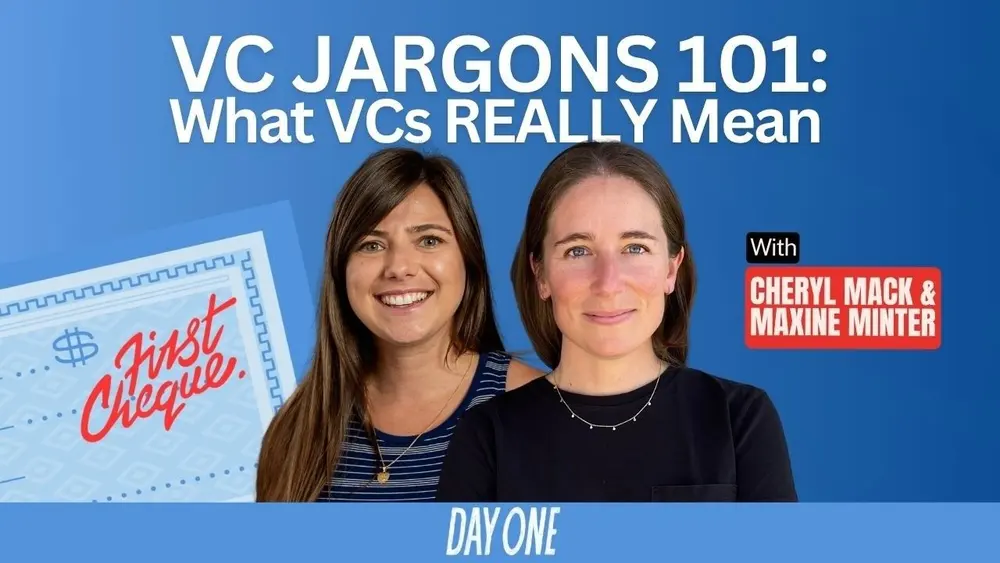
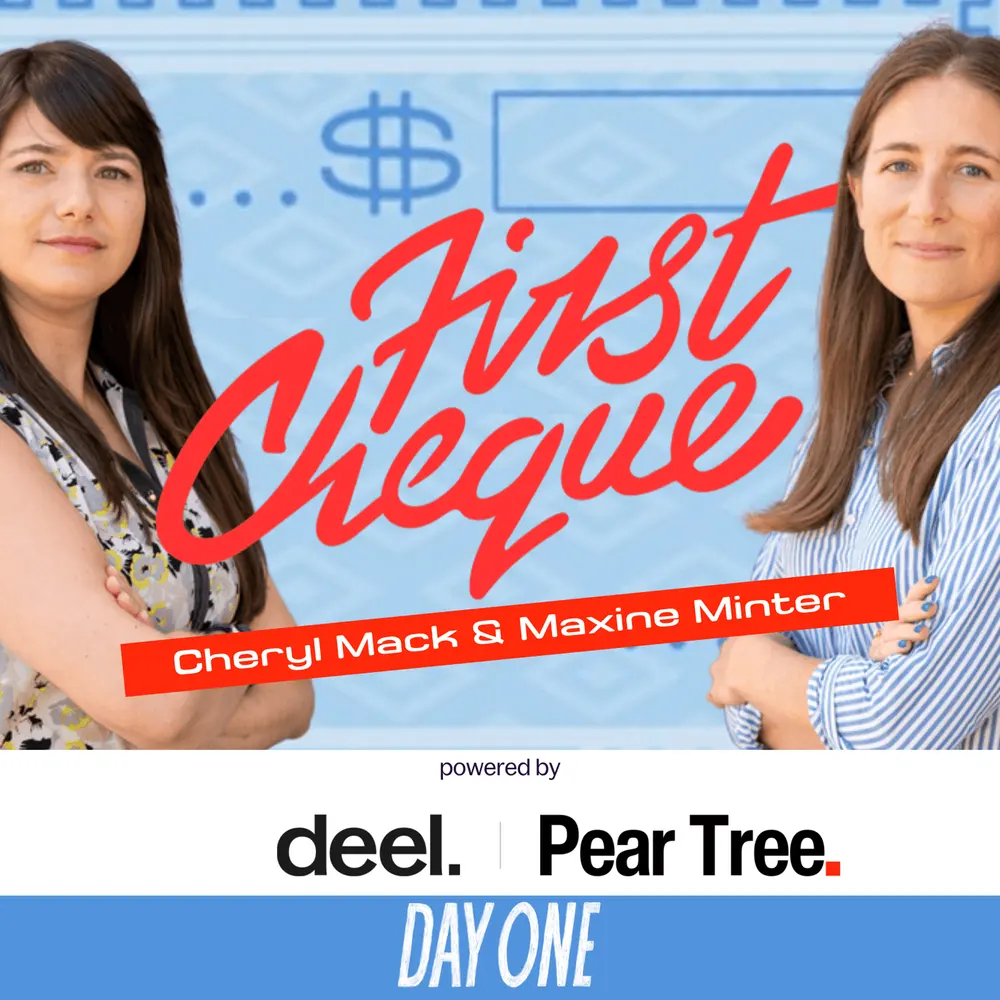 First Cheque with Cheryl Mack & Maxine Minter
Presented by Deel & Pear Tree
First Cheque with Cheryl Mack & Maxine Minter
Presented by Deel & Pear Tree 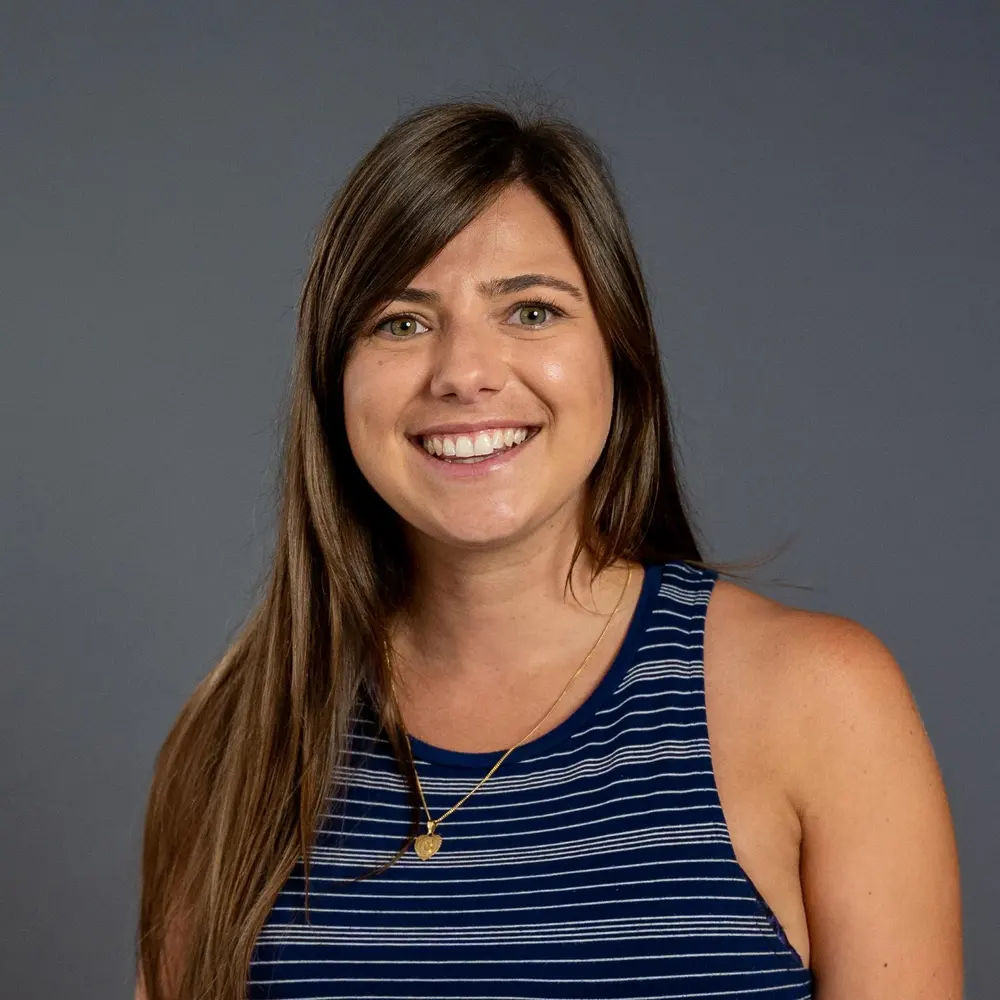

 ▶
▶ ▶
▶ ▶
▶