Transcript Synced · select any line to jump ▾ 0:01 Cheryl Mack: Founders scale faster on Deel. Set up payroll for any country in minutes, hire anyone anywhere, get visas handled fast, and get back to building. 0:12 Maxine Minter: Visit deel.com/dayone. That's d-e-e-l.com/dayone. As long as there's a little space, I'm gonna squeeze in. And I'm not gonna give up until I hear a yes. So we definitely incorporated that kind of spirit in our early hunts. 0:35 Pocket Sun: Because the other challenge in being in one of these kind of beating hubs, I find, is there's an enormous amount of groupthink, an enormous amount of people kind of all building and thinking the same thoughts. And I think that that diversification of thinking can be really helpful to kind of step back into a different ecosystem and think through, you know, a different lens. And as you guys say, kind of see a different pocket of opportunity. 0:55 Cheryl Mack: Like it's so easy to go down to the Bay Area from Vancouver, whereas at least we're far enough away that like the hustlers and the people who want to build world-class but can't for whatever reason leave this country have a fighting chance. Okay, 3, 2, 1. Hey, I'm Sheryl. 1:10 Pocket Sun: I'm Maxine. 1:11 Cheryl Mack: This is First Check, part of Day One, the network dedicated to founders, operators, and investors. 1:15 Pocket Sun: If you wanna be a better early-stage investor, this is the show for you. 1:18 Cheryl Mack: So TL;DR, if you don't wanna suck at investing, listen up. So I met Pocket like 7 or 8 years ago when I was running StartCon. You remember those days? Anyone in the audience, do you remember coming to a StartCon event at the Randrick Racecourse? And you know, there was thousands of people just all over the place, lots of startups. Canva was in that startup alley at one point. Shout out to, if anyone does remember, please, please reach out. But that's where I met Pocket and I just absolutely loved her energy. We brought her from, Singapore to Australia, and she just absolutely killed it. And I've wanted to reconnect with her ever since. Maxine, I brought her to you and you were like, "Yes." Heck yes. 2:09 Pocket Sun: I also, I mean, she was an OG in the strategy that she's chasing. So Pocket is now the GP of SoGal Ventures, and she built a foundation before that called SoGal Foundation. It's a really interesting strategy when it comes to investing in underrepresented founders. She was super early to that thematic. And I think she started investing in that thematic arguably in 2014, more formally in 2016, which, you know, that is, that was significantly before we started to see this trend. It was really only in that kind of 2017 that you started to see that thematic, 2018 maybe even you started to see that thematic. And so crazy that she has been investing there from such a young age as well. She was 24 when she started investing. 2:49 Cheryl Mack: Being so young to just be like, guys, this is the investment thesis and I know no one else is doing it like this, but this is how I'm going to do it. And crushing it. 2:58 Pocket Sun: And crushing it. She's in some incredible companies. And so I think super interesting to hear how she thinks about investing behind thematics, but also she is an excellent investor when it comes to consumer. And I know in Australia we are barely consumer curious, even though our biggest outcomes have been, some of them have been kind of at least prosumer in the most generous interpretation. And so I think excited to get her thoughts thoughts on consumer investing, consumer trends, right? How they think about investing at that stage. 3:29 Cheryl Mack: I also can't wait to talk to her about their investment at Loverie because as a customer, I just think that that's such a unique investment that I couldn't imagine doing, but totally a customer and absolutely would love to have gone back and like been on the fly on the wall for that conversation. 3:46 Pocket Sun: 100%. And I think actually one of their success stories One of those, like, sleepers. Incredible, incredible outcome for them. 3:54 Cheryl Mack: Awesome. Well, I cannot wait to get into it with Pocket. Let's go. Let's do it. 3:58 Pocket Sun: You're listening to a Day One.fm show. 4:02 Cheryl Mack: As a startup founder, you're juggling multiple priorities from the expected, like finding product-market fit, to the unexpected, like customer requests for SOC 2 or ISO 27001 certification. 4:12 Pocket Sun: But achieving compliance is time-consuming, and time spent on it is time away from the needs of the business. 4:16 Cheryl Mack: That's where Vanta comes in. Vanta is the all-in-one solution for startups to become compliant quickly and build a security foundation with ease. 4:23 Pocket Sun: With a combination of automation and extensive partner network and a security marketplace, Vanta provides the necessary tools and expertise for startups to achieve compliance seamlessly, no matter how urgent the needs are and at every phase of growth. 4:35 Cheryl Mack: Over 10,000 leading companies, including Cipherstash, Handle, and Indetted, trust Vanta to automate compliance so they can focus on growing their business. 4:42 Pocket Sun: Startup customers get 10% off Vanta at dayone.fm/vanta/firstcheck. Check, or just go to the link in the show notes. 4:52 Cheryl Mack: Okay. So it's been a number of years since we last talked, Focket, but I am so excited to get into this with you. And for all of our listeners out there, we always ask the same question of our guests when they come on, which is, no drum roll needed, what is the first thing that you ever invested in? 5:15 Maxine Minter: Well, the literal answer to that will be an AI company founded by a Black founder, actually, back in 2015. And it was my first ever angel investment. I did it on AngelList. 5:29 Pocket Sun: Wow. 5:29 Maxine Minter: I put $1,000 in. 5:31 Cheryl Mack: Cool. $1,000. Yes. 5:35 Maxine Minter: I always tell that story because people sometimes really underestimate how I guess, or overestimate how expensive or how inexpensive it is to get into angel investing. So yeah, that was my first investment. This company is still alive today. Although, if I were a bigger investor, I would advise them to probably exit the business. 6:00 Cheryl Mack: Not be alive. 6:03 Maxine Minter: Yeah, they've been hanging on. And that was my first investment. 10 years ago. 6:09 Pocket Sun: Wow. Your first ever one? Yeah, that's impressive. 6:14 Maxine Minter: As an angel, yeah. 6:15 Cheryl Mack: But also that you picked an AI company 10 years ago. Maybe they might have been a little early. 6:20 Maxine Minter: Yeah, my co-founder's first investment was also an AI company, and it's a digital pathology company using like machine learning and AI to help pathologists make better diagnosis for cancer patients. And that company is still alive and doing very well. And we invested with the SoGal Fund as well. So yeah, both of us actually started our journey with AI years ago. 6:45 Pocket Sun: Starting strong out of the gates. I've got to say as well, just a shout out to the small check sizes as an entry point into angel investing, right? It's something that Cheryl and I are like constantly ranting about, but just if more people knew that you could start really small to kind of get your reps in before you kind of come strong out of the gates, especially if Cheryl had known that strong out of the gates, her first check size was like $25,000. $25K. Mine was $2,500. Um, so I'm much more on the kind of smaller side. 7:09 Cheryl Mack: Order of 10x magnitude. In my defense though, there are much less options for putting in a $2,500 check in Australia 5 years ago. 7:19 Pocket Sun: I'll give you that. 7:20 Cheryl Mack: Hence why we started Aussie Angels. 7:24 Maxine Minter: Wow. Well, I think, yeah, more people should become angels for sure. Like, I think in the US there are— I forgot the exact number, but like I don't know, 170,000 or 1.7 million people that could actually be— 7:40 Cheryl Mack: I'm gonna go with probably in the millions. 7:42 Maxine Minter: But very few actually are. And there's definitely a lack of diversity in the angel demographic as well. So I've been very passionate about kind of bringing the inspiration and education to people who are totally qualified to do it, but have not getting started on that. 8:05 Pocket Sun: Oh, do you have any tips for this? My small act of rebellion has been I've started asking every single, uh, friend of mine who is a woman who is an operator and/or a non-partner investor at a fund, are you angel investing? 8:22 Maxine Minter: Yeah, I do that too. And amazing. 8:26 Cheryl Mack: What do you, what do you say when they say no though? 8:28 Maxine Minter: Why not? I was like, what? I would make them feel like they're ridiculous. 8:35 Cheryl Mack: What? Why not? Like, I'm confused. 8:41 Maxine Minter: Yeah. I think it's such a missed gold mine because you are literally sitting on the social capital. You're sitting on the experience capital and you have like $2,500, right? To make a small investment. And sometimes I even tell my influencer friends that, you know, if brands come to you and you think they have great potential, instead of asking for all cash upfront, just ask them to— 9:11 Cheryl Mack: Or shoes. Don't ask for in-kind free things. Ask for equity. 9:15 Maxine Minter: Just like, you know, like if you want to work with them in a longer term and you really believe in them, maybe, you know, just get half pay in cash and half pay in equity or even, you know, start working with them in an, I don't know, like kind of an advisory capacity and create, I call it after-sleep income. 9:38 Cheryl Mack: Yeah, never heard of that one. 9:40 Pocket Sun: Yeah, I love that. Better word for passive. 9:46 Cheryl Mack: Passive. Exactly. 9:47 Maxine Minter: After-sleep is way better way of putting it. Um, and I remember many years ago when I was in my Beyoncé era, speaking at these different conferences, there was one slide I would put in my presentation, which would say, don't buy— what is it? Don't buy shoes, buy companies. 10:08 Cheryl Mack: I think I saw that slide and I was like, yes. 10:11 Pocket Sun: That's great. 10:12 Cheryl Mack: I'm here for it. 10:13 Maxine Minter: I feel like my mission has been just to get women and other people who have been overlooked and uninvited for so long, to be on the cap table, whether as an LP, as a GP, as a VC, like investing decision maker, or as an advisor or as an early employee, like whatever way it takes, but get on that cap table. 10:42 Pocket Sun: 100%, yeah. 10:44 Cheryl Mack: Get on that cap table. 10:46 Pocket Sun: Get on that cap table. So what was your progression from that first $1,000 check through AngelList? Did you keep investing through AngelList for a while? Did you start to syndicate? Like, how did you progress from that first check through to launching SoGal? 11:01 Maxine Minter: Yeah, so that was end of 2015 when I wrote my first angel check. And then I, I made a few more small angel investments. Some are through AngelList, some are through the SoGal community that I was creating and organizing at the time. And I convinced people to take my direct investment for like $3,000 $1 million. 11:24 Pocket Sun: Amazing. 11:26 Maxine Minter: My winning strategy was that people wanted investors like us to exist because they're so fed up with, you know, being shut out the door or being asked very hostile questions or not being taken seriously in the boardroom. And they wanted some refreshing forces in the world of venture capital. So I was able to make some, you know, really tiny investments and convince them Hey, you know what? I'm going to 10x outperform my check size. Yes. Even though my financial power has not caught up with my value-add power. 12:06 Cheryl Mack: Yeah, I'm with you on that one. I would always tell founders, I won't be your biggest check, but I will be your biggest champion. 12:11 Maxine Minter: That's a good one. That's a good one. 12:14 Pocket Sun: I love that. 12:14 Maxine Minter: Yeah, and I think founders sometimes they just need a cheerleader, right? And that's priceless. 12:19 Pocket Sun: 100%, yeah. And I think that also, it is probably a bigger testament to the value that you can add as an investor if they're willing to take you on for $3K. Like, at that point, you're barely covering the legal costs, right? 12:32 Cheryl Mack: Yeah. 12:32 Pocket Sun: Getting you under the cap table. And so it's probably more of a testament to your ability to kind of position yourself and also actually add a lot of value. So when you were first starting out, how did you think about finding amazing companies? Were these folks already in your community, or were you out there sourcing and then you now have launched a fund and then built that into a second fund. And so as you think about how that deal sourcing funnel has changed over time, what has evolved for you as you've gone? 12:59 Maxine Minter: Yeah, a lot of questions in there. I would say, so we launched our fund one in 2017 and from 2015 to 2017, we did a few things to really prove that this is something we wanted to do and this is something we could do. And these things include one, making sure that we could actually source source good deals. So when I was just starting, I first started SoGal as a community, 6 months before I got into the Stanford VC program and met my co-founder there. So that kicked off our adventure to start a firm together. And after we decided, okay, like we need to shift the status quo, we need to, you know, start a firm, we started making small angel investments. And also my co-founder was starting a fund for Johns Hopkins University. So That was kind of our playing field and experiment to see what it really takes to start a fund. It was a very tiny fund, but it had all the elements. You still have LPs to answer to, you have to do all the tax audit compliance, all that stuff. So it was a wonderful learning opportunity. So before we launched Fund 1, we had already invested in 27 investments, and many of them had raised a new round. 14:17 Cheryl Mack: Mm-hmm. Combined? 14:18 Maxine Minter: Yeah, between all of us. 14:19 Cheryl Mack: Like, did you warehouse those and then move them in or? 14:22 Maxine Minter: No, actually. So, you know, a part of those were the Johns Hopkins fund. And I think 2 of them actually became, later became SoGal Investments. But SoGal had a different, I guess, outlook. And we were, you know, doing bigger checks compared to the Johns Hopkins fund, which was writing, I think, writing 10K, 25K checks to begin, and I, you know, was writing 1K, 2K, 3K checks. So yeah, but in that process, like, even though your check size is much smaller, does not mean you're not going through the whole process. It doesn't mean you're not doing your diligence. It doesn't mean you don't do value add for these founders. So it was a great kind of very steep learning curve period where we were testing, like, where can we actually add value? Do entrepreneurs actually like working with us? And to find confidence in doing so. And I think having a diversified portfolio early on was super important because sometimes I think of angel investing as subscribing to a newsletter or joining a membership club. You're getting insider scope that's only shared with investors. Because you are a small investor in it. So sometimes, like, for LPs who are investing like $25K checks into my fund, I'm like, I'm thinking like, this is such a great deal for you because you're, you're getting a membership to this LP club for 10 years and beyond, and you're going to make money on it, right? 16:03 Cheryl Mack: It's a subscription that you get paid to have instead of having to pay to Yeah. 16:10 Pocket Sun: You get paid back. Yeah. 16:12 Maxine Minter: Yeah. So I think that's the fun part of investing. And we proved out that entrepreneurs liked working with us. We were very, I'd say, unsure about, can we do this? What is our value add? I think because we didn't come from operator backgrounds, we didn't come from the finance world, or Wall Street, and we were not like employee number, I don't know, like under 10 at any tech startups. So I think early on I identified with the super connector archetype of being an investor. I think that speaks to my superpower and my community building experience. Mm-hmm. And The SoGal community was kind of a media platform as well, because as we grow, you know, the subscriber base and the newsletter reach, and also with all these in-person activities and summits, hackathons, global pitch competitions, we were able to really connect entrepreneurs to different resources. Another thing we did to prove out Dealflow before we started the fund was we hosted a global pitch competition for women entrepreneurs back in 2016. 2016. And we brought these, you know, women from all over the world who had won their original competitions to Silicon Valley. We invited all the top like Silicon Valley investors that we knew at the time, including Tim Draper. And he ended up investing like $300K, like on the spot to 3 of the finalists. And he was like, this is like better quality than— Like each? Or— Like 100 each. 18:02 Pocket Sun: Okay. 18:03 Maxine Minter: He's like, this is better quality than like most demo days I've been to. 18:07 Pocket Sun: Amazing. 18:08 Maxine Minter: Yeah, so that was a great validation and also just the sheer volume, like the competition we were hosting, we got like 3,000 companies applying like in a very short period of time and people were like, oh, Most funds don't even go through 3,000 deals in a year, but we were just getting an insane volume. 18:34 Cheryl Mack: They must have just really resonated with your perspective and who you are. 18:39 Maxine Minter: It just proves that, yeah, there are so many companies that didn't get the attention. 18:45 Cheryl Mack: Did LPs understand the super connector? Did LPs take to that? How did they react to that archetype? 18:55 Maxine Minter: I think they did. I think they did. Because we were writing, I think our value add at the time was a great match for our small check size. Because, you know, back then, like, if you're writing $50K, $75K, $100K, like $200K checks, your main role is not to be, you know, kind of the fiduciary duty taker for the company, but instead, like, how can you really open different doors for the companies, like get them exposure to different platforms, different media outlets? How do you introduce them to potential customers? How do they introduce them to potential hires? How do you help them promote their new products? I think that is the appropriate— level of value add for a check that's at our $100K level where we started with. And yeah, we were pretty aggressive when we started. We were going out there and outreaching to founders and relentlessly convincing them to take our small check. Sometimes after their round has already been filled, or sometimes when they're not raising at all. So I think when you're starting as an angel or VC, it's important to be a little aggressive, a little on the lookout, you're hunting for interesting opportunities. But also in the beginning, every opportunity looks so enticing, like every company looks so promising. And you're like, every opportunity seems investment worthy. What do I do? 100%. Yeah. 20:44 Pocket Sun: It is amazing, isn't it, when you first start off as your like bar calibrates, right? Especially the progression from, although it sounds like your angel investment deal flow was incredible, but the progression from kind of angel investment to fund level and how that bar moves up over time. And then as you get kind of further along, you're constantly lifting that bar, right? As the companies get better and better. I think I read somewhere that You invested into EverlyWell or Everly, now Everly Health, early in their journey. That was in that category, right? You had to beat down their door to get your check in and you got it after the round was closed. 21:20 Maxine Minter: Yeah, that was, I would credit that to my co-founder, Elizabeth. She won that deal. So she heard about the deal at an investor dinner and someone sitting next to her was talking about, oh, we just made this new investment in this digital healthcare company. And when, you know, this other investor was talking about the idea or the model of EverlyWell at the time, Elizabeth immediately felt like, oh, this is something we've been waiting for. We, like, we, from the get-go, like, wanted to invest in the democratization of access to the future of living, working, and staying healthy. And when it comes to staying healthy, it's all about autonomy. It's about personalization. Mm-hmm. It's about kind of, you know, patient sovereignty. Like how do you take control of your own medical data and getting the tests that you need at the right time without having to always, you know, take a half day off because women are busy, right? So when we heard about the company, it just feels like it is something we've been waiting for. Mm-hmm. And the round was already oversubscribed. So we started this chase. So Elizabeth really took advantage of the fact that, you know, the founder, Julia, and her both worked at Deloitte. And Elizabeth grew up with two doctors as her parents. So she had a lot of healthcare expertise and has network at Johns Hopkins. And I remember like, Julia was thinking about getting some press, but it was not her strongest suit at the time. So we proactively curated this whole list of like tech journalists that she can reach out to that might be relevant for this press story. Just doing everything that we can to show that we understand your business, We're here to be of service. And, you know, we're worthy to get on your cap table. And eventually, Julia convinced one of her board members, who was an early investor, to reduce his check size in this round so that we can fit our $100K check in. 23:52 Cheryl Mack: Wow. I love that. 23:54 Maxine Minter: Yeah, so I think being an angel or being an emerging manager, you have to be entrepreneurial. Like you have to believe, you know, there's still a gap. Like, as long as there's a little space, I'm gonna squeeze in and I'm not gonna give up until I hear a yes. So we definitely incorporated that kind of spirit in our early hunts. 24:19 Cheryl Mack: Love that hustle. I'm always pestering VCs like, hey, you got a little allocation there for me? I'm good for like $100,000, $200,000 and a whole lot of value. 24:27 Maxine Minter: Exactly. Yeah. And then, you know, it's land and expand, right? Like, as long as you land a space on that cap table, then there's— 24:36 Cheryl Mack: I'm still working on the expand part, not so much on the expand, but definitely landing. 24:43 Maxine Minter: Yeah, that's a great start. Like, you land first. 24:46 Cheryl Mack: Maxine's already on the expanding part. 24:50 Pocket Sun: Yeah, I think, I mean, I think it's a, once you're in, right? And for your fund, do you invest first check and then you invest follow-on checks, or do you just go kind of first, just like a single check? For us, we just write a single check in, and so we're more focused on like expanding the relationship over time. But definitely from fund 1 to fund 2, hopefully there'll be some expansion. 25:13 Cheryl Mack: I meant like expand as in you write bigger checks than I do. 25:17 Pocket Sun: Oh, true. I don't know. I've seen, I've seen your syndicate bring in some weight. Breakthrough on average. Yeah. 25:25 Cheryl Mack: Thanks, Maxine. 25:28 Maxine Minter: Yeah, when I say land and expand, like I think from our experience, sometimes we start with a little check just to be in the inner circle, and then we grow the relationship with the founder, and eventually they're like, you're so valuable, we're going to give you super parada, right? We want you to have a bigger stake. On the cap table. And we want you to be more involved. So there are cases where in the beginning, we couldn't even get into the company. And eventually the founders create a round so that we can get in. And eventually, when hardships happen, they realize that, wow, you know what, like Pocket and Elizabeth and Sogau are actually my true allies. And there have been cases where we then get on the board and kick out the original board members. 26:25 Cheryl Mack: Wow. 26:25 Maxine Minter: And we become the lead investor and we become the closest, the most trusted investors that they have. So there has been several cases actually where we went through that. Journey with these founders. It's fun. And it's like you get into the big league and you get to structure recaps sometimes. For the listeners, recap means usually not a great thing. Recaps are when a company goes through a down round, meaning their current round's valuation might be lower than the previous rounds. They really need to incentivize people who will participate in this round. So they might kick out some old investors who are no longer active, who have lost conviction in the company or couldn't deploy in the new round. And you kind of restructuring the whole cap table. So ownerships will change. It's an opportunity for you to take bigger ownership. But if you can't participate, like a recap is when— previous investors might get kicked out entirely and lose your entire stake. So it's kind of a sharky zone, if I may, but it's also fun. It's like you get into the deep end of venture investing. 27:54 Cheryl Mack: With some sharks. 27:55 Pocket Sun: With some sharks. They are, there've been a lot of them going around, right, in '23, '22, '23, and then even some still in '24. Although I haven't seen as many this year, but it's been a lot of recaps with the market, kind of some of those overvaluations flushing through the market. 28:10 Maxine Minter: Yeah. Yeah. I know there are investors who are very bearish about recaps. They're like, you know, it never works. But I think with women-led companies, for example, like because investors are more likely to lose confidence in them more easily, Sometimes, you know, the round dynamics do not properly reflect the potential of the company. And I think that's where we could have an arbitrage opportunity. 28:39 Pocket Sun: Super interesting. I've actually never thought through that, right? Like if there, as you said, statistically people from underestimated backgrounds are, as the name suggests, underestimated in these moments. 28:51 Cheryl Mack: Underestimated. 28:51 Pocket Sun: Yeah, ta-da, as described on the packet. And so in these moments when there is these recaps going, or just even in these moments where you're funding these tough periods, they're also less likely to get kind of more risk-forward capital coming through to push them through these low periods. But also in a recap scenario, there actually is upside for folks that are deep believers in the founders themselves or in the companies. In those recaps, have you seen like maybe for the listeners, if you could give them a little bit of a sense of like, how is a recap done? How for early investors can you get pushed out of a company? What opportunities are there in a recap actually to lean in and maybe capitalize more value to them if they deeply believe in a founder and are supporting them through a recap like that? 29:41 Cheryl Mack: And is it for all investors or like only VCs? When you say investors, are we talking angels too? 29:47 Pocket Sun: I think it's usually VCs, right? Have you ever seen an angel participate in a recap on the other side, right? Like not being the ones to like recap out of a company, but I don't think I've ever seen it. 29:58 Maxine Minter: Yes, I'd say like usually when a recap happens, they recap so that people who participate in this round could get, you know, better ownership basically. And, you know, people who don't participate get kicked out. So I've definitely seen angels come back to the table and participate. Either, you know, in their parata amounts, sometimes even beyond that. Because like for savvy investors, it could be an interesting opportunity. It is, it feels risky because usually when a company goes through a recap, that's when, you know, their runway is low and, you know, maybe they need more time than they originally thought to reach the next milestones. And some investors are not comfortable with that. And also, you know, each investor has different tastes, flavors, and, you know, risk tolerance, right? Sometimes they're like, oh, if you don't reach your goal, that your first try, then you're dead to me, right? Or if you have a big enough portfolio, and this was not an important investment for you, then you're like, whatever, like, I'll just give this up. So it really depends. It really depends. When a recap happens, usually, you know, there will be one firm or two leading it. A lot of the times it's insiders leading the recap, but sometimes it's an outsider that's taking kind of previous investors all out. And they're coming in with majority of the round and setting the terms so that they can take, you know, sometimes like 20% or even higher ownerships. Sometimes it depends. And sometimes there are like warrants, options, and liquidation preference, all these additional protection measures so that the people who are coming in at a more risky moment in the company trajectory can get rewarded. Because, you know, at the moment, it might seem like, oh, this is not a very investible company, right? Yeah, it's interesting. And because we mostly invest in diverse founders, sometimes we see that, you know, when things don't go as well, the first thing that any like white male investor and board member think of is, oh, let's just kick the female CEO out. Like that has happened. 32:26 Cheryl Mack: That's obviously the problem. 32:28 Pocket Sun: Obviously. Yeah, obviously. 32:31 Maxine Minter: So, like, that's an obvious kind of, I don't know, lazy decision or opinion, right? And there have been a few cases where we're like, well, we don't think that's the real issue and we need to step in if we really still believe in the company. 32:52 Cheryl Mack: Yeah, fighting the good fight, Pocket. 32:54 Maxine Minter: Yeah, we've kicked out some much, much bigger investor and got them out, out and beat their term sheets and sitting on the board instead and kind of eventually removing their influence and put the company on a more promising cash flow conscious trajectory. And that has been very fulfilling and but also very challenging. 33:31 Pocket Sun: Do you notice because you at SoGal, you invest both in consumer and in B2B, right? You don't have a particular kind of vertical that you invest in. Have you noticed a difference in the way that boards approach these kinds of moments or investors approach these kinds of moments? Across consumer and B2B, right? Especially over the last, call it 3 or 4 years where the market was very bearish. Did the market approach it differently and did investors approach them differently depending on consumer or B2B? Or are they kind of just as tough, just as dynamic moments in the company when they go through a recap? 34:10 Maxine Minter: I wouldn't say, you know, the difference is between consumer versus B2B. I think it's more based on the traction and the health of the company itself. 34:24 Pocket Sun: Hmm. 34:25 Maxine Minter: Because it doesn't matter what sector you're in. If you have healthy cash flow and you don't have to worry about running out of money soon or having to cut a bunch of people or having to make some critical decisions, life-death decisions, then, you know, like the board is not under that much pressure, right? And you don't have to make very drastic moves. I would say, like, I've seen some really interesting pivots in the past few years. I'd say a lot of our consumer companies have an enterprise component, whether it's through, you know, like channel partners or having B2B partnerships as a big part of their revenue. So— 35:08 Pocket Sun: Interesting. 35:08 Maxine Minter: I think there are few, much fewer companies who are like pure consumer, right? Like usually they start consumer and then they go into enterprise and enter like business contracts, et cetera. They stand on different legs. 35:26 Cheryl Mack: That's really interesting. Cause I feel like when you look at your portfolio online, a lot of them look like pure consumer plays, which like for Context in Australia, we invest very little in consumer. Like, there just, like, is not a big consumer VC or investment environment here at all, which— number of factors for that, but still, that's the case. So, we're always interested in, like, anybody who is making investments in that space. And at the same time, we've had a few consumer wins, so it's kind of this conflicting, like, environment here. So, we're always interested in, like, how people are investing in consumer. And also, I feel like we kind of got off topic a little bit. Recap was super interesting, but it might be healthy to go back to maybe just like walk us through your investment thesis. 36:13 Maxine Minter: Yeah, so we invest in pre-seed and seed companies, mostly in the US and Canada, led by diverse teams. We invest in the future of living, working, and staying healthy. So, we've covered everything from from consumer tech, digital health and wellness, future of work, and sustainability companies. So, I guess the ethos is that we want to invest in things that touch people's lives and create new categories and address unmet needs. Because I, you know, we really believe that historically, systematically, there are, there are so many blind spots. 36:52 Pocket Sun: Mm-hmm. 36:53 Maxine Minter: Of the current system that need to be redesigned to reflect, you know, the diversity of people. And Gen Z is the most diverse generation ever. So we are always kind of looking forward, thinking about the younger generation's needs and what holes need to be filled. How are they going to be living their lives? Going to school or not, right? Spending money or not, going into relationships or not, how they take care of their health physically and mentally and maybe spiritually even. Yeah, how they think about the future of the world. So yeah, I think it's fair to say that we're taking a more generous— generalist approach now that With Fund2, we're actually kind of taking a step back on consumer, especially consumer products. And we're thinking, so what do we want to invest in, really? And I think the answer I have right now is we just want to invest in really killer world-class diverse founders who have a unique point of view, who really have insights in the space they're building in. And could execute like no one else. And I am super open and willing to learn about new spaces with them, whether it's, I don't know, space engineering or financial derivatives or biomanufacturing. I think I just want to invest in cutting-edge frontier, creating, category-defining type of businesses and people. 38:41 Pocket Sun: Super interesting. How do you think about, like, as you say, your thematics are quite broad. And as you said, you're like interested in playing around on the edges of that. Something that I'm constantly thinking about, I would love your thoughts on is like, how do you know when you're outside of your zone? I.e., you're in the kind of zone of naivety as opposed to your zone. Of understanding? And how do you defend that line? Or are you constantly playing around with it? Because that line is constantly moving. How do you think about that? 39:15 Maxine Minter: I think my confidence in entering new areas usually comes from two places. One is the existing network that we've built. So from, you know, over 10 years ago, we've been building the SoGal network, and that consists of like global entrepreneurs. And we've since built this large LP family, like between Fund 1 and 2, we have over 200 LPs who are strategic individuals, families, institutions, who have, you know, a variety of expertise and networks that they bring to the table. So constantly, I feel like, you know, I'm able to absorb information, and understand how to connect the dots. So, whenever I enter a new field, I constantly feel like, okay, even though I know nothing about, you know, AI-generated proteins right now, but like within 2 days, I found 3 people who are like PhDs, like who are experts in the field to help me understand, to help me diligence the company and give me their insider takes. So, I think I'm really lucky. I'm really good at very fast learning type of thing. 40:26 Cheryl Mack: Well, it helps to be a super connector. If you're super connected to all those people, it's easy to tap into their knowledge, right? 40:31 Pocket Sun: For sure. Yeah, yeah. 40:33 Maxine Minter: Also, another piece comes from, you know, we are not just randomly investing in things, right? We're investing in things that align with the themes we are seeing in the future. You know, these are trends or, you know, kind of little red dots that I've been collecting little information on. So I think, you know, it's easier for me to understand the context or to understand, will this be a thing or not? So coming from the more macro level, if we understand like the core user demographic, which is, you know, young millennials and Gen Z, which we are like immersed in that world, all day long, then it's easier for us to understand, will they use this product? Do we think compute is going to replace, not replace, but be as big as oil and gas and having kind of point of view on these newer things. 41:32 Pocket Sun: Do you? 41:33 Maxine Minter: Yes, we actually just invested in a company that's betting on that future, where compute is going to be kind of a natural resource, like a raw ingredient of these tech companies. And it will become a huge financial market as well, which doesn't exist today, but will exist through this company that we just invested in. 41:59 Pocket Sun: Super interesting. I really like that framing of it, right? You're actually using two resources that have been compounding for you one being your network and two being your knowledge, right? Because you've been investing behind these thematics for a while, right? It's actually surprising how much touches and concerns each of these thematics. So they might feel like net new frontiers, but actually you're compounding on— I like that you're framing there the little red dots that you've been collecting to kind of put it all together to place you very well when it comes to a kind of net new thesis. It's actually the idea that compute, for example, is a really material. And we will rely on it in the future. 42:37 Maxine Minter: Yeah, and I think sometimes like founders, you know, they want some breadth on their cap table as well. It's not, you know, if I'm a biomanufacturing company, all I want is biomanufacturing people on my cap table. You need people who understand different sides of the business. You know, you need people who can help you build your founder and company profile, you need people who can put you on the right spots, podiums, and you need people who can build, you know, global go-to-market kind of connections for you, or people who can understand your mental health challenge and understand burning out and understand how work-life balance is so difficult, and you have someone to talk to. So I refuse to vote myself out when it comes to a new area. . And I feel like there are a lot of value-add that I can bring to the table without being, you know, a subject matter expert in that field specifically. 43:37 Pocket Sun: 100%. Yeah. So you invest globally, right? Speaking of kind of frontiers that you invest in, what ecosystems are you most excited about at the moment around the world? Are you crushing on San Francisco and/or the US like a lot of folks at the moment, or are you looking further field. 43:53 Cheryl Mack: And how do you feel about Australia? 43:55 Pocket Sun: Small plug for the tiny island. 43:58 Cheryl Mack: Asking for a friend. 44:00 Maxine Minter: Oh, interesting question. So in Fund 1, we were actually more international. Uh, we were a $15 million fund at the time. We invested in 42 companies and many of them were outside North America. We invested in a company in Australia, one in Singapore, one in China, one in Canada, like two in the UK. One in Sweden, like, we were all over and in our angel investing, Elizabeth and I have also invested in like other continents, like Africa and beyond. So with Fund 2, though, like we have become more conservative geographically, mostly because of LP constraints. So we're more focused in the US and— could also invest in Canada, but we're not really doing that many international investments anymore. I think the challenge, especially for an angel, is different jurisdictions come with different, you know, compliance requirements, like different tax stuff, and different legal systems. I remember when I invested in the UK for the first time, knowing that we're all going to be common shareholders was such a like, what? Moment for me. I was like, no way, this is so weird. 45:16 Cheryl Mack: Wait, there's no such thing as pref shares in the UK? 45:20 Maxine Minter: I think that over there, like, um, everyone is a common shareholder. 45:25 Pocket Sun: Yeah, I think they put contract— contractual supports around it, right, as an investor, but it's not like— it's not a different class of shares, so you don't have exactly the same protections. But correct me if I'm wrong, I haven't been as close to it as you have. 45:38 Maxine Minter: Something like that. That was so long ago. 45:40 Pocket Sun: Weird. 45:42 Maxine Minter: Yeah, so we realized that as a very small team, it's very difficult for us to, one, like having the understanding of all the logistics of running that investment. And number two, we realized that investing in a more, Slightly more concentrated geography gives you a more established network that you can tap into for value add. So for example, like when I think of my Singapore investment or my Australian investment in Fund 1, I feel like I wasn't as effective as an investor because, you know, I didn't spend a lot of time establishing relationships with 10 Series A investors that I could send company to. And for that Singapore one, like they were raising Series B, but there were only like, say, like 4 or 5 Series B firms in town, and they all talk to each other. So once you get one no, it's like, you're, you're kind of out of favor, and you have to go elsewhere to raise that money. And that kind of, I guess, lack of variety or lack of different flavors in later stage funding is not something that I, like an early stage emerging manager, could help solve. So I think it's not not doable, but it is more difficult to be successful as an angel investor or as a VC investor across different geographies. 47:12 Cheryl Mack: Yeah. What about Canada though? Like you're based there. What's your view of the Vancouver and Canada ecosystem? 47:21 Maxine Minter: Yeah, my hot take is, is that, um, well, I'm moving away from Vancouver next year. 47:30 Cheryl Mack: Oh no, that's your hot take, that you're moving away? 47:34 Pocket Sun: That's a very hot take. 47:37 Cheryl Mack: You heard it here first. 47:39 Maxine Minter: I think Vancouver has potential, but the city is slow. I feel like Vancouver is a little bit like the Hamptons. I think people here are more into, you know, the outdoors and enjoying a healthy life than, you know, creating something really world-class. Yeah, I think it's a bummer. I had high hopes for Vancouver and I think, you know, I have made really good friends here and there are some really like cool, ambitious people here too, but just the level of connections and the level of, I'd say, like, world-classness. I'm not satisfied. 48:28 Pocket Sun: Yeah, it's tough to hustle when you want to ski Grouse Mountain every day, right? Like, if you've got to block in a couple hours for skiing. 48:35 Cheryl Mack: Yeah, not so much Grouse. Not so much Grouse. Let's go Whistler, Maxine. Come on. 48:42 Pocket Sun: Yeah. 48:43 Cheryl Mack: We hike Grouse, we ski Whistler. 48:46 Pocket Sun: We ski Whistler, fair. But that is further away, right? That takes a longer time for you to get to, to go and hustle to that. But my point is that I think it's a really tough tension between going all in and hustling hard in that moment versus if you're prioritizing other things, which I think, to be very clear, is super valid, right? I think it's just a choice. Between where you want to prioritize your time in that particular season of your life. 49:11 Maxine Minter: Yeah, I think a lot of people who actually, you know, really want to build like billion-dollar companies, many of them would go to the Bay Area to do that because it's a more conducive environment. And I think in Vancouver, there aren't that many angel investors. 49:27 Cheryl Mack: Well, I left, so, you know. 49:29 Pocket Sun: I know. So really, Pocket is leaving as a result of Cheryl leaving Vancouver, just Yeah. A decade later. 49:37 Cheryl Mack: This is the problem. If I had stayed, then, you know. 49:41 Maxine Minter: I know you set me up for failure, Sheryl. 49:43 Cheryl Mack: I'm so sorry, Pocket. This is on me. Yep. I'll take the blame on this one. 49:48 Maxine Minter: But yeah, like if you think about it in the US, like in New York, San Francisco, LA, like you can convince your dentist, your, you know, physio, like your lawyer to invest in your startup. And it's such, such an environment where everyone is excited about tech, about innovation, versus I think Vancouver, most people are more, you know, into real estate. 50:10 Cheryl Mack: I'm hearing a lot of similarities. 50:14 Pocket Sun: Yeah, I'm keeping my mouth shut about this because I can't keep it shut anymore. 50:21 Cheryl Mack: I'm just like, oh, what is she— 50:23 Pocket Sun: which city is she talking about again? Is she mispronouncing Sydney? Yeah, it's very similar. It's very similar in Australia in some ways, but I also think that like, we're far enough away that we don't lose— 50:37 Cheryl Mack: like, it's so easy to go down to the Bay Area from Vancouver, whereas at least we're far enough away that like the hustlers and the people who want to build world class but, you know, can't for whatever reason leave this country have a fighting chance. 50:49 Maxine Minter: But I think Vancouver has a great lifestyle, right? And people here are like sunflowers, you know, when the sun is out everyone is out. Like, there are so So many cars on the street, everyone is on a Stanley Park. I think they care about wellness, they care about balance, which is, you know, a great thing. But for me, I think it's easier for me to, to find really exciting co-investors to work with. It's easier for me to find things that are really leading the trend. In Vancouver, there are a lot of academic adjacent projects. So many things coming out of UBC, for example. Yeah, I think it creates a particular type of ecosystem. I like the Toronto-Waterloo ecosystem a little more. I think there's more just tech talent coming out of Waterloo left and right and coming out of University of Toronto. And it's a, it's a much bigger ecosystem because Vancouver, like there are, the population is only 600,000-700,000 people. It's much smaller than most people think. Yeah. And I think investors here are more conservative. And again, like there aren't many consumer companies here. Like I do think there are a lot of similarities between Vancouver and the Aussie ecosystem. 52:11 Pocket Sun: 100%. Yeah. It's definitely a zeitgeist. I feel like I'm watching shift, right? 2019, 2020, 2021, there was lots of this, like, because people were working in distributed fashion and were working more remotely than they are today. Mm-hmm. There was a lot more of these, like, thriving, much more local ecosystems. But I feel like I'm watching quite a strong centripetal force back to places like the Bay, especially if you're building, like, app-level AI, maybe in consumer, a pretty strong centripetal course towards LA and New York. And so, and it just feels like it's accelerating, which I don't, I think— 52:46 Maxine Minter: Hmm. 52:46 Pocket Sun: Yeah. The narrative I'm hearing a lot of is like, you have to be in the Bay or you have to be in New York or you have to be in LA. But I also think that there's opportunities for like a little bit more gray in that, right? People spending a lot of time in the Bay, spending a lot of time in New York, spending a lot of time in LA and absorbing those bits and then also getting them the opportunity to like operate in cheaper ecosystems or in ecosystems where they can get a differentiation of thought. Because the other challenge in being in one of these kind of beating hubs, I find, is there's an enormous amount of groupthink, an enormous amount of people kind of all building and thinking the same thoughts. And I think that— 53:23 Maxine Minter: Yeah. 53:23 Pocket Sun: That diversification of thinking can be really helpful to kind of step back into a different ecosystem and think through, you know, a different lens. And as you guys say, kind of see a different pocket of opportunity. 53:32 Maxine Minter: Yeah, so in Fund 1, like when we think of our biggest, you know, our most successful companies, they are coming from, you know, not the usual suspects places. Everly Health was in, well, still is based in Austin, Texas. Lovevery is based in Boise, Idaho. Functionally— 53:55 Cheryl Mack: By the way, I'm a customer. 53:57 Maxine Minter: Oh! They are awesome. They're doing so well. Like, I think $230 million in revenue last year. 54:06 Cheryl Mack: Wow. Crazy. Didn't they just do a, like, retail raise? 'Cause I considered investing. 54:11 Maxine Minter: Oh, cool. But it's so late stage now. 54:14 Cheryl Mack: Yeah, that's why I didn't. 'Cause I was like, that's not the type of investor that I am. But like, as a customer, and it's one of those things that like, it like elicits an emotional reaction. 54:25 Maxine Minter: Yeah. 54:26 Cheryl Mack: I, yeah, I very much considered it. 54:28 Maxine Minter: It's such a great brand. They've done a fantastic job. Yeah, and our other unicorn company was from like Philadelphia. You know, these are not your usual places, yet they were the best performers in Fund 1. 54:42 Cheryl Mack: These are all kind of consumer companies, right? Like again, you say there's an enterprise element to some of your consumer companies, but a lot of those are consumer companies. Would love to understand a bit more more about like how do you assess the right stage to invest in a consumer company and like what is the return profile that you're expecting on a company like Lovevery, for example? 54:59 Maxine Minter: Yeah, Lovevery, we invested in 2017. We were in their friends and family round. We were actually the only VC firm that invested in their friends and family round. 55:08 Cheryl Mack: That's cool. 55:08 Maxine Minter: Very happy about that. And it was before they had a website even, like, so no product, pre-launch. 55:15 Pocket Sun: Love it. 55:16 Maxine Minter: And we were really betting on the combo of Jessica and Rod. Like Jessica is so product obsessed. And Rod had great operational experience, previously took a company like, from, you know, growth stage to IPO, so has seen it all. Jessica previously had a successful exit with Happy Family, sold to Danone Group for, I think, over $200-something million. Mm-hmm. So, they had a big vision when they came together and they both have multiple young kids. Their approach with the design thinking ethos and how they would just sit for hours at customers' homes, watching how kids and parents, you know, play and interact with toys. They were really doing the right approach with this huge industry, even though, you know, as a women-led emerging fund, people are like, your first investment is in a haircare company, AKA Function of Beauty, and then few months later you're investing in baby toys. Like, are you serious? Like, you are really pigeonholing yourself into, you know, the most girly things ever. 56:27 Cheryl Mack: I'm really struggling to understand that pitch too. Like, they had no website, no product, and they came to you and they're like, hey, so we're going to ship really expensive, heavy toys to parents every month, want to invest? And you're like, yes, I'm in. 56:43 Maxine Minter: What's interesting was we originally got in touch with Jessica to pitch her to become our LP. And then, you know, midway through, Jessica is like, well, I'm thinking about my new company and I'm targeting millennial parents. You two are, you know, on the younger side. Tell me what you think of this. And we were like, oh, we smell something. 57:07 Pocket Sun: I love it. The hunted becomes the hunted. Yeah. 57:11 Maxine Minter: So we eventually like, we were like, we need to invest in this company, give us some allocation. So we squeezed in and Jessica, like with her previous company, she actually never raised from venture capitalists before. So we were, I think the first VC firm that she ever worked with. That's another really proud, fun fact. 57:30 Cheryl Mack: So cool. So what's the formula there? Really, really experienced founders that have deep domain expertise and crazy consumer idea equals profit? 57:40 Maxine Minter: I think, so we really wanted to invest in companies that were, you know, global in their thinking, design-driven, meaning like they actually consider the context and environment of how a product is being used, who is using them, what are the pain points, points. And I think how, like, their point of view on the market was very spot on. They were saying, well, you know, there's never a lack of toys, but most toys are just distractions. They're not built for educational purposes. There has been amazing research and studies coming out of top universities. But this, you know, this level of research has never been applied in commercial products. And they feel like there's an opportunity to build really intentional and well-made products for the millennial parents. And, you know, millennial parents are different from the previous generation parents. You know, we are all pretty much like dual career kind of families. You have to have quality time with your children, but your time is very limited. So how can you design something to create safe, like kind of a peace of mind for modern parents who are immersed in a sea of options? So I think Lovevery is so smart in creating such a trusted brand with curated products at the right time so that you don't even have to think about when to do what. It just kind of is all set up for you and it's made beautifully. It fits your home's style and aesthetics, right? And I remember when I bought it for my niece and I would go to, you know, my cousin's place to play with her. And I actually loved playing with those toys. It's good stuff. Like it, I think they've built such a superior product. And my children really resonate with it. Like they love playing with Lovevery toys. And yeah, we were just really convinced on their ability to build and their ways of, you know, researching the market and like building the right thing for the right people. And yeah, they just immediately became popular. All the celebrities started using them and— they, I remember their first year's revenue was already like, very high. So it was, yeah, it was just a winner from day one. 60:18 Pocket Sun: They do say that like for consumer, it hits harder than any B2B. Like if you do it well, it hits harder. And that's reflected in some of the biggest companies in America, right, are consumer companies. But it's just, it is traditionally hard to pick, but it sounds like you guys have done an excellent job of picking great consumer or B2B and B2C blended businesses in your fund one. 60:41 Maxine Minter: Yeah. And Everly Health, Everly Health is another interesting example. They started B2C. They started as a direct-to-consumer at-home health testing kit. And you can do, you know, 30, 40 different tests on that platform. And we thought, you know, this is what we think should exist. And later, they were able to actually acquire their downstream partner, like they acquired the lab. And they also started acquiring, you know, they acquired Natalist, which is fertility-focused testing company. So they started serving much bigger clients, like they started working directly with insurance, they started becoming the telehealth backend for a lot of digital health companies. They were just like, once you build a very good consumer product and having all the data points and the trust of people, like it actually becomes an easier sell when you go to these payers, insurance companies, enterprises to adopt your product on a bigger scale. So this, you know, consumer to enterprise pathway has been tried and true. for many of our portfolio companies. And I don't really think there's a huge line between consumer enterprise. If you think about Canva, for example, right? Like they fascinated individual consumers and then became a work product and a necessity that people can't live without. So yeah, and many others did the same, like Slack. or Figma, Notion, et cetera. So yeah, so I think it's definitely a very viable pathway across different sectors. 62:29 Pocket Sun: I feel like I have so many more questions on consumer and so many more things that I would love to pull out, but sadly, I think we're coming almost to the end of our time together. So would love to know from you the question we always ask our guests at the end of our conversations, is, uh, what is your biggest big cojones moment? A moment that you have felt really brave. 62:50 Maxine Minter: Ah, there are, there are several. I think I'm, I'm learning to become more and more courageous because there are just so many challenges that will come your way. I think the first one was probably when I went to the US by myself, uh, at 18 years old, when none of my family members had ever been to the US and I was the first one ever to go there into a completely strange new land. And English was my second language and I never went to international school. So it was just such a big different environment for me. And I think that's where my entrepreneurial journey actually began. For me to reestablish a new identity, a new circle, a new everything and to, you know, from an outside perspective, starting to reflect on how I was brought up, my cultural context, my belief system, and start to embrace more differences, more nuances, and more different thinking into my world. So yeah, I still think I was a very brave young woman back then, which set the foundation for the rest of my life. 64:07 Pocket Sun: Wow. Yeah, the moving of countries, I don't think it can be overestimated, especially if you move to a country, as you said, where you don't know anyone, your family's not with you. That's a huge step. 64:17 Cheryl Mack: You're starting from scratch. 64:19 Pocket Sun: Starting from scratch. It's such a big step and does take that moment of realization that you have been a goldfish swimming in water and you suddenly are able to see that water. Of course, you're a new goldfish in a new set of water, but being able to be identify, oh wow, that is actually different. Those are like cultural constructs as opposed to personality constructs or, you know, things taken for granted. I think it's such a transition period. I love that. 64:44 Maxine Minter: Yeah. And I think that it builds the foundation of empathy and compassion for, for you to be a good investor. 64:49 Cheryl Mack: 100%. Thank you so much for coming on here today. We have loved this and learned so much. 64:57 Maxine Minter: Thank you both. It's been super fun. 65:00 Pocket Sun: Thanks so much.

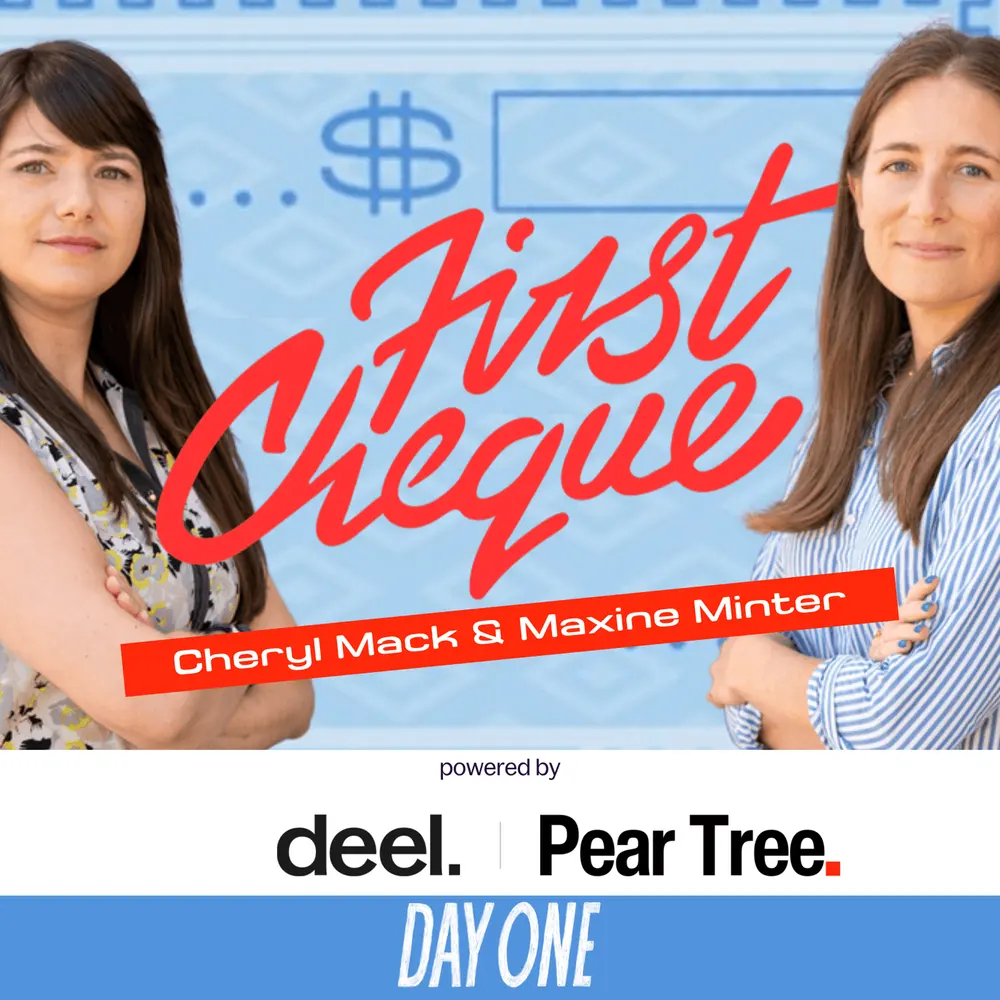 First Cheque with Cheryl Mack & Maxine Minter
Presented by Deel & Pear Tree
First Cheque with Cheryl Mack & Maxine Minter
Presented by Deel & Pear Tree 


 ▶
▶ ▶
▶ ▶
▶