▶ “It's not the AI's fault that it is able to do all of these incredible things. It's the people that are using the AI in the wrong kind of way.” — Laura McClure Laura McClure, Member of Parliament for the ACT Party in New Zealand, joins In the Blink of AI to unpack her viral deepfake experience, her groundbreaking member’s bill, and why tech regulation must protect victims without stifling innovation.
In a powerful conversation, Laura reveals how she created a deepfake of herself in minutes—and why it’s a wake-up call for policymakers worldwide. She shares insights on balancing tech freedoms with responsible safeguards, why regulation is about behaviour not banning tools, and how New Zealand’s slow policy-making could leave them lagging behind.
Laura also discusses how ACT’s libertarian values shape her pro-innovation, pro-startup stance and why deepfakes are a threat not just to teenagers, but to democracy itself. From the electricity grid challenges that could stall New Zealand’s AI adoption to the opportunities in agriculture and defence, this is a must-listen for founders, policymakers, and anyone passionate about the future of technology.
Chapters
2:20 Meet Laura McClure (ACT Party MP): From accidental politician to tech advocate ▶ 7:25 Why Laura Entered Politics: Tackling New Zealand’s alarming government debt ▶ 9:13 AI Hacks of the Week: Game-changing educational tech and viral LinkedIn strategies ▶ 13:24 Going Viral with a Nude Deepfake: The shocking truth behind Laura’s Parliament demonstration ▶ 23:47 Why Target Individuals, Not Tech: How Laura’s bill tackles deepfake abuse effectively ▶ 27:16 Pro-Tech, Not Pro-Regulation: Laura’s vision to accelerate AI adoption in NZ and Australia ▶ 35:01 The Infrastructure Challenge: What NZ must fix to power an AI-driven future ▶ 39:57 Skills for the AI Era: Why critical thinking trumps rote learning ▶ 44:50 Laura’s AI-Powered NZ: Her 5–10 year vision of an AI-enabled economy ▶ Resources
👩💼 Laura McClure on LinkedIn – https://www.linkedin.com/feed/update/urn:li:activity:7330443186185613312/
Transcript Synced · select any line to jump ▾ 0:01 Georgie Healy: Founders scale faster on Deel. Set up payroll for any country in minutes, hire anyone anywhere, get visas handled fast, and get back to building. Visit deel.com/dayone. That's D-E-E-L.com/dayone. 0:21 Laura McClure: A couple of weeks ago in Parliament, I held up a nude, but the nude wasn't real. It looked like me, it was blurred, but it was actually an AI-generated deepfake of myself. 0:36 Georgie Healy: This is something that could happen to your family member, someone in your home. 0:40 Laura McClure: Quite a lot of them can be, "You're attention-seeking." I mean, actually, yep, I want attention for this issue, so— 0:46 Georgie Healy: Sure. 0:46 Laura McClure: I'm happy to say that if that's what it's for. It's definitely not to bring attention to myself. That's deeply uncomfortable and not a great thing to have to do in Parliament. 0:56 Georgie Healy: Are you anti-tech and innovation, Laura? Do you just hate technology? 0:59 Laura McClure: I am concerned that New Zealand and Australia are lagging behind, and I think that there is apprehension, you know, people don't want to potentially take up the tech. Like there's a concern there that it might take jobs, for example. Mm-hmm. 1:12 Georgie Healy: Hello and welcome to In the Blink of AI, where I talk to the brightest AI startups and innovators each week. This week I am speaking to Laura McClure. She's a member of parliament in New Zealand for the ACT Party and actively advocates for technology and innovation as well as business, manufacturing, education, mental health, seniors, and disability. On the show, we talk about the rise of deepfakes and her personal experiences after she went viral when sharing a draft for Parliament, um, with her members, Bill. I'm sure you saw the photos, guys. They were literally everywhere. We talk about safeguards and guardrails, but we also talk about her being not anti-innovation, she's actually anti-regulation and pro-supporting people and businesses to adopt technology. So what would it take for Australia and New Zealand to support technology and encourage startups to build and to stay here? A huge thank you to Laura for being on the show. I would have happily chatted for another 3 hours. Let's dive in. You're listening to a dayone.fm show. Hi Laura, thank you so much for joining in The Blink of AI. For those that are a little bit ignorant and don't know who you are and what party you're a member of parliament for, can you give us a bit of a background about you, please? 2:43 Laura McClure: Yeah, sure. Hey Georgie, and thank you so much for having me on your podcast. I'm really excited. So my name is Laura McClure. I'm an ACT list MP. Basically, that means I don't look after an area or an electorate here in New Zealand, but I am based out of Christchurch. And I am with the ACT Party, which is a libertarian party here in New Zealand. And our key core values are those of kind of less government, so a smaller government that's highly efficient, less rules and regulation, less tax overall, and enabling, you know, communities to honestly thrive at their own level. So it's about that, like, devolution of services and things back down to community level. 3:26 Georgie Healy: I think the listeners of the show that are for the most part in tech and startups and business and finance, uh, they'll probably be a lot of fans of yours. But, you know, I would love to know, because, um, not many of us are in politics, what does an average day look like for you? 3:45 Laura McClure: Yeah, so it depends where I am, but we'll go with a sitting day. So when I'm here in Parliament— so New Zealand Parliament sits on a Tuesday, Wednesday, Thursday for 3 weeks of the month. And then we have 1 week recess where we're out back in our communities, um, basically seeing constituents. So an average day for me is getting out of bed and needing to get ready, usually to put on a game face. 4:08 Georgie Healy: As you can tell, the game face is good. 4:11 Laura McClure: Um, generally grab a cup of coffee, which will probably be 1 or 4, although try to cut back on that because it seems to be a bit of a problem. And then, um, then I'm heading off into Parliament. So I have an apartment when I'm here in Wellington, and it's about 400 meters from work, which is nice. So my day starts anywhere between 8 AM and 9 AM. The House actually sits at about 2 PM, which we call Question Time here in New Zealand. It's a 1 hour where you have— non-executive MPs can ask the executive, like the ministers, um, questions. So that is split evenly amongst the parties. So there'll be some opposition members and there'll be some government members. And usually the goal of the opposition is to try and, like, you know, catch ministers out for certain things. So it can be quite theatrical and really spicy. That's the fun, probably, part of the day at 2 to 3. And then after that, we debate the government's bills that we have on the agenda. So they can be anything on any given day, and we sit to 10 PM. Mm-hmm. Wow. On those days, that's a long day. It's a really long day. And the following morning I might have a select committee. So I sit on 2 select committees here at work. Wow. Which is pretty busy. 5:28 Georgie Healy: I can see why you need the 4 coffees. Normally I'd say, yeah, you know, I'm, I'm, I'm with you, like, health is wealth. But 4 seems the minimum to get through one of those days. Absolutely. Okay. What's your coffee of choice? I must know. 5:42 Laura McClure: You know what? I'm just a regular flat white girl. 5:44 Georgie Healy: Nothing fancy, no fancy milk. No sugar. 5:47 Laura McClure: Yeah, just like white. 5:48 Georgie Healy: Sounds like you're quite no-nonsense in many aspects of your life, Laura. Yeah, one more background question, uh, before we dive into more of the regular segments of the show. I'm actually the daughter of two political scientists. They met in Canberra, you know, working for Parliament, and it actually put me off politics because they were always talking about politics in the house, and I just was like put me off. But I read on your wiki page that you also had a significant political discourse in your household. So why— what made you lean in more where it made me just think, I'm out, I'm doing engineering? 6:30 Laura McClure: I love that. Um, it actually sounds like a really smart idea from where I'm sitting. And look, I think the, the political chat between my parents, the banter, tend to be quite diverse because they had quite opposing views, which meant that I got to form my own opinions, which is sometimes quite different to both of theirs. But I like to say that nowadays we all seem to be on a similar political spectrum. It didn't put me off as per se. It kind of encouraged me. I did, um, poll science at uni in year 1. Um, but for the most part, honestly, I didn't think that I was going to be an MP. I had my own business. I was happy, successful, had the kids. And this is kind of like the thing that I ended up landing into when I saw what government debt we had here in New Zealand. It was a real concern for me and a concern for my kids' future. And same with the education that they were getting taught here. I had just some serious concerns. So once I got involved, the ball started rolling and lo and behold, I'm actually now sitting here in Parliament. So I call myself a little bit of an accidental politician. It wasn't a plan, as per se. 7:34 Georgie Healy: And you said with debt in particular, maybe just give me some context on what really spurred you to be like, no, I'm going to get involved. This, you know, I'm really passionate about this. 7:47 Laura McClure: I guess it's just the government spending here in New Zealand, and we've got a huge deficit. We're talking into the like, you know, $80, $90 billion deficits, and it's really outrageous. And a lot of this lending was happening over COVID, which was fine and somewhat understandable. But it just continued from there. And the government themselves, like government agencies, have really grown. We're talking about 67% from 2017 to now. And I don't think New Zealanders are seeing better outcomes from their government and their government agencies. So that was the things that really were worrying me. And I thought, gosh, how are we going to pay down this debt? For starters, you know, we've got a couple of options as a government. You can tax people more, which Act Party do not believe in, or you can be more productive, or you can provide— the government We can provide least services but deliver them well. So there are varying different things that lead me to the party that I'm in now. But I would say that concern about government debt was a real worry, and it's still a worry here in New Zealand. We're chipping away at it. We've got— we're part of the government this time as opposed to being in opposition, and that is a bit more fiscally concerned and conservative, I'd say, at the same time. 9:01 Georgie Healy: Mm-hmm. 9:01 Laura McClure: But there is a long way for us to go to to reach where we need to be as a country. 9:07 Georgie Healy: Thank you so much for sharing. That's really great context. This is a recurring segment of the show, and I'm really excited to get your take on this with a slightly different background to an AI founder that's often on the show, which is our AI Hack of the Week. You and I each share an AI hack. It doesn't have to be a specific tool, or it can just be something that we've encountered or even a prompt. Laura, what is your hack of the week? 9:36 Laura McClure: So I'd say some of the cool stuff that I'm starting to see in the education space, and not singling out a specific product, but there is some awesome innovation coming through, the likes of tablets or iPads that can read a child's face and they can pick up certain things to do with their learning and can tailor the learning for them, or having an AI teacher on a tablet. And we all know classrooms are really busy. Teachers try and get around as many kids as they can, but having that AI one-on-one to fill in the gaps between the classroom, I think is really cool. And it's an awesome positive change that I think will be a huge benefit for our kids in the future. 10:18 Georgie Healy: That's amazing. Not to make this too much about me, but there's a story that's in like the family lore about when I was in grade 2, so only like 7 or 8 years old, the teacher said, Georgina's really bad at math. She needs like a lot of support. And my parents were like, oh no, that's terrible. You know, we'll have to help her out. And then they realized, and he realized that he had just got me mixed up with another student. Like, yeah, it's so funny. 10:48 Laura McClure: You're an engineer now, so you can't have been too bad at maths. 10:51 Georgie Healy: Maybe it spurred me on to really try hard. 10:54 Laura McClure: Maybe it did. Yeah, it could have maybe. 10:57 Georgie Healy: So they always like refer to that now as like, remember when that teacher thought you were really bad at math? And it's like the one thing that I think I might be okay at. Okay, so my AI tool of the week, look, it's a bit of a silly one, but like useful in my opinion. You know, I've become quite prolific on LinkedIn lately and it's done wonders for my personal brand. And we're gonna talk about, you know, being out there on social media. Soon in the show. And something that gets a lot of attraction and a lot of views and a lot of exposure is the 1-minute vertically filmed video. And there is a product or a tool or an app called Captions AI. It's better than the LinkedIn auto AI transcript. Ah, it's good to know. Yeah, it's brilliant. And apparently it's better for the algorithm if you just upload the video with the captions already in it. So can strongly recommend because sometimes people don't want to listen to the video, so they'll just scroll past. But if they can read the text— 12:01 Laura McClure: I totally do that. Like if I'm on, you know, on a plane, I'm getting ready to take off before I'm in flight mode, of course. 12:07 Georgie Healy: Of course. 12:08 Laura McClure: Or, you know, just in a meeting and you're having a quick scroll through while you're waiting for somebody and it's like you don't want the noise on. 12:14 Georgie Healy: You really don't. But the video is compelling, but the noise isn't, right? So it's kind of a way around that. But Laura, keep it under a minute because that's the sweet spot apparently. And vertical. Okay, don't do horizontal, always be vertical. 12:31 Laura McClure: I don't know why. Probably because the way people scroll on their phones, I'm guessing that the vertical— 12:35 Georgie Healy: I'm sure you're right. Um, and apparently, you know, don't put any filters. Like, the more candid, the better. That's good to know. Yeah, we're social media influencers now. 12:47 Laura McClure: Um, I love it. I'll be definitely taking this to our socials. 12:51 Georgie Healy: Yeah, yeah, tag me. Okay, I'm really excited for this part of the interview, um, the rise and risk of deepfakes. And when I first encountered you and something, um, very brave and compelling you did recently that we'll talk about, is after I had already realized that deepfakes are prevalent and I was just wondering what is going to be the next headline in this because it's going to be bad. And I wished that I could have someone on the show with a political background and expertise to talk about it, but kind of hard if someone's not already passionate about this topic to get the right person. So Laura, I'm dodging around this question. 13:37 Laura McClure: You are. 13:37 Georgie Healy: Tell me what happened 2 weeks ago when you went viral online about something you bravely shared in Parliament. Can you set the scene for us? 13:46 Laura McClure: Please? Yeah, so, um, a couple of weeks ago in Parliament, I held up, um, a nude, but the nude wasn't real. It looked like me, um, it was blurred, but it was actually an AI-generated deepfake of myself. And I made that deepfake, um, in under 5 minutes. I Google searched with the filter of just deepfake nude, and there was hundreds of sites that popped up. The first actual site that popped up was a blog with the top 60 websites to do this without an account. So I was like, oh, perfect for what I was needing. 14:22 Georgie Healy: This is the best and worst day of my life. 14:25 Laura McClure: I know, I was like, this is so easy, it's working great. But also absolutely terrifying when I put my headshot into one of these websites and I had 10 or so images pop up of me to an extremely good likeness. It was a couple that weren't a little bit, but for the most part, you would not be able to tell unless you had physically seen me naked before. 14:47 Georgie Healy: Oh my God. 14:48 Laura McClure: And it looked like it could have been in my home, or it was like— and one of them was in the bathroom, the kitchen, like all these kind of places that could be in your home. So it was really terrifying. And I was doing that as part of a research project because I had a member's bill that I'd been drafting around deepfakes, and that That kind of idea had come about because of the schools, the principals here, concerned parents that are coming to me telling me about things that are happening to their kids at school to do with deepfakes. And we've got that gap in our legislation here in New Zealand. So it became something that I thought, look, this is something we can fix. It's actually quite simple here because we already have the framework for revenge porn or for sharing somebody's naked image without their consent. It just adds in synthetics or deepfakes to the exact likeness of a person into that piece of legislation. So I wanted to get some attention in Parliament because this bill is just a member's bill at this point. It means it goes— in New Zealand, it goes into what we call the biscuit tin. It's a literal biscuit tin. 15:52 Georgie Healy: Are you serious? 15:54 Laura McClure: I am. 15:54 Georgie Healy: It's like an Arnott's tin. 15:56 Laura McClure: Catch ya at 10. Yep. And if people want to know what it looks like, you can Google the New Zealand biscuit tin. And the numbers go into that 'cause your bill gets numbered. And then on a member's day, which is usually one of the Wednesdays in the sitting weeks, there'll be a draw at midday and your bill may get pulled out of that tin. So that's how the member's bill works. So it's basically a ballot. 16:22 Georgie Healy: Oh. 16:22 Laura McClure: And I wanted to draw attention to this issue because I believe that it's not that political and I believe it's something that all of the political parties here can actually agree with. And it's something I think that's becoming more urgent urgent and that we could look at making it a government bill, or we could look at bypassing the government and doing a— what we call essentially passing the ballot by having the House support. So that, that's kind of where I'm working at. So I needed to be dramatic, I needed to get attention. 16:48 Georgie Healy: You don't just want it to be another number in amongst the biscuit tin. 16:52 Laura McClure: That's right. Yeah. And I was really concerned about the people, the stories that I was hearing from people, and you know, at some point there— we've— there was a 13-year-old girl who attempted suicide here in New Zealand at school. Um, thankfully it didn't, it didn't work, but, um, will it take somebody, whether it's New Zealand, Australia, or anywhere, um, actually killing themselves over this for action to occur? And I don't believe that, that we should be waiting for that. 17:22 Georgie Healy: I think high school's hard enough, right? Um, being a teenager is hard enough. I think you and I briefly spoke about, you know, it's it's, it's an uncomfortable stage in our lives, that adolescent period. The idea of having fake images shared around, not being able to escape it when you get home, um, it's just horrifying. Were you surprised with how easy it was to do as well? Because if parents came to me, I'd be like, oh, some really good hackers in school, but perhaps not. 17:55 Laura McClure: No, I think it's, um, it was so easy to do. Like, you could do it if you're a kid, you could do it on the web browser. So it's not like you need to download an app. There is all the Nudify apps, for example, which can do this really quickly for you. But actually what I've found is the Apple Store and the Play Store block a lot of those anyway, which is quite good. But these websites you can just do on your web browser. You could be sitting on the bus, for example, um, you could create this image. You just have to tick a box to say you're 18 and that you, the person, has consented to use the image. There's no handles or checks on that. And, and then lo and behold, the images are made and you could AirDrop that around to a busload of kids. Or you could share it on some sort of server. So there's, there's all kinds of things that you could do. And it's not limited to just an app, like an app or downloading an app, because I think as a parent, sometimes you think, oh, you know, I've got, I've got one of those family apps online where I can see what my kids are downloading. But they could have just done this on their phone without that. So yeah, yeah, and it's not on the deep dark web or anything like that. 19:02 Georgie Healy: No. And you posed a very serious risk of the mental health implications of this. Are there any other risks? Like, I think even outside of the teenage age, this is a huge career risk and things like that, right? 19:17 Laura McClure: Yeah. Oh, it's, it's a huge— yeah, like out of the teen teenager side. I think, um, for anybody to have an image, even if you know it's not real, it's not actually you, but if that was circulated, imagine around your workplace or to your clients, like on a database, or if it was— yeah, if you're a politician, if you're a— I don't know, I'm a celebrity of some sort. It seems to be that they are targeted more often. But what is scary is that because it's so easy to do now, it's becoming like a form of like bullying, and it seems to be that being misused more and more just on the everyday person, which is really terrifying. 19:56 Georgie Healy: It is terrifying. As I said, you went quite viral with your image. I'm curious what the feedback was, um, you know, was it positive, was it negative? How did, how did you find the results in the comments section? 20:10 Laura McClure: Ah, so it depends on which post it was linked to. So some of the news stories say, you know, MP shares nude. I mean, that's really quite clickbaity, um, and if people don't— and if people If you don't click on the story, the comments can be, you know, quite out there, quite rude. But quite a lot of them can be, "You're attention-seeking." I mean, actually, yep, I want attention for this issue. So— 20:35 Georgie Healy: Sure. 20:35 Laura McClure: I'm happy to say that if that's what it's for. It's definitely not to bring attention to myself. That's deeply uncomfortable and not a great thing to have to do in Parliament. But if it brings attention to the issue, I'm all for that. Some of the other comments, there's the odd misogynistic 'Send me the Tumblr.' Um, I know, it's like, okay, the DMs have gone off on that, uh, quite out there. 'Can I have a look at the Tumblr?' Um, but for the most part, there have been some concerns from people around like, will this limit creativity? Will it stop the technology? Which I believe it definitely won't, because it's just, um, criminalizing behavior when you use it to harm other people, essentially. But for the most part, beyond all those concerns and kind of funny things, people have been really supportive. And it's, it's actually shining a light on the issue for a lot of people that this has happened to, and they didn't know who to talk to or where to go. So I've been inundated by messages from people, whether it's happened to them, or it's happened to their partners before, or their kids, for example. And while that is really positive that they're supportive, it's also really scary that it's more this is more prolific than I thought it was, and it's a bigger issue. So, um, it's only empowering me to get this across the line as quickly as possible. 21:55 Georgie Healy: 100%. And you doing it about yourself, though, though, you know, a figure of the media for sure, being a member of parliament, um, it does bring it back to home a little bit more how easy it is, and that this isn't just something that happens to celebrities and, and like, this is This is something that could happen to your family member, someone in your home. What about globally? Has it managed to cross the oceans? Has anyone seen it outside of Australia and New Zealand? 22:25 Laura McClure: Yeah, look, absolutely. It kind of almost went off globally before it even came around here in New Zealand, because when I did this speech, it was also the budget week here in New Zealand. I don't know what it's like in Australia, but the budget's a huge deal. So the journalists were all running the budget news and like, oh my gosh, did you do that? We'll come back to you. So, so it's been quite funny. The— it's attended— there was a couple of things that popped up in New Zealand, but it mostly went viral overseas first. And countries like the UK, India, I've seen like different pop-ups now all over X coming from the EU countries. which is quite interesting. So, um, it's— yeah, in Australia I did Sky News interview yesterday, which was great. So, um, yeah, there has been a lot of exposure, and I think this issue is resonating throughout the world at the moment because of the rise of AI. And for how amazing it is, there are these risks, and there are these people, these bad actors essentially, that may use it inappropriately. And so I think a lot of countries are deciding how to deal with this at the moment. And it has become kind of like quite a hot topic, I'd say. 23:38 Georgie Healy: 100%. Yeah. Yeah. It's something that is quite a tangible thing too, because AI can sometimes feel a bit black box. And this is like, no, this is definitely— this is something very real. Speaking of which, the Member's Bill enables the prosecution of those who generate and share sexually explicit deepfakes without consent. Incredible members bill, Laura. But why did you do it in this way instead of just going after the apps themselves, the tech companies themselves? 24:09 Laura McClure: Yeah, look, there's a couple of reasons there. Um, mainly the first reason is we live in New Zealand, so we're a tiny island nation at the bottom of the planet, a little bit close to you, but I'll say that we are at the bottom of the planet. Um, and trying to restrict the tech is extremely challenging from our position. A lot of these sites are hosted overseas. They're not anywhere in New Zealand. A lot of the technology is developed elsewhere. It's not here in New Zealand. A lot of the good technology already actually has filters and things in place. And, you know, for example, Photoshop. 24:45 Georgie Healy: Mm-hmm. 24:45 Laura McClure: In order for it not to be used in this way, right? So it would be like playing whack-a-mole if we went after the tech and there was some kind of restriction on it. You know, a site would come down, another one would pop up. How would we even get these international sites to pull things down? Like, it could become actually really challenging. So that was one of the main reasons. The second reason is actually it's not the AI's fault that it's able to do all of these incredible things. It's the people that are using the AI in the wrong kind of way. Mm-hmm. In order to harm people. So it's a behavioral thing. And I think with the rise of AI, we need to think about the behaviors of humans and how we use this technology. So it's around setting a kind of like a good best practice around how to use this technology when it comes to deepfakes and those that can be obviously really harmful to people. So it's more about setting up a standard, setting, telling our kids particularly, educating them on why it's actually really harmful, rather than actually trying to just manage the technology aspect of it. But I can see the potential benefit to that if you are. And I know the EU has come out and they're putting some bits of legislation in, for example, and I'll be watching those closely. But I do think that there's going to be quite a lot of challenges with it. 26:07 Georgie Healy: Yeah. And if you wait for that to happen, maybe the toothpaste is out of the tube by then. Like, there's so many deepfakes out by then that it's It's like, it's outrageous. 26:16 Laura McClure: Yeah. 26:17 Georgie Healy: Yeah. Um, and, and intent is a really important thing, right? And teaching values. And it is bullying. Like, just because the technology can doesn't mean that that makes it okay, right? 26:28 Laura McClure: 100%. 26:29 Georgie Healy: Yeah. 26:29 Laura McClure: Yeah. It's the same as, you know, if somebody sent you a nude image and then you break up and you share it. Yeah. And we all know that that's not okay. And so it's kind of like this is also not okay. And in some ways it's worse because, um, they can put you in far more sinister kind of like situations as well. So, and, and often that is— so often it's not just like a nude that I held up, it's actually usually them doing some kind of like really sexually explicit act. 27:01 Georgie Healy: So yeah, yeah, yeah, yeah. 27:04 Laura McClure: That could be quite more graphic than, you know, anyone would ever have of themselves anyway. So it's Yeah, it's taken it a lot further than just a selfie. Yes, exactly. 27:16 Georgie Healy: Wow. Wow. Yeah. Yuck. 27:18 Laura McClure: Ew. Yes. 27:19 Georgie Healy: Gross. This brings me to my next section, though, because those who might not be familiar with ACT and with yourself and with your policies might think, oh, she's anti-tech, she's anti-innovation. Are you anti-tech and innovation, Laura? Do you just hate technology? 27:36 Laura McClure: Absolutely not. I would say being a libertarian party, um, one of our key core values is obviously like free markets and technology, finding efficiencies. So I would say definitely not. We love technology, um, we like to support those that are, you know, wanting to innovate and grow, because I do think that that is part of the ticket to success, um, whether it's here in New Zealand or abroad. I do think that, you know, we need to make sure we foster this. So 100%, definitely not against the tech at all. And that's why this is about behavior of individuals. And one thing that ACT is really firm on is the rights of victims and being quite tough on crime as opposed to being quite lax in that area. So I think this really aligns quite nicely with where we're heading. We'd rather do that than, you know, go out and ban a whole bunch of apps. Yeah. Apps and tech and things like that. 28:32 Georgie Healy: Yes. And so, um, like, what, what could happen, say, if you were just clamping down really hard on tech and creating guardrails sort of incredibly high when it comes to AI adoption? What, what's the downside risk of the people that are just anti-tech altogether ban it all? 28:51 Laura McClure: Look, I think the major downside risk is that we will miss out on the opportunities that it presents. And if you overregulate something or you make it too hard, then you're just going to miss out. I mean, this tech is here now. It's well and truly embedded. It's doing its thing. And if countries like New Zealand, Australia want to be prosperous and successful in the new digital world, we need to be on board with that. And we can't be stifling any growth. We need to make sure that we've got our settings correct and that, you know, when people develop things and they want to develop things, they want to base themselves out of our countries in order to do that, 'cause that's part of the big success story, right? So I think it's really important that governments do consider where their positioning is on this. And because there are so many positives, I think that we really need to, you know, be really specific about how we use the tech, of course, but we need to be really specific about the laws that we put in place, and the regulations have to be well and truly tested and make sure there's no unintended consequences, for example. 29:55 Georgie Healy: Yeah, 'cause if I see the headlines there's just deepfakes everywhere and it's, it's a disaster and, and revolting out there. I don't want to use the tech anyway. So it's almost like, how do— if you prevent the, the horrific examples from happening, people might want to adopt it even more, perhaps. 30:13 Laura McClure: Yeah, look, I think if we— that's right, like, if we have some safeguards in place that are sensible— so I think it is sensible to expect individuals to not abuse other individuals with the tech. And so if you have those kind of things in place, it means that everybody else that using it for good feels more open and, you know, they're wanting to use it because they realize that there is actually a lot of safe and cool things that we can do with it. And it actually takes away any of those conspiracies that might pop up. So yep, you're absolutely right. I think if we, you know, we know that that's illegal here in New Zealand, so you see less of that activity, then you are more likely to be able to use that technology for other things that are really cool. 30:53 Georgie Healy: Agree. 30:54 Laura McClure: Like creating an AI teacher or an AI instructor, for example. Whatever. 30:59 Georgie Healy: Yeah. And your daughter's not seen as like a complete math terrible student. We had the CTO of EY on the show a couple of weeks ago, and she was really upset to see that globally Australia and New Zealand was kind of lagging at the back when it came to AI adoption. So, you know, this is something that you're probably very aware of. I'm curious if there's any country or nation or, um, just policies that you really look to when, when, when you think that there's anyone doing it well or on the path to doing it well. Laura? 31:37 Laura McClure: Look, I think that this is all so new and moving so fast that I don't believe one particular country or place or policy has it 100% right, um, because it is moving so quickly. I do think there are some countries that are far better than us and are quicker to adopt these policies and adopt the technology in itself. And quite often those societies tend to have like booming economies. They're trying to find efficiencies in manufacturing, for example. And if I was to look at specific countries, it'd probably be places like Singapore, for example. 32:10 Georgie Healy: Mm-hmm. 32:10 Laura McClure: We know that they're really efficient. They like to find efficiencies. They like to digitize a lot of things there, whether it's their shipping, for example, or whether it's, you know, on the factory floor. I think that there are— I am concerned that New Zealand and Australia are lagging behind, and I think that there is an apprehension, you know, people don't want to potentially take up the tech. Like, there's a concern there that it might take jobs, for example, or there's that slight fear around it. But once people see the benefits, I think that they will, they will soon switch over, especially business-wise. I mean, it's a no-brainer, really. 32:43 Georgie Healy: Yeah, one of the things she said was, yes, there's the fear, and the AI taking jobs is a recurring echo chamber of news articles, right? But also the fact that, at least in Australia, historically we've taken a few years before we're like, oh yeah, I'll figure out X technology within the next 5 to 10 years. And as an industry or business standpoint, yeah, we'll adopt it eventually. But I don't think we have that kind of time. And like, perhaps like— Yeah. We will be left really archaic in the Dark Ages if we wait 10 years to really take this seriously. 33:23 Laura McClure: I, I agree with you. And so sometimes there's pros and cons to that, right? Like, because we are slow at adopting things, we get to see what mistakes people make so we don't have to make those, which is good. Um, but with something like this, the technology is moving so quick that governments and policies are so slow, um, that there needs to be some sort of matchup. And I'm not sure about some of the Australian I don't know if any other parliament, whether they've got a similar setup, but we now have an AI working group here of cross-party members of parliament. And that's started up this year, which has been really cool. And there's a group of people from across different political parties that meet every couple of months. And we either have some new tech come in and talk to us about it, or we have people working in the policy side, people working within regulation and— Yeah. Or education, for example, and they're coming and talking to us around what we should be doing. And I think that's a real positive first step because it means that, you know, it's politically neutral, everybody understands the benefits, and we can try and come up with something so it doesn't become a political issue. Because when that happens, you know, it can be kicked around back and forward, which can be quite challenging, and that just slows everything down as well. So there is hope there, I think. Yeah. And, you know, it's something that I think hopefully Australia is doing at this point too, and I believe you probably are. 34:45 Georgie Healy: Probably. 34:45 Laura McClure: But there does need to be some pretty swift action, and even for the Catholic Hospices. 34:49 Georgie Healy: Yeah, and, and clearly there is the willingness and the, uh, awareness if you guys already have this group together and you're actively championing change, which is brilliant. We have one more question before we get to the rapid-fire part at the end of the interview. Say I gave you a magic wand and said, here you go, you can now adopt AI at scale. Is there any underlying infrastructure or anything that would prevent that from happening, even if I was like, you can change all the policies tomorrow? 35:24 Laura McClure: Absolutely. Like, here in New Zealand, we don't actually have enough electricity to power a new AI generation, which is a very big concern. The fact is here that we have had a very slow growing economy when it comes to our electricity sector. So there's what we call the Resource Management Act. I'm not sure what your version of this is, but it's basically the body that can consent things to be made. So think of like wind farms or a power station of some sort. The Resource Management Act is the guiding body that consents all this.. And in New Zealand, it's been very broken for quite some time. It takes an awful lot of time to get anything through or anything passed. So we're doing a massive reform at the moment as a government. It's a huge priority because we actually need more electricity generated before we can look at even having another data hub or data center here. 36:19 Georgie Healy: Wow. 36:19 Laura McClure: And a lot of people want to come here. There's a lot of opportunity, a lot of people that want to come to New Zealand and set up their data centers, their AI data hubs. But we do not have the current infrastructure to do so. So I think, yes, there's lots of movement going to be happening on that front. And if you could wave your AI wand tomorrow, it would be fantastic. But yeah, it wouldn't actually work like that. We would need to make sure the infrastructure is up to spec and that we can actually handle the speeds and the things that we actually need on our electricity grid. 36:51 Georgie Healy: You've just reminded me, I got a phone notification while getting coffee this morning. I don't know if it was the US, but somewhere was like, we need nuclear power in order to embrace the advancements of AI tech in terms of, yeah, powering it. And it's very energy intensive, right? So that's a whole other kettle of worms, right? 37:13 Laura McClure: So it's like, if we even said nuclear power here in New Zealand— 37:17 Georgie Healy: Oh my gosh, they would freak out. 37:20 Laura McClure: But it is a good question around like, there are some technologies with the nuclear fusion now that's different to what it used to be, and maybe those conversations need to be had, um, around how do we do this, how do we become like a clean energy state, um, and make sure that we can do it efficiently and affordably. Because the price of electricity here in New Zealand's outrageous. It's, um, the biggest, I would say, contributing factor to the cost of living here in New Zealand is the price of power. Um, and a lot of that is just because we don't have enough of it, and we do need to think about things. But in saying that, we also are on a giant fault line and we have earthquakes and things like that. So maybe nuclear power wouldn't be the thing that we need, but something needs to happen. And it's a very valid discussion. And I see that there's been a couple of discussions in Australia. I was in Brisbane recently and I noticed an article about potential nuclear power. 38:14 Georgie Healy: And you'd think the country that like lives off coal for so many years wouldn't be so adverse to nuclear power, but, uh— 38:21 Laura McClure: Yeah. 38:21 Georgie Healy: I know, right? Wild, wild. Um, Laura, you don't seem to strike me as the person that shies away from spicy questions. You're used to doing them at, what, 2 PM every day anyway. Um, we are at the rapid-fire part of the chat. So number 1, if you could redirect a portion of New Zealand's federal budget that you've been talking about recently to one initiative, what would that be? 38:48 Laura McClure: This is a really tricky one because I was umming and ahhing about what to think, what to say at this point. But I think, um, there's a couple of things. The part of me wants to say paying down the government core debt. 38:59 Georgie Healy: Yeah. 38:59 Laura McClure: But, but realistically, um, in New Zealand we have just had a bit of a boost in our defense sector, and I think we need more of that because, um, there is a changing geopolitical kind of sphere out there. And there's a lot of bad actors that are potentially out within the Pacific. And I think that New Zealand really needs to keep up pace with the likes of Australia, for example. 39:23 Georgie Healy: Mm-hmm. 39:23 Laura McClure: We are quite behind you in our spending and how much we put into defence. But also, I think it's the reason that I would— I picked defence is because it's a huge opportunity for New Zealand because we're quite niche, we're very specific in our roles. We've got amazing technology that comes out of New Zealand in the defence space, whether it's drone tech, whether it's all kinds of different, not just AI, but intelligence programs. The defence, like, sector here could really do with an innovation boost, which I think would actually boost the whole entire tech sector in general here in New Zealand. So yeah, that's why I'm going with Defence Force, so we can protect our sovereignty, we can align with our partners, and also so that we can grow our local defence economy. 40:07 Georgie Healy: You and I both have children. What skills do you think are critical for the jobs of the future in this AI crazy fast pace we're going in. 40:19 Laura McClure: I know. Look, and maybe AI will actually tell them what they need to know, which would be fantastic. 40:24 Georgie Healy: You tell them. 40:26 Laura McClure: I know, I know. Look, I think what is going to be becoming more and more important, um, is actually having the skills that you require to critically think. And because you do— because we do have AI and it's great, but it can be wrong sometimes. And I think our youngest generation, whether it's, you know, whether it was a Google search for something or whether it's throwing something into ChatGPT, for example, um, all of this learning is coming from a wider pool of information, right, that may, may not be accurate. Um, so I think what is going to be a really important skill for our kids, um, is how to think critically, how to spot things, um, that might not be right, and how to check for how— if that's right or not, whether it's fact-checking. And this could be for like news and media. It could be for like what they see on social media when they're older. It could be just researching for a project at school. So I think, I think that critical thinking piece is really important and it's something that they should be hopefully learning at pace. They're already incredible with technology and they will adapt so fast. I think we don't have to worry about that part. Yeah. 41:33 Georgie Healy: It's like they come out of the womb, like, knowing how to use a touchscreen these days. 41:38 Laura McClure: I know. It's scary. Scary, right? 41:39 Georgie Healy: It's so scary. I didn't even have, like, Facebook until I was in university. Like, it's wild. Yeah, that's amazing. Critical thinking is a brilliant one. And I mean, probably a good thing that they're not just doing rote memorization like I did for all of my tests and then forget it the next day anyway. Can early-stage startups become financially successful in New Zealand with the current policies and regulations in place, Laura? 42:10 Laura McClure: Uh, look, I think it is challenging here. I do think that we had— we do have a lot of burdensome regulation. One of the good things that this government has done, and it was an ACT Party initiative, was to set up a Ministry for Regulation. Basically, that that goes out and finds bad regulation. And people can send a tip-off into a tip-off line around things that are, you know, hindering them or they're struggling with when it comes to whatever they're doing. And it could be anything. It could be on the tech side, it could be in agriculture, it could be in building and construction. And they will investigate whether, like, a rule or a regulation is actually having the intended purpose and whether it's actually adding value and adding benefit as opposed to wrapping people down and telling them no all the time. So I feel like we do, it is challenging here. We're also small. We don't have a, like, a huge market. So sometimes when people want to take a product to a, like, a wider market, they need more, they need more people for starters, but they also need more capital, which we don't have an awful lot of here in New Zealand as well. So we do see a lot of startups moving on from New Zealand, which is sad. It would be great if we could keep them here. Yeah. But often for it, in order for them to grow and be a real success, they tend to move on offshore. Yeah, to capitalize off that. 43:28 Georgie Healy: So believe me, we see that here too. Yeah, it's, it's quite common after Series A stage, once they've got enough funding, we kind of don't see them again. It's really sad. And then maybe if they get so successful that they could buy, you know, yachts and islands, then they come back anyway. 43:47 Laura McClure: And there's only like, you know, the small handful of them, but Yeah. And I definitely think there does need to be something in that space around, and this is for actually quite a lot of business in general, like that scaling from like small to medium to big, like is a massive gap as to how you do that and how you access that next part. And a lot of that is rules and regulation become too hard and people are like, whoa, that's far too hard to do here in New Zealand or Australia. I don't have to adhere to those rules, you know, over in the UAE, for example, or Singapore or something like that. So they look at these opportunities. It could be our tax settings, like our corporate tax rate. You look to somewhere like Ireland where like Google and that are based. 44:31 Georgie Healy: Yeah. 44:32 Laura McClure: They've got low corporate tax rates, which is an incentive to keep business there. So look, I do think there are things that we all should be doing and thinking about, but I don't blame these businesses for wanting to go off. And it would be great if we could harness them, like some kind of environment where they stay here would be great. 44:49 Georgie Healy: Agree. This has been the most fun interview ever. I have one more question for you though. Yeah, let's stay on for another 3 hours. Okay, if you were to look 5 to 10 years out, what does a truly AI-powered New Zealand look like according to you? 45:07 Laura McClure: Look, it's really hard to even say what 5 to 10 years will look like. 45:11 Georgie Healy: Exactly. 45:12 Laura McClure: You asked me 5 years ago. 45:12 Georgie Healy: I know. 45:14 Laura McClure: It's crazy. I think we are seeing some sectors, the sectors that are adopting it and are doing really well here are things like agriculture, for example. So we're quite a big farming nation, and you're seeing things like automated tractors, all kinds of different fertilization and sprinklers that are all, you know, automated, can check soil for certain nutrients and add or take away things. You're seeing things like automated drones that will go and check on stock rather than the farmer having to go out and you know, wrangle some sheep, they can do that, check where they are with a drone before they head on out. You've got things like automated collars on livestock to— Oh, that's so sick. The cows, I can see they've got like this collar and it just vibrates at their milking time and they head off to their shed. But it also GPS tracks them. So they actually, you know, you can see where they are at all times. So there's loads of things like that. I also see a manufacturing sector getting more efficient, more faster, more productive. And all of that, when we can become a more productive society, leads to higher paid jobs. It leads to more revenue for the government, for example, to spend on all the nice-to-haves, the things that we want to be able to have. And I see the future being amazing. But yeah, like I said, we've got to get that infrastructure right, got to have that in place, and then hopefully we can— and make sure we've got the policy settings correct so we can foster businesses to come here and help industries grow and move on into using the tech. 46:46 Georgie Healy: Thank you so much for joining in the Blink of AI. Laura, before I let you go, what would you like to shout out to the listeners? Where can they follow you? What would you like them to check out that you're passionate about? 47:00 Laura McClure: Sure. And yeah, if you want to follow me, feel free to on like LinkedIn, Instagram, or Facebook. And, you know, like, you can see what I'm up to with my deepfake bill and what will be coming next. 47:12 Georgie Healy: I thought you were going to say with my deepfake. 47:15 Laura McClure: No, no, no, my deepfake, just the bill. And hopefully if you're passionate about it, you love the tech, but you don't want to see these bad behaviors increasing, you can come along and share the love on that. But I guess also just a bit of a plug to New Zealand, right? Like, despite me saying that we are overregulated and we might not be the best place to have a business, we also have this thing called a Digital Nomad Visa, which means people that work remotely can come and actually work remotely in New Zealand and live here, which is really cool for a set period of time. And I think that's really nice because their business may be online, it may be elsewhere, but they're spending their money in our shops, out in our, you know, tourism businesses and stuff like that. So it's a real cool opportunity for anyone that's especially in the tech-based— 48:02 Georgie Healy: Yes. 48:03 Laura McClure: Um, industry that wants to come and, you know, spend some time in New Zealand. Like, they should check out the Digital Nomad Visa. I reckon it's a really cool, um, idea that we have. 48:12 Georgie Healy: That's major. Oh my gosh, now I want to go work from New Zealand. I'll send you an email. Yeah, yeah, yeah. 48:20 Laura McClure: I know, yeah, flip me an email. 48:22 Georgie Healy: Thank you so much, Laura. Have Best afternoon. 48:25 Laura McClure: Thank you. 48:28 Georgie Healy: Thank you for listening to In the Blink of AI. You can check out the show notes for anything discussed in this week's episode, and we will be back next week. This podcast was produced by Day One with music by Dan Hansen and visual artwork by Sophie Tyrell. If you loved the episode, please tell your mates, and I love AI. AI News. Please share your thoughts and suggestions to [email protected] . 

 In The Blink Of AI with Georgie Healy
Presented by Deel & Stripe
In The Blink Of AI with Georgie Healy
Presented by Deel & Stripe 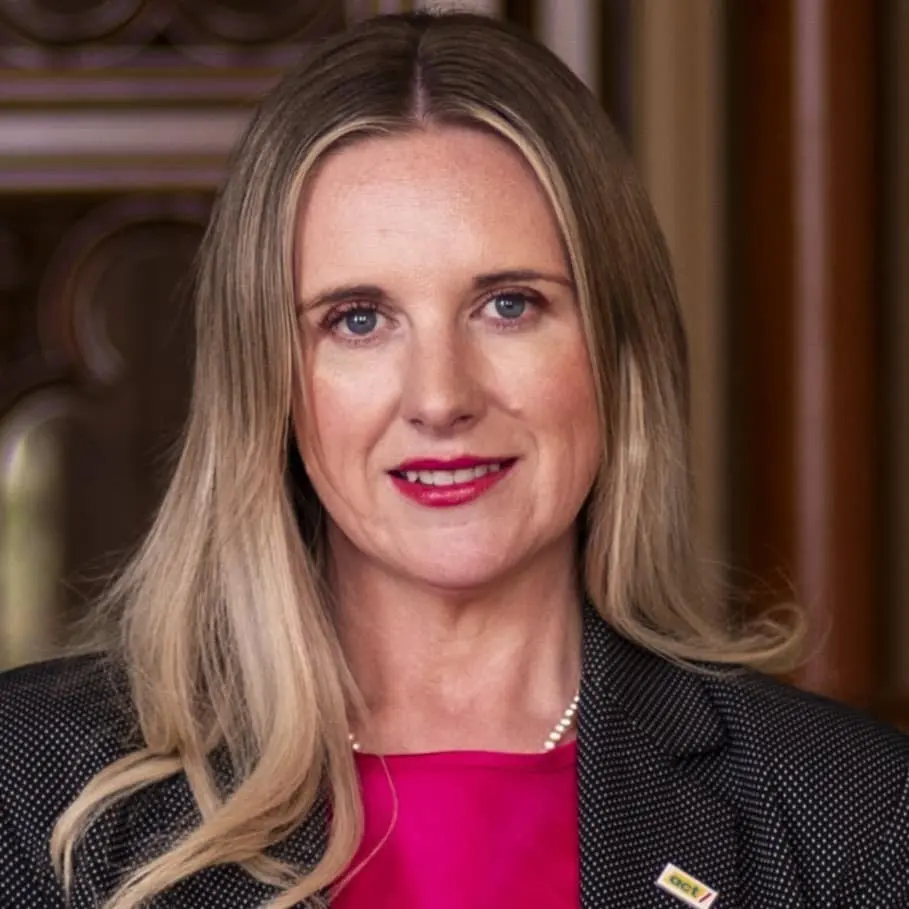



 ▶
▶  ▶
▶  ▶
▶  ▶
▶  ▶
▶ ▶
▶ ▶
▶