Transcript Synced · select any line to jump ▾ 0:02 Cheryl Mack: Founders scale faster on Deel. Set up payroll for any country in minutes, hire anyone anywhere, get visas handled fast, and get back to building. Visit deel.com/dayone. 0:15 Speaker: That's d-e-e-l.com/dayone. Okay, 3, 2, 1. 0:26 Cheryl Mack: Hey, I'm Cheryl. 0:27 Speaker: I'm Maxine. 0:28 Cheryl Mack: This is First Check, part of Day One, the network dedicated to founders, operators, and investors. 0:32 Maxine Minter: Investors. If you want to be a better early-stage investor, this is the show for you. 0:35 Cheryl Mack: So TL;DR, if you don't want to suck at investing, listen up. When I first started this podcast with Maxine, which I will admit wasn't exactly the most planned thing in the world, but if you'd asked me if we were going to get the CEO of Mozilla on our show, I would have been like, nah, that's probably not happening. 0:59 Speaker: Totally. Oh my gosh. When I was looking at Laura's her CV for this. It's honestly a masterclass in working at like the best talent magnets of the era, just time and time again, right? Like PayPal, eBay, Airbnb. It's amazing. 1:17 Cheryl Mack: She is basically the tech mafia. 1:19 Speaker: She is. She's like a one-woman tech mafia. And when I spoke to Anne-Marie Ko about her, Anne-Marie actually mentioned that she was the most effective executive she's ever met. Honestly, if anyone, especially Ann, referred to me as the most effective executive they'd ever met, I'd just like go ahead and die and just go straight to heaven. 1:40 Cheryl Mack: Mission accomplished. Life is nailed. I'm— you're good to go. Yeah. Effective is such a great compliment. 1:47 Speaker: Like, I love that. Yeah. 1:49 Maxine Minter: I actually don't know that everyone outside of the tech ecosystem would be like, that's a compliment. But in our world, it's the best. It's honestly the best. 1:56 Speaker: How is that not a compliment? 1:58 Cheryl Mack: In what world? Oh, well, I'm— I live in a tech bubble, so fair enough. I can't, I have no concept of why that would not be a compliment. But I'm so excited to get into her with OpenAI stuff and open source stuff and AI, open, all of the opens and all of the AIs. 2:15 Maxine Minter: I can't wait. Yeah, I feel like she is one of the more incredibly placed people to talk about open source, the internet, the change we're seeing in the openness of information and how stuff is discovered. So I can't wait to get into it with her. 2:29 Cheryl Mack: So before we jump into that, I thought it might be helpful if I asked ChatGPT to explain— 2:35 Maxine Minter: ChatGPT. 2:36 Cheryl Mack: —to me. I'm just going to run with it from now. But also, Adam, our producer— and I hope all of everyone listening to this intro really appreciates this— but our producer actually sent me the clip of me mispronouncing it several times. So I now have that on record into eternity. If you text me nicely, I might share it with you. However, I did ask the AI overlords to give me an explain like I'm 5 version of what is open source. So, here it is for you, everyone. Open source is like sharing your toys with everyone. Imagine you build a really cool LEGO castle, and instead of keeping the instructions a secret, you write them down and let anyone use them. People can build their own castle, they could make changes to it, or just use parts of it to make something new. In the tech world, open source means the instructions, called source code, or software are shared for free with everyone. Anyone can look at it, use it, fix it, or make it better. It's like teamwork for making cool stuff. 3:32 Maxine Minter: Oh, I love that. Well, let's get into it with her. I can't wait to hear what she thinks. 3:36 Speaker: Let's do it. 3:39 Maxine Minter: I'm so excited to dive into this. Laura, thank you so much for joining us on the podcast. 3:44 Speaker: Oh, it's my pleasure to be here. Thanks for having me. 3:46 Maxine Minter: So same question we ask everyone at the outset, what was the first thing you ever invested in? 3:52 Speaker: It's a little bit of a random one. When I was young, I think probably around 10 or 11, I bought a very small sailing boat for $450, which I raced and I paid it back with my paper round money. I made like $20 a week, so it took quite a while. And yeah, so I bought a boat when I was 12 or so and paid it off for a while. And then I bought a bigger boat when I got bigger, which was about $1,200. And I paid that off with paper rounds and pocket money. Um, and then, so by the time I was done with high school, I'd actually saved about $1,500, which is quite a lot of money. Um, which I was able to put a little bit later to, um— 4:34 Maxine Minter: A bigger boat. 4:35 Speaker: Not a bigger boat. No, that's the logical conclusion to the story. Um, but no, I had a break from boats for a little while and went traveling, but I was, I think that was a pretty good life lesson. And I was, uh, you know, crossing off every week, $20. And adding up what I had left to pay off. But it was, it was fun and it kind of compounded over time. So I had a lot of money saved up by the time I was a teenager. 4:56 Cheryl Mack: Incredible. I love that. But also follow-up question, who lends to a 12-year-old? 5:01 Speaker: Uh, my parents. 5:02 Cheryl Mack: Oh, right. 5:03 Speaker: Yeah. Yeah. There was not much of a banking infrastructure for that particular type of loan. Um, but they, I don't know if they trusted me, but I felt like they could take the money out of my bank account if they needed to. So there was some, there was some security there. Right. 5:17 Maxine Minter: There's double the return on that as well. You get entertained. You're happy. And then plus, ideally, the asset retains some of its value. 5:24 Speaker: It did pretty well. Yeah, the boats. I mean, the second boat actually got totaled. So I got the insurance money. Oh, yeah. So that also was a good lesson in having insurance on your property. So I learned a lot through that whole set of things when I was a kid. 5:39 Cheryl Mack: Lots of financial lessons right there. I'm loving it. 5:42 Speaker: Mm-hmm. 5:43 Maxine Minter: I love it. I love it. That's so good. So the thing I am so excited to get into today, I feel like open source is something that we hear a lot about in the tech ecosystem. 5:52 Cheryl Mack: It's a hot topic. 5:53 Maxine Minter: Such a hot topic. 5:53 Speaker: It's so hot right now. Again, it was for a while and then it wasn't so hot and it's like, it's hot again. Open source is back. 6:00 Cheryl Mack: I love it. 6:00 Maxine Minter: Right. It's back. It's definitely back in black. So, I'd love maybe as a starting point, obviously as the CEO of Mozilla, Mozilla being at the beating heart of the open source ecosystem, can you give us a bit of a 101 on what open source is and kind of how listeners should think about it? 6:19 Speaker: Yeah, open source is obviously a way of building and distributing technology, but it really started as a movement back in the '90s, in the early days of the internet. And it was a movement to try and make sure that software was accessible to all and that it was transparent and that it sort of built on collaboration and it was free from restrictions. And there was a small group of people that got together and really started to define what open source meant and to start to build commitment and organization around it. And Mozilla was hugely influential in that time. I think particularly Firefox was a really breakthrough product, right? Like that was the first time that for a lot of people that they saw an open source alternative grow, be a fantastic product, scaled tremendously, and the open source community played an extraordinary role in all of that. And the sort of fun backstory about why Mozilla and Firefox evolved was that in '97, Microsoft brought out Internet Explorer and they distributed it with the Windows OS. So if you got a Windows OS, you got Microsoft. And as you can imagine, they got pretty big market share. They launched in '97 and by 1999 they had 99% market share. 7:31 Cheryl Mack: Whoa. 7:32 Maxine Minter: Wow. 7:32 Cheryl Mack: Whoa. I think I've seen one of those like charts where it goes through the years and shows the market share and how like it was like 100% IE and then it just like slowly shrank, shrank, shrank, shrank, shrank. And then like others take over. 7:44 Speaker: It really was. And so, what happened was Netscape was trying to compete with IE, with Internet Explorer. And they're like, "We don't have that many engineers." So, what they decided to do was to open-source it. And they created Mozilla as a not-for-profit. And then in 2002, Firefox was launched. It was an incredible product, incredibly fast, really great, completely open-source, a huge community of engineers co-building it. And by 2010, Microsoft was down to about 50% market share. And it created space for others to come into the space. So it was a really cool marquee moment, I think, in demonstrating that this idea of open-source software could be foundational. And it's, you know, obviously that's not the only open-source technology. Facebook was built on Linux, right? And so a lot of the technologies that we see today were built on open source. A recent Harvard study actually said that there's been $8 trillion of economic opportunity that's been built off open source software. So it is, it's really foundational. It was a huge movement at the start. It's been foundational to the internet. And it continues to be a really big piece of how to develop and give great equity and access and transparency to software. 8:56 Maxine Minter: That's so interesting. I had no idea that Facebook was built on Linux. 9:00 Speaker: On Linux. Yeah, exactly. 9:02 Maxine Minter: That kind of adds an additional lens of also the fact I didn't realize Netscape was behind Firefox either, right? It adds an additional kind of tends to what we're seeing happen in the LLM ecosystem at the moment, which we're going to come to in a little moment. But wow, that's so fascinating. And like $8 trillion of economic benefit. It is a huge number. It's a very big number. 9:23 Speaker: Yeah. Well, I mean, it makes sense because with open-source software, it's so accessible. And so every tiny little software developer, researchers, academics, like so many people can access it and use it. It's real and it's distributed. And so it actually accelerates innovation. It's So I was hearing a really good analogy the other day that closed software is kind of like Big Pharma, right? You've got these big pharmaceutical companies and they're doing their R&D behind walls and they're spending a lot of money on it and they kind of get to extract all the rents from it. But imagine if that science was opened. Imagine how much faster we would move as a society for like saving lives, right? So having things open and having more people work on them and collaborate on them can be massive for creating economic opportunity and transforming lives. But it's not always the case. There's a lot of forces that move towards things being closed. So it takes a lot of work to create really viable open alternatives. 10:21 Maxine Minter: Yeah, absolutely. And so, I mean, I think a big part of what I'm interested in your thoughts on is the internet as a concept, right? I think it's really interesting when you talk about the kind of historical arc of open source so far, like it actually came from a principled movement and was actually kind of the underdog and we all love an underdog in Australia, the underdog in that situation, right, of actually wanting to kind of push against some of these more established kind of bigger players, ultimately being a key catalyst in changing the market dynamics for internet browsers, which obviously is a huge portal into the internet overall. 10:58 Cheryl Mack: That's true. 10:58 Maxine Minter: Most users would never be using the internet without IE or Firefox or similar. And so when you think about the internet today, How healthy do you think it currently is? 11:10 Speaker: Yeah, I'd say it's shaky right now. The internet always trends towards closed, right? And it does that because there's this sort of law of large numbers. If you're a big tech company, you have a lot of engineers and a lot of money and you can deploy it towards new technology and you, it's better for you as a company to keep it closed, right? Because then you get to own it all and others don't access it and you can get, make the most money out of it. And so that was sort of the first wave of the internet that we were able to address. And, you know, there was so much good infrastructure built on, on the internet. And this is ongoing work around standards, interoperability, all that type of stuff that is constant work. We spend a ton of time working with others on ensuring that the internet stays open. But, you know, again, with AI, exactly the same thing's happening. You have a few massive companies with massive amounts of money. And, you know, particularly in the internet, the amount of capital is such a differentiator because of the cost of compute, right? Like no one else can really compete with that. And so again, we're trending to closed. And if you think of a world which is very closed, that's pretty challenging. Like that's, that's not a great world because you're not going to have transparency, you're not going to have equitable access, you're not going to have other people, fair competition. And so the fight is on again to ensure that GenAI can be open and accessible and transparent and balanced and unbiased and fair and all that type of stuff. 12:40 Cheryl Mack: And so the good news is it's not just— 12:40 Speaker: Mozilla this time around and a few folks. There's a huge movement of people that are really trying to build and invest in open for GenAI. And we're engaging with them in so many different ways, you know, and the corporation that I run, Mozilla Corporation, we're building stuff and we're collaborating with the ecosystem on it. We just ran a fantastic Builder's Day where we've been sponsoring 14 companies that are doing work on open AI and particularly local AI as well. And we've been sponsoring them and they just demoed I think a week or two ago. Through the foundation, we're doing a lot of work with regulators and so forth. And we've got a ventures arm as well that is building out an investment portfolio and really some fantastic companies, little companies that are building out some great outcomes. And we have our own AI sort of R&D arm as well. So we're tackling this pretty multi-dimensionally. That's one of the things that's pretty unique about Mozilla, which is that we have a foundation and we have a corporation and we have a venture capitalist. We have— Mm-hmm. AI R&D, and it's all under a nonprofit structure, right? It's the coolest CEO job ever because I'm not beholden to shareholder returns. Literally, the conversation I have with my board is around, well, what's the right thing for the internet? What can we build to make the internet a better place? It's not about how do we extract returns to return to shareholders because our shareholders are kind of the people on the internet. So it's, it, it really is structured in such a unique way to do that, which is why we get to work on such fun things and have such fun impact. 14:13 Cheryl Mack: You really make it sound so cool, like just the coolest job in the world. I love that. 14:18 Speaker: Yeah, we're pretty lucky. 14:20 Cheryl Mack: Yeah. Maybe this is a silly question, but like people can't do work for free, right? So, you're very much like, well, let's make sure we keep it open and open source is— like this is what's best for society. But I guess my question is like, is the expect— like open source means free. So then are we just saying that everyone should just do the work for free? Like, is there a world where we can balance the business models around this and people can get paid for their time? 14:45 Speaker: Yeah. Well, one of the cool things about open source is that there isn't an expectation for it. Like it's quite a wild thing. Like a lot of people that contribute to open source contribute because that's what they want to do. It's like volunteering in the tech world. And so that's a huge piece of how it works.. And it's, there's been some really interesting studies done. I'll have to go back into the archives and find them for you about why people do that, right? How much time people are actually spending on open source and open source contribution and so forth. So there is a big element of it, which is just a community of people that care about the internet doing basically volunteer work to make a huge impact. Also, you can monetize open source products, right? And so everyone in our Builders Program is thinking about monetization options. And so that might be through advertising. It might be through through different types of monetization levers. So there is, as we said, a trillion of economic opportunities being created through open source. But that's, you know, and for example, at Firefox, all of our work is open source and we pay our developers to do it. We just monetize it through search and advertising. So there is plenty of opportunities to create great products and to create great economics and fund. But a big part of the ecosystem is folks folks really doing great work because they care about the internet. And that's pretty extraordinary, actually. 16:07 Maxine Minter: It is pretty incredible, right? Like when you paint that counterfactual, imagine a world where the internet wasn't open. 16:13 Speaker: Yeah. 16:13 Cheryl Mack: And you had to pay to like search for something. That would be so weird. Like deposit 1 cent per search. 16:19 Speaker: Yeah. I mean, the internet, there was a moment when it was all going to be behind paywalls, right? That was pretty close to— 16:26 Cheryl Mack: Hard pass. 16:27 Speaker: Yeah, but it was there, right? Like that was, and I mean, GenAI is kind of there right now. Like a lot of the good stuff is behind paywalls, which of course means that it's just so inequitable for something that's such a foundational tech. It's really inequitable. So we are a big, you know, doing a lot of work like we did in the early days of the internet. We're doing a lot of work with NAI to support and sponsor more open solutions and the sort of stack around that. 16:53 Maxine Minter: Right, yeah, which makes total sense. I mean, like if I try and paint the version of what the tech ecosystem would've looked like, right, if the internet was closed, like would I, would we have the huge companies that we have today? 17:05 Speaker: No. 17:06 Maxine Minter: Right, like even like Apple, for example, like you probably wouldn't, there would be so much less to do on your iPhone if the internet was closed. So I think— 17:15 Cheryl Mack: If I couldn't Google things. 17:16 Maxine Minter: Right, I couldn't Google things. 17:18 Speaker: Right, and so, and software companies couldn't innovate. Right? Like, I mean, we take it so for granted, but like, there was a path, there was a world where the internet was going to be pretty closed and pretty expensive until this movement around open source and opening up and making the web interoperable too. Like, that's actually a big piece of it. I often think that GenAI is sort of in this moment, like when they've just invented the Model T Ford, right? So there's this whole new thing called a motor car. 17:45 Cheryl Mack: Was that the first car? 17:47 Speaker: Am I too young for that? Yeah, I think so. Someone's going to correct me and say that there was something before it, but it's definitely not Not gonna be me. 17:54 Maxine Minter: I have no motor history. 17:56 Speaker: Yeah, I'm saying that, but it's generally recognized as the first motor car. So let's put it that way. Let's run with that. What happened, like when it was invented, people hadn't imagined highways or roadside diners or seatbelts, right? Or speed limits, like the trust and safety infrastructure. And there was a huge amount of work that happened actually to invest in public infrastructure behind cars and transportation. And we take that totally for granted, but it didn't necessarily have to happen. It could have been a world where there were just private roads and that road, like, they all drove on one side of the road and then it didn't connect in with other roads that were different sizes, right? That, that world could have evolved, but the infrastructure was created and that unlocked just a huge amount of opportunity in so many different dimensions. And we're still in that moment now with GenAI where we don't have the seatbelts defined and there aren't really speed limits, right? We haven't built up that trust and safety infrastructure and it is not guaranteed that there's going to be that public infrastructure underneath it that makes it accessible. And so that's the work. I think governments are thinking a lot about this. A lot of organizations like the Allen Institute, Mozilla are thinking a lot about this and, you know, both trying to advocate for the regulatory environment to support that, but also to build things that are really viable alternatives. 19:11 Cheryl Mack: Right. Yeah, I believe I read that the White House just put out like public comments on the dangers and benefits of open-sourced AI. I was like, that's cool. The White House is thinking about this. 19:22 Speaker: Yeah, I mean, they should be. And it's interesting. There is the folks in the closed movement are obviously incented to not say the best things about open source. But I mean, fundamentally, I think what's really important is transparency, right? Like if you don't know what's going on in models, if that's completely closed off, How do you know if it's safe? How do you know if it's biased? How do you audit it? Right. And so that's one of the key things about things being more open and accessible is that ability for government agencies and regulators to go in and see some of these things and make sure that it is a safe technology, because if it's not, that could obviously have some pretty big implications on the world. 20:00 Maxine Minter: Very interesting. What is the argument for a closed source model in this context? 20:05 Speaker: Oh, just making more money. Right? 20:07 Maxine Minter: Like— I would imagine that's the only one, right? The only counter is like the classic capitalism of like, if I can't personally benefit from it directly, then I'm not going to do the work and it won't get better. 20:16 Speaker: Yeah, there is, there is some arguments around trust and safety, right? If you make it too open, it could be exposed. But, but, you know, and I do think that there is— we really think it's important to be responsible, right, with, with what is exposed and how so that it isn't misused. 20:32 Cheryl Mack: Yeah, that was the one that I read. I did my— I did in my very limited research for this, I asked what were the— what was the opposite argument. And the major one that came up was like, if it falls into the wrong hands and/or bad actors, people can use it for malicious purposes. 20:46 Speaker: Yeah. And so there's some validity to that. And, but I think that that doesn't mean that you can't be open, right? I do think you need to be thoughtful and ensure that you are approaching it the right way. Like all those things are true. But still the benefit to the world of having open alternatives is so massive. 21:02 Cheryl Mack: Yeah. It's like, do we regulate for the 1% at the detriment of the 99%. 21:08 Maxine Minter: Right. 21:09 Speaker: But it's a compelling argument, right? And so we have to counter that in the public discourse because there's a lot of people with a lot of money that are pushing that point of view, so we need to make sure that it's balanced. 21:19 Maxine Minter: I'm also old enough to remember when Wikipedia first came out and we would start to use the internet for research. And I remember academics were like, "Sorry, you can't use Wikipedia as a reference." Yeah, no. Because it was like publicly contributed to, so the like veracity of the information wasn't robust. And it was like, it gets updated much more frequently than any textbook you could possibly give me that's gone through a kind of gated editor. 21:45 Cheryl Mack: That's right. 21:45 Maxine Minter: And there's a lot more openness actually in the nature of that information, which I imagine there is a similar counter-argument for open source here, right? The fact that it is open, everyone can see it. 21:56 Speaker: That's right, yeah. 21:57 Maxine Minter: As things have changed. 21:58 Speaker: And like academics and researchers can get in there and see what's going on and learn and advise, right? Like that's massive. We really need all elements of the public sector. We need governments, we need researchers, academics, entrepreneurs, everyone to have access to this technology so that they can work on those edges and the fringes that are so critically important. Right. You know, it's, it's such a huge transformational technology and you need so many people with so many different points of views thinking about it, getting in there, looking at the details of it. That's exactly what we need to push it forward. Right. You don't want to again be in Big Pharma with the research just happening in in a closed— behind closed doors, the more open and accessible it is, it will just go so much further, faster in public benefit. 22:40 Maxine Minter: Absolutely. And I mean, the kind of old adage is for any of these kind of technological inflection points, you know, phase 1 is infrastructure building. And I think we are still very much in that. I think we've maybe just started phase 2, which is the kind of app level, you know, innovation that we're starting to see people build on top of it. And then you do this kind of rapid rotation between infrastructure kind of polishing and then app polishing and then second order apps. And then you go back down. 23:04 Speaker: And we're, we're right in the middle of all of that at Mozilla too. So we are, and I think it's really helpful to do them simultaneously. So we're working on big pieces of infrastructure of supporting the tech stack. We're also working on things like developer tools, consumer agents that are sort of add-ons to the browser and things like trust and safety. We've got this really cool bug bounty program where we're encouraging people to find flaws in some of the big gen AI models. And, you know, it's obviously like white-hatting that work. And so making sure that those get resolved safely. But that what's really nice is we're also creating incentives for the next generation of technologists to get in there and to look and to look for flaws and to think about safety. Because I think I was just speaking to the school that my kids are going to be going to here in Melbourne because we just moved to Melbourne as a family. And they were talking a lot about what skills they need to help emerging workforce members in. And a lot of it is like, what is the source of this data, right? It's— we will no longer be able to look at a photo and assume that it's real. There's just so much more— we're already there, right? There's so much skepticism. And so that toolkit around how can I check that it's safe? How can I check the veracity? How can I search for bias? How can I sort of be thoughtful and informed around that is a good set of skills. And I think even more important in the world of Gen AI. And so I know some of the great schools around are trying to think about how do you educate those skills in that next set of people entering society in the workforce, which is a pretty interesting set of topics to be working on. 24:40 Cheryl Mack: That is so interesting, man. Like when I was in high school, it was like sports skills or life skills. You're good. 24:46 Speaker: I mean, it's, it's, I could talk about this for ages, but like if you think about the skill of synthesis, process, right? A lot of what you're learning at school is how to synthesize and write. Gen AI is pretty good at synthesizing and writing. So do we need that skill? What happens if we atrophy that? 25:04 Cheryl Mack: What if we teach prompt, prompting instead, right? 25:07 Speaker: Well, yeah. And, and that's really interesting. Like for 11th and 12th graders, they should absolutely be learning prompt engineering because that's going to be a critical skill for the next few years. But maybe the 7th graders, maybe that will be like so much easier by the time they get into the workforce. And so prompt engineering won't be as distinctive, but it will be some other skill. And so I think it's a super interesting set of things. But, you know, for example, written synthesis might be easier, but what about verbal synthesis? You know, when you're in a meeting and there's a bunch of ideas and you pull that together and push it forward, you still have to have the synthesis skills, but you need to— maybe we'll learn it less because we're not doing it written as much. So I think that there's— I sort of love looking at these things holistically. I think it's I think it's a great technology. I think it's going to have a ton of positive change, but it's always good to look at that counterfactual. What might we lose? Is that really an issue? How could you counter that in different ways, right? I think those are some of the most fun questions around thinking about the impact of GenAI over generations, right? 26:06 Maxine Minter: Absolutely. I think the thing I am like, I actually feel really hopeful for what GenAI is bringing, like the efficiency, the kind of things that a single person can produce once they're proficient in the technology. Also the pace at which it's moving, right? It's just very very exciting. The thing I get a little bit kind of nervous about is the older generations where that pace of change is completely novel and the learning kind of gap for every year that they don't get up to speed just exponentiates, right? And I just, I think actually in one of our previous episodes, Cheryl, you said your mom is starting to use it for, uh, knitting patterns. 26:41 Cheryl Mack: Not starting. My mom is like full-on ChatGPT. 26:47 Speaker: And— 26:48 Maxine Minter: Cheryl has— we found out, I think last week or the week before, that Cheryl for the full— like since November 30, 2022, Cheryl has been referencing it as ChatGTP. 26:59 Speaker: Oh, no. And no one told you? It's like— 27:05 Cheryl Mack: No one told me. I mean, like the letters all sound similar and, you know, we just— it's fine. And then our producer like has a whole clip of it for me now. 27:14 Speaker: So, Oh no. Oh, that's excellent. 27:17 Maxine Minter: Truly amazing. Truly amazing. 27:18 Speaker: Like, thanks, friends. Yeah. Yeah. Look, I think that argument could be made for everything though, Maxine, like mobile phones and computers and the internet. Like, I think there is always— this isn't the only time we've had pretty rapid technological change. But I do think that some elements of it, like, you could— someone could listen to just a few words of my husband's voice. And then synthesize it and call his dad and say, hey, Dad, I don't have any money. Could you send it to me? That— I mean, that technology exists now. 27:53 Cheryl Mack: I'm pretty sure that scam is already happening. 27:55 Speaker: It's probably already happening. Yeah, because the technology exists, I'm sure it's happening. And so again, like, it's been the same with the internet and so forth. But I do think a lot about sort of trust and safety for kids and for the elderly and how we can make sure that their information stays private. Mozilla thinks a ton about privacy. It's one of the core things that we care about on the internet. How does it stay private? How do they stay safe? How can they sort of safely still continue to enjoy the internet? And so that's— but also I think ChatGPT could be a— or, or LLMs and, and so forth in general could be great, right? So with elder abuse, one of the biggest challenges is when someone is being scammed and they— there's that moment that they realize it might be happening. And there's a shame in going to trusted family members to say, oh, I think I made a mistake. But imagine if there was a chatbot that they could speak to— A robot. —engage with. 28:48 Cheryl Mack: Don't need to feel shame if you're talking to a robot. 28:50 Speaker: Yeah. Mental health is another great one, right? Like being able to speak, you know, have a conversation. And there are some actually pretty cool apps that are developing around mental health where people can kind of engage and talk about what is being challenged and it will respond with actually pretty good empathy. I've used these and I'm like, feel like someone cares, you know, like it's pretty good. 29:09 Cheryl Mack: There's a couple AI companion apps that are just crushing it, like just growing like absolute wildfire, like printing money kind of growth. 29:19 Speaker: Yeah, exactly. So there's some, I think it's, there's risks, but there's also opportunities. And I think again, sort of tackling that holistically and systemically is really important. And again, making sure that all those folks have access to the great technologies through things like open source makes a big difference. 29:39 Maxine Minter: Absolutely. Yeah. So what do you think in kind of this next era that we're stepping into, you've referenced it a couple of times here, but I'd love to kind of like specifically dive in on, we're going to do this dance between open source and closed source, I think, for the foreseeable future. Obviously, in the middle of the year, or maybe it was more like September, Meta came out and Mark Zuckerberg came out and said, you know, made a stand with open source launching Llama as an open source model. 30:03 Cheryl Mack: And Musk made his Musk was open source at the beginning of the year too, right? 30:07 Maxine Minter: Oh, I don't know. Maybe. Did he? Is Musk? 30:09 Cheryl Mack: Yeah, I think he made Grok. Was that the one? 30:12 Speaker: He made X. Yeah. 30:14 Cheryl Mack: Open source. I think he did it just to like piss off Sam Altman though. So. 30:19 Speaker: Yeah. I mean, the big irony of all of this is that OpenAI is not open. 30:24 Cheryl Mack: Yeah. He said he would drop, Musk said he would drop the lawsuit if they changed the name to ClosedAI. 30:29 Speaker: Yeah. I think I recall that. Yeah. There's, there's some of that, uh, playing going on. It's actually quite important to look at the definition of open source AI because it wasn't super well defined. It's actually pretty tricky to define because, I mean, there's obviously model weights that could be open or closed. There's also things like the training data, like where does the data come from? What actually is the training data? That there's some challenges and some debate about, like, it'd be good to show where it comes from, but should all of the data be exposed to everyone? Are there copyright issues? There's some sort of bumpiness around that. But then also the sort of restrictive licenses. And so what you'll find is like Llama did a really nice job of opening up model weights. It's fantastic. I think it was actually pretty transformational in what we did with open, but they do have some restrictions. So there isn't that transparency about the training data or around, and there are some restrictive licenses too. So it's not, it doesn't fit the pure definition of open source. So I think there's work that they could do to make that better. And that stuff is really important because if someone's building on that technology, they need to, you know, it would be terrible if Facebook sort of scaled on Linux and then Linux turned around and said, actually, we're going to like totally mess up your business model and charge you for some pieces of this, right? Like that didn't happen to them because Linux is purely open source. So there is good reasons behind the definition, the sort of strict definitions of OpenAI. So we're hoping that folks continue to push more down that. There are some good folks like the Allen Institute is doing some really nice work with places like EleutherAI about getting really good on transparency of training data, looking at biases of training data, you know, being super transparent, right along the open licenses, all that type of stuff. So there are some folks that are building really good models here. It's all on a bit of a spectrum, but the more open it is, I think the more that it unlocks. Blocks the innovation and what we're hoping to see. 32:24 Cheryl Mack: 100%. So who's winning right now? 32:27 Speaker: Yeah, so I think if you kind of— there's a bunch of different ways you can measure winning, right? 32:33 Cheryl Mack: What's your way? Who do you think is winning? 32:35 Speaker: Yeah, look, I— oh gosh, I could give you a philosophical— I think the open guys are winning because they're actually having them. Honestly, I mean, they are. If you define it in terms of having the most positive impact on society, which is how I choose to define things, that's what we get to do at Mozilla. Obviously, the open OpenAI's doing a great job. If you look at it purely in terms of performance or monetization, obviously you look at folks like OpenAI with the GPT-4 model or Google with Gemini. 33:02 Cheryl Mack: What about the public sentiment? Who's winning public sentiment? Who's winning the public vote? 33:07 Speaker: I actually don't know how much the general public is following the open-closed debate. I'm like— Well, maybe they will with this podcast. Yeah, that would be amazing. Let's just get this podcast out to everyone and and we'll get them on Team Open. Look, it's so interesting, right? Because we have even just been talking about, can you imagine a world where the internet wasn't open? And we just take it so for granted. And so, I don't know that there's general awareness of the challenges with closed, like what that could mean for the world. And so, we try to do a lot of talking about that. So, I think if the public knew what we were working on and if they knew the challenges of closed and the benefit and the importance of open, And of course they would vote team open. But I think we have a little bit of an awareness challenge. And again, we don't have the same marketing budgets as an open collective as some of the big guys. But we're trying to influence through regulators, through researchers, academics, right? And trying to shift folks to really understand how important this battle is because it is really important. 34:12 Maxine Minter: Absolutely. I also think that there's a degree to which, while of course like Meta's models aren't fully open, it is, I think, a really interesting strategic moment in the development of this ecosystem. It actually makes much more sense now that you've mentioned that like Mark built on Linux. I know he's very publicly extremely frustrated about Apple's closed source ecosystem, right? Yeah. And having the forcing function of getting through kind of approvals to put stuff through the app marketplace. And so, you know, it makes a lot of sense that he's kind of made this strategic move. Um, but I think the presence of that strategic move actually, from a game theoretic perspective, means that it's really hard to compete with free, right? As a business model, very tough to compete with free. So it puts downward price pressure and downward pressure on the walls. 35:03 Speaker: Oh, it's very smart. Yeah, no, it is, it is. I do think the Facebook team really genuinely cares about open in lots of different ways. They've got some fantastic folks on the team like Yann LeCun who are really amazing advocates. And it's a very smart business move. 35:19 Cheryl Mack: Yes. 35:20 Speaker: Those two things can be true. And that's, I mean, it's, that's actually what's cool about Firefox too. And Mozilla Corporation is we are 100% about making the internet a better place. Like it's not just our mission, it's actually embedded into our entire infrastructure. And we have a really healthy business model. As well, right? And so it's when those two things come together, it's, it's quite beautiful. Um, so I think that both of those things can be true, and they— I think they both are true for Facebook, right? 35:44 Maxine Minter: And I think also for the folks listening who are either investing in companies that are building on this infrastructure, or for the founders that are listening who are themselves building on this infrastructure, I think it's really important to understand the trade-offs when you're thinking about closed versus open, right? And the pace of adoption and the pace of innovation. And so, I mean, I think one of the things we watched, as you said, with the internet was by having this open source participant even in the mix, right? 36:10 Speaker: Yes. 36:10 Maxine Minter: Actually changes the standard that the entire ecosystem has to meet because either they let the community-led one, you know, run out in front and do an excellent job and not keep up and lose market share to them. So, it becomes almost like the cadence or the rate limiting step for the rest of the market to come and meet, which I think is really cool. 36:29 Speaker: What's really interesting in browsers is because we have our own browser engine, Gecko, we actually have a really strong seat at the table for things like standards and interoperability. And, you know, we're able to counter a lot of the closed tendencies that Safari might do and all that type of stuff. So it is really important to support open alternatives. There's so much that happens behind the scenes. That makes the world better and more open and more accessible by having those options there. So I think if you are an investor looking at how to guide and advise your companies or a startup, the reality is that there's a bunch of good open models out there on a scale of openness, but open, at least open weighted, hopefully more than that. They are performing really well. Like there's, there are, it depends on who you look at. Some folks think that there's maybe a 5 plus-month lag in terms of performance. But I think that gap's narrowing over time. So they perform really, really well. And they're more ethical, right? There's more transparency, there's more accountability, there's more access. And I would say there is also this incredible ecosystem that's developed around people who are building on it. And it's a really collaborative space. Like, we are constantly connecting with entrepreneurs and builders who are so passionate about building out the infrastructure and also building businesses. on everything from, you know, testing for bias and removing bias in training data or agents or developer tools. And when they can get it to be open and when they can also get it to be local, which helps with a bunch of things around privacy and even compute, like those types of things are good places to be. So the technology is good enough, it's the right thing to do ethically, and there's an extraordinary community to collaborate with in in the open source arena, which is really fun. 38:24 Maxine Minter: I imagine as well on the collaboration side, right? Like something that we hear a lot of from the companies that we work for, the founders there, when they're trying to kind of push the edges of what these models can do, that actually having a kind of voracious community that's constantly sharing ideas, that has a culture of openness, I can imagine is much more likely to get you the kind of engagement you need versus one that is a culture of closed. 38:47 Speaker: Yeah. 38:47 Maxine Minter: Right? Like I'm actually thinking about two examples in our portfolio right now. One is building on open, one is building on closed predominantly. They do have some, like, you know, they switch between models for different use cases. But the one that's building on open actually has a much wider collaboration net. TBD whether that's going to produce a better outcome for them from a business perspective, but it definitely seems to be less stressful for them, right? Like, they're not like hunting down certain members of this, the kind of dominant model that they use, trying to them certain questions about use cases, they have a much wider community to work with. 39:22 Speaker: Yeah, that's what's so cool about it, right? And so that people are constantly working on code together and if they find a problem, they can go fix it or find someone else to fix it, right? So it's so great for entrepreneurs to build on open because they have the community, but also they can contribute to the development and help make things better. So it's a fun place to be and I think a really productive place to be. 39:44 Cheryl Mack: Maybe one last question before we get to our last question, because you mentioned that Mozilla has a venture studio. Maybe for the investors in the room, can you tell us a bit more about what you're investing in there? 39:54 Speaker: Yeah, it's called Mozilla Ventures. We're very creative with names. It is a really awesome little venture. It's very new. I think we set it up a year or two ago, and we are very focused on AI and OpenAI, obviously. And we are working with just a really interesting variety. You can check out our website. We I can post a link to it somewhere. It's people that are building out a lot of that stack for open. And so I mentioned a couple of use cases before, but it's where might there be bias in training data, or how can we make sure that there is training data for models that is more culturally diverse? 40:33 Cheryl Mack: Love that. 40:35 Speaker: There's a lot of bias that will happen. Like, I often laugh. Is, you know, all these Australian kids are growing up in a world where their models think that, you know, Biden and Trump are president and that they're not like running our country, but the models are so biased. So it was this incredible piece of research that I think Anthropic released where they were kind of looking at the neural network and how the model lights up. And if you mention the Golden Gate Bridge, like the model gets super excited and they couldn't quite explain why. But there was this hypothesis that there's like a bias about all these tech companies being on the West Coast that's probably creating that, you know, and so there are a lot of, you know, looking at bias, looking at training data, looking at, you know, some agents that are built on open source and a really interesting variety of stuff. And it's pretty early stage investments. But if you— it's a great way to actually look at some of the companies that are doing some really interesting things in this space. I highly encourage it. encourage folks to check out the page where we talk about some of the great programs that we're working with. Also the Builders Program. It's not sort of a VC investment, it's a program investment, but there are some fantastic companies in that group of 14 that we've been investing in and working with this year. So hopefully that will give folks a bit of inspiration about where there's some cool work happening. 41:53 Maxine Minter: Very cool. 41:54 Cheryl Mack: Yeah. What does it look like when a neural network gets really excited? Is it lights or like a bunch of extra zeros? 42:00 Speaker: It was described that there's this whole, by the way, thing that we need to be careful not to, like, I think they call it anthropomorphize. I can't say that word. 42:11 Maxine Minter: Anthropomorphizing. 42:12 Speaker: Thank you. Yeah. 42:12 Cheryl Mack: Oh, like when you make something human that's not human. 42:15 Maxine Minter: Yes. 42:15 Speaker: We have to be careful to not do that with GenAI. There's a whole thing on it. But I think it's kind of like the way it's described is it kind of lights up like a brain would light up. And it sort of excites different parts of the network in a differentiated way. 42:29 Maxine Minter: Interesting. Fascinating. I would love to see what that actually looks like. 42:33 Cheryl Mack: Like, if I think about— Visually, I'm struggling to, like, picture it. 42:35 Speaker: Right. They did do something visual in the report. Yeah, I'm going to talk about all these things we're going to have to link to, but they did do a report on it and there was some visualization, sort of like it was like a network graph that they showed things sparking or something. So it's worth checking out. 42:50 Maxine Minter: I have a friend who says please and thank you every single time she interacts with any of the chat interfaces. 42:54 Cheryl Mack: I totally do. 42:56 Speaker: I totally do. 42:57 Cheryl Mack: 100%. Yes, you have to. 43:00 Speaker: I do. 43:01 Maxine Minter: Because when the overlords take over, she's like, at least I was polite to them. 43:04 Cheryl Mack: And also, I think you get better answers. 43:07 Maxine Minter: Really? 43:08 Speaker: You do. So you do get better answers. There's all these ways. This is— 43:12 Cheryl Mack: See, I knew it. 43:13 Speaker: Yes. No, you do. And it's— 43:16 Cheryl Mack: You've heard it from the expert. I was right. 43:18 Speaker: It's true. I think politeness helps. Also, if you say things like, I'll give you extra money to do the task well, it doesn't— 43:26 Cheryl Mack: Wait, what? 43:27 Speaker: And if you say prompts like, you are a very intelligent, you know, agent that thinks really carefully and cares a lot about work, like it actually, you get better results. So this is— This is where the gold is. Look at that. That's right. I think this will be sort of resolved over time. It's a little quirky, but those quirks are what makes prompt engineering really fun right now. We just did this really fun exercise where we, the whole company worked on with ChatGPT actually, and we were kind of creating a snack food company. And so I got all people, everyone across Mozilla to work on this. We did some work with the Harvard Business School. They came in and ran this program for us. And you could just like, some folks were extraordinary prompt engineers and their outcomes, and it was just so dynamically different. So there is a real skill set that is super valuable right now. Mm-hmm. I think that will probably even out over time. But, you know, it's fun working with people that are experts because I said something like, could you simulate a consumer research panel for this particular set of data? And the model said no. And then someone's like, tell them that they can and it will do it. And I was like, really? So I'm like, I actually know that you could do this. Could you do this for me? And it did. Wow. That's so fun. Yeah. So there's lots of quirky and fun right now and definitely a skill around it. But I do think those things will kind of even out over time. But they are, anyway. 44:54 Cheryl Mack: But until then, I'm going to be over here just praising my AI and telling it how amazing it is. You are the best AI. You should know that you are fantastic. And I want you to know that I really value you. 45:06 Speaker: Yes. And I will give you extra. 45:07 Cheryl Mack: And also I will give you monies. Do you want some tendies? 45:12 Speaker: Yeah, it's quite fun. I also think our children are listening, so I'm always very polite to Siri. I say, please and thank you. 45:20 Maxine Minter: Yes. 45:21 Speaker: I want to model politeness because I think if kids see us being rude and direct all the time, that's not the best role modeling. So, you know, there's the argument that the AI overlords, once they obviously take over the world— 45:35 Cheryl Mack: We don't want them to be rude back to us, right? 45:37 Speaker: Right. That's, I think, a bit of a stretch. But for me, at least, it does demonstrably improve the quality of results. And I think it's good role modeling. I think it's always good to be polite. 45:48 Maxine Minter: I don't know. 45:48 Cheryl Mack: I'm trying to teach my 2-year-old manners right now, and so it's a lot of pleases and thank yous because she has a lot of demands. 45:54 Speaker: Yes, at that age, so many. 45:58 Maxine Minter: Mainly demands. Mainly demands. 46:00 Speaker: Can you ask nicely? 46:01 Cheryl Mack: Yes, I'll do that. Yep. Another one. Yep. Okay. Can you ask nicely though? 46:06 Speaker: You're a broken record. It will sink in eventually. What you find though is that they still read at home, but they're so polite when they're out with other 'If that's the case, then cool. 46:16 Cheryl Mack: Like, mission accomplished. That's really all I'm doing this for anyway. I don't want to be judged as a mom if my kids rude out of the house.' Exactly. 46:23 Speaker: Like, these people come up and they're like, 'Your children are so polite.' I'm like, 'Are they? 46:26 Cheryl Mack: That's great.' So that's when you know. It must be all that role modeling I did with the AI. 46:32 Speaker: With AI, exactly. 46:35 Maxine Minter: Oh, incredible. I feel like we could riff on this all day, but you have an entire corporation to run and model to build. Uh, so very sadly, asking the last question that we always ask people, which is, what is the biggest big cojones moment you've had? A moment where you felt really brave? 46:54 Speaker: Um, you know what, I, I actually really struggle whenever anyone's like, talk about a big risk. I very much struggle with this because I don't think of things that way. Um, like someone will say, but that was risky, and I'm like, it didn't really feel that risky to me because it I can't imagine having done it a different way. Right. And so there's something in my wiring that makes this particular question pretty hard to answer. There was an example. I was at a company for a little while and they had this weird incentive set up in terms of what the founders of the company were incented around. And they were about to make some really dumb decisions. And no one else was telling them that they're about to make really dumb decisions. And I and I told them that they were about to make really dumb decisions and spent quite a lot of time with them on it. And I was very junior at the time and everyone sort of said, that was so brave that you stood up and you did that. And I was like, I just, but I couldn't not, right? Like that, I can't imagine it feel, it sort of would feel riskier to not have done that. So, so I do struggle with this one a little bit. I'd say a recent example though, is I just moved my whole family from the US to Australia. That's some, That sure is. 48:10 Maxine Minter: And a dog. 48:11 Cheryl Mack: Especially as the CEO of Mozilla. 48:13 Speaker: Yeah, I was up at 3:00 AM this morning for a Bold call, so the time zone is gnarly. But that was a big one, right? Because it's so, I don't think there are things you can do that can influence your family more than an international move, right? Everything changes. And I didn't wanna mess them up. And I didn't, you know, it was a huge amount of work and logistics. While running the company simultaneously. The hardest part was getting my 17-year-old dog across. That's a surprisingly hard thing to do, but he made it. He made the flight and he made quarantine and he's here now. 48:46 Maxine Minter: Oh, good. 48:46 Speaker: I think that was a big leap. Again, it's a bit tricky 'cause I can't imagine not doing it, right? It was clearly the right thing to do, but it's, you know, I think I'll look back and look at that decision as one of the most formative things that we did as a family. 49:01 Maxine Minter: So, 100%. Yeah. And I mean, that quarantine for dogs, even though I think it's only like 10 days, right? At 17, that's savage. Yeah. 49:10 Speaker: We, I mean, we were either going to really, really regret the decision or really not. Like, it felt risky. But he's— luckily he thinks he's a puppy. He's a very energetic little dog and he loves Australia. He thinks this is the best move ever. There's so many birds to chase, um, and he gets to go down to the beach and hang out a lot. So his, his life has improved. His golden years, um, in the right place. So in retrospect, totally the right decision, but well, we were not sure if we were making the right decision for sure. 49:43 Maxine Minter: Yeah, that one is a really brave one, the like picking up and moving, being— I think just being part of a family as a parent, right? You are responsible for so many other people and just taking that all on your shoulders. Obviously, as a CEO, you have a similar level of responsibility over a larger group, but it's, it hits different. So I think that one's a really great example. 50:01 Speaker: Yeah, no, I mean, that's, it's a good analogy though. Like, I think people often talk about, you know, it's lonely at the top, all that type of stuff. I, what I experienced the most is just that, that weight, you know, that the decisions I make have such a huge impact on people's lives, um, and at Mozilla, on the internet as well, and I really don't want to mess it up. And it does, it is ultimately all on me, right? Like, I think that there's tons of delegated, I've got an extraordinary team, we've got fantastic people, I've got a great board, all those things are true. But ultimately, if we make the wrong call, that's on me, right? That's my responsibility and my accountability. And that's a lot. It's a lot in hard times. You're just constantly feeling like you are carrying the load of everyone all the time. And it's the same, you know, running a family, right? Like— Yeah. You know, it's as kids have tough days at their new schools or whatever it happens to be, like, oh, I did this to you. I'm so sorry. But it'll work out for the best. I have a lot of confidence in that. So— 51:01 Maxine Minter: Me too. I mean, I'm biased, but I think Australia is an amazing place. So good choice. 51:06 Speaker: Yeah. Big spiders. 51:08 Maxine Minter: Big spiders. 51:09 Speaker: Yeah. 51:10 Maxine Minter: Pretty awesome. Thank you so much for joining us, Laura. This was the best. Thanks. Yeah, Laura. 51:15 Speaker: Thanks. 51:19 Maxine Minter: Thank you.
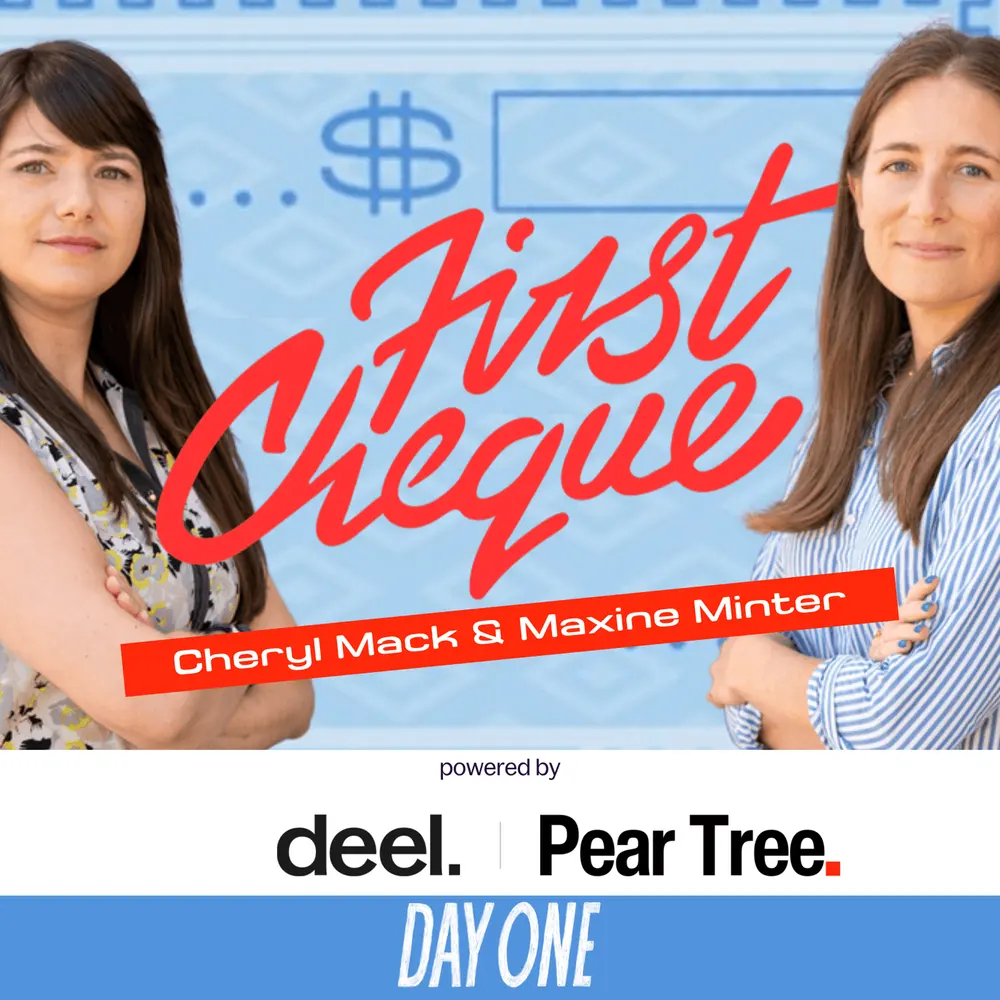 First Cheque with Cheryl Mack & Maxine Minter
Presented by Deel & Pear Tree
First Cheque with Cheryl Mack & Maxine Minter
Presented by Deel & Pear Tree 

 ▶
▶ ▶
▶ ▶
▶