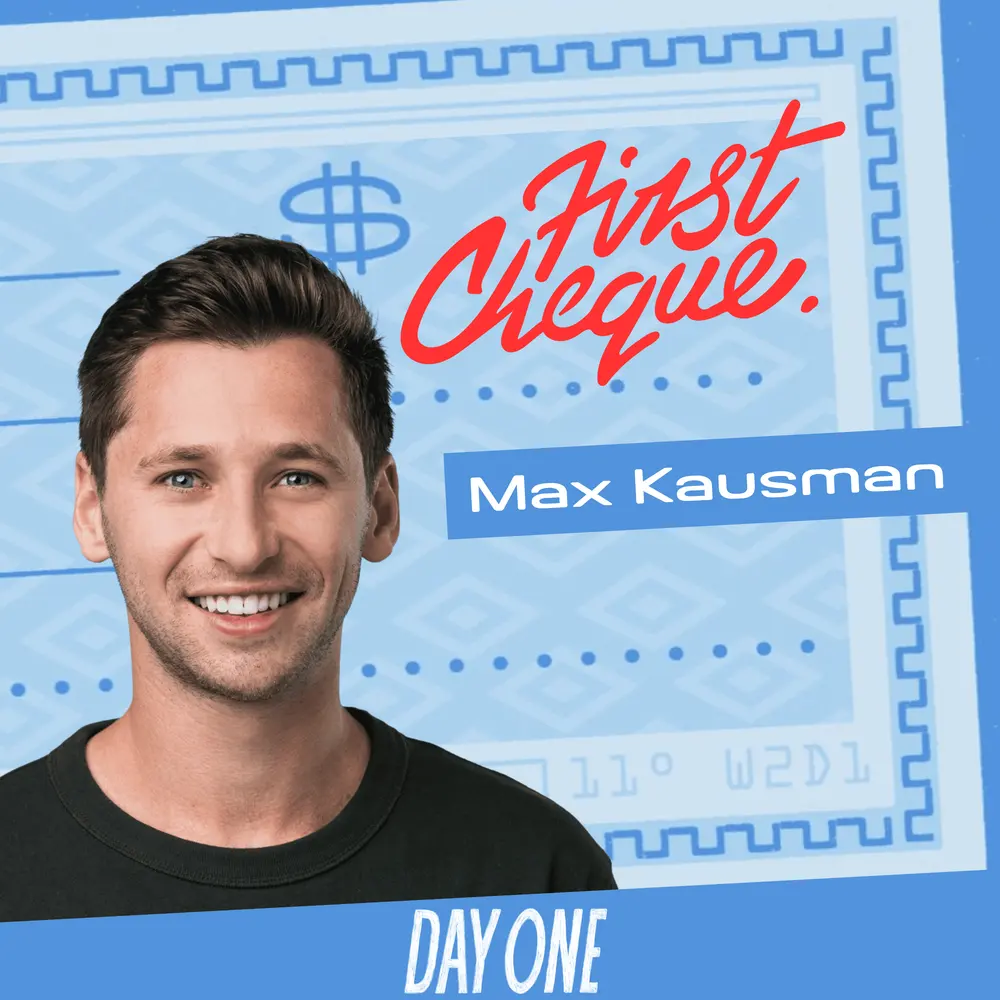
Max Kausman is the founder and solo GP of Advance VC, Australia's first dedicated fund-of-funds with a focus on secondaries.
Advance VC buys existing positions in Australian and New Zealand VC funds—acquiring stakes from investors seeking liquidity and giving new LPs diversified access to mature, validated portfolios across multiple vintages dating back to 2012.
In this conversation, learn why secondaries won't "save" all of venture (only the top performers), how discounts actually work (spoiler: the average is 30-35% but it's wildly bespoke) and why vintage diversification matters as much as portfolio diversification.
Transcript Search or select a timestamp to jump ▾ 0:02 Ad: Founders scale faster on Deal. Set up payroll for any country in minutes, hire anyone anywhere, get visas handled fast, and get back to building. Visit deal.com/dayone. That's d-e-l.com/dayone. 0:22 Max Kausman: I think the good news is that Australian venture is actually an amazing asset class. 0:27 Maxine Minter: I knew it. Guys, I just knew it. It's so good, isn't it? I just get like— 0:32 Max Kausman: I bring investors in my fund and they invest into other funds. So my portfolio is a portfolio of funds. And a fund of funds with a focus on secondaries leads us down the path into secondaries. 0:46 Maxine Minter: Rule 101, don't run out of money. We've said it before. 0:49 Max Kausman: And if you do, you're welcome to call me and I may look to buy your investment, right? But Don't run out of money. 0:55 Maxine Minter: Okay. 3, 2, 1. Hey, 0:59 Speaker: I'm Sheryl. I'm Maxine. This is First Check, part of Day One, the network dedicated to founders, operators, and investors. 1:05 Maxine Minter: If you want to be a better early-stage investor, this is the show for you. 1:08 Cheryl Mack: So TL;DR, if you don't want to suck at investing, listen up. Secondaries is one of those things that we've just been talking about and we all know we need more of. But we haven't seen that much action in this space. And then Max comes along out of nowhere. 1:28 Maxine Minter: Out of nowhere. He also, I mean, like, we're all really hoping that secondaries quietly will still save us as an industry. I think especially '23, '24, everyone was loving on secondaries. But then Max came along and is building what I think the industry really needs. So he is the founder and solo GP. Whoop, whoop, another solo GP. Building Advanced VC, which is a fund secondary fund for the Australian and New Zealand ecosystem, which he's going to explain to us what exactly that means. But he's going to talk to us a little bit about what a secondary actually means, how the market works, how you price these things, because God knows how you price them. He obviously comes from an amazing background. We've known Max for ages, right? Since he was early at Title. I think he was one of the first investing, maybe the first investor team member at Title Ventures. 2:22 Cheryl Mack: Yeah, possibly. Again, it kind of felt like he came out of nowhere, but he has, he has had a strong background in VC. But I also think the market underestimated him a little bit. And based on where he's gotten to with this fund so far, I— yeah, that just wasn't justified at all. And I'm so excited to dig into like how he is, how he has built what he's built and the, you know, the exciting opportunity that he has brought to the ecosystem as well as to himself as a solo GP. 2:51 Maxine Minter: Love to see it. Well, I can't wait to dig into this with him. Welcome, Max. 2:55 Ad: You're listening to a DayOne.fm show. 2:58 Cheryl Mack: Well, uh, let's jump into it with Max, one of my favorite people. Max, the very first thing that we always love to ask our guests and get excellent, interesting answers is, uh, what is the very first thing that you ever invested in? 3:13 Max Kausman: Hey Cheryl, and hey Maxine. Thank you very much for having me on. Also a couple of my favorite people and doing amazing things in the space. So I don't have a particularly investing-oriented answer to that question. I think the first thing I remember investing in is a training course for the very first job I ever did, which was to be a basketball coach. And so no great lesson or implication or anything like that. I've loved basketball my whole life. 3:40 Maxine Minter: Oh, I had no idea you played basketball. 3:41 Max Kausman: I remember earning $7.50 an hour as a 14-year-old taking the train and I thought I was absolutely a go-getter. 3:51 Cheryl Mack: And you thought you were rich. 3:52 Max Kausman: You know, yelling at some of these like under-8s and under-10s, but learned a heck of a lot from that just around dealing with people and yeah, loved that job. It's got absolutely nothing that I can draw from in my finance role today, but You know, I think there's value in learning and I enjoyed basically getting better at a craft, even if that was 14-year-old me getting better at that particular craft. 4:19 Maxine Minter: I love that. 4:20 Cheryl Mack: Sports skills are life skills, man. And I think, Maxine, weren't you the one that said that like investing is kind of like being a coach? 4:26 Max Kausman: You did say that. 4:27 Maxine Minter: Ah yeah, like 100%. I am, I, did you ever watch The Last Dance, the Netflix series on— 4:34 Max Kausman: Oh yeah. When we were all at home at co— like in COVID, right? 4:36 Maxine Minter: Yeah, I honestly, I, so many pennies dropped for me from a management perspective watching that. 'Cause I think what Phil Jackson did in terms of curate a group of incredible players who like tic-tacked off each other beautifully resonated a lot with really excellent management teams and leadership teams. 4:56 Max Kausman: Yeah, the system, right? People knew their role and like the culture around that. 5:01 Maxine Minter: I just think sport, I mean, not to just be accidentally trended into Tech Broville, which I have noticed I have become more and more tech bro-y as I spend more time in tech, but— 5:11 Cheryl Mack: The more time you spend also in the US. 5:13 Maxine Minter: True. Yeah. It's like recharging my tech bro batteries, my inner tech bro. But I, I think sport is such a wonderful distillation or simplification of a lot of the stuff we do when we are building organizations, like we're building management teams, but also we're building groups of people that do stuff together. And I just like basketball is such a great distillation of that because it has all of those, like, as you said, the system, those positions, you need to know how you play, how to handle. moments are. 5:39 Max Kausman: Yeah. 5:39 Maxine Minter: Also just love the sport. I played pickup a couple of weekends ago at like a random pickup court in San Francisco and like definitely channeled my like inner 18-year-old. So, so cool. You also, you also played. 5:50 Max Kausman: Yes. 5:51 Cheryl Mack: We should get like a little VC one going, like a little VC pickup basketball game on Thursday afternoons or something. 5:57 Max Kausman: They have, they have those. Mark, Mark has done some of these, uh, like from time to time, VC and tech basketball days. 6:05 Maxine Minter: Yeah. Mark Zamarsley, for anyone who's listening. 6:09 Cheryl Mack: Oh, I'm down. I'm not very good, but it's one of those ones you can just pick up. 6:12 Maxine Minter: Yeah, it's so great. Unless you get like a really intense group. The problem with American pickup is there's a lot of like, you know, ex-NBA players and people that played like college. 6:21 Max Kausman: Oh yeah. 6:22 Maxine Minter: And so like playing pickup with them is anything but relaxing. It's just like you get run into the ground, like manhandled. It's, if you're not up for it, it's not fun. But other than that, it's like, it's, it's a lot of fun. So do you still play, Max? 6:38 Max Kausman: I do. I do. I used to play reasonably seriously, but I now run around with my friends and I love it. The sense of just the connectedness is what is really cool when you know, because you've played with your teammate for like a period of time, almost ahead of time what they're about to do. And you can use that kind of against the opposition. Best feeling yet. 6:56 Maxine Minter: Best feeling in the entire world. Best feeling in the entire world. I would imagine that there is a little bit of that same feeling Right? When you feel like you've seen a trend in the market or you've seen a trend, like how something's going to play out, or you're like pattern matching from a like tape you've already watched in some industry or in some application, you're seeing it play out in another company where you're like, oh, I think it's going to play out like this, and it starts to play out like this. It's just so self-satisfying. Wonderful, wonderful feeling. 7:24 Max Kausman: For sure. 7:25 Maxine Minter: So you've obviously been venture— in venture for quite a long time. You have just recently started a fund. Can you tell us more about it? 7:33 Max Kausman: Yeah, thank you. So I am the founder and managing partner of Advance VC, and we're Australia's first dedicated fund of funds with a focus on secondaries. There's a couple of concepts in there, and I know you have spent some time talking about fund of funds. That means I bring investors in my fund and they invest into other funds. So my portfolio is a portfolio of funds and a fund of funds with a focus on secondaries. leads us down the path into secondaries. And so it's probably worth explaining what that means. Secondaries means buying an existing asset from someone who holds that asset and is seeking liquidity. The distinction between secondaries is to primaries. So in primary, you are providing new capital. In the context of a fund, it's an investor who invests in a new fund or a company. It's an investor who buys new shares in the company. And that company can then go and spend that capital. Whereas in a secondary, the capital is just a transfer between shareholders. There's no new money that the fund can spend. There's no new money that the company can spend. It's a new investor replacing an existing investor. And so what we do is we buy interests in other VC funds in Australia and New Zealand where there are investors in those funds who for various reasons want to step away and want to cash out their position. VC funds are illiquid for a long time, you know, increasingly long time as, as, you know, private assets stay private for longer. And so there are heaps of reasons why people might need to step away. And so we try to become the buyer of those interests in VC funds in Australia. And what that does for our investors in Advance VC is that they get a diversified portfolio of funds and through those funds into companies that is diversified across not just different funds and certainly different companies, but also across vintages. So we hold interest in funds as old as 2012 and some younger funds as well. We're buying, you know, in aggregate, a more mature portfolio, a more validated portfolio because we can see how some of those portfolios are going. And so we hope that there is both great returns, but also lower risk because of the, you know, duration that the assets have already been in there, picking the good ones and usually buying at a discount. And I'm sure we'll come to that, but also faster cash returns for our investors. 9:58 Cheryl Mack: So how does this actually work? 10:01 Maxine Minter: Well, wait, before we, before we get to the mechanics, I want to double-click on the definition of diversification. 10:06 Max Kausman: Yeah. 10:07 Maxine Minter: Like a lot of people, when they think about diversification, they think about across assets. 10:11 Max Kausman: Yes. 10:11 Maxine Minter: But you are talking about vintage diversification. Can you double-click on why that matters? You hinted at it, but I would love to make it explicit for folks. 10:17 Max Kausman: It's, it's a really big one, right? So, you know, if you look from first principles all the way up, right, you could invest in a single company and angel investors are, when they do that, investing in a single company. Uh, you can invest in a fund, which is a collection of companies. So we've gone from Sheryl to Maxine, uh, and there's diversification in that fund, right? So you are spreading that risk We know in this asset class that the winners can be amazing winners, but many of the companies won't succeed. And so that diversification makes sense both through a fund or if you are angel investing, making multiple angel investments. Through a fund of funds, you get that extra layer, right? So I'm taking multiple funds worth of diversification. And so there is more just in that conventional sense. But Maxine, to your question on vintage diversification, It's kind of well understood the concept that I articulated before around a power law. The majority of the returns are driven by a single company or the top company in a portfolio by the very few winner companies, companies like Canva, et cetera. I think one of the things that's much less understood is how much of an impact the vintage has on the returns. And so there's some really good data out there that talks about a second power law, a vintage power law, and something like 80% of all of the returns in VC come from just 20 to 30% of the vintage years. And a vintage year is the first year that a fund calls capital and makes its first investment. So, you know, my fund that I started this year is a 2025 vintage fund. 11:51 Cheryl Mack: So it's like wine. You, whenever it's like bottled, you put a, you put a year on it and then that's the vintage. 11:57 Max Kausman: Some years are just much better than other years. And the interesting thing is that we can't necessarily know that in advance. But I do think that there are some interesting factors that determine whether a vintage year is going to be good. And so, you know, most apparently because our market has gone through this, you know, tremendous bull run and then downturn, the market conditions when you enter the investments are relevant to how a vintage might perform. So if there's a lot of capital chasing too few opportunities, the vintage might perform worse. That extends to the market conditions for exits. So, when your companies are ready to mature, when they're ready to IPO or be acquired, call it, you know, 8 to 12 years after an early stage investment. And that might in some cases— 12:40 Cheryl Mack: You'd need a really good crystal ball. 12:42 Max Kausman: Might in some cases be generous. Like if the conditions are good for exits, then you might have some really great market conditions that might help the vintage performance be stronger. Um, but the third one is actually, you know, a little bit more unclear to people, but I think it's really a compelling reason and it is the tech platform, the tech paradigm of the time. And so today, if you're investing in a new fund in venture, you're getting a lot of exposure to AI. I hope AI is this amazing game-changing paradigm shift in technology. And certainly there are really strong signals that that's true in the same way that the emergence of the mobile phone or cloud computing unlocked these massive interesting markets where new companies could come along and become massive companies. With hindsight today, you might look at you know, fund vintages that loaded up on clean meat or, you know, rapid logistic delivery while we were all at home in COVID and view those with a little bit less optimism about just how big those companies could become. And so, you know, certainly those factors inform my thinking, looking at an older portfolio and how I might value it, but also in thinking about the new portfolios that I think about as being exciting or the new funds that I think about as being exciting. Because I am excited about today's vintages. I think, you know, there is less capital in market. There is a really interesting tech opportunity. And so, you know, I'm very bullish on VC as a whole from where I sit today. 14:10 Cheryl Mack: Wow. There's so many threads I want to pull out there, but just for those of us at home that are still trying to understand how secondaries work, just break it down for us. Like, do you go to the fund or the LP? Does the LP approach you? What does that transaction look like? How long does it typically take? What makes Like how does that transaction work? 14:31 Max Kausman: Yeah, so secondaries are really bespoke. And so there is really, I think of all the transactions I've done, not one has been the same. And so I can try and like paint as good a picture as I can, I guess. But the basic principle around the type of secondaries I do, so I mostly buy LP interests in existing funds. So I buy out the investor who has invested in a fund. They will have invested maybe some of the capital because their capital is drawn progressively by the fund manager. That capital's invested into a portfolio of companies and those companies are illiquid. They can't exit yet. And so when that seller comes to sell, I'm essentially stepping in and taking over their position in the fund. I become the LP in the fund as the buyer. 15:19 Cheryl Mack: Whether they've been fully called or not. 15:21 Max Kausman: Correct. And I would inherit the remaining liabilities. I have to pay the fund manager as if I was that LP, and then I also inherit the future benefit. And so the transaction is really a 3-way transaction. There's an agreement between the buyer and seller, and they then take that agreement to the fund and the fund says, okay, we will recognize that we have changed the investor in the fund. And so they would permit me to come in and permit the seller to step away. 15:51 Maxine Minter: And do you do, ever do like underlying company secondaries or for you, you just focus at the LP level? 15:57 Max Kausman: So my mandate allows me to do underlying company secondaries. For the most part today, I've been focused on and most excited about the fund interest. There's a lot that we can dive into as to why and to some of the differences between those 2 types of transactions. But I think that the fund interest is a really compelling opportunity, particularly in today's market where it requires that specialist capital. So, you know, several people in market, yourselves and myself included, could go and look at a single company at a time and try and understand what that company's worth. But when it comes to a portfolio of 10 or 15 or 25 companies, there are very few people who will get out of bed unless they are a specialized investor. unless they have deep networks, unless they're able to build really good insight to understand what's going on in that portfolio. And so I think that creates the conditions that make for a really interesting investment firm and for my investors for good opportunities for returns. 16:57 Cheryl Mack: And you always take the entire, the LP's entire position. They can't pick and choose or they can't sell you half. 17:04 Max Kausman: They can sell me half and I've certainly done that. So I've seen really all types of scenarios, right? So I have worked At a single point in time with multiple sellers of the same fund, offered a price, and those sellers could decide if they wanted to sell or not. I've bought from one seller of one fund. I've bought from one seller who sold me a portion of their interest across multiple funds, and I've bought the same fund multiple times from different sellers at different points in time. And so you really do see all of those types of things come up. I suppose something like that would reinforce the value of that specialization. So what I'm starting to see in my fund is that, you know, I've got more than 10 fund interests, more than 10 fund positions, more than 200 portfolio companies, but I've done diligence work on many more funds than that. So I've figured out if I wanted to buy, I've sometimes made offers where the seller wouldn't like to sell at the price that I've offered. And so I think I'm building quite an interesting perspective across the market. What does that mean? The next time a seller comes forward to me, I can probably provide a better experience. So I am faster at being able to offer them a price. I understand the value in those portfolios. I've worked with many of the fund managers already. And so it's a really good outcome, I think, for all the participants in the market where, you know, the, there's a trusted relationship with the fund manager. the seller can actually get the liquidity sooner and they can trust that there's sort of thoughtful and sensible pricing behind the way that I operate. And of course these transactions are sensitive. They happen confidentially. You know, we operate as a trusted counterparty. And so, you know, certainly the way that we like to operate is also important in making sure that the seller's needs for that discretion and the fund manager's needs for that discretion are met. 18:52 Maxine Minter: I mean, I think it's such an interesting growing asset class, right? This like liquidity around venture, because it's historically been pretty anemic relative to other private markets, right? 19:13 Max Kausman: Yes. 19:13 Maxine Minter: About 12 months ago, we interviewed Christina Farr from NuView and secondaries, company-level secondaries. is part of their strategy, right? And she gave us a really interesting education. And I think she quoted something similar to this kind of a 10x difference between shares or kind of positions traded in venture as an overall positions on issue as compared to private equity, right? Which gives you a sense of the volume of opportunity between those, those kind of two places. I'm so curious what you have learned from looking at Australian venture kind of under the hood across vintages, Across funds, like you've got a really interesting— 19:53 Cheryl Mack: across sectors. Do you look at every fund, like deep tech? Like have you looked at Main Sequence and also, I don't know, your generic B2B SaaS fund as well? 20:03 Max Kausman: Yeah, I'll look at any fund where I feel confident that I can diligence the portfolio companies, where I can get a good sense of what's actually going on, the trajectory of the key performers in those portfolios. where there's enough of a link to Australia and New Zealand that like allows me to get that insight. And so yeah, I've certainly, you know, been able to look at not every fund in market, right? So I, to date in the early kind of period of this fund, have been a little bit reactive. There's been a lot of people that have been keen to sell, and over time I'm becoming more able to be proactive. So more able to identify the funds that I might like some additional exposure to, more able to move quickly when there's a seller of a fund interest that I'm excited about. 20:52 Maxine Minter: Yeah. Fascinating. So what have you learned about Australian venture? You said that you're like bullish on tech in Australia. Like what have you learned? 20:58 Max Kausman: Yeah. Well, I think the good news is that Australian venture is actually an amazing asset class and— 21:05 Cheryl Mack: I knew it, guys. I just knew it. 21:08 Maxine Minter: It's so good, isn't it? I just get like, 21:12 Max Kausman: I'm, and I'm not here to just like be a booster, right? Like I have a slightly different view and lens and, and so, you know, I would, I would also pepper some caution that I think not every fund valuation is real. 21:24 Cheryl Mack: When you say fund valuation, do you mean the valuation that, uh, not every valuation a fund has assigned to a company? 21:33 Max Kausman: Yes. Yes. And, and those valuations per company roll up to the fund's valuation. And so, There's some really interesting, again, empirical data from, you know, Brequin, PitchBook, Cambridge, the benchmark providers. A not small percentage of a fund's total value to paid-in capital, or that's the overall valuation that the fund carries, is actually never exited. Not every company can exit. And so as your fund starts to really age, and we haven't in Australia had funds that have really hit the end of their fund life because our industry sort of died and was reborn post-GFC. People then start to lean into those final years of the fund and need to realize that, you know, companies that are valued within that fund at their last capital round may not be worth that much and may not ever have a pathway to IPO, a natural buyer. And so, you know, I'm very cognizant of that in thinking about how I price portfolios. But the high-level summary is if you go back and look at the Australian funds that are old enough that you can really start to make judgments about their performance, And I think that that really starts to come in about year 5. We have had an amazing set of funds in those early years of Australian venture. Now, better, they've, those funds have sort of outperformed the global benchmarks and outperformed the global peers. Why do we think that is? I think the bit that I pull back and say there's a bit of caution that we need to have around is they were all-time great years for venture, right? Those 2012, '13, '14, '15 years. which comes back to my answer before about vintages. We had the emergence of cloud and the emergence of mobile and some of the amazing companies of the last, you know, 10, 15 years were born around that time. And at the same time in Australia, we had this lack of capital. We had only a few brand new venture funds. And so some of that outsized performance is on account of less capital, less funds, less competition in market. a beautiful happenstance that the market just happened to be right to birth these amazing companies. And then another beautiful happenstance that the extent of Canva's success specifically has just been so monumentally large relative to the capital that was available that has driven so much of the Australian market's really positive returns. But I continue to be very optimistic even today. I think the funds that we have in market today, we still have fewer funds than we could have. much less capital than we could have across multiple stages. And so, you know, that leads to sort of attractive conditions for investors in the asset class and the founders that then do go on to succeed, jump into the US eventually. You know, Australian funds can access those companies quite early in their life and reap the benefits of those founders and those companies eventually moving on into a more competitive 24:23 Cheryl Mack: So if you're so bullish, like why not just do a fund of funds? Like help me understand why this is the model that you chose, 'cause it's, it's pretty unique, right? But you must have like a fund of funds has fees on fees, and then you also have to go do extra work to get these secondaries. And then also then you are responsible for those capital calls and those fees to the other funds. So. Why? 24:49 Max Kausman: Yeah, so I suppose there's 2 broad answers to that. One is, you know, I had the luxury and I'm very fortunate to have had, so to be thinking about this for like a really long time. You know, I was investing venture in the bull market and a little bit post-downturn and seeing what I thought were the interesting new funds emerging in the Australian market. and had, you know, a degree of connectivity. I didn't spend as much time as Maxine did in the US, but really sort of became kind of compulsive and obsessed and a student of what was happening in the US and trying to figure out what Australia was ripe and ready for. And so had an interest in sort of a couple things, right? The democratization of venture liquidity, which was very obviously the key problem that I think the market was interested in solving. But also on the investor side, bringing new models of investing into this asset class with a different risk and duration profile. So acknowledging that not every investor who might want access to some of these great companies is prepared to invest in an early-stage fund, is prepared to take the risk on 10 or so companies. 25:58 Cheryl Mack: The 10 to 12 years. Okay. So early liquidity is one of them, but then surely there must be something that makes the math math on the fees. 26:07 Max Kausman: Well, the fees is part of it. Let me come to that just very briefly. I, the primary fund of funds is a challenging thing to get off the ground in Australia, and there've been some attempts at it. My sense is that the reason that it has proven challenging is that there is sensitivity, as you say, to the fees on fees. But also if you look at the funds of funds in the US that succeed, they have a value proposition that I'm not sure yet matters in Australia. So in the US, the 3 of us can't walk up and access Sequoia or Benchmark or a16z, right? There are great branded funds that are access constrained. And in Australia, what's really interesting is because of the reluctance of our big super funds and institutions to invest in venture, even our biggest, most successful venture funds are not access constrained, right? High net worths and family offices, if they ask nicely, can access those funds. And so, you know, a fund of funds doesn't earn its specialness in Australia by providing access through scale. And a fund of funds also finds it harder to sell a story about selection. We don't have that many funds, right? So why am I paying the fund of funds to guide me into some of the not that many funds that already exist? And so that's a challenging thing and there's always calls for more fund of funds. And, you know, I think there's just not yet those couple of conditions, enough funds to choose from and challenges in accessing funds that really support just a primary fund of funds. And, you know, that's a thing that I do a little bit of within my portfolio is sort of selecting new managers, but very selectively. It's a very small part of what I do. What I enjoy and what I think is more compelling is being able to look at things as they exist, not as they might exist. And so I love, to the, you know, comments that we had before, being able to look across this market and see what's interesting across multiple funds, right? There are companies that are positions in multiple funds. I love being able to understand where the funds are allocating their reserve capital and what the winners are in those funds and how I see them performing from here. You know, there are funds out there that are 2 or 3 times money, 6 or 8 years along, and I still think those funds could have wildly different outcomes. And so I have a lot of fun figuring out what is interesting even in the existing portfolios. And certainly when you then get to pick between them, I think you have a chance of being a better picker, right? I can compare 5-year-old funds and 8-year-old funds and really get down to the companies within them. And by pricing then at a discount, because a discount is the trade-off for liquidity, I think you can also generate some interesting returns and again with a shorter timeframe. So yeah, I think investors are interested in that. It's using the VC asset class, but it's not a VC product, right? Like the risk and the return and the duration dynamic doesn't, I think, make it a competitor to VC. I think it's a really great complement. I think it goes well with a VC fund. I think it goes well with an angel portfolio. And the reasons I say that is that it's complementary. It adds something and it adds something in a few ways. You know, firstly, it winds back the clock. So if investors had only been investing in VC in Australia since 2021, well, I've been able to access funds from before then and great companies that are no longer accessible to these new funds or these new investments in angel companies, right? So wind back the clock is part of it. The other one is like that diversification piece, right? You can get with a single investment in my fund, a blend of timeframes. So hopefully I'm able to deliver liquidity back progressively, not all in one hit. And that allows you to build up your venture investment, right? You don't want to just get liquid on day one and spend all that money on your 10 angel investments today. because of that vintage diversification piece. And so that diversification piece is important, but also managing your cash flow when you're investing in illiquid asset classes is important. 30:18 Cheryl Mack: Yeah. Don't run outta money. 30:20 Maxine Minter: Don't run outta money. It's rule 101. Don't run outta money. 30:23 Max Kausman: Don't run outta money. Rule 101, right? 30:27 Cheryl Mack: We've said it before. 30:28 Max Kausman: And if you do, you're welcome to call me and I may look to buy your investment, right? But Don't run out of money. 30:35 Cheryl Mack: We can add that to our don't run out of money, but if you do call Max, call Max. 30:40 Max Kausman: I see, I see it on both sides, right? So I think, you know, what I think many of us are feeling, right, is that some investors who may have got overexuberant when VC was really hot today are sitting on the sidelines. And I think that compounds the mistake that they already made. You want to continue to invest in venture through the cycle. You want to get access to the different vintage years. You want to get access to the different types of technologies. And so I would really encourage people to think of this as a very long-term asset class. Don't run outta money, but you do want to spread your bets. And I think my fund can be very complementary in people starting to build up that position because I can give them some of the retrospective access to these great companies that they may have missed out on. 31:24 Maxine Minter: I think it's a really, a really wonderful piece of infrastructure for venture generally, as you said, like a complement in terms of a product, because I think that like the illiquidity, especially right now, feels very scary for a lot of folks that are kind of venture curious and/or people that came in like hot and heavy in 2019, 2020, and 2021. And my heart breaks when I talk to a lot of the folks that have invested, and especially if they came in pretty heavy in those first, in those 3 years. And that was their first exposure to venture because they're now invested in these funds or, and all these companies, but usually these funds. And they are sitting because of the nature of that stage of the cycle, that vintage, as you said, right? They are sitting on, you know, sometimes 1x, maybe less than $1. It's illiquid. It doesn't feel like it's moving and they are overexposed to that space. But also, you know, if you were Prescient and you came into Blackbird Fund 1 and you're sitting on, you know, really wonderful paper returns, but you've got, you know, you would love to recycle that back into the ecosystem. It's really valuable piece, I think, to kind of have that, uh, cyclicality. I do wonder, do you have a view on what— maybe this is just like personal curiosity, but I'm so intrigued— like, do you think there is a future of venture which has actually a very active secondary market? So it stops being a like 10 to 15 year hold period and it starts being you know, you can start to access meaningful liquidity year 3, year 5, year 7, year 10. Like, does that exist or do you reckon we stay in like the 10 to 15 hold period? 33:03 Max Kausman: It's a great question. I'm certainly bullish that there's going to be a lot more secondary activity, but I think with provisos, right? Like with some reluctance to say that it's going to play out the way that people hope, which is that that's going to come semi-consistently in year 3 or year 5 or year 7. And so like to sort of zoom back out, right? Secondaries is a really small market relative to the primary investment, relative to the money that goes into companies. And it could notionally be almost as big or maybe even bigger, right? You can in secondaries buy the founder shares and the employee shares. So the non-investor shares in companies, and you can buy the fund's shares that is a conduit to the same ultimate composition of the companies underneath. And so you could have more secondaries activity than primary activity, but secondaries is just a small percentage of the primary activity. And what does that mean, right? It means that secondaries is not coming to save everyone. It's not coming to save every asset. It's really concentrating into the very, very best assets. And so people spend a lot of time, I think, overly fixating on the discount. I'm not sure that the discount is actually necessarily a signal that the assets are bad. It's a good signal for the assets that there's a buyer, right? It's a good signal. 34:23 Cheryl Mack: Yeah. You hear the word discount and you think like, you know, the old stock at the back of the store that nobody wanted. Yeah. And now it's 25, 50% off and then there's an extra, yeah. But explain discounts in venture. 34:35 Maxine Minter: I would love that actually. Like double-click on the pricing because we talk about it like it's like, oh yeah, we just take the discount, but what does that actually mean? And secondaries? Like how do you price a secondary? 34:43 Max Kausman: Sure. I think discounts are a function of 3 things. The first one is, I think the one that people understand and appreciate very clearly. So there's a baseline. A discount is only meaningful in relation to its baseline, and the baseline is the fund's valuation or the company's last valuation. And so a discount is first and foremost comprised of the view of the buyer as to how real the real intrinsic value of that company or that fund is relative to the baseline. Now, there are examples and there are instances where some of these interests can trade at a premium. So you might turn around and have a company that last raised 2 years ago that is crushing it, and people are pretty confident they're about to raise a new round at a material valuation uplift. Now, you might be justified in that case paying a premium, but in venture, which is a power law, asset class, there are a lot of assets that are then not worth the valuation of their last round. And so the buyer is going to form a view on the single company or the companies that comprise the fund and the buyer's view of the intrinsic value of those assets relative to the paper valuation. So that's the first part. 35:51 Cheryl Mack: Wait, on that one, can you explain what the baseline is? Like, is it the NAV? 35:56 Max Kausman: Yeah, the baseline is the NAV. So that's what the fund determines or the company determines was— 36:02 Cheryl Mack: So the net asset value that the fund determined at the last time they determined what the net asset value of the fund was. 36:10 Maxine Minter: Right. Which in our industry is worth saying is usually the last time the asset was traded. So as you were saying, right, like that could be 2 years ago if we're talking about one of those like extremely hypey, like, you know, December 2021, January 2022 valuations that were paying 200x forward multiples. And they raised this monster round and they've got this like huge store of cash. They haven't actually been repriced in that period of time. And venture, the like industry standard for venture is you might like, you value based on previous transaction. If there hasn't been a transaction, you might be holding that at the 2021 peak valuation. But as you said, for some people they're like, oop, that's not actually what we think the value of this thing is anymore. 36:54 Max Kausman: Yes. And, and those assets are really hard to buy, right? because there's not infinite secondaries capital, people won't go and buy assets where they have to slap a really, really severe discount on them because they might just prefer to wait and have those companies have a new valuation and then have a smaller discount with a more reasonable, more recent baseline. 37:16 Maxine Minter: Can you double-click on that? Why is that? Is it because there are less, like it's less of a competitive like market process with secondaries because the market, the pool is Less, or is there another reason that they want to just like wait? 37:28 Max Kausman: It's less of a competitive market process. It's opaque, right? You don't always have as much information. So I buy interest in funds. That's different from what I used to do. And what you do is buying into companies where the founder pitches you. And so I have to get my information a slightly different way and build conviction. And the other thing is that there's always some signal. Now, I would argue not always valuable signal, but when people do want to sell, a natural fear, right, is that they're trying to sell you their weaker assets. And so I would view it quite differently if I knew the reasons that sellers are selling versus if a seller had a big portfolio of stuff and kept coming to me and saying, Max, I really want you to buy this specific thing from me. I might think that that's probably the thing that they want to get rid of, right? And so, you know, the reason that, again, I think specialist firms are important in this asset class is that my job is to understand the real value and I lean on my relationships, my networks, my venture and angel investing experience to understand what's actually going on in these portfolios. But to come back to discount, I think we've covered just one of the 3, right? So this is like, there's really a lot here. 38:39 Cheryl Mack: So one is what you, what the buyer thinks it's worth, Relative to what the last valuation of the fund was. Okay, got it. Carry on. What's 2? 38:48 Max Kausman: The second one I think we've touched on before, right? So there is, you know, this dynamic around the seller's circumstances and their needs. Is it an urgent sale? Are they trying to sell their whole interest? And basically that supply and demand dynamic. So, you know, secondary buyers have potentially a lot of opportunity to buy from and not infinite capital. And so they can then prioritize their time and their capital into the most compelling opportunities. And that can be a factor that drives some of the price. And so, you know, I think as we sit today, even though secondaries have become a larger and more interesting market, there is an undersupply of secondary capital. And I would say that that's particularly true in Australia because we have also an undersupply of older assets. We don't have that many old funds and we don't have that many blue-chip companies where global players are, you know, this is unicorn plus companies where the secondaries market really kicks in globally, where the global players are constantly trying to come in and get access and trade. There's maybe a handful of those companies in Australia. And so, you know, historically we haven't had enough of those assets to support a viable secondaries market for funds locally. That's only come in in the last few years, and therefore we have a little bit less secondaries capital then maybe we could have, but really it needs to grow sensibly. Otherwise there's just not the assets to buy into. And then that does, you know, inform pricing, right? There's few buyers, particularly in a fund interest. There's few people who can understand the value of a portfolio. And so that supply and demand dynamic would have a, you know, increasing effect on the size of a discount. The third one, and this is a little bit more complex, is around structure. And so here's where I might compare buying into a single company to buying into a fund. And so when you buy into a single company, you get equity in that company and any of the future upside in that company is yours to keep. But if you are buying from a founder or an employee, you also get ordinary shares and those are subordinate. They have less rights attached. than the investor shares. And that becomes interesting, right? In a downside case, you might be less likely to recover your capital. And there's different, you know, things that come along with that. You may not actually get any information from the founder if you're a small ordinary shareholder as to how the company's going. In the fund scenario, you actually have this fee-on-fee thing that Sheryl mentions. Now it's only as to future performance. So if I buy a 5-year-old fund, I'm not paying the historical fees that that fund has already charged or the carry that would already have accrued. But if I'm entering a fund and let's say it's just a fund of 1 or 2 companies, I have to think about, well, if I could enter the company, I wouldn't have to lose some percentage of the upside. And that's usually 20% in carry that the fund is now taking because the company's performed well. And so there may be an extra discount buffer In relation to the fund that really just accounts for the structure involved. If I could enter a company without the fees of the fund at a discount, and that's common enough, right? There are company secondaries. I might need a slightly bigger discount to enter the same fund and have access to that same company within the fund. On the flip side, you get some good stuff with that, right? You get preference shares, you get information that the fund may have from the founders. And the fund is also a motivated investor. They are accountable to their LPs and I become the LP in that fund to have that exit happen. And so, you know, there are different trade-offs that revolve around that structure that also can inform the pricing. 42:34 Maxine Minter: Super interesting. So ballpark, like what are you seeing in the market for discounts into funds today? Because I think that they're like, because it's a new asset class and it's a new like way of buying into this trend. I'm not sure we have a lot of instincts in the Australian ecosystem or even globally, like what the discounts would be like, what those pricing structures look like. 42:57 Max Kausman: It's something that is, you know, a complex topic, right? Because people start throwing numbers around and everyone starts to gasp and think, oh, that's a very big discount, or maybe that fund isn't good. And again, I would reiterate the discount information we do have is probably based on the good funds. It's based on the funds that have a buyer. It's based on the funds that do transact. 43:16 Cheryl Mack: Right. Because you wouldn't, you wouldn't, nobody wants to sell at a 60% discount, but that would be the price if the transaction went through. 43:25 Max Kausman: If the assets were not really good or if the last valuation was really overvalued, right? You know, like I won't comment specifically on the sorts of discounts that my fund is buying. There are, again, assets that would potentially be worth a premium. There are assets that I may not want to buy even at a 60 or 70% discount or more. You know, there are market data sources that provide some of those like averages, but I also think they're not worth much. You can't read a lot into that average discount. 43:54 Cheryl Mack: So wait, you won't tell us what discount you're buying funds on? 43:58 Max Kausman: I'll tell you what the market data says. I'm happy to tell you what the market data says. So I get this email every day from SecondaryLink. And they aggregate the average trade price of discounted fund secondaries. And that averages in, you know, something in the order of 30 to 35%, depending on the week and month for funds. Now, those would be for good funds. And so those would be maybe the top quartile or top half of funds. If you brought me the median fund, I may look at it and think that I would need a bigger discount. Equally, that average data also conceals a lot of dispersion, right? Some funds could be worth a lot more. The best company in that fund might be about to raise a new round. And so the answer is there is no answer. Every transaction is bespoke. You know, the averages are just not worth that much. 44:47 Cheryl Mack: Can you give us a range? Like what's the biggest discount you've done and what's the smallest discount you've done? 44:52 Max Kausman: I've probably given you the sorts of extremities, I guess, within my previous answer. So you can, You can rewind that 15-second button on your podcast player if you really want to. 45:02 Maxine Minter: Yeah. Press back, press back. I'm super surprised that that is, that feels way less of a discount than I was expecting on average. As you said, like take the averaging there with a grain of salt because it's such a bespoke dynamic. And also like the number of transactions we're talking about, it's hard to average them out, right? I imagine they're super lumpy. But I think about the comp of the listed trusts. Right? And like listed, uh, like— 45:29 Max Kausman: Yeah, it's a great comp. The NAV, the net tangible asset discount to the share price in the market cap, right? 45:36 Maxine Minter: Because they are illiquid, right? It is much higher transaction volume, which for anyone listening, there are a handful of these like interesting listed trusts and the trusts own illiquid assets, but the actual ownership in the trust, so you can imagine it like you are a shareholder in the trust. Those are what is being transacted on the liquid market. So, uh, on the ASX or on the, um, New York Stock Exchange, all those kind of places. And they're generally trading at, I think it's between 15% and 20% illiquidity premium, like on average, right? So you're only really taking an extra, you know, 15% to 20% on like in the private markets where the volume is way less, like, and they're much riskier asset classes. 46:18 Max Kausman: Yeah. Where it's opaque, where it's hard work to actually understand what's in the assets. But I would say again that, that like that concentration into the good stuff is the story that people miss. So that market average data, the constituents of those funds, like we only have that data for like global funds, for US funds. Yeah. And so some of the assets comprising those funds would be companies like OpenAI. That's probably much like Canva in the funds that Canva's in, has exploded so as to be 90% of the value of that fund. or, you know, something like that, right? And so some of the trade and the pricing that you see is really indexed to the assets that people want to buy and therefore people buy repeatedly. And so it's a power law. It's a power law in terms of even the types of assets that trade. 47:03 Cheryl Mack: It's power laws all the way down. 47:06 Max Kausman: Yeah. 47:07 Maxine Minter: All the way down. I will also say, if they say like averaging is the opposite of insight, And I think in an industry that is dominated by the power law, if you average in venture, like you're in the middle of a very unattractive pack. 47:20 Max Kausman: Yes, I agree. 47:21 Maxine Minter: You know, you're like, you should be focusing on anything you can learn about the top 25% of this asset class or any of the like derivative products, so to speak. And I mean that in the sense of like a fund as a derivative product for the underlying like performance of the business. Super fascinating. I feel like we could talk about this all day. 47:39 Cheryl Mack: Well, one last question. Everybody says that like secondaries are gonna save venture or secondaries are the answer to this liquidity problem we have. Uh, yes, no, like what volume are we talking about here? Is this gonna save us? 47:52 Max Kausman: No, it's not gonna save us. It's, um, it's, it's a growing market. It, it will become a— 47:57 Cheryl Mack: Oh, bother. 47:59 Max Kausman: So sorry. Venture will stay a power law market. Secondaries will buy the great assets just like primary, right? And I think there's this interesting thing happening where secondaries and primaries are kind of converging, right? We see increasingly funds that do primary have decided, well, it just makes sense to also buy secondaries in the companies that we like. And at the same time, AI means the companies might need less capital. So secondaries becomes a way to get capital into those companies that don't need it. 48:30 Cheryl Mack: So it's all just blending. 48:31 Max Kausman: Yeah, like it's kind of merging into a little bit all the same, right? At the same time, these really, really big funds locally and globally have more and more and more capital and they operate a bit more like late stage, what we would've called growth or pre-IPO because IPOs are now taking longer and longer. And so, you know, Maxine, I think you referenced like private equity before. I think it's instructive that you talked about how venture could catch up to private equity. It's really common in private equity for companies to be sold from one private equity fund to another. It's basically a secondary. It's just a secondary over 100% of the company, right? 49:09 Cheryl Mack: I have heard of this. 49:10 Max Kausman: It's like a full asset acquisition, still kind of a secondary. And so, you know, I don't see any reason why we won't see more and more early stage funds selling to the bigger later stage funds like this capital that we now call venture capital has different shapes and natures to it. And my product is an example of that, a different type of horizon, different type of risk, early stage versus big multi-stage growth, big fund. So secondaries will happen increasingly, like no doubt, but I do still think it's not coming to save the average asset. It's not coming to save the median asset. It's really going to be about the top quartile. And that's always been what venture has been about. Maybe even really top decile, right? 49:56 Maxine Minter: Right. Well, I for one am so stoked that you have entered the market and that Max Kaussmann has entered the chat. I know first close happened, uh, just at the end of financial year, but super exciting to see such a strong emerging manager, uh, come into the Australian ecosystem. So more please. 50:12 Max Kausman: Agree. 50:13 Maxine Minter: I granted, fine, you're not going to say venture as an entire asset class, but excited to have you in the mix. 50:18 Max Kausman: No, big ambition, but I can't save everything. 50:21 Cheryl Mack: Yet. 50:23 Maxine Minter: Yet. Yet. So on that theme, we always ask people the same question at the end of this fantastic conversation, which is, what is the bravest thing you've ever done? A big, big cojones moment. 50:36 Max Kausman: It's got to be this fund, right? Like, I mean, you've experienced it and Cheryl, you've experienced it. Like we sit here and we talk about our fund and we act like fund managers, but This has for me been very much a founder journey. And so I'm not sure exactly when I decided to go all in. I actually just ended up being obsessed with the problem and spent nights and weekends. I tried to convince people that I thought would be amazing to join me and they didn't. And I just cared enough and I kept going. And like before I knew it, I had built a pitch deck and I was testing it with people. And before I knew it, I didn't have a job. And before I knew it, 51:12 Cheryl Mack: People were giving you money. 51:13 Max Kausman: Well, that, that probably the biggest of the big kahuna moments is, is when you sort of decide to appoint lawyers, right? 51:20 Maxine Minter: Terrifying moment. 51:21 Max Kausman: There's, there's this really interesting chicken and egg, chicken and egg thing around, I'm going to do this fund, right? And, and as a fund manager, you want it to be a viable fund, right? You're going to spend all this money. Management fees don't pay, uh, you know, for a lot of meals. And so you really want to have some sense of belief that people are going to give you money. But you can't actually rely that they will until you have a fund that they can sign into. And so that chicken and egg thing is a really interesting dynamic. And I guess the big kohonus moment was almost from my experience, a little bit by accident. I just thought, you know what, this is worth a shot. I have enormous conviction and I couldn't think of anything else that I would want to do. And so I think I'd had probably enough good signals of interest and excitement from other people. And I'd started to see enough interesting deals where I really felt like, okay, there are assets here for us to buy and they're good deals. And so I want to take that to market and show those to investors. But yeah, it's a big call. You're sitting there, you know, several, several 6 figures amount down the bucket and you just think, oh my God, have I signed up for this 15-year obligation that is going to cost me money and the next 15 years of my life? Um, so I'm very, very grateful for the support, not just of my early investors who've been amazing, um, but my advisors, Launchpick, who backed the firm and helped take away some of that risk, uh, and very excited that it's now going really well. So. 52:49 Maxine Minter: So exciting. 52:50 Cheryl Mack: Amazing. Well, we're happy you're here. 52:52 Max Kausman: Yeah, no, like I'm, I'm stoked. I, I couldn't be more excited to get to do this for hopefully decades to come. 52:59 Cheryl Mack: Amazing. 53:00 Maxine Minter: Awesome. Well, can't wait for you to save the rest of venture and we will see you out there. Thanks for joining us. 53:06 Max Kausman: Very good. Thank you very much. Thanks for having me. No transcript lines match that phrase. Try fewer words.





 ▶
 ▶
 ▶