Transcript Synced · select any line to jump ▾ 0:02 Speaker: Founders scale faster on Deel. Set up payroll for any country in minutes. Hire anyone anywhere. Get visas handled fast and get back to building. Visit deel.com/dayone. That's d-e-e-l.com/dayone. 0:24 Speaker: Are you building a SaaS business and looking to achieve compliance with SOC 2 and ISO 27001 or other security and privacy frameworks? 0:32 Speaker: Compliance can unlock major growth and build essential customer trust, but let's face it, it's usually time-consuming and expensive. 0:37 Speaker: And like really kind of a pain. That's where Vanta comes in. Vanta automates up to 90% of customer compliance tasks, making you audit-ready fast and saving you up to 85% of the associated costs. Plus, Vanta scales with your business, offering a market-leading trust management platform to continuously monitor compliance, unify risk management, and streamline security reviews. Join 7,000 global companies, including Atlassian and Dovetail, that trust Vanta to build and prove their security in real time. 1:03 Speaker: And for our listeners, Vanta is offering 10% off. 1:06 Speaker: Just go to vanta.com/first. That's V-A-N-T-A.com/first. 1:14 Speaker: Okay, 3, 2, 1. 1:18 Speaker: Hey, I'm Sheryl. 1:20 Speaker: I'm Maxine. 1:20 Speaker: This is First Check, part of Day One, the network dedicated to founders, operators, and investors. 1:25 Speaker: If you want to be a better early-stage investor, this is the show for you. 1:28 Speaker: So TL;DR, if you don't want to suck at investing, listen up. Today we have Sam Wong, who is a partner at Blackbird Ventures, one of the longest standing, if not the longest standing venture fund in Australia. Maxine, what do you love about Sam? 1:52 Speaker: Ah, so much. Actually, Sam was the first person I ever met in venture. I didn't actually know it at the time. I don't know if you remember, Sam, when we had that conversation when I was doing that course up at Bond. You were the first person I ever met in that venture space, and from that moment, was just so like precise, thoughtful, highly credible. I didn't even know in the topic that you are highly credible, right? I had like no context, but I just remember being so blown away by the way you approached it. And then since then, just like every single interaction, I feel like I'm talking to someone who thinks light years ahead of me. 2:27 Speaker: Yeah. 2:28 Speaker: Who is— the lines of inquiry you explore, which is why I'm so excited to dive into that today, I just find so amazing. So, I really, I'm so excited to get to open source this conversation with you today and selfishly get to spend 45 minutes just peppering you with questions. 2:44 Speaker: Yeah, 'cause the way that you ask questions, I think I'm like, that is what I wanted, exactly what I wanted to know, but wouldn't have thought to ask it at all or even in that way if I did think to ask it. So, I think for me, when, yeah, when you ask questions of founders, I get really excited 'cause I learned something. But also what I really love is that you were just like one of the first people to identify New Zealand as a space that was exciting and then decided to pick up and go move there. Like, who does that? Crazy people, right? Um, so I'm also really excited to learn, like, what have you learned investing in New Zealand over the last however many years? So yeah, um, let's get into it. So the first question we always ask our guests is what is the first thing that you ever invested in? 3:31 Speaker: I think the first thing I ever invested in was actually sort of real estate. So my first apartment, I think I was maybe 25 or something like that. And I'd really scrimped and saved in my first job to save together a $50,000 deposit. And this was back when there was the first-time owner's bonus. So I think it almost like doubled that, maybe more. They waive stamp duty on your first home purchase. And I found this tiny but lovely Art Nouveau apartment in Potts Point. And I just loved that apartment with like all of my being. And I borrowed like 90% and then the 50% plus the government money, et cetera, was how I managed to buy it. And, you know, 10 years later when it was time to buy sort of a family home, the only way I could afford to do that was to sell that apartment, regretfully. And in that time it had, um, basically my $50,000 of dollars saved had turned into half a million dollars. 4:32 Speaker: Wow. 4:33 Speaker: And so much of that, I know, right? And I was like, hold on, these are venture returns. Like, and really so much of that is because of leverage, right? Um, the bank gives you 90% of the asset value and the government actually gave me some too. If you think about it, and obviously compounding had a role to play. And then because it was my primary place of residence, it was tax-free. And so your net return is honestly like, you know, really, really good. And I, and I learned a lot of like almost the kind of rudimentary stuff around asset classes and investment thinking. And honestly, the importance of tax policy if you want to think about how to direct capital. In society towards activities that are more or less productive or, or, or what have you. But yeah, I really wish I hadn't sold that apartment, to be honest. 5:22 Speaker: Oh, heartbreaking. Wow. That is a cracker of a first investment. I actually think that's maybe the best return. 5:29 Speaker: Yeah. 5:29 Speaker: We've heard of yet in a first investment. 5:32 Speaker: I, it's definitely better than Dan's who lost $500K, I think. 5:37 Speaker: Yeah. Fair. I, um, one of my moments that I, one of my conversations I remember most with you, Sam, was we were talking about the first angel checks we ever wrote. And actually up until that point, I was really ashamed of the fact that my first ever angel check was like itty bitty tiny, like spare change for the founders kind of thing. And I remember you mentioning, if my memory serves me, you mentioned your first investment was also $2,500. And I remember being like, oh my God, she did that too. It worked for her. I can talk publicly about it. 6:10 Speaker: You've been proud of it ever since. 6:11 Speaker: I have, I have. Because like of that permission that you had been like, Oh, I did that. I kind of wrote that first tiny check. And now I feel like it's even more talked about, like that it's beneficial. It's helpful to kind of write that first check. I'd just be interested to know what was the story there and what's your current thinking on writing those tiny checks into this ecosystem? Is it valuable? Is it not? 6:33 Speaker: Well, it was $0 or $2,500, right? Like I didn't have more than that to invest. And honestly, I think What I love about those tiny checks is they're actually more about the relationship and like, can a founder be bothered giving you a line on their cap table when the money, you know, like doesn't even cover a week of runway really? And I think that particular one was, you know, the relationship I'd built up with the founder and they didn't ex— they knew I didn't have any money. I was just a poor founder like them, like the year before. And so I think honestly they were like, flattered and like chuffed that I wanted to invest and like maybe a bit nervous because they didn't want to, you know, lose money. But I think that they were kind of grateful for it, not because it made such a big difference to their runway, but because it really showed how much I believed. And it's funny because even though obviously I can write much larger checks now from the fund, it's always, it just comes down to the relationship you have with the founder, whether that check will be accepted, right? So I think you actually learn something really valuable writing small checks early about how to build a relationship, how to frame, you know, why they should take your money and all, all of that. And those are skills that are good to learn in this, in this business. 7:55 Speaker: There's a reason we call them learning checks, right, Maxine? You get to learn so much with those first ones. And I think it's also about when you wrote, write those checks, you get involved with the founder and learn along the way and see, well, you know, this didn't work out, but what would I have seen, or what could I have seen on that first couple of meetings that maybe I would've picked up on? 8:15 Speaker: Yep. 8:16 Speaker: Then, or might pick up on next time as well. I think it's almost like a badge of honor now if you can write a really small check. Like I keep hearing the story of somebody who invested $500 in Canva, like one of their earliest rounds and— 8:28 Speaker: Stop it. Really? 8:29 Speaker: Yeah. I've, I've seen their, like I've seen their cap table screenshot. Of somebody who wrote a $500 check. And of course that turned into who knows what, 'cause I'm bad at math, but I almost feel like that's a badge of honor. Like who gets in on a cap table at $500? So do you think that that's still possible in this, like in this environment? 8:48 Speaker: Yeah, we actually had a portfolio company who was really keen on in particular bringing founder money in. And so they kind of went around and collected, you know, a half a dozen or a dozen similar size checks to $2,500, $2,500 to $5,000 from founders who were only, you know, a couple of years ahead of them. So absolutely. I mean, I think again, it just comes down to relationships and the value you think that founders think that you'll bring other than the money. 9:20 Speaker: Absolutely. I also think it's like on the investor side, I've noticed a lot of folks that are angel-curious that I think would be amazing angels, but there is still a kind of risk barrier or— 9:34 Speaker: Yeah. 9:34 Speaker: In a lot of circumstances, imposter syndrome or kind of perceived incapacity on their side that stops them from writing that first check and actually knowing that they can, you know, this is a small amount of money, but it's coming with all of my heart, like all of my focus. 9:48 Speaker: Yeah. 9:49 Speaker: I also think that normalizing being able to write a smaller check changes the demographic of who participates as angel investing. 9:55 Speaker: Totally. 9:56 Speaker: And then you start to kind of get your feet under you and learn, and then you can kind of build from there. And if you're any good at it, ideally those returns start to, you know, pay for the next generation of checks and they are no longer $2,500, you know, like we build in that way. 10:10 Speaker: Exactly. 10:11 Speaker: So I think that that's a cool thing. I actually think that you're maybe the first person, at least that I know of, that started the kind of $2,500 club. So I'm excited to be part of that club. 10:20 Speaker: We should find more $2,500 clubs and then we can find $20 grand clubs for me. 10:26 Speaker: Absolutely. Absolutely. So for me, this moment really pulls out your leverage in the ecosystem, right? I think about my own experience with you when I like had that conversation with you and it came, it gave me implicit permission to start to talk about my own, like the true version of my own angel investing journey. And you know, you are an OG of this ecosystem. You have built such an incredible ecosystem around you and continue to do that in New Zealand. I would be interested to know, how do you think about leveraging yourself and building impact into the way that you build an ecosystem? 11:06 Speaker: I'm actually not sure if I understand the question, Maxine. I don't think of myself as a builder of the ecosystem or anything like that. I think I'm someone who was lucky to join Blackbird at the time I did, at the stage that the ecosystem was at. And Cheryl, you, I mean, you were there too, right? 11:29 Speaker: Yeah. Yeah. We've known each other for like, what, 9, 9 years? 11:32 Speaker: Yeah. And so, you know, you could probably say there were like 300 people. Yeah. All equally ranked in terms of like, we were all there and we just didn't leave, you know? And I think that's the beautiful thing about like, if you just don't leave, like human compounding happens, right? And you know, you learn some stuff, you build some relationships, some of them, you know, get stronger, et cetera, et cetera. And like, and I think that's all an ecosystem is. It's just, it's just a bunch of people in a network that has had time to like, you know, form layers and enough interconnections and all the rest of it that it seems like a real thing. Do you know what I mean? 12:13 Speaker: Absolutely. I think you were one of the first people in the ecosystem to be promoted to partner internally, correct? 12:21 Speaker: Yeah, I think, well, Nick and I were promoted at the same time. I'm gonna say yes, just, but I, I really don't, I don't know. Somebody fact-check that. I, yeah. 12:29 Speaker: Based on my knowledge of, of the, the VC growth at that time when around when you were promoted, I, I'm pretty sure that was like, it was Catalyst cuz it was like, look, they're, there are funds who are promoting internally partners, and especially I think you were definitely the first female to be promoted internally to be partner in the ecosystem. 12:48 Speaker: I think that's true. 12:49 Speaker: Yeah. 12:49 Speaker: And I think that isn't just because you didn't leave. There are a lot of things that I feel like you did in the ecosystem to build connections between founders and people like myself who were the like more traditional ecosystem builders in the early days. And I think also there is something special about what Blackbird does in the ecosystem as well. So maybe you could talk a little bit about like, what do you think are the things that you did in the early days to really cultivate that magic? 13:17 Speaker: I mean, I think, I mean, part of the reason why I joined Blackbird and never left is because I love the sense of responsibility that Blackbird has taken to the idea that if you, you know, you can't just profit from the ecosystem, you have to take responsibility for building it too and building it in a certain way. You know, I got introduced to Blackbird, I think it was 2013, uh, when I was starting to kind of work on my own startup. I'd just returned from Europe. I didn't know anyone in Australian startups 'cause before I left Australia for Europe, I was a lawyer, so I really didn't have a relevant network. Ah, another ex-lawyer. 13:53 Speaker: Yeah. 13:55 Speaker: Maxine, you're ex-lawyer club and 2500 club. Yeah. 14:00 Speaker: Yeah. And, and then I was working at Tankstream Coworking, blast from the past. And like, uh, Fred Kimmel from Handcrafted, which is still, still around, like, he was like, hey, there's this conference next week. Mike Cannon-Brookes is going to be speaking. Like, do you want to go? Tickets are like $35 or something like that. So it was something insanely cheap and it was Sunrise and it was the very first Sunrise. And so I went along to that with Fred. And, and that was how I first got introduced to Blackbird. And it was like maybe 400 people or something like that at, uh, gosh, what's that place in Redfern where we hosted Everleigh? You know, Carriageworks. 14:38 Speaker: Carriageworks. 14:38 Speaker: And it was so like, it was so grungy and embarrassing compared to like how we do Sunrise today. Because, you know, no one who knew how to do events was organizing it. Like there was no food, there was no coffee. It was just, you know, but it was like. These founders who had built these great companies on the stage, warts and all, kind of like telling it how it was. And there was just no access to that in Australia in 2013 at that time. And, you know, I met all these people through that. That's where I heard about Startmate and thought, hey, I'll throw my hat in the ring for that. And then of course I went through Startmate. And so to kind of come back to your— to answer, you know, the original question, like, I think with Nikki and Rick, It's always been very intuitive to him. I mean, Nicky started, you know, Startmate to get a bunch of 2500ers to be up, probably, right, together to like pool their funds to be slightly less embarrassing amount to invest in startups and help them. And I think that is just a very native behavior for both Nicky and, and Rick to like be very community driven to help founders connect to other founders. And, and to believe in like the power of bringing people together and the serendipity that happens there. And so I think we've just been quite instinctive about everything we've done since then, or that has happened since then, has stemmed from those early decisions around, you know, uh, running things like the Sunrise, and which itself was really just a kind of consequence of the fact that Our LP base at that time was 96 individuals who were all tech founders. And so, that seemed like a very logical thing to do. And these things have kind of compounded over time. So, when we're trying to do, you know, very, very early stage outsourcing stuff like Giants, for example, you know, it doesn't occur to us to do it any other way than, okay, let's find people who want to give half an hour of their time to really early stage startups. and let's do it virtually and let's try and like match as many people as possible. And you know, that kind of thing. Hopefully that kind of answers, I guess, how I think about ecosystem development. I don't know. 16:55 Speaker: I think it's really interesting that it's so like, it's built into the DNA of the firm. And also I think I have seen for all of the partners at Blackbird, it's so innate into the way that you think about it. I don't know if that is because of being part of the Blackbird culture and we gotta foster that in each other, or if that's something that you're gonna filter for on the way in. But I do think my observation of watching you operate, and I know conversations we've had in the past about kind of this idea of leverage on your time, I think especially by being a first, you know, very early in the ecosystem, first woman to being promoted within a fund or, you know, asterisk fact check. Mm-hmm. So thinking about like, the position of influence you have in the ecosystem, it seems to me that as a result of that, you get an enormous amount of outrage, right? Like an enormous demand on your time as you are continuing to build a fund, you know, scale the actual business around that fund, continue to make investments, portfolio support, et cetera. 17:53 Speaker: Yeah. 17:54 Speaker: And you have a really interesting way of thinking about how to get leverage on your time to make sure you continue to have that impact, continue to foster the world around you. And do the things that you need to deliver. So I'm wondering, you know, how do you think about leverage on your time? How do you think about what makes the priority bar for what you focus on today versus what doesn't and how do you move it over time? 18:17 Speaker: I mean, this is like the toughest question ever, Maxine, because I don't know anyone who feels like they're really nailing it, right? But at least for me, especially after becoming a parent, I just had to ruthlessly prioritize, and I kind of, every year I have a kind of OKRs of myself kind of thing, which obviously very aligned with work-related OKRs. And I break those down quarter by quarter, and I have like the, these are the 3 things in, in these 4 buckets, and there can't be more than 4 buckets because stuff doesn't get done if there are more than 4 buckets, and there can't be more than 3 things per, per bucket because also more than that doesn't get done. And if it doesn't fall into that bucket, it just can't receive priority then. And I also, you know, have started to feel a lot more like instead of just going with, oh, I really want to do that, or I really feel obliged to do that, trying to optimize for like one-to-many experiences or evergreen. Like, so for example, this one is a good one. Things that are evergreen. 19:24 Speaker: Thank you. 19:25 Speaker: I can write it, write it down. And put it somewhere on the internet as opposed to having the same conversation, uh, many times over. Love to do that too, but it's probably imperfect to be honest. And then I also think long, long term, we're so early in developing the Australian ecosystem and definitely the New Zealand ecosystem. And I kind of even here, I, in New Zealand, I, I sort of strip it back to like, Well, you know, we are not gonna have a Fund 3 if we don't have a successful Fund 1 and Fund 2. You just can't take that for granted, right? Like Fund 3 is often, you know, not a lot of people just never clear that. And so what does it, what does it mean to have a successful 1 and 2? And what did, what should that look like at an activity level for me and the team? And do we have all the resources we need or capabilities or whatever to hopefully make success of those activities inevitable. There's obviously so much that's not within your control, you know, once you've invested, but I think there are a lot of things that you can do to increase the probabilities of success. And so they're the things that we should be giving priority to. And so that's kind of almost like, you know, first order of business, but then equally, if we manage to do that, we have to kind of grow the capability of the team to deliver on a fund 3 and so on. And so, I also think about how do we grow the team and invest in the team, because that's really high leverage, right? If people can grow and learn, that's awesome leverage for me. But I don't know if that's what you had in mind, Maxine, based on what I've maybe said before. Maybe I need a reminder. 21:13 Speaker: I, no, I think that's the way that you think about it I find really inspiring. Like, obviously, I am currently in a moment of trying to work out my own leverage model, right? Building a fund. And I think it is a really, it's inspiring to hear the way that you think about like, okay, a one-to-many always, you know, you will opt for that so that it has that ability to kind of influence or encourage a wider group of people, or, you know, even the insight to focus on your team building. as opposed to necessarily individual optimization so that that scales with you over time. I suspect for a lot of our folks listening is that they haven't necessarily thought about that before in their own angel investing, say, or if they're thinking about fund building. 21:59 Speaker: Are you building a SaaS business and looking to achieve compliance with SOC 2 and ISO 27001 or other security and privacy frameworks? 22:07 Speaker: Compliance can unlock major growth and build essential customer trust, but let's face it, it's usually time-consuming and expensive. 22:12 Speaker: And like really kind of a pain. That's where Vanta comes in. Vanta automates up to 90% of customer compliance tasks, making you audit-ready fast and saving you up to 85% of the associated costs. Plus, Vanta scales with your business, offering a market-leading trust management platform to continuously monitor compliance, unify risk management, and streamline security reviews. Join 7,000 global companies, including Atlassian and Dovetail, that trust Vanta to build and prove their security in real time. 22:39 Speaker: And for our listeners, Vanta is offering 10% off. 22:41 Speaker: Just go to vanta.com/first. That's banta.com/first. 22:50 Speaker: One thing I did wanna double-click on because I think it's relevant for this community is I haven't heard a lot of Australian, the Australian investing ecosystem kind of truly understand what it's like to build fund 1, then fund 2 and fund 3 and the realities of being a fund manager in that regard. 23:09 Speaker: Really? 23:09 Speaker: I hear a lot of founders kind of assume. 23:11 Speaker: Yeah, totally. 23:12 Speaker: I hear a lot of founders kind of assume that like once you have a fund, That's it. 23:17 Speaker: It's easy. 23:17 Speaker: But ATM, it just never runs out. 23:20 Speaker: Yeah, right. Yeah. You're like off to the races. You just build a whole bunch of funds. 23:23 Speaker: But I, I think the stats do say that like 90% of funds don't get past what, fund 2 and, and aren't able to raise fund 3. Like even in Australia we've seen that play out. So like it would be interesting to hear what are the things that you think about in order to get to that fund 3 stage. 23:39 Speaker: Yeah. So, and I think it will probably depend manager by manager and your LPs and who you're hoping will be your LPs for, for each of those stages. But as kind of rough rules of thumb, like, you know, your fund one obviously has to be in positive TVPI territory and at least benchmarking well, like top quartile globally, or you need a really good story about why it's not. And then your LPs obviously have to agree with that hypothesis and, and be willing to kind of back it, back you into another fund. But I would say as well, like especially as you start to go into fund 3, you're probably, if you haven't already, starting to take institutional money. And so institutional investors, depending on, I mean, there's all sorts of colors and flavors of institutional investor, but they're often looking for things beyond just your historical performance. Is this, you know, is this team capable of, you know, deploying another X dollars into Y number of portfolio companies? Is the capacity there? Like, you know, can they, can they scale themselves? Is this partnership or, or whatever functional? And, and so on. And the market around the manager has probably changed, right? So there's an assessment of like, where do, where are they in the market relative to the other VC funds? And you've got to have a really good story around differentiation by fund 2 or 3. At least. And so, and then at least we personally believe that a lot of it is also just relationship management with LPs. Like, don't just pick up the phone when you need money. Like, you know, it's almost like a daily habit of make sure your investment memos go out every single time you do an investment. Make them good. Like, um, and really kind of keeping in mind, like, what does your customer want from you? Some of them want co-invest, some of them just want, um, insights on, on the market, you know. So if we've done a deep dive into AI, don't keep that a secret. You know, let your LPs know, hey, we've done this big deep dive. Do you want us to come and present to your IC? Like, think about all the ways that your LP— like, LPs are not just necessarily investing for returns. They're investing for a lot of different reasons, and making sure you really understand why they've invested in you, what they need to see from you to continue investing. And look, sometimes it's not going to be in your control, right? Denominator effect was a very big thing, you know, what, It's less now, but like particularly last year where a lot of allocators, due to the fall in public market values, were just simply way too overweight venture capital and private equity. And there was nothing you could have done. You couldn't have shown them maybe some of the best results ever, but there was, they just didn't have budget to allocate to the asset class. And so you as a manager have to be really aware about all these different factors and building a strategy well ahead of time, years ahead of time before you go to raise that next fund to give yourself the best chance of having money to deploy and raising another fund. And look, often by fund 3, it'll, it'll, you know, team is a big one, right? You can usually get away with fund 1, maybe fund 2 with kind of like the OG team, but by fund 3, your portfolio's too big and you need to scale yourself. And that's a big risk point and it's very easy is like, it's almost the easiest time for an LP to back out, right? There's like a personnel change or personnel risk. And so kind of preparing for that well ahead of time, I think is really essential. 27:25 Speaker: Yeah, I think it's so interesting. I'm really interested to hear what people respond to this particular portion, because I don't think that that information is particularly public, especially a bunch that— 27:35 Speaker: Yeah. 27:35 Speaker: Across the ecosystem of angel investors who aspire to be fund managers. I think one of the biggest adjustments is thinking in those very long terms and thinking of it like a business, right? You have customers, you have a go-to-market strategy, you have to be responsive to the market around you. It's very similar to building a business, not the same, but very similar to building a business, which I think is not obvious to a lot of folks who are relatively new to the ecosystem. 28:01 Speaker: Yeah. And I would say sometimes like the jump from fund 1 to, I mean, depending on the size of fund as well, like fund 1 to fund 2 or fund 3 is kind of being a freemium open source dev tool and then jumping straight into like enterprise sales with the government. It's, you know, it's like the sort of internal change that has to happen is really, really meaningful. 28:27 Speaker: Yeah. 28:28 Speaker: I'm not quite sure how we did it, to be honest. You're like, well, we figured it out. 28:32 Speaker: I think it's also interesting from a point of view of like there are a lot of angel investors out there who would aspire to be fund managers at some point. But that change of going from deploying your own money to then deploying someone else's money, like you can stop deploying your money anytime you want. You run outta cash, you have a new mortgage. 28:49 Speaker: Yeah. 28:50 Speaker: Cool. You're done. Whereas when you start a fund, that's like a 10-year commitment to deploy someone else's money. And I think that's, that's probably not thought of as much. Like I hear a lot of people think, oh yeah, I'd love to raise a fund one day. So I think this, this segment is very useful for anyone who is thinking about potentially raising a fund at some point, including myself. 29:07 Speaker: Yeah, I mean, it is a very, very long-term commitment. Speaking of long-term, I feel like, as Cheryl mentioned, you know, you spearheaded identifying the opportunity in New Zealand, and I have had a few kind of interactions in New Zealand. We obviously share a portfolio company who are amazing, and I have just been blown away by the caliber of founders coming out of the ecosystem. I would love to learn from you kind of how did you develop that thesis that New Zealand was an exciting space to explore and what was your journey to kind of building there and also what's— 29:43 Speaker: And then moving there. 29:44 Speaker: Yeah. It, it was just, as you say, it was pure observation. So, uh, like most of the fund managers in Australia, we only raised these ESVCLP fund vehicles, which really restrict your ability to invest in foreign companies. To like effectively around 10% of the committed capital of the fund. And for that reason, our mandate was like very clearly just focused on Australian founders because even with that mandate, many of them are building in the US or building in the UK, and that puts them in the foreign bucket, so to speak, for the ESVCOP regime. So we really didn't focus on New Zealand at all, but Nikki went rogue. Not the first time I've heard that. And he developed this thesis around, around MPS and found a Kiwi company called Ask Nicely. And we did have this sort of like little foreign sleeve and we're like, okay, let's, let's do this one investment. Cause we have really strong conviction around it. And so we did that investment and basically off the back of that, we started getting such a snowball of high quality deal flow, as you say, Maxine, really high quality founders that by early 2019, 1 in 3 founders that any of the 4 partners were meeting were Kiwi, which— 31:00 Speaker: Wow. 31:01 Speaker: If you think about it, it really doesn't make sense cuz we didn't market to the region. And, uh, New Zealand is like a fifth of the population of Australia and we didn't have any money to deploy there. So I was just kind of like scratching my head going, what are we gonna do here? Are we gonna put a sign on the door saying no Kiwis allowed, or are we gonna look at this and work out what the hell is going on. 'Cause this is a very inefficient market if Kiwis that we think are pretty good are jumping on planes to pitch us when we can't invest. And kind of, it didn't really take very long before I really grew in conviction that there was a sort of Australia 2013-esque opportunity where you had on the one hand a real scarcity of quality options for capital. Mm-hmm. Or any capital in some cases that could do, say, a $2 to $4 mil round. And on the other hand, actually really high-quality talent, some or a lot of which had been incubated at places like Xero or Rocket Lab or Pushpay or Vend. And, you know, you had these operators or people, you know, who'd have been around those stories kind of growing in ambition and wanting to do their own thing. That asymmetry of of capital supply to founder talent is what creates alpha opportunities, right? And you just don't get many of those in a venture lifetime. So I was just like, guys, what are we gonna do? Like, you, you just gonna let this, this pass us by? And everyone was like, great, do it. 32:35 Speaker: And you're like, wait, did I put my hand up? Yeah. 32:39 Speaker: Well, at the time I was 5 months pregnant. So it was definitely not in my life plan to move to a new country, uh, and raise a new fund to start a new strategy. But I just felt real conviction that even a year from then would be too late. I think timing is everything in life and in investment lives in particular. And it wasn't ideal, but I was like, I just think we've got to do this. And so yeah, that's why I moved over when I, when I did. It was sort of 5 months after my, my daughter was born, and we started raising the funds sort of, uh, the back end of 2019. And yeah, and then I think we did the first close maybe March, April 2020, and got to work. And that was— yeah, that was that. 33:31 Speaker: That's incredible. 33:32 Speaker: That is So interesting and amazing. Like, yeah. And you're right though, because there aren't really very many opportunities where we get to find true alpha as investors. So being able to identify that early and then just be like, hey, we, we gotta act on this, I think is the coolest part of that. 33:50 Speaker: I think what was so lucky about kind of how I came into Blackbird, so, so when I joined Blackbird, it was in this role of head of ops, which was almost chief of staff-esque, right? It was kind of a bit of everything. There were only 3 of us, so everyone was doing a bit of everything. 34:07 Speaker: Yeah. 34:08 Speaker: But one of the things I had to do every quarter was prepare the net asset statements of the valuation statements for the fund every quarter. And when I joined, it was like nothing special. Fund 1 was like a 1x, you know, TVPI or total value to paid in. Net multiple fund. And like every quarter it was just like markup, markup, markup, markup. And by the time 2019 rolled around, I think that fund was a 15x fund, something like that, which is just extraordinary, right? And yes, Canva was a big part of it, but it wasn't the only part of it. There were a good 4 companies that were driving a performance that would've put us at the top of the top quartile, even without Canva. That I think is what market asymmetry gives you. You have an unfair or disproportionate access to quality deals that doesn't exist in efficient markets, frankly. Right. And that opportunity doesn't persist for very long because humans are very good at identifying opportunities to make money. And someone at some point was going to go, hey, New Zealand seems like a good idea, or something was going to change there and has certainly Has it? Yeah, it really has. It's a really different scene. It's still, I would say, undercapitalized relative to the Australian market, but I'm not complaining about that. No, I, I, I think it actually be good if there was, there was more activity in New Zealand. But I think your opportunity, particularly as a fund manager, to build a brand, I think it has, it's, it's helped so much when you get this opportunity to be a cup of water in the desert or or to kind of, you know what I mean, uh, be a challenger brand, or be, you know. And, um, and if you do a good job of that, you have the opportunity to compound, uh, that brand reputation as well as capital, hopefully, over time. And that was kind of a lesson I don't think I could have learned any other way than kind of joining Blackbird when I did, doing grunty jobs like the nav statements, which I did. And just kind of like letting the cogs turn around, like what is actually driving this? Because sometimes it's, it's too simplistic to say, oh, you know, Canva and Zoocs were just great companies. It's like, well, yeah, great companies are all over the world. Why doesn't every performance? And I think the answer is because there's just more competition for those great companies. 36:35 Speaker: Absolutely. It's one of the things that blows me away getting to be in the US market versus Australian market.. And I can imagine it's similar. 36:44 Speaker: Yeah. 36:44 Speaker: New Zealand. 36:45 Speaker: Yeah. To Australia, which is like the US market is so competitive, right? It is like it, those great companies are almost impossible to find because there's huge pools of resources. 37:00 Speaker: Yep. 37:00 Speaker: Chasing them, you know, fostering those relationships for like decades before they happen, et cetera. Yeah. And so like, It's amazing to see, to kind of step into the Australian market and just see where we're at just because of the depth of ecosystem and the maturity of the ecosystem. And I imagine there's kind of a very similar dynamic. I also, the other thing that this reminds me of is it sounds to me like you got to watch firsthand super linear results at Blackbird in like 2013 to 2019, meaning like the more successful you become, the more opportunity accrues to you in an exponentiating way because of the, you are the biggest brand in the Australian market. You are, you know, you get to see that amazing deal flow and that's super cool that you're getting to see that. 37:43 Speaker: Well, it's the halo effect that people talk about, right? 37:45 Speaker: 100%. Yeah. Yeah. Yeah. It's so impactful. So what have you noticed are the biggest differences between the Australian and New Zealand ecosystem from an investing perspective? Or do they feel pretty similar? 37:56 Speaker: I think from an investing perspective, I mean, look, it's a much smaller overall market. There are, fewer players. I think it's gotten smaller still in the last year or so. I, I would say New Zealand has, particularly when I arrived, it actually had probably a more active angel, you know, capital funding system, but it was a different kind of angel. Like, there may not have been a technology founder or whatever, but it was a very active angel investment, you know, scene, but non-institutional. So, so few people could do, say, a million dollar late I think that's changed, but it's still really only like 3 to 4 firms whose mandate overlaps with a company's ask at any given time, which is not really much of a choice, right? If you are a founder. So I'd say it's, you know, it's still early in the development phase. You might say similar to like, say, 2016 in Australia or something like that. And on the sort of other maybe anecdotal things I can say about the companies and so on, I would say the vertical SaaS is really strong in New Zealand, much stronger I think than what I see in Australia. I think Australian startups are so good at horizontal, and I think that comes maybe from the DNA of an Atlassian or a Canva where, you know, you have these applications that have have broad usage across teams and organization types. Whereas maybe through the DNA of Xero, for example, you know, Kiwis are very good at kind of identifying, okay, you know, this is a pain point for this particular industry, for this ICP. We go after that and then we go vertically up and down and we build kind of like all the tooling for that industry kind of thing. So I see really high quality vertical SaaS. And I would say the deep tech is great here as well. Again, probably due to the Rocket Lab, Lanzatech mafia type of, I mean, I think we've probably invested in 3-ish Rocket Lab alumni. And I think the kind of, if you go and work at Rocket Lab and then you want to go start your own startup, you're made of a certain kind of stuff. I think, uh, that, uh, Uh, makes you probably uniquely equipped to, to build an early stage startup. And I'd say the other really interesting thing that has made me think a lot about actually parenting stuff has been what pro— a very large proportion of the founders are farm kids. Like they grew up on farms, they didn't have TVs, you know, very free range kind of upbringings. And then they kind of go study mechanical engineering at Auckland University or something like that. And I think again, maybe there's something in that, you know, if you grow up on a farm mucking around with a lot of freedom, you're building things, you're being creative, you're problem solving, you have a lot of autonomy, you aren't afraid of hard work, you aren't afraid of, uh, grazing your knees a little bit in life. And these are kind of pretty key attributes, I suppose, in, in founders. So that's been a very kind of interesting— contrast, I suppose, to the founders we usually meet, right, in Sydney or Melbourne. 41:15 Speaker: Yeah, that's so interesting. It reminds me of Dan Gabel. We had him on the podcast and he grew up on a farm as well, and he was saying his first introduction to risk was the decision to interact with a black— a brown snake or not, and he made the wrong choice and got home. Um, but I think that's so true. I know we're kind of almost at time, so would love to ask you the question we ask ask all of the folks that join us on the pod, which is what is the biggest big cajones moment you've ever had? A moment that you felt really brave. 41:48 Speaker: I, I think there've probably been a few moments that other people have thought, oh, that's really brave. I hadn't thought that they were very brave. Like I thought leaving law was not particularly brave. But I think other people thought I'd taken a big risk. But I would say, I think starting New Zealand has probably been the biggest big kahonas thing because I felt it at the time too. I had several moments where I sort of looked at my partner Ben, I was like, what am I doing? Like, I made partner last year and I think we'd just raised the biggest fund in Australia and I'd just started kind of like working out what the hell I was doing. And you know. And I was like, why am I doing this? Why am I, am I crazy to chuck this all away and start from scratch by myself in this place that I'm not from with no help with, you know, a baby. 42:48 Speaker: With a 5-month-old. 42:49 Speaker: Yeah. And so I guess I, I would say that was the one where I, I, I felt, oh, I've just gotta dig deep here and be brave. 42:59 Speaker: Yeah. Yeah, I love it. 100%. Definitely a big brave moment. 43:02 Speaker: And doing that with a 5-month-old as well. Like all of that plus a 5-month-old, hectic. 43:07 Speaker: To be fair, it was my first child. I didn't know what I was in for. I mean, I'd already raised the fund by then, so it was too late. I couldn't back out. Yeah, it was the decision to kind of, yeah, like pick up and move and to pick up and move when I was pregnant and all the rest of it. Yeah, that was the one where I was like, okay, point of no return. And I'm so glad I did. Like, I think it's been absolutely the best thing for my career, even my family, like all of that. But it did feel very risky at the time. 43:36 Speaker: Amazing. From the outside, it looks extremely brave. Yeah, it's really wonderful to watch you just killing it over there in New Zealand. 43:44 Speaker: We'll see. Give me 5 to 10 years. 43:47 Speaker: Well, thank you so much for coming on, Sam. As always, we've learned so much. Loved everything that you've shared today and really appreciate you coming on. 43:57 Speaker: This was the best. 43:57 Speaker: No, it was a super great chat. I'm, I'm a big admirer of both of yours and I just, I love to see more people kind of heading out there doing their own thing, building their platforms. And I think if we all do our little bit like we, like we all here are, we'll have an ecosystem we're really proud of, um, a few years from now. 44:14 Speaker: 100%. 100%. Cool. 44:16 Speaker: To a wonderful ecosystem. Thanks, Sam. Thanks, Sam. 44:19 Speaker: See ya!

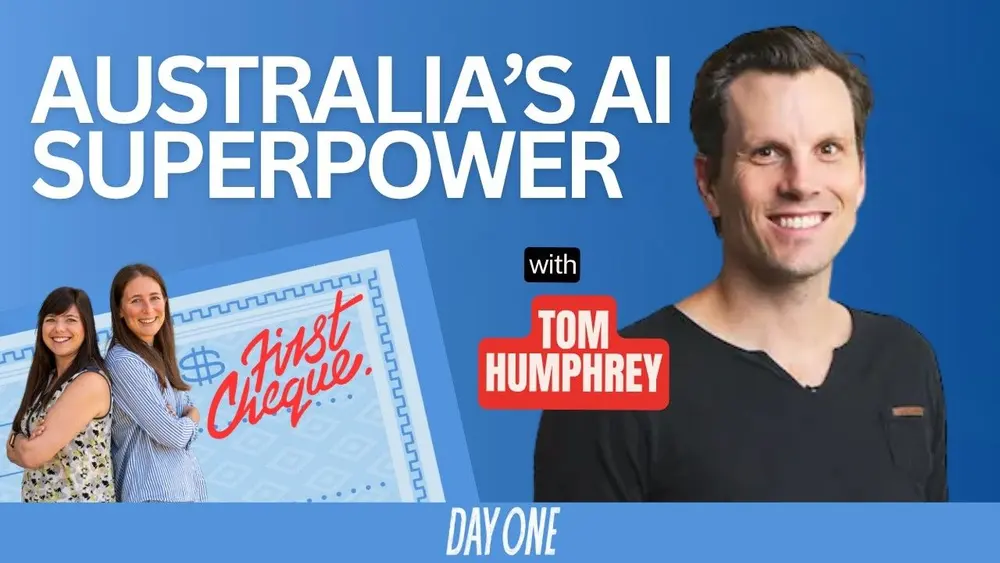
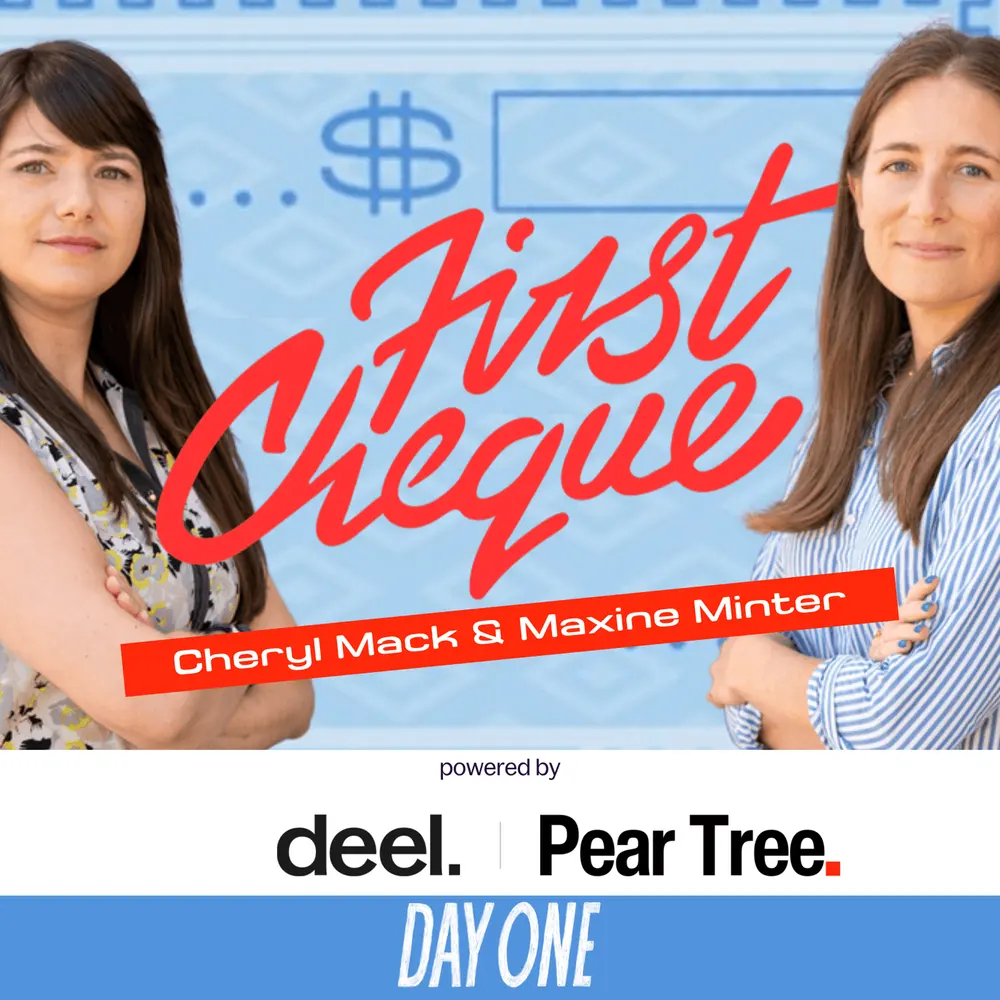 First Cheque with Cheryl Mack & Maxine Minter
Presented by Deel & Pear Tree
First Cheque with Cheryl Mack & Maxine Minter
Presented by Deel & Pear Tree 
 ▶
▶ ▶
▶ ▶
▶