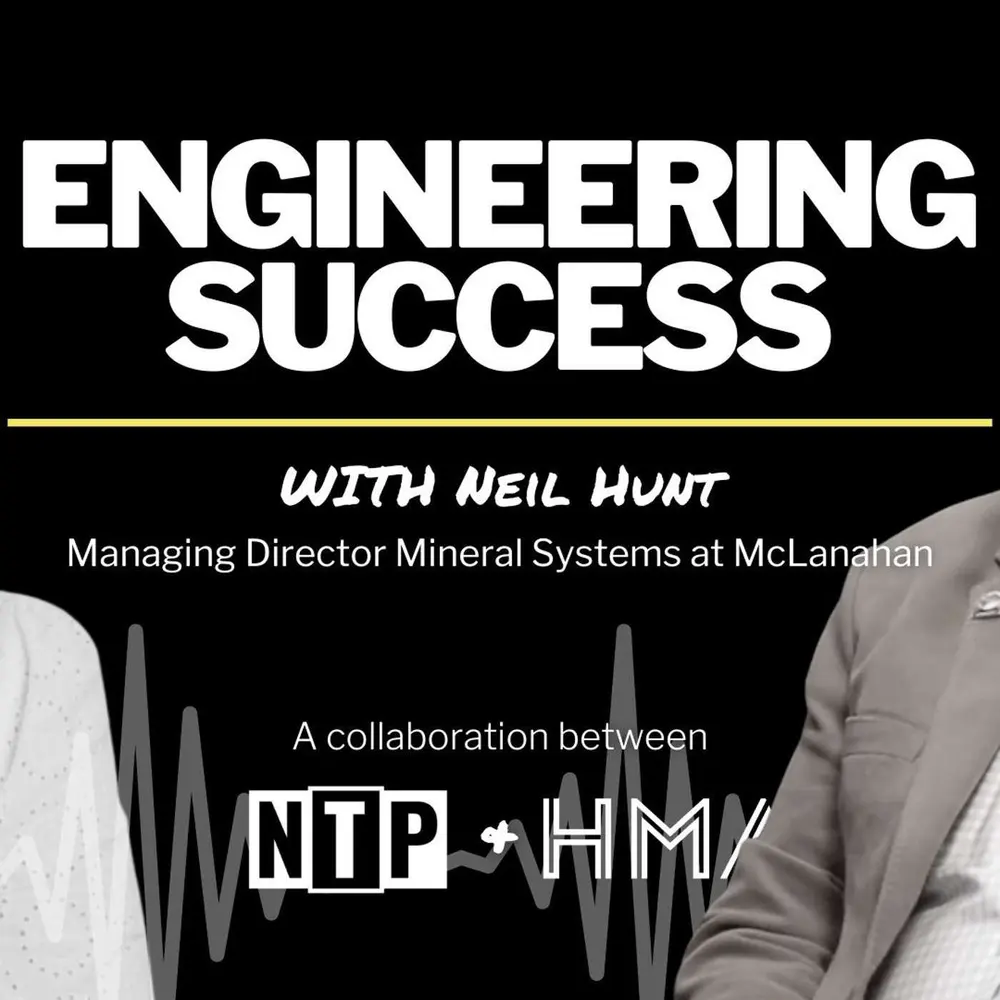
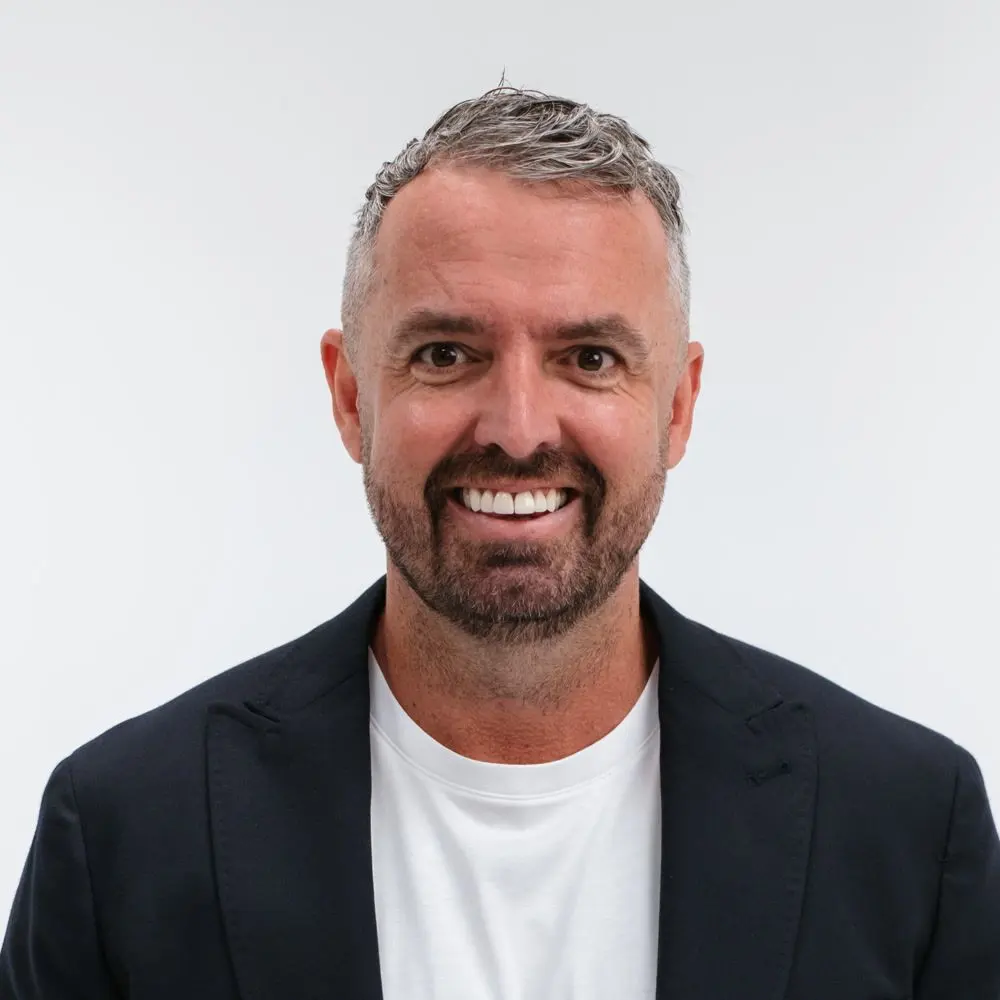
In this episode of Engineering in the Hunter, Melinda Sietsma interviews Neil Hunt, Managing Director of McLanahan Group, for a conversation that blends personal resilience, engineering leadership and an extraordinary company legacy spanning 190 years. Neil shares his unconventional career journey — immigrating to Australia and navigating multiple industry pivots — to ultimately leading one of the world’s oldest family-owned engineering businesses. His story looks at how perseverance, curiosity and the right mentors can shape a remarkable career.
Neil also dives into McLanahan’s 1835 origins and its evolution from a Civil War-era foundry to a global leader in mineral processing and Australian manufacturing. He offers candid insights into building the brand locally, the strength of the Hunter region’s engineering ecosystem, and the strategic shifts redefining modern mining.
About the show Engineering in the Hunter (formerly Engineering Success) is hosted by Melinda Sietsma with NTP Talent founder James MacDonald. It is produced by Day One®, trusted partners in the technology space and the team that helped build Blackbird Ventures' Wild Hearts.
Transcript Search or select a timestamp to jump ▾ 0:00 Speaker A: The business was formed in 1835 in Pennsylvania. You know, that's before Edison invented the first light bulb. 0:07 Speaker B: Yeah. 0:07 Speaker A: It's just incredible to think that our business could have survived as long as it has. It started as a foundry, and then at some point it played its part in the American Civil War making cannonballs. And so it's got this very rich and long heritage as an organization. 0:35 Speaker B: Welcome to the Engineering Success Podcast. My name is Mel Seitzma and I'm a Senior Engineering Consultant here at NTP. Today I have the pleasure of being joined by Neil Hunt. Neil is the Managing Director at McLennan Group. Thanks for joining me, Neil. 0:51 Speaker A: Thank you. Pleasure being here. 0:53 Speaker B: Thank you. I guess I'd like to get started by just talking you through your career journey. Obviously, you grew up in Scotland, here in Australia, and just hearing that journey to date? 1:04 Speaker A: Sure. I guess my career has not been linear, maybe a good way of describing it. Grew up, I was born in Scotland and grew up in Scotland, lived there for until my kind of mid-20s, I guess, until fate would have it that on a trip to Australia 30-odd years ago, I met my now wife and that changed everything. So when I met her, my life, I think, probably went into focus and came into focus, and the journey ended up us living in Australia. And I've been living in Newcastle for the last 20 years. 1:41 Speaker B: Yeah. 1:42 Speaker A: So I've had quite a, a varied career path. After graduating back in the '80s, I had a very brief period in the music industry. I, I was a tour manager for an African band. We toured all over the UK, had some international gigs as well. And I found that really exciting, but also I knew that it wasn't going to be long-term. So after a period of working with it, with this African band, and, and finding some success, I ended up becoming disillusioned, I think, with just the lifestyle and what have you, and got my first serious job, I think is probably how I describe it, working for the British Geological Survey in Edinburgh. And I was appointed as a a seismologist or a trainee seismologist. It was a job that I kind of fell into. I'd studied computing. The opportunity to work in the Geological Survey used a lot of the computer skills and knowledge that I'd gained. And I did enjoy that job. It gave me a lot of opportunities to grow and to learn. But also, I think I was unsure about what the future looked like. And so a few years into that job, I decided, along with a group of friends, to applied to come to Edinburgh as a backpacker from— sorry, come from Edinburgh as a backpacker to Australia. That, as I said earlier, that's when I was out here for— on a 1-year working visa, that's when I met my now Australian wife. I saw her one night, we were out on Friday night in Sydney, and I saw her and I fell in love instantly. Wow. You know, it's one of those situations where I just, I fell in love with her and and met her and got to know her. And we got married fairly quickly after that, probably a couple of years after, you know, going out with each other. And I think marrying my wife Julie crystallized that I needed to get my life back in order in terms of looking at a future and creating a life together. 4:02 Speaker B: Yeah. 4:03 Speaker A: So I guess one part that I missed out was that we married in Edinburgh. 4:08 Speaker B: Okay. 4:08 Speaker A: After meeting her in Australia, she came back to the UK. We married in Edinburgh and we were living and working in Edinburgh and I was still working in the Geological Survey until Julie became pregnant with number one. And so we had some choices to make. Either have a family and raise a family in Edinburgh, in the UK, or for me to emigrate to Australia. And, you know, on balance, thinking about what life I could have had in the UK versus the opportunities in Australia, it wasn't really a difficult decision to make. So I applied at the Australian consulate in Edinburgh, and 6 weeks after I applied was when the approval came through to emigrate, which was a real surprise. Very fast. I didn't expect it to happen so quickly. Neither did my family. And so The decision was really, it was made for us that once I applied and was approved, we had to move very quickly to relocate to Australia. And so my first job when we came to Australia, my wife was 3 or 4 months pregnant at the time. And so I felt the real pressure to find a job. We had some savings, but savings don't last 5:33 Speaker B: Yeah. 5:33 Speaker A: That long. And so I had a quick part-time job before securing a position with BHP Engineering in Wollongong. So we moved to Wollongong and we had 2 children in Wollongong, my eldest son and my daughter. And I worked for BHP Engineering. That was a really informative time for me. I started with BHP Engineering doing seismic surveys and doing a lot of work for BHP Coal, as it was at the time. And I did enjoy the seismic surveys because we were going out, we were— I was getting to know Australia, meeting Australian clients, getting to know Australian geology and so on and so forth. And I found that a really exciting part of my career. But I was also given the opportunity at that time to work with Dr. Peter Gray, who was running the department I was in for BHP Engineering, to work with him and do product development. And he was an influence on me at that time, quite a big influence, before I found myself being made redundant by BHP Engineering when they were acquired by Hatch. So I'm talking, gosh, late '90s, mid to late '90s, BHP Engineering was acquired by Hatch. So that was my first time being made redundant. 7:11 Speaker B: Yeah. 7:12 Speaker A: We had 2 kids at the time. I then moved on from that company of to a company called Celtite. Yeah. Which was a company that was part-owned by 2 European companies, one called Exchem, which was a French company, and Croda, a UK company. And I was brought on to that, to that company Celtite, to just continue on with product development. So the work that started with BHP Engine— with BHP Engineering under Peter Gray, I was able to continue on that same product development with no— without any qualifications in terms of product development, just for me, an ability to— and this is something that I learned. I didn't know that I had it, but it was an ability to envisage a problem and then— well, understand the problem and then try and envisage the solution. And Celtite gave me the opportunity to look at that, look at areas where the company needed to introduce new products, and I was really lucky to be able to have, um, free rein to work on product development for the company. And that was a really enjoyable period of my, my career. Um, ended up applying for a number of patents, which, um, I'd never envisaged would happen as well. But again, because it was, it was seen that the products that was developing, we could commercialize, then we ended up applying for some patents. So that was good. And then I ended up progressing. I was very, very ambitious to succeed, but also to grow my career. Yeah. Especially having, partway through my period with Celltype, we had another child. So I've now got 2 boys and a girl. And I felt it really, a really strong urge to continue to develop and grow and give my kids, you know, some great opportunities. Opportunities that I think that they wouldn't have had if we'd stayed in Scotland. 9:21 Speaker B: Yeah. 9:22 Speaker A: So I ended up being appointed managing director when this happened, and I was— I had a lot to learn, a lot to learn of how to run a company. how to interact with staff, how to manage systems and processes, and also how to manage up with the people you report to. So that was a very steep learning process. And then that company, I got the instruction to sell time when the mining boom really started at the end of the '90s and into early 2000s. So, I put Celtide up for sale and it sold very quickly, and it sold to one of our competitors. Mm-hmm. And I found that period, the whole process of being told to sell the company and then going through the whole preparation for the data room where you've got to have all of the company information financials and so on and so forth, ready for sale. I found that bittersweet, I think, is probably the best way to describe it. It was a new experience for me, and so whilst I— whilst it was a good experience to have, emotionally I was still very tied to making SailTide a success. Yeah. And selling it took an emotional toll on me, I think. I grieved for the— after the company sold, Was sold and I again was out of a job, made redundant. I grieved for that company for about a year because I stepped straight into another role. 11:06 Speaker B: Yeah, and you put your heart and soul into these roles, don't you? 11:09 Speaker A: I did. But not only did I get made redundant, I had to then make all of the staff redundant as well. There was no staff retained under Celtel. So there was about 80-odd staff and I had to let them all go. And that was difficult. But it was also a growth opportunity. Looking back on it, it was a growth opportunity. Yeah. Because it gave me experiences that I never thought that I would ever have. And then 2005, around 2005, I got the opportunity to join McLanahan. 11:44 Speaker B: Yeah. 11:45 Speaker A: So initially, I came on to McLanahan as the operations manager. with all my experience that I'd had previously with Celta and BHP Engineering. I came on as operations manager, still working in the mining industry. And the attraction for me for joining McLanahan was it was a startup company and it was part of a much larger organization. It was part of the McLanahan family, a US family-owned business. And to me, working for a family-owned business had a real attraction and working for a startup business as well, where you could make a difference right from, you know, from the early years, had a big attraction to me. So, I joined McLanahan in 2005 and I've been with the company ever since. Became general manager and then moved from general manager to managing director. So, I've been with the company over 20 years. 12:39 Speaker B: Yeah. 12:39 Speaker A: From startup to where it is today. And I'm still with the company, of course. 12:43 Speaker B: Yeah. 12:44 Speaker A: So that's, that's, that's me pretty much in a nutshell. 12:48 Speaker B: Yeah. Um, you mentioned in that, I guess, one of your key mentors, um, you know, that you've worked with. Um, have there been any other main mentors along the way? 12:57 Speaker A: Oh, that's a good question. Um, there's been 3 influences at the various stages of my career and my life. I mentioned Peter Gray earlier on because Peter saw in me something that I didn't really know existed, and that was getting into product development. So I worked, I worked with him for a number of years, and he was a big influence on me in seeing the advantages of intellectual property to a company and developing intellectual property and seeing that as an asset. And he also demonstrated the, uh, the value of applying for patents as well. So working with Peter, um, was great, and it ended up, you know, the work that we were doing for BHP Colleries and also for BHP Steel at the time, we ended up getting a number of awards. Um, engineering excellence awards, as well as getting an award where one of the products that Peter and I developed became a permanent exhibit at the Powerhouse Museum in Sydney. 14:08 Speaker B: Cool. 14:08 Speaker A: So I'm not sure if it's still there or not because this Powerhouse is moving and it's, you know, their exhibits are constantly changing. But that was, I found that really enjoyable. And Peter taught me a lot about the value of developing and constantly looking at ways of introducing new products. You know, his mantra was innovate or die. And he's, you know, 100% right in that. I think Peter's still in the— he's a consultant that works by himself now, and I think he's still developing products even to this day. 14:46 Speaker B: Yeah. 14:47 Speaker A: The second influence, I think, was a chap by the name of David Stell. So he was the managing director who gave me the opportunity to become managing director. He was retiring. He was moving on, and he said to me, if you want to further your career, there's an opportunity here to become MD. I'm moving on. If you don't go for it, then we will, um, we'll advertise externally. 15:18 Speaker B: Mm-hmm. 15:18 Speaker A: So I really had to dig deep because I, I was full of self-doubt. I didn't think I was, I didn't think I was, um, ready, you know. I didn't think I was qualified, didn't even think I was experienced enough, you know, full of, full of self-doubt. But David encouraged me to put a business plan together to demonstrate to the owners and the board for the future of the business, for, say, the next 5 years. And he really helped me to develop business skills. Mm-hmm. Where Peter helped me with the product development, and that was part of my, my, you know, my career, my early career with Celltite, David had me focus on you know, the financials, contracts, dealing with suppliers, um, dealing with customers, things that I hadn't necessarily been exposed to within Celtic. So it was a very steep learning process to understand, you know, P&L, uh, to understand contracts and what have you. But he, he was a great help to me, and also the, the Croda the UK organisation were a great help to me. And when David, um, when David left and I was, and I was appointed, excuse me, managing director, when David left, there was a, there was a hole for sure. But he saw in me a capability that I didn't think existed. And there's nothing like being thrown in the deep end to try and make it work. Yeah. And I was, I was hell-bent on making it work. And, and I enjoyed that period, although it was a lot of sleepless nights and a lot of reading and learning and understanding how business works. 17:00 Speaker B: Yeah. 17:01 Speaker A: And then of course the last one and the most recent influence has been Mike McClanahan. So Mike is the chairman of McClanahan Corporation and I interviewed with him and he was the one who appointed me as general manager and managing director. And what I've learned from Mike more than anything else is the value of customers and the value of staff. Mike is very, very customer orientated. He instills that philosophy as much as he can throughout the whole business, that if you take care of customers, then business will take care of itself. 17:45 Speaker B: Yeah. 17:47 Speaker A: And when we make a mistake, and as every business does, when you make a mistake, then own up to that mistake. Be open, honest, communicate those mistakes to your customer, and then tell them how you're going to resolve the problems. And out of some of the worst problems that we've had within the company in terms of a product being late or maybe not meeting customers' expectations, out of that adversity, sometimes you get the best long-lasting customer. 18:19 Speaker B: Absolutely. 18:20 Speaker A: Because it's how you actually demonstrate to them the commitment to the relationship. 18:25 Speaker B: Yeah. 18:26 Speaker A: And Mike's also very passionate about employees. He, you know, he wants to, he wants to know individual employees. He wants to know their families and their kids and how they're doing at school and what have you. You know, we wish we could We could franchise Mike in certain ways and have him being the leader of all the different countries and different business units because he's, I guess you'd call him old school in a lot of ways, because there's not too many business leaders in his position that have such a keen interest in employees and customers. Yeah. But Mike certainly does. That's some of the values that he's instilled in me, and I try and transfer that through to the management team and to the company as a whole, that customers are important and employees are important. If you get those 2 things right, then the business will be successful. 19:29 Speaker B: Yeah, and it has a big impact on your internal culture. 19:32 Speaker A: Absolutely, it does. 19:35 Speaker B: Yeah. 19:35 Speaker A: Yeah, culture, I think we have, you know, as the business grows, it's hard to maintain culture. And it does get, you know, your initial dealings with the company, you know, when I first joined, I had, you know, we only had a handful of people. And so you're living and breathing every aspect of the company and you're making decisions on every aspect. And your culture grows from that. But then as you get more involved in other areas of business, what have you, it's, it's difficult. And new people coming on and, and the experiences, culture that they bring in, it's difficult to hang on to the culture we're finding. I'm sure all businesses experience that. 20:18 Speaker B: Yeah, I think if you grow fast, quickly, then it's more challenging, isn't it? 20:25 Speaker A: Yeah. Yeah, so those are the 3, the 3 guys that have really influenced my career, and, and I'm very thankful for it. 20:32 Speaker B: Yeah, sounds like you've had some great influences along the way. 20:36 Speaker A: Very much so. 20:37 Speaker B: Yeah, so kind of looking back at that earlier career, have there been any like key decisions along the way that have really shaped you and the direction that you've taken? 20:47 Speaker A: Oh, I, I think probably the biggest decision that I've made is to is to emigrate. 20:56 Speaker B: Yeah. 20:57 Speaker A: Um, and it— I think it was a tough decision at the time because, um, my parents were alive at the time, my 2 brothers, um, were living in the UK at the time. I was the only one who was married, and, and I was the only one with, um, a baby on the way. So to decide to leave my family and to come to the other side of the world. I think I never, I never for a minute doubted that, that it wouldn't work. Never. I never, never thought that making the decision was a wrong decision. But I, I— it has been a momentous decision in that I, I think I've been far more successful in Australia because of the opportunities that I would have had staying in the UK. And I think the family You know, the family environment that we have with Julian and my 3 children, I think we're a far happier and more cohesive family unit than if we'd stayed, I think, in the UK. Because the UK is tough. 22:06 Speaker B: Yeah. 22:07 Speaker A: It's very competitive. So there's a lot— much higher population, so the jobs are— and job opportunities are are less than they are in Australia. So I think that I probably would have stayed with the Geological Survey, which was the public service, civil service in the UK, public service here. So I'd stayed in the public service. I would have just seen my career go by stages until I was due to retire. And I didn't want that. Yeah. I certainly didn't want that. I felt that I had more to offer. Didn't know what it was, but I think Australia has undoubtedly given myself and my family opportunities that wouldn't have existed if I'd stayed in the UK. So I think that's probably my biggest decision. And I certainly don't look back. I don't look back on it at all. 23:04 Speaker B: Yeah. I never really, like, obviously Scotland's a beautiful part of the world, but yeah, I never really thought about how many opportunities would be there Yeah, from an engineering perspective. So 23:17 Speaker A: absolutely. And, you know, the fact that Australia has got such a booming economy and booming mining economy— you know, I was doing work for— when I was with the British Geological Survey, I was doing work for British Coal at the time, and it was very small. And That was towards the end of the Thatcher years as well, and British Coal ended up just, you know, largely being closed. So I really don't know. I talk about it a lot. Well, not so much a lot, but Julie and I, we talk about it. What would our lives look like if we'd stayed? You know that sliding doors moment? Yeah, yeah. Where you've got a decision, what will we do? And I think staying in the UK would— my life would be totally different now from what it is now. 24:08 Speaker B: Yeah, our weather's nicer here. Um, so you mentioned, I guess, a little bit before about McClanahan, um, being a family business, but I guess differing to some other family businesses, that family history is quite rich. Could you share with us a little bit more about that? 24:26 Speaker A: Be delighted to. Um, so McClanahan, um, this year we, we celebrate 190 years of, of operation. Um, so the business was formed in 1835 in Pennsylvania. Um, and so it— the business has stayed in the McClanahan family ever since, and we are up to 6 generations. Sean McClanahan, who's our, our CEO. Um, and if you think about 1835, when you— when a company is formed, you know, that's before Edison, you know, developed or invented the first light bulb. 25:03 Speaker B: Yeah. 25:03 Speaker A: You know, it's before telegraph, it's bef— it's bef— it's before, you know, um, flight and the internet. And it's just incredible to think that our business could have survived, um, as long as it has. And, and it started off, um, as a foundry, um, making, um, components for the, the railroads as the rail— as as the US went from East Coast to West, over to the California and what have you. So it started as a foundry, and then at some point it played its part in the American Civil War, making cannonballs. And so it's got this very rich and long heritage as an organization. And Working for a family company has a special dynamic, especially a family-owned business where the family members are actually still in the business and leaders of the business and shaping the strategy and direction and so on and so forth. The other thing that's fantastic about working in a family-owned business is that certainly in my position and the other employees as well, they have direct access to the family members. 26:23 Speaker B: Yeah. 26:23 Speaker A: You know, so if you're looking at that whole decision-making process, there's no shareholders to answer to. So, you know, if you're looking for, say, capital or, um, you know, or other important decisions that need to be taken, the, the process is, is, is direct and it can be very quick as well. And I like that. 26:46 Speaker B: Yeah. 26:46 Speaker A: I like the fact that you have, um, the ability to talk direct to the, to the owners of the company, uh, and, and involved in that whole decision-making process. Yeah, 26:56 Speaker B: it's very impressive to have 6 generations in a business and not to be sold though, isn't it? Like, it's rare that you hear of that. 27:02 Speaker A: That's true. And, you know, if you talk to Mike or Sean, um, they are regularly contacted by some of our competitors and larger organizations looking to, to acquire the business. And Mike will openly tell you or anyone that the business is simply not for sale. You know, it's one of those almost cast-iron guarantees you can get from Mike McClanahan and the McClanahan family that it will stay within the McClanahan family for as long as the business continues. 27:38 Speaker B: Yeah. 27:39 Speaker A: And that's reassuring because Anytime, as you would know, anytime a business is sold, it's very disruptive. Mm-hmm. Because you always go through, you go through change, you go through changing employee numbers, or you go through changing culture or direction or what have you. So it's very disruptive when a business is sold. And to have that stability, not only for our employees, but for our customers, to know that the equipment that they buy from us today, McLanahan will continue to service it. That the equipment for the life of the equipment, there's not too many businesses know what their future looks like as well as we do. 28:21 Speaker B: Nice and stable. 28:23 Speaker A: Yes, absolutely. Yeah. Brings that stability. 28:25 Speaker B: So you mentioned earlier, I guess, have been established in Australia since is it 2003? 28:31 Speaker A: Yes. 28:31 Speaker B: Yeah. 28:32 Speaker A: Yeah. 28:33 Speaker B: Yeah. 28:34 Speaker A: So it was yes, you're right. It was formed as McClanahan Corporation Pty Ltd, the Australian division was formed in Newcastle on July 1st, 2003. The Australian operation was the first overseas entity for, for McLanahan. Up until that time, it had essentially been a domestic US company, although exporting and, you know, having international customers. There was no overseas entity. So we were the first entity. And And why Newcastle? Well, largely because of the mining industry. Um, McLanahan as a company had been exporting equipment to Australia since the '60s. 29:22 Speaker B: Yeah. 29:22 Speaker A: And there had been several attempts at trying to establish the brand through, um, through dealers. So there's a number of companies that had the license to sell equipment in Australia. But all of those ventures were unsuccessful for various reasons. Yeah. So the McLanahan board in the US decided around 2003 that the only way to tackle the Australian market was to, was to form a company and to have Australian employees. 29:56 Speaker B: Yeah. 29:57 Speaker A: And The coal industry was in the early 2000s more, you know, it started booming, and the decision was to open an office in Newcastle. And it's been a great decision. 30:13 Speaker B: Yeah. 30:14 Speaker A: I must admit, selfishly speaking, opening an office in Newcastle was fantastic and still is, but we've grown since then. We then established an office in Queensland, initially in Brisbane, and then we moved that to Mackay. We established an office in Western Australia, in Perth, for the Western Australian market. And we've also established an office in China. 30:43 Speaker B: Yeah. 30:43 Speaker A: For sourcing. And we're responsible for the operation in Chile as well. So, from a small Newcastle company, You know, we've grown, we've, we've been successful in our own right and we've grown almost yearly. Some years have been a little bit flat, but almost every year we've grown. 31:01 Speaker B: Yeah. 31:01 Speaker A: Um, and, and I'm very proud of our successes. Yeah. Very proud of what we've achieved. 31:06 Speaker B: Yeah. And I'm assuming there's a whole strategic, you know, view behind having that whole APAC region and as well, you know, with China and other locations there. 31:18 Speaker A: Yes. So APAC was very much— China was a focus for us early in the establishment of the business because of the need for Australian mining technology. And so we were designing, and still are designing, equipment for coal mining, for instance, for coal processing. And we had a large export market in China. But only for a limited period, because what the Chinese do best is that they find a way of producing anything en masse at a very low and competitive price. So initially, we were selling and exporting our equipment, but we were also exporting our technology. And it wasn't too long before that technology was then being produced out of China. And so we saw the market that we had in China dry up over about a 5-year period. Successful for about 5 years and then very quickly dropping off. 32:20 Speaker B: Yeah. 32:20 Speaker A: But other areas have taken over from there. So for instance, Indonesia is a very active market for us. And LATAM, LATAM, you know, has enormous opportunities for us as an organization, which fits, I guess, partly into our diversification strategy. So we talked earlier about McClanahan Industrial starting out in the coal industry, but, you know, we understand that the coal industry is under increasing pressure. And so part of our business plan, current business plan, is diversification to look at other market streams. Yeah. I'd say 5 years ago, perhaps the majority of our revenue in spare parts was coming from coal. Probably only now 50%, 45-50% is coming from coal industry. The rest of it's coming from the minerals market. 33:23 Speaker B: Yeah. 33:23 Speaker A: And that diversification has really followed those markets either into Asia or into Latin America. 33:32 Speaker B: Yeah. Which I guess makes the whole business more stable when you're in more than one market anyway. 33:38 Speaker A: Oh, 100%. Yeah. see the opportunities that exist within mineral are going to outlast the opportunities in coal. 33:46 Speaker B: Yeah. 33:47 Speaker A: So, you know, we're very excited about what the future holds for the company because the world is demanding increasing supply of minerals. And our equipment is designed, you know, to process that. 34:02 Speaker B: So when you first joined McLennan, obviously that was getting established in the Australian region. What were some of the key challenges that you faced at that time? 34:12 Speaker A: There were, there were a number of challenges which really weren't apparent until I'd been with the company for maybe a year or so. But the business model at the time was for McLennan Australia to buy US-manufactured equipment. So US specified equipment, US manufactured, and then fully imported. So our task in the early days was just to go out and sell as much equipment as possible and sell the equipment at a price that the market would bear. And part of the reason for selling equipment is to get the population out there, but also the equipment which we design and manufacture generates spare parts. 35:06 Speaker B: Yeah. 35:07 Speaker A: And so, um, we want to be able to keep the equipment operating for as long as possible with our customers, and we want to be able to have that spare parts business to help with our revenue. Whilst the equipment designed and manufactured in the US suited the US market, We discovered fairly quickly that imperial, obviously imperial versus metric, is not ideal. Also, we're tied to an exchange rate. Australian customers were purchasing the goods from us in AUD, and then we were then placing orders in USD, and then we were we were subject to exchange variations and fluctuations. So that, that was a risk. Um, and then, and then lastly, um, not having any Australian content in, in terms of, um, in terms of Australian standards— steel standards, electrical standards, hydraulic standards— it was all coming from, from the, from the US. So, um, The business model was, I understood the business model of trying to get a population of equipment into Australian customers as quickly as possible. But in reality, what Australian customers were looking for was Australian-made equipment. Mm-hmm. Metric, locally serviced, locally sourced. And so we moved away from importing US equipment over about a 5-year period. We still do import some equipment. But what that meant for us is we had to, uh, we had to establish our own engineering, strong engineering here, our own supply chain. 37:02 Speaker B: Yeah. 37:02 Speaker A: Our own purchasing and what have you. So that's, that's driven a lot of the necessary changes within the business. So yeah, some of the challenges certainly are, in those days, were, you know, trying to establish a brand, um, without having any local manufacturing presence, not having any warehousing for spare parts, limited field service. All of that had to be established. 37:30 Speaker B: Yeah. 37:31 Speaker A: And probably the biggest thing that kept me awake in those days was cash flow, because you're trying to do it all. 37:40 Speaker B: Yeah. 37:41 Speaker A: You know, you're trying to do it all. You're trying to give the customers equipment, you're trying to have spare parts on the shelves, you're trying to manufacture, paying staff, paying suppliers. I had a lot of sleepless nights. And the fact that we were the first overseas entity for the McClanahan family, they were still learning on how to interact with us as well. You know, they very much wanted us to be on our own two feet as quickly as possible and to generate our own revenue and to generate profits for the for the corporation. Um, and it was a learning process for them as much as it was a learning process for us on how much help and assistance, financial assistance, do we need to get to, to meet our goals. Yeah, that probably took, probably took about 7 years, I think. It took about 7 years for us to, to be able to stand on our own 2 feet. 38:34 Speaker B: Yeah. 38:34 Speaker A: And we have done ever since, of course. 38:36 Speaker B: Yeah, yeah. Very good. Lots of big challenges. Yeah. Um, as far as, I guess, the Hunter as a region, um, what do you see as the key advantages of building a team here in the Hunter? 38:49 Speaker A: Well, the Hunter is very livable, isn't it? I mean, where we live, it's— it is, uh, is a great part of Australia. Um, I, I think that our proximity to you know, to the major capitals has got some big advantages. The fact that our, you know, our employees and staff, if they live in Newcastle, they have a relatively short distance into work compared to— look at my youngest son, he lives in Cronulla and he works in Western Sydney. It takes him 2 and a half hours each way to get to work. 39:31 Speaker B: Yeah. 39:31 Speaker A: Whereas we don't have that unless you're, I guess, living in the Central Coast, you know, maybe that's the exception. But living and working in Newcastle, I think, has some big advantages to places like Sydney or what have you. I think that the Hunter and Newcastle has a fantastic university. It's recognized as a world-class university and it's and it's creating and generating a lot of very talented individuals. And if you look at our engineering team, a lot of our engineering team have gone to Newcastle University. Mm-hmm. And so I think having the, the, the, um, such a fantastic university close by is a big advantage to us. Um, basics like house pricing, if you look at housing in Newcastle compared to the major cities, um, it is obviously very expensive. Yeah, compared to other countries, but compared to other areas of, of, um, Australia, housing, I, I think, is still, um, attractive. 40:40 Speaker B: Yeah. 40:41 Speaker A: And so if you look at in terms of a package and having a, a local airport, you know, I do a lot of, I do a lot of international and national travel, and having a local airport is a big advantage as well. So I think Newcastle really has, has, um, is a great place to live, great place to live a family, to raise a family. And I think the, the opportunities here for industry, um, are tremendous. 41:07 Speaker B: Yeah, yeah, couldn't agree more. 41:09 Speaker A: Yeah, yeah, we moved from Wollongong, as I said, in 2000, and I, I was kind of out of— when we first looked at moving from Wollongong. I saw Wollongong as a more progressive city at that time, and I thought Newcastle, um, you know, hadn't long gone through the steelworks closure. 41:28 Speaker B: Yeah. 41:29 Speaker A: Um, and Hunter Street was— you don't remember what Hunter Street was before, you know, 10, 15 years ago. Hunter Street was a mess. And you think, hmm, do we really want to come to Newcastle? But You know, it's just such a, it's such a livable city now. 41:45 Speaker B: Yeah, and I think people often compare Wollongong and Newcastle because of the ports and the industries and those similarities between the two. But yeah. 41:54 Speaker A: Yeah, you're right. And I think that, I think Newcastle, the investment in Newcastle recently, um, has really paid dividends. It's a, it's a great place to live. 42:04 Speaker B: Yeah. 42:05 Speaker A: And we saw that during COVID didn't we? You saw that, the amount of people who wanted to relocate out of places like Sydney and Melbourne and come and live in the Hunter. I think that's a clear demonstration that it's a good place to live. 42:18 Speaker B: Good lifestyle. 42:19 Speaker A: It is a good lifestyle, I agree. 42:20 Speaker B: You kind of, I guess, touched a little bit around local manufacturing before. How do you leverage off some of those other local manufacturers in the area and just, yeah, how you build your business? 42:33 Speaker A: We, uh, we're part of, of HunterNet. 42:36 Speaker B: Yeah. 42:37 Speaker A: Um, and so we use, um, you know, industry bodies such as HunterNet, um, for, for great networking opportunities. And, you know, we're known certainly as a local manufacturer, and so, and, and a fairly, you know, a fairly large company within the region. And we use the that we're hunting it and we use the local manufacturing networking that we have for our products, whether it be fabrication, whether it be for machining. Particularly, you know, if we've got a customer with a breakdown situation and they don't have any spare parts, for instance, and they're looking to have a very quick turnaround on some machine parts or manufactured parts, The Newcastle and Hunter region has that capability in spades. 43:32 Speaker B: Yeah. 43:32 Speaker A: You know, and we've developed some really great relationships with local Hunter companies that understand our business, they understand our payment terms, our quality standards, our delivery standards, our packaging. And so if we turn to them and say, look, we've got a problem, There's numerous examples where local businesses have dropped everything for us to work on a particular problem, whether it be over a long weekend or, you know, over a weekend, or even bumping other customers to one side to, to help us out of a pickle. And you get that because of, um, the community within, within the Hunter. I think that the Hunter community is really strong. Absolutely. And the networking is really close. You know, I've got some fantastic friends that I've come to know through just local Newcastle networking. And, you know, friends that may be suppliers or competitors, what have you, but it's just that shared common service that's provided within the Newcastle community. 44:46 Speaker B: Yeah. And I think even though people are competitors, they'll still help another person out because of that community spirit sometimes as well. Like— 44:54 Speaker A: And it's small too. Yeah. And that has advantages where if you have a problem and with a particular, you know, say it's a breakdown situation with a customer, the chances are that the company that we're dealing with will probably have the same customer. And so it's as much a reflection on them to try and assist with some spare parts, with some service, or deliveries, or whatever it is. And I think that if you were in a larger metropolitan area, that community I don't think would exist to the same extent as it does in the Hunter. 45:33 Speaker B: Yeah. 45:33 Speaker A: And I think the Hunter appreciates and understands. Obviously we're in mineral processing, so we're attached to the mining industry. And the Hunter understands the importance of mining to this area. 45:45 Speaker B: Yeah. 45:46 Speaker A: May not, you know, in Canberra or some of the other cities don't appreciate what mining does for Australia and for the world, but certainly in the Hunter people understand the importance of mining. 46:01 Speaker B: Yeah, I think here we've got that really good appreciation of the whole let's call it ecosystem, probably needing for better words, but yeah, yeah, you know, different industries need other industries. 46:12 Speaker A: Agreed, agreed. Yeah, and we have that depth of knowledge and experience within the Hunter in such a small area that, um, yeah, it's very easy to do business here. 46:24 Speaker B: Yeah, yeah. But if you kind of even look at, you know, renewables, a lot of those projects need some type of mineral you know, for the manufacture of some of those renewable products. So yeah, 46:35 Speaker A: that's 100% right. But also we talked, you know, about employees and the depth of talent within the Hunter and, you know, the Newcastle University. There's a lot of, a lot of experience and talent within Newcastle. So when we're recruiting a new position, for instance, invariably those new positions are being filled by local people. 47:00 Speaker B: Yeah. 47:00 Speaker A: Either from Newcastle or the Central Coast or, you know, or up the valley. But we've had a number of employees come to us from interstate, and that's— I'd say that's infrequent. Most employees are coming from this region. 47:17 Speaker B: Yeah, yeah, we've got some good quality people here. 47:20 Speaker A: 100%, yeah. Yeah, 47:21 Speaker B: yeah. I guess from your perspective, keen to hear about around how engineering and I guess even innovation in technology are affecting, you know, mining, aggregates, those type of industries. 47:36 Speaker A: Yeah, I think I'll probably refer back to my earlier comment about my time in BHP Engineering, about innovate or die. I think that The mining industry has been very good for McLennan as a division. So we have a number of divisions as part of the corporation, and Mineral Systems, which is what our division is, I think has got a very strong future ahead of it. But in order to encapsulate that that future, I think we have to be constantly innovating. 48:19 Speaker B: Yeah. 48:19 Speaker A: And, you know, some of the projects that we're working on through water, we've got a number of pieces of equipment for what we classify as water management, and that's for tailings management. And we're looking at maintenance practices and life of equipment in terms of how do we make that How do we make certain components within our equipment last longer, or how do we make it more maintainable? Last week, for instance, we launched a product at IMARC in Sydney, a mining conference in Sydney, for tailings fill filtration. And we see big advantages to mining operations in minimizing their downtime. Mm-hmm. So every mining operation has to go through a period of maintenance. But anytime that they're maintaining equipment and not producing it, then it's, you know, they calculate that lost opportunity dollar. So if we can make our equipment more maintainable, that's a big focus for us. And also another large focus for us is on the innovation side, is on wear parts, on making equipment last longer. 49:33 Speaker B: Yeah. 49:35 Speaker A: We see mining operations becoming larger. We see the throughput that they are producing every year is increasing. Larger and larger operations, larger and larger equipment required for that, and so wear becomes a big problem. So developing new wear materials and applying those wear materials to our equipment, I think, has some very key advantages to our customers. And then lastly, removing employees and workers from the workface, I think, is very important in terms of safety. 50:14 Speaker B: Yeah. 50:15 Speaker A: So, remote monitoring is something that we're very keen on implementing with our customers so that they can see the operation of their equipment, make decisions around about the operations of their equipment, without having to stop that equipment or get someone in there with tools or what have you to take it apart. So remote monitoring, remote access is very important for us and important for our customers. AI is, you know, a few years ago it was big data. So if you went to any conferences Because we're all talking about big data and this is the next big thing. And I think AI is just a subset of that and a generation of data because we, as an organization, as an industry, sorry, have been generating large amounts of data. But I think it's fair to say that a lot of people didn't really know what to do with that data. Yeah. Because there's so much being produced every day. I think that the introduction of AI and the growth of AI, I think, is one of those developments that will help operations understand, better understand how to maximize their operation, how to reduce costs, how to increase yield, and so on and so forth. So I think there is a lot of concern that AI will do people out of jobs. And I think that's, you know, a likely consequence, but I think it's also a tool that can, can be— have some great advantages, um, to our companies like ours as well as to the mining operations. 52:00 Speaker B: Yeah. 52:01 Speaker A: And we're just at the, you know, we're just at the, the cusp of, of AI, uh, and it's really, it's really exciting to see where it's going to go. 52:11 Speaker B: Yeah, I think even the last 12 to 18 months there's been so many changes, so it's an interesting I 52:18 Speaker A: know, I know. But, you know, we're exposed to it through, through social media. I mean, it's getting really hard now, isn't it? It's getting really hard to, to distinguish on videos and stuff what's real and what's not. 52:32 Speaker B: Yeah, yeah. It'd be nice to have some policing, I think, around a watermark or something so you knew it was definitely AI. 52:38 Speaker A: Yeah, exactly. But it— but I mean, who knew that when the development of the internet Who knew that the internet would be used for scams and for taking advantage of people and so on and so forth? And AI, I guess, has— you're right about that policing and control because if it's left unchecked, it certainly will be used for evil things. 53:04 Speaker B: Yes, unfortunately. Yeah, yeah. I think you've touched on this a little bit, but kind of looking at the mining industry over the next 5 to 10 years, Where do you see it heading? 53:14 Speaker A: Yes, that's a really interesting question. I think you can split it into 2 areas. If you look at the coal industry, particularly from a local level, from Port of Newcastle, the coal industry is booming in that production is up, exports are up, we're exporting more coal coal currently than we have done at any other time in our history. So coal is a necessary commodity. It's in demand. And it will be at least for the next 5 years, out to 2030. And so there's a strong— certainly there's a strong need to continue on with mining, but coal mining in this region. But if you look at it, There's no new mines being approved, even though there is resource available, untapped resource. There's no new mines being approved. And so what that will inevitably mean is that there'll be closures and there'll also be expansions. So there will be less mines producing coal, say, to 2030, but there'll also be high production because of those expansions that are that are currently being approved. Beyond 2030, yeah, there will be a lot of redundancies within this area. There will be job closures— sorry, mine closures and job losses in the region. But if you offset that against critical minerals, for instance. So in 2024, last year, the New South Wales government released their critical minerals strategy. And that's concentrating on copper, on silver, on cobalt, on rare earths. And there are enormous opportunities in mining on critical minerals. Particularly if you look at the recent agreement that was signed between the US and Australia for investment. We had Anthony Albanese famously with Trump signing the document where there's a new deal being signed. We don't know the detail of that deal currently, but we do know that there's a large amount of investment coming from the US in the Australian space. mining space. So that presents a lot of opportunity for increased mining, for increased production, for onshore processing. We should be looking at how we value-add instead of just shipping everything offshore as a raw material. 56:13 Speaker B: Yeah. 56:14 Speaker A: Investment into value-add. And it also gives us opportunity with the mine closes, closures, it gives us an opportunity to look at how to reuse that land that's available. 56:30 Speaker B: Yeah. 56:31 Speaker A: Whether that be for redevelopment of farmland, whether it be for new industrial hubs, and so on and so forth. So I think our future within this region is strong. 56:42 Speaker B: Yeah. 56:42 Speaker A: There will be a shift away from coal. That's inevitable. But I think that the interest, the global interest in critical minerals is driving the demand for more production. And Australia is blessed with so many of the critical minerals and rare earths that are needed. 57:06 Speaker B: Yeah. 57:06 Speaker A: What we're lacking in is any government commitment to things like onshore processing. If we, if we can, if we can get that right, then I think that my children and my grandchildren would, you know, potentially have a long future. Yeah. In the mining industry in Australia. 57:27 Speaker B: Yeah. 57:27 Speaker A: I'm very positive about what the future looks like. 57:29 Speaker B: Yeah, yeah, there's definitely lots of potential in that mineral space. Yeah, yeah. You spoke earlier certainly about the local community here, the manufacturing community. As a business, McLennan, are involved in some, I guess, giving back to communities— Spin for Kids, CEO Sleepout. How important are those events to you personally? 57:52 Speaker A: Oh, that's a— yeah, very important. I see that, um, you know, we are a, we are a Hunter business, uh, and, you know, our employees are based, uh, here in the Hunter and Um, you know, whether it be Westpac Rescue Helicopter, so we, we, we've sponsored that. Yeah. And in fact, um, I, um, salary sacrifice some of my salary towards the Westpac Rescue Helicopter Service because I think it's very important. Um, or Spark Helmore, you know, the, the marathons, we, we participate in those. Or Spin for Kids, you know, those things that you mentioned. I think it's really important for business, um, to embed itself in the community for a couple of reasons. One is we want to be seen, um, as an employer of choice. 58:50 Speaker B: Yeah. 58:50 Speaker A: You know, we want the name and the logo to be recognizable within the Hunter region for people to— from, you know, being at university or school, what have you, understanding, uh, that this is a— we are a local company, understanding who the McLanahan brand is. And so being active in that local community gives us, uh, gives us a presence. Um, but it's also in terms of just, um, you know, good governance, to be able to give back, I think, is really important. 59:25 Speaker B: Yeah. 59:25 Speaker A: It's not all about profit. It's not all about profit. Yeah, you've got to be able to recognize that we have a responsibility, I think, as a local employer. 59:36 Speaker B: Yeah, 59:36 Speaker A: to be engaged within the local community and to— excuse me— and to sponsor, you know, local events. 59:43 Speaker B: Yeah, yeah. And there's some really important causes there. 59:46 Speaker A: 100%. 59:47 Speaker B: Yes. Yeah, yeah. So you mentioned before about your involvement with Hunt in It, um, obviously over the years you guys have been involved with Huntinet and the HMA Awards and actually won a couple of awards, which are— 60:00 Speaker A: Yes, we have. 60:01 Speaker B: So I think, what have we got here? The 2018 Export Award for Huntinet. You're recognized as the Manufacturer of the Year and Excellence in Marketing winner in 2018 at the HMA Awards as well. Why are these awards and events so important for local organizations? 60:22 Speaker A: Well, I think the fact that we've won awards and been recognized for the work that we do, I think, you know, that's such a privilege because, you know, this is work that we would do regardless of whether we were going in for an award or not. So to recognize, you know, the projects we've been involved with, successful projects, I think— is tremendous. And it also gives credibility. It also gives credibility to our staff. 60:53 Speaker B: Yeah. 60:53 Speaker A: You know, when they're involved in a big project. And then to win an award for that is just the icing on the cake. So I think that from selfishly being recognized for that work is nice. But also, as we've mentioned earlier, We want to be seen as an employer of choice. 61:14 Speaker B: Yeah. 61:15 Speaker A: We have a lot of competition in this region from much larger companies and organizations, you know, like Caterpillar or Komatsu or Sandvik. You know, those are just some companies that are in the mining industry and their brand recognition is very strong. Whereas the MacLanahan brand may not necessarily be instantly recognizable. So being part of those, um, awards gives us a marketing edge and gives us exposure that we may not necessarily have. And so they're very important to us. 61:55 Speaker B: Yeah. 61:55 Speaker A: Not only from a, from a local level, but, you know, from domestically as well. If, you know, for a New South Wales award, award or even for a national award. We recently went in for a national award, um, and I attended a ceremony in Adelaide. Unfortunately, we didn't win, but still, it was nice to be in that mix of other organizations. Um, 62:18 Speaker B: even just to be shortlisted in some of those big awards is still a really good achievement though. 62:22 Speaker A: It's validation of the work that we would do, you know, every day of the week that, 62:28 Speaker B: yeah, 62:28 Speaker A: somebody sees that as important, and that's great. 62:31 Speaker B: Yeah, 62:31 Speaker A: it's really nice to have your industry peers recognize the work that you're doing. 62:35 Speaker B: Um, and I guess just you on a personal note, when you're, you know, you're not at work, what do you do in your spare time and how do you unwind? 62:43 Speaker A: Um, well, um, recently in the last 15 months, we've become grandparents with our first granddaughter, so So, you know, we are trying to spend as much time with her and also support my eldest son. That's important that, you know, we're in their lives supporting them. And so that gives us a lot of pleasure and a lot of joy in being, you know, being part of that family unit. My other 2 children haven't found the partners yet. Yeah. You know, for grandkids, but, you know, fingers crossed that'll come. I've talked about my wife a few times during the discussion, but my wife and I, we love our motorbikes and we love our MotoGP. And in fact, only just last week we came back from a trip to Malaysia. We were watching the MotoGP in Kuala Lumpur. We just love it. Yeah. We just love the whole experience of being with other, I guess, like-minded geeks that, you know, we have our team support or we have our rider support. And it gets us traveling, you know, we really do enjoy traveling. In fact, we've already booked up our next trip for MotoGP next year in Europe. Yeah, we've got that already planned, and that's just something that, that my wife and I really like to do, um, and we really, we really enjoy it. Apart from that, um, you know, then the normal looking after the garden and gardening and other things like that. But 64:35 Speaker B: yeah, 64:36 Speaker A: um, yeah. 64:37 Speaker B: Awesome, thank you. 64:39 Speaker A: I hope that's, I hope that's Answered your question. 64:41 Speaker B: Yes, yes. Thank you so much for coming in and having a chat. I really appreciate your time. 64:47 Speaker A: Thank you. It was lovely coming in and spending time with you. Appreciate it. Thank you. 64:51 Speaker B: Cool. Awesome. Thanks. 64:52 Speaker A: Thank you. No transcript lines match that phrase. Try fewer words.

 ▶
 ▶
 ▶