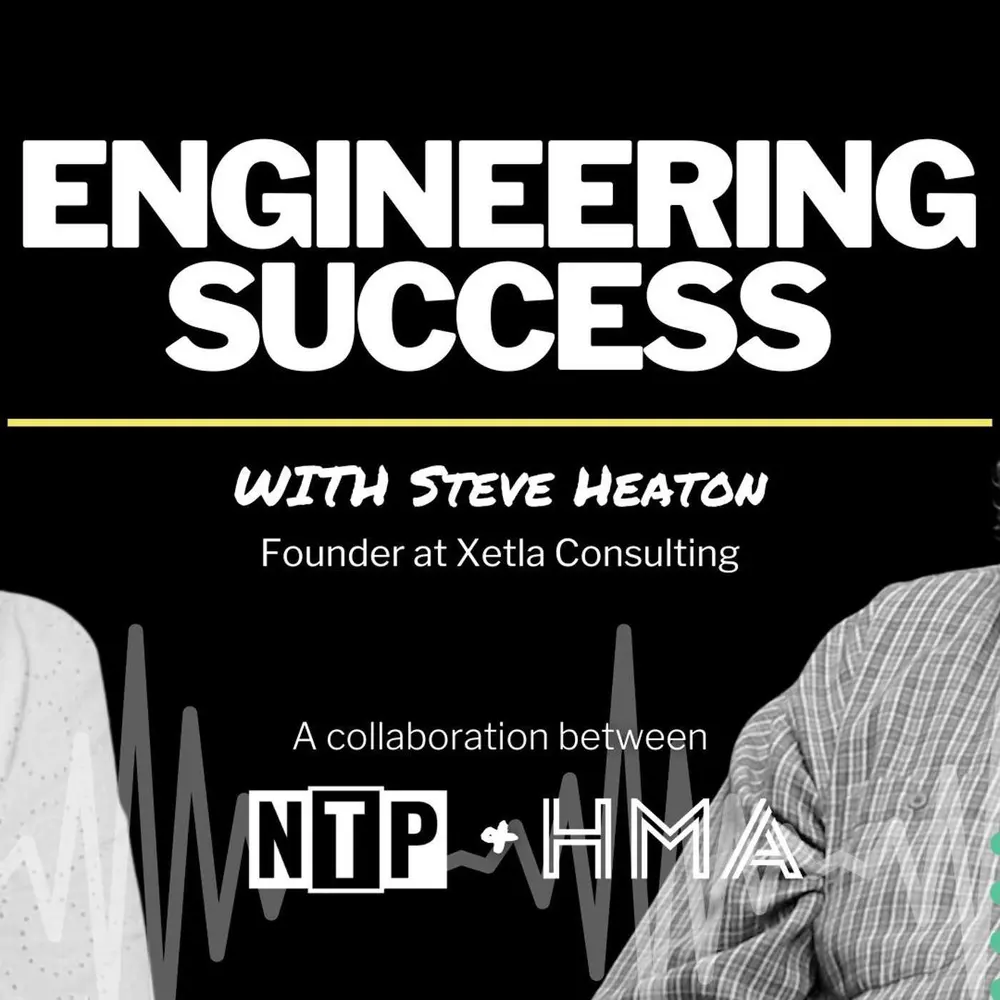
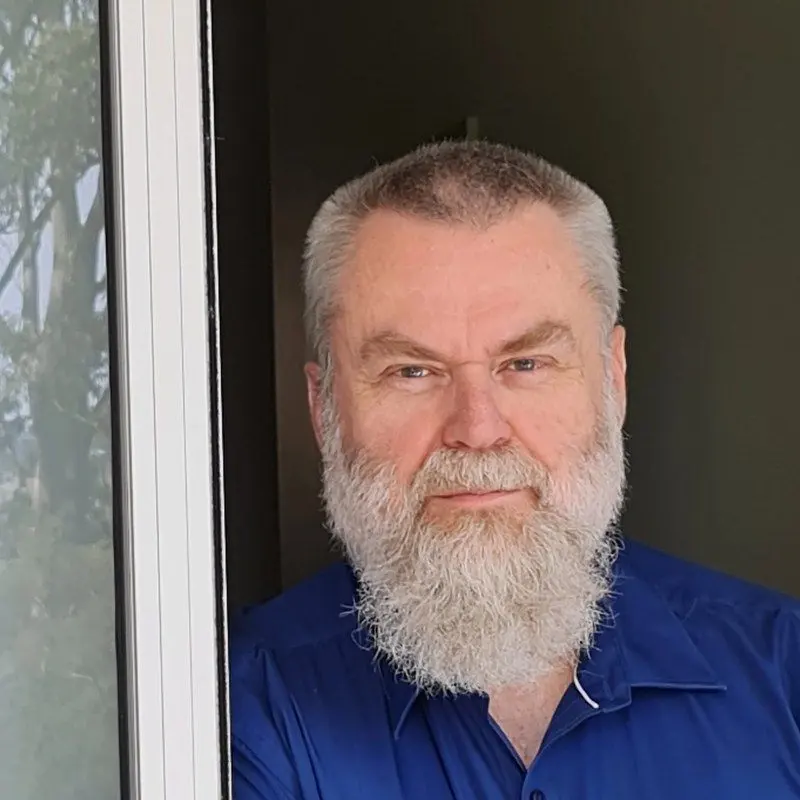
Steve Heaton, founder of Xetla Consulting and co-inventor at STAR Scientific, demystifies the messy, exhilarating reality of R&D. In conversation with Melinda, Steve traces his winding path from Unix systems and project management to astronomy, particle physics and muon-catalysed fusion, showing how curiosity compounds into career-defining opportunities.
He makes the case for incremental progress when parameter space is uncertain, and why diverse teams outperform look-alike groups. Steve shares practical tools for getting unstuck, designing smarter pilots, and knowing when you’ve squeezed the science enough to start engineering. He also covers how to prep for patents, avoid public-disclosure traps, make expensive time with lawyers count, and what the future of energy means for the Hunter’s logistics, workforce transition and supply-chain opportunities.
About the show Engineering in the Hunter (formerly Engineering Success) is hosted by Melinda Sietsma with NTP Talent founder James MacDonald. It is produced by Day One®, trusted partners in the technology space and the team that helped build Blackbird Ventures' Wild Hearts.
Resources
Links and resources The Soul of a New Machine — Tracy Kidder The Particle Garden — Gordon Kane How Big Things Get Done — Bent Flyvbjerg & Dan Gardner NTP Talent Day One Transcript Search or select a timestamp to jump ▾ 0:00 Speaker A: Incremental is not a dirty word. 0:01 Speaker B: Yeah. 0:02 Speaker A: Sometimes there's this big rush towards leaping ahead. Yeah, incremental steps isn't a bad thing when there's a huge pool of undefined parameter space. There's a lot of uncertainty. Step by step can pay off, but it requires nerves of steel and blood running cold at times just to be able to hold the true path, as it were, and pursue it that way and not listen to the other people going, ah, we're ready, let's just go. 0:36 Speaker B: Welcome to the Engineering Success Podcast. My name is Mel Seetzma and I'm the Senior Engineering Consultant here at NuiTech People. Today I had the pleasure of being joined by Steve Heaton. Steve is the founder of Zettler Consulting. Thanks for joining me, Steve. 0:52 Speaker A: Thanks very much for having me, Mel. 0:53 Speaker B: I'd like to get started by talking a little bit about your background and, you know, why you chose to follow the path at uni with some of the subjects or courses that you picked. 1:02 Speaker A: Sure. The initial tertiary education side of things was programming. So I actually started work here in Newcastle in Darby Street coding for a computer company that led me on a particular path. But I suppose more applicable to this conversation, Having found myself wanting a more enriching educational experience, I suppose, and looking for something to keep my mind occupied, I found an online astronomy short course run by Swinburne University. And it was, I think it was a 4-week course, just short, simple, on astronomy. Yeah. Always been fascinated by space. So I thought, oh yeah, I'll give that a go. Really enjoyed it and was fortunate enough that course was run by Dr. Sarah Madison, who's awesome. Got to the end of that course and went, really loved it. And she went, yeah, I could tell you really loved it. Do you want to come and do the full course? And I'm like, I'm not sure. I've been out of academia for so long, whether I've got the chops, if you like, to cut it from an academic going back into study point of view. She said, well, write me an essay. and/or mark it, and we'll see what your level's like. She said, yeah, it wasn't great, wasn't bad, away you go. So at that point, went off to do astronomy. It delved into a whole broad range of topics which I really enjoyed, including astrophysics. That crossed over through happy circumstance into where I ended up working, still work, for Star Scientific doing muon catalyzed fusion. I don't think we've got time to go into the joys of muon catalysed fusion, but having that astronomy background, particle physics and the like, stood me in a good position to be able to carry that through. So yeah, the academic and the work career path overlapped in ways I couldn't have predicted. So I suppose it was a good example of finding something you're passionate about and chasing it and see where it takes you. 3:07 Speaker B: Yeah. Were there any kind of influences in those early days with your parents or other people as to kind of why you went that direction? 3:14 Speaker A: Okay, going even further back. Yeah, my parents always encouraged a strong sense of curiosity, as I have in my kids as well. Put me in a position where I really want to know more about just about everything that's going. Having that approach in your career as well has been really useful. There's been times where I've been suggested that I take a particular path, And I remember one fateful day I was working, I was about to start working in a pre-sales computer environment and they said, you gotta go and do account management training. I'm going, I'm not in sales, I'm the technical guy. And they went, we wanna stand up in front of people, you're gonna have to learn how account management works. Again, at the time I'd kick and scream blue bloody murder, but a great example of a really useful skillset in terms of managing and setting expectations. 4:01 Speaker B: Mm-hmm. 4:01 Speaker A: All of that sort of stuff came out of it. And I think that in itself was useful to then go, hang on, I don't quite know how that's going to fit into the broader picture. But yeah, it set me up with some skills that have proved very useful later in my career, project management and that sort of stuff. It's been really good in that sense. 4:18 Speaker B: So you mentioned a little bit, I guess, around your current role. Can you maybe talk us through a little bit more about some of the R&D projects you've been involved in? 4:26 Speaker A: Sure. So again, having started with a small company, 12-ish people, I think, at their maximum here in Newcastle. Long story short, went down to Sydney, operating system support for the Unix flavors as they were back then, local area networking, wide area networking. That then led to project management. I was a cold-hearted mercenary project manager in the Big Smoke. Even that started off in IT and then ended up in being responsible for what's probably still one of Australia's largest retail commercial property portfolios, doing work in that environment. My dad spent time as a chippy. So again, I could talk builder, if you know what I mean. Yeah. So that stood me in good stead for that. And then I ended up being put on a project that, again, I won't mention any names, but was very much in dire straits. I wasn't comfortable with what I was being expected to do. expected to do, or the spin they were putting on things. And I went, no, I'm being paid big money, but I'm miserable. 5:30 Speaker B: Mm-hmm. 5:31 Speaker A: I'll look for something else. And this job was advertised on the Central Coast, research, but not in academia, on fusion. I went, well, again, done astronomy through my academic studies. I know a bit about fusion, muon-catalyzed fusion. Okay, I know what a muon is. And went for the interview, asked some really awkward questions. So again, if you're in an interview situation, admittedly at that point I was driven very much by my curiosity and I kind of maybe stepped a little too far, maybe not, but started really drilling the person that was interviewing me on catalyzed fusion. How do you overcome particular problems and the like? And I think that struck just the right note that I not only understood the background, but again, that diverse career path, winding it all the way back, I was used to dealing with programming, computing, not as far as the kind of nuclear instrumentation that you would need for fusion research. But again, curiosity led the way. I got stuck into that, understood it, in the end got quite good at tuning analog signal processing. Then from that, understanding more about what we were chasing as far as fusion was concerned, it's a matter of doing the best you can with what you've got. That then led to some interesting prototyping situations where, in a situation where we had the luxury of just abandoning the prototype if it wasn't working, you have to squeeze the most out of it you can and then realise, okay, we've squeezed as much out, it's going to start inhibiting us. It's getting that value, if you like, out of the prototyping situation. So really grateful for the opportunities that Star Scientific's provided. I've been to fusion power stations, fusion research facilities. And again, it's that exposure to lots of different environments, meeting lots of different people from different backgrounds really helps the R&D because I suppose What I especially like about R&D and why I founded Zettler was to help people with the R&D journey is the joy that comes from pulling, you know, ideas from apparently disparate areas and you go, hang on, this idea and this idea and you go, hey, that's quite useful. I really enjoy that about R&D. 7:55 Speaker B: Yeah, awesome. And as far as Zettler, there's obviously some meaning behind that name. 8:02 Speaker A: Yeah, if anyone's ever had to Set up a new business name, and you come up with all the obvious ones, and they're all taken. And I thought, okay, it's going to have to be a little bit obscure. So if you humor me, I'll explain to you where the name comes from. So it's spelt XETLA. The clue is in those last three letters. So in the IT environment and technology generally, there's a joke, if you like, about TLA's three-letter acronyms: New Tech People. Could be Network Timing Protocol. So there was the joke about it's a TLA. Then of course, IT people being IT people build upon that joke. So there was ETLAs, Extended 3-Letter Acronyms. And then of course, playing that joke to its final sort of format was Extreme Extended 3-Letter Acronyms. So I went, there you go. There's the people that are familiar with that joke will go, hey, I know where you've got that name from. But I must admit it's pretty obscure. But that's the origin of the name. 9:01 Speaker B: It's nice to have a bit of personality in a brand name and not just have something generic. Yeah, 9:05 Speaker A: I'm not short of personality apparently. So 9:09 Speaker B: very good. So I guess as part of Zettler, you work with patents as well. Yeah. Can you tell us, I guess, why they're important and things that people should be looking out for? 9:21 Speaker A: Sure. I suppose again, I'm the co-inventor of a catalytic hydrogen oxidiser, which is Star Scientific's hero project. The experience of getting a patent again really fired up my curiosity. We were fortunate enough to work with a very large legal firm, Norton Rose Fulbright. Great people, really insightful, friendly, easygoing. And then learning about how you write a commercial patent. Patent, patent. I apologize for those that want to take issue. I'd switch between them. subconsciously, but I suppose in a nutshell, it's a 20-year monopoly on your idea. Gives you 20 years to squeeze the commercial goodness out of your idea and nobody else can touch it. Where it gets interesting is that once it's disclosed in a patent, in Australia, I have to include an approach called best method in terms of how can someone replicate this work. And again, I don't think we've got time to go into the joys of the potential or the failings, if you like, of the patent process. But it's that protection, if you like. You've got the invention, co-invention in my case, and that means that no one else can do what you're doing. And if they do, you can go after them. So that process can be quite expensive sitting down with a patent lawyer. And one of the things that I offer through Zettler is almost like a pre-briefing, if you like. So before you sit down with that very expensive legal resource, I can give you a bit of an understanding about how it works. I'm not a lawyer, I'm not qualified. I've got a micro credential to understand a little bit more about how the environment works. But there are some things that you can know going into that that will make your time more productive. I might get in trouble from my legal mates for saying so, but it's essentially a game. I will teach you how the game is played. 11:13 Speaker B: Yeah. 11:14 Speaker A: And there are some things that you can do. There's some steps that you can take in your approach that will reduce the amount of time it will take for things like prior art searches. There's some techniques I can teach you to reduce the amount of time that that kind of toing and froing will take where they go off and have a look at has anybody done what you've done already. Obviously a big important part. And by the way, met some really smart people who will publicly talk about what it is that they've invented. Got to be really careful with that because once it's considered in the public domain, you can't get a patent on it. 11:45 Speaker B: Yeah. 11:45 Speaker A: So if you've got a really good idea and you're gonna go and chase some investors, make sure that they're really locked down with NDAs and all that sort of good stuff before you start disclosing and certainly writing it down and sharing what your idea is. 11:57 Speaker B: Yeah, cool. 11:58 Speaker A: Actually, if you don't mind, I can give you an example of how that might play out. 12:02 Speaker B: Yes, please. 12:03 Speaker A: So you've got a great idea. That's a world beater. Everyone's going to want one of these. If you look at the success rate of startups in an R&D space, it is somewhere between abysmal and terrifying, depending upon how you want to look at it. Don't quote me, but 97% failure rate springs to mind. If it's a hardware R&D environment, I think it's even worse. 12:27 Speaker B: Yeah, wow. 12:27 Speaker A: Right? So again, part of what I want to do is help people navigate that journey. But often the first step, to be blunt, is the culling. You've got the idea, but is there a market for it? Our friends down the road at ITUN, Newcastle University, run a really good program to help you figure out what your market might look like. But I suppose the example I've used previously is that when my kids were smaller, we were doing slot cars, right? Unable to help myself, I started, so potential R&D opportunity here for slot cars, faster and all this stuff. And I went, hang on, What if we combine an accelerometer with an electromagnet so that the accelerometer will pick up the lateral force, increase the downforce through the electromagnet, but on the straights the thing will back right off and the thing will absolutely rip? Hahaha, what a brilliant innovation. Hooray, there's a company in there. Again, I wasn't that naive. And then I started thinking about going, okay, worldwide demand for this amazing product. maybe a couple of hundred units. And if you look at the kind of space that you would be selling it into, that open class electric slot car space, to put it bluntly, they're all weight weenies. They're all, you know, snipping the windows out of their chassis and all that sort of stuff to try and save fractions of a gram. And I would obviously be adding a fair bit of weight. So maybe a difficult market to penetrate. It would be certainly an interesting product to pursue, especially if you could integrate those 2 aspects of it, put it all on one bit of silicon, that'd be great. But again, just the realisation, yes, congratulations, you've had a really interesting and innovative idea. However, are you gonna be able to successfully run a company based on that? Nah, I'm sorry, probably not. 14:13 Speaker B: Yeah. 14:14 Speaker A: So I think it's that long, cold, hard look in the mirror of, okay, yes, I've got an awesome idea, but genuinely, is it enough to leap into, to jump and trust your luck? And like I said, through, the good people at the likes of iTWIN that can help you understand how to go looking to see what your market might look like. 14:32 Speaker B: Yeah, cool. In regards to, I guess, setting up an R&D team, there's a lot there to consider. What are some factors you think that make a successful R&D team? 14:42 Speaker A: There's a lot of space to cover there. A lot of really good people have already said a lot of really good things. I suppose my key point's diversity. Too often people will surround themselves with people who think like them. exactly like them. And all of a sudden, everybody's idea thinks that everybody else's idea is great, and you end up running down a particular path. In my experience, and again, all this gray hair will attest, often the best teams are a diverse team. They can all work together, they all respect each other's opinions, but they're not always thinking along the same lines. And that can be a real strength, whether it be the initial kicking the ideas around, or you've got the idea and you've got stuck, You can go, hmm, hang on, such and such doesn't think the way I do. Have a look at this and go, hang on. And all of a sudden they flip the thing upside down and you go, of course, that's exactly what I needed, thank you very much. So there's a lot to consider when you're putting a team together. Experience, age is always a really good one. There's a great book by a bloke called Tracy Kidder, it's called The Soul of a New Machine, where— That's a good one. this particular computer company was looking at developing a new chip and they were told it couldn't be done. Okay. Essentially the idea, and this is a brutal summary of an otherwise great book that's well worth a read, I'll go and get greenhorns, fresh postgrads that have no preconceived ideas about what can and can't be done. And sure enough, they ignored or they didn't know what the potential issues were and off they went and Long story short, it was successful. While that's a great story in itself, in my experience, it often doesn't play out like that. The best teams are that happy mix of the seasoned veteran and the fresh, enthusiastic person that doesn't know what can't be done. But what's critical in that environment is mutual respect. 16:35 Speaker B: Yeah. 16:36 Speaker A: Okay. Rather than the seasoned old-timers going, ah, that'll never work. Well, why won't it work? Oh, we tried this, this, and this and it didn't work. And then of course, the less experienced but fresh mind might go, well, hang on, what about this, this, and this? Again, it's to be able to work together. Yeah. To run the strengths. And even that diverse opinion I found really useful. I've sat in talks from people who had a completely different view of something. I was vehemently opposed to a lot of what they said, but going through that process of trying to clearly articulate to myself what is it about what they're saying that's rubbing me the wrong way, and then mapping that out. Okay, clarify within my own mind why is it that I've got an issue with that. Sometimes you go, oh, hang on, maybe they do actually have a point. So again, it's that looking to an environment supportive, mutual respect, but with a diverse Skills and experience set. 17:40 Speaker B: Yep, cool. And I guess you kind of touched on a little bit, sometimes those ideas get stuck. How do we kind of work around when we do hit a point of banging our head against a wall or kind of getting stuck? 17:53 Speaker A: Yeah, there's a couple of ways I've found useful over the years, especially when you're doing hardware development. Think about a different way of doing what you need to do. You need to get this spring looped onto this thing. Just try, just— And it won't. And physically getting up and moving, changing your point of view. Oh yeah, no, that's, that's pretty much what I thought it was. Well, maybe I can— the number of times where I've done something that shouldn't have made any difference but worked, and you go, that shouldn't have made any difference, I was just doing exactly the same thing but in a slightly different way. That in itself can be a really useful skill. And I suppose the other tip, especially if you've got that kind of science engineering background, you tend to have what I call Kelpie syndrome. You're a Kelpie with a tennis ball, you're laser light focused, and when you get in the groove, it's really hard to jump out of it. Early in my career, I had a great mentor who, on this fateful project, we were working really hard, it wasn't working. It was into the 3rd day, it had been a real grind. And mid-morning, he came up to me and he went, go and touch a tree. This guy's got a pretty deadpan sense of humor. You know, what are you talking about? Just go into— I don't— no, no, I'm not asking you to understand. Do as you're told. Go outside, touch a tree. And again, I trusted him, went outside, bright sunny day. Oh, you know, literally the birds singing, the fresh air. 19:21 Speaker B: Yeah. 19:22 Speaker A: And touched a tree, like just ran my hand in the bark. And I've subsequently found out I can't remember where I read it. Apparently it triggers some different part of your brain, that tactile sensation and the fresh air and all that sort of stuff essentially resets part of your brain. And I came back in and after— hang on, what about— it came. So again, I probably don't strike you as a new age hippie type, but yeah, it's amazing the number of times we're going out and touching the trees proved very useful. Yeah. 19:53 Speaker B: Yeah, nothing like a bit of vitamin D as well. 19:55 Speaker A: Yeah, and all that sort of stuff. It's just forcing yourself out of that groove sometimes. And, um, yeah, there's, um, some interesting techniques. 20:04 Speaker B: Obviously workplace cultures, I guess, can impact how, you know, people perform, or that free thinking space. Um, yeah, what's your, you know, views around culture decks? 20:14 Speaker A: Oh, culture decks, that's, that's an interesting topic. I suppose I have what you might describe as healthy skepticism of a lot of corporate culture decks. I've read some that are just trite corporate plastic truisms. They feel synthetic. If you look at some of the big corporate statements from some of the, the big companies, um, and then you try and reconcile that their moral standing according to their corporate position compared to their actions, you're going to go, I'm sorry, I can't reconcile those 2 things. I suppose, especially in the startup space, a culture deck can be a really useful tool if it is genuine, if it expresses what's important to you, what's important to your company, what sorts of values do you want your people to have. That can be really good for potential investors because you can say, have a look at our culture deck, these are the things that are important to us. It's also good for recruiting. going, are you this kind of person? Do these items speak to you? How do you think you're going to fit into this kind of environment? Especially in an R&D space, there's a couple of— well, there's quite a few different things that I'd like to see on people's culture decks. I suppose one of my favorites is, I don't know is normal. The number of times I've dealt with fresh recruits, if you like, and they're really worried that they don't know. Okay. That's why you're here. If we knew, you wouldn't have a job. This is the space in which you're working. Don't be worried about not knowing. And it's that embracing uncertainty that I think is a key part into that R&D environment. Especially, you know, I talk in some of my presentations about squeezing the science. And, you know, as you squeeze the science out, the engineering starts to rise as that transition between the uncertainty into into the engineering environment where, okay, we've got most of the uncertainty, we can actually now start working on converting that into a reliable solution. 22:14 Speaker B: I think it's important to know those limits too and not fake that you know it, isn't 22:19 Speaker A: it? Oh, there's a— I've got a favourite example that I won't spill given that particular environment's corporate profile at the moment. But yeah, there's been some really good recent examples where some really big, really well-known corporates gone, right, we're now ready to go. into mass production. What do you mean the bits don't line up? The first, the prototypes were fine. Our first batch of 100 were fine. But now we're in production, we're starting to encounter these problems. And again, it's that rush towards getting ready for mass production. Again, it's a really delicate line to have to balance. Yeah. Sometimes you just have to do it and accept that that might happen, but be prepared for it. Don't let it, you know, knock you out of the game because you didn't see it coming. I hope that it doesn't, but if it does, here's how we're going to cope with it. Again, hope for the best, plan for the worst. Taking that approach can put you in good stead as well. 23:12 Speaker B: Yeah, kind of 2 steps forward, one step back kind of thing sometimes. 23:15 Speaker A: Yeah, just accepting. Again, I have a favourite saying, incremental is not a dirty word. Sometimes there's this big rush towards leaping ahead, especially in the early development phase, Research into early development. Yeah, incremental steps isn't a bad thing when there's a huge pool of undefined parameter space. There's a lot of uncertainty. Just taking a little bit step by step can pay off. But it requires nerves of steel and blood running cold at times just to be able to hold the true path, as it were, and pursue it that way and not listen to the other people going, oh, we're ready, let's just go. Yeah, I've been involved in projects where it was like, right, we're ready for the rollout. And I'm going, yeah, no, you're not. And even then, how you would approach a pilot, again, I've got some tools to help people figure out how to run a pilot when you've got, when you think you're ready, if you like, to actually start rolling it out. 24:16 Speaker B: Yeah, and then there's the challenges of scaling up the pilot. 24:20 Speaker A: Yeah, and again, the old phrase, oh, will it scale? Yeah, again, it's the approach to risk in terms of, which is what your pilot's all about, how you approach that, what's a sensible way of allaying the fears of both the technical and the financial side of things to, and again, you've gotta walk a delicate line there in terms of keeping everybody happy or mostly happy most of the time. 24:44 Speaker B: Yep. Cool. So there's lots of discussion around nuclear energy at the moment. What are your views around that? 24:52 Speaker A: Okay, I suppose a bit of preamble if you'll humor me. So Star Scientific, their foundation project was muon-catalyzed fusion. So again, astronomy background, if you want to go even further back, stars run on fusion. So I understand that's hot fusion, if you like, not muon-catalyzed fusion, but there's that aspect of it. Then as part of that, development, R&D process. I've been fortunate enough to visit both fission and fusion facilities. So I've got firsthand experience of actually being there. I've been inside the containment for a high-temperature fission reactor in Japan. I'd like to think I know a bit about the nuclear side of things. And there seems to be this, oh, we need to have a calm and rational discussion about is nuclear fission what we need to solve our climate woes? So let's start with the technical side of things. So the short answer is, from a technical point of view, there is a lot of really good things to be said about fission, especially if you look at 4th generation fission reactors. If you're unfamiliar with the generations, I suppose if you look at the disasters like Chernobyl, 3 more. Fukushima, they're the 3rd generation. But if you look at 4th generation fusion power station design, it includes such revolutionary concepts, Mel, as what if— wait for it— what if we let water flow downhill? Oh, you think I'm joking, but I'm not. If you look at the difference in the design, so it's all right, we'll have the pumps and the pump will pump the water up and whatever else. And, you know, building on that, what if the thing failed safe? Amazing. Wow. Yeah, a lot of the 4th generation fission power station designs incorporate that sort of stuff. And if you look at what went wrong with Fukushima Daiichi, yeah, pumps failed, diesel backup failed because the diesel was full of saltwater after the tsunami, et cetera, et cetera, et cetera. But if you look at it from a technical engineering perspective, 4th generation fission reactors in particular have a lot of really good things to offer from a A climate perspective. There's the nuclear waste topic. Again, if you look at where we are and what we've done to the climate as it is, and also depends on how you classify nuclear waste, there's a lot of heat in nuclear waste. Well, can't we use the heat for something else? Again, don't have time to get into that. But assuming that you find that acceptable, and I personally do. So yeah, from a technical point of view, really, really good things in favor of fission power. So why aren't we doing it? We don't have a lot of experience doing it. Okay. So human being, typical development cycle, we're right at the start. Unfortunately, for a lot of this, we haven't built a lot of them. We don't have a lot of experience. We don't have a lot of skills. Therefore, the cost goes up. In a lot of ways, ironically, it's perhaps closest to solar in the '80s. Hey, we've got this thing and it works. Hooray. Well, we haven't built an awful lot of them and they're really expensive when we're not quite sure about blah, blah, blah, blah. Thank you, Germany. Spent a lot of money shaking out a lot of uncertainty in solar panels. All of a sudden people start going, hey, yeah, wow, that's a really viable option. Huge upscale in manufacturing capability. Price drops through the floor. Right. That's the thing with fission. We will take decades, decades before we're in the situation where the price has come down to the point due to skills and the experience and the knowledge that's been built from building a lot of fission power stations, that that then becomes a far more viable economic solution. And to put it bluntly, we don't have decades. Yeah. So I'm sorry, that then is the, you know, that as far as I'm concerned, that's the end of the debate. Technically, absolutely. My brothers and sisters in engineering are quite right to to shake their fists and stamp the floor and go, yes, but it's a great technical solution. However, it's the other side of things. It's the economic and the timing side of things that means that— I'm not saying don't do it, but it's not a reason to stop going for solar, battery, wind solutions. Let's, let's— we've got that. Let's keep running that. And again, if you want to start working your way through Fusion power station options, microreactors and all that sort of stuff. I've met some of the people working on the small modular reactor, really smart people. But I'm sorry, that's some really heavy parameter space that they've got to work through. And again, that's probably still decades away. And don't get me started on the regulatory environment as well. That would have to go hand in hand with that. So again, technically strong option. Viability, realistic viability. Yeah. No, I'm sorry, it won't be an option for decades yet. 29:46 Speaker B: Yeah. Can you talk about both— correct my pronunciations— fission and fusion? 29:49 Speaker A: Yeah. So F-I. 29:51 Speaker B: Yeah. 29:52 Speaker A: Fission and fusion. Okay. A brutal 25 words or less summary of something I could definitely talk about for weeks. Okay. Fission is starting with a heavy atomic nucleus, things like uranium, really big atom, and you break it apart. All right. You get energy from that. Fusion, as the name suggests, is you start with little atoms and you squeeze them together or get them to bind together, and that releases energy. Again, without getting too deep into it, you're talking about minuscule, like atomic-level differences in mass. We're talking protons and neutrons here, right? They don't weigh very much. You go, well, how much energy can there be? Well, the m in E= mc², m for mass, is really small. However, what works in your favor is c, the speed of light, is a really big number. And now we're going to square that and multiply that out, congratulations. Yeah, you actually end up with a good energy result from a slight change in the mass. 30:52 Speaker B: I think that went over my head, but that's okay. 30:54 Speaker A: That's cool. If anyone's got any questions, run a bomb here. I'm not a scientist. Yeah, that's all good. If anyone's got any questions, feel free to reach out. I'll see if I can give you— oh, actually, there's a really good book. I'm sorry, I can't remember who wrote it, called The Particle Garden. 31:07 Speaker B: Yeah. 31:08 Speaker A: It's all about subatomic physics written in a really approachable way. Yeah. 31:11 Speaker B: No, you're explaining it well. I'm just teasing you because I can't. So I guess as far as you're based on the Central Coast, lots happening in the Hunter region around clean tech and renewables. Where do you see the sector going in the next 5 to 10 years? 31:26 Speaker A: Oh, 5 to 10 years. It is the proverbial exciting times. Again, having grown up in Newcastle and the area, I came into the work environment where the Newcastle dockyards had pretty much finished up. We had the floating dock at that point. Rod and Bar, BHP, in the process of closing. I think now we'll see a renaissance, for want of a better term, in the Newcastle area and the Hunter as well. The renewable energy zones, you're going to see transition for people away from coal. And again, big fan of coal. Industrial Revolution wouldn't have happened without it. However, thanks very much. Time to move on. Let's stop dumping rubbish into the atmosphere. And I think Newcastle and the Hunter will really take off in that 5 to 10 year timeframe. Again, little bit of jitters. I think the offshore wind's probably a good example of that. Everyone's gone, the risk profile doesn't look quite right. We might need some stability and some help in going through that. But it would be really good to see the Port of Newcastle come back in, get all of its capacity put into action. Yeah, some offshore wind, some onshore wind, the logistics, of getting those wind turbines up into the valley. And again, maybe even a career path for industrial electrical skills are definitely gonna be in need. So yeah, maybe moving out of the coal mining environment. Again, there'll always be mining for sure, but coal mining, yeah, we'll see starting to significant fade would be my prediction in the next 5 to 10 years. But yeah, there's a lot of skills there that will hopefully, well, sorry, not hopefully, I'm confident will transition into supporting the— the new energy transition. 33:09 Speaker B: Yeah. 33:10 Speaker A: So yeah, it'll be exciting. 33:11 Speaker B: And I guess outside those skills we've got here, what do you see the other main benefits of setting up teams and businesses in the Hunter region? 33:18 Speaker A: Yeah, well, all this activity is the classic example of, oh yes, we'll pick one, wind turbines or batteries, needs supporting industries, going to need engineers, going to need maintenance crews, So there's a great opportunity for companies to establish themselves in the Hunter in that sort of supporting role. Again, transport companies, we've got to get those turbines up the valley somehow. The logistics, the project support, all of that sort of stuff. There's huge opportunity in that energy transition sort of things. 33:53 Speaker B: Yeah, I think the logistics piece is huge and the part that people forget about is how to get all the components to projects and Coming into 34:01 Speaker A: the harbour. Great. Awesome harbour. Brilliant. Now you need to get it right up to the top of the valley. Got to do that somehow. And just the planning around, okay, road closures and all that sort of stuff. I know EnergyCo's spending a lot of time getting all of that established. But if you look at that supporting logistical aspect of it, there's an awful lot of opportunities there, I think. 34:24 Speaker B: Yeah. Cool. As far as I guess career advice for other people looking to join the R&D space or perhaps renewables Has there been some advice you've been given in your career that's kind of stuck with you? 34:37 Speaker A: I suppose looking back on my career, the desire combined with the ability to pursue what you're curious about. I suppose when my son started programming, it's like, okay, go off and learn Python. Yeah, yippee, and you run some tutorials and all that sort of stuff, that's fine. However, Go and solve the Monty Hall problem. Again, I won't bore you with what that is. Go and write the Python code to solve that. Oh, okay, well then you've got a project. So in all of those sorts of things, adapt, look for new skills, try and find something that you're passionate about that will help you gain that skill more quickly. And yeah, diversity. Go and chase, go and listen to people whose opinions aren't your own. I'm not saying that they'll change your mind, but even the process of clearly articulating to yourself what it is about that will help your position. And also, yeah, that diversity. Be on the lookout for other people's ideas. It doesn't matter what their background is. I remember when I was up to my neck in the IT environment, I met a friend of a friend, young 14-year-old bloke working breaking horses, helping his dad break horses. And we got talking. Oh, what do you do? Oh, working computers. Oh wow, you must be really smart. Yeah, I've got a bit of particular skill set, sure. But if what we need to do is break horses, you've got that skill set. I don't know anything about breaking horses. So again, it's that recognizing your own strengths, your own skills, and playing to those, but also being prepared to branch out and follow some curiosity as well, I think. I remember being at an orientation week presentation with— My son in the— The president from the uni was going, oh, you know, that whole, you know, you've got a job for life doesn't happen anymore. You will change. Expect your children's careers to change 3 or 4 times. Expect that as well. Don't, you know, get upset. Again, sometimes you've got to stick it when it's not optimal, but keep an open mind, be on the lookout, stay curious. 36:42 Speaker B: Yeah. And I guess outside of, you know, all this awesome research and development that you do, What else do you do in your spare time? 36:50 Speaker A: Not quite getting back to that touch of the trees story, but yeah, I really enjoy getting out in the scrub, camping, hiking. I enjoy fishing, beach and fly fishing. Actually got a trip next month. Glamourfish season, trout season opens, and I'll go up to Barrington and spend a week or so up there chasing glamourfish. So yeah, I quite enjoy getting out and about in the fresh air and The number of times where my wife's pinged me going, you feeling all right? Yeah, I'm feeling all right. Well, you know, I've only been here 20 minutes. Oh look, it's 2 and a half hours. Yeah, I am getting a bit hungry now that you mention it. So yeah, I just really enjoy some leisure pursuit like that that just completely blanks me out of whatever else is going on in my life. 37:35 Speaker B: Yeah, cool. Is there anything else we haven't covered that you want to add? 37:38 Speaker A: I suppose one thing I realised that I didn't mention was There's a book called How Big Things Get Done by Freudenberger and Gardner, I think wrote it. And there's an appendice in the back that's a list of the likelihood of a project, I think it's finishing on budget. And the 3rd worst type of project is fission power. 38:00 Speaker B: Mm-hmm. 38:01 Speaker A: The best one is solar. So again, people go, oh, you're just wailing against it because of some environmental concern or whatever. No, no. Again, Suck it up. Take a deep breath. Just put your potential bias aside and just go and have a look at what the success rate is. Oh, France. France has been running on— you know, they've got a whole fleet of fission power stations. Yeah. Look at when they were built. They were typically late '70s to mid-'80s. Getting a bit long in the tooth now. Go and have a look at what the outcome of the latest French fission power station reactor was. Guess what? Over time, over budget. Western skill sets have degraded to the point where we've lost a lot of that knowledge that we would need to jump in and get fission power rolling faster and quicker. 38:50 Speaker B: Yeah. You need to import teams. 38:53 Speaker A: Well, that's the irony is that there's no teams globally that have got that experience. I know China, for example, were looking at running high temperature reactors there for a while. I can't remember how that ended up. But globally, there's a shortage of skills in that area. And like I said, if we decide that that's what we want to pursue, absolutely we can do it, especially 4th gen stuff. Some great options there. It's just we don't have the decades it's going to take to get it. Again, with the latest reports out of the Australian federal government, running out of time. Yeah. My personal opinion is the reluctance that people have seen to accept climate change When your insurance premiums double because the insurance companies— insurance is gambling. 39:38 Speaker B: Yeah. 39:38 Speaker A: Insurance companies are the house in a casino. The house doesn't lose. They will only take a bet that they know they're going to win. And the only way they're going to cover some bets is to up what their premiums look like. And to a lot of people, unfortunately, especially in the lower socioeconomic demographics, they tend to be in the worse locations anyway, they're really gonna suffer. And if you look at how the US has tried to overcome it, some government-backed finance options for insurance, they're all haemorrhaging money big time at the moment because the risk profile is so bad. 40:14 Speaker B: I've heard that some of the risk profiles, I think for people up in, yeah, some of the flood, more common flood areas, is something like $30,000 a year for flood insurance. 40:24 Speaker A: Yeah. And again, like, you know, Lismore and those sort of places, Absolutely. And a once in a 100-year flood, hang on, why have we had 3 in the past 10 years? Yeah. I think it's starting to catch up. Clear sky flooding in parts of the world is like, hang on, why? Because, yeah, the way that the planet's going at the moment. Yeah, don't wanna make it sound too gloomy, but again, as the old financial adage goes, where there's a threat, there's an opportunity. Yeah, embrace it. There's some really great opportunities There's a lot of opportunities to turn the thing around. If we can stop the burning of fossil fuels in the meantime and embrace some alternatives and get that up and going, then yeah, there's a lot of good things that can come from that. 41:02 Speaker B: Yeah. Awesome. Well, thank you so much for coming up there and joining me today. 41:06 Speaker A: Yeah, no, no, no. All good. I appreciate the opportunity. No transcript lines match that phrase. Try fewer words.


 ▶
 ▶
 ▶