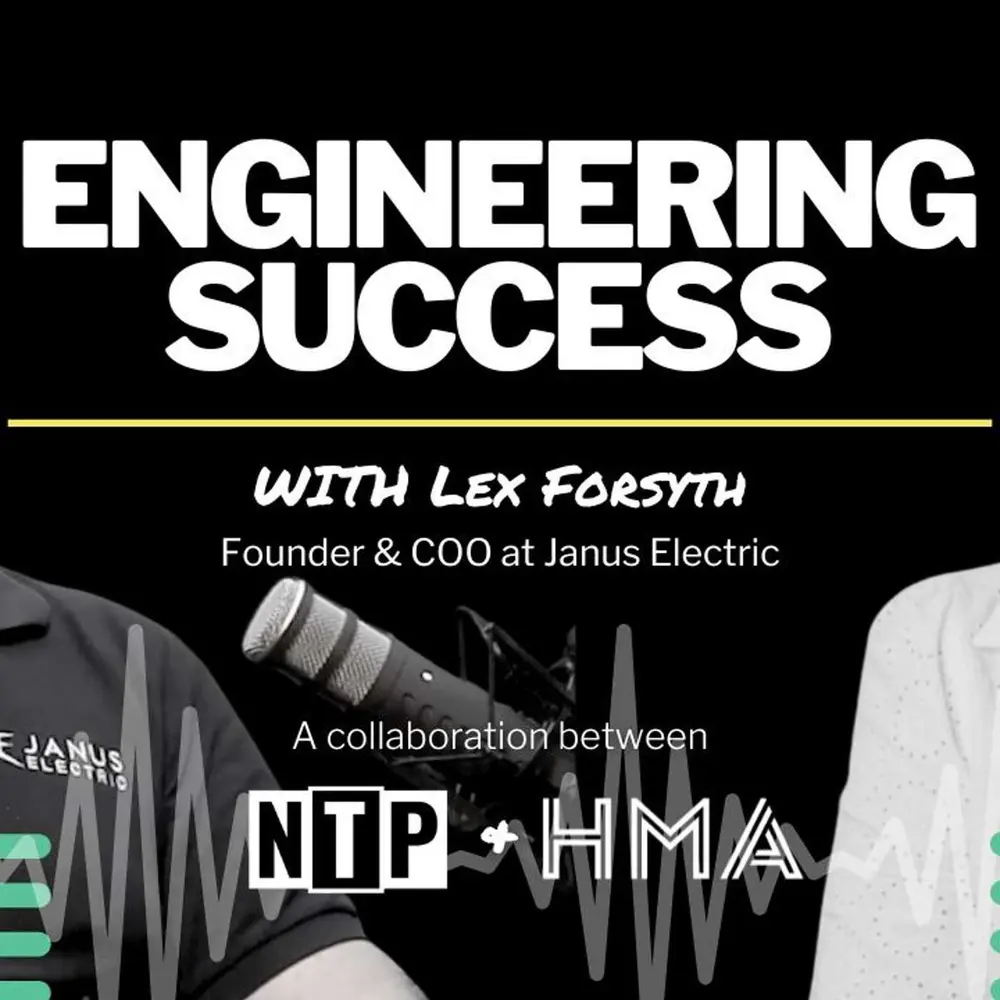
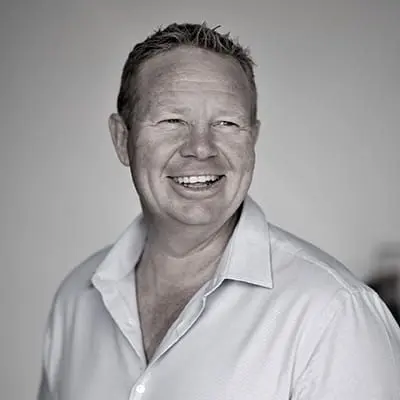
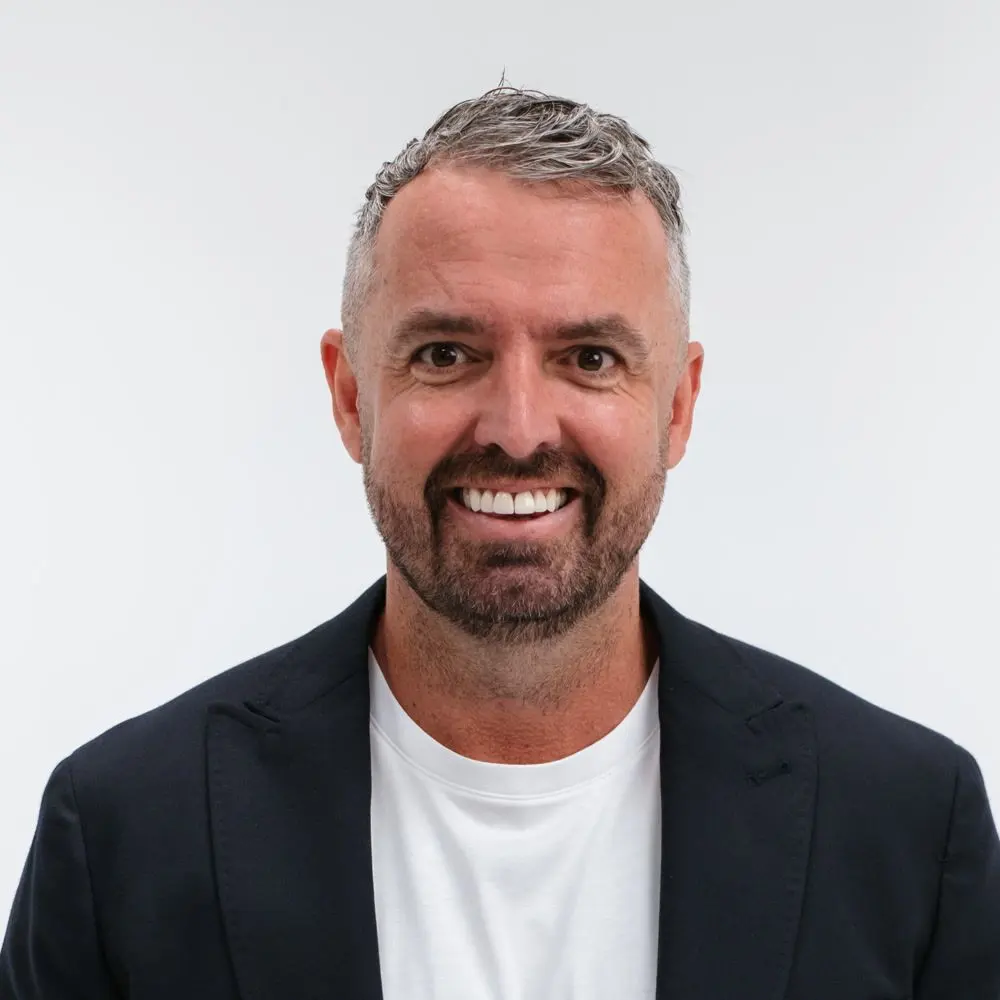
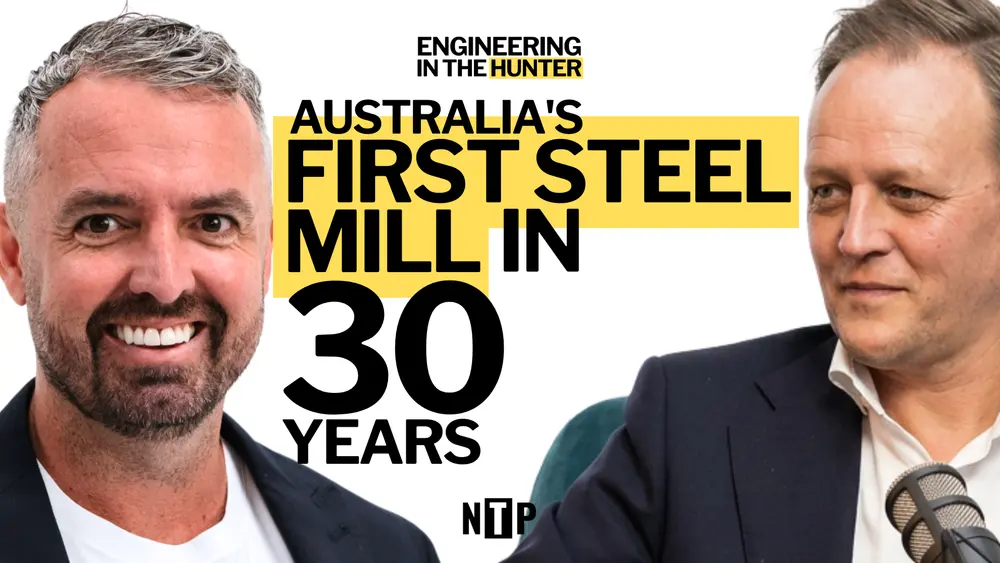
In this episode of Engineering in the Hunter, NTP Talent’s Melinda Sietsma sits down with Lex Forsyth, founder and COO of Janus Electric, to discuss the real-world transformation of Australia’s heavy transport sector. Lex explains how Janus is converting existing diesel trucks into zero-emission vehicles using swappable battery technology. He breaks down the hard maths, showing that the shift to electric isn’t just an environmental pitch — it’s a high-stakes economics game that slashes operating costs, improves driver wellbeing and ultimately supports Australia’s energy sovereignty.
You’ll get a candid look at the grinding realities of scaling a hardware startup in Australia, from listing on the ASX to surviving hundreds of investor rejections. Lex digs into the hurdles of grid infrastructure, why megawatt fast-charging isn’t a silver bullet, and the importance of keeping manufacturing and engineering talent local.
About the show Engineering in the Hunter (formerly Engineering Success) is hosted by Melinda Sietsma with NTP Talent founder James MacDonald. It is produced by Day One®, trusted partners in the technology space and the team that helped build Blackbird Ventures' Wild Hearts.
Transcript Search or select a timestamp to jump ▾ 0:00 Speaker A: Australia's one of the most plentiful countries in the world for energy. We've got coal, we've got uranium, we've got massive solar. 55 million petajoules of solar hits this continent every year. We export 25,000 petajoules, so we've got more than enough to be energy sufficient and have energy security and sovereignty, whereas we import roughly 85 to 90% of our diesel to the country and we don't have the refining capacity here anymore. What we're doing is looking at how do we bring that control and that security back to our nation. We need to look at how do we become energy sovereign. 0:33 Speaker B: Welcome to the Engineering Success Podcast. My name is Nell Seitzma, and I'm a senior engineering consultant here at NTP. Today I have the pleasure of being joined by Lex Forsyth. Lex is a founder and COO of Genus Electric. So thanks for joining me today. 1:01 Speaker A: Oh, thanks for having us on, Mel. Appreciate it. 1:02 Speaker B: You're welcome. Getting to know you a little bit more, would love to hear a bit more about your career journey and how you got to where you are today. 1:10 Speaker A: Yeah, look, it's been an interesting career. My family's had a long-time association with transport industry here in Australia, sort of 4 or 5 generations of family operating trucks. And we've seen energy transitions throughout the family from Bullock teams through to diesel trucks to where we are today with what we're doing at Agenis with electrification. My career, I've owned and operated my own trucks. I'm not an engineer by background, but we've got some really great engineers. And my other co-founder that was with the business in the first phase was a mechanical engineer by trade as well. So— 1:44 Speaker B: Yeah. 1:45 Speaker A: We sort of got together in, we were in Amsterdam, believe it or not, of all places. And we were both walking down the street one night and we're watching them dig the Old South up. and they're relaying electrical cables. It got the better of me. I said, guys, what do you— how come you gotta do this here? He said, we're blacking out the suburbs. And I said, why is that? He said, we've got the most Teslas per population head of any other city in the world. And the problem is everyone comes home and plugs in at the wrong time of the day and it blacks the grids out. And Bevan and myself, I said, I've got an idea for an electric truck. He goes, yeah, well, I've got one too. I said, well, batteries have gotta be swappable. And that's where it sort of headed to from there. Yeah. But it's been an interesting journey along the way developing sort of 4 lots of different technology. 2:23 Speaker B: Yeah. 2:24 Speaker A: With what we've done in the business. 2:25 Speaker B: So yeah. Showing quite an evolution of how the transport industry has changed. You know, if you talk about, yeah, when we use livestock for pulling transport through to what you're looking at now. 2:35 Speaker A: Correct. Yeah. We went from zero emissions to we're going back to zero emissions. The, you know, it's interesting. Transport is an economics game. Like the transport industry won't make changes just for environmental benefit unless there's an economic benefit or they're compensated in some way to be able to do it because it is a low margin industry. 2:54 Speaker B: Yeah. 2:55 Speaker A: But it is the second largest industry here in Australia behind mining for a contributor to GDP. 3:00 Speaker B: Yeah. 3:00 Speaker A: And it's probably got one of the most hardest emissions to be able to turn to, you know, go to zero emissions and try and reach environmental targets. So our focus has been on not so much around how do we make this environmentally sustainable, it's about how do we make it economically sustainable. 3:16 Speaker B: Yeah. 3:16 Speaker A: With the environment being the beneficial byproduct. 3:19 Speaker B: Yep. 3:19 Speaker A: So it's not the whole focus of the business. It's how do you get to the goal by incentivizing people to change? 3:26 Speaker B: Yeah. 3:26 Speaker A: Yeah. Yeah. 3:28 Speaker B: Which we can, I guess, touch a little bit more on those cost benefits in a minute. Yeah. Keen though, I guess in that early career, had there been some, obviously it was a family business, but were there some mentors along the way that kind of went, yep, this is the path I'm taking? 3:41 Speaker A: My mother and father were great mentors for me because they were very successful entrepreneurs in their own journey and we worked within the family So, you know, reading balance sheets and P&Ls from the age of 13, you get to see a lot more of how a business works and how it economically comes together. 3:58 Speaker B: Yeah. 3:58 Speaker A: But then also with vision and leadership and seeing that sort of style. Look, there's many different sort of mentors on different parts of the journey as you go along. And I think we're in a world today where if you haven't got a mentor, it's very hard to not have one because there's so many available through podcasts, there's so many available through magazines, learnings. And there's little tidbits that you pick up from a lot of different people across the globe actually in business today, not just from a technology space, but, you know, how to lead your business, how to turn up each day, the, the energy you need to set for your, for your business, um, and how that works and how it can attract the right people, not just staff but clients, the whole, the whole, uh, the whole gamut of what you do. 4:41 Speaker B: And on that, I guess, what are your key drivers personally to keep you going and 4:46 Speaker A: I want to leave the world a better place. The key for me is, you know, my 16-year-old daughter now, who was 12, came home from school. I had a diesel refueling business as well. 4:56 Speaker B: Yeah. 4:56 Speaker A: And she came home, Montana came home from school and she said, Dad, you're a hypocrite, when she was 12. And I went, oh, why is that? And she goes, oh, you, uh, you say you're all about the planet, uh, but you're selling diesel. I don't like— you're selling a fossil fuel. I went, okay, let me see what I can do. And then Janus sort of got born after, after that. And, you know, it's how do we make a meaningful impact to society? I'm not so much on the— I don't want to jump down net zero and environmental bandwagon scenario. Yeah. I look at it and go, well, if diesel was good for us, why can't we sit in the garage with a car idling or a truck idling in an enclosed shed? It's not good for us. So we've got that running through our communities. Not to mention we've also got drivers that are in these trucks that are breathing that in as they're driving. As much as there's cab particulate filters and all those sorts of things, they're still surrounded by that as well. So I look at it and go, well, how do we actually make a lasting change? 5:49 Speaker B: Yeah, 5:50 Speaker A: for our community, for our truck drivers, and for our cost of living. Because, you know, electricity— electric motors are far more efficient than what a diesel engine is. Yeah. You know, if you look at the energy you start with an electric motor in comparison to a diesel, you get 32% efficiency out of a diesel engine. You're up around 85, nearly 90% out of an electric motor. 6:11 Speaker B: Yeah. 6:11 Speaker A: So, and Australia's one of the most plentiful countries in the world for energy, not to mention, you know, we've got coal, we've got uranium, we've got massive solar. If you look at just the numbers, you know, 55 million petajoules of solar hits this continent every year. We export 25,000 petajoules. So we've got more than enough to be energy sufficient and have energy security and sovereignty. Whereas we import roughly 85 to 90% of our diesel to the country and we don't have the refining capacity here anymore. 6:45 Speaker B: Yeah. 6:45 Speaker A: So it's— when you look at it on a bigger scale, what we're doing is, is looking at how do we bring that control and that security back to our nation. Don't care where the energy source comes from, we need to look at how do we become energy sovereign. 7:01 Speaker B: Yeah. 7:01 Speaker A: Um, that's where— that's what drives me. 7:04 Speaker B: Yeah, yeah, yeah. And sounds like that legacy for the next generation, there's 7:08 Speaker A: Yeah, it is about legacy. And, um, and I like, I like the fact that we're actually building something here in Australia. Yeah. Um, it's employing engineers, it's employing manufacturing staff. You know, it's, it, it creates a future where we're not just digging it out of a hole and sticking it on a ship. We're actually adding value to what we're doing, adding value to our business, um, to, to other businesses. Um, and we're providing a circular economy for older trucks as well too, so that You know, we've already got a manufacturing carbon debt of producing a diesel truck. 7:39 Speaker B: Yeah. 7:39 Speaker A: They've got to have an engine rebuild at the end of 5 years depending on how hard they're working. And, you know, within 10 years they're definitely having an engine rebuilt. Well, instead of rebuilding that engine, let's just replace it with an electric and turn it from a diesel to a zero emissions electric vehicle. That makes a lot of sense to me and gives us that second and third life out of those assets. 7:58 Speaker B: Yeah. 7:58 Speaker A: But, you know, we've got a responsibility to add something for our generations, not only just environmentally, but you know, work. What, what are we going to be doing in this world of AI, in this world of— that's changing very rapidly? How do we actually set up businesses that create a future path and a, you know, a skill development to keep our people skilled and in good high-paying jobs? 8:22 Speaker B: Yeah, 8:22 Speaker A: for, for the rest of their careers. 8:24 Speaker B: Because there's some pretty cool technologies coming out of this space as far as that next generation that, you know, engineers and even trades can get their hands on. 8:31 Speaker A: Correct. Yeah, like, I mean, we, you know, we're building batteries, we're We're also building a conversion module, which is unseen of. We don't know of anyone else doing a conversion module that can fit directly into the front where a diesel engine comes out of in a truck. 8:46 Speaker B: Yeah. 8:46 Speaker A: We're brand agnostic. So there's a lot of interfaces and data systems that we're working with. You know, we're working with the CAN bus network of the trucks, vehicle code. So we're keeping all of that skill here in Australia rather than seeing it going offshore into, you know, we, if you look at the car manufacturing business, here in Australia. It doesn't exist anymore. Yeah. Um, so you've got engineers coming through that are learning automotive engineering, you know, your mechanical engineers. There's only so much that, you know, the mining industry can only absorb so many engineers. We've got to create other different facets so that we diversify what's happening. Yeah. In our, in our country. 9:29 Speaker B: Yeah. Um, I guess you've spoken quite a lot around I know you've talked about Genus and what you do, but is there anything you kind of want to add to that so people know a little bit more about you as a business? 9:37 Speaker A: Yeah, look, we, we're not just a truck conversion company. We also sell energy. So the big part of our business is looking at both sides of it, of, okay, here's some technology, how do we make our technology work for the industry? You know, we've developed a software platform that is looking at grid feed, battery utilisation, truck energy usage, so that we can get very good understanding of what the industry is using energy-wise. shape our charge to work with the grid. So it's about understanding how the, the grid works and the, the capacity that's in the grid during the middle of the day, the limited areas of capacity, and shaping your charge so that we start to utilise our infrastructure, our power network infrastructure, correctly. So, you know, we've developed 4 key pieces of technology. Mm-hmm. And then we've also got the energy sale business that we basically creates a a one-stop shop for a fleet to be able to say, I want an electric truck and I know where I'm getting my power from. So they're not having to go, well, I've got to have a power arrangement, and oh, hang on, I've got to get a grid connection. We create a, a usable system that allows for that. 10:44 Speaker B: Yeah. And you're already supplying in multiple states as far as swappable batteries? 10:49 Speaker A: Yeah. So we're, you know, we've got trucks in New South Wales operating out of Moorbank in Sydney and also out of our factory charge station at Yep. We're in Victoria with 2 charge stations in Victoria, 3 charge stations in South Australia now, one in Adelaide, one out Mount Gambier with a logging fleet, and into the north of Adelaide as well with a rubbish fleet. And then also in WA with Cube over there in a mining application. 11:15 Speaker B: Yep. 11:15 Speaker A: We've got export product heading to the US at the end of this year. 11:18 Speaker B: Nice. 11:18 Speaker A: So that's, they'll be operating out of the Port of LA in Long Beach. with Ability Trimodal over there. And we've also exporting product to Africa as well, to Sub-Saharan Africa. 11:30 Speaker B: Wow. 11:30 Speaker A: With our export deal that we've negotiated with Avuni there. 11:33 Speaker B: Yeah. So there's some new business ventures for this year with the export market. 11:36 Speaker A: Yeah, definitely. And we see the export market being a larger— you know, if we look at the market size in, in Sub-Saharan Africa, there's about 450,000 trucks there. So about 4 times the Australian fleet. 11:46 Speaker B: Yeah. 11:47 Speaker A: The US is, is, is significantly higher. It's, you know, it's 4 million trucks in the US, in North America, and it's, and it's just huge volume. So, and, and it's a relatively simple task in comparison to what we're doing in Australia. 12:02 Speaker B: Yep. I guess you touched on earlier how I guess cost is a big factor. What are we looking at, you know, in cost comparisons? 12:09 Speaker A: Oh, look, the cost of energy for the transport industry is the highest cost. 12:13 Speaker B: Yeah. 12:14 Speaker A: Maintenance plays a part, and drivers. So the biggest, the first 3 biggest costs are your drivers, typically your your highest cost, then your fuel, then your maintenance. So when you're looking at a B-double diesel prime mover operating down the road, you get about 1.8 kilometres to the litre of diesel. So if you, if you just take rudimentary numbers, you're looking at about an operating cost of about anywhere between 80 to 90 cents a kilometre just for fuel. 12:39 Speaker B: Yeah. 12:40 Speaker A: With an electric, we're using about 2.5 kilowatt hours per kilometre with a B-double. So depending on what your source energy of electricity is and your source cost, you know, on the lower end you're 25, 30 cents a kilometre to sort of 50 to 60 depending on where you're buying your energy from at the time. Okay. So they're the sort of economic savings that the fleets see. You know, maintenance costs in a diesel run at about 20 cents a kilometre, whereas an electric you're sort of 6 to 8 cents a kilometre. So it's, you know, we're talking cents per kilometre, but when you're doing 300,000 kilometres a year, it soon adds up. 13:15 Speaker B: Absolutely. 13:15 Speaker A: Yeah. And the other side of it that we, we don't quantify is with an electric, you, you eliminate a full B service out of the, um, out of the service schedule of the truck. A B service is where they're doing fuel filters, uh, engine oil, those sorts of things. Typically lose a day off the road and about $1,000 to $1,500 of cost depending on what type of motor and those sorts of things it is. But when you start to look at that and quantify the downtime for servicing and put that back into uptime and revenue, there's another, a whole nother economic piece around that. There's massive savings in brakes as well with regenerative braking on your electric motor. So all of our trucks have standard regenerative braking, a bit like a Tesla and electric cars, same thing. The beauty of regenerative braking with trucks is that in a built-up area, you can leave it on the whole time 'cause it doesn't make any noise like an engine brake would on a diesel truck. and you'll hear, you know, you see signs around saying please limit exhaust braking or please, you know, limit engine noise in built-up areas. That's all because of the engine brake in a diesel truck. 14:22 Speaker B: Yeah. 14:23 Speaker A: Whereas the electric, that runs the whole time and you don't lose the energy out the exhaust pipe, it goes back into the battery. Okay. So further range, greater distance. And most of our trucks, sort of the average, I think the fleet up until October is about 38% regen braking in power generation across the fleet. And that's in various different applications. 14:43 Speaker B: Does that quieter side allow us to maybe do logistics at hours that we're currently not allowed to? 14:49 Speaker A: Yeah, it's a big thing. Remember through COVID they were struggling to keep food on the shelves in the supermarkets because of curfews that were in place. With it going to electric, you can open those curfews up. You can have 24-hour logistics into congested areas because you do have a quieter vehicle delivering into those areas. Now, even talking to some of the drivers that are driving these trucks on routine, on a daily basis, they're saying to their allocators, like, we've got a great team of guys down from Cement Australia in Sydney, and like, we don't want to drive our diesel trucks anymore. We just— leave us in the electric, we're very happy. 15:25 Speaker B: Yeah. 15:25 Speaker A: They're quieter, they don't feel fatigued, they're less noisy, there's no heat. They don't— their wives, it was interesting, we met their wives at a conference where we had a truck on display, and they brought their kids and everyone in, and the wife said they don't smell like diesel when they come home. We actually, we don't notice that. Yeah, that smell, um, there's something that we never ever ever thought of would be created by doing this. 15:52 Speaker B: Yeah. 15:52 Speaker A: Um, so it's, it's those sorts of things that make it economically viable for the fleets, but also it's beneficial to the, uh, to the driver as well. 16:02 Speaker B: Yeah. And sounds like enough power there, as you said, for a V-double, just not a A normal truck? 16:06 Speaker A: Yeah, so we're up to, you know, we've done triple road trains. We're planning on doing some stuff up at around 360 tonne very shortly with some mining applications. It can be done. You know, obviously energy consumption goes high as you put more weight on or more rolling resistance, your energy consumption goes up. 16:26 Speaker B: I guess as far as your journey, I guess some exciting news last year, you're listed on the ASX. 16:32 Speaker A: Yeah, well, that was in May this year. May this year, was it? 16:36 Speaker B: Sorry. Getting my dates confused. 16:39 Speaker A: It does feel like this year's gone very quick. I felt like we've lived 2 years in this 1 year. So yeah. 16:44 Speaker B: Um, what does that mean for you guys as a business? 16:47 Speaker A: Oh look, it, it means that, you know, the biggest challenge here in Australia is to raise capital into any business. Australia is not a great place to start a technology business. What being listed has done has been able to open us up to other, other forms of capital to come into the business and to help scale and grow the business. 17:05 Speaker B: Yeah, 17:05 Speaker A: it comes with its challenges as well along the way. It's not easy. Nothing that's worthwhile doing is ever easy. Yeah. So if a young person was to say, I'm going to start a business in Australia, look at what your idea is first. 17:16 Speaker B: Yeah. 17:17 Speaker A: You know, I heard a saying the other day. A person said, if someone tells you your idea is crazy, it might be good enough to succeed. 17:24 Speaker B: Yeah. 17:24 Speaker A: So, um, you know, we had a lot of naysayers at the beginning as well too, going, you guys This has not been done like this. Who else is doing this anywhere else in the world? And I said, what's that got to do with it? Yeah. You know, it's, it's, it's a good idea. It makes sense. It helps fix all of the issues around what our grid infrastructure can, can handle. It creates a demand for renewable energy during the middle of the day when there's massive, uh, a dip in the, in the power demand curve. So this makes sense and you're not parking an asset to wait for it to charge. Yeah. A lot of people talk about fast charging, megawatt charging. Okay. Yeah, guys, that's great. How do you scale that? I said, we don't have the infrastructure to be able to handle mass-scale megawatt charging. Yes, you can charge a truck in less than an hour. That's fantastic. Where are you going to get the power feed to be able to run that charger at that capacity? You know, we've got shortages of power, and then what does that do to your demand costs? So the key point out of that is you've got to look at the whole part of the, the puzzle. You can't just go, I'm going to create a new bit of technology and don't care how you're going to use it, you're going to make it work. We've approached it from how do we make our technology work for the industry, not the industry work for our technology. 18:44 Speaker B: Yeah. 18:44 Speaker A: And that's the reason why we've chosen the path. Yeah. You know, we were agnostic to all different types of energy at the start, but we couldn't get it economically to stack up. So we said, well, the economics don't work, you've got to change, you've got to change the thought process. 18:58 Speaker B: Yeah. Um, I guess you touched a little bit there around raising capital. 19:02 Speaker A: Yeah. 19:03 Speaker B: Um, that being a big challenge of a startup, how's Genus stood out from the crowd to kind of raise capital along the way? 19:09 Speaker A: I think you've got to really know what your, your product is, what your market is. Going in there with a fancy PowerPoint presentation doesn't doesn't get investors excited. You've gotta have a vision and you've gotta be able to communicate what that vision is. And you've gotta have clients that are there ready to come along on the journey with you as well too. 19:27 Speaker B: Yeah. 19:27 Speaker A: That's probably what stood out for Janus is that, you know, we were doing something unique. Economically, it made sense for the industry. So when you can start to explain that to an investor, that it actually, we're not just trying to be clean and green, we're trying to make this economically sustainable as well. all of a sudden the investor goes, well, hang on, this actually makes sense. 19:50 Speaker B: Yeah. 19:50 Speaker A: And the other side of it is keep it simple in the approach. Work out what the key messages are from your pitch. 19:59 Speaker B: Yeah. 19:59 Speaker A: And keep it really clean and, and, and clear for the investor. Don't, don't overcomplicate it in the technology side of it because you can get very excited about what the technology is, but doesn't mean the investor understands what you're doing. If they can understand what the business concept concept is, how it commercializes, how it scales. They're the, they're the important things to be able to demonstrate and, and communicate. 20:23 Speaker B: Yeah. And I guess if you're kind of giving some advice to other startups, is there anything else that we haven't touched on in, in that area? 20:30 Speaker A: Don't give in. Never give in. 20:31 Speaker B: Yeah. 20:32 Speaker A: It's just, it, you know, we've had setbacks. You can see some of our setbacks publicly, um, through technology, uh, technology failures. 20:40 Speaker B: Yeah. 20:41 Speaker A: Um, just if you believe in it, make sure you believe in it first. Believe in yourself. believe in what you're doing, the rest will come into line. 20:48 Speaker B: Yeah. 20:49 Speaker A: That's, that's the biggest thing is it, you know, too many people get disheartened. Like, we, we went to, I'm going to say, close to nearly 450 investment groups across Australia trying to raise capital. 20:59 Speaker B: Yeah. 20:59 Speaker A: We got told everything from it's too soon, it's too late, it's, it's not for us, we don't understand it. And so you, you understand as you go along that journey, you just can't give in. It's as simple as that. And you'll make it if, if you believe in it enough. You'll, you'll make it. Yeah. And that's the big thing, just continually believe. 21:18 Speaker B: Um, I guess in the market at the moment there's quite a lot of misconceptions around EVs. 21:23 Speaker A: Yeah. 21:24 Speaker B: What are some of the— I guess do some myth-busting for us. 21:27 Speaker A: Oh yeah, well, oh look, I've had people ask me, what, when the battery runs down to empty, does the truck get lighter? Because they're used to diesel fuel. No, it stays the same weight. Yeah, a lot of people, like, there was The politically, though, you know, it won't pull a boat, it won't pull a caravan. Okay, well, we're pulling a triple road train at 165 tonne. They work. 21:49 Speaker B: Yeah. 21:49 Speaker A: Um, I think there's always the— there's always that skepticism around new technology. I'm sure if I went back to my great-great-grandfather who had a bullock team carting timber and he saw the first guy with the diesel truck, I'm sure there probably would have been some skepticism towards the diesel truck. 22:05 Speaker B: Yeah. 22:05 Speaker A: You know, where are you going to get the fuel? What happens if you run out of fuel beside the highway? At least the bullocks can still keep walking, or they have a drink of water and they keep moving. 22:12 Speaker B: Yeah. 22:12 Speaker A: It's no different. Um, so, you know, uh, EVs are, are on parity, are safer than, you know, a combustion engine. If you look at diesel truck fires, you know, there's one here today. Yeah. Um, on the Pacific Highway that's got traffic backed up for, for miles. And, and, you know, that has been systemic from, you know, we've increased exhaust temperatures to deal with pollutants that are coming out of a diesel truck. You're trying to fix the NOx and SOx that are coming out the exhaust. And the way they're doing that is by— all of a sudden exhaust temperatures are close to nearly 700 degrees. 700 degrees underneath the cab of a truck creates a preheating right through the whole drivetrain of that vehicle. So we're seeing more and more diesel truck fires. Every time there's a failure with an EV, we want to throw it on the news. But every time there's a problem with a diesel or an ICE engine. No one, no one talks about it because it's become normalized. 23:06 Speaker B: Yeah. 23:06 Speaker A: So, you know, it, it's— they're going to have their failures just like any technology will, but you've got to learn from them. How do you make it safer? And you've got a continuous improvement process that you bring through that journey. 23:17 Speaker B: Yeah. 23:18 Speaker A: Yeah. It's like Elon Musk said, it was a great rocket crash, we learned a lot. Uh, it's the same thing. Yeah. You, you learn a lot from your failures. You don't learn much from your successes. That's the That's the key difference in life. And we should celebrate failure as much as we celebrate success. 23:33 Speaker B: Yeah. 23:33 Speaker A: Because at least someone's trying. That's the key. 23:36 Speaker B: Yeah, it's about getting back up again. 23:39 Speaker A: Well, you just gotta pick yourself up and, you know, righto, what did we learn? Have transparency. 23:43 Speaker B: Yeah. 23:43 Speaker A: These are the changes we've made. This is what we're working on. This is what we've also found. 23:48 Speaker B: Yeah. 23:48 Speaker A: How do we improve this? Otherwise, we wouldn't have what, you know, we're sitting in a studio here today with beautiful digital cameras, a microphone that can hear us clearly. I'm sure they didn't work the first go every time. And we don't have film in these cameras anymore. They're digitally recorded. So, and Kodak is a classic example of not believing in a new technology and not getting on board. And now you look at the Kodak business as— Left behind. Yeah, left behind. And Australia's got the opportunity to, you know, I don't think we're gonna be able to get rid of diesel completely outta transport. Like we're not gonna go to the cattle carters outta Cloncurry, Curly Cattle and say, hey, do you wanna buy an electric? electric Kenworth to tow a triple road train. But everyone operating in the ports, operating in, you know, food distribution in our capital cities, everywhere where we've got high concentrations, this, this can work for. And particularly on our national highway network, the eastern corridor, the eastern seaboard has got the highest truck volumes. Yeah. By far between Melbourne and Sydney and Sydney and Brisbane, just from the amount of trucks on a daily basis on those routes. 24:57 Speaker B: Yeah. 24:57 Speaker A: Some really easy ways for us to have you know, good, meaningful, easy wins and control some of our costs of energy in the transport sector. 25:05 Speaker B: And on that, is there different legislations between the states? 25:09 Speaker A: They've sort of sorted that out. There was, you know, early in the journey that was there. That is a challenging piece to this. Like, yeah, you put the investment puzzle together, you put the technology puzzle together, and then you go, okay, hang on, we've got a, we've got a whole new technology that we've created that has no legislation framework around it or standards around it, how do we help have that creation of the standard with the regulatory bodies along the journey? And that's, that's also part of the challenge as well too. 25:39 Speaker B: Because I guess you're kind of educating them around new products. 25:42 Speaker A: Yeah, we are. And, you know, that's, that's one of the reasons, like, we've had the National Heavy Vehicle Regulator through our factory, because they actually got to see it at a, at a base level. 25:51 Speaker B: Yeah. 25:52 Speaker A: And we have that open policy with any of the, any of the industry bodies and regulatory bodies, more than welcome to come through our facility because we've got to educate people about this. Otherwise we get left behind as a, in a transition. And, you know, brochure data is one thing, but physically seeing something is a totally different scenario. Yeah. And that's, that's the key, key to it. 26:15 Speaker B: So you're obviously located on the Central Coast. 26:18 Speaker A: Yeah. 26:19 Speaker B: What do you see as a benefit to having a business like this in the region? 26:22 Speaker A: Oh look, it's surprising that, you know, the Central Coast, Newcastle, the amount of complex engineering, machine shops, the skill sets here. It's a lower cost of business as well to operate from up here with good facilities, and the cost of living for people, it's still affordable to live up here. It is getting tighter and harder because there's more people relocating into these regions. But it's also about how do you put yourself in the right region where, you know, for us, and, and one of the reasons why we're here on the Central Coast is we, we can become an identity now in, in our community of, you know, this technology was born, developed, engineered, and scaled and manufactured here on the Central Coast. And you start to create a bit of pride in what your team who are involved in your business are you know, they become proud to work for Janus. 27:13 Speaker B: Yeah. 27:14 Speaker A: Um, that's what it's— that's what it's about for us. How do we give back to our community as well too? Yeah, by employing, you know, the families that we do, it creates long-term jobs and long-term employment. Now I think we've got to look at how do we get a little bit more regional in the way that we approach business, where we locate different areas, purely because our capital cities are becoming so congested as well too. 27:37 Speaker B: Yeah. 27:38 Speaker A: And there's a high cost of having a business in Sydney or high cost of being in Brisbane. They're just too congested. 27:44 Speaker B: Yeah. 27:45 Speaker A: Um, so, you know, it— and by spreading it out, the other businesses that work around our business as well too, that are key suppliers of subsystems, uh, you start to build this nice little community that supports each other. 28:00 Speaker B: Yeah. 28:00 Speaker A: And you can have a conversation with your machine shop, you can have a conversation with a, you know, a steelworks. Those sorts of things are really valuable for us as a business. 28:11 Speaker B: Yeah, 28:12 Speaker A: I think the other side too is the university up here at Newcastle creates some great candidates. 28:16 Speaker B: Yeah, 28:17 Speaker A: um, you know, that's the other piece is how do we, how do we have that graduate program that brings graduates that they don't have to relocate, they're not moving away from their families, they can have a great career here. 28:29 Speaker B: Yeah, 28:30 Speaker A: on the Central Coast. 28:30 Speaker B: Yeah, there's some great like electronic mechatronics students that come out of there, super smart kids. 28:35 Speaker A: Oh, we've had some excellent mechatronics kid, you know, young guys that have come out of the uni. 28:40 Speaker B: Yeah. 28:40 Speaker A: Um, and they're bright, they're really bright. 28:42 Speaker B: Yeah. 28:42 Speaker A: Um, and we, we want to see roles for them. And the beauty of it is we're not just limited to one technology in Janus. Like, they can play with charging infrastructure, batteries, trucks, software. There's a whole gamut of what they get to be able to do. 28:56 Speaker B: Yeah. Yeah. Um, and on that, have you guys released a couple of new products this year? 29:00 Speaker A: Yeah, we've got, uh, the new generation of our battery, and we've got a a new battery that we're developing at the moment, the JB650. And we're just about to start to release our Flex JCM540, which essentially now will fit in close to 100% of all Class 8 trucks around the world. 29:17 Speaker B: Okay. 29:17 Speaker A: So anything that's got a 13-litre diesel engine in it, our powertrain, our e-powertrain will fit in that. So yeah, we've got new developments happening in our software code and our automotive, our vehicle coding. Yeah, as well too. Um, so it's, it's continuous improvement as we, as we grow the business. 29:35 Speaker B: So lots for young engineers to get excited about. 29:38 Speaker A: Oh, lots. Yeah, yeah, yeah, yeah. 29:40 Speaker B: And it's nice that they can, you know, as you touched on before, it's, you know, not just the traditional industries but getting involved in some new industries there as well. 29:47 Speaker A: And look, we, we try to get our engineers to get their hands dirty as well too. 29:51 Speaker B: Yeah. 29:52 Speaker A: Um, so not be stuck behind a computer designing and engineering continuously, but also get out and see what they're designing from a manufacturing and a production standpoint as well too. Because I think we've got to get more rounded engineers. 30:08 Speaker B: Yeah. 30:09 Speaker A: It's always been a challenge, you know, the disconnect between engineering and production, for example. It's a continuous thing that I think a lot of businesses face. And we look at it and go, you know what, we've got to, we've got to build that process and have rounded engineers that look at their design and their, and their skill of what they're doing, see how it applies in the real world, because it helps them shape and become even better engineers than what they are. 30:34 Speaker B: Yeah. 30:35 Speaker A: Um, by being able to see both sides of what they're, what they're creating. And the same for our production stuff. We, we, we get them involved with some of the engineering so that they can see the complexity of what's happening in the, in the background that generates that drawing or generates that vehicle code. So that they get a good understanding of the skill sets that are there. And I think, you know, I keep referring to it as the Janus way. Everyone says, oh, this is, this is what the textbook says. And I go, yeah, okay, that's great. Well, when we've done it this way before, it disproved what the textbook said. And they go, oh, there we go, guys, we've got to get the blend right. Yeah. It's, it's how do we, how do we give that real-world feel to engineering and production, production teams? 31:16 Speaker B: Yeah. 31:16 Speaker A: So that you get a way that you create your product, um, and particularly when you're developing new technology as well too. 31:23 Speaker B: And I think that learning curve, like, it has to be a lot faster if you can see something you design and then the other side, as opposed to just designing and never really working the errors or, you know, things that need to be tweaked. 31:35 Speaker A: And sometimes you just got to build the first one. 31:38 Speaker B: Yeah. 31:39 Speaker A: Um, and learn what you don't know. Um, you know, when I look at when we first started, we built the first prototype in 4 months. from concept to design to, to build. And, you know, was it perfect? Was it industrial? Yeah, it was industrial. Far from perfect. 31:54 Speaker B: Yeah. 31:54 Speaker A: But it was, okay, this actually can work. What, what, what, what haven't we seen? How do we scale this? What changes do we need to make? 32:03 Speaker B: Yeah. 32:03 Speaker A: Um, to make this really work. The big thing from, from that side of things is, you know, sometimes you've just got to build it as well. Yeah. You can continuously— you can get caught in an engineering spiral It's one of the things you've got to be able to pull. You know, if I could suggest anything to an engineer, sometimes you've just got to stop. Perfection is unachievable. Yeah. Because when you get it, you're also looking for the next, the next piece of it. So it's— you've got to, you've got to get a product to market. Yeah. That's safe, efficient, reliable. And then you refine, refine, refine. 32:34 Speaker B: Yeah. Yeah. Because I guess you— yeah, you've got to get it commercialized. 32:37 Speaker A: Yeah. And that's one thing, like, the, the investment community here in Australia don't want to hear Uh, we're still developing the design and we haven't got a commercialized product yet. They want to see something that is commercial, that they can see that there's going to be a revenue path from. That's the big thing. Yeah. And yeah, look, I, I still think the governments have a role to play in some of this stuff as well too. If they actually are truly serious about manufacturing in Australia, we need to look at what is the smart industries we want to be in, where do we want to put the investment in. You've gotta have a 1 in 5 or a 1 in 10 success story that, you know, you gotta back 5. You might get 1 or 2 that are superstars that'll pay for the next 5, 10, 15, 20 that get backed. You might have 1 or 2 that just wash their face and you'll have a couple of failures. 33:25 Speaker B: Yeah. 33:26 Speaker A: And we've gotta be okay with the failures. The challenge that I think in the investment community is, but they're judged on a quarterly basis. So they can't have failures on their, you know, our super funds, our, investment in VC funds are judged on their quarterly performances. 33:41 Speaker B: Yeah. 33:42 Speaker A: Um, so they don't want— they, they're there for the upside, not the downsides. 33:46 Speaker B: Yeah, 33:47 Speaker A: yeah, 33:47 Speaker B: yeah. Wow. So it's a tough gig for startups, isn't it? 33:50 Speaker A: It is hard. You know, it's, it's not impossible. 33:53 Speaker B: Yeah. 33:54 Speaker A: I think, um, you know, the, the level of difficulty that it, it has sorts out whether or not you've got a good idea. 34:00 Speaker B: Yeah. 34:00 Speaker A: It's pretty, pretty bluntly, it sorts it out. Um, And, you know, not every idea is a great idea, but sometimes you just, you've got to get the gold somewhere. 34:10 Speaker B: Yeah. Yeah. 34:10 Speaker A: Yeah. 34:11 Speaker B: And talking about, I guess, net zero kind of, I guess, manufacturing industries, where do you see the industries and I guess that space in the next 5 to 10 years? 34:20 Speaker A: Look, energy costs in manufacturing is a big piece. You know, you've seen stuff around potentially Tomago closing. You know, that's our second aluminium smelter. That may disappear and then we're just left with Boyne smelters in Gladstone. I think we've got to look at what the cost of energy is. There can't be a continuous blind pursuit towards net zero without understanding the transitional steps to get there. You know, the challenge is, is we've also got to compete on a global scale. When you've got manufacturing powerhouses like China that are not the same rules and same cost structures as what you are in Australia, It's challenging. Um, and I think we've got to be honest around that. It's— it can't be a blind one-way approach. I'm not saying for any minute, hey, don't be— don't be environmentally responsible, but let's look at it in a way that is actually sustainable for our industries to survive. 35:15 Speaker B: Yeah. 35:16 Speaker A: How do we best utilize what we've got here? What are we actually manufacturing here in Australia? You know, I, I look at ARENA. They've given out all these grants not one of the trucks that they've given grant funding for is built here in Australia. So taxpayer money going out to support net zero and decarbonisation of an industry where there's no Australian content in the product. Whose industry are we supporting? Mm-hmm. That's the things that we need to address. I think the other part of it around net zero is understanding it's a journey. If you look at When the petrol car and the ICE engine was first created, it was a pretty rapid shift to changing to that source because the energy source was available. There was no emissions laws. There was no challenges or roadblocks to watch that scale out. But the technology it was coming from to what it was becoming to where it was going was not that great a— you know, it was very convenient for people to not have to get on a horse. 36:16 Speaker B: Yeah. 36:17 Speaker A: They could jump in their car and it'd start when they wanted. They didn't have to go and catch it, feed it, make sure it didn't get hurt. We're in an industry now where we've got substantial infrastructure that has been deployed for an industry for nearly over 100 years in diesel and petrol. And we're comparing our power stations. I think the last time we built a power station in Australia was 20 years ago. 36:40 Speaker B: Yeah. 36:40 Speaker A: The technology has shifted and there is clean coal power stations that are out there with carbon capture and different packages that have been there. Nuclear, is that an option? Solar, it's an option, but I don't believe we do it in paddocks and on agricultural land. Let's look at our industrial sheds that are in our logistics parks. Look, look at where we can make smart solutions. And we've got to stop thinking about massive big transmission lines. You lose up to 10 to 15% of the energy in transmission. If you know you've got those losses, why wouldn't we start to look at microgrids in our different areas? And how do we How do we decarbonise a logistics park? How do you decarbonise— you know, you look at Moorbank, it's a classic example. They can produce, I think it's 55 megawatts of solar a day. The park consumes about 25 of it. They can only put 5 of it into the grid. 37:33 Speaker B: Yeah. 37:34 Speaker A: So they've got an imbalance of about 20 megawatts there a day they haven't got a home for because they can't export it to the grid because the grid's already going, can't take anymore. So there's fundamental solutions that we've gotta change and look at it differently and go, okay, we may not get to net zero by 2030, but by 2050, it's a different conversation. You can transition. The other thing we've gotta look at is what do we do with this mining industry? You've got the largest coal port in the world here in Newcastle. 38:02 Speaker B: Yeah. 38:02 Speaker A: What happens with all that infrastructure if we stop utilising or stop exporting coal? I mean, there'll always be coal needed for steel manufacturing and those sorts of things. There's a lot of coal goes out of here for power generation as well too, because it is an affordable source of energy. 38:16 Speaker B: Lots of people thought— It's 38:18 Speaker A: not rocket science, but you know, you've got to start to think about, you know, when do we put our interests as a nation first and go, how do we actually bring the cost of power down? And we've got to remove the subsidies for renewables out of our power bills. And not many people realise that we pay an LREC and an SREC, which is your large generation REC, which is about $45 a megawatt hour or 4.5 cents a kilowatt hour on your power bill to subsidise solar. 38:49 Speaker B: Yeah. 38:49 Speaker A: You also pay the same, similar, a smaller one for the small one, which is for the little ones that go on the houses. And everyone's gone, I'll get it because I get a government rebate. Well, it's being funded in your power bill. So when you look at it there and you watch what happens in the power trading, You know, you've got the traditional power generation has not got the same subsidies. So during the day, the renewables are using their subsidy they get paid to compete against the normal traditional generation. So it's a race that this whole idea of a negative power price is not sustainable on any means. So it's interesting, in different parts of the world you can get it fixed power price for 5 to 10 years because they look at it and go, okay, well, generation, we need this. Yeah, this is what you sign up for. And you get that fixed power price and we're talking sub-10 cents a kilowatt hour. And that's a mixture of renewable, fossil fuel, nuclear, hydro. It's a, it's a real mix of all the different energy. There's no reason why we can't do that here in Australia. 39:54 Speaker B: Is that similar to the power purchase agreements or is that a little bit different? 39:58 Speaker A: It's like a power purchase agreement. Yeah. We looked at some manufacturing locations in the US and the local county is in charge of the power generation for the region. 40:08 Speaker B: Yeah. 40:08 Speaker A: And they said, yep, if you move here, we'll give you 8 cents a kilowatt hour for 10 years. That's your fixed power price. 40:14 Speaker B: Yeah. 40:15 Speaker A: Now when you can do that, it allows industry, like if you look at the industry that's left Newcastle or just left Australia, our fertiliser manufacturing has left because gas prices have gone through the roof. We've now got electricity prices going through the roof. The value of the coal didn't change in any differentiation in the ground here. And if you look at aluminium, the 2 key inputs to aluminium is electricity and bauxite. 40:38 Speaker B: Yeah. 40:39 Speaker A: That's what aluminium is. Why is there a smelter built at Tomago? Because there's a great power source in coal-fired energy that could feed its feed product. Now you change the material value of that, Well, then that's what affects that industry. It's no different to what's happening in Gladstone as well too. 40:58 Speaker B: Yeah. 40:59 Speaker A: In this pursuit to turn an aluminium smelter green, I, I think we just lose sight of where we've got to go with net zero, unfortunately. Yeah. I do want to see zero. I do want to see us get there, but I think there's smarter ways for us to achieve it. And the manufacturing industry can't be the sole burden for power prices. Yeah. If you've got solar, you've got to have a battery. You can't— the days of having solar that just feeds into the endless grid, no. You need to— if you're going to put solar on, put a battery. It's the same, like the battery scheme that's been released by the federal government. Not one of those batteries have been built in Australia. 41:39 Speaker B: Oh. 41:40 Speaker A: Now they're all going into houses. I call it the pink— it's gonna— we're gonna have another pink bat incident. without the pink. 41:47 Speaker B: Yeah, 41:47 Speaker A: um, because it's going to be a battery. And, you know, all of those batteries are being imported, and the majority of them are coming out of China. 41:53 Speaker B: Yeah. 41:54 Speaker A: How is that— how has that actually benefited the Australian manufacturing industry? So it's, you know, it's important that we back our manufacturers because they create employment for our engineers, they create employment for production people. That's where we've got to go if we're feeding about doing it. 42:12 Speaker B: Yeah, 42:13 Speaker A: if we're not, just keep importing everything in. Um, but that's not, that's not in the interests of our, of our country. 42:20 Speaker B: Yeah. 42:20 Speaker A: And our community. 42:21 Speaker B: Yeah. Lots of things there. Unfortunately, I think we've recently lost a local battery manufacturer as well. So 42:28 Speaker A: yeah, the, the guys over at Tomago, they're, um, 42:31 Speaker B: Energy Renaissance. 42:32 Speaker A: Energy Renaissance. Yeah, 42:33 Speaker B: yeah. 42:33 Speaker A: This is the other side of it as well. Government shouldn't be picking technology winners. And that's unfortunately, that's what they try and do. Like they went down a hydrogen path. Look what's happened. You know, hydrogen is not where it needs to be for transportation. If you can use hydrogen where you produce it, makes sense. But when you've got to transport it, store it, or build an infrastructure network for it, doesn't make a lot of sense. It's like someone saying to me, oh, we're going to build an LFP battery manufacturing plant here in Australia. Okay, good luck. The Chinese have developed and perfected that technology. There is no way you're going to compete with them. Yeah. And their skill sets around those technologies and their manufacturing processes are world-leading. They are world-leading because they back their engineering, they back their industry, they back themselves. We've got to be looking at the next generation. You know, we've got to be looking at aluminium-air batteries, or we've got to be looking at lithium sulfur, the different— the next higher energy density. We can't be looking at what already is produced. It's redundant. You're not going to get the uptake of it. 43:42 Speaker B: Yeah. 43:43 Speaker A: To be able to do that, you've got to have— you've got to be able to take risk. Someone's got to come along and say, you know what, that sounds like a really great idea. Is it commercialized yet? No, it's not. How do we get the commercialization risk out of it? That's where government plays a part. 43:57 Speaker B: Yeah. 43:57 Speaker A: So that then your other investor can then come in and go, okay, well, the commercial risk's been removed. Now we can, we'll take on the scale risk. 44:06 Speaker B: Yeah. 44:07 Speaker A: And it's that journey that technology's gotta take if we really are serious about a manufacturing industry here. It'd be like someone coming and saying, how about we build, how about we go back to building HQ Holdens? Let's start that plant up again. Let's build a HQ Holden and we'll build Ford Falcons again. You just can't do that. 44:25 Speaker B: Yeah. 44:26 Speaker A: Um, that's the same with LFP batteries. 44:28 Speaker B: Yeah. 44:29 Speaker A: You know, um, and, you know, Engie Renaissance weren't able to make cells here, but they were planning to. But this is the unfortunate part about it. And great idea, great concept. But the other side of it is when we want to create certain new products here, got to make sure you've got the testing facilities here for them as well too. 44:47 Speaker B: Yeah. 44:47 Speaker A: Um, if you want to be able to have them, if you want to make them compete with overseas product that has the, the whole infrastructure built behind it, you've got to, you've got to replicate that. If you don't replicate it— Yeah, 44:59 Speaker B: because you've got to have all the quality assurance side, don't you? 45:02 Speaker A: Yeah, the quality assurance, the testing facilities, the capabilities, all of that needs to be thought of. It can't be just, well, this is what we want to do. You've got to go, okay, well, what's the eco— what's the ecosystem that needs to be around that? To support it. And then what's the next evolution of that ecosystem? So if we, if we do want to build battery cells here, how do we make sure we've got a market here for it? Because we're not going to compete on an offshore market with Chinese battery manufacturing. Like, it's— that's the hard part. Like, there's 4 times the world's capacity of production in place and under construction in China to meet the demand. 45:41 Speaker B: Yeah. 45:42 Speaker A: Building cells is not really a smart idea here in Australia, unfortunately. 45:45 Speaker B: Yeah. 45:46 Speaker A: And you've gotta— there's commercial realities around that. But good smart form factors that use a high-quality cell— Energy Renaissance would've been a brilliant business to assemble home battery packs here. Makes a lot of sense. 46:00 Speaker B: Yeah. 46:01 Speaker A: To build our battery for us makes a lot of sense. But these are the challenges, unfortunately. Yeah. 46:09 Speaker B: looking at you guys as far as awards, and I've got a few listed here. 46:13 Speaker A: Yeah. 46:13 Speaker B: Um, so you've won the— some of these are a mouthful actually— the AFR Sustainability Leaders 2025 Award. Um, so that's for your work in the logistics and transport sector. Um, the— you won the Outstanding Startup Award at the 2023 Hunter Manufacturing Awards. That was for your battery exchange technology? 46:34 Speaker A: Yes. 46:34 Speaker B: And then most recently— well, not recently because it's 8 hours— but the most innovative electrical fleet transport solutions provider in 2024 by the Australian Enterprise Awards as well. 46:46 Speaker A: Yeah, yeah. 46:46 Speaker B: Um, how— what's the importance of those awards for a business? 46:50 Speaker A: I think it's good in, you know, it, it creates a bit of external recognition, um, for your team. 46:57 Speaker B: Yeah. 46:57 Speaker A: Um, you know, we, we don't do it to win awards, but It's nice to see that what we're doing is making a difference. It's nice to see recognition from external parties to go, you know what, actually what you guys are doing is on the right track. Yeah. But I think it's, you know, even we've had some of our apprentices go— we're finalists in some of the different award categories purely because it gives them that greater incentive to to put in more because they, they're getting that validation. I think it's a good thing for the— it's a good thing for your business to be involved in some of those award ceremonies. 47:36 Speaker B: Yeah. 47:36 Speaker A: Um, because it— and it also puts you in a room with like-minded people that are also nominating. Um, you know, I think it takes a village to raise a child. Well, it definitely takes a village to raise a manufacturing business, and you've got to look at the evolution, evolution of your business from startup to, you know, it's no different to a child. Startup to a newborn to toddler to teenager. Yeah. And it comes with all its different, uh, its different elements of pain. 48:05 Speaker B: Yeah. 48:07 Speaker A: And joy. 48:08 Speaker B: Yeah. 48:09 Speaker A: Um, along that journey. And, you know, the awards are part of the joy, and, and it's good to be able to get together and celebrate, but also, you know, be involved in, in that community because you don't know who might be able to do something for your business to keep value-adding to what you're doing in a community. 48:27 Speaker B: Yeah. 48:27 Speaker A: Um, and you know, you may look offshore for something because something that's not done, but then you talk to a manufacturer, you go, hang on, I can do that here. Okay, we'll move that there. 48:36 Speaker B: Yeah. 48:36 Speaker A: It's about building that community around you. 48:39 Speaker B: Yeah. And I think, um, the Central Coast is— there's been really been a light shone on there in, you know, the last probably 18 months of the talent that's there in the manufacturing industry as well. 48:49 Speaker A: Yeah, it is, it is. And, you know, look, there's parts here for the F-35, uh, strike fighter that come out of this region. 48:57 Speaker B: Yeah. 48:57 Speaker A: Um, you know, there's some really high, high-tech stuff that comes out of this region. And, you know, what we do is, is reasonably, um, high-tech, you know, in a way. Um, yeah, but it brings a number of different skill sets and disciplines together to, to be able to create it. Um, and it's, it's great to see that we've got the talent here to be able to do it. 49:17 Speaker B: Yeah. Yeah, but yeah, I guess for yourself, obviously work's a key part of what you do, but when you're not at work, what do you do to wind down? 49:25 Speaker A: Oh look, I, I enjoy swimming in the ocean. It's a, it's a good way, getting to the beach. Yeah, um, getting into nature. Um, you know, a big thing for me is walking, um, getting into the bush and just having that quiet moment. That's how I normally start my morning every morning. 49:39 Speaker B: Yeah, 49:40 Speaker A: um, you know, I'll be up at around 4 o'clock and, and start the day there and make sure you get a couple of hours in for yourself before you start in the office. And, um, you know, it's important to— I don't think there's a— there's no such thing as a work-life balance. Everyone talks about it. Um, different situations require the balance to shift. 49:57 Speaker B: Yeah. 49:57 Speaker A: I think you need to be able to have the flexibility to put the attention where it's needed because that's, that's the way it, it transitions through you, through your life. And, you know, as a business matures, you get some of that time back. I think the biggest commodity that we don't value enough in life is time. 50:14 Speaker B: Yeah. 50:15 Speaker A: Money's one thing, it comes and goes, but time is something that we— we're infinitely running out of it every day. 50:23 Speaker B: Yeah. 50:24 Speaker A: No matter what you do, each day we breathe and we wake up is one less day that we get to spend it here. So spend it meaningfully, spend it purposefully, and Just believe in what you're doing. Um, you know, and healthy mind, healthy body, those sorts of things. And that's the important part around it. And tomorrow's always a new day. 50:46 Speaker B: Yeah, absolutely. Yeah, 50:49 Speaker A: yeah. 50:49 Speaker B: Well, thank you so much for your time. I really appreciate you catching up today. 50:53 Speaker A: Yeah, no, it's been great. Thank 50:54 Speaker B: you for having us. 50:56 Speaker A: Awesome, thank you. No worries. No transcript lines match that phrase. Try fewer words.

 ▶
 ▶
 ▶