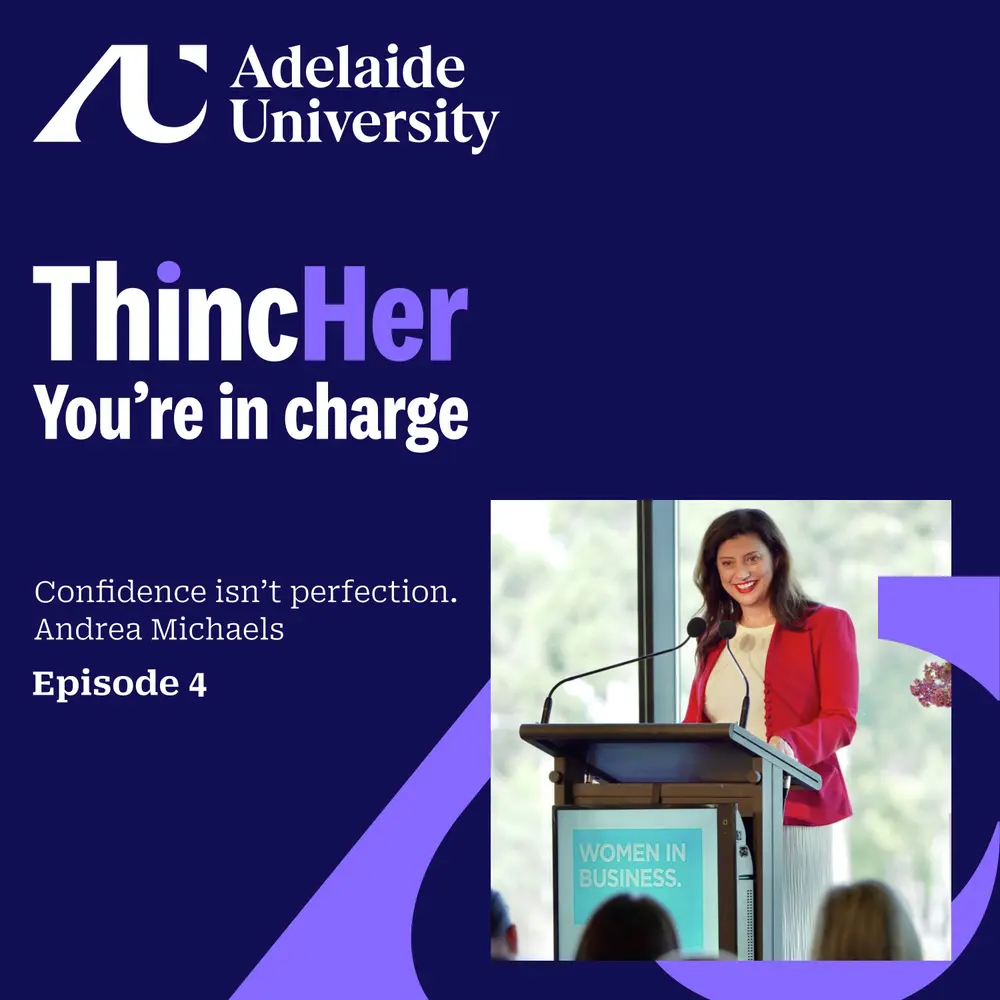
Before Andrea Michaels held three state government portfolios, she was born to parents who fled Cyprus in 1974 with nothing and landed in Adelaide because it was as far from home as they could get. She grew up sandpapering cabinet doors in her dad's backyard workshop while her mum worked factory shifts, and that work ethic carried her through commercial law, a solo leap into her own firm, and eventually into South Australia's state government as Minister for Small and Family Business, the Arts, and Consumer and Business Affairs. She sat down with Sav Perera in September 2025. The conversation covers the real cost of public criticism, the barriers women still hit trying to raise capital, and the self talk, "tough it up, princess," that gets her through the hard days. A grounded, honest one for anyone building something of their own.
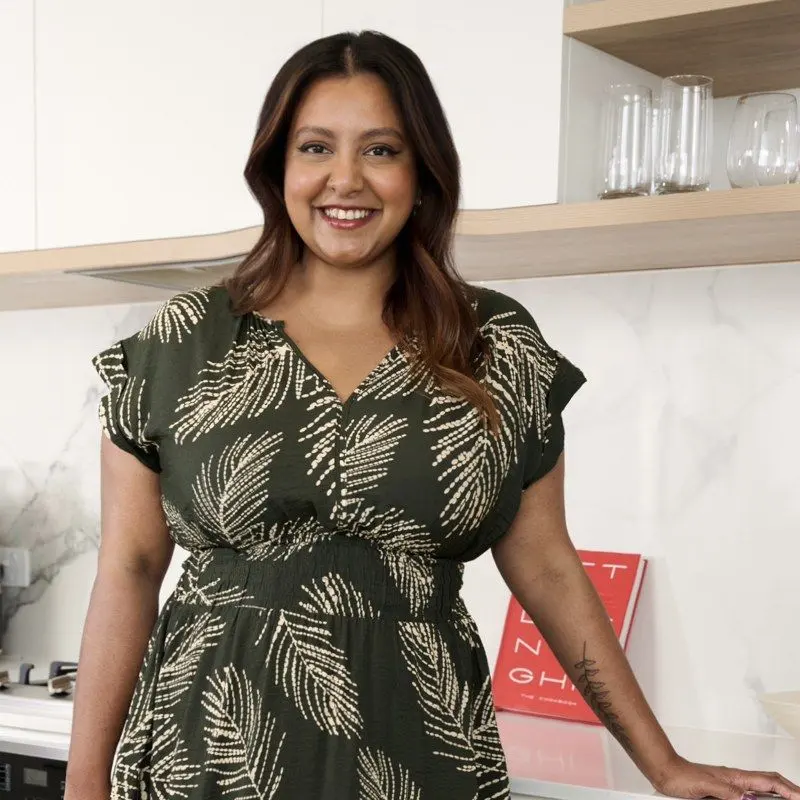
Transcript Search or select a timestamp to jump ▾ 0:00 Andrea Michaels: We know so many of our successful businesses here in South Australia are started by migrants. It got to the point where I don't think my values were necessarily aligned with where I was. 0:08 Sav Perera: Yep. 0:09 Andrea Michaels: If it's something that you love doing, you'll make it, you'll make it work. 0:11 Sav Perera: Yeah. 0:12 Andrea Michaels: You'll always make it work. 0:13 Sav Perera: Welcome to season 2 of You're in Charge. My name is Sab Pereira. I'm a chef, business owner, and now a judge on MasterChef Sri Lanka. Today's guest is someone who has experienced the intersection between business, government and community leadership here in South Australia. 0:31 Andrea Michaels: I'm Andrea Michels. I am the Minister for Small and Family Business, Minister for Arts, and Minister for Consumer and Business Affairs in the state government. And I'm also the mum of 2 beautiful boys. And my secret is my desire to keep watching the Kardashians. 0:48 Sav Perera: Andrea Michels represented the seat of Enfield in the state parliament from 2019 to 2026. During that time, she served as the Minister for Consumer and Business Affairs, the Minister for Small and Family Business, and the Minister for Arts. She was a passionate advocate for small businesses and women in leadership and had the unique opportunity to shape policy at one of the highest levels. We sat down with Andrea in September 2025 when she still held office. She's since stepped away from politics, and resumed her career as a lawyer at NDA Law. But we believe that this chat's focus on themes of leadership and confidence is timeless and will be beneficial to all our listeners no matter what stage of their journey they're on. So if you're a founder, a future leader, or someone looking for insights from a woman who's making real impact, this episode is for you. Let's dive in. Thank you so much for being here with us at You're in Charge. Let's go back to the beginning and start with your origins. Your family came to South Australia, to Australia, as refugees from Cyprus. And talk to us about that experience and how it shaped you to becoming who you are now in business, being an advocate for small business, and being in politics. 2:12 Andrea Michaels: So, uh, my family were in the northern part of Cyprus And Turkey invaded in 1974, so we fled. My brothers were 6 and 8, and I was in my mother's belly at the time. 2:24 Sav Perera: Oh my goodness. 2:25 Andrea Michaels: So fled the country. They went to London because my dad had some uncles who had already moved over there. That's where I was born. They literally left, packed a car and drove away. So left everything, went to London. I was born. They couldn't get visas to stay, so it was Where else are we going to go? Dad had an uncle here in Adelaide, um, so Adelaide became home for no other reason other than we got a visa and it was as far away as possible. And I think for my parents, picking a place that was as far away as possible to some extent dealt with their trauma. They just didn't want to deal with it. Yeah. Um, so they went as far away as possible. Adelaide was it. They came here and typical, I guess, refugee migrants with nothing, worked really, really hard. Dad started his own business about a year in. Uh, he was a cabinetmaker. Um, so literally the workshop was in our backyard growing up. We were all there on, you know, school holidays and weekends sandpapering doors and, uh, putting cabinets together and stuff with him. So I sort of grew up in business, uh, from that, um, aspect. Mum worked in a factory during the day and then helped at night as well. So. 7 days a week working. And I think that kind of drove my work ethic. 3:46 Sav Perera: Yeah. 3:47 Andrea Michaels: Um, and also, I guess, drove the— I guess the interest and the passion in social justice, um, to help people who have had it pretty rough. 3:56 Sav Perera: Yeah. 3:57 Speaker: And 3:58 Sav Perera: just sort of like expanding on that, because I come from a migrant background as well and I'm first generation, how do you think like that's actually— that experience actually now sort of has changed your lens or or impacts your lens on how you view migrants and the space of small business and building up small businesses? How does it impact you day to day, do you think? 4:21 Andrea Michaels: We know so many of our successful businesses here in South Australia are migrant, started by migrants. So there is some inherent, I guess, drive to be successful if you've come to Australia. Um, you've either, you know, you've done it tough to come here. This is your chance of an opportunity. And Australia is a great place for opportunity. My brothers and I have all gone to uni, all had careers. So, um, to be able to support small businesses, particularly at that migrant level where they might not know the systems, they might not necessarily have the business skills. You know, my dad was an excellent carpenter, but did he know how to do marketing or anything like that? No. Um, so. in trying to translate that into my role now as Small Business Minister, a lot of our programs are around skill building for business owners. 5:12 Sav Perera: Yeah. 5:12 Andrea Michaels: So certainly trying to take that and make practical changes, that's going to help. 5:16 Sav Perera: I, I love that we're talking about this because this is so topical at the moment actually in Australia. And you rightfully said, you know, small businesses are the backbone of this country. Like, we're literally what builds the economy. And I think especially in a place like South Australia where we're still very community-minded and protective of our small businesses. I think it's really valuable that you said that as well, because I know we've got listeners from diverse backgrounds, uh, and no doubt people like myself who have chosen to quit the corporate world and go into business full-time as well. Um, but I also actually want to talk about how, you know, that beautiful upbringing that you had, hard as it was, it formed your work ethic. Um, How did that sort of translate now getting into politics? 5:59 Andrea Michaels: A little bit was because our family had that pathway where it was really tough in the early years, you know, kind of typical Greek migrants worked really hard but made money. Yeah. And then seeing the people around me kind of forget that of new migrants coming in. 6:20 Sav Perera: Yeah. 6:20 Andrea Michaels: Actually kind of prompted me to get a lot more interested in politics. 6:24 Sav Perera: Yeah. 6:25 Andrea Michaels: from that perspective, you know, you'd hear comments from people around that I thought were not okay. Comments about get out of our country when that was us 40 years ago or 50 years ago. That wasn't okay with me. And that kind of was the little seed that prompted a bit more engagement and interest in politics and how we can influence those sorts of discussions. 6:48 Sav Perera: Yeah. Thank you for saying that. I think personally I resonate with that quite a lot because I've been here for 13 years now. It's— it is confronting when you hear things like that. And I think it's hard because like there are the Greeks and the Italians and like after that, you know, the Vietnamese. Yeah. Who see all that stuff happening and go, well, we are, you know, such a vibrant part of the community and the economy in not just Adelaide but in Australia in general. But just Coming back onto— so you're the Minister for— and I'm, I'm gonna, I'm gonna get this right— Small and Family Business, the Arts, and Consumer Affairs. Yeah, lots of different hats to wear. Do all of those hats sort of meet in the middle somewhere, or how do you juggle all those different aspects? Because that's, that's a few different things. 7:37 Andrea Michaels: Yeah, um, they're all different. Yeah, so, um, small business, I guess— I know I ran— I was a commercial lawyer, tax lawyer before this, so I ran my own law firm. Um, so small business is kind of, it's natural to me, um, knowing that, knowing that sector. Um, so I've been able to do a lot of really good things in that space. Um, consumer and business services is very regulatory. 8:05 Sav Perera: Yeah. 8:05 Andrea Michaels: You know, we're regulating traders, we're regulating liquor licensing. It's very regulatory. So that keeps my lawyer brain going. Um, and arts, uh, is probably the one that I had to learn the quickest and the most. But it's an area where it's my problem solving, right? Trying to engage with the sector and work out what their problems are and how we can deal with it. And that ended up with our arts policy we released. It's touching different parts of my brain. 8:34 Sav Perera: And you're a mum as well. 8:35 Andrea Michaels: And I'm a mum, yeah. 8:36 Sav Perera: So it's just a lot of things to— 8:39 Andrea Michaels: Yeah, yeah. A 8:40 Sav Perera: lot of fingers in lots of pies that you've got to manage at the same the same time. Lots of pots on the burners, I would say. 8:46 Andrea Michaels: Yeah, 8:46 Sav Perera: I'm a chef. Um, but I also actually want to talk about just sort of touching back on something that you said about, you know, you've had like the work ethic with your dad, uh, being cabinet making, but did you sort of have a business yourself as well at some point? Or— 9:02 Andrea Michaels: Yeah, so, um, like I said, commercial and tax lawyer, and I worked in some large firms all the way up till 2015, and then I decided I'd had enough of that and started my own firm. 9:12 Sav Perera: Yeah, I actually really want to sort of dive deep into that because that's a big part of a lot of the guests that we've had on the show. That's a big part of what they've done. Uh, it's also a part of why I'm here because it's also what I decided to do. Just went, yeah, I'm just going to quit my job and just start something new. No doubt a courageous decision because you've got the comfort of being employed in a sense. 9:36 Andrea Michaels: Yeah. 9:36 Sav Perera: Uh, versus going, okay, well Now I'm just going to leave all of that. Talk to us about that sort of leap. Where did the confidence come from? Were you confident? And yeah, that process. 9:46 Andrea Michaels: I wouldn't say I was confident. Um, I go a lot with my gut. 9:52 Sav Perera: Yeah. 9:52 Andrea Michaels: And it got to the point where I don't think my values were necessarily aligned with where I was. 9:57 Sav Perera: Yeah. 9:58 Andrea Michaels: Um, at that point in time, I was a single mum with 2 boys that were 3 and 8, so they were little. Um, so it was terrifying from, you know, a regular income that can support that to being on my own and going into business. And also a little bit thinking, uh, coming from a larger firm, it was still quite blokey. 10:20 Sav Perera: Yeah. 10:20 Andrea Michaels: And I wasn't confident that my clients would follow me. 10:24 Sav Perera: Yeah. 10:25 Andrea Michaels: Whereas, or would they just stay with the brand name? 10:28 Sav Perera: Yeah. 10:28 Andrea Michaels: Of where I was before. Um, but something in my gut said, this is it, you've got to do it. Yeah, you've got to get out, you've got to do what you want to do. So I did start it, and I think what surprised me was actually how supportive people were. 10:42 Sav Perera: Yeah. 10:42 Andrea Michaels: Um, to go out into a small firm, it's scary, but you have to believe that the quality of what you do, whatever it is— in my case, the advice I was giving— was there, and people would recognize that and support it. And they did. And that was Yeah, pretty remarkable. 10:59 Sav Perera: So for our young listeners and people that are new in business, how would you say, like, because you've obviously seen that support in action in your life, not everyone may necessarily have that, which means you have to come from, come from a place of confidence. How do you then foster that confidence? 11:18 Andrea Michaels: Well, to me, it's all about knowledge. 11:21 Sav Perera: Yeah. 11:22 Andrea Michaels: Like I, if I think knowledge is what gives you the power and the confidence to do what you do. So I touched on before, you know, you could be the best cabinetmaker, but not know how to run a business. You've got the opportunity to go and build those skills. 11:36 Sav Perera: Yep. 11:37 Andrea Michaels: So, you know, for me being able to, you know, I had a law degree, I had a commerce degree, I knew numbers, I knew how to run business. Yeah, I had those business skills. That gave me, I guess, the confidence to do it. And so if you're thinking about starting a business, as much as you are great at what you do, you know, if you're an amazing chef, you also have to learn business skills to run it. 12:03 Sav Perera: Yeah. I'm learning that firsthand, by the way. And I think for me, what I've learned is I can't actually, even though I think I can do everything, I don't need to be doing everything. I can delegate. And delegating is what makes you money in business. 12:17 Andrea Michaels: Yeah. 12:17 Sav Perera: And I think a lot of people struggle with that because it is your baby. It's this thing that you've fostered and nurtured, and then suddenly you're giving a part of the responsibility to someone else. I actually do want to sort of talk about your thoughts when it comes to building business, when it comes to delegating and building a team. How do you relinquish control? How do you sort of know You know, this is the right fit for me. What's that sort of decision-making process like for you? 12:47 Andrea Michaels: To me, it's around culture and having people that are really aligned to your values. I don't think you can fake it. I think you just got to be yourself and you'll attract people who are like you. And then, you know, you can train people coming through. You can get really good advisors. You don't have to do everything. Um, you can get a great lawyer, you can get a great accountant, you can get a great marketer that comes in and supports you, but as long as your values are aligned, I think it works a lot easier to me. You can trust the person if they share your values and they understand what you're doing and why you're doing it. 13:26 Sav Perera: Yeah, I now actually want to sort of talk about a little bit of the politics side of things as well, because you're in— you're serving the public essentially. and we've got a vibrant culture of both the private sector and the public sector, how things are run. What do you think the private sector can actually learn from the advocacy and how things are done in terms of the social support that the public sector actually seeks to do quite well? 13:55 Andrea Michaels: Yeah, um, I think if you're in business, the why, the why of what you're doing it for is really important. And it's called the public service for a reason. Their mission is to serve the public. And you kind of see it really close up when you get to work with agencies that the people in there are actually just trying to help the community. I think that's a piece, you know, if you can take that into your business, I think that is a positive to make sure your business is not not just there to make a buck. 14:30 Sav Perera: Yeah, 14:30 Andrea Michaels: it's there to support a community. You can do really good things from a business to support local communities. And so if we could take that sort of ethos of serving the public, 14:41 Sav Perera: yeah, 14:42 Andrea Michaels: into business, I think that's a good thing. 14:43 Sav Perera: How do you keep that ethos alive still? 14:47 Andrea Michaels: I think in the back of mind, you've got to do it for the right reasons. And to me, it's all about, you know, I was running a law firm and I was helping my clients. That was why I was doing it. Yeah, I was genuinely just helping my clients, and now I'm helping on a bigger scale. I'm problem solving on a bigger scale. 15:04 Sav Perera: Yeah, I suppose I— if you're sort of privately running a business, people may view it differently, um, in which case, even if you're in the private sector, 15:14 Andrea Michaels: yeah, 15:15 Sav Perera: how do you reframe your thinking? 15:16 Andrea Michaels: For me, running a law firm, for example, we did a lot of pro bono work. 15:21 Sav Perera: Right. 15:21 Andrea Michaels: So we were doing things for free to help people who couldn't afford that kind of advice. Um, that was a good thing that we were doing. Uh, other businesses might, you know, do cooking for homeless shelters or things like that. There's always something, no matter what business you're in, that you can actually do some good. 15:41 Sav Perera: Yeah, I love that you said that. I know some people are going to think, oh, but things are getting more expensive. You're you still need to put the business at the forefront of your mind. How can I offer free things and how can I still, you know, do good but still make money? Do you have any advice for people that might be thinking, oh, I can't afford to do this because, you know, I'm going to lose money on the business? 16:04 Andrea Michaels: Well, you just got to run a good business. You've got to get the business skills going. That's got to be fundamental. Uh, and if it's something that you love doing, you'll make it, you'll make it work. 16:15 Sav Perera: Yeah. 16:16 Andrea Michaels: you'll always make it work. 16:17 Sav Perera: Yeah. And I think that's also the confidence piece as well that's coming through. You talked about, you know, the industry that you were in being male-dominated when you started. Um, and no doubt I actually even now in 20— or sorry, in 2023, hospitality still very male-dominated. How do you sort of find your voice in a situation like that? 16:40 Andrea Michaels: I think after enough years of experience, I figured it was okay to be me. And I don't know at what point in my life that happened, but there certainly was a lot of pressure as a younger lawyer to be like the blokes. 16:54 Sav Perera: Yeah. 16:54 Andrea Michaels: Uh, and then, yeah, at some point in time I just thought, I can't do this. I'm me. And if you want to engage with me, here I am. Uh, so I guess that was a little bit of confidence coming through with experience. 17:08 Sav Perera: Yeah. Is that sort of— you find that that's the same sort of confidence now that carries you through when you say walk into a room and you've got, you know, not just the business side of things, but you are advocating, you're advocating publicly? Has that changed now, or how does that look like now, the confidence piece for you? 17:26 Andrea Michaels: Again, I still take that ethos of I'm me. 17:30 Sav Perera: Yeah, 17:31 Andrea Michaels: there's obviously a lot of pressure from media and other people about what a typical politician should be. Yeah, I, I don't want to buy into that. 17:40 Sav Perera: Yeah, and actually that segues perfectly into talking about the resilience piece of it, um, because there's obviously a lot of criticism when you're so publicly in the eye, especially when it comes to politics. Everyone's got an opinion, uh, about what they think is the right thing to do. Uh, they obviously don't see all the invisible strings in the background that you deal with. And no doubt there's a lot of rejection, not just in politics but in business as well. Um, talk to us about maybe perhaps even a scenario where you've had to deal with like intense criticism or rejection. What happened? How you sort of worked through it? 18:21 Andrea Michaels: It happens all the time, and I think probably in politics the pressure point is people criticizing you when they don't know you or don't even want to get to know you. It's just you're a public person, which means you don't really exist in real life to them. 18:37 Sav Perera: Yeah. 18:38 Andrea Michaels: So I guess that's probably, you know, if, if I could change that, even if people don't agree with you, that's fine. But as long as they've made the effort to know what the issue is that they're objecting about rather than objecting about you personally. 18:54 Sav Perera: Yeah. 18:55 Andrea Michaels: Um, and sometimes people will just say random stuff. Social media abuse. Yeah. And don't realize that actually you're a real person and you have feelings. 19:03 Sav Perera: Yeah. Um, yeah, unfortunately being on TV, 19:08 Andrea Michaels: yeah, 19:08 Sav Perera: you would 19:08 Andrea Michaels: have that. 19:09 Sav Perera: Yes. 19:10 Andrea Michaels: Yeah. 19:10 Sav Perera: Um, and I think it's like, would you say something like this to someone's face is what I always think. Like, yeah, you read comments and you're like, would you actually say this to my face if you saw me in real life? I just, I find that a bizarre one actually. But I also want to talk about barriers to entry for women Um, into both business and politics, actually. I think, um, we've had quite a few female politicians in Australia now that has sort of really emboldened women to get into the politics side of things. But I think there's still a lot of barriers for entry for women. What do you do in your work actually to ease that? Because you stated that, you know, it's not just about equality, having women in business it's about building the economy. What makes women special? What— why do we need more of them? Like, obviously we need more of them, but why? Like, what's the why in your mind? 20:06 Andrea Michaels: Yeah, both politics and business, I think we just bring different strengths. And so what you might see as the typical politician in terms of that very combative type role, if we could have greater dominance of women who bring a different, different perspective to things, I actually think that makes the conversation better. 20:30 Sav Perera: Yeah. 20:30 Andrea Michaels: And in business as well, um, to have females who, you know, they do have, not necessarily exclusively, but they do have different characteristics and it can change the dialogue. Um, when you're talking about, you know, my world, commercial law firms with a bit more balance in gender, it tends to change the workplace culture. 20:54 Sav Perera: Yeah. 20:55 Andrea Michaels: And we're all in a skills shortage and we're all trying to fight for people, you know, in business. So to get that culture right, I think, is really positively influenced by having gender equality. 21:06 Sav Perera: Yeah. And just in terms of through your work, through advocating for small businesses, I'm sure you touch on the lives of a lot of women. What are the common sort of like barriers that you come across of women getting into business, whether it's legislative, whether it's a state-level thing, a federal-level thing? 21:26 Andrea Michaels: It tends to be more around, I guess, the system itself. So, you know, typically financing is a lot harder for females. You know, when you talk about startups and you talk about venture capital and you're seeing it's still only like something like 2 or 3% of venture capital goes to female-owned businesses, there's still some systematic problems. 21:48 Sav Perera: Yeah. 21:48 Andrea Michaels: Um, and then you've got work-life balance, if you call it that. 21:55 Sav Perera: Yeah. 21:56 Andrea Michaels: Multiple jobs. 21:57 Sav Perera: Yeah. 21:57 Andrea Michaels: Uh, so when you go into business, it is your baby. It is 24/7. Um, to be able to juggle that with kids. Um, so until we actually really see fathers stepping up, 22:11 Sav Perera: yeah, 22:12 Andrea Michaels: and taking that kind of load, uh, it's still going to be a juggle just from that. 22:16 Sav Perera: Yeah. And because you said you were a single mum with 2 children, 2 boys, no doubt that that's obviously, you know, you've gone through it, you know exactly and intimately what that struggle feels like. So thank you for actually sharing that. Um, I wanted you to actually expand on, because you said that it is a systemic problem, and I think you— the fact that, you know, women, uh, I think one of the common things that I find with myself and something I've noticed is women, there's a lot of financial jargon, there's a lot of business jargon, and it almost sometimes feels like it's a club if you can't speak that language. you're othered because you're like, well, you're not like— you don't know about these reports, you don't know how to run this. How did you learn? Like, where— like, was it just knowledge seeking, uh, because you went to uni and you learned these things? And also, how do— how would you encourage women to actually learn that side of business, learn that side of the financial literacy side? Um, because I think that's a big barrier that I've noticed. 23:23 Andrea Michaels: Yeah, I think that is huge. I mean, I had the benefit of loving maths at school, which made me go into commerce as well as doing law. So I kind of had the education to help me on that front. Um, but one of the things I did when we came into government was start our Women in Business program, which is aimed at that. It's mentoring, um, part of the program. There's workshops, there's a whole lot of free stuff you can get access to that helps you build that skill set and that knowledge. 23:53 Sav Perera: Yeah. 23:54 Andrea Michaels: Um, yes, it takes time, but I think you really have to support yourself to get to that level. 24:02 Sav Perera: Yeah, actually, I didn't know about that, so that's good as well because I was shocking at maths at school. So for me, having to learn, like, to get my head around numbers was just— I, I still struggle. Uh, I very luckily have a partner who's an accountant, uh, who works for the federal government, so it's like he's across all of it and what I do probably feels like tiny fish in a massive pond to him, which is fine. It's still support. But I think there's a lot of people that don't have that luxury. 24:33 Andrea Michaels: Yeah. 24:33 Sav Perera: And lack the financial literacy. And actually, I think just that, um, you touched on this before, you said, you know, there's a perfect politician. There's always that pressure, I think, on women to be, oh, you have to like be this perfect like businesswoman and you gotta be a certain way, um, and I think that can be a barrier to entry as well. 24:55 Andrea Michaels: Yeah. 24:56 Sav Perera: How do you sort of— or for yourself, how did you— I know you said like you had the confidence and you didn't care what people thought. I wouldn't 25:03 Andrea Michaels: say I 25:03 Sav Perera: didn't care, but yeah, how do you sort of like go, okay, well, I, I know I'm not perfect, but I still want to forge ahead? 25:11 Andrea Michaels: Yeah. 25:12 Sav Perera: How do you sort of keep going when I think all women have that, oh, I'm not perfect, so therefore I'm not even going to try mentality. Yeah, 25:20 Andrea Michaels: yeah, yeah. It's a little bit of what I've— my own sort of self-talk, which is toughen up, princess. Every time things get tough, I have in my head, I think, toughen up, princess. Um, nothing of what you're going through is, you know, is fatal. It's hard, but it's not fatal. Um, so I think it's a little bit of trying to convince myself. I still— and I shouldn't keep saying this— I still say, you know, fake it till you make it. 25:49 Sav Perera: Yeah. 25:49 Andrea Michaels: And I still feel that myself. 25:51 Sav Perera: Yeah. 25:51 Andrea Michaels: Um, so maybe one day I'll stop and stop having that talk. 25:55 Sav Perera: It's so funny because like, then a lot of the guests that we've had here have actually said the same thing. They're like, yep, just fake confidence until you actually start feeling the confidence, and then maybe one day you'll feel the confidence. And I think This is something that I've found common in these talks as well, which is imposter syndrome, which we all have in ample amounts. And I think it is— maybe that's just my experience, but I think women do sort of feel it a bit worse because society and systems, as you said, are set up to kind of feed that negative narrative. Yeah. about your skill set. Talk about imposter syndrome in your life then versus now. Like, does it still play a role? If so, you know, like, I guess I know you said fake it till you make it, but any advice that you might actually have for our listeners that are thinking about going into business that might actually feel this sense of, oh, I don't actually know what I'm doing? 26:56 Andrea Michaels: Yeah. 26:57 Sav Perera: How do you work through it? 26:58 Andrea Michaels: Yeah, like I said, I think knowledge is power. I think You don't have to be perfect. You know, the number of businesses that are like right at the beginning who think they can't start a business because their website's not perfect or, you know, some of those things, you just, you just got to try. You got to take a risk. And it is risky. Going into business is risky. Um, going into politics is certainly risky, but take the risk. Um, you're not going to be perfect at everything. 27:29 Sav Perera: Yeah. 27:30 Andrea Michaels: Uh, and different parts of your life are not all going to be perfect at the same time. 27:35 Sav Perera: Yeah. 27:35 Andrea Michaels: So don't think you can have everything perfectly in a little bow. 27:39 Sav Perera: Yeah. 27:40 Andrea Michaels: But if it's something that you love doing, do it. Just start it. Just do it. 27:44 Sav Perera: I'm sure our listeners, listeners can relate to this, but I actually resonated that deeply, especially this week. I've been like, nothing's going right. Everything's just kind of falling apart and all the plans that you kind of have just get disrupted because, hey, life happens, health happens. And I think that's a big part for women as well because health challenges for women are so vastly different. How do you sort of navigate now, uh, your kids are, you know, grown now compared to— 28:13 Andrea Michaels: 16 or 21 now. 28:14 Sav Perera: Yeah. Um, but how do you navigate that, wearing that particular hat, and that, as you said, the work-life balance aspect of it? 28:22 Andrea Michaels: Yeah, uh, I think you just got to be present wherever you are. So for my kids, I almost— not that they don't know what mum does, of course they do, uh, but it's not about that when we're at home. So I definitely, you know, I'm at home, I'm mum, they're, they're absolutely the number one priority. The thing I'm really bad at is fitness. And yeah, uh, I feel like there's never enough hours in the day. 28:50 Sav Perera: That's so refreshing to actually hear you say that because we're all the fed— the thing of, oh, I'm like, you know, I, I'm just like gonna spend an hour at the gym. Like, who's got the time? 29:00 Andrea Michaels: Yeah, 29:00 Sav Perera: I've got the time. 29:01 Andrea Michaels: Yeah. 29:01 Sav Perera: But then how do you sort of balance it, um, you know, against— you still have to take care of yourself as well, which is where I think, um, I love asking our guests about burnout, um, because obviously the women that we have on this podcast are in big positions of responsibility, uh, they're doing such important work and it's a lot to take on. How do you handle burnout now? How did you handle it when you were younger? Is it different? 29:31 Andrea Michaels: Probably the older I get, the more resilient I get, I think. Yeah. Yes. When you're out every night of the week at a function, at some point you get just really tired. I'm not great at taking time for myself. I admit that. 29:46 Sav Perera: Yeah. 29:47 Andrea Michaels: But I also haven't necessarily fallen in a heap because of it. So I think it is just a resilience that I'm not sure where it comes from. Maybe it's, you know, how life started out for me. I don't know. But it's— I think it is that resilience. And I think when you're doing what you love, it doesn't feel like a drudge. 30:06 Sav Perera: Yeah, it doesn't feel like work. 30:07 Andrea Michaels: Yeah. 30:08 Sav Perera: Yeah. Speaking of resilience, how do you continue the resilience? Because you've come from— I can already see, you know, you've come from a migrant background, and that would no doubt build bags of resilience. But how do you now continue the resilience being in the position that you are, wearing all the different hats and all the different departments and the people that you manage? 30:33 Andrea Michaels: Yeah, I think particularly in politics, there are some things that are just out of your control. 30:39 Sav Perera: Yeah. 30:40 Andrea Michaels: And that's probably a biggest shift from having my own business is there is certain things that are just out of your control. But at the end of the day, whatever goes wrong, whatever doesn't go your way, it's not the end. 30:56 Sav Perera: Yeah. 30:56 Andrea Michaels: It gives you another chance to do something else that's different. So hopefully, um, that, that comes through and, um, you know, many years ahead of just just being able to help people. Like, that's, that's my reason for being, I guess. 31:11 Sav Perera: Yeah, you've got your calling in life. Yeah, I think, um, that was very important for a lot of our listeners to hear because sometimes, especially as you said, business is risky. You take certain decisions, things don't pan out, and it can feel like the end of the world, especially when there is a lot of money involved in the decisions that you make. And I think there is no way to sort of practice For that, and which you don't realize until you end up actually being in that position. Okay, well, too bad I lost $5,000. What am I going to do about it now? Do you have sort of a takeaway message for young women and our young entrepreneurs that are listening to this podcast about your work and what you do, and especially in terms of small business? 31:56 Andrea Michaels: Yeah, yeah, I think Um, small business, we said it before, it's like your baby. And if it's something you love doing, do it. Do it in a way that you are arming yourself with the skills and the knowledge to do it the best that you can do it. 32:13 Sav Perera: Perfect. Now we love asking this question from all of our, all of our guests. What is something that you want to master for yourself in the next year, whether it's in professional Personal, what's something that you want to master for yourself? 32:28 Andrea Michaels: Yeah, maybe I come back to fitness. I think I come back to fitness. I think it's, uh, the oldie— yep, it's less of a good thing to have than a must thing to have. 32:40 Sav Perera: Yeah. Thank you so much for your presence here today. Thank you so much for being here. There's a lot that I resonated with, with what you said, and I think it's because in some ways you and I have similar backgrounds. And I think it's we have a very diverse range of listeners as well. So it's been really valuable, and I think very encouraging. Here you say just keep doing, just keep going, and it's not the end of the world. So just really want to say thank you for your time and for being here, Sav. My chat with Andrea remains to be one of the best perspectives that I've actually received. Thus far in my own business journey, because of the way that Andrea actually approached building businesses with the very real human element. Because everything at the end of the day has a human element and a human cost. And I really like that despite being a former minister for small and family businesses, that it was so very apparent with her that the community. Mindset, which I think is such a great thing that is still so vibrant and alive here in South Australia, was carried through in the way that she spoke about how we can support people, how we can actually use our time in productive ways, not just be driven by the dollar sign but also keep that as a factor while helping people that need that extra little bit of help in the community. The humanity with Andrea's explanations on building business really touched my heart, and I'm actually really interested to see how I can implement some of these strategies in my own business journey going forward. Make sure you hit follow and share this show with your friends because our next guest is someone who has truly forged her own path spearheading multiple successful and mouth-watering South Australian businesses including Other Delights Cheese and Grunfeld Brew. Join me as I sit down with Cherie Sullivan to learn all the ins and outs of a truly inspiring story. 34:44 Speaker: The value fit is often more important than the performance because you can teach performance. You can't teach value if it's truly not who they are. 34:55 Sav Perera: Keep inspiring, keep striving, and always remember, you're in charge of your business journey. You're in Charge is brought to you by ThinkHer, an initiative of ThinkLab at Adelaide University. Google ThinkHer, that's T-H-I-N-C-H-E-R, to join our empowering community of like-minded women in business. You're in Charge was recorded on Kaurna land. No transcript lines match that phrase. Try fewer words.



 ▶
 ▶
 ▶
 ▶
 ▶
 ▶
 ▶
 ▶