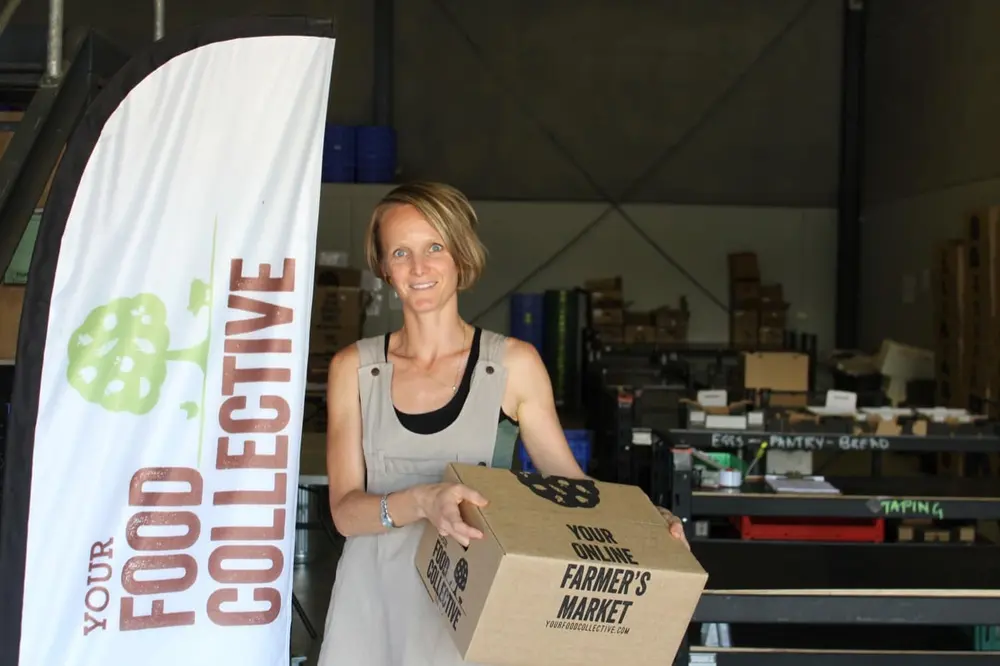
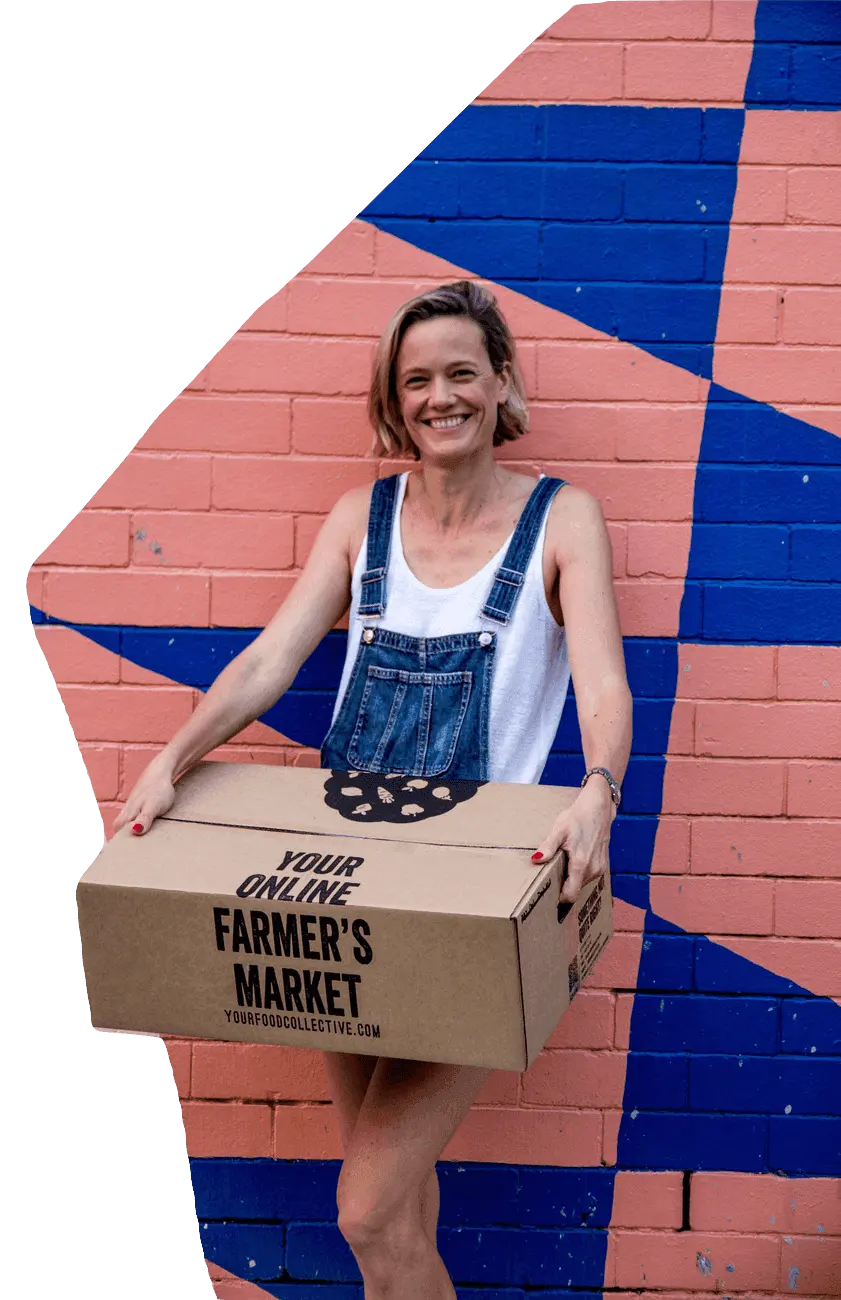
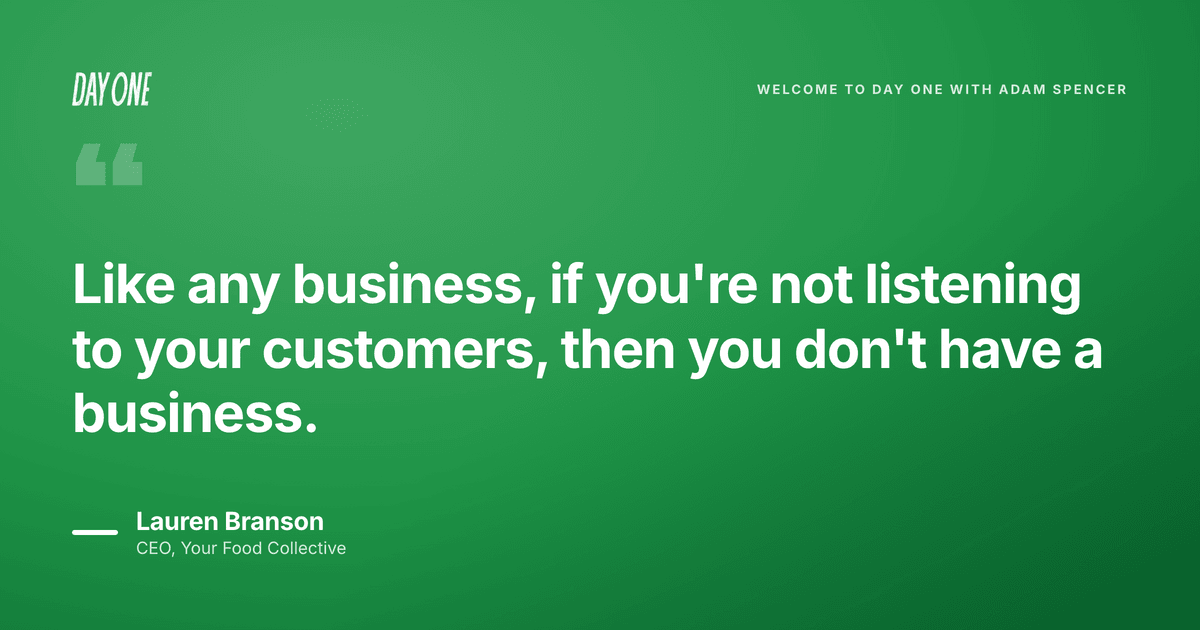
Transcript Synced · select any line to jump ▾ 0:00 Adam Spencer: You're listening to a DayOne.fm show. 0:05 Lauren Branson: What drives you to make bold moves, to build something that didn't exist before, to live, lead, and choose life with intention? Welcome to Perspective X. I'm Pauline Fatowi, and this is not your typical business podcast. Each episode, I get to speak to extraordinary entrepreneurs and leading innovators to unpack what truly fuels their journey. Not just the wins, but the inner work, the overlooked decisions, the mindset shifts, and the personal moments that sparked something bigger. This show is about the ripple effect of choice, the kind of deep accountability that lets us respond to life rather than react to it. Because when you realize everything is temporary, and you are the creator of your own experience, you start to play the game differently. So if you're curious about how people build meaning alongside success, how they evolve through challenges and shape the world with intention, this is your invitation to listen in. Perspective X, where we go beyond the highlight reel and into the moments that changed everything. Available now wherever you get your podcasts. So we decided to fix that, essentially. And you know, being a mum, you feed a lot of people a lot of times, and you just generally, like, the food you get from the supermarkets is actually crap. Like, it is not sustaining you, there's no nutrition in it, farmers aren't paid fairly for what they do, 'cause that's another huge part of what we do. 1:41 Adam Spencer: Hi, and welcome to Day One, the show for regional startups and the organizations that support them. Today's episode was made in part by the support of New Economy Media, publisher of New Economy News, innovation news without the jargon. Read more at neweconomy.media. I'm Adam Spencer, and today I'm going to share with you the story of Your Food Collective with Lauren Branson, the founder. 2:05 Lauren Branson: Hi, I'm Lauren from Your Food Collective. 2:07 Adam Spencer: And co-founder Cara Cooper, who we'll meet a little later. Your Food Collective is serving over 40,000 1400 people since opening in 2017 at an 80% customer retention rate with a very good average order value. They have hubs all over Newcastle where you can collect your orders and catch up with your local champion. And they've recently entered the Sydney market too. Your Food Collective is growing and bringing truly fresh food to everyone. Now let's go back to day one where this story begins. 2:40 Lauren Branson: I guess I've always been really passionate about the environment, and so as I went through uni, I studied biodiversity and conservation and then did a master's in invertebrate ecology, particularly ants and the impact of fire on them. 3:03 Cara Cooper: Wow. 3:04 Lauren Branson: And then I guess, 'cause yeah, for me, I really wanted to be able to understand when I was studying the health of the environment and how to improve that. And I guess I'm just passionate about the environment, so want to lead a life where we're, I guess, enjoying it but also supporting it and making sure it's going to be there for future generations. 3:22 Adam Spencer: Lauren went on to become an environmental scientist and a trained ecologist, helping to manage threatened and invasive species. Lauren mentioned she wanted to make sure that the environment would be there for future generations, and part of that future generation is her kids. 3:36 Lauren Branson: Um, I was lucky enough to take time out to have children, so I then went back to work part-time, to my previous work, and I guess I guess I wasn't really that passionate about it anymore. And then after, you know, being afforded that luxury of having kids and spending time with them, I decided if I was going back to work, I needed to be really passionate about what I was doing. And I was just sick of not being able— of the lack of access to fresh local produce. 4:00 Adam Spencer: So Lauren began to plan and research the idea that would become Your Food Collective. Meanwhile, without Lauren knowing, her to-be co-founder and cousin found herself in a similar situation. Meet Cara. 4:14 Cara Cooper: Hi, my name's Cara Cooper. I'm the co-founder of a company called Your Food Collective. I think I've come full circle. So my interest when I was younger was health and sports, and so I studied that. And then typically as Australians do, go overseas, and I ended up doing a corporate career in corporate insurance of all things, and which was amazing. It allowed me to, you know, work in London, working Hong Kong, travel, meet heaps of amazing people. And then I came back to Australia and was working in that. And, you know, very cliché, but after having kids, I think you, you know, reassess and decide that, you know, what your time is precious and that's what you do with it. You, I think, have to choose wisely. So I didn't really have an I don't have a passion for insurance. I'm not sure anyone does. But, you know, I just started questioning things and, you know, what did I really love and what did I want to do? 5:17 Adam Spencer: So, here we are. Both Cara and Lauren have recently had children and their young families were growing. That caused them to take pause for a moment and assess where they were in life and what they wanted. 5:29 Lauren Branson: But then I think also having kids really makes you think, "Oh, right. Great." And then also, isn't it somewhere like in your mid-30s where you get to and you're like, this is my life. Like in your 20s, you're like, yeah, yeah, whatever, I'm making it, I'm getting there, that's good, I'm still like creating my life. And in your mid-30s, I feel like it's like, oh, this is it, like I gotta do it. And I think, you know, you don't want to wake— and you only get one shot at it as well— you don't want to wake up in 20 years' time and go, oh great, I should have done something else, I should have given it a go. 6:01 Adam Spencer: Lauren wasn't necessarily looking for a co-founder, but one day during a family get-together, these two different women who found themselves in similar stages of their lives, had a conversation that set Your Food Collective on a path to where it is today. 6:17 Cara Cooper: Luckily enough, I was away on a family weekend and my cousin Lauren said that she was looking to start a business in food. This would have been in 2016. Okay. So at that time I had one child and I was working in corporate full-time. And I just, you know, that's sort of not the life that I wanted, you know, just, rushing to pick up kids from daycare. Maybe naively thought that having a startup would give you so much more time. It's probably the complete opposite. 6:52 Lauren Branson: That's funny. 6:52 Cara Cooper: But it does give you flexibility. I think I'm happy to say I'm a hard worker and I kind of wanted to build something for myself. I think when you're working that hard and it's for yourself and you love it, it's again cliché, but it's not— you still love doing it no matter how hard you're working. 7:13 Lauren Branson: Yeah. 7:14 Cara Cooper: So yeah, so it was, so, and, you know, luckily Lauren and I, you know, they never say, well, they say never go into business with family, but luckily Lauren and I work extremely well together. It might have something to do with the fact that our dads are twins. I don't know. There's maybe some genetics at play, but, you know, we complement each other so well in how we work. And that has been a huge plus. For us in growing Your Food Collective. 7:42 Adam Spencer: They didn't team up there and then, though it did turn out to be a natural fit. 7:48 Cara Cooper: You know, Lauren was just having this conversation and in my mind, you know, I thought, yeah, that sounds amazing and something that I want to be a part of. And, you know, Lauren is a— she operates at an amazing pace and, you know, she's one of these high achievers and, you know, she's someone that I definitely would want to work with. So the conversation kind of went She was telling me about it and then I didn't jump on her right then and there, but I digested that a little bit and then I took it away and we spoke again and I said, "I'd really like to help you on this," initially. I spoke to my husband about it as well and then it went from help to, "I'd really like to be part of it and partner with you and build this business with you." And I think she was excited as well because it's that validation probably that She needed, you know, it was an opportunity that I was looking for, so it just, yeah, it was a natural fit. And by that stage, Lauren had done a bit of background work on it, and so we jumped in together, and yeah, 2 years later, we're still here. 8:53 Adam Spencer: And so, with the blessing of their families, they forged ahead together to build Your Food Collective, both with a passion for food and the environment, with a desire to build not only something for themselves, but to build a future for their children. To help build a more sustainable and better world. Now, to that better world, and where to begin? With the problem? Building access to more nutritious food, building communities, and paying farmers fairly. 9:21 Lauren Branson: That's another huge part of what we do is paying producers fairly. So I guess, and also having kids, at the heart of what I did was trying, or what I wanted to do was create a sustainable a better future for them. So I needed to be working positively towards that so that I knew I was leaving something behind. And you know, you just have to look at the fires that we're having at the moment. Yeah. It's like last Friday was an amazing example. I'm sure where you were, by 3 o'clock it was completely dark. It felt like dusk for the rest of the day. Like it is not business as usual. Like our world, the environment, the health of the Australian ecosystem, and you know, it's globally, you know, at breaking point. It's at a crisis. And if we just keep on going, doing what we're doing, then, like, it's pretty much broken. But it is going to break, and there's not going to be any food growing around us. There's not going to be anything to sustain us. There's not going to be any water left for anyone. So it's all these things that we need to make positive steps towards changing. And food is a really— like, it's quite a complicated industry, but it's a really simple thing to look at when you come to the individual. I'm going to make a positive choice to make sure I'm eating local food on my plate as It's not that complicated. 10:27 Adam Spencer: So how are Lauren and Cara helping to take that positive step towards change? 10:31 Lauren Branson: So what we do is we're building local sustainable food networks. And if you look at what we do every single day and the impact that people have on the environment, the food we eat has a massive impact, and for most of it, a negative impact on our environment. So if you were trying to look at conservation of our environment, of threatened species, of the world we live in, then the easiest thing for all of us to do is to look at the food that's on our plate. So what we do is we get food from the farms around us and reconnect those networks. So it means that if you shop with us, which you should after this interview, you'll be, you know, you're living in Newcastle and you'll be buying food from farms across the Hunter Valley. That food's not faceless going down to a central market in Sydney and then getting bought by different retailers and shipped wherever, how many days after it's been picked. It's coming direct from a local producer to you. So historically, that's how we would have eaten. 11:23 Adam Spencer: Before launching their new business, like any new business, Lauren and Cara needed to understand their market and their customers while at the same time starting to build some buzz. 11:32 Lauren Branson: So I guess we did a lot of market research prior to launching because we wanted to make sure that obviously there was a market for what we were doing here in Newcastle. I wanted to make sure that we tailored what we were doing to our customers because I guess like any business, if you're not listening to your customers, then you don't have a business. Um, so I spent like with the kids every time we were at some sort of event like cricket training or swimming pool or whatever, I was always sitting down there chatting to other mums like, you know, where do you shop, doing all my stuff. And then it was those people that then came on board. So there are people that I spoke to in those initial, you know, surveys for our market research that are still shopping with us now, which is pretty amazing. People just want to support you. No, I wouldn't say it's the email list at all. I think it's just people want to support you and I think it was You know, we used all local contractors and subcontractors whilst we were building stuff, so that helped spread the word that way as well. And then, it was just a lot of mums and friends and, as I said, people I'd come across through doing the market research that thought, "Yeah, this is an awesome idea, I wanna jump on board." And I think a lot of people give you respect for taking a chance, don't they? 12:42 Adam Spencer: I really liked how Lauren and Cara rolled their market research and got people talking about Your Food Collective all into one before it was even launched. I especially like how they used all local people and I suppose the very nature of their business is to think local but something that I believe a lot of online businesses forget is that there is a whole world offline too and that has been one of the most effective marketing tools. 13:07 Lauren Branson: So for us we feel that it's really a combination of two different things so it's paid social and then also on the ground word of mouth and traditional marketing. So we rely heavily on— because it's a competitive market, obviously, the food industry. So I guess it's just making sure that we're in front of people as often as possible and then trying to understand what the mechanism to actually make that first purchase is. It's usually your friends saying, hey, you know, I just bought this amazing box of fruit and veggies or meat or whatever from Your Food Collective. It's like, oh, OK, yeah, I have seen that. I'm going to give that a go. So So social and EDMs, it's really easy to measure the revenue that you're getting through those channels each week, on a daily basis, whatever. But then things that really, as I said before, do make a difference to our business is the word of mouth. So we have at each one of these hubs, we have a local champion that manages that hub. And they're out there doing marketing throughout their community and talking to people and spreading the word. And then that sort of grows. Oh, that's awesome. And that is also really effective but incredibly hard to measure. 14:11 Adam Spencer: Your Food Collective have really doubled down on their word-of-mouth element and community aspect with their local champions. At every one of their hub locations, they have what they call a local champion. 14:24 Lauren Branson: So, when you're there to pick up your order, they're the person that you pick up your order from as well. 14:28 Cara Cooper: Right, yeah. 14:28 Lauren Branson: So, you come and meet them. So, just say you're a local champion, you've got customers, they come in and say, "Hey, how's it going, Adam? I'm here to pick up my box." "Yeah, good." So, you give them their box, you build that customer relationship. Relationship with them. And then you also— I'm going to go down to the gym and talk to those guys. Hey, do you want to have a fruit bowl and some YAC flyers here? And we can get your customers in. It is really just about, I guess, facilitating the network of word of mouth. 14:54 Cara Cooper: You know, so Lauren's a perfect example. So we opened our first hub in Newcastle. And so Lauren was on the ground in Newcastle, tapping into her local network. Whether that's at kids' sporting events, whether that's at school, whether that's at the gym you go to, and just talking to people about it. And then from there, you know, people get interested, and I think the best part about that is that they can talk directly to the person who is involved in the business. And so we've now replicated that with local champions for various areas in Newcastle and have recently expanded to Sydney. Sydney as well. So how that works is we have a local champion for say, Katara, and Katara local champion goes and chats to their network and tells them about Your Food Collective. And then each week, you know, people in the Katara community will come and meet their local champion and they know who that person is and they get used to, you know, chatting to them. And it just really builds that sense of community and loyalty as well. And I think customers like having— Yeah. That personal touch. So that's worked really well for us. You know, and we love hearing the feedback from customers and the stories and yeah, no, it's worked well for us. 16:11 Adam Spencer: After all the planning, building and talking to people about their business, things have worked really well. When the ladies opened Your Food Collective, they opened with 80 orders all ready to fill. 16:22 Lauren Branson: When we opened, we had about 80 orders on our first week and Cara and I typically thought, yep, we'll do that ourselves. We'll be fine. And Kara had a 5-month-old baby at the time. So it was just Kara, her mom, and I— my mom and myself. And we packed all of those orders. And luckily, there was a friend who used to work for National Geographic in their warehouse. And he came past lunchtime that day and said, oh, do you guys need a hand? I'm like, well, yes. What do you mean, do we need a hand? Of course we do. So he jumped in and helped us out packing orders as well. And then because we wanted to understand the full process and do it completely ourselves. So we had control over it. We also decided we would do the deliveries that first night. So I think our delivery window was between 1:00 and 8:00 at night. We didn't leave the Edwards, which is where we first started, until about 8:00 at night. And we had about 20 deliveries to do. We didn't finish deliveries until 1:00 that morning. And let me tell you, customers aren't that happy about receiving their fresh fruit and vegetables vegetables at 1 o'clock in the morning. So we learnt a lot of stuff. 17:25 Adam Spencer: We are nearing the end of the Your Food Collective story, but there is one more thing that Lauren and Cara are nailing, and that's partnerships. I personally think small businesses need to do more of this. 17:36 Cara Cooper: I think the most effective partnership has probably been where we have worked with another business, another food business, and they've wanted the same thing that we have wanted. So, you know, their audience is similar to ours, you know, they want to build their database, we want to build our database, and so I think that worked really well because we were both aligned and we were upfront about that. And for us, that— I suppose the other part to that is having a clear goal. Like, I think, you know, you can't go to someone and say, oh, let's just do some stuff together. It's kind of like, what do you actually, what do you want out of it? You know, everyone that has small businesses or their own business or any business for that matter, time poor. So I think being really clear on what the goal is, you know, if you're both aligned, then I think that can, that can really work. Yeah. So we worked with a business owner, happy to give name, Mama P in— 18:39 Adam Spencer: Oh, you're in Charlestown. 18:40 Cara Cooper: In Charlestown, yeah. So she runs a great business. She's got a great following, amazing products if you've ever had them. So vegan desserts, just delicious stuff. And so a lot of her customers are like-minded and very conscious about their food decisions. And so we ran a, we both wanted to build our database. So we ran a competition with her and that just worked really well for us just because we both wanted the same thing out of it and as I said, you know, similar audience, you know, and Kylie was really happy to work together. So yeah, it worked well for us. 19:21 Adam Spencer: So far it's all been good news. However, like any business, there have been and are challenges. 19:27 Cara Cooper: I think the biggest challenge for our business is, and probably getting into the nitty-gritty, is logistics. So Lauren and I love food. We love our producers, we love their stories, we love telling them, we love our customers. But we've worked out pretty quickly that we're in a logistics business. So, you know, we now talk about warehouses and trucks and, you know, transport, and that's something that we probably never thought we would be heavily involved in. And so I think it's just adapting to that and realizing, yeah, okay, well, we are in a logistics business. And, you know, it's not kind of what we set out to do, and it really isn't— Mm-hmm. You know, we don't promote ourselves as a logistics business, but really without that, you know, everything falls over. So, we've had to, you know, be clever about how we do things. We've had to build partnerships. We've had to, you know, upskill on that. But it is a huge challenge and, you know, speaking to people that are in the industry in huge corporations, they still say logistics in food is a huge challenge. 20:30 Lauren Branson: Mm-hmm. 20:31 Cara Cooper: So, I think it's something that we will be faced with no matter what size we are. 20:35 Adam Spencer: Speaking about how big Your Food Collective is, it's only going to get bigger. Lauren and Cara have a big vision. 20:42 Lauren Branson: Yeah, so I guess our vision is that we want Your Food Collective to be offering or connecting local people to local food everywhere. So we'll start with Newcastle and Sydney and then grow from there. I think it's really important the more that we look at the challenges our world or our country is facing and people in terms of their health. More than 60% of Australian adults are obese and don't eat enough fruit and vegetables each day. 21:12 Cara Cooper: So, yeah. 21:15 Lauren Branson: So, food is at the heart. Yeah. Food is at the heart of everything we do. And we believe as Your Food Collective, we can make a huge change, a positive change for people's health, for the environment, local producers, all that sort of thing. So yes, our vision is large. 21:29 Adam Spencer: But at the same time, Lauren and Cara are incredibly grounded and realistic. 21:34 Lauren Branson: There are lots of challenges, and I think they change as the business grows, but I think one of the biggest things for us is making sure that we're running the business based on what it is now, not what we want it to look like in 5 years' time. I think you've got to have those things in mind all the time so you know where you're tracking towards, but you've also got to play now for what you've got. 21:53 Adam Spencer: Thank you for listening to the Your Food Collective story. As always, we'll finish this story with one piece of advice. 22:00 Lauren Branson: I think that division between family and work is really important and stick with that. So just make sure, and I think, you know, technology is so pervasive these days that it is with you always and people expect it to be with you always. But I think it's okay to have, you know, opening and closing hours on your iPhone phone or whatever. And I think just, you know, when you're not working, don't be working and don't feel guilty about that. Just don't work and really give it your all to not working and, you know, filling up your bucket or someone else's. And then when you're working, just work really hard. And then, yeah, enjoy your break when you get it. 22:34 Adam Spencer: Thank you for listening. I hope you enjoyed this story. Everything that was mentioned in the episode today is on the show notes page on Welcome to Day One. If you enjoyed this story, please consider subscribing to the podcast and rating the show at rate.dayone.com. I'd like to thank our newest patron, Pat O'Flaherty, as Well, as our other patrons on Patreon, I really appreciate all of your support. Not only does your support go a long way to help me continue to tell these stories, but simply knowing you are liking what Welcome to Day One is doing means a lot. If you'd like to help support our show, then I invite you to help to continue sharing these regional stories and supporting Australian startups by pledging your support at Patreon. You can do that by going to welcometodayone.com/patreon. Patreon. Very much appreciated. Thank you. Thank you for giving this episode of Welcome to Day One your attention. A big thank you to Lauren Branson and Kara Cooper for taking the time to be involved. Interviews conducted and script written by me, Adam Spencer. Music by Lee Rosavie, full attribution on our website at welcometodayone.com. This episode was produced and edited by me, Adam Spencer. Thank you and— Bye. See you next time.