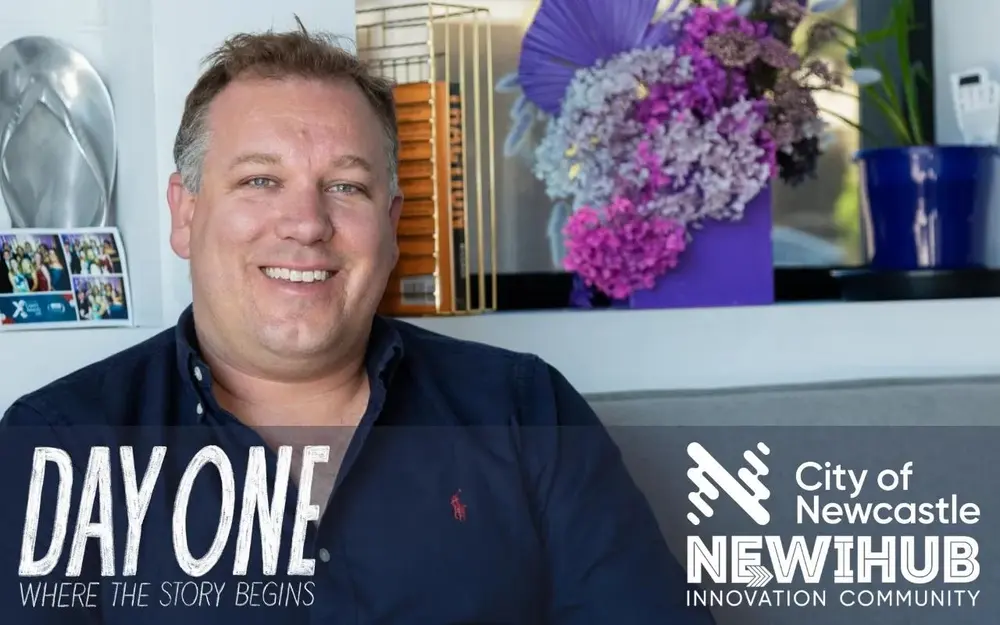


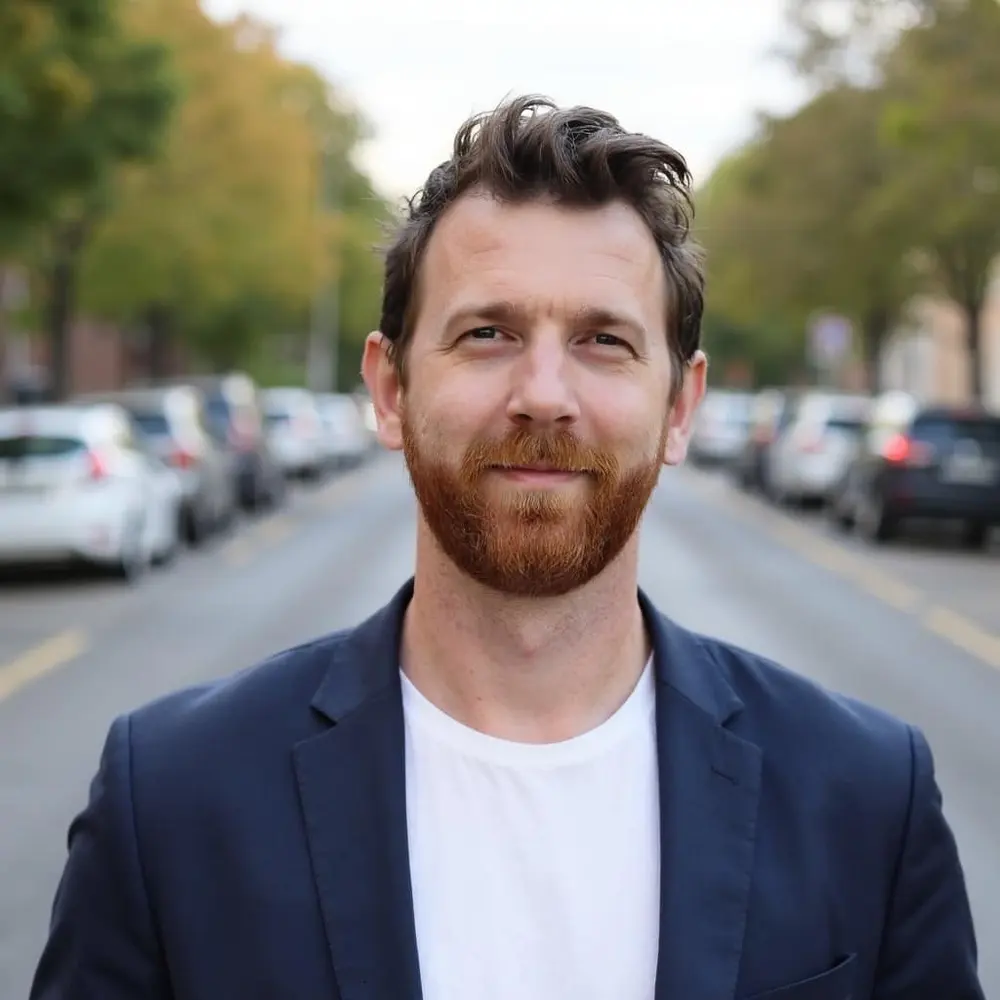
Hi, and welcome to day one, the podcast for regional startups and the organisations that support Australian entrepreneurship. Welcome to day one is brought to you by the city of Newcastle and Newihub. Newihub is a growing and vibrant community of Newcastle's startups & founders. It's a central hub where you can learn about what's going on in our ecosystem, with events, available jobs and other resources. I'll tell you more about Newihub later in the episode, but for now, let’s jump into the story of Damien Mahoney.
Today, Stackla is a global company with dozens of employees and offices in the US and UK. Many of their clients are household names: McDonald's, Nintendo, Toyota, and Sony just to name a few. But the growth of the company has not always been smooth sailing, and in recent years they've weathered two major storms: the pandemic, which all but wiped out many of their key clients, and a legal battle with Facebook which required Damien to make an incredibly difficult decision to keep the company afloat.
But before we hear about how Stackla has been able to emerge from multiple catastrophes, first we need to go back to day one, and hear the story of how a part-time job in radio that was too good to pass up would ultimately lead Damien to become the CEO of a global technology startup.
Transcript
Damien Mahoney: I think everybody that starts the startup journey has a level of naivety in that they don't know what's going to come. But once you get in it and you're on that journey, you learn a lot about yourself. You become more resilient. You actually can take on more than what mentally you thought you could.
Damien Mahoney: There's that level of naivety which is probably a good thing that you don't know if it's going to happen to you. Because maybe you wouldn't do it if you did.
Adam Spencer: Hi, and welcome to day one. The podcast for regional startups and the organizations that support Australian entrepreneurship. Welcome to day one is brought to you by the city of Newcastle and Newie Hub. Newie Hub is a growing and vibrant community of Newcastle startups and founders. It's a central hub where you can learn about what's going on in our ecosystem with events, available jobs, and other resources.
Adam Spencer: I'll tell you more about NeweHub later in the episode, but for now, let's jump into the story of Damian Marni.
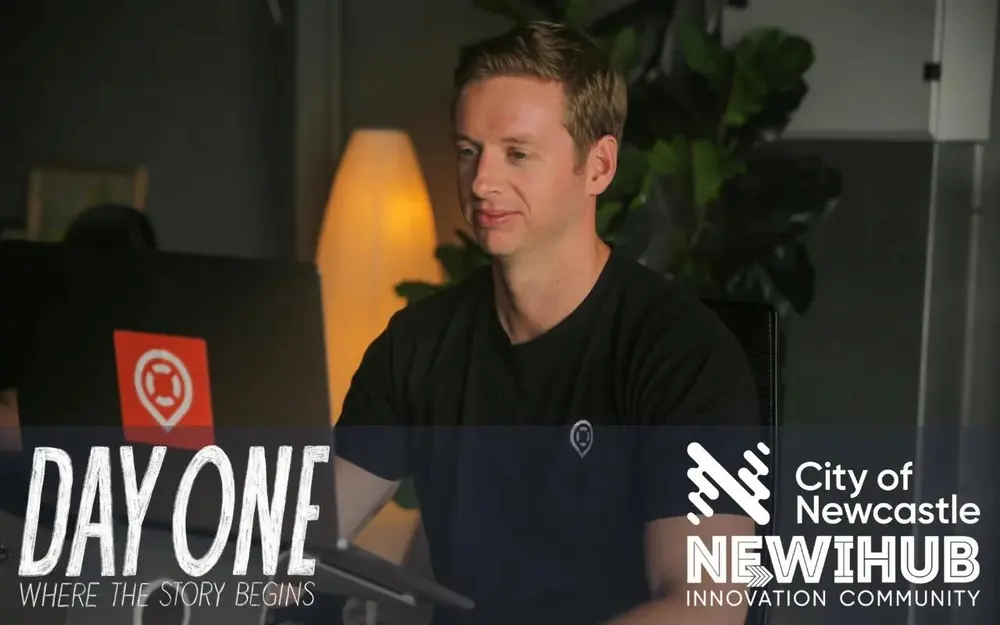
Damien Mahoney: Uh, G'day everyone. My name is Damian Marni. I am the CEO of Stackler. Um, a little bit of background on Stackler, um, it's a, what we refer to as a, a visual content marketing platform. Um, so essentially what we do is we work with big businesses who have.
Damien Mahoney: Uh, customer basis and generally who have a lot of those customers posting about their products or services or experiences on social media. Um, and then what our software does, it collects, uh, that customer generated content. Uh, it puts it into a effectively a library that our, uh, our customers can sift through and find really cool pieces of content or, uh, content.
Damien Mahoney: Like we would like to refer to them as customer stories. Uh, and then they didn't use that content, which is effectively a picture or a video in their own marketing activity.
Adam Spencer: Today, Stackler is a global company with dozens of employees and offices in the U S and UK. Many of their clients are household names, McDonald's, Nintendo, Toyota, and Sony, just to name a few.
Adam Spencer: But the growth of the company has not always been smooth sailing. And in recent years, they've weathered two major storms, the pandemic. Which all but wiped out many of their key clients and a legal battle with Facebook, which required Damien to make an incredibly difficult decision to keep the company afloat.
Adam Spencer: We had to let,
Damien Mahoney: you know, half of our team go. Um, so having to, you know, let 30 people go in one day was incredibly tough thing and pulling down the, the building blocks of something that you'd been working on for six or seven years was, was tough. And knowing that all those people were who trusted you and were there.
Damien Mahoney: came along for the ride with you, um, were walking out the door without a job.
Adam Spencer: But before we hear about how Stackler has been able to emerge from multiple catastrophes, first we need to go back to day one. And hear the story of how a part time job in radio that was too good to pass up would ultimately lead Damien to become the CEO of a global technology startup.
Damien Mahoney: Yeah, um, so the, the scenario that I was in, and it was, you know, looking back at it, it was sort of a little bit, sort of, uh, you know, cavalier in a way. I'd been working in, you know, professional sports for, for quite a while and I, I had a, a job offer with, uh, the NRL and it was a good job and it would have provided me with good security and it was something that I was going to be, you know, comfortable doing.
Damien Mahoney: But also at the same time, um, I was also doing some broadcasting, um, on the side and, you know, with, you know, various networks, mainly in Melbourne and it was always my dream job to, uh, broadcast with Triple M. I always listened to it when I was in Melbourne and just loved the whole style of their production and I got this offer to go on broadcast with them.
Damien Mahoney: And I was super excited by it, and it was actually the second time I'd been given the offer. The first time I had to knock it back because I was working at a, a competitor, um, a competitor radio station. So I had to knock it back, which was devastating, but, um, I had to swallow that one. So the second time it came around, I was very reluctant to give it up.
Damien Mahoney: So, um, I did tell the guys at the NRL, I said, look, you know, I would like to also broadcast on the side, um, as well as working here. Um, and they were not keen on that idea at all. So, um, I, I made the decision to, the job with Triple M, which really was just a part time job on the weekends. It was never going to pay the mortgage or pay the bills.
Damien Mahoney: And that was the catalyst to sort of, uh, you know, and, um, get out of the security of a nine to five job, um, and start to do whatever work I could as a consultant, or, um, ultimately that led to me starting the agency.
Damien Mahoney: So, Peter Cassidy is my co founder. Uh, we actually started working together, um, at McDonald's. the Macquarie Radio Network, um, where we worked together on a number of digital products there. We continued, uh, you know, a working association when I moved to the NRL. He was working with Telstra, uh, the digital rights holder for the NRL.
Damien Mahoney: Um, and we, uh, we came together post those roles to, to form an agency and we, that's what, that was called Pillar Sports. So we started that and then, you know, it was probably through, you know, sort of Peter's sort of product vision around. And this concept that we had around user generated content that was, you know, enabled us to sort of get the company off the ground.
Damien Mahoney: So Pete is a, is a product guy. Um, he's a wonderful evangelist. Um, and he's also, um, I think, you know, one of those guys that you want to be in the trenches with. He's fought hard through all the, you know, the tough times that we've had. Yeah. Um, so I was running a digital agency at the time, um, and that agency had, uh, you know, fairly significant.
Damien Mahoney: Uh, relationship with the National Rugby League, and we had a team of producers and journalists who were pumping out, uh, content for the websites of all the 16 clubs, um, in the NRL. Um, and as you can imagine, you know, it's, it's long form content, it's match reports, it's injury reports, it's general news, photos.
Damien Mahoney: It all needs to be, uh, you know, edited, sub edited, then published. And we found that that was just a, it's just a very, you know, Uh, traditional way to create content and then publish it. And at that particular time, the social media was just, you know, rising up, um, to become this sort of really significant part of the landscape.
Damien Mahoney: What year are we talking? It's a sort of 2011, 2012. Um, and all of a sudden, you know, Facebook was already massive. Uh, Twitter was quite prominent. Uh, Instagram had just been bought by Facebook. So it was this really sort of interesting trend that was occurring. I think that Combined with the fact that smartphones were starting to proliferate around.
Damien Mahoney: So we talk about the democratization of content creation. Um, yeah, previously it was really the media and agencies that would create content, but now everybody had a phone and they had a platform to publish that content on being the social network. So it was this revolution in content creation. We thought, there's gotta be a great way, or it's gotta be a way for our customers, which at the time were, you know, sporting clubs, to be able to tap into this rich source of content.
Damien Mahoney: It was authentic, it was created by their fans, it was created by their players, even the media, and it was this, you know, Constant flow of content. It wasn't just, you know, one off pieces of content you might create, you know, write one news article a day. There'd be thousands of photos or videos taken every day by people who are associated with that brand or that club.
Damien Mahoney: Um, and that was the idea for it. Um, and then we thought, okay, we've got to build this technology that can just suck all this in, uh, make sense of it, uh, and then allow the brand or the club that's found this content to be able to publish it.
Adam Spencer: Did that replace the content that the clubs were creating themselves in house?
Adam Spencer: Like, did that just stop and they adopted this to replace it? No, it was
Damien Mahoney: more just to complement it. I think it was just really to provide the perspective of fans more so than anything. A company like Ford, you know, Um, somebody may post a cool photo of their pickup truck whilst they are on a beach.
Damien Mahoney: That'll be posted on Instagram. Our software will find it. Um, and then Ford can reach out to that content creator. They can gain permission to utilise that content. And then once they have that permission, they might put it on Ford. com or they may put it on a Facebook ad or an Instagram ad or utilise it in any sort of other marketing activity they'll do.
Adam Spencer: Do they have to reach out directly, like forward? They find the content, they like the content. Do they have to reach out directly to the customer? Yes, they
Damien Mahoney: do. So that's the, one of the cool, I guess, efficiencies, uh, of the platform is that you can identify the content creator and send them a, a bespoke message.
Damien Mahoney: Um, and then they'll, they'll generally respond, and that's all logged in our platform. Um, and it's a, it's a very sort of simple, simplified workflow that, um.
Adam Spencer: Does the, does the message, you know, the personalized message, does that go to the content creator via the platform that the content was discovered?
Adam Spencer: That's correct. Yeah.
Damien Mahoney: So it'll appear as a comment on Instagram as an example or a comment on YouTube. Um, and it'll be from Ford. And I'll say, hey Adam, we love this picture. Um, we'd like to use it on Ford. com. Hashtag yes to give us permission. And most people are probably pretty thrilled about that.
Damien Mahoney: Absolutely, they're pretty, uh, they're pretty excited that somebody's reached out to them. Particularly the brand that they're passionate about. And they're a customer of, um, to utilise that content. I would say that, yeah, 95 percent of requests are fulfilled by the customer.
Adam Spencer: Wow.
Adam Spencer: Damien and his co founders were onto something big. By harnessing the photos and videos that everyday members of the public were uploading to social media, brands were able to access a new kind of marketing content that was authentic and personal in a way that typical ads never could be. Before the new venture had a name or even a complete product, they won their first client.
Adam Spencer: And it was a big one, providing user generated content to the Australian broadcaster SBS for their Tour de France TV coverage.
Damien Mahoney: Particularly early days. We were sort of selling the dream a little bit. Um, yeah, the classic story is that I went out and sold our first deal and the product wasn't ready. Um, and we had a deadline, which was, um, day one of the Tour de France.
Damien Mahoney: Um, our customer was SBS and we were supplementing their, their broadcast with, with Stackler. Um, so we had to get it ready. Um, we didn't even have a name for the company. Um, and so there's a lot of sort of bespoke, um, yeah, engineering that went into getting that first instance of the product up. But, you know, we had a, we had our, our CTO and co founder, uh, Sammon working with us.
Damien Mahoney: We had another developer, um, and we had the trust, most importantly, of our customer to, to deliver. And we got it up and running. It was a, it was a, absolutely, you know, it's a fantastic debut for the product with great success and a lot of, uh, industry plaudits.
Adam Spencer: SPS, that's a pretty cool first customer. It was amazing, yeah.
Adam Spencer: Was that a relationship you had developed, like, through your previous
Damien Mahoney: career? Yeah, it was, um, purely through network, so it was an introduction from, um, a person who we knew quite well, uh, again, who worked in the sporting space, uh, the, they introduced us to, to Toby at SPS, uh, you know, Toby loved the concept, he's, he's an innovator, he was always trying to push the boundaries with what they were doing from a, a digital perspective.
Damien Mahoney: And, yeah, he was almost
Adam Spencer: in from the first meeting. Do you find that in getting that first customer on and the brand equity that they have in the marketplace helped with additional
Damien Mahoney: sales? Oh, absolutely. Um, I think that, you know, being able to hold up SPS as a logo and the Tour de France and quickly following that, um, we worked on the World Cup as well.
Damien Mahoney: Uh, I think that, you know, One of the great strengths of the company from day one was our ability just to hold up a, you know, a customer portfolio of just household logos. we still work with the International Olympic Committee, we work with World Rugby, we work with the ICC, um, and a, and a host of other sort of sporting organizations throughout the world.
Damien Mahoney: So it's, you know, it makes us extremely proud that we've worked with all those, um, organizations.
Damien Mahoney: The first rough spot we hit was after six or seven months. We've done a wonderful job of selling our product into our own network, which was sports and media organisations. Um, and we got an initial, you know, cohort of customers. But then things started to dry up over Christmas and January was quiet. Um, you know, so many people on holiday, so on and so forth.
Damien Mahoney: Obviously the operational costs of the business don't stop during that time, so we were starting to run low on cash. Um, but we had sold a deal prior to Christmas to an agency and they ran this really cool, interesting campaign for an energy company. Uh, that campaign got a lot of trade press amongst the advertising agency space.
Damien Mahoney: And quite amazingly, Probably a week or so after that article was published with the phone side to ring and it was agencies Wanting to find out more about our software Coming up to us with campaign ideas that they wanted us to help them execute upon And that honestly you know It took our revenue from 30, 000, 40, 000 a month up to well over 100, 000.
Damien Mahoney: And it solved the cash problem straight away. It solved us having to get external capital into the business. And it allowed us to sustain ourselves for another 18 months until we were ready to take the business global. And that's when we took some actual investment. Um, yeah, we started to, uh, work with, uh, a person who was interested in the business, interested in investing.
Damien Mahoney: And as we sort of continued to talk about what our goals were for the business with that individual, it became pretty obvious that we wanted to take the business overseas because that was the, um, the next step. Um, you know, Australia's a great market to test a product in and we, we're still really strong here.
Damien Mahoney: You've got a ton of customers and, you know, it's really important to our overall sort of, um, strategy as a company, but there's obviously bigger opportunities overseas. And we start to see customers inbounding us, um, from the U. S. and the U. K. Um, we had a reseller in the U. K. and he was getting some good traction early.
Damien Mahoney: Um, and we brought on a couple of, um, uh, franchises, which was just wonderful, including Manchester United. Um, so that was the catalyst for us to say, yeah, this is a fertile opportunity for the company, uh, but we're going to need cash to set up an office or set up multiple offices overseas. And that's when we decided to take, and that was sort of late 2014 we took that money.
Damien Mahoney: It wasn't until we took venture capital that we actually invested quite heavily and we really, um, added a lot of team members. You know, we opened up our. So the, um, the monthly operational costs of the business, you know, tripled pretty quickly. Um, and the lag that you, when you invest in, yeah, for instance, when you invest in, you know, There's a lag until that salesperson starts to generate revenue for you.
Damien Mahoney: So there's usually a ramp period where they learn the product, um, they need to be trained, um, and then you let them loose after three or four months on, you know, uh, a real life sales situation. So the payback period can take quite a while. Um, and then, you know, some of those salespeople may not work out, so they're not actually generating any money for you and they've cost you, you know, fifty, sixty thousand dollars.
Damien Mahoney: Um, and those sorts of things happen with us and that's not. typical at all. Um, so there were times where we probably were over optimistic about, you know, how much money ourselves people could generate, um, and how quickly. And that's where we ran into problems with, with cash. I think that, you know, some of the most stressful times that we had was where, where then not only my, uh, livelihood and my family's livelihood was at stake, but you know, that of our workers as well.
Damien Mahoney: Um, there's a couple of times like that where, you know, Cash became tight, um, and we had to sort of, we had to really sort of work hard to rectify that situation, which luckily we did. Um, and yeah, I think that number one, identifying that, doing something about it, and then learning from it, and making sure that it doesn't happen again is important.
Damien Mahoney: That took a while, you know, it takes, I think that, There certainly would have been times when I made the same mistake twice, um, but hopefully, uh, yeah, I don't think I've made that mistake the third time.
Adam Spencer: As Stackler grew and went international, the focus of the company began to shift. Initially they had tapped into their existing networks to work primarily with professional sports organizations, but over time they would identify other types of clients to pursue.
Damien Mahoney: We found that sports clubs weren't great repeat customers, and when you're building a software business, you need repeat business. Um, generally they were, they would be excited initially, and be one of those things that, you know, Due to resourcing usually, they weren't able to provide enough attention to and then would make a decision after two or three years to maybe end their relationship with us.
Damien Mahoney: So we needed to find customers who were going to be with us for the long term and what we mean by that is like, you know, six plus years is the ideal sort of customer relationship or in fact, you know, I guess the relationship with a customer that goes on forever. We went from, you know, as I mentioned before, being sport and agency focused and our sweet spot now is travel.
Damien Mahoney: So you think about travel and what people do when they're on holidays, they take photos and they put those photos on a social network. It seems to have become almost like an intrinsic part of anybody's travel experience. That type of customer for us was, um, a no brainer and that, I mean, it took a while for that to evolve.
Damien Mahoney: It probably wasn't until, you know, years two and three or four in the business that, that became really obvious. And we then focused a lot of our product development, a lot of our marketing and value prop towards that type of customer. And I think that, you know, we, we undertook like a fairly significant exercise in, 2017 to just look at all of our customers that we had over the lifetime of the business, how long they stayed with us for, how much they spent, the time it takes to sell to those customers.
Damien Mahoney: And a range of other factors. And that's when we settled on, you know, travellers being the main one. But we also threw in, um, verticals like automotive, um, and education, and consumer packaged
Adam Spencer: goods, or FMCG. And this is just based purely on the fact that you analyse all your customers and these are the ones that were sticking around.
Damien Mahoney: Yeah, they were sticking around, they're paying the most money. Um, they were getting the most value out of the product, so they were in the product a lot, uh, utilizing it, you know, ideally on a daily basis. Um, and then we also sort of took a bit of a gamble on, uh, some other categories that we thought would mature and adopt the, the technology.
Damien Mahoney: So, it was a little bit of, um, you know, data driven decision making, but also there were some bets made as well. I think that when people are, uh, on a travel experience or they're having, they're having a travel experience, or if they've just bought a motor car, they're sort of passionate about it and they want to enjoy it and I think they want to share that with people.
Damien Mahoney: Yeah, there seems to be
Adam Spencer: like a link to lifestyle, anything to do with lifestyle and you can show that you've got a great lifestyle and you want to share pictures about it. That's kind of the customer of the customer.
Damien Mahoney: Yeah, I think that's right. Um, I think that Just where there's some sort of like, it can generate passion in people, um, and I think travel does that.
Damien Mahoney: I think people get excited about new places and they, they do want to share it with their friends. Yeah. People definitely get excited about a new car. Um, they may get excited about, uh, new, new apparel that they buy, uh, new shoes, so on and so forth. So they're, they're the types of customers that we feel, um, you know, will actively generate content and therefore, uh, the brands that sell to those customers, um, are the types
Adam Spencer: of customers that we, uh, target.
Adam Spencer: A broader range of potential clients meant more room for Stackler to grow. And at the start of 2019, the company was riding high on success after success. But 2019 had a surprise in store for the company, which would threaten the foundation of their entire business model.
Damien Mahoney: 2019 was like a pretty interesting year.
Damien Mahoney: It was, you know, probably the toughest one in my life. There was a total sort of upending of my personal situation, um, and, um, But the one thing that was going great was the company. Um, we were growing at 25 percent plus. We just invested a whole heap of money in new people. Um, the team in the U. S. was quite big.
Damien Mahoney: Uh, a lot of new sales people. Just things to help run the business more efficiently in the back office. Um, and we, we just had this amazing, uh, sales kickoff in Vegas, uh, where all the team gathered, uh, you know, really sort of great bonding experience. Um, I was never a big fan of Vegas. Um, I've been to a ton of conferences there and just labored through all of them and didn't really enjoy it.
Damien Mahoney: Um, but this one was completely different because it was our own, um, it was our people. Um, and whilst we, We, uh, played hard, but we also worked really hard whilst we were there, um, and it was a fantastic experience for everybody from, you know, flying people in from London, Sydney, uh, San Francisco, Austin, New York, um, and all gathering in the one place was, was great.
Damien Mahoney: And everybody walked out of that, um, extremely confident and excited about the ensuing 12 months.
Adam Spencer: Yeah,
Damien Mahoney: so yeah,
Adam Spencer: riding high.
Damien Mahoney: Yeah,
Adam Spencer: absolutely. Things were going great. Yeah. How, how soon after that did the. You know, doom.
Damien Mahoney: Yeah. So the , the, um, the, the huge body blow, which came in, in the form of, um, Facebook. Then the legal battle we had with them came at the end of August.
Adam Spencer: In July, 2019, Facebook will find $5 billion for privacy violations. Cambridge Analytica, a British consulting firm, harvested the data of up to 87 million Facebook profiles and used the data. without permission to help the 2016 presidential campaigns of Ted Cruz and Donald Trump. In wake of the scandal, Facebook banned thousands of apps that were collecting content from Facebook and Instagram, including Stackler.
Adam Spencer: The ban was devastating for Stackler. Facebook and Instagram dominate social media. And so a huge percentage of Stackler's user generated content was taken from the two platforms. Without access, Stackler couldn't survive. Unlike Cambridge Analytica, Stackler had always gained permission from the creator of the content before brands could share it themselves, and they only accessed content that had been shared with the public.
Adam Spencer: They felt that Facebook were unfairly denying them access to their platform and took them to court in the hopes of saving their business model.
Damien Mahoney: It ran for a six week period, um, until our access was restored. But during that time it was, uh, it was pretty tough going for us. Um, we had to let, you know, half of our team go.
Damien Mahoney: Um, we weren't too sure, uh, when we were going to be put back on. And it was such a critical component of, uh, how our product functioned. Um, so not knowing that and having a finite cash resource, um, led us to, to make that decision. It was the right decision to make. Despite the, um, the difficulty of it. Um, so having to, you know, let 30 people go in one day was incredibly tough thing and pulling down the building blocks of something that you'd been working on for six or seven years was, was tough and knowing that all those people were, who trusted you and were, that came along for the ride with you, um, were walking out the door without a job.
Damien Mahoney: But you won that, right? Well, yeah, so the case was settled. Um, and we were allowed back on the platform. And so we were able to continue on and start to service our customers again. And then sort of rebuild from there. What was the biggest
Adam Spencer: learning out of that period
Damien Mahoney: for you that you took away from that?
Damien Mahoney: Um, the biggest learning is that you can't always prepare for things. This was completely left field. And never get too comfortable. Yeah. And never think that your business is bulletproof. Because, um, yeah, this was a great lesson or a great example of how you can become, be totally sideswiped, um, and not see it coming.
Adam Spencer: Um, but you got through that. Did things start kind of going back to normal after that for a little while before 2020 hit?
Damien Mahoney: You know, we sustained a lot of damage from that period and it was ongoing. The wounds that we suffered, you know, continued to, to bleed for, you know, probably six months after. Wow. Um, and almost, you know, to the day, six months after COVID hit.
Damien Mahoney: So that was the next sort of severe body blow that, um, We sustained as a business, we've got a huge customer base in the travel sector. Um, so. Almost all of our customers were shut down, unable to operate. Um, so again, that put enormous pressure on our business. Yeah, we tried to work with them as best we could, but some of them simply just couldn't.
Damien Mahoney: They couldn't afford to, to keep on, uh, software subscriptions like ours. They just went into hiatus and pretty much sort of ceased all operations.
Damien Mahoney: Yeah, I think that when you've had to encounter a moment like Facebook, which was, you know, that was an existential threat. Yeah. There was a cliff that we were, you know, speeding towards. You know, we would have had to have closed the doors to the business. Turned the lights off. We got through it. It was incredibly tough.
Damien Mahoney: Like, just a tough time with stress. You know, sleepless nights. Meltdowns. Um, just this constant burden that we were carrying. We all carried around with us. It wasn't just me and my co founder. It was everybody in the business. Uh, everybody carried around with them and, um, it built up resilience in the team.
Damien Mahoney: So, uh, so when COVID hit, it was like, okay, we'll deal with this. Like we've got through worse. It's just another crisis. And whilst it was, it was tough, it certainly didn't generate the, the amount of concern and worry and stress that, uh, the previous episode did. I think that probably the number one thing is resilience.
Damien Mahoney: Yeah. You're going to encounter tough times and you just need to be able to take that on and get around it, get over it or smash through it, whatever direction you decide to take. And I think that, you know, the, the last two years have sort of really sort of. the importance of being able to, to get up and go again.
Damien Mahoney: And it is hard. It can be like incredibly deflating when you encounter certain challenges in business and you question everything that you've sort of put into it and why you've chosen that path. But then you've just got to wake up the next day or the day after or the one after that. So, right. I'm going to attack it again.
Damien Mahoney: And then start to look at the things that you've achieved and realise that, you know, you've actually got something that's great here. You've built it. It's yours. And you want it to continue on and make it the best you can.
Adam Spencer: What would you do differently if you were to start all over again?
Damien Mahoney: You're doing things differently. I think that probably going back to the things I spoke about, about being more conservative in forecasting, um, our success. We were very bullish, um, and we certainly needed to be a little bit more conservative.
Damien Mahoney: And that only comes through learning. I think that, yeah, you, you unfortunately have to sometimes learn the hard way. Um, and we did on a, on a few of those things. For do things differently, I think that the timing of what we did was right. It was early enough. I think that there was. Enough sort of market tailwinds to support the journey that we were on.
Damien Mahoney: We were tapping into a growing trend. It's still growing. I honestly still think that our software and our technology and it as a marketing tactic still hasn't quite reached full maturity yet. I think it will continue to grow, um, which is, I think is exciting. Yeah. So I think that the future of Stackler is that we are seeing trends in the market, um, which have probably been very directly, uh, attributed to what's happened with COVID.
Damien Mahoney: We're seeing, you know, people, you know, Diverting their spending to online away from bricks and mortar because they simply weren't able to, to go into a retail environment and spend their money. That bodes well for us. Um, you know, we, we're very sort of heavily invested in the retail and e commerce space.
Damien Mahoney: Uh, so we see that segment. Continuing to grow and therefore the need, uh, for products like ours to grow as well. Um, you know, we still think that we've got a fantastic product, a very committed and devoted team. And, you know, we're quite excited about the, the year ahead and particularly beyond that.
Damien Mahoney: Particularly as, you know, the economy starts to recover and, you know, our buyers and people who we serve, uh, gain more confidence and will continue to invest in products like ours.
Adam Spencer: Um, Is there anything that we've missed in the story of Stackler that, you know, is important to cover?
Damien Mahoney: Um, I think that one of the things that I probably didn't talk about too much was the importance of people and hiring, and hiring the right people.
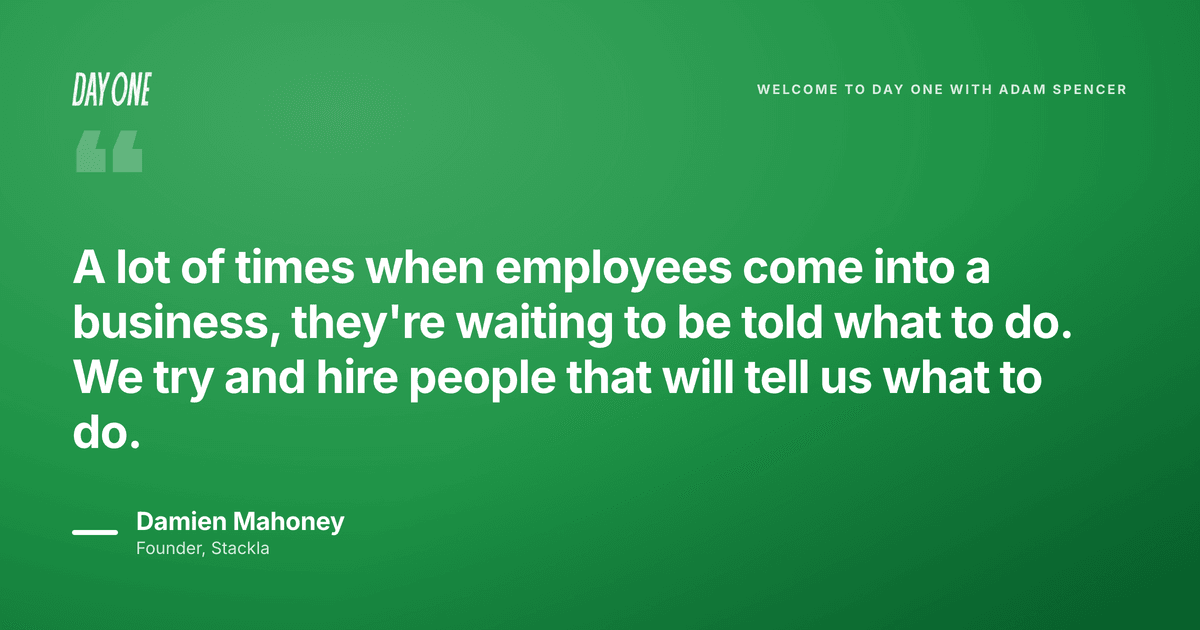
Damien Mahoney: And that's not just from a skill set perspective, but a, you know, a cultural perspective. You know, we, we just really highly value people who, you You know, make decisions for themselves and bring something to the table that, you know, we don't know. Cause I think that when, a lot of times when employees come into a business, they're waiting to be told what to do.
Damien Mahoney: Um. We try and hire people that will tell us what to do. You're doing this wrong, this could be better. Um, so we really look, look out for people who bring special expertise and experience to, to our company. And I think that, you know, you, you live and die by not only, you know,
Damien Mahoney: Being an employer of people is a great privilege, I think. To provide somebody with a livelihood, a purpose, to allow them to experience good things in life. I do remember seeing one of our team members was married. It was actually a couple that met through Stackler. They got married in Australia. He was American, she was Australian.
Damien Mahoney: And then, they went on a honeymoon of sorts, and then other people from Stackler flew to meet them at the holiday destination. And seeing those pictures on Instagram, it was incredibly gratifying to see that, you know, we, those people worked for us, and we, we gave them the opportunity to meet each other, and then, I guess, the means to be able to travel and do all those things.
Damien Mahoney: Um, so that was, uh, a really, sort of, great experience.
Adam Spencer: Did any of their travel for wedding photos get pulled for any brands to use?
Damien Mahoney: I'm
Adam Spencer: sure that, well, I think they were at a, um, a customer's, uh, resort out on the island. Uh,
Damien Mahoney: yeah.
Adam Spencer: Thanks for listening to the story of Stackler and a huge thanks to Damian Marnie for taking the time to speak with me. These founders stories are made possible by our supporters. We can't do it without them and I'm just incredibly grateful for their commitment to our local startup community and in helping us spotlight these amazing founders who inspire me and I hope who inspire you too.
Adam Spencer: The City of Newcastle's Newehub is our major sponsor and I'd just like to take a second to express my gratitude for their support. Newehub is a great new initiative from the team at the City of Newcastle. It's an online community to keep up to date with what's going on. With what's happening in our region from an innovation perspective and a hub of great resources, I encourage you to check it out and sign up to be a free member.
Adam Spencer: You can learn more by clicking the link in today's episode. Notes at Welcome to day http://one.com/ or by going to newie http://hub.com/. That's N-E-W-I-H-U http://b.com/. This episode was produced by me, Adam Spencer, with scripting and audio editing by Andy Jones. Information about everything mentioned in this episode can be found on the show notes page at Welcome to day http://one.com/.
Adam Spencer: Music by Lee rvi. Full attribution on the welcome today one website. If you'd like to support this show, please consider leaving us a review or supporting us on Patreon. I'm Adam Spencer, and thanks for listening.
More Episodes You Might Like
Let's talk
Turn podcasting into pipeline
We help founders, funds and operators build trust, authority and deal flow with a show tailored to their market.
Win better deals and stay top‑of‑mind with founders.
Close more deals and build a category you own.
Reach founders and operators with a show they trust.