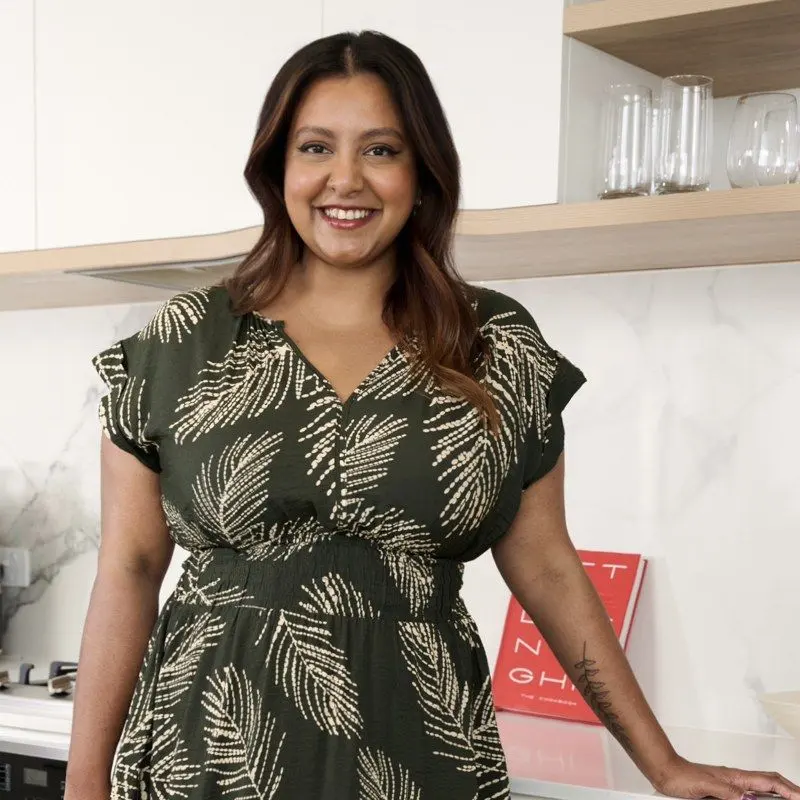
With over 170,000 followers hanging on her every word, influencer Brooke Upton has learnt a lot about how to grow an audience. After missing out on a med study placement, Brooke’s pivot to media uncovered a passion for branding, social media and creating meaningful connections online.
Join Sav and Brooke as they chat how authenticity starts behind the scenes, the pitfalls of scarcity mindset and why good can be good enough. Plus, with the launch of her own business imminent, Brooke gives us a peak into what she’s been focusing on with this exciting new chapter.
You’re in Charge is brought to you by ThincHer, an initiative of ThincLab at The University of Adelaide.
Transcript Search or select a timestamp to jump ▾ 0:00 Brooke Upton: Being able to really foster, yeah, 500, 200 people and, yeah, placing as much emphasis on the importance of each one of those people, I think, is a way to stay connected with your audience, irrelevant of how big that gets. 0:16 Sav Perera: Hello and welcome to You're In Charge, where we are helping you with starting your business journey by sharing stories and insights from the best in the biz. My name is Sab Pereira, and you may know me from MasterChef Australia. And just a few months ago, I decided to leave my corporate job and go into the world of private chefing and working for myself in my own business. And it is true what they say— starting your own business is hard work. But the great thing is, starting your business can also be incredibly rewarding, which is why I've teamed up with Thinker at the University of Adelaide to learn a bit more about the business of doing business. Together, we will sit down with some trailblazing women and talk to them about the business behind their successes. I'm talking about the business of building confidence, the business of bouncing back, the business of brokering security, and the business of being you through it all. Today, we have a special guest that brings a fresh perspective to the world of social media and digital influence. I am incredibly excited to introduce to you Brooke Upton, one of South Australia's biggest influencers and leading digital talents. Known for her bold and creative takes on fashion, lifestyle, beauty, and travel, Brooke has captivated an audience of over 170,000 followers across platforms such as TikTok and Instagram. Thanks for being here. 1:47 Brooke Upton: Thank you for having me. 1:48 Sav Perera: Very exciting actually to have this chat with you. Yes. The first thing is the obvious one. You've got over 170K, 170,000 followers, people watching you do your thing, and it's put you at the forefront of being, you know, influencer is the word. 2:05 Brooke Upton: Is the word. Yes, it is. 2:06 Sav Perera: It's a big word. Tell us a little bit about how you got started, what got you there. Like, I'm sure, like, you know, lots of people have asked about the journey, but yes, just so our listeners know. 2:15 Brooke Upton: So basically I have always been really interested in the creatives industry and I always had this understanding growing up that I wasn't a creative person. I guess I kind of aligned creativity to drawing or art or, um, had a very narrow focus on what that was. And I knew that I wanted to be able to create and connect and, you know, marketing was kind of a conversation that always came front of mind in that discussion. So I actually missed out on becoming a doctor by a few percent and went, oh my gosh, I need a full rejig of my life. What actually feels passionate to me? And I went to uni and studied media and communications. And across that time I was posting online. I was really enjoying kind of this fresh social media landscape that was coming up. But at that point was just posting for my friends and had no real strategy kind of involved. And it was in some of my classes that I was sitting there and there was kind of a few aha moments where I was like, you know what, I can apply this same structure to the way that I would be branding businesses and marketing businesses to myself. I myself am a brand kind of with legs, with a heartbeat, and the same principles apply. So kind of shifted my mindset in that regard to being able to view myself through the lens of a professional. And, you know, started changing the conversations I was having with people going, you do this as a hobby, to going, no, I do this as a business. 3:43 Sav Perera: This is my work. 3:44 Brooke Upton: Yes. You know, which is a conversation so many people in the creatives industry are constantly, you know, fighting a little bit of an uphill battle with, kind of validating their role as professionals. So again, changed the lens in which I kind of viewed myself through, sat down with myself and had a real strategy session on who I was, who I wanted to talk to, and the value that I wanted to provide my audience. And yeah, it kind of hit go. 4:10 Sav Perera: Nice. Uh, now you mentioned something interesting because you said, you know, it's a brand with 3 legs and a heartbeat. Yeah. So, and I know obviously you do brand work for other organizations, entities, what have you, but what would you say is Brooke Upton as the brand? 4:29 Brooke Upton: As a brand, when with any strategy that I kind of write, I'm always aware of the fact that I want to entertain, I want to inspire, and I want to educate. So as kind of the ebbs and flows have come through my life and, you know, my content pillars have shifted, I would say for myself, it's just making sure that adding value in a way that is authentic. And I'm a fashion, lifestyle, travel, beauty kind of blogger, ticking all the boxes I try. So I really try to inspire people to see the way that they can live their day-to-day lives, romanticize that in between, and the way that they can use fashion and beauty to present themselves to the world in a way that is congruent to themselves. Yes. 5:05 Sav Perera: That's a very— I think that's a very well-constructed answer because there's a lot— I think a lot of people, especially personally, it's just personal observation. Yes. And it's like over COVID when like that world— 5:18 Brooke Upton: yes, 5:19 Sav Perera: social media really took off as a PR thing. Yes. Marketing thing may not necessarily have had that strong brand identity. 5:28 Brooke Upton: No. 5:29 Sav Perera: And you talked about, you know, your pillars, how Which really are your values. 5:34 Brooke Upton: Yes. Yep. 5:35 Sav Perera: How's it evolved since when you started versus now? Like what changed, if anything has, or? 5:40 Brooke Upton: Well, I have been full-time content creator for the last 3 years now. Before then it was a little bit more fluid, but, um, as I've developed my business and wanted to, you know, I've, I've aged over that time as well and the brands and lifestyle and values and focuses in my life have shifted. At the moment, I'm really focused on travel. I'm really focused on the fashion side of my journey, and also I'm actually starting a business early in the new year. I know, which is very exciting. You know, I've been—I've had the privilege of developing this audience that, you know, so many businesses would feel so grateful to have. You know, this large quantity of people that have this authentic trust. So I was like, you know what? Let's let's capitalize and. Create something that's an extension of my arm, and it's all it's all very exciting. 6:30 Sav Perera: And one of the things I actually wanted to touch on that you just said is about the authenticity. Oh, losing my English. Authenticity. Yeah. And about how you've got this mass of people essentially that really sort of have that bind with you because of how you come across. So 6:49 Brooke Upton: yes, 6:49 Sav Perera: because of the way that you present yourself. with the confidence and the clarity. Talk to me a bit about like that authenticity. Like, how do you continue to foster it? How did you— well, I should ask, how did you start? How do you continue to foster it? 7:03 Brooke Upton: After existing online for so long now, we, you know, a lot of us have had social media with us for half our lives. We have such a strong sense of media literacy that if we step online and see something that doesn't sit right, we are immediately clocked onto it. So you're actually doing yourself such a disservice by showing up in a way that is ingenuine because people can see straight through it straight away. One of the things I always try to know is the strong— the way that I most strongly show authenticity is in a way that my audience actually doesn't see. So when I'm dealing with brands, when I'm developing my strategy, every 3 months my manager and I sit down for like a real locked-in session of who I want to be for the next 3 months, who I want to target, um, the brands I want to work with, how can I organically show up and support them that can, you know, then feed into like a monetized opportunity. So I reckon I would say no to maybe 70% of opportunities that come through the door because they're incongruent to me. And I understand that, you know, someone that has built a, um, you know, we wake, we wake up with people, we go to sleep with people, we're, we're with people during their most vulnerable times. It's a service to them to make sure that the way you show up is of value to you. And in fostering that kind of trust, it flows into your work outside of that. Again, we were speaking before about the way that social media, you know, has shifted from a space that is purely a social network to connect with people to now becoming what is now a marketing platform. So by stepping online to a marketing platform, connecting with your audience, they're going to want to engage with those monetized branded pieces that You know, at the end of the day, do pay your bills. So in staying true to the brands that I want to work with in those strategy sessions, I maintain, you know, I try to say to myself, would I do this for free? Would I do this opportunity for free? If the answer is no, then it's probably not a brand that sits well with my heart. So yeah, the stuff that goes on behind closed doors is probably the way I show up most authentically. 9:11 Sav Perera: One of the key things I think that I picked up on with what you said is like, this amazing drive that you have that's driven by not I, but like the people. 9:22 Brooke Upton: Yes. 9:22 Sav Perera: And the people that you essentially are servicing, which is actually, I think, in this space is quite refreshing to see because it is very much a personal brand thing and you can get caught up in the I, I. 9:34 Brooke Upton: Yes. 9:35 Sav Perera: Kudos to you that you are viewing it from the lens of, okay, how do I, you know, add value. Yeah, I'm— as cliché as that term is. And also there was something beautiful that you said. You said, you know, we wake up with these people. 9:48 Brooke Upton: Yes, 9:49 Sav Perera: go to bed with these people. I'm like, I'm literally thinking me like doing scrolling. 9:52 Brooke Upton: You wake up doing scroll. Yeah, seriously. 9:54 Sav Perera: And it's such a— it's such a normal part of most of our days, and it's really refreshing, I think, to see that you are viewing it from that lens. 10:05 Brooke Upton: Yes. So yeah, it's a relationship. 10:07 Sav Perera: It is. And I don't think not, not everyone does. There's different approaches to, I think, obviously how the marketing, subtle marketing, and this with the social media. 10:19 Brooke Upton: Agree. 10:19 Sav Perera: Some people have their little sort of like, you know, it seems, yeah, they do. Or they've got their line that they do, which is the hook. Yes. Or they've got a look. What I get from you is like, because it's so adaptable, because you've not essentially locked yourself in to this one, like, okay, this is my niche. 10:36 Brooke Upton: Yes. 10:36 Sav Perera: It's more sort of like, how do I, you know, does it make sense? 10:40 Brooke Upton: Yes, absolutely. And on that, I think, you know, I've always had through my degree been able to have this understanding of needing to have a very specific understanding of the person that I'm talking to, what their motivators are, their pain and pleasure points, and how I can connect with them through those things and strategize around that. I'm very much under the understanding that this is a business for me as well. So being able to, you know, create a space for myself online where I can foster these relationships, build that connection, to then be able to take myself down more of a, you know, a multifaceted business approach. We're going through a much quicker cycle of attention span online now where, you know, people are able to blow up overnight, you know, with the introduction of TikTok. Yeah. And this virality of videos and trends. So creating a space where you've built connection for long enough and built enough trust that people connect with you for longer than that 5 minutes of fame. Is that important for you? Yes, absolutely. You know, this is something that I want to be able to, you know, foster through every stage of my life, no matter where I am. And it's afforded me so many privileges when it comes to travel, flexibility where I work. And, you know, those things are very important to me. So making sure I do the right thing and treat those relationships well is is a no-brainer. 11:59 Sav Perera: And like, it's interesting that you say that because you see it's very classic marketing, I think, because you look at some of the big companies in the world, that's people that people absolutely have loyalty towards. Like the whole Coke business. Yes, it's a good example. And there's lots of stuff like that, but it's— I think it, it just comes from, yes, the organizations have existed for a long time, but they've existed because they maintain, I think, that sustainable sustainability when it comes to fostering— Yes, the loyalty, putting out. You're not feeding necessarily into the short attention span, which is really interesting. And just coming back to the point that you made about, you know, things that are not— like, things that are incongruent, brands that are incongruent. Because I know we'll have a lot of listeners that are young, that are starting out, that want to get into entrepreneurship, into the business side of things. And I think when you are not just young, but when you're young to the business and you're new to the business, You feel like you need to take on all these opportunities because like, you know, you can't afford to— 13:03 Brooke Upton: the 13:04 Sav Perera: adage of like, oh, because you know, you can't afford to be choosy. 13:06 Brooke Upton: No. And it's exciting and it's fresh and you're like, oh my goodness, like what a privilege that XYZ, EFG all are interested in me. And that's why I really recommend to anybody that is trying to start out in this business is to really sit down with yourself again and strategize. You know, I love to again work out your content pillars. For me, you know, So that's travel, that's fashion, that's education, beauty, and lifestyle, full stop. They're my 5 pillars. I'll go down and then create 10 subcategories around that. So then when these opportunities do come back to me, I've got a reference point to go, you know, although I'm excited and, you know, one, the money may look fantastic or the opportunity may look fantastic, it's about weighing up, you know, is this Is this aligned to what I do and, and where I am? I remember someone saying to me once that if you keep accepting things that are 1% away from your true values, by the time you've accepted 100 jobs, you're 100% away from what you started as. And it's always stuck with me because it's, it's the 1%ers that add up. Obviously having flexibility to be open to new opportunities, no, absolutely. But coming back to those those moments that are valuable for you can kind of bring you back when things get exciting. Or, and you know what, like, you're going to always be able to create opportunities for yourself. I'm a big believer in that. And you know, when you say no to one door, I'm telling you, the biggest door will come swinging through straight after. So 14:38 Sav Perera: no, and I think that's very inspiring because I feel that that's something that I sort of personally have to not necessarily deal with because the brand identity for me personally was always very strong. Yes. But it was never— I wasn't I'm probably going to go into trouble. Yes. Do you know what I mean? 14:54 Brooke Upton: Yes, yes, yes. 14:55 Sav Perera: So it's one of those things like I had to consider because now I do travel a bit for work. Do I actually want to engage? Hey, these are the things I'm allowed eating while I'm here. 15:05 Brooke Upton: It can all intersect. 15:06 Sav Perera: Yeah. And I think that's really interesting that you said about like having almost pretty much like your little outline. Yes. Just looking at it and going, okay, where does this fit? 15:16 Brooke Upton: And we're multifaceted people, you know, we have these brand identities. Absolutely. But we can, we can wear all the hats and we can make things fit across all of these spaces. And people don't expect us to be one-dimensional. We are multifaceted creatures. So, you know, being able to— it's also a way to not get bored by what you're creating as well. And we don't want that creative fatigue. So being able to, you know, dabble into different sectors through that same tone and through that same, like, value is a way that it stays— 15:47 Sav Perera: Yes. 15:48 Brooke Upton: Um, 15:48 Sav Perera: stagnance. 15:49 Brooke Upton: Yes, absolutely. 15:50 Sav Perera: Yeah. And that's really interesting as well. Now, another thing that I actually want to touch on here— Yes, we did touch on earlier— was in, you know, the money. That's the obvious thing. 16:00 Brooke Upton: Yes, 16:01 Sav Perera: that's what's paying your bills. That's what's keeping you 16:03 Brooke Upton: absolutely 16:04 Sav Perera: functioning in society. 16:05 Brooke Upton: Yes. 16:06 Sav Perera: In terms of the assessment that you make, so say for example you might have a brand that approaches you. On the surface it looks like, yep, you know, aligned to this thing that I want to do. 16:16 Brooke Upton: Yes. 16:16 Sav Perera: Firstly, you know, how do you actually make the call? Like, what sort of— like, give us, if you can give us a little bit of an insight into the thought process of going, okay, this is actually what I want to do. And then also a little bit about how you communicate your needs, because I think when you are a woman and when you are younger, yeah, and especially in the field of being in the creative space and like, it's not an excuse You can't— you may not necessarily be heard. 16:45 Brooke Upton: Yes. 16:45 Sav Perera: And I think for me personally, it was different because I came into it a bit older and I always was almost aggressively confident what I was doing. But that's who I needed to be to get my message across. And not everyone's like that. 16:59 Brooke Upton: Agree. 16:59 Sav Perera: So how does it work for you? How do you make sure that you communicate your needs, especially in situations where, you know, you may go— 17:08 Brooke Upton: There may be some gray area. This process for me starts well before a job actually aligns. It's kind of something that I've always been very vocal about is that I will not enter into things that don't feel right for myself. And, you know, for example, I have really struggled with skin across my life and I've got really sensitive skin. There was a brand that I have pitched that I've really wanted to work with forever and ever. This again has been a brand that I've strategized and wanted to work with. An offer came across the table for me for a product that I know, uh, does not work for me. But there's a whole nother subcategory of this brand that works really well. So when this offer came across the table, it was in front of me and I went, oh, I don't want to miss this opportunity, but it doesn't sit right because, you know, I will not even be able to apply this product in the video. So I made that decision and I spoke with my manager and I said, is there a way that we can communicate with this brand to say, really grateful for this opportunity. Again, the comms that we've had across the last year, Steel Standbrook really resides with your brand, but unfortunately this particular product doesn't fit. And you sit there and you wait for the response and you're nervous because you set a boundary, you set a boundary, and although it aligns, it's not quite right. So being able to then get an email response back going, absolutely no problem in the world. Next month we've actually got a campaign for that. What was I worried about? You know, what was I, What was I worried about? So I think being able to establish again that one door closes, another will open, you know, it's, it's getting rid of that scarcity mindset as well. We can create opportunities for ourselves through, you know, being loud advocates. And that's something I always say to people is like, no one is going to advocate for you more than you will yourself. And you need to be loud about that, whether that's through organically supporting a brand, building connections, putting yourself out there, you know. Uh, going to events that by yourself and introducing yourself to XYZ. Yes, it's a saturated market, but it's, it's also not because the person you are talking to is always going to be different to the X person next to you. So if you are not advocating for yourself, be certain that someone else is advocating for themselves. So yeah, being your own, uh, biggest fan I think is a way that I kind of set that boundary and make sure that I'm being heard and being seen. And also just being genuine about the connections that I'm wanting to foster as well. And, you know, referring back to what you said about entering into this world as a woman, you know, there's a lot of, there's a lot of creative spaces, creatives full stop experience this, but then women as well have a bit more of a harder time validating themselves in circumstances, you know, in female-dominated industries. We do have to speak a little bit louder about the fact that we are validated as professionals, especially when it's something that we're monetizing. Because it doesn't look like the 20:04 Sav Perera: traditional 9 to 5. 20:07 Brooke Upton: No, there's always been money in advertising. There's always been money in marketing. Um, this is, you know, we learned, we've learned that, you know, influencer marketing can be one of the largest, biggest returns of investment for a business. So, you know, sometimes it's just holding your power. I mention this all of the time, but I had a wonderful conversation with a woman once a couple of years ago where I was introducing myself and she said, what do you do with yourself? And I went, oh, I'm this and I'm this and I'm this and I'm this. And I danced around the fact of the word influencer. And unbeknownst to me, this woman actually knew me and said, no, tell me what you do. I— you're an influencer. Sit in that power, be proud of that power, and, and rewrite the narrative around what, you know, the lens in which people view that through. And I realized that I was carrying like some inherent bias and a stigma that has been placed upon, you know, and again, another female-driven industry. And the minute that I took a step back and went, this can be whatever I want it to be, I will show up in the way that is valuable to me. And I'm proud of that. I'm proud to be that. And I will rewrite the narrative of influencer because I'm not ashamed of that. I'm a creative person that steps into marketing, works with, you know, businesses on a contractual basis. There's nothing to be ashamed of in that regard. 21:28 Sav Perera: Yeah. And I really, I really resonate what you said, because I think just having that sense of, yes, like the word influencer has got like negative connotation, but then you look at a lot of these things that a lot of, I would say, female and people that identify as women. 21:46 Brooke Upton: Yes. 21:46 Sav Perera: In the field of influencing, the things that they do, which is the lifestyle stuff. Yeah. Fashion piece. 21:52 Brooke Upton: Yeah. 21:52 Sav Perera: The makeup, the beauty and all of that stuff. There is this invisible shame. Yeah, they're doing that. It's like, oh, you're not doing anything worthwhile. And that— yes, you get that notion from people. And I think it's— I, I resonate with what you, what you said, because the more people, I think, talk about it, the more people show up unapologetically, be who they are, especially I think as women. 22:17 Brooke Upton: Yes. 22:18 Sav Perera: The more you create space. And I'm— I've said that a lot. I've said I'm who I am so that the person that comes after— yes, let's go. Oh, it's okay. 22:28 Brooke Upton: Yes, 22:28 Sav Perera: it's allowed to be that. Yeah, it's great to see that from like your perspective as well. What I did actually want to tie into, because you said about the market being saturated. 22:36 Brooke Upton: Yes. 22:38 Sav Perera: Which I'm with you in that I don't agree that we— it needs to be a competition. 22:43 Brooke Upton: Yes, 22:44 Sav Perera: yes, it doesn't need to be. 22:45 Brooke Upton: There is space for all. There is a lot of humans on this planet. 22:48 Sav Perera: A lot of people realize it, and a lot of— I think people that are Young, young girls, especially listeners who will be going into a space. I think that's one of the biggest barriers to entry, thinking, oh, like there's already like fashion and lifestyle blogs, there's already like, you know, chefs on there and yes, already people that do all this stuff. What do you have to say to that? What's your response? And also, how do you then ensure that you, you know, what do you— what have you done, I would say, to make sure that you've got your own sort of You know, the moment we look at something of yours, we know straight away that— yes, you. How does that look for you? What do you have to say to people about building that, like, thing? Yes, you. 23:32 Brooke Upton: That separates. And going back to that as well, you know, this conversation around there's already someone doing it, it's already a saturated space, you know, they're narratives that we place on ourselves and ceilings that we place above, you know, that kind of try to snuff down our goals and our ideals. And again, there is so many people on this planet and we are multifaceted. Again, we can connect with multiple people all at once. I think that being able to establish a really strong sense of the messages you like to put out— again, as you know, in the social media landscape, there are so many ways that it is trying to pull us to be very trend orientated. 24:15 Sav Perera: Yeah. 24:16 Brooke Upton: And be very attracted to this concept of virality. And I find that the more attached you get to the number and the more attached you get to virality, the further away from long-term success you will get. I— there is absolutely a space for understanding the social media landscape and understanding how things can become relevant to you, but learning how to take twists on those trends, not getting too attached to the idea of going viral. Sure, the number looks fabulous, Um, and it makes, it feels better and it looks amazing and it feels great when you get all this coming through. But, you know, at the end of the day, you would rather, I always say this, you'd rather 10,000 people who are genuinely connected to who you are than, you know, 100,000 people who don't know you from Arthur or Martha. And brands are really clocking onto this concept of, you know, engagement and 25:11 Sav Perera: longevity that you have with your 25:12 Brooke Upton: audience. Yeah, truly. And, you know, more and more we're seeing brands stepping towards micro influencers and micro creators because their audience have like an innate trust. I sometimes think the bigger the number, the more disconnected it can be, you know? So understanding that you hold power in, in 50 people or 100 people and, you know, a close friend of mine has, you know, 2,000 followers, but she put up a skirt the other day that sold 150 skirts. 25:38 Sav Perera: Yeah. 25:39 Brooke Upton: And the same skirt on someone else's page may have sold 4, you know? So understanding that you should foster the community that you have. focus on understanding that, you know, sometimes it can feel like you're speaking into the abyss. And, you know, I, you know, I, I was at, uh, the Olivia Rodrigo concert not long ago, and I was stood in the stadium, and my best friend turned to me and she was just like, uh, if you times this stadium by 3, that is how many people you are talking to when you post a story. And I was like, oh my goodness. Sometimes just like 26:13 Sav Perera: You feel very insignificant. 26:14 Brooke Upton: Yes. All of a sudden I was like, every, you know, I've got an understanding of this because I have been, you know, in the industry for a little while now. But you're talking to individual people with their own stories and their own backgrounds, 26:26 Sav Perera: whatever volume they have. Yeah. Don't necessarily know. No, 26:28 Brooke Upton: no. You've got— everyone you're speaking to holds value and holds an opinion of you. So like being able to really foster, yeah, 500, 200 people and yeah, placing as much emphasis on the importance of each one of those people, I think think is a way to stay connected with your audience, irrelevant of how big that gets. So yes, disconnecting from the notion of virality equals success, connecting with your followers, understanding that 50 people have as much power as 50,000 people if they are more connected in a way, and understanding the power of adding value in a social media landscape where we are so media literate. And we don't want to just jump online and follow a pretty picture anymore where we, we've got this understanding that when we step online, we need to be, um, you know, bettering ourselves or yes, or, you know. Yes, you do. And especially as an Australian consumer, you know, we've got quite a lot of tall poppy syndrome in Australia, massively so. So I remember I went over for a conference in Dallas and understanding how the American market really receives push marketing in a much more open sense than we do. We really need to like lead a horse toward here and let them go. We're not telling you to do anything, but like, if you do, that would be really good. Whereas overseas people are a lot more attuned to being told something. So that fostering of that storyline based on the way that we consume here in Australia is, you know, having an understanding of the cultural landscape in which you're existing. 28:08 Sav Perera: Because there's, I think there's almost this like Shame when you have to promote something. Truly, truly. Yeah. And it's, it's been interesting because I've obviously, I've got the brands that I work with is primarily focused on food and beverage industry. To me, I was just like, you know what, I actually love these brands, so I'm happy to like record myself doing all of this. But the amount of people that actually from my background, from that were MasterChef, that also were in the early stages of fostering their brand relationships. Like, how do you not feel a sense of shame? Like, 28:41 Brooke Upton: and you know, I owe you something. Yes. I had to shift that mindset as well because, you know, again, I'm a human that has bills to pay and, you know, things to do. And I do need to like eat and drink water and all those things. So being able to understand that in taking a moment to, uh, do what I need to for my business, I'm enabling myself the time, the freedom, and the flexibility to continue to create content that is inspiring, entertaining, and educating you. In doing that, I'm allowing space to be what you need me to be, I think, as well as making sure that that paid— 29:14 Sav Perera: True funding, isn't it? 29:15 Brooke Upton: Yes, yes. I'm allowing myself the space that we show up on people's platforms and, you know, it's, it's free. You know, we don't sign up to Netflix and expect to not pay for a subscription. 29:28 Sav Perera: I often see like I certain— I look at certain creators that I follow and I'm like, oh my God, I love them. I'm like, I can't believe this app is free. 29:35 Brooke Upton: Yes, I can't believe this is free. Yes. How is this free? But it's not, you know, it's, it's not free. 29:39 Sav Perera: There's so much more that goes on. 29:41 Brooke Upton: Truly, truly. And, you know, in, in being able to digest that free content, it has to, you know, there has to be something else elsewhere. So, you know, I would— 29:50 Sav Perera: I think most people are sympathetic to that. Oh, absolutely. Like, a lot of the times I'll see comments like, people are like, get your bag. 29:55 Brooke Upton: Yeah, get it, girl. 29:56 Sav Perera: Yeah. Yes. I love that because I'm like, yes, you understand that. 29:59 Brooke Upton: Yes. 29:59 Sav Perera: And like, people will like and share, and I found— I find personally in my experience where I would put stuff on my broadcast channel. Yeah, but let's say this is paid work. Yeah, but the recipe is still really good. Yes. And people will like like and share and stuff. 30:12 Brooke Upton: Yes. 30:13 Sav Perera: And they'll be like, oh, I already know this brand. Or 30:15 Brooke Upton: because you've built that trust and that genuine, uh, that genuine connection that people do know that you wouldn't promote X if it didn't align, but you've done the work to make sure that that is congruent to you. 30:29 Sav Perera: Yeah. And I think it's like, it's important because that engagement piece is there so that when you do— yes, to do a paid promotion, people are not going to tell you like, no, put off buying it, because they're like, hey, I'm actually just seeing a slightly different version of the same thing that I like to consume. 30:43 Brooke Upton: Yes, absolutely. 30:44 Sav Perera: And it's interesting that you mentioned like the consumption in Australia, because you find that there is— yes, there's a lot of tall poppies in Rome, but also I find that other markets are just so much more in ways like engaged with their fellow like creative industry. Agree. I've been lucky in that because I've got the big MasterChef family. Yeah. Like, yeah. And the moment I post something, they're all in the likes, they're all in the comments immediately 31:13 Brooke Upton: on 31:13 Sav Perera: it. Yes, immediately. But that's because you're part of that club. But then when you're not part of the club and you're a creative that's like just starting out because you, you know, love— 31:22 Brooke Upton: yes. 31:22 Sav Perera: Showing food from your culture, where do you go? 31:25 Brooke Upton: Truly? No, no. And that's, you know, that's another tip that I say is like create genuine connection with other, with other creators. I know there's like this, you know, Every now and then I'll get a message saying, you're only friends with influencers, you're only friends with— well, in the same way, you're, you know, if you're in, you know, the accounting world, you're going to be friends with fellow accountants. You know, it's a, it's a way that you foster community. And, you know, so I would really recommend to people is to, you know, follow, comment, engage with other creators and, you know, get an understanding. It's an— again, you know, the creatives industry is one where there is so much variation in standardization of pay. And it's because there is a lot of conversation that still needs to be had on blanket rates across the industry. And I think, you know, by fostering more of that community and being connected to, you know, I, I'd laugh because I was like, oh, I get to have like a Christmas party of one this year. You know, like we don't have a whole office of people of that connection. Yeah. A friend of mine in Melbourne threw a creative's Christmas party last year. It looked fabulous. But yes, so you do. You have to put yourself out there in a way to connect with other creatives, and because it is, it's important to foster community in the culture that 32:41 Sav Perera: people forget. Because you're, you're like, I consciously always look at how I consume. 32:48 Brooke Upton: Yes, very much so. 32:50 Sav Perera: All the time, I'm like, what is giving me the inclination to comment on this? Yes, I notice that I don't always comment on things. 32:58 Brooke Upton: Oh my gosh, I know. 32:59 Sav Perera: All lights. 32:59 Brooke Upton: Yes. 32:59 Sav Perera: So I don't always. I don't know about no. And you just start doing it. 33:02 Brooke Upton: I need to make that intention. 33:04 Sav Perera: And that's even with like the big master chefs. Yes. Like, I love their work and I'm like, great. And but I'm like, why am I not sharing some of my stories? Yes. Like, why am I not getting this? 33:14 Brooke Upton: Like, and yeah, encouraging others as well because we're in that world. I know I was just talking about this the other day actually, that I was the same. I went, oh my gosh, some of my favorite creators, I don't comment on their 33:24 Sav Perera: stuff. You look a little bit like snobbish and like, oh no, 33:26 Brooke Upton: I promise, no, I just have like sent it to all my friends and gone, oh my God, she looks amazing, you know? Like, 33:31 Sav Perera: they forgot to actually comment on it. 33:32 Brooke Upton: Yes, advocate loudly for others to allow space for, you know, more people to advocate for you, you know? So, 33:38 Sav Perera: and I think it comes back to that sentiment of, oh, why am I going to promote someone else's work? Because there's not enough space for me, which is such— I think 33:46 Brooke Upton: a scarcity mindset though, you know, 33:48 Sav Perera: that scarcity mindset's so prevalent. 33:51 Brooke Upton: Yes. 33:52 Sav Perera: And that's just how society is, obviously. Yeah. built now, I think. And you mentioned like the virality of it because we are tied to, oh, why is this not getting 1.2 million views? Yes. Like, and people like really get discouraged about that. So I think like this conversation that we've had, it's been incredibly valuable to me, uh, because to me, yes, I can see really online since I was quite young, but having to advocate for myself in a position where I'm now working for myself There's a lot that our listeners can take away because no doubt from who you are, there's so many things that you're great at, so many things, so many skills that you have. But what's one thing you want to master in the next year? 34:34 Brooke Upton: As I said earlier, I'm launching a business in the new year. Are 34:38 Sav Perera: you excited to— are you allowed to tell us about it? 34:41 Brooke Upton: Not entirely. I've got an entire strategy about launching this, so we'll bargain. But But what I can say though is it is such a genuine extension of me. It will be slightly unexpected, I think, in a good way, I hope. But learning to step into that power in a new way for myself, I think, is something I'm going to choose to master next year. Choosing to, you know, this year was— every year I try to have a bit of a saying that I kind of stick to across the year. I haven't worked out my next year one, but this year was good is good enough. I, um, have a real, uh, problem with perfection. And so I— 35:22 Sav Perera: Unfortunately, it is a generalization, but I think women suffer with it. 35:27 Brooke Upton: Yes. Oh, massively so. And, you know, I had to come to the understanding that, you know, in a, in a social media landscape where consistency and quantity is important, that removing a lot of that pressure of perfection for myself was important because I'm someone innately driven by high-quality work, anything I do put out, because I have thought about it so intentionally, is going to be good enough. And you know, there were so many pieces of work that I never put out. And oh my gosh, I can't even believe this happened or occurred, but there was a piece of work that I filmed that I wasn't 100% happy with. This is so— I promise this happened, I'm not lying. I wasn't going to post it. 36:10 Sav Perera: It's always in drafts, isn't it? 36:11 Brooke Upton: It's always in drafts. And I went, you know what, I've got nothing to post tonight, let's just put it onto the internet. I woke up the next morning. I know we've not spoken about followers, but with 15,000 new followers from that one video, I was like, you're joking me. Like, it was a real moment for myself where I said, you know what, the universe has come back to you and showed you that good is good enough, that the expectations you're placing on yourself to, you know, always show up in this A+ version, you know, is a pressure only you're asking and you're only putting it on yourself. So learning, you know, extending that into next year of, you know, removing some of that need of perfection and, you know, putting things out into the world in a good and good is good enough mindset. 36:53 Sav Perera: Where it like really sort of comes down to is also you get to this state, I think, when you're like, it becomes contrived and you're looking at all these things that all these other creators are doing. It's like, oh, I don't have this fancy pants camera. Yes, yes. And maybe I should buy one. And then you buy it, but then you're like, now I have to do Now I also have to use it, 37:13 Brooke Upton: the fancy pants camera. Yeah, 37:14 Sav Perera: because it does become contrived, and then you're just going, why is this not like— why have you told yourself what you did before wasn't good enough? 37:22 Brooke Upton: Yes, absolutely. What narrative? Yeah, what comparison did you make to take yourself away from what, you know, did align with you? 37:29 Sav Perera: Yeah, and I really like that, that you sort of want to actually walk into a kinder space 37:35 Brooke Upton: yourself. Yes, absolutely, absolutely. Especially when I know, you know, starting a business is going to be something that has those challenges and I'm going to want to, you know, what, what I put out to the world, I want to be a direct reflection of the quality that I, you know, want to put out. But understanding that, you know, you are allowed to be a beginner. That was another lesson I majorly focused on last year actually was, um, allow, allow yourself to be a beginner, allow yourself to learn and allow yourself to be bad at things. Yeah. You know, so I think next year I'm going to be really understanding and understanding of myself as a beginner once again. 38:13 Sav Perera: Yeah, I— this was something that I actually spoke about a little while ago, was there's always this— one of the biggest barriers to entry to anything, I think, especially for women, is the jargon. Oh yeah, that's a lot of the work that we do. 38:31 Brooke Upton: Yes. 38:31 Sav Perera: And anytime you want to scale up So you're yes, you know it's great. Like you know you're a micro influencer, but the moment you want to scale up, go to big business and the management side go into having an accountant or doing the best. 38:44 Brooke Upton: Yes, and an example exactly. 38:46 Sav Perera: The jargon just like gets put on you, and then you're just either expected to know things or you're shamed for not knowing. What do you mean you don't know how to do a business income statement? Well, why do I want to? 38:58 Brooke Upton: I'll just know your accountant. Yes, yeah, yeah, yeah, yeah, yeah. Yes. 39:00 Sav Perera: Simple as that. So I think it's really valuable that you said that because there's always that sort of like barrier going, especially like, I hate to say that it is harder for women, but it is. 39:12 Brooke Upton: It is. Yes. 39:13 Sav Perera: Especially when you're young, you're not treated seriously, you're not taken seriously. And then when you do try to step into these, you know, into these big spaces and be a big girl about it, Just like, what do you mean you don't know? Yeah, you could just kind of like put down. 39:29 Brooke Upton: And you, and you permit going into that with a permittance of, you know, I am allowed to be a beginner because I am beginning something, you know, like— 39:37 Sav Perera: Unapologetically saying, I don't know. 39:38 Brooke Upton: No, I don't know. And there's, there's so much power. There's so much power in that. And, you know, especially jumping into, you know, the creative world for people that are wanting to step into this space is, you know, understanding that they're And you know, you may hear, you know, conversations around, or you may feel that, that worry about what are the people from my high school gonna think, or what's my great auntie gonna comment? And you know, but understanding that if you view yourself through a professional lens and you allow yourself the space to be like, I am a woman in business, I am someone that is holding space and is again unapologetically me, you are allowing yourself the, the right to be that person. And people will follow, you know, the, the— you, you create a lens in which people view you through. You are in control of the narrative. View yourself through the business lens and people will follow. 40:31 Sav Perera: I love that. I think those are some very great words to end up on and a word of wisdom for someone so young. Oh, uh, but I just want to say thank you. Thank you so much for being here because I not only learned a lot for myself, but just The absolute value that you've been able to give our listeners. There were so many helpful things for people that are starting out, so nothing but thanks. 40:57 Brooke Upton: No, and, and the same thing. 40:58 Sav Perera: It has been amazing having Brooke in the studio with us today, and I had such a wonderful chat with her. The biggest thing that I think I really sort of clued on to with what she said was with the piece regarding not attaching your value and your authenticity to a number. And I think that's really important to anyone and all of us, all of our listeners that are starting out in business. For me personally, my brand strategy is still relatively in its infancy. So I personally found that incredibly valuable. And I have no doubt that whoever's starting out and wanting to go into the field of being a creator, being an influencer, being in the digital marketing space would find that advice incredibly useful because you are going to start off with lower, lower numbers. You're not magically necessarily going to get millions of views. And to me, it was so important that someone like Brooke did actually say, feel validated in the work that you do and take pride in the work that you do, because it's really important to not put the value of what you do to a particular number, regardless of whether you're getting 2,000 or 200,000 views on something. And it's been such— it is an obvious thing to some, but I think it's really important to have that actually said out loud. But here at You're In Charge, we're all about you and your business journey. So if this chat with with Brooke has inspired you, tell us. Search for ThinkLab— that's T-H-I-N-C Lab— on all socials and leave us a comment, or email us at [email protected] . All the links and info you'll need are now in our show notes. Make sure you hit follow and share this show with your friends because next episode is with powerhouse Elissa Fraser, renowned Block winner of 2013, interior designer, and owner of Alive 43:02 Speaker: This lights us up like we would never believe. It's so hard. We put in all this dedication, like we worked our asses off, but we are so lucky that we get to do what we love every single day. And I look at the clock and I'm like, oh my God, please don't be 5 o'clock. I'm not ready. I don't want to be like, it's not time. I'm like, I'll just keep going. 43:22 Sav Perera: Thanks for listening. And always remember, you're in charge of your business. journey. You're in Charge is brought to you by ThinkHER, an initiative of ThinkLab at the University of Adelaide. Google ThinkHER, that's T-H-I-N-C-H-E-R, to join our empowering community of like-minded women in business. You're in Charge was recorded on Kaurna land. We acknowledge the Kaurna people, the original custodians of the Adelaide Plains and the land on which the University of Adelaide's campuses and At North Terrace, Waite and Roseworthy are built. No transcript lines match that phrase. Try fewer words.


 ▶
 ▶
 ▶
 ▶
 ▶
 ▶
 ▶
 ▶