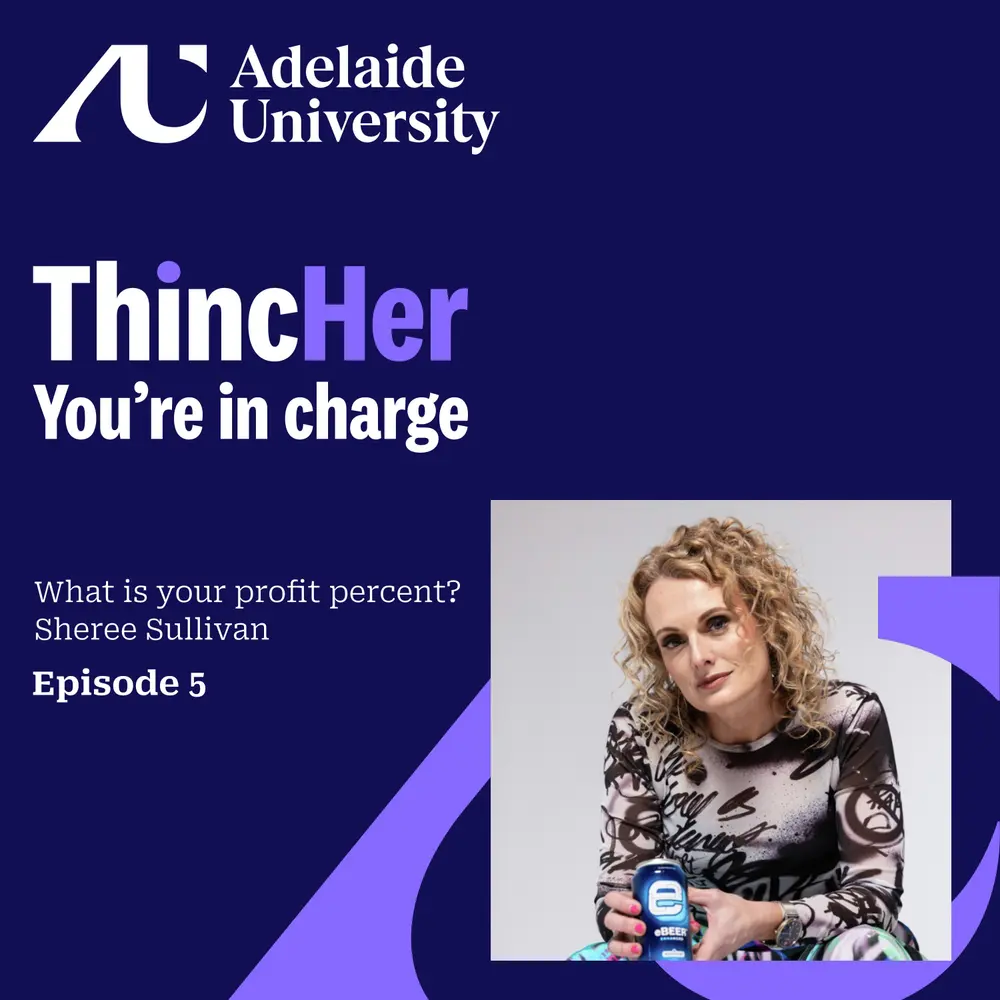
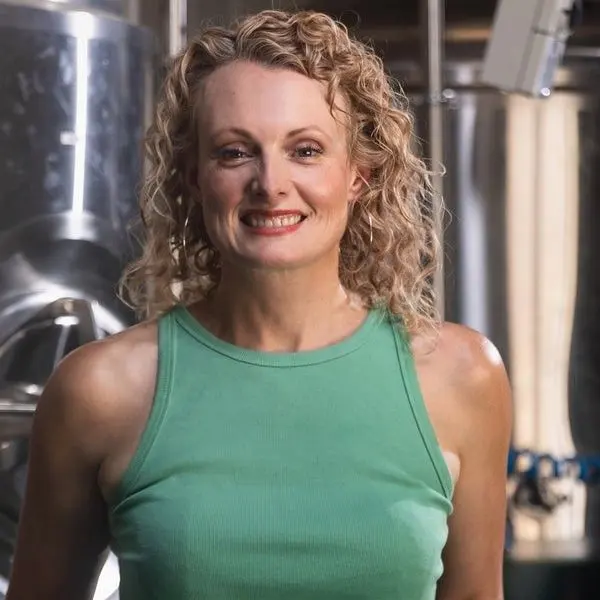
Sheree Sullivan went from a jazz piano degree to running one of Australia's leading Brie and Camembert makers. Her family's goat dairy, Udder Delights, had its share of tough moments, and she says pain has been her biggest teacher.
In this conversation with host Sav Perera, Sheree shares the costing wake-up call that changed how she ran the business, the HR lesson she learned after handing a hard conversation to someone else, and why she now asks "what's the lesson?" the moment something hurts.
She also covers selling Udder Delights, why the dollar value is only one part of a sale, and what she did differently the second time around with Grünthal Brew.
If you're starting out, you'll hear her practical advice: know your profit percent, get a bookkeeper, work out what you're prepared to sacrifice, and do an organisational chart of every role in your business to find your first hire.
Recorded on Kaurna Land. You're In Charge is brought to you by ThincHer, an initiative of ThincLab at Adelaide University.
Chapters
0:00 Welcome to season two and meet Sheree ▶ 1:20 From jazz piano to cheese and brewing ▶ 3:55 A family of side hustles and a goat dairy ▶ 7:52 Learning to make cheese when nobody else could ▶ 9:59 Doing everything when you start a business ▶ 11:08 Fail fast and the five year commitment ▶ 12:00 The profit percent wake-up call ▶ 16:14 The HR lesson ▶ 18:52 Cash flow, sacrifice and Rich Dad Poor Dad ▶ 21:49 When the business nearly went under ▶ 24:07 Where the motivation comes from ▶ 25:32 Selling Udder Delights ▶ 32:59 Why start again? Finding the why behind Grünthal Brew ▶ 38:33 What's different the second time around ▶ 41:05 From doing to leading: the org chart ▶ 44:29 Letting go of control: boundaries, values and systems ▶ 48:50 Advice: finish what you start, and what you're prepared to sacrifice ▶ 52:04 Get a bookkeeper ▶ 55:14 What Sheree wants to master ▶ 56:48 Sav's takeaways ▶ Transcript Search or select a timestamp to jump ▾ 0:00 Sheree Sullivan: They are the two areas which cause business owners the most stress and are usually the reasons why people fail. It's a constant journey of what I call fail fast. I remember my dad telling me, "Oh, you're the most unemployable person I know." 0:15 Sav Perera: Welcome to season two of You're in Charge. My name is Sab Pereira. I'm a chef, business owner, and now a judge on MasterChef Sri Lanka. Today's guest is someone that's. specialises in the art of the turnaround. 0:28 Sheree Sullivan: I'm Cherie Sullivan, an entrepreneur for 20-odd years in the food and hospitality industry. I am— have been a cheesemaker, a brewer, and now also a mother, Adelaide Hills resident, owner of 2 dogs and 1 husband. 0:44 Sav Perera: While many know her as the face of Utter Delights, her journey began with a Bachelor of Music in jazz piano before she dove into the world of manufacturing and fast-moving consumer goods. Cherie has transformed a small regional startup in one of Australia's leading brie and camembert manufacturers, eventually leading it through a major global acquisition. Now, with her next project well underway at Grantham Brew, Cherie continues to redefine what it means to be a modern leader. Cherie, thank you so much for being here. Now, just to reflect on the start. So, Bachelor of Music in jazz to now in cheese and now actually brewing. Talk to us about that transition. 1:35 Sheree Sullivan: Yeah. So, when I was 5, I got music lessons from my parents. So, we didn't have a lot of money, but my parents always put money aside for music lessons and my teeth, which were particularly bad. And I loved it. And my dad, who was quite the disciplinarian, said, if we're going to pay for your music lessons, you're going to practice 6 days a week. You can have 1 day off. Now, even when I was 5, that was 6 days a week practice. And I'll never forget the physical movement of going to the stove and going on the little manual timer. And I used to have to do 10 minutes a day as a 5-year-old. 2:12 Sav Perera: Oh my goodness. 2:12 Sheree Sullivan: And then by the— and I never stopped. And so by the time I was in year 12, because I was doing exams, I was getting up at 6:30 in the morning to do 40 minutes of practice every day. And when it came time to work out what I was going to do after school, I didn't know. But what I did know is I wanted to finish what I started. And so my degree was jazz piano, but funnily enough, I was playing jazz organ from 5, age 5 to age year 12. And then obviously went and did my 3-year degree in jazz piano at Adelaide Uni. Weird. And did it not really thinking this will be my career, just thinking I just want to finish this. Yeah. Yeah. And so my parents, fortunately enough, um, were pretty cool with it. I, I do have this very vivid memory driving down Maynooth Road. I, I was born and bred in Elizabeth until I was 18, so not a lot of money, just lots of hard work. And I remember driving down Maynooth Road and I remember sitting in the back of the car And I said to my mum and dad, and they were putting us through private school as well, I think I want to go to uni. And my mum, who was such a hard worker and she thought I should just go get a job, said, what do you want to go to uni for? Like, she thought that was the most stupid idea. And my dad said— her name was Estelle— Estelle, if Cherie wants to go to uni, she can go to uni. And that was the end of the conversation. And I was like, oh, I've got the freedom to do what I want. And that's how I ended up doing jazz piano. 3:40 Sav Perera: Yes, you do. 3:41 Sheree Sullivan: As you do. 3:41 Sav Perera: But then now you've gone into essentially what I consider is the best industry, hospitality. Yeah, really. And food. 3:49 Sheree Sullivan: Yeah, 3:49 Sav Perera: I might be biased. Yeah. But how— where does that— 3:53 Sheree Sullivan: How does all that— 3:54 Sav Perera: Yeah, yeah, where does that come from? 3:56 Sheree Sullivan: I know, you know, 3:57 Sav Perera: it's a big jump. 3:58 Sheree Sullivan: Yeah, I was saying that if, if MasterChef or Celebrity Chef had been around when I was growing up, I think I would have thought, oh, I need to do food, but I didn't. I was cooking from age 10 at home. 4:12 Sav Perera: Right. 4:12 Sheree Sullivan: I was baking. I was doing family meals probably from age 15. Uh, our home was— our whole extended family was cooking for each other, having meals together. They just weren't fancy, but they were home-cooked, so we couldn't afford takeaway. I remember the corn from KFC was my takeaway. So I loved food, went to uni, and while I was there, the family moved to the Adelaide Hills. And my parents were sort of low to mid-40s. They always had side hustle. So they were always working full-time and they always had business on the side. And it was very common. And these businesses were things like canoe hire. I remember this chainsaw hire. My dad used to build speed cars that were at Speedway. 5:00 Sav Perera: Interesting. 5:01 Sheree Sullivan: So essentially my dad and my uncle were, I wanna say builders in that they could weld, fabricate, brick, clay, cement. So there was always— 5:11 Sav Perera: Manual labor stuff. 5:12 Sheree Sullivan: Yes, but always worked full-time. Like my dad was a tech studies teacher. In all of that, they moved to Lobethal with the view that we've got really no superannuation. They'd nearly paid off their house in Elizabeth and they were like, We, and my mum was like, I love gardening, I want a garden. And so essentially they pitched it to me and it was, we're moving to the Adelaide Hills. We found 33 acres of easterly facing slopes and good bore water. What does that mean? We're going to become raspberry farmers while we're working full-time. 5:44 Sav Perera: Right. 5:45 Sheree Sullivan: And that will be our retirement plan. And so they sold everything and then went back into a really big mortgage in the sort of middle of the '90s. And I look back now and I'm like, that was really ballsy. And to their face, their friends would've said, that's really exciting. And behind their back gone, what are you doing? 6:02 Sav Perera: Yeah. 6:02 Sheree Sullivan: Anyway, a raspberry farm became some goats because my dad always wanted goats and you need animals to eat grass and cut it to keep it down. And then there was an old rundown dairy on the property and my mum and dad decided they were just gonna have goats for home use. So literally cleaned out the dairy, welded up some milking stands, and we had Nora and Nell. They were our first ever goats. And then all of a sudden they're like, oh, hang on, maybe a goat dairy is our— maybe that's our business. And that can be all year round. Raspberries will be seasonal. And so they spent the next year or two while I was, um, at school and uni developing this goat dairy. 6:39 Sav Perera: Right. 6:39 Sheree Sullivan: They're now milking morning and night and working full-time in the city. Like, it is crazy. 6:44 Sav Perera: And handling raspberries. 6:47 Sheree Sullivan: And handling raspberries. So I am a good packer, picker, packer, seller of raspberries. I've done my seasons. Then they started figs. So I look back now and I was like, oh, raspberries, figs, and goat cheese. I didn't even realize how good I had it. And then they tried to deliver the milk one day to the best customer they had. This is while I'm still at uni. And they said, oh, Trevor, next week we drop the price of goat milk by 10 cents a liter. And this is the classic thing to this day that happens to the primary producer. So the primary producer is the one who grows and the market will dictate feast or famine and the price therefore. 7:18 Sav Perera: Right. 7:19 Sheree Sullivan: So mum and dad were like, oh, and they were sometimes literally pouring the milk down the paddock, not having a customer. 7:25 Sav Perera: Right. 7:26 Sheree Sullivan: And they just said, I think we need to value add. I think we need to, you know, we need control. We need shelf life. Let's build a cheese factory. And it wasn't because they knew how to make cheese. It's because they knew how to build and they could do it cheap. So they did. My brother thought of the name Udder Delights. 7:43 Sav Perera: Which is brilliant. 7:45 Sheree Sullivan: Yeah. Back then the industry did not like it. It was far too comical. 7:48 Sav Perera: Because you had udder. 7:49 Sheree Sullivan: But because for a serious industry did not like it. Um, and And then they employed a cheesemaker and I had just finished uni. I just remember doing my recital. I remember going to the launch, soft launch of Art of Delights. Nothing sold. And this became, this becomes the thing which it is today, sales and marketing. So I said to my parents, hey, I'm going to teach music. I'm going to gig. How about I just sell cheese as well? Put me on commission. And that's what I did. So that began the journey. Wow. And then 6 months in, cheesemaker went on holidays and said, Cherie, can I teach you how to make some of the cheese? And I was like, sure, I can cook, I can make cheese. You know, 21 and naive, 8:28 Sav Perera: different ball game. 8:29 Sheree Sullivan: Yeah, that— anyway, did it. And, um, luckily it was just fresh cheese back then, which meant no mold, no maturation, 8:36 Sav Perera: right? 8:36 Sheree Sullivan: That's probably why it was okay. 8:38 Sav Perera: Like ricotta style? 8:40 Sheree Sullivan: And more like chevre and feta and goat curd because it was all still goat milk. 8:44 Sav Perera: Yep. 8:44 Sheree Sullivan: Um, and then within 2, 3 months, he resigned and we had no financial backup plan. No one in the family knew how to make cheese. 8:55 Sav Perera: Mm. 8:56 Sheree Sullivan: And it was either you keep going forward or you go bankrupt. And I remember sitting around the dinner table with my parents and I said, I'll do it. Oh, I'm going to teach myself how to do this. Give me $15 an hour. Uh, and then when I'm out there selling product and setting up systems and marketing and getting this business off the ground, that's commission-based. Just pay me on sales. And I'll give you a 5-year commitment. And at the end of 5 years, I'll look elsewhere for a job and we can call it a day or we'll go again. And they said, okay. So that was my job interview. So general manager and head cheesemaker of Art of Delight. So that was a very long introduction to give you the context. 9:33 Sav Perera: So how do you then at that point, because you said, you know, you've, none of the cheese is selling, get into that space of, okay, Well, now you're not only learning the skillset of the business, which is the cheesemaking, but then you have learned the business management as well. So tell me a little bit about that process and actually getting your head around running the whole operation holistically as opposed to just one aspect. 9:59 Sheree Sullivan: I think the thing is, it was such a small fledgling business. It had only been open for 6 months and I had also been selling for the first 6. So. I literally was the Jill of all trades. I, to this day, can still clean a sump pump and not vomit. Like, I am really good at cleaning. I can fix things. I'll just go, oh yeah, I can do that. And when you start a business, you actually, you have to do everything. You just have to because you can't afford— 10:28 Sav Perera: It's just the reality. 10:28 Sheree Sullivan: It's just the reality. And, and the best day comes when you can finally afford to pay someone. to help you. I certainly had some significant turning points and still do, but it's a constant journey of learning. 10:45 Sav Perera: Yeah. 10:45 Sheree Sullivan: And it's a constant journey of what I call fail fast, learn quickly. So when you're in, um, moments of pain, hurry up and really quickly go, what do I need to change right now? 11:01 Sav Perera: Yeah. 11:01 Sheree Sullivan: Because if you don't it's gonna get worse and worse and worse and worse and worse. And so that was my— that pain has been my biggest teacher. 11:08 Sav Perera: So talk to me about the fail fast approach and that 5-year commitment, because you gave that commitment to your parents. Yeah. But now it's been, what, 20? 11:17 Sheree Sullivan: It's been 20. Oh gosh, I don't even know how many years now. 26, 27. 11:24 Sav Perera: 5 years turned into 5 decades. 11:27 Sheree Sullivan: That's correct. 11:27 Sav Perera: Not 5 decades. 11:28 Sheree Sullivan: Yeah, 2 and a half decades. Business is really hard. 11:33 Sav Perera: Yep. 11:34 Sheree Sullivan: But business is really fun. And it's certainly not boring. It definitely can wear you down. So it's got, I think, the extremes of life in us. And I remember my dad telling me maybe a year or two into Art of Delights, he said, oh, you're the most unemployable person I know. 11:57 Sav Perera: Oh my goodness, your own father? 12:00 Sheree Sullivan: Yeah, I was like, I was so offended. I've never told him this actually. He probably would forget that he said this to me. I realize now what he means. I was so— I was such a self-starter, 12:14 Sav Perera: right? 12:15 Sheree Sullivan: And I, I don't need motivating by someone else. I motivate myself. 12:20 Sav Perera: Yeah. 12:21 Sheree Sullivan: And I've got freedom to come and do this today. 12:23 Sav Perera: Yeah. 12:24 Sheree Sullivan: But if I need to work tonight till midnight, I will. 12:27 Sav Perera: You will do it. Yeah. 12:28 Sheree Sullivan: So, um, I think it's more that he saw the hours I worked, but the flexibility I had, and he could see that I would just get, get it done. So there, there were some pretty significant moments in the first 2 to 3 years, which I think have boded me well. And if I teach others in business, it's about these 2 things. 12:49 Sav Perera: Yeah. 12:50 Sheree Sullivan: You need your trade. So without a trade, you have no business. Now that could be a doctor. And the funny thing is I do mentor doctors how to run their practices. And they even said to me, you don't learn this at uni. I'm like, you don't. When you're at uni, you learn your trade. And when you're an apprentice, you're learning your trade because you can't have a business without a product or a service. Yep. But from there, there were 2 significant moments that helped me realize Business is excelling at a trade and fulfilling a customer need, but managing your resources, which are your money and your people. And if you can learn how to manage your money and your people well, your business will be okay. But they are the 2 areas which cause business owners the most stress and are usually the reasons why people fail. 13:39 Sav Perera: Yep. 13:40 Sheree Sullivan: Yeah. So, and, and, and the 2 really significant moments I had in that I was able to access business mentoring early through government funding. 13:49 Sav Perera: Right. 13:49 Sheree Sullivan: And one of them kept saying to me, what's the profit percent in that cheese? And at the time we weren't making cow milk cheese, we were only making goat milk cheese. And it was our chèvre, number one seller. Oh, I don't know, but look at this award. And next month he'd come, uh, what's the profit percent in that cheese? And I go, I don't know, but hey, look at this article. And on the third month he said, what's the profit percent? I'm like, I don't know. And he said, would you stop marketing and start doing the money and start doing the finances? And then he said, you can lead a horse to water, but you can't make them drink. And I was like, I will show you. Like, and that on the outside, I was like, haha. And on the inside, I'm like, I'm going to show you that I can do this. So it was the perfect thing he needed to say to me to motivate me. 14:33 Sav Perera: Right. 14:34 Sheree Sullivan: I was able to find a costing manual, product costing manual. I still have it to this day. Literally like a book, um, right, in a PDF form. And it took me a week. And the funny thing, the fate— my favorite subject at school was maths. Um, I— it took me about— no, maybe even 2 weeks to follow the manual. And as I was making cheese, write things down. 14:55 Sav Perera: Yeah. 14:56 Sheree Sullivan: Put it all into Excel, built the formulas, enter, minus 10% loss. That's what was the profit percent, wasn't it? 15:03 Sav Perera: Yeah. Oh, 15:05 Sheree Sullivan: and I remember literally And like the corner of this room, I went and sat there in my mind and I just went like this in the corner. And I was like, I'm really embarrassed and I'm really ashamed. And this really sucks. And I reckon I sat there probably for about 1 to 2 weeks. And then I went, okay, now it's time to fix it. And I did. And that's when our device started turning around. 15:28 Sav Perera: Yeah. 15:28 Sheree Sullivan: And from that day, it's all about costing, costing, costing. So now at Gruntal, costing, costing, costing. And too many people in business pick their price by what they think the market can bear. 15:42 Sav Perera: Yeah. 15:42 Sheree Sullivan: Not because they actually know the profit percent. 15:44 Sav Perera: Yeah. 15:45 Sheree Sullivan: So over the years, and I'm still on the journey, I have chosen to upskill in product costing and just understanding financials because knowledge is power. And even if you're running at loss or you're running out of money, Just understanding that is powerful. 16:03 Sav Perera: Yeah. 16:03 Sheree Sullivan: And it helps you sleep at night. 16:04 Sav Perera: Yeah. 16:05 Sheree Sullivan: And you can make some decisions and you can pull some levers. So that was a really big one. And the other HR lesson I had, which has to this day helped me, 16:15 Sav Perera: which is the second prong, the 16:16 Sheree Sullivan: people. The second prong, the people. I had a staff member that I'd had for about 2 years. She was amazing. Things happened in her life and she became very anti-Utter Delights. 16:29 Sav Perera: Right. 16:31 Sheree Sullivan: And I didn't know how to deal with it and I didn't want to deal with it. And I said to my dad, oh, this is happening. And he's like, oh, let me deal with it. I'm like, great, great idea. And not great idea because my dad's sort of got the policeman headmaster vibe. And so he thought he'd deal with it, I think, by just being quite gruff and this is how it's going to be. So we end up with an industrial dispute, meaning she's now off work, going to do a WorkCover claim, going to do that, and literally told our other staff, I'm going to take them for everything they have. And I'm 16:59 Sav Perera: like, 16:59 Sheree Sullivan: oh, well, we don't have anything, but I'm, I'm angry. And I remember walking down Hutt Street with a friend of mine who's in business and I was ranting and raving and I was going, you know, the only joy I get in all of this is she's going to reap what she sows. And my friend said, yeah, Cherie, she was about 5 years ahead of me in business. She's like, yeah, Cherie, that's sort of true, but there's actually something much bigger at play here. 17:21 Sav Perera: Yeah. 17:21 Sheree Sullivan: The universe has a lesson for her, and if she doesn't learn it, the universe will give it again and again and again. And it's going to keep coming back and it's going to get bigger and more painful every time. And I'm like, that sounds awesome. She said, but the same goes for you. And I was like, oh, you know. 17:37 Sav Perera: And it's also not necessarily your place to teach someone that lesson. 17:41 Sheree Sullivan: No, but the same goes for me is what's my lesson? 17:46 Sav Perera: Yeah. 17:47 Sheree Sullivan: And 17:47 Sav Perera: maybe this is yours. 17:48 Sheree Sullivan: That was mine. And my lesson was have the guts to deal with HR. And when you have to have a difficult conversation, have the conversation. Don't handball it to someone else because I did that. That's how I was in this position. So I went and got an HR consultant mentor and she just taught me so much. And I don't always get it right, but I get it right. Let's say maybe 80%, 90% of the time. Yeah. And so that not only taught me HR management of your staff, but it then taught me in those painful times. Don't point at everyone else. Go, what is the lesson from this? And that's part of failing fast. And so when I start to feel pain, I usually go, quick, quick, what's the lesson? Quick, learn it, learn it, learn it. Because it's painful and effort to change and to learn, but it is painful to not, because if you stay in that, it's gonna get harder. 18:41 Sav Perera: And long-term damage as well. 18:43 Sheree Sullivan: Long-term. And so all I say is choose your pain. And I, my pain is I choose to constantly change and learn quickly to this day, you know, 25, 26 years now in business. 18:53 Sav Perera: Sure. I really resonated with what you said about, well, because talking about the financial side of things, and I think for our listeners as well, because we've got a lot of young women, young people that want to go into the business, but the financial aspect of it, getting your head around it. It's a massive turnoff. It puts people off. Something that I had to learn personally myself running myself as a business was like, yep, you're going to run probably at a loss, but you need to have cash flow. 19:22 Sheree Sullivan: Yes. 19:22 Sav Perera: Like cash flow is paramount. And it often means that, you know, you just don't end up paying yourself. And I'm learning from you that there's a lot of sacrifice that's gone into essentially self-funding yourself, I think, for decades. 19:36 Sheree Sullivan: Yeah. 19:36 Sav Perera: Tell me a little bit about that. 19:37 Sheree Sullivan: Yeah, so I know that Utter Delights survived because I lived at my parents' property in my own little shed. They worked full-time, they milked the goats. I hardly drew a wage. Then my husband came in 5 years later. We bought half of Utter Delights off my parents. We had by then a very small unit. 2 cars. We renovated that unit and we sold it and we sold one of the cars to buy half of Art of Delights and to fund our next business, which was the Art of Delights Cheese Cellar, which was in Handorf at the time. And my plan was Art of Delights Cheese Cellar, the building is big enough that we can live out the back, that sort of pub model you live on. 20:28 Sav Perera: Gotcha. 20:29 Sheree Sullivan: So you can live there and we can run the front of house. And then in about 2 years' time, we will buy real estate again. And in that, I think in that 2 years, we drove to Melbourne for a good food show to run Art of Delight's cheese at a good food show. And I was the reader of the book out loud. So I don't know if audiobooks were even a thing. I'm not sure. I was the audiobook and I'm reading out loud while my husband was driving Rich Dad Poor Dad. And it changed the way we were gonna do business. Indeed. Rich Dad Poor Dad essentially said, use your assets to buy your liabilities. And people even go, asset and liability, what's that? So if you go for a bank loan, you have to fill out the form. Here's your assets and here's your liabilities. And in terms of the bank, the bank thinks an asset is what you own and a liability is what you owe. Rich Dad Poor Dad does not agree with that. Well— He says an asset is something that will put money back into your pocket. 21:29 Sav Perera: Right. 21:30 Sheree Sullivan: And a liability is something that will only take money from your pocket. 21:34 Sav Perera: Right. 21:34 Sheree Sullivan: And by that definition, your family home is a liability unless you've got an Airbnb on it. Yep. So a family home is always a liability. An asset is an investment property, a business. Of course, when it finally starts making money. Yep. We took 5 years at Art of Delight. 21:50 Sav Perera: Yep. 21:51 Sheree Sullivan: Anything, share portfolio, whatever can bring money back in. So from that, Saul and I decided that we weren't going to buy a family home for a long time. 22:00 Sav Perera: Right. 22:01 Sheree Sullivan: And so we kept using our money to buy real estate investment or we put it back into the business. 22:09 Sav Perera: Right. 22:10 Sheree Sullivan: And so Utter Delights was self-funded until we sold it. And we sold it in 2017. And in that journey, there were some moments where we were gonna go bankrupt. 22:23 Sav Perera: Oh my God. 22:23 Sheree Sullivan: Through no fault of our own. 22:25 Sav Perera: Yeah. 22:25 Sheree Sullivan: And 2, 2 examples is we got a phone call from a goat milk supplier, the main one that said, we don't have any goat milk for you. So imagine you're a baker and there's no flour. 22:37 Sav Perera: Yeah. 22:38 Sheree Sullivan: Another moment was we bought some equipment from Germany for, and it was a lot. It was like $200,000 or $300,000. We'd never done this before. We bought some equipment in. And it started shredding metal into the cheese. 22:52 Sav Perera: Oh no. 22:53 Sheree Sullivan: And we ended up— I thought it was product recall. Fortunately, it was something called product withdrawal, which means we found it all. This is why in food manufacturing you need to be out. You need to know where your product is. Yeah, it was all in truck or cool room. We withdrew it, rang the insurer and went, oh my gosh, like blah, blah, blah. And they were like, it's okay, um, we'll, we'll, we've got you, it's fine. And luckily we had a broker. I've done so many insurance claims now, it's ridiculous. Anyway, long story short, when they realized how big the claim was, they said, oh, actually no, we're not going to pay that. And we had to fight for 12 months for an insurance claim that was legitimately owed to Utter Delights. And that was our house deposit funding that. I don't think I have my house. I don't, because it was time to actually build a home. Mm-hmm. And I'm like, Yeah, I think, I think this is the year we're losing our lights, like all these things that are not your fault. Um, and you fight hard. And when that insurance claim came through, it was $1 million. Like that's how bad it was in terms of the damage to the business. Um, and all that. So yeah, I'd done lots of those and then I've actually done a bushfire claim and I've done a real product recall claim. Like, oh my gosh, it's a journey. If you choose to put yourself out there, it's a journey. 24:07 Sav Perera: So, which brings me to my question. All these trials, where does the motivation come from to keep going? Because at certain points, like, like you said before, people do give up. 24:19 Sheree Sullivan: Yeah. 24:20 Sav Perera: And everyone has their threshold, everyone has a limit. 24:23 Sheree Sullivan: Yeah. 24:24 Sav Perera: What about you? Because you've got this like fire. Where does that come from? What fuels it? 24:29 Sheree Sullivan: Um, I think if I first think to my mum and dad, they were very hard workers, and there was a— you just keep going. Particularly my mum. Um, my dad did say that there were times he's like, okay, it's time to call it a day. My mum would say no. But my husband and I together are a good team. He is also an optimist, 24:54 Sav Perera: right? 24:55 Sheree Sullivan: Very high energy, very visionary. So if one of us is down, other one is up. Do you know what I mean? So I wouldn't— 25:04 Sav Perera: Something offsets it. 25:06 Sheree Sullivan: That's it. And usually we're up together, but should one of us just be a little rocky, the other one will take the lead and go, come on! I wouldn't have done what I've done without him. And he would say the same for me because we both bring a different skill set, but it is definitely the energy. In fact, when I first met him, I thought, you're too much, we're too much. No one's going to ask us anywhere because we can both be a bit— but that's how it's, it's because we're, we're in it together. 25:33 Sav Perera: Then you've grown essentially Under the Lights into this empire. And from personal experience, I still remember the first time I saw the label at a Drakes and I went, oh my God, that's such a great name. 25:49 Sheree Sullivan: Yeah. 25:50 Sav Perera: And it's just purely based on that. I was like, I'm gonna buy that. 25:52 Sheree Sullivan: Yeah. 25:52 Sav Perera: And then of course the cheese was Marvellous. And this was, you know, when I first moved to Australia 15 years ago, it was one of the first labels I saw. And then you've now moved on to actually selling the business. 26:05 Sheree Sullivan: Yeah. 26:05 Sav Perera: Talk to me a little bit about actually becoming essentially a household name in South Australia and then ultimately making the decision after all that love and sacrifice. And I'm sure a lot of tears that you put to essentially let go. Yeah. Like 26:24 Sheree Sullivan: what there is. 26:24 Sav Perera: Yeah. 26:25 Sheree Sullivan: There is a huge journey behind any story. And when in particular, I think you have a brand that's perceived as lifestyle. And so Other Delights ended up specializing really in brie. 26:41 Sav Perera: Yeah. 26:41 Sheree Sullivan: So it became Australia's leading household name for brie to the point that Coles and Woolworths would just call us, particularly Coles, and say, hey, come tomorrow, come and pitch to us tomorrow. Like it was very good. a good relationship with a lot of people. A couple of things happened. I think the, the first one in it all was my mum, age 58, actually died from brain tumor. We had 4 months with her, and my girls were like 2 and 3. 27:07 Sav Perera: Your mum was 58? 27:09 Sheree Sullivan: Yeah. 27:09 Sav Perera: Yeah, I lost mine when she was 59, so 27:12 Sheree Sullivan: you know what it's like. And she was my paid nanny. My business partner, the bookkeeper, thank goodness she taught me how to do bookwork. Obviously, you know, my dad's wife, great mate, all these things. I could not have any time off to grieve. There was no time. I just had to keep 27:30 Sav Perera: going. 27:32 Sheree Sullivan: That was probably like the first little— then after that was that metal product recall thing. 27:39 Sav Perera: Right. 27:39 Sheree Sullivan: That was after my mum had died. From there, A few other things happened, and one was my dad went into silent partnership after mum died, and he went away, and my husband was just checking on his home and literally fell through my dad's floor because it got eaten by white ants. 27:57 Sav Perera: Oh my God. 27:58 Sheree Sullivan: And my dad went to the bank and said, um, can I have a loan? And we were paying dad until the day he died, and the bank said, no, you're retired, no loan for you. So he comes to me and said, hey, I did Artis Advice for retirement, can you buy me out? And I'm thinking, with what? Like, I don't have enough money. And because now Art Advice is quite profitable. And then my husband Saul is saying, this business is getting too big. And I don't know if I can mentally keep carrying this load. 28:27 Sav Perera: Right. 28:28 Sheree Sullivan: And he walked through the door one day and he goes, I wanna sell. It's time to sell. And so I've got a dad wanting out and I've got a husband wanting to sell. And for me personally, I felt like I had unfinished business, but that came secondary. A business comes secondary, I think, to the family in your life. 28:47 Sav Perera: Yeah. 28:47 Sheree Sullivan: And so we brought in, um, an advisor, a business advisor who leads business to sale. And he actually sat us down and he said, all 3 of you, what do you want? And my dad's like, I want all out. And my husband's like, I want all out. And I'm like, I'm not ready. But I'll do it. And so I had to lead that whole process. And I was grieving while I was leading it, like grieving. Okay, it's time to lay this down. It's time to let this go. It's your baby. It was my baby. And my husband would come through the door so excited every day. Oh, we're selling. Yes, yes, yes. And I'm like, eh. It still took a long time. It takes a year to sell a business. And then I'll never forget because these are Japanese cheesemakers. Like who even knew? Like the most incredible Japanese cheesemakers. who ended up becoming, and I say our business partners because they said to us, you and Sauli Young, you're important to this business. We normally would just buy a business outright. 29:43 Sav Perera: Yeah. 29:43 Sheree Sullivan: We don't want to this time. We want you to own some too and we want you to work with us. 29:48 Sav Perera: Right. 29:49 Sheree Sullivan: How much are you gonna buy? And I remember sitting there just going, 10%. And they were like, okay, we'll come back to you. And so essentially we sold, but we retained 10%. And then we worked with them for another 4 years and it was great. So when we sold though, I was very sick and I look back now and I think, how did I do that? So we packed up a house, built a house. So we were building a house regardless of whether we were selling or not. Yeah. Literally on the Friday, this is on the October long weekend, the business sold, the money hit the bank account. I literally took a screenshot and then paid off all the debt, gave it to my dad, put money in the tax bill savings account because tax is massive. Moved into our new house the very next day, and the following day was the anniversary of my mum's death. 30:37 Sav Perera: Oh my God. 30:38 Sheree Sullivan: I also was very sick by now because, you know, when you push too hard, I knew, I knew I wasn't being kind. Yeah. And I knew that I was going to pay the price. And I did. And I've got a great friend who helps me with PR and said, you need to do a media release. And I'm like, I'm so sick. Just give me 2 weeks. Just let me recover and have the energy. It leaked to the media, so I didn't control the narrative, and everyone was quite like they were accusing. Why didn't you tell us? Like, because I have a lot of good friends. Why didn't you tell us? And I'm like, they're really sick. And then on, on social media, you know, you— I often only get the trolls who want to say, yeah, I am never buying them again, they have sold out. 31:21 Sav Perera: Oh, I remember this. 31:23 Sheree Sullivan: They hated it. And I— and there was a part of me which was like, I understand the which is amazing because you feel like it's your brand, which is amazing. But you get off your couch and you sell your house and you risk everything for 20 years and then finally take your risk off the table, keep the business in South Australia, keep the profits, keep the employment, keep the dairy, and then I won't buy you again. Like, I was so angry. 31:47 Sav Perera: It's the same, Mum. It's the same, um, thing that asked when this happened with Pirate Life. 31:53 Sheree Sullivan: Yes. 31:54 Sav Perera: Yeah. 31:54 Sheree Sullivan: And they sold around the same time we did. 31:55 Sav Perera: Yeah. Took periods. 31:56 Sheree Sullivan: Yeah. I, so I didn't actually want to leave the house for about a week and then I went, ah, stuff it. And then I was fine again. So I can process pretty quickly. Um, and then honestly it felt like my grandchild. So it felt, I still had this connection. Um, I was going, we were still running it. It just felt like my grandchild. And for our staff who, um, worked under us, the business would have felt exactly the same. The difference was just There were 3 of us at an executive level who had to report to head office. Other than that, it felt exactly the same. So by the time we finally left, I was like, yeah, I feel really good about this. Like, I'm done. I've, I've done the things I wanted to do and I wanted to see other diets achieve. Um, in saying that, there was one thing we never got a blueberry made, which it was, I really want a blueberry. But anyway, that, whatever. 32:46 Sav Perera: It's not too late. 32:47 Sheree Sullivan: It's not. No, they could still do it. It's just very difficult. 32:50 Sav Perera: Yeah. 32:50 Sheree Sullivan: Yeah. So that was a journey. And, and the reason eventually we're like, okay, we're ready to go. We could have stayed there for the rest of our life, but we're entrepreneurs. 33:00 Sav Perera: Yeah. 33:01 Sheree Sullivan: And we still owned Art of Delights Cheese Cellar and it was getting tired and I had to work out, am I going to shut that business down or am I going to scale that business? And the Grumpy's Brew House site where Gruntal is now. 33:16 Sav Perera: Yeah. 33:17 Sheree Sullivan: We got a call. Do you want to do this development with us? And there was part of me that's like, oh, where's scaling? And Saul, my husband, is like, are you mad? Do you honestly want to do this again? And I was like, oh yeah, you're right. What am I thinking? And then we just gave it a little bit more thought. We watched, um, one of the oldest TED Talks now, that very, very famous one. It was called Simon Sinek's Start With Why. Yeah. We watched Start With Why. We're like, why would we do this? 'Cause this is a lot of time and a lot of money. Why would we do this next project? Couldn't work it out. Slept on it. And a couple of days later, I just woke up and I said, Saul, that's my husband's name, Better Call Saul. Saul, um, 'cause it's fun. That's our why. 33:58 Sav Perera: Yeah. 33:59 Sheree Sullivan: And when I have staff now say to me, and they, and we sort of induct them with it, but I know they forget. Only like 2 days ago, I had a new staff member say, it is so fun here. Yes, because that's the vibe. 34:12 Sav Perera: It's the culture. 34:13 Sheree Sullivan: Yeah. Customers come, it is so fun. I'm like, great. Like, so I say Gruntalbury is all about fun dining, not fine dining. 34:19 Sav Perera: I love that. 34:20 Sheree Sullivan: In saying that, first year sucked because it's a new business. 34:23 Sav Perera: And it's also a business in hospitality, which I think people don't realize how much work goes into those first 18 months of just staying afloat. 34:35 Sheree Sullivan: So much work. 34:36 Sav Perera: And especially when you've got Bricks and mortar. The overheads alone are enough to kill you. Which actually brings me— it's a perfect segue because we remember Grumpy's, remember everything going up in flames. We all watched, which was very depressing. And then now for your second act, you've done this massive courageous thing and decided, yes, I'm gonna— Start a brewery. From cheese to— I mean, look, it's a perfect transition. Like it's all exactly, it's all fermented things. But how do you then find not just the energy, but then also that mind frame to go, okay, I'm gonna do this again. So how do you learn to fail better essentially? 35:25 Sheree Sullivan: I do remember when we opened the Art of Delights Cheese Cellar, and this was like in 2006. And that was also a building under construction and then open to the public. I said, I'm never doing this again. And then I did it again en masse. I think when it's genuinely who you are, you can't not. But what I will preface that with is that when we sold, I was— and when I say sold, sold that first time where I could keep working for Arted Delights, but I negotiated 15 hours a week. And so I often talk to people who are looking to sell their business. The dollar value you get is but one bit of the equation. And so a really important equation for me was how many hours am I then gonna have to keep working in that business? 'Cause I had some other things as well. Right. The first 2 to 3 years, I reckon I recharged and I, I love to read. I love to cook. And Saul would often come home, oh, we could do this, we could do that. His brain doesn't stop. And I'm like, don't talk to me. Like, I'm not— because I'm the executor and I'm like, I'm not ready. And so the truth is, in that 4 years of when we sold and we worked for the business and with the business, I recharged. If I had sold, I wouldn't have been able to go straight 36:47 Sav Perera: in. Yep. 36:48 Sheree Sullivan: So that's where I think it is. And I do call them seasons where you've got to go hard. As long as there's a line in the sand to go, it's okay, I'm going to breathe here. So I had 4 years of recharging and then I was ready. And I love hospitality and I love hosting people. And the other Delightful Tea Settle was such a small-scale version. We didn't even have a commercial kitchen or chefs. So to go from that to this was really fun. And it didn't really hit me until about 2 months prior. Then we had our family and friends practice night 2 days before we opened, 37:27 Sav Perera: right? 37:28 Sheree Sullivan: And I'm like, this is going to be great. I've thought of everything that could go wrong. It was so bad. Oh, is it? So bad that adrenaline fight or flight kicked in. And for me, it was flight. 37:40 Sav Perera: Oh no. 37:41 Sheree Sullivan: I should not be there. I wanted to go. I'm like, let me out, let me out, let me out. And on the outside, I'm like, huh? And on the inside, I'm like, I just want to go. I don't want to do this. I want to like Backpedal, backpedal, backpedal. And we're opening in like 48 hours, 37:52 Sav Perera: right? 37:53 Sheree Sullivan: Went home that night and I woke Saul up in the middle of the night, said, "I think I've got COVID." 37:57 Sav Perera: Oh no! 37:58 Sheree Sullivan: And he said, "You're having panic attack. Go back to sleep." Okay. And in hindsight, it was panic attack. Woke up the next day and went, "Okay, now it's time to fix it." The next year, I reckon I was triggering. I don't want to be here. I don't want to be here. I don't want to be here. And I had to go do like. where I get something called NET, which helps. It's sort of chiropractic that gets rid of the triggers, 38:21 Sav Perera: right? 38:22 Sheree Sullivan: So that I can now be there and sit there and relax. Whereas I would be there sitting there just looking at everything going, fix this, fix this, fix this, do this. I just want to go. So yeah, I still pay a price when I do a business. 38:36 Sav Perera: But do you think that that response is really linked to all the sort of hard lessons that you've had to learn with Under the Light? 38:44 Sheree Sullivan: Yeah. And I feel like, I know I'm a perfectionist in business. I want it to be, and I'm, if I see some rubbish or dirt or a fly, I'm like, get rid of it. 38:52 Sav Perera: Oh, I do see a little streak of dust and you're like, 38:55 Sheree Sullivan: yeah, I'm 38:56 Sav Perera: gonna save. 38:57 Sheree Sullivan: Yeah. So, um, but now I, I really, really enjoy it. 39:03 Sav Perera: Yep. 39:03 Sheree Sullivan: Which I'm really pleased about. 39:05 Sav Perera: So what's different this time around for you then? 39:09 Sheree Sullivan: A couple of things are different. The culture was also really good at Art of Delight. Honestly, it would suck. It would suck to go bankrupt. And when I say bankrupt, to have to shut down Gruntful. 39:23 Sav Perera: Yeah. 39:24 Sheree Sullivan: But I could afford it. 39:26 Sav Perera: Right. 39:27 Sheree Sullivan: When we did Outer Delights, we couldn't afford it. So the pressure is not the same. 39:34 Sav Perera: Well, this is actually liberating now that— 39:36 Sheree Sullivan: yes. 39:37 Sav Perera: Yeah. 39:37 Sheree Sullivan: And we Added to Lights was a, it was a pretty big business, like 70 staff, 4,000 square meter factory, 200,000 liters of milk a week. And they incorporate $20,000 a day, easy. You could, someone reverses a forklift into a cool room, someone forgets a tap, a truck delivers cheese to Coles at 6 degrees, you know, all that sort of thing. So even our staff would say at Grantville, oh, this is pretty full on. Are you okay? We're like, yeah, I'm fine. This is nothing. This is a cakewalk. 40:07 Sav Perera: Yeah. 40:08 Sheree Sullivan: So I think, um, the difference is our financial management and people management were good from day one. 40:15 Sav Perera: Yeah. 40:16 Sheree Sullivan: Doesn't mean we still haven't made mistakes. You just learn it quickly. 40:18 Sav Perera: Yeah. 40:19 Sheree Sullivan: It wasn't our house on the line. Um, and we were able to afford a really good setup and fit out. And I love marketing and I brought on, you know, I brought on a bookkeeper straight away. 40:31 Sav Perera: You knew the right people. 40:32 Sheree Sullivan: I just knew. And I, and I employed Um, really good managers from day one. And again, I'm, I'm saying this from, from a position of privilege because this time around I, I was self-funding again, but I had a pool to self-fund from. The first time around it wasn't, there was nothing. It was the smell of an Audi bag, but we've worked really hard and we continue to work really hard. And I love it of improve and prove and prove and prove and prove. Just keep improving. 40:58 Sav Perera: Yeah. 40:58 Sheree Sullivan: Don't get tired. Don't get, When I say tired, it's not great to walk into a venue and feel tired. 41:04 Sav Perera: Yeah, 41:05 Sheree Sullivan: it's always— it's just this constant, um, moving forward. 41:08 Sav Perera: Yeah. 41:08 Sheree Sullivan: Yeah. 41:10 Sav Perera: And so what you said about Under Delights, about having to sort of fight so hard where you were doing, whereas now you're in a position of leading— talk to me about that transition. 41:23 Sheree Sullivan: I am still doing, but I've read another book and it's, I think it's a foundational book and it's called The E-Myth Revisited. And interestingly, uh, so E-Myth sort of sounds like e-commerce, but it's entrepreneur, 41:40 Sav Perera: right? 41:40 Sheree Sullivan: And it's a story about running business next to a fictional story about a female baker who's in business. So I loved it because it was like this female in food. And it was all about how you own a business and not own a job. 41:57 Sav Perera: Indeed. 41:58 Sheree Sullivan: And there used to be this ad on TV and I used to wanna throw things at the TV when I saw it. And it was like a VIP home services or a Jim's Mowing. And it was like, I wanted a life, so I bought a VIP home service. I'm like, you didn't buy a life, you just bought a job. Like, it's not a life. And when you start business, you lose your life because, well, your life as you know it. You now have a baby. 42:24 Sav Perera: Yeah. 42:24 Sheree Sullivan: And you are going to serve that baby of a business for quite a while. But something that The E-Myth taught me, and this is what I pretty much will say to anyone who's looking to grow, is do an organizational chart. And we know that and we're like, oh yeah. And, and it's like, but not of the people who are in the business. Do an organizational chart of every role that exists in the business, 42:48 Sav Perera: right? 42:48 Sheree Sullivan: So for example, Added Delights, when I first did this, was owner, general manager, cleaner, sales, bookkeeper, cheesemaker, um, delivery, marketing, all those things. Now put the name against every role of who's fulfilling that. Oh, that would be me. But Cherie. But Cherie. And so I say to people, Look at that role, look at that chart and go, what do I hate doing the most? That's your first employee. And then slowly get yourself up, up, up, up, up, up until you're just doing the things you love. 43:27 Sav Perera: Yeah. 43:27 Sheree Sullivan: Unless there's a crisis and you have to deep dive and do it all. So I love marketing. I love business development. I love system establishment. I love learning new things. I love financial management, financial control. So that's what I do at Grunfeld. But if all of a sudden there's no bartenders, I'm like, oh, that's me. Like, I actually love it. And I've had, um, like customers come in and they go, oh, you're new here. I'm like, yes, I'm not. Um, but yeah, I guess it's like, get yourself to a point where you do what you love. And if what you love is bartending, then do it. Like, yeah, it's, it's just That's, so it's not that I don't do anything, it's that I do what I love. And even with Utter Delights at the end, I wasn't very hands-on at all in the factory. That was Sil's job. Mine was product costing, marketing, financial reporting. But when bushfire hits or product recalls hit, I am in and I lead the team through crisis. You sort of lean in and out as you need. 44:32 Sav Perera: Yeah. So for people that are just starting out though, because you wear all the hats of the business when you're starting out. Yeah. That's just the reality. That's true. You don't have money to spend on staff. For me, control was a massive issue because I'm an absolute control freak, and especially in food because I'm a chef. Things need to run in a very particular way, and learning to relinquish the control, to trust other people, to have a team, yeah, that actually backs you That confidence piece, um, I think is really hard for a lot of people that are starting out to actually go, okay, I'm going to let go of the control of this situation. Because when you spend, especially say, 24 months building something from scratch where you're overseeing everything, and suddenly you go, okay, I can't sustain this by myself anymore, where— how do you build that confidence? How was it for you? Um, what was the process? And then— go, okay, I'm going to step back and let someone else actually do this? 45:27 Sheree Sullivan: Um, whether I did it right at the start, I, or is it, is it my approach now? It's probably a bit of both. I am actually a delegator, 45:38 Sav Perera: right? 45:40 Sheree Sullivan: Which has boded well because it means we can grow and scale. And I, what I had to learn was teaching, this is the end result I want from you. which is sort of like in cheese and food, and this is, this is what I want it to look like, it's what I want to taste, this is the end result, this is how I do it. However, if you can find a quicker way, or you've got a different way, 46:04 Sav Perera: or a better way, 46:05 Sheree Sullivan: or a better way that will achieve that result in the same time or less, you go for it. So I think it's that, that important way of saying these are the non-negotiable boundaries, but there's some scope there. Because I think if you make someone come in, particularly to process work, and it's like, this is how it is, this, it's like, that's not great. It's like, give them a little bit of freedom, but not at the expense of, um, the quality or the time that you need to get it done in, because that's all money. 46:33 Sav Perera: Yeah. 46:33 Sheree Sullivan: I think the other thing is, and, and this is also, I didn't have this at the start, but I would have had it maybe for the last 15 years. is very clear values. And I don't mean, I don't love when a business says, oh yeah, we've got 4 values, honesty, integrity. And I'm like, boring. Like I want some, just some core values that are said in the words of that makes sense to the business. 47:05 Sav Perera: Yeah. 47:05 Sheree Sullivan: So Utter Delights was find the fun. It's funny that Saul and I are always like, find the fun, because you've got to find the fun in the hustle and in the grind. One was safety is number one. One was we own it. And that's what we called it. And it was like the shortcut button. But then we, and in this, we had a values document that said, we own it's the value. What does that actually mean? That means when you do something wrong, you just call it and you go, oh, that was me. Sorry. And then there was the next column which said, when you are displaying this value, this is what your behavior looks like. 47:40 Sav Perera: Right. 47:41 Sheree Sullivan: When you are not displaying this value, this is what your behavior looks like. And we've got this at Gruntal too. So when someone applies for a job or you are recruiting, you go, hey, this is how we behave at this business. Self-audit this because if this is not genuinely who you are, you're gonna hate it. 48:03 Sav Perera: It's not the right fit for you. 48:04 Sheree Sullivan: It's not the right fit. So a lot of people have values, they're a little boring. They don't often really truly explain what the behavior looks like and what it doesn't. If you can be upfront with that at the start, you bring people in who you actually wanna work with. The value fit is often more important than the performance because you can teach performance. You can't teach value. if it's truly not who they are. Yeah, because they're not being authentically themselves. So it's sort of a two-pronged thing. But I would also say we are quite system orientated. I always have been. There's a lot of documentation, 48:43 Sav Perera: right? 48:44 Sheree Sullivan: So if someone isn't— is disappointing you, it's because your expectation is not being met. 48:49 Sav Perera: Yeah. 48:49 Sheree Sullivan: Did you clearly explain your expectation? So there is a bit of work to bring someone on. 48:53 Sav Perera: Yeah. And it's about, I think, I've, cause I've had so many, the pleasure of having so many of these conversations, so many different leaders. And I think it's always, how do you have, as you put it so well, your value system? How do you then filter that through to anyone else that you're bringing on? Which I think is very valuable for the people listening in. Which also brings me, Shree, to you, hard worker, and you've got a lot of fight in you. And I resonate deeply because you studied jazz and you've gone into food. I studied neuroscience. I went into food. So I resonate deeply with that piece where I just completely did something else with my education. What advice, if any, do you have for people who are sort of in that mindset where they're thinking about their education and it's not necessarily teeing up with what they want to do? 49:48 Sheree Sullivan: Yeah. any education is valuable, and I think if you can, finish it. So I had a staff member who had 6 months left on her nursing degree and just didn't finish, and I'm like, no, even though she didn't want to be a nurse. I'm like, you've only got 6 months, you know. I am a bit of a fan of just finish it, like do out what you said you're, you're gonna do, because it all gives discipline. 50:13 Sav Perera: Mm-hmm. 50:13 Sheree Sullivan: And it all gives focus, and it teaches you how to finish. 50:18 Sav Perera: Yeah. 50:19 Sheree Sullivan: So the next thing I would say is one foot in front of the other. 50:23 Sav Perera: Yeah. 50:23 Sheree Sullivan: So my own daughters are like, oh, what are we gonna do? I'm like, what do you love? Because if you can work in an area you love, it's going to make more good days than bad. 50:34 Sav Perera: Yeah. 50:35 Sheree Sullivan: It doesn't mean you're not gonna have bad. 50:36 Sav Perera: Yeah. 50:37 Sheree Sullivan: And if you can just do one foot in front of the other, just keep following your nose. You will get there. It's just what are you prepared to sacrifice? 50:47 Sav Perera: Yeah. 50:47 Sheree Sullivan: Because if you are going to start a business, you need money coming in from somewhere and it's not going to be your business. 50:54 Sav Perera: Yeah. 50:55 Sheree Sullivan: So I sort of see a couple of things. One is that— so for example, when Utter Delights began, it was about my parents worked full-time, I taught music, and then I hardly drew a wage. That's how we funded it. When Saul and I've done things together, even in the early days, he and I both worked other jobs as well. Otherwise you need to be in, literally you're in a couple and one of them works and one of them doesn't because they're trying to get the business set up. Or you sell something you own or you save money to fund yourself. Yeah. Like that's the reality of it. Or you're working part-time. And so I think it's unrealistic to go, I'm gonna open a business and there'll be enough money. There won't be. You'll have fun, but there won't be. 51:40 Sav Perera: No. 51:41 Sheree Sullivan: I don't know if Saul and I have ever drawn industry wage ever. Even now. Oh, maybe now we do. But it was more that we were able to pull big chunks every now and then of cash. 51:54 Sav Perera: Yeah. 51:55 Sheree Sullivan: Our payday was our sale day. So I think it's also, if you want to earn a big salary, don't start a business. Uh, your salary will come, but it might take you 10 years. 52:06 Sav Perera: Yeah. 52:07 Sheree Sullivan: But if you want your autonomy and you want freedom that maybe you don't start work till 10 o'clock that morning, but you may work till 10 o'clock that night, you know, like it's, it's more that, that it's one foot in front of the other and it's a long game and the get rich quick is false. 52:24 Sav Perera: Yeah. 52:24 Sheree Sullivan: If it's too good to be true, it's too good to be true. 52:27 Sav Perera: Yeah. 52:28 Sheree Sullivan: So it's, yeah, it's that, it's all that. It's like, go for it. The other thing I would say is get a bookkeeper as soon as you can, because it's usually, or choose to learn, go work right before you even start a business, go and learn how to run Xero and do your bookwork. Yeah. Learn, learn, learn, because that's things like your tax and the, all, all the compliance stuff, which causes the most stress and trips people up. And it doesn't need to. 53:00 Sav Perera: Yeah. 53:01 Sheree Sullivan: So I'm like, get a bookkeeper, get a bookkeeper, or go learn right now. 53:04 Sav Perera: And people either get caught up in like the jargon of it all, um, especially when you're not coming from a financial background. Happened to me. Like, you love maths. I, it's just not my forte. My brain just turns into mush. 53:16 Sheree Sullivan: Yeah. 53:17 Sav Perera: But I loved what you said about you need to figure out what you want to sacrifice because often, like, I, I live my life on social media. because that's what makes me money at the end of the day. And there's that aspect of, yes, if I want to walk out of my house and stop working and get a matcha and come back, I can. But it also means that I'm going to be sitting here now working. 53:41 Sheree Sullivan: Yeah. 53:41 Sav Perera: And I can't clock off at 5. Yeah. 53:45 Sheree Sullivan: I never clock off at 5. 53:46 Sav Perera: No. Like, and I have not known that life for ever since I decided I'm going to quit corporate. 53:51 Sheree Sullivan: Yeah. 53:51 Sav Perera: So I think that's a really important message. 53:53 Sheree Sullivan: Yeah. 53:53 Sav Perera: for people. 53:54 Sheree Sullivan: There's a price. 53:54 Sav Perera: Yeah. 53:55 Sheree Sullivan: But for me, it was worth it. 53:56 Sav Perera: Exactly. 53:57 Sheree Sullivan: Yeah. 53:57 Sav Perera: It's like, even 53:58 Sheree Sullivan: now, 53:58 Sav Perera: do you love the freedom of being able to step out and have a little coffee? 54:01 Sheree Sullivan: Yeah. Great. I do love the freedom. And honestly, today is— I'm not doing anything but this today. 54:07 Sav Perera: Yeah. 54:07 Sheree Sullivan: And my daughter's about to turn 18 and I'm gonna go buy some things for her. But even 6 months ago, I was doing 2 nights a week till midnight. So I just lean in and out. And even when I had my girls, I, um, did babies and business. And I've had young, young people, you know, how do you do it? And we fortunately, when I look back now, so I said, oh, we'd live at Art of Delight's cheese cellar for like 2 years. We ended up living there for 12. 54:34 Sav Perera: Right. 54:34 Sheree Sullivan: I did not have my first house till I was 40. So I lived in a shed, I lived in a shop, and I lived in a flat. And so I have had a friend say, you are the poster child for delayed gratification. And that was because our assets bore our liabilities. So we just kept investing. But by living at our business, it meant I could have my children. I was home for them. 55:01 Sav Perera: Yeah. 55:02 Sheree Sullivan: But I was available to the staff and they would go to bed and I would keep working and then they would get up. My staff saw me in my dressing gown till 11 o'clock almost every day, but I was working in it and I was doing this and I was doing that. And it's just, it's just how I chose to do it. And, 55:16 Sav Perera: you 55:17 Sheree Sullivan: know, and it works for me. 55:18 Sav Perera: Yeah, it's been an amazing chat. Um, there's been so many points of resonance and so many things of value for our listeners. We always ask this question at the end of our podcast: what do you want to master? 55:33 Sheree Sullivan: So I decided, and I actually started actioning it in about the last week, that I'm going to program a virtual assistant to answer our Gruntful phones. I'm going to program a chatbot on our website, and I'm going to program automatic responses on direct messaging on all our social media platforms. 55:55 Sav Perera: Oh my goodness. 55:56 Sheree Sullivan: To try and minimize the customer pain points of not contact, not that we're not contactable when it's really busy. So I love actually taking on projects like that where I'm like, I don't know how to do this. Oh well, go and learn. I'm going to teach myself. So, um, that's, that's what I'm gonna do. But by the time you see me at the end of the year, so what you'll be able to do is you'll be able to call Gruntful in the middle of service and it will go, hi, I'm Chloe. I decided coming down today is going to be called Chloe. I don't know why. I'm Chloe. I'm, um, the Gruntful virtual assistant. How can I help you today? So, um, yeah, that's what, that's what my project's going to be. 56:34 Sav Perera: That's brilliant. I just want to say Thank you again, Shree, for being here. It's been an amazing session for me, and I'm sure for our listeners as well. But yeah, just want to say thank you, and thank you, had a great time. 56:46 Sheree Sullivan: Yeah, thank you. Thanks so much for having me. 56:48 Sav Perera: I have had an incredible chat with Shree Sullivan, and there were so many things actually that I really learned, not just about failure and success and learning to fail better. But one of the things that really struck out to me is actually taking confidence in running the business and the admin side of things. Hearing Shree say that, you know, you shouldn't actually be scared of that aspect of your business, and knowing how your numbers run, how they look, and how it's supposed to look is actually empowerment. And really, my biggest takeaway is that, you know, the thing that scares you about the business can actually be the thing that empowers you to take risks and go further and scale your business and what you're doing to the next level. It's been an incredibly valuable chat. And yeah, I look forward to what our listeners think as well. Make sure you hit follow and share this show with your friends because our next guest will be taking us into the huge industries of both media and agriculture. Join me as I learn how these two worlds collide with journalist and dairy farmer Casey Trelaw. 58:07 Speaker: Learning to become a yes man and to accept opportunities that come along the way means that you're never going to settle for the second best. 58:15 Sav Perera: Keep inspiring, keep striving, and always remember. You're in Charge of your business journey. You're in Charge is brought to you by Thinker, an initiative of ThinkLab at Adelaide University. Google Thinker, that's T-H-I-N-C-H-E-R, to join our empowering community of like-minded women in business. You're in Charge was recorded on Kaurna land. No transcript lines match that phrase. Try fewer words.



 ▶
 ▶
 ▶
 ▶
 ▶
 ▶
 ▶
 ▶