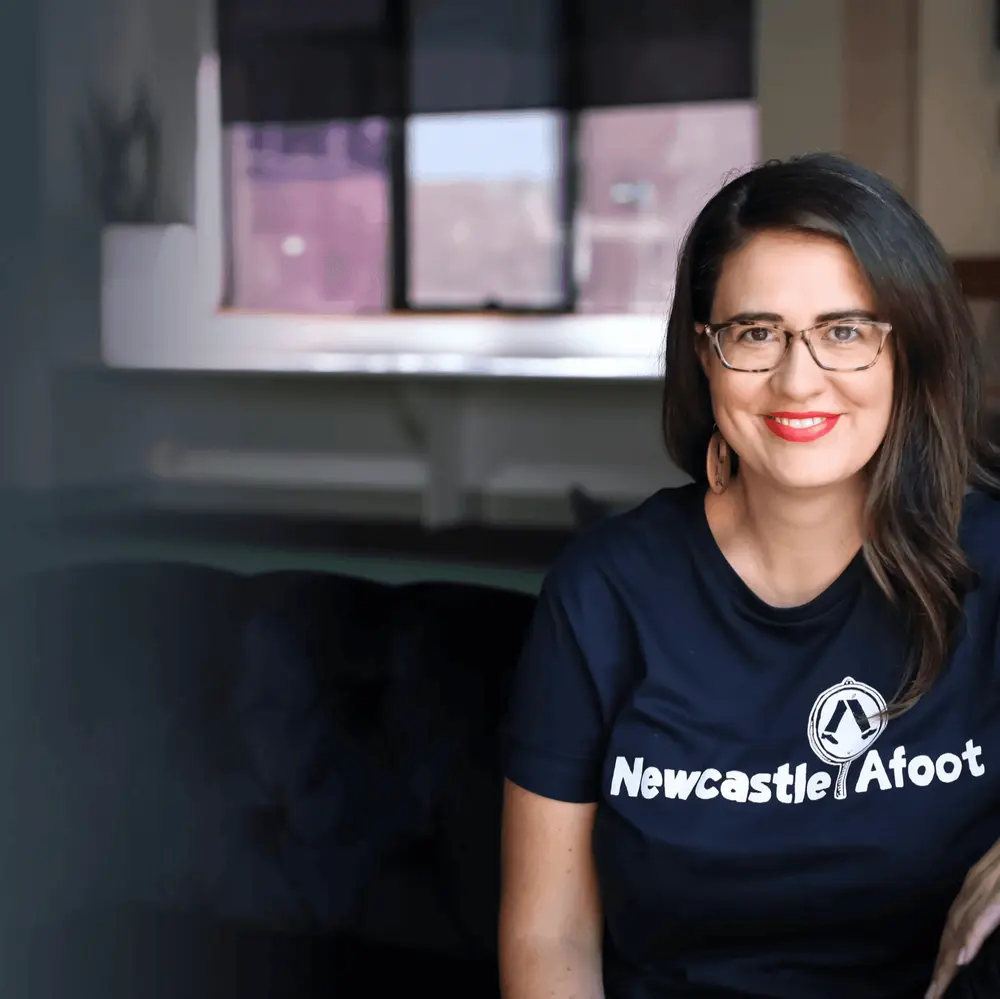
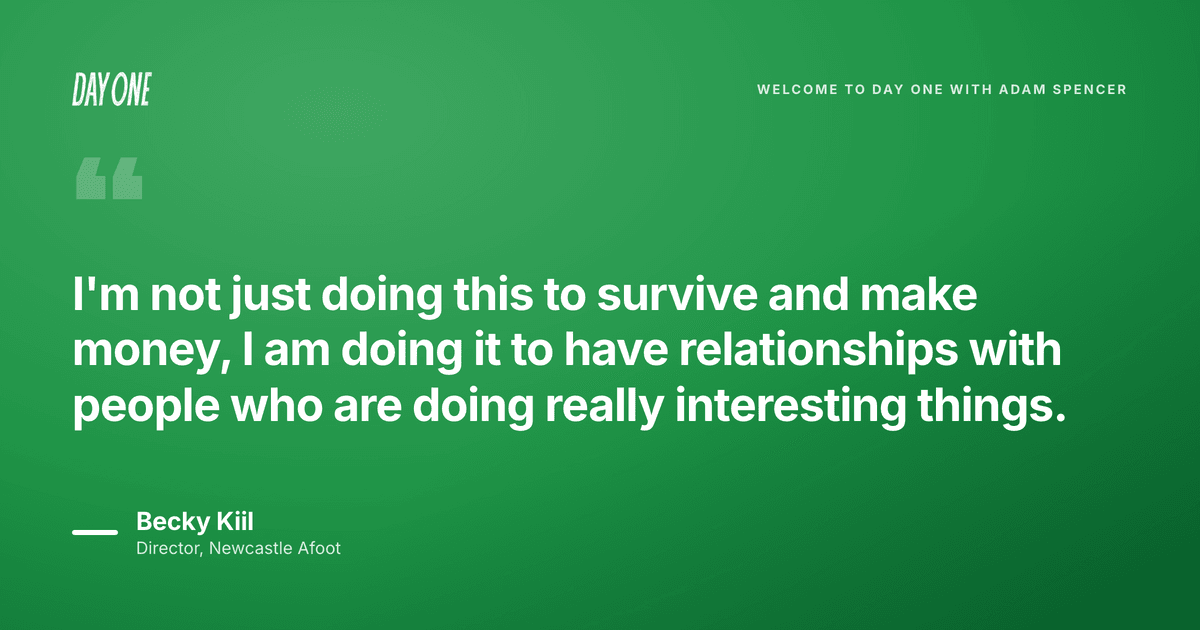
Transcript Synced · select any line to jump ▾ 0:00 Adam Spencer: You're listening to a DayOne.fm show. 0:05 Becky Kiil: What drives you to make bold moves, to build something that didn't exist before, to live, lead, and choose life with intention? Welcome to Perspective X. I'm Pauline Fatowi, and this is not your typical business podcast. Each episode, I get to speak to extraordinary entrepreneurs and leading innovators to unpack what truly fuels their journey. Not just the wins, but the inner work, the overlooked decisions, the mindset shifts, and the personal moments that sparked something bigger. This show is about the ripple effect of choice, the kind of deep accountability that lets us respond to life rather than react to it. Because when you realize everything is temporary, and you are the creator of your own experience, you start to play the game differently. So if you're curious about how people build meaning alongside success, how they evolve through challenges and shape the world with intention, this is your invitation to listen in. Perspective X, where we go beyond the highlight reel and into the moments that changed everything. Available now wherever you get your podcasts. 1:21 Adam Spencer: How much is the grant for? 1:23 Speaker C: We received just over $120,000, all of which will go into running the festival. 1:29 Adam Spencer: So I understand that none of that money will cover your time and— 1:34 Speaker C: No. 1:34 Adam Spencer: So that being the case, it's obviously a massive undertaking. 1:38 Speaker C: Yeah. 1:39 Adam Spencer: Can you explain why you chose to take on the project? 1:41 Speaker C: I just felt like it couldn't not happen. It had to happen. 1:50 Adam Spencer: Welcome to Day One, the show for regional startups and the organisations that support them. I'm Andy Jones, guest host for today's show, and I'll be sharing with you the story of Becky Keogh, founder of Newcastle Afoot. 2:03 Speaker C: Hi, I'm Becky. Um, I run Newcastle Afoot. It's a walking tour and cultural experiences business, and we are also running a street art festival this year. 2:12 Adam Spencer: A quick note before we dive in. This interview was recorded in February of this year, before COVID-19 turned everything on its head, and so our conversation doesn't touch on the effects of the the pandemic. But the themes we discuss in this episode, like the importance of supporting small businesses and of being involved in your local community, I feel are more relevant now than ever. Okay, let's get started. Last year, Becky received grant funding of over $120,000 to bring Big Picture Fest to Newcastle. This internationally renowned street art festival will see large-scale murals painted throughout the city, and this month Becky announced that the festival would go ahead in October 2020 as originally planned, with careful considerations made to enable a social distancing-friendly event. It's a massive project, on a scale unlike anything Becky's ever taken on before, and she won't be receiving a cent for the hundreds of hours of work that will be needed to make it happen. So why would a small business owner with more than enough on her plate already, who by her own reports never gets a day off, why would she volunteer for such a huge workload? Well, to answer that question, first we need to go back to day one and hear the story about how Becky uprooted her life in Melbourne and moved to Newcastle for a sea change. 3:37 Speaker C: [FOREIGN LANGUAGE] When I very first moved to Melbourne almost 10 years ago, I went on a friend's walking tour that he ran and I kept on going on that walking tour. I kept on inviting every friend or family member that came to Melbourne to go on the walking tour with me or to go on the beer tour. And I really, really enjoyed it, and I secretly wanted to work for my friend Dave. But I had my own career, so it wasn't really something I could contemplate. I was a case manager at Melbourne Magistrates Court. I was the lead acquired brain injury case manager. I loved working with people that were vulnerable and supporting them to get what they needed and to assist them to have a vibrant life in the community. But it wasn't always that easy, and systems tend to get people down in those sort of roles, and that did get me down after a while. And I think, I guess a lot of my burnout was working in a system that didn't meet my values. So— 4:38 Speaker D: Mm-hmm. 4:39 Speaker C: And yeah, so I ended up making some major changes around 3 years ago. Once I did decide I needed a career change, I actually sat down with a psychologist because I honestly, I couldn't comprehend doing anything else. So I did a psych session where we looked at quite a few of my values, but also what drives me, what interests me, what motivates me. I, the core thing was making that decision that I didn't have to always change the world in a really grand way through my career, that I could do positive work that was still, I guess, a bit more of a luxury as opposed to disability or public service. So I needed to make that change. So that was the first thing I absolutely had to make that change for my own wellbeing. So I needed to get out of that career, but I also needed to, I think, leave Melbourne. I loved Melbourne, but it's a very grey city sometimes, and a lot of time on trains with people in suits looking at their phones, and I just needed to get away from that. I came here 5 years ago to Newcastle to visit some friends. They'd just had a baby, and was here for only 20 hours. I still remember most of it pretty clearly, and realised that Newcastle met a lot of those needs that Melbourne didn't. Well, it had the things that Melbourne had. It has the culture, it has great food, great bars, art galleries that are just out of this world, things that intellectually get my mind going, but on an amazing beach, away from the rainy weather, and a much more welcoming, more vibrant sort of culture. 6:25 Adam Spencer: So Becky leaves her job and makes a sea change. Having decided she'll pursue a new career. She hasn't forgotten how much she enjoyed her mate Dave's walking tours, so when she arrives in Newcastle, she looks for a tour guide company she can work for. 6:40 Speaker C: I was here for a little while once I moved here. Couldn't find someone that I wanted to work for. There was a bit of a big gap in the market for just general walking tours. There was a beer tour, there was a food tour, and a ghost tour. And I didn't want to just cover one particular area, so I saw that gap of a broad business, which I think has been one of my biggest assets, is that I'm adaptable in my business. 7:05 Adam Spencer: So as an outsider who's only just moved to Newcastle, Becky decides she'll start her own tours. Okay, can you remember the first tour that you ever gave? 7:15 Speaker C: Yeah, I mean, I did a tour for some strangers, so it was a friend and she brought two strangers along. They were mums and they were, they had free time. And so I gave it to them for free. And yeah, it was a bit scary. 7:31 Adam Spencer: What did you talk about on that first tour? 7:34 Speaker C: You know what? A lot of the same things as I still talk about. So, because there's some real cool things that are quite interesting about Newcastle and that I think as an outsider, I've, I think there's a benefit to being someone who hasn't always lived here because you can see what's really unique about this city. So talked about Aboriginal culture, and also I guess the core things that have helped shape this inner city area, which are quite interesting. I didn't— like, I felt like a fraud, and I was definitely doing like the fake it till you make it, but the fact is I had spent many hours over months preparing. I had a lot of research done. I I knew what I was talking about. I knew that I could provide excellent customer service and make sure people had that sort of point of difference. Like sometimes you'll go see a tour guide and they might have all these interesting facts, but they don't even like say hi and who they are. And they don't really engage you. So, I knew I had those things. And yeah, so it went well, I think. 8:39 Adam Spencer: And after that first tour, what happened next? What was the next step? 8:43 Speaker C: Oh. The next step was just identify how I can get people to start coming on these tours, 'cause I recognized people are not going to come on a walking tour, very unlikely, if there haven't been reviews. So I needed to convince all of my friends, and these were new friends. I hadn't been in Newcastle that long. Every single little friendship group I had, I would ask them to come along for free and just get that started and keep on practicing. And eventually I started getting reviews from those and started getting more natural bookings, which was really exciting. 9:18 Adam Spencer: Were you marketing yourself at the time on like social media or otherwise? 9:22 Speaker C: I was online with my website. I was bookable on TripAdvisor. I tried working with print media for advertising. I don't think I've received any bookings from that. So I tried to just focus more on word of mouth and online, Facebook and Instagram, building up that sort of profile so that people have a good idea visually of what I do. 9:48 Adam Spencer: I think your social media presence is really great because your enthusiasm for Newcastle really comes through and it's often just celebrating cool stuff that's happening in the city. It's not overly self-promotional, which I really like. 10:00 Speaker C: Well, that's what people want, isn't it? Like, they don't want to experience someone just talking about themselves. I guess I'm not necessarily actually trying to push sales through any of that. So I definitely do get sales from social media. And I have people stop me at bars and just be like, oh my gosh, I've been following you for a year. What you're doing is amazing for the city, that's great. And that is so valuable to me. And I definitely am getting sales from it. 10:27 Adam Spencer: But you're not shoving a sales pitch down people's throats on Instagram. No, definitely not. 10:30 Speaker C: And when I've tried to do that, not felt comfortable or natural. 10:36 Adam Spencer: Hmm, okay, so you've started to get some reviews coming in and then some strangers are starting to book you for tours. Was there sort of an event that made you think, "Ooh, this has really got legs, I really should, you know, commit to this in a big way?" Yeah, you were there, Andy. I was there? 10:54 Speaker C: Yeah, you were there. It was actually when the coworking space— that we work in, The Roost, booked Newcastle Afoot for a major Christmas party and scavenger hunt. 11:04 Adam Spencer: Oh, what a great idea! Of course! Okay, so for a little context, The Roost is a not-for-profit coworking space where Becky and I both have a desk. A few years ago, before Becky joined The Roost, she ran a scavenger hunt as part of The Roost Christmas party. It was a lot of fun. We were split into teams, then given a list of cryptic clues and quirky challenges, which all had us exploring the city on foot. And until my interview with Becky, I actually had no idea that this was the first time she'd run a scavenger hunt. 11:32 Speaker C: Yeah, it was, it was huge. It was a gamble. I had a good 30 people that I needed to entertain for maybe 4 hours. It was so much fun and I definitely was just jumping in the deep end, but the response to that was so incredibly positive. And it wasn't just a scavenger hunt, like there was an element of a bar tour, just the basics of it there, We met at a bar, we finished at a small theater. And I just realized the value of, I guess, one of my core products that has developed from that, which is corporate experiences that are combined fun team building, but also relaxing food and drink experiences. So I don't think I ever predicted that business to business was gonna be where I would get so much of my income, which has been great. 12:23 Adam Spencer: That's so cool. I had no idea I was there for such a milestone. 12:28 Speaker C: Yeah. 12:28 Adam Spencer: In Newcastle of Foot. 12:29 Speaker C: Unforgettable. 12:32 Adam Spencer: What was the hardest part about getting the business off the ground in those early days? 12:36 Speaker C: Oh, the classic cycles of starting a business, like self-doubt, self-reliance. I needed to do every single element. So I was not just setting up a business plan and a financial plan and learning how to do those through doing a training course, But I also was researching for the tours, setting up the tours, doing risk assessments to the tours, and also doing all the marketing things. So creating my brand, getting the logo, thinking just about the name, that was such a hard thing to do. Designing my website, learning how to use Squarespace, trying to make sure that the SEO is right, still don't know if I've got that. Everything, absolutely every single element. So trying to be a master of all, it's just not possible, um, but it's also really exciting and it was an amazing learning experience. 13:35 Adam Spencer: Just a few short years later, Newcastle Afoot is ranked number 1 on TripAdvisor for walking tours and guided experiences in Newcastle. I wanted to experience one of Becky's tours for myself, and Becky was kind enough to invite me along on a day when she was giving a family with young kids a tour. 13:52 Speaker C: His dad was one of the coordinators of the First Fleet, and he wrote a letter with this map and he said, "Dad, I found a harbour. It's deep, it's landlocked, and there is coal falling out of the hills." And you can still see coal falling out of hills around here. So within a year we had— So Seascapes to Laneways is the main tour that I run. It's a culture and history walking tour of Newcastle East. It lasts around 2.5 hours, and it's all about providing everyone with the ultimate an understanding of Newcastle in a short amount of time. So I take people for a wander along the foreshore to learn about Aboriginal history and traditional language, traditional customs. In Newcastle, around this side of the river only and all the way down to the bottom of Lake Macquarie is the traditional land of the Awabakal people. So they are the people that have lived here for around 6,000 years. About 2,000 years, we're guessing at the moment. 14:48 Adam Spencer: I really enjoyed the depth to which you talked about Aboriginal history and culture in the tour. How do you think you managed to achieve going beyond a token reference and make it meaningful for tour-goers? 15:00 Speaker C: Just with intention. You need to understand what you're talking about. I have spoken a fair bit with a local Aboriginal language centre, a couple of people there, Terri-Lee and Darren at Miramar have been amazing in actually sitting down and going over language with me and talking about their perspective of their culture and the things that are important to them and what's appropriate to be talked about, what's not appropriate to be talked about, and understanding that. And they would make their own fishing line out of casuarina, which is a tree that's— we're surrounded by right now. And on that canoe, they would have their babies and their toddlers. And they would cook up that fish on a fire out in the water in a tiny little canoe, and then they would feed themselves and their babies and their kids before they took the leftover fish home. 15:52 Adam Spencer: Before Newcastle Afoot and before her previous job as a social justice worker, Becky actually got a degree in architecture. And while she never worked as an architect, it does come in handy during her tours. 16:04 Speaker C: That's called Longwick House, and that's our, like, piece de résistance of our most prolific and well-known architect. His name's Frederick Menkens, and he was very talented at what he did, and he was quite well known for being a bit fussy about his buildings. 16:19 Becky Kiil: Did he build that house? 16:20 Speaker C: He did build that building. These buildings create tales. Like, it's not just that I'm interested in how a building was made, it's that those buildings were then used and have stories within them. And so people get that, people are interested in in who was in this place when. On December 28th, 1989, there was an earthquake. It was 5.6 on the Richter scale. This entire hospital was evacuated, including people who were under general anaesthetic. And there are people who have said that they woke up from general out in this park or down at the beach looking at the blue sky, and they saw all these people dressed in white around them. They thought they were dead. They thought they'd gone to heaven. 16:59 Adam Spencer: As part of the tour, we visited several local businesses, including Timeless Textiles, where we met the owner, Anne Kempton. 17:07 Speaker C: So Anne runs Timeless Textiles, and it's the only commercial fiber art gallery in Australia. 17:13 Adam Spencer: In Australia. 17:13 Speaker C: Yeah, wow. 17:15 Speaker D: So I opened the gallery about 9 years ago. So we have an exhibition space, which is these 2 rooms, and it changes between local, national, and international artists. 17:26 Adam Spencer: Why is it important for you to make local businesses a stop on the tour? 17:31 Speaker C: I think it's just so important to support the people that create the vibrancy of this city. Without them, this city wouldn't be what it is. Newcastle is a place with amazing, strong, tough small businesses, and I'm really trying to make sure that these businesses keep thriving and keep supporting them. If they don't get the support that they need, especially with the battle against things like large shopping centers these days, they won't be around anymore. And we want them to continue over the next 10 years or so. So I just want to increase foot traffic into the city and support those. 18:09 Adam Spencer: So after we visited and the tour wrapped up, I went back to Timeless Textiles briefly to chat with Anne. And she, I just asked her about the tours that you take on and the relationship you have. And I just wanted to quickly play you what she said. It seems like Becky really makes an effort to sort of visit local businesses. So I take it this isn't the first time Becky's brought a tour through your business? 18:33 Speaker D: No, she comes in regularly, at least once or twice a week. And I'm always very grateful. Not only do you see her wonderful smiling face, but you get to meet all these people. Some of them are locals who have no idea that Timeless Textiles and other businesses that Bec goes to exists, and it's wonderful. They say, "Lived here all my life, didn't know you were here." Yeah. And also we get a lot of tourists who come through, and sometimes they come back. But I think it's great because what it does is highlight the unique makers that are here in Newcastle. And Bec's very good at finding them out and then building wonderful relationships with us all. So we feel like we're part of her family, really. 19:17 Speaker C: Aww. 19:19 Adam Spencer: I thought that was very sweet. 19:20 Speaker C: That's so lovely. 19:21 Adam Spencer: How does that feel hearing Anne refer to you as feeling like part of the family? 19:25 Speaker C: That means so much to me. I'm not just doing this to survive and make money. I am doing it to have relationships with people who are doing really interesting things. So that just means so much to me. And it's funny 'cause I could say the same thing about her, so, and about all of the makers, like that they're, They're not just doing things out of self-satisfaction, they're doing things for community and for relationships, so that's just so lovely. 19:54 Adam Spencer: Last year, Becky set her sights on a huge opportunity to bring more people into the city, but it would be a project on a far larger scale than anything she's ever taken on before: a massive street art festival which would bring artists, artists both locally and from around the world to Newcastle to paint large-scale murals throughout the city. 20:16 Speaker C: Like, I've wanted a major street art festival in Newcastle since the moment I came here 5 years ago. You just see these giant big walls that are just asking for massive artworks. So I recognised the opening of a grant which is called Special Business Rates. That the city has put out, and I had less than 2 weeks. It was a very brief opening for a grant. We had to have letters of support from local businesses, so that's where my relationships were really handy. Like, all these local businesses and business owners supported me, and it was amazing. It's the first grant I've ever applied for, and I won. So yeah, really amazing. 21:01 Adam Spencer: Instead of building a festival up from scratch, Becky opted to work with Big Picture Fest, an organisation that has run street art festivals in Victoria and Becky's home state, South Australia. 21:14 Speaker C: Big Picture Fest is a major international street art festival that's coming to Newcastle in October, and we're gonna have around 12 murals with large-scale, like large-scale murals with beautiful artwork. Alongside it, we'll have a lot of variety and festivities, so like a block party with artist talks and music, augmented reality tech installations, projections, workshops, lots of different things. Our goal is to bring people from around the greater area of Newcastle, even right through to Sydney, into Newcastle to be on foot, have a look up and around, and hopefully as they watch these murals go up, have an even stronger emotional connection to the landscape and to these streets and want to come back over and over again. And, and every time they see that wall, they'll have that lovely emotional response, which is the goal. 22:11 Adam Spencer: There's no way the festival would have been possible without the Special Business Rates Grant. How much is the grant for? 22:18 Speaker C: We received just over $120,000. All of which will go into running the festival. 22:26 Adam Spencer: So I understand that none of that money will cover your time and— 22:30 Speaker C: No. 22:31 Adam Spencer: So that being the case, it's obviously a massive undertaking. 22:35 Speaker C: Yeah. 22:35 Adam Spencer: Can you explain why you chose to take on the project? 22:38 Speaker C: I just felt like it couldn't not happen. It had to happen. I've wanted a major street art festival since the moment I came here 5 years ago. Yeah, I just felt like it had to happen. So I think the city is gonna benefit from it, culture will benefit from it, and I think that's gonna, in the long term, be a benefit to my business. 23:00 Adam Spencer: So we work in a coworking space called The Roost together. 23:03 Speaker D: Yeah. 23:03 Adam Spencer: And I have seen you be just manically busy the last sort of 12 months or so. 23:08 Speaker C: Yeah. 23:09 Adam Spencer: So you've talked to me in the past about the fact that you almost never get a day off, that you're doing at least a little bit of work almost every day. Would you say that you struggle with work-life balance? 23:19 Speaker C: I'd say probably at the moment, yeah, because I am at the peak of setting up a new festival on top of a peak busy season in my business. But I think I probably have throughout this whole process of setting up this business had every single day at least a tiny bit of work. And I don't know that many business owners have a complete weekend ever. A lot of people tell me that they, really working every single day, particularly in tourism. So as a tourism and festival operator, I need to be available pretty much every single day of the week. So that is a constant battle for me is trying to find those times for the days off and to get out of this, like all I do and think is about Newcastle. So physically getting out is a big goal of mine that I'm working on. Mm-hmm. To go bushwalking and to have like self-care and all that sort of stuff. 24:16 Adam Spencer: Does that take a toll having that sort of work process constantly going on in the background of your mind? 24:21 Speaker C: Yeah, absolutely. And it's something I'm working on for sure. 24:24 Adam Spencer: Becky works very hard, too hard if you ask me, but it's clear to me that she works so hard out of a love for the city and the community that she found in Newcastle. I find her love of my home city really inspiring. I've lived here for over 10 years now. But on Becky's tours, she helped me see the city with fresh eyes. 24:44 Speaker C: This is actually a really dangerous harbour, and ships wreck. We've had dozens and dozens, hundreds of ships wreck in this harbour over the last 200-something years. And it's a very— 24:54 Adam Spencer: I've lived in Newcastle for 10 years, but I didn't know almost all of the stories that you did tell about buildings that I've walked past, you know, 100 times before. You really made me feel like a tourist in my own city again, which is such a wonderful feeling. Do you still feel that way about Newcastle? 25:10 Speaker C: Absolutely. Every single time I go on a tour, I could be doing the same walk 4 or 5 times a week, and every time I get to Alfred Street and then Parnell Place and then see the ocean bars and then step around to the beach, I see it as a tourist. It blows my mind that we get to live in such a beautiful place and that there's a central business district on one of the most beautiful ocean beaches I've ever seen. I will forever be amazed and amazed that there are ocean baths that are free and accessible 24 hours a day. Locals don't seem to realize how special those places are. And I don't think I'll ever get sick of that. 25:48 Becky Kiil: Mm. 25:48 Speaker C: It doesn't mean I don't get bogged down by Newcastle and I guess the politics and the changes. And sometimes those can be hard, but all I need to do is walk. And I recommend everyone walk down these streets the streets and you'll reset. 26:06 Adam Spencer: [FOREIGN LANGUAGE] Thank you so much for listening. A big thank you to Adam Spencer, the creator of Welcome to Day One, for having me on as a guest host for this episode. I'm Andy Jones, a freelance photographer and video producer based in beautiful Newcastle, New South Wales. You can follow my work, Color and Sound Creative, on Facebook and Instagram, or at colourandsound.com.au. Information about everything mentioned in this episode can be found on the show notes page at welcometodayone.com. Music by Lee Rosevere, full attribution on the Welcome to Day One website. And one last thing. If you really enjoy the products or services of a local business, why not give them a review? 26:52 Speaker C: Because I recognised people are not going to come on a walking tour, very unlikely, if there haven't been reviews. 26:59 Adam Spencer: It makes a big difference, and the business owners will really appreciate it. Who knows? You might even consider giving Welcome to Day One a review. I'm Andy Jones. Thanks for listening.


 ▶
▶ ▶
▶ ▶
▶