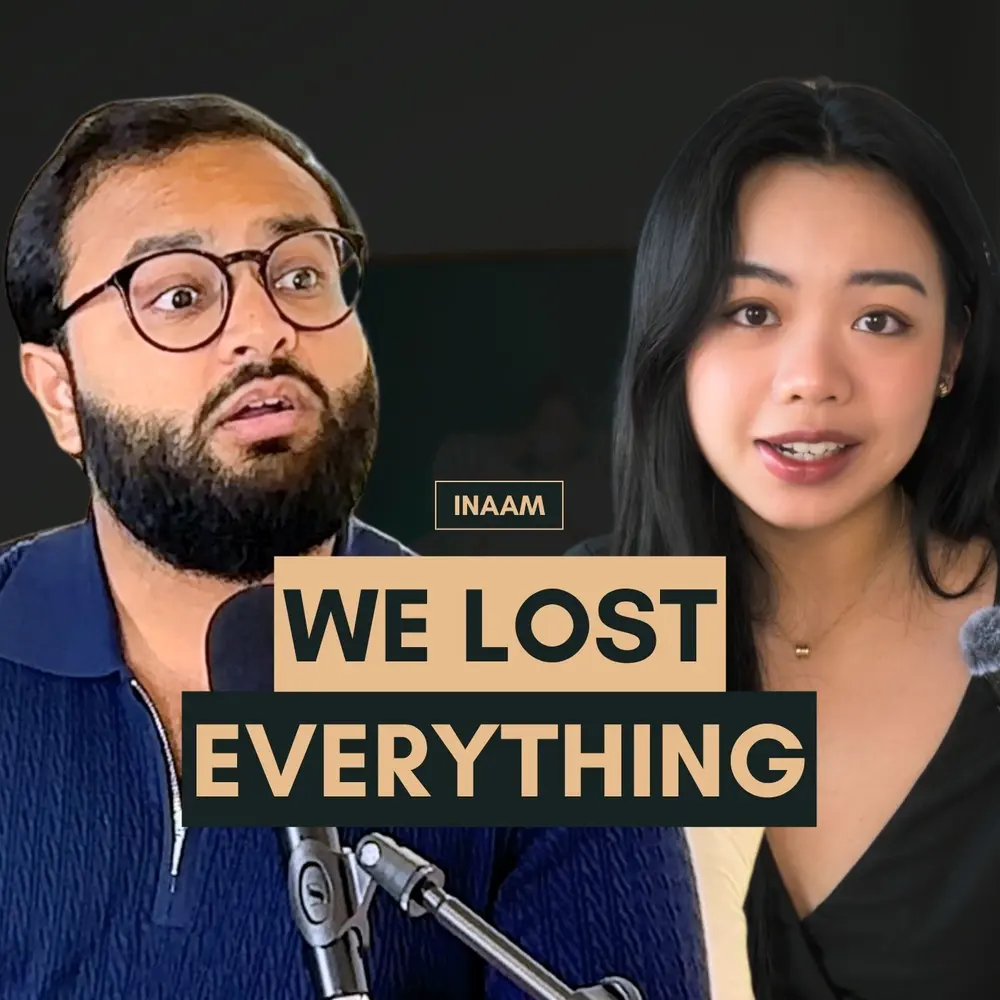
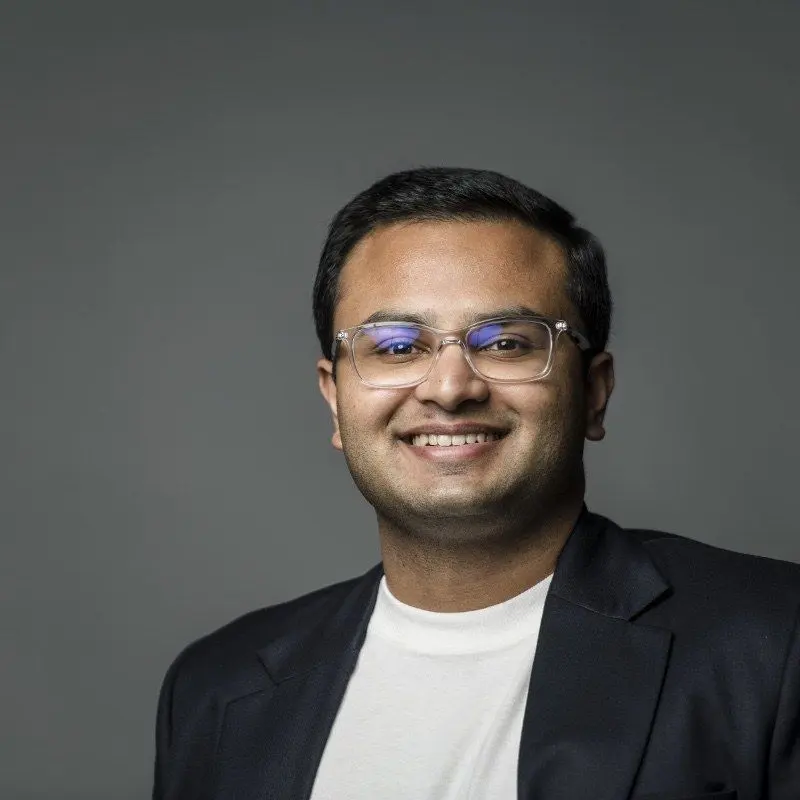
Arjun Agarwal is the founder and CEO of inaam, an ASIC-regulated impact-investing app built after nearly every VC in Australia passed on it.
Thea and Arjun cover cold-emailing a CEO to land his first banking job and the system that company still runs today, why he turned down running his family's business, and how he quadrupled a teenage crypto fund before giving every dollar back.
Chapters
0:00 Intro 11:11 The Founder Pressure 14:16 What Is inaam 17:07 Ten Dollars Flat 18:26 Raising Capital 18:47 They Kept His System 21:37 Arbitrage At Eighteen 23:16 Returned Everyone's Money 24:45 How Systems Work 25:54 Not For Everyone Transcript Search or select a timestamp to jump ▾ 0:00 Speaker A: Something I only came to terms with after he passed, 'cause I kind of held him responsible for a lot of that all the time. 0:05 Speaker B: Arch grew up in Johannesburg. His father was a successful entrepreneur. 0:10 Speaker A: Having it doesn't mean you're gonna keep it. Having it doesn't mean you'll make more of it. 0:15 Speaker B: Until he was taken advantage of and they lost all their wealth. 0:20 Speaker A: I was very young, so I had to piece together what's actually happening, right? Why aren't we in the same house? Why don't we have the same cars? Limited edition Patek Philippes. When we had lost everything, 0:32 Speaker B: Now he's building a fund his father never had. $10 a month, no percentage skimmed, ASIC regulated for the people the system was never built for. 0:43 Speaker A: My name is Arjun Agarwal. You can call me Arj. I'm the founder of InArm, and this is Founders in Motion. 0:52 Speaker C: You're listening to a dayone.fm show. 0:56 Speaker B: Arj, so before the fund, the bank, the mission, there was a house in Johannesburg and a kid watching how Money worked in it. What was your relationship with money growing up? Who dealt with it and who worried about it? 1:09 Speaker A: Love this question. Taking me way back to my hometown, which is where I grew up. I think growing up, money was something we spoke about all the time. It was a conversation we had at the dinner table. It was a conversation we used to have at school. We had this concept at school called cake and candy. So every month there'd be a grade who would have to set up a cake and candy stall during break or recess. And what that basically meant is for the month leading up to the time when you had put up your stall, you'd put up flyers, decide on what to sell, how much to sell it for, market it, tell people to come, have a cash float. And then during break, you'd have to sell as much as you possibly could. Towards the end, you'd then manage your books, your accounts, pay people you need to pay, measure profit, and it would be a whole competition of who made the most money selling what and what sold during Cake and Candy. So very, I guess, early relationship with understanding that money is important. It's a concept that needs to be spoken about. I think in my house, the spender would very much be my father and the person concerned about it would very much be my mother, and within good right. Whilst they both came from families that treated money very much the same in that it has to be used in a way to generate generational wealth. My father's approach was a bit more aggressive, which landed him the success it did. My mother's approach, whilst less aggressive, is what kept us going when things got hard. So, I got to see both sides of the flip coin table there. And also just knowing that it's a tool and a resource and an enabler, but You're only as good as your ability to use it. Having it doesn't mean you're going to keep it. Having it doesn't mean you'll make more of it. Using it well means you'll make more of it. And also, I guess, to round it up, the more you understand that money is an enabler, the better you understand how to use it to do good things for you. And the more that is thrust or Given unto you, the more is due for you to give back. 3:28 Speaker B: That's really beautiful. It actually reminds me a lot when I was in school, I loved buying and selling things with other school children as well. And I think that was my first real relationship with handling and making money and giving money back to other people that want to. And I think that has always gave me a very healthy relationship with the way I see money as a means to something rather than the end goal itself. But so at one point, you're— so your dad is a bit of a spender, and then at one point he lost it. 4:02 Speaker A: Yes. 4:03 Speaker B: What do you remember about that time? 4:05 Speaker A: I think the hardest part was I was very young, so I had to piece together what's actually happening, right? Um, I'd grown up with a lot of privilege— fancy homes, fancy cars, helpers all around, um, and a lot of respect in the community as well, which helped me get into rooms I may not otherwise have been able to get into, which I was very cognizant of and very well aware of that fact. But it kind of almost was a full step change and a shift to what's happened here. Like, why aren't we in the same house? Why don't we have the same cars? You know, what's— and eventually, you know, my parents were quite open about it to explain it to me. But, you know, understanding that it really wasn't my father's fault in essence, was probably the hardest thing to come to terms with. And something I only came to terms with after he passed, which is not the best time to have come to terms with it because I kind of held him responsible for a lot of that all the time. And the funniest part is whilst he was the biggest spender, it wasn't as if he was spending on sometimes vanity metrics, but those vanity metrics are very calculated ones. So when we lost all our money, So for context, my father was taken advantage of his entire business. And whilst he was trying to invest, came into the company of people who were not doing what they said they were doing with his money. And he ended up losing literally everything. And so, we had to start from scratch. But of those spending habits, one of them and one of his most prized possessions were his watches. So he'd have limited edition Patek Philippes, Brands I'd rather not talk about or say or that exist in as much opulence today. But it was those very watches that helped us survive when we had lost everything, whether it was putting down kind of money to get into a new apartment or a new house, taking care of important bills. Those watches were worth a lot of money. And his spending kind of helped us survive. And obviously, mum's stash of cash everywhere else in the house. And what I remember most about that part was just trying to make sense Of you know what's actually happening. I had to help my parents move. We had to downsize, and it was just this huge transition of oh, we used to have a lot of money, and now we don't. And why? And you know how are we going to live now? How do we maintain a certain lifestyle? And because we came from this kind of South Asian background, we have this concept of "lok ka kahenge," which is like what will people say? And my parents were first-generation migrants that had left both their families, moved to South Africa. We had no family there. We had no support system. It was just them. And we very quickly started realizing who our friends were and who wasn't our friends, who were people that just wanted to be around us because of the wealth or the status or the respect. The one place where I didn't see that happen was with my friendships. And I'm very lucky about that because my friends were my friends whether I had money or didn't. And because of the school I'd gone to and I guess the privilege we all found ourselves in, we all recognized the power of wealth, but also the power of knowing when that wealth is a status symbol versus when that wealth is an enabler to empower others. Yeah. And so my friends never let me for a second feel like Ah, he's not one of us anymore. He can't sit with us. He can't chill with us. In fact, they were like, what can we do to help you? 7:54 Speaker B: Yeah. 7:54 Speaker A: Is there something we can work on together? Are there things we should be doing together? Because I wasn't exactly— I didn't really know what was happening. So I wasn't very forthright on, oh, we've left these mansions to now live in a 2-bedroom apartment somewhere. But they'd kind of caught on to it. Obviously, their parents were aware of what may or may not have happened to us and our family. And so it was me just trying to figure it out. What's happened? Why am I not the way I was? 8:22 Speaker B: Yeah. 8:22 Speaker A: And trying to piece all those things together. So yeah. 8:26 Speaker B: And I'm really curious, like, as a young child going through that gigantic transition of not only money but sort of, um, other parts that you're very accustomed to changing really rapidly, what did that affect? How did that affect your relationship with money, people, or purpose? 8:50 Speaker A: I'd made peace with the fact that very early on, when I used to volunteer with, um, an organization called Africa Tikkun— and this was coming from the whole giving piece where my parents encouraged me to start doing that, I think as early as grade 5 or 6. Um, this was started by the Lubner family, and they've been huge kind of the reason why I'm even sitting in this room with you today. Um, I'd made peace with the fact that money is what makes the world go round. 9:19 Speaker B: Yeah. 9:20 Speaker A: Um, I knew that very early because it was the only way that you could change people's lives. Money was the one resource which would help enable food, water, shelter, education, jobs, whatever, right? Um, so I already knew that. And my relationship with knowing that didn't change. My relationship with acknowledging that I now didn't have it, which meant I couldn't do the things I wanted to do with it, took a bit of a hit. Because now I had to figure out how to get it. And getting it historically for my parents was not exactly the hard part, which is where I guess my delusion comes from. Because they worked really hard and they were able to build industries from zero into these very successful companies. And so that's, I guess, where my relationship took a bit of a hit, where I was like, okay, I now need to figure out how to get it, but not in a way that I could have it all taken away. 10:24 Speaker B: Yeah. 10:25 Speaker A: And the only way that makes sense is to get a job. And I come from an entrepreneurial background and an entrepreneurial family, and that's not even part of the conversation. My mom's father was an entrepreneur. My mom's brother is one. My dad's, my grandfather, my dad's side, also founders and entrepreneurs. And their families have gone on to the same. I think the only person who, the only generation within our family where jobs started becoming a thing was my cousins, where one of our oldest cousins was actually the first to get a job. But she was like top of her class, got a CA, went into a bank. Like she did the whole thing, right? 11:10 Speaker B: Yeah. 11:10 Speaker A: And every other person in the whole family, every aunt, uncle, everyone else, no one else has ever had a job in their life. They all ran a business. 11:19 Speaker B: Wow. 11:20 Speaker A: And so for me to now go and say, oh, I've seen this happen to my parents, I don't need to get a job. There was all this additional like pressure on Shit, I'm choosing to not be a founder. Most people have the black sheep of the family where they become the founder. It was kind of opposite for me where I had realized if I need the stability without the risk, I need to get a job. To do that, I need to do well at school. And I hadn't been doing as well because I was playing bigger bets whilst my dad was still around, knowing that he's there to try start funds, to start businesses, to do little things on the side. And then after he I was like, shit, I need to find a way to get the thing which we used to have a lot of, now don't have as much of, to just survive. Because I knew the reality of money is what makes the world go round. 12:14 Speaker B: I can relate to that to a point that my parents are founders, entrepreneurs as well. So I always feel this looming pressure of like, I needed to be a founder. If not, I'm going to be a failure. Even though they really do not care about what I do. And like, the reason why they work so hard for what they— for everything is so that we have like a life where we can choose whatever path we want to do. But it's like a weird pressure that like— 12:46 Speaker A: And because I'd seen what was happening, they'd actually offered me to take over the business. And they're like, who have we built this empire for? Who's going to take over it? And I was like, I have zero interest. I have absolutely zero interest in taking care of this business. I'll help you sell it if you need to, or I'll help you transition, but I want nothing. I will do things my way. And this is when I'd started seeing the cracks and what was happening. And so obviously they had built it so that I can make that choice. But what had happened after that was something none of us could control. 13:24 Speaker B: But now you are actually on the founding path. So funny how everything kind of ties together into a little bow. So before we get ahead of ourselves, you're building Inam. So what is Inam in 2 sentences, and why should people care about it? 13:41 Speaker A: It's the place where the world goes to invest in impact. Why should people care about it? For the longest time, I got to answer that in one sentence. That's the best I've ever done. I can talk a lot. Most people know that. Why should people care? The rapid pace with which our world is currently moving, we have 2 eventualities. The first is fiat ceases to be a currency and compute or cycles per second become the next currency. We've seen every leading mind in the world speak about that. The second is the currency we have is left funding things no one believes in. and is left funding industries, cycles, and economies that don't serve the people that those things existed to support. And so the only way to shift that is to get people to have the ability to vote with their wallet and to get money, which we now know makes the world go round, to go into the places where it needs to go. And for the longest time, there's no system that enables you to do that. The system is the way the system is, and you must conform to said system. And so why should people care? Because you can finally make the system conform to you, your values, what you want for your future, and back that with your hard-earned dollars. So yeah, that's why people should care. 15:00 Speaker B: It's really funny because I think this year has probably been the first year that I've really thought about my impact on the world and what am I leaving the world with? Because I think if you think about Maslow's hierarchy of needs, everything starts off with money, food, shelter, and then you get to think more about what what makes you happy or what makes you feel like a life fulfilled. So I don't know, I do think there is something very beautiful about being able to serve the lower level of the Maslow hierarchy of needs, but in a way that also creates actuality. 15:38 Speaker A: Because we now know money makes the world go round, we need money. Everyone needs money. But we are humans first, which means if we can still make that money, while still helping others or making others do better or empower others or make the world better around us, I would be surprised if there were many people who would not take that offer. It's just we've come to believe we live in a world where those two are independent of each other. But the harsh reality and the maths behind it, which is why NIME exists and what we've proven, is that purpose and profit actually go hand in hand. And we've proven that with our fund, with our models, with our returns. It's just, you know, it was a myth which we all started believing. So yeah. 16:24 Speaker B: Yeah. Okay. So, so most fund managers take a percentage of everything you've invested. Endowus is quite different. So you charge a flat $10 a month, and it's also a regulated financial product. So why a flat $10 instead of a percentage of what people invest like everyone else? 16:45 Speaker A: Why we've chosen this pricing model is 2 reasons: status quo of how the system currently works and building the right behavior. So the whole point about Enarm is to become a habit before people start building their wealth and to do it the right way. The way the current status quo of funds management works, in order to justify operational expenditure, you have to charge a fund-based pricing model because The only way you can justify OpEx is with more than $100 to $200 million under management. To do that, you have to chase sophisticated wholesale and institutional investors, which means you don't really care about the retail investor. And there's only a finite pool of those in any given economy, even smaller pool in a place like Australia. Then to be able to distribute to retail, you need to have a Morningstar or Lonsac rating. To have either of those 2, you need $150 million under management and 3 years in operations. 17:42 Speaker B: Hmm. 17:43 Speaker A: Enam goes over each and every one of those hoops and directly to the retail investor by being able to charge that $10 flat fee a month. Because we're not building or scaling with FUM, we're scaling with users. The reason why that works is no matter how much, how little, or how often you invest, you only pay one fee. Whereas with a traditional fund manager, the more you invest, the bigger your fee becomes. And people don't realize that over time. And you're building and investing for decades. You're not investing for the next fad. That's also why we've priced it and do the transactions the way we do, because $10 gets debited separately from your bank account. You see that as a separate transaction and your investment is a separate transaction. Human psychology, if I'm paying for something, I want to make the most of it. And so if you know that that $10 is going every month, you almost want to invest more. It's gamified that investment process. And so we're not trying to charge— yes, we're expensive. We're $120 a year. That's the flat fee. But the habit we're building is that $100, $200, $300 a month consistently going in, which means by the end of the year, you're at a $5,000 to $10,000 portfolio, which means your fee is still between 1% to 2%. So we're not after the one-off $100 investment. If you're going to do that, don't invest with Anam. We won't bill for you. We're here for the people looking to invest monthly. And we're incentivizing that behavior, which makes us, by the time you've been investing with us for 5 years, the cheapest possible provider on the planet. Because you're still only paying $120 a year, even if your balance hits $50K or $100K or anything else. 19:24 Speaker B: And how do you reconcile it with the fact that obviously starting out, then the fee is really high? 19:32 Speaker A: So there's 2 ways we do that. The first is offers. It's a subscription fee. We can— we have 6-month offers, 9-month offers, referral fees. There's so many ways around that. The second is our returns. Now, obviously the returns aren't going to make up for all the fees, but they will incentivize more deposits and more lump sum deposits. And the other way is kind of our enterprise strategy, which is helping employers improve their financial wellbeing. Which means a direct portion of their payslip goes into Enam, making it far more profitable and not making the fee almost insignificant because the end user won't pay for it, the enterprise does. 20:09 Speaker B: Cool. Amazing. So you did your Master's of Entrepreneurship at the University of Melbourne, but you were actually initially rejected before, and then you actually appealed your way in. 20:24 Speaker A: Yes. 20:25 Speaker B: When you think about that now, like building something real from the research that you did at a place that first said no to you, what comes up? 20:35 Speaker A: It's a recurring pattern in my life. It's hilarious. I was rejected by like 157-odd jobs, 156-odd jobs. I had to hustle my way through to even get an interview with my first real investment banking job where I emailed the CEO. I was rejected by every university. 'Cause my GPA wasn't where it was. I lost dad in my final year of uni. So obviously my marks took a hit and that's how I hit the appeal. And it's hilarious how many times, and almost every VC in Australia has rejected investing in Enarm, but it's hilarious how when I do get accepted and now we are VC backed, the conversation shifts to, holy fuck, what did we miss? Like, how did we not get this right the first time? The same thing happened at Investec. They now use a system I helped them build. I was complimented on my way out for being the way I am at UniMelb. I'm maybe one of 4 or 5 alum in the initial 5-year program whose business is still running and maybe the only international that stayed in those 5 years of fintechs who have tried to do what we're trying to do, not really in impact, but for DTC. D2C, the conversation for us has very much shifted to, hey, Aaj, we love what you're doing. It's very hard, but let us know how you go, to, how the fuck did you figure this out? And how did you get to the point where you made this real? And so I've just treated the rejection as, okay, this is normal. It's going to happen. And I just have to push my way through and persevere through and do what needs to be done because of— my core beliefs and passion and conviction in what we're doing. It hurts, but I've learned to make peace with, it's going to happen. I'm going to do it anyway. 22:34 Speaker B: No, I 100% agree in the sense that I think people think that you can build resilience by reading a book or whatever, but building resilience is literally all about just getting rejected so many times that you are really just used to it at this point. I think I've probably been rejected from like 200, 300 jobs. I've emailed a bunch of partners, I've emailed a bunch of like CEOs, a bunch of— I've emailed a bunch of random people. So I can completely relate to your story. And I think there's something about like an immigrant in a country that's foreign, and I don't want to generalize this, but I feel like there's a lot of barriers that we have to like go through. 23:19 Speaker A: 7 bulletproof glass ceilings. 23:22 Speaker B: So you really You really have to just push through the door and not take no or anything. 23:29 Speaker A: If I showed you our bookshelf at home, I can guarantee none of those books built the resilience. It was doing things that did. 23:35 Speaker B: I mean, I don't really read much these days, so... 23:38 Speaker A: But yeah, whoever said reading can build resilience was not on the right fucking wavelength. It'll help, but no, it's not going to build it. 23:51 Speaker B: Okay. So one thing I thought was super interesting too is like, I think I read that at 18, you co-founded what's been called South Africa's first blockchain fund, eventually winding it down, handing investors their money back before the market crash. So that's quite a crazy story. I think I was partying when I was 18. So take me back to when you were 18. Yes. Like, how did the fund come about? 24:17 Speaker A: Yeah. So this is when we still had, I think, some money left. Close friend of mine, he's now studying astrophysics, I think, something crazy like that. 24:28 Speaker B: The crypto bros can go a different direction. 24:30 Speaker A: The crypto bros, very, very diversified. And he came up to me and said, hey, this is 2015-ish, around about then. Came up to me and said, hey, there's this new tech. Do you want to figure it out? I was like, it's tech, let's do it. Like, what's the worst that can happen? And I had dad's credit card. He had an idea. We had a computer. Let's fucking go. That's what we did. And so we did arbitrage basically between Johannesburg, London, India, and Australia on the off chance. We quadrupled that fund in like 6 months. Whoa. 25:05 Speaker B: We 25:07 Speaker A: were just trying to fit with— it was a very concentrated market at the time. We were figuring out How it works, how to pay, how to withdraw, who are the players, etc. And we started getting interest from banks, from family offices, from my mentors. I was getting text messages saying, can we drop you 6-figure numbers? I'm like, we are teenage boys. Please don't. We do not know what we're doing. Do you not listen to yourselves? This is not good that you're willing to give us that much money. 25:38 Speaker B: Oh, throwback to the crypto days. 25:40 Speaker A: Yeah, it was. And I was like, this is— if this goes south, this is like it for us because we're not— no, who's going to trust us with their money if we ever wanted to turn this into something? And so we took the decision to stop. We liquidated everyone's holdings, returned everyone's money. We're like, we genuinely don't know what's going to happen. And if the bad thing happens, We don't want to fucking cost you all this money. Lo and behold, the bad thing happened. It was my worst decision in hindsight, because if we'd have held on to everything, we'd be filming this podcast on my jet. 26:19 Speaker B: Okay. Or your private island. 26:22 Speaker A: Or my private island, where I'd be doing good things. 26:25 Speaker B: An eco-friendly island. 26:29 Speaker A: An eco-friendly island. But Hindsight is 20/20. 26:34 Speaker B: Yes. 26:34 Speaker A: It was a bubble. Tulip bulb phenomenon happened. And so, yes, worst decision. But because we acted with integrity and we weren't greedy, each and every one of those people are still mentors, advisors, and investors to this day. And I think that's worth far more than me being alone on my sad little island. So, yeah. Really? What would I do alone on my island, Thea? 27:04 Speaker B: You can bring some friends. They'll come. They'll all drop by. Okay, so looking back into this experience, like you would say probably like a first founder experience for you, were there anything you learned from that that you've really brought into Enom? 27:23 Speaker A: 100%. I think the biggest thing for me is understanding how systems work. Yeah. 27:27 Speaker B: And I take that approach to 27:28 Speaker A: everything I do. I map everything out, I figure out how it works, I figure out what the bottleneck is, and I build to get rid of it. I've done that more than one time now, and it's always worked out. Inarm is probably the largest undertaking in doing that, circumventing the entire financial services distribution model for retail investors, not only in Australia but globally, given the arbitrage we can actually play. And I bring everything I've learned from that blockchain frontier. Whether it's arbitrage as a concept. This time I'm not doing it with buying low and selling high, but arbitrage in regulation. And also just figuring out how systems work and making them work better than they ever can. That's my job. That's what I feel like I have to do. And the deep-rooted sense of why and the problem I'm trying to solve can't be solved if I don't do those things. Yeah. 28:24 Speaker B: And if there is an aspiring early founder listening to this, what would be the one thing you want to leave them with? 28:31 Speaker A: Yeah, this is some— this is a reflection I've had of late. Um, I don't think being a founder and entrepreneur is for everyone. So really figure out for yourself by asking the hard questions on, is this a problem I'm willing to solve and dedicate my life to? And if the answer is no, don't do it. It's very hard. It takes a very special kind of grit and resilience. By the time you've realized it's not for you, it might be too late. So it's not for everyone. Make sure you're doing it for the right reasons. And if you are, don't ever give up. Don't let anyone, anyone ever tell you— and I know this is cliché as fuck— but don't let anyone tell you that it's not going to work. If you believe it will, and you have good enough reason to believe it will, and belief in yourself to make it happen, Don't let anyone tell you it won't. No one knows better than you. Half the people you're taking money from have never built a thing a day in their lives. Yeah. 29:31 Speaker B: Someone also mentioned this, like, you actually— I don't think someone should actively choose to be a founder. Like, I do think that you should actually actively try to not be a founder. And then unless you really, really, really have to, then you do it. But because you know that, like, you have to do it, there's There's absolutely no turning back because you've just determined that you can't turn back. So like, how— and, and maybe because that it really helps build resilience as well when you realize that like, there's no other pathway but forward. And you don't like keep having that like juggle of like, what if I go take a job or whatever? 30:11 Speaker A: Exactly. Yeah. 30:13 Speaker B: But anyways, love having you on. Always love chatting. 30:16 Speaker A: Likewise. Congratulations on your space again. I love what you're doing. Keep doing this. 30:21 Speaker B: Thank you. Oh my God. 30:22 Speaker A: Keep sharing real stories. 30:23 Speaker B: Now I'm so sad because like, I was really looking forward to that jet. 30:27 Speaker A: It'll come. Don't worry. It's coming and I'm going to become a unicorn very soon. 30:32 Speaker B: That's a wrap. If you like this episode, please hit the like and subscribe button. It helps us bring on more awesome guests, level up production, and bring on new series you'll want to watch. And if you want to hear more early-stage builder stories, check out our other episodes. Okay, see you next time. No transcript lines match that phrase. Try fewer words.



 ▶
 ▶
 ▶