Transcript Synced · select any line to jump ▾ 0:02 Cheryl Mack: Founders scale faster on Deel. Set up payroll for any country in minutes, hire anyone anywhere, get visas handled fast, and get back to building. Visit deel.com/dayone. That's D-E-E-L dot com slash day one. 0:23 Maxine Minter: Are you building a SaaS business and looking to achieve compliance with SOC 2 and ISO 27001 or other security and privacy frameworks? 0:32 Cheryl Mack: Compliance can unlock major growth and build essential customer trust, but let's face it, it's usually time-consuming and expensive. 0:37 Cheryl Mack: And like really kind of a pain. 0:39 Maxine Minter: That's where Vanta comes in. Vanta automates up to 90% of customer compliance tasks, making you audit-ready fast and saving you up to 85% of the associated costs. Plus, Vanta scales with your business, offering a market-leading trust management platform to continuously monitor compliance, unify risk management, and streamline security reviews. Join 7,000 global companies, including Atlassian and Dovetail, that trust Vanta to build and prove their security in real time. 1:03 Cheryl Mack: And for our listeners, Vanta is offering 10% off. 1:06 Maxine Minter: Just go to vanta.com/first. That's vanta.com/first. 1:14 Cheryl Mack: Okay, 3, 2, 1. 1:18 Cheryl Mack: Hey, I'm Sheryl. 1:20 Cheryl Mack: I'm Maxine. 1:20 Cheryl Mack: This is First Check, part of Day One, the network dedicated to founders, operators, and investors. 1:25 Cheryl Mack: If you want to be a better early-stage investor, this is the show for you. 1:28 Cheryl Mack: So TL;DR, if you don't want to suck at investing, listen up. Hello and welcome to another episode of First Check. I'm Cheryl, and this episode is a conversation I had with Maxine about on-ramps to angel investing. If you're building up the courage to write that first check, or you're just curious about how someone gets started in this space, then this is the episode for you. We'll each share about how we got started, we'll talk about some of the lessons we've learned along the way, and there's lots, and we'll tackle some questions about the nitty-gritty details. Like, do I need an accountant or a lawyer to look over an agreement before investing in a startup, as well as some general principles that guide our investment decisions so you can learn a bit more about how we do things. Hope you enjoy. So, Maxine, how did you get started angel investing? 2:18 Cheryl Mack: Yeah, I, I mean, I have a— what I actually thought at the time was a really, like, unusual story, but the more time I spent in the space, the more I realized it's actually, like, not that uncommon. So my journey was Actually, like so many things in my life, it was being around people who showed me a way of doing it and then just kind of starting and learning from there. So angel investing in particular, I first learned about the concept of venture capital at college. At Stanford, they have a bunch of folks come in to talk to you about, you know, being an investor and how do you start angel investing? How do you start investing at funds? What kind of companies, you know, do they look for, et cetera? In hindsight, I realize it's their marketing. But at the time I was like, this is really informative. Excellent. And so that was my first kind of introduction to the concept of being a venture capital investor and investing in startups. My first actual experience, excluding some like early checks that I wrote that were more like charity, then I thought of them more like charity and not as an investment, but my first like thoughtful investment I did because of a group of friends from my coworking space who were starting an angel investing group. And they were just investing alongside each other. Uh, it's now scaled into a really awesome organization called The Council. Actually, of the first founding members, I think there was like 9 or 10 of us, and like 80% of us now have funds or are partners at funds. So that's like kind of a wild progression. It's pretty cool. So we just started diligencing deals together. It actually, like, it was extremely informative for me on how important like a community to get started is and also kind of how much it builds community by doing it. But yeah, so we just would diligence deals together. And then the first company I invested in was a company called Zetta. Aditi is incredible. I started angel investing largely because number one, I wanted to learn about it. And number two, I really was infuriated by the fact that I couldn't find any non, you know, middle-aged white guys for my cap table. And so I really wanted to change that. And so my first check was a $2,500 check into a company called Zetta and Aditi. She's still doing an excellent job, just an incredible founder to watch. That was pure luck though, right? That first check was like, um, I like it, I invest. But that was my first one. What about you? What was your first angel check? 4:42 Cheryl Mack: Yeah, I guess, like, I wasn't so purposeful about my first check. I definitely fell into it more by accident. I was actually, I already knew about the concept of angel investing and venture for years. And I had always said like, I'm going to be the person that helps founders connect with capital and helps investors deploy capital, but I'm not gonna be the one that deploys it. And I think that was more of just like, I didn't think that I could. And so rather than, uh, yeah, we talk a lot about permission. Um, you and I, and this is one of those things where like, I, I just— Yeah. 5:16 Cheryl Mack: Why, why didn't think you? You didn't think you could. 5:18 Cheryl Mack: Well, first of all, it was a number thing. So like basically what happened was I was working with a number of startups and— 5:23 Cheryl Mack: Right, right. 5:24 Cheryl Mack: I was like, I was, um, working for equity with a number of start— for equity for a number of startups. And one of them, we were out for drinks one day and he's just like, yeah, I'm just like raising, I'm finishing trying to close out my round. And I was like, oh cool, how much do you have left? And he was like, oh, $20 grand. I was like, really? Like just $20 grand? Like I thought, I thought in order to angel invest you had to write like $100,000 checks. Like you're saying, you're just looking for the last $20 grand. I was like, I, I could do that if that helps you get back to running the company. 5:51 Maxine Minter: Sure. 5:52 Cheryl Mack: And so that was kind of that moment where I was like, oh, actually, like, I guess you can do this for less. Um, but I still didn't really think of myself as an angel investor because I just thought like, oh, I just, you know, invested that one amount for that one founder so that we could continue running the company and yeah, you know, we could be done with that whole capital raising thing. But then it happened again where I was talking to another founder and similar thing. He was like, yeah, just trying to close out the round. Got like $25K left. And I was like, oh, I could do that. And it was at that point after, it was like the second one that I did, I was like, oh, hmm, maybe actually this is what angel investing is and maybe I should learn more about it before I, 'cause I feel like this is going to happen again. And so that's where I was like, I'm gonna call up all the investors that I know and that happened to be VCs 'cause I wanted to help connect founders with VCs. That was a lot of what I did at the time. And I was like, hey, Team, uh, I think I started angel investing. Tell me everything I need to know. Go. Um, and I got a really— I got a lot of really good advice. Um, but one of the things that I didn't find, uh, which I'm so glad that you did but I'm a little, a little bit jealous, is that I didn't really find a community of angel investors when I first started 5 years ago. 7:02 Maxine Minter: Mm-hmm. 7:03 Cheryl Mack: When I went out to look for that community, I found that there— it was pretty much nonexistent. Like there was no community available. Um, and the ones— well, there was no community available that I felt I could be included in because the ones that did exist felt very exclusive 5 years ago. Uh, and a bit of like boys club kind of, um, rules in place that I didn't necessarily meet. And, and so I struggled to, to find a community of investors to learn from and work alongside, and nobody would do diligence deals with me. I had to like pester people being like, hey, what are you investing in? How do I get on that? Like, Tell me, why are you investing in that? 7:43 Cheryl Mack: Yeah, it's actually, um, I have realized in hindsight just how lucky I was to start angel investing with a community of people I identified with. I— almost no one I know learned to invest alongside, like, in my case, a bunch of other women. 8:00 Cheryl Mack: Yeah. 8:01 Cheryl Mack: And like women from— 8:03 Cheryl Mack: That's super rare. 8:04 Cheryl Mack: A wide range of socioeconomic backgrounds, cultural backgrounds. Like the Annabel, Courtney, and Amber, the folks that kind of put it together to start off with, it was really important to them that they had capital allocators from diverse perspectives around the table. And so I had like, it was almost like it wasn't normal for me because I'd experienced the broader capital market, but actually just like the learning journey. 8:28 Maxine Minter: Mm-hmm. 8:28 Cheryl Mack: My initial instincts and my initial development was all about like thinking about diversity in your funnel, like thinking about how to spot opportunity in different types of people, which I'm just like so grateful for. I also think it reflects that I was lucky enough to learn in an ecosystem that was more developed, right? Like I learned in the Bay Area. I didn't learn here. 8:49 Cheryl Mack: Yeah. 8:50 Cheryl Mack: Because of that, like it's super hard. But the good news is, is a lot of that is changing, right? Like now for today, as people are thinking about on-ramps, there's so many different identity groups that angel invest together on platforms like Aussie Angels and in other angel groups. So excited to kind of dive in. 9:08 Maxine Minter: Yeah. 9:08 Cheryl Mack: What's possible today. But yeah, it just like, I have a distinct, distinct visceral memory of trying to talk about businesses with people in my network before I moved to the US. At the time, like there was just like, at least in my world, startups and business building, like wasn't really big in the communities that I was in. And there was like a handful of people that were entrepreneurial in my world. And I have this like distinct memory of trying to like corner them at parties and like talk about the businesses they were investing in and like talk about how they drive value and like consistently just flubbed me off, right? They just like default assumed I had no idea what I was talking about. And like there was definitely a moment of joy when they would like start to reach out to me when I was back in the Australian ecosystem, be like, hey, I like got this deal, I'm interested in investing. And I'm like, oh, now, now you want to chat? 10:03 Maxine Minter: Oh, now you want to chat? 10:04 Cheryl Mack: Oh yeah. Okay, cool. 10:07 Cheryl Mack: Yeah, but I totally get it, you know. 10:09 Cheryl Mack: Take it all in stride though. You're like, yeah, yeah, yeah. But I think, yeah, like you and I have very different experiences. I'm so glad you got that. The cool thing I think now is that, you know, 5 years on from when I started, there are so many communities that are much more inclusive, much more open, and focused on education now. What I think is really cool, in the last couple years, 3, 3 universities that I know of in Australia have launched their own, like, angel investing program. So UQ in Queensland's got one, um, UNSW has the Angel Investor course, and, um, Wade Institute has the VC Catalyst course. So, like, we've gone from zero when I started to 3, um, educational— education institutions Um, and I, I believe that, uh, Southern Angels in SA is working with, I think, University of, uh, South Australia to come up with one as well. So like there are places where, and, and the fact that like, you know, you got a lot of education from Stanford, which may or may not have been a marketing play. Um, but the, the fact that education, institutional education, um, is now coming into the, in the space, I think is really cool. So if you're out there and you're looking for something like that is what happened to you. 11:20 Cheryl Mack: Yeah. Yeah, exactly. I mean, I also think that there's some really exciting stuff happening from the funds as well. Yeah, right. The funds are starting to run their own education program, not least of which the Explorer program, of which both you and I were the first cohort, and which is how we met. 11:35 Cheryl Mack: Yes, that is how we met. 11:37 Cheryl Mack: Even though now you've started this, like, narrative that you forced me to stay, or like, were a big part of me staying. And, but like, that, that is how we met, and I think was a big part of me being like, wow, there is so much cool stuff happening in this ecosystem, you know, because Cheryl is here mainly. 11:52 Cheryl Mack: Yeah, obviously. Yeah, we did meet at First Believers, and then the other one is we met, um, where we continued to meet at the Explorer program. Sorry, the other way around. You and I met at Explorers, and then we continued our journey, uh, as mentors at Startmate together. And so I got like this double magazine exposure right from the get-go, and I And so Startmate also runs a program called First Believers for angels as well, which is part of, you know, Startmate's part of Blackbird. So yeah, the fund, they're doing some great stuff. I'd love to see more of that. 12:22 Cheryl Mack: Right, absolutely. So I think for those folks that are listening today that are like looking for their on-ramp onto angel investing, you know, you've got these education programs, you've got these like more structured programs coming out of the funds. Anything else that you think that they should know about to start thinking about angel investing? 12:40 Cheryl Mack: Yeah, I think one of the things that felt really confusing to me when I first started was this idea of like, how do I actually write a check? And like, do I just hand the founder cash in a baggie? Like, what, how does this actually happen? And like, it's one of those things where like, you just don't know until you actually do it. And when you are doing it, you're not sure if you're doing it the right way because you don't, you never get told. So, What I wish I knew at the start was like, there are different ways to write checks to startups. One is you can literally like just talk to a founder and decide, hey, I'm going to give you money and I'm going to wire you money to your like company account. And you're going to give me a piece of paper that says I own some shares in your company. And that's all it is. I kind of, I'm not sure what I thought or what I was expecting, but like that process just sometimes it like I think at the start it felt too easy. It was like, are you sure? I just, I just send you money and you give me this piece of paper. But then the other way is like you can go through syndicates and in that way, in rather than like having that direct relationship with the founder, you kind of rely on somebody who's done it before. And rather than sending the founder directly money, you send like the syndicate lead or whatever platform they're using, you send them the money and they deploy it to the startup. So there's a little bit more structure involved there. And then the other way is like, you can just, if you really wanna get into early stage investing, maybe not necessarily like be an angel investor right away, but kind of learn, um, a little bit along the way, you can just like write a check to a fund and say, all right, you distribute my money into this early stage space. So I kind of think of them as like 3 buckets. You can go direct, you can invest through a syndicate, which is kind of this like happy medium in my view between the fund and direct. Um, or you can just go with a fund and have a fund invest your money. 14:26 Cheryl Mack: Yeah. I actually, one of the things that I have been noticing recently Which is a myth I'd like to bust, is that I've noticed a lot of the similar myths of like, you have to be extremely wealthy to invest in funds. And I think that that's not accurate, you know, especially if you can be value-additive to the fund. There are, I have seen, in fact, in our own fund, there are folks that have invested for as little as $10,000. And so I think permission here for our listeners to like, also, if you meet a fund and you're like, the fund manager is really cool and I want an opportunity to like support them. Like make a case for it in the same way that you would pitch a startup and like see if they will allow an investment for a smaller minimum. 15:04 Cheryl Mack: Yes. That is such a good like point to make. I have a story because one of the things that I like was just mind-blown on was I met someone named Michael Langford. He's the head of Google Cloud for startups. And he was like— 15:19 Cheryl Mack: Love Mike. 15:20 Cheryl Mack: Yeah. He was like, I made a resume for the fund to take my money. So he made a one-pager of, like, here's why you should take my money and submitted that to them because it was less than the minimum, obviously. And I thought that was really freaking cool. I was like, that's— how do you get into a fund if the minimum is $250,000? And I can't remember exactly what he wrote, but it was significantly less than that. And he did it just by pitching them and saying, hey, this is why you should take my money in the form of a resume. 15:50 Cheryl Mack: Yeah. I love that. I love that. Yeah. I mean, like, I have invested in some LPs, so in some funds in the US for like $10K for similar reasons. I didn't have the foresight or ingenuity as Mike did to like write a resume, but like pitching them in the same way I got into kind of early, yeah, like early startups is like telling them the story of like how I want to help and like obviously following through on that as well. I think it's a really valuable thing to think about. I also think in Australia, my hot take is over the next couple of years, we're going to see lots more micro funds. And so from that, you will also see like a greater ability to participate at the LP level. But I do think, I mean, something that you and I have a, actually at this point is like a soapbox moment, right? Like we're constantly evangelizing this concept of like maximal learning for your early checks, like really optimize for learning as much as possible on those early checks. Like you just will be a noob. probably for your first 10 investments. And the goal is to like minimize noob status as fast as possible, which like— 16:52 Cheryl Mack: Minimize noob status, write small learning checks. 16:55 Cheryl Mack: Right. Yeah, exactly. Write small learning checks and also put infrastructure in place to like learn a maximal amount for those learning checks. So thinking about like, you know, if you decide to invest in syndicates, if you decide to invest direct, if you decide to invest in funds, like What are you learning? How are you extracting information from that experience to help you be a better investor over time? I actually think that there's a, another thread that I'd really love to pull here, which is that people angel invest for very different reasons. 17:26 Maxine Minter: Yes. 17:26 Cheryl Mack: And actually spending some time thinking about why you are angel investing so that you can construct your learning and your angel investing journey appropriately. So what I've observed is there's kind of a handful of buckets. That people are angel investing to achieve. One is they want to be a VC one day. Yep. Two is they want to see an impact in the ecosystem and kind of put their dollars behind that happening. Three is that they are a subject matter expert or they have a kind of particular interest in an area and are looking to invest to learn more and/or participate in a trend that they're seeing and/or like apply their skill. The version of this that I actually have seen that I think is really interesting is there's folks like Axé from Notion and like operators who are investing behind companies that is like operationally interesting so that they're constantly keeping their skills fresh, right? It's like obvious that people do that on the design front and the product front and the engineering front, but it's just as prevalent I have seen in the like other functions of the business, which I think is really cool. 18:31 Cheryl Mack: Yeah. You forgot the main one though, like making money. 18:35 Cheryl Mack: Make money. Make money. 18:38 Cheryl Mack: Like, I, I think there's also a world in which, like, if you have a large portfolio of, let's say, safe or like relatively safe assets, right? You've got a whole bunch of ETFs and just like index funds, and maybe you bought a house and it like, where do you go from there, right? Do you then just start buying individual stocks? Super volatile, just as risky, arguably. Or do you take a look at like, how do I diversify and create a a portfolio of assets that have the potential to create a really outsized return. Um, and I think that like alone can be a good motivator, right? You've— 19:14 Cheryl Mack: 100%. 19:14 Cheryl Mack: Most people don't tend to dabble in this space, but if that is something that you're interested in, it can just be like, look, I need to— I want to create a higher return profile for some of my investments, right? 19:26 Cheryl Mack: Yeah, I mean, like, that is the reason that most people I meet want to be an angel investor. That's hilarious. I also, I mean, like, something I will name, yeah, is I have met so many people who are just holding a bunch of cash. 19:40 Cheryl Mack: Yeah. 19:40 Cheryl Mack: Which in this market makes me very sad. And I will say that that group of people, like, trends female, and that is a real shame. 19:48 Cheryl Mack: But I think that's because they don't know what the options are. And once you, once you've kind of tapped out, like, all right, well, I've in— I've put a bunch of money in, like, real estate, and I've put a bunch of money in, like, these safer investments, and it's like, well, now the rest of it is just either sitting in my offset account or like sitting somewhere that, you know, what do we do with, right? And, and I meet people like that all the time who haven't— who don't know. And if they do know that they want to invest, they just don't know how to get started. 20:14 Cheryl Mack: Hence today's call session, right? Right, yeah. Well, I mean, the other thing that I have seen— I looked at some data from the ASX recently to see how different demographics are investing, and interestingly, a lot of women they reference or they kind of seek out friends and family as advice on investing. If we think of the demographics that have exposure to startups, both in terms of operating and investing, I think that puts us at it. 20:38 Cheryl Mack: They trend male. 20:39 Cheryl Mack: They trend male. Yeah. So there's like a clear— there is one reason I think that we see less of the participation in allocators as women. And I think, you know, the last stats I saw, 2% of capital is deployed by women globally. In startups and in venture, which is— 20:54 Maxine Minter: Sad. 20:54 Cheryl Mack: You know, a real challenge if you think about the like nature of the products that are being built and those kinds of things. Like not having representation at the funding level is a real challenge if you are looking to fund companies that, you know, serve female demographics. And the same applies to other areas of underrepresentation in the demographics of funders, right? I don't know what the numbers are off the top of my head, but the kind of demographic of people that come from other underrepresented backgrounds, people of color, rural backgrounds, veterans, those kinds of things. Like we don't have, especially in Australia, but all over the world, like we just don't have a wide diversity of perspectives around the funding table yet. Yet. 21:32 Cheryl Mack: Yet is the operative word. Yes. Yet. And I think that's important, right? Like we need to think about what our future is going to look like as a startup ecosystem and how diversity around the allocators table is going to create that. And I think for us, and like part of the reason we're doing this podcast, is to change the stats on that. Not that that's going to solve all the problems, but I do think that it's one step in the right direction. 21:58 Maxine Minter: 100%. 21:58 Cheryl Mack: So if you are somebody who is like not from this world, right, like you and I kind of grew up in this world, uh, and we're super lucky to have done so, but yeah, what are the ways that we can create better, like open doors. We talk a lot about on-ramps, but like, how can we better open the doors for people who are not in this ecosystem and make it more inviting for them to come in and have a look around and like join a community now that they all exist? 22:25 Cheryl Mack: Yeah. Yeah. Well, I actually, I am like loving this theme I'm hearing across our ecosystem of people self-identifying as a door opener. Like I just, I'm there for this. It's so good to see. Cause I think this is how that, how change happens. So if I kind of, with that theme, maybe bringing us back to these on-ramps, for all of those reasons that one might invest, it then changes the on-ramp we might want to use. So for example, if you want to make money and be a VC in the future, you know, investing directly is really valuable because it's showing that you have deal flow, that you can win deals, that you can kind of— 23:02 Cheryl Mack: Get to conviction. 23:03 Cheryl Mack: Get to conviction. You're learning about your own decision-making process, etc. I think it's really valuable then to do things like invest in other funds and invest via syndicates to watch how other fund managers are doing that as an early on-ramp to that, so that you can hone your skill. If you're investing for, say, impact or investing to kind of change the demographics in a particular area, you know, then you're wanting to see as many deals as possible with a particular feature to them. So thinking about kind of where can you find those kinds of companies, how might you meet them, their angel groups to do that, their syndicates to do that. Maybe there are funds that do that. I mean, in Australia, we have a pretty homogenous fund group so far, right? There's like not a lot of niche funds because of the nature of our macro. But I think like it's worthwhile thinking about like where you might find people of that group. True. And then there is like the group of us that are looking to invest. I won't say us, I don't do this anymore, but like looking to invest to like hone your skillset on something. Again, thinking about like how do you build your funnel so that you can learn maximally. I actually think that like syndicates and fund investing is a great way to do that because you get their perspective, but you probably also want to do some direct. 24:09 Maxine Minter: Are you building a SaaS business and looking to achieve compliance with SOC 2 and ISO 27001 or other security and privacy frameworks? 24:16 Cheryl Mack: Compliance can unlock major growth and build essential customer trust, but let's face it, it's usually time-consuming and expensive. 24:22 Maxine Minter: And like really kind of a pain. That's where Vanta comes in. Vanta automates up to 90% of customer compliance tasks, making you audit-ready fast and saving you up to 85% of the associated costs. Plus, Vanta scales with your business, offering a market-leading trust management platform to continuously monitor compliance, unify risk management, and streamline security reviews. Join 7,000 global companies, including Atlassian and Dovetail, that trust Vanta to build and improve their security in real time. 24:48 Cheryl Mack: And for our listeners, Vanta is offering 10% off. 24:51 Maxine Minter: Just go to vanta.com/first. That's vanta.com/first. 24:59 Cheryl Mack: Yeah, I think syndicates are a really great on-ramp for learning in general. And of course I'm biased, I run a syndicate, so there's that. But if you think about like, you know, funds aren't sharing their investment committee papers about why they're investing in a company, but a syndicate, when they show you a deal, they're sharing their notes on why they're investing in this company. 25:21 Maxine Minter: Yeah. 25:21 Cheryl Mack: And I've personally, when I started, I signed up to a couple of syndicates. And reading the notes on why somebody else was investing. And I think the first couple that I got were actually from Kylie Fraser at what was at the time Eleanor Venture, now is Flying Fox. Just being able to read and like kind of almost get in her head about like why she was investing in something was pretty freaking cool. And that piece I think is something that just is so much more available now. Like there are, there are so many more syndicates you can join now than when I started. There's a number on Aussie Angels, um, even some like focused ones, like niche-focused ones, right? Like if you're looking for, okay, well, I really like climate tech, and we've got 3 climate tech ones on there. That's the kind of thing that, like, you just wouldn't have had access to now. So if you're looking for a particular niche or to learn, like, joining a syndicate is one of the— I think one of the most effective ways of doing that. 26:12 Cheryl Mack: 100%. I also, I also think that angel groups are a really valuable way to do this as well. 26:17 Cheryl Mack: Yeah, that's very collaborative, right? 26:19 Cheryl Mack: It's very collaborative, and there's a lot of stuff that you can— you can't put in a deal note, from a regs perspective that also come into a decision to invest and/or like are crucial in your actual evaluation process. And my experience is being part of angel syndicates, like you have those more unvarnished conversations with folks. Sorry, not angel syndicates, angel groups. 26:42 Cheryl Mack: Angel groups. Yeah. 26:43 Cheryl Mack: Yeah. 26:43 Cheryl Mack: Yeah. Because you can all kind of be in a room together and have those— yeah, unvarnished. I like your word there. 26:50 Cheryl Mack: Yeah. Like, I think, like, I think about some of the early calls that I had with the council, and I, I'm pretty sure Afterwork still does this, at least, at least they started doing this when they have their like community calls to community diligence a deal. 27:03 Cheryl Mack: Yeah, they do. I sit in on them every Wednesday. 27:05 Cheryl Mack: Yeah, I mean, like, it's so valuable to have people from like different perspectives be like, I'm excited about this thread for these reasons, and it gets me excited to do the deal for this reason. And then other people are like, well, I'm excited about this thread, completely different part of the deal. 27:19 Cheryl Mack: 'But I have concerns on this one.' Yeah. And like, let's talk about that. And like, where do we need to get pointy? Yeah. It's those kinds of conversations that the more you get exposed to, the more you start to hone your own thinking and see where you sit on like, well, actually I've seen this other thing and how that comes into play. And then you can start to add your own to the conversation. 27:36 Cheryl Mack: Yeah. One thing I've noticed, I've never actually joined Afterworks calls, but one thing I've noticed if I compare the calls I've joined in like community evaluations in Australia versus the US is I notice a lot of people join these like angel calls and they don't express a lot of opinions. And so like one collective nudge I would give the Australian ecosystem is like part of this is learning how to make decisions. It's how to think. And so you have to do this scary thing of be like, I think this thing about something I have very little information about. Like help me do a better job of thinking about it, especially in those like early learning checks. Like you actually have to open up from a vulnerability perspective to say like, I think this thing, or like, this is what I'm like unsure of, or like, I don't understand these pieces. Because the reality, especially of like pre-seed, seed, and like largely Series A businesses, is there's an enormous amount of instinct, of intuition that still goes into the decisions. 28:31 Maxine Minter: Mm. 28:31 Cheryl Mack: You know, as my coach would say, if it was possible for you to find out on the numbers, or as he calls it, like if it was possible for the minions to like determine value here, then everyone would do it and the minions would make the decisions. But actually there's an enormous amount of intuition and judgment that comes into the decision. And so thinking about like when you're on these calls, I think for me it really highlighted the amount of, or the complete absence of consensus getting to excitement behind one of these deals and conviction to one of these deals that you're going to do it, especially at the earliest stage when there's like very little. hard data for you to go on. 29:09 Cheryl Mack: Yeah, it can feel so scary expressing an opinion on a call where you feel like everyone else is more experienced than you, and you're like, hey, I don't think it's going to work for this reason. And the reality is that actually the, the majority of the times that I've expressed what I thought was probably a dumb opinion, I, I was either like, hey, I was told like, hey, actually nobody— we didn't think of that. Or somebody very kindly explained why that was a non-factor and helped me understand like where, where we were at. Or, and even better, it's agreed with, but then explained why that risk is okay. 29:44 Cheryl Mack: Mm-hmm. 29:45 Cheryl Mack: And it's like, well, let's identify that that is a risk and it's a risk we're willing to take for this potential upside. And I distinctly remember the moment where I was validated in the fact that like, yes, that is a risk and we're gonna do this anyway. And I was like, whoa, crazy. I was right, but we're still gonna take the risk. 30:03 Cheryl Mack: I— it's actually— this makes me very nostalgic. I think back to a conversation I had with one of my early mentors, a guy called Dan Friedman, who's just amazing. And he pointed out to me that like, there is nothing more powerful than being the, in inverted commas, dumbest person in the room, right? If you just like give yourself permission to sound dumb, act dumb, it actually allows you to ask a lot of the obvious questions that underneath which are an enormous amount of insight and/or an enormous amount of I've heard this in other contexts where there's actually like a huge challenge for folks that get senior in their career because it starts to become harder and harder for you to be the dumb one, right? Like more and more expectation on you that you actually know the answers, you know all of the information and like you probably don't. And so like, especially on these calls for folks that are just starting, like relish that period of time where there is a like green light for you to be you know, as, you know, dumb as you would like to ask all of the stupid questions like, how do you value a startup? How do you make the decision to wire? Do you put money in a baggie like you suggested? Although, like, terrifying idea. But like, also, how do you even fit money in a baggie? Anyway, by the by, I think like all of these dumb questions— What do you mean, cash? Does anybody ever have cash these days? I don't. I genuinely haven't carried cash for a really long period of time, like maybe years. 31:31 Cheryl Mack: No, me neither. I don't even carry a physical card anymore. Like I went to a hotel the other day and they were like, we need a card for the room. And I was like, I, you can scan my phone. And she's like, no, I need the card. I was like, well, that's not gonna work. I don't have it. So what do you want from me? 31:45 Cheryl Mack: I, the US for some reason is really behind on fintech, like mass adoption. Of cutting-edge fintech. It's really bizarre. They like create the most cutting-edge and then just like don't adopt it. And so the number of times that I have been somewhere and been like, I don't have a physical card, and they've been like, well, we don't accept any other form of payment. Actually, even to take a further step back, the number of times I've been asked to pay by check— like when I first moved to the US, I had to pay my rent via a check, like a physical check. 32:15 Cheryl Mack: Like one of those paper things that comes out of a book. 32:18 Cheryl Mack: Yeah. Uh-huh. Yeah. Weird. Not even the plastic item, right? The like plastic legal tender, like a paper thing that you tear from. Anyway, I could rant about this for a while. So, but my point is, is that like, yes, asking all of those stupid questions of like, I have used Apple Pay to pay for things for the last 2 years. How does one— 32:37 Cheryl Mack: How do I give a startup money? 32:40 Cheryl Mack: Is it like, it's an open space for you to ask those questions. 32:43 Cheryl Mack: Yeah. And I think the other one I get all the time is like, do I need a lawyer and do I need an accountant to go over these things? And like, while I'm not gonna give anyone advice in that sense, I can speak from experience that like when I first started, no, I didn't have an accountant or a lawyer look over anything. I made the decision based on the founder and like asking friends that like, hey, is this how I wire money and is this expected? And they were like, yep, that's expected. Um, so yeah, I'm not gonna say yes or no on that question, but I can say that like I know, did you have lawyers and accountants involved in your early stage experience? 33:21 Cheryl Mack: I was lucky in that I came from a legal background, so I had just enough knowledge to be dangerous. Also, you know, for a lot of these instruments that you're investing in, they're called SAFEs, right? They're just like contracts. There's like not, they're a financial instrument, yes, but they're not as robust. And so it was easy enough for me to kind of evaluate them. I think it is, you know, especially if you're writing a $2,500 to, you know, $10,000 check, like having a lawyer review them is like untenable. Also, the reality is, is for most of us that are investing a smaller amount, like there's no negotiating leverage for you anyway. 33:57 Cheryl Mack: Yeah. 33:58 Cheryl Mack: It's just about like you understanding the document, anchoring back on the value of learning as well. Like I would strongly encourage— 34:04 Cheryl Mack: Yeah. If you have a lawyer review it, then what are you learning there? If you review the document and Google some of those phrases, Um, like there's some really good books actually maybe that we should mention. Um, some of the books that I read when I first started was Angel by Jason Calacanis and Venture Deals by Brad Feldman. 34:19 Cheryl Mack: Yeah, yeah, both really valuable. Actually, that makes me think, I mean, like the market has moved pretty significantly since they were written. Like Venture Deals was 2013. 34:27 Cheryl Mack: So true, actually. 34:29 Cheryl Mack: Angel was like 2015. 34:30 Cheryl Mack: I think they've done like a new edition of it. 34:33 Maxine Minter: Okay. 34:33 Cheryl Mack: But like, would you recommend any other angel books now? Should we write one? 34:38 Cheryl Mack: Yeah. I mean, like, let's do it between 3 and 5 AM. That's my current available slot. I'll take it. Yeah, that's interesting. I haven't seen any of them. I know we got given Venture Deals by First Round when they first invested in us, and I remember it was like so— 34:57 Cheryl Mack: They gave you the book after they invested, right? So they got the terms they wanted and then— yeah. 35:02 Cheryl Mack: In hindsight— Smart, smart. That's messed up. You're right. You're right. They also— not to— I probably shouldn't say this on air, but they gave me a shirt that said "The future is female," and it was a like men's size medium. So I like— Gildan size medium. Yeah, yeah, like actually like swam in the thing. So ended up just giving it to, you know, our only engineer at the time. But there was— yeah, that was a swing and a miss. 35:27 Cheryl Mack: That's embarrassing. 35:28 Cheryl Mack: They didn't have like female sizing for a shirt that said "The future is female," which I was like, well, it's just female. 35:34 Cheryl Mack: That's Yeah. I actually, I get really insulted when startups give me a shirt and it's like, and it's in a male size. 'Cause in this day and age, there's no extra cost to order different, to order women's versus men's in the same batch. So like, I'm like, are you serious? That just means you didn't think about it. 35:50 Cheryl Mack: Right. 35:51 Cheryl Mack: Take your shirt back. In fact, I'm taking my check back. Oh wait, I already wired it. Damn it. 35:55 Cheryl Mack: Yeah. Lesson, you can't get it back once you've wired it. 35:59 Cheryl Mack: Yes. 35:59 Maxine Minter: Important. 36:00 Cheryl Mack: That is— 36:00 Cheryl Mack: It's done. And not just like right away, like for a very long period of time. So account for that being like a 5 to 10 year horizon. Mm-hmm. Oh, and the other thing that I think is really interesting dynamics is you see your losses before you see your wins. 36:16 Cheryl Mack: Oh, so crucial. 36:17 Cheryl Mack: So like if a startup fails, they're more likely to fail in the first like 1 to 3 years, but if they're doing really well, they're more likely to last like 5 to 10 years. Canva, for example, is 12 years on and still private, but like that's one of the biggest success stories. So. You're going to lose money before you see money. In fact, my own portfolio, like, I think I've had 3 or 4 companies fail and a whole bunch of companies are doing really well, but they're doing real well on paper. Whereas like in actual profit and loss, I've lost money in my angel investing so far, but I'm told, and you can tell me whether this is accurate or not, but I'm told that I'm like on track and that like that tracks with what I should be seeing right about now, about 4 or 5 years in. 36:54 Cheryl Mack: Right, right. I mean, the J curve, so that dynamic is called the J curve. Right. Named such because it is a J where the bottom of the curve sits below the zero return rate for a period of time before you come up. And I think it's a real, like psychologically, it's a real challenge for investors because you start going backwards before you go forwards. So you start to see losses. And so you have to have the conviction of your investing to like really follow that through. And it's really, it's scary. It's really scary. 37:26 Cheryl Mack: It can be. 37:27 Cheryl Mack: Like, there is just a lot of investing that is scary. And I think probably why you and I love bravery in other people so much, right? Like, I know our conversation with Elaine Stead, I just left. I already was really amazed by her and was even more amazed by her, by the level of bravery that is required to kind of just be an investor. 37:46 Cheryl Mack: Yeah. And make some of those decisions, especially when you have other people's money, but your money as well. If you are thinking about getting into angel investing or just early stage investing in general, like, it is a riskier asset class. You are more likely to see more losses and you need to have the stomach for that. Like, I've— I have actually a couple of my friends, uh, have taken some of the, uh, First Believers and Explorers and gone to the end and said, actually, you know what, this isn't for me. Uh, and I've also had a couple friends who I got to their first loss and said, you know what, that was actually hard psychologically and I don't have any desire to do it again and I'm, I'm gonna stop here. And I'm like, fair enough. Like, if that's where you sit and that's the decision. But like, I'm glad you explored this and like, cool, let's take it from here. Go find— you go find something that is more, more your appetite. But it is, yeah, it can be tough. 38:34 Cheryl Mack: Yeah, absolutely. I actually think that there's something to highlight here, which is that I like, especially in today's— well, actually not so much in today's media cycle, right? Like a lot of the major media in Australia is pretty like off tech. 38:49 Cheryl Mack: Yeah. They're not, they're not, uh, no, no, no, they are. 38:53 Cheryl Mack: They're not as hypey on tech right now. And what is the opposite of hype? 38:56 Cheryl Mack: Uh, bear-y? 38:57 Cheryl Mack: Yeah, they're pretty bear-y. 38:58 Cheryl Mack: They're a bit bear-y. 38:59 Cheryl Mack: I mean, they're definitely bearish, but anyway, a conversation for another day. 39:04 Maxine Minter: Yeah. 39:04 Cheryl Mack: But the, like, I think collectively the zeitgeist is like angel investing, it's great, everyone should do it, blah, blah, blah. At least in our ecosystem. But I do think it's like, it's really hard to make money in this asset class. Like rewards follow risk. You are taking a large degree of risk, and that is why the asset, you know, for the top performers performs really well. But let's be very clear, right? Like performance in angel investing and performance in funds also follows a power law curve aligned to the underlying asset. So the top, you know, decile of funds are where the majority of the returns are delivered. Also with angel investing, the top decile of angel investors are where the majority of the returns are delivered. And then there's kind of a long tail after that and being alive to that. For me, the way that I got comfortable with that was just my first couple years of angel investing. I only allocated money I was comfortable to never see again. 40:00 Cheryl Mack: Yeah. 40:01 Cheryl Mack: Because it's also really important in the way that you make the investment decision, right? Like you seek the upside but recognize the downside. 40:07 Cheryl Mack: Yeah. 40:08 Cheryl Mack: And being comfortable or like at the very least engaging with, you might not get comfortable with it, but like engaging with the nature of the risk and the asset class you're investing in. 40:17 Cheryl Mack: Yeah, absolutely. I think I look at it as like, well, if I end up being the worst angel investor in the world and none of my investments make money, I won't be better off, but I— my life isn't going to be worse. Like, I will just like stay equilibrium. Um, you know, I'm not gonna be able to buy that 600-foot yacht that I was hoping to get or that island that, you know, I wanted to throw a big party on. But I like— I— my life isn't going to be worse off. I'm not going to be homeless. And I think that's a really important piece to like recognize where you sit in terms of like your risk appetite for this asset class and what you're willing to bet on. Cause let's, like, they're informed, educated bets, but they're still bets. And you know, we're still a step above gambling at the casino, but we're still making bets here. 41:00 Cheryl Mack: Yeah. Yeah, absolutely. I mean, I think it's just an important part of being a great angel investor and/or, you know, largely a good investor across asset classes, right? If you are one of those people that says like, actually I tried angel investing, And either I learned about it or I actually wrote that check and that's not for me. And there are many other asset classes that, you know, it's worthwhile exploring, investing in, even if it is just a like, you know, listed EFT that you get minimal fees on. It makes me really sad when I meet people who just like don't invest at all, especially if they don't invest from a place of like, I don't know how it works and it's too scary to try. 41:36 Cheryl Mack: Yeah, that is really sad as well. I try to encourage people to see themselves as investors no matter what, especially in Australia because we have forced super. Oh yeah, I love that. 41:45 Cheryl Mack: Perspective. 41:45 Cheryl Mack: So it's like whether you see yourself as an investor or not, you are an investor. You have savings, they are in a fund, that money is being invested. Like, you can choose to ignore that completely, or you can choose to engage with that and either decide— like, at the minimum, you can decide where that money goes in terms of, like— and even, like, different types of— like, I know you can choose different types of funds within— like, AustralianSuper has different ways you can— like, different super funds you can put your money into. So, like, at a very minimum, every person in Australia is an investor in that sense. And like, once you kind of get to understand that, then you can go, well, I could put more money in my super, or like this next batch of savings that I'm going to make, I could allocate it to an ETF, or I could put some of it towards angel investing. And recognizing that like, you're kind of like, super is kind of like the gateway drug here that like, once you understand that you're an investor based on super, then you can start to look at other ways that you can engage like investment asset classes. 42:42 Cheryl Mack: I love that thread. Then maybe even take that further is even if you, I mean, yes, if you are in Australia, you have super, and so as a result you are investing, but also if you, for whatever reason, are not investing anywhere, you are still making an investment decision and you're choosing cash as your asset class. 43:01 Maxine Minter: True. 43:02 Cheryl Mack: Which in an inflationary environment is a loss-making asset class. It's going backwards relative to the inflationary rate. So I don't know what inflation is in Australia at the moment. Is it like 4 or 5%? You would know better than me. I think it is 4 or 5%. 43:16 Cheryl Mack: I don't track these things. I am very much optimistic, glasses overflowing optimistic, and don't like to look at scary numbers like inflation. 43:25 Cheryl Mack: I mean, side note, I would strongly encourage you to look at inflationary data because it is helpful from a macro environment, but like, do you? But I, yeah, I mean, like, I think inflation at the moment is like 4 or 5%. And if that's true, that means your cash is losing 4 to 5% of its value every single year. So you are making the choice just to invest in cash that is going backwards. That's your cash rate. 43:47 Cheryl Mack: I'm on the RBA's website and it says, it says that they aim to keep it between 2 to 3% on average over time. That doesn't tell me what it actually is. No. Inflation rate eases to 4.9% in October. That was, yeah, so we're, We're at 5% right now. 44:04 Cheryl Mack: So your cash is going backwards in value at 5% a year. 44:07 Cheryl Mack: Yeah, that's not great. So cash is just like not a great investment considering. 44:12 Cheryl Mack: No, it's, it's actually like a really bad investment if you're just holding cash. 44:16 Cheryl Mack: I guess as we kind of come to the end of this, like what is one thing that you would like to tell new investors who are thinking about getting into this space? 44:25 Cheryl Mack: Oof. One thing. I just get one bullet. I think my one bullet Would be for people who are like tech curious and/or investing curious generally, I think investing via syndicates and/or for, especially for folks in tech that feel like they understand the businesses to a greater degree or want to understand the businesses, investing in small companies is a really wonderful way, an educational way to learn about businesses generally. I think the comp that I think of here is like when you learn to sail, you learn to sail on a really small, simple sailboat. I'm trying to remember the name of them. A laser, which is just like a hull and a mast and a sail and like some very basic rigging. And you learn to sail there before you, you know, go and sail these like big superyachts if you ever kind of get to that stage, which is like very complex, lots of machinery moving around, et cetera. Understanding businesses at their most fundamental, at the very earliest stages is so valuable no matter what investing you want to do if you're investing in companies. And so I think it's a really educational place to spend time, even if you're only investing $10,000 over 5 years via a syndicate platform, writing a couple of checks a year. I think it can be really informative. And so taking that lens, no matter what happens to the money, at the very least you've learned loads. 45:50 Cheryl Mack: Yeah, I think, I can't remember who it was, but somebody said like, you could put $50K towards an MBA, or you could put $50K towards 5 startups over the course of 2 years and probably still learn the same amount, if not more. 46:00 Cheryl Mack: Right. 46:01 Cheryl Mack: I think I read that on Twitter one time and I really liked it. I've quoted it like 6 times. Um, on my side, I think my like one piece of guidance is if you're looking to get started, reach out to somebody that you know who is angel investing and, and/or investing in this asset class. And if you don't know somebody, then ask somebody to introduce you to somebody. But I think that first step of talking to somebody else about their experience, about how they're doing it, for me was the catalyst. And I just learned so much from reaching out to other people and asking them questions and getting a sense of what they were doing. And most people are happy to like share and bring you in on what they're doing, myself included. Like my, my calendar is open for angels who want to learn, and I'm happy to be that first person for you if you don't know others in, in your own ecosystem. But that would be my first step is reach out to somebody who is doing this and ask them about it. 46:53 Cheryl Mack: Yeah, I love that. I mean, I think just to like underline that, everyone who's listening to this knows at least 2 people who are angel investors, right? Because they know us. So reach out to us. 47:01 Cheryl Mack: Yeah. If you don't, hello, I'm Cheryl. 47:04 Cheryl Mack: I'm Maxine. Now we know each other. Excellent. Thank you so much. 47:10 Cheryl Mack: Great chat as always, Maxine. 47:11 Cheryl Mack: See you next time.


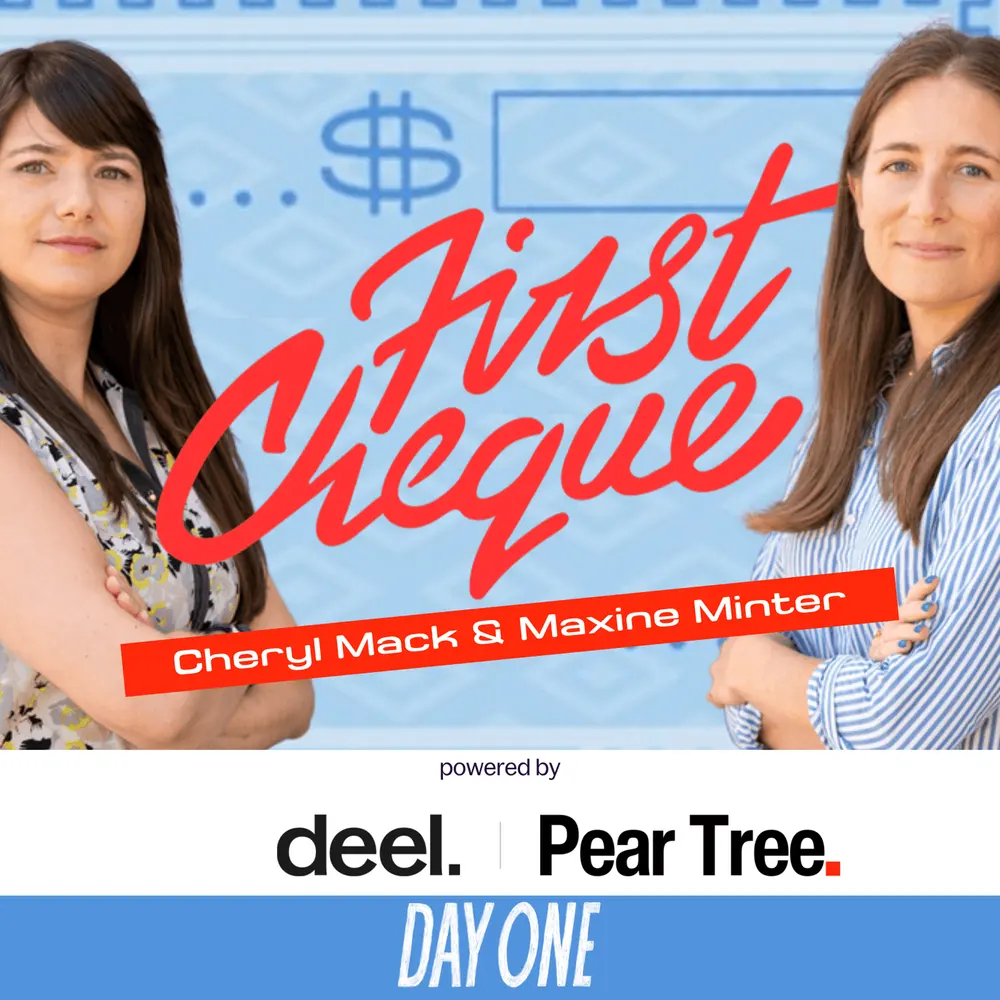 First Cheque with Cheryl Mack & Maxine Minter
Presented by Deel & Pear Tree
First Cheque with Cheryl Mack & Maxine Minter
Presented by Deel & Pear Tree 



 ▶
▶ ▶
▶ ▶
▶