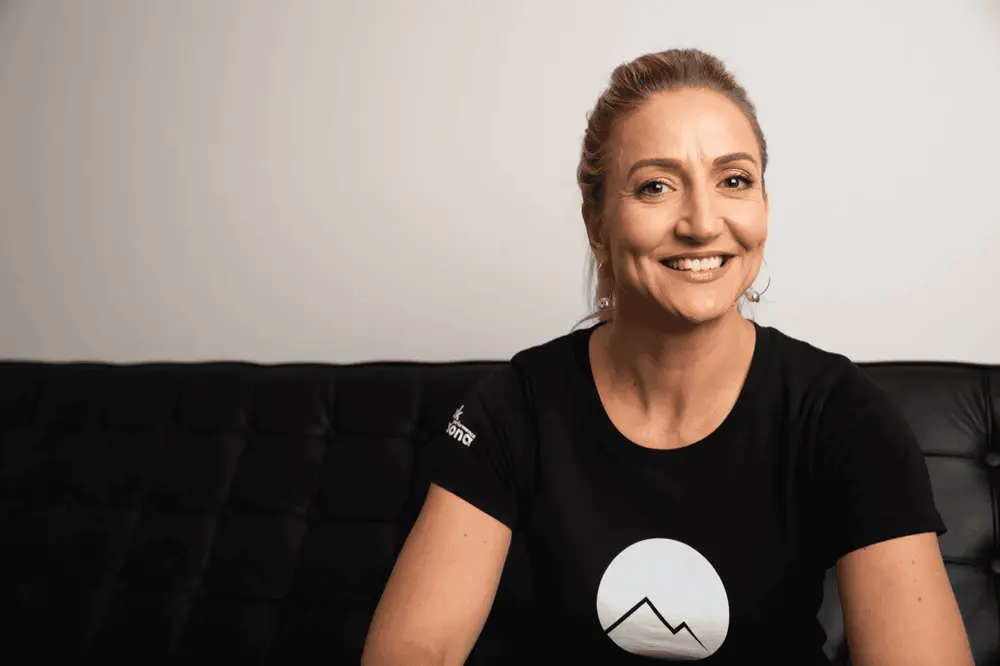
Transcript Synced · select any line to jump ▾ 0:00 Adam Spencer: Let me tell you about our partner, Teamified. If you need to build a top-notch team quickly, Teamified is your go-to solution. They not only provide fractional CTOs, they can also do contractors and even remote team members tailored exactly to your needs. And whether you're looking for expertise in the Philippines, India, or Sri Lanka, Teamified has you covered. What's amazing is that Teamified uses a blend of AI and human expertise to cut hiring times by 50%, cent. The platform handles everything from automated onboarding to day-to-day management and even performance tracking. You can also handle rewards and recognition, buy equipment, and order training all through their platform. Simplify your hiring process and get the best talent fast with Teamified. Check them out now and transform your team. Go to dayone.fm/teamified. That's dayone.fm/teamified. Thank you, T-E-A-M-I-F-I-E-D, and get started today. Hi, I'm Adam Spencer, founder of the Day One Network, which is bringing the history of the Australian startup ecosystem to you. I believe in founders. It's why I do everything I do at Day One and our media company, W2D1 Media. And that's why the Day One Network exists, to create helpful content for founders. We've got some great shows in development. But a large part of what we do couldn't be done without support from our partners and sponsors. And I couldn't be happier than to be working with NTP, who get community better than any other technology recruitment company out there. A Newcastle company like mine, NTP are invested in seeing the growth of the local tech community in Newcastle, Sydney, and more broadly Australia. So thank you NTP for helping us bring— Thank you. Helpful content to founders and the startup community in Australia. Back to the interview. Hi, I'm Adam Spencer, founder of the Day One Network, which is bringing the history of the Australian startup ecosystem to you. I believe in founders. It's why I do everything I do at Day One and our media company, W2D1 Media. And that's why the Day One Network exists, to create helpful content for founders. We've got some great shows in development. But a large part of what we do couldn't be done without support from our partners and sponsors. And I couldn't be happier than to be working with NTP, who get community better than any other technology recruitment company out there. A Newcastle company like mine, NTP are invested in seeing the growth of the local tech community in Newcastle, Sydney, and more broadly Australia. So thank you NTP for helping us bring helpful content to founders and the startup community in Australia. Back to the interview. Hi, I'm Adam Spencer and welcome to Day One, the podcast that spotlights Australian startups, founders, and the organizations that empower Australian entrepreneurship. We go back to the beginning to tell a story of Australia's most inspiring founders and how they built their companies. You're listening to a special interview series as part of a documentary W2D1 is producing about the history of the Australian startup ecosystem. On the episode today, we have— 3:18 Peta Ellis: My name is Peter Ellis, and I am somebody who's been involved in the innovation and startup ecosystem for the past 8 years. I am an entrepreneur and have had many businesses since my early 20s and couldn't possibly imagine to live life any other way. And so what I do now is I'm involved in lots of different projects, including some of my own companies as well, but always still very much involved in the ecosystem and the innovation sector and encouraging new people to always get started. Tribe Global is our parent company, and we work with teams and organizations and ecosystems with the unconventional group, and Peak Persona is our program for individuals. So that is our core, that is how Aaron and I came together as co-founders whilst we were working. I was with River City Labs and he was with Startup Catalyst. But we launched Peak Persona on the back of having worked with so many founders and seeing the patterns of when founders burn out. I'm also entrepreneur in residence at QUT and two different schools, so I run programs for parents at schools, so seeding innovation ecosystems via community activators like schools. 4:28 Adam Spencer: When would you say you, A, really got involved in the ecosystem, and B, when would you say it really kind of become the ecosystem as we know it today with all the terminology and the infrastructure. 4:44 Peta Ellis: So I got involved with the innovation ecosystem in 2012. That is when I, I'd already been running businesses of my own, but I wasn't even aware of the startup ecosystem. I didn't know of the terminology startup. I was a business owner and always started my own things. It wasn't until I joined River City Labs as a marketing and event coordinator in 2012 that I was introduced to the ecosystem and the startup landscape and even what high-growth technology companies looked like, and that is where I learned a lot about it, and that's where I just started getting involved in my own research, what ecosystems looked like overseas. Prior to that, I had no interest whatsoever in looking at what models look like in America other than my own industry, which was PR. They always led the way in marketing and public relations and using social media, so I was an earlier early adopter of taking public relations online and managing people's profiles in an online capacity in my own business, but still was not involved in the startup ecosystem even when I had my own businesses in the early 2000s. 5:51 Adam Spencer: Right. What drew you to the innovation startup kind of ecosystem? What, what do you find so interesting about it that you've invested so much time? 6:03 Peta Ellis: Interested in the startup ecosystem came about for me when I had started a job where I was working running events and doing some marketing for River City Labs, which was a very small coworking space at the time. I could see the benefit of bringing, say, my marketing and business skills into a group of people who predominantly knew tech really well. So I just saw an opportunity to get involved and bring a background of having been in public relations, a lot of events, a lot of networking, into a sector to basically tell the stories of the awesome stuff that was being built and created inside a small little 500 square meter coworking space, which was really just tucked away that nobody really knew about. So I just saw an opportunity to tell stories, basically. I thought, people are creating amazing things. I know how to tell stories. How could I possibly start telling the world what these companies are working on? Yeah. On. So it was a very hyper-local focus for me. It wasn't, I didn't think globally at the time. I just saw an opportunity to tell the stories of people working on really cool things. And there wasn't a lot of noise around startups at the time. People still would ask what a startup was. We still need to explain entrepreneurship and its role in industry, not just as in a back alley operation where people wearing hoodies were just coding for hours. There was a lot more to it. Yeah. And I enjoyed playing that educator role. 7:29 Adam Spencer: I'm just really interested to understand, you know, alongside this fledgling coworking space that is, or was, River City Labs at the time, what else did the ecosystem look like in terms of support, infrastructure, community? 7:43 Peta Ellis: Look, in Brisbane, and again, my focus was here because I was here, so we did have, we weren't the first. There was iLab, the original version of iLab existed in Brisbane. Other than that, we didn't have any other space. We didn't have a home for people to go to and find at events, hence the reason why I probably had never come across the startup ecosystem even in my ventures as an entrepreneur, because it wasn't any, it wasn't publicised, it wasn't open to the public, it was, you had to know someone who knew someone to get involved, if you know what I mean. So, there wasn't any accelerator programs running or any other awareness, the universities weren't active. iLab was active and then later on became attached to UQ. So that was the only formal structure and organisation that was promoting anything in the space. 8:28 Adam Spencer: Mm-hmm. 8:29 Peta Ellis: River City Labs was definitely one of the first coworking spaces where it was a home as anybody who wanted to rent a desk or come to an event, find out some information. And it was at the stage where there were a lot of more meetup groups kicking off. Meetup was very big in terms of finding out what, what you were interested in, topic of discussion, personal interest, business interests, networking opportunities. We hosted most of those. So we pretty much opened our doors and offered our space to anybody who wanted to have a meetup. Around the topic of startups, innovation, and entrepreneurship, so that we could become that central location for all of the activity. So no, it was definitely not a financially viable move to do that, but it was, it was more of a commitment to grow the community around a common interest and be that support network for those who are having a go by offering mentors, information, resources, facilities, and a community. Yeah. 9:23 Adam Spencer: What do you think were the major contributing factors? What was the catalyst to, you know, kick off the startup ecosystem? 9:34 Peta Ellis: So I think momentum brought us a lot of attention. We were continuously moving, we continuously had activity. A lot of people would say that was just noise for the sake of making noise, but I do believe you have to be consistent with an end goal of bringing awareness. Our aim was always to have enough activity that we ended up getting some really clever people through to build some clever things, and then we'd have have better stories to tell, opposed to continuously telling stories about things that were really grassroots. And look, to be honest, 8 years on now, there are some amazing stories that definitely grew out of those really early stage grassroots level of activity. I do think the biggest catalyst we had was a Startup Weekend. It was the first one that Queensland had ever hosted in 2012. It was a concept that I think Sydney might have had one or two maybe, and maybe Melbourne one, but no other states had had one. Queensland hadn't had one, so we hosted the first one, which It really did put a stamp on what that formula looked like in terms of people coming together to solve problems. Off the back of that, teams were formed and ventures could really be created. There was possibly a future. Team formation was a real thing. It drew the attention of investors becoming aware of these younger companies solving some interesting problems. So I think it gave us the marketing power. It gave us more stories to tell. Every time I looked at an opportunity with an event to host or a program to run, my lens was always, what stories can we tell on the back of that? Where is it going to get us in terms of the framing and the education? Are we doing something new? I was always seeking out— or any event that hadn't been done before, we were going to do it simply because people were hungry for new experiences and new ways to come together. And I do believe we learn the most when we do things we haven't done before. So we hosted Startup Weekends, we did various hackathons tied into different industries and sectors. I bought the Lean Startup Machine event, which came to Brisbane. Again, it was another American concept, but again, it was a— A hackathon. An event where you had to unlock a certain level of people before the event could run, which made the community work hard to encourage other people to sign up to register for this event. It activated the community in the sense that if they really wanted this event to happen, they had to invite, say, 5 other people or 2 other people. I can't remember what the numbers were, but it did become something less us preaching needed to happen and getting the community engaged. Providing that space for people to host their own meetups, we would put on the pizza and drinks and they they hosted the event and it enabled and empowered more members of the community to come together and do things that mattered to them. 12:07 Adam Spencer: What are some of the biggest differences or key learnings that you drew out of external ecosystems that you've brought that thinking back to Australia? 12:16 Peta Ellis: For me, it was the level of activity. We were operating at probably 1% of where we needed to be in terms of the level of engagement that needed to be happening. First of all, we needed to get people involved. We needed to, we needed more. So I knew I had come from the business world landscape, business world, operating with corporate clients, industry clients, had no idea about this whole other sector, which moves very fast, is very powered by tech, has a lot of smart people. It just didn't have the attention and awareness. 12:45 Adam Spencer: Mm-hmm. 12:45 Peta Ellis: So, I knew we needed more people to be getting involved. So, we needed to fill the front end of the funnel with a lot of different types of people. Then we also needed to have the programs to support people to go through the journey, whether it be accelerators, pre-accelerators, any other format which would educate people on some actual proven techniques and formulas with the support. Then we also needed to have companies that were of a stage that could be invested in. So we had capital around. It also needed to be the piece where we had active investors who knew what they were doing in this space, not just traditional industries, knew what to look for and could work with those companies to help grow them as well. And then have some successes out of those so we could tell the stories all over again to draw new people in at every single stage. That was apparent to me. In all of the places that I looked at. I was very involved in the coworking movement, was very closely following what America was doing in terms of the coworking spaces, what they offered. I was part of the Coworking Unconference, which I went to Melbourne and met a lot of other coworking operators all around Australia and globally who came to Melbourne for that global conference. And for them to share what programs they ran, what their space offered, and what their focus was, and how they actually were a viable business, 'cause it's quite a difficult business to make work. 13:59 Adam Spencer: Yeah. 13:59 Peta Ellis: As a community activator, that was my community of people to go to. Then I needed to still go back and activate people in our local area and have the local government and then federal government tie in, buy in, opportunity in terms of support, maybe some grants, maybe some funding for programs. They weren't established yet. None of that was in existence. We then had enough of us to get together and form something called a Startup Working Group. In Queensland who were passionate people who knew we needed to lobby the government to have some support in different formats. And that's what started, was the start of Advance Queensland. 14:34 Adam Spencer: What stories do you think we need to be telling today? 14:39 Peta Ellis: Do you know what? It's the same story which we need to be telling the entire way through. And that is what's involved in the journey, how it looks different for everybody. Every entrepreneur's journey is going to be different depending on what company they are, how old the person is, where they started it from, are they doing this as a side hustle, do they do it as a full-time thing, do they have a team of 5, are they one person? Because we still suffer a little bit from that poster child of the entrepreneur, what they look like, what they should look like, how they're supposed to operate. Do they raise capital? Don't they raise capital? Where do they— do they run it from their home office? Do they do it in a coworking space? What does it look like? There is no one answer. There's enough of them now for us to all know that it's a very individual journey. Yes, there are some commonalities. Yes, there is a formula that works, doesn't work. Some people some people follow it, some people don't, but I think we've tended to focus at the moment because we're seeing success, we're seeing companies go, we're seeing more companies move through and become really solid global tech relevant companies who are shifting the dial and some of them are becoming unicorns out of Australia, which is amazing because we can actually say that and we've seen them from the start, we know what journey they went through, all very different. The storytelling piece is, just needs to be consistent. It needs to be not focused on selling anything really highlighting the uniqueness of every single company and every single founder that goes through this journey because they are so unique. And if we really do want more people to start and consider the option of perhaps leading something or creating change or having an impact in whatever form that looks like, then we need to highlight and shine the light on all the different areas on what entrepreneurship and innovation looks like because it is very, very different. We're doing better. There are various avenues. I think social media has helped everybody to have their own voice. We encourage the build in public method, which means, you know, talk to people as you're going along and share as you're building whatever it is. I think there is probably still a gap on what goes on. And this is where my interest in, and Aaron's interest is in Peak Persona, because we know what goes on in founders' heads. We know all the self-talk, good, bad, or otherwise, and we know where the doubts and fears come from. And I think sharing of that journey would really help unlock a lot of people people's thinking and empower them to know that, you know what, some people are just generally really positive. Some people really struggle and do it anyway. And there's different ways that you can tackle and deal with yourself and become really highly self-aware so that you can completely weaponize yourself into being something quite powerful to be able to go and have an impact in a company or an organization or into an ecosystem. It doesn't always need to be the end result of starting a company as a founder. I do believe getting involved in the ecosystem is an opportunity for us to play the game in lots of different spaces. Yeah. Lots of different ways. Not everyone's cut out to be the founder, but they could definitely play an instrumental role in another company or be a changemaker within a large organisation. 17:35 Adam Spencer: What do you think as a community, either in Brisbane or nationally, do you think we're doing really, really well? 17:43 Peta Ellis: I think we have done programs really well. I think we've had a lot of them. And when I say that, I mean accelerators. I do believe every state had lots of accelerators at one point. I think that's dropped off. I do also have— think that's to do with the global pandemic, meaning that people showing up to programs was not conducive to how the format would run. You can definitely do them online. So I think— I'm not sure if the drop-off is because of that, or there was also a lot of talk around, are they really helpful? Do the biggest companies who have the most success, were they ever part of an accelerator, or are you best to do it on your own? I, I think we gave a lot of different formats a go. I think there is always room to do new things. I think we have picked up our game in terms of investment. There are a lot of VC funds now. I think you can pick any type of investment vehicle that's suited to your own company core beliefs and a match with an investor that has that, whereas before it was pretty much you had to go with whoever had the money. Yeah. Whether you believed in their values and they believed in yours, it didn't really matter. I think there's more option for capital. I do believe we've picked up a bit of momentum there and that's been based off having seen some successes and those stories coming out that this isn't just a fad and it's definitely a viable industry worth getting involved in. I do believe we've done that well. 19:07 Adam Spencer: What do you think, if there's one area that we could improve on, and we may have already touched on this tangentially, but like What comes to mind in terms of the biggest area for improvement? 19:17 Peta Ellis: I think we could do a lot more. We have a huge percentage of our population in Australia who are small to medium enterprises. So there are a lot of people in business. There are a lot of people in small business. There are a lot of people in businesses that could definitely benefit from thinking more innovatively or combining some of the operations with some new technology. I think the two worlds coming together could be quite powerful. I think we very much have an us and them. We even have, you know, different sections of government and ministers for small business, different rulings. There's a reason for all of that, but I do believe we could empower and upskill and share a lot of what we do in the innovation ecosystem with small business community because they already have what a lot of startups don't have, and that's customers. Yeah. They have customers, but how can we supercharge those businesses with maybe a tweak in thinking, perception, mindset, tech? I'm not sure, but I do know that there are probably a lot of businesses that are operating in the medium space that could definitely grow if they wanted to. Some people are very happy with a lifestyle business, but I feel we haven't bridged that gap very well. 20:27 Adam Spencer: Given your role and what you do, you probably have brand new founders coming to you all the time, but what one piece of advice would you give them if you could just tell them one thing? 20:41 Peta Ellis: So I always say just start, and then the other one's keep going. Because it's usually when someone's sitting on the fence, they're not really sure what to do, so that's the just start answer. And when it gets hard, my answer is to keep going. Because I mean, I speak to lots of people who have ideas, and I can give my advice on what I think is going to be good, not good, what I've seen before, but essentially if somebody really wants to do something, they're going to do it anyway. And they're only going to really learn if it's viable or not if they did it. So the only answer you're going to get is evidence-based. So if you go ahead and do it, then you will have your answers there. And also if it gets hard and you push on, like the keep going advice means you're either going to find out that it's worthwhile or find out that it's not. 21:23 Adam Spencer: Yeah. 21:24 Peta Ellis: The only way that the individual is going to be satisfied with an answer is if they feel it themselves. Taking advice from somebody who's not in it is going to be different and difficult to come to some sort of resolution down the track if you took advice from somebody which you didn't really want to do. I think you've just got to seek out your own path. 21:44 Adam Spencer: Why is the startup/innovation ecosystem, why do you think it's so important to Australia and Australia's future? 21:51 Peta Ellis: So I think if anything, we can't not innovate. Whether it's a buzzword or not, we have been innovating forever. That's what business is. You create things. There are opportunities that are presented or problems that are discovered, and then we come up with solutions for them. We just now have words and an industry that represents that evolution. And it is basic evolution. We need to keep evolving through into our future, and this is just a way to do that. There's lots of other ways to do it, but essentially with technology, it enables us to do that faster, more efficiently, in a smarter way. Tech is so smart that we will be, you know, out-executed by it. It's moving so rapidly, so we need to get smarter to know how to best work with it and understand it and empower ourselves. 22:42 Adam Spencer: The last question that I have for you isn't— it's not really a question, I wanna just give these last few minutes, like just open the floor up for you. What do you think needs to go into this series? What can I not leave out that is absolutely essential for people to hear? 22:59 Peta Ellis: I think you need to go, so pre the startup phase, what were people doing previously? So before startup, before the startup ecosystem and the words and the terminology and the industry really came into, vogue, what were people doing before? Because we're not new, right? So this isn't new. People have been in business for a long time. Entrepreneurs have been around for a really long time. I think it would be remiss of you to not include what people have done and what people did do before there was an ecosystem to support them, because that— there lies all the answers on what it takes to make something work. They're the ones who did it on their own without the grants, without the program, without, without the support, without the open spaces. So if anything, you know, they did it the harder way. They had to forge their own path, which enabled us to then come afterwards and look at what people did before. So I think going back pre-Ecosystem Days would be a really nice way to frame the story. 23:54 Adam Spencer: If I want to tell the history, when do I— where's the cutoff point? Where do I stop? 24:01 Peta Ellis: Well, you know what, I think it just depends on on what type of businesses. So I mean, I always think back to, I mean, having grown up in Brisbane, I know that Expo '88 was obviously a turning point for Brisbane because a large global event came. It transformed the city because we had to— it's like we just got announced to have the Olympics in 2032. So of course we're going to build for 10 years now for this global event, and who knows what will happen to Brisbane after that. But I know that Expo '88 was the same sort of thing that really— it was the first time after that that we had alfresco dining and people got to dine outside in restaurants. That was— didn't even exist before. The café culture in Brisbane didn't even exist. 24:41 Adam Spencer: I hope you enjoyed that interview. More interviews are on the way. Follow the podcast wherever you're listening right now. Stay tuned for more interviews with many, many more amazing people from the Australian startup ecosystem. Thanks for listening, and see you next time. 24:59 Speaker: Thank you.