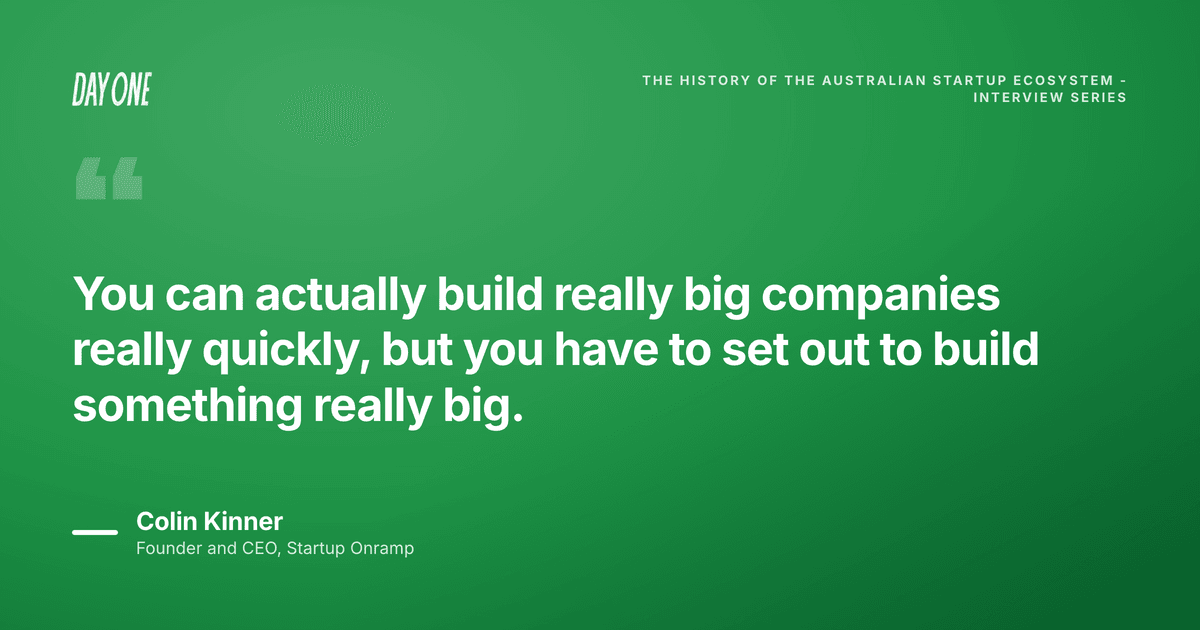
Transcript Synced · select any line to jump ▾ 0:00 Speaker: Let me tell you about our partner, Teamified. If you need to build a top-notch team quickly, Teamified is your go-to solution. They not only provide fractional CTOs, they can also do contractors and even remote team members tailored exactly to your needs. And whether you're looking for expertise in the Philippines, India, or Sri Lanka, Teamified has you covered. What's amazing is that Teamified uses a blend of AI and human expertise to cut hiring times by 50%. Their platform handles everything from automated onboarding to day-to-day management and even performance tracking. You can also handle rewards and recognition, buy equipment, and order training all through their platform. Simplify your hiring process and get the best talent fast with Teamified. Check them out now and transform your team. Go to dayone.fm/teamified. That's dayone.fm/t-e-a-m-i-f-i-e-d and get started today. Thank you. Hi, I'm Adam Spencer, founder of the Day One Network, which is bringing the history of the Australian startup ecosystem to you. I believe in founders. It's why I do everything I do at Day One and our media company, W2D1 Media. And that's why the Day One Network exists, to create helpful content for founders. We've got some great shows in development, but a large part of what we do couldn't be done without support from our partners and sponsors. And I couldn't be happier than to be working with NTP, who get community better than any other technology recruitment company out there. A Newcastle company like mine, NTP are invested in seeing the growth of the local tech community in Newcastle, Sydney, and more broadly Australia. So thank you NTP for helping us bring helpful content to founders and the startup community in Australia. Back to the interview. Hi, I'm Adam Spencer, founder of the Day One Network, which is bringing the history of the Australian startup ecosystem to you. I believe in founders. It's why I do everything I do at Day One and our media company, W2D1 Media. And that's why the Day One Network exists, to create helpful content for founders. We've got some great shows in development, but a large part of what we do couldn't be done without support from our partners and sponsors. And I couldn't be happier than to be working with NTP, who get community better than any other technology recruitment company out there. A Newcastle company like mine, NTP are invested in seeing the growth of the local tech community in Newcastle, Sydney, and more broadly Australia. So thank you NTP for helping us bring helpful content to founders and the startup community in Australia. Back to the interview. Hi, I'm Adam Spencer and welcome to Day One, the podcast that spotlights Australian startups, founders, and the organizations that empower Australian entrepreneurship. We go back to the beginning to tell the story of Australia's most inspiring founders and how they built their companies. You're listening to a special interview series as part of a documentary W2D1 is producing about the history of the Australian startup ecosystem. On the episode today, we have— 3:18 Colin Kinner: I'm Colin Kinner, founder and CEO of Startup OnRamp. Startup OnRamp is a national training and mentoring program for early-stage startup founders. We started about 5 years ago, having recognized that most startups fail, and often they fail because the founders inadvertently do things that are actually really unhelpful. And at the same time, we saw that there are relatively few founders who have access to the sorts of experience that can give them really good guidance. So the programs that we've created are all about giving first-time startup founders a good insight into what behaviors are likely to be helpful in making their company succeed and what things they're likely to be able to avoid that could lead to failure of their company. 4:03 Speaker: What are some of those key missteps that you see founders make? 4:09 Colin Kinner: Missteps, there are lots of those. The most common one, I think, is that startup founders build a product based on their vision of, you know, a problem that they want to solve, but without adequately testing their assumptions around whether their customers firstly exist, secondly, whether those customers genuinely have the problem that they think they want to solve. And thirdly, whether those customers are sufficiently motivated to go and pay for a solution. And these are basic customer development questions, but I still see startup founders coming to us having spent lots of time and lots of money building things that really the world doesn't need. And I find that really sad because I think people genuinely have one shot to build a really good company. And so I really want to make sure that they don't make those mistakes early on. 4:55 Speaker: That's quite a statement that you genuinely believe that people only have one shot to create a great company. 5:03 Speaker: Can you tell me more about that? 5:04 Colin Kinner: Yeah, we should unpack that because I think it's actually misunderstood Most founders are non-technical. I've certainly seen that in the work that we do at Startup OnRamp, and also in some of the analysis done by Startup Muster and StartupAus. We have a very large number of non-technical startup founders in Australia. That's a tough place to start from, but it's not a deal breaker. It just means that these are people who have to, generally speaking, pay somebody else early on to build their product. If they were a technical founder, then it's their time that they're investing. But we're seeing people who have to invest often between $50,000 and $100,000 of their own money to hire somebody to build their product. And there are very few people that have the financial resources to be able to say, I'll do that twice or 3 times and I'll have a number of shots on goal. Yeah. So I think technical founders have the fantastic luxury of being able to tinker on a bunch of things. Without spending a lot of cash. But that's not the case with non-tech founders. 6:03 Speaker: So when would you say you first got involved in the startup ecosystem? 6:07 Colin Kinner: I've been involved in the startup ecosystem in Australia since the early 1990s, initially taking deep tech companies out of the university sector and helping to turn them into spin-out companies. I spent some time at the University of Queensland doing that. UQ has a pretty strong history of spinning out companies. One of them I helped to get started ended up raising $26 million in VC funding. 6:31 Speaker: Wow. 6:31 Colin Kinner: Incidentally, then went on to fail because it turned out that it probably needed about $100 million. Then spent some time in the UK investing in deep tech companies, running a seed fund that was part of Imperial College in London, and then came back to Australia, ran an early stage fund here that invested in creative tech. And since then, really just been involved in the ecosystem probably from two perspectives. One, looking at building the ecosystem nationally, and we can talk some more about that. And the second is working with individual founders, helping them to maximize their chances of succeeding. 7:04 Speaker: Wow, 1990s. Can you identify one event, a few events working together that you saw as a catalyst for kicking the ecosystem off as we know it today? Sure. 7:17 Colin Kinner: I think Australia didn't really have any kind of coordinated startup ecosystem until about 2010, maybe even 2014, which was the first Startup Oz Crossroads report. I remember back in, must have been late 2013, about 50 people were brought together to talk about how to make the Australian startup ecosystem competitive and help it to grow more rapidly. And at the time there were pockets of startup activity. Sydney probably had a reasonably vibrant community, albeit pretty small. Most other capital cities had very little. Regional startup communities were just nonexistent, completely nonexistent. The venture capital space was really looking pretty spartan. I know at the time when we looked at the VC landscape, there were conclusions drawn that we really didn't have a VC industry and venture capital in Australia was such a small total number of investments and total cash put to work every year that it was really a blip on an international scale. The catalyst for that was a number of people who said, look, we really need to do a whole lot better. I, for my sins, volunteered to take the lead on authoring the first Crossroads Report for StartupAus. That ended up being a— a pretty lengthy document that looks not just at what's happening in Australia, but internationally and said, what does best practice look like? What are the countries that are really growing their startup ecosystems very well? What are they doing? And what can we learn from that that could be replicated here? And it ended up recommending about 20 actions, some of which were pretty substantive. And I'm pleased to say that quite a lot of those have since been acted on, at least to some extent by federal government, state government, the ecosystem itself. So I think for me, that was probably a pivotal point where the ecosystem leaders looked at what was going on and said, geez, we should really be doing a lot better. 9:04 Speaker: What were some of the major points that were taken out of that that were acted on? 9:10 Colin Kinner: One of the really key ones was that we need to actually invest in startup ecosystems as a thing. And at the time, The federal government looked at startups and put them in the same baskets as SMEs and said, "Oh, right. So startups, they're just like 2 and 3 person businesses that don't come to much." And we said, "Well, actually no. They start looking like SMEs because they are by definition small 1, 2, 3 person teams, but they have the potential if they're adequately supported to become multi-billion dollar companies and to create jobs and prosperity and all those things that we know and love. And it took a long time for particularly the federal government to get that. But I think one of the themes that has always been in the work of StartupAus and other ecosystem-building initiatives has been that you need to invest in capacity building around skills. So teaching entrepreneurship skills so that people actually know how to do this stuff, stimulating investment so that you're actually making it easy for people to invest in startups, and then supporting the soft infrastructure. So looking at things like startup coworking space, spaces, early-stage VC funds, angel groups, and trying to make it easy for them to really grow their reach because they're really crucial to the success of an ecosystem. 10:28 Speaker: What draws you to this space and the people in it? 10:32 Colin Kinner: I think we have to do it. As a nation, it's not optional. I've got a young son and I hope that by the time he enters the workforce, you know, the job prospects won't look like get a job at a bank, a mining company, or an insurance company. I think we're certainly well on the way to having a technology-driven economy, but compared to a lot of other countries that we would like to see as our peers, we're actually a long way behind still. So to me, I think there's a burning platform narrative that says, as a nation, if we don't get a whole lot better at this, we're going to find ourselves really falling behind. 11:07 Speaker: Where were you in your career back in that 2010 to 2014 part where things were really starting to kick off? 11:15 Colin Kinner: I was running things like incubators. Remember incubators where you used to get people all sitting in a room at desks for long periods of time and everyone thought that by co-locating a bunch of startups, good stuff would happen. So it was kind of at the time where I guess people were starting to look for other models. It was at the point where I know a number of Australian ecosystem leaders were looking at things like Y Combinator in Silicon Valley and saying, hang on, maybe this is the new incubator model. You know, they seem to have been doing okay. And I think there was a realization that having bums on seats and coworking spaces with good Wi-Fi really wasn't enough. It had to be about access to expertise and good guidance. So I think that was really pivotal. 11:57 Speaker: I think you mentioned that you spent some time, was that in startups? 12:01 Colin Kinner: Yeah, so I was running an early stage fund that invested in deep tech startups. So generally startups that come out of the university sector based on often years of research and trying to make that match between a piece of technology that looks like it could have commercial potential. And probably the more difficult part of getting researchers and maybe postdocs from that research group to make the leap and say, well, I'm going to take a chance and put my academic career on hold or even end it so that I can be an entrepreneur. And it was actually really interesting that in the UK at that time, there was a very strong cultural shift towards building companies. And there were a lot of academics that were very enthusiastic about jumping in and becoming an entrepreneur. And I've yet actually to see that in Australia. So that's something that I think we have a massive opportunity to do more of. 12:54 Speaker: I'm curious to see what your perspective is on what makes the Australian ecosystem so, I guess, maybe unique or what is an advantage that we have here? And maybe what is a disadvantage we have here? 13:07 Colin Kinner: Yeah, I mean, I think we obviously have advantages of lifestyle, you know, quality of living. I'd like to say housing affordability, but I think that would be a stretch, particularly in some parts of the country. We have pretty good talent. So we have universities pumping out some very capable graduates. I think we need to not get caught up too much in the advantages because every country on the planet is competing for the same prize of economic success. And so, you know, whatever we're doing, we've got to think about it as being in the innovation Olympics in a way. It's not good enough to say, well, we've got beaches and kangaroos and barbecues. We've really got to dig a bit deeper. Disadvantages, I think we have economic laziness. I think, you know, as a nation, we have had massive success for a very long time, largely based on a resources boom. I think that has led to a pretty relaxed attitude towards building businesses and building the economy. And I think that's been a massive disadvantage in terms of having urgency around tackling some of the things that we need to get better at. 14:10 Speaker: I'm curious to know, is there something that you hold so true and you believe to be the case, but no one else seems to be on the same page with you about in regards to the ecosystem? 14:21 Colin Kinner: For me, I think one of the fundamental truths is that To be successful as entrepreneurs, people need to know some of the nuts and bolts and have the skill sets. I find it really fascinating that people start companies with approximately zero idea of how to build a company, particularly a tech company, because we're not engaging, we're engaging in business model innovation. So by definition, a lot of tech companies are competing based on business model innovation meaning they're doing something that no one else has done before. And so it's not like you can set up a bricks and mortar retail store or a restaurant and say, we pretty much know the business model. There's not much thinking to be done there. We just need to, you know, turn the wheel. So I think given that, I still see a lot of people failing really quickly in their companies where they do things that had they the benefit of access to some guidance along the way that they wouldn't do. 15:18 Speaker: Mm-hmm. 15:18 Colin Kinner: You know, I often say to people, you wouldn't start a dentistry practice if you weren't a dentist and you didn't know any dentists. But we still see people that, you know, say, well, I'm going to start a technology company and I've dropped out of banking and finance or whatever it might be, but I'm a smart person. I'm just going to have a crack at it. Sometimes it works, but generally it doesn't. So I think that's a massive gap in the ecosystem that really needs to be plugged. 15:42 Speaker: Did you write one or two reports on the ecosystem? 15:45 Colin Kinner: So the two major reports that I've authored are the Startup Oz Crossroads Report, which I wrote the first of those and then two subsequent years, 2014, '15, and '16. And then separately to that, I was asked to write a report for the Commonwealth Chief Scientist at the time, Ian Chubb, looking at entrepreneurship in the university sector and making some comparisons with international best practice. 16:14 Speaker: What were some of the key findings out of that report? 16:17 Colin Kinner: At the time when we looked at how entrepreneurship is taught in universities in Australia and how student startups are supported, the conclusion was that there were a few universities doing really good stuff, but there was a very wide spectrum of capability right down to, you know, reasonable number of universities that either had zero entrepreneurship programming or just taught it as a purely academic subject in their business school. And so there were some recommendations that came out of that that basically said we have to get a whole lot better at this. And again, looking at other countries, you know, we looked at Singapore, for example, where the university system in Singapore is massively supported by the Singaporean government to the extent that they actually have a program for Silicon Valley immersion where it's called the National Overseas Colleges Program. And they take several hundred graduates from NUS, National University of Singapore, every year. And they put them on a 6 to 12 month internship in Silicon Valley. And since then they've expanded that to other startup ecosystems like Beijing and Stockholm, London. And the whole point of it is to say, let's give people a massive leg up in expanding their horizons, learning from world's best practice, and then bring them back. So, you know, over I think it's now about 10 years they've been running that program. Over that period of time, they've created thousands of startups and given those founders access to really deep expertise and really deep networks around the world. So I think, you know, we look at that sort of thing, and although Australian universities have got a lot better in recent years, I think there's still a very big gap, or to look at it another way, a very big opportunity to do some new things. 18:00 Speaker: What did the landscape look like at the time to have people go, we need to understand this better. Like, what was the big problem they were trying to solve and what was the solution that they were trying to implement? 18:12 Colin Kinner: So the chief scientist was of the opinion that the university sector probably needed to do more to encourage entrepreneurship among students and staff. And that a lot of what it was trying to do to encourage, to support those companies that people were trying to create, actually wasn't that great. So it was a hypothesis. And so what he asked me to do was to look at that and test the hypothesis and come back with some data. Chief scientists like data. So that report, which was released in late 2015, looked at the data and looked at the international benchmarks around the world and came to the conclusion that although we had some universities doing some good stuff, we were actually a very long way behind. 18:53 Speaker: I'll ask this question now. It's a standard question I like to ask everyone to just, you know, compare answers, but it's the advice question. So if a brand new entrepreneur founder come to you tomorrow, no experience, and you could give them just one piece of advice that would, you know, slightly increase their chances of success, what would you tell them? 19:17 Colin Kinner: I would recommend to first-time startup founders that they go and connect with at least 5 other founders who are a few years further ahead than they are. The tendency is for people to say, oh, I should try and get a bit of time with Mike Cannon-Brookes, co-founder of Atlassian. Mm-hmm. That's pretty hard to do. And at the same time, you know, Mike's days of being a scrappy startup founder are a little bit further behind him. I think startup founders often are surrounded by cohorts of other first-time early-stage founders. So you show up in any coworking space in the country and what you'll tend to see is startup founders sitting next to other startup founders. And without being unkind about it, the risk is that you've got basically the blind leading the blind. Yeah. So what I suggest to early-stage founders, particularly if they're not engaged in a startup community, is that they come up with a list of 5 or so people that they think are maybe in the industry that their startup is in, that maybe might have some direct relevant experience and reach out to them. Because almost always the answer is, "Yes, of course, I'm happy to spend some time talking to you and sharing some tips and tricks." Why is that? 20:26 Speaker: Why are people so, founders I think specifically, so generous with their time like that? 20:32 Colin Kinner: I think it's because basically every startup founder has only made it, has only been successful by having the benefit of other people before them sharing their time. So there is a very strong give-first mentality in the startup ecosystem in Australia. And I think people have recognized that the pay-it-forward thing actually does work. And I've yet to see really any example of a successful founder declining to give back in that way. So I think it's an absolute given as you move up the ranks and build successful companies that there is an expectation of giving back. 21:06 Speaker: What do you think defines a startup ecosystem? And a follow-up to that is what defines it as a particularly strong ecosystem? 21:16 Colin Kinner: That's a pretty big question. What defines it? I think, I mean, there are, we can look at the kind of academic perspective that says here are all the elements of a startup ecosystem. There's founders and there's investors and there's the soft infrastructure that supports them and there's capital and all that stuff. I think the more interesting way to look at it is to say, well, you know, what are the interactions that we need to have between those various elements? And I think that's probably where a lot of the kind of recipe for success comes in. It's about how do you make sure that there is a frictionless connection between founders and investors? That's a classic one. We have massive amounts of capital in Australia, certainly compared to 10 years ago, even 5 years ago. And we have a large number of founders out looking for capital, but we still see a pretty challenging situation, particularly when it comes to access to seed capital. So really early-stage capital. And so I think the success of an ecosystem is about saying, what are the friction points or what are the gaps in terms of marrying your supply and demand? It could be expertise with founders, or it could be capital with startups that are ready to raise money. And I wish there was a simple solution to that, but there's actually not. I think partly it's just raising the the level of maturity of the ecosystem. I think actually one thing that we could do more of is to look at international ecosystems that are flourishing and doing really well. Because I think there are, again, we looked at this with the StartupAus Crossroads report over numerous editions of that report. We looked at international ecosystems and there are so many smart things being done in other countries that we actually don't need to come up with a lot of new ideas. Really all we need to do is say what's worked elsewhere, would it translate to the Australian context? And if so, let's do it. 22:59 Speaker: Is there anything that I haven't asked you that you think is really important to cover in future interviews with other people, but also something that's maybe really important that you think should go into the series, this timeline of the Australian startup ecosystem? 23:17 Colin Kinner: Sure. Yeah, I think one thing that's often overlooked is regional startup ecosystems. We obviously have in Sydney a pretty vibrant startup community. Brisbane, Melbourne, London, maybe a few other capital cities are well on their way. But I think, you know, a lot of the work that I do through Startup OnRamp is with regional startup communities where really they're either just starting to build a community for the first time or they have a bit of a start, but they're really looking at kind of adding some kind of programming that will take it from a, you know, handful of wannabe entrepreneurs to actually building some meaningful companies. And I think that's often overlooked. There's not a lot of capital has been deployed in doing that. And I see a lot of startup communities that are basically surviving on volunteer time and effort. So I think at a government level, there's a massive market failure there. And I think at a community level, there is a need for those ecosystem leaders to get together and make a case for massively increasing the investment in supporting those ecosystems. Because I mean, a population base is there. We're seeing, particularly with COVID we're seeing a lot of people say, well, I don't need to and don't want to be in the city any longer. So I think we're going to see that continued trend of really smart people deciding to be based in regional rather than capital cities. 24:34 Speaker: What are you really passionate about that, that people need to hear more about? 24:39 Colin Kinner: The thing I'm passionate about is helping people to think a whole lot bigger. I work with a lot of early-stage founders. They are often super smart people who have domain expertise relevant to their company. And you'd look at them and say, this person could be a really good founder. But then you look at the thing that they're working on. And I see way too many people that are working on really small ideas. And that's okay. Building a massive company isn't for everyone, but I think there are a lot of people who haven't really been exposed to the what if. What if this was 10 times bigger? What if it was 100 times bigger? If they're trying to raise some money, what if you had access to 20 times as much capital? What would you do with it? And I think that attitude is pervasive in places like Silicon Valley and London, Beijing, Stockholm. We're not yet seeing it much in Australia. So I think for me, a really crucial concept for entrepreneurs to get their heads around is that you can actually build really big companies really quickly, but you have to set out to build something really big. 25:37 Speaker: Hmm. 25:39 Speaker: Queensland is, as other people have told me, the split between regional ecosystems and Brisbane is 80/20 or something like that. 25:47 Speaker: Like 80 is out in the regions. 25:49 Speaker: Why is this such a great regional startup ecosystem in Queensland? Far better than the other states. Like, what made that happen? 26:00 Colin Kinner: I would argue that the regional startup ecosystems in Queensland are no better or worse than the regional ecosystems in other states. I think perhaps there's been more focus on it, certainly from a state government level, and I think the government's probably done a pretty good job promoting regions as a place to support startups. They've certainly funded a number of startups through grant programs like the Ignite Ideas Grant. That's been a positive, but I look at— so Startup OnRamp works with the Queensland government in rolling out our programs across regional Queensland, and also with the New South Wales government making our Founders Course available to regional founders in New South Wales. 26:38 Speaker: Mm-hmm. 26:38 Colin Kinner: We're seeing the same thing everywhere, that there are pockets of startup activity in even really small kind of, you know, remote and rural areas. I've met people that are working on actually really serious tech startup opportunities who are in rural places where you wouldn't imagine you'd find anyone doing anything remotely related to startups. So I think we actually have an amazing opportunity to not be geographically constrained in programming and in the way we think of ecosystems. Obviously bringing people together in person is always going to valuable. But I think over the last 18 months, people have really worked out how to be quite effective completely online. And so, you know, I've run virtual programs, virtual mentoring, and it's actually really straightforward to build and deploy programs where you're engaging people from lots of regional areas at once. So I actually don't think that we need to focus too much on the geographic stuff. We just need to say, how do we get people people wherever they are to be able to engage in startup activities and get the right sort of support. 27:48 Speaker: I hope you enjoyed that interview. More interviews are on the way. Follow the podcast wherever you're listening right now. Stay tuned for more interviews with many, many more amazing people from the Australian startup ecosystem. Thanks for listening and see you next time.