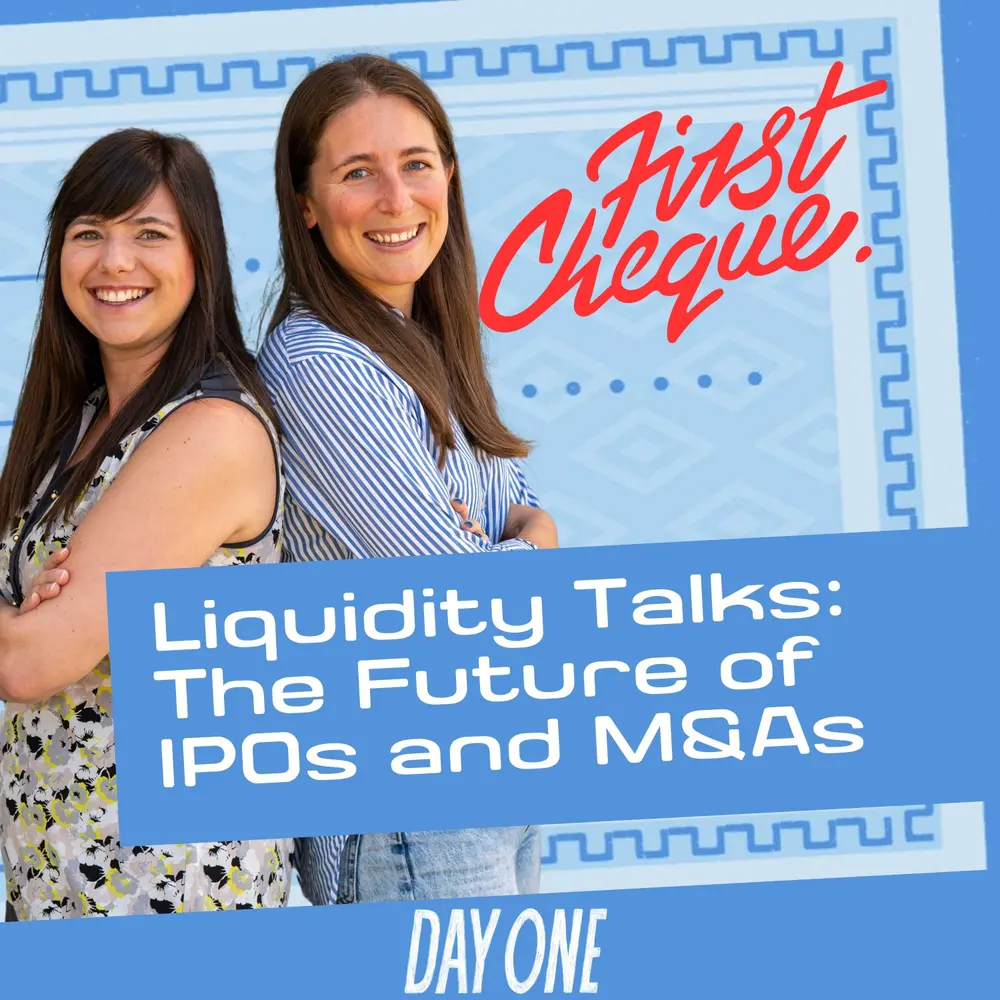
In this episode of First Cheque, hosts Cheryl and Maxine delve into the critical topic of liquidity within the venture capital ecosystem. They explore why IPOs (Initial Public Offerings) and M&A (Mergers and Acquisitions) are essential for investors and startups alike. The conversation covers the current state of the IPO market, the challenges of companies staying private longer, and how these factors impact investment strategies and returns. They also discuss the role of secondaries as a solution to liquidity issues, the potential effects of proposed regulatory changes in Australia, and the importance of proactive engagement from the tech community to address these challenges. Cheryl and Maxine offer insights into navigating the evolving landscape, emphasising the need for transparency, standardisation, and inclusive wealth creation in the venture space.
Resources Mentioned:
SecondQuarter Ventures: An Australian secondary fund involved in facilitating liquidity through secondaries. Airtree Ventures and Canva: Airtree's secondary transaction involving Canva as an example of internal liquidity solutions. Instacluster: An Australian company acquired by a U.S. firm, highlighting international M&A activity. Mr Yum and me&u: Example of Australian companies merging to navigate market challenges. Australian Securities Exchange (ASX): Discussed as an option for listing, particularly for small-cap companies. Jim Chalmers: Australian Treasurer proposing reforms on M&A regulations that could affect the tech ecosystem. Tech Council of Australia (TCA): Suggested as a body to engage with and advocate on behalf of the tech community regarding regulatory changes. Chapters
0:00 Introduction to Cheryl and Maxine; overview of the episode 1:03 Discussion on liquidity, IPOs, and M&A in the venture ecosystem 2:07 Defining liquidity, IPOs, and M&A for the audience 5:21 Importance of IPOs in venture capital and why they matter 9:30 Impact of the health of IPO markets on investment strategies 14:56 Investment strategies during different market cycles; being contrarian 16:14 Exploring opportunities in secondaries amidst liquidity challenges 21:13 Reasons companies are staying private longer; regulatory influences 26:43 Regulatory clampdown on M&A and its effects on the tech ecosystem 31:45 Closing remarks; encouraging solutions for liquidity issues Transcript Search or select a timestamp to jump ▾ 0:02 Ad: Founders scale faster on Deal. Set up payroll for any country in minutes, hire anyone anywhere, get visas handled fast, and get back to building. Visit deal.com/dayone. That's d-e-l.com/dayone. 0:21 Speaker: Okay, 3, 2, 1. Hey, I'm Cheryl. I'm Maxine. This is First Check, part of Day One, the network dedicated to founders, operators, and investors. If you want to be a better early-stage investor, this is the show for you. So TL;DR, if you don't want to suck at investing, listen up. This is part of our deep dive series where topics that come up throughout our conversations or some of the podcast guests that we have tend to raise issues that we feel like we want to dive a little bit deeper on between the two of us. And so this time, this episode, we are going to be talking about, Maxine? Drum roll. 1:04 Maxine Minter: Drum roll. Liquidity, IPOs, why we're hearing so much hand-wringing in the ecosystem, who, why everyone's talking about M&A. I just feel like there's a lot of buzz around what's happening in IPO markets, a lot of hand-wringing going on. I thought it'd be really interesting for us to dive in, nerd out, and demystify some topics for folks out there in the ecosystem. 1:26 Cheryl Mack: Yeah, I feel like every conversation I've had, especially with VCs lately, I'm at VC dinners and everyone's like, What are you doing about liquidity? What liquidity are you doing? What are options for liquidity? How can we get better liquidity? I have gotten really good at saying that word. 1:41 Maxine Minter: Yeah, it just rolls off the tongue, doesn't it? Liquidity, liquidity, liquidity. 1:46 Cheryl Mack: Liquidity, liquidity, liquidity. We could turn it into a song. 1:49 Maxine Minter: I'm a terrible singer. I don't think anyone needs my liquidity song in their life. 1:56 Cheryl Mack: Um, now I kind of want your liquidity song in my life. 1:59 Maxine Minter: It will never grace the face of this world, ever. I will never ever release that into the world. 2:04 Cheryl Mack: Maxine, theme song for the podcast. Crazy idea, bad pitch. Theme song for the podcast. 2:11 Maxine Minter: That is a terrible pitch. Actually, no, no, I'm totally for that. That's a great bad idea because I'm going to build on that and say I shouldn't be singing in the theme song for the podcast. Our listenership would go immediately to zero because it would pain people's ears as they were listening to me sing. So let's not subject them to that. 2:30 Cheryl Mack: Okay. Open call to anyone who is listening. If you would like to sing the theme song for the First Check podcast, please reach out. 2:38 Maxine Minter: Okay. 2:39 Cheryl Mack: Back on topic. 2:40 Maxine Minter: So back on topic, we're talking about liquidity, right? And I thought it would be interesting here to kind of start from fundamentals a little bit. Why do IPOs matter so much? Why do we spend so much time thinking, pontificating, analyzing IPO markets in the venture ecosystem? To start there, I think, is a kind of great grounding. So why don't we dive in? 3:03 Cheryl Mack: Ooh, maybe it might be good to quickly define those things. I remember the first time I heard the word liquidity and I was like, cool. So water has to do with VC? How? It's such an interesting word because I think it is quite industry-specific. I'm not sure if it gets used in even I don't know, definitely not using it in my everyday life with my friends when we're going out for drinks. Although now, sometimes I do because I'm a total nerd like that. 3:30 Maxine Minter: Yes, you are, but in a different, completely different context. Lots of discussion of liquids. 3:37 Cheryl Mack: Yes, lots of liquid discussions. Not quite the same. My understanding of liquidity is basically you invest your money, and when you get some or all of it or a lot more of it back, that is called a liquidity event. 3:52 Maxine Minter: That's exactly right. So liquidity is a term of jargon, which essentially means the ability to have cash or cash-like assets. So assets that you can use immediately for paying things, investing in things, et cetera. It is used in banking. You will hear it actually, I think it came roaring into view during the GFC, the global financial crisis, because banks were then Their liquidity was scrutinized, i.e., the amount of cash that they were required to hold. And the reason that it matters is the money you are required to hold that's not invested is not performing, or you're not getting any money from it, right? You're not getting any interest from it. And so people want to be investing as much of the capital that they have as possible. But if they have what they call liquidity requirements, which essentially means they have requirements on how much cash they have to hold, so they can make payments immediately when they're due influences how much return they can get. In venture, the reason that we reference liquidity, it's essentially the ability to get money back so that you can ideally reinvest it back into the venture ecosystem or what they call rebalance. So if you have a portfolio of assets, right, venture and private equity being one of them, let's say private debt being another one, term deposits, and then cash, just to make it really simple, or probably shares, term deposits, and cash. Each of those, if you have the right managers managing them or you're individually managing them, should grow at some kind of standard rate. In venture, it's between kind of 30 and 40%. So let's say you invest $100 in venture and it grows at 30 to 40%, and then you have $100 that you invest in private credit, and private credit grows at the moment kind of 15%. And then you have another $100 that you put in shares that on average grows between kind of 8 and 10%. And then you have term deposits, which historically grow on average between say 3 and 4%. And then you have cash, which historically grows at 0%. Obviously right now those numbers are different, but let's say that's the mix. you can imagine, you can do some kind of basic compound math that after a 10-year period, if they all perform as planned, $100 you invested in venture is going to be worth a lot more than the $100 you've invested in cash because the cash portion isn't growing. And so you're constantly rebalancing, which means you're taking money out of the high-growth stuff and putting it in the lower-growth stuff so that you aren't overexposed to very risky assets. 6:38 Cheryl Mack: I mean, you might be doing that. I certainly am not, which may or may not be problematic for my long term. 6:45 Maxine Minter: Ideally. 6:47 Cheryl Mack: Ideally. Oh, right, right, right, right. Yes, ideally. Got it. 6:51 Maxine Minter: Got it. Got it. 6:52 Cheryl Mack: And then the other 2 things we brought up there was IPOs and M&A. For anyone who hasn't heard that term, M&A stands for mergers and acquisitions, which is basically you get liquidity because the company you invested in gets acquired by another one or merges with another one. And then that company might be public or that company might have other options for you to get money back. And IPO is initial public offering, which is they go list on the ASX or the NASDAQ or the New York one, you know, that big one. And then you can sell your shares. 7:21 Maxine Minter: Nailed it. Love those definitions. So essentially the IPO is when you take, you know, as an investor in the early, in the private markets, you are buying private shares. And the IPO is when you make those shares available to the public via an exchange like the ones that Cheryl just mentioned. And so the IPO as an outcome is the ideal, or historically kind of on average has been touted as the ideal outcome for a venture-scale business. Historically, actually, if you kind of go back, to earlier cycles, at least in the US, you would see companies list on the stock exchange much earlier in their journeys than they currently are. And the reason that that is relevant, coming back to the definition of liquidity, is when they list on the stock exchange, that is the moment that their shareholders could then get money back on those investments. 8:18 Cheryl Mack: 100%. I think the phenomenon of companies staying private longer has become super relevant and is one of the biggest reasons that we are having these conversations now because it's kind of 10 years on from, you know, when venture really took off in Australia. And that trend has only gotten bigger and only gotten stronger, in particular in Australia. Like, and I think even the market cap of companies that list on the ASX, we just like, we haven't seen huge exits there. What I also think is interesting is that the vast majority of exits actually end up being M&A. And not like everybody thinks, oh, you know, like when the company IPOs, but I don't know the exact stat, but like the majority of exits and liquidity events come from mergers and acquisitions, not IPOs. We just happen to hear about the IPOs more, right? 9:04 Maxine Minter: Right. Because the IPOs are much bigger, right? Those are the like hallmarks. It's an interesting question. I don't actually know what the data is in terms of like quantum of returns, right? Dollars returned. Do you get more of it in M&A or do you get more of it in IPO? What I mean by that is because, so as Cheryl just mentioned, like the vast majority of the exits you will have in a portfolio, they happen by another company buying one of the companies in your portfolio. But usually, in fact, almost exclusively, those exits are not your big fund returners, right? They're not the places where you make the vast majority of your returns as a fund. You make the vast majority of your returns as a fund on this, companies that kind of return, they get to that unicorn status. And so most of those companies, they're getting to that status by listing on a stock exchange, so doing an IPO as opposed to a private M&A. But it's an interesting question. I don't actually know if, because let's say like in a portfolio of 30 companies, 20 of them will exit via, or probably 25 of them will exit via some version of M&A, even if it's like an acquihire for no dollars, all the way through to like maybe 1 or 2 will end up IPOing in theory. And, but the amount that you make from those 1 or 2 probably is more than the amount that you would make from the other 25 via M&A. Anyway, semantics. So I think, I think the reason that this is relevant, right, is this is the way that investors get their money back. Historically, sorry, I should say historically has been the way that money, that investors get their money back. Increasingly, we're seeing creative solutions for early investors to get their money back because as you mentioned, right, they're like holding these investments for a longer period of time. So I wonder if it's worthwhile here to kind of dive into why do we care about the health of the IPO markets and why does it matter for venture? 11:01 Cheryl Mack: Yeah. I mean, why does it matter? Why do we care? It's one of those topics where like, I was a little nervous to be like, well, you know, we We all know anecdotally that the health of the IPO market right now is not great globally, and mergers are sluggish. And I was like, you want to talk about something that possibly is like a bit doomy and gloomy? And as an angel that is entirely overly optimistic, glasses overflowing type optimist, that doesn't sound like a topic that I want to cover very much, but go for it, Maxine. Tell me, why should I care about this? 11:33 Maxine Minter: Yeah. So, I think we should care about it because In its most fundamental, as an investor, you are buying future cash flows. So you are either buying future cash flows via dividends at some point in the future, or you are buying what you predict someone in the future will themselves predict about the future cash flows of that business. I.e., you are selling to another investor who is buying you out. Who is they themselves buying the future cash flows of the business? And I think that's a really important thing to anchor in on. So leaving that definition there for a moment, the reason we care about the IPO market is in venture, you're almost never buying future cash flows in the form of dividends, right? You are buying what some future investor— you predict that future investor is going to think the value of the business is. Based on the revenue and cash profile of that business or potential revenue and cash profile of that business in the future. Historically, that has been your prediction at IPO, the ability for it to get to, you know, a unicorn status exit or your prediction on M&A. So another buyer will buy that company for a valuation range that makes that entry valuation you're coming in at 13:00 Cheryl Mack: Worthwhile. Risk-adjusted worthwhile, right? 13:01 Maxine Minter: Risk-adjusted. Yeah. You have to take into account the fact that you're going to hold this bitch for like, you know, 10 to 15 years and that, you know, there is an opportunity cost of that capital. So me investing money in a private company means that I can't invest it in, say, the public market and have access to it whenever I want. And so there is an illiquidity premium that I'm paying, or what is known as an illiquidity premium, meaning I can't access the money. So you have to pay me more to hold it in layman's terms, or being paid a premium for the amount of risk that you're taking, right? Venture is a very risky asset class relative to say cash or private debt. 13:44 Cheryl Mack: Bonds. 13:45 Maxine Minter: Bonds. Exactly. Like that's why on average you should be returning, you know, something around 30% IRR net of fees as a fund manager. So that means in the private markets, if for a second we imagine that the innovative company's payday, i.e., IPO at the end of this, is taking 2 times as long and 50% of the companies that we predicted would get there are actually getting there. That means that the fundamental assumptions based into these investments will have to change, right? You need to be paid more from a return profile perspective if you're now asking me to hold this share, an illiquid share for 20 years, and the likelihood of you getting there is 50% of what I thought it was. So the risk goes up, the illiquidity premium goes up, and so the fundamentals of the investment should change. And so that's why you're seeing so much hand-wringing about IPO markets because at the moment, because 2022 and 2023 were so astronomically crap in terms of funding markets, we're not seeing a lot of companies list in the US. So those investors are still holding that cash and we are not seeing that same graduation rate because those companies, you know, have struggled to get to those key milestones to be able to list. And so, that's why we care about it. 15:15 Cheryl Mack: I love that. So, devil's advocate here, in the ZIRP era, money was free, everyone was growing, IPOs were fantastic, mergers were off the charts. Back in 2020, 2021, everyone was investing like— people were making investment decisions based on the current market. Now, we're in this sluggish era and we're saying we should make investment decisions based on this current market. Crazy idea. Shouldn't we be doing the opposite? Like, what if I invested right now as if by the time my investments come to fruition in 10 years' time and they want to exit, we're going to be back into some kind of ZIRP era? And back then, like, shouldn't we have all back in 2020 been investing as if when our investments would have come to fruition, like now to a couple years from now, it's going to be a sluggish market? Like, shouldn't you just do the opposite of what's currently? And then, you know, you're just tapping right into that, that We've seen this, right? It's like 10 to 15-year time cycles. And so, can't we predict that in 10 to 15 years, when the investments that I make right now are going to start to try to exit, it's going to be happy days again? 16:21 Maxine Minter: I mean, like, I think it is such a good question, right? Because like, we are not really set up, humans and our brains are not really set up to naturally think on that kind of timescale. So, the best investors in the world, as they say, kind of get greedy when everyone else is scared and get scared when everyone else is greedy. So yeah, like applying that to that circumstance, like, no, you shouldn't have been buying everything on leverage in 2021. That probably was a bad strategy, right? Because you probably could have predicted that this dynamic couldn't have lasted forever, right? And the best investors, well, some of them made that prediction. But I think that is actually why early stage investing is so attractive to me right now. And I think, you know, it's worthwhile considering is because you are making a prediction about what the markets are gonna look like in 10 to 15 years. And that, you know, probably the prediction you are making is that they are more liquid, that they will be more freed up. I also think that like all entrepreneurial environments, great challenges offer great opportunities. And so I'm actually really excited that everyone is constantly talking about liquidity at the moment because I think it's starting to put pressure on the opportunities for secondaries. 17:36 Cheryl Mack: Yeah. 17:37 Maxine Minter: And we heard in our podcast previously with Christina from NuView talking about the opportunity in secondaries, the fact that in private equity markets, it is a 10x differential between how many secondaries are transacted in the private equity markets versus Yeah, 17:56 Cheryl Mack: that's nuts. 17:57 Maxine Minter: Nuts, nuts, right? 10x, an order of magnitude behind how much is transacted in the secondary market. 18:05 Cheryl Mack: Like, what are we doing wrong over here? We need to take a page out of their book and, and start to apply it. Like, we absolutely need to be better at secondaries, I think, globally, but also like Australia, man, could we go down from zero? Like, 18:19 Maxine Minter: if 18:20 Cheryl Mack: it's sluggish now, like, We're basically at zero anyway. 18:23 Maxine Minter: Totally. So both secondaries and M&A, you know, we have one secondary fund, like one big established secondary fund, the folks at Second Quarter, and we have a couple of others that do like more opportunistic secondaries. I heard of a great find actually that Airtree did a secondary of their own position in Canva in the last liquidity market and bought it into their opportunity fund. 18:45 Cheryl Mack: Yeah, that's true. 18:47 Maxine Minter: Like they sold in their primary and bought in their secondary, which is, I think, a huge testament to Canva and very clever strategy. So I think that like the opportunity here is that we will start to see more products where people come in and they buy both primary secondaries, i.e., you're buying like secondaries in companies. But also, I think we're start— gonna start to see people buying secondaries in funds. So you will see people buying fund positions in some of the earlier vintages for investors that are locked up. 19:21 Cheryl Mack: Yeah, I think Second Quarter already do a little bit of that. I think we need more transparency around how secondaries are transacted, when they are done, and what that looks like. People could talk about them more and provide information around like what happens when it, a secondary sale happens. Like we actually don't know. Like what the details were about the Canva secondaries. We have no idea when other secondaries are happening. I feel like every secondary that I have kind of heard of happens behind closed doors. You know, a syndicate runs that, or maybe an early employee like hands it off to their friend and we have no idea like what the valuations are. I don't think there's like a standard across the board of, you know, what is the standard of if you're buying secondaries from employees, is it like a standard 20% discount? If we can get to a stage where there is more transparency and openness about this, we might start to see standardization and less of like behind closed doors stuff and people being able to be like open about it. Like, I almost feel like secondaries are kind of a taboo subject at the moment, especially founder secondaries. Do you feel the same? 20:25 Maxine Minter: 100%. Yeah, yeah, yeah. I think that's actually two, there's two probably threads to pull out there, right? Like founder secondaries, especially as part of a primary transaction, right? They became quite popular in the growth era and they are extremely unpopular again. And I think that the fundamentals of them have remained the same. Like founders shouldn't be cashing out so much that they just wanna be like on the beach. But I also think that there's an enormous amount of value giving some secondaries, right? Like modest secondaries once founders are getting to kind of Series A, Series B to take a little bit off the table. 20:55 Cheryl Mack: 100%. Yeah. I've heard from investors who have declined that though. 20:59 Maxine Minter: It's maybe a topic for another podcast to talk about like The pros and cons of founder secondaries. 21:05 Cheryl Mack: Yeah. Founder secondaries. 21:07 Maxine Minter: Because I think there is a solid debate to be had there. 21:10 Cheryl Mack: Yeah. 21:11 Maxine Minter: And actually, yeah, maybe we should get the folks on set from Second Quarter or some of the other big secondaries funds to kind of talk. 21:16 Cheryl Mack: Yeah, maybe we should. 21:17 Maxine Minter: But I do think on fund secondaries and on your point about opacity, right, it's currently because it is a low volume market, it's a very inefficient market. So price discovery is really hard because it's really hard to find buyers and sellers on both sides. And so there's a couple of people in the US that are building like Forge and EquityZen. I think Forge is a listed company that allow for a kind of more marketplace-y approach to the transaction of these secondaries. I think famously Carta has been trying to build a secondaries product on top of their product for a really long time now and have flubbed it 3 times. Most famously when they started to try to sell secondaries out from underneath founders. 21:55 Cheryl Mack: Yeah, I think we all heard about that in the news a few times. 22:01 Maxine Minter: The gift of hindsight. But I think, I think secondaries as an opportunity here is super exciting, right? To add some liquidity into these markets. I think the other thing to name here is why companies are staying private for longer and whether that actually is a good or a bad thing. You know, when I think about why companies are staying private for longer, I think there is actually an opportunity and there's a role to play here from governments and also the regulators to make listing not as painful as it currently has become, right? If you look at the US, it's pretty hard to make the case that founders should list on a stock exchange, you know, when it has been as historically painful and the disclosure levels are so high. 22:48 Cheryl Mack: Yeah, like, hey founders, would you like to have a whole lot more disclosure and reporting requirements and a lot more scrutiny And less control of your company and several other things that don't sound so great. You in? Yeah. 23:07 Maxine Minter: And you're not getting meaningfully more access to capital than you can currently get in private markets, right? I think that's a key bit. It used to be that the only way you could get access to that volume of capital is when you had to list. Now, I think something that's not talked about that much that is worth profiling here, and for any founders that are listening to it, which is currently, and I know that you've been super vocal in this place, right? Currently, because all of this wealth creation is happening in the private markets, it is only really available to a small percentage of the Australian population. And by choosing to stay private, it continues to consolidate wealth. In 23:50 Cheryl Mack: the uppermost brackets. 23:51 Maxine Minter: Those groups, it's the sophisticated investor groups or the people who can access via retail, but they have to kind of like, et cetera. Whereas once you list on a public stock exchange, then the kind of mom-and-pop shops via their financial advisors or direct investors can start to participate in this wealth creation. So I think that there is a really valuable discussion to be had for, with with policymakers on why it's actually really valuable to bring down the barriers for entry to these public stock exchanges, especially for these kind of high-growth startups, recognizing that they are very risky assets, right? And so making sure that there is the appropriate tests. 24:32 Cheryl Mack: But also a lot of the things on the stock exchange are already risky. 24:35 Maxine Minter: Totally. Some of those penny stocks are true junk. 24:38 Cheryl Mack: Are all those like mining speculation stocks? You're like, You, you say that you don't want to invest in venture, but then you just told me like the 6 speculation mining stocks that you bought last night. I'm like, hmm, kind of similar risk profile there, but okay. 24:56 Maxine Minter: Yeah, kind of the same. One has cash flow, one is pure speculation. 25:03 Cheryl Mack: Yeah. 25:03 Maxine Minter: I'm hoping we see a maturation of the discussion around when to list and how to list. I do. I mean, I think in the Australian market we have, what is it, like $200 to $300 mil enterprise value seems to be about the right time to list on the Australian market. 25:21 Cheryl Mack: Yeah, we've actually, I think Australia has a pretty healthy small cap market because they've actually done a lot of that work to make it easier to list. Like there's a whole campaign a few years ago when I was running StartCon where they, their campaign was like list on the ASX instead of your Series B. And it was fairly successful. I think the trouble is that the ASX isn't— it doesn't have the largest market cap. So, it's hard to— like, if you're going for that like $10 billion opportunity, for example, I think that's why Canva is looking to list in the US instead of Australia. So, if you're going for that like outsized $10 billion exit, then like the ASX isn't the place. But That doesn't mean that you can't use it as a stepping stone. And they have done a really great job in making it easier for small-cap companies to list. That's why we see a lot of them. 26:10 Maxine Minter: Super interesting. And I think we also have quite a good investor pool that are interested in small-cap tech stocks, right? Like it's quite an efficient, quite an active group. 26:21 Cheryl Mack: Yeah, 100%. There's a number of small-cap funds that focus just on small-cap. So I think the investor pool is there and can only grow. 26:29 Maxine Minter: That's super exciting. Yeah. And I think it's a really good option for the founders that are listening, but also for the investors thinking about, you know, how might that kind of exit be a good exit for some of these companies that are maybe going after, well, growth capital is so hard to come by at the moment. So the last thing I thought would be worthwhile talking about as well is there's been this kind of clampdown on M&A globally, right? I think collectively the regulators around the world have learned that tech consolidates in a way that's maybe a little different or looks a little different at the outset than traditional companies. And so you're seeing this in the US at the moment with Linda Khan being quite heavy-handed on the M&A policies. But our own Jim Chalmers actually has been proposing some reforms on M&A checks and balances that I think actually could be quite disadvantageous to the Australian tech ecosystem. Although you made the point before, like, We're already not getting a great M&A environment anyway for tech. And so can you go down from 0%? Probably not. Yeah. I don't see them starting to sell some of the assets that they bought. 27:37 Cheryl Mack: But you can keep it at zero. So— 27:40 Maxine Minter: No, actually I would like strongly prefer that they don't keep it at zero. They might, they could, they could keep it at zero, but— 27:47 Cheryl Mack: Well, if they implement the changes, possibly, right? 27:49 Maxine Minter: Right. Yeah, exactly right. In your experience investing, have you seen many M&As with Australian acquirers, or the vast majority of your acquirers overseas? 28:01 Cheryl Mack: I would say actually a good chunk of my portfolio— I know I say good chunk, I mean, I've invested in 30 companies— I'd say 2 of them have merged with another Australian company. But these are small, and it's like share-for-share kind of thing. I think the most recent one that we saw was Mr. Yum and Me and You. which is an Australian example that they went together. There's a few others I think that I can name in my indirect portfolio. So, the companies and the funds that I've invested in where I've seen Australian companies acquiring other Australian companies within the portfolio. So, I could probably name at least a dozen off the top of my head. The most recent one that I'm thinking of where there's a large US acquirer was Instaclustr, right? And that returned like 3x, I think, OIF's fund. So that was, I mean, that was one that is somewhat recent and overseas. 28:53 Maxine Minter: Right. Yeah. I mean, the interesting thing I think is that the Australian ecosystem, as well as the EU ecosystem and the UK ecosystem, the big M&As still happen with the big US tech companies, right? And so the little M&A can happen locally, but we just don't have big enough tech companies in Australia to start buying really big acquisitions of Australian companies or others. So I think it continues to be kind of international. And what I think is interesting about this proposed rule, what Tim Chalmers is proposing, that the ACCC would be given powers to review acquisitions where there is the purchase of 20% of the stock of that company or kind of effective oversight of that company. And one of the transactors have over $200 million in enterprise value. Sorry, $200 million. Yeah, $200 million in run rate. Sorry, in revenue. 29:50 Cheryl Mack: That's a pretty low number. 29:51 Maxine Minter: It is. It is a pretty low number though. 29:54 Cheryl Mack: Yeah. 29:54 Maxine Minter: Right. And if one of the transactors, I actually don't know in the proposal if that applies to international companies, but just the requirement that the company has to be submitted to the ACCC or the deal has to be submitted to the ACCC for review, it's going to start putting a big splash of cold water on that. Extremely nascent M&A market in the Australian ecosystem. 30:13 Cheryl Mack: That's, um, that's problematic. 30:17 Maxine Minter: It's problematic. It's problematic. And so I'm hoping that the Australian tech ecosystem starts to have a conversation about this because if it does go through as part of the M&A proposals, it will put another dampener on liquidity in the ecosystem. 30:37 Cheryl Mack: which we're already at a depressed time, a sluggish time. So yeah, going down from that doesn't sound like a good idea. I'm curious, where are those changes up to? Like, are they happening? Can we fight it? 30:52 Maxine Minter: We absolutely can fight it. Yeah. We— they were proposed in early October, about a couple of weeks ago, by Jim Chalmers. And so I believe they are open for engagement from the public. So we should engage as the tech ecosystem because it's going to have a pretty significant effect. 31:09 Cheryl Mack: Shoddy knot. Someone else can take it on this one. 31:11 Maxine Minter: Shoddy knot. 31:14 Cheryl Mack: Yeah, I, I already did the wholesale investor changes. 31:18 Maxine Minter: You definitely took one for the team. 31:21 Cheryl Mack: Yeah, I already took one for the team. Someone else is up to bat. 31:25 Maxine Minter: Absolutely. Absolutely. I'd actually love to see the tech council. line up for this one because this matters for big tech as well as for little tech, because an enormous amount of growth for big tech is actually driven by the acquisition of smaller tech companies. 31:38 Cheryl Mack: Yeah, exactly. 31:39 Maxine Minter: You know, Google, Microsoft in the back, if you wouldn't mind stepping up to the plate, that would be great. 31:43 Cheryl Mack: Yeah. TCA, push them. 31:45 Maxine Minter: Yeah, exactly. So that is a little rundown on where we're at in terms of liquidity in the ecosystem. And how we're seeing capital move around. I, for the folks in the back or anyone that's looking to build something interesting, I would strongly encourage you to think about how to solve liquidity and earlier liquidity for LPs. If you come up with any brilliant ideas, you know, please hit me up. 32:10 Cheryl Mack: And angels. 32:11 Maxine Minter: And angels. Yeah. 32:13 Cheryl Mack: 100%. We back you. If you do, feel free to reach out, or if you, even if you have any ideas about something, please feel free to reach out and we'd love to brainstorm with you. 32:22 Maxine Minter: We'd love it. 32:22 Cheryl Mack: Thanks, Maxine. Great session. 32:24 Maxine Minter: Thanks. No transcript lines match that phrase. Try fewer words.




 ▶
 ▶
 ▶