▶ “Betting on ceilings of scaling is one of the worst bets that you could have ever made in the history of technology.” — Alex Valente In this episode of In the Blink of AI, host Georgie is joined by Alex Valente, co-founder of Redactive and a 2024 Forbes 30 Under 30 honoree, to dive into Forbes' top 10 AI predictions for 2025. Together, they explore bold forecasts, from Meta’s Llama models to the rise of RoboTaxis and consumer-facing AI agents. Alex shares his expertise, breaking down the scaling laws in robotics and biology, the future of autonomous AI, and why safety in AI will dominate the agenda in 2025. Whether you're a tech enthusiast or a casual listener, this episode combines education with entertainment, offering valuable insights into the exciting future of AI.
Chapters
0:00 Introduction: Alex Valente's perspective on technology and job creation. 00:32 - Meet the Guest: Alex Valente, Forbes 30 Under 30 honoree and Redactive co-founder. 03:06 - Meta’s Llama Models: Will they remain open-source or move to a paid model? 07:25 - Scaling Laws: How robotics and biology are the next frontiers. 11:22 - AI Agents: The rise of agents in consumer and enterprise workflows. 15:53 - AI Data Centers in Space: Debunking this bold prediction. 20:23 - Autonomous AI: Addressing fears and misconceptions. 36:42 - RoboTaxis: Market adoption and societal benefits. 45:36 - AI Safety: Why data security is paramount in 2025. 53:03 - Accessible Consumer Robotics: Predictions on household humanoid robots. 58:43 - Final Thoughts: Alex’s own predictions for 2025. ▶ Resources
Redactive : redactive.ai – Explore their white paper on LLM data security.
Forbes Top 10 Predictions for 2025 : Insights from the original report.
NVIDIA DGX Cloud : Learn about high-performance AI hardware.
Tesla Robots : Innovations in consumer robotics from Tesla.
Waymo : Google’s RoboTaxi service gaining traction in U.S. cities.
DeepSeek AI : China’s leading AI model provider.
Transcript Synced · select any line to jump ▾ 0:02 Georgie Healy: Founders scale faster on Deel. Set up payroll for any country in minutes. Hire anyone anywhere. Get visas handled fast and get back to building. Visit deel.com/dayone. That's D-E-E-L.com/dayone. 0:24 Alex Valente: We thought we would invent robots so that we could do art in our spare time, but instead we invented robots that could do art so that we could do our household tasks in our spare time. And I think that's pretty terrifying. Technology always has increased the number of jobs available. We always think that technology reduces jobs. It often gets people to go and do more productive things and ends up creating jobs. That's my— that's not a hot take. That's not a prediction. It's a real thing. It already happened. 0:54 Georgie Healy: Hey everyone, thanks for tuning in to In the Blink of AI. I couldn't be more excited for a kind of different episode today. We are unpacking unpacking Forbes' top 10 predictions for 2025 with the best guest imaginable. I managed to get Alex Valente, who was in the Forbes 30 Under 30 list in late 2024, also the founder of Redactive, an AI enterprise security platform. He's super knowledgeable about all things AI, and I knew he would be able to unpack these 10 predictions in great granular educational detail. But more importantly, he is not afraid of a controversial opinion. He is not afraid of an entertaining perspective, and this is just the best of both worlds. I learned a lot and also found this incredibly entertaining. If you loved this format, if you loved hearing headline news broken down so that you learn a lot but also learn why, why we should care, please get in touch. Um, I would love to record something like this again in future. Thanks so much for listening. Alex, welcome back to the show. Your episode, as I've told you, was one of many people's favorites so far. You joined us for episode 3, I believe it was, to talk about your company and yourself. Guess if, uh, listeners, if you haven't heard it yet, you definitely need to check that out. But you're back today for a very special episode. Thank you so much for joining. 2:27 Alex Valente: Thank you for having me. It's great to be back. I got to make sure I don't ruin my reputation. We got to keep the hot streak going. 2:32 Georgie Healy: Yeah, but for the listeners. 2:35 Alex Valente: That's right. 2:35 Georgie Healy: That's right. I've managed to get my hands on Forbes AI predictions for 2025. They've got 10 pretty spicy predictions. I know you've had a look through them and I couldn't think of anyone else who would be better served who's the AI acumen that you have as well as like great chat. So no one in my life I could think of would be better suited to unpack these. Are you excited? 3:03 Alex Valente: We also need a bit of the, the ridiculous arrogance to be able to make a prediction and put my name to it. Only an idiot would do this in a recorded fashion because invariably you'll have to have me back a year from now to see if any of the predictions were right. But I think like, this is the, this is my favorite part of making a prediction. It is being held account to that prediction for a whole year. 3:26 Georgie Healy: Yeah. Let's add some stakes to this. If you get less than 5 correct, we're going to have a hit and a miss. If you get less than 5 correct, drinks are on you. 3:36 Alex Valente: That's right. 3:37 Georgie Healy: Otherwise, drinks are on me. How about that? That's how little I have faith in you. 3:42 Alex Valente: We're going to do it for the listeners. If any listener sees me in public and I get more than 5 of the predictions incorrect, I will buy them drinks. 3:51 Georgie Healy: Okay, let's dive into the top 10 AI predictions. But before we start, Alex, have you heard of Forbes before? Just, just curious. 3:58 Alex Valente: I have heard of Forbes. 3:59 Georgie Healy: What's your context with Forbes, Perknitz? 4:02 Alex Valente: We were very fortunately featured on their 30 Under 30 list, which is very kind of Forbes team. Yep, that was a great day. That was my first time I've ever done a professional photo shoot in my life. It was my first time ever getting professional makeup done. Oh my gosh. I very awkwardly complimented the makeup artist while she was doing it saying I'd never seen a person do this before and it was really impressive. And she said, no one I've ever done makeup for has actually ever been so surprised by my ability as to actually compliment me. She's like, you're the first person. It was actually quite a nice moment. 4:32 Georgie Healy: Ah, and that is so nice because she probably does it every day and everyone expects it to be perfect. Yeah. 4:38 Alex Valente: But, oh, for me it was like I looked like a different person afterwards. I was completely presentable, which is a refreshing change of pace. 4:43 Georgie Healy: No more under eyes. Are you wearing makeup today, Alex? 4:46 Alex Valente: No makeup today. No makeup today. 4:49 Georgie Healy: No, no, no. Kicking off the year strong with AI predictions for 2025. I'm super pumped because I've seen a lot of predictions go out there there. This is the first time I've seen someone actually in the AI space unpack them a little bit. Let's dive in. We've got Forbes 30 Under 30 Alex Valente, and prediction number 1: Meta will begin charging users for their LLaMA models. First of all, bit of context— what, what are we talking about when we're talking about Meta's LLaMA models, Alex? 5:21 Alex Valente: Yeah, right now Meta builds their own large language models those large language models are called the Llama models, and those models right now are open source. So they're free to use, they're free to essentially pick off the shelf and start building applications with. Right now, the only thing that you would pay for if you're a developer is the usage associated or the compute associated with those models. But right now, if you're using, say, for example, even something like Instagram or Facebook Messenger, you'll notice that there's like Llama model features and they were all free. So I guess here the kind of the question that Forbes is posing is like, you know, what do we think? Is this going to be something that they're going to start charging for as a service? My opinion is I think given their business strategy and the fact that they've already open sourced a lot of these products, I think it's probably going to remain open source. I think Mark Zuckerberg is really looking at trying to tackle the cloud players here and the closed source providers. Yeah. To really kind of capture as much market share. So I think Meta begins to charge for anything, it's probably going to be for some sort of feature inside of some of their apps. And even then, I think as a business, we've kind of seen that they're pretty averse to charging like subscription for their consumer products. 6:35 Georgie Healy: Yeah, I so agree. I thought this was such a weird prediction. They don't charge for Facebook, they don't charge for Instagram. Uh, it seems like an odd prediction. Like, just do you think it's just an odd prediction, or do you think there were any murmurs that they needed to charge for the models? Like, where does this even come from? 6:53 Alex Valente: I think it comes from the fact they spent a lot of money on those chips. They've got, I think, one of the largest clusters of training chips available. Then, like, when it comes to any corporation on Earth, and eventually you need to really start generating like some, some serious revenue given that, that amount of, of investment. So I think there's some, there's some thought process here about, well, maybe they have to get some, recoup some funds. I think though, bit of a miss. I don't think they're going to recoup the funds by charging for the use of the models. They're going to, they're going to find some other method to get there. And I think that method's likely going to be user-facing. That's generally how they, they make their money and that's where they've found the most amount of success. 7:34 Georgie Healy: I love it. Thank you. Thought number 1 is a miss. Number 2, scaling laws. These will be discovered and exploited outside of text, in particular robotics and biology. We're about to have a VC on the podcast to talk more in depth about scaling laws, but maybe just paint a little bit of a picture about text scaling laws. 7:56 Alex Valente: Yeah, I think like what we've seen is that the ability to train and have improvements on the quality of those models, there's a direct relationship between the amount of text that you can ingest and the quality that you see in that. That's scaling, that continues to scale up until what people perceive to have some ceiling. And the ceiling generally is, you know, all of the text that we've been able to generate on the internet. And we're kind of already there, kind of hit that, that spot. 8:22 Georgie Healy: So all the stuff on the internet, all the text, all the Reddit forums, they've already boiled the ocean. 8:28 Alex Valente: We've kind of already boiled the ocean, yeah. And the next question is like, can we take synthetic information that we've generated ourselves and begin to train on that and provide some sort of improvements here. And I think it's an area of research that's really fascinating at the moment. We've actually seen some areas where it does work. So for example, it does work when it comes to generating different methods of representing logic in order to train a model to do more logical stepping through of a problem. So what models have been instructed to do is when they get asked a maths question to transfer the reasoning into Python code and then try and run the Python code to answer the maths problem rather than trying to answer the maths problem just by reasoning through the text. It's quite a unique solution architecture, but it seems to work. So we know that there's methods for kind of getting around this ceiling and kind of expanding the amount of scaling we have. I should mention betting on ceilings of scaling is one of the worst bets that you could have ever made in the history of technology. 9:30 Georgie Healy: Why? 9:32 Alex Valente: I mean, like, you know, if you would bet on the Gutenberg press to not print that many books, you would have had a terrible return on investment. If you bet on the internet not getting too big, you would have had a terrible bet. If you had bet on the CPU transistor count, you would have had a terrible bet. These are all bad bets, betting on a ceiling. So I tend to agree with Forbes on this one. I think we're going to see these things continue to scale, and I think we're going to see a lot of applications outside of just text. I think we're going to start to see things like robotics, like biology. I think robotics is an interesting one. We're already seeing a huge amount of, um, of application there. And I think, uh, when we get down to my predictions for 2025, I've got one already for robotics. So I'm going to agree with this one. I'll back myself. 10:18 Georgie Healy: Well, thank you for that, because I did kind of want to hear a little bit more about the robotics side. Biology, you know, we're seeing, uh, we had a guest, uh, from Harrison AI on the show, and I, I get the med tech cases robotics I want to hear more about. So that's, that's a hit. Donald Trump and Elon Musk are going to have a messy falling out. Alex, this will have a meaningful consequence for the world of AI. You know, just an easy lowball one. 10:48 Alex Valente: Easy one. Look, if betting on ceilings in scaling of technologies is one of the worst bets, probably one of the better bets is betting on Donald Trump having a falling out with anyone. I would say it's an interesting one to bet on, though, just because we do find that although Donald Trump is probably a bit unpredictable and his relationship with Elon Musk is probably a bit odd, we do know that it's probably quite well-serving to both of them when it comes to kind of politics. American politics is a contact sport. You know, if these two people are aligned, they're probably going to stay aligned if they're— if their interests serve each other. And right now they definitely do. So I might even take the inverse of this one. I might say, at least for 2025, I'll bet on them remaining. I believe they've been calling him the buddy in chief. 11:33 Georgie Healy: Buddy in chief Elon. 11:34 Alex Valente: Elon. Yeah, I believe that's what— it's very cringe. 11:37 Georgie Healy: I vomited in my mouth a little bit just then. 11:40 Alex Valente: Yeah, yeah, yeah. I don't blame you. But yeah, let's, let's give them— let's give their relationship at least another year. 11:45 Georgie Healy: I'd say, I'd say for us they could have a falling out, but it won't be— it won't be in the short term. 11:51 Alex Valente: No, I don't think it's a short-term thing. 11:53 Georgie Healy: Epic. Thank you for that. What about web agents? Are we going to see them mainstream in 2025? Forbes is saying they're the next major killer application in consumer AI specifically. 12:04 Alex Valente: Yeah, I think this is where I start to get very opinionated. I think my— a lot of my predictions for 2025 are about agents. I do think they're going to go very mainstream and I think they're already going mainstream in the corporate world. So for a lot of the listeners who have maybe, you know, work in a big company, you're going to start to see agents emerge in your workflows and inside of your applications. 12:27 Georgie Healy: Paint a picture for what that could feel like. You know, I'm working back at Accenture, like where does the agent come in? 12:34 Alex Valente: Absolutely. You're going to probably have some tasks at work that look a little bit like, hey, go off and perform some research for me pertaining to this particular customer. And right now the way that you do that is you maybe you go and build a picture of that customer. You might type in into ChatGPT, hey, you know, tell me what you would do if you had to go and do research on this particular customer and Oh, there's a lot of you linking information together. There's a lot of you doing actions and then throwing it to the model to kind of synthesize the information. I think what you're going to see is that UI experience comes down to you describing to the, to the model its job rather than its, the specific steps it needs to take, and it will synthesize the steps that it needs to take in order to complete that job. So the agent is almost like an employee inside of your company. And once we get to that stage, you're going to start to see workflows that look like instead of you speaking to a model like it's trying to perform a web search, you're going to be talking to it as if it's a member of your team. And when it's a member of your team, it's going to do actions and access things on your behalf in order to solve the problems that you kind of assign to that team member. That's probably the easiest way, I think, to think about it. 13:49 Georgie Healy: Yeah, this, this is something I think everyone's Can't stop talking about agents, right? You're an enterprise expert. You live and breathe enterprise. This question is really, you know, about consumer AI, but I can't not ask you, when does enterprise versus consumer— where do you see one taking over? Yeah. 14:08 Alex Valente: It's been super interesting in AI because we've seen the enterprise take up of AI to be really rapid and in some areas more rapid than the consumer. I think definitely in agents, we've seen the enterprise take up be faster than the consumer take up. And we're gonna see, I think, more enterprise internal agents before we start to see consumer apps. Even then though, for basic stuff, we're gonna start to see the consumers kind of start to utilize these particular agents. So again, you're probably gonna see things like booking a restaurant, probably gonna become something that an agent could do for a consumer. But in the enterprise world, you can turn that into finding a meeting time. You can turn that into performing an automation at work for a particular workflow. You can turn it into performing a sales task, performing business development. You can turn it into doing research, performing compliance work, whatever it might be. At Redactive, we use agents to perform data security tasks already. So how we analyze documents is actually often by utilizing the semantic content of information. We already kind of do a lot of this stuff. And what we've seen is like enterprises take that up very quickly in order to solve challenges inside their organizations that normally would've taken lots and lots and lots of human resources that are normally unavailable to them. 15:26 Georgie Healy: Oh, see, I didn't even know it was already rolled out. So that's so exciting. So this is clearly a hit. You're already doing it. 15:33 Alex Valente: Big hit. Yeah, big hit, absolutely. 15:35 Georgie Healy: I actually want to start using agents because I have 3 bands that I like these days. I'm too old, I don't discover new bands, and I want to know when they're touring Australia. And I'll just kind of go to their website when it occurs to me and then, um, go again and, oh, they've already toured and left. If I could get an agent to tell me when they're in Australia. 15:59 Alex Valente: I like this. I think Spotify needs to maybe be notified of this as a feature request. This is a great idea. 16:05 Georgie Healy: Spotify listeners, sort it out. Okay, we're halfway. Prediction number 5: multiple serious efforts to put AI data centers in space will take shape. I feel like we've gotten to the, like, insane part of the interview because this, this to me sounds like batshit crazy. 16:26 Alex Valente: Hey, you know, sometimes when you come up with 9 predictions, you need a 10th. I would say it's not the worst thing I've ever heard. But it's probably not the best. I know how expensive these data centers are to build, and I have to admit, like, you know, we think of chips as very small things. I should mention to the listener, if you don't know how big the chipset that NVIDIA sells to a data center is, it's kind of like human size, almost quite large. 16:53 Georgie Healy: Oh wow. 16:54 Alex Valente: Very big box, probably the easiest way of explaining it. And this very big box is, um, Tesla consumes a lot of power and it's also very expensive. Um, and so if I could say, if you wanted to have something in space, you probably wouldn't want to have something that's very expensive, it's very fragile, that's very heavy, that you don't want to lose, and that also consumes a lot of power. There's probably quite a difficult thing to run in space. I think we're probably more likely to have, uh, data centers in, in remote areas and under the water before we probably have them I think in outer space, but I can kind of see what people are trying to allude to here, which is space has a lot of benefits when it comes to maybe cooling because it's pretty, pretty cold out there. 17:37 Georgie Healy: I heard that the sun, you know, you don't have to worry about nighttime in space. Yeah, it's solar power out there. 17:45 Alex Valente: You have some good solar power. But again, getting all that stuff out there sounds, sounds pretty expensive. I think it's probably not a 2025 one. 17:52 Georgie Healy: Yeah, miss, major miss. Okay, thank you. An AI system will pass The Turing test for speech is our number 6 prediction. What's the Turing test? 18:03 Alex Valente: The Turing test is a test that we use to kind of understand whether or not a respective AI is like human-like. It has like this AGI. We have kind of already passed it, I think. And I think that's the reason why we don't actually use it anymore as a test. The test actually is like, you know, does a, does a user who is communicating with this model perceive it to be a human. That's, that's really the kind of the core concept of the Turing test. Most people are likely communicating with AIs every single day, and they don't know that they're communicating with them. They're probably bots on an internet forum or on a Facebook post or whatever it might be. People have no idea that they're talking to an AI chatbot. And I think already when it comes to some of the interfaces that people utilize, you know, knowingly, they kind of perceive these things already to pass this test. So I'm going to say this is a good prediction because it's already happened. So, but also maybe not a, not an amazing, you know, long-term prediction. 19:00 Georgie Healy: At least you're honest. You get more than 5 right, at least you're like, well, that one wasn't it. Lowball. 19:06 Alex Valente: Really lining my own pockets with that one. I'm saying that one's already done. I got one in the bag. 19:11 Georgie Healy: Like, I really back myself on these. Number 7, major progress will be made on building AI systems. That can themselves autonomously build better AI systems. I think, rephrased better, no offense Forbes, AI that can build itself, right? 19:28 Alex Valente: Yeah, I like it. Look, like the way that we look at this internally at work is quite interesting. Like we look at the only way to solve a lot of these AI problems is with AI. In many ways we've already kind of gotten to a place again where these things are already happening. And if you look at, for example, that example we talked about before about how a model could, you know, instead of trying to solve a problem using text, try and generate code that could solve the maths problem that's been asked. You know, in many ways, these are like— this is progress that the AI is kind of making unto itself, sometimes maybe directed by humans still. But I think we're already kind of getting to a place where we're seeing AI make that progress, or at least generative AI make a bit of progress on itself. At work, again, we look at this through the lens of like, if we have security challenges that emerge from AI, how can we get those security challenges solved? And oftentimes it's by utilizing AI to kind of fight AI. So we see this as kind of like a kind of a must happen. You know, we kind of must be able to build systems where the AI can make themselves better in some way. I think that the difficult part of this prediction is autonomy, the word autonomously, like without a human input, do we think these, these services are going to make themselves better? I wouldn't confidently say that in 2025, I think every single element of these things are going to get better without the— without human input. I still think humans, very smart humans, do a great job of making their AI systems better because at the end of the day, the things that judge the goodness of a system is often another human. So human opinion is very valuable. And I think like right now I would bet on these AI systems remaining instructed, at least for the, uh, for the next year, uh, to be instructed and trained a little bit more by human beings. What do you think, Georgie? 21:18 Georgie Healy: When I first heard this, I thought that sounded very sci-fi-like. Like, you know, it's building itself, it's going to create a monster, the monster will eat us. Um, but that's because, like, even me who loves AI so much and always surprised when I hear the, the fearmongering take, The idea of not having human intervention for whatever reason takes my mind to the early sci-fi movies. But where am I getting this wrong? Why would that not happen, Alex? Like, why is that insane? 21:49 Alex Valente: I mean, it's probably not going to happen because we're not going to let it happen. That's probably the honest truth. Like, maybe like we're all underestimating the power. If we just let it go crazy, like maybe it would have those impacts where it gets really, really good and and also really, really scary. But yeah, I don't, I don't see any organization kind of with the requisite amount of like feedback really letting their AI run wild. I don't think it's in anyone's kind of commercial interest. And again, these things are very expensive to run. So I still think we'll probably be safe for now, but I don't think we'll be safe for long. Maybe that's maybe a better way of phrasing it. If we do see people start to kind of, you know, throw all of those those safety thoughts out of the window, we probably would end up in a situation where like maybe we'll have models that are lying to users. Maybe they're saying things that are negative, but maybe they're saying things that keep the users on the platform but don't make the users, you know, solve their problems. Whatever it might be, you know, we don't actually know how we— if we change that, that function that, that, that AI is trying to optimize for, how it could impact what those models end up doing when they don't have any boundaries. So I think like the autonomously element is really something that we, we kind of want to control. That's probably why in 2025 I don't see this one necessarily happening, but that doesn't mean it can't happen. 23:10 Georgie Healy: To peek behind the curtain for a moment, because I know that there's human feedback that, you know, comes in and then the model goes off and iterates again and then more human feedback. But I don't really understand it in detail. Can you just very quickly explain, like, where the human element is currently along that process flow? 23:32 Alex Valente: Yes, so the human element kind of exists in a couple of remits, and it depends on the architecture. But generally, like, you know, some of these models are given a function that they're trying to optimize for, and that's how they're constantly fine-tuning towards getting this number higher. And so they might, you know, if a, let's say, a model provider is trying to keep users on the platform, they might make that function the amount of time a user spends on that platform. And oftentimes this has been the criticism of things like Facebook is the fact that a lot of the stuff that Facebook pushes you, which is again an AI algorithm, is often there to push you to spend more time on the platform. And so it pushes you controversial things, things that don't make you happy. Things that you want to, you know, spend time commenting on. If that's the case, you know, and that gets— and OpenAI was to do something like that, or Anthropic was able to do something like that, who knows what that model might send back to you in order to, to kind of keep you on their platform. Right now it looks like the main thing that these model providers are trying to push people towards is so towards like, you know, positive resolution of problems that the user is explaining within a particular bound. And that seems to be like working from both a safety standpoint and seems to be working as well with the end users. End users like spending time on these products because they get their problems solved, but they often, they're not talking about the same things that like a Twitter or a Facebook AI push to a user when they're on their platform. So it can be an interesting way of thinking about how we kind of manage these things going forward. The reason why I think models behave the way they, they perform, they perform is because humans have decided that that is how they should perform. And we kind of keep them in check a little bit. And I, again, I don't see us getting rid of those safety checks anytime soon. I actually see likely more of those safety checks coming into place, particularly in the corporate world, but also in the consumer world. 25:29 Georgie Healy: Genuinely one of the more fascinating ones. I mean, I'll give you an out though. It did say major progress will be made on this. Do you think this will be a focus for 2025 for companies, getting the AI to self-check and do things like that? Or— 25:45 Alex Valente: Yeah, interesting. I think, I think we're gonna go more— I think people are going to bet more on safety than they're going to bet on autonomous building. 25:53 Georgie Healy: Okay. 25:54 Alex Valente: And I think people, what they want is they want really high-quality results within a particular security and safety boundary. And the reason why that is, is because every company that offers a product that uses AI is very cognizant of the fact that if something goes wrong, they gotta foot the bill. So, you know, we don't want to end up in a scenario where, you know, my model has thought that this is the best thing and it's gone off in this direction and now it's promised a product to a customer, or it's promised them— or it's given them a piece of advice that I'm liable for. So we start to find that these are the areas that companies really care about. . And when people have commercial incentives, they generally want to be in control. And the word autonomously, I have to admit, scares most big companies. And I think, yeah, it's probably going to scare people again. So I would say probably most progress is going to be made in the security safety space as well as the quality space rather than in kind of this autonomous space. 26:52 Georgie Healy: Yeah, great shout. I guess my, my answer to you being very fearmongering. It's going to take a while for the sentiment to start being a little bit more autonomous is fine. 27:03 Alex Valente: Exactly. Maybe they need some more AI agents going and writing Facebook posts to kind of convince people otherwise. 27:10 Georgie Healy: Yes, yes. Some Scarlett Johansson movie where nothing goes wrong in this. 27:17 Alex Valente: Correct. 27:18 Georgie Healy: Okay. Number 8. We're nearly at the end, Alex. OpenAI, Anthropic, and other frontier labs will begin moving up the stack, increasingly shifting their strategic focus to building applications. So I mean, just high level, moving up the stack, what are we talking here? 27:38 Alex Valente: We're talking here about the model providers providing more than just the model compute, right? So right now, people like Anthropic, they have very limited kind of applications that they offer to users. They really just offer kind of a chat window as a way of communicating with the model that's being run on their servers. And I think this prediction is really saying like, hey, we're going to see them start to offer more features outside of just, hey, this is a chat window and you can talk to our model, and if you want to build stuff, you go and build it, and then you can utilize our software. They're really saying here they're going to start building applications, maybe consumer-facing applications that people can go and interact with. I think this is a great bet. I think We're going to see a lot of these providers start to provide more functionality up the stack towards end users, both in the consumer world and in the business world. So I think likely we're going to see them start moving up the stack faster in the business world than in the consumer world, because I think in the consumer world there's still a lot of safety concerns and there's still a lot of trouble dealing with kind of outliers of these models when they do the wrong thing. Well, in the business world, like businesses have been happy to subsume some amount of risk in order to get a high productivity benefit. So we can see like the OpenAI of the world is already starting to offer more and more tools to businesses to say, connect their data to a model. Their models can understand, you know, some of their business context, for example. We saw that with some of their vector database products that they've offered. The other area of this as well is like some of these models are now moving up the stack kind of themselves in the way that they operate. So the O-1 model, which probably some people who are subscribers on the OpenAI ChatGPT product have seen, it already does like quite deep reasoning. So it'll go through and it'll try and break down problems into numerous constituent parts and then try and solve those constituent parts. For example, if you ask to write a LinkedIn post for you, it'll kind of think about what people do on LinkedIn first, and then it might ask, you know, what type of user are you? And then it might try and write a post. And I think already these things are also moving up the stack. They're kind of taking larger problems that a user is experiencing and kind of resolving more of the elements of the problem flow. 30:03 Georgie Healy: Yeah. 30:03 Alex Valente: That normally would have to be resolved by a separate app. So OpenAI, Anthropic, Frontier Labs moving up the stack. I really like this bet. Makes a lot of sense to me. I see that. I see it happening. I think it's a hit. 30:15 Georgie Healy: Devil's advocate here. Is this because like they're reaching that ceiling we talked about with, with boiling the ocean of text that exists? Like they have to do something next, or like, that's my first impression of this. 30:29 Alex Valente: Like, it's a good analogy. Like, at the end of the day, these, like, these are all businesses, and they're big businesses, they have big valuations, um, they make a lot of money already, and they can— they need to continue to offer more and more services because of those growth assumptions that are built into those valuations. So unless they're able to kind of grow these pre-existing businesses at an enormous clip, it's very likely that they're probably going to expand into new products. And those new products are likely going to be more consumer-facing or more end-user-facing in the business world. We've already kind of seen that by bits and, from bits and bobs of their respective strategy. I mean, one, one thing we didn't talk about is OpenAI's App Store. Yeah, they released an app store very early on. I don't know if people remember this. It was very hot for a very short period of time. 31:20 Georgie Healy: Oh, don't say that. We had a guest on the pod From Top Road, which was a YC graduate, recent graduate. And they're helping builders like monetize their apps through the App Store. But she says that you need to pay to even know that there's an App Store. It was a mess. 31:38 Alex Valente: That's right. It's got nothing to do with the builders on that app store. I think all the builders in that app store were building really interesting, cool stuff. It seems like OpenAI really kind of fumbled the bag on, on running an app store. Pretty early on. I actually recall a previous prediction from another unnamed podcast, which was that the OpenAI App Store would make more money than the Apple App Store in like 2 years, um, something along those lines. Uh, that was a bad bet. 32:06 Georgie Healy: Um, this— 32:06 Alex Valente: Miss. Um, but I think we're probably going to see some like return to that app store. It makes a lot of sense for OpenAI Anthropic to have someplace where people can come and kind of access the things that people have built on top of these services. And in some way that is moving up the stack slightly. That's moving up from kind of a piece of developer infrastructure to being a developer platform. And I think probably we'll see some, some movement there this year, particularly as we start to see more and more agents, agent experiences emerge. I think an app store is a great place for those agents to kind of surface to an end user. 32:44 Georgie Healy: Before we get to number 9, I overheard— I can't remember the forum— everyone wants their own app store. Why is this, Alex? What's so great about an app store? 32:56 Alex Valente: Yeah, I think everyone wants their own app store because they make amazing amounts of money. They're extremely defensible businesses. So the app store on Apple, the app store on Android, the app store that you see when you go and play video games on something like Steam, they make a very large sum of money. They sell digital products which are very easy to distribute, and they're highly defensible because they have a large number of users, um, and they go there to purchase their products that run then on their, on their respective devices. They're great for a company that has some sort of moat, uh, and they're looking to monetize that moat. And here, for Anthropic and, and OpenAI, They would argue they have a very large moat pertaining to the data they have on their customers and the data that they've used to train their models, and they're looking to find additional monetization methods. So one method they have is, hey, we've got all these eyeballs on our ChatGPT app, we've got this great developer product, which is this model. Why don't we put these two things together and make an app store where we can connect developers to our, our users and everyone kind of wins? Developers get money from and users from our application, um, and our users get more functionality from these developers. And we win because we get to clip the ticket along the way. And oftentimes those, those clips are very substantial. 34:20 Georgie Healy: Yeah, it cost me $100 for my app to be on the Google Play Store per year. 34:26 Alex Valente: Yep. 34:27 Georgie Healy: One little tiny app that I didn't monetize. I can't remember, Apple would have been similar. Imagine that for every app. 34:33 Alex Valente: And imagine them clipping the ticket. I think it's in the tens of percents for every microtransaction that makes— that happens on those applications. 34:40 Georgie Healy: Printing money. 34:42 Alex Valente: Printing money. I mean, lots has happened in this space from a legal standpoint. So you've had— you had the litigation that Spotify had with Apple over a very extended period of time where they didn't want— they didn't believe that Apple's, uh, amount that they were charging them was fair. Um, I believe they won that litigation, probably rightfully so, but for a very long time you were unable to purchase Spotify license inside of the app. You had to go to the website and buy it. And the reason why was because Apple was taking a very large chunk every time someone went to click buy inside the app. 35:18 Georgie Healy: Oh my gosh. Oh, some extra spicy hot takes embedded in there. I'm loving this. 35:24 Alex Valente: Absolutely. Great business. I would say 8. That's a great bet. 35:27 Georgie Healy: Okay, big hit for number 8. Number 9, robotaxi services will win double-digit market share and launch in at least 5 major US cities. Yeah. Alex, what's a robotaxi? Give me, give me your brand name. 35:43 Alex Valente: These very odd things that you see in San Francisco at the moment. So right now in San Francisco, we have Waymo. Waymo is the Google robotaxi. It drives itself. It comes and picks you up. It is a fantastic experience. 35:56 Georgie Healy: I think the first time we met, you talked, you told me about a Waymo. 36:00 Alex Valente: I think they're awesome. 36:02 Georgie Healy: They're a bit— Everyone thinks they're awesome though, right? 36:05 Alex Valente: Yeah, they've got very high customer satisfaction. 36:08 Georgie Healy: Yeah. 36:09 Alex Valente: I have spent quite a few— I've done quite a few trips in AwayMo. I would say they're a bit cautious. 36:17 Georgie Healy: Slow or just— 36:20 Alex Valente: They kind of drive like my mum drives. 36:23 Georgie Healy: So— Gotcha. 36:24 Alex Valente: Yeah, so like, you know, the turning left and turning right, —there's a terrifying— Yeah, exactly. 36:30 Georgie Healy: Well, my mom drives. Is it the Italian side or something? Italian driver? 36:35 Alex Valente: Yeah, I think my mom's now officially a nonna now, so she drives like a nonna. 36:40 Georgie Healy: Oh, I had a nonna. 36:43 Alex Valente: So no, she's, um, she's cautious, and so are the Waymos, but they're very popular. So people often say it's a great experience because, you know, you don't have any issues with rider safety when it comes to the driver and the rider, because obviously there is no driver. So people feel more comfortable putting their kid in a Waymo than they normally would with just another random driver. Same with a lot of young women say they feel a lot safer in a Waymo because they don't have to communicate with a driver really late at night. 37:11 Georgie Healy: That's such a great point. I wasn't even thinking of. Yeah. 37:15 Alex Valente: So lots of people report really high satisfaction with these products. I think in San Francisco they're probably already a double-digit market share. I would bet on them going to other, to another 4 cities I think they're, they're a pretty killer product. And I would also say it's been pretty amazing, uh, to see the moat that was supposed to exist with ridesharing disappear very quickly when people started using things like Waymo. 37:41 Georgie Healy: Oh, so you're saying like, how did Uber's market share get impacted by the Waymo recently? 37:48 Alex Valente: So lots of people said, for example, like, oh, it's really hard to attract consumer eyeballs onto this app., but consumers have pretty, pretty quickly like moved on to these applications from apps like Lyft, um, and apps like Uber. So it'll be super interesting to see how like those businesses behave in light of ridesharing kind of being disrupted by robo taxis. Um, and I think it's like, it is happening right now in front of our eyes. Like, you know, probably what is one of the largest employers in the world, which is transport. It is being disrupted in front of you in San Francisco right now. You can go and look at it. And it, and it is a, it is a real innovation that's happening as we speak. So I think this is a big bet, big guess, big hit. 38:35 Georgie Healy: Amazing. I love this one. I can't wait to ride in a Waymo. And you've really articulated exactly why I'd be excited apart from just the cool technology. Just for the listener, I think it has already launched in, as you mentioned, Alex, San Fran. Actually, I'll give you a chance. Do you know the other two cities it's launched? 38:56 Alex Valente: Uh, I want to say Phoenix. 38:59 Georgie Healy: Yes, correct. 39:00 Alex Valente: And I want to say maybe somewhere else in California, maybe in LA. 39:03 Georgie Healy: Correct. Too smart. There's predictions about where else. Any guesses? 39:08 Alex Valente: Gotta throw surely Austin in there for the innovatives. I've got an idea on the other ones. Do you have a— you got any ideas? 39:16 Georgie Healy: So correct, the prediction is Austin, and maybe Waymo have come to market to confirm this since the predictions came out, but perhaps Atlanta and Miami as well. 39:26 Alex Valente: Super interesting. Big car cities. There's a lot of people getting Uber rides and getting ridesharing around in all these places. Wouldn't be surprised if they get a lot of market share very quickly. 39:35 Georgie Healy: Globally, do you know where they're thinking? 39:37 Alex Valente: Oh, that's a great question. I have no idea. 39:40 Georgie Healy: I'm gonna tell you, and these do not track when it comes to where I would think you would launch a service like this. You think grids, you think solar panels, like lots of sun. The two places that are predicted are London and Tokyo. I'm like, seems odd to me, but yeah, population-wise, sure. 40:01 Alex Valente: When I go to London, I want to get in a black taxi. I want to get in there famous. Yeah. I don't know, it's a bit of an odd one, that one. And Tokyo, I think the last thing I would want probably in Tokyo is to get in a car. Like, best public transport in the world. Hey, look, you know, maybe they know something we don't. No, don't. 40:17 Georgie Healy: We'll check in in a year. Hey. 40:19 Alex Valente: That's it. Let's check in in a year. 40:21 Georgie Healy: The last one, because I'm really pumped to hear your predictions. The first real AI safety incident will occur. But we're really ending on a sad negative, Nelly. Prediction here. Do you think a big AI safety incident will occur in 2025? 40:37 Alex Valente: I think this is very similar to some of the other ones. I think it's already happened. I think it's already happening. I think a lot of companies are trying to protect themselves already, and I think a lot of users are starting to wake up to some of the, the threats that do exist. I think that, that AI safety incident has occurred. So far it's been something that we've been able to contain, but it doesn't mean that there hasn't been pain and suffering because of it. So I would say here, like, obviously Redactive is an LLM data security business. We see the data security problems every single day. So we know that these safety incidents are occurring, these security incidents are occurring. They're going to happen to more and more people, to more and more different types of consumers. We see a lot of issues already with deepfakes. There was actually an issue in the Australian media last week about deepfakes, about the deepfakes being used by a teacher on their students in quite a very inappropriate and illegal way. So, you know, this is an area that already has a lot of regulation. We already know that these things are illegal, but they're very hard to stop. And we're starting to see like evidence emerge that these things are occurring. And we're starting to see a lot of companies trying to come in and kind of resolve and make investments in this space. And obviously, you know, Redactive makes a big investment into this LLM data security space in helping big companies make sure that they don't leak any data and that they have the right data security posture in light of AI. But, you know, there's a large— there's going to be a large cohort of people that try and solve that problem of LLM data security. We know that it's a, it's a really big expanding space and we're going to see a lot of, a lot of investment into it. 42:13 Georgie Healy: One quick question. Say the toothpaste is already out of the tube. You've had this incident. You haven't had Redactive with you making sure that the leak wouldn't happen. Is this like you mentioned before, Alex, AI, it should be the thing that combats AI, or what do you do once it's happened? 42:33 Alex Valente: Yeah, um, like every single company should really be preparing themselves for a world where you have agents, you have LLMs inside of your company that are performing access, and that's going to be an avalanche of access. It's going to be a lot of access. These things are going to be doing stuff inside of your, your services at a scale that's kind of unforeseen, right? And so in order for that to be done safely and securely, you need to make sure that all of your security and permissions are correctly set up before that happens. But if it's already happening, you should definitely make sure that security posture is currently safe and secure. So whether the toothpaste is out of the tube or not, you know, people need to protect themselves. If you're utilizing these products, and every company kind of is, and every user is, it doesn't mean that, you know, you shouldn't be trying to maintain that security posture. So most big companies right now, they're testing stuff. They have stuff in, um, you know, different bits and bobs kind of in different use cases inside of the company, but it's ever expanding. And I think we're already starting to see that more and more access yields more and more leaks, more and more security vulnerabilities. Um, and so people need to kind of work with a vendor that can assist them to solve that challenge. And that's really where we came in. That's where why we started the company. 43:44 Georgie Healy: If you had a magic wand and you're like, these industries, you don't need to name names or anything, but these industries, like, low-hanging fruit, guys, you need to, like, up your security posture. Who, who would they be? Who, who is most at risk of headline news right now? 44:00 Alex Valente: Most at risk of headline news is any company that has lots of users, lots of people, and then secure data. So what we found is, like, people in the financial services industry All of a sudden they go and get Copilot. The first thing that they do when they get Copilot is they type in, tell me about something bad that's happened at a Christmas party, or tell me about someone's personal information, or tell me about a particular company's financial position. And they use all of these things inappropriately. That is just one leak, one threat vector inside of a very large amount of access that's going to happen inside of a company. So you can imagine that's one tool, that's Copilot, that's inside of one company that's already causing data leaks. What happens when you have agents that are doing things and they're speaking to other agents? How can we have confidence that they're not accessing information and then leaking to the wrong person or to an outside user or to a malevolent actor, information that's highly privileged? So financial services is an area we see a lot of issue, but any tech company that has user data, it's a very large challenge for them. They often also have a lot of technology. They often use a lot of AI already. So we see them being a really large need for this LLM data security. And then finally, just any company that has critical information, power companies, companies that, you know, are in critical infrastructure, these, these places— We maybe don't talk about this in Australia that much, but they're often targets from international governments, criminal syndicates. Because their data is very valuable. And given that now there's these new threat vectors that are emerging, they need to come up with a plan in order to protect themselves as well. So those are kind of the 3 areas that we see are kind of really critical that really need to act now in order to kind of get their data security posture in check. 45:48 Georgie Healy: Epic. Okay, so this is a hit, but we don't want it to be a hit. Get in touch with Alex if you are one of those major enterprises that have not sorted your security out. 45:59 Alex Valente: It's kind of funny, like, we want to get the predictions right. Yeah, but it's like, I kind of want to help that one to not be— not be too true. 46:06 Georgie Healy: Yeah, please don't be right on this one. 46:09 Alex Valente: That's exactly right. 46:10 Georgie Healy: I'm really looking forward to your predictions for 2025, Alex. Tell me, what, what's— what's— what can we expect if you look in your crystal ball? 46:18 Alex Valente: Well, thankfully some of them are covered already by what we've spoken about, um, but I've got my 10 my 10 predictions here, and I'll jump into it with the first one. My first one is that reasoning models will start doing more search and tool access on your behalf. So everything is going to become more agentic is probably the way of thinking about this. So we talk about agents are going to become a big use case, but I think my prediction is agents are going to become a big use case and you're not going to even know about it. Right now, when you write a query to a model, you don't think about what it's doing in the background. But I think we're going to find out pretty fast that these agents kind of become part of that, that model, and they're going to— the models are going to end up running longer and doing more. So that's probably prediction number 2. Right now, we've already seen models attempt to increase the amount of time they've reasoned through a problem. As a way of increasing their performance. 47:19 Georgie Healy: And tell me a little bit about that, because I know that that is often brought up in response to the scaling laws. 47:29 Alex Valente: Yeah, absolutely. So what we found is, like, getting a model to respond and improve its, its quality of its response— there was a direct scale, like a direct law, scaling law, between, like, the number of parameters in the model and the improvement of its response. We found out later on we could actually change the amount of time it took to reason through a problem, and that would also improve its, uh, the rates of its response and it meeting different characteristics. So what we're starting to see now is different products that kind of spend longer reasoning through a particular task in order to resolve for certain use cases. And the classic one that people are already using is we mentioned earlier, which is that O-1 model at ChatGPT. 48:19 Georgie Healy: Yeah. 48:19 Alex Valente: So if you go to ChatGPT now and you click the O-1 model, it'll kind of think through things. It'll tell you some of the steps it's using to think through. But what they've found is they can actually take that 20 seconds and make it, you know, 200 seconds, 2 hours. 3 hours and the responses actually get better. So we're likely to find that for some use cases we're going to increase the amount of time that it takes to reason. And by increasing the amount of time it takes to reason, we're going to get a better response. And so maybe if you're a company and you're trying to understand, is this person a good creditor? Is this person— should this person be given a loan? Should this person— Should we do business with this person given some risk profile? Whatever it might be, we might find that reasoning through that over a 3-hour period results in a very good response. And so we're going to keep doing that as a method for resolving this challenge that we used to do maybe with people. So these are the types of things that we're kind of starting to see. 49:18 Georgie Healy: So I really hope that this is accurate because these are all hits for you, right? 49:23 Alex Valente: These are my hits. These are mine. 49:24 Georgie Healy: Okay. I'm excited to see that because, yeah, most consumers, I think, like, oh dude, take your time if you're gonna nail the answer. I'd prefer you nail it and I'll get on with my work in the meantime, right? 49:37 Alex Valente: Exactly, exactly. So I think as well, we're already kind of— we spoke a little bit about robotics as well. Like someone said, if a robot took a really long time to iron your clothes, would you care as long as they ironed your clothes for you? And the answer is like, I don't care if it takes— 49:52 Georgie Healy: I'm not ironing them. Take your time. 49:55 Alex Valente: Exactly. 49:56 Georgie Healy: It's the same. Alex, we bought a washer dryer since the last episode. Every time I look at it, I'm like, thank you, Alex. We washed like 20 towels like at once. 50:07 Alex Valente: The best. I'm telling you, the other thing, next thing you need to get, um, when a dishwasher— you need a dishwasher that when it finishes, it opens the dishwasher slightly. I don't know this if you've ever seen this feature before. 50:18 Georgie Healy: No. 50:19 Alex Valente: So when the dishwasher finishes it just cracks the dishwasher open and then the airflow dries the dishes. So when you leave the house— oh my God, another winner— you come back to the dishwasher, it's already— the stuff's dry. There's no like streak marks on it. It's much better. I've got so many opinions on, on household white goods. 50:34 Georgie Healy: Let me get you on the white goods episode. 50:37 Alex Valente: Give me a whole episode on white goods. I can talk about it forever. 50:39 Georgie Healy: Actually, like, sorry to take you off piece, but one more thing. Every time at the end of the episode when I do the rapid fire questions I say, what would you like to use AI for? It's always household tasks. 50:51 Alex Valente: Of course it is. Everyone hates household. 50:53 Georgie Healy: Everyone's just like, do my ironing, wash my dishes. 50:57 Alex Valente: Someone said, we invented robots. We thought we would invent robots so that we could do art in our spare time, but instead we invented robots that could do art so that we could do our household tasks in our spare time. And I think that's pretty terrifying. 51:11 Georgie Healy: Yes, I'm just doing more folding. 51:15 Alex Valente: That's it. It's a shocker. It's a shocker. I've got a prediction on here for us, which is we spoke about robotics before, but the hardware conversation is going to shift towards more accessible hardware. And we saw Nvidia with that new Digits desktop thing that they've kind of put out, which is a $3,000 kind of AI computer that you can put on your desktop. Great for researchers, great for companies that maybe want to test with stuff. So we're seeing some more accessibility there. We're seeing Apple make lots of investments into consumer hardware that can run AI workloads. 51:50 Georgie Healy: Is that what Apple are doing? Because I just thought they had given up. 51:55 Alex Valente: Their investments on their chipsets are super impressive. Like, don't get me wrong, I think we all kind of know that the, the OS, you know, changes to notification summaries. Bit of a miss. 52:07 Georgie Healy: I heard the photo app was really shitty too. 52:11 Alex Valente: Oh, the photos app, let's not get started. I don't know about you, I can't find any photos anymore. Can you find any photos, Julie? 52:17 Georgie Healy: I'm a Google girlie. I just love from my Android Hightower because you guys have been making fun of me for years. 52:24 Alex Valente: That's right, we have, we have. I want to know in private— 52:28 Georgie Healy: What phone do you have and why does it have a USB adapter? Um, now look who's laughing, Alex. 52:36 Alex Valente: I don't know who's laughing because I can't find them on my photos. 52:39 Georgie Healy: You don't have any friends now. Okay, we're at number 4. 52:44 Alex Valente: Yeah, this is number 4. The other element of this consumer hardware thing is consumer robotics. Tesla's got the Tesla robot. I think that was about $60,000 USD they kind of predicted. In China, they've released via Unitree Robotics, which is like quite a famous robotics company in China, for $16,000, you can buy a humanoid robot that kind of has like pretty state-of-the-art tech inside of it, you know, that you can, you can train to kind of unload your dishwasher. So we're seeing massive advancements already. We're going to see more advancements here. I think it's going to get more accessible. It's not impossible that in the future, in the next couple of years, you're going to see a humanoid robot doing a task. I don't think that that's an outrageous prediction. 53:23 Georgie Healy: 2025. Okay. End of 2025. 53:28 Alex Valente: End of 2025. Exactly. My next prediction. So what do we have to— we have to prediction number 5 now, or put number 4. We're going to see agents start touching customer data and start touching the interface with customers. So when you go to talk to a business, you're going to start to talk to more AIs. They're going to do more things for you. Right now, I don't know about you, I recently called a Optus hotline. I went through the button pressing with the fake robot to get to the human person. The human person goes, you know, and starts doing another checklist of items, obviously, on the other end of the phone line. We're likely going to see a lot of those basic operations get done by an AI. I think my bet is that early on they might give you a choice. They might say, hey, do you want to talk to an AI now, or do you want to wait 10 minutes and talk to an operator? , and people might take that AI option and see where it leads them. But we're probably going to start to see more of these customer-facing agentic workflows start to emerge, I think, in 2025. 54:28 Georgie Healy: I do a lot of online ordering for groceries. It's just one easier life hack for me personally. At any time there's a tiny issue with the order or whatever, I've never actually gotten to the point where I've had to speak to a human., and I've actually really enjoyed that experience. 54:46 Alex Valente: So yeah, I tend to agree with you. It's like when, when those things work, they feel awesome. 54:51 Georgie Healy: Yeah, they give me my money back too, and I'm like, thanks. 54:55 Alex Valente: Thanks, robot. You and I can hang out. 54:59 Georgie Healy: I'm making dollars at a time. 55:02 Alex Valente: Exactly right. I don't know about you, I'm often reporting like bruised bananas from my order, like and they go get my money back. 55:10 Georgie Healy: I've had a really bad one where they sent the entire wrong order, and it was a Georgia H, and it was like my specific pet peeve because it's not my name, but everyone always calls me Georgia. And she had ordered— she must have been like having a barbecue. She ordered like so much meat, like, like we could not physically fit it in our freezer to eat because you can't give it back once it's been delivered. Safety issues. And I was like, try and not waste food here. And, you know, family of 4, we could not physically eat that much meat. 55:44 Alex Valente: I mean, like, yeah, that's like a weird one. It's like kind of a good thing, like you've got a lot of expensive products, and then it's like kind of like a bit annoying. Like carnivorous diet for a month is a bit tough. 55:53 Georgie Healy: And it was like, like, you know, not judging, but like I prefer a lean meat. So it was just that really fatty mince, so you're like, oh man. 56:04 Alex Valente: Not for the fourth meal this week. Number 5, we've seen agents are going to talk to customers. We're going to see agents talk to other agents. That's the next thing. So we're going to see that agents are going to begin to try and do a job, and in order to do their job, they're going to talk to another agent. And you can start to see how with this picture of like more and more agentic workflows touching more and more data, doing more and more tasks for more and more people, we're going to see like a really big security and safety question get asked. Lots of people are going to care a lot more about that when they see a lot more access happening. And this is a lot of this conversation we're talking before about, like, there's going to be a lot of access. Like, models are going to be doing a lot of actions. They're going to be doing it likely on your behalf, which means they're going to be accessing things as you. 56:49 Georgie Healy: Freaks up my time not talking to a chatbot, correct? That's it. 56:54 Alex Valente: Yeah, that's exactly right. And it's going to free up time for you. It's going to be an amazing experience. It's going to go and, you know, make sure that you've got the right healthcare coverage when you go and ask your healthcare bot to do that. It's going to make sure that inside of a big business, you know, that the form gets filled out in the right way, or that the customer passes an AML check, or whatever it might be. But again, it's going to be a lot of access, and companies and people are going to want to make sure that those workflows are really secure and safe because when it does access things on your behalf, you're going to want to be able to approve it. You're going to want to be able to make sure that those things are correct when they happen. 57:30 Georgie Healy: I can't wait. 2025, you say? 57:34 Alex Valente: 2025. 57:36 Georgie Healy: Yes. 57:36 Alex Valente: Let's do it. Given that, my sixth prediction is IT departments are going to become the HR departments for AI agents. We already heard this from Jensen Huang. It's probably not my prediction. It's his. I stole it. But I'm going to take it and I'm going to say that's my prediction as well. 57:52 Georgie Healy: Remind the listeners who Jensen Huang is. 57:54 Alex Valente: He's the CEO of Nvidia. He's a pretty cool dude. 57:58 Georgie Healy: Great snakeskin black jacket recently. 58:01 Alex Valente: Every time. Yeah, every time. It's an amazing story. He wore the jacket once at a press conference and his PR person said, you're never taking the jacket off ever again. And now he wears it in every single press conference. 58:14 Georgie Healy: I didn't know this. It's the first time I had seen it. You know, animal print's gonna be massive for this year. I think he started it. 58:21 Alex Valente: You reckon? That's a great, that's a great prediction. I like that one. 58:24 Georgie Healy: My one and only prediction for the pod. 58:26 Alex Valente: That's like an AI and fashion prediction. I kind of like that. That's a good one. But yeah, we're gonna see this become a big thing. The IT department becoming the HR department because they're going to be building these like and installing these agents that are doing tasks and these tasks have jobs. They're gonna be accessing things on people's behalf. People are gonna be talking to them and utilizing them. So they're gonna have to manage how those actions are occurring inside of an organization to, to solve the jobs. And it's not gonna be a conversation now about I buy a tool. People are gonna be buying an agent. That agent solves a job and the tool is going to become a little bit of the second tier when it comes to solving a problem. People are gonna try and solve problems, I think, first with an agent. And then when they can't, they're going to try and solve it with a tool. And we're going to see the IT department, who are normally those people who manage the tools inside of an organization, start to manage those agents because those agents are kind of like people with jobs. They're going to kind of be like an HR department. 59:22 Georgie Healy: Wow, I did not have that on my bingo card. I guess because I think HR and I think people, and it just— 59:30 Alex Valente: Yeah. 59:30 Georgie Healy: It's hard to compute that. That's really incredible. Who will roll this out first, do you reckon? 59:35 Alex Valente: I think for organizations that have large amount of textual processes— so what's a textual process? It is a job that requires a large amount of unstructured text. So if you're in the finance world, for example, you probably consume a lot of text. If you're in the legal industry, you consume a lot of text. We already see a large amount of permeation of agent experiences in there. Insurance is another large one. But then in technology, we see a lot of people that have to deal with a lot of processes. They have to analyze a lot of customer information, they have to analyze all these different jobs, might have compliance, might have governance challenges. We see a lot of these things getting automated by agents really fast. And a lot of people now prefer to try and build an agentic experience before they build a tool experience. And so like that is the reason why we're seeing IT departments, like when we speak to them, they go like, we need something to kind of be able to manage these agents. Like what are we going to do? So it's a big topic of conversation and we see that being really, really valuable going forward. 60:32 Georgie Healy: Epic. 60:33 Alex Valente: Let's do the next one. I think we're up to number 6. 60:36 Georgie Healy: I've got 7 in my mind. 60:38 Alex Valente: Let's say 7. I'm not following. 60:40 Georgie Healy: Create a Substack of these afterwards so everyone can— 60:44 Alex Valente: Thank you. Thank you. 60:45 Georgie Healy: Yeah, you're welcome. 60:46 Alex Valente: I've got AI agents have a big security event. That's my prediction as well for— 60:51 Georgie Healy: Bad security event. Not good. 60:53 Alex Valente: Bad one. Bad one. We're going to see some companies get this wrong. We're going to see some users get this wrong, and we're going to see those agent experiences leak data. We're going to see them— people try and use them for malicious activities. We spoke about this before, and I think for a lot of people, they need to get their LLM data security in the right, in the right place. And I think most people don't have that right now. And so they're probably going to need to start to think about like, how can I get myself ready to use these experiences? Could be consumer. I think it's likely going to be corporate because we're going to see a lot of the corporates start to do a little bit more than the consumers early on. But it'll be, again, that avalanche of access that, that really ends up hurting. 61:33 Georgie Healy: Alex, can this happen even if there's no bad actors, even if there's not someone trying to hack the system? Can it just happen, like, innocently? 61:42 Alex Valente: Yeah, right now that's most of the time that happens, is it happens with people trying to use tools and they accidentally don't have things set up correctly, and then before you know it, they've leaked data to the wrong person. 61:52 Georgie Healy: This has happened to me. Like, I won't name names, but I was a consultant and people gave me very personal data about the company, and like, it was very awkward for everyone. Like, it just happens. 62:04 Alex Valente: Human beings are kind of pretty good at figuring out when information— like, they shouldn't have access to information. They go like, this is probably not— it's not something I should know. You know, AI agents are terrible at They actually don't have that at all. Like, they'll just use any information they think is relevant. We use relevancy as the metric to determine whether or not something is used. So this is really the space that we play in. It's like, well, if these things, all they care about is relevant information, like, it's really hard to get them to understand what is the right information given security and safety. So that's probably where, uh, I think the next, uh, kind of frontier of security is going. Yeah. It's, hey, we're going to have a big security event and we need to make sure that we're ready for that. 62:45 Georgie Healy: Yeah, it's something that we don't want to have happen. 62:48 Alex Valente: But yeah, I could see this happening too. Yeah, exactly. Number 8, I think we're up to now. China enters the model battle with low-cost. So now get a bit, bit of geopolitics involved. Last time, you know, in the Forbes article, they had American domestic politics. Well, I've got international politics. I've raised them and I raised them in China. Like, I think everyone recognizes these things to be of a strategic importance to countries. And given that it's a strategic importance, I think China's made pretty big, pretty big leaps and pretty big investments. And we know that China loves to compete on cost. That's a great way for them to, to enter more markets very quickly. And I think with Deepseek AI, who's like their kind of national champion when it comes to LLMs, we've already seen them produce a really high-quality LLM for a very low cost, and they're likely going to try and distribute that as much as possible to get as many people using that and kind of chip away at the global competition when it comes to kind of AI. China's always been great at AI. There's probably no reason that they wouldn't be good at this as well. So we're going to see them really enter the race. 63:59 Georgie Healy: Yeah, that's a really hot take. Does that concern us here in Australia? 64:03 Alex Valente: The interesting one, we— I guess like the truth is we don't know, like we don't really know how this is going to play out. We know that there's quite a robust regulatory framework kind of globally on how things are being computed, on how we share data, where business data should go. We know obviously America is kind of in a trade war with China, they kind of tariff a lot of their products, and it's very likely that like if America was to see these Chinese products take market share in America, they'd likely tariff them again. But I think the Chinese market is really interesting because it's, it's more about the consumer. Like, there's nothing that stops a consumer from typing in a website and going and using something if it's cheap and it's really good. And like, China does really well at that. And so it's going to be difficult to kind of see how a consumer would behave in this scenario and whether or not they're able to beat out kind of their American peers. 64:51 Georgie Healy: Just quickly, Alex, you said there's a global legislation with regards to, to what they build. I, I'm very ignorant in this space. I thought, you know, it could be like cowboys, you know, like they do what they want, it's their roles in their domain. Um, but really they will be held accountable. 65:09 Alex Valente: Yeah, it's the, the rules here that exist aren't on AI, they're on, on how we manage, on how companies manage their data. And right now, um, if you're a large business, it's very difficult to go and utilize something like Deepseek AI and get the requisite kind of security guarantees that you require as a business in order to get your ISO certification, SOC certification, all these different HIPAA certification. So that's the reason why people don't utilize those providers. You know, there's nothing that says, you know, a Chinese company can't go and train a model and, you know, they want them to do that. But when it comes to consumers, again, consumers can kind of choose as they want. You know, there's nothing that stops them from going and utilizing these products right now. Yeah. 65:50 Georgie Healy: Liked number 8. That's, that's one of my faves. What's number 9? 65:55 Alex Valente: Number 9, we're going to see chip competition heat up. I think last year we had a lot of announcements come out from big companies about their chips, but so far Nvidia has really dominated the space. 66:07 Georgie Healy: Yeah, they've got a monopoly basically, right? 66:09 Alex Valente: That's right. We see a lot of the, like, pretty much every single company still buys all of their stuff from Nvidia. Um, but we've seen from AWS, they've started to release their own chipset. That enables them to do very low-cost inference. So, um, this is not too dissimilar to a lot of stuff that Google does as well. They have TPUs. We think that, that maybe Google might move into a space where they start to offer more chips that do lower cost. 66:34 Georgie Healy: Yeah, because they're not going to buy AWS's, so— 66:36 Alex Valente: No, they're not going to buy AWS's. Exactly right. Uh, we see Groq, the ASIC manufacturer that makes specific chips for very low-cost inference, They have also entered the market. They've been very successful. So we're starting to see like these providers come out and compete in the chip space. And generally where they compete is they compete in inference, like, hey, let's leave training to Nvidia. They can kind of keep that market, but maybe where we can kind of get our foothold and chip away at their market share is at inference. And that seems to be working. So Groq, for example. Yep. Very highly performant chipset. Very affordable. So we're looking like that's going to be a winner as well long term. So we're probably going to see a lot of the, the businesses continue to invest in their own chips going forward. 67:25 Georgie Healy: Hey, Groq chips for 2025 is a really hot take that I'm going to look out for. I love that one. I didn't, I didn't know. 67:34 Alex Valente: G-R-O-Q, not G-R-O-K. Probably the most annoying thing in, in the AI space at the moment is that Twitter's LLM is called Groq, and that is also a chipset manufacturer. 67:45 Georgie Healy: I, I was thinking with a K, with a C, with a Q, with a Q, with a C. 67:51 Alex Valente: So we'll see a cost reduction there for, for customers. And then finally, I think we're going to see AI success for big companies. This is prediction number 10: AI success for companies become a financial metric in markets, public markets. So we're going to start to see public markets asking companies, what is your organization doing in AI? Do you have a strategy? You know, what are you doing? People see the productivity improvements, they see the potential for growth. They want to make sure that the companies they're investing in have a strategy and that they're making really, really intelligent investments, and that they want to make sure as well that it's going to be done safely, securely, and that they're not going to have to worry. we're going to see financial markets start to ask these questions. But we're going to start to appear on, you know, quarterly updates, AGM. These are the types of places we're going to start to see a lot more conversation about AI in the same way that we see conversation about ESG, in the same way that we see conversations about their financial performance, their strategic performance. We're going to see that, I think, emerge as well. 68:53 Georgie Healy: I live with a public markets investor, and so I listen in on these calls and the questions that the analysts will ask. And yeah, it's so funny you mentioned ESG, you know, the environmental and social consequence of the company became very important for obvious reasons. And I haven't overheard specific AI questioning yet, but know that they are— they have to be just as on top of the AI movements as anyone. 69:21 Alex Valente: That's it. And I think like in 2025, you know, when you start to see financial performance of companies change and then crediting their AI strategy, maybe, hey, we had a massive productivity improvement from this AI agent, or we had some additional revenue coming from some AI product. We're going to start to see their competitors get asked those questions. And before you know it, it's going to proliferate throughout the financial market. 69:45 Georgie Healy: And if it means a reduction in headcount in the company and saving more costs because of that, We'll see. 69:52 Alex Valente: I would actually say technology always has increased the number of jobs available. We always think that technology reduces jobs. It often gets people to go and do more productive things and ends up creating jobs. That's my— that's not a hot take. That's not a prediction. It's a real thing. It already happened. 70:10 Georgie Healy: Mate, what a positive note to finish on. You've been so generous. It's honestly such a treat to get to Pick Your Brain. Um, I've learned a lot, and it's also so juicy. It's the education, entertaining— you've still got it, mate. You've still got it. Um, I, I really want to give you the opportunity to shout out as well. At the end of our last, um, chat together, you guys were hiring at Redactive. You're one of the 3 co-founders. What's happening? What would you like to shout out to people that have listened? 70:41 Alex Valente: Yeah, absolutely. We're, we're currently hiring, hiring a designer. If anyone's a designer, we keen to have a senior designer come and join our team. So that's the first thing we are hiring. Jump on our hiring page, our careers page on redactive.ai. You can just navigate to the careers page on there and apply for a job. We'd love that. The other thing as well is we just published a white paper on LLM data security and for, for CISOs and other people interested in security. Super consumable. We'd love people to go and download it and give it a read. So probably my two shoutouts for today. And then the other one is love a follow on Instagram and X, on Twitter, whatever it might be, LinkedIn. Come give me a follow. I'm often talking about these things if you're interested. So LinkedIn is probably the best place. 71:24 Georgie Healy: Follow his Instagram. He's always on a boat. It's really like, you know, demoralizing the rest of us. 71:31 Alex Valente: I'm actually dressed like a gondolier, so. 71:33 Georgie Healy: Yeah, we'll have the YouTube link if you want to see Alex's gondolier outfit as well. Yeah. Mate, I couldn't be more grateful. Thank you so much for unpacking all of these and bonus 10 predictions. I'm looking forward to my drink. 71:47 Alex Valente: That's it. That's exactly right. Hopefully I get some of these right so I don't end up going bankrupt. 71:51 Georgie Healy: I'm feeling positive for you. Thanks, mate. Have the best day. 71:54 Alex Valente: See you, everyone. Bye-bye. 71:57 Georgie Healy: Thank you for listening to In the Blink of AI. You can check out the show notes for anything discussed in this week's episode, and we will be back next week. This podcast was produced by Day One with music by Dan Hansen and visual artwork by Sophie Tyrell. If you loved the episode, please tell your mates, and I love AI news. Please share your thoughts and suggestions to [email protected] . 

 In The Blink Of AI with Georgie Healy
Presented by Deel & Stripe
In The Blink Of AI with Georgie Healy
Presented by Deel & Stripe 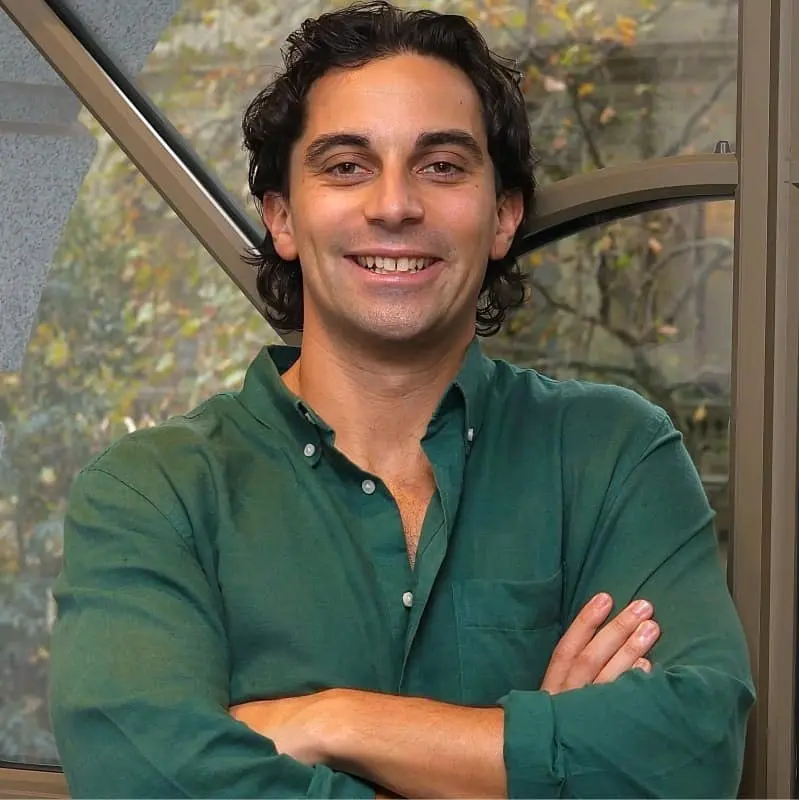 Guest Alex Valente Co-Founder & Co-CEO, Quarterzip, Quarterzip
  Show Host Georgie Healy Host, In The Blink Of AI, In The Blink Of AI

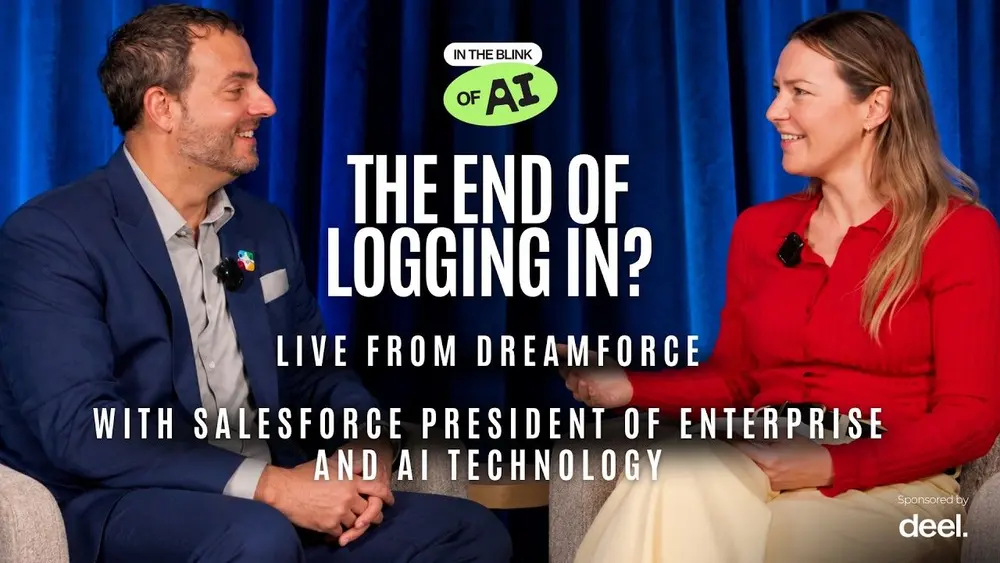 ▶
▶ 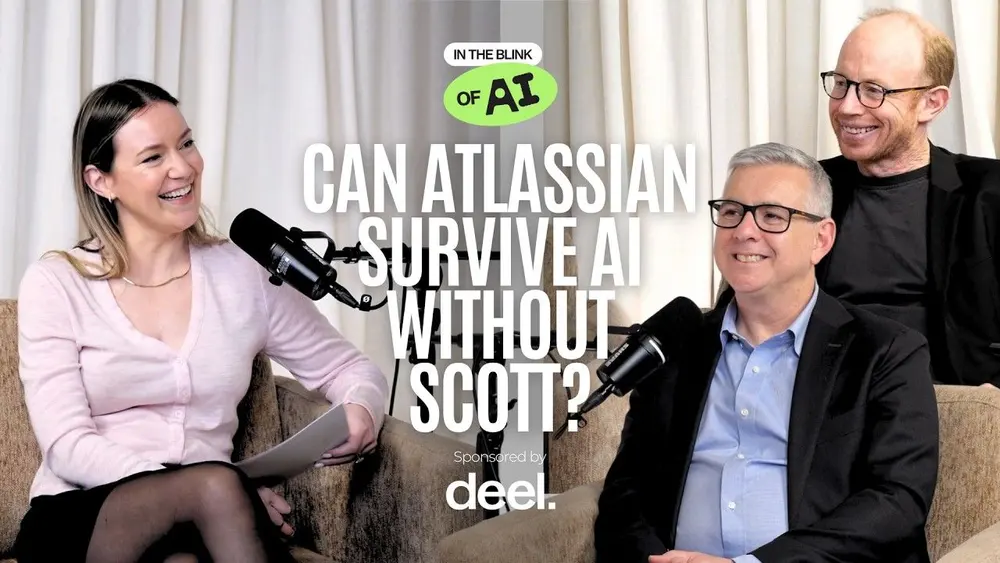 ▶
▶  ▶
▶  ▶
▶  ▶
▶ ▶
▶ ▶
▶