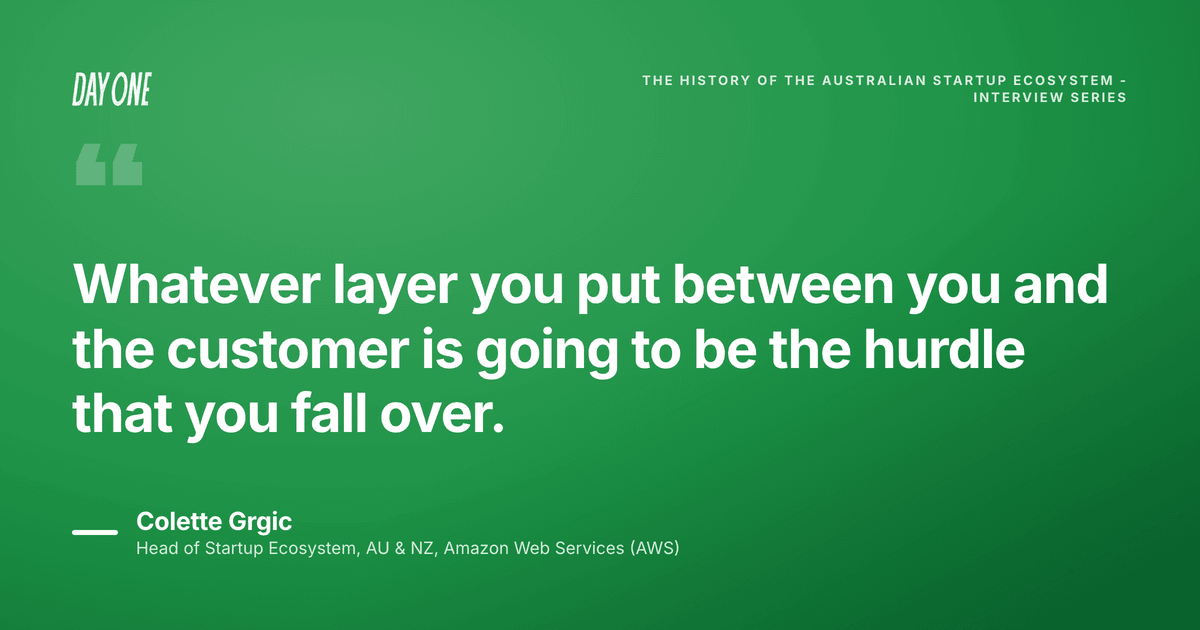
Transcript Synced · select any line to jump ▾ 0:00 Speaker: Let me tell you about our partner, Teamified. If you need to build a top-notch team quickly, Teamified is your go-to solution. They not only provide fractional CTOs, they can also do contractors and even remote team members tailored exactly to your needs. And whether you're looking for expertise in the Philippines, India, or Sri Lanka, Teamified has you covered. What's amazing is that Teamified uses a blend of AI and human expertise to cut hiring times by 50%, cent. The platform handles everything from automated onboarding to day-to-day management and even performance tracking. You can also handle rewards and recognition, buy equipment, and order training all through their platform. Simplify your hiring process and get the best talent fast with Teamified. Check them out now and transform your team. Go to dayone.fm/teamified. That's dayone.fm/teamified. T-E-A-M-I-F-I-E-D, and get started today. Hi, I'm Adam Spencer, founder of the Day One Network, which is bringing the history of the Australian startup ecosystem to you. I believe in founders. It's why I do everything I do at Day One and our media company, W2D1 Media. And that's why the Day One Network exists, to create helpful content for founders. We've got some great shows in development, but a large part of what we do couldn't be done without support from our partners and sponsors. And I couldn't be happier than to be working with NTP, who get community better than any other technology recruitment company out there. A Newcastle company like mine, NTP are invested in seeing the growth of the local tech community in Newcastle, Sydney, and more broadly Australia. So thank you, NTP, for helping us bring helpful content to founders and the startup community in Australia. Back to the interview. Hi, I'm Adam Spencer, founder of the Day One Network, which is bringing the history of the Australian startup ecosystem to you. I believe in founders. It's why I do everything I do at Day One and our media company, W2D1 Media. And that's why the Day One Network exists, to create helpful content for for founders. We've got some great shows in development, but a large part of what we do couldn't be done without support from our partners and sponsors. And I couldn't be happier than to be working with NTP, who get community better than any other technology recruitment company out there. A Newcastle company like mine, NTP are invested in seeing the growth of the local tech community in Newcastle, Sydney, and more broadly Australia. So thank you, NTP, for helping us bring helpful content to founders and the startup community in Australia. Back to the interview. Hi, I'm Adam Spencer and welcome to Day One, the podcast that spotlights Australian startups, founders, and the organizations that empower Australian entrepreneurship. We go back to the beginning to tell the story of Australia's most inspiring founders and how they built their companies. You're listening to a special interview series as part of a documentary W2D1 is producing about the history of the Australian startup ecosystem. On the episode today, we have— 3:18 Speaker: Hello, I'm Colette Gergich, and I head up startups for AWS. So the AWS team has a long history of supporting startups in Australia and New Zealand, and right now my role is to lead a team that looks after the ecosystem in return. So we support early-stage startups with programs like the Activate program, which provides cloud credits, it provides mentoring, workshops, upskilling, connections. And then startups grow up and they're starting to scale. We also do support them with some go-to-market and making connections with capital and with customers. 3:56 Speaker: Just out of curiosity, is the Activate offering in terms of AWS for Startups the kind of flagship, the main offering? 4:09 Speaker: Yeah, Activate is the flagship program that most of the startups would know us for because it's been around for so long. But we do have a number of other programs, whether it's funding programs or growth programs. Like we run forums for CTOs and other executives within startups that they can learn from each other. Provide access to mentors in different markets. We've got programs that will help startups if they're trying to adopt, like, really advanced services like analytics and machine learning. We've got programs like Jumpstart that helps specialists implement those services if they don't have all of the skills in-house or if they just need a little bit of extra capacity to get it done. 4:49 Speaker: Yeah. 4:49 Speaker: So there's a number of programs across the board that we support startups with, but Activate's definitely the one that we're known best for. 4:55 Speaker: I'm really excited to go back in time with you with this interview because you mentioned this on one of the, I think, that Innovation Bay interview that you did, and it's something that I find really exciting about putting this documentary together. With a little bit of effort, it fits together. And as I mentioned before we hit record, spoke to Kim Harris yesterday and he talked a bit about Push Start and you were the program director there for a little while as well. So it's just really interesting to see Yeah. 5:22 Speaker: Overlap. I think it, the, the longer that you spend in a space, the more you, I think you appreciate that it's not just when you meet people, it's not just the capacity that you meet them in, it's the purpose that you meet them with. And so there's many people over time that have, that they've changed roles. They've gone from being a founder to an investor or being an investor to a founder, or, you know, stepping into public space and trying to change the system from within. But all of those, it's like this cycle and there's this beautiful thing where you start seeing people again and again. In different ways, but they're there with that same passion and the purpose for supporting startups and helping to grow the ecosystem that creates more of those startups. Because I think inherently they believe that's something worth doing. And I think that's really the magical thing is when you see that over time. Yeah, not just the reinvestment, but the connections. It's beautiful. 6:13 Speaker: Can I ask, why are you so passionate about it? Why do you do what you do? 6:20 Speaker: I think for me, you know, I've had a really wonderful life. But when I think about the time when I accidentally fell into the startup space, it's like when you see the world in technicolor for the first time. It's like everything was there and everything was great. But then suddenly, once you've seen it for all of the potential and all of the magic and all of the creativity and the opportunity that sits there, you can never unsee it. And I was just really fortunate to have fallen into this community where everybody was really open and welcoming and people were sharing and we were all learning together. And if you didn't know something, you could ask and you could just feel the energy and the momentum. And that's something I'm just inherently attracted to. And because I think I received so much from people who shared their knowledge and their insights and their guidance and advice with me, I feel just forever indebted back to the ecosystem itself because I think how many more people can have that aha moment, how many more entrepreneurs could then suddenly go, maybe I can change the future. 7:22 Speaker: I first became aware of you from your time at BlueChilli, but I've since learned that you've been involved long before then. Can you take us back to the very beginning? 7:32 Speaker: I think probably the, the origin of my journey into the startup ecosystem as a startup was I was traveling the world with my husband, realized that there was this this problem with centralized travel that just precluded people from connecting, you know, locals and travelers really connecting to each other. And we said, "Wouldn't it be great if there was a way that we could connect travelers and locals together to have some really unique experiences?" Because then they would really get the juicy bit of travel instead of just climbing up the mountain, climbing down the mountain, and drinking the beer. And we came back to Australia after about 2 years traveling, and my husband started working on this idea. I said, "Hang on a sec, but it's my idea." And he goes, "You're not doing anything with it." And I was like, "Game on, buddy. Don't you dare." And that's really how it started. And we started tinkering. We had no idea what we were doing. And Vinco came in one day and he said, "Oh, babe, I just read a blog and I think what we're doing is called a startup." And that was really the moment that I went, "Okay, what is this startup thing?" And I went and looked at it and said, "If you're a startup, then step 1, you get a technical co-founder. Step 2, you apply for accelerator. Step 3, you get some funding. And then step 4—" Yeah. You retire on an island. And I was like, sweet, I can follow instructions. And so that's really where it started. And first I looked for co-founders. I signed up on LinkedIn that day, found somebody that we had a lot of common interests with, that we played ultimate frisbee with, and connected with him and said, technically you've got all the capabilities, so you're going to be our co-founder. And I still don't know why Roger to this day had said yes, but there must have been something there because he joined us and he's just— He was absolutely phenomenal and really helped us to think through the logical steps of what would it take to start the startup. And then we applied for an accelerator. There were only, I think, only 2 were open for programs. It was the, I think, the very first formal intake for Startmate. So, they had run one program with a couple of companies before, and then Startmate said that they've got this program open, and we applied, almost got in, didn't because we had no idea what we were doing, truthfully. And then there was another program after that, Push Start.. So we applied for that as well, almost got in, didn't quite get in. I said, okay, screw it, I'll just come and help run the program while we do the startups. And that's really where we decided to pack up. We were living in Brisbane at the time. We, there was not much support for us there to the same that what we saw in Sydney. And we moved down to Sydney and started a startup and supported the Push Start program. And that was really how I met the majority of the people that I, you know, now feel so indebted to. 10:02 Speaker: So what was it, 2011 or 2010? 10:07 Speaker: Yeah, it would have been 2010 that we applied. No, I think it was about 2011. 10:15 Speaker: Can you recall how you discovered, what means you used to discover Startmate and Bush Start? 10:22 Speaker: Yeah. 10:23 Speaker: Was it just Googling? 10:24 Speaker: I think it was just Googling. At the time there wasn't really a lot of competition if you searched for Australian accelerators, so I think we were just lucky with the timing because it was October when we realized that what we had was a startup. It was October when we met Roger, and November we had to apply, and December we came down and pitched, and then January we came down for the Push Start pitch, and by then, because the pitches were held at Fishburners, which was still in Ultimo at the time, just like the top level of the Ultimo building, we kind of got to meet a couple of people there, and then, yeah, once we were in, we were stuck. 10:59 Speaker: So it was the Startmate pitch first, was it? At Fishburners? 11:03 Speaker: No, it was Startmate at ATP. So the Startmate pitches were in the, where Cicada Innovations is now, so Australian Technology Park. So it was downstairs, there was like a big leather couch. I think there were just a couple of people that I can't believe that I've ever met, just sitting there and interviewing founders. Like the first, you know, the founding members of Startmate were just there actually having conversations as founders and technologists together with aspiring CEOs and CTOs, and it was just really wonderful. I think at the time, Nicky was still sending all the emails himself. 11:36 Speaker: Oh, okay. 11:36 Speaker: So, Nicky was still sending all those emails himself. I actually found, my husband found the email, the rejection letter that Nicky wrote us, and it was just really lovely. He wrote back to him now, 10 years later, going, "I just want to say thank you because that was really such an important moment for us to go, you know, they didn't knock us back ruthlessly. They just said, 'Look, here is some feedback. Build on it and grow on it.'" stay in touch and tell us how you go down the future. And for us, that was really what we needed. It wasn't a no, it was a keep going. And that keep going is what kept us going. 12:08 Speaker: So you never at that point really had anything to do with pitches? You never been there? 12:13 Speaker: Oh no. 12:13 Speaker: Never knew what it was? 12:14 Speaker: Good grief. We used a Prezi presentation. Like we were zooming from left to right on the screen and zooming in. We were like, oh, this vector thing is so cool. It was atrocious. I think somebody asked us, what's your CAC? And I was like, excuse me, did you just throw at me? Your customer acquisition cost. We had no idea what that was. Somebody asked me, okay, this is sort of the business model and you're taking top of the ticket, reverse engineer it, how many bookings do you need and therefore how many hosts and how many travelers do you need and at a conversion rate of what do you need to then how many markets do you need to cover? And I went, I have no idea what you just asked me. We're convinced this idea is going to work. Truthfully, we've come a long way. 12:54 Speaker: Do you remember how you felt walking into that into that room with all these, I suppose, other startups they're pitching? 13:00 Speaker: So for the Startmate pitch, I didn't know what to expect. We had no idea what to expect. So we got there and first I thought it was really cool that it was such an open building and it wasn't stuffy at all. It wasn't like a very corporate space. It was like a very, I don't know, different space than what I've been used to. So that was my first interaction. And then everybody was just seated in this room. So there would 20, I think, 20 companies interviewing, and there were about 20 or so mentors, maybe a little bit less. And we were just basically getting up and moving desk by desk, just going around meeting all the mentors. And so my first thought— I don't think I really had a lot of capacity for thinking. I was just like, "I hope they don't ask me XYZ." And of course they asked me XYZ. But, yeah, so I had no expectations, and I think that was part of the beauty is we didn't come in with preconceived ideas. We didn't know what to expect, so we just rolled with it and we were a bit like sponges. Everybody gave us some feedback and advice and we went, that sounds really sensible and I think we should go work on it in this way. 13:59 Speaker: What happened next? So you rejected from the— this— Upmate and from Push Start. How did you— A, how were you feeling and what was that conversation like and who was it with to kind of go and join Push Start then as the program director? 14:14 Speaker: Yes, so I think at the time we had already committed so we were going to do this and I think when we got rejected from Startmate, we just went, look, we kind of realized where the baseline was and we realized that we're not quite there yet. And we just went, okay, well, that's where we gotta get to. If that's where the baseline sits and this is the type of questions we need to answer, we just started looking for all those answers. And then we followed up with the mentors who interviewed us and we said, hey, you've got some feedback around this. Can you tell me more? How do we solve for this? So we just reached out to everybody that we had met and said, you sound like you know how to do this, so please tell us. And then we, at the same time, I saw Kim Harris had put out a role for a, a program. I think it was a program manager or program coordinator, wasn't a director even. So it was a— it was just a— he needed somebody to actually come and help him run the program because it's more work than I think people realize to actually run an accelerator. And I've done some program management in the past and I went, this is easy, I could do this with my eyes closed while I'm doing my startup. And this gives us a good reason to also be in Sydney. So we Basically moved to Sydney within a few weeks and got set up here and I, I started working with Kim on that program and through that I really got to understand what adds value to a startup really. So, you know, who are the mentors? So what do they need? They need a little bit of capital at the start. They need a little, quite a lot of mentoring and guidance and advice, but really what they need is somebody to hold them accountable and give them kind of that clarity of the North Star. It's like the more people that you have conversations with, you end up triangulating their advice. Mm-hmm. Because if you follow everybody's advice, you'll go around in a circle. But the real skill that I think founders are, are learning when they're in an accelerator is how do you triangulate that advice and then set your north star? How do you then use those mentors around you to broaden your understanding of a topic, whether it's customer acquisition or whether it's something deep in your space, like a subject matter expert who can help you really understand payments, for example. Mm-hmm. And then how do you use the process on that week-by-week check-in to really help build your accountability muscle? Because that's one of those key things that sets startups aside. It's like, you might be doing the wrong thing, but the faster that you learn how to do something, set the objective, execute it, learn from it. So, that little cycle of learning. So, set the objective, execute, debrief, learn, then set the next one, execute, debrief, learn. 16:38 Speaker: Mm-hmm. 16:38 Speaker: The faster you'll actually get to success. Because at the start, if you're actually doing a startup, you really don't know what what success really looks like. You have a hypothesis, but you have to actually go through that execution to learn whether your hypothesis is true or not. And the faster that you can do that, the faster you get to success. 16:55 Speaker: So 2012, I think we're at Pushstart. You're a little bit settled now in Sydney. 17:02 Speaker: Mm-hmm. 17:02 Speaker: You're working at Pushstart. Can you give me a bit of a snapshot of what it looked like? 17:07 Speaker: I mean, so Fishburners at the time was predominantly, so there was the Cicada, which was called, what was it called before? 17:15 Speaker: ATP. 17:15 Speaker: ATP Innovations, yeah. So, where Cicada is now. So, there was that. It was Fishburners, which was at that point in Ultimo on Harris Street. And later it was all 4 levels of the building, but at the time it was the very top floor. So, you had to hike up the stairs all the way to the top. And then you'd walk in and there were some desks, but not quite. And I think when we started working out of Fishburners, there might have been 100 people. There were 100 of us. There were not a lot of women. I don't know why I didn't realize that at the time. I just actually didn't notice it. But yeah, there were just, there were a whole bunch of us working upstairs and on desks. It was very unglamorous. I think later when we got some sponsorship, we painted the walls and the ceilings. Mm-hmm. Put some, you know, motivational quotes on the walls, got some more desks, putting up an event space downstairs. But it was very, it just felt like you were actually starting to build something. It felt like that really early stage of creation where there were a few like-minded people who were all there together. I think it was Mike Casey was one of the directors for Fishburners that helped set it up. I think Pete Davidson, Peter Brad was manning the reception. Yeah. At the time while working on his startup. And it just seemed like one of those roll up your sleeves, like you get it done, everybody does what needed to be done because we're all in it together. And I've never felt that sense of community before, even though it was so small and nascent. But it was just wonderful to be able to be there and to help build it up. 18:43 Speaker: What was so important and still is so important about coworking spaces? 18:47 Speaker: I think what makes coworking spaces and any sort of a hub so important for growing ecosystems is that it's the density of people that accelerates the learning, right? So you're there with your peers, and even though you're all working on different businesses, you're all learning together, and there's similar challenges you have to overcome. But what makes— I think you can have any sort of a hub. A university could be a hub, or an office could be a hub. But when you have— I think what makes the startup space so uniquely interesting is the openness for people to ask for help and to say, "Hey, I don't know how to do this." I think we've all accepted when you're doing something new for the first time, and I think when you're there, you're doing something new for the first time. So, there's some building blocks that are already built and you don't have to reinvent every wheel, but everybody knows that they don't really know what they're doing. So, you have to ask, and if you don't ask, you won't make it. So, I think that's what makes it so special for startup coworking spaces where you have that like-minded community, you're all there, you're all agreeing that you have a lot to learn, and it's just about who's going to learn fastest. Yeah. And then you're all sharing and that's really the objective is learn as fast as you can. 20:01 Speaker: What happened next? What prompted the move to BlueChili? 20:06 Speaker: I might answer it in a different way and kind of talk a bit about what happened in the ecosystem first because that might give some more color to this. But I think what we saw in, especially like in the early 2000s and then especially in that time that I just happened to step into this, which was around that 2010 in Australia, is there were a couple of things that happened, right? There was this Cambrian explosion of startups after that. And I think Startmate was a very important catalyst for that because it was bringing a model that was just starting to get proven out and getting traction in the US, the accelerator model, where VCs that had traditionally had to write $10 million checks as the first check for a startup to get started. Mm-hmm. Was able to, you know, go a little bit earlier up the funnel and have other people assume that risk at the start for a lower amount of capital. So I think the capital is a really important part for what drove a lot of the explosion here. But the second thing I think really that we can point to also sits with the cloud. I do think that the, the ability for a startup to get started for $5,000 or $10,000 was a game changer. And that really was, when I think back now from where I'm looking at it from an AWS perspective, it at least. I look back at that growth and the establishment of AWS in the startup space. And I go, suddenly startups that would have to have set up their own servers and they have to have a network engineer and have to understand how do you, you know, deal with infrastructure, didn't have to do that anymore. And we saw this massive boom of startups that were cloud-first, SaaS-enabled, being able to deploy at a lower cost, I think really spurred startups to set into that space because it opened the aperture a little bit. And when you couple that with venture capital, because in 2012 what happened is Blackbird raised their first fund and it took 22 months for them to do that. But in January of 2012, we had our first kind of, I would call it like US similar type of a venture fund that went, we are investing in tech startups. And that's been a long time for Australia coming. 22:08 Speaker: Yeah. 22:09 Speaker: You know, and that was really quickly followed. So Square Peg also launched in 2012 and then we had Rampersand, 2013, and then in '14, Atlassian hit their $3 billion, and then we had Airtree, and reinVenture came in 2014, and then we had that whole innovation economy with Malcolm Turnbull and that whole innovation agenda. And then suddenly it was a game changer. And I don't think that people realize when you look back at 10 years, we take a lot of the things that we have now for granted. Like, we look at VCs and we go, "Oh, of course we have VCs." Have you realized that we're not even 10 years old? Like, our VCs are not even 10 years old. Like, just let that, that sink in. I think we've come such a long way in a very short span of time, but we've done it with an amazing group of people that got us to where we are today. And when I look at what we've built out in the ecosystem now, I'm actually really proud. And a lot of people stand back and go, "It's not America," or, "It's not Tel Aviv." And you go, "Actually, it's amazing what we've done in 10 years." Yeah. 23:06 Speaker: Yes, we have come a long way. We've done a lot of great stuff. But what do we need to do to get to the next stage? 23:13 Speaker: Look, I think there's two things that I care very deeply about that I'm, in as much capacity as I can, baking into the ecosystem. The first one is how are we building an inclusive ecosystem? And it's not for the feel goods. It's because we have some very big problems in the world that we need to solve. And if we keep solving them in the way that we've always solved them with the same type of perspectives that we've always solved them, we're not really gonna solve anything new. 23:38 Speaker: Mm-hmm. 23:39 Speaker: Both in terms of like when you open that aperture and you go, who else could really help us solve problems? And it, where are we not looking for solutions? Where are we not looking for problems? And where are we not looking for solutions? Then I think it gives us this ability to really step back and say, when startups are best placed to solve that solution, what is that perspective that we have in the startup ecosystem? How broad is that really? Are we all coming at problems with the same perspectives and the same worldviews? And I think there's a massive opportunity for us, not just within gender, but within many different backgrounds, to start building up more diversity in our ecosystem. And we can only do that when we take an inclusive approach, when we go, "Everybody is actually welcome here, and everybody with their different skill sets have something to add." From that perspective, I think the thing that we can still do better, even though, you know, 2012, we were 4% female-founded, and I think 2017, I think it was something like 15%. And now we're at that sort of 24, almost 25% female co-founded at least. And I think we have come a long way, but obviously, there's still somewhere to go before we get to parity. 24:43 Speaker: Yeah. 24:44 Speaker: And then the second thing that I care deeply about is climate change. You know, I think we're beyond the point where we actually have an option for caring about it or an option for opting in to solve it. It's, you know, it's something that is, that is affecting us all, that is going to affect us all continuously and at a much higher degree. What kind of excites me though, is that same Cambrian explosion that we saw that was driven by VC and cloud, I think we're gonna see the same thing with climate. We're already starting to see it. ESG mandates in these big, you know, funds that are investing into VC are specifying environmental and sustainability and social outcomes and governmental outcomes, right? So there's already almost like this baked-in mandate now going into VCs to where they should be investing and where they shouldn't be investing. And then you're getting, that's getting met with this groundswell of entrepreneurs who are actually deeply caring about solving this problem and going, this is where I wanna spend my life's work. So you've got venture capital that's sitting there waiting to be deployed. And then you've got founders who are coming up problems trying to solve these problems. And then you've got technologies that are actually helping to accelerate that now. And I think within that climate space, especially I think things like data analytics and machine learning, and to some extent, maybe in the future, some AI, really speeds up our innovation and our, you know, route to market. And there's never a time when that's been more important than now to actually have that speed. So I think we're going to see the same two things that affected that first explosion. We're going to see the same thing in the climate space. 26:16 Speaker: So jumping back on the timeline, going back to joining BlueChilli, 'cause I think we have a mutual connection, I'm sure we have a few mutual connections, but Alan Jones, I think you said he made the introduction there for BlueChilli, I think he was working there at the time maybe as well. 26:37 Speaker: So once we shut the startup down, Alan reached out and said, "Hey, I've got this opportunity where," you know, he had a digital agency at the time, they were doing some innovation work within SmartSalary. Which is now the Smart Group, and they were trying to launch a startup within a corporate because it was a very, I think, forward-looking, innovative CEO there who had set a mandate for continuously disrupting his own business. So, he was trying to build the startup inside the corporate. And Alan said, "Can you come in and actually help them do this because you've got the skills as a founder to understand what it's actually going to take without turning this thing into corporate, you know, project?" And so, Alan actually referred me into there, and then while I was there, the new agency got acquired by BlueChilli. And, you know, when I think a little bit when I left the AutoGenie startup inside the corporate, Alan said, do I want to come and work with him? And, and I said, look, if you're on the Northern Beaches and I'm on the Eastern Beaches and I'm not doing a 2-hour commute every day, and he goes, okay, fine, if you're not going to join me, then you should go work at BlueChilli. And then I think it was about a month later where it was formalized and then we were actually working together in the end anyways. But yeah, Alan is really such a catalyst for— I think I have a real appreciation and admiration for the way that Alan has built connections and connected people to opportunities. And it's not opportunities that always benefit him, but it's things that he can see will benefit the overall ecosystem. So I think he's done that almost like quietly. There's a bit of mastermind engineering that's happening over there that we should poke and —too. 28:12 Speaker: So, it's really interesting to me that you're back in 2010, 2011 when it was getting rejected. I should stop using that word from Startmate and now fast forward a decade or so, you're I think— 28:25 Speaker: I'm a mentor in Startmate. 28:26 Speaker: Startmate mentor, yes, yes. How did that happen? 28:30 Speaker: Yeah, I just think look at the time, I've never come across an accelerator model before but I'm very much a program thinker. So I think as programs, and for me it made complete sense why this would be something that could add value. I could see in the Push Start program the value that we added during the Push Start program to the, the 10 founders or the 10 startups that came through that program, and just that halo effect and the, the flow-on effect, because it's not always apparent at the start, right? So you've got people that are going through a program at the start, and you go, maybe they're successful with the startup, maybe not, But then fast forward down, you know, 5 years, they make this comeback and that's when they really hit it. But all of that value and benefit and goodwill, if you like, and that generosity then back into the ecosystem still stays attached to some of those programs that they've come through. So, when I joined BlueChilli, for me, it was, it was meant to be a 6-month. I was going to cover for Catherine Aibner who was on maternity leave and 6 months came and went and I went, I really liked building up programs of work and So, I sat down, I went, well, this could be better. This could be better. We could fix it like this. We can make this better. And I started building up more of a program and helping founders to think step by step. You can't have a go-to-market strategy if you haven't already thought about what your, you know, key messaging is. You can't, you know, have customers that you're having conversations with if you haven't given any thought at all as to what are you actually offering them or what your value prop is. So, there's— I just started building out this like logical flow of— Mm-hmm. Work that they had to get done in time. And then in doing that, I realized that one of those critical steps is having customers. And at the time, literally was very much focused on building a lot of the tech solutions. So, you know, we'd had to agree to scope beforehand and this is the project and this is what we're actually like scoping out and building, which didn't leave a lot of room for that iteration without necessarily adding a lot of cost to it. Yeah. So I started thinking about ways that we can bring customers into the conversation earlier so that startups had that opportunity to do that customer development before they were committing to building a lot of things. And that's really where we started working with big companies like Westpac who were doing innovation, who were looking for, you know, new innovations and solutions for their customers, but also recognized that they couldn't necessarily move at the speed that a startup could. And we started bringing them together through these you know, innovation programs where we spent a lot of time with very senior executives within Westpac understanding what were some of the challenges that they were trying to solve. And then I would translate that into startup speak and go, startups, these are some opportunities that you could be looking at solving. And then I sat as that translator in the middle between the corporate that had a very precise idea of what they thought they wanted and a startup that was very willing to be adaptable and had to translate between those two and then bring them together in that program so that you could actually bring a customer into the start of the conversation and really solve for a particular use case. And what we saw was that really drove the startups into a commercialization track a lot faster than if they were just building and then hoping that somebody would buy it down the track. 31:40 Speaker: This could be a good segue into your current role now. 31:43 Speaker: Mm-hmm. 31:43 Speaker: 'Cause I think that's something that you're really trying to achieve is bridging that gap between startups and corporates. Something that you really want to see happen Am I right? 31:53 Speaker: Ultimately, you can have all the capital in the world and you can have all the talent in the world and you can have all the best ideas, but you need a customer. That is one thing I've gotten deep appreciation with at Amazon is it, it always starts with the customer. And if you can't work backwards from the customer and what their problem is and what you're trying to solve for them, then you have nowhere to go. So Amazon has a massive network all over the world. It's really rich and vibrant, the number of companies and industries and stages of companies that Amazon gets to work with and through and alongside. And what I'm thinking about very intentionally is what are the types of programs that we're shaping to make that access and to make that connection between startups and those companies that are actually looking for innovative solutions. that they can, you know, buy off the shelf from a startup. How are we accelerating that? Because if we can do that, then we can solve problems on both ends, and that's the best type of outcome that we're looking for. 32:55 Speaker: What do you think this ecosystem is doing really well? What do you think sets us apart, maybe, from other ecosystems, if anything? 33:03 Speaker: Do you know what I think sets us apart? We do actually have a very distinct culture within Australia. And I think it was because we were lucky that at that inflection point when we got to build the ecosystem, we don't have a 20-year or 50-year legacy that we're dragging. You know, if you think back over the 10 years where that really was a catalyst point, that was also a point of awakening in the world around a lot of social issues. So both those two things that I mentioned earlier around climate and inclusion, those were things that started becoming front and center stage around 2012 and 2013 and 2014. So right around that inflection point for us. And I think because there were these big issues globally that were being discussed, that kind of started to get baked into our culture here. And I think we got to be a lot more intentional and not just adopt what we saw happening overseas, but to actually— Mm-hmm. Be intentional and build that culture ourselves. So I do think as intangible as that is, I do think the culture is something that sets us apart. 34:09 Speaker: Do you have an unpopular opinion about the ecosystem? Just something that you firmly believe, either good or bad, that other people just can't get on or won't get on the same page as you about? 34:23 Speaker: Look, I think with every, let's just call it with every initiative, right? There's the first believers, And then there are the fast followers. And I think within that fast follower group, sometimes you have people that are well-meaning and very enthusiastic. And I think we've got this notion within Amazon around keeping a really high bar on things. 34:43 Speaker: Mm-hmm. 34:44 Speaker: And I do think it is important for us to keep a high bar because when it comes to something as important as building the future, the founders that we're shaping and the beliefs that we're setting within them for how they can create the future, I think we need to have a really high bar for what that is. Whether that is with how aspirational we are, with how high we shoot, with how critical we are of ourselves. I just think that it's good to have both sides of the story where we're not all just buying into the hype and going, "Aren't we such a great ecosystem?" So, I think it is— yeah, I think it is necessary for us to have some critical poking around at some points and going, "Are we actually creating good startups or are we just blowing smoke up our ass?" Yeah. 35:26 Speaker: Okay, I want to ask you the advice question. I ask everybody this question. Either what advice would you give 2010 Colette going into that startup? 35:34 Speaker: Okay. 35:35 Speaker: Or what advice would you give a brand new founder that came to you tomorrow? 35:39 Speaker: I think the thing that still holds true is the advice that never fails is you have to start with the customer and you have to stay close to the customer. Whatever layer you put between you and the customer is going to be the hurdle that you fall over. So, that's really if you're doing a startup. What I would give on a more personal level, I would say, look for new perspectives, always try and disprove your beliefs because if you're trying to do that, then you're actually looking for new information and whatever outcome you have at the end, whatever belief or insight you have at the end will be stronger if you're constantly looking to disprove just your topsoil layer of what you think an answer is or what something actually is. 36:22 Speaker: Before I ask the final question that I ask everybody, is there anything that we've skipped over that is an important part of the history of the Australian startup ecosystem? 36:33 Speaker: I mentioned it a little bit earlier, but I do think that that 2016 when we saw Malcolm Turnbull take a stand nationally for innovation. And that was a point when we saw a lot of infrastructure get put in place that is really now still continuing to support the ecosystem. And I think that was a really important point that for us in startup world, we don't always pay much attention to what's happening in policy or politics. I think quite a bit of that has, you know, changed. And I'm certainly excited to see what the Tech Council Australia how they end up helping to shape the, the ecosystem and the, the playing field going forward. But I really do think that that was an important part because that was when we got the National Innovation and Science Agenda. That was roughly around the same time that we saw changes to ESG CLP policies and, and legislation that, that made it possible for more people to start smaller funds. And I think— Mm-hmm. That really supported a lot of founders that probably wouldn't have received, you know, backing of big funds at the time. Or, you know, I just think it grew exponentially, then the amount of investors and the amount of, you know, founders and the amount of infrastructure that we have. And I think that was a really important time, and I don't think we often credit that enough. 37:58 Speaker: Last question, keeping in mind that I'm trying to make a documentary here that will as holistically as possible and as honestly as possible tell the history of the Australian startup ecosystem. I want people from all corners of the ecosystem to listen to this story. Founders, investors, academics, policymakers. What do they need to hear? Any one of those categories or everybody, what do they need to hear from you? 38:22 Speaker: I think that we need to stop solving small problems. There are so many giant, big, catastrophic, problems that we need to solve in the world, whether it's in health or in climate or, you know, in equality, and the repercussions of the second-order problems that if we don't solve those first-order problems, or in education, for example. And I think we need to stop playing small. The time for yet another photo app, as delightful as they are for wasting time on, I think we need to challenge ourselves to really step up and It takes courage. It takes courage for somebody to go, "Yes, I'm going to tackle this big problem," because the stakes are so high. But that doesn't mean that we get a pass for not trying. And I think that's something that there's this ember burning inside founders where they know they have to and they know they can. And then it's just about shutting out the rest of the world that tell them that they can't and just go for it. Let's tackle some big problems. And let's make some big changes and let's set ourselves up for the world that we want to live in. 39:32 Speaker: I hope you enjoyed that interview. More interviews are on the way. Follow the podcast wherever you're listening right now. Stay tuned for more interviews with many, many more amazing people from the Australian startup ecosystem. Thanks for listening and see you next time.