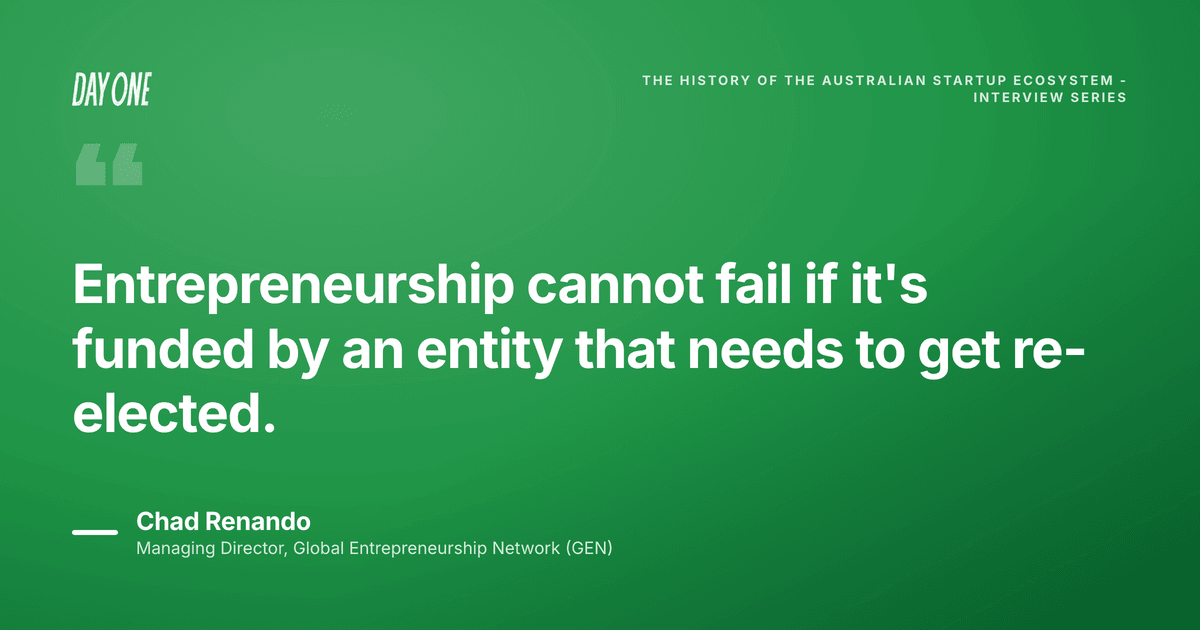
Transcript Synced · select any line to jump ▾ 0:00 Adam Spencer: Let me tell you about our partner, Teamified. If you need to build a top-notch team quickly, Teamified is your go-to solution. They not only provide fractional CTOs, they can also do contractors and even remote team members tailored exactly to your needs. And whether you're looking for expertise in the Philippines, India, or Sri Lanka, Teamified has you covered. What's amazing is that Teamified uses a blend of AI and human expertise to cut hiring times by 50%, cent. The platform handles everything from automated onboarding to day-to-day management and even performance tracking. You can also handle rewards and recognition, buy equipment, and order training all through their platform. Simplify your hiring process and get the best talent fast with Teamified. Check them out now and transform your team. Go to dayone.fm/teamified. That's dayone.fm/teamified. T-E-A-M-I-F-I-E-D, and get started today. Hi, I'm Adam Spencer, founder of the Day One Network, which is bringing the history of the Australian startup ecosystem to you. I believe in founders. It's why I do everything I do at Day One and our media company, W2D1 Media. And that's why the Day One Network exists, to create helpful content for founders. We've got some great shows in development. But a large part of what we do couldn't be done without support from our partners and sponsors. And I couldn't be happier than to be working with NTP, who get community better than any other technology recruitment company out there. A Newcastle company like mine, NTP are invested in seeing the growth of the local tech community in Newcastle, Sydney, and more broadly Australia. So thank you NTP for helping us bring helpful content to founders and the startup community in Australia. Back to the interview. Hi, I'm Adam Spencer, founder of the Day One Network, which is bringing the history of the Australian startup ecosystem to you. I believe in founders. It's why I do everything I do at Day One and our media company, W2D1 Media. And that's why the Day One Network exists, to create helpful content for founders. We've got some great shows in development. But a large part of what we do couldn't be done without support from our partners and sponsors. And I couldn't be happier than to be working with NTP, who get community better than any other technology recruitment company out there. A Newcastle company like mine, NTP are invested in seeing the growth of the local tech community in Newcastle, Sydney, and more broadly Australia. So thank you NTP for helping us bring helpful content to founders and the startup community in Australia. Back to the interview. Hi, I'm Adam Spencer and welcome to Day One, the podcast that spotlights Australian startups, founders, and the organizations that empower Australian entrepreneurship. We go back to the beginning to tell a story of Australia's most inspiring founders and how they built their companies. You're listening to a special interview series as part of a documentary W2D1 is producing about the history of the Australian startup ecosystem. On the episode today, we have— 3:18 Chad Renando: My name's Chad Renando. I'm a research fellow with the Rural Economy Centre of Excellence with USQ. I'm also a research fellow with the Australian Centre for Entrepreneurship with QUT, a director for my own not-for-profit called Startup Status, and the managing director for the Global Entrepreneurship in Australia. These days, I spend most of my time with the university, with the USQ, and one of the reasons for that is because it allows me to be pretty flexible about where I spend my time otherwise. So when you align yourself with an institution like a university, that gives you a lot of latitude to get engaged with regions, as compared to if I'm constantly out there with my not-for-profit, always kind of thinking about how am I gonna get paid for this and where I'm gonna go. That does obviously foster an entrepreneurial mindset, but it also has you out there competing with a few others doing similar kind of things. So the university allows me to do the deeper community development work, even though I use my not-for-profit to do work outside of Queensland because the center I'm with is largely Queensland-based. 4:13 Adam Spencer: Can you give me a little bit of an elevator pitch on Startup Status? 4:17 Chad Renando: So Startup Status maps and measures the innovation ecosystem across Australia, as well as supports regional communities with governments, universities, corporates to understand how we can support innovation entrepreneurship within those communities. It's both doing the work within communities as well as providing a software platform to represent the innovation ecosystem in a region and provide some mapping expertise underneath. 4:45 Adam Spencer: What would you say is one of Queensland's biggest strengths when it comes to, you know, the entrepreneurial ecosystem or startup ecosystem? 4:54 Chad Renando: One of Queensland's strengths is inherent to what makes Queensland distinct. Out of all of the states and territories, it's one of the only ones and the largest ones that fits this criteria of having 50% of the GRP, of the population and the business community outside of the main capital city. And when you have that, you have a large spread. It takes a lot to then support innovation entrepreneurship, which means every main centre outside the region has its own innovation ecosystem as compared to some of the other states which may have like a 70-30 or even a 20-80 split from regions to capital cities. And so within Queensland, you pretty much go anywhere from Townsville to Goondiwindi to Toowoomba to even some emerging things just north of Cairns up in Cooktown. You're seeing a lot of support for regional entrepreneurship, which you have definitely in other, other states and territories, but it's really prominent and diverse outside of Brisbane across Queensland. 5:55 Adam Spencer: When did you first get involved in what I just call startup land? 6:01 Chad Renando: My exposure to startup land really started, I was running a digital agency at the time. We were doing all the online stuff for Domino's Pizza. We grew that to about 60 staff, but it was a typical agency type view. And we started seeing a few startups come along. You'd see a 60 Minutes episode pop up with some 16-year-old making a lot of money from an Instagram app. And, you know, we get like 5 or 6 phone calls the next day. Hey, I got an idea for an app. And so we started seeing a little bit of this. This was back in, say, like '07, '08, 2010s. And then just down the street from us, I saw this, this thing pop up called River City Labs that Steve Baxter was kicking off. 6:40 Adam Spencer: Yeah. 6:40 Chad Renando: And so I started going to a few of those meetups, poking around, what's happening here? Initially going to say, well, how can we get business out of this, out of our agency? And started seeing a bit of a difference between the agency model of, you know, $1,000 a day to develop some software for large corporates versus what was happening in this startup scene of these rapid developments and kind of getting things out there quickly. And so really that started it. And then I started poking around, getting involved in things like Random Hacks of Kindness, and I was on the steering committee for that. Getting involved in Impact Academy and the startup accelerator that Peter Ball just kicked off back then, and then started having some startup ideas for my own and pitching those around. And really that started getting me into it and raising a bit of awareness. 7:22 Adam Spencer: When did River City Labs open? Back in '07? 7:26 Chad Renando: No, I think it was around 2012. So I started getting into the digital scene around '07, 2010 we started seeing some rumblings, and then around 2012 River City Labs kicked off. And I really think that started a bit of the vertical Obviously there's heaps of stuff happening within innovation, within new businesses before what we affectionately refer to as the ecosystem of coworking spaces, innovation hubs. 7:47 Adam Spencer: Do you have any unpopular opinions about the ecosystem? 7:54 Chad Renando: Absolutely. So I see myself as outside of the ecosystem. Like, my roles you could see as being as in the ecosystem as you can think. I ran the first fully— what I believe is the first fully owned and operated innovation hub by a local government, Fire Station 101 in Ipswich. And when I was doing that, I thought, man, this is the model that every local government needs to support it. But after about 12 months, I started looking around thinking, I, I don't think we're doing what we think we're doing. As I stood up there essentially preaching the gospel of innovation, but then I started realizing there's people that weren't taking advantage of it. And in fact, we were leaving certain people behind, and some people wouldn't even enter my doors because as inclusive as we thought we were, it was actually a bit of a— it could be an exclusive type culture. So then I went to the US and Canada to go around to say, well, what are we actually doing here and how's that? When I came back to Australia, I left Fire Station 101. I saw some conflicts that might have been happening between, you know, a local government model just inherent to the nature of local government culture. And that's, you know, it's not to say that It doesn't necessarily— it can work, and you've got some good models out there, but there's certain things to watch out for. And I worked for the Office of the Chief Entrepreneur, and after I did that for about 18 months, I started, started thinking there's something more to this. There's people being left out of the innovation ecosystem, and also there can be a lot of stuff like innovation theater. And I also am concerned about what I refer to as the ecosystem versus the ecosystem, and a lot of the activity in the innovation ecosystem seems to feed off of individual ego and celebration of the individual, what we refer to as the idolatry of the innovators, as compared to a lot of people that are doing exceptional innovative work, especially in regional communities, that won't take the limelight, they won't get on stage, but I would rate them as 10 times the entrepreneur from a lot of the things that you might see developing a pretty schmick pitch deck. 9:51 Adam Spencer: What are some of the biggest gaps that you see within our Ecosystem. 9:57 Chad Renando: I would say, I would ask the question, who owns the ecosystem? Who's accountable and responsible for the ecosystem? And in Australia, it's either all of us, which means none of us, because there's no accountability, or it's maybe one or two particular people which aren't necessarily legitimized, funded, or supported. In the US and in other economies, you have either this notion of the recycled entrepreneur, and the interesting thing about the recycled entrepreneur, which quite often they go out, they exit, you know, you refer quite often to like the Twitter mafia back in the day that, that left and reinvested. And we might start seeing some of that, you know, the engineers that, that leave Atlassian or Canva who will then produce some people who maybe go through a few successful liquidation events and organizations, and then they have the funds to reinvest. The challenge is you need a quantity of those people exiting because only a percentage of them will be at a stage in life where they want to give back. Yeah. Because doing this stuff is hard. Like, I've gone through a couple of businesses and I didn't have that event. You know, I had an 80-person, $10 million manufacturing company that went bankrupt in the US, and our, our 60-person digital firm never got to that liquidation event here in Australia. But growing those to that point, it takes a toll. And even Steve Baxter will say You know, this is a young person's gig. Like, we need to invest in the young people that are at that stage who can have the energy and the drive, because when you get a certain point in life, you're like, well, maybe I'll— I want to reinvest, or I want to take it easier. I want to— you want to cash out for a lot of people. And so this, this myth of every entrepreneur that exits will then give back and build the ecosystem isn't true. It's only a certain percentage. So we just need quantity.— in order to do that. The other thing you have, like, say, for other economies, and it is just a completely different structure in Australia, you have the foundations in the US. You have, like, the Kauffman Foundation with $2 billion in assets, $63 million a year just in investing in startups and entrepreneurs, and just focused on Kansas City a lot, but they do a national program. And that was— those numbers are from a few years ago, so it may have changed by now, but we don't necessarily have that. We have Minderoo, who's doing some stuff as far as Indigenous entrepreneurship and supporting some things, but we don't really have that body. And in the absence of that, we have government. So we do have dominant government roles like Advance Queensland and Launch Vic, but they're always mitigated by just the realities of government, the politics of it, the short-term election cycles, the needing for funding on a regular basis. So we really need that consistency of support for— 12:35 Adam Spencer: Yeah. 12:36 Chad Renando: What we refer to as ecosystem building, but that's real. That's grounded in the reality of putting entrepreneurs first as compared to a lot of the ecosystem building can be seen as, and what was referred to me as a cautionary tale in a workshop the other day, as ecosystem building for ecosystem building's sake. We do need to mitigate that. 12:57 Adam Spencer: Mm-hmm. 12:57 Chad Renando: But the counter of that is we just need one entrepreneur to give a bunch of money. There's a lot of cautionary tales where that itself doesn't work because it actually doesn't do the long-term community building aspect. So we need that balance of consistent long-term funding for the, for the underlying system of the ecosystem at the same time as high-value entrepreneurs front and center to create a cohort so we know what it looks like. Because one without the other, either you'll have runaway value from the entrepreneur unless you get the very rare instance of like a Brad Feld or somebody like that who then is passionate about building the ecosystem, or you get that just building the ecosystem without the actually having the entrepreneurs front and center, which just creates a whole bunch of empty innovation hubs, accelerator programs that may not produce the outcomes that we want. 13:45 Adam Spencer: What do you think defines a startup ecosystem, and what defines it as a particularly strong ecosystem? 13:53 Chad Renando: So an ecosystem is simply that system by which you progress just the species interacting and moving forward, right? And the only difference between an ecological ecosystem and a human or social ecosystem is just that, is humans. It's our idea to think of something and then work together to create something new. And for me to convince you to partner with me to do something new, which animals can't do. Then you have an innovation ecosystem, which is all about creating a new idea that adds value to people and making that add more value to more people. You then have an entrepreneur ecosystem, which has the entrepreneur at the focus, and that's just somebody who puts their own skin in the game with the opportunity to then benefit or pay risk from their efforts. And then you have a startup ecosystem, and a startup just being a particular form of entrepreneur where, you know, I'm getting customers outside my region, I'm using new technology with the potential to then scale rapidly. 14:54 Adam Spencer: Mm-hmm. 14:54 Chad Renando: And so a startup ecosystem is the mechanism by around it allows those startups as a focal point to then succeed, which is a nuance of the entrepreneur ecosystem and again, a subset of the innovation ecosystem. And so what makes a good one is all those dimensions working together. Some would say a good one is successful startups, but I would counter that because you could have And this is really my main reason for being at the moment. My vocation is connecting the ecosystem, and I use the innovation ecosystem, to what I refer to, what is referred to as community resilience. And resilience is conceptualized based on economic, individual, social, infrastructure, environmental, and institutional, or the leadership mechanisms and the management mechanisms and the the, affectionately, the institutions of a region. How does the startup ecosystem influence and interact with all of those? And so a mature or a healthy innovation ecosystem, I would propose, has benefits across all of those dimensions as compared to just, say, one particular dimension of economic, which might be diversification, new jobs, and investment. And as we see from what we'd refer to as some mature ecosystems, like Silicon Valley, there's massive inequalities. And I think that's the big challenge we're facing in society is this inequality, which is creating a whole bunch of new social problems. 16:23 Adam Spencer: What is the best startup ecosystem you've ever observed? And what made it so good? 16:30 Chad Renando: The best startup ecosystem, it's a hard one because I don't know everything about it, you know? And I know, I respect that you don't have to know everything of everything. In order to assess something. But to say something is the best, I would really have to deeply understand what's behind it. I, I haven't experienced Israel. I've only at the highest level observed Silicon Valley. But I do know that a characteristic of a good ecosystem is speed. It's a factor of, say for example, 2. Within 2 phone calls, 2 coffees, 2 SMSs, 2 emails, I can get what I need. And therefore it is up to me in order to be very succinct about what I want because all I have to do is ask. There are no barriers. 17:21 Adam Spencer: I spoke with Craig Swan from South Australia who's currently, yeah, looking after the South Start. And he said, you know, that about Adelaide, how it's only 2 degrees of separation and you, you know, very easy to get in touch with the right person, but because of the, you know, Australian culture, where we don't really, we've got it really easy down here, these are his kind of, I'm paraphrasing, but this is his words, we've got it really easy, we don't really feel pressured to move on things, we don't really feel pressured to move fast, and he thinks that is, you know, a massive detriment to our startup ecosystem down here, that, like we have that opportunity, but we just don't feel the push or the drive to make things happen as opposed to, you know, the US. And he mentioned New York, I think, because that's where he come from. But would you agree with that? 18:14 Chad Renando: Yeah, look, if you look back at the 2019 Global Entrepreneurship Monitor, which I managed, which was a random survey and phone survey, of about 10,000 Australians. And out of that, Australia ranks number 1 for intrapreneurship, or doing business inside of a, a country, but it ranks number 13 and growing in fear of failure. We see opportunities, but the fear of starting will hold us back. And so we start asking the question, if we've had such a good run, if we are the longest standing country barring COVID of not having a recession, What are we afraid of? And I think it is that comfort level that keeps us safe. And also all of the protective mechanisms. We've got really good salaries. We have exceptional superannuation. Like, there's a lot of things going for us. So we have a lot to lose, which makes us, you know, some would say it's comfort, but I would just say, you know, why would we? You know, which is a real challenge to the ecosystem when you had all of this activity pop up. And we're trying to convince people to be entrepreneurial. And they're looking at us thinking, "I get what you're saying, mate, but why would I be an entrepreneur?" And so I think the opportunity then is to not necessarily combat that because you can't combat fear with more fear. Like, you have to jack up the fear so much to break them out of their comfort zone. Alternatively, how do we create that ambition? How do we create the opportunity and really cast it out there and create a bit of that counterculture and just invite people in. It's like what Brad Feld says, you know, early on. I think it was either Feld or Victor Hwang in The Rainforest Book. One of them was talking about trying to get people out to events, trying to get people to engage in entrepreneurship. And you can threaten them, you can try and pay them off, you can give them money, but ultimately— and I think this is a real telling story for Australia— the thing that's going to get them out is tapping them on the shoulder and say, "Hey mate, you want to come along? It'll be good." And having run an innovation hub and growing that to about 150 entrepreneurs going through in a very rapid period of time, award-winning, globally recognized, I think the thing that really got us there was the community. It's the people side of things. It's people tapping each other on the shoulder and having that culture that's not in opposition to the Australian culture, but is a bit of a counterculture. So when you walk in there, it's just the feeling. It's like, this is different. And also then backing that up with value, because if there's no value, if I can't actually grow my business, if I'm not actually seeing examples of people rapidly scaling their business, coming up with new ideas and having that focus on outcomes and impact, then it's just yet another community group and it's going to die. So we really need that balance between— Mm-hmm. Culture and community, and an unwavering focus on the end goal of building, growing, and scaling your business. 21:10 Adam Spencer: What do you think we as a community are doing really well, and what makes us, the Australian startup ecosystem unique compared to other ecosystems? Basically, what could we be doing better? What would make the biggest improvement? 21:25 Chad Renando: So I think the thing that Australia has going for it is inherent to the very culture of just giving it a go. Like, we will just, you know, give anything a shot once. Yes, we have a bit of a fear of failure, but I don't think that's— I think that's more out of a comfort level than any sort of, you know, fear of actually getting hurt. And so we're willing to give it a shot, but I think we need to back that up with wicked problems to solve. And I'll tell you one example where I think Australia is absolutely going to nail it from a federal government approach. Is the Future Drought Fund, which I'm involved with a couple of programs there. But we finally picked something that nobody can argue against. Australia is a highly oppositional country. Even the party that's not in politics at the moment is called the oppositional party. We're inherently designed to kind of cut the other party down, cut the other side down, critically think and look at things. You can't critically think about drought. As far as being against it. Nobody will go up there and say, "I think addressing drought is a bad thing." Climate change, you can, a whole bunch of other topics, but this is just, everyone gets behind it. So I think what they're doing now with starting up 8 innovation hubs, with each hub having between 4 to 6 nodes, think about that. That's between 40 to 48 essentially discrete innovation hubs being spun up over about, 6 to 12 months. To put that in perspective, during the time of my research, over 5 years, Australia created 70 innovation hubs. From the $1.1 billion Ideas Boom to about 5 years after, we had 70 innovation hubs pop up. That's about 1 or 2 a month. With the Future Drought Fund, we're going to be spinning up around 48 over 6 to 12 months. And so it's, it's a rapid focus on that one thing. And so I think what could Australia do better? It really is going for that moonshot. It's identifying a wicked problem that we want to solve. It's finding a way to artificially construct an urgency into the minds and hearts of an entrepreneur. Because if we don't do that, what's going to happen is the entrepreneurs that really do get it will go overseas to the economies that will rapidly accelerate their business, like the US, like Israel, even like some places in Europe. Mm-hmm. And so I think if we get everybody mobilized on that problem and increase the speed around that problem, I think that would be a good thing. 23:50 Adam Spencer: What few things did you observe that happened, you know, between 2007 and say 2012? What really kicked off the ecosystem in Queensland? 24:01 Chad Renando: Well, in Queensland, I think it was Steve Baxter. I wasn't cognizant of the ecosystem before that, and I only became aware of River City labs. iLab with UQ was popping up there as well. They were one of the early ones, and you had some, some material being written around 2000 to 2010. The federal government was writing their innovation report on the back of some work by the OECD, which started around 2000, and so you had a bit of a, a movement. You also had a bit of a growing awareness globally. Obviously Silicon Valley was happening in startups, and, you know, people in Australia were kind of looking around saying, well, what does this look like? How do we go? There's a lot of looking the other way, I think, not, you know, thinking that was just the thing that was happening over there. And so when people like Baxter started RCL, essentially, you know, referring to it as a clubhouse in the early days, and it really did have, have that clubhouse of just people getting together and just experimenting with new ideas. In my mind, that was a bit of the kickoff around 2020. 2012, but that's only because I wasn't really paying attention and I was very much in the digital agency technology type aspect before that. 25:15 Adam Spencer: Yeah, it seems to me that really things started to, you know, people started paying a lot more attention in 2012. You know, the RCL up in Brisbane around 2012, Fishburners starting in Sydney in 2012. Are there any events in common that made all of this happen? Or is it just pure luck that things were happening at the same time? 25:42 Chad Renando: I don't know if it's luck as much as we're a complex adaptive system, right? And so every one of the states was going to have like an RCL type, like an iLab. It was happening across Australia around the same time. Because every state had the, you know, a half dozen or so people like Steve Baxter who were either exiting out or getting into other things. And a few of them worked, a few of them didn't. And so I think it was just a natural evolution of the system. I can't point— and that's just maybe because I didn't know what it was. The first national event, as it were, signal that I became aware of was the the ideas boom, the federal $1.1 billion, which sent a very clear signal from the federal government where the states then followed suit, or they could have been developing things prior to JUST where you had Advance Queensland, Launch Vic, New South Wales was investing a bit into infrastructure around the time. So you had a lot of this activity that was being noticed and that, and really started to stable off, I think around 2019, both due to saturation. And also, that's another conversation where you watch this massive explosion. You got the first round of funding, but potentially because they weren't able to measure the impact, we then didn't get re-up of funding. And then people are saying, well, what do we actually do with that stuff anyways? And so I think there was a lot of activity, but then it kind of— we're heading, I think, into the second or third phase and getting a bit of maturity in the system. 27:13 Adam Spencer: If a brand new founder came to you tomorrow and you could give them one piece of advice that would slightly increase their chances of success, what would you tell them? 27:29 Chad Renando: Add value and don't be a dill. 27:33 Adam Spencer: I think that's the shortest answer I've ever had. 27:36 Chad Renando: It really does come down to that. If you're adding value, you're gonna find revenue or whatever equates to revenue in your world. If you're a social enterprise, in, you're going to get funding from grants. And look, don't be a dill. Assume positive intent with everybody you meet. Trust and be trusted. It's what Victor Hwang refers to in the rules of the rainforest. Give back, you know, don't take it personally when you fail. Yeah, it's just those two sides of it. And people lose sight of those two things. They get hung up on product. They get hung up on, you know, getting this particular customer or getting their pitch deck right. And those aren't— I'm not saying those aren't important, but— 28:09 Adam Spencer: Yeah. 28:09 Chad Renando: No matter what you do, every single day, add value, and tomorrow add more value than you added yesterday. 28:15 Adam Spencer: If I was to open the floor up to you to just talk about anything that you want that is important, that you think should go into this series, into this timeline of the Australian startup ecosystem, what is that? What do you think about all the time? What's keeping you awake, or just something you're really passionate about that you wanna get on record? 28:37 Chad Renando: First, I would say we need to measure better. We need to understand how— what is the impact that we're having? How do we justify what we're doing as far as an ecosystem? I think it's a global challenge. You can get away with that if you have density and if you have, you know, a lot of Zuckerbergs, a lot of Bezos, a lot of Musks kind of doing that. But the challenge with that is that if you're not measuring the overall impact for everyone, you are going to be leaving people behind. So I think we need to to get better at measurement. Measurement isn't the only thing, and it's not gonna drive, but we need to reserve funds. If we're gonna be giving money to innovation hubs and coworking spaces and accelerator programs, we need to equip those programs with the capacity and capability to measure better. Because what we're doing is we're giving a whole bunch of money to people and we say, you justify how you spent your time and, and how you measure the impact. And they get to the end of that funding cycle and they say, well, here's my 3 entrepreneurs I created. And the person says, well, that's not good. 'Good enough,' and they say, 'Well, what would you like me to measure?' They say, 'Well, that's your job.' And so it creates a bit of a challenging situation. So we need to measure better. The, the second thing is the other area where I spent a lot of my time is we need to develop better collaborative approaches to innovation. One of the things that we saw across Australia was a significant amount of money going to programs and initiatives or even region-based development. You know, here's a million dollars to be innovative for a region. And so they developed a whole bunch of programs, but they didn't learn how to work together to be innovative. Where if we invest in the underlying collaborative approaches, the innovation will come as a natural outcome. So we need to, to better develop collaborative approaches to create the community that will then produce the innovation. Ideally, that happens naturally. And like you said, you have a Brad Feld, you have a a person who's a natural community leader. But in the absence of that, I think we need to better structure that. And that includes creating things like foundations and those type of collaborative bodies with investment opportunities to support. The third one then is what I see as a bit of a— I see it as the next movement. So if you look back through certain movements that we've had in community, So let's say, take for example quality, and you had Deming and you had total quality management and the Toyota principles, and there's this big movement towards how we do quality better. And all of a sudden we had quality managers and we had all these opportunities pop up, and then we created ISO 9000 and all these standards, and we institutionalize it. And then we saw the same thing happen with the environment where we Al Gore and Inconvenient Truth and polar bears and ice caps. And then ISO 14000, and then we had CSR managers and we institutionalized that environment, seemingly gotten taken care of. And similar kind of thing with innovation and agile and principles around doing new types of things and startups. And then we see corporate innovation programs and corporate innovation managers, and we seem to institutionalize now innovation in an appropriate way. And I'm hoping that the next wave is around social impact and people and community. And what are we actually doing about the inequality that we're creating? And what are we doing about people that are being left out of all this new innovative activity we're creating? And so I'm hoping that the, the multifaceted approach to resilience, accounting for the social, individual, environmental, and infrastructure alongside the economic. That's great. That will take a holistic approach towards making an impact, I would hope would be the next wave. 32:17 Adam Spencer: Just on that, you know, developing a better collaborative approach and how this funding was injected in and people didn't learn how to work together. Do you think that is at all related to that whole egosystem versus ecosystem where everyone is just wanting a bigger piece of the pie rather than learning how to make pie factories or something like that? 32:37 Chad Renando: I think it depends on, like, whichever institution supports your ecosystem will inherently have issues. If it's corporate, they're after profit. If it's university, they're typically following grants or students. If it's government, they're after election cycles. And even philanthropy, even though it can be its own bureaucracy, it is quite often whatever that social impact is based on the mandate of what it's created for. A venture capitalist just wants a return on their investment. And so it's understanding where that money's coming from. In Australia, we do have a propensity for government funding for these things, which then has inherent attachments to election cycles and political wills. 33:20 Adam Spencer: Mm. 33:20 Chad Renando: And so what that means is if I have a significant amount of money invested in an innovation ecosystem by a government, the likelihood of any negative feedback coming through is pretty small. So I don't actually get the feedback on what's working, what's not. I can't fail. And entrepreneurship cannot fail if it's funded by an entity that needs to get reelected. Whereas if it's funded by somebody like, you know, Elon Musk, something goes wrong, he's like, "Yep, that went wrong. We learned and we're gonna launch a rocket tomorrow." 'Cause he can. It's his money and it's Elon Musk as compared to the public will and the public funds attached to whether I'm gonna get elected next time or not. 33:55 Adam Spencer: Right. What's an important question that I should ask everyone else that I haven't asked you today? 34:02 Chad Renando: The question I often ask when I go to regions is who does own the ecosystem? And I use the term own fairly loosely, but who's accountable for facilitating these conversations? It's fantastic that you're pulling everybody together and crowdsourcing some of this, but whose responsibility is it to drive the innovation ecosystem forward, to create the framework within Australia to support entrepreneurship. And I would say within Australia, we have an absence of a national approach. Everybody looks to government to step in for that. But I think we do need a new piece of infrastructure. We need additional species in the ecosystem, as it were, in order to create that. And so I would ask that question, who owns the ecosystem? Who's accountable for it? And that ownership is a facilitator, bottom-up. Mm-hmm. Community-driven approach, but it does need to, to be driven by someone or something to equip entrepreneurs, to help the system and the framework to help people build, grow, and scale their business. But I think the other thing, the other thing we didn't cover off is that the state of maturity in the innovation ecosystem in Australia is such that back in 2012, 2015, it was all things to all people. River City Labs was for anyone starting a business. Business, Fishburners, even Fire Station 101 when I started it, you know, we didn't have our verticals per se. And then over the next subsequent years, you saw things double down into specific industries, into specific community groups, female entrepreneurship, Indigenous entrepreneurship, into specific regions and getting out to the regions and into what we refer to as the peripheries. So what we have now in Australia is you have regions that are known for something. You have, you know, from, from health and biomed down in Melbourne and some of the gaming sectors down there. You've got fintech out of New South Wales, a lot of agtech out of Queensland. You got some space happening down in South Australia as well, some satellites and some hydrogen up north in Darwin, Northern Territory. And of course, resources over in WA. And of course, all of them have smatterings of the other bits of as well, but we're really getting to be known for something in the regions. And you also have dedicated programs for people that might have been missed out in the beginning, such as indigenous or female entrepreneurship, um, or youth entrepreneurship or mature-aged. And so Dean is an example of that, where you had people that noticed the gap in All Things to All People back in the day, and they said, we need something for my experience, which is absolutely appropriate. And what, what Les is doing with what I expect may be a world first as a national program to attract not just Indigenous entrepreneurs but Indigenous investors. Because if you walk the logic through for what we typically try and do of Indigenous entrepreneurs, if that investment is still the establishment, then the value from the Indigenous entrepreneurs goes back out to the establishment and potentially essentially to the white fellow and to traditional funding. And so we're still yet another extractive industry of the innovation ecosystem. And so by then creating investment within the Indigenous community, we're keeping that funds in there for them to reinvest in Indigenous perspective. And so I see a lot of value in that as well, of making sure that that's at the table. 37:19 Adam Spencer: I hope you enjoyed that interview. More interviews are on the way. Follow the podcast wherever you're listening right now. Stay tuned for more interviews with many, many more amazing people from the Australian startup ecosystem. Thanks for listening and see you next time.