Most companies treat compensation as a math problem: get the number right and the rest takes care of itself. Matt McFarlane says that's backwards, and it's the reason so many pay conversations go sideways even when the number itself is fair.
In this episode of Building Tech Teams, James MacDonald sits down with Matt McFarlane, founder of FNDN, the compensation consultancy he built after years running People Operations inside fast scaling startups. They get into why counteroffers rarely work, the exact headcount where pay problems start to bite, why equity has stopped doing its job as a retention lever in Australia, and how the AI hiring market has quietly made token costs a bigger line item than payroll.
It's a straight shooting take on pay from someone who builds comp systems for a living, not a general HR overview. They cover the AI engineer bidding wars pushing offers past half a million dollars, why "the raise is too big" is almost always the wrong read on the situation, what Gen Z is actually asking for when they push back on proving themselves for free, and how Matt turned a newsletter into a business that clears half a million dollars a year almost by accident.
About the guest Matt McFarlane is the Founder and Director of FNDN, a compensation consultancy helping startups and scaling tech companies build pay practices that are clear, fair and competitive. He previously led People Operations functions at companies including Oyster, a global employment platform, where he was Senior Director of People Experience. Matt also publishes the FNDN Series newsletter and podcast, co-founded the Startup People Summit, and was named to the 2026 HR Influence Awards Top 12 for ANZ and LinkedIn's Top Voices Australia.
About the show Building Tech Teams is hosted by James MacDonald, Managing Director of NTP Talent, and produced by Day One®, the team that helped build Blackbird Ventures' Wild Hearts. Sister shows include First Cheque, Oversubscribed and Pick My Brain.
Chapters
0:00 Cold open: the number is only half the story ▶ 0:44 Who Matt McFarlane is, and why James wanted him on ▶ 1:30 Welcome, and the trust problem behind every pay number ▶ 3:08 Pay compression, and getting ahead of the market before you're asked ▶ 5:54 Rebalancing cadence, and when a counteroffer is worth it ▶ 9:37 Bringing in outside help, and titles as currency ▶ 11:35 Building a real pay philosophy, and hiring your first people leader ▶ 13:52 The 50 to 100 headcount inflection point ▶ 15:32 Why the people function is bigger than most founders think ▶ 17:31 Onboarding, ways of work, and staying focused in the age of AI ▶ 20:50 What Zapier gets right about AI adoption ▶ 23:29 The AI engineer bidding wars, and the “jump is too big” excuse ▶ 26:29 Token costs vs headcount costs, and mission over salary ▶ 29:20 Is equity still worth offering ▶ 32:50 The naivety of chasing the next Canva ▶ 34:08 Building a team with a blank cheque ▶ 37:52 Rock stars, superstars, and hiring past 100 people ▶ 40:38 How AI agents are reshaping org structure ▶ 42:47 The Ralph Wiggum loop, and why AI leaderboards backfire ▶ 47:13 Attraction and retention beyond salary ▶ 48:50 The ComBank toilet tracker ▶ 49:39 Advice for individuals chasing a pay rise ▶ 53:41 Why “prove it first” is dying: Gen Z's pushback ▶ 56:31 Staying technical, and why people teams need to get technical too ▶ 1:01:27 Building a personal brand from scratch ▶ 1:02:22 How the podcast happened by accident ▶ 1:05:37 What personal brand does for individual engineers ▶ 1:08:17 The Startup People Summit ▶ 1:10:50 One trend to watch ▶ 1:11:50 James's takeaway, and the gap you need to close ▶ Transcript Search or select a timestamp to jump ▾ 0:00 James MacDonald: What is the biggest problem that you see in building a technology team when it comes to compensation? 0:04 Matt McFarlane: I think for me it's that the number's only half the story. A lot of people think that there's this kind of perfect number out there with respect to hiring, retaining, engaging, motivating, all those sorts of things. But if you come to someone and say, hey, we've just hired someone in a similar role, we've realized the market for your role has increased and we've given you a pay bump as a result of it, that is so impactful. And the jump between what they're on now and what we think they're worth is too big. And it's like, Yeah, because you've been underpaying them against what you're saying, you know, you should be paying within the market. I think it was this week actually, I saw something about CommBank with their, you know, they've got some sort of AI tool that tracks how long people are in the toilet for. And it's like, really? Like, are we really there? 0:44 James MacDonald: That was Matt McFarlane. He designs compensation for startups and scaleups for a living through his business foundation. Previously to that, he ran the people function at Oyster while it went from 250 to 650 people in a single year. He understands tech companies and he understands compensation in technology as deeply as anyone I know in Australia. And you can't have a podcast about building tech teams without talking about salary and compensation. Matt's got some really sharp takes. He thinks that equity in Australia stopped doing the job that founders actually think it's doing. He thinks the number that you're arguing about is the least important number of the offer. And today we get into what 1:21 James MacDonald: Australian tech salaries actually pay. What does it look like right now? And where does the token budget start eating into the people budget? Here's the conversation. Welcome to another episode of Building Tech Teams. Building tech teams in the age of AI. And today's episode where I have Matt McFarlane from Foundation. Welcome, Matt. 1:39 Matt McFarlane: Thank you, man. Good to be here. 1:40 James MacDonald: Mate, you know compensation, you know compensation in tech, compensation in startups better than anyone else in Australia. 1:47 Matt McFarlane: Yep. 1:48 James MacDonald: Let's go straight into that. What is the biggest problem that you see in building a technology team when it comes to compensation? 1:56 Matt McFarlane: I think for me, it's that the number's only half the story. It's a lot of people think that there's this kind of perfect number out there with respect to hiring, retaining, engaging, motivating, all those sorts of things. And actually what I find is that obviously that the number is important and it's got to be the right number, but as important, often more important, especially once someone comes on board, is what's behind the number. How did you get to it? How do they understand it? How does it make sense to them? I think there's so much inherent trust— mistrust rather, with respect to compensation. And so the thing I often find companies stumble on when it comes to pay is just there's no rationale for the number. Someone's negotiated for it or they've plucked it out of thin air or a mate in the ecosystem has said that this is what the role's worth, but there's no fundamental underlying basis towards it. And then it it becomes hard to explain, right? Which when you're starting to build a team, things like pay equity come into play. People want to understand why the number, how do they grow the number, how do they move within the pay system at your company? And so that's where I see a lot of companies fumble the ball. 3:08 James MacDonald: I want to get your advice on breaking it down from start, go to whoa, but you just mentioned mistrust 3:13 Speaker: there. 3:14 James MacDonald: New person comes in, they've negotiated well. They come in on a higher salary than somebody else doing the same job or the same title that's already there providing value for the company. How do you see this play out? How do you see, what's your advice around that? Because if this new person joining is the person they really need, valuable in the market, they want them, they need to pay what that person is. Do I then just go and bump the salaries of everyone internally? How do I play this out? 3:45 Matt McFarlane: Yeah, it tends to, the first half of it definitely always plays out the same way, right? It always comes to light. Everyone talks about pay. Australia was late to the game in banning pay secrecy clauses, which was your ability as a company to put something in the contract that says, James, don't talk about your pay to anyone else. So it's a free-for-all. People can have a conversation. You can't penalise them in any respect, but it was happening anyway, right? So this new person coming in on a higher salary that they've negotiated is now creating what is termed pay inversion. So you've got your kind of incumbent person who's been there for a couple of years, knows the ins and outs of the business, the product, has the relationships, has the context, invariably you would say that they're worth more to you than that person who's just coming off the street and has joined the business, and yet they have got a higher salary. So it always comes to a head. It always does. And so, yeah, I always encourage companies to get ahead of that. I mean, if you're in the market for a role and you're finding that the salary that you're paying for someone who's doing the same job internally has shifted, the value of that person internally has shifted as well. And there's this concept called a replacement value, which is that all of that context, those relationships, the familiarity that that person who's been there for 2 years has is worth more. And so theoretically, if you value that, you should bump that person even higher than the one you've just brought in. But it's the name of the game, right? I think a lot of companies think, oh, let's just see if we can bank that upside until it becomes an issue. But by that time, the trust's gone, right? And you have so much of an opportunity to have someone think, hey, you care about me, you've thought about this, you've got my back. I've had this happen to myself personally, and I've been fortunate to be in a business where I've had the chance to do this as well for people. But if you come to someone and say, hey, we've just hired someone in a similar role, we've realised the market for your role has increased, and we've given you a pay bump as a result of it, that is so impactful. And the trust that it builds and the fact that someone's like, oh my God, I don't even have to think about it. I didn't even have to kind of go to bat for myself. I could just, I can get on with my job and I know that you've got an eye out for me and the market and the value of my role. And it's so much more empowering and better for that person. 5:54 James MacDonald: But also challenging from a commercial perspective. How often am I doing that? Each time I make a new hire, am I then upping the rest of my team? It comes hard from a budgeting perspective, I imagine, when you're at the moment, especially with AI salaries changing the nature and we'll dig into that. 6:10 Matt McFarlane: Yeah. 6:11 James MacDonald: How often should companies be looking at this rebalancing of it? Is it every time we make a new hire? Is it every 6 months, every quarter? 6:19 Matt McFarlane: Yeah, it's a good question. Look, I think minimally it needs to be every 12 months. You need to have an eye on the market for the roles that you hire for. You need to understand what their clearance rates are. I think some roles, obviously AI engineers or anything AI at the moment is probably on a faster cadence. So maybe every 6 months to every quarter. But this is where often I work with HR teams and often interface with talent acquisition teams. I think one of the mistakes is to rely too heavily on market data as well. And it's great, it's helpful, it's an important signal for what's going on, but you've gotta understand the source of that data as well, is that it's coming from companies who have already hired those people. Maybe those people have been in that role for a couple of years. Maybe their salaries haven't kept up with the market. But then you've also got the other end of the spectrum, which is people that are coming into the role today and what the market's paying right now for that role. And so you really, as a company, need to be listening to all these different signals. And so quite often what I'll see is that a company might have a 12-month cadence that they're reviewing their salary data and having a look across the organisation. But 6 months into the period, they're finding that the salary rates that they've got aren't getting candidates, or it's not getting the caliber of candidates that they want. That to me says, okay, we need to take a look at this now, because ultimately they're there to do, you know, one thing, which is hire and retain people. And if the salaries aren't doing that, then they're not working for you. 7:40 James MacDonald: Mentioned the word retain there. Counteroffers. I work in recruitment, counteroffers obviously comes up. Not my favourite part of recruitment, but keen to get your opinion. Would you ever advise a company on a counteroffer or making a counteroffer? 7:56 Matt McFarlane: I think there's, so I don't, by default, I tend not to love them, but for the same reasons, I think typically I see the kind of people that you're counteroffering are the people that you probably haven't looked out for traditionally. And it's probably the person that has been doing the job for 2 years and you've hired someone in brand new for more than them. So they've been given some reason to leave and maybe they've gone looking and something like that. So I think in those sorts of circumstances, in all of my experience, has never been worth the counteroffer. They end up leaving 3 to 6 months later anyway. And maybe the company has their stuff together and they're able to to piece together some sort of transition plan, but I think the person's checked out and they're ready to move. So in that sort of circumstance, I don't think the counteroffer is often worth it. I do think it can be worth it in circumstances where someone's been approached. 8:50 James MacDonald: Completely agree. I've seen a counteroffer work a couple of times. I obviously don't like counteroffers because most of the time I'm the person involved in taking the person out of the company, having approached them. But I know some people have been counteroffered and been successful in staying there because They weren't actively looking. 9:05 Matt McFarlane: Yeah, they're not checked out. They've had a realignment to their value and they're going, oh, okay, I'm worth more. And if they're bringing that to the business, and again, if the company's got a pretty good setup and they're looking at salaries annually, but there's always someone that pays more money. If for them they go, okay, well, we've realised that this is too big of a risk for us, we do want to address it, then I think in those circumstances it's okay. But again, I think it comes with the, not the baggage, but the expectation that if there are others in that role who are performing similarly, you should probably be passing that along to them. them as well. 9:37 James MacDonald: Yeah. And I don't think most of the time when I've seen it work, it does— it's not even a money thing. It's a— but what it does, it creates the opportunity for a conversation on why you'd actually look externally, even if you weren't actively looking, you've been approached. And it might be, what does my career look like? Oh, this was going to be greater promotion. It allows that discussion or fast-tracks that discussion internally to say, here's what it looks like if you stay. And we could fast path that growth to So if I reverse it all the way back then, you come into a company, a company's looking to grow, they're looking to scale their technology team. They're bringing you as an external consultant to help them. How does the process start? What does this look like? I think as teams scale, very early on it's willy-nilly. It's, I need this skillset. They tell me this is what they're worth. This is what they'll join for. We offer that. At some point you've got to bring some form of alignment to this or some form of planning. What does that look like? 10:32 Matt McFarlane: Yeah, I think first and foremost, like getting clear on what it is that they're looking for. I think it's very easy to get caught up in the game of titles as well. And I think especially at early stage, titles can form a currency as well. It's very easy for a startup that is maybe not as flush with cash as some of the others out there to go, oh, let's call this role you know, a CTO or a principal engineer or something like that when maybe the person's a mid or a senior. And so suddenly you're, you know, you've got the title, but then suddenly the— what tends to follow is the comp expectation. So I think it's getting clear on what that looks like. What is the actual role that we're looking for? Where do we expect to hire them from? Are we hiring them from Anthropic or OpenAI, or are we hiring them from, you know, a mid-tier player or something like that? So I think understanding where it is you're looking to bring this talent from, because these are all the signals that you need to understand to work out the roles we're looking for, what the talent market is and where we need to kind of calibrate ourselves from a salary perspective as well. But for me, that's like the key sort of starting place. And then I think you really want to start to think about like what your philosophy is around pay, because I think you're starting to bring a bit of structure that you need to implement within the business. Maybe you've already got some employees in the organisation. You want to start to ensure that you're starting to bring some consistency to how this works. And I think a lot of people get I think they think that it's like this big complex thing sometimes when even something as simple as a 3-level junior, mid, senior kind of framework just gives you a little bit of a sense of like, okay, what caliber, what's the hierarchy here of the roles that we have and kind of where do they link up with the market? 12:15 James MacDonald: And there's so much to that as well. As simple as that is, defining internally what a junior and a mid is and then what do I need to do internally as a tech professional to actually go from a junior to a mid? 12:27 Matt McFarlane: Exactly. 12:28 James MacDonald: Yeah. Where those blurred lines are. 12:29 Matt McFarlane: And it's such an unlock for the team to have that clarity as well. I think some people think it introduces bureaucracy and all that sort of stuff. It's like, no, it's clarity. People just want to understand where they are in the business, what their expectations are, how they get about doing it. If they want to grow, how they do that, what their value is, all those sorts of things. So it just helps clarify a lot of that for people. 12:49 James MacDonald: For a lot of companies, a lot of people teams, a lot of founders, startup founders, this is not a priority. 12:55 Matt McFarlane: Yeah, 12:55 James MacDonald: I want to grow the business. I need more customers. My technology is not working. I need to build more scalable, more secure platform. At what point do I bring in somebody to own this function? 13:07 Matt McFarlane: Yeah, 13:08 James MacDonald: if I'm a— let's say if I'm a startup, let's start with startups. At what point do I hire an external people person to come in to be part of my team? 13:16 Matt McFarlane: Yeah, it's— 13:18 James MacDonald: Chloe from Airtree has an opinion on this as well. 13:21 Matt McFarlane: Yeah, you'll have to tell me afterwards what Chloe's number is and then we'll see whether or not I align with it. I think it's, I don't know what the perfect answer to this is. I think, look, I think a good talent partner is probably the most important because for me in those early stages, getting one wrong hire can be really bad. So I think that aspect is where you want someone's skillset to be if you are looking for a people professional. It's funny, I was just thinking when I first started my business, I was like, I'm going to work with companies that are 50 to 500 headcount because I feel like 50 is about the right time when compensation starts to become a little bit of a pain point and 500, they don't really have their own dedicated compensation person. And then what I've found over time in the couple of years that I've been doing this is that actually the pain isn't really felt until 100. 50 is really when it's like a good time to be getting these sort of structures in place. And I think is probably a good time, maybe a little bit earlier where you want to be having your first people person come in. But 100 is when they like, the lack of structure really starts to bite them and the pay equity and the counter offers and the negotiations and all the inconsistency and the what do we pay for this role? That's when it really starts to hurt them. So I guess that's an indirect way of saying it feels like that 50 mark is probably the good— if you want to get ahead of it, it's a good time to get someone in to come and own that rather than you as the founder or you as the senior team to be having to— look, I think they should always be hiring, but there's so many other people things that can take their time and attention away from the priorities that you mentioned that having this professional to help them with. And it's so much more accessible now as well. I mean, we've got fractional HR professionals. That's been a massive, like I've seen that boom in the last couple of years. So it doesn't even have to be a full-time person. And I'm seeing that fractional marketplace really take off. So you could even go earlier, to be honest, and have someone, when you're at 15, 20 people coming in and building some of these formative practices before you truly need them. And they, from my perspective, are worth their weight in gold because they just undo so much of the headache that's coming down the line. 15:33 James MacDonald: Yeah. Chloe's opinion was most companies hire the person too late. And I agree because that first people person, the people function is so big as well, right? I did the talent recruitment side of it only and I wouldn't touch the game that you play in. There's just too many complexities to it that I don't know, that I don't understand. And that's where the fractional piece comes in, I think, because hiring an internal talent person to start with, I think, is the first best move because you're only as good as the talent you've got, right? If you can get better talent because you've got somebody that focused and specialised in this area, great, it's going to accelerate it. But having the expectation that that talent person has the same skill set that you do is too big an ask of a people person, right? 16:16 Matt McFarlane: Yeah. 16:17 James MacDonald: It's too big an ask of one person to be your head of talent. You have to do all the HR, the HR operation. 16:22 Matt McFarlane: It's such a diverse function, right? Like, it's, it's, you're right, recruit, like the talent side of things itself is enormous. especially these days, right? You've got candidates that can send off 1,000 applications with a click of a button. On the other side of it, so volumes are blowing out. I'm sure you see this a lot at the moment. So the job there is bigger. But then the rest of that HR remit, I mean, it's onboarding, it's learning and development, it's engagement, it's leadership, it's comp and benefits, it's offboarding. It's all these different things. It's huge. It's a huge role. 16:53 James MacDonald: Yeah. And I think the other way because of those different aspects of it, it is, as you said, to partner. And we see that from a recruitment side. You either have a recruitment partner, external recruitment company, or you've got somebody like a company that's working with you ongoing and you've got that partnership where they're an extension of your team. Yeah. Similar to yourself where you're an extension of their team owning one function. 17:15 Matt McFarlane: Yeah. 17:15 James MacDonald: If you take it to that next stage, you come into a company, you're helping them sort of get the lay of the land. What's the next best practice for them? Is it just setting up those roles, setting up clarity in the conversations. How do companies then go to embed this so then we're sweet ongoing? 17:31 Matt McFarlane: Yeah. Okay. So like past, like sort of secondary to the talent function. 17:35 James MacDonald: Yeah. 17:36 Matt McFarlane: I would say for me, the next sort of big priority, I would say, I mean, it really depends. Depends on your strategy. If you're doing massive scaling, it's onboarding. It's how that person comes into the business, how they familiarise themselves with the context of the business, how it works, the product, what's their place in it, how are they contributing. It's how are they getting from day one to fully up to speed and delivering as quickly as possible. So like the last role I was in-house for, in the first year we grew from 250 to 650 people. And so onboarding was everything. It was how do we get these people situated ASAP? If you're not growing that quickly, then onboarding's still important, but I think it probably becomes more around ways of work. What's our kind of, and by that I mean, I see that as another word for culture. How are we ensuring that who we are as an organisation and what our operating system is and how we ensure that we're clear about what our goal is as a company, how it is that we're delivering it, what steps we're taking to arrive on it, what you, my— you know, everyone's role is and how it connects to that. I think focus, I think that's one of the big challenges I've seen lately with a lot of companies is that AI has been this incredible thing and I can spin up a product or a vibe-coded product in seconds and minutes now. But what I'm hearing from a lot of teams is that it's causing this diffusion of focus because people are suddenly getting distracted by all these little passion projects, all these little things that they thought, oh, this would be cool to try, this would be interesting to build. But it has zero relevance to the team and the goals that they have. And then ultimately what we're trying to achieve for the organisation, which I think for me is the biggest risk when you're small and trying to find PMF or you're trying to generate revenue or whatever it is. If you're not dead centre focused on what it is that you need to do to get there, then that's your biggest risk. 19:35 James MacDonald: Completely agree. I think I'm in the same boat as you. I've got ADHD and I tell you what, chasing shiny things. 19:42 Matt McFarlane: I think I probably do too, but yeah. 19:43 James MacDonald: Chasing shiny things and building things. Yeah, I can do it a couple of nights a week past midnight, but I do need to catch myself and be like, what am I actually— what value is this providing? Yeah, it's fine if I'm doing it just to learn and I'm doing it for fun, but if I'm building something from a business context, what value is this providing? Does that point or line up to the goals that I've set for myself? And does this accelerate me on that path? 20:08 Matt McFarlane: 100%. Yeah, I get lured all the time into like You know, like I'm, I'm, I'm back on X or Twitter or whatever you want to call it now because I feel like that for me is kind of the melting pot of all this AI discussion. But I find myself regularly distracted by whatever the next thing is that Anthropic or OpenAI have shipped. And I'm like, oh, I got to go try that. And I'm like, actually, what is like, what is this even? Yeah, it's like, what is this even? How does this even help me? I'm just playing with this thing because I can. And I think the other risk is that it's really good. It's really easy to get to 90% of something with AI or vibe coding or whatever, but that last 10% is quite hard. So you just end up with a whole litany or a graveyard of like these, these half-baked ideas that don't actually end up being that well. So yeah, I think that to me is a big risk. 20:50 James MacDonald: Yeah. For company, just have that alignment. For those that don't know, you've got your own podcast and I'd listened to an episode that you did with head of people from Zapier. 20:59 Matt McFarlane: Yeah. 20:59 James MacDonald: I mean, if you talk about culture and you talk about how well they've embedded that and the clarity around we need AI fluency with the people that join our team. It starts in the interview process, accelerates through the interview process as part of their onboarding. 21:14 Matt McFarlane: Yeah. 21:15 James MacDonald: And then the ways of working. So I think that clarity that you mentioned just before, and they do it as well as anyone. 21:20 Matt McFarlane: Yeah, that was a very eye-opening conversation, you know, with arguably one of the most AI-native companies in the world. And I loved in particular, and I think this is one of the things that I think a lot of companies are struggling with at the moment, is that they, I think they're throwing AI licenses at companies and expecting immediate upside, but they're not doing a great job of scaling whatever those individual practices are. I was having this conversation with someone yesterday, another people professional, about how AI is doing good things for like personal productivity, but the second it starts to, you start to think about that in the context of the companies, where they're struggling is how they're scaling those things. And I think some of the stumbling blocks companies, or some of the obstacles I think to that being successful for companies is like creating, you know, protected time to actually understand how AI can be used. They're not creating like the culture or the rituals around how they're sharing best practices. I think often it's this kind of top-down approach, which what I loved about the conversation with Zapier is that they've kind of got this top-down but bottoms-up approach. So they've even got their executives who are like, here's how we use AI and here's what I stumbled on and here's how it worked. And, you know, has anyone got an idea for how this is happening? But they're doing that across the business. Whereas I see like, you know, a lot of executives in some companies are going, you know, go use AI. And it's they themselves aren't necessarily getting that embedded in it. 22:41 James MacDonald: Yeah, I was talking to a startup the other day. Lattice is the name of the company. They're very early days, but they're looking at essentially that where they would sit a layer over top of it, have a look at the different ways people are using AI internally, and then try to take the best practices and then create that consistency across the board. Because as you said, we've got power users over here that are using it for great, but then their skills aren't shared across the board, or they're using it and they're sharing a skill, but then when it gets updated, it's not shared. So it's like potentially having all these common skills in a GitHub repo and then everyone can pull down from that or creating that company brain and everyone can pull from that. So I agree. I think there's a lot of companies at the moment that have siloed individuals and different variances of it. And that next layer for a lot of companies, whether it would be people function or otherwise, is creating that consistency. 23:28 Matt McFarlane: Yeah. 23:28 James MacDonald: AI, we're talking compensation. AI compensation at the moment is variant. It's changing day by day. Conversation last week's podcast, Adam ended up in an offer upward of $500,000, $600,000 plus, I believe is the range. He had offers from $220,000 to $300,000, mid-3s for most of them. About 8 offers, I believe. Ended up $600,000. Got offered half a mil USD to go to the US. 24:01 Matt McFarlane: Yeah. 24:02 James MacDonald: How do companies deal with this? How do companies, how do companies hire these senior AI engineering roles? Principal engineers, AI architects, 24:11 Matt McFarlane: Aussie companies, 24:12 James MacDonald: Aussie companies. 24:14 Matt McFarlane: Look, I think, I think those circumstances of that individual, they're not commonplace. I think in my experience there, I mean, it's a rare breed of talent, but I think it's possibly a little rarer to see that. He's definitely in the rare. 24:31 James MacDonald: If I push back, then if I go, senior AI engineer who's going to come in and change the nature of your team, or you want to change the nature of your team by bringing in this talent. How do I go about hiring this person if I'm competing out there with the likes of the labs? 24:48 Matt McFarlane: Yeah, I mean, I think it goes back to my point a little bit earlier. I think you've got to understand what the impact is that this person is going to have in your business. Like, are you taking a bet on something that's going to have this $10 million in upside? I mean, if that's the case, then half a million dollars in salary is is probably not that big of a hit. I think a lot of people get in their head about salaries. I sort of heard this term the other day about— and this for me is one of the most common reasons I see someone being paid what a company thinks is the right salary not do it is because they go, oh, the jump between what they're on now and what we think they're worth is too big. And it's like, yeah, because you've been underpaying them against what you're saying you should be paying within the market. So I think a lot of people see, like I was working with a client the other day and they'll go, oh, we wanna pay 90th percentile for our talent. Oh, but it's gonna be 80, it was a UK-based role, £80,000 to bring this person up to the band. That's too big of a jump. And it's like, but that's the size by which you've been underpaying this person. If you wanna be a 90th percentile company, that's the gap between what you've been banking is an upside as a company, and that's the size of the reason for you to make this change. Yes, it's easy to look at a number and go, oh, that's too big, but that's just the number. We all want to be data-informed companies, and yet we look at something like that and go, oh, hang on. So I think we need to take the emotion out of it. 26:11 James MacDonald: Yeah, it's the measurement part. You mentioned it again. As you said, if companies can actually measure what the value is or the upside is that this person's going to bring, If you can measure that, as you said, everyone's become data informed. Yeah. Then you can actually make the justification to say pay $500,000 or whatever it might be for one of these roles. 26:29 Matt McFarlane: And these people are spending probably hundreds of thousands of dollars on tokens and on the infrastructure. And, you know, it's the reason I think for the massive jump in and the spike in salaries for this kind of segment of roles is because Payroll's always been, in SaaS, has always been the biggest cost. Maybe AWS has been up there as well, but tokens are now kind of superseding that. And I think it's giving companies the freedom and the permission to go, well, we're dealing with now an infrastructure that's worth significantly more and we want to make sure that that investment is sound and secure and for the right people that are dealing with it. I know, was it last week, was it Dario from Anthropic was saying, oh, I'm worried that people are joining now for the money and not for the mission. Yeah. That's crazy to me. But so, look, that's always, I guess, partially the risk. But as long as you think you're hiring for the right reasons and you've got a dialled-in process. But yeah, I think if you're looking for one of these roles, that's the clearance rate. That's what it costs for your business to be able to— it's the cost of doing business. 27:32 James MacDonald: Yeah. You mentioned cost and vision there. I think that's a really important one, or mission vision. If you want to compete on salary and salary only, it's a really quick way to blow it. your cost base, right? Yeah. A lot of these people in demand, the top talent, it's not only a salary conversation, it's a mission, vision. You need to actually sell that. Where have you seen that go really well? Have you seen companies that you've worked with be able to pay, let's call it market rate, not under market rate, but be able to compete for that top level talent that they might not be able to get if we're competing on salary alone? 28:06 Matt McFarlane: Yeah, definitely. Yep. I've worked in those companies as an employee. I've worked with those companies who have been my clients. Definitely. And I think it's the ones that, again, going back to that kind of ways of work and being really hyper clear about what your mission is, what you're trying to achieve, how you're going about it. And I think the environment that you're doing it in, those companies definitely outperform, right? I think I mentioned we're in an environment where trust is quite low. I think it's such a low, there's so much low-hanging fruit around creating a great environment. for companies. Again, just clarity around what the role is, ensuring your leaders are good and kind and supportive and all those sorts of things. There's so many things that from just an operating environment you can do well that can offset the need to spend huge amounts of money on salaries. I mean, some of the more extreme cases that I've seen with a client of mine, for example, was a 4-day work week, fully remote. These things are Flexibility is, these things are really important to people. So I think if you can factor those into your kind of EVP, then you're going to have an easier time of hiring those people and not necessarily have to go and pay crazy amounts of money as well. 29:20 James MacDonald: Just opened the door for me. CGT. 29:24 Matt McFarlane: Yeah. 29:25 James MacDonald: A big way for startups, scaleups in the past to compete for the top talent was to offer some form of ESOP. SaaS valuations have gone down across the board. Those shares potentially aren't worth as much as they might have been in the past. And also getting to that exit more challenging at the moment for a lot of companies, especially in SaaS. How are you seeing this play out if you take that really valuable lever that startups and scale-ups had in offering ESOP? How are you seeing this play out at the moment? 29:57 Matt McFarlane: I'd start by questioning the value of the lever and I'll be curious for your perspective here, but I've always found that in the Australian market, equity has had negligible impact. I think it's table stakes, people expect it, but they don't understand it. They don't know its value. They don't understand how it's gonna grow. They're not connected to how their role impacts its growth. They're not kept in the loop by the business about the value and how it's growing. So I think, and we're in an environment where unless you know someone from Canva at Cassie and Eucalyptus, any of these companies where someone has actually profited and benefited from an ESOP program, you tend not to think too much about equity. And I think this is the gap. It's funny, I'm bullish and I'm bearish on equity. I think in Australia it's a hard thing to get right because so many companies kind of just give it to you as part of your offer letter and then you never hear about it again. And that's a huge miss because I think a company's like a lot of companies spend a lot of money to set up the legal and the financial framework to be able to issue equity, and then they just forget about it. And so the whole point of it creating this kind of ownership mentality and for people to be bought in as much as the founder is, that's what they're there to achieve. That's a total miss for companies because they just go, there's, you know, you've got 10,000 options, and then off you go. So yeah, it's, you're right, like the environment for equity is, I would say, is worsening definitely. I think I saw some numbers from Carter the other day saying that the average duration it takes for a startup to exit or list or whatever has blown from 8 years out to like 15 or something. So that horizon is huge now. Like that's, you know, a third or a quarter of your career. Are you gonna be with a company like anywhere near that long? Are you prepared to wait that long to see the return? So I think it just diminishes the value that people have on ESOP even further. And then obviously you add in the uncertainty in the Australian environment. You know, am I really going to see even as much of a return now with the changes from the recent budget? So I think all of it's going to result in, and what I guess I would encourage companies to think about is like, if the equity's probably going to be worth less to people in their mind, then think about how you can offer an even more outsized grant to fewer people. potentially your more important people. 32:20 James MacDonald: I agree with that 100%. I think bigger chunks to fewer people. Those people, as you said, are the ones that are going to change the nature of your business or have a chance to change the trajectory of your business. Having those people more deeply bought in. 32:37 Matt McFarlane: Yeah, but it has to come with that infrastructure, right? You have to tell them what it's worth. And every 6 months you have to say, here's, I mean, it should be changing in value every 12 months, months, here's the update. But, you know, how are we going on the goals that we've set to grow that value? 32:50 James MacDonald: I think 5 to 7 years ago there was a naivety in the market where there was some big SaaS companies that had massive exits, massive valuations, and people were like, oh, I want to join a startup. I've seen Canva last year and I've seen the Ubers of the world, Airbnb and all that scale. Well, look at these valuations. I want to join one of them because that's my way as a software engineer to actually get some form of significant capital. But there was a naivety about how infrequently that happens, the path to getting there, dilution, all these conversations that if you don't look at it as a big picture or with some form of depth, you don't understand it. But I think that was definitely used as a lever 5 to 7 years ago to attract people. 33:30 Matt McFarlane: But I think that ratio is switching though. I'm actually seeing, I see startups paying very competitively now and I think equity is still just that thing that people is like, whatever. 33:40 James MacDonald: I completely agree. Right now, AI in particular, you're going to do a lot more with fewer people. 33:46 Matt McFarlane: Yeah. 33:47 James MacDonald: So instead of hiring 5 engineers, you can hire 3, potentially 2. 33:51 Matt McFarlane: Yeah. And you can pay them better. 33:52 James MacDonald: Pay them better. There's a time and a place to pay those overs. If you were to build a team from scratch at the moment and you could be an internal team at a big organization enterprise, right? I want to build a new platform, a new idea, new product to go to market. Understand the customer really well. How do I go about building an engineering team if I give you $1 million? 34:14 Matt McFarlane: How do I go about building it? 34:17 James MacDonald: Yeah. Is it one person on $1 million? Is it the 0.1%er? Is it? 34:23 Matt McFarlane: Yeah. I mean, this is an interesting one, right? Because I don't know if you saw the news about ClickUp in the US. Big layoff, I think 40%, 50% layoff. And the headline item there was, you know, we're not just banking the upside here, we're creating million-dollar salaries. And then I think it was last week or the week before, they've put out a job ad for a CMO. 34:46 James MacDonald: I wrote about it in my Substack. Million-dollar salary. 34:48 Matt McFarlane: Just a plug. Yeah. 34:49 James MacDonald: Oh, I've got a Substack newsletter. I wrote about that, the 100x marketer. 34:52 Matt McFarlane: 100x marketer and no direct reports, agents, AI agents in the team. And so yeah, I think, you know, yes, there are these people out there. I would of course need some help from someone like yourself to find that kind of person who's worth that kind of money. But yeah, I think that's the thing, right? You can go and find 10 $100,000 engineers or you can go and find $1 million engineer. And I think that's, you need to understand all the different, where are you finding that talent? Are you a globally remote company? Your talent pool is the world. Are you localised to Sydney? Okay. it's going to be a little harder to find those people. So I think all of those factors come into play. And with that, once you understand what the talent is that's at your fingertips, then you can kind of work out, okay, well, with that composition, what are we going to be able to deliver? 35:40 James MacDonald: I'll reframe the question. There's a time and a place, I think, if you've got your salary bands, that we blow it out of the water and go over and above somebody because they're going to change the nature of your business. It might be somebody in go-to-market at the moment. I think there's a really big space for the growth of the go-to-market specialist. 35:57 Matt McFarlane: Yeah. 35:57 James MacDonald: Especially if you're building product. That person's going to change nature or that AI engineer. 36:03 Matt McFarlane: Yeah. 36:04 James MacDonald: Is there a time that you come in and advise a client to say this is worth blowing the budget for? This is, this is the one. If you understand how this person is going to change your business, that it's worth throw the salary bands out the window. You've just got to make the gut call on this. 36:18 Matt McFarlane: Yeah. I mean, again, like if you've got a strong enough case for the bet and the payoff, then yeah, I think at the end of the day, salary bands, they're good for the broad range of roles that you're hiring for. But again, the data is what is and has been rather than what you want to happen. And so I think if you're looking for this game changer role in the market, then you'd be taking a very different approach. And I think if you're certain that this, if it pays off, it pays off at this kind of a multiple, then yeah, if it's gonna cost that much to get that person in, I think it's— And again, I think this comes back to where I see partners from a comp perspective, and I've made this mistake myself earlier on in my career, is that I think they sometimes hold too tightly to these salary structures and they defend them at all costs. costs and suddenly you're not able to hire the people you need in the business. Again, they've got to enable you to hire and retain people. And if they're not and your clearance rates aren't working or people are leaving because of pay or they're grumbling because of pay, managers are telling you that the market's moving on. If there's all these signals in play, then you've got to take a look at your data and adjust it. Even if the salary survey that you're using isn't showing these sorts of things. At the end of the day, this is what's going to help you be successful as a business. So yeah, is it rare? Would you want to absolutely make sure you're dotting the i's and crossing the t's before you make that kind of a call? Yeah, for sure. But it's got to enable the business. 37:53 James MacDonald: When companies get to a bit of scale, when they get past 100 people, you don't need 10s the whole way across your team. Obviously, if you can get 10 out of 10, the studs in every single role, perfect. But there is there's a time to hire your 6s and 7s that are going to get the work done and keep moving along. How do you go about advising companies when it comes to this? I'd be interested in just getting your opinion on the formation of teams and being okay with this person's going to get their job done. 38:23 Matt McFarlane: Yeah, I've heard it framed nicely in a book called Radical Candour, which is a good book I recommend people read around feedback and creating that culture. But they use this term called rock stars and superstars. Yeah. And I think it's right that a company needs both. The rock star is the person who's like a rock. They're great at what they do. They may be ambitious about how they do the work, but they're not necessarily ambitious for their career. They're not trying to become the CTO. They're not trying to become the CEO. They love doing their job. They want to be better at it. And that's kind of their focus. And then you've got the superstars who are the people who are They're here for the big bets, the bold swings, those sorts of things. And you need those people too because they do have these ambitions about outsized delivery and how they can grow themselves and move in the business. I think one of the things that certainly in the SaaS space or in the technology space, it inherently attracts people that are, in my experience, typically the superstars, the ones that want to develop enormously quickly, They love the greenfield environment. It's certainly one of the things I love about that space. You can come in, you can have a crack at something that hasn't been done before. You can potentially have outsized impact, all those sorts of things. But you can't have a company full of those people because, and you said it earlier, companies are staying leaner. Their structures are smaller, their ability to promote. I mean, I've been in companies that have grown by hundreds of people a year. You can be promoted once every 6 to 18 months. And that fact is no longer the case, I don't think, in most companies. So you have to think about how you're giving people the pursuit of challenge and mastery of what they're doing within the same role for longer, because that opportunity to grow is less common. So suffice to say, I think I don't like calling them 6s and 7s in the sense that maybe they're not as good or something like that. I think 6s or 7s in ambition, personal ambition maybe for sure. But yeah, I think it's important to have a good mix. And I think increasingly we need that mix to come back more to the rock stars because you need great people who are great at executing on their role but aren't looking to climb the ranks necessarily. I don't know what the ratio is by any means, but yeah, I think it's— Some of the challenges that I'm hearing for companies like within this, we're having to rethink the career framework and promotions and all those sorts of things. There was a CTO I was speaking to the other day that was saying that he expects that the way people in his team, and he has his own AI research team, the way he expects them to be promoted is that they've built agents that have automated the level of the role that they're doing at that scope and that allows them to move up. And it just fundamentally reshapes how careers are gonna work within that team, right? They're probably never gonna hire a junior again. which is crazy. And then eventually those, and there's maybe 8 or 9 of them, they'll all just be principal-level roles with a whole bunch of agents under them. So there's no perfect answer just yet, but I think it's definitely reshaping the whole context of what a team is and how it works and who you're looking for within it. 41:28 James MacDonald: All right, there's 2 parts there I wanna pull out. I'll go that team structure part. You mentioned there's a part where somebody builds a bunch of agents to do what they're traditionally doing. Now your team structure used to be 10 people across the team. 41:44 Matt McFarlane: Yeah, 41:45 James MacDonald: it's now 10 people plus 5,000 agents. 41:49 Matt McFarlane: Yeah. 41:51 James MacDonald: When you're putting a hierarchy together, an org structure, you're looking at those agents and their token costs. Is this fitting in a technology budget? Is it fitting in a people budget? What does this look like? So because as you said, like Tokens come with real costs now. 42:08 Matt McFarlane: Yeah. 42:09 James MacDonald: And if you're getting real output, like these are things that people are starting to look at. And I think like a token max role, token optimization role will continue to be either part of core function of software engineering roles or potentially a standalone role like people have done in around cloud. But if you have a look at your total costs going out the door on the P&L sheet, your people line was one, technology would be another. But there's this blurring with the agents part. 42:33 Matt McFarlane: Yeah. 42:35 James MacDonald: just be interested to see what you're seeing at the moment. 42:38 Matt McFarlane: Yeah, it's, it's an interesting space. Yeah, where's it going to go? I don't know. I don't know where the end— where it's going to go. Um, a few things come to mind. Um, I saw— I was at Sunrise, so Blackbirds conference, you know, a few months back, and, um, and saw a talk by Greg Huntley, I think it is, the guy who came up with the, uh, the Ralph Wiggum loop. And, um, and he was talking— his talk was all about how AI costs less than minimum wage. And I think we're seeing a snap back from that to now token costs are going to increase and all that sort of stuff. And so it's, yeah, it's a hard question to know where, you know, where it's gonna go, where the budget sits. I mean, it's also like there's an overhead that comes with hiring more people as well. So, you know, if those AI costs increase, I think like any, any— Vendor evaluation or any toolset that you use, you want to be relooking at every now and then to make sure that it's actually delivering the kind of value that you're expecting. I don't have a good sense of how companies are going to control for their token costs into the future. I think we're seeing some companies that are putting caps for people per month spend, things like that. But as to whether or not we would see a transition back from agents back to hiring people, I don't know. I think in some respects potentially, but there's also like, you know, there's the on-cost of hiring people as well, right? Again, you know, an agent, these are all the things that are on the billboards, right? They don't sleep, they don't ask for promotions, they don't ask for pay increases, they don't ask, you know, so there is that cost that comes with having employees that I think is not caught up. So yeah, it's a roundabout way of saying it's a very like, it's a dynamic place or space at the moment. I don't know where it's going to go. But yeah, I think it's something that I'm certainly keeping an eye on in terms of what that shift is between headcount costs going into token cost and whether or not that's just blowing out a different budget. 44:34 James MacDonald: Yeah. And whether you, when you're having a look at your total people costs across the business where you're actually incorporating those token costs into that people function or not, or if it is a standalone. And then as you said, you're having companies look at putting caps on people. Yeah. Which in one way looks ridiculous because, yeah, if they're producing value off it. 44:55 Matt McFarlane: Yeah. 44:56 James MacDonald: If they're producing value off the tokens, like give them more, right? 44:58 Matt McFarlane: Yeah. 44:59 James MacDonald: But if they're spending and doing the stuff that was 45:01 Matt McFarlane: scalable. Yeah. And again, and is it focused right? Again, are they spending tokens on things that don't matter? And this is where it like coming back to the incentive side of things, this is where the whole token maxing thing, you know, it in the long term it can be detrimental because I think I'm a fan of in the short term from a like a building and adoption perspective. I like leaderboards. I like being able to say, James, congrats, you were number one for this quarter that we've decided to bring AI in and we just want to see who's using it the most. But we all know how easy it is to game those sorts of things. And then suddenly you're just rewarding consumption rather than actual producing value. And so I think they're an interesting tool. They obviously should not have a long-term place in companies from a reward and recognition perspective because I could spin up a loop right now that just spends tokens and and would make me look brilliant despite achieving nothing. So yeah, these are the things that people need to be thinking of. And I think we're going to need to come up with new ways to evaluate whether or not the value of what an agent is producing for its token cost is equivalent to or more than what it would be to hire someone to do that same thing. 46:04 James MacDonald: The measurement part's a part. It's a conversation. It's continuing and continuing and getting better at measurement. Organizations getting better at measurement. And then whether you're also model agnostic, you're moving to open source. Open models. 46:16 Matt McFarlane: Yeah, the Chinese models are coming out. 46:18 James MacDonald: These are the conversations, right? And then Meta released theirs, but obviously there's the pushback to the rise in people actually using the Chinese models because at some point you can't as an organization be held by just the global giants and being okay, Anthropic puts their tokens up where our costs go up by XYZ. You have to be agnostic. 46:39 Matt McFarlane: Which is why I think, yeah, I do question whether or not models are kind of becoming commoditized, right? There's so many of them out there now. They're all in a race to the bottom in terms to price. I think we are, yes, like there have been price increases, but I think the pressure is downwards at the moment, especially with the recent developments. But having said that, honestly, like 6 months ago, I wouldn't have thought we would be where we are with things. And it's so hard to predict. So I think every company's just taking it day by day. 47:05 James MacDonald: You mentioned companies using, hey, you can come in and have unlimited tokens. We talked about ESOP. Both from an attraction and a retention perspective, what do you see companies do really well? Where's the best couple of people where it comes to attraction and retention outside just pure salary? 47:24 Matt McFarlane: Yeah, I mean, I'd say that flexibility piece is still like up there in terms of the most popular. And that's not like, I think people conflate that with like the remote versus in-office debate. It's not that, it's someone's ability to choose, right? Like it's this kind of, sentiment that— and the companies that I see do this well are kind of remote first by design, but they might still have offices and things like that. And what I mean by that is simple rituals like, for example, if you and I are on the same team and we're in the office together and we're about to have a team meeting with 3 other people who aren't, we're still on separate laptops. That sort of concept where it kind of equalises, it levels the playing field. Right, yeah. And well, they can be, but I find it worse when you and I are in an office together on one screen and then 3 other people and, you know, you and I having a kind of cross-conversation, like that dynamic just doesn't work in, I think, in the kind of hybrid environment. So I think it's those sorts of things that, you know, the companies look for. It's the ability to be treated like an adult and know that, you know, God, you know, we all work so damn much. And I think, you know, give people a bit of their own responsibility over their schedule about when and where they do it. And, you know, I think we're all pretty well wired to know that if we're not doing our 40 hours. I don't know anyone that only does 40 hours, but if we're not doing it, then it's a different conversation. 48:44 James MacDonald: But yeah, it's a measurement thing again, right? You're measuring on output as opposed to just, hey, I've seen you in the office at 10:30. 48:51 Matt McFarlane: Yeah, exactly. And I think I saw, I think it was this week actually, I saw something about CommBank with their, they've got some sort of AI tool that tracks how long people are in the toilet for. And it's like, really? Are we really there? You've got people who are adults who you're paying to deliver a job. And you're tracking the time that they're at their desk or in the toilet versus what it is that they're delivering. And it's like we've got the ability to see how people are working and track it and report on it in so many different ways. And yet we're resorting to these sorts of things. So yeah, I think for me it's that, right? It's like out with the big brother, out with the micromanagement, give people a sense of purpose, give people a connection to what it is that the company's doing, give them meaning for work, give them ownership over it and the autonomy. And yeah, I think for me, that's still the most compelling thing I see in the market outside of salaries. 49:39 James MacDonald: If you flip it back to the individual side of things, you mentioned value before, you mentioned engineering, they're building a bunch of agents to do the job that they're currently doing to allow them to push up to that next level. If you're advising individuals, technology professionals, how to advance their career, how to get more money without going to another company, getting an offer, coming back, counteroffer. We mentioned that before. If you're advising individuals, career growth, getting more salary, where do you start? 50:08 Matt McFarlane: I mean, understand what you want first. What's the dollar figure you're going for and why? What's the connection to it? Because I think it's only ever a temporary focus. I mean, I'm sure you've had this. I've certainly had this where you get a bonus letter or something and you're like, oh, that's really cool. And then you forget about it. So I think you've got to understand what it is that it's helping unlock for you first in your own life. And then I think you've got to understand what's the path to get there. And so for most people, I just encourage first and foremost, have that conversation with your leader. Now, be conscious that your leader may not be empowered by their own company to understand how you can get a pay increase, but a good leader, and this is what I do with some of the work that I do with clients, it's like, how do we equip leaders to understand how to take hold of that conversation and own it, even if they don't have the answer right then. I think often the biggest issue I see is that by the time, let's say you're my boss, by the time I come and have that conversation with you, I'm like, I've been thinking about pay so much and I'm so angsty about it that it becomes a bit of a heated conversation. Yeah. And I expect you to have a response and you feel pressured to have a response and it all just kind of turns to shit from there. So I think I'd encourage if it's something that you're aspiring towards, is go and have a conversation with your manager. They probably won't know what the answer is right then and there, but a good leader will be like, okay, but I'm gonna go and find out for you. We're gonna work out together how we can get you a performance increase to your base pay, or if it's a promotion, how we can define that, what the actual pathway is here. And hopefully that's one way you can do it. I mean, asking what the pay range is for your role as well. A lot of companies aren't at the stage where they even have a pay range potentially. If they do, sometimes they're not comfortable sharing it, I think it's worth asking the question and asking, where in the pay range am I? How can I get towards the top end of it? What are other people doing that are at the top end of their pay range that I could be doing in my role? So I think having this conversation is the best first course of action. And I think even if it doesn't result in the outcome that you're looking for, at least your manager and potentially theirs now starting to think about, okay, this person's thinking about how they can progress. And if we're not able to scratch that itch, it's kind of a forewarning that they may start looking elsewhere. So the tip after that then is there's so much information around, sure, ask ChatGPT. I mean, as a comp person, I detest ChatGPT as a source, but ultimately it is scraping from a bunch of datasets. Where I think it can be helpful is if you're in a company that doesn't have any pay infrastructure, they don't have ranges, they don't have, then ChatGPT is as good as whatever they've got because they're not using any reliable data source anyway. And ChatGPT is just going to be coming from Glassdoor or Indeed or any of these job boards where there is, you know, job, you know, job data and things like that. So I think, you know, look at, look at the roles that are aligning to the kind of salary that you're, you're aspiring for, whether it's a promotion or maybe it's the role you're doing. I mean, I've certainly gone to my boss before and said, hey, you know, I've been looking at jobs and seeing that all of these jobs which describe a higher level role than what I'm doing is describing the work that I'm doing today. Can I get a promotion? And that's worked for me in the past. So I think, you know, understand where you are in the market and what's out there and what the market is calling the kind of role that you're aspiring for and what it's paying for and use that as a mechanism for, you know, growth internally. And then worst case, if you don't get what you need, then start looking. 53:39 James MacDonald: I think old school, there was definitely when I was young, there was a mentality and I was told, probably my dad, my early bosses was do the job first. Go and do the job for that level above first before coming back. 53:54 Matt McFarlane: Yeah, it's a contentious one. Yeah. 53:56 James MacDonald: That mentality's 100% flipped. 53:59 Matt McFarlane: Yeah. 54:00 James MacDonald: And there's an entitlement part trend conversation that's been had in the market around I'll start doing that job once you pay me for it. 54:10 Matt McFarlane: Yeah. Yeah. 54:11 James MacDonald: I'd love to get your thoughts on that theme in general. 54:15 Matt McFarlane: Yeah. I've been having this conversation a little bit lately because I think you're right. I think it is switching. And I was the same, right? Like it was, you know, you do the job ahead of you and then, you know, in 6 months' time you might get recognized for it, but you've kind of been, you've been doing it for free a little bit for a little while. And it's a way for you to show your ability to step up and own it. And that's been the way it's worked It's still the way it works by and large. But yeah, you're right. And I'm like, I certainly don't wanna characterize this as a generational thing, but Gen Zed, I kind of like to say it's like, I'm a millennial, we like to talk about work-life balance, but we've all been shit at it. But I see Gen Zed as being the ones that are like, no, no, like 9 to 5. Yeah. That's what I work. And I think they're bringing a real like sentiment around like, if you want me to be, to step up into this role, then pay me to step up into this role before I start doing and discharging the responsibilities. And I don't blame them. I actually think in many respects, this is actually, this is a reward issue. I see people who get promoted into manager roles. I see people who get promoted into higher level roles. And do I think that they're being given enough of a pay bump to warrant it for the increase in responsibility? Probably not. And so I think Gen Z look at that and go, well, hang on, why would I be doing the job for free for 6 months to then get the job officially to then get a 5% pay increase? Is that really, is that working out? And so I think they're sticking to their guns a bit. And yeah, I think it's gonna force a pretty fundamental reshift or a shift internally into how we do evaluate for promotion because we're going to have to think of ways to— and there are ways to do it, but we're going to have to make sure that we're evaluating on potential, the potential for someone to come in and do this job. I think we'll probably see things like, you know, maybe trials or higher duties, that kind of concept where someone, you know— 56:09 James MacDonald: Paid for higher duties? 56:10 Matt McFarlane: Yeah, I think so. Step up, do this for 6 months if you like it. Because I think the other thing we, we have to remember as well is that, you know, there's that kind of heater principle as well, right? People feel like they have to take a leadership job or a management job or something to get the pay. But you just end up hiring or you end up promoting someone who's a great technical person into a leadership role who's terrible at it. And suddenly you've lost your best technical person and you've got a mediocre manager. So I think it's— 56:33 James MacDonald: I love the trend that sort of going anti that as well in the fact that you can start to earn significant money in technology while staying technical. 56:40 Matt McFarlane: Yeah, yeah. 56:40 James MacDonald: I love that. As opposed to, as you said, you had to go for going software engineering, you either had to go to an architectural route and stay super technical or you have people management route. And not all software engineers are great people managers. 56:51 Matt McFarlane: Exactly. Or don't want to. And again, in this world, like, and even in the people function, I think you can now have a bunch of, you know, AI agents or something that allow you to remain an individual contributor and, and be highly, highly technical and really proficient at what you're doing for, uh, you know, at a more senior level and be paid for it rather than forcing you up this leadership route. So yeah, I think all of these things need to be, need to be true, um, in, in organizations, increasingly so as Gen Z makes up more of the workforce or they don't. I don't know. No one's hiring juniors anymore apparently. So we'll see. 57:20 James MacDonald: No one was hiring software engineers 6 months ago and now software engineering is going north again because people understand. Yeah, it all swings around about, doesn't it? We all need to have quality software engineering practice and not just vibe code everything. 57:31 Matt McFarlane: Yeah. 57:32 James MacDonald: You mentioned this then, the difference between people management and the technical side of things. If we relate it to the people function itself, how important is it for the people function themselves to become somewhat technical when it comes to AI? Zapier, obviously all in. 57:48 Matt McFarlane: Yeah. 57:50 James MacDonald: I've talked to other people, people. 57:51 Matt McFarlane: Yeah. 57:53 James MacDonald: Who are— it's about the people side of things and we don't want to lose that. 57:57 Matt McFarlane: Yeah. 57:58 James MacDonald: Where are you seeing those trends change? 58:00 Matt McFarlane: Yeah. I mean, you know, we started this conversation by talking about how broad the HR function is. I think it's getting broader. Companies like Zapier are an incredible example of how they're leading the way on AI transformation, so the ways of work across the entire business. So that's a whole new portfolio that they've never had to— I mean, fundamentally it's change management, but it's with a technology that's just so different to what they're used to. I was chatting with someone yesterday about this, the increase I'm seeing in the role of the people engineer. So someone coming into the people team who is an engineer and is basically helping to deliver what might have been a vibe-coded product from an HR professional who are now, I think, moving into this semi sort of product manager role. They're able to spin up a concept for something that is a people toolset. 58:53 James MacDonald: Yeah, I've heard it referred to as talent engineer. 58:55 Matt McFarlane: Yeah. And I've seen, I mean, Lovable obviously can afford to do it. They've just recently done it. GitLab, I think, here in Australia, Safety Culture. Leapson, which is an HR tech brand. Like, there's a few companies that are starting to look at this role. And what I find hilarious about this is that we've never had this kind of talent in the role before. But now that we've got AI, which arguably you would think, oh, wouldn't that just give the people team the ability to kind of deploy something anyway? But no, it's actually created more of a need because now the HR team is able to spin up all of this capability. Plus, I think there's an expectation that they're starting to become leaner and automate more and things like that. So yeah, it's an interesting space. 59:36 James MacDonald: I think it's a similar concept to the forward deployed engineer when you're having a look going into a company actually roll things out. I think this will go into most functions of a business where you have somebody who is that something engineer and the most technical person. And it might be somebody that comes from a talent background that's just really lent into clogged code. Or it might be somebody from an engineering background that's really learned the people function. 60:00 Matt McFarlane: Yeah. So yeah, I think the impetus there for me is that yes, people teams become more technical. I think this has always held people teams back is that they haven't been as technical and I think as commercial. Of course, the human side of it is always going to be important and we don't want to lose that. But I think it's just going to continue to see a further broadening of the function. And I think we're going to see, my background's been more people operations, so the more systems side of it. So yeah, I think now's one of the most exciting times in the existence of the people function because the capability and the expectations to help drive this transformation across the business have never been greater. And I think it's just, yeah, it's placing more value on that function than ever before. 60:44 James MacDonald: And I think if you get that part right, the people ops part right, you're automating more of the ops, and you get to do more of the good people side of things. 60:52 Matt McFarlane: Absolutely. 60:53 James MacDonald: The human part of it. I mentioned before that you've got a podcast and you've got a newsletter. 60:58 Matt McFarlane: Yeah. 60:58 James MacDonald: You've obviously done that from a personal branding perspective. There's a lot of conversations out there at the moment, especially in startups, about founder-led brands and the greater importance of founder-led brands in go-to-market, in selling. 61:12 Matt McFarlane: Yep. 61:13 James MacDonald: I think there's a same trend for internal engineers actually creating a personal brand. Yeah, because it does help them from a career perspective. Love to understand why you went down this route to start with. Let's start there. And then I'd love to see like your recommendations and trends that you're seeing for technical people. 61:35 Matt McFarlane: Yeah. Okay. 61:37 James MacDonald: To actually do this. 61:37 Matt McFarlane: Yeah. So I, I've always been very bullish on brand. And so when I left being an in-house people professional and started my own business, one of the things that I was certain I was going to do to win new business was to be seen as someone who is like a trusted partner in the industry, someone who knew what I was talking about with respect to compensation and benefits, and that I was going to focus on generating leads through that avenue rather than like cold outbound. So for me, you know, having been In the role that I now essentially sell to, I used to wake up every day and I'd have 5, 6, 7 outbound emails from some company that I would delete. And I knew it was the same for every other person in my network. It was, you're constantly being sold to and it was done really impersonally. And if I reflected on the companies that I did buy from or the people that I did work with, it was because I either knew of them, they came recommended to me. There was some kind of like warmth there that I don't have with the people that just show up in your inbox. And so for me, the approach there was very much to lead with LinkedIn to start with. All of my network is there and it was very simple. It was, I went and paid one of the like LinkedIn influencers that sells LinkedIn courses 'cause I was like, I know you know, I know how to post on LinkedIn, but do I really know how to turn this into a system that, that generates leads? No. So I went and paid for a course, and it was really eye-opening in terms of helping me create, you know, first and foremost define who I am and what it is that I do and who it is that I'm talking to, the goals that I have for it, the content that I want to generate for it, how I create a system of generating that content. And so I just began starting to post, and the idea was that how can I, how can I kind of reflect on the challenges that I've overcome from a compensation perspective that I know that the person that I want to talk to is, is going through, and how can I give them that little bit of advice or insight or whatever. And that was working really well, and I really liked it. And I kind of got to the point where I was like, ah, kind of, you know, I'm sick and tired of, uh, of kind of talking about comp from my perspective. I know there's other companies out there that are doing great things from a compensation perspective too. I want to start a newsletter, and I want to platform them and some of the interesting things they're doing. The podcast kind of happened really accidentally. I was like, first I was like, I'm just going to email these people with a bunch of questions. I'll get them to reply and then I'll put it in a newsletter. And then I was like, actually, maybe I should interview them because then I can double-click on stuff that's interesting. And then I was like, well, I might as well record it. And then suddenly I was like, okay, well, now I've got a podcast. So I've kind of got this whole ecosystem now. And I couldn't recommend it more highly to anyone. I think we are It's obviously, we've never been in a time where it's easier to generate content. But I think for me, what you can achieve when you do it for a sustained period of time and people can see the authenticity behind it and they can see that it's not AI and that it's, you know, and that you're tackling problems and that you are actually like giving value for free to people, it starts to build trust. And I think in many respects, That's one of the moats that I see between, to develop trust in an environment where there is a saturation of AR content is the fact that you can go to my newsletter and you can see that I've published 45 or whatever editions and you can read through them. And it's something I've been going at for a while. I'm having conversations, all those sorts of things. So I think from that perspective, it's been super helpful. And I've documented this, I've talked a lot about it. I'm 3 years into my business. do half a million dollars plus in revenue as a solopreneur. I credit all of that to my brand. And yeah, I couldn't not be more of an advocate for it. And I know we all love to hate on LinkedIn, but a lot of the success of my businesses has come from just talking on that channel and building relationships and building my network and kind of going from there. So yeah, I'm a big fan of it. 65:37 James MacDonald: There's a couple of points you've got. Oh yeah, yeah. I think the authenticity is is the big one and being okay with it not being perfect, but just having an opinion. Consistency that you've done it time and time again. I think what's overlooked, it's very easy for you or I that run our own businesses to obviously do this and try to build a brand. But I think for individuals, founder-led brands obviously because of their own company, but for individuals, if you have a look at, again, I'll call this show sponsored by Zapier. The Zapier internal tech HR team and talent team, their individual profiles on LinkedIn have tens of thousands, hundreds of thousands of views and they write great content. If those people ever wanted to go and work somewhere else, easy pickup, right? Solid software engineers that talk about what they're building at the moment, the problems that they're going through, the challenges that they're facing. Sometimes the things that fucked up, having those conversations online and being able to build a brand or talk about that. Again, when you're going and looking for a new job or getting tapped on the shoulder for that big pay jump, I think it's really overlooked. 66:40 Matt McFarlane: 100%. And I think if you think about the issue that we mentioned before that is facing companies is that they've got 1,000 CVs sitting in front of them. The ones that are backed up by someone who's got this portfolio of blogs or whatever, even a GitHub or something like that, that they can showcase some of the things that they're dealing with stands heads and shoulders above that sort of a thing. And I think it works wonders in a bunch of different different ways. I think it's, you know, someone who's within the team may not be necessarily trying to sell, like you said, but what it does from an employee brand perspective, I mean, the fact that people can kind of talk about the challenges they're facing internally, it just adds another dimension to the sort of careers page that someone might see. And I think attracts the kind of people that, you know, want that challenge, want the truth of what it's like to work in that company. Yeah, just want to understand what's going on a little bit more. And then And you're right, on the individual side, I think it just makes them that much more marketable if they do want to go and do different things. And I think it creates so much opportunity for you to go and speak about it. Again, I've had so much opportunity come my way, not just from a business perspective, through the brand that I built. So yeah, it's a massive, I'm a massive advocate for it. 67:52 James MacDonald: I completely agree. And I think, as you said, I think the other part there was like the individual side of it. Like obviously companies have marketing teams that produce their company content and all the rest of it. But I think the real thing that's attracting people at the moment is that human-to-human part. I might consider going and joining your company because I understand who you 68:11 Matt McFarlane: are. 68:12 James MacDonald: And people buy into people. 68:12 Matt McFarlane: Absolutely. Yeah. 68:13 James MacDonald: Speaking of people, you've got an online summit coming up. Startup People Summit. 68:19 Matt McFarlane: That's it. 68:20 James MacDonald: Talk to me about what it is to start with, and then I want to know why you've put this together. 68:26 Matt McFarlane: Yeah. 68:26 James MacDonald: What is it? 68:27 Matt McFarlane: Yeah, so it's a one-day virtual summit. It's really designed to be the space for people professionals from all flavours within the sort of startup scale-up space who are building the people function to have a place to come and see others showcase how they're grappling with the different challenges in that kind of sector, build community, build networks, all those sorts of things. Yeah, it's trying to be the space for not necessarily just the technology industry, but for, you know, for the unique environment that I think startups, scaleups operate in. You know, it's greenfields. We're building stuff from scratch. In 12 months' time, the company is completely different. We're rebuilding it again. These are very different and nuanced sort of challenges to what, you know, you're dealing with at an enterprise level. And so I wanted to create a space to showcase that and give people a space to come and see what others are doing. 69:19 James MacDonald: How's it go about a day job running your own business, then putting this together? 69:24 Matt McFarlane: A lot of sleepless nights. It's full on. Anyone who's run an event before, it feels like a never-ending job. I think it's done when the day's done. But yeah, it's a lot doing that and then also having the consultancy. Plus, I mean, the newsletter and the podcast, as you well know, takes up enough time as it is. So yeah, it's, uh, it's definitely a full-time job. 69:46 James MacDonald: Yeah, I think there's— I've had a look at the content for it, I've signed up myself. I think that whilst it is very targeted startup and scale-up, I think there are benefits there for people that are working in people functions in enterprise as well to have a look at the challenges that are going on. Because a lot of it is whether you're in enterprise, you're still scaling teams as well. You're not as quickly, but you're still building those functions. And I look at a lot of the topics, even having a look at the AI in the people function, things like that, not necessarily just scale-up startup only. So I think to give you a quick plug, I think there is a lot of value in that for not only people within those verticals. 70:20 Matt McFarlane: Yeah, I would agree. And I think it's funny, I think actually the startup scale-up environment has started to sort of stretch to that enterprise space. I mean, we're seeing more and more pressure on that kind of calibre of companies. So yeah, I agree. I think a lot of the challenges that we're going to cover in this event are ones that are increasingly relevant to enterprise teams too. But I also wanted to have a space where, you know, people like, you know, what I was doing when I was in my job have a space that's for them as opposed to some of the other conferences that tend to be a bit more for the sort of top end of town. 70:51 James MacDonald: Any one trend, one thing that people that are looking to build or scale a technology team at the moment that should be looking out for over the next 6 to 12 months, one thing that they should be worried about or keeping an eye on? 71:04 Matt McFarlane: Good question. I think it just comes back to that focus piece. Don't get distracted by all the bells and whistles. I think just be considered about it. I think I see one of the struggles I see for companies is just being, there's a lot of pressure to perform and deliver. And I think it, how do I say this more eloquently? But basically don't lose sight of what it is that you're trying to achieve and just be a bit more thoughtful about what it is that you're delivering in terms of outcomes and how you're embracing new technologies like AI. Don't just knee-jerk and expect great outcomes. So yeah, appreciate 71:37 James MacDonald: it, mate. We'll link it up in the show notes, but anyone that's looking to solve the challenges in around compensation, scaling these teams in that space, we'll look out for Foundation. 71:46 Matt McFarlane: Appreciate it. 71:47 James MacDonald: Cheers for your time, Dave. 71:48 Matt McFarlane: Good to be here. 71:49 James MacDonald: Here's my biggest takeaway from my conversation with Matt. Matt said the most common reason a company refuses to pay somebody what they're worth is that the jump feels too big. But that gap is exactly the size of what they could be getting elsewhere. The market's been flat for the last couple of years across technology. In most roles, it's pretty flat, but there's a few roles that have jumped significantly, namely around AI. And if you're a founder or if you're a CTO, my question for you this week: pick the person on your team that you'd be most damaged by if you lost them. The person with that intricate company knowledge, really tight skill set. Figure out what they would get in the open market today. Understand what you're paying them. If that gap is significant, I think you should be having a conversation internally with whoever that matters, whoever decides on salaries or compensation, what it would cost you to lose that person. If that cost is significant, I bet that they understand what they're worth on the open market. Maybe it's time for a conversation with them to look at what you can do to look after them, even if it's out of your normal pay cycles, even if it's outside of your normal conversations around pay increases. You don't want to lose your best people. The market's just changed in some of these areas. Sometimes it pays to be proactive. Hope you enjoyed the conversation, and I'll see you next week. This was the Building Tech Teams Podcast. We release new episodes every Tuesday. Really keen for feedback on guests you'd like to see, more topics you'd like to see in depth. If you'd love to provide any form of feedback to me, find me on LinkedIn, James McDonald AU. You won't miss me. This episode was produced by Day One. No transcript lines match that phrase. Try fewer words.





 ▶
 ▶
 ▶
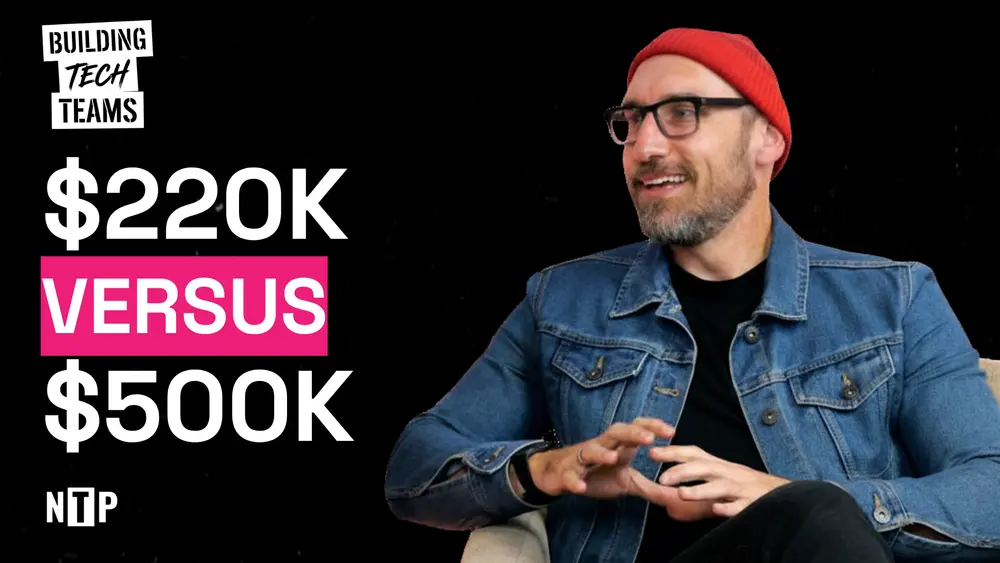 ▶
 ▶
 ▶
 ▶
 ▶
 ▶