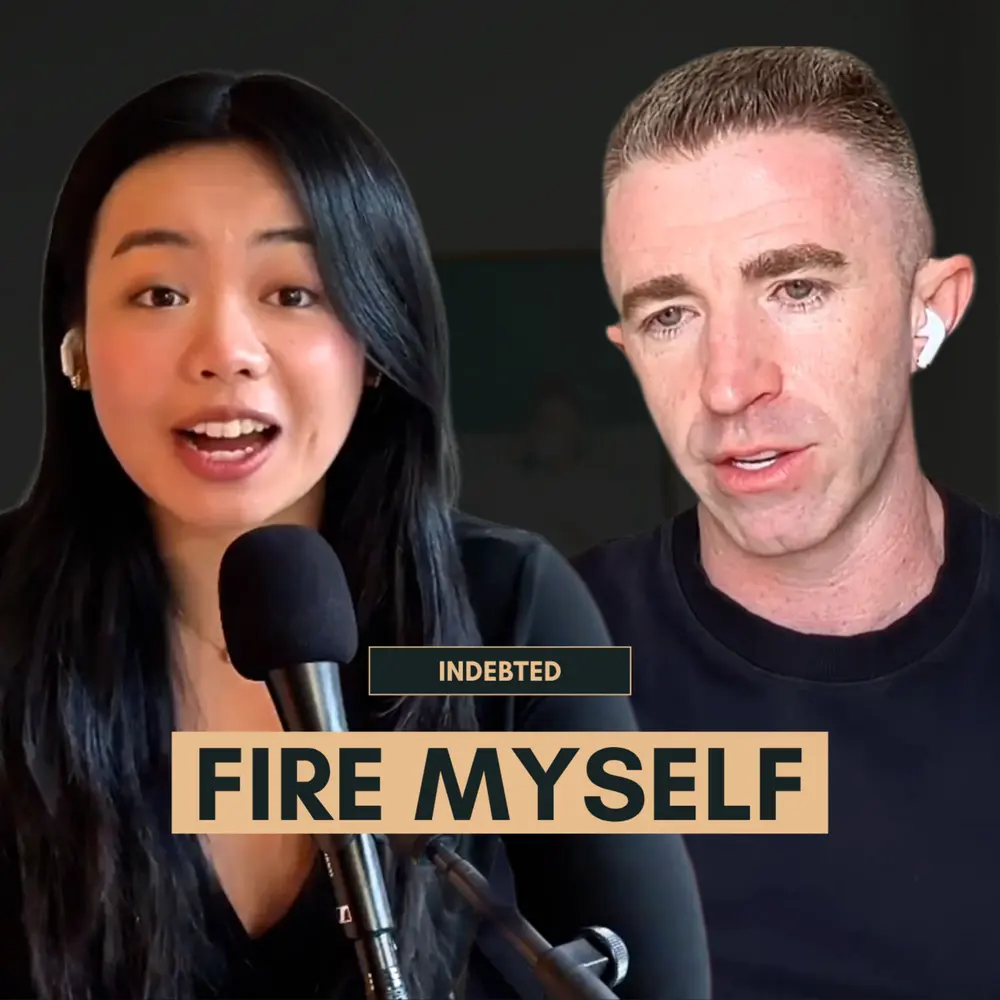
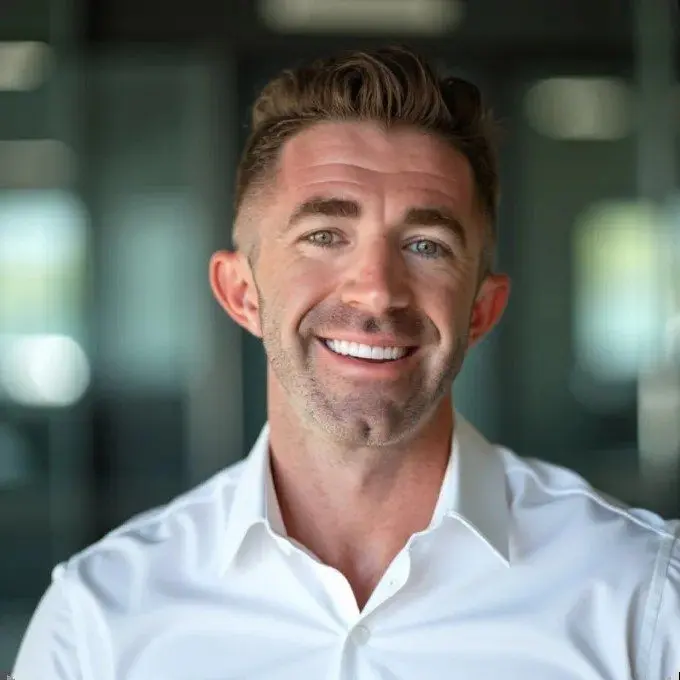
Josh Foreman built InDebted from $12 in first revenue to over $1M a week profitable, 200 people, $350M valuation then voluntarily stepped down as CEO to rebuild the company from scratch. The trigger: realising the version of himself he fears most is a leaner, AI-native founder starting today with nothing to protect.
Josh is the founder of InDebted, an AI-enabled debt collection platform operating across 7 countries. We cover the three reasons he stepped back from CEO, why organisational debt terrifies him more than tech debt, how InDebted humanised an industry built on aggression and harassment, the buy vs. build decision on voice AI, and why he tried to change his pricing model 15 times then went back to the original.
Chapters
0:00 Intro 1:07 The AI Threat 2:29 Stepping Down 4:48 Org Debt 7:54 Meet InDebted 9:29 Rethinking Collections 13:03 Voice AI 16:29 Pricing Wars 19:04 Builder vs CEO 22:06 The Factory 23:36 Trust Your Gut Transcript Search or select a timestamp to jump ▾ 0:00 Josh Foreman: I have to think about a world where the business exists without even me in it. 0:04 Thea Ngo: This is probably one of the craziest stories in the SaaS apocalyptics era. 0:08 Josh Foreman: I don't want to get to a position in 3 years' time and go, I didn't work, but I only gave it like 50% of my time. 0:13 Thea Ngo: 10 years into building one of the biggest debt collection software companies in the world, then he stepped down as CEO to rebuild it from its core in an AI-native way. 0:24 Josh Foreman: I remember the first collection like it was yesterday and making the first like $12 of revenue. And today you fast forward and We make over $1 million a week of revenue. That new person that you meet for 15 minutes, they've spent 15 minutes and you've spent 50,000 hours. That sometimes you need to trust a little bit more. 0:41 Thea Ngo: The company is already doing $80 million in revenue, valued at over $350 million and profitable. Yet he's taking a step back to rebuild from its core. This is how SaaS founders are staying competitive in the era of AI. 0:56 Josh Foreman: My biggest regret was probably— my name is Josh Foreman, the founder of Indebted, and this is Founders in Motion. 1:06 Thea Ngo: You said publicly that the competitor you're most scared of, it's a lean AI-native version of yourself starting today with nothing to protect. So when did that realization land? 1:17 Josh Foreman: I would say it became very evident from end of last year, early into the start of this year, where I think like a lot of other sort of founders, that we noticed that the quality of the AI tooling got so much better. Yeah. That for me was a big sort of push that like, I have to make a decision on how much time I'm gonna spend back on the tools. So I started making a concerted effort to, you know, clear my calendar a little bit more and have more time doing that. And then started to be able to see just how much you could get done and how much you could essentially build with less resources. And that sort of then started to, constantly have me thinking about what if this was the first year that I founded the company, it wasn't 10 years ago, and what, how different would that first 3, 6, 12, 24 months of getting the company off the ground look like? And that was where I think it sort of hit me and just said, okay, wow, like, I know personally, I would have been able to go a lot further with a lot less. 2:20 Thea Ngo: When you think about the approach to make Endedit more AI native, so you took quite a drastic approach, stepping down as CEO, focusing now on product development. Why the decision? And what do you think are core fundamentals that lead you to make that decision? 2:37 Josh Foreman: Yeah, I think there's 3 things for me that stand out. So the first one is, is the company itself, and then what does it mean to be the CEO of that particular company? So I'd say, like, the first thing straight away is that I don't necessarily know that has to be the approach for everybody. But I think being the CEO of Indebted, requires a lot of the other non-technical components of being a CEO, just because of the nature of the type of business we are and the sort of reporting structure, et cetera. So that's one part. I think the second is the stage of where the company's at. You know, partly maybe it was sentimental, but it's 10 years since starting the company. And invariably, I start thinking about 2 things, which is what is the right sort of, you know, path to make sure that the business has an ability to continue, you know, on with or without Josh. One thing I didn't realize when you said— when I started this journey is that you always think of like there being a clear start and a clear end. Yeah. Now I'm so confident on the ability for the business to compound over the long time— long term that I have to think about a world where the business exists without even me in it. Um, whether that's me because I wanna go do something else, or whether it's me just because literally I'm not here anymore, I wanna be able to see this idea that the company could go on for, you know, decades or centuries. And so therefore you start to think a little bit differently. And so that has definitely caused me just to start to think about how do I decouple, you know, the need for it being myself. And then the third part is I just think the challenge is incredibly hard. I think the— 4:12 Thea Ngo: Yeah. 4:12 Josh Foreman: Embedding the AI component into the product roadmap, I think we've done an incredibly good job of that. But I am concerned on how difficult it will be to rebuild things that have been around for 10 years. Everyone always talks about tech debt and organizational debt. And I just think it's gonna be a really, really hard challenge. And I need to be able to give absolutely everything I have in order to know if I can do this. And there's only one— I don't wanna get to a position in 3 years' time and go, I didn't work, but I only gave it like 50% of my time. I did it part-time. I want to know whether it works or not, that I gave it everything. 4:47 Thea Ngo: As a whole, there's this whole gigantic rhetoric of SaaS apocalypse, SaaS is dead. 4:53 Josh Foreman: I think there's elements where you can look at one particular product and we could say, okay, well, maybe you don't need that product in an AI world. And I think absolutely there's examples of that. But I think putting every single SaaS application into a bag and going, this whole thing's crap, I think is just insane. Because obviously they're the best companies that have ever existed over the last, you know, decades. That being said, one of the things that is where I put my time and focus on is what these organizations, these AI-native organizations fundamentally look like. 5:26 Thea Ngo: Yeah. 5:27 Josh Foreman: And why is it that they're able to achieve things at such a fast period of time? And what's the nature of that? And one of the things that just sticks with me a lot is that the companies themselves will look so different in terms of how they're constructed. Less people, yes, but less people also and different types of people doing different types of roles and constructed in certain sort of ways. And I think one of the things that the market as a whole is looking at and saying is, well, these companies have far fewer people in order to get to these incredible revenue milestones and are doing them faster than we've ever seen before. 6:05 Thea Ngo: Tech debt is quite a big hurdle to overcome. When you think about that on like a practical sense, do you think tech debt is actually something that is that difficult or are people blowing it out of proportion? 6:21 Josh Foreman: I think tech debt's not too bad, depending on the org. Obviously, I haven't seen everyone's sort of codebase and stacks, but I think there's org debt, organizational debt, and that's the one that I freak out about. Systems and processes that exist outside and around the product that, you know, you haven't looked at from a technology lens. You can take any part of the org, it doesn't matter whether it's accounts payable or recruitment, and chances are it's a fairly— it's definitely probably not AI native. It's potentially tech-enabled at best, or using some sort of software platform or SaaS platform, but you haven't had the opportunity to throw engineers at that and say, okay, what's What's the way that we're gonna do this at scale and make that work really differently? And again, I go back to my hypothesis is that these AI-native businesses have started fresh and go, okay, well, I need to scale from 1 person to 50. Yeah. They haven't probably gone and reached for the same, you know, HR system that Indebted and most of the other companies use, and they haven't approached it in the same way. And we can now look and see that they've been able to attract incredible talent and do it very quickly whilst remaining incredibly lean and fast. And so I think the tech debt piece is a real thing, but I think it can be overcome. We haven't yet seen real cases of people overcoming or getting through the sort of the org debt. And that's the part that is front of mind for me. 7:53 Thea Ngo: Before we go any further, for someone who is listening that has not heard of Indebted, what do you guys do? 8:02 Josh Foreman: Yeah, so think of us as an AI-enabled debt collection business, which is definitely not the sexiest of industries by far, but is a fundamental part of the ecosystem of how credit is extended. Started the business 10 years ago with a belief that technology could transform that and do so in 3 ways. The first is it's a— has always been and still is largely a human and analog process, people on the phones chasing people to pay their bills. Yeah. And we thought that's got to be able to be digitized. The second is it's a very very unsophisticated process. And we thought at the time machine learning represented the biggest opportunity. And now we think AI is the next lever to that. And the third is it's a very ugly, seedy industry, to be honest. Like part of that is honestly because there's never been this idea of customer experience, right? Like you don't think of it as the same way you or I would if we went to like a really good hotel, right? Insert name, like Four Seasons. You don't go, ah, I'm gonna get the same type of experience at the Four Seasons I am with a debt collection company. But why not, right? Like, why can't you be respectful and treat people with empathy and provide a really good user experience? And so those were the 3 things that we thought about. And, you know, somehow we've failed forward into a business that I think has done a really, really good job of that. We have a long way to go, but we help millions of people every year go through that process in a far better way than they have before. 9:26 Thea Ngo: Talk to me a little bit about that. So obviously debt collection carries this very specific reputation, right? So being very aggressive, dehumanizing, and in some cases, slightly violent. What were some of the changes with software that you were able to do to create a more positive experience for both parties? 9:45 Josh Foreman: So one of the things I think is helpful for the audience to understand is that someone is technically in collections from the moment they're one day overdue. There's a lot of reasons why that could happen. So potentially there wasn't money in an account or a card was declined or just traveling or I was busy building a company and I forgot to pay my bills, which ironically happens more than you'd expect. And so that in itself means that this idea that the human that is in that process is some type of, you know, archetype of person who doesn't wanna pay their bills or is incapable, I think is one of the first things. And so how do you— so the question is, how do you identify people onto that sort of quadrant? And we look at it in sort of these 2 axes, which is What is that person's capability to pay? Like, I actually have the money, I want to pay it, or how do they have the money, rather? And then the second axis is their willingness to pay. Yeah. So I do want to pay. So in the top right-hand corner, you have Josh has money to pay his $30 bill and wants to pay it. That user experience is then very different. So if the way that I have to pay it is print a barcode and go to Australia Post and scan it and give cash, Wow, that is a hard process, right? And so, like, don't expect that to be reflective of my, you know, capability or willingness, but you haven't necessarily made it easy versus an SMS with a link and then I double tap with Apple Pay while I'm walking down the stairs to grab a water. That's a totally different experience. And so we can change that. And then you've got to identify people, you know, on the other spectrum, which is maybe they have a willingness, but they don't have a capability. Maybe they haven't been paid on time or there's a mismanagement of funds and things like that. And so at its core, what technology allows us to do is to understand, well, where do we think people are on that quadrant? Yeah. And as we engage with them, even if they don't realize it, they're giving us signals as to where they may be on that quadrant, and we can use that to change how we engage with them. And so one of the examples I'll give you is, Let's say in Australia for a traditional bank, if you haven't paid after 90 days, they commence a lawsuit. Well, what happens if you were in Europe during that 90-day period and the only way they were contacting you was via a phone and you happen to have a different SIM and they didn't email you and they sent you physical mail to your address in Sydney? The hypothesis would be we need to sue this person because they're absolutely not willing to pay. Yeah. But they could theoretically be sitting in a villa in Italy having a great time enjoying a holiday and be like, oh, I just didn't know. And so if you flip that and think about emails, text messages, phone calls, etc., happening during that process, if you know the phone is not ringing, the SMSs are not being clicked, the emails are not being opened, it allows you to draw a very different conclusion as to maybe what that person's aware of and therefore how you should engage with them. 12:43 Thea Ngo: I think I might have landed in one of your debt collection pools at one point. 12:49 Josh Foreman: I have too, actually. 12:50 Thea Ngo: Oh, really? 12:51 Josh Foreman: Which is pretty funny. Yeah. 12:53 Thea Ngo: Well, then, you know, it's working, so that's good. 12:57 Josh Foreman: Exactly. 12:58 Thea Ngo: And I'm so curious since you mentioned the idea of like calling. So I think traditional debt collection is very focused around like calling and making sure you're reaching people via their cell. Do you see voice AI playing a big role into the evolution of the company? 13:16 Josh Foreman: One of the biggest. Yeah, we're spending a ton of time in this area now. I think it's the final frontier for technology to own 95% of the collection stack. I'm very bullish on it. One of the things that was so unprepared early on in the journey of the business was this idea that, yeah, you have to pester people, you have to call them to get them to pay. And what turns out is that people really don't want to have a conversation about this. But there are a percentage of people that need to have a conversation for whatever reason. And I always use this analogy, but ideally when I book an airplane flight, I do not wanna speak to somebody, right? I wanna go into the Qantas app or the Emirates app and make a booking and whatever. If you have to call, it's usually for a very bad reason, right? Plane's been canceled last minute, someone's lost my baggage, I can't do it through the app. I always ask myself, would I prefer to be able to call, have an AI agent answer me within one dial, solve the entire problem and have me off the phone for 5— in 5 minutes, or the experience that you and I are familiar with when you have to call an airline, which is like a 90-minute wait period, chaos, is it— no one's gonna wanna do it, right? And I think the same is gonna be true for debt collection. And there's too much belief that the humans will overwhelmingly not wanna have that conversation with AI agents. And our early data suggests the complete opposite. And So we're investing in a big way. 14:39 Thea Ngo: That's definitely super exciting. And I will say, I always, I also fall into the camp of I would love to talk to AI. So at least you have one customer that's very happy with it. Awesome. I wanted to understand, like, when you think about a new technology frontier, like voice AI, what's the choice between buying versus building internally? 15:00 Josh Foreman: We've done both. I think early on, the The humble answer is we just have no idea. We just went down an approach which is let's do both. Like, let's go to market and find what's the best. And then through that process, let's learn. Let's also build and test and understand it. What I've learned over the last, particularly 90 days to 180 days, because we've been very deep in this process recently, is that voice AI is a multi-layered sort of system of complexity. So things like text-to-speech, we are not gonna be the best in the world at that. There are phenomenal companies out of the Valley doing incredible stuff, raising awesome rounds. Let's use those products. What is the right way to engage a customer for collections and be the best at negotiating those outcomes? I think we have a proprietary dataset that allows us to be good at that. And so I'd say it's build in our case, But with a very big asterisk above it, which is building using industry-leading layers of the stack to help us do that. 16:06 Thea Ngo: I think voice AI at the cursory lens, you would think it's super easy, but I just had a conversation with someone also building voice AI in the Valley, and the tests and developments and all the interchanging and all the small little tweaks that they do is actually very meticulous to get to to get to an answer that sounds like a human. So you guys have quite a unique pricing model for like a software stack. You charge not on seats, but charge on results from very early on. Why did you guys make the decision and what has that done in terms of helping the business grow? 16:42 Josh Foreman: I have, I have so many mixed feelings about this one because it's been a huge challenge of, of growing the business. So the industry as a whole operates on this contingency performance model, generally speaking. which means we take a percentage of the dollars we successfully recover, and if we don't make— we're not successful, we don't get paid. It makes 100% sense why the industry operates that way because it basically just comes down to accounting standards. But once accounts get to a certain age overdue, in majority of the markets around the world, global accounting standards require you to write those accounts off. And so no good thinking CFO is going to go, ah, I should spend a dollar chasing an account that I just lost $100 on, right? So again, someone a $100 loan, I had to write it off. Now I've lost $100. The stupidest thing would be to spend a dollar to go and get it because now you just lost $101. So you're increasing your potential loss pool. So that makes a lot of sense. Venture investors did not, did not think so in the early days of growing the business. And I understand why, predictability, recurring revenue, etc. So we spent a lot of time trying to make a different way. And it was, that was a mistake, big mistake. And you try to push too far against the grain, you try and get too creative. You don't just accept the reality for what it is, which is this is still an enormous multi-hundred billion dollar, you know, TAM of revenue. And one of the things I love about the whole AI world now is all of a sudden seat fees are no longer cool and everyone loves predictable sort of like, so somewhat predictable, but outcome-based revenue. And so we align with that in a really, in a really good way. It's a very nice thing for Indebted when we can say to a client, we helped you recover $100 million last year and we kept $10 and we gave you $90. And most of that was all written-off debt. There's now $90 million of new revenue into your business and we got $10 million and we took all the risk. It's just such an easy way to align incentives and outcomes. 18:47 Thea Ngo: Isn't it great when the tides turn back to your favor? 18:50 Josh Foreman: So good. So good. 18:53 Thea Ngo: And I mean, you are one of the biggest debt collection software companies in the world, so maybe there is something to the pricing model itself. So you scaled Indebted from a solo coder in 2016 to a global company with over 200 people across 7 countries. Somewhere in there, you transition from builder to CEO. So, when you went through this transition of being a CEO and having all of these additional responsibilities on top of just building the software, what was that like? Did you enjoy the transition? Did 19:29 Josh Foreman: you— I did enjoy the transition. I think it's always, I think one of the things you have to lean into when you start a company and it starts to scale is you as an individual. will need to change. But I know one thing is true. I love the early stage of building. I love the early days. Like, you know, as you recruit different people, you find people are good for different parts. I think I can clearly scale because we've been through the journey. But I just have like a love for those early days, like a nostalgia when I think back into those times. And not to be, you know, against the reality as well, it was very hard. Didn't have a lot of money and no one earned any good cash. And it was, there were tough days. And very, very difficult, difficult times. But I, I like to be in the engine room and see something come to life, if you will. Um, I remember the first collection like it was yesterday, um, and making the first like $12 of revenue and being like, that was the coolest. Um, and it, it honestly, it meant more. I remember, yeah, the first dollar, and I also remember the first million dollars collected. We have a video of myself and a few other team members, like 4 of us at the time, and I think we popped a bottle of Moët and like celebrated because we collected a million dollars. And today you fast forward and we make over $1 million a week of revenue. 20:43 Thea Ngo: The early builder's day sounds amazing. Was there ever any conflict or tension between like your builder side and your executive management side of things? 20:55 Josh Foreman: There has been, was, and is in that I lean into problems in a big way and I get a lot of self-reward and satisfaction from solving complex problems. So I don't do well as an executive working with other executives who are scared of, I use this terminology a lot, but like just staring into the abyss and chewing glass, I think is, you know, I am definitely not the best engineer. I'll be very clear on that. My biggest skill though, I think, is that I'm technical enough, but I also have a good commercial acumen. And so I think from a product perspective, what that's allowed me to do is I'm not the engineer that pats myself on the back because I think the code's really cool. I'm the one that pats myself on the back because someone just paid us some money for something that we built. And that's the part that I can bring and have always brought to the team. And it's the balance between, again, that executive side of, I know my investors want to see X million in ARR or whatever it is, and how do I translate all the way back? And then I'm in front of a customer and going, well, If I just build them this, I can get said number, and then I can achieve said goal. And so that's sort of where those two have worked well. 22:06 Thea Ngo: If the refounding journey works, what does success look like 2 years from now? 22:11 Josh Foreman: All companies are a factory, and our job is to produce a widget. And we should have a brand new factory and produce widgets at speeds that seem like completely impossible to the business that we are today. So, And the reason I use that analogy is I don't want to get too caught up on revenue growth rate numbers and revenue per employee, all of which are important and have KPIs for all of them. And I want us to hit them all. But I want us to be able to go, like, whatever it is that we produce in the company, let's say it's a line of code or product, a hire, a performance review, I want us to think about it as, well, how long did it take us to do, let's just use performance review, that process in the company before. And today, I'll be honest, it feels a little bit like a conveyor belt bringing luggage out of the airport. I want to see it being like one of those high-precision sort of things being stamped out of a— so that's how I want the company to be because I think if we are doing things like that, it means we have mastered the automation component. We could harness all of the brainpower of everybody in the company and say, guys, let's focus 100% on this problem and go and solve that. And that's the next unlock for the company. 23:29 Thea Ngo: I'm excited to see this factory come to life. You can spin out widgets super quickly. So in the past 10 years, what do you think is your biggest regret in your founding journey? Something you wish that you knew, something you wish you could avoid it? 23:45 Josh Foreman: My biggest regret was probably the times where you haven't entrusted the instinct as much. And even though I had done businesses, a couple of businesses before that were successful, and Detta was a different level of scale and success in terms of where it is, that you invariably doubt yourself quite a bit during the journey. And you do it because you meet people that you overwhelmingly respect, and then they say something, and then you sort of sit up at night and be like, have I got the idea wrong? So an example is like you mentioned on the pricing, the amount of times that I met VCs where I was like, oh my God, like that's this person, you know, like they run this firm and they've invested in these companies and they go, your pricing model sucks. I would never invest in that company. And then you go home and you're like, you know what I should do? I should— they're right. I'm just gonna convince an entire $170 billion machine just to just completely change overnight because Josh says so, because this person says so. But they haven't had, you know, they only got to meet me for 20 minutes and they didn't get to understand the industry. And you go down some stupid rabbit holes and you do some stuff that ultimately you get to where you are, we are today. And it's like, it's the same freaking pricing model that it was when we started. And I attempted to honestly rebuild that 15 times because of feedback from people. I look back and I regret it because I wasted not only my time and emotional energy and things like that, but it also causes you to make the wrong hire. And then you gotta get rid of that person and, or you make the wrong decision, you waste $1 million or $5 million. And it's just, I think for founders, There's one thing that you definitely have over everybody else, which is you spend more time on this thing. It's your baby, it's your child. And so if I had to cumulatively add up the number of hours I've spent on Indebted, there's one thing for sure, no one will ever spend more time. And so that doesn't mean you're perfect on it, but it means there's certain things about like how the machine operates and your intuition on how the company should move forward that I think if you looked at it, you know, in some sort of metric scale, that new person that you meet for 15 minutes, they've spent 15 minutes and you've spent 50,000 hours. That's 50,000 hours in front of clients and customers and investors and pitching and things like that, that sometimes you need to trust a little bit more. And for me, it's, yeah, like some of the worst moments, some of the dumbest decisions and things I've made are because of those conflicts where it's not really a conflict on data, it's a conflict on this person that said something and you go, I just think they're the best person. 26:18 Thea Ngo: I think trusting your instincts is really difficult, especially starting out, because you do suffer from a lot of self-doubt, especially when you haven't seen the fruits of your labor start to manifest or the fruits of your decisions start to manifest. Okay, Josh, I feel like I've learned a lot about the founding journey, and I'm so excited to see the next version of Indebted. 26:39 Josh Foreman: Thank you. I really appreciate it. It's great chatting to you today. 26:42 Thea Ngo: That's a wrap. If you like this episode, please hit the like and subscribe button. It helps us bring on more awesome guests, level up production, and bring on new series you'll want to watch. And if you want to hear more early-stage builder stories, check out our other episodes. Okay, see you next time. No transcript lines match that phrase. Try fewer words.



 ▶
 ▶
 ▶