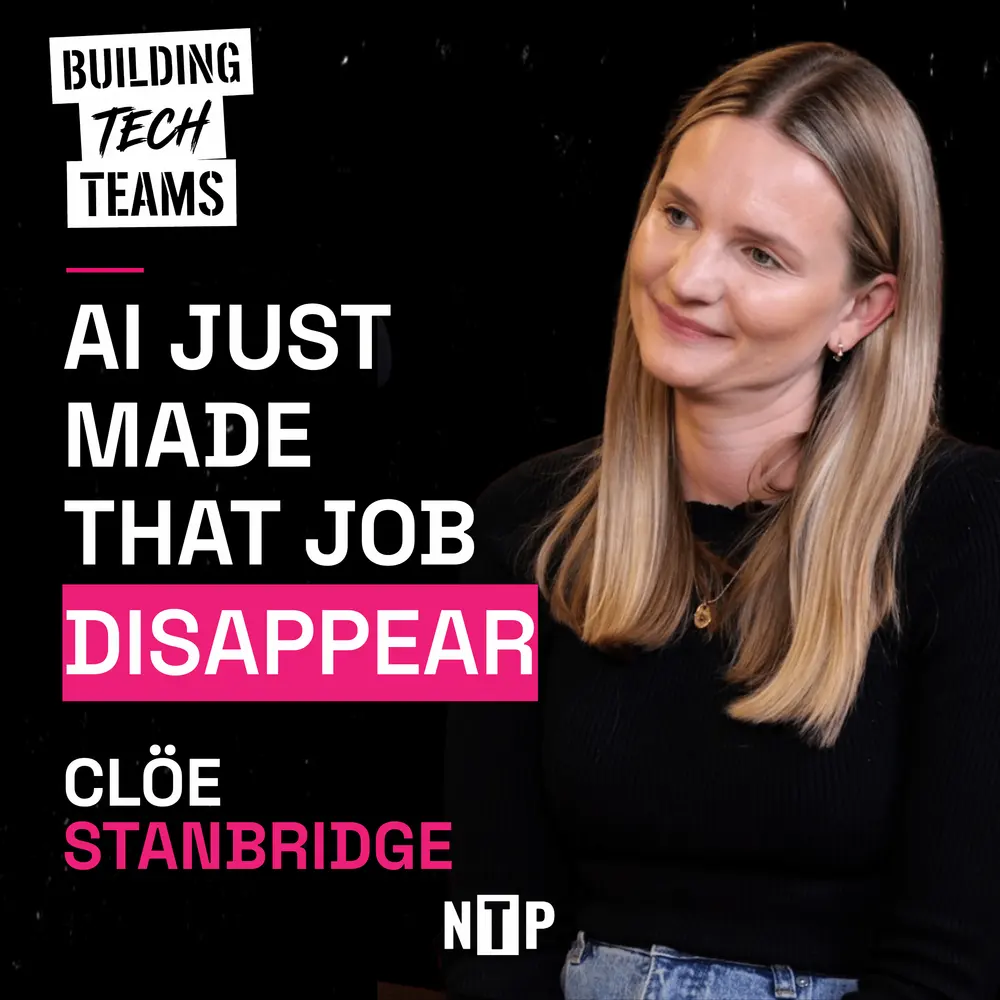
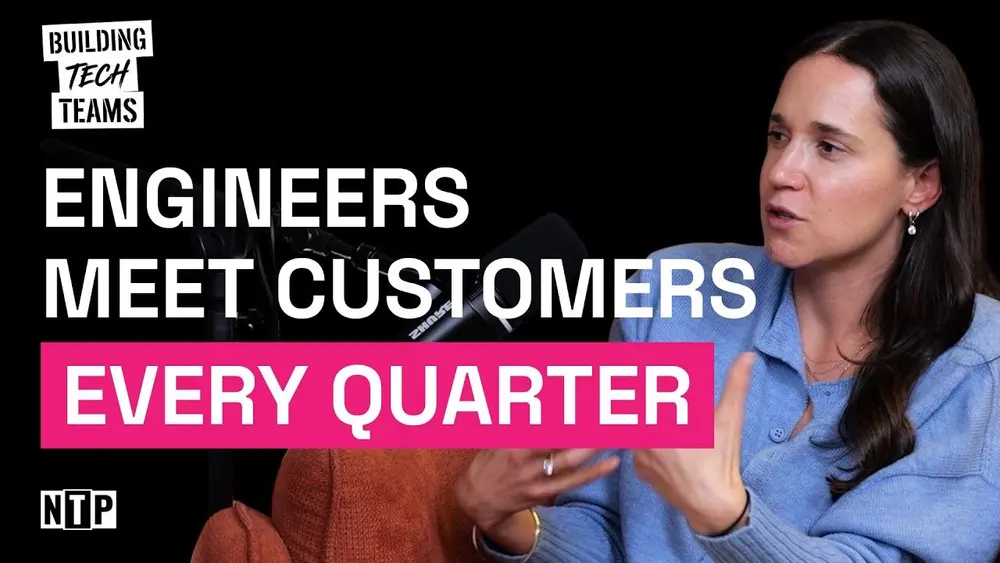
“Everyone can build. Not everyone can sell.” — Cloë Stanbridge The junior engineer used to be the safe first hire. Cloë Stanbridge says AI just made that job disappear, and that’s only the start of what’s rewriting tech hiring right now.
In this episode of Building Tech Teams, James MacDonald sits down with Cloë Stanbridge, Talent Lead at Airtree, one of Australia’s most active venture capital firms. Cloë spends her days helping early-stage founders make their first engineering hires and helping later-stage companies scale their teams. They get into what actually makes a founder an “outlier” worth backing, why some founders eventually have to admit they’ve become the bottleneck in their own company, why the traditional junior engineer role is disappearing, and how Airtree’s new Frontiers program is drawing hundreds of applications from engineers ready to go out on their own.
It’s a hiring-trenches conversation full of specific, hard-won detail: the real numbers behind scaling a team from 60 to 350 people, why some recruiters place better talent because they simply know the team better, the AI tools on both sides of the hiring desk, and the line that sums up what’s actually scarce in tech right now — everyone can build, not everyone can sell.
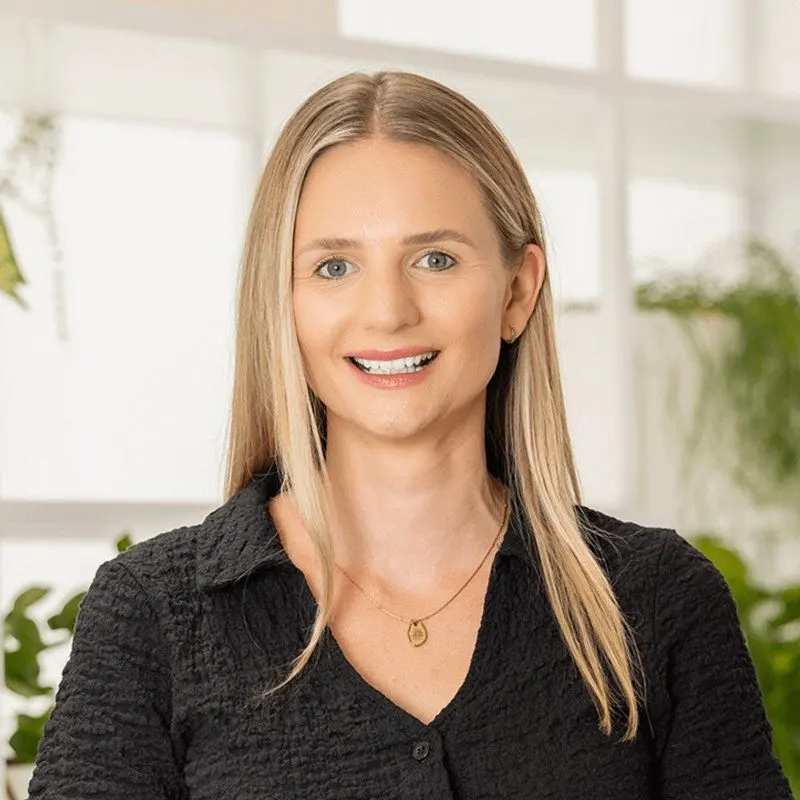
About the guest Cloë Stanbridge is Talent Lead at Airtree, where she partners with the firm’s portfolio to connect founders with top talent, build scalable hiring processes and develop playbooks that support sustainable growth. Before Airtree she spent over four years at The Lab17, embedding inside scaling companies including Linktree and Immutable, and led talent through a hypergrowth stretch at SafetyCulture, taking the engineering team from around 60 people to 350 in two years.
About the show Building Tech Teams is hosted by James MacDonald, Managing Director of NTP Talent, and produced by Day One®, the team that helped build Blackbird Ventures’ Wild Hearts. Sister shows include First Cheque, Oversubscribed and Pick My Brain.
Chapters
0:00 Cold open: why the junior engineer is disappearing ▶ 0:40 What this episode covers ▶ 1:40 Welcome: Cloë Stanbridge, Talent Lead at Airtree ▶ 1:56 A day in the life of a VC talent lead ▶ 2:10 Investing from pre-seed to growth stage ▶ 2:57 How talent gets involved at each stage ▶ 4:15 What makes a founder an “outlier” ▶ 5:02 Hiring the first few engineers ▶ 5:48 Case study: scaling a young founder’s team ▶ 7:39 When a technical founder gets pulled in every direction ▶ 9:01 Hiring junior engineers in the age of AI ▶ 11:03 Why “junior” now means doing mid-level work ▶ 12:05 The fear of hiring someone more senior than you ▶ 13:02 When founders step back into R&D ▶ 13:32 Zero-to-one vs. scaling personalities ▶ 14:08 Inside Airtree’s Frontiers program ▶ 15:24 Why engineers are leaving big companies to found startups ▶ 15:57 Retention, ESOP and leaner teams ▶ 16:45 Why managers now need to be hands-on architects ▶ 17:25 Why no job is safe from redundancy anymore ▶ 18:39 The squeeze on middle management ▶ 19:34 Hiring people leaders too late ▶ 21:34 What actually keeps people “sticky” ▶ 21:58 Leadership lessons from Brené Brown and Kim Scott ▶ 22:41 Embedding inside scale-ups at The Lab17 ▶ 25:15 Setting a new hire up to succeed, or fail ▶ 27:49 How the market flipped after COVID ▶ 28:21 When a huge engineer salary is worth it ▶ 31:08 Competing with Silicon Valley salaries ▶ 31:37 How Linktree built culture as a differentiator ▶ 32:52 Cash versus flexibility in a cost-of-living crisis ▶ 33:40 Being upfront about the grind before they sign ▶ 35:20 Remote work and the culture question ▶ 36:55 Why go-to-market matters more than ever ▶ 37:46 Expanding into the US market ▶ 40:10 Do founders have to relocate for funding? ▶ 41:34 Bringing Australian talent back home ▶ 42:36 From 60 to 350: scaling at SafetyCulture ▶ 47:04 Why recruiters need to know “their dog’s name” ▶ 47:46 Being a thought partner, not a salesperson ▶ 48:47 Hiring for potential over a checklist ▶ 50:39 Why problem-solving beats a technical checklist ▶ 51:47 How AI is changing technical interviews ▶ 53:38 Trial days: hiring by actually working together ▶ 55:25 Screening out “AI slop” in applications ▶ 56:21 Spotting an AI-written cover letter ▶ 57:34 Using AI without losing the human element ▶ 1:01:58 Wrap-up and thanks ▶ Transcript Search or select a timestamp to jump ▾ 0:00 Cloë Stanbridge: There's no need for a junior engineer anymore because those tasks aren't needed anymore. So the junior is now a mid-level, so to speak. 0:05 James MacDonald: I think there's some real advantages on the flip side of the death of the junior engineer. The flip side is you're getting a junior engineer who potentially comes in as a mid, but you're still paying them junior engineering rates. 0:18 Cloë Stanbridge: And we're seeing it definitely across some of our young, young-founded companies. It's just kind of moving away from, you know, that care factor in a company. And I think it is a bit of a level playing field now because it doesn't matter if you're in a startup or a growth company or big tech. It's a really hard thing now, and companies maybe need to take a bit of a step back and a reset and understand how they're gonna keep their workforce. I don't know, this is— it's a huge topic. 0:40 James MacDonald: That was Chloe Stanbridge. She leads talent at Airtree, one of Australia's best-known VCs, and her job is a role that most people never see— helping founders make their first hires, helping companies scale. These early hires are the ones to decide whether a company's gonna work. So in our discussion, we get into what the outlier founders have in common, why the first engineering hire is a choice between someone who's scaled it before and grads and juniors who might live fast and live in the work. What Chloe looks for in junior engineers now that AI's changed what a junior actually means. And what to do now with your best engineers all having tools to go out and build their own companies on a weekend. How do you deal with that? Chloe was also one of the only tech recruiters at SafetyCulture when they grew from 60 to 350 people in 2 years. So she's been inside companies through growth, through scale, and set up those people and hiring practices. This one's for anyone who's making hires within their company, looking to grow and scale their tech teams. Let's get into it. 1:39 James MacDonald: Welcome to another episode of Building Tech Teams. And on today's episode, we have Chloe Stanbridge, Talent Lead at Airtree. Welcome, Chloe. 1:46 Cloë Stanbridge: Thanks, James. 1:47 James MacDonald: Airtree, probably one of Australia's biggest and most well-known VC companies, invested in plenty of big success stories here. 1:55 Cloë Stanbridge: Yep. 1:55 James MacDonald: What's a day-to-day look like inside a talent role, talent lead at Airtree? 2:01 Cloë Stanbridge: Very varied. And I've been there about 18 months now. So it's varied over my 18 months, really just following the investment team, the trends in the market. Right now, we're investing a lot in very early stage, pre-seed and seed rounds. So I spend a lot of my time with those founders, deep tech, biotech, still some SaaS in there as well. But helping them attract great talent, leveraging our great network to be able to find great talent for them, building out simple processes so they can make sure they're hiring the right people, and also just advising on kind of absolutely anything talent-related. So I'd say that's maybe 60% of my time being pretty hands-on with them, and then the rest is again leveraging our network, exec talent, mostly CTOs, VP of Eng, amongst go-to-market and ops as well, and making those direct intros. 2:57 James MacDonald: You're talking about the real early stage. Do you get involved with looking at the teams, the construction of the teams when you're actually considering them as a company to invest in? Or do you get involved at that next stage? Yeah, 3:12 Cloë Stanbridge: it happens in a few different ways. So we have kind of 3 core focus areas. from the investment team. One is very early stage. We want to find outlier founders. We wanna back them to build great teams, great products, great companies. But they don't need to have it all worked out, obviously, at that early stage. And then we want to build that relationship with them and go through their entire journey with them. Or we go in at venture, which is Series A. And maybe we missed out, or maybe they didn't do early rounds. and build with them from there. Or maybe there's large companies that we had maybe missed out on, or, you know, looped back to and want to invest at the growth round as well. So it's different for every stage. At growth, there's a lot more due diligence done from the investment team, and also sometimes from a talent perspective, but I would do less with those companies. They've got their own talent teams, they know what they're doing, they've got brands and markets, etc. Um, but it's more so the early stage. But usually when we invest, maybe there's 2 or 3 people, but it's usually just the founder or founders. 4:15 James MacDonald: You mentioned the word outliers for those early stage. Any personality traits that you look for in particular, commonalities between the ones that have had success for those outliers? 4:27 Cloë Stanbridge: There's a few things that the investment team would have. And again, we've got 6 partners, we've got 4 principals. So again, they're all running their own investments end to end. So they would have their own personal take, but the common threads that I've seen is, high agency. Um, a lot of them have worked in, you know, some of the great success stories here in Australia, New Zealand as well, and they've been exceptionally well referenced in terms of growth mindset, great culture fits, you know, just building great teams, etc. Um, and just super smart. 5:01 James MacDonald: When you look at that next stage and they're going from a single founder, and especially if you're mentioning deep tech, we're talking about people that ridiculously talented. Yeah. They've got a nice niche, they know their space really deep. And you look at that next hire, that next 2 or 3 hires, how do you go about helping those teams build from a team of 1 or a team of 1 and 2 to add that next couple of people to the team, which can be the difference between them having success or not? How do you go about that? Is it different company to company? Are there person— back in the days it used to be, you have to have a technical co-founder. It used to be a team of 2, it'd be a founder and a technical co-founder. Just keen to understand any commonalities, any key pieces of advice that you give. 5:48 Cloë Stanbridge: Airtree's always invested in tech companies, so predominantly there's already a tech founder in place, um, and that's the kind of starting point. From there, I see 2 very common buckets. One is they want to hire folks that have been there, done that. They've scaled, they've seen it all, and they have had a success story somewhere else, and they want to be a founding engineer, for example, and build all of that again. Or the second bucket is high potential, maybe has just recently graduated, can build things really fast, and is available 996. You know, so they know they're gonna get a lot out of that person. And I think there's 2 different founders that want 2 different types of people. Usually it's the more experienced founders that say, I want the experienced folks, 'cause they understand the value that they can bring. And usually it's the younger founders that just wanna go cast the net wider and bring on more people. I don't think there's a right or a wrong answer. It just depends on the company and what they need. But I would then look at the team And I can't share the name of the company, but I'm working with the company right now. And young founder brought on an experienced chief of staff, which is great to complement his skill set, has an incredible young team of engineers. And the next hire now that we're looking at, he thought he needed another mid to senior. We're like, well, looking at the team now, and he's technical himself, the amount of time and effort that he had to put into that team, and he's getting pulled now into onboarding and customer calls, et cetera. It's like, well, actually, I think now's the time to bring in a lead. who's still on the tools, deeply technical, but can level that team up for you so you don't have to. So I think it, yeah, of course it always depends, but they're the kind of 2 big buckets that I see across our portfolio. 7:39 James MacDonald: It's a really good point on that founder or that example in particular. If I get a technical founder, they're quite passionate about their area and they've built the company and they've built that while staying technical. Then they're getting dragged into different parts which aren't that technical. It's building team, it's the go-to-market, it's having to start and deal with finance et cetera, et cetera. Have you seen, or do you advise in a particular way on whether they wanna turn into that CEO and play across the board, or stay technical and hire somebody complementary to round them out? Is there a common trait, or is there sometimes you've seen one work better than the other? 8:15 Cloë Stanbridge: I think they've usually decided this, whether it's a single founder or 2 founders or more, they have usually decided that, and then they look to hire around that skillset. Like I think, Going back to your question around identifying outlier founders, I think one exceptional skill set for them to have is to know their strengths and know their weaknesses, and fill hard for those gaps. With that one, this founder in particular, he is the CEO, but he's also written most of the code base because they're less than a year old. But he is aware, he needs to be quite hands-on at the moment, and he's just working completely around the clock. But he's aware in terms of scaling that business and bringing on that leadership so he can start to hand over some of that. 9:00 James MacDonald: Back to the grads, or the, let's say, as opposed to going the senior role, we're gonna go the grads, more junior role. What do you look for in those grads? A lot of grads, there's a lot of conversations around at the moment because of AI, it's the death of the junior engineer. You don't need a junior engineer anymore. The seniors can do more and more. What do you look for in those grads? They can't have a wealth of experience. They don't have a resume that says they've worked XYZ. Maybe they've worked at McDonald's. They've done a university degree and maybe built something. What do you look for in those people? 9:34 Cloë Stanbridge: I think it's that piece you mentioned there, they've built something. So they care deeply about this. They're spending their free time building and experimenting with tools. I think gone are the days, you know, you finish an engineering degree and as you say, you go in as a junior engineer and you expect to be trained. There's not much of that anymore happening, and everybody needs to be contributing. And because of the tools nowadays, and because of the rate that everyone's learning, and because that's all happening at the same time, I think they need to be building and demonstrating their value. The question mark I have over that is, the senior engineers can verify and validate what AI is spitting out, because they know the fundamentals, and they've been in the game for a long time. But I don't know if there's a gap there in some of the juniors in terms of how do they know if the output, like how do they evaluate the output? 10:25 James MacDonald: Yeah. And just because you have increased output, is the quality there? Is it gonna live up down the track? 10:32 Cloë Stanbridge: Yeah. 10:32 James MacDonald: Is there a difference between speed and quality at the moment? 10:36 Cloë Stanbridge: Completely. 10:36 James MacDonald: Yeah. And I think that overlaid with, and why the conversation exists is around senior engineers understanding good quality software engineering practices, then overlay this quality tooling allows them to 10x. 10:49 Cloë Stanbridge: Yeah, 10:50 James MacDonald: the junior engineers that don't have the understanding of what software works in enterprise, what's scalable, what's secure, then overlaid with the tooling, they've just got the tooling without that understanding, without the war stories. That can be the challenge. 11:03 Cloë Stanbridge: And there's probably like, there's still a space for them in some of the larger companies because they can't move as fast or implement these AI tools or AI-assisted tools as quick. But I think in some of the smaller companies where they're starting zero with their codebase, I think, yeah, there's a— it's interesting just to see how all of that's playing out and how they're contributing. You know, there's no need for a junior engineer anymore because those tasks aren't needed anymore. So the junior is now a mid-level. 11:31 James MacDonald: Yeah. 11:32 Cloë Stanbridge: Chris Black. Yeah. So to speak. 11:34 James MacDonald: Yeah, I agree. And some companies can't afford a genuine mid-senior anyway, so they have to go with the junior. And I think there's some real advantages on the flip side of the death of the junior engineer. The flip side is you're getting a junior engineer who potentially comes in as a mid, but you're still paying them junior engineering rates. 11:49 Cloë Stanbridge: Yeah. 11:50 James MacDonald: There's some challenges with it, but there's some advantages as well to going that junior engineer approach. If you go to the senior, you're having a look at a founder's come up and they want to hire that senior to help upskill them. I think you've written previously around hierarchy, and the hierarchy— just because you sit lower on the chain doesn't mean that, you know, you have to bring less to the table, and the further up the chain you have to bring more. I'd just love to get your opinion on that? Because at the moment, I think there's some founders and even mid-later stage companies who have that fear around bringing in somebody more senior than them and willing to not hand over the keys. 12:27 Cloë Stanbridge: Yeah, like, I mean, it's a high risk to any business, um, especially if you're an inexperienced founder and you're the CTO. Like, yes, you're incredibly smart, but you just don't have that lived experience. And a lot of companies just don't want to make the wrong decision, because they know how detrimental that could be to the organization, to the engineers that they've— and the culture that they've built too. So it is hard for them. And then also, what happens to their role? Do they then go into a staff or a principal-level engineer, and then have to report to that person? So I completely get it. But it's those founders that have that self-awareness. And I spoke to a lot of them within our portfolio, And maybe they take that CTO seat until they get to a Series A, and then they realize that they become the bottleneck. And also they just haven't built engineering teams, you know, and thinking about all the things that they need to think about. And they actually realize at that point, I loved that build at the start. I want to now move into, you know, maybe an R&D role instead, which works really successfully. 13:32 James MacDonald: I love that. Love that approach because a 0 to 1 is very different to a 1 to 5 or a 5 to 50, right? And the 0 to 1 takes a particular personality type, which isn't for everyone. Mm-hmm. Have you seen on the flip side of that, back in the days it was harder to start a company, it was slower to build, it was more expensive to build. Now everyone can build. Do you face a challenge? You're obviously looking at the absolute best engineers for some of these big companies, the high-growth companies. Do you find challenges at the moment with those mid-senior level engineers who are working within them? that they're facing a pull to do their own thing? 14:08 Cloë Stanbridge: Yes, we have a new program called Frontiers, and we offer a safe check to founders. It's a quarter of a mil. It allows them to leave their day job. They get to be part of a cohort of other founders similar to them. They don't need to have an idea, but they work in the Airtree office once a— one day a week. And we have lunch, we bring someone in from our network to have a conversation with them, and we help them ideate and decide. Maybe it's co-founder matching. And when we put the applications out, I don't know, maybe 6 weeks ago at this stage, I think we got 400 or 500, which is insane. And I think like that is just one of the sheer like incredible things around AI. It's given people the motivation and the ability to be able to do that, where they just weren't able to do that before, because it would take too long to build a product and test it and go to market. So I think that's like, yeah, 100%, giving them the opportunity to do that. And then also, if you're in a much larger company that isn't moving at the same pace as a startup, and you feel like you're missing out because your company is constrained for whatever reason from using particular tools, you're going to want to step away. Like, I was speaking to someone in my network recently, and she said that she left her, you know, full-time startup gig. She was leading a team of 30, and she's like, I just needed time to experiment and like get back to what she loved doing and use all the tools. And it's insane because the amount of tools that engineers can use nowadays, but a lot of them, they'll be guided in their organization. You know, you must use Cloud Code, for example, or whatever it might be. So yeah, just to have that opportunity to spend the time to do that. And, you know, some of them end up becoming founders, yeah. 15:55 James MacDonald: On the flip side then, if you put yourself, you're advising a founder, you're advising a CEO of one of the companies you're invested in, they're at risk of losing these great engineers because they wanna do so. Potential CGT changes make ESOP less appealing potentially. How do we go about building culture, building upside for the people to stay within your company? Because I think you can talk about, you know, traditional things, maybe ESOP, salary potentially, but these people are wired to build now. How do we go about keeping those engineers within your company? 16:31 Cloë Stanbridge: I've seen this real trend now that teams are becoming leaner where, you know, obviously everyone's seen the redundancies that are happening across the market and it's happening, you know, sometimes across mid-management layer. And if you are a manager now in a tech company, you need to be hands-on. I remember going through this kind of change, I don't know, probably 8 to 10 years ago where they wanted to separate. If you're building, well then you don't have capacity to lead your team. And we had like cross-functional teams, engineering managers would just lead the team of 8 engineers. They work with product managers and the designers and make sure that there was velocity and they were delivering on time, et cetera. And now it's like, no, scrap that. If you're in a team, and you're at that level, you need to be an architecture— an architect. You need to be setting the roadmap and working with your engineers to get the best out of them. I think it means now that we're caring less about leadership and growing people and motivating personally and sharing candid feedback, which I think is a real shame. Then also introducing some of this more US 996 culture, And we're seeing it definitely across some of our young-founded companies. It's just kind of moving away from that care factor in a company. And I think it is a bit of a level playing field now, because it doesn't matter if you're in a startup or a growth company or big tech, you're exposed to redundancy in any organization, because things can change so quickly. 18:06 James MacDonald: Yeah. 18:07 Cloë Stanbridge: So it is, I think it's a really hard thing now, and companies maybe need to take a bit of a step back and a reset and understand how they're going to keep their workforce. But you also don't want to do it with golden handcuffs because you're going to have people that are clocking in, clocking out, and they're just there for the money. So, I think it's such a hard balance to get right. So, you know, they need to be motivated by the work that they're doing. They need to be around great people. They need to have flexibility that suits their lifestyle. Like, it's— I don't know, this is— it's a huge topic. 18:39 James MacDonald: Yeah, I completely agree because you mentioned the 996 as well. And you can understand why it's happening because of the speed everything's moving. Completely. And if you want to get any form of investment in your company, they want to see growth, they want to see you hitting outcomes, they need to see you moving fast because the global, it's moving so fast. But then your flip side of that is engineers are potentially going to move on. They've got more opportunities now and companies are spending less on leadership and less on management. The middle layer of management is the layer in danger, especially the non-technical people. They may have in the past been the best people managers. Yeah. Because back in the days you used to either go down technical route or a people manager route. I feel like that's squeezed. How do companies go about trying to continue to build that management if they're squeezing the roles? That's a technical— maybe they're worried more about the code than how the person's feeling, their mental health, whatever it might be. How do you see that playing out longer term, or how would you advise companies dealing with that? 19:34 Cloë Stanbridge: I think a lot of early-stage companies hire people and talent too late. I think they underestimate the value because maybe they just haven't seen what good looks like, um, or they just haven't thought, thought about it too much, which I think is a real shame. And a lot of them will use, you know, a range of different recruiters or embedded talent or whatever that might be, and just not having like consistency throughout. And same on the people side of things, like having someone early on who cares about this, whether that's a people lead or a head of people, or maybe it's a chief of staff who cares about this, or someone in ops. But putting lightweight programs and putting things in place. Going back to that company I was referring to earlier, they're in the deep tech space. They've just hired a chief of staff, and he and I are working really closely to work out, well, The company's growing rapidly. We've got these three young engineers. Like, how do we make sure that we keep them engaged? They know that we care about their career, their performance. We're setting you know expectations around salary increases, about equity. We're asking them what they want because especially I feel like in that field they're less inclined to be more open with management. Like maybe less. So then, you know, sales or go-to-market, and one day they'll just resign and the team will have no idea about it and they haven't, you know, planned for this. So I think building those fundamentals in really early, or knowing what your talent strategy is and having the right person to execute across that as well, you know, whether that is external recruiters or embedded, but just having a plan in place and making sure that that's the best person to represent your brand. You know, because outside of marketing, they're the ones that are doing the most work on your brand in market. So I think, yeah, just thinking about how you make those hires, when the right time is to bring them in, so the cracks don't start to appear when you've gotten too big. 21:35 James MacDonald: I think you mentioned the word motivators. I think in the hires that I've been across, I think finding that alignment on a motivator thing tends to be the thing that can keep people sticky. It might be alignment or motivated to play in a particular industry or with a particular tech stack or solve a particular problem. And that can be the thing that keeps people sticky as opposed to jumping for a few extra dollars or a company with a bigger brand. 21:59 Cloë Stanbridge: Completely agree. Leadership is hard. Like, it really is. I love Brené Brown, Kim Scott, like the people that have written all about this. And Brené always says it's harder, you know, than being a parent. And I think that's right. But I think there are some basics that companies can invest in and just support their leaders to ask those questions. You know, not jumping in, like, first of all, let's hope there are one-on-ones, but not jumping in and getting straight to, you know, work, but like— 22:25 James MacDonald: What was your output this week? 22:26 Cloë Stanbridge: How are you doing? How are you feeling about everything? You know, there were some changes that were made and just building that trust so that when you do need to have a difficult conversation or, you know, whether that's on both sides, you know, you've got that trust, that transparency, and you just know that that other person cares about you. 22:41 James MacDonald: More of our leaders are now probably coming from a technical background rather than a people management background. mid-level company, that's where they're sitting at, or a smaller startup, you're the technical co-founder. Again, probably coming from a technical background, you haven't been taught this. You mentioned companies can be late in coming to the party on actually looking at a talent strategy or looking at how we're going to take care of people, looking at how to actually conduct a one-on-one. Previously to Airtree, you spent some time with Lab17. Lab17's model, from my understanding, you go into a scaling up company and embed yourself and build out these practices. Talk to me about that strategy, how you've seen that work successfully. A lot of companies, as they're going through a growth phase, it's just let's hire more engineering, more engineering, or go to market. Not let's look at people. 23:29 Cloë Stanbridge: Yeah. And that was the pitch. Like, we're going to get more bums on seats. You've got a bottleneck in hiring, whether that's me, whether that was someone in my team, whether that was a group of us, it would really depend. But we would come in and just kind of slowly build trust. We start hiring, but then you start to see the cracks in the processes. You start to build relationships, and then you're able to influence. And we would always, like, there was never a playbook, but there was always the same issues that we'd identified in terms of no one's ever gone through interview training, no one understands the reason why we have these processes in place, or maybe there aren't any processes. Maybe it's you meet the hiring manager and then, oh, I'm going to get you to meet this engineer on my team and we'll do a technical test. And sounds good, but like there's no accountability across the interview process. There's no one having those conversations with the candidates. You know, like, I mean, all these basic things that you and I are aware of, but most people actually aren't if they're not, you know, in a talent role. So helping them build this, but building credibility first through the hires that we would make. And it was incredible. Like, I was there for 4+ years. The business had been around for 5 years at that stage, but we got to go through that big wave, kind of COVID post-COVID, of some big meaty Series B, Series C stages, um, of growth companies in Australia like Linktree, Immutable, Schedulo, and having a real part to play in helping those businesses grow. But yeah, it was always like a combination of a few different things and just little tweaks. And, you know, it always comes down to building relationships and then influencing. 25:14 James MacDonald: I like the idea of influencing and earning trust first and then influencing because it's hard to make change without that trust built first. If a company is looking to grow, they don't have any of this built out at the moment. They're starting from scratch. They've been winging it. What's your first 2, 3 things that you can advise them on? 25:33 Cloë Stanbridge: Just pausing and understanding exactly what they're looking for, where that person fits in, and what success looks like for the next 6 to 12 months. I think sometimes they're like, I see this problem, I need someone to solve this problem right now, and they don't think beyond that and understanding what success looks like in a year. So, one example is, I was working with an early-stage company, and it was predominantly 2 founders and an engineer, and they said, we need someone on go-to-market. We just don't have time, we're engineers, that's not a strength of ours, so we just need someone who is very experimentative. And ultimately, they set that person up for failure, because they didn't know what they expected of that person in the first 6 to 12 months, and of course, as soon as they didn't reach the expectations that they had set in their minds, friction broke down and it didn't work out, which I think was unsurprising at the time when I was doing a bit of a retro with them. And I've seen so many like this happen so many times. And the second piece then is, obviously, a founder is a founder for a reason. They're usually a visionary. They have full belief that their company is going to work. They have to or they won't succeed. They don't understand that other people need to be brought on that journey as well. So when they are interviewing, they don't think about the candidate's perspective, and they're not just asking those simple questions throughout. Did you enjoy that interview? Any questions? Any concerns? What's your timeline looking like? Are you interviewing anywhere else? You know, and just building that relationship with them rather than it being just very robotic. 27:15 James MacDonald: One-sided. 27:16 Cloë Stanbridge: Yeah. one-sided, and then they get to an offer and they're like, oh no, they've accepted something else, and they're like, we've just wasted all this time. So I think that's another one, and then just putting some sort of process in place. Like, make it lightweight. It's super easy to do now, obviously, with AI, with note-takers. Like, there's no admin needed, but just knowing what you want, what are your negotiables, your non-negotiables, breaking that down, like, having key people interview for them. and then, you know, running through that process so you've got high confidence when you do actually make that hire. 27:49 James MacDonald: Yeah, I think, uh, the post-COVID boom was a real turning point. So when you're having a look at it, interviews turned from maybe a one-sided— the company has all the power, especially a big brand. Yeah, all the power, plenty of applicants, quality applicants— to where now market's flipped. Any tech professional that's willing to move has potentially 5+ opportunities out there. And companies needed to actually learn how to sell themselves in an interview, not just we've got all the power and that they want to come, well, I'm going to offer them money. 28:20 Cloë Stanbridge: Yeah. 28:20 James MacDonald: I think there's more of that happening right now, especially with these really senior, whether it be a forward-deployed engineer or just an AI engineer. Those people are in high demand at the moment. There's talk of people being offered money through the roof, especially internationally remote roles as well. When is the time for a company to pull out the half a million dollar plus salaries for these engineers? Where have you seen that work? Where have you seen it go wrong? Because people can argue both ways and there's plenty of companies paying for that and doing very well. Yeah, I'd love to see your— hear your opinion. 28:55 Cloë Stanbridge: Again, I can't name names, but there's 2 companies that spring to mind. One who hired an exceptional engineer and pulled out the big bucks. And that was their founding engineer because they had the awareness. They knew that they needed, like, there's CTO and CEO co-founders, but they knew they needed to get someone who, and he was a returner from America, so knew that they had to get someone with that experience. And they were like, we are happy to pay. We don't ever foresee us having a massive team, small team. really high quality, and happy to pay. Another time I saw that was more on the go-to-market side, where they hired someone who was too experienced. And I think this happens a lot. You hire someone from big tech, and they think— Sorry. You hire someone from big tech, and it just doesn't translate well into an early-stage startup, because it's a completely different landscape. From the candidate's perspective, they want to have a bigger impact, and all the great things, but then they come on board, They realize how exposed they are, or the amount of work that is involved, or the fact that they have very little support around them, and it doesn't work out. So I think if you are hiring someone at that high salary, make sure it's for the right reasons, because they're absolutely worth it and they're bringing a skill set that you don't have. But don't hire someone who's very expensive just because that's what they were getting paid. I 30:26 James MacDonald: agree. And I think there is a time, the other part is, especially for that engineer, if it is your founding engineer or somebody, those people can help you attract other people down the track as well. So whilst you are forking out a significant amount of money, the differences that they can make, and they can legitimately 10x your company if you get the right one at the right time. Mm-hmm. I think people oversee that and just look, oh, that's a lot of money for one person without looking at the ongoing impact. The tangibles. 30:52 Cloë Stanbridge: Just to add to that one, like, you need to set that person up for success. Again, it is a very high salary, and early-stage companies are very cash sensitive. So just making sure this is the role that we're going to pay for, this is what makes most sense, and let's set them up for success. 31:08 James MacDonald: You're working with some of the bigger companies and the biggest success stories in Australia. Have you seen any challenges with them with international remote roles where there is significantly— these salaries in Silicon Valley at the moment are astronomical. in Australia, we've got these big success stories, companies that are doing well, highly profiled, would have traditionally been easy to hire for because of the brand as well. Have you seen how do they go about competing for these top engineers? 31:37 Cloë Stanbridge: I think what has worked well, and there's one company that springs to mind, Linktree. I think what's worked really well for them is they're bringing Australian culture into the US. but like in terms of flexibility, ways of working, and everyone is feeling this intensity, this high pace, which I'm not saying they do not have that, but they've built a company exceptionally well to make sure that that's managed really effectively. So with Linktree, I think that's the one thing that they've done exceptionally well, and that's their differentiator, because it's, you know, it's, it's just a different style of working. They're still getting the same output But kind of going back to as well, like, they've got great leadership in place, they've got exceptional benefits. So it's just something that's a bit of a differentiator. I think other companies absolutely do struggle. So when they do go to market, they need to offer something that's different. Because if, you know, if you're reached out to by an Australian company you've never heard of, they're like, yeah, they're backed by VCs that you've never heard of, there's going to be high risk. So it's like, what can we offer? that's a bit different? Is it higher equity? Is it a bigger title? Is it more ownership? And I think just working through that, yeah. 32:52 James MacDonald: You mentioned the work-life balance part there. Work-life balance was definitely a big thing for the last couple of years, I think. And now we've gone through this phase where a lot of people are just looking for stability 'cause of the economic environment. People are looking for cash over flexibility because of the cash. cost of living crisis. There's also an expectation with AI now that people have to do significantly more. They can do significantly more, so they should do significantly more. There's more asked of them. So we're talking, we're hearing more and more about burnout. 33:23 Cloë Stanbridge: Yeah. 33:23 James MacDonald: How have you seen companies, how would you advise companies on trying to run as quick as we need to, to keep up with the tech market, build quick, and try to look after your staff, not have them burn out, have them still be around for the next 2 to 3 years? 33:39 Cloë Stanbridge: That's really hard. It's really hard. I've seen some exceptional founders who have like gone really far one way and been successful, like build incredible programs for other people, and then, you know, go the complete opposite. And I think it's just about knowing the culture that you want to build, like really sticking to it, and then, you know, hiring the right people into that. Um, like there's some companies in the market that are very upfront about their culture. It's in their job description, like no surprises here. You're going to come in, you're going to work hard, but you're going to get very well compensated, and there will be an exit at some point, and it's going to be life-changing. So I think just putting it to candidates so they completely understand that and they know what they're getting into, um, you know, rather than going in and joining a company and they say it's very different from the outsides. And looking back at all the companies that I've worked with, I think it's always really important to build that in consistently into interview process and not scare a candidate off, but just have a very candid chat with them at the end and say— Yes. This is the environment, this is what it's going to be like, are you ready for that? And I actually had that conversation with someone recently, and he was like, yep, I spoke to my partner, we know this is going to be intense, but it's gonna be so worth it. I'm gonna love every minute of it. And hopefully there's a payday at the end of it. 35:04 James MacDonald: And even if you don't love every minute of it, you know that that's what you've signed up for. And if you've got that end goal, you can get through that 12-hour day, you can get through that 70, 80-hour week knowing that, hey, whilst I'm not spending as much time with my family, this is the end goal and we agreed on that. 35:20 Cloë Stanbridge: Yeah, and one thing that I am seeing as well, I don't know if engineers like this or they don't like this, but a lot of companies are moving back into the office. There's still a handful of the portfolio that are remote first and they work exceptionally well. But I think when you are in the office and you have that team camaraderie and like you can really build a culture that way, I think as long as you're surrounded by people doing the same thing as you and feeling the same things, you know, it's definitely helpful. 35:48 James MacDonald: Yeah, I think some companies have done remote really well and they've fully bought into it. And it's not just we're working remotely and working on the same practices we did previously. But outside of that, I think the companies that are remote are higher chance of their staff looking around. They don't have the same— it is nearly impossible to build the same culture fully remote as it is in the office outside very few companies. And those are the companies I think are most at high risk of losing their top talent. 36:15 Cloë Stanbridge: Yeah, I agree. Like you do have less visibility. And I don't think founders want to admit that they want visibility over their teams, which they should. And they say, oh, you know, things, you know, decisions get made quicker. I think there needs to be some degree of flexibility. Like at Airtree, we're in the office 3 days, but a lot of people come in on the other 2 days as well. Me personally, I just love it. I need to be around people. I'm in the zone. And, you know, it's like, oh, can I just grab you for this or whatever that might be? And you get to outcomes quicker. But, you know, venture is very different to a tech company. And I guess if there's engineers that don't need to collaborate as much and they get their best work done, it's about finding that balance. 36:55 James MacDonald: You mentioned go-to-market a couple of times now, and I think the role of go-to-market has increased in popularity. It's increased in importance. 37:03 Cloë Stanbridge: Yes. 37:04 James MacDonald: Everyone can build now. I'll use that with an asterisk. We can build at various qualities. I can build. very loosely. Yeah. Engineers can build well. 37:12 Cloë Stanbridge: Yeah. 37:13 James MacDonald: Everyone can build. Not everyone can sell. Not everyone can understand what a customer is looking for. Are we building for the sake of building? Are we building something that no one wants to buy? What does that look like? You mentioned before in one of the examples that one of the go-to-market people wasn't set up for success because I think it is a different role. Somebody, an engineer might be really well-built code, really well-built product. don't understand what the market needs. Yeah, lots of pressure on go-to-market. Love to get your opinion on what you're seeing in the market with go-to-market, the changing nature of the role. 37:45 Cloë Stanbridge: Yeah, 37:45 James MacDonald: where that's working. 37:46 Cloë Stanbridge: I think a lot more Australian companies need to get to the US quicker. I'm seeing a real push for that, definitely. And some founders are just going straight over there as well because bigger customer bases, more enterprise organizations, if that's what they're selling into, etc. So, 38:04 James MacDonald: evaluations. 38:05 Cloë Stanbridge: Yeah, yeah, absolutely. So, I think what a lot of the companies are doing is, whether the founder's here or over there, they're hiring their VP or their GM for the US or for Europe, depending on what they're selling, very early on now. Um, and going back to, you know, those big salaries, like, invest, get the right person, and then support them with a solid team of AEs. Um, I don't know how it's changed. Like, maybe there's less SDRs now because of AI and because how fast, you know, BDMs can move. I'm kind of less across that, but I think, yeah, just getting like building outside of Australia sooner is one of the big themes. 38:48 James MacDonald: Have you seen more success with an Australian-based company moving an Australian that knows the product or company over to the US? or hiring somebody in the US that knows the US market and has to learn the company? Have you seen either way work better than the other? 39:05 Cloë Stanbridge: No, and it's hard because you, you need to decide where you want the center of gravity to be. Like, if you want HQ here because you can hire engineers and there's allowances and, you know, tax incentives to be able to do so, and that makes sense, and then you've maybe go-to-market in the US, um, or you just skip and go straight over there and, you know, hire teams. I don't know. But what I have seen is a lot of our founders at the moment are in the US, and they're spending long stints there. And, you know, they're doing that for a good reason, whether they end up coming back here and have someone. But I think it's so important for them to build that relationship with the person that they hire. And usually they are hiring, you know, a VP of Sales or, or a similar title over there, or Chief Revenue Officer. But making sure that there's that consistency in terms of the culture, and they're getting, you know, product feedback, and, and they're building those relationships. I think that's about most important. 40:08 James MacDonald: Taking on capital is not for everyone. Taking on VC is not for everyone. Wherever you're getting money from, is there an expectation now, do you think, if a company is growing and going to take on money and you're a founder, that you are going to have to move to the US and spend some time over there? 40:27 Cloë Stanbridge: Yeah, look, if that's where your customers are, yes, I do think so. And also, if that's where your customers are, you're most likely going to want US investment at some point, so you need to start building those relationships too, which You know, it can sometimes take time, especially for some of those bigger rounds. 40:46 James MacDonald: I think it's just something that people should be aware of, and maybe not everyone is aware of when they're growing a company, have bigger aspirations, and think that we, oh, I want made in Australia, I wanna build it here, I wanna build my team here. Yes, but, with a pretty significant but. 41:01 Cloë Stanbridge: Yeah, yeah, and like, I can see the pull to the US. We wanna maintain as much great talent in here and create more great talent here in Australia naturally, um, because we predominantly invest in Australian, New Zealand founders, whether they're here or the US or elsewhere. The market's just moving incredibly fast over there, and there are cultural differences here. And I think there's a big opportunity now for us to help, you know, build Australian talent. And, you know, hopefully we'll get people who go to the US and they come back. And, you know— 41:34 James MacDonald: It's a really good point, and I think A lot of people are working on that. How do we do a better job in Australia of attracting talent back? I think there's a really good opportunity for engineers to go abroad, find potentially faster moving or bigger companies or companies that have got more investment. 41:52 Cloë Stanbridge: Yeah. 41:52 James MacDonald: Take that, learn the experience and then bring it back. How do we go about accelerating that, getting more of that? I think having that experience, you said before, some of the founders that have had the most success have hired somebody that's been there, done that. 42:05 Cloë Stanbridge: Most of the candidates that I speak to are coming back because they want to be closer to family and they want a different lifestyle. But a lot of them really miss the pace and the opportunities. So I think it's about creating more of that here. And I think we're doing a great job. Like, I mean, CGT, where that lands and what happens there, you know, that could actually be quite detrimental. But I think we need to invest in things that keep great talent here and attract great talent back as well. 42:36 James MacDonald: You've done the startup, you've worked agency side previously. We won't talk about dirty agency side, but you've also worked the safety culture as well through one of their big growth phases a couple of years there. Can you talk to me about that experience? I believe you hired, or you tell me how many people when you started versus when you left there. 42:58 Cloë Stanbridge: I joined, probably about 60 people when I joined. We were across 2 small floors in a small office. That was Sydney. We also had Townsville and a small office in Manchester as well. And they'd just raised Series A. And then I was there for 2 years, left when there were maybe 350 people. So it was exceptional growth. I led recruitment for all of engineering. And then through my time took on product and design as well. So I ended up building like the whole cross-functional org, mostly in Australia, Sydney and Townsville. I'm sorry, the team have an office in Kansas City as well, but there was no engineering or product or design over there. That was all go-to-market. 43:40 James MacDonald: What did that look like? Talk to me about the pace, the challenges that you would have faced about going from a 60-person organization where I imagine you knew Pretty much everyone to that speed as well. It's not just the increase in numbers, it's the speed. How do you go about building that talent acquisition? How do you go about building culture? How do you go about building, going through that experience? 44:05 Cloë Stanbridge: Yep, it was phenomenal. Like such an incredible time. I just moved out of agency, so there was so much that I didn't know. And they were very kind to let me learn all of that on the job. But I joined, worked closely with the VP of engineering who'd also probably just joined a few weeks before I had. And the brief was, we need to hire software engineers. And that's a cool style, like, he was like, just engineers. So we ended up building really great processes and hired a lot of individual contributors, but I had free rein. I had access to all the tools. I was recruiting a lot from overseas, relocating folks here. to Townsville and to Sydney. And it wasn't, you know, we need this one engineer to fit into this specific role. So it was really like, I was able to cast the net wide. But Built Processes had like just an incredible team then who were kind of the core people that I would use for that interview process. And then everything was going really well. And then all these engineers came on board and it was like, oh wait, we need to hire leaders. Because who are all these people going to report to? And then we're like, okay, let's pause on all of these, let's hire leaders. And that was kind of how my career at SafetyCulture went. It was like, oh, now we need leaders, go hire eng leaders. Oh, we don't have enough product managers, go hire product managers. Now we need to complement that with designers. And that's how I kind of moved through the org. But I think some of the things that helped us be really successful was we just had such a solid team that lived and breathed safety culture. So us sharing that story in the market, you know, 5, 10 times a day authentically, um, I think just massively helped. Like, we had built a great culture. We made sure that we introduced a values-based interview to make sure that everyone that came on board was aware of our values, was going to thrive in the environment. And things like definitely broke along the way. We ended up making a hire at one point, and I think it turned out that maybe it wasn't him that had actually done the technical take-home task, and that became evident really quickly. And we'd also relocated him from overseas, and that was a bit of a, okay, the wheels are spinning very fast here, but we just need to take a breath and reassess the process. So then we tweaked a few things, like now it's going to be an in-person technical challenge, for example, or if we're hiring anyone from overseas, we need to fly them in for a few days to meet the team so that we're crystal clear that this is going to be the right person. But yeah, it just came back to putting those processes in place, building great relationships with the team. I was very fortunate because I was the only recruiter in tech at SafetyCulture, so I knew every single person in that team because I'd taken them all through the interview process. So, when I spoke to new candidates, I was able to talk in depth about the team that they would be joining. I joined their standups, so I knew exactly exactly what they were building. So I loved going really deep, understanding it so well, and being able to pitch it really authentically. I 47:04 James MacDonald: think there's 2 points there you mentioned. Last part first. Last part, you mentioned the relationship between talent and the actual hiring managers. I know it from a recruitment perspective. We're external, we come in, work with the company. Companies I've worked with 10 years, I know them inside out. I know their dog's name. Yeah, I know the type of people that are going to work in the team versus not. I think sometimes whether it be internal or external recruitment or talent partners, the lack of time that's invested in that relationship upfront makes everything a poor experience across the board, and it's harder and harder to actually get that fit right. 47:38 Cloë Stanbridge: Absolutely. 47:39 James MacDonald: How do you go about building that relationship when you're going in working with one of these new companies that you're investing in at the moment? 47:45 Cloë Stanbridge: I always just start by just asking them a bunch of questions and showing a true interest. Like, I need to be able to understand a company and a product and how it works. So for example, this deep tech company that I'm working with at the moment, just spending time with the founder, getting him to explain exactly what the product does, why this is the best product in market, what kind of questions candidates are going to ask, etc. And I think just through that curiosity, I think, um, there's a lot of recruiters out there that are are brought up in the industry just been told to like sell instantly. And I'm like, you don't need to do the talking, you just need to ask a few questions and get them to open up. And I think that curiosity is really helpful. And then kind of the next stage to that is, I like this candidate because of this, but I don't like this candidate because of that. And they know you're just not trying to push a candidate onto them and being that kind of sounding board or that thought partner. And then they realize, okay, you are actually genuine, authentic, you care about what we're building. So just having that high care factor. 48:47 James MacDonald: The other part you mentioned before, it's safety culture. I think when you're growing really fast, you were hiring people, but you weren't, you weren't looking for somebody that just fit in a box. And I think I'd love for you to just like explain that a little bit more detail, because I see a lot of people like, I think I know what I want. And they, they've got 10 dot points they think they need. And if you don't hit all 10, you're not going to be the right fit, as opposed to And you mentioned before, it ties into your other piece around hiring for the future. What are the core skills you're looking for? Having a bit of room to wiggle around the sides. 49:20 Cloë Stanbridge: Yeah. 49:21 James MacDonald: And they can be your best hires. I'd love you to just explain that concept. 49:24 Cloë Stanbridge: Back then it was a time where most people were hiring end-to-end JavaScript engineers or Golang on the backend and whatever else that might be. And it was— that was the box that you were trying to fill. I think the engineering managers, the leadership team at the time were like, we just need to hire really smart people, really great engineers who are technology agnostic and are happy to learn whatever. And this was proven really early. They hired someone who, he was a Java engineer, and he said, just give me 2 weeks and I'll take the Golang test, or whatever it was. And he absolutely smashed it. And they're like, these are the types of people that we need, that they're problem solvers. They're not, in like a .NET engineer or Java engineer or whatever it might be. So I think that was really useful to find, and then we'd fit them in. That was probably for the kind of first 6 to 12 months. After that, when we had a lot of the engineers in place, it was like, okay, now we've actually got gaps that we need to fill because we've got an IoT team or we've got a mobile team and we need specific people. But yeah, it was, It was very fun, it was just about finding those key things initially that was like, this is, you know, high agency, high performers, problem solver, and that they just wanna do good work. 50:39 James MacDonald: Do you think that only becomes more and more important in the age of AI? I think tools are changing so quickly, you can ask for somebody, how well are you working with these tools at the moment? These tools, for most of them, I've not been playing with for more than 12 months. How do you think it just, that problem solver, that attitude part becomes more important for who you're hiring now than your actual technical capabilities? technical capability? 51:01 Cloë Stanbridge: I think technical capability has to be there, um, or, you know, or the mindset of if I don't know, I'll figure it out, um, but I'm not going to waste too much time doing that. So there needs to be like a level of competence there. But I also think outside of that is, I guess, just someone who wants to be solving those kind of problems. Like when I flip this back and anytime I talk to a candidate, 9 times out of 10 when I ask them what they're looking for, they're like, you know, maybe I, I want to work in health tech or, you know, sustainability, but ultimately they don't care about the product that they're building. They just want to be working with great people, have autonomy, you know, and solve something that is in customers' hands. So I think if you kind of can match that up and you're getting people that could connect on the same type of level outside the technical thing, I think that's nearly more important. 51:48 James MacDonald: Okay, if we go to the technical aspect then, you mentioned before mishap with a candidate. Talking about technical competency being the most important thing. AI, interviewing for AI skills. How— what's your current thought process? What's your current take on how you actually take somebody through that process? I think the game's changing pretty significantly. I'd love to get your opinion on how you go about hiring engineers. 52:15 Cloë Stanbridge: Yeah. 52:16 James MacDonald: In the time of AI. 52:17 Cloë Stanbridge: Yeah, I definitely think this one is flipped in terms of we're not just going to have this kind of standard test anymore and it's probably more around moving it back to technical and behavioral-based questions rather than seeing what they can build, because by the time they get to that stage in the process, they probably should have been able to show you something that they've built anyway and been able to talk through it and their thought process behind it. When the companies that I'm working with in the portfolio, they'll ask questions around their existing product and say, this is a problem that the team have recently solved, how would you go about solving it? So then you've actually got something to kind of validate and verify And then say, okay, well, if this was the case, you know, how would you change that? So I think it's coming back more to how would you solve and, you know, these are all the tools that you can use. Why would you use that over this? And, you know, how you like the philosophy behind this. 53:08 James MacDonald: I agree. I think that is the best. And again, it's significantly easier for seniors as opposed to juniors because giving them a problem and talking through, okay, what's the hardest? How would you architect this? What are the challenges you might face? Why would you pick this over that? Yeah, that's a better process for a senior principal engineer. The juniors, that's the harder part where they don't have that core understanding of the architectures. Yeah, where the pitfalls they might fall into. So I think that's, that's the harder challenge at the moment. 53:39 Cloë Stanbridge: Well, one thing that we are seeing across a lot of roles actually across the portfolio is Bringing them in for a day. Sometimes it's more than a day, which can cause a little bit of controversy, especially if you're employed by another company. But just getting someone in, working with the team, seeing how they think, and most of the times, I think it does work out, because they've built that kind of high level of confidence throughout the interview process, so that's kind of reaffirming it when they bring them in. But at least from a candidate perspective, you know exactly what you're walking into then. 54:12 James MacDonald: Oh, I think in a perfect situation you do that for every job, right? Understanding how people interact, communicate, work with others. I mean, a couple of day trial would be a perfect situation in every instance. 54:22 Cloë Stanbridge: Yeah, but again, you need to be able to set that up so you're able to, you know, build that thoughtfully and do it in the right way. And so you're setting them up for success. 54:32 James MacDonald: It's a significant investment, right? Because you're actually asking some of your team members to take time out of what they're doing day in, day out to essentially coach or work with this person. Significant investment for the future. You mentioned the interview process. What does that look like? Before we get to an interview process, we're dealing with, a lot of times I imagine you're building people from within your network and that's what you do really well and that's what Airtree does very well. But outside of that, you're gonna have to advertise for roles, I imagine. At the moment there's a talk of candidates are using AI for their CVs. Yeah. to tailor them for a particular job ad. 55:07 Cloë Stanbridge: Yep. 55:08 James MacDonald: On the flip side, there's talk in the market about companies using AI to assess candidates. So we've got AI versing AI. We've got a candidate using AI versus a company using AI. Where do you currently see it on what a good job application process looks like? 55:26 Cloë Stanbridge: What I do, and I recruit a lot for Airtree as well, and what we do for every role is put in screening questions for the application, because we want to screen out as much AI slop or the wrong type of profile. So I or my AI don't have to review it. And that really, really helps. Like, we've advertised some roles recently, and we've gotten half the candidates that I would expect to get, which is great, because they have to answer those questions. Where I get frustrated is, In those questions, they're using AI, which again is fine if you need that to formulate your thoughts and communicate it effectively, but it's now repetition. So one question that we always ask is something around AirTree, you know, what do you know about AirTree in the market? And it's always the same. This genuinely excites me. And like, it reads like AI. 56:16 James MacDonald: I've got one of 3. You've either got the Claude response, you've got your Gemini response, your ChatGPT response. 56:21 Cloë Stanbridge: I'm thinking the same as well because it's it's going to scrape certain things from our website. 56:25 James MacDonald: Yeah. 56:25 Cloë Stanbridge: So I think like just be authentic for those. Like if you're doing a cover letter, I completely understand, like yes, use AI to write your CV. That makes perfect sense. Make sure it's hitting on all the points that you need in the job description and it's giving the reader a really clear understanding of why you're successful for this role. Completely agree with that. Um, what I do, especially when I'm learning about a new space like biotech, deep tech, like my background is predominantly SaaS, I will create a skill in Claude that will help me evaluate a candidate, especially if it's an interview that I've done and I've had a note-taker, because I just want to be able to succinctly understand whether or not that candidate's hit the mark. And then I'll say, yeah, I agree with this, or I don't. And that's where I'll kind of, you know, edit and change my feedback. But that has saved me so much time, and we can get through so, so much more top of funnel so much quicker. Um, what I don't agree is when it's, you know, cuts out the human element of it all. Like, I think that's the part that can't be replaced in our industry by AI. And our industry is in talent, not VC. Um, there's still that deep human connection. Like, I don't agree with you interviewing with AI as your first step. Um, I think AI can do enough to screen before that. And then the first is, okay, we're having a phone call now, we're building that, you know, we start building that rapport and relationship and go from there. 57:52 James MacDonald: Definitely, and definitely in our space, I think it could be slightly different if we're talking about significantly high volume. 57:59 Cloë Stanbridge: Yeah, yeah. 58:00 James MacDonald: People that might be working in a call centre might be working on a factory line. And we're just talking like, I think there could be a space for voice agents at that for that significantly high volume. But to your point, that human-to-human element, you're trying to attract top talent out of where they're going at the moment. That needs another human to have that conversation, understand the motivators you're talking about before. One last part before we finish up. The AI you just mentioned, you're using note-takers at the moment, you're using it for some, uh, helping you collate your thoughts and brings different things together so your messages are tighter. Where else are you using it day to day? Where have you seen the biggest benefits for you personally? 58:39 Cloë Stanbridge: I think the whole research piece for finding candidates. Like, I have experimented with some, um, of the tools out there, like Juicebox for example, but I think just getting it to pull a market map together for me— again, going back to these new industries that I haven't worked in before, like, I have a good sense about some other industries in SaaS or some verticals, but Just wanting to know who's who and then helping like ABC grade those companies in relevance to, you know, sourcing candidates for the companies that I'm working with. That has been phenomenal. Um, you know, you just prompt it really well, go off and do something else, let it rip, and you come back and it's like, it's so, so helpful. There's always going to be things that it misses, but if that's going to do 80% of the work for me— 59:24 James MacDonald: It's a day's worth of work. 59:26 Cloë Stanbridge: Yeah, it's incredible. Like, I mean, I have Claude open constantly. I'm not a Claude code user yet. Yeah, I'll get there someday. But I think, um, co-work is exceptional, like in terms of writing skills, um, even like, like having a skill to pull the feedback together. 59:42 James MacDonald: Top 3 skills? 59:43 Cloë Stanbridge: That I use? Um, the number one is the feedback one. 59:48 James MacDonald: And that's feedback for a candidate post an interview to say, hey, based on your interview— 59:52 Cloë Stanbridge: No, no. So this is Sorry, pulling up the feedback from our call to share with the hiring manager to make a recommendation whether we should proceed or not. I have also used— I guess it's not a skill, but have also used it to screen candidates for me, like feeding it really well with conversations I've had with the founder with exactly what we're looking for. And then it just goes into my ATS and will actually screen, like go through and say, these are the top 5 candidates, put these on pause, and you probably don't need to deal with the rest. That has been just such a lifesaver, and so— sorry, time saver. The third one, I don't, I don't actually use it for like emails or a lot of content writing because I don't write a lot of content, but, um, I prefer having that. I still don't think that that's a solid replacement for that because I like— I mean, I'm a relationship builder. That's partially, you know, a big chunk of how I do that. I don't know, what's, what's one of your favorite skills? 60:45 James MacDonald: I've got a chief of staff, which is just my morning. Morning comes into my— hits me on Slack. Here's your top 3 emails that are sitting in your inbox that you haven't replied to. Here's your top 3 projects that are slipping at the moment. Here's your top 5 things that out of the 68,000 newsletters I've subscribed to, they all go in an inbox. It scrolls all of them. Here's the top 5 things you need to know out of all of them. And I got one more that hits a different folder within my inbox which is based on AI and recruitment strategies. It says here's 3 things at the moment which might change your overall map, or my overall, I guess, strategy, current strategy around that. So a little daily— You're so well organized. It's because I'm not organized is why I built it. It's like, here's the things that are missing that you need to catch up on. And it also just hits my diary and it's like, here's your 3 things on today. Here's, you've got 3 meetings booked at the same time. At the moment, you're meant to be in Sydney and Newcastle at the same time, you're gonna have to cancel one of them. 61:43 Cloë Stanbridge: Yeah, do the podcast. 61:44 James MacDonald: Correct. So that's been the biggest win for me, just I guess from an organizational perspective, multiple moving parts and just being like, hey, framing my brain up for the morning helps me out. 61:56 Cloë Stanbridge: Yeah, that's awesome. 61:58 James MacDonald: Appreciate your time today. Likewise. Thank you for sharing the story of Inside Airtree. Safety culture before that, Lab 17. It's great to hear the how to build teams in the age of AI. 62:08 Cloë Stanbridge: Awesome. Thank you. 62:11 James MacDonald: That's the episode. Chloe Stanbridge, talent lead at Airtree. Here's my take. Chloe said early-stage companies hire people and talent too late, and she's right. And it is a challenge because there's a money runway thing, but those first 10 hires can decide the company trajectory. And whoever's running your hiring Hiring outside of marketing actually has the most impact on your brand in the market. Most founders run these hires just based on vibes, but they pay for it when they go through scale. So I think most people should steal what Chloe's recommended: hire for values, not for just ticking skills boxes, and be able to tell the story of your team and why people should come and join you. No matter the company size, team size, what does your brand look like? Why should people come and join Deliberate processes create consistency. Setting up these hiring practices from the start can help companies go through scale. That's the game. So if you've got something out of this episode, subscribe to wherever you are listening. I put out a newsletter every Tuesday. It's available on Substack, Building Tech Teams. There'll be a new episode next week. See you then. This was the Building Tech Teams podcast. We release new episodes every Tuesday. Really keen for feedback on guests you'd like to see more topics you'd like to see in depth. If you'd love to provide any form of feedback to me, find me on LinkedIn, James McDonald AU. You won't miss me. This episode was produced by Day One. No transcript lines match that phrase. Try fewer words.


 ▶
 ▶
 ▶
 ▶
 ▶
 ▶
 ▶
 ▶
 ▶