
The Cancer Vaccine That Worked and the Wearables That Don't?
Audio & video
A personalised mRNA cancer vaccine has succeeded in a late-stage trial for the first time, and Moderna's shares ripped as much as 177% in a single day on the news. Cancer vaccines have been a graveyard for decades. Something changed.
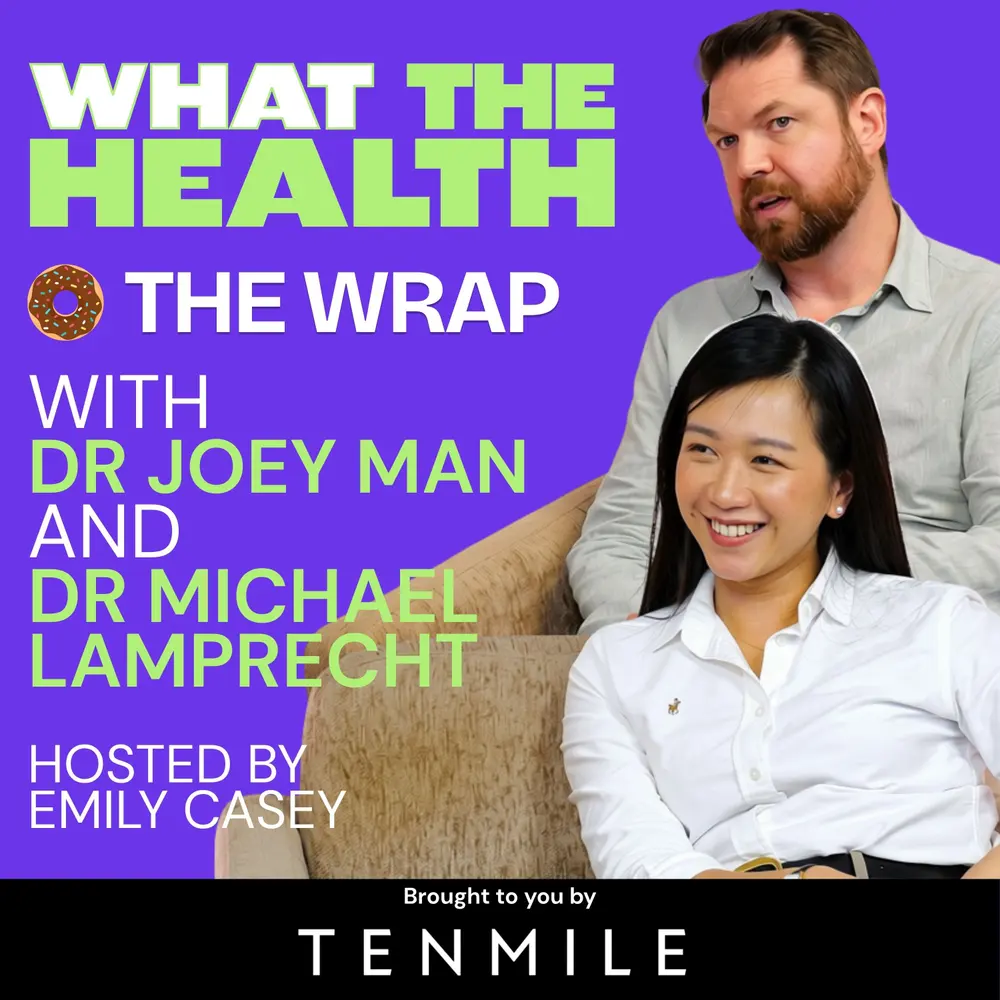
In the third What the Health Wrap, host Emily Casey is joined by two of her Tenmile colleagues — Dr Joey Man and Dr Michael Lamprecht, investors and scientists with roughly 30 years between them across molecular biology, therapeutics and biotech in the US, Singapore and Australia — for the lunchroom conversation, not the press release.
They start with Moderna and Merck's Phase 3 result. Intismeran autogene, given alongside Keytruda after melanoma surgery, met its primary endpoint of recurrence-free survival and a key secondary endpoint in a trial of more than 1,100 patients. Michael explains what an individualised neoantigen therapy actually is: take a piece of the patient's tumour, work out which signals mark it out from healthy tissue, and turn those into a bespoke vaccine that teaches the immune system what to attack. Joey walks through the part she finds most elegant — an algorithm that reads the patient's normal tissue against their tumour, predicts the mutations a future metastasis would express, picks the top 36, and produces a single-patient batch on a six-to-eight-week timeline deliberately synchronised with the surgery and the standard Keytruda schedule.
The more interesting question is why this one worked when so many didn't. Michael's answer has three parts: it is given in combination with a drug that releases the brake on the immune system, it uses antigens specific to that patient rather than the off-the-shelf antigens that failed before, and — critically — the sponsors got regulators to assess the process rather than each individual antigen. The COVID years, for all the reputational damage they did to mRNA, built the manufacturing infrastructure that makes a one-patient batch possible at all. Joey's read on the share price: a fair reward for patience and a pivot, and a sign that the market has not written off mRNA the way the politics suggested.
From there the conversation turns to the thing Joey is genuinely worried about. From 1 February 2027, Australian reforms will let health technology providers — wearables and monitoring platforms included — collect, use and disclose individual healthcare identifiers with patient consent for permitted purposes. It is close to a world first, and it lands just as a roughly US$44 billion wearables market pushes from wellness towards diagnostics. Joey's objection is not the pipe, it is the water: "just because the pipe is there, it doesn't mean the water quality inside that pipe is good." Storing consumer-sensor data alongside blood work risks lending it a validity it has not earned. Michael pushes back — data is data, sensors improve, and a continuous monitor beats a patient's recollection in a consult. Emily makes the case that a single blood test at a single moment is not the gold standard people assume either, and that longitudinal data is exactly what has been missing.
That tension runs straight into Oura, which is reportedly preparing a US IPO that could value it above US$16 billion while facing a proposed class action over its sleep-tracking claims. Joey is blunt: clinical sleep staging needs EEG, eye movement and muscle movement, and a ring cannot measure EEG. She contrasts the marketed accuracy figure with the 50–53% range she has seen in published work, and notes the awkwardness of defending a 95% claim with "we're not a medical device." Her own ring is a RingConn, bought with expectations set accordingly. Where she does see real progress is in the headband EEG work now being used to track sleep as a treatment-efficacy signal in depression trials.
Then women's health, where the same problem shows up wearing better marketing. Whoop's expanded partnership with Natural Cycles lets overnight skin temperature feed an FDA-cleared contraceptive app — but, as Joey points out, the clearance and the algorithm belong to Natural Cycles, not to Whoop. Oura is building out cycle, pregnancy, postpartum and menopause features. Emily's UltraHuman sends her cycle predictions that are unnervingly accurate, and none of them make the wellness-versus-clinical line any clearer. All three agree the demand is real and long overdue: women have been asking for information about their own bodies that the research never generated.
Joey came to the recording from the Women's Health Foundry investment roundtable, and gives a live read on why the money has been slow. The blockage is upstream — without the research, you cannot define the problem precisely enough to build or fund a solution. Australia produces strong women's health research; the work now is consolidating it into something commercially investable, because commercial dollars move faster than academic ones. Michael's counter is that pharma appetite follows market clarity, not the other way around, and that the market is unambiguously huge. Sun Pharma's roughly US$11.75 billion acquisition of Organon — the women's health business Merck spun out in 2021 — is the proof point.
The last stretch is neuropsychiatry, and Michael's home turf. Eli Lilly has agreed to acquire atai Beckley for US$2.8 billion upfront and up to US$1 billion more in milestones, for a lead programme delivering a short in-clinic psychedelic experience in treatment-resistant depression. Psilocybin and MDMA are both up for approval decisions. Michael explains what a neuroplastogen is — a drug that reopens the brain's ability to rewire, on the theory that depression traps people in a loop they cannot think their way out of — and why he is most interested in the programmes chasing that effect without the trip. Xylo, formerly Psylo, is the Tenmile portfolio company working on exactly that; Michael sits on its board. His prediction: full-day psilocybin protocols will be a niche, because the personnel and infrastructure required cannot compete with a short-acting drug that produces a comparable result.
You'll also hear why Michael thinks AI applied to small molecules is the most underhyped thing in the field, Joey's case for patient-relevant preclinical models replacing animal models in women's health, an unhedged "wearables" when Emily asks what's most overhyped, and a rapid fire that lands on the table-flip emoji, the side eye, the generosity of strangers on the other side of the world, Chopin's Étude No. 5, and two very tired investors who would both quite like some sleep.
Guests
Dr Joey Man Investment Associate, Tenmile Ventures (Melbourne). PhD in Molecular Biology from Monash University's Biomedicine Discovery Institute (breast cancer cell signalling and metastasis); former CSIRO postdoc researching zero-gravity effects on stem cells, with an investing background from Main Sequence Ventures and CSIRO's ON Accelerator.
Dr Michael Lamprecht Investment Manager, Tenmile Ventures (Sydney), specialising in biotech and early-stage investment. PhD in Biomedical Engineering from Columbia University; previously Entrepreneur-in-Residence at Xora Innovation and Director of Regulatory Affairs at EpiBone, with 15+ years building regulatory and clinical strategy for cell-based therapies.
Links and resources
- Merck and Moderna — Phase 3 INTerpath-001 results: merck.com
- Australia's healthcare identifier reforms, effective 1 February 2027: minterellison.com
- Department of Health — Healthcare Identifiers Service: health.gov.au
- Oura's reported US IPO plans: techcrunch.com
- Whoop's expanded Natural Cycles partnership: whoop.com
- Women's Health Foundry: womenshealthfoundry.com.au
- Sun Pharma's acquisition of Organon: fiercepharma.com
- Lilly to acquire atai Beckley: investor.lilly.com
- Xylo (formerly Psylo), developing non-hallucinogenic neuroplastogens: prnewswire.com
- Tenmile: tenmile.com
- Earlier on the show — The Psychedelic Resurgence with Dr Michael Winlo: dayone.fm
- More What The Health episodes: dayone.fm
- Join the Day One newsletter: dayone.fm/newsletter
About the host
Emily Casey is the founder and Director of What the Health and host of the What the Health Wrap, making major developments in health technology and innovation easier to understand. She also leads community and partnerships at Tenmile.
The What the Health Wrap is brought to you by What the Health in partnership with Tenmile Ventures — tenmile.com
What the Health is part of Day One Network, the podcast and media network from W2D1 Media — dayone.fm
Transcript Search or select a timestamp to jump
188 timestamped lines
No transcript lines match that phrase. Try fewer words.
More from What The Health with Emily Casey
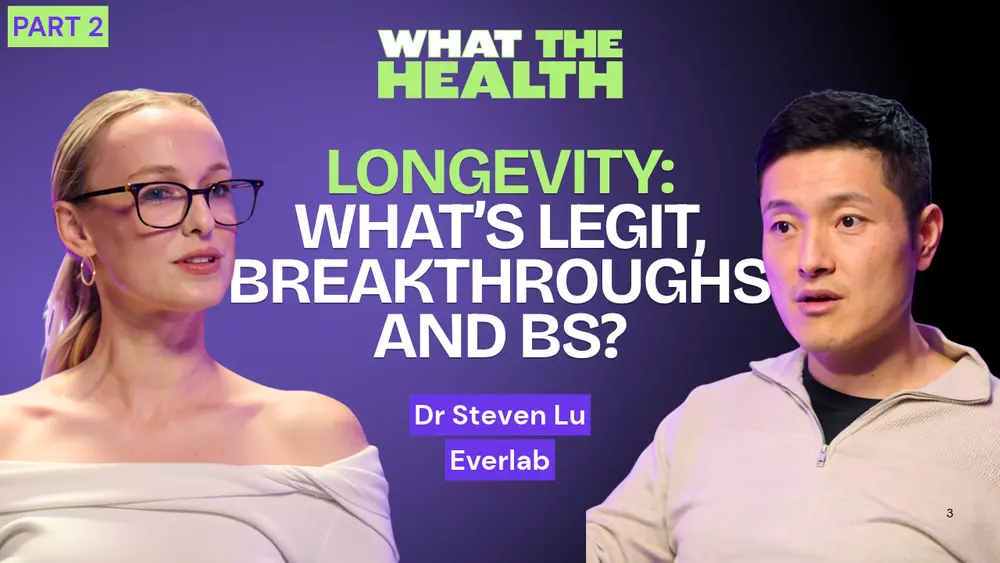 ▶
Longevity: Hype, Breakthroughs and What Comes Next
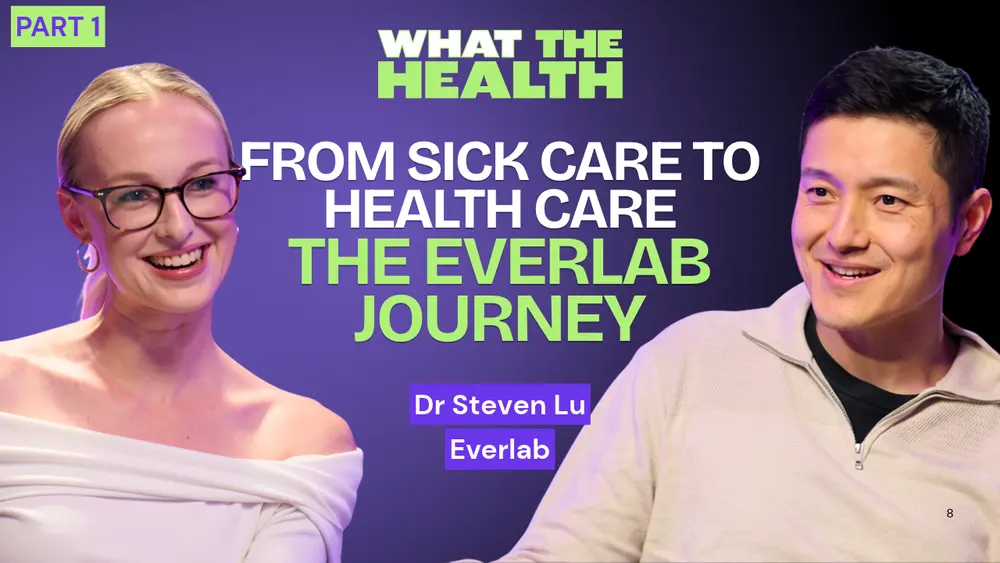 ▶
The Everlab Journey and Building Preventative Health
 ▶
The Psychedelic Resurgence: From Counterculture to Clinical Breakthrough with Dr Michael Winlo
 ▶
HealthGPT and What Happens Now AI Is Table Stakes
 ▶
The A$2.2B Myricx Bio Deal, AI's Healthcare Land Grab and Preventive Health
 ▶
Introducing What The Health with Emily Casey
What the Health is produced with Day One — the podcast network for founders, investors and operators. Want a show like this for your company?
Other Day One shows worth a listen
Episodes from across the network exploring similar themes — part of the same Day One conversation.
 ▶
FNDN Series with Matt McFarlane
Building A Flywheel That Cultivates Talent
1 November 2026
 ▶
Investment Thesis with Kali Norman
Ian Gardiner's Investment Thesis | Investment Thesis with Kali Norman
21 October 2026
 ▶
ThincHer — You’re in Charge
Sheree Sullivan on failing fast, knowing your numbers and letting go
12 October 2026
Turn podcasting into pipeline
Produced by W2D1 Media. We're the team behind the Day One Network, and we helped build Blackbird Ventures' Wild Hearts. We help founders, funds and operators build trust, authority and deal flow with a show tailored to their market.