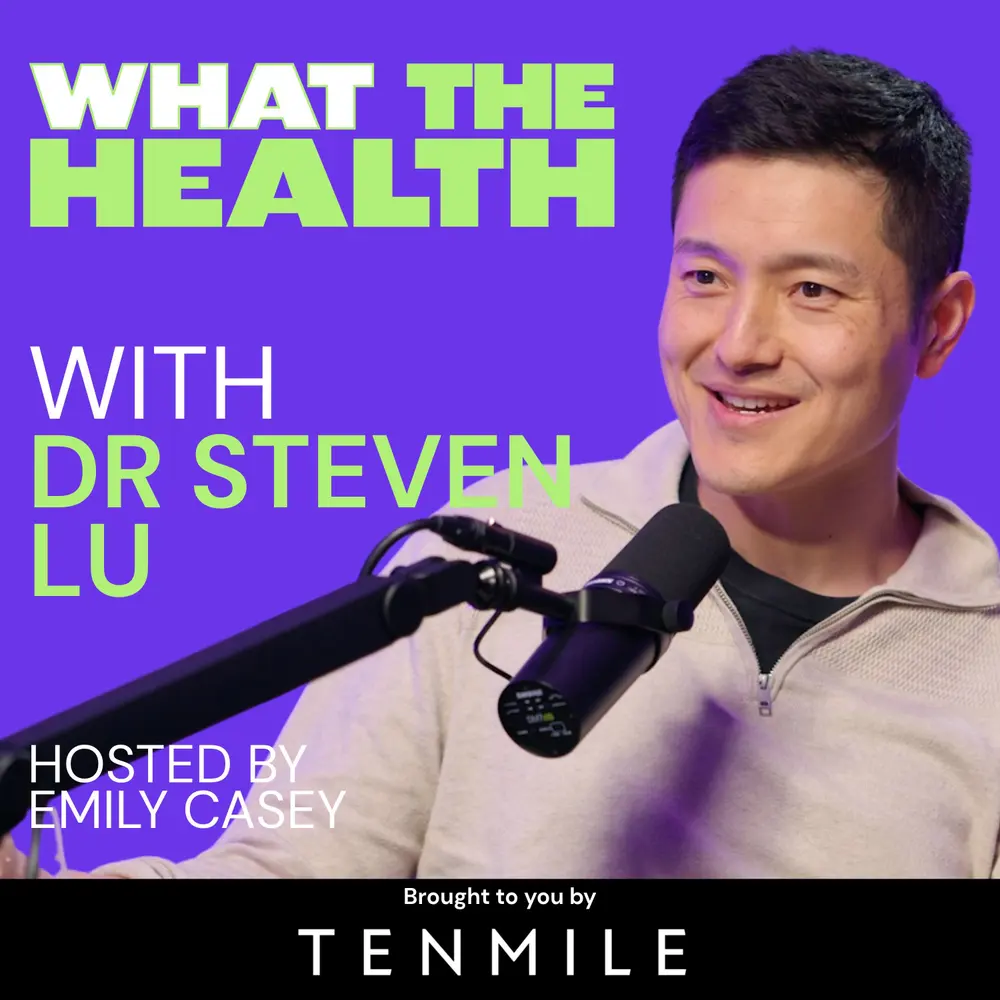
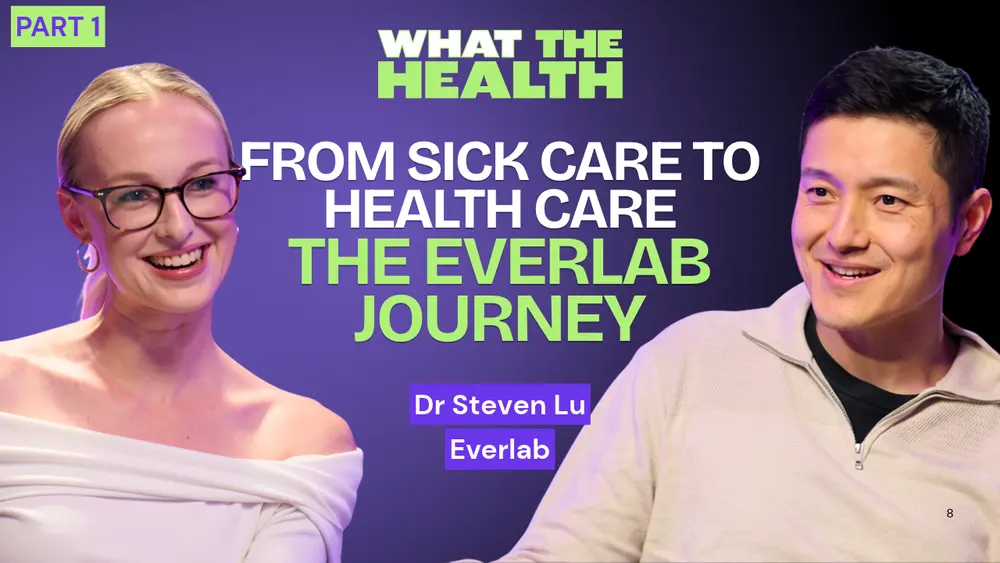
In Part Two of my conversation with Dr Steven Lu, Everlab’s co-founder and Chief Medical Officer, we unpack what’s actually worth measuring, which treatments show real promise, what’s still experimental and what the future of preventative healthcare could look like.
And why, when it comes to optimising our health, we should be problem-centric, not solution-centric.
We dive into:
What keeps Steven up at night as Everlab grows and expands internationally. What’s actually worth measuring: From Lp(a), a genetically influenced cardiovascular risk marker, to body composition, and the tests Steven believes deserve more attention. GLP-1s, breakthrough drugs or misunderstood medicine? Their potential, the risks of poor dosing and inadequate support, and why protecting muscle and bone health matters. The peptide boom: What’s backed by evidence, the safety and quality concerns, and why Steven isn’t ready to inject them himself. Yet. Being problem-centric, not solution-centric: Why chasing the latest tests, treatments and biohacks isn’t necessarily the best approach to better health. AI and the future of primary care: How Everlab’s Concierge is bringing AI into healthcare while keeping clinicians in the loop. The next frontier of preventative medicine: Pharmacogenetics, personalised care and emerging Alzheimer’s blood tests. Hype or worth it? Steven’s rapid-fire take on full-body MRIs, continuous glucose monitors, wearables, NAD+ infusions and creatine, plus the health habits he thinks are overhyped and underappreciated. Chapters
0:00 Preview: what's real in longevity ▶ 1:12 What keeps Steven up at night: leading Everlab through uncharted waters ▶ 3:00 What's worth measuring: Lp(a) and body composition ▶ 5:28 GLP-1s: what works, and what goes wrong without support ▶ 12:13 Peptides: the evidence gap and his "would I take it myself?" test ▶ 18:28 Be problem-centric, not solution-centric ▶ 22:41 Pharmacogenetics, tailored care and the public system's role ▶ 24:03 AI in primary care: keeping a clinician in the loop ▶ 27:55 The pTau217 Alzheimer's blood test and what Everlab is studying next ▶ 31:06 Rapid fire: MRI, CGMs, wearables, NAD+ and creatine ▶ 38:59 Lightning round: favourite emoji, overhyped and underhyped ▶ 41:40 Family, where to find Everlab, and thanks ▶ Transcript Search or select a timestamp to jump ▾ 0:00 Emily Casey: Longevity. It has gone from a niche obsession to a full-blown cult industry. 0:06 Dr Steven Lu: GLP-1 medications are incredible. We've never really had a class of drugs like this. 0:12 Emily Casey: We need to break through and figure out what's actually legit and what's not. What do you think is actually most meaningful to measure and predict? 0:22 Dr Steven Lu: The lipoprotein level. If your level is raised, you can have a 2 to 3x risk of having a heart attack in your lifetime. For the longest time, healthcare has been very service-heavy and very archaic. I want EvLab to be the operating system for primary care. So we have an AI chat assistant called Eva, and Eva can actually pass on your messages straight to a clinician. Imagine you're on GPT and you ask this question, you're like, hmm, I wish Stephen could read this thread and like just say, is this right? 0:49 Emily Casey: What is your take on peptides? 0:52 Dr Steven Lu: So I have a very good rule of thumb for new treatments. 1:07 Emily Casey: What keeps you up at night in terms of problems or things that might stop you from realizing this dream? 1:11 Dr Steven Lu: We're at a stage where I think me leveling up as a leader is really important. I stay up at night thinking, am I doing a good job there? Am I leading the team well? Am I structuring the team well? Right? Because I think that's what matters. In the beginning, I think having great co-founders and, you know, very smart and thoughtful people who can execute. I think that's great. I think for me at this stage of the business, greatness is in the agency of others. And we need the smartest, best people to come and join our mission. And it's not just that because we have a lot of that. It's how do we structure the team so that we have the right focus, the right priorities, the right ownership, the right metrics. You know, we're launching in the UK, right? 2:01 Emily Casey: Huge. Congrats. 2:01 Dr Steven Lu: These are all big tasks. And I think I stay up at night and the thing that I want to make sure that I'm growing and leveling up with this, with the business as we swim further and further out into uncharted waters. It's scary. It's exciting. I'm really not worried about the clinical side of things, to be honest. I think we're so on track. I'm so confident that we're going to deliver clinical excellence. 2:27 Emily Casey: Hell yeah. Of what the thing we can measure today, what do you think is actually most meaningful to measure and predict? 2:35 Dr Steven Lu: If I had to just make a short list again, like let's stack rank them. I think one thing that I would love for everyone to get measured is a lipoprotein level. Me and many cardiologists have really tried to campaign for this to be listed on the Medicare benefits scheme. Right now it's a private test. 2:52 Emily Casey: Yeah, 2:52 Dr Steven Lu: obviously you can get it done at Everlab, but like, you know, yes, it costs money, but actually you don't even need to test it all the time. It's largely genetically determined, and it's just this extra angle that really allows us to reassess and catch high-risk people who were thought to be low risk in terms of having blockages in their arteries. 3:09 Emily Casey: And how does it do that? 3:10 Dr Steven Lu: It is a largely genetically determined protein in your blood. There are clinical trials being done. to try to move that number. So like, you know, there are phase 3 trials that are being done. And like, I've actually recruited people to go into the trial. But largely, just because you can't move that number doesn't mean we can't like treat you differently. It changes your plan. And if your level is raised, you can have a 2 to 3x risk of having a heart attack in your lifetime. Wow. It's also associated with valvular disease, which is really interesting with the valves. Like, you know, when you hear your heartbeat, It's actually a sound of valves snapping shut, right? So it's, um, some people have structural disease as well. So associated with that. 3:50 Emily Casey: Which is really hard to pick up typically, right? Until something goes wrong. 3:53 Dr Steven Lu: It's, it's all of this is very hard to pick up. All of this is hard to pick up because about 70% of people who have a heart attack have never had any symptoms before the day that he had, they had a heart attack. So it was like almost no warning signs, but it is something that we can really, really confidently predict on risk and can pick up with the right technology. This test has been around for ages, by the way. Right. We did this from day one and now a lot of people know about it. And, you know, like we tell people about it. Obviously I'm talking to you about it now. It's getting more popular. And I think those are the forcing functions that might actually make this go on to the Medicare benefit scheme, because I don't want this to just be accessible to people who can afford it. Yeah. So there's that. I think body composition studies is really important to be able to check your bone density. to be able to check musculature, especially in a world where like GLP-1 medications are so accessible. 4:42 Emily Casey: What's your take on GLP-1s, and what perhaps are we misinterpreting or misunderstanding currently? 4:51 Dr Steven Lu: My one-line answer is I think GLP-1 medications are incredible. I didn't jump on the bandwagon early. Like, I was actually— because one of my best friends is an endocrinologist, like, I've known about Ozempic since 2017 when it was like still in clinical trial stage. At that time we were thinking, oh, like this, this drug is going to be good, right? Because at that time we were just thinking about for type 2 diabetes. 5:14 Emily Casey: Yeah. 5:15 Dr Steven Lu: And it was the one class of drug that outperformed the other classes by like 50%, right? But in terms of dropping your sugar levels. 5:24 Emily Casey: Yeah. 5:24 Dr Steven Lu: So then there never used to be a drug that was like, wow, like the clinical trials show that you can drop the HbA1c, which is average sugar level, by 1.5%. The next best one was like 1%, right? So like, oh, this is really good. And then it came out and they work out, oh, actually this is a great weight loss drug. So like, you know, we were using it for diabetes first. And once it became a weight loss drug, you know, if you look at the Ozempic search volumes on Google, it's like, like that, I think it was around circa 2019, 2020. 5:48 Emily Casey: It's wild. 5:50 Dr Steven Lu: And I was never like, again, this is my clinician nature. I think I was always a little bit skeptical of, um, because when we inject something into someone's body, I usually take it more seriously, right? Like you think about the risks and Um, I came to this party a bit later, but I've seen all the— I've read all the clinical trials. And it's not just about the clinical trials and published clinical trials, but real-world use. About 1 in 6 people in North America are now on. 6:16 Emily Casey: I've heard that the official studies, and supposedly the unofficial are more like 1 in 4 or 3. 6:21 Dr Steven Lu: It could even be higher. Um, and real-world use has really shown us that it is quite safe in terms of like adverse effects or high, or like high risks. And, and these are the things that we counsel every patient when we— because we actually have an in-house GLP-1 program at Everlab. I don't think we advertise it as much, but like, you know, because it's specific to certain folks. 6:45 Emily Casey: Yeah. 6:45 Dr Steven Lu: Um, but with that knowledge, we can actually do better. And what doing better is defined as today is like, by the way, anyone can really get access to these medications now. How do you use it right? Just like the diagnostics, like, how do you use it right? And we now know that one of the biggest risks is poor dosing, using it without, without, without guidance, bone loss, muscle loss, malnourishment. And I've personally seen cases like that have just gone wrong. So is the drug good? Is this a great tool? Absolutely. It's like MRIs. Are MRIs good machines? Absolutely. But you can certainly use it wrong. And I've seen this being used wrong. And I think we're now at the stage of this journey of GLP-1s where most people know what they are. I think it's also destigmatized as well. So it's like, actually, it's normal to, you know, get some assistance. And, you know, I've been part of campaigns to, to, to educate folks to say, actually, no, obesity is not just like eat less, work out more. It's very complex. But we can utilize these tools combined with the support to deliver the outcomes. And one of those biggest risks is, and there's like consensus around this as well. And there's like consensus papers across multiple countries, which is if we're gonna use it, we have to use it right. Otherwise, like I've seen people who use it, they lose a bunch of weight, but they also lose a lot of muscle, a lot of bone mass. They don't look well. You might've seen people like that, Ron. They're like— You're like, wow, you're thinner, but like, You don't look all that healthy. 8:18 Emily Casey: Yeah. 8:19 Dr Steven Lu: Um, and that's because that's not to blame the medication, it's to blame the way that we actually offered it. We can't just write you a script like, I'll see you in 6 months. 8:27 Emily Casey: Need to supervise. 8:29 Dr Steven Lu: You need to supervise. So our approach is we actually use a low— the lowest dose possible. We don't actually just automatically go up on the dose. Um, and we have a team of dietitians, exercise physiologists, physios. We curate a plan for you, we check in weekly. we actually jump on a call with you to make sure that this is also a behavioral support tool. And the earlier you do it right, the more success, the more sustained success you can have. Because every round— and I've seen, you know, because this cycle's been a couple of years now. 9:00 Emily Casey: Yeah. 9:00 Dr Steven Lu: And a lot of patients have gone the yo-yos, like, I go on it, I lose weight, but the moment I go off it, my weight comes back. And I can tell you exactly why your weight comes back, because you've lost a bunch of muscle Your muscle is basically like a metabolic sink and an engine. So when you stop the medication, all of the fat comes back, the muscle doesn't come back. So you actually end up being worse than when you started. 9:22 Emily Casey: Oof. 9:23 Dr Steven Lu: And sometimes, and this is where I think, you know, coming back to what you were asking me earlier about like, you know, the model of care. This is why I think we can't sell these things out of vending machines. Because if you want to create a business model, is that like, oh, like, you know, we're just going to keep people on a high dose and this is great for revenue streams. 9:40 Emily Casey: Yeah, 9:40 Dr Steven Lu: I think that's causing harm. Right. 9:42 Emily Casey: Need the nuance. 9:44 Dr Steven Lu: You need the nuance and you need that to align with your commercial structure to say that, like, you know, our bottom line is not just how much of this drug we move, dose and scripts. It's actually what outcomes can we drive? Because once we deliver that outcome, we own and, you know, we own that customer. We deliver that support because we also do other stuff to work on that next thing, to work on that next thing, right? Maybe it's to get stronger, maybe it's to reduce your risk, maybe it's inflammation, maybe it's gut health. We are a whole primary care platform so that we can be really incentivized to deliver the best possible outcome. So I actually think, controversial opinion, I think GLP-1 is probably going to have the same amount of impact on our world as AI would. 10:37 Emily Casey: Ooh. 10:38 Dr Steven Lu: I think it's actually, we've never really had a class of drugs like this, but we have to use it right. We have to be cautious. We're still learning. There's newer drugs coming onto market. You know, retatrutide is going to land. And, you know, like, I think it's like we worked out how to build a car and we're going to build better and better cars, but like, we still need to learn how to drive it properly. 10:59 Emily Casey: Completely right. And we are so early in that evolution. There's more and more studies coming out about the benefits across inflammation, across endometriosis, cardiovascular, a whole heap of things. 11:11 Dr Steven Lu: Even behavioral support, you know, gambling addiction. 11:13 Emily Casey: Yeah, 11:14 Dr Steven Lu: right. Like alcohol dependence. 11:16 Emily Casey: It's wild. 11:17 Dr Steven Lu: So it's super interesting. I like, uh, you know, we could probably spend a whole hour talking about this, but like, uh, I think great class of medicine, once in a generation type medicine. Use it right. 11:28 Emily Casey: Now, GLP-1s are technically a peptide. 11:31 Dr Steven Lu: Yep. 11:31 Emily Casey: And another booming category— Here we go. Of late is peptides. Yeah. I can't believe how fast it's caught on and the amount of people that are willingly injecting themselves with unknown substances. 11:46 Dr Steven Lu: Yep. 11:46 Emily Casey: And it's quite fascinating to watch. But what is your take on peptides? 11:52 Dr Steven Lu: So I have a very, I think, I think a very good rule of thumb for new treatments. If I'm not willing to put it into my own body, I'm not going to recommend it to any of my patients. And that is basically the bar at Everlab, right? Which is like, you know, we have a process where we like, you think we don't know about peptides? Like, you know, we've done tons of research. You know, I've even spoken to, I've spoken to a lot of compounding pharmacies. I've spoken to patients. I've even spoken to manufacturers. in China on like, you know, like what is the process and etc., etc. 12:24 Emily Casey: Are there any good manufacturers? 12:26 Dr Steven Lu: Yeah, 100%. Right. So like, yeah, like there is the, there is the right way to manufacture a drug. Right. And a lot of that, you know, like I know, like from the shipping to the, to the certification you need to ship it in here and like, and then what the compounding pharmacies do and what the Pharmacy Council does and You actually need to just understand all of that. But first, we can start with the consumer end, right? We talked about search volumes of Ozempic in 2019, 2020. Peptide search volumes, I think in 2025, earlier this year, that steep curve, the curve is as steep as Ozempic was. 13:05 Emily Casey: So 13:06 Dr Steven Lu: there's certainly a lot of interest. 13:07 Emily Casey: It's almost like being touted as a magic pill, right? Because I think The thing is, we've always been told that a magic pill doesn't exist and GLP-1s have almost been that. And so it's— I wonder if there's a— people are like, okay, this is the next thing. 13:22 Dr Steven Lu: It's also the cost and the commercial opportunity. So first of all, like, these are not really patented drugs. It's not like Eli Lilly is shipping BPC-157. Yeah, right. So the relative cost is a little bit lower and then it's just taken, you know, it's also the channels of distribution. So a lot of like, you know, it's influencers and it's on social media and all of that stuff. Now, let's just get clinical for a second, which is it's a peptide. Yes, just like insulin is, just like GLP-1s are. The natural history, we'll take one, like let's say BPC-157, which is really popular for folks who have musculoskeletal injury and inflammation and recovery. The history of its conception is like interesting. It comes from like Croatia, like Eastern Europe and that development. And there's— that's not a put-down. There's like a lot of medicines have come from just like sporadic discoveries, by the way. Most of them. Most of them. So that's fine. And anecdotally, naturally, we have a lot of patients at EvLab who are taking BPC-157. They say, well, like, actually, you know, like, I think I'm getting some benefits. So anecdotally, I think it is helping some people. The big blind spot here is there hasn't been really strong clinical studies at all to tell me about the risk, because that's a blind spot, which is, you know, you can take it and it might help you, but like, what if it increases your risk of cancer in some way? We don't know that. 14:50 Emily Casey: Yeah. 14:50 Dr Steven Lu: Like, enough, right? Now, just because we don't know doesn't mean it'll happen, but it's how you make those decisions. And are people put in a position to make a really informed decision to try it out. That's one aspect, right? Which is like the level of evidence. The other side is actually quality. And in many ways, I'm even more worried about that, which is because there aren't very clear channels of, say, production and sourcing. If you buy from some online provider, and by the way, we did this at Everlab, which is like, hey, you know what? Go onto all these websites. Let's buy a bunch of them. We have it in our fridge, right? Like, and we sent a lot of them for testing. And some of them came back with like chromium, mercury, and lead. And, and we didn't even send it for like spectrometry studies that actually it can tell you, does it contain the thing that we think it's supposed to? 15:47 Emily Casey: That's wild. Just injecting yourself with lead casually. 15:50 Dr Steven Lu: With, with, with— it's like mystery meats, right? Like, you just don't know. Like, is this a, is this a You know, and I don't want that to sort of diminish the potential possibility that this can be really helpful. And what we need on one hand, I think, is more clinical studies and evidence. In fact, I actually know this is something confidential I can't really share more deeply, but like, I know there are clinical trials done by people I know, and I think they'll probably be published soon. And I think what we need is like probably more more transparency and evidence, particularly around the safety, on not immediate side effects, but also like what else is it doing to people. And on the other side is like, is quality. Because it's fairly unregulated, we call them like a lot of times this gray market. 16:39 Emily Casey: Yeah. 16:40 Dr Steven Lu: I know certain providers are probably sourcing higher quality products, some others less so. And then the production process, you know, who knows? Some compounding pharmacies are great and others might not be as, as good. So what are you putting in your body? So like, that's why I have a very simple rule of thumb, which is like, hey, like I'm not willing to put it in my body. I'll take, I'll take Mounjaro. Like I'll take, you know, I've tried it. You know, I've had whole body scans. I've like everything that EverLab does, I've pretty much done. Right. Anything that, you know, we would offer our patients, I'm happy to do for myself. This one, not yet. Right. Not yet. But like, like, let's watch this space. I think it's important that we keep an open mind. And it's also important that we have these discussions, right? Which is like, let's not be dogmatic. Let's like, yeah, I'm a, I'm a peptide bro or no, I'm like, I'm like anti-peptide. Well, actually it's just a tool. 17:32 Emily Casey: There's shades of gray, right? And I think this is the mindset we often get trapped in in medicine. It's like good v bad. Yes v no. And there's a lot, there's a big spectrum and nuance in these things. For those that I guess are considering some of these edge treatments or are just trying to assess where they fall, how would you advise people to— 17:54 Dr Steven Lu: To think about it? 17:55 Emily Casey: Yeah, I suppose. I know a lot of people are willing to or trying to find out. And with the boom of AI, people have a lot of access to information and it can be hard to cut through. And inevitably people are and will try these things. So what would your advice be? 18:10 Dr Steven Lu: I think the best advice I can give here is actually be problem-centric rather than solution-centric. Which, what I mean by that is, don't think of a solution and then see what it can solve. Like, start with what it is that you're worried about. Because, like, we see a lot of folks come through. They book in, it's only $299 to now, like, take your first step with Everlab, right? So we actually made it much more accessible. 18:34 Emily Casey: Which is huge. 18:35 Dr Steven Lu: And a lot of folks come through and they say, like, Um, one of my biggest questions is, should I go on peptides? So, okay, let's have a dialogue. Um, we can talk about that, but like, why? What problem are you trying to solve? Well, actually, it's because I've got this, this, this, this. And okay, like, actually, let's understand you a little bit more deeply around those problems because maybe you have hemochromatosis or something. Like, maybe there's something that we've missed. 18:56 Emily Casey: Yeah. 18:57 Dr Steven Lu: Maybe there are lower-hanging fruit that we can try to fix. Sometimes those things can be really cheap. As well. And it could be lower risk. So this is, you know, I often think about Everlab like the management consultants of your health, which is like, you know, we have a lot of experience, we have the expertise, but we work for you. You tell me what your problem is and it's our job to come up with some solutions. And you might say like, I don't like that solution. I don't have a great reason. I just don't like it. Right. It's like, oh, would you be open to taking some fiber supplements? Oh no, I think it's gross. That's okay. Let's move on to the next thing. Right. 19:31 Emily Casey: So it's still on you to execute. It's 100% on you to make 19:35 Dr Steven Lu: the decision. And this is what agency is about, because I think a lot of folks online, you know, like in the community, they gravitate towards these instant solutions because they feel a certain level of disenfranchisement, right? Which is like, I've, you know, the number of times that we've heard this from our patients, like, I've been to a doctor, I've been to 5 doctors, right? And I really didn't have the opportunity to even have my deeper concerns teased out. 20:07 Emily Casey: Oh yeah. 20:08 Dr Steven Lu: In this conversation, because like, you, you have to be in the driver's seat and we want to put you in the driver's seat. But most people in the healthcare system are a passenger, right? They go from like, my GP said I'll go see this person, and then this person said they're going to refer me to a specialist. And we all say we're patient, patient-centered care. That doesn't sound patient-centered to me at all, right? Like, you know, you, you're the passenger. And as you go through that, if you do not find instant success, you will lose confidence. And then of course, then you gravitate towards like, I need to find my own solutions. 20:41 Emily Casey: Completely. 20:42 Dr Steven Lu: We've had cases where we actually circle back to a treatment that was suggested by a doctor previously and say, you know what, we just got the dose wrong. Let's do some pharmacogenetics and understand how your body processes drugs. Ah, the normal starting dose for this drug was probably way too much for you. Let's cut that dose into a quarter of the normal starting dose and let's see if that works. 21:08 Emily Casey: There we go. 21:08 Dr Steven Lu: $5.60 for 3 months, right? Like, it's not about the cost, right? It's about the process. And, you know, of course we need to factor in cost. But again, another thought exercise that I always use is If all of this was free, what would we do? We still need to go through that exercise of stack ranking things because these are not spa treatments. 21:30 Emily Casey: Yeah. 21:31 Dr Steven Lu: Right? Like we're doing some pretty serious, including things like prescribing cholesterol medicine. We take that really seriously because like, I'm not taking it. It's easy for me to write a script. It takes me like 2 seconds. Sometimes it's a lifelong commitment for someone, right? And it could have side effects. You know, it's, it's more about the approach. 21:50 Emily Casey: And it's exciting that we are at that point and there's options like yours and many other clinics that are popping up now that are providing the, I suppose, the time to get to know people, to hear their concerns, and to dig in with these exciting new tools like pharmacogenetics, for example. Huge unlock, particularly given so many drugs are just thrown around at a starting dose that, you know, is just said to be the way, and it's not tested on different ages, different genders, all these different factors that should be taken into account. And we're just moving more and more into a tailored opportunity for medicine. But our current, at least public system in Australia, isn't quite geared for that yet. 22:34 Dr Steven Lu: It's almost not the public system's job to innovate. I mean, like, that sounds kind of sad, but— 22:41 Emily Casey: No, it's— 22:41 Dr Steven Lu: But actually, There have been publicly funded innovation in certain sectors, and I think it's been great. Like, I think the internet actually started out as being publicly funded as well, right? But like, it's again, not about being dogmatic. It's just like, I think this is where we can do the best innovative work using technology. And then, you know, we talked to insurers, you know, like eventually I think we want, I want the Everlab way, but just be the way. Right. And then for us, our job is to make it even more accessible, even better, deeper, wider, lower friction. So one of the things that we're doing right now is we've actually just shipped a feature in the app called Concierge. 23:23 Emily Casey: Yes, I saw that yesterday or the day before. 23:26 Dr Steven Lu: Yeah. And, you know, we've been working on for a really long time. And again, it's aspiration, right? Which is we know a lot of folks are just pumping their questions into GPT and Claude. 23:37 Emily Casey: Right? Guilty. 23:37 Dr Steven Lu: That technology is accessible. Like, AI is going to be like the internet. Everyone's got it. You just got to use it right. 23:45 Emily Casey: Yeah. 23:46 Dr Steven Lu: And for us, it was the natural thing to utilize these technologies. But it's not just about having an AI for the sake of having AI. It's to say, what exactly are we trying to achieve for our customer, for our patients? Which is as good as the care that we've been providing, it's still episodic, right? You have an appointment and we might like send you an email and like, you know, have a phone call. It's still quite episodic. But we want primary care to be continuous. 24:14 Emily Casey: Yeah, right. 24:15 Dr Steven Lu: We want it to be always on, just like your Claude and GPT is, right? Because, you know, like at 11 o'clock at night, you're like, actually, let me, let me ask it some questions. 24:24 Emily Casey: Well, it's often the only time you get a second to think if you're so busy these days, right? It's like, oh yeah, I needed to do this thing and 24:30 Dr Steven Lu: Yeah, exactly. And, you know, like, we know, so there was a paper that was published, about 20% of all AI searches are health-related, right? Like, I think this was published like a couple weeks ago. Internally, we know around 30 to probably 50% of Everlab members would concurrently also use GPT or Claude to ask them health questions. And I know from user interviews and user cases, they're literally grabbing screenshots of their Everlab app and pasting it into GPT and asking some more questions. So I'm like, you know what, I get enough of that. We already have all of your data in one place, right? And what we can do is actually add a guardrail to say, we, there are certain, like, how do we minimize hallucination? How do we, you know, like, steer you in the right way? And, you know, like, our clinician can actually guardrail that. having a human in the loop. And also, how does an LLM deliver outcomes in real life? Like, how does it come to life? Where does rubber meet the road, right? Mm-hmm. We have clinicians in Conscio. So we have an AI chat assistant called Eva. And Eva can actually pass on your messages straight to a clinician. And your clinician can also review, like, you can ask, oh, like, You know, imagine you're on GPT and you ask this question, you're like, I wish Stephen could read this thread and like just say, is this right? 25:54 Emily Casey: Yeah, is this legit? Is this legit? 25:57 Dr Steven Lu: Right? Like you can actually do that for us. It's just like one click and our clinician can actually, you know, like review your conversation with our AI, which is already curated to deliver, you know, to give you that confidence. So it's always on, you get the advice. 26:08 Emily Casey: Human in the loop. 26:09 Dr Steven Lu: Human in the loop. And then the human can also bring it into real life, right? And bringing into real life is like, hey, Let's have a chat about when the next time you should have blood test is based on this, this, this, based on your behaviors, based on your risk. Right. It's in 2 months' time. Would you like us to provision this to your doctor for them to review and sign off on? And the next morning, it's like, ping, it's locked in. It's on your timeline. In 2 months, you can go this blood test. 26:36 Emily Casey: Oh, that's the dream. 26:37 Dr Steven Lu: Referrals, prescriptions, blood tests, all of those things that happen in real life. We should leverage the technology to be able to do that. So, you know, it's— these are the things. Is it perfect from out the gate? Probably not. I was playing with it last night. I was like texting the engineers at like 11 PM. I was like, hey, like, I didn't like this answer. Like, you know, it was a bit off. 26:59 Emily Casey: It always takes iterations. 27:00 Dr Steven Lu: It takes a few iterations, but like, it's so early, but we need to— this is the spirit with which we need to like move forward, which is like aspiration. 27:07 Emily Casey: Yeah. 27:08 Dr Steven Lu: And I want everyone to practice the way Everlab does, and I want Everlab to be right at the front. To say, like, by the way, we're also doing a ton of research, which is like, again, something else I can nerd out about for like a couple of hours. But like, what else is on the horizon? Right. So like, you know, the new, the new Alzheimer's blood test, PTA-217, right? 27:28 Emily Casey: I think Roche FDA approved. Yeah. 27:30 Dr Steven Lu: TGA approved like 2 weeks ago. Even Mark Butler came out and talked about it. And, you know, we were— we knew about this ages ago. 27:37 Emily Casey: Yeah, I think you guys were the first ones to mention it to me. 27:41 Dr Steven Lu: Yeah. And, you know, we want to be the first to offer it. And again, it's not just about, hey, come and get some tests. It's who do we offer it to? What are we studying? We're going to actually pair it with what we call a cognitive function inventory to actually, you know, assess where your memory is, what your memory is like. What do we do when the test is abnormal? We've got a network of, like, you know, geriatricians and neurologists as well to, like, actually be able to refer you to. 28:03 Emily Casey: So it's more than just a test. A test by itself is never— 28:06 Dr Steven Lu: It has to be consequential. No one actually enjoys like getting your blood, you know, getting a needle in the arm. It's the information and how do we use it? And like, if it, if the information is not going to help us, we shouldn't ask that question. So it's not just about that, but like, you know, we do clinical studies there. We're actually in the middle of a clinical trial that we're about to launch testing other novel brain biomarkers from blood as well. So we're creating the final, like, you might be able to, you might be eligible to actually join the study. 28:37 Emily Casey: Awesome. 28:37 Dr Steven Lu: It's going to be Sydney-based, so we're going to recruit about I think 300 to 400 of our Sydney members. 28:42 Emily Casey: Oh, exciting. 28:42 Dr Steven Lu: To do that. We've partnered with the Australian Institute of Musculoskeletal Science, Victoria University, another AI company in cardiac imaging. So we're already really at the forefront of like cardiac heart disease and heart attack risk detection. We're going to then further that on to say we're going to take these images and reanalyze them using AI to do even further predictions. And this is what really excites me as a doctor nerd, basically, to be like, all right, I now have the opportunity to do this and at the same time be able to deliver value to Everlab members. So this is what I mean by I want us to always be on the forefront. 29:28 Emily Casey: Driving care forward, not just being at the forefront, but Pushing the limits. 29:32 Dr Steven Lu: Pushing it forward and all the while making care better. So like for folks who started Everlab last year, for example, a lot of them are now renewing for the next year. And we have the privilege of having the conversation with them. It's like, hey, it's not the same as it was last year, right? You have a lot more options. Like many times it can actually be cheaper, right? To say, actually, we can change your program, but then add this on. So we get like, it's always about the value delivery. And now we want concierge to allow us to be delivering care always, always on. Right. And we've got all these like functionalities planned to make it better and better and better to drive the outcomes that we want, which is ultimately for you to feel better and to be measurably healthier. And that's it. So we just focus on that and just drive that really hard. 30:19 Emily Casey: That's great. Well, we've run out of time, so I'm really going to quickly take you through. I want your hot take, very quick answers on a few things. Uh, good, bad, or depends? Yeah, 30:32 Dr Steven Lu: okay. 30:32 Emily Casey: Uh, full body MRI for a healthy 35-year-old with no symptoms? 30:36 Dr Steven Lu: No, something else. 30:37 Emily Casey: Ooh, continuous glucose monitors for people without diabetes? 30:42 Dr Steven Lu: No. 30:43 Emily Casey: No? 30:43 Dr Steven Lu: I would select people who have— because there are better ways for us to work out who's got insulin resistance, right? So, you know, we have folks who, um, we do body composition scan, we can see how much visceral fat they have, we measure their, you know, insulin resistance rates and actually fasting insulin. But for those folks who have that, then I think it's a very useful tool. It's the instant feedback that actually drives not just insights, but behavior change. 31:08 Emily Casey: Completely. 31:09 Dr Steven Lu: You wanna show someone their sugar spiking when they smash a ginger beer, right? And then you go, all right, maybe I still can enjoy it, but maybe half, right? And put the other half up. 31:21 Emily Casey: The guilt sits in your mind. 31:23 Dr Steven Lu: Right, and this is the behavioral science side of things, right? So I think the power of of a CGM. Obviously it works wonders for type 1 diabetics because it helps us dose insulin. But for normal, for non-type 1 diabetic folks, I think it's a really, really, and I've tried it many times, really powerful instant feedback tool. Right. And it's not just about what you eat. When I did mine, I ran a bunch of experiments. So I had the exact same thing at the exact same time for a couple of days straight. But my sugar curves were all over the place. And that's because, like, did I exercise that morning? Did I do some zone 2 training? Did I sleep well the night before? 32:02 Emily Casey: There's so many elements. 32:02 Dr Steven Lu: Was I really stressed? And like, I think it's almost like the wearables, right? That might be one of your questions, I don't know. But like, you know, it's that feedback loop and you wanna capture that to use in the highest ROI, most valuable way, which is like sort of behavior curation. 32:16 Emily Casey: Makes sense. Speaking of wearables for every person, yes or no? 32:22 Dr Steven Lu: I'm not wearing any right now, but I actually think for the future, yes. I think wearable technology is actually getting better and better. I'm less interested in a lot of the random stuff. Like, I think Oura Ring's right now being sued by someone for, you know, the— 32:40 Emily Casey: Yes, a potential class action, I believe. 32:43 Dr Steven Lu: The data is not perfect. But it can still be valuable. Again, you have to use it right. I've seen folks where they wake up and they're like, did I sleep well last night? Let me check, right? Like, just, you know, don't become a slave to your data and device because they have limitations. 33:00 Emily Casey: It's easy to do. 33:00 Dr Steven Lu: Use the best device you have, which is your body, right? Like, just, just wake up and do a little, little, you know, body, body check, right? Just sense check. But one interesting thing is, um, a lot of our clients, a lot of our patients do this, which is, you know, if you, if you have a wearable, wake up and try to guess your score, right? 33:21 Emily Casey: Yeah, I see. 33:22 Dr Steven Lu: And I always tell people, hey, like, just bear in mind there are limitations with these detectors. But if you zoom out, I think wearable technology is actually getting better and better. So I'm more excited about the clinical side, more deeply clinical side, which is atrial fibrillation detection. Yeah, right. It's ambient blood pressure collection because we can only measure people's blood pressure maybe like a couple of times a year. 33:45 Emily Casey: It's giving us longitudinal or potentially can give us the longitudinal. 33:48 Dr Steven Lu: Exactly. And sometimes with data, not every data, like with heart, like, so, you know, with the heart scans that we do, like maybe once every 5 years is enough. Whereas something like blood pressure, don't let perfect be the enemy of good, right? Like I'd rather have more data and longitudinal data and then we can zoom. I was like, what happened here? Oh, you know, you didn't sleep well, you had a party. Well, disregard that. Like, let's have a look at the rest of the numbers. And like, we should be able to get more and more of that. And I think like one thing I don't like about wearables is actually wearing something. I think in the future there's actually going to be more, more detection devices that you can install in your home to monitor. So for example, in your, in your bed, you don't have to wear it. 34:27 Emily Casey: Eight Sleep. 34:28 Dr Steven Lu: Right. Like Eight Sleep's one of them. And there are other things that are going to come on, come online. One interesting— this is my particular, almost a particular area of interest, but like you can even get these like toilet cameras. 34:40 Emily Casey: Yeah, the toilet cameras. 34:41 Dr Steven Lu: That analyze your poop. I think, I think— 34:43 Emily Casey: And urine and metabolites and stuff. Crazy. 34:46 Dr Steven Lu: And I think that's really like they're the sort of things that on the, you know, like that are coming, I think. And for us at Everlab, we like, we look into all of these things obviously, and we think like, when can this become useful and how does it actually then deliver value? It's pointless to get a poop score every day. I actually want to know how your digestion is, how it actually informs a change in management. 35:06 Emily Casey: For sure. Which will be interesting with microbiome stuff evolving. Next, NAD+ infusions. Yes or no? 35:14 Dr Steven Lu: Uh, NAD+ infusions, no. Um, I think, uh, some lady died in New York. 35:19 Emily Casey: Yes. 35:20 Dr Steven Lu: Yep. Um, uh, on that. And, and, and again, like, it's not because of the NAD+. I'm sure it's because of the processes. And again, I think the commercial things come in to play, and there's articles about it. But, uh, it's just so— it's a no because it's so low on the stack-ranked list, right? So like, like whole body MRI would be way higher than NAD+ injection, like infusion, because like you, you can also just take supplements as well. The evidence is not quite there. If you said NAD+ supplements where you can really guarantee the quality, I might say, might say yes. But it's a big deal when someone sticks a needle in you. 36:01 Emily Casey: Yeah. 36:02 Dr Steven Lu: Right? And, you know, like, we have to really have, you know, we really have to have that level of safety and confidence. 36:09 Emily Casey: And last, creatine. 36:11 Dr Steven Lu: Yes, I take it. 36:12 Emily Casey: Yeah, seems to be benefits all around. 36:16 Dr Steven Lu: Yeah. I mean, some people are doing creatine maxing, which I'm not sure about. So some people are smashing like, you know, 10 grams a day. Um, 36:24 Emily Casey: I've heard up to 30. It's getting wild out there. 36:27 Dr Steven Lu: I don't even know how you get it down. It's just 30. Um, so actually don't even take 5. Like I take about sort of 2 to 3 grams a day. Creatine maxing, a lot of people say like it gives them mental clarity as well. And I think there's going to be emerging evidence. The thing I like about creatine is it is one of the most well-studied, um, uh, supplements out there. Uh, creatine monohydrate is also quite an easy thing to produce. So, you know, it's easy to get good quality. Whereas like if you think about things like fish oil, um, the, the quality varies a lot in terms of DHA content and stuff like that. So you do want to buy a nice one. 37:03 Emily Casey: Completely. 37:04 Dr Steven Lu: Um, 37:04 Emily Casey: what's in it? 37:05 Dr Steven Lu: Uh, the only caveat for, for, for, uh, creatine is it'll mess up your blood tests, especially if you're creatine maxing. So it, it artificially elevates your creatine— creatinine level. 37:16 Emily Casey: Makes sense. 37:17 Dr Steven Lu: Which makes us, um, uh, underestimate your true kidney function. 37:23 Emily Casey: Oh, okay. Right? 37:24 Dr Steven Lu: Because your eGFR is actually calculated from creatinine. So you take creatine, your creatinine is going to go high, especially if you're doing like creatine maxing. And then we're going to like— so basically they're the things you need to think about, which is like, actually, no, don't worry. We don't think your kidney function is impaired. You're probably just taking too much creatine. But what we're doing at Everlab is actually we're introducing a new blood test called cystatin C. Which can actually calculate your kidney function without using, um, creatinine. 37:52 Emily Casey: New formula. 37:53 Dr Steven Lu: So, so this is the stuff that I always think about, which is like, oh, like, what should we do? And, you know, like, how do we— because we keep updating the tests that we would consider, the tests that we do as well. So like, that's one of those examples because like a lot of people are taking creatinine now. So, and cystatin C has this other, other, other value, um, as well. 38:11 Emily Casey: Sounds like you guys are just on top of all of it. If people want to find out more, just go check out Everlab. And very last but not least, the What the Health rapid fire. Stephen, what's your favourite emoji? 38:22 Dr Steven Lu: Oh gosh. Honestly, we have this emoji, it's like crying blood. 38:28 Emily Casey: Crying blood? Blood, sweat, and tears. 38:31 Dr Steven Lu: We have a crying blood. Usually we use it when— usually we use it when we see something that's like not good. Right. Because sometimes, you know, like, I'm— we might write some copy or something and it's like— 38:44 Emily Casey: It hurts your eyes. 38:46 Dr Steven Lu: Crying. Oh gosh. So, you know, like sometimes it's like design and sometimes it's like part of the product that I don't like. And for example, when I was testing some of the, you know, some of the features like on the app yesterday, like I was like, you know, it's doing really well. And then like I'm trying to keep asking more and more difficult questions and try to force it to fail. And when it does fail, like, oh my gosh, I hope no customers actually like ask the same question. So obviously, you know, you want to refine it, you want to fix it quickly. But like, yeah, I think the crying blood emoji is probably my favourite. Keeps us honest. 39:21 Emily Casey: Nice. What's the most overhyped thing in health right now? We do need these. iSpots. iSpots? 39:28 Dr Steven Lu: I reckon. 39:28 Emily Casey: Ooh. And underhyped? 39:30 Dr Steven Lu: Walking pad. 39:32 Emily Casey: Do 39:32 Dr Steven Lu: you have a walking pad? 39:33 Emily Casey: Oh, like in your office? 39:35 Dr Steven Lu: Under desk walking pad. 39:36 Emily Casey: Yeah, get your steps up. I don't yet, but that's because I force myself outside eternally. I think I do need one. 39:41 Dr Steven Lu: Yeah, 39:42 Emily Casey: but winter's here. 39:42 Dr Steven Lu: I work like 16 hours a day, so like I have to have a walking pad. Um, so, um, so, so my, my, my setup is like standing desk, walking pad. Um, obviously can't be walking while you're on meetings, but if you're like, you know, writing or checking emails or chatting with Claude, like, you know, you can actually just do that and just really get your steps up. Um, they're pretty cheap. And this is like, I think it's underhyped because it's like, again, it's not very sexy. But, um, uh, you know, so many people work from home now and we're all just stuck on our desks. When I used to work in hospital, I would clock like 1,200— I would clock like, you know, 12,000 steps in a shift because I'm walking from ward to ward and sometimes you have to rush and sometimes you gotta do that. Like, and pretty good, right? It's like passive just getting your steps up. Um, whereas now, like, you could just sit there and work all day. So I think that's underhyped. Like, I don't have any sponsorship deals, but like, you know, we need 40:35 Emily Casey: to get 40:35 Dr Steven Lu: one. Yeah, get a walking pad, standing desk. I think that's a good combo. And like, I, I've got a weighted vest as well, but like, I do that with my, with my walking pad. 40:43 Emily Casey: Very Peter Attia, um, and Andrew Huberman-esque walking vests. Yeah, they, they push that, but it sounds Oh, that's right. 40:52 Dr Steven Lu: Your pediatrician calls it rucking. 40:53 Emily Casey: Yes. Rucksacks. And where can we find you when you're not working 16 hours a day? 40:57 Dr Steven Lu: Hanging out with my kids. I've got 2 daughters. They're 5 and 8. They're very cute. And that's the single biggest opportunity cost for me on this journey. I'd happily work 7 days a week. Right. Like, you know, and I'm not into fancy cars. I'm not into expensive watches. I just care about this. But there's one other thing I care about, which is my family, you know, spending time with my wife and my kids. And I think, you know, at least I get the opportunity to like walk them to school in the morning and play board games with them on the weekends. And just, I think that's magic for me. 41:34 Emily Casey: Nice. Make time for the things that matter most. Yeah, it's important. Yeah. Well, thank you for this incredible chat. We've been going for a good while and I actually think we might need a follow-up or we'll drag your wonderful co-founders in for a follow-up one time. time. Um, but we have learned so incredibly much today, and I'm excited about the future of Everlab, the future of healthcare. Big congrats to you and the team on everything to date. Um, can't wait to watch and try all the new things. Um, one last final thing, where can we find you, and how can we help you and the team and Everlab, our community of What the Health is? 42:10 Dr Steven Lu: Check us out, sign up to Everlab, and try it out. Like I said, you know, when we started, it was like a $3,000 per year, you know, very comprehensive program. Now you can get started for $299. And, you know, especially for your audience as well, you know, a lot of folks who are deep in the health space, send me your feedback. Like I said, when I randomly meet Everlab members, you know, at events or like, you know, on the street, I want to know what the experience was like. You know, we interview a lot of people. I test out the products myself. Help us refine it. Help us. If you believe in our mission, by the way, like, you know, come and join us, right? Join us, you know, join our team, become an EvLab member, try it out. Help us make this better. Test out our concierge, you know, function. Test everything out. 43:01 Emily Casey: Completely. 43:02 Dr Steven Lu: And all of that feedback, by the way, I read every single piece of feedback personally. 43:06 Emily Casey: There you go, guys. Stephen will read your feedback. 43:09 Dr Steven Lu: I'll read your feedback. And I'll work out how to make our product better. 43:13 Emily Casey: Awesome. Well, thank you so much for your time and insights. And it's great to see that the cost has come down too in just 3 years. It's amazing. I can't wait to see where we'll be next time we catch up. And thank you guys for tuning in. I hope you learned something about what's actually happening in longevity and preventative healthcare, and perhaps what to try and avoid and what to look out for. If you like this, let us know. If you didn't, also let us know. Feedback is a gift. Otherwise, like, subscribe, all that jazz, and hopefully we'll catch you next time. Bye. 43:49 Ad: Hey, 43:52 Ad: thanks so much for listening to this episode. I'm Adam Spencer, the founder of Day One, and I've got a show I'd love to recommend if you enjoyed this one. What the Health is about making complex health innovation clear. And useful. Pick My Brain with Alan Jones does the same for the founder pitch. A founder brings the business, Alan pulls apart the story, the customer problem, the moat, and the investor case kindly but practically. If you work in health tech or simply like seeing a complicated idea become something people can understand and back, search Pick My Brain wherever you get your podcasts, or just go to dayone.fm and you'll find the show there. No transcript lines match that phrase. Try fewer words.


 ▶
 ▶
 ▶
 ▶
 ▶
 ▶
 ▶
 ▶
 ▶