
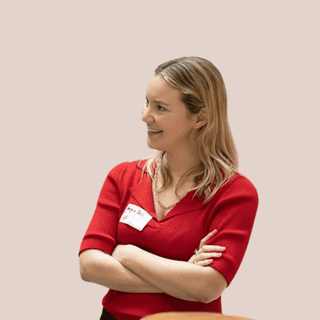
Katherine Boiciuc, Chief Technology and Innovation Officer at EY Oceania, delivers a powerful wake-up call on why Australia is at risk of becoming a global AI laggard. With a unique perspective at the intersection of technology, innovation, and policy, Katherine breaks down how Australia, despite inventing WiFi, is sitting on the sidelines of the AI revolution, missing a $115 billion economic opportunity. She shares how EY has up-skilled over 85% of its 400,000-strong workforce in AI, built the world’s largest private AI platform, and implemented AI agents at scale, while most organisations are still debating their first AI hires. This episode dives deep into what Australia needs to do now to avoid falling irreversibly behind, from setting a bold national AI strategy to investing in mass up-skilling programs and embracing AI across industries like healthcare, financial services, retail, and energy. Katherine also offers inspiring and practical advice for women looking to pivot into AI, shares her favourite tools and productivity hacks (including the AI prompt that gives her “permission to log off” for the day), and calls on every listener to claim their seat at the AI table, before it’s too late.
🙋♀️ Katherine Boiciuc on LinkedIn – https://www.linkedin.com/in/katherineboiciuc/
📚 EY Skills Passport for Free AI Training - https://www.ey.com/en_gl/ai-skills-passport
Transcript Synced · click any line to jump ▾
Georgie Healy: Founders scale faster on Deel. Set up payroll for any country in minutes, hire anyone anywhere, get visas handled fast, and get back to building. Visit deel.com/dayone. That's D-E-E-L dot com slash day one.
Katherine Boiciuc: And we haven't set a national AI agenda for the nation. We haven't led with conviction. And, you know, as a result, we don't have a strategy to become a leading exporter of AI. We've said we will sit back and watch and wait.
Georgie Healy: Why do you think EY was so passionate about sharing these insights? You know, you could have kept this all to yourself, right?
Katherine Boiciuc: Every other leaderboard I see Australia as a country in, I think it's going to be at the top somewhere. And so to my dismay, seeing, you know, Australia third from the bottom ranked out of 15 countries and New Zealand sadly at the bottom, And I just think, how, how, how have we not? We are in this hype cycle where everyone's like, 94% of people at work are using AI. I promise you, I walk past people, 94% of people are not using AI consciously. They are not using it to reimagine their job. They are doing the same things day in and day out that they were last year.
Georgie Healy: Hi everyone. We have our first ever live show of In the Blink of AI on the 29th of May. It will be at the University of New South Wales in Sydney with the head of APAC and Asia at Notion, Andrew McCarthy. Tickets are in the description below. There'll be things that will be there on the day that you can't get by listening to the episode. So I hope to see you there. Hello and welcome to In the Blink of AI, where I talk to the brightest AI startups and innovators each week. I'm Georgie Healy, and this week I am speaking to the one and only Katherine, or KB. She's a technologist, futurist, and imagineer, but really what she's best known for is her role as Chief Technology and Innovation Officer for the Oceania region at EY. On the show, we often speak to AI founders, right? They're very close to their own product, they're building the models, they've got a very, you know, close-up view on AI, very zoomed into the particular problem they're solving. And this is a really special episode because KB, due to her role and due to her background, she's able to provide a lot of insight to how Australia and the Oceania region as a whole should not only be adopting AI, but embracing it. You know, she reminds us that Australia invented Wi-Fi, so we should not be taking a back seat when it comes to AI adoption. She's got incredible examples of how we do that from a granular level, no matter what your background is. I came away from this episode with a lot of exciting homework to do, and I genuinely mean that. I, I have written down things that I want to take away to try myself, and I work in technology. So I know you'll love this episode. It's a really special treat. Uh, let's dive right in.
Katherine Boiciuc: You're listening to a Day One FM show.
Georgie Healy: Hello, Katherine. It's such a privilege to have you join us on In the Blink of AI. To start us off, can you please tell the listeners what is your role at EY?
Katherine Boiciuc: Sure. I am the Chief Technology and Innovation Officer at EY for Oceania, which means I'm responsible for our internal technology and innovation strategy for the region. And I am also responsible for how we face the market with our technology services and to be that voice telling, you know, the EY story on how we are transforming ourselves and therefore how do we apply that same level of technology transformation services to our clients.
Georgie Healy: Like I said it before, but I'll say it again, it's genuinely such a privilege to have you. Please tell the listeners that might not be as familiar as I am. I've been following you and what EY have been up to for several years now, but what is EY's story? With regards to AI so far?
Katherine Boiciuc: Yeah, we refer to it as Client Zero. So if you can imagine, you know, we're 8 years into our AI journey at EY, and you learn a bit about AI adoption successful scale when you are this far into the journey. And so, you know, with Client Zero, we started with the premise that data is gonna matter and having AI-ready data is gonna be critical to the success or it's kind of your foundation layer on how you might approach things like machine learning or deep learning or generative AI. And so we did what any organization would do, you know, 8 years ago and prioritized building, you know, a data factory, one huge place to execute and separate out how we process data and how we delivered intelligence services to our clients. We then scaled that data factory with a skills academy. So we have the largest technology skills academy and, you know, of our 400,000 team members, 85% of our people are now trained in AI.
Georgie Healy: Wow.
Katherine Boiciuc: 125,000 formal qualifications and it goes all the way up to a master's of technology. So really proud that we kind of tweaked very early on, demand is going to override the existing capacity that you have in your technology workforce. You're gonna have to grow your technology footprint. And then now we have the largest private AI platform in the world. So it's called EYQ and we have, you know, thousands of agentic AI skills for our team members to use across all different parts of the world, across all different roles from tax to finance to geopolitics to, you know, governance, risk, mergers and acquisitions. And we also have one of the largest instances of Microsoft Copilot for Enterprise in the world. So over 120,000 team members using Copilot at scale. So we kind of have the best of the public tools and then a really cool private AI tool as well.
Georgie Healy: Talking about the EYQ, great name by the way, did you expect such a huge interest from the internal EY community or company. Did you expect everyone to just jump on that? I'm an ex-consultant, I remember that we were always using new tools, so you're quite adaptable as a consultant, but that is still an incredible result.
Katherine Boiciuc: I think that the secret was focusing on education. So, everyone had mandatory AI training, whether you like it or not, at EY. And I think that what happens is With any new tech, there's a level of fear. You know, how will I use this technology? Do I want to use this technology? Resistance can be, usually is usually largely a skills gap. Like I don't understand and I don't wanna understand, but our customers expect to be able to use EY and AI. And so we have to deliver, you know, what our clients want. And so, that I think helped us accelerate, like flip that narrative into, instead of, you know, what does work look like without AI? We start from the belief that all work can be augmented with AI and therefore what are the skills and the right skills of people do we need to bring together to complement that AI skill? So I think training was the secret.
Georgie Healy: Mm-hmm.
Katherine Boiciuc: And giving people extensive training. Like an hour's not gonna cut it. You know, 15 hours, 30 hours, 45 hours, 60 hours. You know, we package 15 hours of training up at a time and allow people to get badges and formal qualifications that way in our program. And it's interesting, for every, even just our basic training, which we call AI Now, for people, we've tracked, we track usage and we track, not just if someone uses, like, gets their AI license, but also, you know, what does their usage look like? Are they a daily user? Are they a sometimes user? Are they a super user? And people that complete even just our Introduction to AI training, which is 90 minutes, on average save 2.5 hours a week.
Georgie Healy: Wow.
Katherine Boiciuc: Using AI. So after one week, you've already got your time back from training. And you're able to reallocate that capacity. So I think the secret is the more training the better and getting people over that kind of fear gap, that distrust by giving them kind of immersive tools.
Georgie Healy: Speaking of tools, this is a bit of a fun new thing I'm trying for the show. I've called it Hack of the Week. Well, we're still kind of workshopping the name of that. Basically, I would love to ask you, Katherine, what is an AI tool tool or use case that you can recommend for the listeners this week, and I'll give mine as well. Happy to go first, or if you've already got something in mind, let me know your favorite AI hack.
Katherine Boiciuc: Let's hear from you first. I'd love to learn.
Georgie Healy: Yeah, yeah, yeah. This— most of my AI hacks are quite trivial, but so fun that I think that if you're someone that's not always using AI tools, start with something fun. So if you, uh, open ChatGPT and you have a room in your house that you're like, this room is just not being used effectively, or I just need inspiration. I took a room of my study upstairs, which is like a dark attic, and I took a photo and then I typed into it, how would I turn this into a, uh, podcast studio? Literally before the photo was completely empty. I'll put it on the Instagram, very hideous. And then ChatGPT created the most incredible looking space, but my actual space, my actual room, it added, you know, curtains for sound blocking, really chic chair and microphone setup. I was so inspired. I am actually going to try and copy a few of the things that it showed me, but that was a really cool image generation that ChatGPT gave me. Do recommend.
Katherine Boiciuc: I like that one. I have my kids taking a photograph of the fridge, like the fridge door open and taking a photograph of the fridge and then asking ChatGPT what they can make for dinner. Mainly because I don't want to get that question when I get home at 7 or 7:30 at night, like, "Mom, what's for dinner?" I'm like, there are 3 competent people in this house that could have made that decision already, and I no longer subscribe to being the dinner recipe fixer-upper of this house. So I've definitely delegated that and just said, take a photo, send it to ChatGPT, and then, you know, let it recommend options for what you want to make for dinner. So I've completely— I'm trying to really shift some of those, like, I think that are quite unhealthy habits that tend to head to women in the household and kind of go, actually, you know, assistance can relieve that unnecessary mental load from women, and use it to educate my family on that. When I'm in a hurry, I, I have a go-to prompt which is called Prepare Me. And it's learned, you know, how to do a very quick, here's what you need to do for this next meeting that you're walking into, here's who you're meeting with, here's the background, and here's what you need to do. So if I'm kind of caught up or delayed and I'm just, I'm like, I've lost my place on where I am in my day, I can hit Prepare Me. And I really like that one. It's really simple. The other one I really like is, I call it my end of play. Prompts, and I'm using Copilot for both these. And I simply have it summarize my inbox, my meetings, my Teams mentions. And basically I'm saying to the prompt, like, can I, can I log off for the day? Like, have I done what I needed to do today? And it will either say, yes, you can jump off and you're good, or no, you actually need to attend to these 3 things. And so it's a nice way for me to have peace of mind because I don't after I've walked into the front door and kind of said hi to the kids and we're sitting down, I don't want to then go back online because I've forgotten to do something. They really notice that. And so the end of play prompt— I feel like everyone deserves peace of mind to log off. And, and at the same time, you say yes and commit to so many things throughout the day that you do— you don't want to miss anything. So I think that that's a nice one.
Georgie Healy: That is genius. And, you know, I've got young children myself, and something my daughter said to me, she's only 3, and you know, she said like every now and then she'll say, mommy, do you love your phone? Because I'm always carrying my phone and she's always carrying her favorite stuffed toy. And it made me feel a bit icky. Like she thinks that that is my like favorite thing. And I'm like, I don't want that to be my favorite thing. So I'd love to just put it away and just be okay with putting it away for the day. Thank you so much for sharing, Katherine. Those are really great hacks, hopefully ones I haven't tried before, and I can't wait to hear what the listeners say. Let's talk about AI adoption in Australia. When we spoke before, you mentioned a report that I wasn't aware of that the Tech Council of Australia submitted about the economic opportunity of embracing AI. Can you just give a really high-level background on, on that for, for the listeners?
Katherine Boiciuc: Yeah, the Out of the Possible— the Tech Council of Australia released an Impact of AI on the Australian Economy report last year in 2024, and the premise of the findings were really quite simple. One was we need to be more ambitious as, as a nation on what does the AI economy look like for Australia? And I caveat that by saying we are the nation that invented Wi-Fi. Like, if we were ever a country that was gonna absolutely, you know, nail a tech revolution like what AI is, AI is the equivalent of, you know, the internet or the equivalent to Wi-Fi being invented. It is just gonna change every single thing that we do in our lives to some degree. And so we need to have a point of view, and we are an ambitious and innovative nation, but I think that possibly we've lost a little bit of that muscle in the last few years. And so it's time to bring that level of technical, technology-led kind of sovereign ambition back. The report found two things. One was the AI economy is something to the tune of $115 billion worth of value for Australia's GDP. Mm-hmm. To unlock that level of capacity, we would need to have 200,000 more AI-skilled workers by 2030, which is a big number that's not gonna come out of the university system. It actually, that kind of number suggests that we need a few hundred thousand people to choose to do a career pivot.
Georgie Healy: Mm-hmm.
Katherine Boiciuc: And to have, you know, you might have been in education, you might have been in banking, you might have been in consulting, and we are now saying, take the time to get formally accredited in AI and have an AI in finance career, an AI in education career, an AI in consulting career, so that you add to the breadth of your skill, but also Australia doesn't need to import skill capacity to deliver on the promise of AI for the nation.
Georgie Healy: Incredible report. And That Wi-Fi stat, you were the first person to make me aware of it, and now I seem to see it everywhere. But it gives us a right to play. In my head, it's like, no, this isn't something that we're incapable of as a nation. This is something that we not only deserve to be able to do, but can do. So like, the art of what's possible, like you say. EY created really incredible report last year and this year, the AI Sentiment Index, highlighting the state of AI with regards to trust and engagement among Australians and New Zealanders compared to global counterparts. This was an incredible report. Why do you think EY was so passionate about sharing these insights? You know, you could have kept this all to yourself, right? Why did you create the report and do and share it with everyone?
Katherine Boiciuc: I, I think for two reasons. One is I think that there is more than enough reports from consulting firms about a lot of stuff with a lot of statistics. And rightly or wrongly, they are very focused on CEO surveys or chief technology officer surveys or chief financial officers. And so we were getting this really C-suite management view of a set of opinions repeatedly by all consulting firms across the world. And I just said to the team, like, is anyone just like interviewing citizens? Like, could we just not get an everyday citizen view of AI? Like, we are in this hype cycle where everyone's like, 94% of people at work are using AI. I promise you, I walk past people, 94% of people are not using AI consciously. they are not using it to reimagine their job. They are doing the same things day in and day out that they were last year. Materially, our habits have not changed dramatically in the workplace in Australia. So why do I keep seeing all of these reports with all of these super positive numbers? I'm like, it is not— that is not true, uh, at least in the offices that I've been in in Australia, New Zealand over the last 12 months. So I just said to the team, like, do we not have some of the best research teams in the world, surely there's gotta be a benefit, right, of working at EY that you can just kind of find like what are those amazing capacities? And we do. And ironically, our largest research capabilities is in Australia. So I met with the Australian team and said, what sort of research do we do on AI? And do we use any AI in our research process, you know, to execute on how we do research surveys? And I like, fun fact, yes, we do use AI to do both qualitative and quantitative research, but B, we were just thinking we should do a citizen view of AI. And I said, great, I volunteer Australia, let's go. And that was, you know, in September last year when we did the release of the first report. And then immediately I said, okay, now, now I know what Australia thinks. By the way, it was kind of saying it wasn't great. You know, no, 30% at best of Australians were, I feel positive about the impacts of AI, and that really being over-indexed by kind of Gen Z and Gen Alpha being really positive about it, and Millennials, Gen X, and, you know, Boomers being really, you know, less than 10% of us caring about AI, which is, which is a shocking number because most big executive decisions, board decisions, investment decisions, strategic decisions in this country are influenced by those generations. So the fact that less than 10% of those Australians were feeling confident about AI was a bit of an alarm bell for me. I'm like, we're not moving fast enough and Australia's not being ambitious enough. And so that alarm bell made me go back to the same team and say, can we now do a global report? I want to see how Australia ranks in the results. And so, by the way, seeing Australia at the bottom of any leaderboard— like, I think the Olympics has ruined, like, yeah, comparisons. Like, apart from Eurovision, I expect us not to perform at the top of the leaderboard, but every other leaderboard I see Australia as a country in, I think it's going to be at the top somewhere. And so, to my dismay, seeing, you know, Australia third from the bottom ranked out of 15 countries and New Zealand sadly at the bottom. And I just think, how, how, how have we not recognized the level of impact that AI is going to have? And the answer is, is because we're taking our sweet time as a nation. We haven't set a national AI agenda for the nation. We haven't led with conviction. And, you know, as a result, we don't have a strategy to become a leading exporter of AI. We've said we will sit back and watch and wait. And as a result, we're a net importer. We, we buy more AI than we sell, which is an interesting time, you know, in— it's been 3 years since generative AI was available for mass market in 2022. Yeah. Australia tends to take a decade to adopt any large-scale tech. It was true for the, you know, the home telephone, Wi-Fi, smartphones, internet banking, Apple Pay. We've taken a decade every time. So I am of the belief that Australian leaders think they've got a decade, and I don't think we do. I think that You know, we're year 3 into probably a 5-year time horizon for what I call the leaders, market leaders. And the fast followers and the laggards, it's— the disruption's gonna be quite painful for them, I suspect, because they're gonna be surprised by the pace of change. And you know, I was just on a panel this morning at breakfast with a banking CTO.
Georgie Healy: Mm-hmm.
Katherine Boiciuc: And he talked about the fact that, you know, 10 years ago in prioritizing investment on where do you spend in technology and banking, there would be big arguments about how much of the technology budget had to go into mobility versus core technology or cybersecurity or data or customer experience. And there was a massive debate on how much needed to be invested in mobile technology. And he goes, isn't it funny that, you know, 10 years later, the banks that have the most advanced mobile experience are the ones that are winning the banking market because that is the way that customers are in— do banking now. It's mobile first.
Georgie Healy: Mm-hmm.
Katherine Boiciuc: And so that's an example of where the leaders are really accelerating away from the pack. And then the people that are the laggards or the fast followers are having to pay play significant catch-up because customer experience has moved so quickly to expecting a one-click, real-time, always-on banking experience. And I think that AI is going to see us as consumers demand more and more of that one-click, 24/7, able to do whatever we want with the companies that we do business with.
Georgie Healy: I find it so frustrating because you know, I work with startups day in, day out, and these are genius founders building models from ground up, right? So, you know, they're this, you know, coalface of innovation kind of person. But even they are like, Australia is hamstringing, like, hamstrunging us. I don't know if that's a word. We have to go to Silicon Valley to get team members, operators, build our team, get our investment. So, even if you're Australian and you are adopting AI at lightning speed, speed, you, you reach a ceiling really quickly here because you're not being supported by the, the wider political ecosystem. I'm not sure if you've seen that as well, but that's something that I've noticed definitely in this age of AI.
Katherine Boiciuc: I think what happens, like, there are 3 conditions that we need to course correct to really start to shift momentum on AI. I'd like to say the first is We need to shift to a national strategy. Like, what is the national AI strategy? And that includes investment, skilling, and really clear guardrails. Right now, we don't have a very clear strategy. We don't have a confident investment approach as a nation. And comparatively, Singapore has announced $1.2 billion Australian in their AI strategy for the nation. And that includes an education stipend for Singaporeans over the age of 40 to be retrained so they can have a career in AI. So that level of confidence to neighbors just over to our left.
Georgie Healy: Yeah.
Katherine Boiciuc: We have to do something. We have to come out and be confident. And the second thing I would say is that we also need, like, we can't wait. We need a national education strategy. You know, China has announced mandatory education begins this year in classes for 4-year-olds and above. That was already announced, you know, as strategic priority for their government, you know, in March. And so I'm there going, where is our— where is our education agenda on AI? Because, you know, if I speak to my children, they're like, oh, it depends on what your teacher thinks. You're either not allowed to use it because it's bad and it's cheating, or you have some teachers that are all pro-AI and they just want us to share, here are the prompts that we use to complete the assignment, and then here's the end outcome. And then we have to write an opinion on, on how we thought we did on the assignment based on—
Georgie Healy: I love that. That's incredible.
Katherine Boiciuc: And so, but why is it— why, depending on the teacher—
Georgie Healy: It's independent.
Katherine Boiciuc: Oh my God. Yes. And so we need to set a standard, an education standard. And for one, you know, attaching shame to AI use is not going to be a successful way to instill confidence and build skills. I think that if we get those things right, you know, be clear on the ability for AI to shape the future of an AI economy in Australia. B, there's really clear investment opportunity both for the public and private sector. And C, that we have a very clear set of regulations. Right now we're in a voluntary environment, and I think that there are some companies that are waiting for a more formal regulation. And more concrete guardrails as opposed to a voluntary set of standards before that they, you know, really dial up their investment.
Georgie Healy: Yeah, I can imagine, you know, seeing what happened with crypto and then getting a slap on the wrist afterwards is like, I wouldn't be surprised if companies are a little bit scared to adopt something and then realize that that wasn't the right approach. What about you, Catherine? Are you like, I'm just going to keep championing AI and, you know, government can catch up or not.
Katherine Boiciuc: Like— I think that we're seeing around the world, like when, when we look at what are the leaders doing, there's a couple of things. AI education is mandated. Two, the AI startup community is really strong. And I see that in Australia. You know, we have our National AI Center keeps a log of all of— which is a wonderful resource, by the way, if you want to have a look at the state of the nation on AI in Australia, the National AI Centre is a wonderful resource. But they have a list of, you know, Australian AI startups. We have over 550 of them, and we have some incredible AI startups. Harrison AI has used AI in the radiology experience to reimagine radiology. It not only diagnoses the question that the doctor's asking, like, you know, is there heart disease stage whatever in this patient? It also analyzes anything they can see in the picture, so they— this— it can provide multiple diagnoses. And it also triages every radiology, uh, image in the backlog and then prioritizes them based on order of urgency, uh, based on how unwell the patient is, which is is intelligent radiology, real-time. Who doesn't want ER patients that are waiting for their radiology results to get a prioritized experience based on the urgency of what's going on for them health-wise? That's now used in 50% of radiology processes in hospitals around the world. 50% of radiology is now using Harrison AI.
Georgie Healy: Mm-hmm.
Katherine Boiciuc: That's an Australian innovation. If I think of Andromeda and the team that have built AIBI, which is, you know, the perfect mix of robotics and AI and reimagining loneliness and patient care in our aged care system in Australia. Again, a wonderful example of a global problem and some Australian ingenuity reimagining what that experience looks like. And both of those have received seed funding innovation funding from the federal government grants. Both of them have gone for seed funding in the US and they're now scaling. So we are seeing success. I would just like to multiply that by a factor of, you know, 100.
Georgie Healy: Yeah, I couldn't agree more. It's like we've got the talent, we've got the people, we've got the educational background. It's like, how do we support them? Speaking of the workforce of the future, there was something in the sentiment report that you guys conducted talking about the future opportunities and AI's positive impact. And there were certain industries that were highlighted as being really compelling. I'm putting you on the spot here, and I've got them written down, but I'm wondering if you remember off the top of your head the most exciting industries for the future. Of AI?
Katherine Boiciuc: Well, I think first of all, Australians love a loyalty program. I think Australia has some of the leading loyalty programs in the world. I know, I think Mecca guilty as charged. Yeah.
Georgie Healy: Wixtree gold member. Yes.
Katherine Boiciuc: I don't know what it is about Australians and the love of a loyalty program, but using hyper-personalized capabilities that you can use through AI allows for you to have, you know, incredible success with loyalty programs and customers expect that hyper-personalization and the VIP combined. So if you have a loyalty program as a retailer in Australia, you should be looking at how you're using AI and loyalty. That's a no-brainer. Two, the customer experience just in general, whether you're in public services or in, you know, retail customer service, I think that we need to let go of the idea that humans need to do everything. In fact, you know, when we interviewed people, more people prefer an AI customer service agent or chatbot versus a human.
Georgie Healy: Oh, 100%. Yeah.
Katherine Boiciuc: There's less embarrassment. I don't have to repeat myself. There's not an opportunity to get things wrong. And the experience is not the clunky, horrible kind of experience from a decade ago when we first got introduced to chatbots. Like, you can barely detect You can barely detect in a voice conversation with AI now what's— who's the human.
Georgie Healy: Have you booked a restaurant using AI? Because I did the other day and I— it was like an A+ experience, I've got to say.
Katherine Boiciuc: It's so different. And so that's going to be completely reimagined. Transport, again, I think it has something to do with this really big island that we live on. But Australians expect AI in the transport experience, the ability to book an Uber seamlessly with one click, the ability to check in for your flight with one click, the ability to know where your parcel is and when it's going to be delivered to your front door within a matter of hours and minutes, or your groceries are coming on the next delivery. We expect that transport and logistics is fully automated and fully orchestrated and that the customer is notified. Throughout the entire experience. So if you don't have that, you're, you're below standard. Australians expect you to have AI in that experience. And then the, the obvious ones that we know and love, financial services, great example, have had fraud detection prevention services, alarms for a number of years now. But now they also want you to use AI to help them unlock their dreams too. Australians want banks to help them buy their first house, to help them save for that holiday. So they don't want you to just use AI in a security measure. They want to use, you know, AI to help me stay on track for my goals, which is a really interesting flip to how you could reimagine the banking experience. And finally, energy. I think that reimagining what does it mean to be an energy retailer and an energy consumer is ripe. We know that energy usage is probably gonna increase 6x over the next couple of years between now and 2030. And we know that none of us wanna pay 6x our bills, which means we need to become more intelligent and more sophisticated about when we do things with energy and how we do things in a most energy-efficient way. And so I think that that opens up a whole new set of intelligent home services, and, and it helps us reimagine the energy experience that we provide Australians.
Georgie Healy: Such a pro, you made that look easy. Before we get to the rapid-fire questions, I've got one more question, something that since I first followed you in previous careers, I know you've always been incredibly passionate about, and, and it's meant a lot to me in my career. You're really passionate about supporting women in the work— in the workforce, and I'm just curious is, you know, women who have had children and been out of the workforce for a while. Do you have any tips, guidance, or thoughts about how they, you know, AI has been very disruptive. How do they re-enter the workforce without feeling like, oh my gosh, the landscape has completely changed? And how, how would you suggest they, they come in and thrive?
Katherine Boiciuc: Firstly, I would say it's never easy to re-enter the workforce at any time, but I can only— I can imagine it will be— it will be a culture shock for people that have stepped out of the workforce pre-AI and, you know, and are now stepping back into workforces and people suddenly using AI agents to do their daily work. And so I'd say one thing is don't feel like you're not alone. Like everyone feels that way is, is what I would say.
Georgie Healy: Yeah.
Katherine Boiciuc: Most— I just did an AI event this morning and I asked people, you know, have you done AI training? And probably 75% of the room put their hand up. I then said, keep it up if you've had the training this year. And about 60% kept their hand up. And I said, keep your hand up if it was a formal qualification.
Georgie Healy: Hmm.
Katherine Boiciuc: 90% of the hands went down. And then I said, and keep your hand up if you have completed that qualification and put it on your LinkedIn. Two hands remained up. And so I would say you're at the same standard as people in the workplace around not having a formal qualification in AI. So to close that gap, I would say microcredentials are there for a reason. I'm a huge fan of Coursera. They have fantastic AI credentials from Microsoft, IBM, uh, are the other two, my two personal favorites, uh, when it comes to just getting started with AI. Um, and you can get your first qualification with Microsoft Copilot after an hour's worth of training. So don't, it's not this big scary thing over there. Um, it's very achievable. I use my commute. So when I may have to, whenever I have to do a commute, I am doing some form of training. I also listen to it at kind of double speed with captions, uh, because I tend to think that training videos are quite slow and I just can't receive learning that way.
Georgie Healy: Oh my gosh, I feel so validated because I'm always like click, click, click, click, click, click, click.
Katherine Boiciuc: Um, and then if you're concerned about, because you know, Coursera, after a certain level you do have to start paying for, but if you're in this position where you think I don't have a computer and I don't have money to spend on training, there is a skills passport that EY has put out with Microsoft. It's 10 hours of training and at the end of the 10 hours you get your first formal qualification for an introduction to AI as being completed. So I assume you'll put that in the, in the podcast notes, but—
Georgie Healy: We 100% will, yes.
Katherine Boiciuc: Right, I just think that You know, EY and Microsoft believe that everyone has a right to access an AI career if they want. It is going to be so important that we use this moment to use AI as a great equalizer, and that means including people outside of office buildings, outside of the workforce, and ensuring that they also have access to training. And so it's built to be mobile phone first, and it's free. So—
Georgie Healy: Wow.
Katherine Boiciuc: Just start, I would say. Like, just start. Just say, 2025, I'm gonna complete an AI qualification and find a medium that suits you. Find a buddy that'll hold you accountable. Like, do it with someone else is my other piece of advice too, so that you have an accountability partner to to learn with.
Georgie Healy: Yeah, mothers groups, like let's just all learn something together or something like that. That is incredibly helpful. I'm actually kind of jealous of the listeners because I can't write this down while I'm talking to you, but I really want to try and have a look at these courses. We are at the end of the interview where we love to do some rapid-fire questions. They're kind of a little bit sillier, a little bit spicier. Are you ready?
Katherine Boiciuc: Yeah, let's go for it.
Georgie Healy: Number 1, have you, uh, ridden in a Waymo before, Katherine?
Katherine Boiciuc: I have.
Georgie Healy: Oh, tell us about it. Did you love it or did you hate it?
Katherine Boiciuc: I, uh, was in my first Waymo in 2016 and then did it again in 2017, so I'm early.
Georgie Healy: Wow, early adopter.
Katherine Boiciuc: I went on the campus of the University of Berkeley. And we took a driverless car to go to a Korean restaurant that was a humanless restaurant. There were no humans. It was a robotic restaurant and you touched screens and then you kind of ram it and stuff out.
Georgie Healy: Oh my gosh.
Katherine Boiciuc: And then we, and then we went back. And so I was, I obviously was interviewing the students at the front of this restaurant who also were, you know, riding scooters, walking also in driverless cars. And I was asking them, you know, how does it feel to live on campus and that this is your normal life? And they were like, what do you mean? Why do you mean our normal life? I think in cars that don't have drivers and you're coming—
Georgie Healy: This isn't normal.
Katherine Boiciuc: —eat dinner at a restaurant that has no humans in it and boxes open up out of the wall and your food comes out. I said, I said, it's like, it's like you're living in the future. Do you recognize that? The Jetsons. Yeah. And interestingly, first of all, they didn't recognize they were living in the future. And so that old saying, the future exists, it's just not evenly distributed, but the people that are living in the future don't even realize the privilege. Secondly, the students I spoke to, a number of the female students said it's actually feel safer to hop into a vehicle that has no driver late at night. And so it actually feels more secure to choose to opt into the driverless vehicle versus one with a driver, which I thought was interesting around the psychology of, do I feel less safe or safe with the driver in the vehicle?
Georgie Healy: Yeah.
Katherine Boiciuc: So some reimagined assumptions there. And 3, people will choose safety and autonomy and can shift their habits around hopping into vehicles and getting takeaway from a restaurant with no human. And now we're seeing robots take that food out of the restaurant and then the robots wheel down the streets and then go into the hotel and get to the room and then deliver the takeaway to the door. I think we're going to see robotics and AI kind of combine in that sort of way, and it will become normal. It's just not normal yet in Australia.
Georgie Healy: We got, we got a hot take and we got a future prediction. Obsessed. Okay, are clients asking you for agents now? Are clients asking EY to install agents, or is that kind of not really the 100% like biggest priority for them this year? Because we keep hearing 2025 is the year of the agent, but on the ground, are you getting clients ask for them?
Katherine Boiciuc: Yeah, absolutely. Early adopters of AI, they're also year 5, 6, 7, 8, 10 in the AI journey. So for them, they have hundreds of millions of dollars worth of value to unlock by applying agents to do what they've already built. So that's absolutely a focus. Building their AI factory and their AI operating model is also, I would say, all three are kind of equal. It could, because a lot of people have AI in pockets in their organization, but they haven't scaled up their, like, a factory model so that it's consistently governed, there's consistent standards, and there's a consistent way to track, you know, the performance of agentic AI. But I would also say there are equal amount of requests for, hey, we think that AI is going to completely reimagine the way that we do work and our operating model. Can you help us transform?
Georgie Healy: Wow. And the last question, this hat, this could only be asked to you, Catherine, because you've had such an incredible experience in the telco industry. You can let me know how many exact years, but when I looked at your LinkedIn, it was a substantial amount of your career. A lot of the listeners are either startups or investors or, or trying to predict whether the AI thing is going to be a bubble that bursts. And the only thing that people keep referring back to is the internet boom and bust, and the telco industry was obviously really impacted by that. As someone who's been in the telco industry and probably heard or seen the boom and bust of internet and how that had a ripple-on effect, does that change the way you think about this AI revolution, or are the two completely different? And please just tell me what you think.
Katherine Boiciuc: I think that there's a generation of decision makers that were used— we're used to reading things and touching things and typing things are making a lot of decisions today. But the buyer for the next decade or two, really, the two largest groups of people that have the most economic funds over the next two decades are the voice-activated generation. They don't read anything. They don't type anything. They are living a voice-activated life. They speak to their AI. They talk to their— they don't even talk real time to their friends. They press the—
Georgie Healy: They—
Katherine Boiciuc: Do a voice memo of snacks.
Georgie Healy: A voice note, yep.
Katherine Boiciuc: It is insane to me, the voice memo chat thing. I'm like, why would you record yourself and then put it on the interwebs for anyone else? Like, how are you trusting your friends with these voice recordings of yourself that you are so gonna regret? Like, 25-year-old you will not want the voice memos you send on Snapchat in 2025.
Georgie Healy: Oh my God, so true.
Katherine Boiciuc: But there is a voice-activated future, which means you need to design voice-activated first, is my advice.
Georgie Healy: Mm-hmm.
Katherine Boiciuc: I think that we will see a massive shift to a conversational retail experience. So it'll be conversation first. Can I talk to a, to a device?
Georgie Healy: Mm-hmm.
Katherine Boiciuc: And will that device I talk to get the thing I want delivered to me? So conversational retail and conversational service will dominate the next decade. And so people that are working regardless of your sector or your industry, you must be designing for a voice-activated customer experience.
Georgie Healy: I've never been so upset for an episode to end. Thank you so much for joining in The Blink of AI, Katherine. It's been just such a privilege. Is there anything you want to shout out before, before I stop the recording?
Katherine Boiciuc: You know, 22% of the AI workforce is female. 14% of AI execs are women. And so if you're listening to this and you're thinking, she doesn't mean me, she's not talking to me when she says I need to do some AI training and get a formal AI qualification, I am talking to you. Whether you're a teacher, whether you're a nurse, whether you're a doctor, whether you're a lawyer, whether you're an accountant, whether you're a stay-at-home mum, I am saying women who that are listening to this podcast, please get the qualification in AI and start to pivot your career. We need women now more than ever to take a seat at the AI table.
Georgie Healy: Thank you so much. Thank you for listening to In the Blink of AI. You can check out the show notes for anything discussed in this week's episode, and we will be back next week. This podcast was produced by Day One with music by Dan Hansen and visual artwork by Sophie Tyrell. If you loved the episode, please tell your mates. And I love AI news. Please share your thoughts and suggestions to [email protected].
-on-why-australia-must-lead-not-lag-in-the-ai-revolution.png)